Table of Contents

Confidential Treatment Requested by PayPay Corporation

Pursuant to 17 C.F.R. Section 200.83


As confidentially submitted to the U.S. Securities and Exchange Commission on January 15, 2026. This draft registration statement has not been publicly filed with the U.S. Securities and Exchange Commission and all information herein remains strictly confidential.

Registration No. 333-   


UNITED STATES

SECURITIES AND EXCHANGE COMMISSION

Washington, D.C. 20549


Form F-1

REGISTRATION STATEMENT

UNDER

THE SECURITIES ACT OF 1933


PayPay Corporation

(Exact name of Registrant as specified in its charter)


Not Applicable

(Translation of Registrant’s name into English)


Japan
 

7389

  Not Applicable
(State or other jurisdiction of
incorporation or organization)
  (Primary Standard Industrial
Classification Code Number)
  (I.R.S. Employer
Identification No.)

Yotsuya Tower

1-6-1 Yotsuya

Shinjuku-ku

Tokyo 160-0004

Japan

+81-3-6885-8181

(Address, including zip code, and telephone number, including area code, of Registrant’s principal executive offices)

Cogency Global Inc.

122 East 42nd Street, 18th Floor

New York, NY 10168

+1-800-221-0102

(Name, address, including zip code, and telephone number, including area code, of agent for service)

Copies to:


Takahiro Saito

David C. Snowden
Simpson Thacher & Bartlett LLP
Ark Hills Sengokuyama Mori Tower
9-10, Roppongi 1-Chome
Minato-ku, Tokyo, 106-0032, Japan
+81-3-5562-6200


Jon Gray

Christopher Kodama
Davis Polk & Wardwell LLP
Izumi Garden Tower 33F
1-6-1 Roppongi
Minato-ku, Tokyo 106-6033, Japan
+81-3-5574-2600

Approximate date of commencement of proposed sale to the public:

as soon as practicable after the effective date of this registration statement.

If any of the securities being registered on this Form are to be offered on a delayed or continuous basis pursuant to Rule 415 under the Securities Act of 1933, check the following box. ☐

If this Form is filed to register additional securities for an offering pursuant to Rule 462(b) under the Securities Act, please check the following box and list the Securities Act registration statement number of the earlier effective registration statement for the same offering. ☐

If this Form is a post-effective amendment filed pursuant to Rule 462(c) under the Securities Act, check the following box and list the Securities Act registration statement number of the earlier effective registration statement for the same offering. ☐

If this Form is a post-effective amendment filed pursuant to Rule 462(d) under the Securities Act, check the following box and list the Securities Act registration statement number of the earlier effective registration statement for the same offering. ☐

Indicate by check mark whether the registrant is an emerging growth company as defined in Rule 405 of the Securities Act of 1933.

Emerging growth company ☐

If an emerging growth company that prepares its financial statements in accordance with U.S. GAAP, indicate by check mark if the registrant has elected not to use the extended transition period for complying with any new or revised financial accounting standards† provided pursuant to Section 7(a)(2)(B) of the Securities Act. ☐

† The term “new or revised financial accounting standard” refers to any update issued by the Financial Accounting Standards Board to its Accounting Standards Codification after April 5, 2012.

The Registrant hereby amends this registration statement on such date or dates as may be necessary to delay its effective date until the Registrant shall file a further amendment which specifically states that this registration statement shall thereafter become effective in accordance with Section 8(a) of the Securities Act of 1933, or until the registration statement shall become effective on such date as the Securities and Exchange Commission, acting pursuant to said Section 8(a), may determine.


Table of Contents

Confidential Treatment Requested by PayPay Corporation

Pursuant to 17 C.F.R. Section 200.83


The information in this preliminary prospectus is not complete and may be changed. These securities may not be sold until the registration statement filed with the United States Securities and Exchange Commission is effective. This preliminary prospectus is not an offer to sell nor does it solicit an offer to buy these securities in any jurisdiction where the offer or sale is not permitted.


Subject to Completion. Preliminary Prospectus dated    , 2026.

American Depositary Shares



LOGO

PayPay Corporation

Representing     Shares of Common Stock

This is an initial public offering of American depositary shares, or ADSs, representing common shares of PayPay Corporation.

We are offering     ADSs and the selling shareholders identified in this prospectus are offering     ADSs. Each ADS represents one common share, no par value. We will not receive any proceeds from the sale of ADSs by the selling shareholders.

We anticipate the initial public offering price per ADS will be between US$    and US$   .

Prior to this offering, there has been no public market for the ADSs or our shares. We intend to apply to list the ADSs on the Nasdaq Global Select Market, or Nasdaq, under the symbol “PAYP.”

Investing in the ADSs involves risks. See “Risk Factors” beginning on page 25 for additional information and factors you should consider before buying the ADSs.

PRICE US$    PER ADS

Neither the United States Securities and Exchange Commission nor any other regulatory body has approved or disapproved of these securities or passed upon the accuracy or adequacy of this prospectus. Any representation to the contrary is a criminal offense.


     Per ADS    Total

Initial public offering price


US$    


US$    


Underwriting discounts and commissions(1)


US$    


US$    


Proceeds, before expenses, to the selling shareholders(2)


US$    


US$    


Proceeds, before expenses, to us(2)


US$    


US$    


(1)

For additional information on underwriting compensation, see “Underwriting.”

(2)

Assumes no exercise of the underwriters’ option to purchase additional ADSs.

We have granted the underwriters an option to purchase up to an aggregate of     additional ADSs from us at the initial public offering price less the underwriting discounts and commissions, for     days after the date of this prospectus to cover over-allotments, if any.

Upon the completion of this offering,     common shares will be issued and outstanding. Entities ultimately controlled by SoftBank Group Corp. will beneficially own common shares representing in the aggregate   % of the voting power of our total issued and outstanding shares immediately after the completion of this offering, assuming the underwriters do not exercise their option to purchase additional ADSs. As a result, we expect we will be a “controlled company” within the meaning of applicable rules of Nasdaq. However, if the underwriters exercise their option to purchase additional ADSs, we may not be a “controlled company.” Under the applicable Nasdaq rules, a company of which more than 50% of the voting power for the election of directors is held by an individual, group or another company is a “controlled company” and may elect not to comply with certain corporate governance requirements. If we rely on these exemptions, our shareholders or the ADS holders will not have the same protections afforded to stockholders of companies that are subject to such requirements. See “Prospectus Summary—Implications of Being a Controlled Company.”

The underwriters expect to deliver the ADSs against payment in U.S. dollar in New York, New York on or about      , 2026.


Goldman Sachs & Co. LLC   J.P. Morgan   Mizuho   Morgan Stanley

(in alphabetical order)

Prospectus dated    , 2026
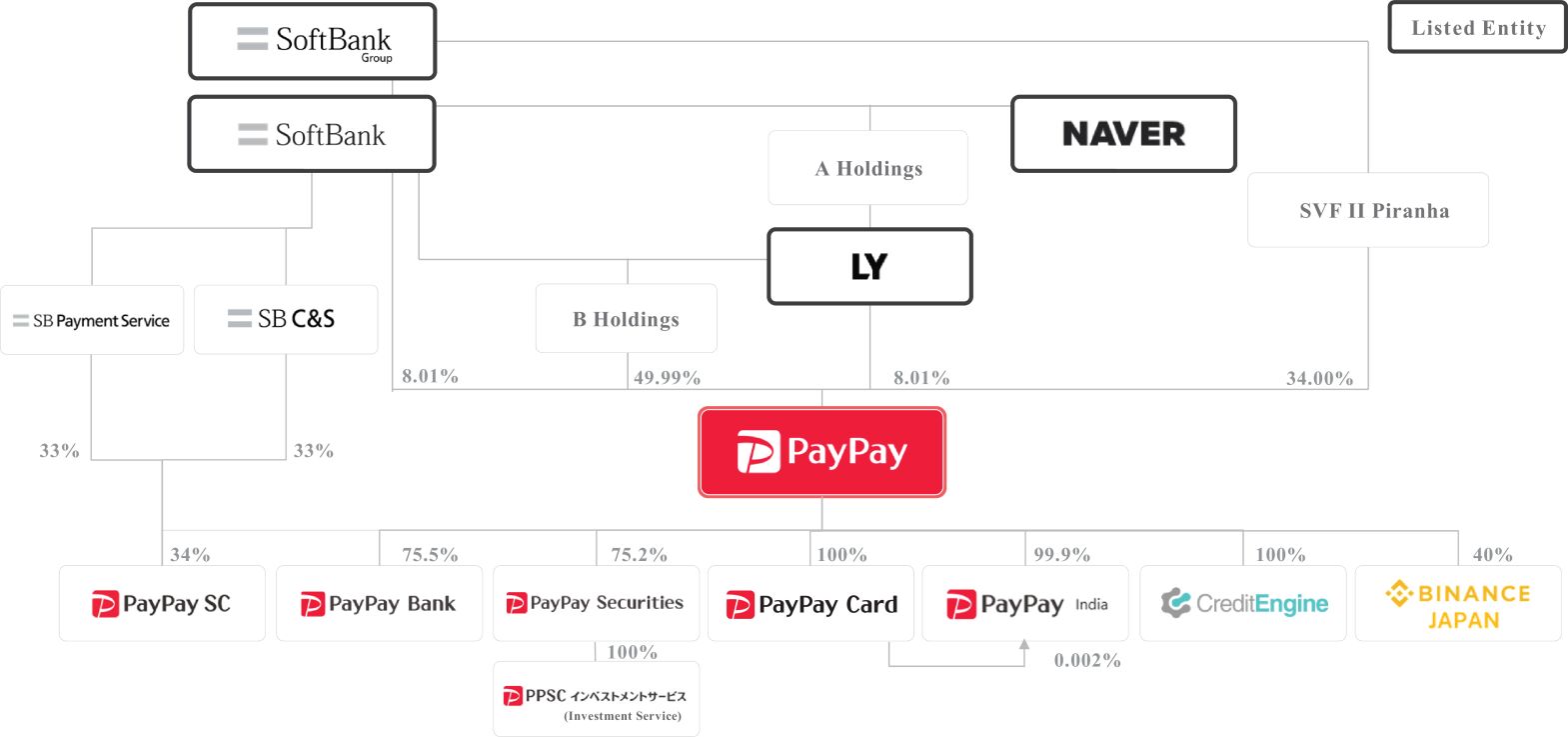


Table of Contents

Confidential Treatment Requested by PayPay Corporation

Pursuant to 17 C.F.R. Section 200.83


*Cover art page to be inserted*

 Summary of PayPay’s service offerings written in text (as per below), with image of PayPay’s homescreen

~~~~~~~~~~~~~~~~~~~~~~~~~~~~~~~~~~~~~~~~~~~~~~~~~~~~~~~~~~~~~~~~~~~~~~~~~~~~~~~~~~~

Service offerings


Payments:


Code-based Payment: PayPay Balance and PayPay Credit for easy payment directly from smartphones


Credit Card Payment: Physical PayPay card to make payments in more situations


Bills and Taxes: Pay for bills easily through the PayPay app


Banking:


PayPay Bank Account: High interest deposit accounts to save and spend


Loans: Simple application to card, home, and other loans


Investing:


Simple Investments: Suitable for beginner investors


Point Investments: Make investments with earned PayPay Points


Daily life:


P2P Money Transfers: Smoothly send money and split bills to friends


Shopping and Food Delivery: Direct access to online services tied to PayPay

~~~~~~~~~~~~~~~~~~~~~~~~~~~~~~~~~~~~~~~~~~~~~~~~~~~~~~~~~~~~~~~~~~~~~~~~~~~~~~~~~~~


II-1


Table of Contents

Confidential Treatment Requested by PayPay Corporation

Pursuant to 17 C.F.R. Section 200.83


*Cover art page to be inserted*

Page to have four images representing PayPay’s offerings

~~~~~~~~~~~~~~~~~~~~~~~~~~~~~~~~~~~~~~~~~~~~~~~~~~~~~~~~~~~~~~~~~~~~~~~~~~~~~~~~~~~

Consumer Offering


Offline Code-based Payment


P2P Money Transfer


Bill Payment


Online Payment

~~~~~~~~~~~~~~~~~~~~~~~~~~~~~~~~~~~~~~~~~~~~~~~~~~~~~~~~~~~~~~~~~~~~~~~~~~~~~~~~~~~


II-2


Table of Contents

Confidential Treatment Requested by PayPay Corporation

Pursuant to 17 C.F.R. Section 200.83


*Cover art page to be inserted*

Page to have four images representing PayPay’s offerings

~~~~~~~~~~~~~~~~~~~~~~~~~~~~~~~~~~~~~~~~~~~~~~~~~~~~~~~~~~~~~~~~~~~~~~~~~~~~~~~~~~~

Consumer Offering


Credit Card Payment


PayPay Points


PayPay Bank


PayPay Securities

~~~~~~~~~~~~~~~~~~~~~~~~~~~~~~~~~~~~~~~~~~~~~~~~~~~~~~~~~~~~~~~~~~~~~~~~~~~~~~~~~~~


II-3


Table of Contents

Confidential Treatment Requested by PayPay Corporation

Pursuant to 17 C.F.R. Section 200.83


*Cover art page to be inserted*

Page to have four images representing PayPay’s offerings

~~~~~~~~~~~~~~~~~~~~~~~~~~~~~~~~~~~~~~~~~~~~~~~~~~~~~~~~~~~~~~~~~~~~~~~~~~~~~~~~~~~

Merchant Offering


Code-based Payment in Store


Payment Terminal


Merchant Financing


Marketing Solutions

~~~~~~~~~~~~~~~~~~~~~~~~~~~~~~~~~~~~~~~~~~~~~~~~~~~~~~~~~~~~~~~~~~~~~~~~~~~~~~~~~~~


II-4


Table of Contents

Confidential Treatment Requested by PayPay Corporation

Pursuant to 17 C.F.R. Section 200.83


*Cover art page to be inserted*

Financials at a glance page with some of PayPay’s KPIs in text/chart form

~~~~~~~~~~~~~~~~~~~~~~~~~~~~~~~~~~~~~~~~~~~~~~~~~~~~~~~~~~~~~~~~~~~~~~~~~~~~~~~~~~~

Financials at a Glance


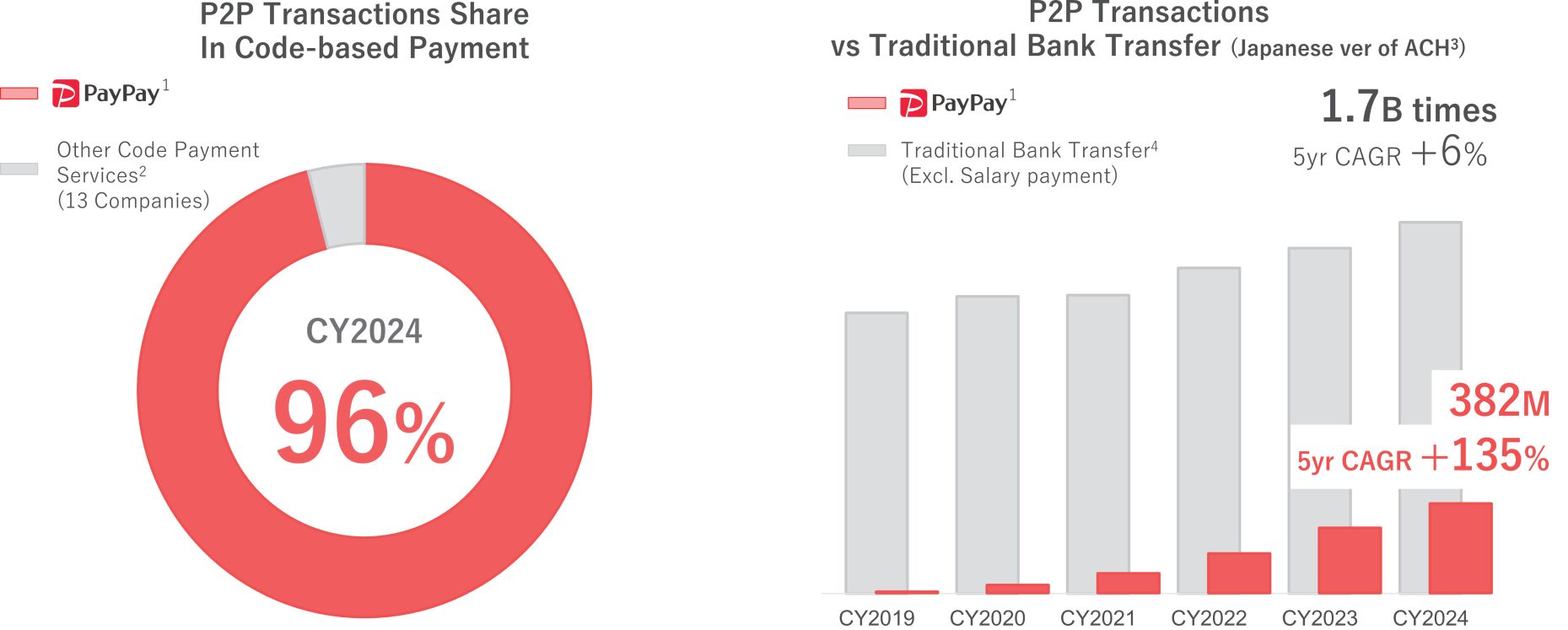
P2P transactions share: 96% (CY24)


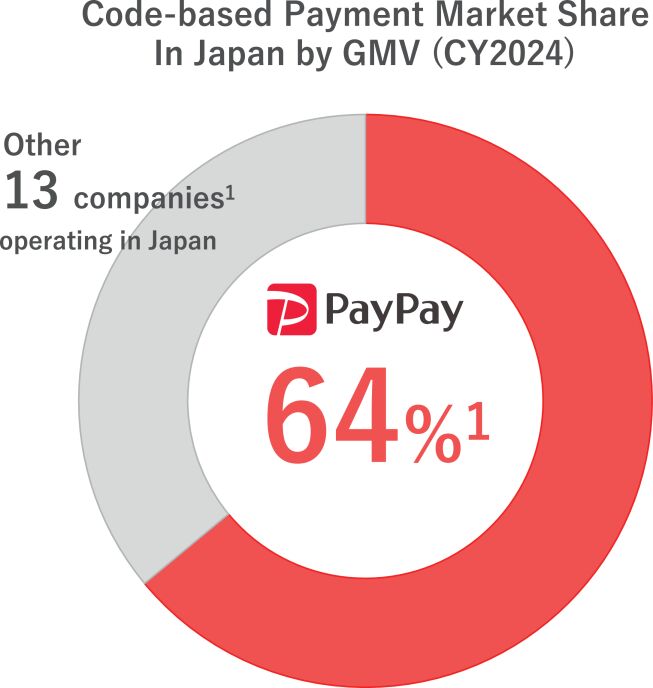
Code-based Payment Market Share in Japan (by GMV): 64%


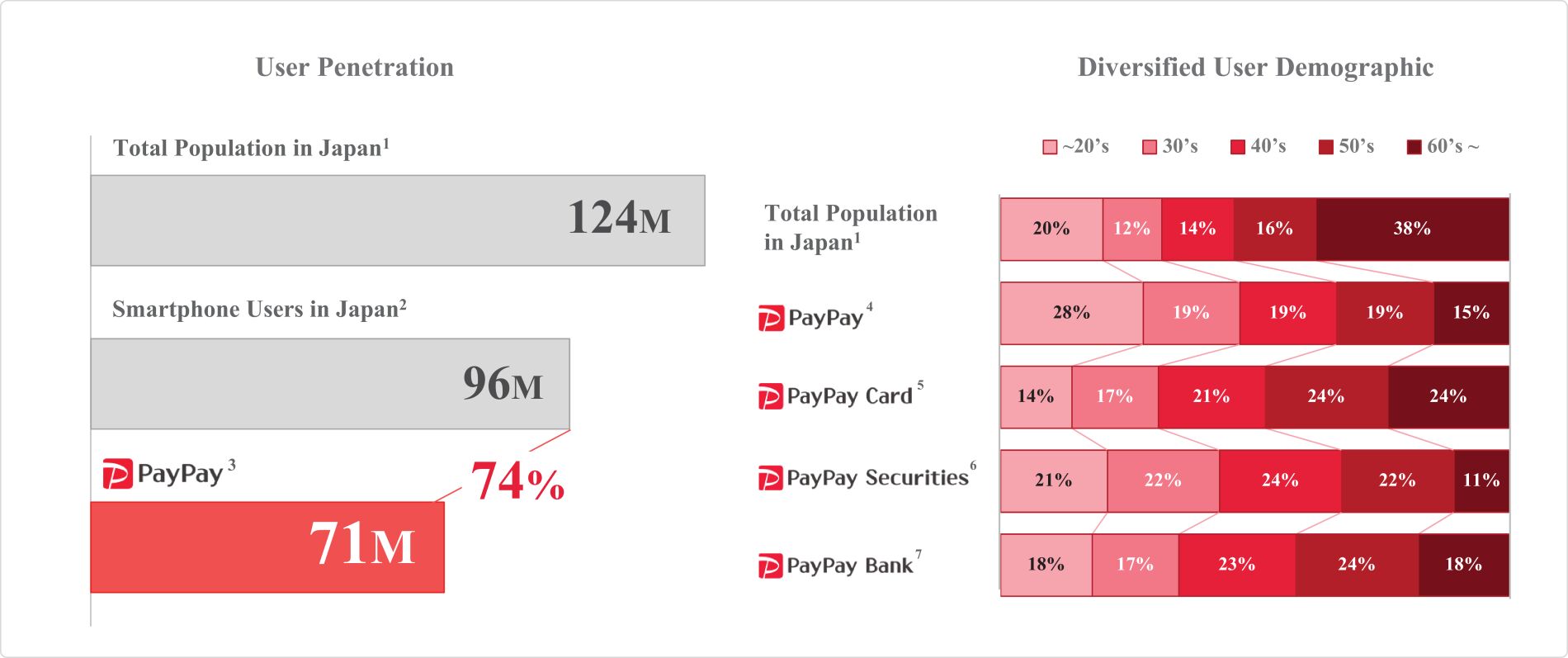
PayPay MTU (Monthly transacting users): 39M (FY25Q2), 41% of Smartphone users // Registered users: 71M (FY25Q2), 74% of Smartphone users // Smartphone users: 96M


1 in 5 Cashless Payments in Japan (CY24): 20%

~~~~~~~~~~~~~~~~~~~~~~~~~~~~~~~~~~~~~~~~~~~~~~~~~~~~~~~~~~~~~~~~~~~~~~~~~~~~~~~~~~~


II-5


Table of Contents

Confidential Treatment Requested by PayPay Corporation

Pursuant to 17 C.F.R. Section 200.83


*Cover art page to be inserted*

Chart of Total GMV and Total Revenue

~~~~~~~~~~~~~~~~~~~~~~~~~~~~~~~~~~~~~~~~~~~~~~~~~~~~~~~~~~~~~~~~~~~~~~

Total GMV


      FY2019      FY2020      FY2021      FY2022      FY2023      FY2024  

 Total GMV

   ¥ 1.3T      ¥ 3.3T      ¥ 7.6T      ¥ 10.5T      ¥ 12.7T      ¥ 15.7T  

Total Revenue


      FY2022      FY2023      FY2024  

Total Revenue

   ¥ 201.2B      ¥ 254.6B      ¥ 299.1B  

Achieved $100B GMV on an annual basis in just 6 years since service launch

~~~~~~~~~~~~~~~~~~~~~~~~~~~~~~~~~~~~~~~~~~~~~~~~~~~~~~~~~~~~~~~~~~~~~~

*U.S. dollar equivalents to be included using a flat rate of 150 yen against 1 U.S. dollar for illustrative purposes


II-6


Table of Contents

Confidential Treatment Requested by PayPay Corporation

Pursuant to 17 C.F.R. Section 200.83


*Customer Interview Section to be inserted*


II-7


Table of Contents

Confidential Treatment Requested by PayPay Corporation

Pursuant to 17 C.F.R. Section 200.83


TABLE OF CONTENTS


Prospectus Summary

     1  

Summary Consolidated Financial and Operating Data

     21  

Risk Factors

     25  

Special Note Regarding Forward-Looking Statements and Industry Data

     75  

Use of Proceeds

     77  

Dividend Policy

     78  

Capitalization and Indebtedness

     79  

Dilution

     80  

Enforcement of Civil Liabilities

     82  

Our History and Corporate Structure

     83  

Management’s Discussion and Analysis of Financial Condition and Results of Operations

     86  

Business

     144  

Management

     189  

Japanese Foreign Exchange Regulations

     199  

Regulations

     203  

Principal and Selling Shareholders

     222  

Related Party Transactions

     224  

Description of Share Capital

     230  

Description of American Depositary Shares

     239  

Shares Eligible for Future Sale

     248  

Taxation

     250  

Underwriting

     258  

Expenses Related to this Offering

     266  

Legal Matters

     267  

Experts

     267  

Where You Can Find More Information

     268  

Index to Financial Statements

     F-1  

Until    , 2026 (the 25th day after the date of this prospectus), all dealers that effect transactions in these ADSs, whether or not participating in this offering, may be required to deliver a prospectus. This is in addition to a dealer’s obligation to deliver a prospectus when acting as an underwriter and with respect to their unsold allotments or subscriptions.

We, the selling shareholders and the underwriters have not authorized anyone to provide you with any information other than that contained in this prospectus or in any free writing prospectus prepared by or on behalf of us or to which we have referred you, and neither we, the selling shareholders nor the underwriters take responsibility for any other information others may give you. We are offering to sell, and seeking offers to buy the ADSs, only in jurisdictions where such offers and sales are permitted. The information in this prospectus or any free writing prospectus is accurate only as of its date, regardless of its time of delivery or the time of any sale of the ADSs. Our business, financial condition, results of operations and prospects may have changed since that date.

Neither we, the selling shareholders nor the underwriters have done anything that would permit an offering of the ADSs or the possession or distribution of this prospectus or any filed free writing prospectus in any jurisdiction where other action for that purpose is required, other than in the United States. Persons outside the United States who come into possession of this prospectus or any free writing prospectus filed with the United States Securities and Exchange Commission, or SEC, must inform themselves about, and observe any restrictions relating to, the offering of the ADSs and the distribution of this prospectus or any filed free writing prospectus outside the United States.


i


Table of Contents

Confidential Treatment Requested by PayPay Corporation

Pursuant to 17 C.F.R. Section 200.83


Dear Investors,

I took the helm of PayPay on its founding day in 2018.

First and foremost, I want to express my sincere gratitude to all of our stakeholders. Your support has been instrumental not only to PayPay’s business growth, but also to our own development as a team.

PayPay is, at its core, a user-first company. We believe that focusing on winning the broad support of our users empowers us to challenge old standards and redefine them into cornerstones of a more prosperous future for the users of today. With this in mind, I would like to share our perspective on some of the key questions that have defined our journey so far.

1. Who is PayPay?

We are a technology-driven platformer dedicated to transforming society for the better. Today, our focus is on payments and financial services, where we are unlocking the convenience of the digital wallet. Tomorrow, we look toward developing a robust mobile payments user base as we pursue our evolution into a digital finance platform.

2. What does it take to remain a leading platformer?

We must continuously provide value to our users to become an integral part of their lives, as present as air and as essential as water. To this end, we are relentlessly focused on the KPIs that matter, constantly refining our approach and striving for improvement every single day.

3. What is important to PayPay’s business expansion?

To evolve while achieving scale, delivering both with speed and excellence. We are aware of the formidable challenge in executing these goals concurrently. But we believe it is the only way to deliver true value to our users, merchants, and shareholders, and we are confident that our commitment to this pursuit will drive both growth and strong profitability.

4. How do you view the competitive landscape, now, and in the future?

On our journey to become a platformer, we view the greatest and most prominent presence on our path as cash. Although our peers may change in response to our evolution, cash will be our primary competitor for the foreseeable future. This is because we believe that only large and strong opponents deserve to be called a competitor.

Receiving a return by creating and delivering value that cash cannot provide—this innovative activity is the principal source of PayPay’s corporate value. Looking ahead, we see payments and finance becoming ever more integrated into daily life.

By continuously enhancing this experience and integrating it into people’s everyday lives, PayPay’s opportunities for growth and profitability are boundless.

5. How did we get here?

Great business opportunities exist in the solving of everyday inconveniences. While the opportunity to bring digital convenience to a cash-based society has long been apparent, many argued, even today, that widespread change was impossible, pointing to slow adoption and obstacles. We are fortunate and grateful for our ability to invest significant resources at precisely the right time to take on this challenge, as well the support, advice, and cooperation we have received from our partners on our journey; by harnessing technology with data as our raw material, we have at last reached the starting line of the capital markets.


ii


Table of Contents

Confidential Treatment Requested by PayPay Corporation

Pursuant to 17 C.F.R. Section 200.83


I would like to close by admitting a simple conviction that once people experience true convenience, they never go back.

I promise to continue our pursuit of convenience, where today is better than yesterday, and to build a greater tomorrow.

On behalf of PayPay,

Ichiro Nakayama

President, Representative Director, CEO and Corporate Officer


iii


Table of Contents

Confidential Treatment Requested by PayPay Corporation

Pursuant to 17 C.F.R. Section 200.83


PRESENTATION OF FINANCIAL INFORMATION AND CONVENTIONS THAT APPLY TO THIS PROSPECTUS

In this prospectus, terms such as “we,” “us,” “our,” “the Company” and “the Group” refer to PayPay Corporation and its consolidated subsidiaries or, if the context so requires, PayPay Corporation on a non-consolidated basis.

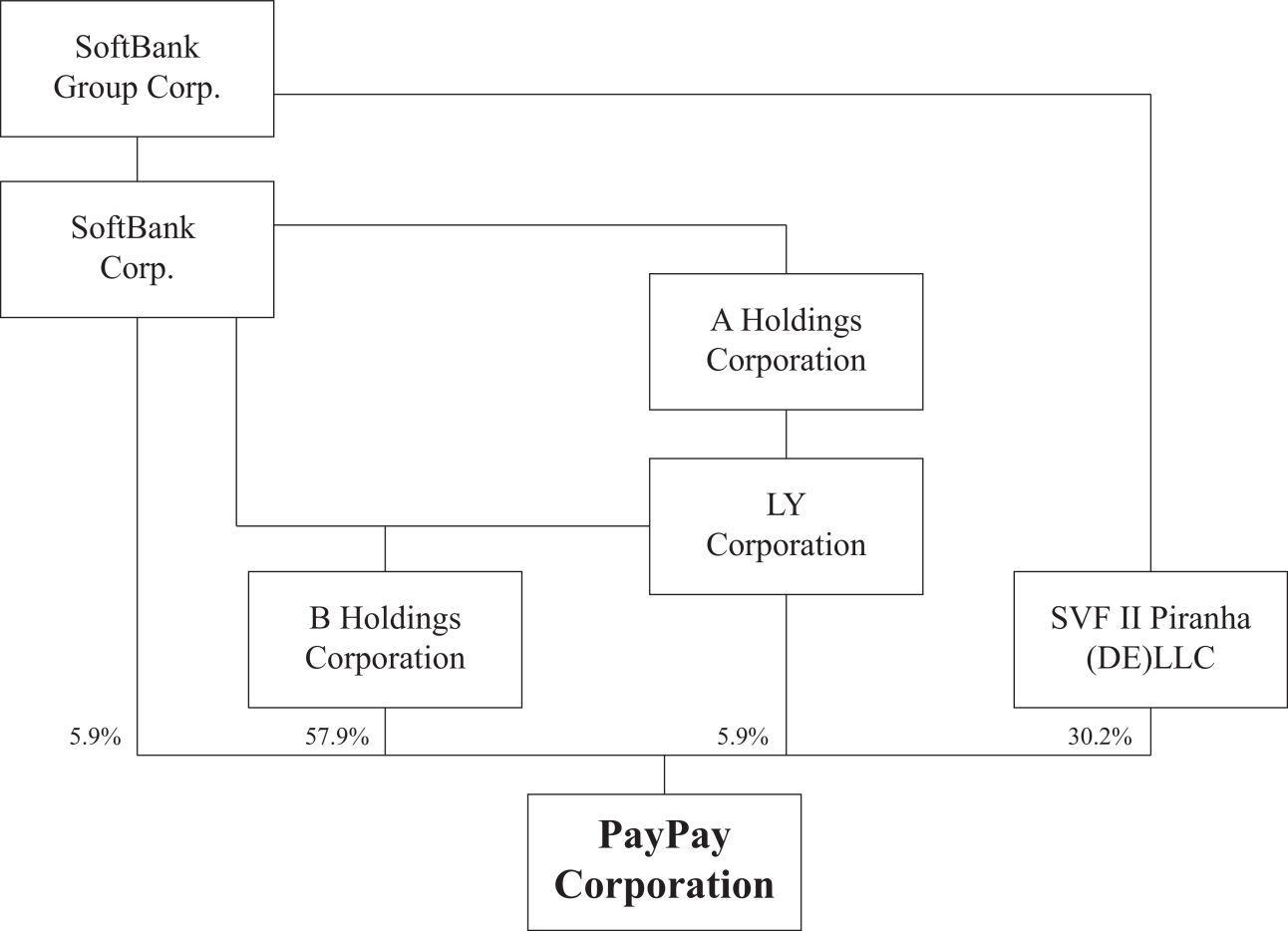
In this prospectus, “SoftBank Group companies” refer to companies other than us or our consolidated subsidiaries whose ultimate parent is SoftBank Group Corp., including, but not limited to our four current shareholders (B Holdings Corporation, SVF II Piranha (DE) LLC, SoftBank Corp. and LY Corporation), Yahoo Japan Corporation and LINE Corporation (prior to their merger to form LY Corporation), PayPay Insurance Service Corporation (a wholly-owned subsidiary of LY Corporation) and PayPay SC Corporation, which is also an equity-method affiliate of ours.

In this prospectus, references to “U.S. dollars,” “USD” and “$” refer to the lawful currency of the United States and those to “yen,” “JPY” and “¥” refer to the lawful currency of Japan.

In this prospectus, where information is presented in thousands, millions or billions of yen or U.S. dollars, as the case may be, amounts of less than one thousand, one million or one billion, as the case may be, have been rounded unless otherwise specified. In this prospectus, where information is presented as percentages, amounts less than one-tenth of one percent or one-hundredth of one percent, as the case may be, have been rounded unless otherwise specified. Accordingly, the totals of columns of figures presented in tables in this prospectus may not be equal to the totals of the individual items.

Our consolidated financial statements included elsewhere in this prospectus consist of our audited financial statements as of March 31, 2024 and 2025 and for the years ended March 31, 2023, 2024 and 2025, and our unaudited condensed consolidated financial statements as of September 30, 2025 and for the six-month periods ended September 30, 2024 and 2025, which have each been prepared in accordance with IFRS Accounting Standards as issued by the International Accounting Standards Board, or IFRS. Unless otherwise indicated, all financial information included in this prospectus is presented using IFRS, which differs from accounting principles generally accepted in Japan, or Japanese GAAP, and from accounting principles generally accepted in the United States, or U.S. GAAP.

On April 1, 2025 and April 11, 2025, we acquired shares of PayPay Securities Corporation and PayPay Bank Corporation, respectively, which had been under the common control of SoftBank Group Corp., and made them subsidiaries of ours. The acquisitions of shares of PayPay Securities Corporation and PayPay Bank Corporation were accounted for under the pooling of interest method as business combinations under common control. As a result, the Group’s consolidated statements of financial position as of April 1, 2023 and March 31, 2024, consolidated statements of profit or loss, consolidated statements of comprehensive income, consolidated statements of changes in equity and consolidated statements of cash flows for the years ended March 31, 2023 and 2024 were retrospectively adjusted for the consolidation of the financial statements of PayPay Securities Corporation, PayPay Bank Corporation and their respective subsidiaries from April 1, 2022.

On November 15, 2025, we effected a stock split of one share into 200 shares (the “Stock Split”). The Stock Split did not affect total equity or the proportional interests of the shareholders. Unless otherwise indicated, all numbers of shares underlying stock options, the corresponding exercise prices and fair value of those stock options, and other per-share calculations presented in this prospectus have been retroactively adjusted to reflect the Stock Split.


iv


Table of Contents

Confidential Treatment Requested by PayPay Corporation

Pursuant to 17 C.F.R. Section 200.83


PROSPECTUS SUMMARY

This summary highlights selected information contained in greater detail elsewhere in this prospectus. This summary may not contain all of the information that you should consider before investing in the ADSs. You should carefully read the entire prospectus, including “Risk Factors” and the financial statements, before making an investment decision.

Who We Are

As Japan’s leading financial technology company, we are dedicated to our goal of becoming a digital finance platform for all. We strive to empower the everyday lives of users and businesses by transforming their smartphones into a comprehensive, easy-to-use, and accessible financial platform that centralizes and simplifies numerous daily activities for ultimate convenience. Through a seamless ecosystem of payment, financial and everyday services, we have served as a game-changer in driving the shift to a cashless and digitally empowered economy. Through continued innovation, we aim to redefine how millions of individuals and businesses in Japan engage with finance throughout their daily activities.

We operate a highly scalable and integrated digital finance platform that serves as an all-in-one solution for users and merchants, built on a robust two-sided network connecting tens of millions of users and millions of merchants. Our platform facilitates a shared ecosystem across payments and financial services. As a clear leader in Japan’s cashless payment market, we offer one of the most comprehensive and versatile service suites in the market, spanning daily payments, banking, credit, investments, and beyond.

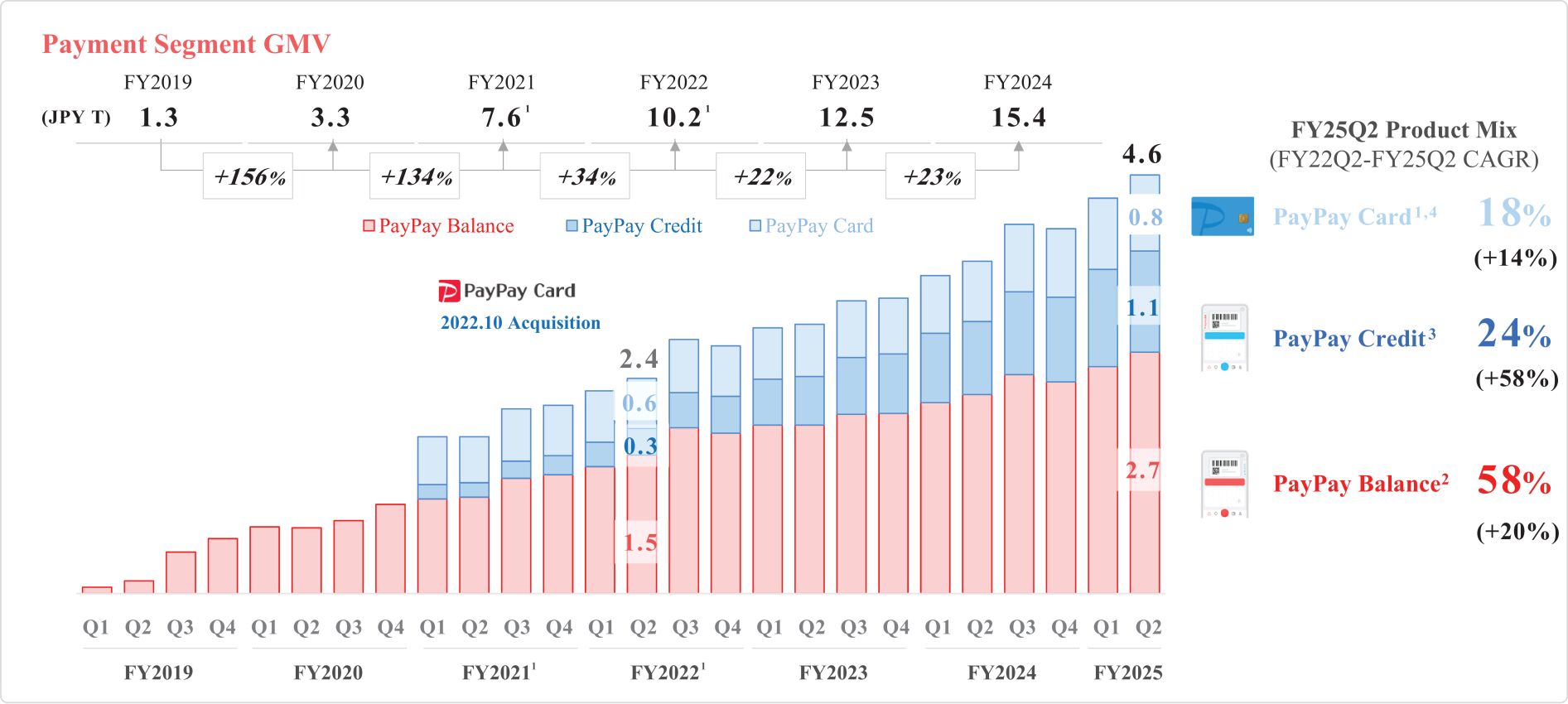
Our story started with our code-based cashless payments solution. We launched this service in October 2018 and it rapidly expanded to become a nation-wide leading cashless payments ecosystem that had approximately 71 million PayPay registered users as of September 30, 2025, representing a penetration of over 70% among 96 million smartphone users in Japan1. With the acquisition of PayPay Card Corporation in October 2022, our platform evolved to a next-generation payments ecosystem, seamlessly integrating our code-based payment and credit card payment services through our PayPay app. We recorded Payment Segment GMV of ¥15.39 trillion based on transactions processed through PayPay Balance, PayPay Credit and PayPay Card for the year ended March 31, 2025, and we have consistently achieved over 20% annual GMV growth since the fiscal year ended March 31, 2019. Our payment service is deeply integrated in the daily lives of our users, supporting a broad range of transaction scenarios and thereby driving high user engagement. In addition, we have supported merchants through promotional tools such as PayPay Coupons, PayPay Stamp Cards and PayPay Funding solutions designed to enhance retail productivity.

We further expanded our platform to core financial services. We acquired majority voting rights in PayPay Bank Corporation and PayPay Securities Corporation in April 2025, gaining comprehensive capabilities to provide a broad range of financial services offerings, to become a convenient one-stop financial portal destination for all users. Our offerings include internet banking and lending services with PayPay Bank and smartphone-based securities brokerage and investment services with PayPay Securities along with additional value-added services for our users.

 
1 

As of January 1, 2025. Calculated by using 80.5% from the Ministry of Internal Affairs and Communications’ “2024 Survey on Communication Usage Trends (announced May 30, 2025),” Materials 2 “Mobile Device Ownership (Individual)” and “Smartphone Ownership (Individual),” applied to the Japanese population aged five and over as of January 1, 2025, from the Ministry of Internal Affairs and Communications and Statistics Bureau’s “Population Estimates (final figures as of January 2025 (Reiwa 6)).”


1


Table of Contents

Confidential Treatment Requested by PayPay Corporation

Pursuant to 17 C.F.R. Section 200.83


Overview

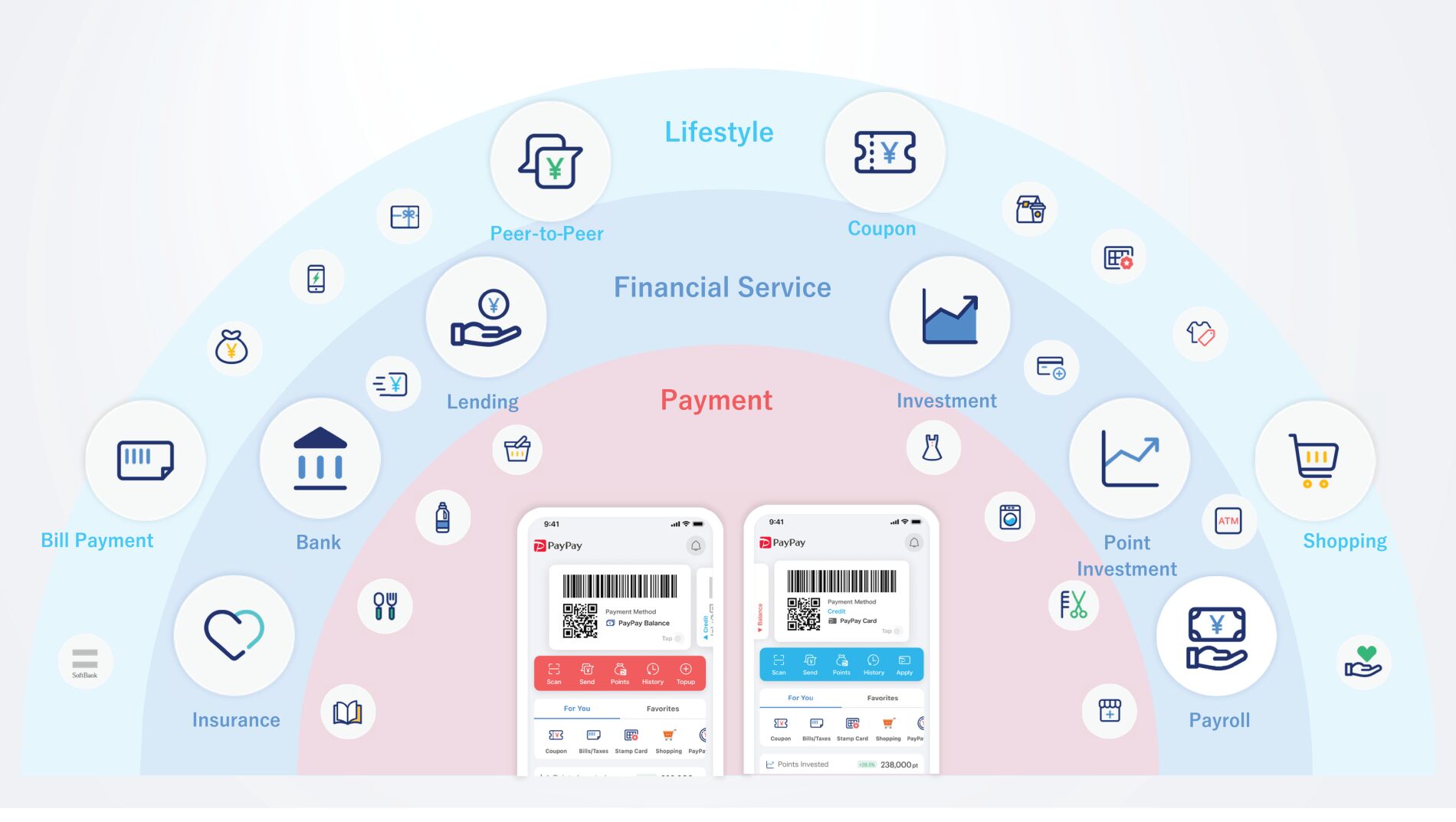
We offer a digital finance platform with services that range from easy-to-use payments services to a full-suite of financial services, designed to simplify and enrich the everyday lives of consumers and businesses in Japan. Payments services contribute to broad-based user engagement through transaction frequency, while financial services deepen and accelerate user engagement through cross-selling and long-term product relationships. Together, they function as mutually reinforcing pillars of our ecosystem and form the foundation of our user engagement strategy.

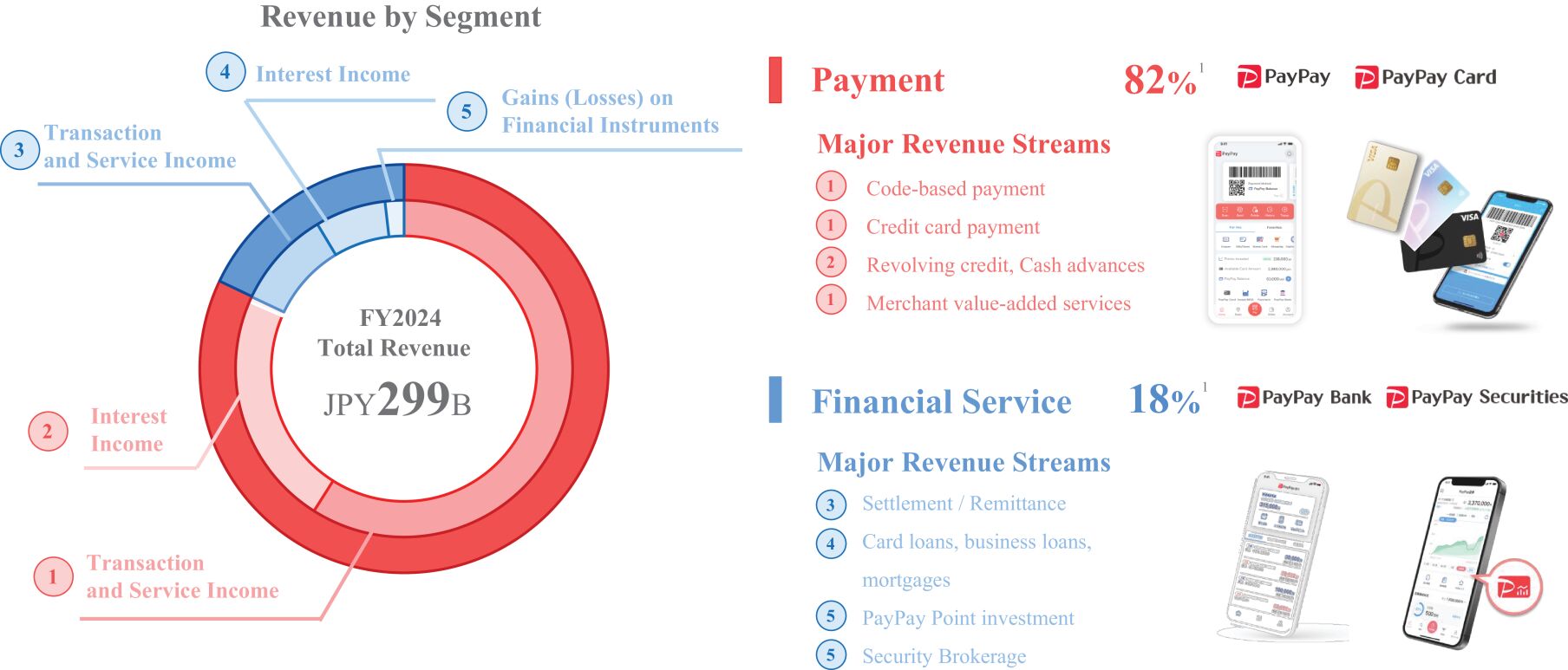
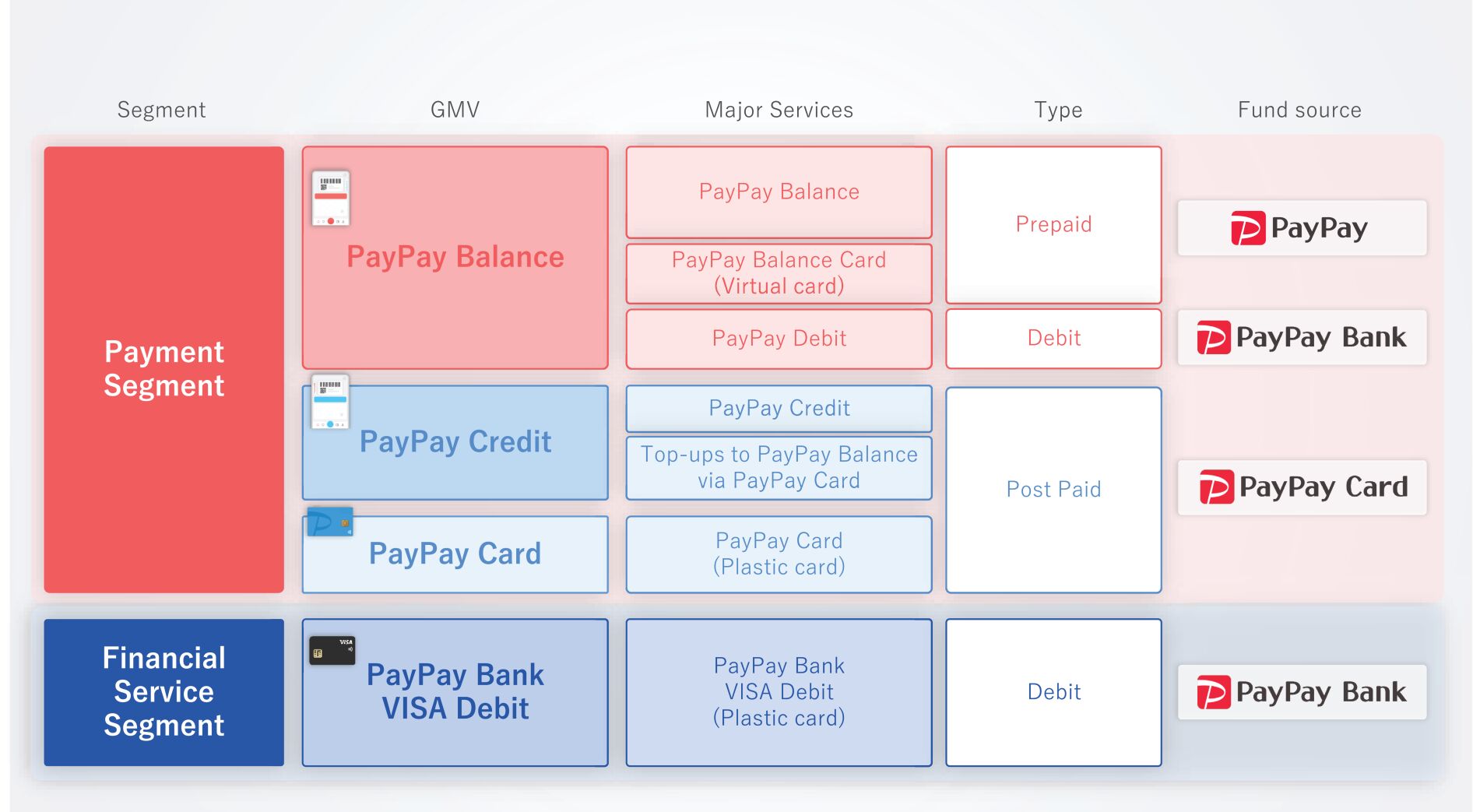
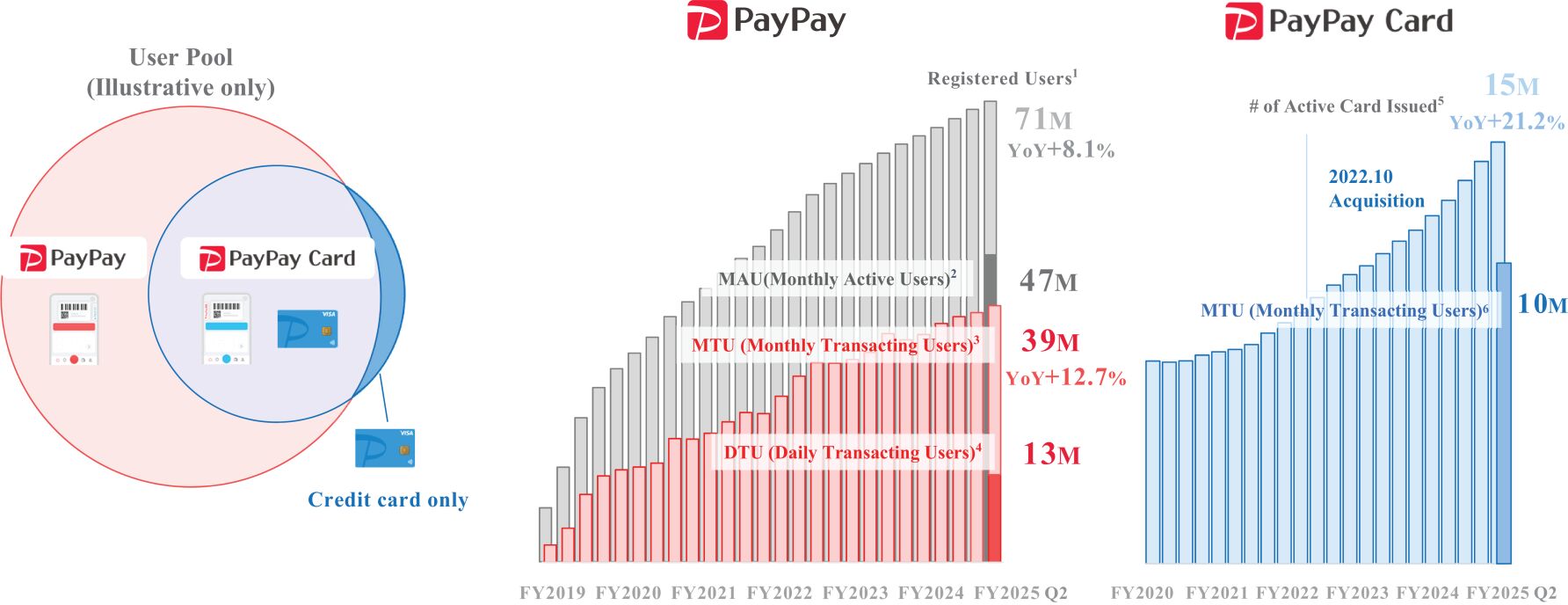
Payment business. Our payment business is anchored by PayPay, Japan’s leading code-based mobile payment platform, and PayPay Card, our integrated credit card service. Since its launch in 2018, PayPay has become one of the most widely used digital wallets in Japan, with approximately 71 million PayPay registered users as of September 30, 2025, and approximately 39 million MTUs during September 2025. PayPay allows users to make fast, secure payments by simply scanning a code with their smartphone, while offering merchants a low-cost, easy-to-adopt digital payment solution. Our users can charge their PayPay Balance via several methods and make payments from that pre-loaded balance or utilize PayPay Credit to leverage credit extended to them by PayPay, if approved for credit by PayPay Card. PayPay Card, through its more traditional credit card offerings, also offers revolving credit, cash advances, and installment plans for eligible card holders. PayPay Card had 15.2 million active cards issued as of September 30, 2025. Together, we recorded Payment Segment GMV of ¥15.39 trillion based on transactions processed through PayPay Balance, PayPay Credit and PayPay Card for the year ended March 31, 2025, reinforcing our dominant position in Japan’s code-based payments market. These services support a broad range of daily transactions—both offline and online—and form the foundation of our efforts to further deepen user engagement and expand monetization across our ecosystem.

Financial Service business. Our financial service business, anchored by PayPay Bank and PayPay Securities, complements our payment platform by offering seamless, app-based banking and investing services. PayPay Bank is integrated into the PayPay ecosystem and, as of September 30, 2025, had 9.5 million accounts with a total of ¥2,092.9 billion in deposits and ¥1,020.3 billion in loan balances, including card loans, business loans and mortgages. PayPay Securities, with its standalone app in addition to also being embedded in the PayPay app, reached 1.47 million brokerage accounts as of September 30, 2025, and serves a broad base of primarily first-time investors through user-friendly features. Our strategy in financial services is to further deepen integration with PayPay—recently exemplified by PayPay acquiring majority stakes in both PayPay Bank Corporation and PayPay Securities Corporation in April 2025—to create a unified digital finance platform where users can effortlessly manage spending, saving, borrowing and investing all within a single mobile experience.

As we have expanded the use cases and frequency of payment transactions, our payment business has not only scaled with user growth, but also contributed meaningfully to overall profitability. In parallel, we have expanded our revenue mix by deepening financial engagement with existing users, leveraging cross-selling between our payment and financial service businesses to increase average revenue per user and improve platform monetization. This deliberate expansion of revenue streams alongside our product ecosystem has enabled us to simultaneously grow revenue and expand margins, which we believe is rare and differentiating across the broader global fintech landscape.

As we expand our service offerings and grow our business, it is important to continue maintaining constructive and transparent relationships with the regulatory authorities that supervise our business. The scope and pace of our license acquisitions underscore the depth of our regulatory engagement and serve as further validation of our role in advancing national policy objectives, particularly the Japanese government’s goal of accelerating adoption of digital and cashless payments across the broader Japanese population. To date, we have expanded our business steadily and strategically through the acquisition of a comprehensive set of regulatory licenses, reflecting both our long-term commitment to compliance and the government’s support for Japan’s


2


Table of Contents

Confidential Treatment Requested by PayPay Corporation

Pursuant to 17 C.F.R. Section 200.83


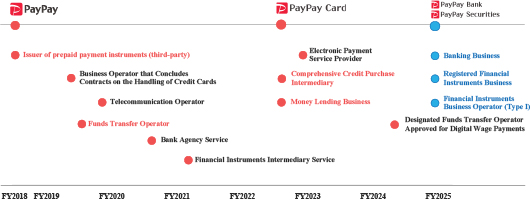
transition to a more digital and fintech-enabled financial ecosystem. We have obtained 13 licenses across payment and financial business domains, including licenses for banking, securities brokerage, credit card operations and funds transfer, enabling us to offer a broad range of regulated financial services directly through our platform.

As a result, for the year ended March 31, 2025, we generated total revenue of ¥299.1 billion, representing a two-year CAGR of 22%, and operating profit of ¥35.5 billion (representing a 12% operating profit margin). We transitioned from loss to profitability over the past three fiscal years, achieving profit for the year of ¥39.2 billion (representing a profit for the year margin of 13%) and Adjusted EBITDA of ¥58.7 billion (representing an Adjusted EBITDA Margin of 20%) for the year ended March 31, 2025. See “Management’s Discussion and Analysis of Financial Condition and Results of Operations—Non-IFRS Financial Measures” for a discussion of Adjusted EBITDA and Adjusted EBITDA Margin, and a reconciliation of these figures from profit (loss) for the year. These results illustrate our strong operating leverage and the scalability of our platform as monetization accelerates. As of September 30, 2025, borrowings on our consolidated statement of financial position were ¥546,763 million (including ¥364,675 million of borrowings in the Payment segment mainly related to PayPay Card Corporation’s credit card business operations).

Our Presence and Track Record

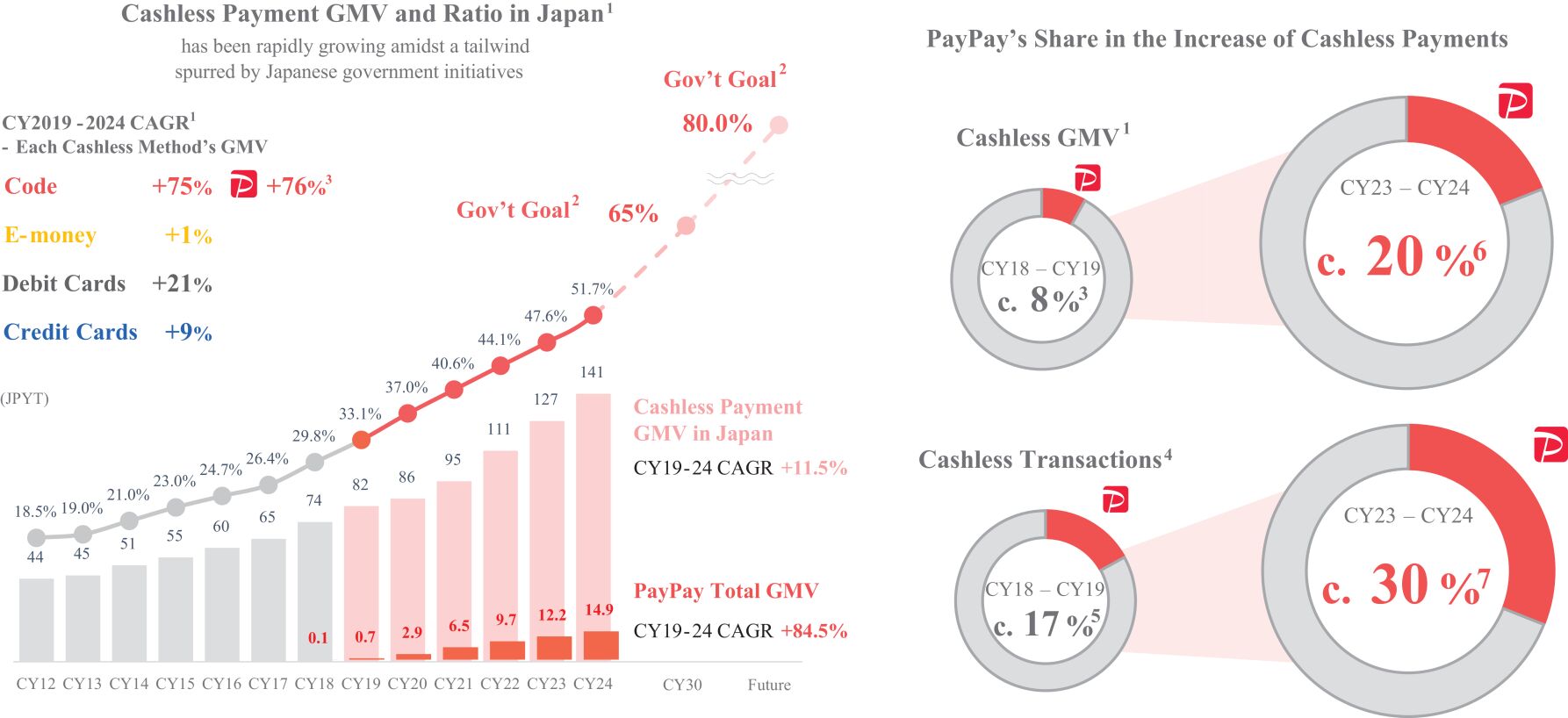
Japan has historically been a cash-centric economy, with cash comprising approximately ¥232 trillion of domestic private final consumption payment out of ¥305 trillion (or 75.9%) in 2018 according to statistics released by the Ministry of Economy, Trade and Industry, or the METI, on March 31, 2025, driven in part by structural factors such as high merchant onboarding costs and high transaction fees that limited the adoption of digital payments. Additionally, it reported that the ratio of cashless payments in Japan reached 51.7%2 in 2024, based on statistics released on March 31, 2025.

To address the abovementioned untapped opportunity, PayPay entered the market by waiving transaction fees for up to three years (and then charging transaction fees in later years) for small and medium-sized merchants, combined with low installation and operational costs. Unlike traditional credit card networks, we operate our own merchant network, enabling us to set fee levels independently and avoid third-party acquirer or network charges. This structural difference underpins our ability to provide services at lower cost. These measures expanded merchant participation and ease-of-use for users, reinforcing the expansion of our two-sided network. As more merchants began to accept PayPay, the overall value proposition for users strengthened, leading to increased user engagement and broader ecosystem participation. As a result, PayPay emerged as a leading force in Japan’s cashless transformation, achieving an extraordinary CAGR of 65% in transaction volume over the period from the year ended March 31, 2020 to the year ended March 31, 2025, reaching a Payment Segment GMV of ¥15.39 trillion based on transactions through PayPay Balance, PayPay Credit and PayPay Card for the year ended March 31, 2025.

We are distinguished by our ability to scale rapidly, serve a demographically broad user base, and sustain strong profitability. Although we had recorded loss for the year every year since our inception through the year ended March 31, 2024 due to our strict focus on the scaling of our business, we transitioned from loss to profitability starting from the year ended March 31, 2025. Our ecosystem now extends beyond payments into banking and investments, which led to a seamless integration of services through the PayPay app. Our regulated financial services reached 9.5 million bank accounts and over 20 million users for PayPay Point investment service as of September 30,

 
2 

The METI revised the method it uses to calculate the cashless penetration rate as of January 1, 2026 in its report entitled “Summary of the Cashless Promotion Study Group” issued in December 2025. Specifically, it changed the denominator of the calculation from “private final consumption expenditure” to “household final consumption expenditure excluding imputed rent from home ownership,” which raised the cashless penetration rate from previously reported levels.


3


Table of Contents

Confidential Treatment Requested by PayPay Corporation

Pursuant to 17 C.F.R. Section 200.83


2025. These achievements not only reflect our ability to scale digital finance infrastructure across both user and merchant touchpoints, but also underscore our track record of execution and continued leadership in driving Japan’s digital financial transformation. By bringing PayPay Bank Corporation and PayPay Securities Corporation into our group, we are now positioned to execute a fully integrated cross-selling strategy from payments to financial services, advancing our broader mission of accelerating digital finance adoption across Japan.

Market Opportunity

Japan represents a vast and rapidly evolving opportunity across our core businesses—payments, banking, and securities brokerage—as consumer behavior shifts toward digital solutions. Despite recent progress, the Japanese economy remains mainly cash-centric. Japan’s consumer payments market represents a substantial and under-penetrated opportunity, with continued growth expected as digital adoption accelerates. Japan’s consumer payments market represents a substantial and under-penetrated opportunity, with continued growth expected as digital adoption accelerates. In 2024, Japan’s private final consumption expenditure totaled approximately ¥330 trillion (equivalent to US$2.2 trillion) according to the METI as reported in “Calculation of Cashless Payment Ratio for 2024” released on March 31, 2025, forming the total addressable market for consumer expenditure. Of this amount, cashless payment volume reached ¥141 trillion (equivalent to US$0.9 trillion) in the same year, according to the same report, which represented a cashless penetration rate of 51.7%3, up from ¥74 trillion (equivalent to US$0.5 trillion) in 2018, or a cashless penetration rate of approximately 24.1%, reflecting a CAGR of 11% during the period from 2018 to 2024.

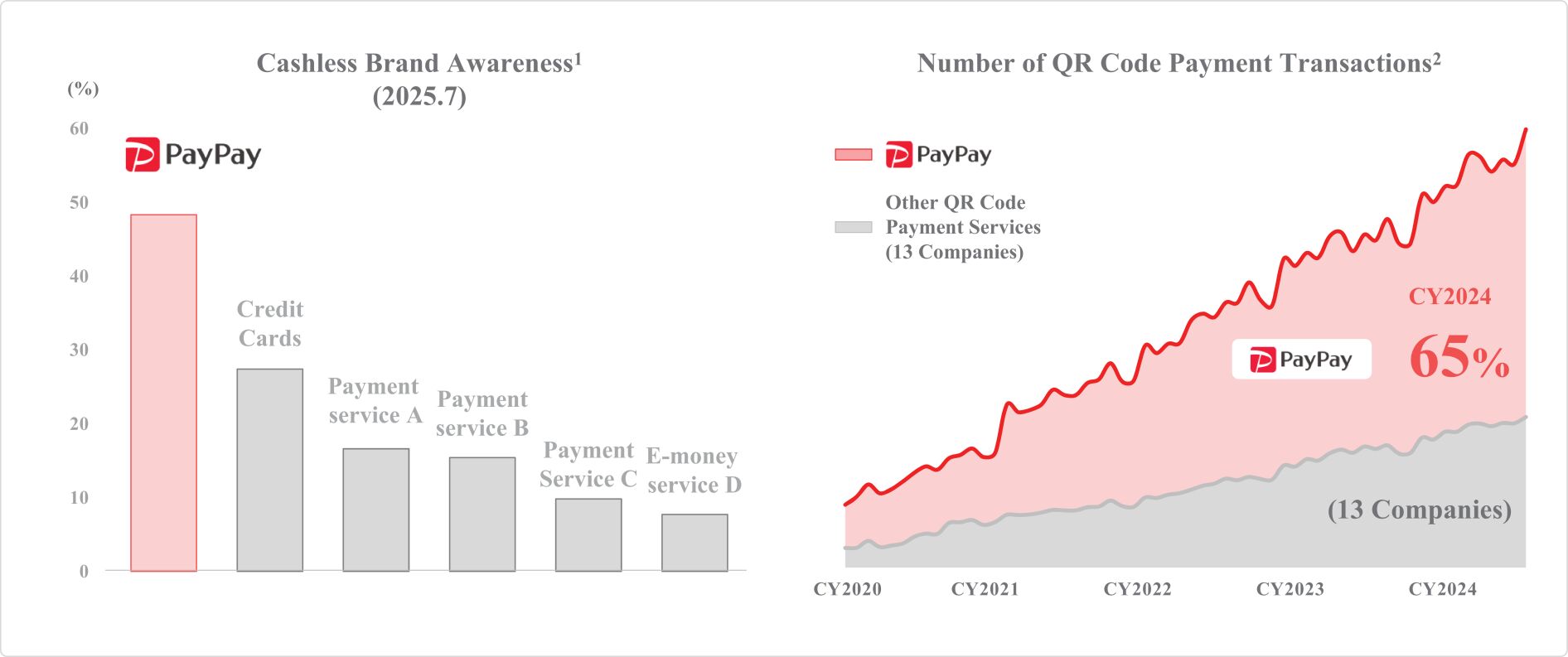
Growth has been particularly strong in mobile-first formats: of the overall cashless payment amount, code-based payments grew at a CAGR of 75% over the period from 2019 to 2024, while debit cards, credit cards and E-money expanded at CAGRs of 21%, 9% and 1%, respectively, over the same period, according to the METI as reported in the “Calculation of Cashless Payment Ratio for 2024” released on March 31, 2025 and the Cashless Promotion Council as reported in the “Survey on Code-Based Payment Usage Trends” released on March 14, 2025 (transactions made using credit cards via code are classified under “code-based payments” and are excluded from the general “credit card” category). Within this growing market, PayPay has emerged as the leading player, with a GMV CAGR of 76% over the period from 2019 to 2024. We captured approximately one-quarter of the overall incremental cashless payment volume in Japan from 2023 to 2024, which was approximately ¥2.7 trillion of approximately ¥14.3 trillion in growth. Based on information reported by industry associations, of the approximately 38.8 billion cashless transactions completed in Japan in 2024, we accounted for 20% of the total. The total transaction figure was calculated based on the following data: (i) credit card transactions reported by 26 credit card companies in a survey by the Japan Credit Association, (ii) debit card and electronic money transactions from 1,069 debit card companies and eight electronic money companies as released by the Bank of Japan and (iii) code-based payment transactions from 13 code-based payment companies, as reported by the Payments Japan Association. In the code-based payment market, we held 64% of GMV as of March 14, 2025, as reported by the Cashless Promotion Council in the Survey on Code-Based Payment Usage Trends.

The Japanese government has introduced multiple policy initiatives to promote digital finance adoption, including a national vision of achieving 80% cashless penetration, a considerable leap over the 51.7%1 cashless penetration as of the end of 2024. We have not only benefited from the cashless transition—we have played a foundational role in creating and expanding Japan’s digital payments ecosystem. We have aligned our strategy with public-sector efforts such as merchant subsidy programs and government-led campaigns to expand the use of mobile payments.

 
3 

The METI revised the method it uses to calculate the cashless penetration rate as of January 1, 2026 in its report entitled “Summary of the Cashless Promotion Study Group” issued in December 2025. Specifically, it changed the denominator of the calculation from “private final consumption expenditure” to “household final consumption expenditure excluding imputed rent from home ownership,” which raised the cashless penetration rate from previously reported levels.


4


Table of Contents

Confidential Treatment Requested by PayPay Corporation

Pursuant to 17 C.F.R. Section 200.83


Structural inefficiencies persist not only in payments, but also across the banking and securities sectors. There is meaningful opportunity for digital platforms to scale within still-offline financial verticals, which reflects a broader macro shift toward digitalization—a trend we have successfully leveraged to capture significant shares in multiple markets and which provides a deep, multi-year runway for continued expansion.

In parallel, Japan is also undergoing a national shift “from savings to investment.” This is being reinforced by the government’s expansion of the Nippon Individual Savings Account, or NISA, program, a Japanese government tax-free stock investment program for individuals, which has contributed to record growth in individual investment account openings. We believe these developments will continue to support the growth of digital brokerage and asset management services.

Taken together, these macroeconomic, structural and policy trends indicate continued long-term growth potential for Japan’s digital financial markets and support our expectations for the future development of our platform.

Our Competitive Advantages

Unique, Comprehensive Digital Finance Platform Powered by a Two-Sided Network

We operate a highly scalable, integrated digital finance platform that acts as an all-in-one solution for users and merchants, utilizing a robust two-sided network connecting tens of millions of users and millions of merchants. Our platform facilitates a unified ecosystem across payments and financial services. As a clear leader in Japan’s cashless payment market, we offer one of the most comprehensive and versatile service suites in the market, spanning daily payments, banking, credit, investments, and beyond.

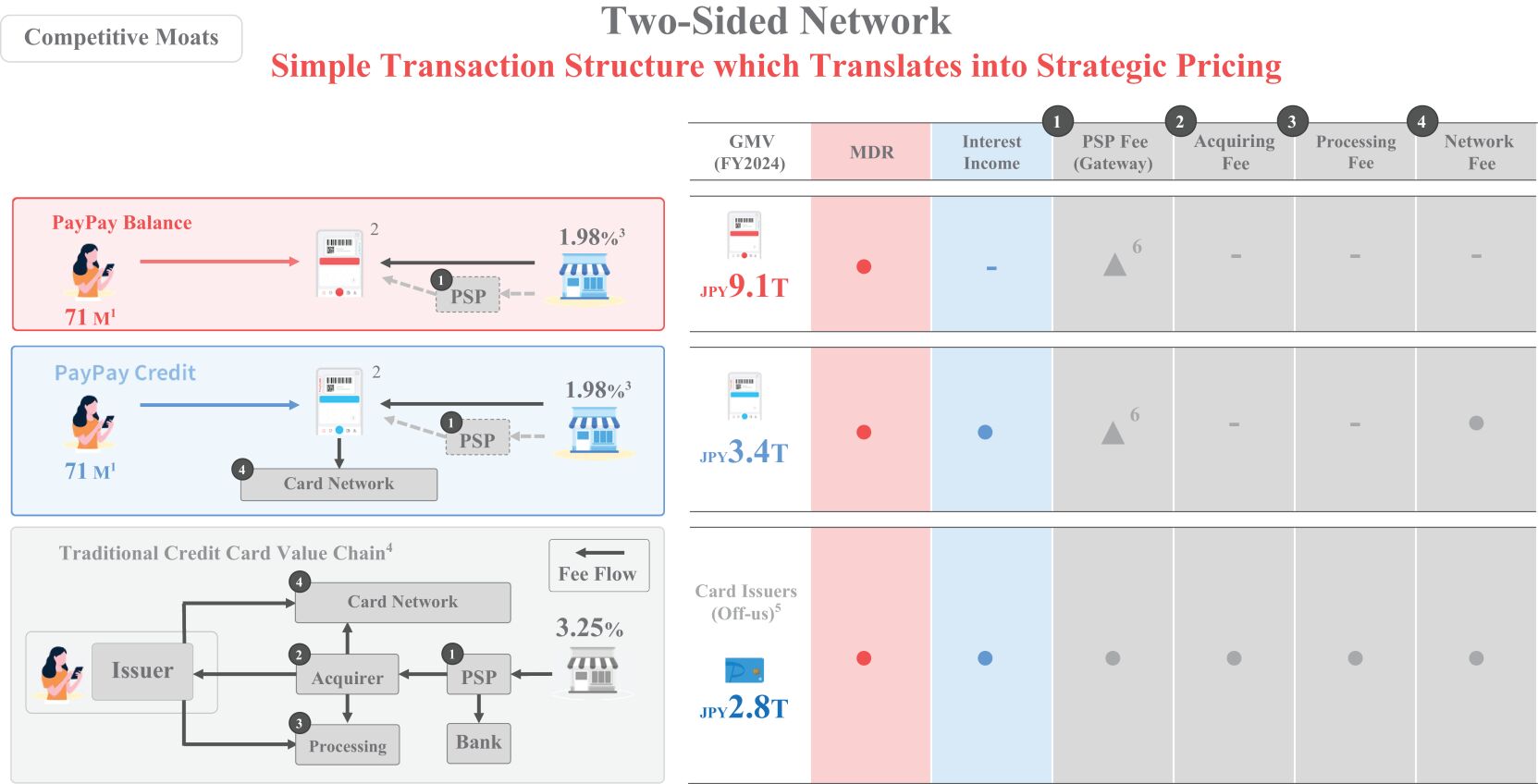
The foundation of our platform is the payment service, which enables deep engagement with users and merchants through network effects. As our user base expands and usage grows, it strengthens the incentive for additional merchants to adopt PayPay, further accelerating merchant acquisition. In turn, as more merchants adopt PayPay, the number of payment-acceptance locations increases, users benefit from greater convenience, driving increased usage. This mutually reinforcing dynamic between user activity and merchant participation is at the core of our two-sided network model, enabling us to scale rapidly across both sides of the platform and deepen engagement across the ecosystem. In addition, because we operate our own merchant network, we are able to process payments without relying on traditional third-party payment processors, external acquirers or brand / network providers, allowing us to retain a greater share of payment economics and minimize settlement outflows.

Our strong network effects have also driven the expansion of our financial services offerings. Greater engagement with our payment service creates natural opportunities to promote our internet banking and securities brokerage services, facilitating more efficient user acquisition. The growth of our financial services offerings generates cross-service synergies—users who adopt both payment and financial services exhibit higher average payment volume per user and stronger long-term engagement. This synergy forms a powerful feedback loop: active payment users serve as a springboard for financial product adoption, while financial services users tend to transact more payment volume. Our loyal users who also adopt financial services tend to be more engaged and may enter into transactions more frequently with higher amounts.

As our ecosystem has scaled and diversified to satisfy various financial needs of users and merchants, we can serve as a one-stop digital financial platform and create an integrated system of money circulation. This integrated approach to digital finance along with PayPay’s two-sided network is unique even when compared to other cashless payment providers, positioning us as both an enabler and beneficiary of Japan’s accelerating shift toward a digital finance economy.


5


Table of Contents

Confidential Treatment Requested by PayPay Corporation

Pursuant to 17 C.F.R. Section 200.83


Strong Value Propositions to Users and Merchants

We offer a comprehensive value proposition that meets the evolving needs of both users and merchants in Japan’s rapidly digitizing financial environment. For users, our platform delivers a seamless and intuitive experience built around smartphone-based payments, combining the ease of code-based and credit card transactions with compelling promotional incentives such as PayPay Points. These features not only facilitate everyday payments—from retail to transportation to utility bills—but also drive recurring engagement and higher transaction frequency. All services are accessible through a single mobile application that integrates payments, transfers, credit, and banking, providing users with a unified and convenient financial experience. Our user centric model allows us to weave our services into users’ daily life and capture non-discretionary spending in a near-ubiquitous variety of use cases, capturing offline and online payments, bill payments and P2P transfers, unlike traditional cashless players which we believe may have more limited touchpoints and focus on high-value transactions, which may constrain their ability to gather user data and expand into non-payment services.

For merchants, we provide a compelling value proposition centered on low-friction adoption and high-impact tools for business growth. Onboarding is fast and cost-efficient, with no upfront installation fees and competitively priced payment service charges level. Unlike many companies that rely on third-party networks to operate two-sided models, we maintain a highly self-contained value chain, conducting transactions directly with merchants. This structure minimizes external intermediary fees and enables us to offer lower transaction fee rates than issuer peers. We also support merchants with integrated digital marketing functions—such as in-app coupons, promotions, and loyalty programs—designed to increase visibility and encourage user spending. Additional solutions like PayPay for Business (our merchant-facing platform that provides onboarding, sales tracking and marketing campaign tools) streamlined settlement and reporting features, and actionable data analytics further enable merchants to improve operational efficiency and optimize performance.

Our broad merchant coverage, spanning both physical retailers and an expanding network of online businesses, complements our user proposition and reinforces the utility of our platform across daily life. By creating a trusted, feature-rich environment that enhances convenience for users and lowers barriers for merchants, we have established a strong foundation for continued engagement, high transaction throughput, and long-term monetization.

Significant Penetration of eKYC within our User Base

Our platform has achieved exceptional penetration of electronic Know-Your-Customer (eKYC) verification among our user base. As of September 30, 2025, 37.5 million registered users, or approximately 53% of registered users, had completed eKYC registration within our PayPay ecosystem. This level of eKYC adoption is unparalleled in the Japanese market and reflects both the trust users place in our platform and the simplicity of our onboarding experience. This puts us in a unique position to offer a frictionless entry point into our regulated financial services. This seamless flow from payments to financial services is a unique advantage to us, since no other provider offers comparable simplicity or scale. Compared to our three-year CAGR for registered users of 12% as of September 30, 2025, our three-year CAGR for users who had completed eKYC was 47%, showing the significant penetration of eKYC within our user base. In a regulatory environment that is becoming increasingly stringent regarding identity verification, our high eKYC penetration serves as a critical enabler of expansion into licensed financial services.

We have leveraged this eKYC foundation to create a unified eKYC, a feature that allows users who have already completed identity verification in PayPay to bypass part of the identity verification process when accessing services provided by PayPay Bank Corporation and PayPay Securities Corporation. We plan to expand this feature to cover credit cards as well. This unified eKYC dramatically streamlines onboarding flows. These frictionless entry points eliminate redundancies such as repetitive document uploads and identity verification processes, making our user journey faster, more intuitive, and more conversion-friendly, providing us with an advantage over our competitors which we believe are not able to onboard new users as quickly as we can.


6


Table of Contents

Confidential Treatment Requested by PayPay Corporation

Pursuant to 17 C.F.R. Section 200.83


Beyond efficiency, our high eKYC coverage is also a foundation for deeper user monetization. eKYC users are more likely to be eligible for and adopt financial products such as credit, loans, and investment accounts, which require users to verify their identity. The ease and simplicity of eKYC across our platform provide a foundation for the expansion of our platform across a wide array of services. With just their smartphone, our users can be onboarded onto other services using the platform they already engage with on a daily basis. Our ability to cross-leverage eKYC data across business lines increases the lifetime value of each user and supports user acquisition for financial services. In turn, this supports stronger margins and scalability as we pursue our broader mission of offering a comprehensive digital finance experience.

Sophisticated, Modern UI/UX

Our UI/UX design is a major reason users continue to choose our platform. We have continuously refined our UI/UX to deliver an intuitive, responsive and seamless app experience, utilizing data from our large user base and effectively applying our technology. Improving our UI/UX enables us to deepen user engagement, and the large user base we have cultivated through our PayPay app can be guided to adopt additional services throughout our broader ecosystem. We have made consistent design and functionality enhancements over time. These enhancements demonstrate our ongoing focus on user centric design, intuitive navigation, and integrated finance features, reinforcing PayPay’s positioning as a modern and sticky super app platform.

In addition to functionality, our platform is designed for reliability and ease of use. Users benefit from a highly responsive interface, consistently low error rates, and fast transaction processing. Key utilities such as P2P money transfers, real-time balance tracking, and payment notifications enhance the day-to-day usability of our ecosystem, while our app-based integration of financial products allows users to access deposits, loans, and investment services without leaving the PayPay environment. These features help position our platform not only as a payment tool, but also as a core infrastructure for digital financial life.

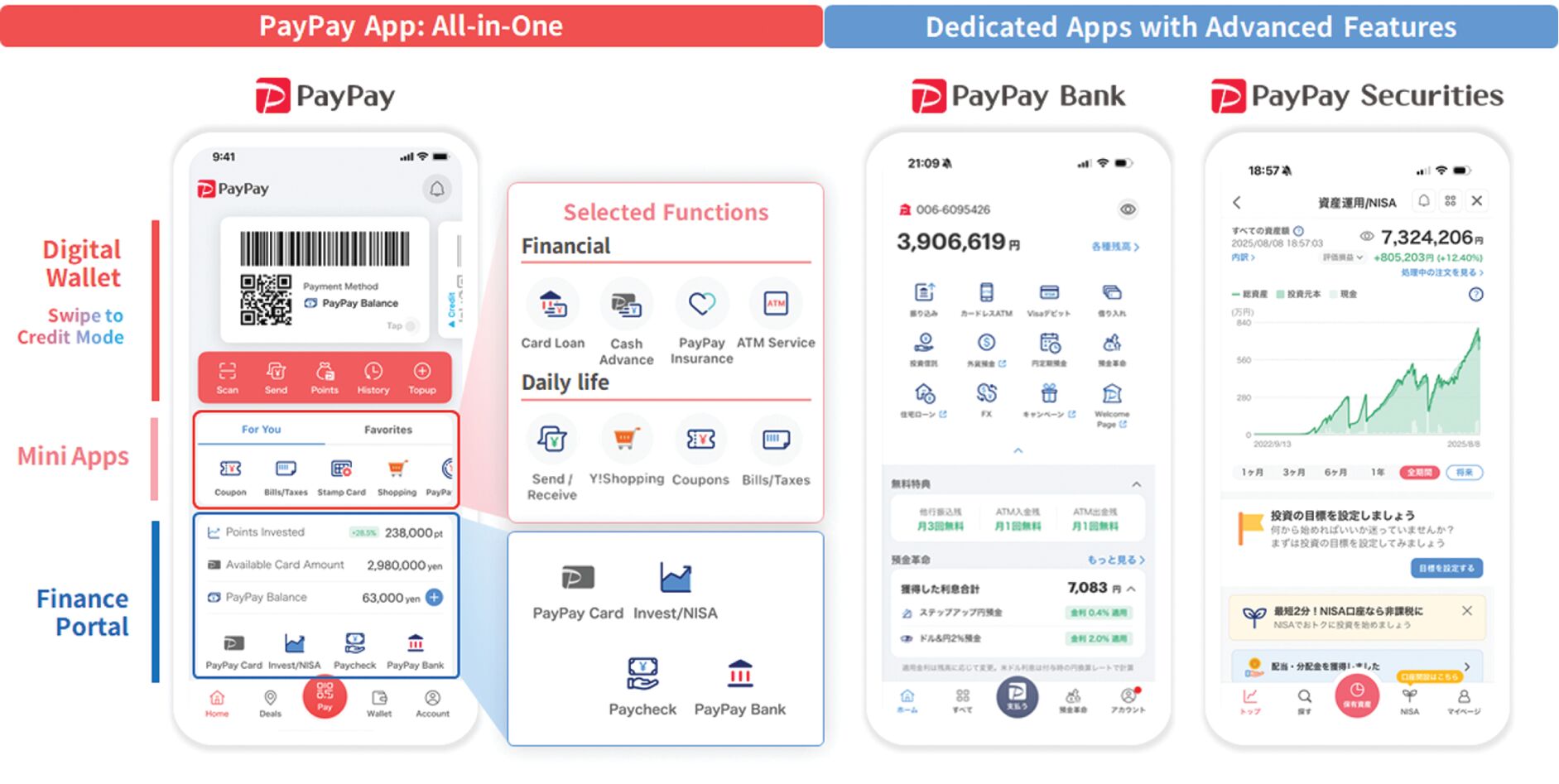
Moreover, our app is built as a “super app,” with multiple financial and non-financial mini apps accessible within the PayPay environment. By minimizing friction across services and eliminating the need for multiple apps, while still allowing users who wish to use dedicated apps with advanced features for PayPay Bank and PayPay Securities, users can access a broad range of services in one place, saving time and enabling a smarter daily life. This design promotes the exploration by our users of new services and boosts user engagement.

Strong Patent Portfolio Provides Differentiation

We believe our extensive patent portfolio provides a foundational competitive moat in Japan’s payment and financial services industry. According to independent patent analytics using the Biz Cruncher tool by Patent Result Co., Ltd., PayPay ranks at the top among Japanese payment and financial services companies in terms of overall patent score4, significantly outpacing both traditional financial institutions and fintech peers. Our position reflects not only the quantity but also the technical relevance and market applicability of our patents. The size and score of our patent portfolio suggest meaningful innovation leadership across mobile payments, digital identity, security, and transaction optimization technologies.

This intellectual property leadership is a key enabler of product innovation and operational scalability, particularly as we continue expanding into regulated financial services. Our patents span across both core payment technologies and adjacent areas such as credit infrastructure, fraud mitigation and data analytics.

 
4 

Patent Score is an indicator that quantifies “patent attention” as a deviation value. It is primarily quantified using examination progress information (history accumulated during the examination process). Patents with higher market attention receive a higher score, indicating greater recognition and influence.


7


Table of Contents

Confidential Treatment Requested by PayPay Corporation

Pursuant to 17 C.F.R. Section 200.83


In addition to strengthening our product capabilities, our strong IP position also creates barriers to entry and facilitates strategic flexibility. With a leading share of valuable patent assets, we are well-positioned to defend our market position, pursue licensing or collaboration opportunities, and ensure sustained differentiation in a rapidly evolving competitive landscape. As we continue to scale our user and merchant base and broaden our payment and financial services offerings, we expect our proprietary technology base to remain a core driver of sustainable growth and long-term value creation.

Technology Infrastructure Supporting Continuous Innovation and Growth

Our payment business, with Japan’s leading code-based mobile payment platform at its core, is underpinned by a vertically integrated and horizontally scalable technology platform that supports high performance, low-cost operations at scale. Built as a cloud-native, microservice-based architecture, our proprietary infrastructure enables us to handle massive transaction volumes with exceptional speed and reliability, while delivering a flexible foundation for rapid product development, personalization and risk management, and horizontal scalability that enables feature expansion supporting continued business growth.

Our technology stack consists of four core layers: the PayPay app interface, a core platform powered by microservice architecture and a proprietary platform driven by data, a cloud-native infrastructure layer, and an integration platform that connects to a broad network of financial and ecosystem partners. This structure provides the foundation for real-time transaction processing, precision risk assessment, and scalable expansion across both user and merchant use cases. We maintained a low cost of just ¥0.773 per transaction for the year ended March 31, 2025, and our system is capable of processing 1,250 transactions per second, reflecting strong cost discipline and operating efficiency at scale.

Our technology platform is bolstered by our investment in in-house engineering capabilities. This team of engineers drives continuous innovation across our services, enabling the development of features such as personalized credit assessment, dynamic risk decisioning, and the seamless integration of new financial products into our ecosystem. The combination of deep internal technical expertise and a modern, modular platform architecture ensures that we can rapidly adapt to user needs, regulatory requirements, and evolving market demands—positioning us to scale effectively as our user base and transaction volumes continue to grow.

We are accelerating product development through the adoption of generative AI, particularly in coding workflows. We are actively expanding AI-assisted tooling across additional functions to further enhance speed, efficiency, and innovation in our product development. For example, we are leveraging proprietary AI to accumulate and refine product development data over time, enabling further differentiation in tooling optimization and code quality.

Our ability to maintain high availability, transaction security, and rapid iteration cycles—while managing cost and complexity—differentiates us from many legacy financial institutions and fintech peers. This technical foundation is a key enabler of our business strategy and a core driver of our long-term competitive advantage.

Effective Security and Fraud Prevention

We have established a reputation for cybersecurity and fraud prevention, supported by a layered defense architecture, proprietary risk controls, and continuous investment in system integrity. Our platform is designed to meet the highest standards of security while maintaining the seamless user experience expected in modern digital finance. In addition to detecting transaction-level fraud, our system incorporates advanced anti-money laundering protocols and behavioral risk modeling to prevent misuse by bad actors, including impersonation and unauthorized use. As digital transactions scale in volume and value, our ability to offer a secure and trusted environment remains a core differentiator.


8


Table of Contents

Confidential Treatment Requested by PayPay Corporation

Pursuant to 17 C.F.R. Section 200.83


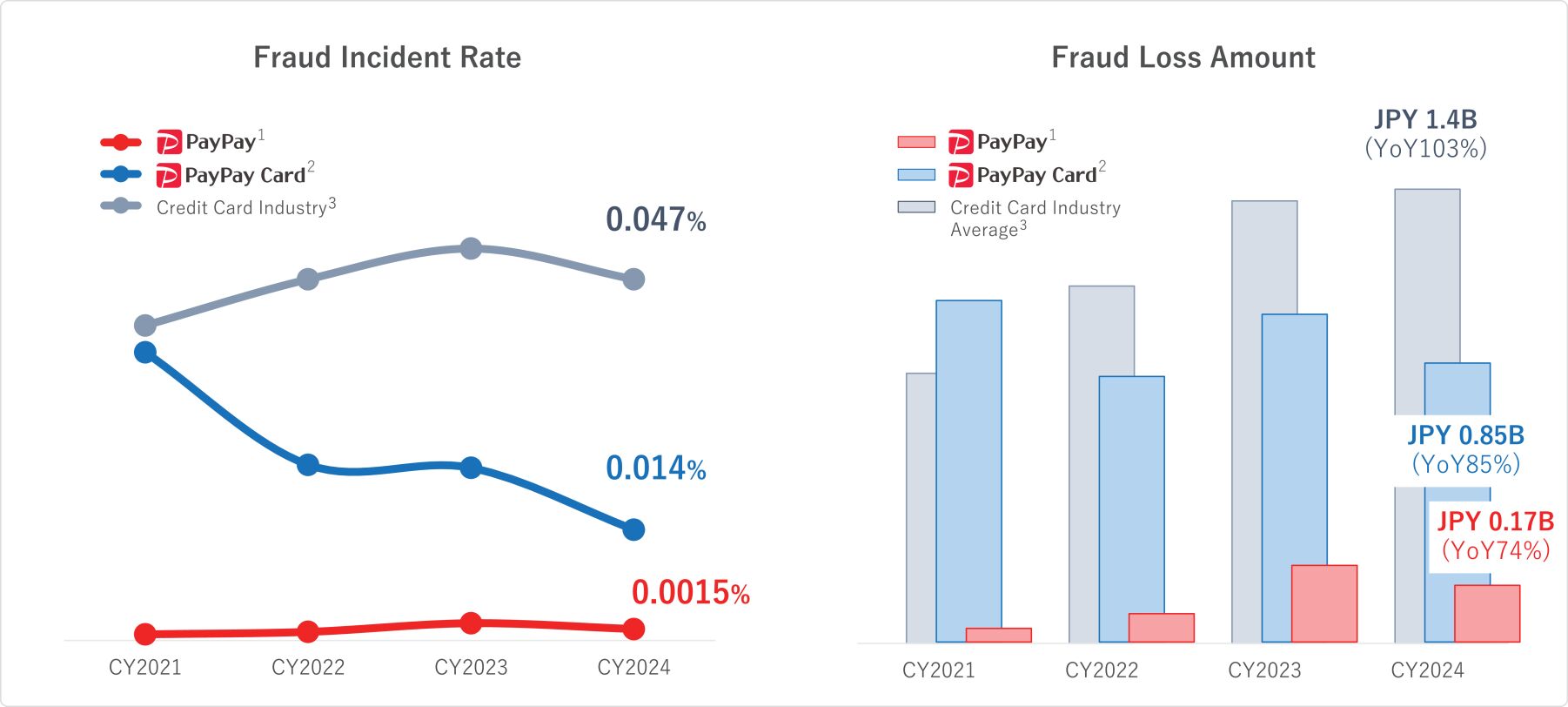
Our fraud incidence rates are consistently well below industry averages. In 2024, the fraud incidence rate for transactions on the PayPay app was just 0.0015%, and for PayPay Card, only 0.014%. By contrast, the fraud incidence rate across 40 Japanese credit card companies stood at 0.047% in 2024, more than three times higher than that of PayPay Card, and over 30 times higher than PayPay’s fraud incidence rate. Fraud loss amounts show a similarly favorable profile. In 2024, total fraud loss on the PayPay app was ¥0.17 billion for PayPay and ¥0.85 billion for PayPay Card, as compared to the average of ¥1.4 billion in losses for 40 credit card companies in Japan in the same year.

This is achieved through a sophisticated risk management system. Our system employs intricate algorithms that analyze a wide array of data, including user behavior, device characteristics, transaction details, merchant information, and location data. Our proprietary technology enables dynamic detection and prevention of suspicious activities at scale, while our security team continuously evolves our defenses to stay ahead of emerging threats. We believe our exceptional fraud prevention performance enhances both user and merchant trust, further reinforcing engagement and retention across our ecosystem.

Strategic Advantage From Being Part of the SoftBank Group Companies’ Ecosystem

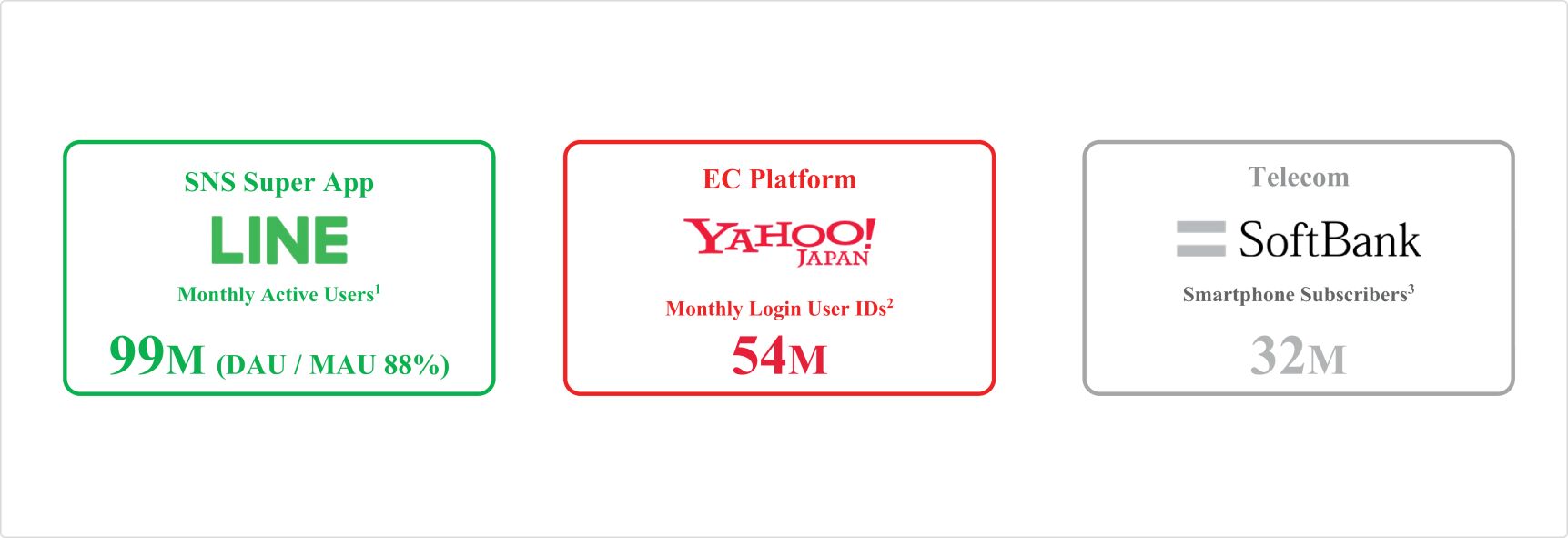
At PayPay, one of our key management policies is centered on openness and universality. Unlike certain competitors, we do not aim to confine our users and merchants within a closed ecosystem. While upholding this commitment to openness, as a core member of the SoftBank Group companies, we actively work towards mutual benefit by integrating with one of Japan’s most extensive and synergistic ecosystems. We achieve this by providing payment features to services offered by our group companies. We are closely aligned with key services offered by the SoftBank Group companies, including LINE, Japan’s most widely used messaging and social media, which had approximately 99 million monthly active users as of September 30, 20255; Yahoo! JAPAN, the country’s leading digital media and e-commerce platform, which had approximately 54 million monthly login user IDs as of September 30, 2025; and SoftBank Corp., Japan’s third-largest mobile telecommunications provider, which had approximately 32 million smartphone subscribers as of March 31, 2025. Together, these assets allow us to embed PayPay’s services natively into users’ daily digital touchpoints.

Our position within the SoftBank Group companies’ ecosystem gives us privileged access to infrastructure, data, user traffic, and capital—offering strategic advantages in scale, brand trust, and distribution that few standalone fintech companies can replicate. For example, our strategy to expand data-driven lending benefits from user insights gained through the rich touchpoints of SoftBank Group companies. We have been able to integrate services across the ecosystem, for example, by integrating P2P payments into the LINE app. This ecosystem synergy has been instrumental to our growth and will remain an important factor of our continued leadership in Japan’s digital finance sector.

Our Growth Strategies

Drive User Growth and Engagement through Targeted, Phase-Aligned Marketing

We intend to further expand our registered and active user base by leveraging our strong market presence and executing targeted marketing strategies tailored to each phase of our business evolution. Since our inception, we have adopted a disciplined, KPI-driven approach to marketing—aligning campaign design with business objectives and product maturity—to accelerate user acquisition, deepen engagement, and promote product adoption across our platform.

In the early phase of our growth, as a late entrant to the code-based payment market, we launched large-scale marketing campaigns to rapidly build a foundational user base and establish PayPay as a top-of-mind brand for mobile payments in Japan. These bold acquisition initiatives—unprecedented in scale—played a pivotal role

 
5 

LINE MAU is calculated based on the number of accounts, which does not equal the number of unique users.


9


Table of Contents

Confidential Treatment Requested by PayPay Corporation

Pursuant to 17 C.F.R. Section 200.83


in jumpstarting our platform, which experienced rapid user onboarding and became a leader in Japan’s emerging digital payments sector. By the end of March 2019, PayPay’s registered user base had reached approximately 6 million users.

We have consistently reinforced user engagement through large-scale promotional events, including the “Super PayPay Festival.” Each iteration of this campaign is tailored to reflect changes in our product portfolio and user behavior. These initiatives not only drove increases in registered users, MTUs and total payment volume—key metrics for establishing market leadership—but were also highly capital-efficient, with a majority of point-based marketing costs funded by external sources such as merchants, central government, municipalities, and strategic partners in the year ended March 31, 2025.

We began providing code-based credit payment functionality, PayPay Credit, in February 2022. Embedding credit functionality within the PayPay ecosystem enabled us to increase transaction value and expand monetization. Since 2024, as we transition toward becoming a comprehensive digital finance platform, our marketing efforts have further evolved to support new financial services. Notably, we launched targeted campaigns designed to promote adoption of PayPay Bank and PayPay Securities ahead of their group integration in April 2025.

Expand Monetization through Cross-Selling of Payment and Financial Services

With a base of approximately 71 million registered users as of September 30, 2025, we have established a dominant position in mobile payments, securing one of the largest sets of user touchpoints in Japan’s digital ecosystem. Our code-based payment service originally grew through high-frequency, small-ticket transactions, generating robust user engagement and paving the way for deeper monetization. As our GMV has continued to expand, we have also introduced larger-ticket payment features such as a physical PayPay card with revolving payment features, as well as value added services such as merchant marketing tools—further deepening user engagement and increasing transaction volume.

Building on this strong foundation, we have expanded into regulated financial services following the acquisition of banking and securities licenses. We offer users a full suite of financial services, including deposit, lending, and investment services. We aim to significantly expand our offerings by leveraging our large payment user base, proprietary technology, and seamless app integration to drive user acquisition and engagement across payment, banking and securities. Further, we may receive additional retail finance licenses to further enhance this growth trajectory.

Our app-based integration strategy is already yielding results. The adoption of eKYC by PayPay Bank and PayPay Securities into the PayPay app has created a seamless user experience, allowing users to open accounts in just two steps for banking, compared to seven steps through traditional channels. With 37.5 million users onboarded via our eKYC as of September 30, 2025, we are uniquely positioned to offer a frictionless entry point into the regulated financial services. This seamless flow from payments to financial services is a unique advantage to us, since no other provider offers comparable simplicity or scale.

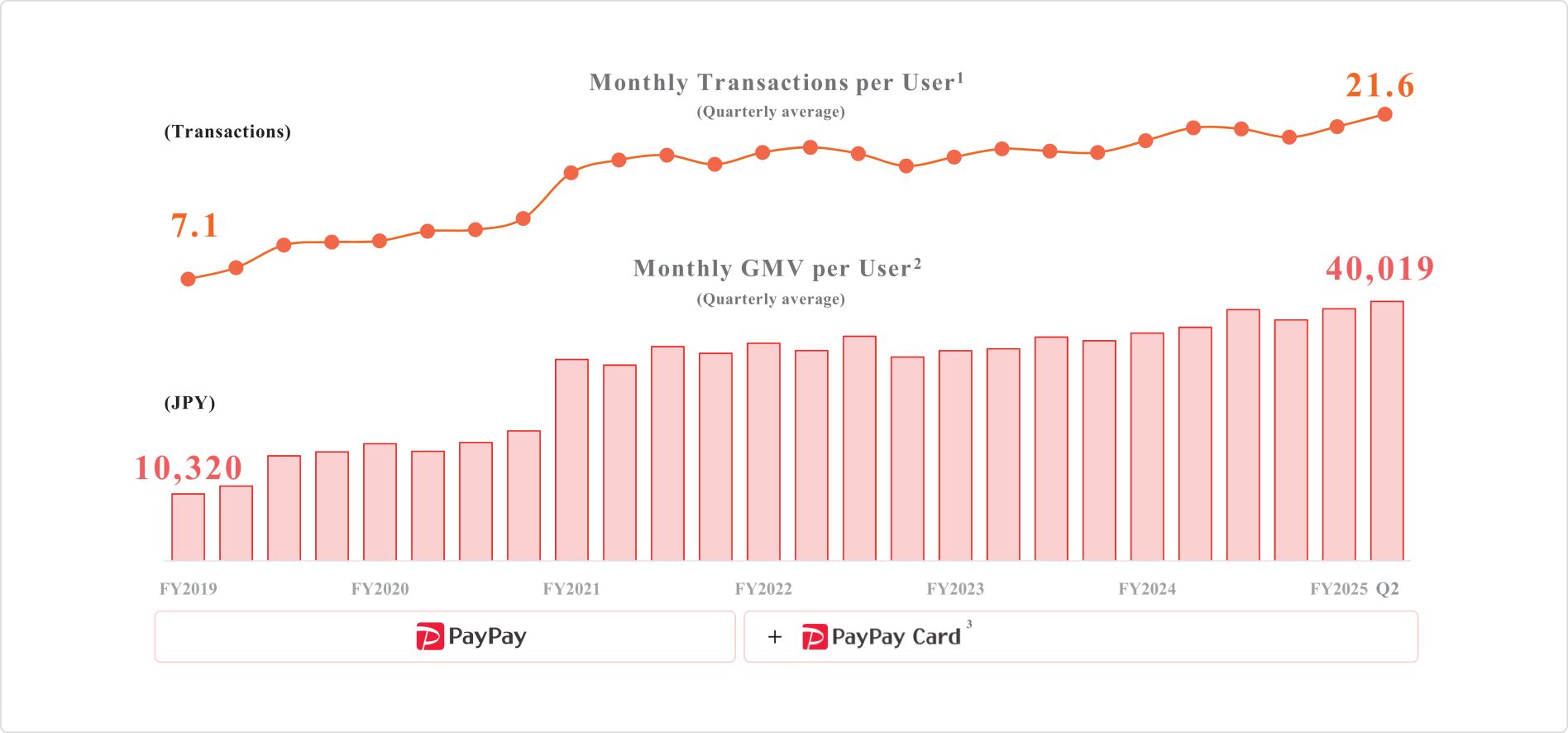
The next phase of our strategy is to deepen monetization by leveraging our ecosystem to unlock cross-sell opportunities between payments and financial services. Users who adopt both services exhibit higher average payment volume per user and stronger long-term engagement. We believe the more products our users adopt, the more GMV we generate. For the year ended March 31, 2025, the average Monthly GMV per PayPay App MTU was ¥35,600. Average Monthly GMV per user was higher with each additional product adopted by our users. Users who just used the PayPay payments service had an average Monthly GMV of ¥23,400, users who used both PayPay and PayPay Card had an average Monthly GMV of ¥66,900, users who added PayPay Bank had an average Monthly GMV of ¥83,100, while users who used all three of those and PayPay Securities had an average


10


Table of Contents

Confidential Treatment Requested by PayPay Corporation

Pursuant to 17 C.F.R. Section 200.83


Monthly GMV of ¥136,000. This synergy creates a powerful feedback loop: active payment users form a natural base for financial product adoption, while financial services users tend to transact more payment volume. Our loyal users who also adopt financial services tend to be more engaged and may exhibit higher transaction values. These dynamics allow us to increase revenue per user and drive lifetime value across our platform.

In recent years, we have achieved significant enhancement in monetization, reflecting both increased user activity and higher monetization per user. Notably, this growth was driven by both payment-related revenues, such as increased GMV, higher usage of revolving credit and value-added merchant services, and by financial services revenues, including interest income from loans and fee income from securities brokerage services.

Looking ahead, we see continued upside in both payments upsell—through growing transaction frequency, increased use of credit products, and broader adoption of coupons and merchant tools—and financial services cross-selling, including deposit and loan expansion, investment scaling, and new product launches. As our digital finance platform matures, we believe our ability to drive revenue through deeper engagement across our payments and financial services businesses will be a key driver of long-term growth.

Drive Continued Revenue Growth Through Deeper Payment Engagement

We aim to further expand our GMV by deepening user engagement across our integrated code-based and credit card payment services, while continuing to grow both our user base and merchant network. Our payment business remains the core engine of our growth, and we believe it has significant potential for long-term GMV expansion.

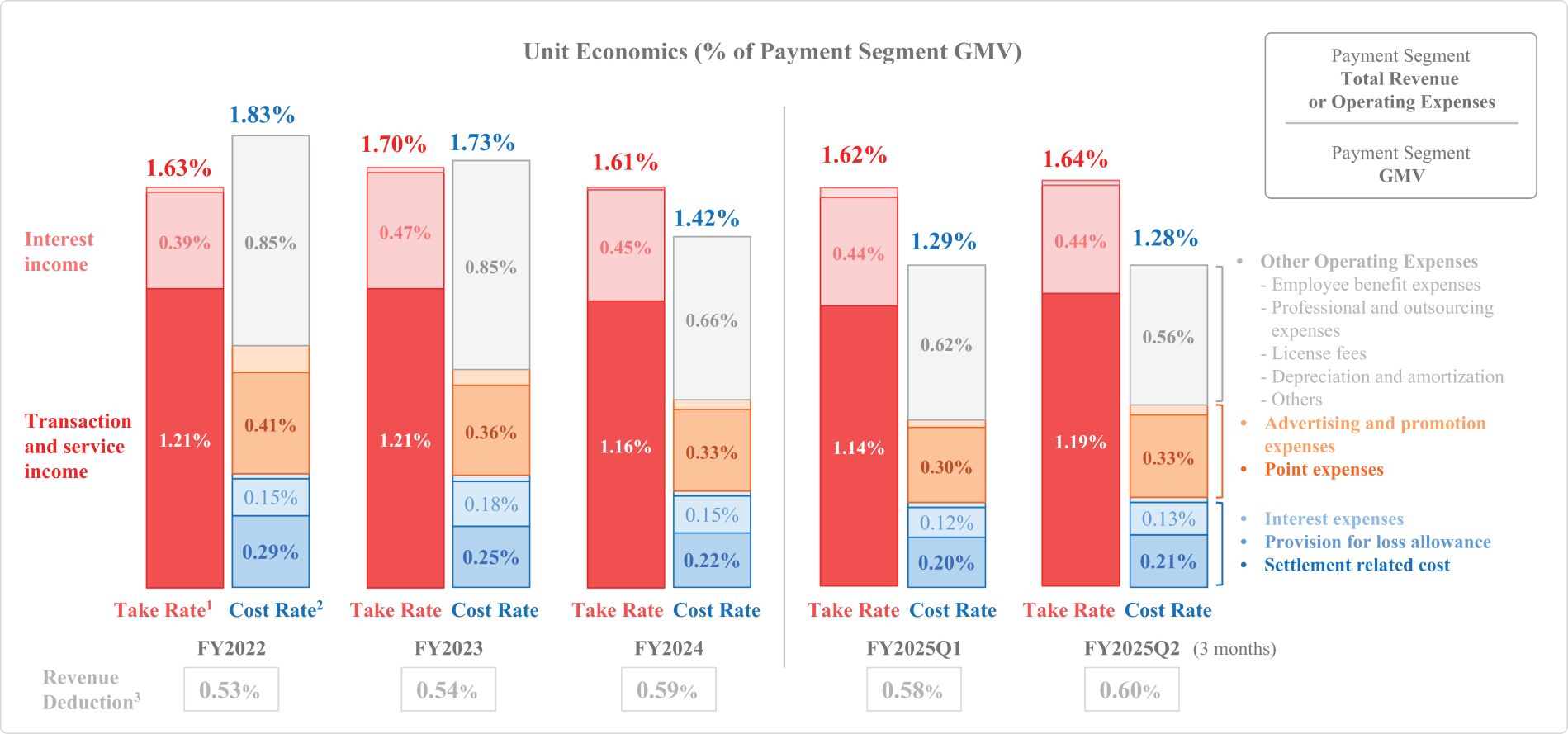
Revenue growth for our payment business is driven by GMV growth, increases in transaction fees and increases in interest income. To support further GMV growth, we are executing targeted initiatives across several fronts. These include expanding code-based payment adoption through offline and online campaigns, with a focus on increasing active transacting users (Monthly Transacting Users) and monthly transaction size per active transacting user (Monthly GMV per User), which are the two essential contributors to GMV growth. We are also deepening the integration of PayPay Card with code-based payments to promote larger-ticket and credit-based transactions and driving monetization through increased adoption of credit features. On the other hand, the path to long-term profitability for the payment business is also underpinned by Take Rate expansion and Cost Rate control. We intend to drive Take Rate expansion by product mix enrichment, such as increasing the share of online payments and expanding interest income from revolving balances and cash advances. This strategy has already begun to bear fruit, as our ratio of Online GMV (excluding GMV from transactions made within e-commerce services operated by LY Corporation), which has a higher Take Rate, to total GMV doubled from 7% in the year ended March 31, 2023 to 14% in the year ended March 31, 2025. At the same time, Cost Rate control is supported by operational efficiencies and economies of scale, as well as ongoing reductions in fund sourcing costs through direct bank integration and improved deposit structures. Furthermore, we are increasing our merchant base by offering value-added services that improve merchant sales, user retention and operation funding. We believe these efforts will continue to strengthen the utility of our ecosystem for both sides of the platform.

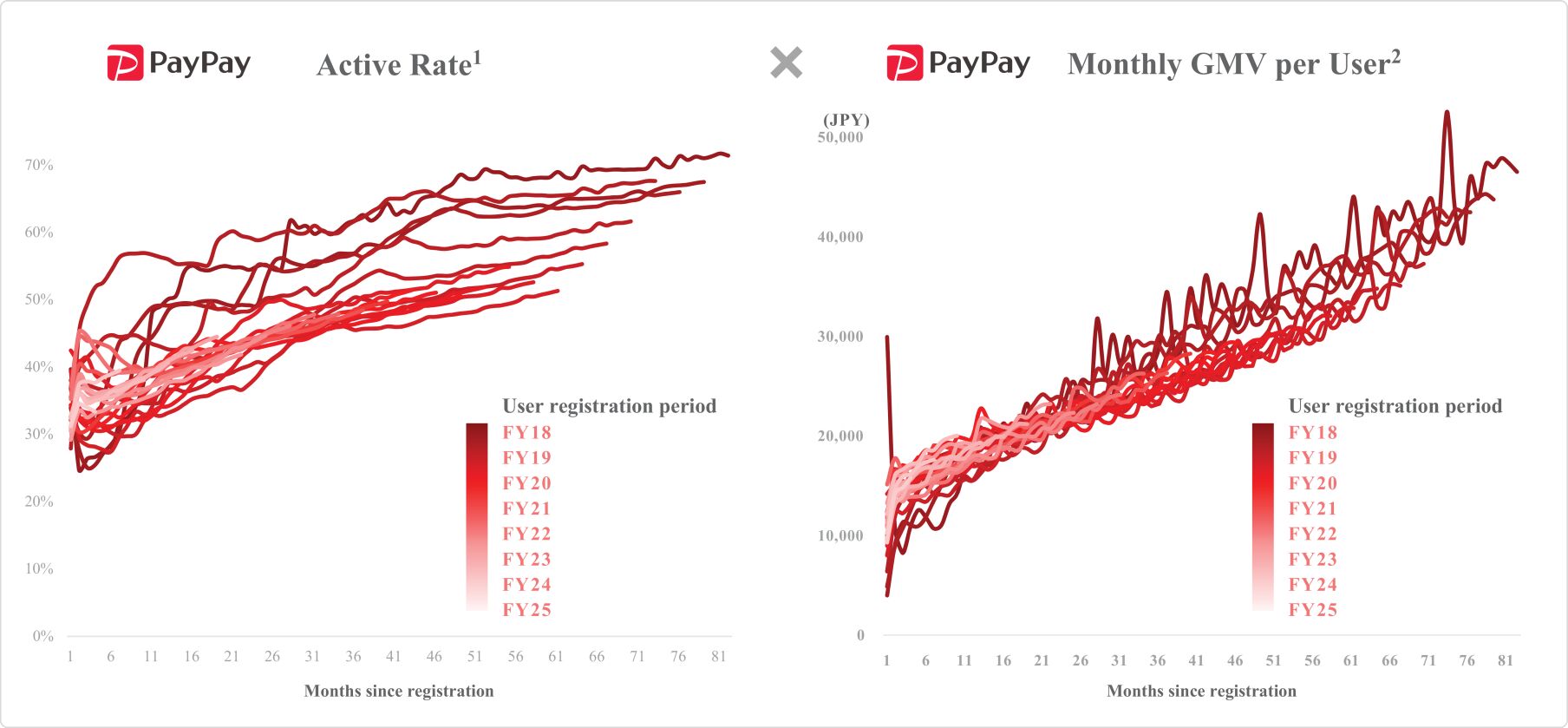
We also observe encouraging structural indicators of growth in GMV per User. Across all periods, registered user cohorts from the three months ended December 31, 2018 through the three months ended September 30, 2025, we have seen that the longer a user remains on the platform, the higher their active rate and Monthly GMV per User—evidence of sustained engagement and lifetime value. In particular, users who adopt both code-based and credit-based payments show significantly higher spend per month, and greater adoption of additional services over time.

As we scale, our strategy is to drive payment volume growth not only through user acquisition, but increasingly through higher transaction frequency, greater share of users’ total spend, and broader credit


11


Table of Contents

Confidential Treatment Requested by PayPay Corporation

Pursuant to 17 C.F.R. Section 200.83


utilization. With a proven track record of business execution and a loyal, expanding user base, we believe our payment business will continue to serve as a foundation for sustainable GMV and revenue growth.

Accelerate Growth in Financial Services Through Platform Integration

Our financial services model is underpinned by two key drivers: deposit volume and net interest margin, or NIM, which we calculate as net interest income divided by quarterly average total interest-earning assets. Following the acquisition of PayPay Bank, we expect to further expand NIM through reducing the guaranteed secured portion and improved loan-to-deposit ratio and efficient capital allocation. On the deposit side, we see substantial room for growth in both the number of bank accounts and average deposit balance per user, supported by initiatives such as our “Deposit Revolution” campaign launched in December 2024, which offers market-leading yields of 2.0% to individual users. For merchants, we are driving adoption through features such as payouts as early as the next day, which serve as a gateway to broader banking use cases including salary disbursement.

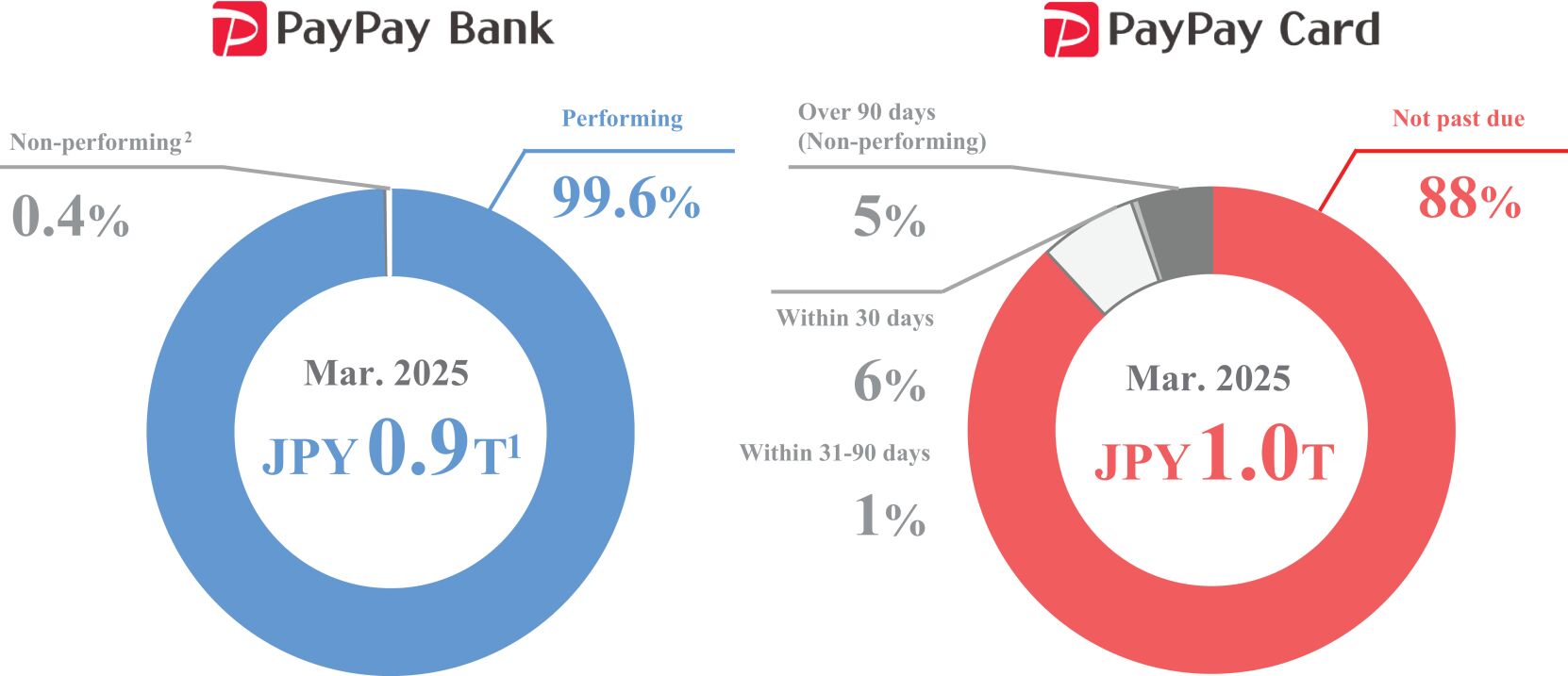
Our next frontier is the scaling of credit and lending services. We have developed a proprietary data-driven credit model, built on our extensive transaction and behavioral data from approximately 71 million users as of September 30, 2025 and 7.8 billion transactions via the PayPay app in the year ended March 31, 2025. This rich data set underpins our risk evaluation for revolving credit, cash advances, and merchant financing, all of which are already showing traction. Due to this data-rich model, PayPay Card Corporation’s approval rate has improved, which has led to a steady increase in the number of active cards issued by PayPay Card Corporation, contributing to consolidated GMV growth. After fully acquiring PayPay Card Corporation in October 2022, we increased the number of active cards issued by 1.7 times from 9.1 million as of September 30, 2022 to 15.2 million as of September 30, 2025. Alongside our efforts to actively manage credit cost, we have also increased PayPay Card’s total revolving and cash advance balance by 1.2 times from ¥214.5 billion to ¥461.4 billion over the same period. Going forward, we intend to horizontally expand this lending framework into new areas. Our PayPay Card business is continuing to grow quickly. For example, we were the single fastest growing card issuer in Japan for the six-month period ended September 30, 20256. Through the know-how we have accumulated from PayPay Credit and PayPay Card, particularly from revolving payments, we plan to expand our offerings in the consumer loan market. We are able to utilize this data, together with our credit models that are refined on a daily basis, to extend credit to customers with no prior credit history. Likewise, the data and insights we have gained regarding merchants’ creditworthiness through our merchant financing business position us to expand into the large commercial lending and business loan market (for more information on PayPay Funding, our merchant financing offering, see “—Our Products and Services—Other Value-Added Services—To Merchants”). For instance, because approximately 75% of merchants who receive funds through PayPay Funding become repeat users, we expect to expand this offering beyond the currently limited merchant base. Our data on merchants positions us uniquely to understand their funding needs and enables us to pre-screen merchants, allowing them to obtain funds immediately when they need them. In the future, we are considering broadening this data-driven financing model into additional merchant loan products and, subject to regulatory requirements, consider pathways for PayPay Bank to deliver similar online financing offerings. We believe these initiatives will enable us to further monetize our data advantage, while maintaining appropriate risk discipline. Since we acquired a majority stake in PayPay Bank Corporation in April 2025, we have offered additional products, including debit QR code payment, business loans guaranteed by a credit guarantee association as well as digitalized and data-driven personal loans. We are currently in the process of fully

 
6 

The net increase during the relevant period was calculated by PayPay Corporation based on the number of credit cards issued as of March 31, 2025 and September 30, 2025 as disclosed by PayPay Card, Sumitomo Mitsui Card, Rakuten Card, AEON Card, d CARD, au PAY Card, EPOS Card, and Credit Saison. With respect to AEON Card, as its parent company, AEON Financial Service Co., Ltd., has a fiscal year ending in February, and the net increase was calculated based on the number of credit cards issued as of February 28, 2025 and August 31, 2025. Credit cards affiliated with Mitsubishi UFJ Financial Group, Inc. and Mizuho Financial Group, Inc. were excluded from the aggregation due to the unavailability of disclosed data on the number of credit cards issued.


12


Table of Contents

Confidential Treatment Requested by PayPay Corporation

Pursuant to 17 C.F.R. Section 200.83


integrating and leveraging PayPay Bank products and services with our payment system and plan to focus our immediate efforts on transitioning to an in-house cloud-native next-generation system, and increasing loan products utilizing our proprietary data-driven credit model. Our longer term goal is to switch to a fully in-house next-generation core banking system in addition to expanding our lending business, which currently consists primarily of mortgages, by increasing our market share of SME loans, through fully effectuating our data-rich model.

Furthermore, in the two years since PayPay Corporation became the largest shareholder of PayPay Securities Corporation with a 35% shareholding and became our equity-method affiliate, the number of brokerage accounts has grown from 0.5 million to 1.47 million. Most recently, after acquiring a majority ownership position in April 2025, PayPay Securities Corporation also recorded operating profit for the first time on a non-consolidated basis for the three-month period ended September 30, 2025. Going forward, we aim to increase our offerings for PayPay Securities, refine our UI/UX and further develop and integrate PayPay Securities products and offerings with our payment system.

By integrating internet banking and securities directly into our ecosystem and leveraging proprietary data for our credit model, we are building a digital finance platform with diversified revenue streams and attractive cost structure. As our financial services scale, we expect it to be a key contributor to both revenue growth and margin expansion over the medium-to-long term. We are also seeking opportunities for streamlining operations through tighter control of promotion and acquisition costs, bringing key system functions in-house, and improving workforce efficiency, all of which support improved unit economics and long-term scalability.

Summary of Risk Factors

Investing in the ADSs involves significant risks. You should carefully consider all of the information in this prospectus before making an investment in the ADSs. Below is a summary of the principal risks we face, organized under relevant headings. These risks are discussed more fully in the section titled “Risk Factors.”

Risks Related to Our Business


If we fail to manage our growth effectively, we may be unable to execute our business plan or maintain high levels of service and satisfaction.


We may fail to attract new users, retain our active users or expand the scope of our relationship with our active users, our business, results of operations, financial condition, cash flows and prospects could be materially and adversely affected.


We may be unable to attract new merchants to utilize our services, grow our relationships with our existing merchants, and increase transaction volumes across our payment settlement services.


We may face challenges in maintaining and expanding synergies between our code-based payment settlement services and our credit card payment services.


Our ability to continue to successfully operate and grow PayPay Credit is subject to several risks.


Any failure to successfully integrate PayPay Bank Corporation and PayPay Securities Corporation with our group could materially and adversely impact our future business and operations.


We may not be able to realize the anticipated benefits, synergies and efficiencies from the integration of PayPay Bank Corporation and PayPay Securities Corporation.


13


Table of Contents

Confidential Treatment Requested by PayPay Corporation

Pursuant to 17 C.F.R. Section 200.83


We may not be able to maintain and strengthen the ecosystem effects of our platform.


There is no assurance that our alliances with the shareholders of our consolidated subsidiaries and equity-method affiliates will be successful.


If the cashless payments industry and the digital financial services industry in Japan do not continue to expand and develop as we expect, our business, financial condition and results of operations could be adversely affected.


We had a history of losses in the past and we only recently achieved profitability, which we may not be able to maintain, and we may record losses and negative cash flow in the future.


Our ability to increase revenue and profitability, particularly for our Payment segment, depends on our pricing strategy and the expansion of our service offerings, both of which we may not be able to implement successfully.


We participate in markets that are competitive with continuously evolving technology and consumer needs, and if we do not compete effectively with established companies and new market entrants, our business, results of operations, cash flows and financial condition could be materially and adversely affected.


Our business depends on a strong and trusted brand, and any failure to maintain, protect, and enhance our brand, or any unfavorable media coverage, could materially and adversely affect our reputation, business, financial condition, results of operations, cash flows and prospects.


We depend on key management, as well as our experienced and capable employees, and any failure to attract, motivate, and retain our employees could harm our ability to maintain and grow our business.


We identified material weaknesses in our internal control over financial reporting and may identify additional material weaknesses in the future or otherwise fail to maintain proper and effective internal control over financial reporting.


We are exposed to credit risk and the ability of various counterparties to pay us.


We are exposed to interest rate risk and other market risks, including foreign exchange risk.

Risks Related to the SoftBank Group Corp. and SoftBank Group Companies


We collaborate with SoftBank Group companies in the provision of our services. Any failure by such companies to continue to support our services, or a material change in our relationship with such companies, could adversely impact our services and could impact our overall business, financial condition, cash flows and results of operations.


After the completion of the offering, our current shareholders will continue to collectively hold substantial shareholdings and exercise influence over our operations.

Risks Related to Technology, Information Systems and Intellectual Property


Failure to maintain or improve our technology infrastructure could harm our business and prospects and materially and adversely affect our business and reputation.


14


Table of Contents

Confidential Treatment Requested by PayPay Corporation

Pursuant to 17 C.F.R. Section 200.83


We rely on mobile operating systems and application marketplaces to make the PayPay app available to participants that utilize our platform, and if we do not effectively operate with or receive favorable placements within such application marketplaces, our usage or brand recognition could decline and our business, financial results, cash flows and results of operations could be materially and adversely affected.

Risks Related to Laws, Regulations and Compliance


Failure to comply with the existing laws and regulations applicable to our business could subject us, or our subsidiaries or our associates, as applicable, to enforcement actions and penalties and otherwise harm our business, as well as divert our management’s attention and resources and result in increased costs.

External Risks Related to Economic Conditions and Other Factors


Unfavorable economic conditions in Japan could have a material adverse effect on our business, financial condition and results of operations.

You should also consider the additional risks disclosed under each subheading of the section titled “Risk Factors.”

Our History and Corporate Structure

We were established in Japan on June 15, 2018 under the corporate name of Pay Corporation, as a joint venture between SoftBank Corp. and Yahoo Japan Corporation (currently LY Corporation), with the aim of developing and offering electronic payment services. In July 2018, we changed our corporate name to PayPay Corporation. We are authorized to conduct our lines of business under Article 2 of our articles of incorporation.

On July 30, 2021, we completed an issuance of our shares (except for the conversion of Class A preferred shares into common shares described below), after which SoftBank Corp. held 960,000 shares (275,000 common shares and 685,000 Class A preferred shares), Yahoo Japan Corporation held 960,000 shares (275,000 common shares and 685,000 Class A preferred shares) and SoftBank Group Corp., the parent company of SoftBank Corp. and Z Holdings Corporation (currently LY Corporation), held 830,000 of our shares (550,000 common shares and 280,000 Class A preferred shares).

On December 21, 2021, SoftBank Group Corp. transferred all of its 830,000 shares to SVF II Piranha (DE) LLC, an investment fund ultimately controlled by SoftBank Group Corp. On August 31, 2022, Yahoo Japan Corporation transferred all of its 960,000 shares to Z Intermediate Holdings Corporation, Z Holdings Corporation’s (currently LY Corporation) wholly-owned subsidiary, out of which Z Intermediate Holdings Corporation transferred 163,196 common shares to Z Holdings Corporation (currently LY Corporation) on the same date. On October 1, 2022, all of the remaining 796,804 shares held by Z Intermediate Holdings Corporation were transferred to a new holding company, B Holdings Corporation, in which SoftBank Corp. held 50% of the shares and Z Holdings Corporation (currently LY Corporation) indirectly held 50% of the shares. On the same date, SoftBank Corp. transferred 796,804 of our common shares to B Holdings Corporation. By that date, all the Class A preferred shares we had issued were converted on a one-to-one basis into common shares. On April 4, 2025, SVF II Piranha (DE) LLC exercised stock options it purchased from One97 Communications Singapore Private Limited, a subsidiary of One97 Communications Limited in December 2024, originally granted by us to One97 Communications Singapore Private Limited in September 2020, and received 159,012 common shares.

On April 10, 2025, we conducted a third-party allotment of new shares, in which we issued 94,802 shares of common stock to SVF II Piranha (DE) LLC, 92,021 shares of common stock to SoftBank Corp. and


15


Table of Contents

Confidential Treatment Requested by PayPay Corporation

Pursuant to 17 C.F.R. Section 200.83


92,021 shares of common stock to LY Corporation. Following this issuance, and as of the date of this prospectus, B Holdings Corporation, SVF II Piranha (DE) LLC, SoftBank Corp. and LY Corporation hold 49.99%, 34.00%, 8.01% and 8.01% of our shares, respectively.

The following diagram illustrates our corporate structure as of the date of this prospectus. Certain entities that are immaterial to our results of operations, business and financial condition are omitted.

Corporate Structure


LOGO


Note:

As of end of September 2025

See “Our History and Corporate Structure” for additional information on our history and corporate structure.

Our Corporate Information

Our principal executive offices are located at Yotsuya Tower, 1-6-1 Yotsuya, Shinjuku-ku, Tokyo 160-0004, Japan. Investors should submit any inquiries to the address of our principal executive offices set forth above.

Our main website is www.paypay.ne.jp, and the information contained on, or that can be accessed through, this website is not a part of, or incorporated by reference into, this prospectus. Our agent for service of process in the United States is Cogency Global Inc., located at 122 East 42nd Street 18th Floor, New York, NY 10168.

Implications of Being a Foreign Private Issuer

We are a foreign private issuer within the meaning of the rules under the Securities Exchange Act of 1934, or the Exchange Act, and as such, we are exempted from certain provisions of the securities rules and regulations in the United States that are applicable to U.S. domestic issuers, such as rules regulating solicitation of proxies and certain insider reporting and short-swing profit rules. Moreover, the information we are required to file with or furnish to the SEC will be less extensive and less timely compared to that required to be filed with the SEC by U.S. domestic issuers. In addition, we are exempted from certain Nasdaq corporate governance requirements by virtue of being a foreign private issuer and are permitted to follow the corporate governance practices of our home country that differ significantly from the Nasdaq Stock Market Rules. We intend to rely on


16


Table of Contents

Confidential Treatment Requested by PayPay Corporation

Pursuant to 17 C.F.R. Section 200.83


these exemptions for so long as we maintain our status as a foreign private issuer. For example, although we have established a compensation committee and a nominating committee, those committees do not consist entirely of independent directors. See “Risk Factors—Risks Related to Shares of our Common Stock, the ADSs and this Offering—As a Japanese joint stock corporation, we are permitted to rely on exemptions from certain Nasdaq corporate governance standards applicable to public U.S. companies, as well as from certain disclosure requirements under the Exchange Act. This may afford less protection to holders of the ADSs than they would enjoy if we complied fully with the Nasdaq corporate governance listing standards.”

Implications of Being a Controlled Company

Upon the completion of this offering, entities ultimately controlled by SoftBank Group Corp. will be able to exercise   % of the aggregate voting power of our total issued and outstanding shares, assuming the underwriters do not exercise their option to purchase additional ADSs. As a result, we expect we will be a “controlled company” as defined under the Nasdaq Stock Market Rules, and such entities ultimately controlled by SoftBank Group Corp., may continue to influence fundamental decisions such as the appointment and removal of our directors, the approval of mergers or other business combination transactions, the sale of material assets or businesses, amendments to our articles of incorporation and the declaration of dividends. However, if the underwriters exercise their option to purchase additional ADSs, we may not be a “controlled company.” As a “controlled company,” we are permitted to, and, in the event we no longer qualify as a foreign private issuer, we intend to, elect not to comply with certain corporate governance requirements. If we rely on these exemptions, you will not have the same protection afforded to shareholders of companies that are subject to these corporate governance requirements.


17


Table of Contents

Confidential Treatment Requested by PayPay Corporation

Pursuant to 17 C.F.R. Section 200.83


The Offering


Offering Price


We currently estimate that the initial public offering price will be between US$    and US$    per ADS.

ADSs Offered by Us


    ADSs (or     ADSs if the underwriters exercise in full the over-allotment option).

ADSs Offered by the Selling Shareholders

       ADSs

ADSs Outstanding Immediately After This Offering


    ADSs (or     ADSs if the underwriters exercise in full the over-allotment option).

Common Shares Outstanding Immediately After This Offering


    common shares (or     common shares if the underwriters exercise in full the over-allotment option).

The ADSs

   Each ADS represents one common share, no par value.
  

The depositary will be the holder of the common shares underlying the ADSs and you will have the rights of an ADS holder as provided in the deposit agreement among us, the depositary and owners and holders of ADSs from time to time.


You may surrender your ADSs to the depositary for cancellation to withdraw the common shares underlying your ADSs. The depositary will charge you a fee for such an exchange. ADS cancellations will also require prior notification under the Foreign Exchange and Foreign Trade Act of Japan. See “Japanese Foreign Exchange Regulations.”


We and the depositary may amend or terminate the deposit agreement for any reason without your consent. Any amendment that imposes or increases fees or charges or which materially prejudices any substantial existing right you have as an ADS holder will not become effective as to outstanding ADSs until 30 days after notice of the amendment is given to ADS holders. If an amendment becomes effective, you will be bound by the deposit agreement as amended if you continue to hold your ADSs.


To better understand the terms of the ADSs, you should carefully read the section in this prospectus entitled “Description of American Depositary


18


Table of Contents

Confidential Treatment Requested by PayPay Corporation

Pursuant to 17 C.F.R. Section 200.83


Shares.” We also encourage you to read the deposit agreement, which is an exhibit to the registration statement that includes this prospectus.

Total Issued and Outstanding Common Shares


As of the date of this prospectus,     common shares are issued and outstanding.

Over-Allotment Option


We have granted to the underwriters an option, exercisable for     days from the date of this prospectus, to purchase up to an aggregate of     additional ADSs at the initial public offering price, less underwriting discounts and commissions, solely for the purpose of covering over-allotments.

Use of Proceeds


We estimate that we will receive net proceeds of approximately US$    million from this offering, or approximately US$    million if the underwriters exercise in full the over-allotment option, assuming an initial public offering price of US$    per ADS, the mid-point of the estimated range of the initial public offering price, after deducting underwriting discounts, commissions and estimated offering expenses payable by us.


The principal purposes of this offering are to create a public market for our ADSs and enable access to the public equity markets for us and our shareholders. We intend to use the net proceeds we receive from this offering for general corporate purposes, including working capital, sales and marketing activities, product development, general and administrative matters, and capital expenditures. Additionally, we may use a portion of the net proceeds from this offering to acquire or invest in businesses, services or technologies, although we do not currently have any agreements or commitments to enter into any material acquisitions or investments. We cannot further specify with certainty the particular uses for the net proceeds from this offering. Accordingly, we will have broad discretion in using these proceeds. Pending the use of proceeds from this offering as described above, we may hold them as cash or invest them in cash equivalents or securities.


We will not receive any proceeds from the sale of ADSs by the selling shareholders in this offering.


See “Use of Proceeds” for more information.


19


Table of Contents

Confidential Treatment Requested by PayPay Corporation

Pursuant to 17 C.F.R. Section 200.83


Lock-up


We and our existing shareholders have agreed not to sell, transfer or dispose of any ADSs, common shares or similar securities for a period of     days after the date of this prospectus, subject to certain exceptions. See “Shares Eligible for Future Sale” and “Underwriting.”

Risk Factors


See “Risk Factors” and other information included in this prospectus for a discussion of the risks relating to investing in the ADSs. You should carefully consider these risks before deciding to invest in the ADSs.

Listing


We will apply to list the ADSs on Nasdaq. Our common shares will not be listed on any exchange or quoted for trading on any over-the-counter trading system.

Nasdaq Trading Symbol


Payment and Settlement


The underwriters expect to deliver the ADSs against payment on      , 2026, through the facilities of the Depositary Trust Company, or DTC.

Depositary

   The Bank of New York Mellon


20


Table of Contents

Confidential Treatment Requested by PayPay Corporation

Pursuant to 17 C.F.R. Section 200.83


SUMMARY CONSOLIDATED FINANCIAL AND OPERATING DATA

The following summary consolidated statements of profit or loss data and summary consolidated statements of cash flows data for the years ended March 31, 2023, 2024 and 2025 and summary consolidated statements of financial position data as of March 31, 2024 and 2025 have been derived from our audited consolidated financial statements included elsewhere in this prospectus. The summary consolidated statements of profit or loss data and summary consolidated statements of cash flows data for the six-month periods ended September 30, 2024 and 2025 and summary consolidated statements of financial position data as of September 30, 2025 have been derived from our unaudited condensed consolidated financial statements included elsewhere in this prospectus.

On April 1, 2025 and April 11, 2025, we acquired shares of PayPay Securities Corporation and PayPay Bank Corporation, respectively, which had been under the common control of SoftBank Group Corp., and made them subsidiaries of ours. The acquisitions of shares of PayPay Securities Corporation and PayPay Bank Corporation were accounted for under the pooling of interest method as business combinations under common control. As a result, the Group’s consolidated statements of financial position as of April 1, 2023, March 31, 2024 and 2025, consolidated statements of profit or loss, consolidated statements of comprehensive income, consolidated statements of changes in equity and consolidated statements of cash flows for the years ended March 31, 2023, 2024 and 2025 were retrospectively adjusted for the consolidation of the financial statements of PayPay Securities Corporation, PayPay Bank Corporation and their respective subsidiaries from April 1, 2022.

Our consolidated financial statements are prepared and presented in accordance with IFRS. Our historical results are not necessarily indicative of results to be expected for any future period. The following summary consolidated financial data for the periods and as of the dates indicated are qualified by reference to, and should be read in conjunction with, our consolidated financial statements and related notes and the information under “Management’s Discussion and Analysis of Financial Condition and Results of Operations,” both of which are included elsewhere in this prospectus.


21


Table of Contents

Confidential Treatment Requested by PayPay Corporation

Pursuant to 17 C.F.R. Section 200.83


The following table presents our summary consolidated statements of profit or loss, financial position and cash flows data as of and for the periods indicated.


    For the year ended March 31,            For the six-month period
ended September 30,
 
    2023            2024            2025            2024            2025  
    (in millions of yen, except per share amounts)  
                                     (unaudited)  
Summary Consolidated Statements of Profit or Loss Data:                      

Transaction and service income

  ¥ 146,927        ¥ 174,127        ¥ 203,595        ¥ 94,345        ¥ 118,907  

Interest income

    50,285          73,884          88,442          42,315          53,313  

Gains on financial instruments

    2,079          4,641          5,529          2,453          5,523  

Other operating income

    1,903          1,959          1,512          939          889  

Total revenue

    201,194          254,611          299,078          140,052          178,632  

Operating expenses

    (221,742)          (254,600)          (263,568)          (125,723)          (142,180)  

Operating profit (loss)

    (20,548)          11          35,510          14,329          36,452  

Share of loss of investments accounted for using the equity method(1)

                      (549)          (252)          (163)  

Profit (loss) before tax

    (20,548)          11          34,961          14,077          36,289  

Income tax (expense) benefit

    (4,398)          (841)          4,196          1,277          47,740  

Profit (loss) for the year (period)

  ¥ (24,946)        ¥ (830)        ¥ 39,157        ¥ 15,354        ¥ 84,029  


Attributable to owners of the parent company

  ¥ (25,856)        ¥ (3,350)        ¥ 36,170        ¥ 13,986        ¥ 83,097  

Attributable to non-controlling interests

    910          2,520          2,987          1,368          932  

Earnings (loss) per share attributable to owners of the parent company:


Basic earnings (loss) per share(2)

    (58.7)          (6.1)          65.8          25.4          131.0  

Diluted earnings (loss) per share(2)

    (58.7)          (6.1)          65.8          25.4          131.0  

Notes:

(1)

In this table, share of loss of a joint venture accounted for using the equity method for the years ended March 31, 2023, 2024, and 2025 is included as a part of share of loss of investments accounted for using the equity method.

(2)

On November 15, 2025, we split our common stock at a ratio of 1:200. Basic earnings (loss) per share and diluted earnings (loss) per share retrospectively reflect the split.


    As of April 1,
2023
          As of March 31,           As of September 30,
2025
 
    2024           2025  
                (in millions of yen)        
                      (unaudited)  

Summary Consolidated Statements of Financial Position Data:


Cash and cash equivalents

  ¥ 859,313       ¥ 744,323       ¥ 369,811       ¥ 386,583  

Guarantee deposits

    282,291         321,885         244,229         215,419  

Call loans

    98,000         116,083         63,000         106,000  

Accounts receivable

    188,111         137,760         141,054         183,205  

Loans and advances to customers

    1,217,427          1,528,552         1,927,607         2,094,582  

Securities

    468,837         769,157         1,075,748         1,351,723  

Total assets

    3,288,268         3,806,382         4,042,105         4,630,077  

Deposits

    1,876,176         2,136,577          2,385,939         2,731,145  

Accounts payable

    673,063         808,449         949,397         953,601  

Borrowings

    494,540         603,218         399,578         546,763  

Total liabilities

    3,096,728         3,615,131         3,818,374         4,327,453  

Total shareholders’ equity

    191,540         191,251         223,731         302,624  


22


Table of Contents

Confidential Treatment Requested by PayPay Corporation

Pursuant to 17 C.F.R. Section 200.83


     For the year ended March 31,             For the six-month period
ended September 30,
 
     2023             2024             2025               2024                  2025    
     (in millions of yen, except per share amounts)  
                                               (unaudited)  

Summary Consolidated Statements of Cash Flows Data:


Net cash provided by (used in) operating activities

   ¥ (194,702)         ¥ 49,975         ¥ 155,849         ¥ 70,422         ¥ 127,571  

Net cash provided by (used in) investing activities

      190,014           (273,383)           (319,977)           (160,930         (244,364

Net cash provided by (used in) financing activities

     31,986             107,930           (210,325)           (62,513           133,584  

Non-IFRS Financial Measures and Operating Metrics

In evaluating our business, we consider and use Adjusted EBITDA and Adjusted EBITDA Margin, which are non-IFRS financial measures, as supplemental measures to review and assess our operating performance. The presentation of these non-IFRS financial measures is not intended to be considered in isolation or as a substitute for the financial information prepared and presented in accordance with IFRS. We define Adjusted EBITDA as profit (loss) for the year (period) plus income tax expense (benefit), share of loss of investments accounted for using the equity method, depreciation and amortization, loss on disposal of property and equipment and intangible assets, amortization of contract cost, listing-related expenses, M&A-related expenses and net interest expense (income) from corporate borrowings and treasury assets. Share of loss of investments accounted for using the equity method includes share of loss of a joint venture accounted for using the equity method. We define Adjusted EBITDA Margin as Adjusted EBITDA divided by total revenue. See “Management’s Discussion and Analysis of Financial Condition and Results of Operations—Non-IFRS Financial Measures” for more details on Adjusted EBITDA and Adjusted EBITDA Margin.

The table below sets forth some of our key non-IFRS financial measures, together with the most directly comparable IFRS financial measures, and operating metrics for the periods indicated.


    For the year ended March 31,           For the six-month
period ended September 30,
 
    2023           2024           2025             2024               2025    
    (in millions of yen, unless otherwise indicated)  

Operating profit (loss)

  ¥  (20,548     ¥ 11       ¥ 35,510       ¥ 14,329       ¥ 36,452  

Operating profit (loss) margin

    (10)%         0%         12%         10%         20%  

Profit (loss) for the year (period)

  ¥  (24,946     ¥ (830)       ¥ 39,157       ¥ 15,354       ¥ 84,029  

Profit (loss) for the year (period) margin

    (12)%         0%         13%         11%         47%  

Non-IFRS Financial Measures:


Adjusted EBITDA(1)

  ¥  (3,356)       ¥  21,078       ¥  58,650       ¥ 25,086       ¥ 50,687  

Adjusted EBITDA Margin(2)

    (2)%         8%         20%         18%         28%  
    (in trillions of yen, unless otherwise indicated)  

Operating Metrics:


Consolidated


Total GMV(3)

  ¥ 10.47       ¥ 12.73       ¥ 15.68       ¥ 7.37       ¥ 9.19  

Payment segment


Payment Segment GMV(4)

  ¥ 10.20       ¥ 12.46       ¥ 15.39       ¥ 7.23       ¥ 9.03  

Take Rate(5)

    1.63%         1.70%         1.61%         1.61%         1.63%  

Cost Rate(6)

    1.83%         1.73%         1.42%         1.44%         1.28%  


23


Table of Contents

Confidential Treatment Requested by PayPay Corporation

Pursuant to 17 C.F.R. Section 200.83


    For the year ended March 31,           For the six-month
period ended September 30,
 
    2023           2024           2025             2024               2025    
    (in trillions of yen, unless otherwise indicated)  

PayPay MTU (millions of users)(7)

    30.3         33.2         37.2         34.5         38.9  
PayPay Number of Transactions (millions of transactions)(8)     5,137.4         6,367.7         7,806.6         3,790.9         4,513.6  
Financial Service segment                  
PayPay Bank Balance of Deposits (billions of yen)(9)       ¥ 1,685.3       ¥ 1,841.0       ¥ 1,758.6       ¥ 2,092.9  
PayPay Bank Balance of Loans (billions of yen)(10)         723.8         926.9         812.3         1,020.3  

Notes:

(1)

Adjusted EBITDA is defined as profit (loss) for the year (period) plus income tax expense (benefit), share of loss of investments accounted for using the equity method, depreciation and amortization, loss on disposal of property and equipment and intangible assets, amortization of contract cost, listing-related expenses, M&A-related expenses and net interest expense (income) from corporate borrowings and treasury assets. Share of loss of investments accounted for using the equity method includes share of loss of a joint venture accounted for using the equity method.

(2)

Adjusted EBITDA Margin is calculated as Adjusted EBITDA divided by total revenue.

(3)

Total GMV, or gross merchandise value, is defined as the total of PayPay Balance GMV, PayPay Credit GMV, PayPay Card GMV and PayPay Bank Visa Debit Card GMV, excluding the GMV of cancelled transactions. See “Management’s Discussion and Analysis of Financial Condition and Results of Operations—Our Financial Performance, Key Metrics and Financial Highlights—Gross Merchandise Value (GMV)” for a discussion of GMV.

(4)

Payment Segment GMV is defined as the total of PayPay Balance GMV, PayPay Credit GMV and PayPay Card GMV, excluding the GMV of cancelled transactions.

(5)

Take Rate is defined as Payment segment’s total revenue divided by Payment Segment GMV (which includes PayPay Balance, PayPay Credit, and PayPay Card GMV).

(6)

Cost Rate is defined as Payment segment’s operating expenses divided by Payment Segment GMV (which includes PayPay Balance, PayPay Credit, and PayPay Card GMV).

(7)

PayPay MTU is defined as the number of unique users who completed at least one payment per month that contributes to PayPay Balance or PayPay Credit GMV, but excluding P2P (peer-to-peer) money transfers and cancelled transactions. PayPay MTU over a quarterly or annual period represents the figure from the last month in the relevant period.

(8)

PayPay Number of Transactions is defined as the total number of completed transactions that contribute to PayPay Balance GMV or PayPay Credit GMV, but excluding P2P (peer-to-peer) money transfers and cancelled transactions.

(9)

PayPay Bank Balance of Deposits is defined as the sum of demand deposit and time deposit.

(10)

PayPay Bank Balance of Loans is defined as the sum of mortgage loans, overdraft and other.


24


Table of Contents

Confidential Treatment Requested by PayPay Corporation

Pursuant to 17 C.F.R. Section 200.83


RISK FACTORS

Investing in ADSs representing shares of our common stock involves a high degree of risk. You should carefully consider the risks and uncertainties described below, together with all of the other information in this prospectus, including the section titled “Management’s Discussion and Analysis of Financial Condition and Results of Operations” and our consolidated financial statements and related notes, before making a decision to invest. The risks and uncertainties described below may not be the only ones we face. Our business, financial condition, results of operations or prospects could also be harmed by risks and uncertainties not currently known to us or that we currently do not believe are material. If any of the risks actually occur, our business, financial condition, results of operations and prospects could be materially and adversely affected. In that event, the market price of ADSs representing shares of our common stock could decline, and you could lose part or all of your investment. See also the sections titled “Special Note Regarding Forward-Looking Statements and Industry Data.”

Risks Related to Our Business

If we fail to manage our growth effectively, we may be unable to execute our business plan or maintain high levels of service and satisfaction, and our business, results of operations, financial condition, cash flows and prospects could be adversely affected.

We have experienced significant expansion of our business since the launch of our PayPay app and anticipate that we will continue to grow our merchants and our user base and to launch new services to take advantage of market opportunities. Following our acquisition of PayPay Card Corporation in October 2022 and the recent consolidation of PayPay Bank Corporation and PayPay Securities Corporation, we expect to achieve even more significant growth as we leverage newly gained synergies and expand our array of service offerings. We are investing in our operational capabilities, including by increasing our product development costs and expenses related to our internal IT systems, in order to support such growth and initiatives, but if we do not maintain our current rate of growth or realize our targeted growth, our business, results of operations, financial condition, cash flows and prospects could be materially and adversely affected. Many factors may contribute to a decline in our growth rates, including increased competition, slowing demand for our services from existing and new users, reduced market acceptance of our existing services, transaction volume and mix, lower sales by our merchants, our merchants seeking to reduce the fees we charge to them, general economic conditions, including a decline in consumer spending power as a result of rising interest rates, government actions and policies or a failure by us to continue capitalizing on growth opportunities. With the development of our business, having captured a large market share for code-based payment settlement services, we may face challenges to continue growing the scale of our business and Total GMV as we have targeted with respect to our payment settlement services business and to grow our financial services business in line with our expectations. Even if we grow as targeted, we cannot assure you that our current and planned systems, policies, procedures and controls, personnel and third-party relationships will be adequate to support our future operations. It may become increasingly difficult to manage our growth as our operations continue to grow and become increasingly complex. Our failure to manage growth effectively could seriously harm our business, results of operations, cash flows and financial condition.

To effectively manage operations and personnel growth, we will need to continue to grow and improve our operational, financial, and management controls and our reporting systems and procedures. We will require the allocation of valuable management resources to expand our systems and infrastructure, particularly in connection with hiring and training engineers and other personnel, without any assurances that our revenue will increase. We also believe our corporate culture has been and will continue to be a valuable component of our success. As we expand our business and mature as a listed company, we may find it difficult to maintain our corporate culture, including our innovative and entrepreneurial spirit. Failure to manage our anticipated growth and organizational changes while preserving our corporate culture could reduce our ability to recruit and retain personnel, innovate, operate effectively, and execute on our business strategy, potentially adversely affecting our business, results of operations, cash flows and financial condition.


25


Table of Contents

Confidential Treatment Requested by PayPay Corporation

Pursuant to 17 C.F.R. Section 200.83


If we fail to attract new users, retain our active users or expand the scope of our relationship with our active users, our business, results of operations, financial condition, cash flows and prospects could be materially and adversely affected.

Our success depends, in part, on our ability to attract new users to our payment settlement and other financial services, including for our PayPay app as well as our service offerings by PayPay Card Corporation, PayPay Bank Corporation and PayPay Securities Corporation, in order to increase revenue. Our success also depends on our ability to retain our active users. We generate revenue when users use our services, such as when they transact and pay for products and services using our PayPay app. If we are not able to continue to grow our user base and retain our active users, we will not be able to continue to grow our merchant network or our business effectively. The attractiveness of our platform and services to users depends upon, among other things: the number and variety of merchants and the mix of services available through our platform; our brand and reputation; user experience and satisfaction; consumer trust and perception of our solutions, including with respect to privacy and security; consumer trust and perception of payment applications and other financial products, including credit cards, loans and securities accounts; technological innovation; the rate or return to our users with respect to PayPay Points; and products and services offered by competitors. Our marketing efforts currently include digital and print marketing and the extensive use of promotional discounts and offers to our merchants and users. In order to increase revenue, we have aggressively used financial incentives to encourage customers to use our services. While our marketing and promotion expenses as a percentage of our revenue have been decreasing, decreases in the incentives we offer could negatively impact the use of our services by customers and result in a decrease in revenue. In that event, we may need to introduce new incentives or other marketing initiatives, and our marketing initiatives may become increasingly expensive and generating a meaningful return on these initiatives may become difficult. Some of our affiliated companies, our merchants and government entities also grant PayPay Points as incentives to increase sales of their own products and services or to promote cashless payment, and as a result, the majority of the cost of PayPay Point incentives are borne by third parties (principally affiliated companies but also our merchants and local governmental agencies in Japan). If in the future such third parties decrease their use of PayPay Points as consumer incentives, our user acquisition and retention could be adversely affected. See “—We may not be able to maintain and strengthen the ecosystem effects of our platform, which could have a material adverse effect on our business, financial condition, cash flows, results of operations and prospects.” for a further discussion on the network effects and risks related to collaborations with our affiliated companies. With respect to our PayPay app, because we already have acquired a user base of approximately 71 million registered users as of September 30, 2025, we may not be able to continue increasing our number of users at the same rate as previously, which may also contribute to difficulty in generating a meaningful return on new marketing initiatives. If we do not continue to attract new users to our platform or services or are unable to retain our active users, our business, results of operations, financial condition, cash flows and prospects could be materially and adversely affected. As we continue to grow our business, we expect the rate at which we increase the number of new users to decrease as we shift our focus to our active users.

Our future growth also largely depends on our ability to generate increased usage across all of our services and higher transaction volume from our active users. If we are unable to successfully implement our latest initiatives to increase the value of transaction volume utilizing our services by existing users, including incentivizing PayPay Card holders to use their cards as their primary credit card and growing PayPay Bank deposit accounts and PayPay Securities investment accounts, our revenue growth may be adversely affected. From September 2023, we started to charge an additional fee to users that load their PayPay Balance through the SoftBank/Y! Mobile mobile carrier billing service twice or more per month. As a result of such changes and similar changes in the future, we may lose a certain percentage of our existing users that are inconvenienced by these changes in our services and our fee structure. Furthermore, other external factors such as rising interest rates and as a result users electing to keep their funds in deposit accounts with other financial institutions which pay interest instead of deposited with us as PayPay Money may negatively affect our ability to increase our transaction volume.


26


Table of Contents

Confidential Treatment Requested by PayPay Corporation

Pursuant to 17 C.F.R. Section 200.83


Our ability to retain and grow our user base depends on the willingness of users to continue using our platform and services. If we fail to retain our relationship with existing users or if we do not continually expand transaction volumes from users on our platform or services, our business, results of operations, financial condition, cash flows and prospects would be materially and adversely affected.

If we are unable to attract new merchants to utilize our services, grow our relationships with our existing merchants, and increase transaction volumes across our payment settlement services, our business, results of operations, financial condition, cash flows and prospects could be materially and adversely affected.

Our growth in payment settlement services substantially depends on our ability to acquire new merchants, maintain and grow our relationships with existing merchants and increase the volume of transactions processed using our services. We rely on the continuing growth of our merchant relationships and our distribution channels in order to expand our GMV and our operations. Additionally, having a diversified mix of merchants is important to mitigate risk associated with changing consumer spending behavior, economic conditions and other factors that may affect a particular type of merchant or industry. We derive revenue for our payment settlement business primarily from the fees earned from merchants for our payment settlement services. If we are not able to attract new merchants and retain existing merchants or increase transaction volumes of our payment settlement services, our payment platform may struggle to gain wider acceptance among new merchants, which in turn may impede our ability to grow our revenue. The attractiveness of our payment settlement services to merchants and their willingness to partner with us depend upon, among other things: the variety and quality of service offerings; payment options offered to users; the degree of consumer penetration; the strength of our brand and reputation; the amount of fees that we charge; our ability to sustain our value proposition to merchants for consumer acquisition by demonstrating higher conversion at checkout; the attractiveness to merchants of our technology and data-driven platform; and our competitors’ offerings. Because our PayPay app is mostly used to purchase everyday items that are relatively low in price per transaction, it is critical that we continue to increase the volume of transactions processed with our services, including by leveraging revolving and installment payments provided by PayPay Card Corporation, in order to achieve our targeted GMV. In recent years, because the amount of online payments by consumers has increased as a result of the growth of e-commerce, we intend to focus in particular on increasing the volume of online transactions processed with our services. However, there is no guarantee that we will increase the volume of online transactions in the manner that we anticipate. In addition, if the average price per transaction and the frequency of transactions per user do not increase in line with our expectations, we also may not be able to achieve our targeted GMV.

Moreover, we may experience attrition of our merchant relationships due to several factors, some of which are outside our control, including business closures, bankruptcy, financial distress, transfers of merchants’ accounts to our competitors, cancellations and account closures that we initiate due to heightened credit risks relating to contract breaches by merchants or a reduction in sales, which could have a material adverse effect on our business, financial condition, cash flows and results of operations. In addition, our results of operations and growth to date have been partially driven by the growth of our merchants’ own businesses and the resulting growth in GMV. Should the rate of growth of our merchants’ businesses slow or decline, this could have an adverse effect on transaction volumes and therefore an adverse effect on our financial condition, cash flows and results of operations.

Further, we acquire merchants both directly as well as through third-party agencies. Our contracts with merchants typically have a term of one year with automatic renewal, and the terms of such contracts allow these merchants to terminate the contracts without cause by giving notice as per the terms of the agreement. In addition, our contracts with merchants that sign up with us through third-party agencies are terminated if our agreement with the third-party agency is terminated. We have no guarantee of income under these agreements or minimum requirements for the use of our services. Merchants may seek price reductions when expanding or changing their products and services with us and/or when the merchants’ businesses experience significant volume changes. In addition, because introduction costs of other payment settlement services are relatively low,


27


Table of Contents

Confidential Treatment Requested by PayPay Corporation

Pursuant to 17 C.F.R. Section 200.83


and our contracts with merchants are non-exclusive, our merchants often have arrangements with multiple payment service providers, primarily in order to mitigate certain risks, such as downtime, delayed response time or default by a payment service provider, as well as to maximize conversion by offering a complete array of payment methods available. Therefore, these merchants could shift business away from us at any given time without necessarily terminating their contracts with us. If our contracts with our merchants are terminated or if these merchants shift business away from us, or if we are unsuccessful in achieving high renewal rates and favorable contract terms, our business, financial condition, cash flows and results of operations could be materially and adversely affected. In particular, our larger merchants, such as convenience store chains and major drug store chains may develop and prioritize the use of their own payment services, or may terminate their contracts with us and exclusively use their own payment services, in the future, which could materially and adversely affect our results of operations. With respect to our contracts with merchants of our credit card merchant acquiring business, the term is typically one year with automatic renewal for an additional year, unless terminated. If we are unable to maintain high renewal rates as well as favorable terms for these contracts, our business, financial condition, cash flows and results could also be materially and adversely affected.

If we fail to retain any of our larger merchants or a substantial number of our smaller merchants, if we do not acquire new merchants, if we do not increase transaction volumes on our platform, if merchants do not adopt payment settlement services we offer or if we do not attract and retain a diverse mix of merchants, our business, results of operations, financial condition, cash flows and prospects would be materially and adversely affected.

We may face challenges in maintaining and expanding synergies between our code-based payment settlement services and our credit card payment services.

As part of our efforts to increase the volume of transactions of our payment settlement services and grow our business overall, we acquired PayPay Card Corporation, including the credit card merchant acquiring business of Yahoo Japan, from Yahoo Japan Corporation (currently LY Corporation) in October 2022. PayPay Card Corporation was primarily focused on offering credit cards to users of Yahoo Japan’s shopping platforms. We aim to continue expanding the synergies between our PayPay app payment settlement services and our credit card payment services. For example, upon successful completion of the application process, a virtual PayPay Card is made available to users directly on the PayPay app to give users the option of selecting credit card-based payment, and this has led to an increase in the use of our credit card payment services by PayPay app users. We expect our expanding PayPay app user base will enable us to continue increasing the number of users of PayPay Card. However, we may not be able to continue to maintain and expand these synergies or to expand our credit card business in line with our expectations or at all.

A significant portion of our targeted revenue growth is dependent on increasing consumer and business spending on credit cards issued by PayPay Card Corporation and growing the amount of revolving credit, installment sales, credit balances and cash advances. We have invested in a number of related growth initiatives, including to attract new card members, retain existing card members and capture a greater share of customers’ total spending and borrowings. In order to fully execute such initiatives, for a period of time, we significantly increased the number of PayPay Card Corporation’s employees. In addition, we changed our credit card approval criteria in order to increase the approval rate, and as a result, our current credit card approval rate for new applicants of PayPay Card has increased to over 70%. However, this increase in our credit approval rate could result in us extending credit to users with greater credit risk, and may increase our exposure to credit risk as well as increase the delinquency rates of our credit card receivables, which could materially and adversely affect our results of business, results of operations, cash flows and financial condition.

Despite our investments in growth initiatives, including the adoption of generative AI to increase our operational efficiency, there can be no assurance that our investments towards growing our credit card business will continue to be effective or that we will be able to achieve the targeted increase in Total GMV of our payment settlement services as a result of expanding our credit card business. In addition, if we develop new credit card


28


Table of Contents

Confidential Treatment Requested by PayPay Corporation

Pursuant to 17 C.F.R. Section 200.83


products or offers that attract customers looking for short-term incentives rather than incentivize long-term loyalty, card member attrition and costs could increase. Further expanding our service offerings, maintaining cost synergies across all of our services, adding user acquisition channels and forming new partnerships or renewing current partnerships could increase in cost in the future, adversely impact our average discount rate or dilute our brand, any of which could have a material adverse effect on our results of business, results of operations, cash flows and financial condition.

Our ability to continue to successfully operate and grow PayPay Credit is subject to several risks.

PayPay Credit, our payment service integrated in our PayPay app, allows users to pay for goods and services at participating merchants by using credit extended through PayPay Card Corporation. Users of the PayPay app who have applied for and have been approved for PayPay Card can then access PayPay Credit directly in the PayPay app as one of their payment options. PayPay Credit users can opt to pay for their purchases made during a given month in a lump sum in the following month for no additional fee or can pay for their purchases on a revolving basis, in which case interest is charged to the user in the same manner as with other credit card balances. GMV of PayPay Credit accounted for 22.0% of our Total GMV for the year ended March 31, 2025, and we aim to increase the proportion of GMV generated with PayPay Credit as part of our growth initiatives to expand our credit portfolio and increase interest income. However, there can be no assurance that we will be able to continue to grow PayPay Credit and increase its contribution to total revenue in the long term.

Our ability to continue to successfully operate and grow PayPay Credit is subject to our exposure to credit risk, as described below in “—We are exposed to credit risk and the ability of various counterparties to pay us, which could have a material adverse effect on our results of operations, cash flows and financial condition” as well as the following risks:


Integration with the PayPay app. Because PayPay Credit is integrated in our PayPay app, any issues with our PayPay app could prevent PayPay app users from using PayPay Credit, which would negatively affect our results of operations and could damage our reputation. A decrease in the number of users of our PayPay app, whether due to issues or concerns in the app itself or as a result of changes in user preferences, could also negatively impact our PayPay Credit user base and our results of operations.


Competition. Our PayPay Credit payment service competes against credit card companies as well as providers of “buy-now-pay-later” services in Japan, and such competitors may offer more convenient or attractive services to their customers, including lower interest rates, longer installment payment periods or longer payment deferral periods. Intense competition could prevent us from attracting new users of PayPay Card, which is a condition to access PayPay Credit, which could have a direct impact on our ability to grow our PayPay Credit user base. See “—We participate in markets that are competitive with continuously evolving technology and consumer needs, and if we do not compete effectively with established companies and new market entrants, our business, results of operations, cash flows and financial condition could be materially and adversely affected.”


Regulatory compliance risk. In offering our PayPay Credit service, we must operate in compliance with applicable regulatory restrictions related to permissible interest rates and other terms relating to the extension of consumer credit. Ensuring compliance with such laws and regulations can be time consuming and costly. See “—Risks Related to Laws, Regulations and Compliance—Failure to comply with the existing laws and regulations applicable to our business could subject us, or our subsidiaries or our associates, as applicable, to enforcement actions and penalties and otherwise harm our business, as well as divert our management’s attention and resources and result in increased costs.”


29


Table of Contents

Confidential Treatment Requested by PayPay Corporation

Pursuant to 17 C.F.R. Section 200.83


Any failure to successfully integrate PayPay Bank Corporation and PayPay Securities Corporation with our group could materially and adversely impact our future business and operations.

In April 2025, upon the completion of a series of transactions, PayPay Bank Corporation and PayPay Securities Corporation became consolidated subsidiaries of ours. The integration of PayPay Bank Corporation and PayPay Securities Corporation into our operations may be a complex and time-consuming process and may not be successful. Potential risks stemming from these transactions include:


the assumption of unknown or underestimated liabilities, including if we are unable to enforce indemnity provisions in the transaction agreements;


the challenge of managing larger and more complex operations and facilities, and employees from a variety of corporate cultures;


inability to hire and retain key management personnel and employees of the acquired businesses;


inability to realize cost and operating synergies or other expected benefits;


an increase in overall cost as a result of an increase in compliance risk and costs related to the regulated nature of the acquired businesses, especially due to the highly regulated nature of the industry the acquired businesses operate in, which could also result in the inability to achieve the integration that was anticipated; and


a reduction or perceived reduction in our financial strength.

While we already collaborated with both PayPay Bank Corporation and PayPay Securities Corporation prior to these transactions, we believe that these consolidations will allow us to diversify our financial services offerings and further grow our business. However, even if we successfully integrate these businesses into our operations, there can be no assurance that we will realize the anticipated benefits and synergies resulting from the acquisitions. Our failure to successfully integrate these businesses or to realize the anticipated benefits and synergies resulting from the acquisitions as expected, or at all, may have a material adverse effect on our future business and operations.

If we fail to successfully integrate PayPay Bank Corporation and PayPay Securities Corporation into our operations, our business may be adversely affected, or we may suffer reputational damage as a result. For example, if we experience a disruption in our services that is linked to post-merger integration measures such as a significant reduction in our workforce, this could have an adverse impact on the effectiveness of our operation or our reputation. In addition, depending on the severity of the service disruption, we could receive a business improvement order from the Financial Services Agency of Japan, or the FSA, which could require us to implement costly and time-consuming remediation measures. Complying with such business improvements order could also divert our management’s attention and resources and may have a material adverse effect on our business and results of operations.

We may not be able to realize the anticipated benefits, synergies and efficiencies from the integration of PayPay Bank Corporation and PayPay Securities Corporation.

The integration of PayPay Bank Corporation and PayPay Securities Corporation into our business is an integral part of our strategy to generate sustainable growth and expand our ability to deliver comprehensive financial services to our users. To that end, we aim to realize benefits, synergies and efficiencies related to, among other things, increases in cross-selling opportunities among our payment and financial services, increases in total revenue, increased user acquisition, the integration of the financial services offered by PayPay Bank and PayPay Securities directly in our app, and lower customer acquisition costs. See “Business—Our Growth Strategies.” However, there can be no assurance that we will be able to realize the benefits, synergies and


30


Table of Contents

Confidential Treatment Requested by PayPay Corporation

Pursuant to 17 C.F.R. Section 200.83


efficiencies that we anticipate. Specifically, the expected benefits, synergies and efficiencies resulting from the integration of PayPay Bank Corporation and PayPay Securities Corporation are subject to, among other things, the following uncertainties:


a gap between the needs of the users of our payment settlement services and the financial services offered by PayPay Bank Corporation and PayPay Securities Corporation;


our inability to market our financial services effectively to our payment services user base in order to grow our financial services;


issues with any of our payment or financial services, whether caused by us or third parties, which could adversely affect our users, negatively impact our reputation and discourage our users from using our other services, thereby diminishing cross-selling opportunities;


a lack of competitiveness of the services that we offer through our app, which could hinder cross-selling among our services;


our failure to or any difficulty in effectively promoting the adoption of our eKYC passport in order to drive user acquisition;


our inability to fully leverage our proprietary data-driven credit model, which could hinder our ability to assess borrower risk in line with our expectations;


uncertainties regarding the growth of internet banking and securities brokerage services in Japan, which could negatively impact our ability to grow our financial services; or


our inability to effectively reduce customer acquisition costs, which could in turn negatively impact our profitability.

Our failure to successfully realize the anticipated benefits, synergies and efficiencies as expected or at all could have a material adverse effect on our future business and results of operations.

We may not be able to maintain and strengthen the ecosystem effects of our platform, which could have a material adverse effect on our business, financial condition, cash flows, results of operations and prospects.

Our users and merchants interact with each other in our ecosystem to create very strong network effects which drives our further growth. Our collaboration with LY Corporation, with respect to the LINE app as well as Yahoo! Japan’s ecommerce platform, and other affiliated companies, such as SoftBank Corp., to extend PayPay Points to their user bases strengthens these effects. There can be no guarantee that these companies will maintain the same level of promotion and collaboration in the future. The extent to which we are able to maintain and strengthen these network effects depends on our ability to:


maintain a high level of engagement and activity of users and merchants on our platform;


improve the quality of our consumer insights;


consistently innovate and improve the services offered on our platform;


increase the effectiveness of features enabling businesses and partners to engage with users on our platform, including by enabling merchants to offer coupons and incentives in the form of PayPay Points; and


provide users more opportunities to receive and use PayPay Points.


31


Table of Contents

Confidential Treatment Requested by PayPay Corporation

Pursuant to 17 C.F.R. Section 200.83


In addition, changes that we implement to our platform to improve the user and merchant experience may not have the intended effect, which could adversely impact certain groups of users or merchants. To the extent we are not able to address the needs and demands of any particular participant group, those participants may spend less time and resources on our platform and may conduct fewer transactions or use alternative platforms, any of which could result in a material decrease in the network effects on our platform and therefore have a material adverse effect on our business, financial condition, cash flows, results of operations and prospects. Changes in the level of our collaboration and cross-promotion with LY Corporation or other affiliated companies could also significantly affect the network effects of our platform. See “—Risks Related to SoftBank Group Corp. and SoftBank Group Companies—We collaborate with SoftBank Group companies in the provision of our services. Any failure by such companies to continue to support our services, or a material change in our relationship with such companies, could adversely impact our services and could impact our overall business, financial condition, cash flows and results of operations.”

There is no assurance that our alliances with the shareholders of our consolidated subsidiaries and equity-method affiliates will be successful.

We currently have alliances with the shareholders of PayPay Bank Corporation and PayPay Securities Corporation, which are both consolidated subsidiaries of ours, and shareholders of PayPay SC Corporation, which is an equity-method affiliate of ours. Specifically, we currently hold 75.5% of the common shares of PayPay Bank Corporation, while Sumitomo Mitsui Banking Corporation, Fujitsu Ltd., Taiju Life Insurance Company Limited and Sumitomo Life Insurance Company hold 21.5%, 2.4%, 0.2% and 0.2% of the common shares, respectively. Similarly, we currently hold 75.2% of the common shares of PayPay Securities Corporation, while Mizuho Securities Co., Ltd. holds 24.8% of the common shares. In addition, we hold 34% of the common shares of PayPay SC Corporation, while SB Payment Service Corporation and SB C&S Corp. holds 33% and 33% of the common shares, respectively. PayPay SC Corporation was a joint venture that was established in 2024 to further expand the use of PayCAS, a unified cashless payment terminal with POS integration functionalities.

The success of our alliances depends on our ability to cooperate strategically with the other shareholders of PayPay Bank Corporation, PayPay Securities Corporation and PayPay SC Corporation. However, we may encounter difficulties in managing relationships with such shareholders. For example, they may have economic or business interests or goals that are inconsistent with ours; take actions contrary to our instructions, requests, policies or objectives; be unable or unwilling to fulfill their obligations; have financial difficulties; or have disputes with us as to their rights, responsibilities and obligations. In addition, because the other shareholders of PayPay Bank Corporation and PayPay Securities Corporation include major traditional financial institutions, they may be unable or unwilling to make decisions regarding our alliances quickly and efficiently. Any of these factors may have a material adverse effect on the performance of PayPay Bank Corporation or PayPay Securities Corporation. If relationships deteriorate to a level that is beyond repair, the affected alliance may need to be terminated or there may be a change in shareholding of the affected entity.

In addition, because PayPay Bank Corporation, PayPay Securities Corporation and PayPay SC Corporation are currently not wholly owned subsidiaries of ours, we may decide in the future to acquire additional shares of PayPay Bank Corporation, PayPay Securities Corporation or PayPay SC Corporation to make them wholly owned subsidiaries of ours. With respect to PayPay SC Corporation, we may first decide to acquire additional shares to make PayPay SC Corporation a consolidated subsidiary of ours, resulting in business combination under common control, which may require retrospective consolidation, in which case we may need to restate our financial statements for prior periods. We may not be successful in completing such transactions to acquire additional shares in PayPay Bank Corporation, PayPay Securities Corporation and PayPay SC Corporation if negotiations with the other shareholders do not prove to be successful. In addition, such potential acquisitions with respect to PayPay Bank Corporation and PayPay Securities Corporation may be subject to strict scrutiny by regulators, which may make the acquisitions costly and time consuming.


32


Table of Contents

Confidential Treatment Requested by PayPay Corporation

Pursuant to 17 C.F.R. Section 200.83


If the cashless payments industry and the digital financial services industry in Japan do not continue to expand and develop as we expect, our business, financial condition and results of operations could be adversely affected.

Because we operate primarily in the cashless payments industry, the expansion of this industry, in terms of numbers of users using our services and numbers of and relationships with our merchants and other business partners, and the continued adoption of cashless payments by consumers and merchants are essential to our growth strategy and our ability to increase our revenue and expand our operations. Our business, financial condition and results of operations could be materially and adversely affected if the growth of the cashless payments industry in Japan does not continue in line with our expectations. In particular, the cashless payments industry may not expand or develop as we expect due to factors specific to Japan, including potentially higher resistance to the adoption of cashless payment by individual users or merchants in Japan as compared to other markets. Although the Japanese government and Japanese local governments have encouraged the use of cashless payments by both consumers and merchants and are promoting ways to further increase the adoption of cashless payments in order to promote a cashless society, some of the more significant measures implemented to promote the use of cashless payments such as MyNaPoint (a point redemption incentive to encourage the use of MyNumber social security cards—a government-issued social security card that can be used as, among other things, a health insurance card and for online income tax return filing, etc.—in Japan) have been discontinued, and Japanese users of cashless payments have generally had security concerns with respect to the adoption of such services and continue to rely on cash for a significant proportion of day-to-day transactions. As a result, Japan has a lower rate of adoption of cashless payment services as compared to other developed economies, such as South Korea, China, the United States or some countries in Europe, and there can be no guarantee that the use of cashless payment services in Japan will grow to the same extent as that seen in other advanced economies.

The termination of subsidies to promote cashless settlement may also result in a slowdown of the growth of the cashless payment industry in Japan. In addition, initiatives by the Japanese government and Japanese local governments to promote the use of cashless payments may also not result in or continue to result in the anticipated benefits. For example, the introduction of the payment of employees’ wages by employers with cashless settlement may not become widely accepted. Furthermore, since April 2023, the Bank of Japan has been proceeding with a pilot program for the “digital yen,” and if in the future the Bank of Japan decides to issue a central bank digital currency, this may significantly impact the cashless payments industry in Japan and force us to make significant changes to our business model. The Bank of Japan has already taken preliminary steps in considering the issuance of a central bank digital currency by establishing the Central Bank Digital Currency Forum in July 2023, which consists of 60 entities from various industries, including the banking, payment services and fintech industries. The forum held its fourth general meeting in June 2025 and continues to work on the development of a pilot program for a central bank digital currency system in Japan.

Moreover, the expansion of the digital financial services industry is also essential to our growth strategy and our ability to increase revenue. Our business, financial condition and results of operations could be adversely affected if the growth of the digital financial services industry as a whole decelerates. In particular, while we believe there is room for further growth in the digital financial services industry in Japan based on the growing number of users of the internet and smartphones generally, the industry may not expand or develop as we expect due to increasing saturation of online services markets or other factors. If growth of the digital financial services industry slows or ceases and we are unable to expand our business as a result, our results of operations and overall growth prospects could be materially and adversely affected.

The development and growth of the Japanese cashless payment industry and digital financial services industry could also be affected by regulations that inhibit the use of such services, growing concerns around information security and privacy issues, especially in relation to personal information, adverse economic trends, increasing competition, development of disruptive or competing technologies, costs incurred by merchants to introduce cashless payment systems or other factors.


33


Table of Contents

Confidential Treatment Requested by PayPay Corporation

Pursuant to 17 C.F.R. Section 200.83


We had a history of losses in the past and we only recently achieved profitability, which we may not be able to maintain, and we may record losses and negative cash flow in the future.

We achieved profit for the year of ¥39.2 billion for the year ended March 31, 2025 and profit of ¥84.0 billion for the six-month period ended September 30, 2025. However, we had recorded loss for the year every year since our inception through the year ended March 31, 2024. Historically, we invested in significant promotional expenses to expand our merchants and our user base and our business strategy is to continue to maintain a significant scale in terms of GMV, users and merchants and to achieve sustainable profitability through revenue diversification and effective cost management. Maintaining profitability will depend on our ability to continue our positive growth trajectory in terms of merchants, users and GMV while controlling our expenses, such as user acquisition costs. If we are unable to achieve our targeted GMV growth or adequately manage the level of our promotional and other expenses even if we achieve our GMV targets, there is no assurance that we will be able to maintain profitability in the future. Because the market for our payment and financial services is evolving, it is difficult for us to predict our future results of operations or the extent of our market opportunity. We expect our operating expenses to increase as we hire additional personnel, broaden our marketing efforts and promotional activities, expand our operations and infrastructure, continue to enhance our brand, expand our services, and expand and improve our interface. These initiatives may be more costly than we expect and may not succeed in achieving our targeted growth in GMV and revenue. In addition, because we have only recently acquired the shares of PayPay Bank Corporation and PayPay Securities Corporation to make them consolidated subsidiaries of ours, we are actively working on the integration of PayPay Bank Corporation and PayPay Securities Corporation with our existing operations. We have developed new initiatives in connection with the anticipated synergies from the integration of PayPay Bank Corporation and PayPay Securities Corporation, such as cross-selling opportunities, to further grow our business and increase our profitability, but these initiatives may not be successful. If these initiatives are unsuccessful, we may not be able to increase our revenue to exceed our increased operating expenses, which would have a negative impact on our overall profitability. Furthermore, when we become a listed company, we will incur additional significant legal, accounting and other expenses that we did not incur as an unlisted company. Any failure to increase our revenue sufficiently to keep pace with our initiatives, investments, and other expenses could prevent us from maintaining profitability or positive cash flow on a consistent basis in future periods and could have a material adverse effect on our ability to continue as a going concern. We cannot assure you that we will maintain our profitability and may record losses again in the future.

Our ability to increase revenue and profitability, particularly for our Payment segment, depends on our pricing strategy and the expansion of our service offerings, both of which we may not be able to implement successfully.

Our pricing strategy for our payment settlement services constitutes a key component of our business plan to achieve a significant scale to enable us to continue to achieve profitability. Our pricing strategy previously focused on aggressive marketing of our PayPay app in order to acquire new merchants by reducing or eliminating payment settlement fees that the merchants would normally remit to us during initial promotional periods. We allowed small- and medium-sized merchants to utilize our PayPay app payment settlement services without having to pay us any payment settlement fees until October 2021. Since then, we have started to collect payment settlement fees from all participating merchants, although we sometimes offer reduced fees to newly joining large merchants that are strategically important for our business through negotiations on a case-by-case basis, and this pricing strategy results in lower revenue than what we would recognize if we collected payment settlement fees without such reduction in fees from all newly joining merchants. Because we no longer offer the type of incentives we previously offered, higher payment settlement fees or lack of or reduced incentives upon becoming a new PayPay merchant could also negatively impact our ability to acquire new merchants, which may decide to opt for the cashless payment services of our competitors if they offer more incentives, lower payment settlement fees or are otherwise more broadly used by consumers. Some competitors, in particular those providing code-based payment settlement services similar to ours as well as those providing other forms of cashless payment services, may be able to offer lower prices to merchants for similar services by cross-


34


Table of Contents

Confidential Treatment Requested by PayPay Corporation

Pursuant to 17 C.F.R. Section 200.83


subsidizing their payment services through other services they offer. Such competition may result in the need for us to alter the pricing we offer to our merchants and could reduce our potential revenue. In addition, as we grow, merchants may demand more customized and favorable pricing from us. Our competitors are continuously investing to innovate, grow their businesses and enhance consumer reach and engagement, and may outcompete us in any of these areas. Increased investments made, lower prices or innovative services offered by our competitors, as well as the low barriers to entry prevailing in our industry, may require us to divert significant managerial, financial and human resources in order to remain competitive, and ultimately may reduce our market share and materially and adversely impact our revenue growth, profitability, cash flows and financial condition.

We derive a majority of total revenue from our payment settlement services in our Payment segment. For the year ended March 31, 2025, revenue from payment settlement services in the Payment segment accounted for 61.7% of total revenue of our Payment segment. Our efforts to expand our sources of revenue depend on, among other things, our ability to broaden the scope of the services we offer, develop new technologies, enhance the functionality of our services and respond to the needs of our merchants and users. One element of our business strategy is to target revenue growth from the provision of additional services to our merchants and from the provision of additional financial services to our users. In particular, we have expanded the financial services we offer to our users through PayPay Bank Corporation and PayPay Securities Corporation. We aim to grow our revenue by offering convenient services to our users, such as PayPay Debit, which allows accountholders to make payments with merchants that accept PayPay code-based payments directly from their PayPay Bank deposit accounts. We also aim to grow the balance of deposit accounts for PayPay Bank Corporation by offering competitive interest rates to our users as well as the balance of investments that PayPay app users hold with various offerings through PayPay Securities Corporation, but there can be no assurance that we will be able to successfully implement such initiatives. In addition, such expansion of our financial services will increase our operating costs, which may negatively impact our profitability.

New services we introduce may be subject to technological challenges, including a shortage of engineers to build them, or regulatory requirements that are different than those for our existing businesses and with which we have limited or no experience. If we are unable to respond to those challenges or meet those requirements or we experience service disruptions, failures, or other issues, our business may be materially and adversely affected. Our failure to broaden the scope of our services that are attractive may inhibit the growth of our business, as well as increase the vulnerability of our core payments business to competitors.

We participate in markets that are competitive with continuously evolving technology and consumer needs, and if we do not compete effectively with established companies and new market entrants, our business, results of operations, cash flows and financial condition could be materially and adversely affected.

We face significant competition from companies that operate in the cashless payments industry and digital financial services industry. As the number of internet and smartphone users increase, many companies are moving into internet-related services across a wide spectrum or product categories and service formats.

Payment Segment

Our code-based PayPay app had a user base of approximately 71 million registered users as of September 30, 2025 but we face intense competition from other code-based payment settlement services as well as other forms of cashless payment, including credit cards, “buy-now-pay-later” services and e-money services of major transportation companies and retailers. We believe the principal competitive factors in our markets include industry expertise, platform scale and service features and functionality, ability to build new technology and keep pace with innovation, scalability, extensibility, service pricing, security and reliability, brand recognition, agility and speed to market. We compete in markets characterized by vigorous competition, rapidly changing and disruptive technology, changing merchant and consumer needs, evolving industry standards and frequent introductions of new services. We strive to use our technical expertise in developing a high-quality user interface and user experience, or UI/UX, to remain competitive and expand our business. We expect competition to remain


35


Table of Contents

Confidential Treatment Requested by PayPay Corporation

Pursuant to 17 C.F.R. Section 200.83


intense as existing and new market entrants seek to enhance their cashless payment services to take advantage of increasing penetration of such services in the Japanese economy. Within our industry, there are low barriers to entry and the cost of switching between offerings is low. Users may have a propensity to shift to the provider offering the largest incentives, including those engaged in aggressive promotional campaigns, or services with the best UI/UX and commonly use more than one payment service. We compete with domestic and international companies and some of these companies may have greater financial resources and broader business lines than we do, which may provide them with competitive advantages. These companies may devote greater resources to the development, promotion, and sale of services, and they may offer lower prices or more effectively introduce their own innovative services that adversely impact our growth. In addition, if major traditional financial institutions decide to pool their resources to develop a new technology that is more convenient than our code-based payment app and renders the services we offer obsolete, our business may suffer irreparable harm. Further, as we and our competitors introduce new offerings and as existing offerings evolve, we expect to become subject to additional competition. For example, collaborations between convenience store chains and telecommunication companies, such as the collaboration between the telecommunications company KDDI and the convenience store chain Lawson, which is a jointly controlled entity accounted for under the equity method of KDDI, and offers a payment settlement service called “au PAY,” could negatively impact our business by reducing the use of our payment app at convenience stores that offer such collaborations due to other more attractive offerings. In addition, our current market position could change drastically if a new market entrant or any existing competitor were to introduce a new and attractive service incorporating more advanced technologies, such as biometric authentication or AI, that gains widespread acceptance. Increased competition could result in, among other things, a reduction of the revenue we generate from the use of our services, the number of participants on our platform or the frequency of use of our platform. Certain merchants have longstanding exclusive, or nearly exclusive, relationships with our competitors to accept payment cards and other services that we offer. These relationships may make it difficult or cost-prohibitive for us to conduct material amounts of business with them. On the other hand, our merchant agreements are non-exclusive, therefore allowing merchants to move to similar services offered by our competitors. Competing services tied to established brands may engender greater confidence in the safety and efficacy of their services. If we are unable to differentiate ourselves from and successfully compete with our competitors, our business, results of operations, cash flows and financial condition could be materially and adversely affected.

A major part of our business strategy is to grow the market share, GMV and Take Rate of our credit card business through PayPay Card Corporation, including through growth in use of PayPay Credit, but we face significant competition in Japan’s credit card services market, including from competitors with a larger existing market share. Our competitors in the credit card services market are well-established and have strong existing customer bases and there is no assurance that we will be able to increase our market share and achieve our targeted synergies between our PayPay app payment settlement services and our credit card payment services to increase the number of PayPay Card holders and Total GMV of our credit card business. See “—We may face challenges in maintaining and expanding synergies between our code-based payment settlement services and our credit card payment services.” Some of our competitors may be able to offer lower prices to merchants for similar services by cross-subsidizing their payment services through other services they offer, and such competitors may be engaged in a broader range of businesses than we are.

Financial Service Segment

Our internet banking business that we operate through PayPay Bank Corporation faces significant competition from other internet banking providers as well as from traditional Japanese banking institutions, including commercial banks and regional banks, that have expanded their internet banking services and broadened their retail asset management and retail lending services. Our competitors include Rakuten Bank, Ltd., SBI Sumishin Net Bank, Ltd., Sony Bank, Inc. and au Jibun Bank Corporation. These competitors may provide loans or other products with more attractive terms than we do, such as lower interest rates, or offer a more comprehensive range of banking products than we offer and may have stronger brand recognition, larger


36


Table of Contents

Confidential Treatment Requested by PayPay Corporation

Pursuant to 17 C.F.R. Section 200.83


customer bases, greater financial resources, more effective online or physical networks and more developed marketing, asset management and risk management capabilities relative to us.

Our online securities business that we operate through PayPay Securities Corporation faces direct competition from several other online securities firms as well as from full-service securities firms in Japan, many of which are cooperating closely with their affiliated commercial banks. We consider our primary competitors to include other online securities firms in Japan, such as Rakuten Securities, Inc., SBI Securities Co., Ltd., Matsui Securities Co., Ltd., Monex, Inc. and Mitsubishi UFJ eSmart Securities Co., Ltd. The full-service securities firms that we compete with include Nomura Securities Co., Ltd., Daiwa Securities Co. Ltd. and SMBC Nikko Securities Inc. In order to maintain and expand our user base, we must compete with other securities firms on factors such as commission rates, fees, UI/UX and the strength and attractiveness of our lineup of products and services. These competitors may provide a more comprehensive range of services and may be able to offer more competitive products, such as products with lower brokerage commissions, than we are able to provide.

In addition, while we believe that our ecosystem provides tangible benefits to our financial services customers, certain of our bank and securities firms competitors are part of corporate groups that provide similarly attractive membership and loyalty programs including point programs, including Rakuten Group, Aeon Group and NTT Docomo Group, and competition based on the attractiveness of such ecosystems is fierce.

Our business depends on a strong and trusted brand, and any failure to maintain, protect, and enhance our brand, or any unfavorable media coverage, could materially and adversely affect our reputation, business, financial condition, results of operations, cash flows and prospects.

We have developed a prominent brand that has contributed significantly to the success of our business. We enable participants in commercial and financial activities, including users and customers, merchants and financial institution partners to build and strengthen trust among each other. Maintaining, protecting, enhancing and promoting the trust in us, our products and services and our brand is critical to expanding the base of users and customers, merchants and financial institution partners of our products and services, as well as increasing their engagement with our products and services. Any negative publicity about our industry or us, the quality and reliability of our products and services, our risk management processes, changes to products or services, our ability to effectively manage and resolve merchant and user complaints, our privacy and security practices, litigation, regulatory activity, and the experience of merchants and buyers with our products and services, could materially and adversely affect our reputation and the confidence in and use of our products and services. In addition, because the “PayPay” brand is owned by us but used by other SoftBank Group companies pursuant to licenses or sublicenses to promote and market certain product and service offerings, any issues encountered with the provision of such offerings could potentially adversely impact our brand and reputation. For example, PayPay Insurance Service Corporation is a wholly-owned subsidiary of LY Corporation and is not under our direct control. See “—Risks Related to SoftBank Group Corp. and SoftBank Group Companies—We collaborate with SoftBank Group companies in the provision of our services. Any failure by such companies to continue to support our services, or a material change in our relationship with such companies, could adversely impact our services and could impact our overall business, financial condition, cash flows and results of operations.”

Many factors could undermine or damage the trust in us, our products and services or our brand, including, failure by us or our partners to satisfy expectations of our product or service and quality; inadequate protection of sensitive information; compliance failures and claims; employee misconduct; and misconduct by our partners, service providers, or other counterparties. For example, with respect to our credit card business (including users of PayPay Credit to whom credit is extended through PayPay Card Corporation as well as credit extended through PayPay Bank Corporation), our credit collection activities could lead to reputational issues. In addition, under the agreements with our merchants, the merchant is responsible for quality, quantity, timely delivery and price of the services offered by it and is further responsible for related customer support and dispute resolution services. However, instances of unsatisfactory services provided by one or more merchants may


37


Table of Contents

Confidential Treatment Requested by PayPay Corporation

Pursuant to 17 C.F.R. Section 200.83


damage the trust that our users have in our brand and our services. We may receive negative reviews from users and become subject to legal notice and/or action, which may materially and adversely affect our reputation and the confidence in and use of our services. Such reputational damage can result even from incidents where we ultimately face no legal liability. If we do not successfully maintain the trust in us, our business, financial condition, results of operations, cash flows and prospects would be materially and adversely affected.

Unfavorable publicity could materially and adversely affect our reputation. Such negative publicity could also harm the size of our network and the engagement and loyalty of merchants, users and other participants that utilize our products and services, which could materially and adversely affect our business, cash flows, financial condition, and results of operations. As our products and services continue to scale and public awareness of our brand increases, any future issues that draw media coverage could have an amplified negative effect on our reputation and brand. In addition, negative publicity related to key brands we have partnered with or by any influencers may damage our reputation, even if the publicity is not directly related to us. For example, there have been news articles published about our PayPay app being used as part of certain fraud schemes. Although these fraudulent activities are completely unrelated to our business, any such negative publicity that we may receive could diminish confidence in, and the use of, our products and services and may result in increased regulation and legislative scrutiny of industry practices as well as increased litigation, which may further increase our costs of doing business and materially and adversely affect our brand. As a result, any impairment or damage to our brand, including as a result of these or other factors, could materially and adversely affect our business, reputation, cash flows, results of operations and financial condition. Many social media platforms publish their subscriber’s or participant’s content, often without filters on accuracy. The dissemination of inaccurate information regarding our business, brand and services online could materially and adversely affect our business, reputation, prospects, financial condition and operating results, regardless of the information’s accuracy. The damage may be immediate without affording us an opportunity for redress or correction.

We depend on key management, as well as our experienced and capable employees, and any failure to attract, motivate, and retain our employees could harm our ability to maintain and grow our business.

Our future success is significantly dependent upon the continued service of our executives and other key employees. If we lose the services of any member of management or any key personnel, we may not be able to locate a suitable or qualified replacement, and we may incur additional expenses to recruit and train a replacement, which could severely disrupt our business and growth.

To maintain and grow our business, we will need to identify, hire, develop, motivate, and retain highly skilled employees. Identifying, recruiting, training, integrating, and retaining qualified individuals requires significant time, expense and attention. In addition, from time to time, there may be changes in our management team that may be disruptive to our business. If our management team, including any new hires that we make, fails to work together effectively and to execute our plans and strategies on a timely basis, our business could be harmed. Competition for highly skilled personnel, especially software engineers, is intense. We have established a subsidiary for product development in India, PayPay India Private Limited, in order to recruit talented software engineers, but there can be no assurance this initiative will succeed in securing qualified personnel over the long term. The rate of attrition of our software engineers is higher than our other employees, so we may need to invest significant amounts of cash and equity to attract and retain employees, particularly for software engineers, and we may never realize returns on these investments. As part of our efforts to attract and retain highly skilled employees, we have implemented a “Hybrid Style” policy, which in principle offers our employees the flexibility to work from anywhere in Japan. However, this remote work system may subject us to certain risks, including ineffective or inadequate training and supervision, reduced productivity, difficulty in maintaining our corporate culture and data security-related risks, among others. In addition, measures we take to reduce such risks may only be temporarily effective or not effective at all. If we are not able to add and retain employees effectively, our ability to achieve our strategic objectives will be adversely affected, and our business and growth prospects may be materially and adversely affected. Furthermore, compared to prior years, we have started to encourage our employees to return to the office to the extent possible, and this policy change could lead to an increase in attrition rate if our employees or candidates are not amenable to the shift away from remote work.


38


Table of Contents

Confidential Treatment Requested by PayPay Corporation

Pursuant to 17 C.F.R. Section 200.83


One tool we use to attract and retain talented and high-performing employees, including members of our senior management, is the grant of stock options under a trust-type stock option plan, which our shareholders approved in August 2022. In light of the announcement on May 30, 2023 by the National Tax Agency of Japan regarding the tax treatment of stock options under trust-type stock option plans, stock options under such plans are subject to income tax upon the exercise of the options, which may result in a higher tax rate than originally expected, which could adversely affect the effectiveness of our stock option plan as a recruiting and retention tool. In light of such potential adverse effect on trust-type stock option plans, in April 2025, our shareholders approved plans to grant stock options to our directors, corporate officers and employees through tax qualified-type stock options and one-yen-exercisable at retirement-type stock options.

The “part-time” status of a majority of our directors or their positions in other companies may prevent them from devoting full attention to our company’s affairs, which could result in conflicts of interest and hinder our corporate governance.

The vast majority of our directors serve on a part-time basis, which means that they are not required to be constantly available to work at the company during business hours, are not subject to a duty of exclusive devotion to the company, and are responsible for monitoring the actions of executive directors and officers rather than executing business operations. In addition, the vast majority of our directors maintain significant positions in other companies. Accordingly, they do not devote their full-time attention to our company’s operations. This limited commitment could make them unavailable at critical times and may result in delays in making important business decisions. In addition, their involvement in other companies creates the potential for conflicts of interest in allocating time and effort between our company and their other obligations. There can be no assurance that any such conflicts, should they arise, will be resolved in our favor. Part-time directors might also be less able to effectively monitor management and provide oversight compared to full-time executives, which could weaken our governance practices. If our directors cannot dedicate sufficient time and focus to our affairs, our decision-making processes, strategic oversight, and overall business performance could suffer, potentially materially and adversely affecting our results of operations.

We rely on our suppliers and partners for our hardware, software and cloud services and any impediment in procuring these in a timely manner and at competitive costs, or at all, may have a material adverse effect on our business, operations, financial condition, and cash flows. We could also be subject to monetary and other penalties from payment card networks with respect to high-risk merchants.

Our ability to remain competitive depends, in part, on our ability to source and maintain a stable and sufficient supply of hardware, software and cloud services at desired prices. Many of our key hardware devices, key software services and cloud services come from a limited number of partners and suppliers located in Japan and overseas. We also rely on SoftBank Group companies in the provision of some of these services, which subjects us to certain risks. See “—Risks Related to SoftBank Group Corp. and SoftBank Group Companies—We collaborate with SoftBank Group companies in the provision of our services. Any failure by such companies to continue to support our services, or a material change in our relationship with such companies, could adversely impact our services and could impact our overall business, financial condition, cash flows and results of operations.” For example, we collaborate with SB C&S Corp., a wholly-owned subsidiary of SoftBank Corp. and the supplier of PayCAS, a unified cashless payment terminal with point-of-sale, or POS, integration functionalities, which we began leasing to select merchants in 2022 and made available to all merchants in April 2023. We also outsource the printing and delivery of our credit cards to third parties, and any production or sourcing issues could have an adverse impact on our ability to grow our credit card business. Furthermore, PayPay Bank Corporation utilizes various vendor resources for the core banking systems and data warehouse system related to its banking operations under our direction and supervision. If such vendors unexpectedly increased the prices for their services, this would result in an increase in costs for us and we may not be able to find an alternative vendor that offers comparable services at a lower price, which may have a material adverse effect on our financial condition and cash flows. In the event these partners and suppliers fail to provide hardware and services adequately, including as a result of errors in their systems or events beyond their


39


Table of Contents

Confidential Treatment Requested by PayPay Corporation

Pursuant to 17 C.F.R. Section 200.83


control, or refuse to provide hardware and services on terms acceptable to us or at all, and we are not able to find suitable alternatives, our business may be materially and adversely affected.

In addition, our credit card business is reliant on payment card networks, which establish their own rules and standards that allocate liabilities and responsibilities among the payment networks and their participants. These rules and standards, including the Payment Card Industry Data Security Standard, govern a variety of areas, including how users may use their cards, the security features of cards, security standards for processing, data protection and information security and allocation of liability for certain acts or omissions, including liability in the event of a data breach. The payment card networks could adopt new operating rules or interpret or reinterpret existing rules that we might find difficult or even impossible to follow or costly to implement. These changes may be made for any number of reasons, including as a result of changes in the regulatory environment, to maintain or attract new participants or to serve the strategic initiatives of the networks, and may impose additional costs and expenses on or be disadvantageous to us. Such changes may impact our ongoing cost of doing business, and we may not, in every circumstance, be able to pass through such costs to our users. If we fail to make such changes or otherwise resolve the issue with the payment card networks, the networks could disqualify us from processing transactions if satisfactory controls are not maintained. If we are unsuccessful in establishing or maintaining mutually beneficial relationships with these payment card networks, banks, and acquiring processors, our business may be materially and adversely affected.

We could be subject to monetary and other penalties from payment card networks if we fail to detect that merchants are engaging in activities that are illegal, contrary to the payment card network operating rules, or considered “high risk.” We must either prevent high-risk merchants from using our services or register such merchants with the payment card networks and conduct additional monitoring with respect to such merchants. Penalties could be material and could result in termination of our ability to accept payment cards or could require changes in our process for registering new merchants. This could materially and adversely affect our business.

Acquisitions, strategic investments and entries into new businesses could disrupt our business, divert our management’s attention, result in additional dilution to our shareholders, and materially and adversely affect our financial performance.

We may in the future seek to acquire or invest in businesses, apps, or technologies that we believe could complement or expand our services, enhance our technical capabilities, or otherwise offer growth opportunities. We may be unable to find suitable acquisition candidates and to complete acquisitions on favorable terms, or at all, in the future. If we complete such acquisitions, we may not ultimately strengthen our competitive position or achieve our goals, and any acquisitions we complete could be viewed negatively by customers or investors. Moreover, an acquisition, investment or business relationship may result in unforeseen operating difficulties and expenditures, including disrupting our ongoing operations, diverting management from their primary responsibilities, subjecting us to additional liabilities, increasing our expenses and adversely impacting our business, results of operations, cash flows and financial condition. In addition, we may be exposed to unknown liabilities and the anticipated benefits of any acquisition, investment or business relationship may not be realized, if, for example, we fail to successfully integrate such acquisitions, or the technologies associated with such acquisitions, into our company. We also may not achieve the anticipated benefits from the acquired businesses due to a number of factors, including difficulties resulting from the integration of technologies, IT systems, accounting systems, culture or personnel; diversion of management’s attention; litigation; use of resources; or other disruption of our operations. Regulatory constraints, particularly competition regulations, may also affect the extent to which we can maximize the value of our acquisitions or investments. Acquisitions could also result in dilutive issuances of equity securities or the incurrence of debt. If an acquired business fails to meet our expectations, our business may be materially and adversely affected.

On September 16, 2025, we completed the acquisition of 40.0% of the issued and outstanding shares of common stock of Binance Japan Inc., or Binance Japan, through a third-party allotment of new shares. Prior to the acquisition, Binance Japan was a wholly owned subsidiary of Binance (AP) Holdings Limited, an affiliate of


40


Table of Contents

Confidential Treatment Requested by PayPay Corporation

Pursuant to 17 C.F.R. Section 200.83


Binance, which is the operator of one of the largest cryptocurrency exchanges. Binance Japan operates a cryptocurrency exchange business in Japan based on the global infrastructure offered by Binance group. We may not be able to successfully realize the anticipated strategic benefits from the acquisition, including integrating Binance Japan’s business into our ecosystem, and developing compliant crypto-related services in Japan. In addition, the high volatility and uncertainty of crypto currencies could result in a loss in this business. In addition, Binance, as a group, has been the subject of various legal and regulatory actions in multiple jurisdictions, including criminal proceedings involving its founder in the United States and fines imposed by U.S. and other regulators. Although the criminal case against the founder in the United States has ended due to the issuance of a pardon, such actions and proceedings may negatively affect us or subject us to increased regulatory attention, all of which could have an adverse impact on our results of operations. Furthermore, because our investment in Binance Japan currently represents a minority interest, we have limited control or influence over Binance Japan’s operations, governance and compliance practices. Pursuant to the terms of the definitive agreement that we had entered into with Binance Japan and Binance (AP) Holdings Limited, Binance Japan and Binance (AP) Holdings Limited are obligated to negotiate with us in good faith for our acquisition of additional shares of common stock of Binance Japan, following which Binance Japan could become a consolidated subsidiary of ours, which would be subject to prior consultation with the FSA. There is no guarantee that we will acquire any additional shares of Binance Japan or that Binance Japan and Binance (AP) Holdings Limited would agree to such acquisition. As a result, our ability to monitor and influence Binance Japan’s operations and protect our interests may be limited, and this could negatively affect the value of our investment and our results of operations.

We may not be able to obtain financing on favorable terms or at all to support our operation and satisfy our cash requirements.

We may require additional cash resources due to future growth and development of our business, including growth in our extension of credit to users for PayPay Card Corporation and PayPay Bank Corporation, or any investments or acquisitions we may decide to pursue. For example, by extending additional credit to credit cardholders of PayPay Card Corporation and users of PayPay Credit, our outflow of cash to merchants increases, which occurs before collecting those amounts from our users, which may result in us needing additional cash resources to cover such additional outflow of cash to merchants. If our cash resources are insufficient to satisfy our cash requirements, we may seek to issue additional equity or debt securities or obtain new or expanded credit facilities. With respect to PayPay Card Corporation, we consider the liquidation or securitization of receivables, the issuance of commercial papers, overdraft protection loans and short-term and long-term borrowings to supplement operating cash. With respect to PayPay Bank Corporation, we consider the issuance of corporate bonds and call money loans if deposits do not sufficiently cover its operating cash requirements.

Our ability to obtain external financing in the future is subject to a variety of uncertainties. Incurring indebtedness would subject us to increased debt service obligations and could result in operating and financial covenants that would restrict our operations. Our ability to access international and domestic capital and lending markets may be restricted at a time when we would like, or need, to do so, especially during times of increased volatility and reduced liquidity in global financial markets and stock markets, including due to policy changes and regulatory restrictions, or other financial market turmoil which could limit our ability to raise funds. Our access to external financing may also be affected by developments with respect to affiliated companies. There can be no assurance that financing, including through an equity offering, will be available in a timely manner or in amounts or on terms acceptable to us, or at all. Any failure to raise needed funds on terms favorable to us, or at all, may impact our liquidity as well as have a material adverse effect on our business, cash flows, financial condition and results of operations. In addition, a portion of our borrowings has been and may be subject to market interest rates. If market interest rates increase, the applicable interest rate on our floating interest rate debt will increase, resulting in an increase in our interest expenses. On the other hand, when market interest rates increase, our interest income in connection with certain of PayPay Bank Corporation’s assets could increase, which could partially offset increases in our interest expenses. However, because we are aiming to increase the amount of credit issued and revolving payments with PayPay Card Corporation as well as increase deposits and loans with PayPay Bank Corporation, our exposure to the volatility of interest rates may increase in the future.


41


Table of Contents

Confidential Treatment Requested by PayPay Corporation

Pursuant to 17 C.F.R. Section 200.83


We maintain an appropriate balance between our floating interest rate debt and fixed interest rate debt, but market interest rates could fluctuate beyond the rates we anticipate. We also access liquidity, including securitization, backed by our credit card receivables, which also subjects us to interest rate risk. Furthermore, some of our borrowings are from SoftBank Group companies and external financing with similar terms in a timely manner may not be available to us. Developments with respect to other SoftBank Group companies could also affect the availability of financing to us from sources which monitor their exposure to SoftBank Group companies in the aggregate. See “Related Party Transactions” for a discussion of our borrowings from SoftBank Group companies.

Our indebtedness could limit the cash flow available for our operations and expose us to risks that could adversely affect our business, operating results, and financial condition.

As of September 30, 2025, borrowings on our consolidated statement of financial position were ¥546,763 million (including ¥364,675 million of borrowings in the Payment segment mainly related to PayPay Card Corporation’s credit card business operations). We may also incur additional indebtedness to meet future financing needs. Our indebtedness could have significant negative consequences for our shareholders and our business, operating results, and financial condition by, among other things: (i) increasing our vulnerability to adverse economic and industry conditions; (ii) limiting our ability to obtain additional financing; (iii) requiring the dedication of a substantial portion of our cash flow from operations to service our indebtedness, which will reduce the amount of cash available for other purposes; (iv) limiting our flexibility to plan for, or react to, changes in our business; (v) placing us at a possible competitive disadvantage with competitors that are less leveraged than we are or have better access to capital.

Our business may not generate sufficient funds, and we may otherwise be unable to maintain sufficient cash reserves, to pay amounts due under our indebtedness, and our cash needs may increase in the future. In addition, future indebtedness that we may incur may contain financial and other restrictive covenants that limit our ability to operate our business, raise capital, or make payments under our other indebtedness. If we fail to comply with these covenants or to make payments under our indebtedness when due, we would be in default under that indebtedness, which could, in turn, result in that and our other indebtedness becoming immediately payable in full.

We may have to recognize impairment losses on our long-lived assets and goodwill, which could materially and adversely affect our operations and financial condition.

As of September 30, 2025, we had ¥66,595 million in intangible assets (including ¥61,055 million in software and ¥3,354 million in software in progress), ¥18,983 million in customer incentives, ¥10,145 million in incremental costs of obtaining a contract and ¥15,157 million in goodwill, representing 1.4%, 0.4%, 0.2% and 0.3%, respectively, of our total assets. Whenever events or changes in circumstances indicate that the carrying value of a particular long-lived asset, a group of long-lived assets and/or goodwill may not be recoverable, we are required to perform an impairment test to determine whether such particular asset, group of long-lived assets and/or goodwill have become impaired, and we conduct an impairment test every year with regard to long-lived assets and goodwill, regardless of any such indication. If the amount at which we carry a group of assets, including our long-lived assets or goodwill on our statement of financial position exceeds the recoverable amount related thereto, we would be required to recognize an impairment loss. Any impairment losses and/or additional amortization expenses for long-lived assets or goodwill we recognize will increase our expenses and could materially and adversely affect our results of operations and financial condition.

We recognize deferred tax assets to the extent that it is probable that future taxable income, which we estimate on a reasonable basis, will be available against which deductible temporary differences and net operating loss carryforwards can be utilized. As of September 30, 2025, we had recognized deferred tax assets of ¥103,570 million and unrecognized deferred tax assets of ¥102,883 million. If significant changes occur that affect the estimate of future taxable income, we may need to unrecognize deferred tax assets and our results of operations would be materially and adversely affected.


42


Table of Contents

Confidential Treatment Requested by PayPay Corporation

Pursuant to 17 C.F.R. Section 200.83


We are exposed to many types of operational risk, including the risk of misconduct and errors by our employees and other service providers.

We are exposed to many types of operational risk, including the risk of misconduct, oversight and errors by our employees and other service providers. Our business depends on our employees and service providers to process a large number of transactions, including transactions that involve significant amounts and extensions of credit that involve the use and disclosure of personal and business information. We could be adversely affected if transactions were redirected, misappropriated, or otherwise improperly executed, personal and business information was disclosed to unintended recipients, or an operational breakdown or failure in the processing of other transactions occurred, whether as a result of human error, a purposeful sabotage or a fraudulent manipulation of our operations or systems. It is not always possible to identify and deter misconduct or errors by employees or service providers, and the precautions we take to detect and prevent these activities may not be effective in controlling unknown or unmanaged risks or losses. Our resources, technologies and fraud prevention tools may be insufficient to accurately detect and prevent fraud. Any of these occurrences could diminish our ability to operate our business, increase our potential liabilities to users and merchants, and may lead to an inability to attract future users and merchants, cause reputational damage, attract regulatory intervention, and cause financial harm, any or all of which could materially and adversely affect our business, results of operations, cash flows, financial condition, and prospects.

We track certain operational metrics with internal systems and tools. Certain of our operational metrics are subject to inherent challenges in measurement which may materially and adversely affect our business, reputation and results of operations.

We track certain key operational metrics, such as Total GMV, Payment Segment GMV, Take Rate, Cost Rate, PayPay MTU and PayPay Number of Transactions, among others, with internal systems and tools and which may differ from estimates or similar metrics published by third parties due to differences in sources, methodologies, or the assumptions on which we rely. See also “Management’s Discussion and Analysis of Financial Condition and Results of Operations—Our Financial Performance, Key Metrics and Financial Highlights” for a discussion of certain operational metrics. Our internal systems and tools have a number of limitations, and our methodologies for tracking these metrics may change over time, which could result in unexpected changes to our metrics, including the metrics we publicly disclose, and we may revise or cease reporting metrics if we determine that such metrics are no longer appropriate measures of our performance. If the internal systems and tools we use to track these metrics undercount or overcount performance or contain algorithmic or other technical errors, the data we report may not be accurate. While these numbers are based on what we believe to be reasonable estimates of our metrics for the applicable period of measurement, there are inherent challenges in measuring how our products and services are used across large populations. For example, the accuracy of our operating metrics could be impacted by fraudulent use by users of our services, and further, we believe that there are users who have multiple accounts, even though this is prohibited in our terms of service and we implement measures to detect and prevent this behavior. Users using multiple accounts may cause us to overstate the number of users using our services. In addition, limitations or errors with respect to how we measure data or with respect to the data that we measure may affect our understanding of certain details of our business, which could affect our long-term strategies. If our operating metrics are not accurate representations of our business, if investors do not perceive our operating metrics to be accurate, if there are reports challenging the accuracy of our operating metrics, whether or not true, or if we discover material inaccuracies with respect to these figures, we expect that our business, reputation and results of operations would be materially and adversely affected.


43


Table of Contents

Confidential Treatment Requested by PayPay Corporation

Pursuant to 17 C.F.R. Section 200.83


Our quarterly results of operations may fluctuate significantly and could fall below the expectations of analysts and investors, resulting in a decline in the trading price of the ADSs.

Our quarterly results of operations fluctuate and may continue to fluctuate for a variety of reasons, many of which are beyond our control. These fluctuations may cause our quarterly results of operations to fall below the expectations of analysts or investors, which could cause the price of the ADSs to decline. As a result, you should not rely upon our past quarterly results of operations as indicators of our future performance. You should also take into account the risks and uncertainties frequently encountered by companies in rapidly evolving markets. Our financial results in any given quarter or fiscal period can be influenced by numerous factors, including the various risk factors described in this section, as well as the following:


fluctuations in revenue generated by sales at the merchants that offer our payment settlement services, including as a result of the seasonal trends in consumer spending patterns in Japan;


our success in retaining existing users and attracting new users of our payment settlement services;


the amount and timing of increases in our promotional and other expenses to promote our products and services and retain and add new users and customers;


the timing and success of new services and features we introduce, as well as the timing and level of monetization;


the impact of changes in our competition and the effectiveness of our response;


disruptions or defects in our services, including as a result of privacy or data security breaches;


unforeseen legal developments affecting our business, such as changes in or the introduction of laws and regulations, adverse litigation judgments, settlements or other litigation-related expenses; and


economic and market conditions, particularly those affecting the cashless payments industry and digital financial services industry.

We identified material weaknesses in our internal control over financial reporting and may identify additional material weaknesses in the future or otherwise fail to maintain proper and effective internal control over financial reporting. If we fail to establish and maintain proper internal control over financial reporting, our ability to produce accurate financial statements or comply with applicable regulations could be impaired. As a result, shareholders could lose confidence in our financial reporting, which could result in litigation or regulatory enforcement actions and would harm our business and the trading price of the ADSs.

We will be required to comply with the management certification requirements of Section 302 of the Sarbanes-Oxley Act of 2002 (the “Sarbanes-Oxley Act”) in our annual report on Form 20-F for our first annual report that is filed with the SEC (subject to any change in applicable SEC rules). We will be required to comply with Section 404 in full (including an auditor attestation on the effectiveness of internal control over financial reporting) in our annual report on Form 20-F for the fiscal year following our first annual report required to be filed with the SEC (subject to any change in applicable SEC rules). As a public company, we will be required to report, among other things, control deficiencies that constitute a “material weakness” or changes in internal controls that, or that are reasonably likely to, materially affect internal controls over financial reporting. A “material weakness” is a deficiency, or a combination of deficiencies, in internal control over financial reporting, such that there is a reasonable possibility that a material misstatement of our annual or interim financial statements will not be prevented or detected on a timely basis. A “significant deficiency” is a deficiency, or a combination of deficiencies, in internal control over financial reporting that is less severe than a material weakness, yet important enough to merit attention by those responsible for oversight of our financial reporting.


44


Table of Contents

Confidential Treatment Requested by PayPay Corporation

Pursuant to 17 C.F.R. Section 200.83


While preparing our consolidated financial statements for the year ended March 31, 2025, we identified the following material weaknesses related to control activities in our internal control over financial reporting at our consolidated subsidiaries, PayPay Bank Corporation and PayPay Securities Corporation, that were acquired in April 2025. These material weaknesses were related to the following controls:

(1) the control that secures the accuracy and completeness of certain information used for financial reporting processes at PayPay Bank Corporation and PayPay Securities Corporation; (2) the control over assessment in capitalization of intangible assets arising from software development at PayPay Bank Corporation; (3) the controls that evaluate the effectiveness of controls maintained by certain service organizations we relied on in our internal controls over the financial reporting processes at PayPay Bank Corporation; and (4) the control over privileged-level access, which manages configuration and security administrations within the IT system at PayPay Securities Corporation.

To address the material weaknesses in the year ending March 31, 2026, we have developed a remediation plan and are currently taking the following actions:


Enhancing the guidelines that secure accuracy and completeness of certain information used in financial reporting processes executed by PayPay Bank Corporation and PayPay Securities Corporation.


Ensuring newly developed software at PayPay Bank Corporation is reviewed for proper capitalization.


Designing and implementing controls at PayPay Bank Corporation to enhance and support our ability to rely on information provided by the service organizations.


Enhancing controls over privileged-level access within the IT system at PayPay Securities Corporation.

We will not be able to fully remediate these material weaknesses until these actions have been completed and have been operating effectively for a sufficient period of time. The actions that we are taking are subject to ongoing review by our executive management and are subject to the oversight of the Audit and Supervisory Committee. Although we intend to complete this remediation plan as quickly as practicable, we provide no assurances to the timeline for implementing effective remedial measures, and our initiatives may not prove to be successful in remediating the material weaknesses or preventing additional material weaknesses or significant deficiencies in our internal control over financial reporting in the future.

To comply with the requirements of being a public company, we have undertaken various actions and may need to take additional actions. Further, when evaluating our internal control over financial reporting, we may identify additional material weaknesses that we may not be able to remediate in time to meet our filing deadline. If we or our auditors identify additional material weaknesses in our internal control over financial reporting, we may be required to make restatements of our historical financial statements and/or not be able to file our reports in a timely manner. As a result, investors may lose confidence in our financial statements, the price of the ADSs could decline and we may be subject to litigation or regulatory enforcement actions. In addition, if we are unable to meet the requirements of Section 404, we may not be able to remain listed on Nasdaq.

If we fail to develop or maintain an effective system of disclosure controls and procedures, our ability to comply with applicable regulations could be impaired.

As a public company, we are subject to the reporting requirements of the Exchange Act, the Sarbanes-Oxley Act, and the rules and regulations of the applicable listing standards of Nasdaq. We expect that the


45


Table of Contents

Confidential Treatment Requested by PayPay Corporation

Pursuant to 17 C.F.R. Section 200.83


requirements of these rules and regulations will continue to increase our legal, accounting, and financial compliance costs, make some activities more difficult, time-consuming, and costly and place significant strain on our personnel, systems, and resources. The Sarbanes-Oxley Act requires, among other things, that we maintain effective disclosure controls and procedures. We are continuing to develop and refine our disclosure controls and other procedures that are designed to ensure that information required to be disclosed by us in the reports that we will file with the SEC is recorded, processed, summarized, and reported within the time periods specified in SEC rules and forms and that information required to be disclosed in reports under the Exchange Act is accumulated and communicated to our principal executive and financial officers.

We are exposed to credit risk and the ability of various counterparties to pay us, which could have a material adverse effect on our results of operations, cash flows and financial condition.

We engage in consumer credit and commercial lending activities and insurance services, which exposes us to the risk that the creditworthiness of our various counterparties may deteriorate and that they may be unable to make principal or interest payments on their loans or debt securities.

Payment Segment

In our Payment segment, we are exposed to individual credit risk, principally from revolving credit, installment sales credit and cash advances extended to PayPay Card holders, including users of PayPay Credit. A user’s ability and willingness to repay us can be negatively impacted not only by economic, market, political and social conditions but also by a user’s other payment obligations, and increasing leverage can result in a higher risk that users will default or become delinquent in their obligations to us. Other third parties may also default on their obligations to us due to bankruptcy, lack of liquidity, operational failure or other reasons. General economic factors, such as changes in gross domestic product, unemployment, inflation and interest rates, may result in greater delinquencies that lead to greater credit losses.

We rely principally on users’ creditworthiness for repayment of loans or receivables and therefore often have no other recourse for collection. Although users are subject to a credit check in order to be approved for PayPay Card and use our credit card and PayPay Credit payment services, the credit check may not be sufficient to accurately assess their creditworthiness, and users may be unable or unwilling to pay for the goods and services for which we have already provided payment to the merchants through such services. Our ability to assess creditworthiness may also be impaired as a result of changes in our underwriting practices or if the criteria or models we use to manage our credit risk prove inaccurate in predicting future losses, which could have a negative impact on our results of operations. This may be exacerbated to the extent information we have historically relied upon to make credit decisions does not accurately portray a user’s creditworthiness, including as a result of increasing inflation or an economic slowdown. In addition, we have changed our approval criteria to increase our approval rate in connection with our growth initiatives, and this could result in us extending credit to users with greater credit risk, and may increase our exposure to credit risk as well as increase the delinquency rates of our credit card receivables. Any material increases in delinquencies and losses beyond our current estimates could have a material adverse impact on our results of operations, cash flows, financial condition and reputation. Although we record a loss allowance to provide for expected credit losses in our financial assets measured at amortized cost, including credit card receivables from cardholders, our loss allowance is based on credit risk associated with those financial instruments and, as a result, in the event that the rates of default and non-payment increase unexpectedly following initial recognition, our loss allowance for financial assets may not be sufficient to cover such losses. For example, if the financial condition of financial institutions in Japan worsens due to unforeseen circumstances, such as a global financial crisis, the financial situation of our borrowers is negatively affected such that they are unable to make timely payments on the loans we extended to them, this could cause rates of default and non-payment to increase. In addition, the information we use in managing our credit risk may prove inadequate to predict future losses. Furthermore, we expect our exposure to credit risk to increase over time as we expand our credit card business through PayPay Card Corporation and the proportion of payments using the PayPay app which utilize PayPay Credit.


46


Table of Contents

Confidential Treatment Requested by PayPay Corporation

Pursuant to 17 C.F.R. Section 200.83


We are also subject to credit risk in our Payment segment for PayPay Funding, which is a merchant financing service that allows selected PayPay merchants to receive future sales proceeds that they expect to earn in advance when they are in need of operating capital. For additional information on PayPay Funding, see “Business—Our Products and Services—Other Value-Added Services—To Merchants.” Because repayments from merchants for any financing received from PayPay Funding are deducted directly from merchant PayPay accounts and merchants must satisfy stringent criteria to receive PayPay Funding, we consider our exposure to credit risk related to our merchants to be relatively low.

Financial Service Segment

In our Financial Service segment, our internet banking business operated through PayPay Bank Corporation, is exposed to credit risk in connection with consumer and commercial lending to retail borrowers as well as business borrowers. As of September 30, 2025, the total loan amount and loss allowance of PayPay Bank Corporation was ¥1,020,290 million and ¥1,515 million, respectively. For our retail loans, we are exposed to credit risk only for the portion of the loans which are not guaranteed by a credit guarantee company, which accounted for 0.2% of the total outstanding retail loans as of September 30, 2025, and for our mortgages, we are exposed to credit risk only for the unsecured portion, which accounted for 30.2% of the total outstanding mortgage loans as of September 30, 2025. However, as we expand our retail loan and mortgage business in the future, we may reduce the portion of our loans that is guaranteed by a credit guarantee company, which will increase our exposure to credit risk. We have established an allowance for doubtful accounts in connection with loans in our banking business based on our evaluation of borrowers’ creditworthiness, our historical loan loss experience, the value of collateral and other factors. We are also exposed to credit risk in connection with our securitized credit card receivables of PayPay Card as part of the investment portfolio of PayPay Bank Corporation. We are also subject to the risk of unexpectedly high levels of fund outflows in the event of a deterioration in economic conditions.

Although we review our credit exposure to specific counterparties that we believe may present credit concerns, default risk may arise from events or circumstances that are difficult to foresee or detect, such as fraud. In addition, our ability to manage credit risk or collect amounts owed to us may be adversely affected by legal or regulatory changes (such as restrictions on collections or changes in bankruptcy laws and minimum payment regulations). Increased credit risk, whether resulting from underestimating the credit losses inherent in our portfolio of receivables, deteriorating economic conditions, increases in the level of loan balances, changes in our mix of business or otherwise, could require us to increase our provisions for losses and could have a material adverse effect on our results of operations, cash flows and financial condition.

We are exposed to interest rate risk and other market risks, including foreign exchange risk, that could materially and adversely affect our financial condition, cash flows and results of operations.

We have certain financial assets and liabilities due to the nature of certain of our product and service offerings, which are affected considerably by interest rate fluctuations. We maintain an appropriate balance between our floating interest rate debt and fixed interest rate debt, but market interest rates could fluctuate beyond the rates we anticipate. In an effort to manage our exposure to interest rate risk and other market risks, including foreign exchange risk, due to our financial product and service offerings through PayPay Card Corporation and PayPay Bank Corporation, we engage in asset liability management, or ALM, which considers the long-term balance between assets and liabilities in an effort to ensure stable returns. Any failure to appropriately conduct our ALM activities, or any significant changes in market conditions beyond what our ALM could reasonably address, could have a material adverse effect on our financial condition, cash flows and results of operations. For PayPay Bank Corporation, rises in interest rates may require us to record a loss on sale or a fair value loss through either profit or loss or other comprehensive income, depending on the classification of assets, in connection with its securities portfolio. In addition, new applications for mortgage loans generally decrease when interest rates increase. For PayPay Card Corporation, because interest rates that we offer on our card loans are capped due to the legal maximum for credit card interest rates, whereas interest rates to fund our


47


Table of Contents

Confidential Treatment Requested by PayPay Corporation

Pursuant to 17 C.F.R. Section 200.83


operations fluctuate with the market, in the event of a sharp increase in market interest rates, our margin could decrease significantly, which would result in a material and adverse impact on our financial condition, cash flows and results of operations. See “—Failure to comply with the existing laws and regulations applicable to our business could subject us, or our subsidiaries or our associates, as applicable, to enforcement actions and penalties and otherwise harm our business, as well as divert our management’s attention and resources and result in increased costs.” Furthermore, if the consumption tax rate increases, this could negatively impact the volume of transactions by our users due to the rise in overall costs of living of consumers resulting in an overall decrease in spending by our users.

In the event that our payment processing charges payable to financial institutions increase significantly, and we are not able to pass on these higher processing charges to our merchants or users, we may not be able to improve our profitability and our business could be materially and adversely affected.

We are required to pay payment processing charges to financial institutions, payment processing networks and card networks for processing transactions on our platform, including when our users transfer funds to their PayPay Balance or make payments using PayPay Card. These costs depend on the category of merchant and the payment instrument used by the user. From time to time, financial institutions, payment processing networks and card networks have increased, and may in the future increase, charges levied for processing transactions on our platform, or card networks may reduce the amount of interchange fees to be received by credit card issuers. These charges vary for each payment instrument and we may not be able to pass on these costs to our merchants or users. Accordingly, any increase in payment gateway charges could make our pricing less competitive, lead us to change our pricing model, or materially and adversely affect our margins and prevent us from improving our profitability. In addition, financial institutions may not agree to renew our agreements with them on commercially reasonable terms or at all, which could also adversely impact our financial condition, cash flows and results of operations. From September 2023, we started to charge an additional fee to users that load their PayPay Balance through the SoftBank/Y! Mobile mobile carrier billing service twice or more per month. The initiatives we have taken and other initiatives we may take in the future to reduce our payment-related costs may not have the desired effect of improving our profitability in the event that they result in the loss of users or a material reduction in the use of our payment settlement services.

We are subject to compensation liability risk in case of fraud and chargeback and refund liability risk when our merchants refuse to or are unable to reimburse transactions that are charged back and refunds resolved in favor of their customers. Any increase in compensation we provide or chargebacks and refunds not paid by our merchants may adversely affect our business, financial condition, cash flows or results of operations.

With respect to fraudulent payments made using our PayPay app, we have a compensation policy which provides that users will be fully reimbursed and merchants will be fully paid by us unless such fraudulent payments are attributable to users’ or merchants’ gross negligence or willful misconduct. We also have a compensation policy for fraudulent payments made using our credit cards, under which we will either refund or not process the fraudulent charge to cardholders and will not collect chargebacks from merchants provided that certain criteria are satisfied, including a condition that transactions are verified by 3D Secure, an online payment authentication standard maintained by various payment card servicers. Such compensations are not covered by any of our insurance policies and therefore there is a risk that the amount of compensation that we will bear the loss for will increase as we expand our business.

In addition, we are exposed to certain risks associated with chargebacks and refunds in connection with fraud or relating to the products or services provided by our merchants. The majority of fraud-related chargebacks and refunds in recent years are cases in which our user’s PayPay app account, a user’s credit card number, expiration date and security code, which are pre-registered for PayPay app, or a PayPay Card holder’s credit card number, expiration date and security code are improperly accessed and fraudulently used as a result of phishing scams.


48


Table of Contents

Confidential Treatment Requested by PayPay Corporation

Pursuant to 17 C.F.R. Section 200.83


In the event that a billing dispute between a user and a merchant is not resolved in favor of the merchant, including in situations in which the merchant is engaged in fraud, the transaction is typically “charged back” to the merchant and the purchase price is credited or otherwise refunded to the user. In certain circumstances where we are unable to collect transactions that are charged back to the merchant or refunds from the merchant’s account, or if the merchant refuses to or is unable to reimburse us for a transaction charged back or refunds due to closure, bankruptcy, or other reasons, we may bear the loss for the amounts paid to the user. However, in a scenario where PayPay Card Corporation is the credit issuer, but not the acquirer, we do not bear the loss for the amounts paid to the user because the acquirer reimburses us and bears the loss. The risk of transactions being charged back is typically greater with merchants that promise future delivery of products and services rather than delivering products or rendering services at the time of payment, and any customer disputes linked to rendering of such services from our merchants may adversely impact our ability to retain and attract our users.

We do not collect and maintain reserves from our merchants to cover these potential losses, including in the case of customer and merchant disputes. For our credit card merchant acquiring business, if we are unable to maintain fraudulent transactions, billing disputes or chargebacks at acceptable levels, the payment network providers could fine us or increase our transaction fees. Any increase in our transaction fees or liability for incorrect charges could damage our business, and if we were unable to accept payment cards, our business would be negatively affected. Any increase in chargebacks not paid by our merchants could have a material adverse effect on our business, financial condition, cash flows or results of operations. Furthermore, while we believe we have been able to maintain a relatively low rate of fraudulent payments, if the rate of fraudulent payments using our PayPay app increases in the future, this could damage our reputation and the trust our users and merchants have in our services, which could result in a material adverse effect on our business, financial condition, cash flows or results of operations.

Our risk management policies and procedures may not adequately protect us from unidentified or unanticipated risks, which could result in a material and adverse effect on our business or result in losses.

We have organized risk management policies and procedures to address a range of risks, including market risk, credit risk, liquidity risk, counterparty risk and a variety of other risks. Many of our methods of managing risks and exposures are based on our use of observed historical market behavior or statistics based on historical data. We may not be able to use those methods to accurately predict future losses, which could be significantly greater than indicated by the relevant historical data. Other risk management methods depend in part on our evaluation of publicly available information regarding markets, customers or other matters, and such information may not always be accurate, complete, up-to-date or properly evaluated. In addition, our risk management procedures depend in part on information gathered from numerous other sources, and errors may be introduced during the process of gathering and compiling such information. In addition, operational risk is inherent in our business and can manifest itself in various ways, including inappropriate internal processes, human error, employee misconduct, systems malfunction and other internal or external factors. Management of operational risk requires, among other things, policies and procedures to properly record, verify and inspect a large number of transactions and events, and our policies and procedures may not be entirely effective. Any failure or ineffectiveness of our risk management policies or procedures could materially and adversely affect our business, financial condition and results of operations.

As we expand our product and service offerings, our use and merchant base and our GMV, we may have difficulty achieving the administrative, systems and risk management improvements necessary to manage the risks associated with new business activities and increased scale. The risk management policies and procedures we adopt may not be effective in preventing losses related to the various types of risks that we face in our businesses. Failure or ineffectiveness of these policies and procedures could materially and adversely affect our business or result in losses.


49


Table of Contents

Confidential Treatment Requested by PayPay Corporation

Pursuant to 17 C.F.R. Section 200.83


Risks Related to SoftBank Group Corp. and SoftBank Group Companies

We collaborate with SoftBank Group companies in the provision of our services. Any failure by such companies to continue to support our services, or a material change in our relationship with such companies, could adversely impact our services and could impact our overall business, financial condition, cash flows and results of operations.

We collaborate with SoftBank Group companies in branding and marketing as well as for a variety of other services and arrangements, including:


Joint promotional activities: we engage in joint promotions with SoftBank Group companies such as LY Corporation and SoftBank Corp. to encourage users to utilize the PayPay app, apply for PayPay Credit card accounts and open PayPay Bank accounts, including by offering PayPay Points and other incentives. Such promotional activities with affiliated companies are a major source of our customer referrals and help create network effects. Online shops utilizing the Yahoo! Japan e-commerce platform were also early adopters of our payment settlement services.


Outsourcing of services: we partly outsource sales and marketing efforts targeting merchants nationwide to SoftBank Corp. and the provision of payment infrastructure and services to our participating merchants to its subsidiary, SB Payment Services. We also outsource sales and marketing efforts targeting merchants to PayPay SC Corporation, an equity-method affiliate of ours. We hold 34% of the common shares of PayPay SC Corporation, while SB Payment Service Corporation and SB C&S Corp., both subsidiaries of SoftBank Corp., hold 33% and 33% of the common shares, respectively.


Financial services: we offer financial services operated by SoftBank Group companies, including PayPay Insurance Service Corporation, a wholly-owned subsidiary of LY Corporation, which have insurance agency and other licenses, to our users by entering into referral fee and revenue/profit-sharing arrangements with them. There are uncertainties as to how to implement these arrangements to provide both a secure operating environment and compliance by our partners, and our offerings made in collaboration with them, with all applicable financial regulations, including those related to policy opening procedures and marketing of financial products. It is possible that we will encounter challenges and risks that impact our users and operations that we do not currently anticipate. If we do not adequately coordinate with PayPay Insurance Service Corporation to provide financial services in compliance with all applicable regulations, it is possible we or they could be subject to regulatory action and be held liable for damages to our users, which could delay our growth initiatives and adversely affect our results of operations and financial condition.


Loan agreements with LY Corporation: PayPay Card Corporation and LY Corporation have entered into certain loan agreements in order to improve funding efficiency through group financing. PayPay Card Corporation and LY Corporation have entered into six loan agreements and PayPay Card Corporation has an outstanding balance on four of those agreements as of the date of this prospectus. See “Related Party Transactions—Loans to PayPay Card Corporation from LY Corporation (previously Z Holdings Corporation).”


Secondments and directors dispatched from SoftBank Group companies: PayPay Corporation, PayPay Card Corporation, PayPay Bank Corporation and PayPay Securities Corporation have employees seconded from SoftBank Group companies, including SoftBank Corp. and LY Corporation. Such seconded employees provide us with expertise in a range of areas and therefore the termination of such secondments could negatively affect our business. See “Business—Employees.” In addition, we have directors who are dispatched from SoftBank Group companies. As of the date of this prospectus, we have four directors that were dispatched from SoftBank Group companies.


50


Table of Contents

Confidential Treatment Requested by PayPay Corporation

Pursuant to 17 C.F.R. Section 200.83


The joint promotions we engage in with SoftBank Group companies as well as the services, licenses and arrangements described above are critical to our operations and enable us to grow and retain our merchant base and user base in addition to accessing technology infrastructure, human resources and licensed financial services providers that we do not possess directly. Any change in the level of promotional activities engaged in by these affiliated companies or any failure by these affiliated companies to continue to provide services or licenses to us may impact the attractiveness of our services or interrupt our ability to provide some of the services to our merchants and users, which could have a material adverse impact on our operations and adversely affect our growth potential. In addition, because SoftBank Group Corp., SoftBank Corp. and LY Corporation are listed companies with minority shareholders, their obligations to their respective shareholders may not always be aligned with what is in our best interest. For additional information on related party transactions, see “Related Party Transactions.”

After the completion of the offering, our current shareholders will continue to collectively hold substantial shareholdings and exercise influence over our operations.

As of the date of this prospectus, our current shareholders, B Holdings Corporation (49.99%), SVF II Piranha (DE) LLC (34.00%), SoftBank Corp. (8.01%) and LY Corporation (8.01%), will together own   % of our outstanding shares upon completion of the offering (assuming full exercise of the over-allotment option). As a result, such shareholders, which are all ultimately controlled by SoftBank Group Corp., may continue to influence fundamental decisions such as the appointment and removal of our directors, the approval of mergers or other business combination transactions, the sale of material assets or businesses, amendments to our articles of incorporation and the declaration of dividends. Moreover, SoftBank Corp. and LY Corporation, each of which holds 50% of the voting rights of B Holdings Corporation, which will hold   % of our voting rights upon the completion of the offering (assuming full exercise of the over-allotment option), are public companies listed on the Tokyo Stock Exchange that have fiduciary duties to their own shareholders as well.

Pursuant to an agreement between SoftBank Corp. and LY Corporation, LY Corporation is entitled to nominate a majority of the directors of B Holdings Corporation. Furthermore, pursuant to an agreement between B Holdings Corporation and us, as long as we are a consolidated subsidiary of LY Corporation, the prior written approval of B Holdings Corporation is required for us to (a) take any action to issue or grant our shares, stock options, convertible bonds or any other rights to acquire our shares (including disposal of treasury shares or treasury stock acquisition rights) if as a result of such action the percentage of voting rights held by B Holdings Corporation would be 50% or less (on a fully diluted basis assuming the exercise of all outstanding stock options, convertible bonds and rights to acquire our shares) and (b) sell, transfer, assign, grant a security interest in or dispose of assets, including shares and businesses owned by us or our consolidated subsidiaries, which account for 20% or more of the book value of our total assets on a consolidated basis as of the latest fiscal year-end, to a third party. As a result, LY Corporation has substantial control over us by holding the majority of our voting rights directly and indirectly. The interests of such shareholders with respect to our operations and other matters over which they may have influence may differ from the interests of our other shareholders.

We have other ongoing business transactions with our shareholders and their affiliates as described above under “—We collaborate with SoftBank Group companies in the provision of our services. Any failure by such companies to continue to support our services, or a material change in our relationship with such companies, could adversely impact our services and could impact our overall business, financial condition, cash flows and results of operations.” In the future, as their shareholding level decreases, it is possible there could be changes in our business relationships with our current shareholders and their affiliates that are adverse to us.

SoftBank Group Corp. and funds it sponsors, including the SoftBank Vision Fund and SoftBank Vision Fund 2, invest in a broad range of companies, both in Japan and globally. Due to our ongoing business transactions with SoftBank Group companies, it is possible that events affecting SoftBank Group Corp. or its other investee companies, even if not directly related to our operations, could influence investor perception of us and the price of the ADSs.


51


Table of Contents

Confidential Treatment Requested by PayPay Corporation

Pursuant to 17 C.F.R. Section 200.83


Risks Related to Technology, Information Systems and Intellectual Property

Failure to maintain or improve our technology infrastructure could harm our business and prospects and materially and adversely affect our business and reputation.

It is critical to our success that users and merchants are able to access our platform, at all times. Our systems, or those of third parties upon which we rely, may experience service interruptions or degradation or other performance problems because of hardware and software defects or malfunctions, unexpected high volume of transactions, distributed denial-of-service and other cyberattacks, infrastructure changes, human error, earthquakes, hurricanes, floods, fires, natural disasters, power losses, disruptions in telecommunications services, unauthorized access, fraud, military or political conflicts, terrorist attacks, computer viruses, ransomware, malware, or other events. Although we have a business continuity plan in place, which features the use of multiple data centers in Tokyo and redundancy provided by our backup data center in another region of Japan, there can be no assurance that our plan will be effective in the event we experience such service interruptions or degradation or other performance problems. Our systems also may be subject to break-ins, sabotage, theft and intentional acts of vandalism, including by our own employees, all of which would impact our ability to provide secure and seamless access to our platform, which would have an adverse impact on our operations and reputation. In the event we experience any such incidents, we may not be able to continue providing our services to our merchant and users.

The software underlying our platform as well as the various systems that support our financial services business is complex and may contain undetected errors or vulnerabilities, some of which may only be discovered at a subsequent stage or may not get discovered at all. Our practice is to release frequent software updates. However, any errors, vulnerabilities or infringements discovered in our code or from third-party software after release could result in negative publicity, a loss of users or loss of revenue, legal proceedings or regulatory action, and access or other performance issues. Such vulnerabilities could also be exploited by malicious actors and result in exposure of data of the users or merchants on our platform, or otherwise result in a security breach or other security incidents. Any failure to timely and effectively resolve any such errors, defects, or vulnerabilities could materially and adversely affect our business, reputation, brand, financial condition, cash flows and results of operations. We have experienced and will likely continue to experience system failures and other events or conditions from time to time that interrupt the availability or reduce or affect the speed or functionality of our platform. These system failures generally occur either as a result of software updates being deployed with unexpected errors or as a result of temporary infrastructure failures related to storage, network, or computing capacity being exhausted. However, they may be caused by other reasons. For example, in December 2018, a system overload occurred due to a large-scale promotional campaign that we were conducting, and as a result of that system overload, we experienced software failures, payment delays and some instances of duplicated payment processing. In addition, in May 2024, another system overload occurred with our relay server due to a high-intensity data verification process, and as a result of the system overload, we experienced system failures where certain users were unable to use their PayPay app for several hours. Further, in some instances, we may not be able to identify the cause or causes of these performance problems within an acceptable period of time.

Any failure to maintain and improve our technology infrastructure could result in unanticipated system disruptions, slower response times, impaired user experience, delays in reporting accurate operating and financial information and failures in risk management. The risks of these events occurring are even higher during certain periods of peak usage and activity, such as on or around various shopping festivals or other promotional events, when transaction volume is significantly higher on our payment network compared to other days of the year. If we experience problems with the functionality and effectiveness of our software, interfaces or platform, or are unable to maintain and continuously improve our technology infrastructure to handle our business needs, our business, financial condition, cash flows, results of operations and prospects, as well as our reputation and brand, could be materially and adversely affected. In addition, we could be subject to liability for damages as a result of system disruptions in certain scenarios.


52


Table of Contents

Confidential Treatment Requested by PayPay Corporation

Pursuant to 17 C.F.R. Section 200.83


Furthermore, our technology infrastructure and services, including our service offerings, incorporate third-party-developed software, systems and technologies, as well as hardware purchased or commissioned from outside and overseas suppliers. For example, Paytm Labs Inc., a subsidiary of One97 Communications Limited, has granted us licenses for its software, which enables us to provide our PayPay My Store Service, fraud prevention solutions for our operations and solutions for our marketing strategy while providing us with related software support services. We also intend to incorporate data-driven solutions to develop new services in collaboration with PayPay Card Corporation and incorporate AI as part of our cost reduction efforts. As our technology infrastructure and services expand and become increasingly complex, we face increasingly serious risks to the performance and security of our technology infrastructure and services that may be caused by these third-party-developed components, including risks relating to incompatibilities among these components, service failures or delays or back-end procedures on hardware and software. We also need to continuously enhance our existing technology. Otherwise, we face the risk of our technology infrastructure becoming unstable and susceptible to security breaches. This instability or susceptibility could create serious challenges to the security and uninterrupted operation of our platform and services, which would materially and adversely affect our business and reputation.

Our use of artificial intelligence technologies may not achieve their intended benefits and may expose us to operational, legal and reputational risks.

We increasingly integrate artificial intelligence (“AI”) tools into our operations, including the use of AI-enabled coding assistants in our engineering processes, generative AI platforms to support corporate functions, such as translation and document summarization, and proprietary AI models trained on our proprietary datasets to enhance the accuracy of credit-decisioning. While these tools are intended to improve efficiency, productivity and decision-making, there can be no assurance that their use will produce consistent or reliable results. Generative AI may produce inaccurate or biased outputs, which could impair the quality of our services, increase operational risks or expose us to potential liability. In addition, our reliance on proprietary data to train AI models may raise data privacy, security and regulatory compliance concerns, particularly as laws and standards governing AI continue to evolve. The adoption of AI also introduces risks of overreliance on automated processes, potential misuse of confidential information, and heightened scrutiny from regulators, customers and other stakeholders. If we are unable to effectively manage these risks, our operations, reputation, and financial results could be materially and adversely affected.

We rely on mobile operating systems and application marketplaces to make the PayPay app available to participants that utilize our platform, and if we do not effectively operate with or receive favorable placements within such application marketplaces, our usage or brand recognition could decline and our business, financial results, cash flows and results of operations could be materially and adversely affected.

We are dependent on the ability of our services to integrate with a variety of third-party operating systems, as well as web browsers that we do not control. Any changes in these third-party systems that degrade the functionality of our services, impose additional costs or requirements on us, or give preferential treatment to competitive services, including their own services, could materially and adversely affect usage of our services. In addition, we rely on app marketplaces to drive downloads of our mobile app. App marketplaces regularly make changes to their marketplaces, and those changes may make access to our services more difficult. In the event that it is difficult for our merchants to access and use our services, our business may be materially and adversely affected.

We also depend, in large part, on search engines, social media platforms, digital app stores, content-based digital marketing and other online sources for traffic to our platform. Our ability to maintain and increase the number of users directed to our platform is not entirely within our control. Search engines, social media platforms and other online sources often revise their algorithms and introduce new advertising services based on data feedback. If one or more of the search engines or other online sources on which we rely for traffic to our platform were to modify its general algorithm for how it displays our advertisements or keyword search results,


53


Table of Contents

Confidential Treatment Requested by PayPay Corporation

Pursuant to 17 C.F.R. Section 200.83


resulting in fewer users clicking through to our platform, our business or results of operations may suffer. In addition, if our online display advertisements are no longer able to reach certain users due to users’ use of ad-blocking software, our business or results of operations could be materially and adversely affected.

As new mobile devices and mobile platforms are released, there is no guarantee that certain mobile devices will continue to support our platform or effectively roll out updates to our applications. Additionally, in order to deliver high-quality applications, we need to ensure that our platform is designed to work effectively with a range of mobile technologies, systems, networks, and standards. We may not be successful in developing or maintaining relationships with key participants in the mobile industry that enhance users’ experience. If participants that utilize our platform encounter any difficulty accessing or using our applications on their mobile devices or if we are unable to adapt to changes in popular mobile operating systems, we expect that our user growth and engagement to be adversely affected, which may materially and adversely affect our business and results of operations.

Any privacy or data security breach, cyber-attacks or internal misconducts could damage our reputation and brand and substantially harm our business and any actual or perceived failure by us to comply with laws or regulations or any other contractual obligations relating to privacy or the protection or transfer of data relating to individuals, could materially and adversely affect our business.

As a technology-based platform and provider of digital financial services, our business generates and processes a large quantity of personal, transaction, billing, behavioral and demographic data. We face risks inherent in handling and protecting large volumes of data, including protecting the data hosted in our system, detecting and prohibiting unauthorized data share and transfer, preventing attacks on our system by outside parties or fraudulent behavior or improper use by our employees, and maintaining and updating our database. We need to manage the risk of unauthorized and fraudulent access to user accounts for our PayPay app, with PayPay Card Corporation, with PayPay Bank Corporation and with PayPay Securities Corporation. Any system failure, security breach or third-party attacks or attempts to illegally obtain the data that result in any actual or perceived release of user data could damage our reputation and brand, deter current and potential users from using our services, damage our business, and expose us to potential legal liability. We currently do not have any cybersecurity insurance policies that are intended to mitigate financial losses resulting from such cyber-attacks or data breaches.

The techniques used to obtain unauthorized, improper, or illegal access to our systems, our or our users’ data, or to disable or degrade service or sabotage systems, are constantly evolving, may be difficult to detect quickly, and may not be recognized until after they have been launched against a target. We may be unable to anticipate these techniques, react in a timely manner, or implement adequate preventative or remedial measures. Unauthorized parties may attempt to gain access to our systems or facilities through various means, including, among others, hacking into our or our partners’ or users’ systems or facilities, or attempting to fraudulently induce our employees, partners, users or others into disclosing usernames, passwords, or other sensitive information, which may in turn be used to access our information technology systems and gain access to our or our users’ data or other confidential, proprietary, or sensitive information. Pursuant to our internal policy, we audit our security practices and procedures for handling sensitive personal data or information, and we evaluate the related risks as part of our internal audit procedures. If our internal audit reports identify such risks, we may incur costs for addressing them, suffer the diversion of management’s attention or become subject to regulatory actions.

We are also required to comply with several international standards, including the Payment Card Industry Data Security Standard (PCI-DSS), Cross-Border Privacy Rules (CBPR), Information Security Management System (ISMS) and the standards imposed by the National Institute of Standards and Technology (NIST), as applicable to the transactions undertaken on our platform. Our failure, or the failure by our third-party providers or merchant partners on our platform, to comply with applicable laws or regulations or standards or any other contractual obligations relating to privacy, data protection, or information security, may cause a leak of users’ data, materially and adversely affect our reputation and lead to termination of our agreements with the


54


Table of Contents

Confidential Treatment Requested by PayPay Corporation

Pursuant to 17 C.F.R. Section 200.83


affected merchants. Under our agreements with our merchants, our merchants and we are required to ensure proper encryption and security measures at our respective websites, mobile applications and billing systems to prevent any hacking into information pertaining to transactions. We are also required to protect and keep confidential all information related to the credit/debit cards, net banking facilities or other payment data of users who are carrying out transactions with such merchants through our platform. We cannot assure you that our merchants or we will be able to prevent all attempts of hacking and/or unauthorized disclosures of user data. Any future compromise of security or cyber-attack that results in unauthorized access to, or use or release of personally identifiable information or other data relating to users, or other individuals, or the perception that any of the foregoing types of failure or compromise has occurred, could damage our reputation, discourage new and existing users from using our platform, or result in fines, investigations, or proceedings by governmental agencies and private claims and litigation, any of which could materially and adversely affect our business, financial condition, cash flows and results of operations.

We may be unable to sufficiently obtain, maintain, protect, or enforce our intellectual property and other proprietary rights, which could adversely affect our business, results of operations, financial condition and future prospects.

Intellectual property and other proprietary rights are important to the success of our business. Our ability to compete effectively is dependent in part upon our ability to obtain, maintain, protect, and enforce our intellectual property and other proprietary rights, including our proprietary technology, and to obtain licenses to use the intellectual property and proprietary rights of others. We rely on a combination of trademarks, copyrights, patents, domain names, and agreements with employees and third parties to protect our intellectual property and other proprietary rights. Nonetheless, the steps we take to obtain, maintain, protect, and enforce our intellectual property and other proprietary rights may be inadequate. Despite our efforts to protect these rights, unauthorized third parties, including our competitors, may duplicate, mimic, reverse engineer, access, obtain, or use the proprietary aspects of our technology, processes or services without our permission. Our competitors and other third parties may also design around or independently develop similar technology or otherwise duplicate or mimic our services such that we would not be able to successfully assert our intellectual property or other proprietary rights against them. We cannot assure that any future patent, trademark, or service mark registrations will be issued for our pending or future applications or that any of our owned or licensed current or future patents, copyrights, trademarks, or service marks (whether registered or unregistered) will be valid, enforceable, sufficiently broad in scope, provide adequate protection of our intellectual property or other proprietary rights, or provide us with any competitive advantage.

We may be unable to prevent competitors or other third parties from acquiring or using trademarks, service marks, copyrights, patents or other intellectual property or other proprietary rights that are similar to, infringe upon, misappropriate, dilute, or otherwise violate or diminish the value of our owned or licensed trademarks, service marks, copyrights, patents and our other intellectual property and proprietary rights. The value of our owned or licensed intellectual property and other proprietary rights could diminish if others assert rights in or ownership of our intellectual property or other proprietary rights, or in trademarks or service marks that are similar to our trademarks or service marks. In addition, we cannot guarantee that we or our licensors have entered into agreements containing obligations of confidentiality with each party that has or may have had access to proprietary information, know-how, or trade secrets owned or held by us or our licensors. Moreover, our or our licensors’ contractual arrangements may be breached or may otherwise not effectively prevent disclosure of, or control access to, our confidential or otherwise proprietary information or provide an adequate remedy in the event of an unauthorized disclosure. The measures we or our licensors have put in place may not prevent misappropriation, infringement, or other violation of our or our licensors’ intellectual property or other proprietary rights or information and any resulting loss of competitive advantage, and we or our licensors may be required to litigate to protect our intellectual property or other proprietary rights or information from misappropriation, infringement, or other violation by others, which may be expensive, could cause a diversion of resources, and may not be successful, even when our or our licensors’ rights have been infringed, misappropriated, or otherwise violated.


55


Table of Contents

Confidential Treatment Requested by PayPay Corporation

Pursuant to 17 C.F.R. Section 200.83


As the number of services in the software industry increases and the functionalities of these services further overlap, and as we acquire technology through acquisitions or licenses, we or our licensors may become increasingly subject to infringement claims, including patent, copyright, and trademark infringement claims. We or our licensors may be accused of infringing intellectual property or other proprietary rights of third parties, including serial trademark and patent individual squatters, including their copyrights, trademarks, or patents, or improperly using or disclosing their trade secrets, or otherwise infringing or violating their proprietary rights. Our success depends in part on our ability to conduct our business without infringing the intellectual property rights of third parties. However, as the features and content of our services continue to grow, there is an increasing possibility that we may be subject to litigation involving claims of patent, copyright or trademark infringement or other violations of intellectual property rights of third parties. Existing or future claims against us, whether valid or not, may be time consuming, distracting to management and expensive to defend. Any of the foregoing could adversely affect our business, results of operations, financial condition and future prospects.

Some aspects of our platform include open source software, and our use of open source software could negatively affect our business, results of operations, cash flows, financial condition, and prospects.

Aspects of our platform include software covered by open source licenses. The terms of open source licenses are open to interpretation, and there is a risk that such licenses could be construed in a manner that imposes unanticipated conditions or restrictions on our platform. In such an event, we could be required to re-engineer all or a portion of our technologies, seek licenses from third parties in order to continue offering our services, discontinue the use of our platform in the event re-engineering cannot be accomplished, or otherwise be limited in the licensing of our technologies, each of which could reduce or eliminate the value of our technologies and services. If portions of our proprietary software are determined to be subject to an open source license, we could also be required to, under certain circumstances, publicly release or license, at no cost, our services that incorporate the open source software or the affected portions of our source code, which could allow our competitors or other third parties to create similar services with lower development effort, time, and costs, and could ultimately result in a loss of transaction volume for us. We cannot ensure that we have not incorporated open source software in our software in a manner that is inconsistent with the terms of the applicable license or our current policies, and we may inadvertently use open source in a manner that we do not intend or that could expose us to claims for breach of contract or intellectual property infringement, misappropriation, or other violation. If we fail to comply, or are alleged to have failed to comply, with the terms and conditions of our open source licenses, we could be required to incur significant legal expenses defending such allegations, be subject to significant damages, be enjoined from the sale of our services, and be required to comply with onerous conditions or restrictions on our services, any of which could be materially disruptive to our business.

In addition to risks related to license requirements, usage of open source software can lead to risks because open source licensors generally do not provide warranties or other contractual protections regarding infringement, misappropriation, or other violations, the quality of code, or the origin of the software. Many of the risks associated with the use of open source software cannot be eliminated and could materially and adversely affect our business, results of operations, financial condition, and prospects. For instance, open source software is often developed by different groups of programmers outside of our control that collaborate with each other on projects. As a result, open source software may have security vulnerabilities, defects, or errors of which we are not aware. Even if we become aware of any security vulnerabilities, defects, or errors, it may take a significant amount of time for either us or the programmers who developed the open source software to address such vulnerabilities, defects, or errors, which could negatively impact our services, including but not limited to, by adversely affecting the market’s perception of our services, impairing the functionality of our services, delaying the launch of new services, or resulting in the failure of our services, any of which could result in liability to us or our service providers. Further, our adoption of certain policies with respect to the use of open source software may affect our ability to hire and retain employees, including engineers.


56


Table of Contents

Confidential Treatment Requested by PayPay Corporation

Pursuant to 17 C.F.R. Section 200.83


Risks Related to Laws, Regulations and Compliance

Failure to comply with the existing laws and regulations applicable to our business could subject us, or our subsidiaries or our associates, as applicable, to enforcement actions and penalties and otherwise harm our business, as well as divert our management’s attention and resources and result in increased costs.

Our business is subject to regulation by various statutory and regulatory authorities, including, but not limited to, the FSA, the METI and other authorities responsible for enforcing compliance with privacy and data protection related laws, intellectual property laws, consumer protection laws, anti-money laundering laws and anti-corruption and anti-bribery laws. Some laws and regulations that we are subject to involve matters central to our business, including newer laws and regulations focused on our industry, internet, privacy, data protection and information security.

Payment Segment

Under the Payment Services Act of Japan (Act No. 59 of 2009, as amended), or the Payment Services Act, because we are registered as a fund transfer service provider to offer PayPay Money, a refundable type of PayPay Balance deposited by users, we are required to provide guarantee deposits to the Tokyo Legal Affairs Bureau for the higher of (i) ¥5 million and (ii) the amount calculated based on the sum of (a) the amount of outstanding obligations pertaining to funds transfer transactions borne by the funds transfer service provider and (b) the expenses associated with the exercise of rights as creditors of fund transfer services. Also under the Payment Services Act, because we are registered as an issuer of prepaid payment instruments for third-party businesses to offer PayPay Money Lite, a non-refundable type of PayPay Balance pre-loaded through advance payments by users, we are also required to provide guarantee deposits to the Tokyo Legal Affairs Bureau for an amount that is at least half of the total unused balance of PayPay Money Lite as of March 31 or September 30 every year if the balance of our PayPay Money Lite on such date exceeds ¥10 million. Such guarantee deposits totaled ¥219,466 million as of March 31, 2025. For details on the calculation of our required guarantee deposits, see Note 10 to our audited consolidated financial statements included elsewhere in this prospectus. The Director of the Kanto Local Finance Bureau of the Ministry of Finance has the authority to issue a business improvement order or a business suspension order, or cancel our registration, if we fail to comply with these regulations. We may be also subject to criminal sanctions if we fail to comply with certain obligations under the Payment Services Act.

In addition, PayPay Corporation is registered as a financial instruments intermediary service provider, an electronic payment service provider and a credit card number, etc. handling contractor. Also, PayPay Corporation obtains a license of a bank agency service provider and is designated as a designated funds transfer service provider. Furthermore, PayPay Corporation and PayPay Card Corporation are designated as specified essential infrastructure service providers, in connection with our funds transfer business and third-party prepaid payment instruments issuing business under the Payment Services Act and in connection with PayPay Card Corporation’s intermediation business of comprehensive credit purchases under the Installment Sales Act of Japan (Act No. 159 of 1961, as amended), or the Installment Sales Act, respectively.

PayPay Card Corporation is also registered as a money lender, a comprehensive credit purchase intermediary and a credit card number-handling contractor. Credit payment services provided by PayPay Card Corporation are classified as an intermediation of comprehensive credit purchases and providing cash advances requires registration as a money lender. PayPay Corporation, PayPay Card Corporation, PayPay Bank Corporation and PayPay Securities Corporation are required to perform certain verification procedures of customer identifications in accordance with the Act on Prevention of Transfer of Criminal Proceeds of Japan. Furthermore, because we have a dominant position in code-based payment settlement markets which is an important financial infrastructure in Japan, we need to comply with the Act on Prohibition of Private Monopolization and Maintenance of Fair Trade of Japan (Act No. 54 of 1947, as amended), or the Act on Prohibition of Private Monopolization and Maintenance of Fair Trade when we make changes to our operations and offer new services.


57


Table of Contents

Confidential Treatment Requested by PayPay Corporation

Pursuant to 17 C.F.R. Section 200.83


In Japan, both the Interest Rate Restriction Act of Japan (Act No. 100 of 1954, as amended), or the Interest Rate Restriction Act, and the Act Regulating the Receipt of Contributions, Receipt of Deposits and Interest Rates of Japan (Act No. 195 of 1954, as amended), or the Act Regulating the Receipt of Contributions, Receipt of Deposits and Interest Rates, regulate maximum interest rates, and any amounts exceeding these limits are deemed void and subject to sanctions. As a result of having two regulations that regulate maximum interest rates, there was a surge in cases where loans were made at interest rates that exceeded the maximum interest rate specified in the Interest Rate Restriction Act, but that did not exceed the maximum rate specified in the Act Regulating the Receipt of Contributions, Receipt of Deposits and Interest Rates, which became to be known as a social issue called “gray-zone interest rates.” To address this social issue, the Japanese government gradually lowered the maximum interest rate specified in the Act Regulating the Receipt of Contributions, Receipt of Deposits and Interest Rates to eliminate gray-zone interest rates for newly issued card loans. PayPay Card Corporation provides cash advances services and revolving credit services. Cash advances services are regulated by the Interest Rate Restriction Act and the Act Regulating the Receipt of Contributions, Receipt of Deposits and Interest Rates, and while revolving credit services for purchases are not regulated by either the Interest Rate Restriction Act or the Act Regulating the Receipt of Contributions, Receipt of Deposits and Interest Rates, PayPay Card Corporation, through self-regulation, provides revolving credit services within the limits of the maximum interest rates specified in these regulations. The current maximum interest rate under the Act Regulating the Receipt of Contributions, Receipt of Deposits and Interest Rates is 20%, and there is no guarantee that the Japanese government will not lower the maximum interest rate in the future. If the maximum interest rate is lowered, our revenue growth, profitability, cash flows and financial condition may be adversely affected.

Financial Service Segment

PayPay Bank Corporation is a licensed bank and is subject to regulation by the FSA under the Banking Act of Japan (Act No. 59 of 1981, as amended), or the Banking Act. PayPay Bank Corporation’s failure to comply with the terms of its banking license or applicable laws and regulations, including those for consumer protection, could lead to the cancellation of its banking license and other licenses and approvals to engage in our businesses, governmental inspections and enforcement actions, claims from or litigation with customers or business partners, including due to breach of contractual terms, or the inability to implement our business strategy.

PayPay Bank Corporation is also subject to the requirement that it maintain risk-adjusted capital adequacy ratios above the levels specified in the capital adequacy standards stipulated by the FSA, based on Basel III. As a Japanese bank that does not have overseas operations, PayPay Bank Corporation is subject to the domestic standard for capital adequacy. As of March 31, 2025, PayPay Bank Corporation’s consolidated risk-adjusted capital adequacy ratio was 16.76% compared to the minimum risk-adjusted consolidated capital adequacy ratio of 4.0%. PayPay Bank Corporation may be unable to continue to satisfy the capital adequacy requirements if its core capital decreases or risk-weighted assets increase for any reason, including as a result of the realization of any of the risks described elsewhere in this “Risk Factors” section, or if capital adequacy standards are amended to be more stringent. If PayPay Bank Corporation’s capital adequacy ratios fall below required limits, the FSA could require PayPay Bank Corporation to take corrective actions, including, depending upon the level of deficiency, submission of an improvement plan or suspension of a portion of its business operations. PayPay Bank Corporation may also need to alter its business strategy or operations if its capital adequacy ratios decline to unacceptable levels. In addition, we are subject to restrictions on the aggregate amount of loans to any single customer or customer group under the Banking Act. As a result, loans to SoftBank Group companies are subject to restrictions. For a discussion of our capital adequacy ratios and the related regulatory standards, see “Regulations” and “Management’s Discussion and Analysis of Financial Condition and Results of Operations—Regulatory Capital Requirements.” In addition, we are subject to monitoring under certain international standards, including those related to leverage ratios, liquidity coverage ratios and interest rate risk in the banking book.

PayPay Securities Corporation is a registered financial instruments business operator and subject to extensive regulation by the FSA and self-regulatory organizations. Our online brokerage operations must comply


58


Table of Contents

Confidential Treatment Requested by PayPay Corporation

Pursuant to 17 C.F.R. Section 200.83


with, among other rules, capital adequacy, customer protection and market conduct requirements. Securities regulatory agencies regularly review the operations of online brokerage companies, including PayPay Securities Corporation. Under the Financial Instruments and Exchange Act of Japan (Act No. 25 of 1948, as amended), or the FIEA, and related regulations, PayPay Securities Corporation is required to meet strict capital adequacy requirements. If PayPay Securities Corporation fails to maintain the required level of regulatory capital, the FSA, may order changes in its operations or the deposit of assets, temporary suspension of its business or revocation of its registration as a securities company. As of March 31, 2025, PayPay Securities Corporation had a regulatory capital adequacy ratio of 301.7%, which was above the required minimum ratio of 120%.

We are also subject to certain regulatory restrictions as a bank’s major shareholder with respect to PayPay Bank Corporation and as a principal shareholder of PayPay Securities Corporation, under which the FSA may request the submission of reports or materials from, or may conduct inspections of, us in certain circumstances, and may order us to take such measures as the FSA deems necessary, including resigning from our respective positions as shareholders of PayPay Bank Corporation and PayPay Securities Corporation, under certain limited circumstances. With respect to PayPay Bank Corporation, authorization by the FSA is required to become a bank’s major shareholder so if our authorization is revoked, we will need to take measures so that we will no longer be the holder of a number of voting rights in the bank which is equal to or greater than the major shareholder threshold, within the period designated by the FSA. With respect to PayPay Securities Corporation, if it violates applicable rules and regulations, the regulatory authorities that oversee PayPay Securities Corporation’s activities may exercise their broad powers to issue an order canceling PayPay Securities Corporation’s registration or authorization or suspending or requiring changes in the manner of PayPay Securities Corporation’s business, which may result in the removal of certain directors or corporate auditors of PayPay Securities Corporation from their positions. In addition, the Japanese government in the future may adopt new regulations that adversely affect our online banking or online securities business by imposing additional costs, exposing us to increased liability or additional supervision or monitoring. See “Regulations.”

We have established a system of legal compliance including employee education and the establishment of a compliance system. There have been no events that cause revocation of our registration described above. However, if our registration were to be revoked, our overall business activities would be hindered, and our financial condition and results of operations could be materially affected. In addition, in the event that our business methods do not conform to laws and regulations, including, but not limited to, the Payment Services Act, the Installment Sales Act, the Act on Prevention of Transfer of Criminal Proceeds of Japan (Act No. 22 of 2007, as amended), or the Act on Prevention of Transfer of Criminal Proceeds, the Money Lending Business Act of Japan (Act No. 32 of 1983, as amended), or the Money Lending Business Act, the Banking Act and the FIEA, there is a possibility that we may be subject to administrative punishment or criminal punishment by the competent authorities. The laws and regulations related to financial services are complex, and our compliance with such laws and regulations may be subject to regular inspection by competent authorities, which may result in orders for improvement in the case of any non-compliance as well as regular reporting on the status of such improvement efforts. In particular, PayPay Bank Corporation was subject to an inspection by the FSA in 2021, which identified certain areas of improvement in PayPay Bank Corporation’s anti-money laundering and countering the finance of terrorism, or AML/CFT, compliance system. PayPay Bank Corporation reported the implementation of improvement measures to the FSA and the FSA confirmed PayPay Bank Corporation’s AML/CFT compliance system conformed with applicable guidelines in June 2024. However, due to the complex and evolving nature of AML/CFT compliance, there is a possibility we may face compliance issues in the future, which may result, among other things, in administrative inquiries or penalties.

We are required to spend significant costs, time and effort to comply with relevant laws and regulations. In addition, the introduction of new services or other offerings in our existing markets and the expansion of our business to other countries may subject us to additional laws and regulations. Furthermore, in Japan, financial authorities have significant discretion in financial administration. Therefore, we may sometimes be required to comply with management indicators that are not clearly defined in laws and regulations. There may also be new and increased regulation of our industry going forward. Other existing and future regulations and laws could


59


Table of Contents

Confidential Treatment Requested by PayPay Corporation

Pursuant to 17 C.F.R. Section 200.83


impede the growth of our industry, internet and online services. Many of these laws and regulations are still evolving and could be interpreted or applied in ways that could limit our business, particularly in the new and rapidly evolving industry in which we operate. Unfavorable regulations and laws could diminish demand and increase our cost of doing business.

Any failure or alleged failure to comply, or failure by any of our third-party service providers or merchants to comply, with the applicable laws, regulations or requirements could subject us, or our subsidiaries, as applicable, to inspection, audit and enforcement actions by the relevant authority; suspension and revocation of the relevant license or approval; civil penalties including payment of damages; and criminal penalties including payment of fines. Also, we may in the future be subject to laws and regulations, that we currently believe do not apply to us, as a result of any amendment thereto or any changes in the interpretation of relevant regulatory authorities, which may increase our costs for compliance or otherwise materially and adversely affect our business or results of operations.

In addition, it is possible that a regulatory inquiry might force us to change our policies or practices, including those that may impact the user convenience or overall user experience of our services, or subject us to regulatory orders or consent decrees. If we were to violate such orders or decrees, we might be subject to fines or other penalties.

These actions or any failure to prevail in a possible civil or criminal litigation, may materially and adversely affect our business, results of operations, financial condition, cash flows and reputation. In addition, responding to any action or litigation may result in a diversion of our management’s attention and resources and an increase in professional fees and compliance costs.

We could be subject to regulatory scrutiny, enforcement actions or legal claims if there is unintentional loss, disclosure or misappropriation of our users’ personal information or other breaches of our security.

We make extensive use of online services and centralized data processing, including through the use of third-party service providers, so the secure maintenance and transmission of confidential information is a critical element of our operations. We also collaborate with affiliated companies that use our brand for the provision of financial services to users from whom personal and confidential information is collected. There can be no assurance that user information has not been and will not be lost or disclosed or taken without consent or that our information technology and other systems, or those of our third-party service providers or strategic business partners, will not be compromised. If we lose users’ personal information or if a third party is able to penetrate our or our business partners’ or service providers’ network security or otherwise misappropriate our users’ personal information, we could be subject to claims, we could be in violation of the Act on the Protection of Personal Information of Japan (Act No. 57 of 2003, as amended), or the Act on the Protection of Personal Information, and the Act on the Use of Numbers to Identify a Specific Individual in Administrative Procedures of Japan (Act No. 27 of 2013, as amended). Inadvertent loss, disclosure or misappropriation of user information by our own employees would subject us to similar risks. The Japanese media, regulators and consumers have intensified their scrutiny of incidents involving the loss, disclosure or misappropriation of personal information in recent years. Significant violations could result in a business improvement order or suspension of specific operations by regulators, among other consequences, which may materially and adversely affect our business and results of operations.

We rely on third parties for certain aspects of our business, which creates additional risk, and the failure of third parties to comply with legal or regulatory requirements or to provide various products and services that are important to our operations could have a material and adverse effect on our business, results of operations, cash flows, financial condition, and prospects.

We depend on third-party service providers for certain services, such as technology and other services to support our operations, including cloud-based data storage, data centers and other IT solutions, card networks, payment processing and the processing of users’ and merchants’ personal data. Our success depends on our


60


Table of Contents

Confidential Treatment Requested by PayPay Corporation

Pursuant to 17 C.F.R. Section 200.83


ability to manage various service providers to provide reliable and satisfactory services to users on our platform. Our operations and business could be materially and adversely affected if our outsourcing service providers face any operational or system interruptions. To the extent we are unable to effectively manage these partners to provide satisfactory services to our users to address their needs on commercially acceptable terms, or at all, or if we fail to retain existing or attract new quality partners to our platform, our ability to retain, attract or engage our users may be severely limited, which may have a material and adverse effect on our business, financial condition, cash flows and results of operations. In many cases, we utilize services of affiliated companies as described under “—We collaborate with SoftBank Group companies in the provision of our services. Any failure by such companies to continue to support our services, or a material change in our relationship with such companies, could adversely impact our services and could impact our overall business, financial condition, cash flows and results of operations.”

Most of our agreements with third-party service providers are terminable by the service provider at a short or no notice, and if our current third-party service providers were to terminate their agreements with us or otherwise stop providing services to us on acceptable terms, we may be unable to procure service from alternative service providers in a timely and efficient manner and on acceptable terms or at all. Furthermore, some of our service agreements are fixed-term contracts or have short duration ranging from one year to three years and are not subject to automatic renewal. If any service provider fails to provide the services we require, fails to meet contractual requirements (including compliance with applicable laws and regulations), fails to maintain adequate data privacy controls, personal information protection and electronic security systems, or suffers a cyber-attack or other security breach, we could be subject to regulatory enforcement actions, claims from third parties, including our users, and suffer economic and reputational harm that could have a material adverse effect on our business. Further, we may incur significant costs to resolve any such disruptions in service, which could materially and adversely affect our business.

We may be materially and adversely affected by the evolving laws and regulation governing our business and the introduction of any new laws and regulation which may become applicable to our business.

The laws and regulations governing our businesses are evolving and may be amended, supplemented or changed at any time. As a result, we may be required to seek for and follow additional procedures, modify or adjust certain activities, restructure our ownership structure, obtain new and additional licenses and incur additional expenses to comply with such laws and regulations, which could adversely affect our future development and business. New laws and regulations may be enacted from time to time to require additional licenses and approvals other than those we currently have. In order to comply with evolving laws and regulations, we may need to devote significant resources and efforts, including restructuring affected businesses, changing our business practices and adjusting our activities, which may materially and adversely affect our business, growth prospects and reputation. We will be affected by such changes particularly with respect to PayPay Bank Corporation and PayPay Securities Corporation due to the highly regulated nature of the industry they operate in. We cannot assure you that the relevant regulatory authorities will not introduce further new laws and regulations in the future which may require us to restructure our business, obtain new licenses, comply with additional requirements and incur additional ongoing compliance costs which may materially and adversely affect our future development, business and results of operations.

Any failure by us or our merchants and financial institution partners who work with us to comply with applicable anti-money laundering, counter-terrorist financing and economic sanction laws and regulations could lead to penalties and may damage our reputation.

We and our partners who work with us are required to comply with certain anti-money laundering requirements in Japan, including those related to “anti-social forces” (a reference to organized crime in Japan), and economic sanctions regimes. These requirements include the establishment of a client identification program, the monitoring and reporting of suspicious transactions, the preservation of client information and transaction records, and the provision of assistance in investigations and proceedings in relation to money laundering


61


Table of Contents

Confidential Treatment Requested by PayPay Corporation

Pursuant to 17 C.F.R. Section 200.83


matters. We and our financial institution partners are also subject to various counter-terrorist financing and economic sanction laws and regulations that prohibit, among other things, any involvement in transferring the proceeds of criminal activities and any activities involving restricted countries, organizations, entities and persons that have been identified as unlawful actors or that are subject to U.S. sanctions imposed by the U.S. Department of the Treasury Office of Foreign Asset Control, or OFAC, or other international economic sanctions that prohibit us and our partners from engaging in trade or financial transactions with certain countries, businesses, organizations and individuals. These laws and regulations require us and our partners to establish sound internal control policies and procedures with respect to anti-money laundering, counter-terrorist financing and economic sanction monitoring and reporting obligations.

The policies and procedures we and our partners have adopted may not be effectively implemented in protecting our services from being exploited for money laundering, terrorist financing and other illegal purposes. If we fail to comply with anti-money laundering, anti-terrorist and economic sanction laws and regulations, we could be subject to fines, enforcement actions, regulatory sanctions, additional compliance requirements, increased regulatory scrutiny of our business, or other penalties levied by regulators, and damages to our reputation, all of which may materially and adversely affect our business operations, and results of operations. In particular, if we were publicly named as a sanctioned entity by relevant regulatory authorities or become subject to investigation, our business may be significantly interrupted and our reputation might be severely damaged. Similarly, if our partners fail to comply with applicable laws and regulations, it could disrupt our services and could result in potential liability for us and damage our reputation. We and our partners have been and will continue to be required to make changes to our and their respective compliance programs in response to any new or revised laws and regulations on anti-money laundering, counter-terrorist financing and economic sanctions, which could make compliance more costly and operationally difficult to manage.

External Risks Related to Economic Conditions and Other Factors

Unfavorable economic conditions in Japan could have a material adverse effect on our business, financial condition and results of operations.

Our revenue from the provision of payment settlement services and financial services is and will continue to be heavily influenced by the behavior of retail customers in Japan as well as market risks, including foreign exchange risk and interest risk. Accordingly, our business and future prospects are affected by general economic conditions in Japan and trends in Japanese household consumer spending. A downturn in the Japanese economy, whether due to intensifying international trade frictions, including tariffs, geopolitical risks, such as political tensions in Asia, including between mainland China and Taiwan and between North Korea and South Korea and the developing conflict between India and Pakistan, and geopolitical risks and military conflicts in the Middle East, including the conflicts between Israel and Hamas and between Israel and Iran, as well as escalating military tensions in Europe as a result of Russia’s invasion of Ukraine, a fluctuating yen, rising interest rates, inflation, volatility in financial markets, global economic instability or other factors, or a significant deterioration in consumer confidence or other unfavorable market conditions could have a material adverse effect on our business, financial condition and results of operations.

The outlook of the Japanese economy remains uncertain. In particular, since 2013, the Bank of Japan, or the BOJ, had implemented quantitative and qualitative monetary easing measures to overcome deflation until March 2024, when it stated that its policy framework of quantitative and qualitative monetary easing with yield curve control and its negative interest rate policy had fulfilled their roles. As the consumer price index increased and inflation has occurred in Japan in recent years, based on its view that the functioning of Japanese bond markets had deteriorated due to increased volatility in overseas financial and capital markets, the BOJ decided to modify the conduct of yield curve control in December 2022 to expand the range of 10-year Japanese government bond yield fluctuations from the target level of between around plus and minus 0.25 percentage points to around plus and minus 0.5 percentage points. In March 2024, the BOJ stated that its theretofore effective policy framework of quantitative and qualitative monetary easing with yield curve control and its negative interest rate policy had fulfilled their roles and set the uncollateralized overnight call rate to around 0 to 0.1%. Subsequently, on July 31,


62


Table of Contents

Confidential Treatment Requested by PayPay Corporation

Pursuant to 17 C.F.R. Section 200.83


2024, the BOJ further raised this rate to 0.25%, and on January 24, 2025, the BOJ raised the uncollateralized overnight call rate even further to around 0.5%. Despite the Japanese yen’s interest rate rising after the BOJ’s modification of the yield curve control and short-term interest rates rising in Japan after the BOJ’s raise, interest rates in Japan are still low relative to interest rates of other currencies, which may lead to continued or increased downward pressure on the Japanese yen and which, in turn, may adversely affect consumer borrowing or spending activities. Moreover, the recent increases or further increases in Japanese yen interest rates may also have negative effects on consumers, such as through increased interest rates on home or other loans, or other negative effects on economic activity in Japan, in turn materially and adversely affecting the businesses of PayPay Bank Corporation and PayPay Card Corporation. Although the BOJ stated in its “Review of Monetary Policy from a Broad Perspective,” released in December 2024, that the overall effect of these measures on the Japanese economy have been positive, future side effects from a prolonged large-scale continuation of unconventional monetary policy measures remain possible. Over the long term, demographic trends leading to population decreases could serve to depress economic growth or lead to economic contraction in Japan.

In addition, NISA a tax-deferred savings scheme targeted to significantly increase investment by Japanese individuals, was updated in January 2024 to increase the tax benefits available to Japanese taxpayers investing in both long-term mutual funds and stocks. Consumer investment has expanded significantly as a result of this update and is expected to continue to expand. This update to NISA is expected to have a positive impact on the business of PayPay Securities Corporation. However, if this tax-deferred savings scheme is further updated in the future such that consumer spending decreases as a result, this may similarly have a material and adverse impact on the financial results of PayPay Securities Corporation.

Natural disasters, fires, epidemics, pandemics, acts of war, civil unrest and other events could materially and adversely affect our business.

Natural disasters (such as typhoons, flooding and earthquakes), epidemics, pandemics, acts of war, terrorist attacks and other events, many of which are beyond our control, may lead to economic instability, including in Japan or globally, which may in turn materially and adversely affect our business, financial condition, cash flows and results of operations.

Our operations may be materially and adversely affected by fires, natural disasters and/or severe weather, which can result in damage to our technological infrastructure and generally reduce our productivity and may require us to evacuate personnel and suspend operations. In particular, such occurrences in the Tokyo area where our main data centers are located, which are supported by multiple AWS data centers, or in the area where our backup data center is located, could have a material adverse impact on our operations. Any terrorist attacks or civil unrest as well as other adverse social, economic and political events in Japan could have a negative effect on us.

Risks Related to Shares of our Common Stock, the ADSs and this Offering

An active trading market for the ADSs may not develop and the trading price for the ADSs may fluctuate significantly.

We intend to apply to list the ADSs on the Nasdaq Global Select Market. However, there is no assurance that such listing can be sustained after this offering. We have not applied for a listing of our common shares on any market. Prior to the completion of this offering, there has been no public market for the ADSs or our common shares, and we cannot assure you that a liquid public market for the ADSs will develop. If an active public market for the ADSs does not develop following the completion of this offering, the market price and liquidity of the ADSs may be materially and adversely affected. The initial public offering price for the ADSs is determined by negotiation between the underwriters, the selling shareholders and us based upon several factors, and we can provide no assurance that the trading price of the ADSs after this offering will not decline below the initial public offering price. As a result, investors in our securities may experience a significant decrease in the value of their ADSs.


63


Table of Contents

Confidential Treatment Requested by PayPay Corporation

Pursuant to 17 C.F.R. Section 200.83


The trading price of the ADSs is likely to be volatile, which could result in substantial losses to investors.

The trading price of the ADSs is likely to be volatile and could fluctuate widely due to factors beyond our control or unrelated to our operating or financial performance. Factors that could cause fluctuations in the market prices and trading volume of the ADSs include the following:


price and volume fluctuations in the global stock markets from time to time;


general economic conditions and slow or negative growth of our markets;


new laws or regulations or new interpretations of existing laws or regulations applicable to our business;


changes in tax laws and regulations as well as accounting standards, policies, guidelines, interpretations or principles;


actual or anticipated developments in our business, our competitors’ businesses or the competitive landscape generally;


rumors and market speculation involving us, our affiliated companies or other companies in our industry;


failure of securities analysts and credit rating agencies to maintain coverage of us, changes in financial estimates by securities analysts and credit rating agencies who follow our company, or our failure to meet these estimates or the expectations of investors;


announcements by us or our competitors of new products and services;


announced or completed transactions affecting our businesses or technologies or those of our competitors;


actual or anticipated changes in our results of operations or fluctuations in our results of operations;


sales of shares of our common stock by us or our current shareholders;


litigation involving us, our industry or both, or investigations by regulators into our operations or those of our competitors;


developments or disputes concerning our intellectual property or other proprietary rights; and


any significant change in our management.

Any of the above or other factors, in addition to other risk factors described herein, may result in large and sudden changes in the volume and price at which the ADSs will trade.

Fluctuations in exchange rates may affect the U.S. dollar value of the ADSs and dividends payable to holders of the ADSs.

The conversion of Japanese yen into foreign currencies, including the U.S. dollar, is based on market exchange rates. The Japanese yen has fluctuated against the U.S. dollar, at times significantly and unpredictably. The value of the Japanese yen against the U.S. dollar and other currencies is affected by changes in global political and economic conditions, among other things. We cannot assure you that the Japanese yen will not


64


Table of Contents

Confidential Treatment Requested by PayPay Corporation

Pursuant to 17 C.F.R. Section 200.83


appreciate or depreciate significantly in value against the U.S. dollar in the future. It is difficult to predict how market forces or U.S. government policy may impact the exchange rate between the Japanese yen and the U.S. dollar in the future.

Any significant depreciation of the Japanese yen may materially and adversely affect the value of, and any dividends payable on, the ADSs in U.S. dollars. If we decide to convert our Japanese yen into U.S. dollars for the purpose of making payments for dividends on our shares of common stock or ADSs, appreciation of the U.S. dollar against the Japanese yen would have a negative effect on the U.S. dollar amount available to us. In addition, appreciation or depreciation in the value of the Japanese yen relative to the U.S. dollar would affect our financial results translated from Japanese yen into U.S. dollar terms regardless of any underlying change in our business or results of operations. As a result, fluctuations in exchange rates may have a material adverse effect on your investment.

We will have broad discretion over the use of the net proceeds of the offering.

We will have broad discretion in the application of the net proceeds we receive in this offering for the purposes described under “Use of Proceeds,” and you will not have the opportunity as part of your investment decision to assess whether the net proceeds are being used appropriately. Because of the number and variability of factors that will determine our use of the net proceeds from the offering and the potential returns therefrom, it is possible that a substantial portion of the net proceeds will be invested in a way that does not yield a favorable, or any, return for us. Moreover, we may decide to change the application of the net proceeds from this offering in the future. If we do not use the net proceeds that we receive in the offering effectively, our business, prospects, financial condition, results of operations, and cash flows could be materially and adversely affected, and the market price for ADSs representing share of our common stock could decline.

We may be classified as a passive foreign investment company for U.S. federal income tax purposes, which could subject U.S. investors in the ADSs or common shares to adverse tax consequences, which may be significant.

In general, we will be a passive foreign investment company (a “PFIC”) for any taxable year in which:


at least 75% of our gross income is passive income, or


at least 50% of the value (generally determined based on a quarterly average) of our assets is attributable to assets that produce or are held for the production of passive income.

For this purpose, passive income generally includes dividends, interest, royalties and rents (other than certain interest derived in the active conduct of banking business). In addition, cash and other assets readily convertible into cash are generally considered passive assets. If we own at least 25% (by value) of the stock of another corporation, for purposes of determining whether we are a PFIC, we will be treated as owning our proportionate share of the other corporation’s assets and receiving our proportionate share of the other corporation’s income. We do not expect to be a PFIC for our current taxable year or in the foreseeable future. However, our PFIC status is a factual determination that is made annually, and thus may be subject to change due to changes in our income or asset composition or in the value of our assets. Because the value of our goodwill may be determined based on the expected market value of the ADSs from time to time, a decrease in the price of the ADSs may also result in our becoming a PFIC for any taxable year.

If we are a PFIC for any taxable year during which you hold the ADSs or common shares, our PFIC status could result in adverse United States federal income tax consequences to you if you are a United States investor. For example, if we are or become a PFIC, you may be subject to increased tax liabilities under United States federal income tax laws and regulations, and will be subject to reporting requirements. See “Taxation—Certain United States Federal Income Tax Considerations to United States Holders—Passive Foreign Investment Company.”


65


Table of Contents

Confidential Treatment Requested by PayPay Corporation

Pursuant to 17 C.F.R. Section 200.83


Substantial future sales of our shares of common stock or ADSs, or the perception that these transactions could occur, could depress the market prices of the ADSs.

Sales of the ADSs in the public market after this offering, or the perception that these sales could occur, could cause the market price of the ADSs to decline. All ADSs sold in this offering will be freely transferable without restriction or additional registration under the Securities Act. The remaining common shares issued and outstanding after this offering will be available for sale, upon the expiration of the    -day lock-up period beginning from the date of this prospectus, subject to volume and other restrictions as applicable provided in Rules 144 and 701 under the Securities Act. Any or all of these shares may be released prior to the expiration of the lock-up period at the discretion of the representatives of the underwriters of this offering. To the extent shares are released before the expiration of the lock-up period and sold into the market, the market price of the ADSs could decline.

As of November 30, 2025, there were 12,473,800 shares of our common stock issuable upon exercise of outstanding stock options, and holders of our stock options may choose to exercise their options and sell all or a portion of their shares. Our shareholders approved a plan to grant stock options to our directors, corporate officers and employees through trust-type stock options in August 2022, under which stock options to purchase 11,636,000 shares of our common stock were initially issued to and held by a trustee. For the year ended March 31, 2023, stock options to purchase 4,589,200 common shares were distributed to directors, corporate officers and employees. As of April 30, 2025, the remaining trust-type stock options to purchase 7,046,800 common shares were forfeited and extinguished, and by May 30, 2025, the trust-type stock options to purchase 580,000 common shares that were registered were forfeited and extinguished due to retirement. In addition, in April 2025, our shareholders approved a plan to grant stock options to our directors, corporate officers and employees through tax qualified-type stock options and one-yen-exercisable at retirement-type stock options. Under this plan, on May 31, 2025, we granted stock options to purchase 8,729,400 common shares. See “Management—Compensation of Directors and Executive Officers,” “Management—Stock Options” and Note 36 to our annual consolidated financial statements. Furthermore, we may require additional capital to support our operations and the growth of our business, and we cannot be certain that financing will be available on reasonable terms when required, or at all. Moreover, our board of directors will be able to issue and sell additional shares of our common stock within the unissued portion of our authorized share capital, generally without any shareholder vote. Any such sales could cause the prices of the ADSs to decline.

If securities or industry analysts were to adversely change their recommendations regarding an investment in us, the prices of the ADSs or their trading volume could decline.

The trading market for the ADSs will be influenced by the research and other reports that securities or industry analysts may publish about us, our business, our market, our shareholders or our competitors. If any of the analysts who may cover us adversely change their recommendation regarding an investment in us, or provide more favorable relative recommendations about our competitors, the price of the ADSs would likely decline. If any analyst who may cover us were to cease coverage of our company or fail to regularly publish reports on us, we could lose visibility in the financial markets, which in turn could cause the price of the ADSs or their trading volume to decline.

We may not pay dividends for the foreseeable future.

We have never declared or paid cash dividends on our capital stock. We currently intend to retain future earnings to finance the operation and expansion of our business, and as a result, we may not declare or pay any dividends in the foreseeable future. You may only receive a return on your investment if the market price of the ADSs increases.


66


Table of Contents

Confidential Treatment Requested by PayPay Corporation

Pursuant to 17 C.F.R. Section 200.83


As a Japanese joint stock corporation, we are permitted to rely on exemptions from certain Nasdaq corporate governance standards applicable to public U.S. companies, as well as from certain disclosure requirements under the Exchange Act. This may afford less protection to holders of the ADSs than they would enjoy if we complied fully with the Nasdaq corporate governance listing standards.

As a company listed on Nasdaq, we are subject to the Nasdaq corporate governance listing standards. However, as a Japanese joint stock corporation, we are exempted from certain Nasdaq corporate governance requirements by virtue of being a foreign private issuer and are permitted to follow the corporate governance practices of our home country. For a brief description of the significant differences between our corporate governance practices and the corporate governance practices required to be followed by U.S. companies listed on Nasdaq, see “Management—Corporate Governance.” The standards applicable to us are considerably different from the standards applied to public U.S. companies. For instance, we are not required to:


have a majority of our board of directors be independent;


have a compensation committee or a nominating or corporate governance committee consisting entirely of independent directors;


obtain shareholder approval of equity compensation plans, equity offerings that do not qualify as public offerings for cash, and offerings of equity to related parties; or


have regularly scheduled executive sessions with only independent directors.

We intend to rely on these exemptions for so long as we maintain our status as a foreign private issuer. For example, although we have established a compensation committee and a nominating committee, those committees do not consist entirely of independent directors. As a result, you may not be provided with the benefits of certain corporate governance standards applicable to public U.S. companies.

Upon the completion of this offering, we expect we will be a “controlled company” as defined under the rules of Nasdaq, because the entities ultimately controlled by SoftBank Group Corp. will be able to exercise   % of the aggregate voting power of our total issued and outstanding shares; the percentage is assuming the underwriters do not exercise their option to purchase additional ADSs. If the underwriters exercise their option to purchase additional ADSs, we may not be a controlled company. As a controlled company, we are eligible to, and, in the event we no longer qualify as a foreign private issuer, we intend to, elect not to comply with certain of the Nasdaq corporate governance standards, including the requirement that a majority of directors on our board of directors are independent directors and the requirement that our compensation committee and our nominating and corporate governance committee consist entirely of independent directors. If the underwriters exercise their option to purchase additional ADSs, and we are not a controlled company, we will not be eligible to elect not to comply with such Nasdaq corporate governance standards even when we no longer qualify as a foreign private issuer.

As a foreign private issuer, we are not subject to all of the disclosure requirements applicable to companies organized within the United States. For example, we are exempt from certain rules under the Exchange Act that regulate disclosure obligations and procedural requirements related to the solicitation of proxies, consents or authorizations applicable to a security registered under the Exchange Act. In addition, our directors and officers are exempt from the reporting and “short-swing” profit recovery provisions of Section 16 of the Exchange Act and related rules with respect to their purchases and sales of our securities. Moreover, we are not required to file periodic reports and financial statements with the SEC as frequently or as promptly as U.S. public companies. Accordingly, there may be less publicly available information concerning our company than there is for U.S. public companies.

We will incur increased costs as a result of being a public company.

Upon completion of this offering, we will become a public company and expect to incur significant legal, accounting and other expenses that we did not incur as a private company. These additional costs may


67


Table of Contents

Confidential Treatment Requested by PayPay Corporation

Pursuant to 17 C.F.R. Section 200.83


negatively affect our financial results. The Sarbanes-Oxley Act of 2002, as well as rules subsequently implemented by the SEC and Nasdaq, impose various requirements on the corporate governance practices of public companies. We expect these rules and regulations to increase our legal and financial compliance costs and to make some corporate activities more time-consuming and costly. We expect to incur significant expenses and devote substantial management effort toward ensuring compliance with the requirements of Section 404 of the Sarbanes-Oxley Act of 2002 and the other rules and regulations of the SEC. For example, as a result of becoming a public company, we will need to appoint a certain number of independent directors and adopt policies regarding internal controls and disclosure controls and procedures, both of which we have already begun to address. We also expect that operating as a public company will make it more difficult and more expensive for us to obtain director and officer liability insurance, and we may be required to accept reduced policy limits and coverage or incur substantially higher costs to obtain the same or similar coverage. In addition, we will incur additional costs associated with our public company reporting requirements. It may also be more difficult for us to find qualified persons to serve on our board of directors or as executive officers. We are currently evaluating and monitoring developments with respect to these rules and regulations, and we cannot predict or estimate with any degree of certainty the amount of additional costs we may incur or the timing of such costs.

In the past, shareholders of a public company often brought securities class action suits against the company following periods of instability in the market price of that company’s securities. If we were involved in a class action suit, it could divert a significant amount of our management’s attention and other resources from our business and operations, which could harm our results of operations and require us to incur significant expenses to defend the suit. Any such class action suit, whether or not successful, could harm our reputation and restrict our ability to raise capital in the future. In addition, if a claim is successfully made against us, we may be required to pay significant damages, which could have a material adverse effect on our financial condition and results of operations.

Holders of ADSs have fewer rights than shareholders under Japanese law, their voting rights are limited by the terms of the deposit agreement, and they may not be able to exercise their rights to vote the underlying shares of common stock.

The rights of shareholders under Japanese law to take actions, including voting their shares, receiving dividends and distributions, bringing derivative actions, examining our accounting books and records, exercising appraisal rights, requesting to call shareholders meetings and submitting proposals at shareholders meetings, are available only to shareholders of record. Holders of ADSs do not have the same rights as our registered shareholders. The depositary, through its custodian, is the record holder of the shares of our common stock underlying the ADSs. Holders of ADSs will not have any direct right to attend general meetings of our shareholders or to cast any votes at such meetings. ADS holders will not be able to bring a derivative action, examine our accounting books and records, or exercise appraisal rights through the depositary.

Holders of ADSs will only be able to exercise the voting rights with respect to the underlying shares of common stock represented by the ADSs indirectly by giving voting instructions to the depositary in accordance with the provisions of the deposit agreement. Under the deposit agreement, holders of ADSs may only vote by giving voting instructions to the depositary. Upon receipt of voting instructions from holders of ADSs in the manner set forth in the deposit agreement, the depositary will make efforts to vote the shares underlying the ADSs in accordance with the instructions of ADS holders. Holders of ADSs will not be able to directly exercise their right to vote with respect to the underlying shares unless they cancel their ADSs, withdraw the shares of common stock and become the registered holder of such shares of common stock prior to the record date for the general meeting. Under our post-offering articles of incorporation that will become effective immediately prior to the completion of this offering, the minimum notice period required for convening a general meeting is 14 days. When a general meeting is convened, holders of ADSs may not receive sufficient advance notice to cancel their ADSs, withdraw the shares underlying their ADSs to allow them to vote with respect to any specific matter or resolution to be considered and voted upon at the general meeting. In addition, under our post-offering articles of incorporation, for the purposes of determining those shareholders who are entitled to attend and vote at any general meeting, our directors may close our register of members and/or fix in advance a record date for such


68


Table of Contents

Confidential Treatment Requested by PayPay Corporation

Pursuant to 17 C.F.R. Section 200.83


meeting, and such closure of our register of members or the setting of such a record date may prevent holders of ADSs from withdrawing the underlying shares of common stock represented by their ADSs and from becoming the registered holder of such shares prior to the record date, so that they would not be able to attend the general meeting or to vote directly. If we instruct the depositary to solicit instructions from holders of ADSs, the depositary will notify them of the upcoming vote and will arrange to deliver our voting materials to ADS holders. We cannot assure holders of ADSs that they will receive the voting materials in time to ensure that they can instruct the depositary to vote the underlying shares. In addition, the depositary and its agents are not responsible for failing to carry out voting instructions or for their manner of carrying out their voting instructions. This means that holders of ADSs may not be able to exercise their right to vote and they may have no legal remedy if the shares underlying their ADSs are not voted as they requested.

Holders of ADSs may not receive distributions on shares of our common stock or any value for them if it is illegal or impractical to make them available to such holders.

The depositary has agreed, subject to the terms of the deposit agreement, to pay holders of ADSs the cash dividends or other distributions it or the custodian for the ADSs receives on shares of common stock or other deposited securities after deducting its fees and expenses and any taxes or other governmental charges. Holders of ADSs will receive these distributions in proportion to the number of shares of our common stock that such ADSs represent. However, the depositary is not responsible for making such payments or distributions if it is unlawful or impractical to make a distribution available to any holders of ADSs. For example, it would be unlawful to make a distribution to a holder of ADSs if it consists of securities that require registration under the Securities Act, but that are not properly registered or distributed pursuant to an applicable exemption from registration. The depositary is not responsible for making a distribution available to any holders of ADSs if any government approval or registration required for such distribution cannot be obtained after reasonable efforts made by the depositary. The depositary may also determine that it is not feasible to distribute certain property through the mail. Additionally, the value of certain distributions may be less than the cost of mailing them. In these cases, the depositary may determine not to distribute such property. We have no obligation to register under U.S. securities laws any ADSs, shares of common stock, rights or other securities received through such distributions. We also have no obligation to take any other action to permit the distribution of ADSs, shares of common stock, rights or anything else to holders of ADSs. This means that holders of ADSs may not receive distributions we make on our shares of common stock or any value for them if it is illegal or impractical for us to make them available to such holders. These restrictions may cause a material decline in the value of the ADSs.

Rights of shareholders under Japanese law may be different from rights of shareholders in other jurisdictions.

Our articles of incorporation and the Companies Act of Japan, or the Companies Act, govern our corporate affairs. Legal principles relating to matters such as the validity of corporate procedures, directors’ and executive officers’ fiduciary duties and obligations and shareholders’ rights under Japanese law may be different from, less extensive as or less clearly defined than, those that would apply to a company incorporated in any other jurisdiction. If you surrender your ADSs to the depositary to withdraw the common shares underlying your ADSs, you would be subject to shareholders’ rights under Japanese law, which may not be as extensive as shareholders’ rights under the law of other countries. For example, under the Companies Act, only holders of 3% or more of our total voting rights or our outstanding shares are entitled to examine our accounting books and records. Furthermore, there is a degree of uncertainty as to what duties the directors of a Japanese joint stock corporation may have in response to an unsolicited takeover bid, and such uncertainty may be more pronounced than that in other jurisdictions.

Holders of ADSs may be subject to limitations on transfer of their ADSs.

ADSs are transferable on the books of the depositary. However, the depositary may close its transfer books at any time or from time to time when it deems expedient in connection with the performance of its duties. In addition, the depositary may refuse to deliver, transfer or register transfers of ADSs generally when our books or the books of the depositary are closed, or at any time if we or the depositary deems it advisable to do so


69


Table of Contents

Confidential Treatment Requested by PayPay Corporation

Pursuant to 17 C.F.R. Section 200.83


because of any requirement of law or of any government or governmental body, or under any provision of the deposit agreement, or for any other reason.

Holders of ADSs may experience dilution of their holdings due to inability to participate in rights offerings.

We may, from time to time, distribute rights to our shareholders, including rights to acquire securities. Under the deposit agreement, the depositary will not distribute rights to holders of ADSs unless we indicate that we wish such rights to be made available to holders of ADSs and the distribution and sale of rights and the securities to which these rights relate are either exempt from registration under the Securities Act with respect to all holders of ADSs or are registered under the provisions of the Securities Act. The depositary may, but is not required to, attempt to sell these undistributed rights to third parties, and may allow the rights to lapse. We may be unable to establish an exemption from registration under the Securities Act, and we are under no obligation to file a registration statement with respect to these rights or underlying securities or to endeavor to have a registration statement declared effective. Accordingly, holders of ADSs may be unable to participate in our rights offerings and may experience dilution of their holdings as a result.

The depositary for the ADSs will give us a discretionary proxy to vote our shares of common stock underlying the ADSs if holders of ADSs do not timely provide voting instructions to the depositary in accordance with the deposit agreement, except in limited circumstances, which could adversely affect the interests of ADS holders.

Under the deposit agreement for the ADSs, if holders of ADSs do not timely provide voting instructions to the depositary, the depositary will give us a discretionary proxy to vote our shares of common stock underlying the ADSs at shareholders’ meetings.

The effect of this discretionary proxy is that if holders of ADSs do not timely provide voting instructions to the depositary in the manner required by the deposit agreement, they cannot prevent our shares of common stock underlying their ADSs from being voted, except under the circumstances described above. This may make it more difficult for ADS holders to influence the management of our company. Holders of our shares of common stock are not subject to this discretionary proxy.

ADS holders may not be entitled to a jury trial with respect to claims arising under the deposit agreement, which could result in less favorable outcomes to the plaintiff(s) in any such action.

The deposit agreement governing the ADSs representing our shares of common stock provides that, to the fullest extent permitted by applicable law, holders and beneficial owners of ADSs irrevocably waive the right to a jury trial of any claim that they may have against us or the depositary arising from or relating to our shares of common stock, the ADSs or the deposit agreement, including any claim under the U.S. federal securities laws. The waiver continues to apply to claims that arise during the period when a holder holds the ADSs, even if the ADS holder subsequently withdraws the underlying shares of common stock. Purchasers of ADSs in secondary transactions will be subject to the jury trial waiver provision to the same extent as purchasers of the ADSs offered in this offering. However, holders of ADSs will not be deemed, by agreeing to the terms of the deposit agreement, to have waived our or the depositary’s compliance with U.S. federal securities laws and the rules and regulations promulgated thereunder. In fact, holders of ADSs cannot waive our or the depositary’s compliance with U.S. federal securities laws and the rules and regulations promulgated thereunder.

If you or any other owners or holders of the ADSs bring a claim against us or the depositary in connection with matters arising under the deposit agreement or the ADSs, including claims under U.S. federal securities laws, you or such other owners or holders may not be entitled to a jury trial with respect to such claims, which may have the effect of limiting and discouraging lawsuits against us or the depositary, and may lead to increased costs to bring a claim. If a lawsuit is brought against us or the depositary under the deposit agreement, it may be heard only by a judge or justice of the applicable trial court, which would be conducted according to different civil procedures and may result in different outcomes than a trial by jury would have, including outcomes that could be less favorable to the plaintiff(s) in any such action.


70


Table of Contents

Confidential Treatment Requested by PayPay Corporation

Pursuant to 17 C.F.R. Section 200.83


If we or the depositary opposed a demand for jury trial relying on the above-mentioned jury trial waiver, it is up to the court to determine whether such waiver is enforceable considering the facts and circumstances of that case in accordance with the applicable state and federal law.

If this jury trial waiver provision is prohibited by applicable law, an action could nevertheless proceed under the terms of the deposit agreement with a jury trial. To our knowledge, the enforceability of a jury trial waiver under the federal securities laws has not been finally adjudicated by a federal court or by the United States Supreme Court. Nonetheless, we believe that a jury trial waiver provision is generally enforceable under the laws of the State of New York, which govern the deposit agreement, by a federal or state court in the City of New York. In determining whether to enforce a jury trial waiver provision, New York courts will consider whether the visibility of the jury trial waiver provision within the agreement is sufficiently prominent such that a party has knowingly waived any right to trial by jury. We believe that this is the case with respect to the deposit agreement and the ADSs. In addition, New York courts will not enforce a jury trial waiver provision in order to bar a viable setoff or counterclaim sounding in fraud or one which is based upon a creditor’s negligence in failing to liquidate collateral upon a guarantor’s demand, or in the case of an intentional tort claim, none of which we believe are applicable in the case of the deposit agreement or the ADSs. If holders or beneficial owners of ADSs bring a claim against us or the depositary relating to the matters arising under the deposit agreement or the ADSs, including claims under federal securities laws, such holder or beneficial owner may not have the right to a jury trial regarding such claims, which may limit and discourage lawsuits against us or the depositary. If a lawsuit is brought against us or the depositary according to the deposit agreement, it may be heard only by a judge or justice of the applicable trial court, which would be conducted according to different civil procedures and may have different outcomes compared to that of a jury trial, including results that could be less favorable to the plaintiff(s) in any such action.

Moreover, as the jury trial waiver relates to claims arising out of or relating to the ADSs or the deposit agreement, we believe that, as a matter of construction of the clause, the waiver would likely continue to apply to ADS holders who withdraw the shares of common stock from the ADS facility with respect to claims arising before the cancelation of the ADSs and the withdrawal of the shares of common stock, and the waiver would most likely not apply to ADS holders who subsequently withdraw the shares of common stock represented by ADSs from the ADS facility with respect to claims arising after the withdrawal. However, to our knowledge, there has been no case law on the applicability of the jury trial waiver to ADS holders who withdraw the shares of common stock represented by the ADSs from the ADS facility.

We may amend the deposit agreement without consent from holders of ADSs, and, if such holders disagree with our amendments, their choices will be limited to selling the ADSs or withdrawing the underlying shares of our common stock.

We may agree with the depositary to amend the deposit agreement without consent from holders of ADSs. If an amendment increases fees to be charged to ADS holders or prejudices a material right of ADS holders, it will not become effective until 30 days after the depositary notifies ADS holders of the amendment. At the time an amendment becomes effective, ADS holders are considered, by continuing to hold their ADSs, to have agreed to the amendment and to be bound by the amended deposit agreement. If holders of ADSs do not agree with an amendment to the deposit agreement, their choices will be limited to selling the ADSs or withdrawing the underlying shares of our common stock. No assurance can be given that a sale of ADSs could be made at a price satisfactory to the holder in such circumstances.

We are incorporated in Japan, and it may be more difficult to enforce judgments obtained in courts outside Japan.

We are incorporated in Japan as a joint stock corporation with limited liability. Most of our directors are non-U.S. residents, and a substantial portion of our assets and the personal assets of our directors and corporate officers are located outside the United States. As a result, when compared to a U.S. company, it may be more difficult for investors to effect service of process in the United States upon us or to enforce against us, our


71


Table of Contents

Confidential Treatment Requested by PayPay Corporation

Pursuant to 17 C.F.R. Section 200.83


directors or corporate officers, judgments obtained in U.S. courts predicated upon civil liability provisions of the federal or state securities laws of the United States. or similar judgments obtained in other courts outside Japan. There is doubt as to the enforceability in Japanese courts, in original actions or in actions for enforcement of judgments of U.S. courts, of civil liabilities predicated solely upon the federal and state securities laws of the United States.

Prior notification under the Foreign Exchange and Foreign Trade Act of Japan may be required in the case of acquisition by foreign investors of our shares.

Because we are engaged in certain businesses designated by the Foreign Exchange and Foreign Trade Act of Japan (Act No. 228 of 1949, as amended), or the Foreign Exchange and Foreign Trade Act, and its related cabinet orders and ministerial ordinances, or collectively, the Foreign Exchange Regulations, such as the development of our PayPay app through which we collect certain types of personal information of one million or more people, if a foreign investor, as defined under the Foreign Exchange and Foreign Trade Act, intends to consummate an acquisition of shares of our common stock that constitutes an “inward direct investment,” or IDI, under the Foreign Exchange Regulations, the foreign investor, in general, must file prior notification of such IDI with the Minister of Finance and any other competent minister, or the Ministers. IDI includes an acquisition by a foreign investor of one or more shares of our common stock. While certain exemptions from the prior notification requirements are provided for under the Foreign Exchange Regulations, foreign investors seeking to make any acquisition of shares of our common stock would not be eligible for such exemptions. If such prior notification is filed, the proposed acquisition may not be consummated until the prescribed screening period expires. In some cases, the Ministers may extend the screening period, and may recommend or order a modification or abandonment of such acquisition. In addition, if certain conditions including those prescribed in light of national security of Japan under the Foreign Exchange Regulations are met, the Ministers may order the disposal of the shares acquired or take other measures. Consequently, any foreign investor seeking to acquire shares of our common stock that constitutes an IDI may not consummate such acquisition on the expected timeframe, in accordance with an intended plan, or at all.

Additionally, if a foreign investor consents, at a general meeting of shareholders, to certain proposals having a material influence on our management such as the (i) election of such foreign investor or any of its related persons (as defined in the Foreign Exchange Regulations) as our directors or (ii) transfer or discontinuation of our business, such consent, subject to certain exemptions, also constitutes an “inward direct investment” requiring prior notification. If such prior notification is filed, such consent may not be given until the prescribed screening period expires. As a result, such foreign investors may have difficulties giving such consent in accordance with an intended plan, or at all.

Regarding the acquisition of ADSs, the Minister of Finance has expressed its view that, provided that it should be judged in accordance with the actual situation on a case-by-case basis, in general, in the case where a Japanese corporation that is not listed on any Japanese stock exchange, such as us, lists depositary receipts issued by a foreign depository bank backed by the shares of such Japanese corporation on any foreign stock exchange, it is considered that, while such a foreign depositary bank needs to submit a prior notification of IDI upon acquiring the shares, non-residents or foreign corporations that acquire such depositary receipts do not need to submit any prior notification of IDI because the foreign depositary bank that will acquire the shares of such Japanese corporation is required to submit a prior notification. However, there is no guarantee that the Minister of Finance will maintain this view in the future. If the Minister of Finance changes its view and requires non-residents or foreign corporations seeking to acquire the ADSs to submit a prior notification of IDI, foreign investors may not consummate such acquisition on the expected timeframe, in accordance with an intended plan, or at all. Also, foreign investors that intend to surrender the ADSs and thereby acquire the underlying shares of our common stock will be required to submit a prior notification to the Ministers.

The discussion above is not exhaustive of all possible foreign exchange controls considerations that may apply to a particular investor, and potential investors are advised to satisfy themselves as to the overall foreign


72


Table of Contents

Confidential Treatment Requested by PayPay Corporation

Pursuant to 17 C.F.R. Section 200.83


exchange controls consequences of the acquisition, ownership and disposition of the ADSs, shares of our common stock or voting rights by consulting their own advisors. For a more detailed discussion on the requirements and procedures regarding the prior notifications under the Foreign Exchange Regulations, see “Japanese Foreign Exchange Regulations.”

Purchasers in this offering will experience immediate and substantial dilution in the book value of their investment.

The initial public offering price of $    per ADS is substantially higher than the pro forma net tangible book value per share of our outstanding capital stock upon the completion of this offering. Therefore, if you purchase ADSs representing shares of our common stock in this offering, you will incur immediate dilution of $    in the net tangible book value per ADS from the price you paid. In addition, investors purchasing ADSs representing shares of our common stock from us in this offering will have contributed   % of the total consideration paid to us by all stockholders who purchased shares of our common stock, in exchange for acquiring approximately   % of the outstanding shares of our common stock as of      , 2025, after giving effect to this offering. The exercise of outstanding options to purchase shares of our common stock and the issuance of future equity-based awards may result in further dilution.

We may lose our foreign private issuer status in the future, which would then require us to comply with U.S. domestic reporting requirements and could impose additional regulatory burdens and costs on us.

We currently qualify as a foreign private issuer under U.S. securities laws, which allows us to follow certain reduced reporting and governance requirements. See “—As a Japanese joint stock corporation, we are permitted to rely on exemptions from certain Nasdaq corporate governance standards applicable to public U.S. companies, as well as from certain disclosure requirements under the Exchange Act. This may afford less protection to holders of the ADSs than they would enjoy if we complied fully with the Nasdaq corporate governance listing standards.” These and other accommodations available to us as a foreign private issuer help reduce our compliance burdens. However, U.S. securities regulations require us to reassess our foreign private issuer status annually, and we will lose foreign private issuer status if more than 50% of our voting shares are held by U.S. residents and we fail to meet additional requirements regarding the nationality of our officers or directors, the location of our assets, or the primary place of administration of our business.

If we cease to qualify as a foreign private issuer, we will become subject to the full reporting and regulatory regime applicable to U.S. domestic issuers. This change would require us, among other things, to file periodic reports with the SEC on the domestic forms (Form 10-K for annual reports and Form 10-Q for quarterly reports) with more detailed disclosures and on accelerated timelines, instead of the streamlined forms we are allowed to use as a foreign private issuer. We would also have to comply with U.S. federal proxy rules and regulations, including the requirement to distribute proxy statements for shareholder meetings and to comply with U.S. executive compensation disclosure standards, from which we are currently exempt. Furthermore, our directors, officers and principal shareholders would become subject to the reporting and short-swing profit recovery provisions of Section 16 of the Exchange Act, which would require them to file reports disclosing their ownership and transactions in our stock and could expose them to liability for short-swing profits. We may also no longer be able to rely on home-country governance practices.

We would likely also need to transition our financial reporting to comply with U.S. accounting principles and standards. As a foreign private issuer, we are permitted to report our financial statements in accordance with IFRS or other home-country accounting standards, but if we lose foreign private issuer-status we would be required to prepare our financial statements in accordance with U.S. GAAP for all historical and future periods. Adopting U.S. GAAP could be costly and time-consuming, potentially requiring us to adjust our accounting processes, systems, and personnel to address the differences between IFRS and U.S. GAAP.


73


Table of Contents

Confidential Treatment Requested by PayPay Corporation

Pursuant to 17 C.F.R. Section 200.83


In general, complying with the U.S. domestic issuer requirements, including the more stringent reporting, disclosure and governance rules, is expected to significantly increase our legal, accounting and administrative costs. We may need to hire additional finance and legal personnel, upgrade our systems, and engage outside advisors to meet these new obligations. Management’s attention may also be diverted from other business matters to focus on compliance with the additional regulatory requirements. These changes could materially and adversely affect our business, financial condition and results of operations, by increasing our expenses and regulatory risks and by imposing constraints on how we manage our corporate affairs.


74


Table of Contents

Confidential Treatment Requested by PayPay Corporation

Pursuant to 17 C.F.R. Section 200.83


SPECIAL NOTE REGARDING FORWARD-LOOKING STATEMENTS AND INDUSTRY DATA

This prospectus contains forward-looking statements that involve risks and uncertainties, including statements based on our current expectations, assumptions, estimates and projections about us and our industry. The forward-looking statements are contained principally in the sections entitled “Prospectus Summary,” “Risk Factors,” “Use of Proceeds,” “Management’s Discussion and Analysis of Financial Condition and Results of Operations” and “Business.” These statements involve known and unknown risks, uncertainties and other factors that may cause our actual results, performance or achievements to be materially different from those expressed or implied by the forward-looking statements. In some cases, these forward-looking statements can be identified by words or phrases such as “may,” “will,” “expect,” “anticipate,” “aim,” “estimate,” “intend,” “plan,” “believe,” “potential,” “continue,” “is/are likely to” or other similar expressions. The forward-looking statements included in this prospectus relate to, among others:


our ability to successfully execute our business and growth strategy;


our future financial performance, including our expectations regarding our revenue, cost of revenue and operating expenses and our ability to achieve and maintain future profitability;


industry landscape of, and trends in, Japan’s market for electronic payment services and digital financial services;


our ability to compete successfully against future and current competitors;


our expectations regarding demand for, and market acceptance of, our services;


our ability to retain and grow our relationships with users and merchants;


our ability to obtain and maintain the necessary licenses to operate our business;


our ability to partner with card networks, payment services providers and other participants in the payment ecosystem;


our ability to maintain and improve our technological infrastructure and protect it from cyber-attacks while simultaneously continuing to innovate and develop new technologies and services;


our ability to manage risk associated with our business;


our ability to comply with existing, amended or new laws, regulations and policies applicable to our business;


general economic and business conditions and uncertainties affecting the markets in which we operate, and economic volatility that could adversely impact our business; and


our anticipated use of proceeds from this offering.

This prospectus also contains market data relating to the electronic payment services and digital financial services market in Japan, including our general expectations, market position, market size, and market opportunities of the markets in which we participate, that are based on industry publications and reports, in addition to brand awareness surveys that we commissioned as well as patent data we purchased. This information involves a number of assumptions, estimates and limitations. These industry publications, surveys and forecasts generally indicate that their information has been obtained from sources believed to be reliable, although they do not guarantee the accuracy or completeness of such information. Nothing in such data should be construed as


75


Table of Contents

Confidential Treatment Requested by PayPay Corporation

Pursuant to 17 C.F.R. Section 200.83


advice. We have not independently verified the accuracy or completeness of the data contained in these industry publications and reports. The electronic payment services and digital financial services market in Japan may not grow at the rates projected by market data, or at all. The failure of this market to grow at the projected rates may have a material adverse effect on our business and the market price of the ADSs. If any one or more of the assumptions underlying the market data turns out to be incorrect, actual results may differ from the projections based on these assumptions. In addition, projections, assumptions and estimates of our future performance and the future performance of the industry in which we operate is necessarily subject to a high degree of uncertainty and risk due to a variety of factors, including those described in “Risk Factors” and elsewhere in this prospectus. You should not place undue reliance on these forward-looking statements.

The forward-looking statements made in this prospectus relate only to events or information as of the date on which the statements are made in this prospectus. Except as required by law, we undertake no obligation to update any forward-looking statements to reflect events or circumstances after the date on which the statements are made or to reflect the occurrence of unanticipated events. You should read this prospectus and the documents that we have referred to in this prospectus and have filed as exhibits to the registration statement, of which this prospectus is a part, completely and with the understanding that our actual future results may be materially different from what we expect.


76


Table of Contents

Confidential Treatment Requested by PayPay Corporation

Pursuant to 17 C.F.R. Section 200.83


USE OF PROCEEDS

We estimate that we will receive net proceeds from this offering of approximately US$   , or approximately US$    if the underwriters exercise their over-allotment option in full, after deducting underwriting discounts and commissions and the estimated offering expenses payable by us and based upon an assumed initial public offering price of US$    per ADS (the mid-point of the estimated initial public offering price range shown on the front cover of this prospectus). A US$1.00 increase (decrease) in the assumed initial public offering price of US$    per ADS would increase (decrease) the net proceeds to us from this offering by US$   , after deducting the estimated underwriting discounts and commissions and the estimated aggregate offering expenses payable by us and assuming no change to the number of ADSs offered by us as set forth on the cover page of this prospectus.

The principal purposes of this offering are to create a public market for our ADSs and enable access to the public equity markets for us and our shareholders. We intend to use the net proceeds we receive from this offering for general corporate purposes, including working capital, sales and marketing activities, product development, general and administrative matters, and capital expenditures. Additionally, we may use a portion of the net proceeds from this offering to acquire or invest in businesses, services or technologies, although we do not currently have any agreements or commitments to enter into any material acquisitions or investments. We cannot further specify with certainty the particular uses for the net proceeds from this offering. Accordingly, we will have broad discretion in using these proceeds. Pending the use of proceeds from this offering as described above, we may hold them as cash or invest them in cash equivalents or securities.

We will not receive any proceeds from the sale of shares by the selling shareholders in this offering.


77


Table of Contents

Confidential Treatment Requested by PayPay Corporation

Pursuant to 17 C.F.R. Section 200.83


DIVIDEND POLICY

We have never declared or paid cash dividends on our capital stock. We currently intend to retain any future earnings to finance the operation and expansion of our business and we do not expect to declare or pay any dividends in the foreseeable future. In addition, our articles of incorporation, which will be amended upon the listing of the ADSs, will authorize our board of directors, rather than our shareholders, to determine matters relating to the appropriation of surplus, including the declaration of dividends. Any future determination to declare cash dividends will be subject to such amendment and, following the effectiveness of such amendment, will be made by resolution of our board of directors, subject to applicable laws, and will depend on a number of factors, including our financial condition, results of operations, capital requirements, any contractual restrictions, general business conditions and other factors that our board of directors may deem relevant.

If we pay any dividends on our common shares, we will pay those dividends which are payable in respect of the common shares underlying the ADSs to the depositary, as the registered holder of such common shares, and the depositary then will pay such amounts to the ADS holders in proportion to the common shares underlying the ADSs held by such ADS holders, less the fees and expenses payable under the deposit agreement in respect of, and any Japanese tax applicable to, such dividends. See “Taxation—Japanese Taxation” and “Description of American Depositary Shares.” The depositary will generally convert the Japanese yen it receives into U.S. dollars and distribute the U.S. dollar amounts to holders of ADSs. See “Description of American Depositary Shares.”

We currently intend to retain any future earnings and may not pay any dividends for the foreseeable future. See “Risk Factors—Risks Related to Shares of our Common Stock, the ADSs and this Offering—We may not pay dividends for the foreseeable future.”


78


Table of Contents

Confidential Treatment Requested by PayPay Corporation

Pursuant to 17 C.F.R. Section 200.83


CAPITALIZATION AND INDEBTEDNESS

The following table sets forth our capitalization and indebtedness as of September 30, 2025 presented on an actual basis and an as adjusted basis to give effect to the issuance and sale of the common shares in the form of ADSs offered hereby at an assumed initial public offering price of US$    per ADS, the mid-point of the estimated public offering price range shown on the front cover of this prospectus, after deducting underwriting discounts, commissions and estimated offering expenses payable by us assuming the underwriters exercise their over-allotment option in full.

The as adjusted information below is illustrative only and our capitalization and indebtedness following the closing of this offering is subject to adjustment based on the initial public offering price of the ADSs and other terms of this offering determined at pricing. You should read this table in conjunction with “Management’s Discussion and Analysis of Financial Condition and Results of Operations” and our consolidated financial statements and related notes included elsewhere in this prospectus.


     As of September 30, 2025  
     Actual     As Adjusted(2)  
     (in millions of yen)  

Liabilities:


Borrowings (current)

   ¥ 356,238     ¥     


Borrowings (non-current)

   ¥ 190,525     ¥     

Shareholders’ equity:


Shareholders’ equity:


Share capital:


Issued capital(1)

     152,405    

Authorized—1,600,000,000 shares; Issued—637,571,200 shares (    shares as adjusted for the offering (assuming the over-allotment option is exercised in full))


Share premium

     37,260    

Retained earnings

     77,933    

Accumulated other comprehensive loss

     (574  


Equity attributable to owners of the parent company

     267,024           


Non-controlling interests

     35,600           


Total shareholders’ equity

     302,624           


Total capitalization(3)

   ¥ 493,149     ¥     


Notes:

(1)

All of our issued shares of capital stock are fully-paid and non-assessable. On November 15, 2025, we split our common stock at a ratio of 1:200. The numbers of authorized and issued shares reflect the split.

(2)

The translations from U.S. dollars to yen in the above information were made at a rate of ¥    to US$1.00, the exchange rate set forth in the H.10 statistical release of the Federal Reserve Board on      , 2026.

(3)

Total capitalization is calculated as borrowings (non-current) plus total shareholders’ equity.

There has been no material change to our capitalization and indebtedness since September 30, 2025.

A US$1.00 increase (decrease) in the assumed initial public offering price of US$    per ADS (the mid-point of the estimated initial public offering price range shown on the front cover page of this prospectus) would increase (decrease) our as adjusted amount of each of issued capital, share premium, equity attributable to shareholders of the Company, total shareholders’ equity and total capitalization by approximately ¥    per ADS, assuming no change to the number of ADS offered by us as set forth on the front cover page of this prospectus, and after deducting underwriting discounts and commissions and estimated offering expenses payable by us. The adjusted information discussed above is illustrative only and will adjust based on the actual initial public offering price and other terms of this offering determined at pricing.


79


Table of Contents

Confidential Treatment Requested by PayPay Corporation

Pursuant to 17 C.F.R. Section 200.83


DILUTION

If you invest in the ADSs, your interest will be diluted to the extent of the difference between the initial public offering price per ADS and our net tangible book value per ADS after this offering. Dilution results from the fact that the initial public offering price per common share is substantially in excess of the book value per common share attributable to the existing shareholders for our presently issued common shares.

Our net tangible book value as of September 30, 2025 was approximately US$    million, or US$    per common share as of that date, and US$    per ADS. Net tangible book value represents the amount of our total consolidated assets, less the amount of our intangible assets, goodwill and total consolidated liabilities. Dilution is determined by subtracting net tangible book value per common share from our consolidated total assets, after giving effect to the issuance and sale by us of shares represented by ADSs in this offering at an assumed initial public offering price of US$    per ADS (the mid-point of the estimated initial public offering price range shown on the front cover page of this prospectus) after deduction of the underwriting discounts and commissions and estimated offering expenses payable by us.

Without taking into account any other changes in net tangible book value after September 30, 2025, other than to give effect to the issuance and sale by us of     common shares in the form of ADSs in this offering at an assumed initial public offering price of US$    per ADS (the mid-point of the estimated initial public offering price range shown on the front cover page of this prospectus) after deduction of the underwriting discounts and commissions and estimated offering expenses payable by us, our pro forma as adjusted net tangible book value as of September 30, 2025 would have been US$    million, or US$    per issued common share and US$    per ADS. This represents an immediate increase in net tangible book value of US$    per common share and US$    per ADS to the existing shareholders and an immediate dilution in net tangible book value of US$    per common share and US$    per ADS to investors purchasing ADSs in this offering.

The following table illustrates such dilution:


     Per Common
Share
   Per ADS

Actual net tangible book value as of September 30, 2025

   US$       US$   

Pro forma as adjusted net tangible book value after giving effect to this offering

   US$       US$   

Assumed initial public offering price

   US$       US$   

Dilution in net tangible book value to new investors in the offering

   US$       US$   

The amount of dilution in net tangible book value to new investors in this offering set forth above is calculated by deducting the pro forma net tangible book value after giving effect to this offering.

The following table summarizes, on a pro forma as adjusted basis as of September 30, 2025, the differences between existing shareholders and the new investors with respect to the number of common shares (in the form of ADSs or shares) purchased from us, the total consideration paid and the average price per common share and per ADS paid before deducting the underwriting discounts and commissions and estimated offering expenses. The total number of common shares does not include common shares underlying the ADSs issuable upon the exercise of the option to purchase additional ADSs granted to the underwriters.


     Common Shares Total     


Total

Consideration

     Average
Price per
Common
Share
Equivalent
     Average
Price per
ADS
Equivalent
 
    Number        Percent        Amount        Percent   

Existing shareholders

                   %      US$                %      US$           US$       

New investors

                   %      US$                %      US$           US$       


Total

                   %      US$                %        


80


Table of Contents

Confidential Treatment Requested by PayPay Corporation

Pursuant to 17 C.F.R. Section 200.83


A US$1.00 increase (decrease) in the assumed public offering price of US$    per ADS (the mid-point of the estimated initial public offering price range shown on the front cover page of this prospectus) would increase (decrease) our pro forma as adjusted net tangible book value after giving effect to the offering by US$    million, the pro forma as adjusted net tangible book value per common share and per ADS after giving effect to this offering by US$    per common share and US$    per ADS and the dilution in pro forma as adjusted net tangible book value per common share and per ADS to new investors in this offering by US$    per common share and US$    per ADS, assuming no change to the number of ADS offered by us as set forth on the front cover page of this prospectus, and after deducting underwriting discounts and commissions and estimated offering expenses payable by us.

The pro forma information discussed above is illustrative only. Our net tangible book value following the completion of this offering is subject to adjustment based on the actual initial public offering price of the ADSs and other terms of this offering determined at pricing. The translations from yen to U.S. dollars and from U.S. dollars to yen in the above information were made at a rate of ¥    to US$1.00, the exchange rate set forth in the H.10 statistical release of the Federal Reserve Board on September 30, 2025.

The discussion and tables above do not take into consideration common shares underlying the ADSs issuable upon the exercise of the option to purchase additional ADSs granted to the underwriters. In addition, the discussion and tables above do not take into consideration the outstanding options granted under our share incentive plan. As of the date of this prospectus, there are also     common shares available for future issuance upon the exercise of future grants under our equity incentive plan. If any of these options are exercised, there will be further dilution to new investors.


81


Table of Contents

Confidential Treatment Requested by PayPay Corporation

Pursuant to 17 C.F.R. Section 200.83


ENFORCEMENT OF CIVIL LIABILITIES

We are a joint stock corporation incorporated with limited liability under the laws of Japan. All but one of our directors and other officers are residents of countries other than the United States. A substantial portion of our and their assets are located outside of the United States. As a result, it may not be possible for holders or beneficial owners of ADSs or shares of our common stock to effect service of process within the United States or elsewhere outside of Japan upon us or these persons, or to enforce against us or these persons judgments obtained in U.S. courts or elsewhere, whether or not predicated upon the civil liability provisions of the U.S. federal securities or other laws of the United States or any state thereof. Our legal counsel in Japan, Mori Hamada & Matsumoto, has advised us that in original actions or in actions for enforcement of judgments of U.S. federal or state courts brought before Japanese courts, there is general doubt as to the enforceability of liabilities based solely on U.S. federal and state securities laws.

We have appointed Cogency Global Inc. as our agent to receive service of process with respect to any action brought against us in the United States District Court for the Southern District of New York under the federal securities laws of the United States or of any state in the United States or any action brought against us in the Supreme Court of the State of New York in the County of New York under the securities laws of the State of New York.


82


Table of Contents

Confidential Treatment Requested by PayPay Corporation

Pursuant to 17 C.F.R. Section 200.83


OUR HISTORY AND CORPORATE STRUCTURE

We were established in Japan on June 15, 2018 under the corporate name of Pay Corporation, as a joint venture between SoftBank Corp. and Yahoo Japan Corporation (currently LY Corporation), with the aim of developing and offering electronic payment services. In July 2018 we changed our corporate name to PayPay Corporation. Yahoo Japan Corporation later changed its corporate name to Z Holdings Corporation in October 2019 when it transformed to a holding company structure and transferred its business operation to a newly established company named Yahoo Japan Corporation and subsequently merged with its wholly-owned subsidiaries including Yahoo Japan Corporation and LINE Corporation, the operator of the LINE messaging app, in October 2023, changing its corporate name to LY Corporation. We are authorized to conduct our lines of business under Article 2 of our articles of incorporation.

The following is a summary of our key business development milestones since our establishment in 2018:


In October 2018, we began to offer our main electronic payment services under the brand “PayPay” with the technology-related support of One97 Communications Limited, the operator of the Paytm app in India.


In September 2019, Yahoo Japan Corporation’s electronic payment business, Yahoo! Money, was transferred to us and combined with PayPay, and we registered our business under the Payment Services Act of Japan.


In February 2020, we registered as a settlement business operator under the Ministry of Internal Affairs and Communications of Japan’s “MyNaPoint” campaign implemented to incentivize the use of Japanese individual number cards (known in Japan as “My Number Cards”).


In October 2022, we acquired all the shares of PayPay Card Corporation from Yahoo Japan Corporation (currently LY Corporation), making it our wholly-owned subsidiary. As part of the transaction, PayPay Card Corporation succeeded Yahoo Japan Corporation’s credit card merchant acquiring business.


In April 2023, we completed the acquisition of 35.0% of the shares of PayPay Securities Corporation through a third-party allotment of new shares, making it a joint venture among us, SoftBank Corp., Mizuho Securities Co., Ltd and Z Holdings Corporation (currently LY Corporation). Upon the completion of the transaction, SoftBank Corp., Mizuho Securities Co., Ltd. and Z Holdings Corporation (currently LY Corporation) held 30.6%, 34.0% and 0.4% of the shares, respectively.


In July 2024, we established PayPay SC Corporation as a joint venture with SB C&S Corporation and SB Payment Service Corporation. As of the date of this prospectus, we, SB C&S Corporation and SB Payment Service Corporation each hold 34%, 33% and 33%, respectively, of the shares of PayPay SC Corporation.


In August 2024, we were designated by the Ministry of Health, Labour and Welfare as a funds transfer service provider for the purpose of digital wage payments, which allows employers to transfer wages directly to their employees’ PayPay accounts, the first company to be so designated.


In November 2024, we completed the acquisition of Credit Engine Group, Inc. (currently Credit Engine, Inc.), an online loan management service provider, making it our wholly-owned subsidiary.


83


Table of Contents

Confidential Treatment Requested by PayPay Corporation

Pursuant to 17 C.F.R. Section 200.83


In April 2025, we acquired additional shares in PayPay Securities Corporation from SoftBank Corp. and LY Corporation, as well as from a third-party allocation of shares conducted by PayPay Securities Corporation, making it our consolidated subsidiary. Upon the completion of the transaction, we held 75.2% of the shares of PayPay Securities Corporation, while Mizuho Securities Co., Ltd. held 24.8%.


In April 2025, we completed the acquisition of 47.1% of the common shares and 100% of the non-voting Class A preferred shares of PayPay Bank Corporation, Japan’s first internet bank, from Z Financial Corporation (currently LY Corporation) and Mitsui Sumitomo Insurance Co., Ltd. Sumitomo Mitsui Banking Corporation, Fujitsu Ltd., Taiju Life Insurance Company Limited and Sumitomo Life Insurance Company held 46.6%, 5.3%, 0.5% and 0.5% of the common shares, respectively, upon completion of the transaction. Upon the conversion of the non-voting Class A preferred shares of PayPay Bank Corporation into common shares, effective April 28, 2025, we held 75.5% of the common shares, making PayPay Bank Corporation our consolidated subsidiary. Sumitomo Mitsui Banking Corporation, Fujitsu Ltd., Taiju Life Insurance Company Limited and Sumitomo Life Insurance Company held 21.5%, 2.4%, 0.2% and 0.2%, respectively, of the common shares, respectively, upon the conversion of the non-voting Class A preferred shares of PayPay Bank Corporation into common shares.

On July 30, 2021, we completed an issuance of our shares (except for the conversion of Class A preferred shares into common shares described below), after which SoftBank Corp. held 960,000 shares (275,000 common shares and 685,000 Class A preferred shares), Yahoo Japan Corporation held 960,000 shares (275,000 common shares and 685,000 Class A preferred shares) and SoftBank Group Corp., the parent company of SoftBank Corp. and Z Holdings Corporation (currently LY Corporation), held 830,000 of our shares (550,000 common shares and 280,000 Class A preferred shares).

On December 21, 2021, SoftBank Group Corp. transferred all of its 830,000 shares to SVF II Piranha (DE) LLC, an investment fund ultimately controlled by SoftBank Group Corp. On August 31, 2022, Yahoo Japan Corporation transferred all of its 960,000 shares to Z Intermediate Holdings Corporation, Z Holdings Corporation’s (currently LY Corporation) wholly-owned subsidiary, out of which Z Intermediate Holdings Corporation transferred 163,196 common shares to Z Holdings Corporation (currently LY Corporation) on the same date. On October 1, 2022, all of the remaining 796,804 shares held by Z Intermediate Holdings Corporation were transferred to a new holding company, B Holdings Corporation, in which SoftBank Corp. held 50% of the shares and Z Holdings Corporation (currently LY Corporation) indirectly held 50% of the shares. On the same date, SoftBank Corp. transferred 796,804 of our common shares to B Holdings Corporation. By that date, all the Class A preferred shares we had issued were converted on a one-to-one basis into common shares.

On April 4, 2025, SVF II Piranha (DE) LLC exercised stock options it purchased from One97 Communications Singapore Private Limited, a subsidiary of One97 Communications Limited in December 2024, originally granted by us to One97 Communications Singapore Private Limited in September 2020, and received 159,012 common shares.

On April 10, 2025, we conducted a third-party allotment of new shares in which we issued 94,802 shares of common stock to SVF II Piranha (DE) LLC, 92,021 shares of common stock to SoftBank Corp. and 92,021 shares of common stock to LY Corporation. Following this issuance, and as of the date of this prospectus, B Holdings Corporation, SVF II Piranha (DE) LLC, SoftBank Corp. and LY Corporation hold 49.99%, 34.00%, 8.01% and 8.01% of our shares, respectively.


84


Table of Contents

Confidential Treatment Requested by PayPay Corporation

Pursuant to 17 C.F.R. Section 200.83


The following diagram illustrates our corporate structure as of the date of this prospectus. Certain entities that are immaterial to our results of operations, business and financial condition are omitted.

Corporate Structure

LOGO


Note:

As of end of September 2025

Companies Using the PayPay Brand

In October 2022, Z Holdings Corporation (currently LY Corporation) transferred to us the intellectual property rights relating to the “PayPay” brand, and in exchange, we granted Z Holdings Corporation (currently LY Corporation) a perpetual, non-exclusive, non-transferable license to use the transferred intellectual property rights relating to the “PayPay” brand as well as the right to sublicense those rights to certain of its subsidiaries, including to PayPay Insurance Service Corporation, without any subsequent payment obligations owed to us. As of the date of this prospectus, PayPay Insurance Service Corporation is the only company that is not part of our group and uses “PayPay” in its company name.


85


Table of Contents

Confidential Treatment Requested by PayPay Corporation

Pursuant to 17 C.F.R. Section 200.83


MANAGEMENT’S DISCUSSION AND ANALYSIS OF FINANCIAL CONDITION

AND RESULTS OF OPERATIONS

You should read the following discussion and analysis of our financial condition and results of operations in conjunction with the section entitled “Selected Consolidated Financial Data” and our consolidated financial statements and the related notes included elsewhere in this prospectus. This discussion contains forward-looking statements that involve risks and uncertainties. Our actual results and the timing of selected events could differ materially from those anticipated in these forward-looking statements as a result of various factors, including those set forth under “Risk Factors” and elsewhere in this prospectus. See “Special Note Regarding Forward-Looking Statements and Industry Data.”

Overview

We offer a digital finance platform with services that range from easy-to-use payments services to a full-suite of financial services, designed to simplify and enrich the everyday lives of consumers and businesses in Japan. Payments services contribute to broad-based user engagement through transaction frequency, while financial services deepen and accelerate user engagement through cross-selling and long-term product relationships. Together, they function as mutually reinforcing pillars of our ecosystem and form the foundation of our user engagement strategy.

Payment business. Our payment business is anchored by PayPay, Japan’s leading code-based mobile payment platform, and PayPay Card, our integrated credit card service. Since its launch in 2018, PayPay has become one of the most widely used digital wallets in Japan, with approximately 71 million PayPay registered users as of September 30, 2025, and approximately 39 million monthly transacting users, or MTUs, during September 2025. PayPay allows users to make fast, secure payments by simply scanning a code with their smartphone, while offering merchants a low-cost, easy-to-adopt digital payment solution. We believe our rapid growth has been supported by key drivers, including the launch of a large-scale promotional campaign offering an aggregate of ¥10 billion in incentives, government policies designed to actively promote and encourage the use of cashless payments, as well as heightened consumer adoption during the COVID-19 pandemic as a means of avoiding physical cash handling. Our users can charge their PayPay Balance via several methods and make payments from that pre-loaded balance or utilize PayPay Credit to leverage credit extended to them by PayPay, if approved for credit by PayPay Card. PayPay Card, through its more traditional credit card offerings, also offers revolving credit, cash advances, and installment plans for eligible card holders. PayPay Card had 15.2 million active cards issued as of September 30, 2025. Together, we recorded Payment Segment GMV of ¥15.39 trillion based on transactions processed through PayPay Balance, PayPay Credit and PayPay Card for the year ended March 31, 2025, reinforcing our dominant position in Japan’s code-based payments market. These services support a broad range of daily transactions—both offline and online—and form the foundation of our efforts to further deepen user engagement and expand monetization across our ecosystem.

Financial Service business. Our financial service business, anchored by PayPay Bank and PayPay Securities, complements our payment platform by offering seamless, app-based banking and investing services. PayPay Bank is integrated into the PayPay ecosystem and, as of September 30, 2025, had 9.5 million accounts with a total of ¥2,092.9 billion in deposits and ¥1,020.3 billion in loan balances, including card loans, business loans and mortgages. PayPay Securities, with its standalone app in addition to also being embedded in the PayPay app, reached 1.47 million brokerage accounts as of September 30, 2025, and serves a broad base of primarily first-time investors through user-friendly features, such as micro-investing via “PayPay Invest” (as described in more detail below) which allows users to begin investing with as little as ¥100. The feature is often used as a sub-account for casual securities investment, and has become a gateway for users to experience investing in a more simple and accessible format. Our strategy in financial services is to further deepen integration with PayPay—recently exemplified by PayPay acquiring majority stakes in both PayPay Bank Corporation and PayPay Securities Corporation in April 2025—to create a unified digital finance platform where users can effortlessly manage spending, saving, borrowing and investing all within a single mobile experience.


86


Table of Contents

Confidential Treatment Requested by PayPay Corporation

Pursuant to 17 C.F.R. Section 200.83


As we have expanded the use cases and frequency of payment transactions, our payment business has not only scaled with user growth, but also contributed meaningfully to overall profitability. In parallel, we have expanded our revenue mix by deepening financial engagement with existing users, leveraging cross-selling between our payment and financial service businesses to increase average revenue per user and improve platform monetization. This deliberate expansion of revenue streams alongside our product ecosystem has enabled us to simultaneously grow revenue and expand margins, which we believe is rare and differentiating across the broader global fintech landscape.

As we expand our service offerings and grow our business, it is important to continue maintaining constructive and transparent relationships with the regulatory authorities that supervise our business. The scope and pace of our license acquisitions underscore the depth of our regulatory engagement and serve as further validation of our role in advancing national policy objectives, particularly the Japanese government’s goal of accelerating adoption of digital and cashless payments across the broader Japanese population. To date, we have expanded our business steadily and strategically through the acquisition of a comprehensive set of regulatory licenses, reflecting both our long-term commitment to compliance and the government’s support for Japan’s transition to a more digital and fintech-enabled financial ecosystem. We have obtained 13 licenses across payment and financial business domains, including licenses for banking, securities brokerage, credit card operations and funds transfer, enabling us to offer a broad range of regulated financial services directly through our platform.

Our Financial Model

We operate a technology-enabled digital finance platform with two primary business areas—payments settlement and financial services—each supported by varying yet synergistic monetization drivers. Our financial model is underpinned by a combination of GMV-driven revenue, interest income, and a highly scalable, technology-oriented and low-cost, asset-light operating structure.

Our Revenue Streams


LOGO


1.

Represents proportion of total revenue of each segment. Includes inter-segment eliminations. The same applies hereafter.


87


Table of Contents

Confidential Treatment Requested by PayPay Corporation

Pursuant to 17 C.F.R. Section 200.83


Payments-Driven Revenue Model

Our core business model is primarily payments-driven, with monetization centered on transaction flows between users and merchants. Our payment services include payment and related services offered through our PayPay app and payment credit services such as revolving and installment payments options and cash advances. Revenue generated from the payments services is characterized by both transaction-based revenue from merchants and users, and interest income generated from our credit products. We recorded revenue from external customers in the Payment segment of ¥176.6 billion and ¥104.5 billion, or 86.7% and 87.9% of consolidated revenue from external customers, in the year ended March 31, 2025 and the six-month period ended September 30, 2025, respectively. Additionally, we recorded interest income in the Payment segment and the Financial Service segment of ¥68.6 billion and ¥19.8 billion, respectively, in the year ended March 31, 2025, and ¥39.7 billion and ¥13.6 billion, respectively, in the six-month period ended September 30, 2025.7 In the year ended March 31, 2025, we recorded Payment Segment GMV of ¥15.39 trillion, reflecting our scale and high transaction frequency across a large user base.


Code-based Payment Settlement Services. We offer code-based cashless payments to merchants and consumers across Japan. Revenue is primarily derived from transaction and service income, which includes merchant discount fees and other payment-related service charges. Our ability to scale this service profitably is driven by our two-sided network model, which facilitates growth in GMV without a proportional increase in marginal costs, strong user engagement, continuous expansion of merchant coverage and higher-value use cases such as utility bill payments, and tax settlements. In particular, we have seen momentum in online-based GMV growth, supported by increased transaction frequency and larger average ticket sizes in digital commerce settings.


Credit Card Payment Services and Credit Card Merchant Acquisition. We also generate revenue through our credit card issuance and acquiring business operated by PayPay Card Corporation. Revenue consists of interchange fees from merchants, annual and other user fees, as well as interest income from revolving balances, cash advances, and installment payments. We actively promote higher-margin credit usage through campaigns that encourage card registration within the PayPay app, offering users additional PayPay Points or payment flexibility tied to usage conditions. This integration has enabled us to lower customer acquisition costs, while driving increased GMV and improved monetization through revolving and installment plans. Credit risk management is supported by our proprietary data-driven credit model that utilizes data from the large volume of payment transactions on our platform, exceeding 7.8 billion transactions per year. We have seen continued growth in the Number of Active PayPay Card Issued, particularly among younger users, indicating the strong monetization potential of our credit offerings.


Subscription Revenue and Value-Added Services. We also generate revenue from promotions and marketing support provided to PayPay merchants, which are companies that our group provides the PayPay Settlement Services platform to as a method of payment in their stores. This portion of our business is currently quite limited and not a material source of revenue.

Our most basic payment method is PayPay Balance with a merchant-presented code, in which users can easily make a payment either by scanning merchant-presented QR codes or by merchants scanning user-presented codes on their PayPay App. As illustrated in the payment flow diagram below, our revenue model typically involves the following steps: (1) a user tops up their PayPay app balance, (2) the user makes a purchase using the app at a participating merchant, and (3) we reimburse the merchant for the transaction amount, net of applicable merchant discount fees. Unlike traditional credit card networks, we operate our own merchant

 
7 

These amounts represent the total revenue of the Payment segment, including both transaction and service income and interest income, and serve as the denominator in our segment NIM calculation.


88


Table of Contents

Confidential Treatment Requested by PayPay Corporation

Pursuant to 17 C.F.R. Section 200.83


network, enabling us to set fee levels independently and avoid third-party network charges. In addition, because our model involves prepaid top-ups, we receive cash inflows at the outset of the transaction rather than after it has taken place, which supports a structurally cash-generative business model.


LOGO


1.

Simplified illustration of transaction when users make a payment via PayPay Balance by scanning merchants’ printed QR code. The chart does not describe payment flow, fees, or other matters.

Under this model, we derive revenue primarily from merchant discount fees, which are typically calculated as a percentage of the transaction value. These fees are paid to us by merchants in exchange for providing them with access to our scaled and active user base, which includes approximately 71 million registered PayPay app users as of September 30, 2025, 55% of which were monthly transacting users. Our seamless digital payment infrastructure and value-added tools help increase customer engagement, retention, and transaction volume, which support this model from a user standpoint. Our scale and integration of payment infrastructure and merchant tools enable efficient merchant onboarding and high-frequency payment activity, further enhancing the attractiveness of our platform to merchants. In transactions conducted via our own merchant network, we incur no intermediary, acquirer, brand, or network processing fees, which are costs typically borne under traditional credit card settlement structures. This enables us to retain a greater share of unit economics and offer more competitive pricing.

Expansion into Financial Services

While our business has historically been anchored in payments, we are actively expanding into other financial services domains. Our financial services include internet banking services, including loans such as mortgages and remittances through PayPay Bank Corporation, security brokerage services through PayPay Securities Corporation, PayPay Point investment services through PPSC Investment Service Corporation and loan management services through Credit Engine, Inc. The revenue derived from these services are primarily interest income and transaction and service income. We recorded revenue from external customers in Financial service of ¥27.0 billion and ¥14.4 billion, or 13.3% and 12.1% of consolidated revenue from external customers, in the year ended March 31, 2025 and the six-month period ended September 30, 2025, respectively. Additionally, we recorded interest income in connection with Financial service of ¥19.8 billion and ¥13.6 billion

in the year ended March 31, 2025 and the six-month period ended September 30, 2025, respectively. These


89


Table of Contents

Confidential Treatment Requested by PayPay Corporation

Pursuant to 17 C.F.R. Section 200.83


offerings create new monetization channels and allow us to deepen our engagement with both users and merchants, providing a robust foundation for long-term revenue growth.


Internet Banking Services. Revenue from the internet banking services is primarily derived from interest income, calculated under the effective interest rate method. In the year ended March 31, 2025, PayPay Bank achieved a NIM of 0.88%, with interest income of ¥19,759 million and interest expenses of ¥2,248 million, reflecting disciplined asset liability management and growth in loan-to-deposit ratios. As of September 30, 2025, PayPay Bank had total deposit balances of approximately ¥2,092.9 billion and total loan balances of ¥1,020.3 billion, highlighting ongoing user engagement and balance growth. Our banking operations also benefit from operational scalability, allowing us to offer high-interest deposit products while preserving margin.


Securities Brokerage Business. Revenue is earned through brokerage commissions, asset management fees, and interest income from margin accounts. We enable users to invest small balances of accumulated PayPay Points or cash through streamlined account opening and product education features. PayPay Securities manages a growing base of asset-under-management (AUM), supported by the national shift from savings to investment and the expanded “new NISA” program, a Japanese government tax-free stock investment program, which is similar to the UK’s Individual Savings Account (ISA) program and has further encouraged long-term investment activity among individuals.

Cost Structure

Our cost structure reflects the dual nature of our platform—high user engagement across payments and financial services, supported by a lean, scalable operating model. Operating expenses primarily consist of settlement related cost, provision for loss allowance and interest expenses (the sum of which we define as “Total Transaction Cost”), point expenses, employee benefit expenses, and professional and outsourcing services expenses, as well as other operating expenses including depreciation and amortization, which reflect continued investment in platform development and infrastructure. We believe that Total Transaction Cost provides meaningful insight into the variable costs of facilitating transactions, which helps evaluate our cost efficiency relative to transaction activity. We have achieved operating leverage through cost controls in marketing and fixed overhead. For example, the reduction in advertising and promotion expenses reflects a strategic shift toward lower-cost in-app engagement and more targeted user acquisition through our ecosystem. Our cost base supports continued GMV and revenue growth while preserving margin scalability across our different services.

Our Financial Performance, Key Metrics and Financial Highlights

For the years ended March 31, 2023, 2024 and 2025, we generated total revenue of ¥201,194 million, ¥254,611 million, and ¥299,078 million, respectively. This growth was primarily driven by expansion in both our Payment segment and Financial Service segment. The Payment segment contributed revenue of ¥165,934 million, ¥211,307 million, and ¥248,254 million for the respective years, supported by increasing code and credit card payment volume, and growth in associated interest income. The Financial Service segment contributed ¥37,547 million, ¥46,208 million, and ¥53,640 million, respectively, reflecting strong momentum in deposit and loan growth at PayPay Bank and increasing securities trading activity at PayPay Securities.

Our profitability has improved significantly over the past three years. We recorded an operating loss of ¥20,548 million in the year ended March 31, 2023, which improved to an operating profit of ¥11 million in the year ended March 31, 2024, and further increased to an operating profit of ¥35,510 million in the year ended March 31, 2025. Net income attributable to shareholders of the parent company improved from a loss of ¥25,856 million in the year ended March 31, 2023 and ¥3,350 million in the year ended March 31, 2024 to a profit of ¥36,170 million in the year ended March 31, 2025. Adjusted EBITDA improved from a loss of ¥3,356 million in the year ended March 31, 2023 to a profit of ¥21,078 million in the year ended March 31, 2024 and further improved to a profit of ¥58,650 million in the year ended March 31, 2025. These improvements


90


Table of Contents

Confidential Treatment Requested by PayPay Corporation

Pursuant to 17 C.F.R. Section 200.83


reflect operating leverage achieved through revenue scale, disciplined cost management, and increased contribution from higher-margin financial services.

For the six-month period ended September 30, 2025, we continued to observe positive trends in user growth, transaction volume, and revenue; total revenue, operating profit and profit for the period were ¥178,632 million, ¥36,452 million and ¥84,029 million, respectively, reflecting continued progress toward deepening monetization and sustaining profitable growth. Adjusted EBITDA for the six-month period ended September 30, 2025 was ¥50,687 million.

In addition to our financial results, we use operating metrics, which our management reviews to evaluate our current and past business, measure our performance, identify trends affecting our business, and make strategic decisions. The following table presents some of our key non-IFRS financial measures, together with the most directly comparable IFRS financial measures, and operating metrics for the years ended March 31, 2023, 2024 and 2025 and the six-month periods ended September 30, 2024 and 2025:


     For the year ended March 31,      For the six-month
period ended September 30,
 
      2023       2024       2025        2024        2025   
     (in millions of yen, unless otherwise indicated)  

Operating profit (loss)

   ¥  (20,548   ¥ 11     ¥ 35,510      ¥ 14,329      ¥ 36,452  

Operating profit (loss) margin

     (10)%       0%       12%        10%        20%  

Profit (loss) for the year (period)

   ¥  (24,946   ¥ (830   ¥ 39,157      ¥ 15,354      ¥ 84,029  

Profit (loss) for the year (period) margin

     (12)%       0%       13%        11%        47%  

Non-IFRS Financial Measure:


Adjusted EBITDA(1)

   ¥ (3,356   ¥ 21,078     ¥ 58,650      ¥ 25,086      ¥ 50,687  

Adjusted EBITDA Margin(2)

     (2)%       8%       20%        18%        28%  
     (in trillions of yen, unless otherwise indicated)  

Operating Metrics:


Consolidated


Total GMV(3)

   ¥ 10.47     ¥ 12.73     ¥ 15.68      ¥ 7.37      ¥ 9.19  

Payment segment


Payment Segment GMV(4)

   ¥ 10.20     ¥ 12.46     ¥ 15.39      ¥ 7.23      ¥ 9.03  

Take Rate(5)

     1.63%       1.70%       1.61%        1.61%        1.63%  

Cost Rate(6)

     1.83%       1.73%       1.42%        1.44%        1.28%  

PayPay MTU (millions of users)(7)

     30.3       33.2       37.2        34.5        38.9  
PayPay Number of Transactions (millions of transactions)(8)      5,137.4       6,367.7       7,806.6        3,790.9        4,513.6  
Financial Service segment             
PayPay Bank Balance of Deposits (billions of yen)(9)      ¥ 1,685.3     ¥ 1,841.0      ¥ 1,758.6      ¥ 2,092.9  
PayPay Bank Balance of Loans (billions of yen)(10)        723.8       926.9        812.3        1,020.3  

Notes:

(1)

Adjusted EBITDA is defined as profit (loss) for the year (period) plus income tax expense (benefit), share of loss of investments accounted for using the equity method, depreciation and amortization, loss on disposal of property and equipment and intangible assets, amortization of contract cost, listing-related expenses, M&A-related expenses and net interest expense (income) from corporate borrowings and treasury assets. Share of loss of investments accounted for using the equity method includes share of loss of a joint venture accounted for using the equity method.

(2)

Adjusted EBITDA Margin is calculated as Adjusted EBITDA divided by total revenue.

(3)

Total GMV, or gross merchandise value, is defined as the total of PayPay Balance GMV, PayPay Credit GMV, PayPay Card GMV and PayPay Bank Visa Debit Card GMV, excluding the GMV of cancelled transactions. See “—Our Financial Performance, Key Metrics and Financial Highlights—Gross Merchandise Value (GMV)” for a discussion of GMV.


91


Table of Contents

Confidential Treatment Requested by PayPay Corporation

Pursuant to 17 C.F.R. Section 200.83


(4)

Payment Segment GMV is defined as the total of PayPay Balance GMV, PayPay Credit GMV and PayPay Card GMV, excluding the GMV of cancelled transactions.

(5)

Take Rate is defined as Payment segment’s total revenue divided by Payment Segment GMV (which includes PayPay Balance, PayPay Credit, and PayPay Card GMV).

(6)

Cost Rate is defined as Payment segment’s operating expenses divided by Payment Segment GMV (which includes PayPay Balance, PayPay Credit, and PayPay Card GMV).

(7)

PayPay MTU is defined as the number of unique users who completed at least one payment per month that contributes to PayPay Balance or PayPay Credit GMV, but excluding P2P (peer-to-peer) money transfers and cancelled transactions. PayPay MTU over a quarterly or annual period represents the figure from the last month in the relevant period.

(8)

PayPay Number of Transactions is defined as the total number of completed transactions that contribute to PayPay Balance GMV or PayPay Credit GMV, but excluding P2P (peer-to-peer) money transfers and cancelled transactions.

(9)

PayPay Bank Balance of Deposits is defined as the sum of demand deposit and time deposit.

(10)

PayPay Bank Balance of Loans is defined as the sum of mortgage loans, overdraft and other.

Gross Merchandise Value (GMV)

One of the key business metrics for our payment settlement services is GMV, which is the yen value of total payments made (excluding cancelled transactions) and processed with our payment settlement services and financial services. Because we collect fees calculated based on the volume of payments made through our payment settlement services, including credit payment services, and our financial services, GMV is highly correlated to our revenue and we believe that it is an important business metric for investors to understand and assess our business, results of operations and growth. GMV provides useful information to investors as it represents the amount of users’ spend that is being directed through our payment settlement services and financial services. GMV enables us and investors to understand, evaluate and compare the total amount of user spending that is being directed through our payment settlement services over a period of time.

The following chart shows the main sources of GMV:

GMV Structure


LOGO

See “—Other Operating Metrics” for additional information on GMV.


92


Table of Contents

Confidential Treatment Requested by PayPay Corporation

Pursuant to 17 C.F.R. Section 200.83


Factors Driving Our Performance

User Base Growth and Engagement and Merchant Base Growth

Our financial performance is closely tied to the continued expansion and engagement of our user base. Growth in the number of registered users and MTUs, as well as increased frequency and value of transactions per user, have been key drivers of GMV, particularly in our Payment segment. Higher user engagement also increases the potential for cross-sell into financial services such as banking, investment, and credit, contributing to long-term monetization and improved unit economics.

As of September 30, 2025, we had approximately 71 million PayPay registered users, up from 66 million as of September 30, 2024 and 60 million as of September 30, 2023. The number of MTUs increased to approximately 39 million as of September 30, 2025, from 35 million as of September 30, 2024 and 31 million as of September 30, 2023. The growth reflects strong brand recognition, network effects from our large merchant base, and successful marketing campaigns tailored to specific product rollouts, as well as high user engagement levels across our platform, which support frequent and repeated usage. As a result of our user activity levels, we recorded a DTU/MTU (Daily Transacting Users / Monthly Transacting Users) ratio of 34.1% as of September 2025.

We also observed sustained increases in monthly engagement per user, with the average number of transactions per MTU growing from 18.6 in the three-month period ended September 30, 2023 to 20.4 in the three-month period ended September 30, 2024 and 21.6 in the three-month period ended September 30, 2025. In parallel, Monthly GMV per User grew from ¥32,693 in the three-month period ended September 30, 2023 to ¥36,015 in the three-month period ended September 30, 2024, and further to ¥40,019 in the three-month period ended September 30, 2025, indicating a steady rise in per-user spending and platform utility.

Monthly GMV per User—Growing Steadily Overtime


LOGO


1.

Calculated by dividing the total Quarterly transactions for PayPay Balance, PayPay Credit, and PayPay Card by the total Quarterly PayPay App MTU (Monthly Transacting Users).

2.

Calculated by dividing the total Quarterly GMV for PayPay Balance, PayPay Credit, and PayPay Card by the total Quarterly PayPay App MTU (Monthly Transacting Users).

3.

The results of PayPay Card Corporation, which became a subsidiary in October 2022, have been retroactively consolidated from the beginning of FY2021, in accordance with the “interest pooling method” in business combination accounting.


93


Table of Contents

Confidential Treatment Requested by PayPay Corporation

Pursuant to 17 C.F.R. Section 200.83


Furthermore, user cohorts have exhibited strong retention and deepening usage trends over time. Across all registration cohorts from the year ended March 31, 2019 through September 30, 2025, we observed that users with longer tenures demonstrate higher active user rates and Monthly GMV per User, indicating the strength of our engagement model and the increasing relevance of PayPay’s platform in daily financial activity. These patterns reinforce the long-term monetization potential of our user base.

As we continue to scale our user base and expand product offerings, we expect sustained growth in Monthly Transactions per User and Monthly GMV per User to remain a fundamental driver of top-line expansion.

The continued growth of our merchant base is also a key driver of our performance. This expansion not only broadens the reach of our ecosystem, but also enhances the utility of our platform for users by increasing the number of available payment locations, which in turn drives higher transaction frequency and payment volumes for merchants. Growth in merchant adoption is supported by our targeted onboarding campaigns, same-day settlement features, and value-added merchant tools such as coupon distribution and data analytics. As more merchants accept PayPay, the value proposition for users strengthens, contributing to a positive network effect and reinforcing user retention and engagement. Because PayPay directly manages both sides of the payment network, including users and participating merchants, our platform operates as a “two-sided” system, which enhances efficiency and supports superior economics relative to open-loop models, giving us a structural competitive advantage. This virtuous cycle between merchant adoption and user activity is central to our monetization strategy, supporting both GMV growth and margin expansion.

GMV and Payment Mix

GMV is a key indicator of the scale and usage intensity of our platform, particularly within our Payment segment. Growth in GMV results from both increased adoption (expansion in MTUs) and deepening engagement (more frequent usage and higher transaction values per user).

Our Payment Segment GMV grew from ¥10.20 trillion in the year ended March 31, 2023 to ¥12.46 trillion in the year ended March 31, 2024 and further to ¥15.39 trillion in the year ended March 31, 2025, representing a CAGR of 23% over the two-year period. This growth reflects both the increase in registered users and MTUs, as well as improvements in average transaction frequency and size. On a per-user basis, Monthly GMV per User rose from ¥32,410 in the three-month period ended June 30, 2023 to ¥40,019 in the three-month period ended September 30, 2025, indicating sustained upward momentum in user-level monetization.

While PayPay Balance transactions continue to account for the majority of payment volumes, the contribution of credit card GMV, including PayPay Credit, credit card functionality embedded in code usage, and PayPay Card, has substantially expanded following the consolidation of PayPay Card, resulting in increased penetration of revolving payment and cash advances options. Code-based payments tend to drive high user frequency, while physical credit payments support larger average ticket sizes and recurring interest income. We believe the combination of these two payment methods enables us to maximize user utility and revenue capture across spending categories and demographics. Initiatives to promote PayPay Credit have accelerated consolidated GMV growth and facilitated increased use of revolving and cash advances features. Additionally, marketing initiatives such as PayPay Point campaigns and PayPay Card–PayPay app integration have supported higher per-user GMV and product attach.

As we continue to enhance our product mix and user targeting, we expect the blended GMV growth to remain a key driver of our revenue, particularly in transaction and interest income lines.

Cross-Product Penetration and Financial Services Adoption

Our broad and comprehensive product suite is increasingly positively impacting our performance given the depth of engagement across our platform. As users adopt financial services in addition to core payments, we


94


Table of Contents

Confidential Treatment Requested by PayPay Corporation

Pursuant to 17 C.F.R. Section 200.83


are able to generate higher revenue per user, improve retention, and unlock new monetization channels. Cross-product penetration—especially into banking, investment, and credit—has become a key driver of growth and profitability as we evolve from a payment app into a full-service digital finance platform.

We track this dynamic through user engagement and service adoption trends. Over recent years, we have experienced significant growth in payments GMV per user, increased adoption of credit and investment features, and have developed an expanded suite of financial service offerings. These trends reflect deeper monetization driven by enhanced user activity and higher utilization of value-added offerings such as point investment, securities brokerage, and credit features.

Following the consolidation of PayPay Bank Corporation and PayPay Securities Corporation in April 2025, we have seen accelerating adoption of financial services within our existing user base. As of September 30, 2025:


PayPay Bank had 9.5 million accounts, supported by app-based customer acquisition campaigns and competitive deposit offerings (e.g., 2.0% yields for U.S. dollar and Japanese yen ordinary deposits under the “Dollar & Yen 2% Deposit” campaign; the interest rate on Japanese yen ordinary deposits will step up from 0.2% to 0.5%, as of February 1, 2026, based on the balance under the “Step-Up Yen Deposit” campaign).


PayPay Securities continued to expand its footprint via seamless onboarding, growing cumulative investment accounts and benefiting from strong engagement with the “new NISA” program.

Importantly, users who engage with multiple services—e.g., payments + deposits, or payments + investments—tend to exhibit significantly higher GMV per user, improved monetization, and lower churn. Internal cohort analysis indicates that GMV increases alongside the number of services used per user, reinforcing our platform strategy.

By simplifying the account opening process through eKYC, we facilitate smoother cross-selling into financial service offerings. Our eKYC allows PayPay users to open banking or securities accounts with as few as two to three steps—compared to seven to eight steps for users not onboarded via our ID system. As of September 30, 2025, 37.5 million users had registered for eKYC, underscoring our ability to migrate payment users efficiently into financial services.

We believe that continued cross-sell and product bundling will be a key lever in expanding our per-user monetization and platform lifetime value. Over time, we expect financial services to contribute to a growing share of both revenue and margin, complementing our payment business and reinforcing our position as Japan’s leading digital finance platform.

NIM and Credit Portfolio Performance

Our financial results are influenced by the performance of our interest-earning assets, particularly in the areas of credit card receivables and banking loans. The profitability of these activities depends on our ability to maintain a healthy NIM, grow our credit portfolio, and manage credit losses through disciplined risk management supported by data-driven credit model.

In the year ended March 31, 2025, our consolidated interest income totaled ¥88,442 million, representing a 19.7% increase year-over-year from ¥73,884 million in the prior fiscal year. This growth was driven by expansion in credit card receivables under PayPay Card, as well as rising loan balances at PayPay Bank. Interest income attributable to the Payment segment increased to ¥68,623 million, while interest income from the Financial Service segment rose to ¥19,819 million, reflecting growth in mortgage and consumer loan products.


95


Table of Contents

Confidential Treatment Requested by PayPay Corporation

Pursuant to 17 C.F.R. Section 200.83


We achieved a consolidated NIM across both segments of 2.61% in the year ended March 31, 2025, up from 2.58% in the year ended March 31, 2024, benefiting from favorable product mix and continued optimization of our funding base. On the banking side, we are able to offer attractive yields to users while preserving spread. On the credit side, we have maintained high-yielding receivables, including revolving credit and cash advances, while limiting delinquencies through advanced risk scoring and behavioral modeling.

Our proprietary data-driven credit model, built on behavioral and transaction data from over 7.8 billion transactions per year, enables us to assess borrower risk with further precision. To date, this system has supported revolving and cash advance balances in the Payment segment. While the size of our credit portfolio is still expanding, we maintain a disciplined risk management framework to balance growth with asset quality. PayPay maintains a healthy credit portfolio with robust risk controls. The non-performing loan (NPL) ratios are 0.4% for banking and 5% for the credit card business. In banking, almost all of the loans excluding mortgage loans are backed by external guarantors, effectively minimizing the level of non-performing assets. For credit cards, although the NPL ratio stands at 5%, nearly the entire amount has already been provisioned. We utilize a rigorous, data-driven model to monitor credit quality and proactively mitigate the risk of NPL growth. We also adjust credit terms dynamically based on real-time user behavior, credit utilization, and macroeconomic signals. In addition to consumer risk assessment, our model also enables us to offer credit-related services and insights to merchants, such as installment support and cash advance solutions.

Credit Portfolio


LOGO


1.

Almost all of the loans are being guaranteed and thereby categorized as Performing.

2.

Total amount of credit watch and at risk or default. Credit watch is defined as an account designated for elevated attention, and at a risk or default is defined as an account where there is an increased likelihood that default may exist based on qualitative and quantitative factors.

We believe that continued NIM stability, paired with the scalable growth of our interest-earning assets, will be a key contributor to margin expansion. As our lending portfolio deepens and the ratio of loan balances to total deposits improves, we expect the Financial Service segment to deliver increasing profit contribution, complementing our transaction-driven Payment segment. Currently, almost all of our loans (excluding mortgage loans) are guaranteed by third-party financial institutions, and the interest income reported reflects the net amount after deducting the cost of such guarantees. While this approach effectively mitigates credit risk, it also compresses reported interest margin. Looking ahead, we intend to gradually reduce reliance on external guarantees and assume more credit risk internally for PayPay Bank, supported by enhancements to its own credit management framework. This reduction is enabled by our proprietary data-driven credit model, built on behavioral and transaction data, which strengthens our ability to evaluate and price credit risk. This shift is expected to increase recognized interest income and further expand NIM over time.


96


Table of Contents

Confidential Treatment Requested by PayPay Corporation

Pursuant to 17 C.F.R. Section 200.83


Cost Structure and Operating Efficiency

Our ability to operate at scale while maintaining a lean cost structure has been a key contributor to our profitability and margin expansion. We actively manage our cost base across variable costs (including settlement related cost, provision for loss allowance and interest expenses, the sum of which we define as “Total Transaction Cost”) and other costs (e.g., point expenses, personnel, infrastructure and advertising), with an ongoing focus on cost-to-revenue efficiency. These initiatives have allowed us to expand GMV and improve monetization without proportionate increases in spending, enhancing overall operating leverage. For example, PayPay Points expenses as a percentage of Payment Segment GMV declined significantly—from 20.6% in the second half of the year ended March 31, 2019 to 0.8% in the year ended March 31, 2025—reflecting tighter targeting and more efficient PayPay Point-based promotions. Similarly, our Fund Source Cost Rate8, which indicates the cost of sourcing funds from external partners, improved from 1.1% in the second half of the year ended March 31, 2019 to 0.3% in the year ended March 31, 2025. These improvements underscore our ability to grow GMV while enhancing cost efficiency and monetization.

We apply rigorous internal return metrics such as Life Time Value to Customer Acquisition Cost (LTV/CAC) when allocating resources to user acquisition and promotional activities. LTV represents the present value of the anticipated revenue less Total Transaction Cost, directly or indirectly generated from a user’s PayPay usage by efficiently invested CAC. CAC refers to the costs incurred for user acquisition and nurturing, such as point rewards and advertising expenses. This approach drives initiatives aimed at improving LTV, such as strategically targeting more engaged users such as users verified via eKYC process to increase the conversion rate. Conversely, to reduce CAC, initiatives including shortening campaign durations, narrowing target users, introducing a “scratch-off” lottery as rewards (costs incurred only for users who actively scratch off the lottery to receive points), refining geographical targeting, and selecting specific advertising channels (such as shifting from TV commercials to connected TV, or CTV, which allows for programmatic, data-driven advertising that reaches users via internet-connected televisions, improvising precision and cost-efficiency).

Based on the internal return metrics, we have disciplined control over marketing expenditures, leveraging campaigns tailored to specific user behaviors and transaction types. Major initiatives—such as the “Super PayPay Festival,” conducted three times annually—are designed to drive both user acquisition and product usage expansion. Campaign mechanics are continuously refined to reflect our product strategies, and may include reward acceleration tied to monthly activity thresholds, top-up behavior, or code/credit usage. Additionally, we have transitioned a significant portion of our customer acquisition efforts to ecosystem-based channels, including in-app cross-sell and bank-linked campaigns, which deliver cost reductions compared to standalone marketing. See “Business—Our Growth Strategies—Drive User Growth and Engagement through Targeted, Phase-Aligned Marketing” for more details for marketing initiatives.

In addition, we actively deploy targeted, regional campaigns in collaboration with municipal governments and local partners. These externally supported initiatives—such as PayPay Point-based subsidies linked to code-based public programs (whereby government or partner funding covers a portion of the rewards issued to users) or “furusato nozei” gift certificates—allow us to enhance local economic participation while also subsidizing the cost of PayPay Points. Our platform is also used to process gift certificate transactions, contributing to incremental fee income. By adjusting eligibility thresholds and optimizing regional targeting, we maintain high effectiveness while minimizing costs.

We also focus on reducing our Fund Source Cost Rate across a variety of channels involved in users topping up their PayPay Balance, which are paid to the respective financial institutions. These include costs

 
8 

Calculated by dividing fund source cost by the GMV of PayPay (non-consolidated). Fund source cost includes items expensed during the period, such as bank fees related to PayPay Balance; issuing fees for PayPay Card and other credit cards; acquiring fees for PayPay Card; and other connection costs (e.g., gateway fees, bad debt losses from carrier payments), less revenue from carrier billing. These figures are unaudited.


97


Table of Contents

Confidential Treatment Requested by PayPay Corporation

Pursuant to 17 C.F.R. Section 200.83


associated with banks, ATMs, PayPay Card, other companies’ credit cards, and SoftBank Carrier Billing. As costs paid to banks are the lowest, we established a dedicated team to expand our network of connected banks and negotiate lower transaction fees. As a result, we are currently connected with more than 1,000 banks, covering almost all financial institutions. The fees for other top-up methods, ordered from lowest to highest, are: ATM, PayPay Card, SoftBank and Y!mobile Carrier Billing, and other companies’ credit cards. For SoftBank and Y!mobile Carrier Billing, we began applying a 2.5% fee from the second transaction onwards per month. As a result of our continuous effort to reduce our Fund Source Cost Rate, it decreased to 0.3% for the year ended March 31, 2025 from 1.1% for the second half of the year ended March 31, 2019.

Over the past several years, we have improved cost efficiency through a combination of platform automation and internalization of system development. These efficiencies are supported by our vertically integrated and horizontally scalable technology platform, which enables us to streamline operations and achieve greater leverage as we scale. One of the most impactful measures has been the progressive shift toward in-house development of key technology systems, which has enhanced control while reducing long-term development and maintenance costs. We continue to strengthen internal engineering capabilities by internalizing core functions—particularly those related to our payment infrastructure and merchant solutions—allowing us to reduce dependency on third parties and improve cost control. We also continue to pursue productivity-focused human capital strategies, such as performance-linked compensation, data-driven workforce planning and operational digitization. We rigorously apply a performance-linked approach within our job-type employment system, conducting disciplined evaluations. Furthermore, we continuously review and optimize the utilization of outsourced and temporary personnel to ensure appropriate cost management.

In July 2024, we established PayPay SC Corporation as a joint venture with SB C&S Corporation and SB Payment Service Corporation to further expand the use of PayCAS, a unified cashless payment terminal with POS integration functionalities. With the establishment of PayPay SC, we spun off the SME merchant sales function, which resulted in reducing costs and streamlining our merchant sales force by reducing reliance on outsourced operations. This implication of an independent accounting system has fostered a leaner and more efficient structure. While our current efforts focus on the sales promotion of PayCAS, we plan to introduce new models to enhance device sales, secure “on-us” contract acquisition, and offer a broader spectrum of financial services.

These efforts are already reflected in our performance: for the year ended March 31, 2025, our total operating expenses only increased by 3.5% year-over-year to ¥263.6 billion, significantly below our 17.5% revenue growth over the same period, resulting in our Operating Profit Margin improving to 11.9%, from breakeven in the prior year. Looking ahead, we expect further efficiency gains by deepening automation, simplifying user workflows, and leveraging scale effects across our credit, deposit, and securities businesses. We will continue to monitor and optimize each cost component to support sustainable margin improvement.


98


Table of Contents

Confidential Treatment Requested by PayPay Corporation

Pursuant to 17 C.F.R. Section 200.83


Robust Unit Economics with High Operating Leverage


LOGO


Note:

The figures presented are unaudited management accounting figures based on financial accounting figures and operating KPIs.

1.

Take Rate is Payment Segment’s Total Revenue divided by Payment Segment GMV (which includes PayPay Balance, PayPay Credit, and PayPay Card GMV).

2.

Cost Rate is Payment Segment’s Operating Expenses divided by Payment Segment GMV (which includes PayPay Balance, PayPay Credit, and PayPay Card GMV).

3.

Total deduction for Payment segment divided by Payment Segment GMV (which includes PayPay Balance, PayPay Credit, and PayPay Card GMV). Deduction in Payment Segment consists mainly of 1) Payment related incentives and 2) Interchange fees.

Regulatory Framework and Licensing

Our ability to offer a broad range of financial products and services depends on maintaining compliance with Japan’s financial regulatory framework and obtaining the necessary licenses to operate across banking, credit, securities, and payment domains. Regulatory approval not only enables us to expand our service offerings, but also serves as a signal of institutional trust and operational credibility, which are especially important in a financial services context. Our licensed activities fall under the jurisdiction of multiple Japanese regulatory authorities, including the FSA for prepaid payment instruments, funds transfers services, lending, banking and securities brokerage; the METI for intermediation of comprehensive credit purchases; and the Ministry of Health, Labour and Welfare (MHLW) for digital salary payments.

As of September 30, 2025, we had obtained and consolidated operations under 13 financial and payment-related licenses, which support the operation of PayPay Bank, PayPay Securities, PayPay Card, and other subsidiaries across their respective verticals. In April 2025, we acquired majority stakes in both PayPay Bank and PayPay Securities, expanding our regulatory footprint and enabling consolidation of these businesses. These acquisitions allow us to integrate core infrastructure (such as deposit accounts and investment platforms) directly into the PayPay app. By embedding these services into a single interface, we are able to streamline onboarding processes, deepen user engagement across services, enable more effective cross-sell strategies, and improve customer experience.

In addition to statutory licensing, we maintain a constructive and proactive relationship with the relevant regulatory authorities and self-regulatory bodies. Our compliance framework includes internal monitoring systems, eKYC and AML protocols, and regular reporting across all regulated entities. This infrastructure supports our ability to launch new financial products, such as: PayPay Payroll – digital salary payment services (we were the first provider in Japan to receive such regulatory designation), embedded securities investment using PayPay Points, and same-day merchant settlement services via PayPay Bank.


99


Table of Contents

Confidential Treatment Requested by PayPay Corporation

Pursuant to 17 C.F.R. Section 200.83


Key Components of Results of Operations

Transaction and Service Income

Transaction and service income represents revenue earned from contracts with customers after deducting certain promotional incentives and rewards extended to our merchants and credit card holders and consists primarily of payment processing fees, merchant discount fees, and service charges associated with our payment settlement services, credit card issuing and acquiring, securities brokerage, and other customer-facing financial services.

For the years ended March 31, 2023, 2024 and 2025, transaction and service income was ¥146,927 million, ¥174,127 million, and ¥203,595 million, respectively, representing year-over-year growth of 18.5% in the year ended March 31, 2024 and 16.9% in the year ended March 31, 2025. The increase in transaction and service income was driven by strong growth in both the Payment and Financial Service segments, reflecting expansion in user engagement, merchant adoption, and product uptake.

Payment Segment

In the Payment segment, transaction and service income is primarily derived from: (i) code-based PayPay Settlement Services, in which we earn a transaction fee by acting as a principal between the merchant and the user; (ii) Credit Payment Services, including interchange fees from PayPay Card usage and merchant acquiring activity; and (iii) Subscription revenue and value-added services, including promotions and marketing support to PayPay merchants, which are companies that our group provides the PayPay Settlement Services platform to as a method of payment in their stores, based on a contract between our group and such merchants.

For the year ended March 31, 2025, transaction and service income from external customers in the Payment segment totaled ¥176,597 million, up from ¥149,310 million in the year ended March 31, 2024 and ¥123,412 million in the year ended March 31, 2023. Revenue has continued to grow steadily over the past three fiscal years, supported in particular by the expansion of revenue from PayPay Balance payments. This increase was driven mainly by growth in GMV associated with these services, which in turn reflected both an increase in MTUs and higher GMV per MTU.

Financial Service Segment

In the Financial Service segment, transaction and service income primarily includes: (i) Ancillary internet banking and platform usage fees from PayPay Bank; and (ii) Commissions and service fees earned through digital securities services from PayPay Securities, including revenues generated through the PayPay Invest platform (PayPay point management system).

Transaction and service income from external customers in the Financial Service segment totaled ¥26,998 million in the year ended March 31, 2025, up from ¥24,817 million in the year ended March 31, 2024 and ¥23,515 million in the year ended March 31, 2023.

We believe transaction and service income will continue to grow as we further scale our two-sided network, increase financial product penetration, and deploy integrated offerings across our payment and financial services ecosystem.

Interest Income

Interest income consists primarily of interest earned on loans and advances to customers and other interest-bearing financial assets. Interest income is generated across both our Payment and Financial Service segments, with distinct asset sources and yield dynamics.


100


Table of Contents

Confidential Treatment Requested by PayPay Corporation

Pursuant to 17 C.F.R. Section 200.83


For the years ended March 31, 2023, 2024 and 2025, total interest income was ¥50,285 million, ¥73,884 million, and ¥88,442 million, respectively, representing year-over-year growth of 46.9% in the year ended March 31, 2024 and 19.7% in the year ended March 31, 2025. The increase in each period was driven by expansion in our loan and credit receivable balances, as well as improved loan-to-deposit efficiency within PayPay Bank.

Payment Segment

In the Payment segment, interest income is primarily generated from: (i) Revolving credit, installment payments, and cash advances provided through PayPay Card Corporation; and (ii) Treasury investments and short-term placements related to settlement operations.

For the year ended March 31, 2025, interest income attributable to the Payment segment was ¥68,623 million, compared to ¥59,013 million in the year ended March 31, 2024 and ¥39,711 million in the year ended March 31, 2023. The year-over-year growth reflects the expansion of our credit card receivables, which increased from ¥805.6 billion as of March 31, 2024 to ¥1,001.9 billion as of March 31, 2025, net of allowances. Following our acquisition of PayPay Card in October 2022, we strategically raised credit limits throughout the year ended March 31, 2024 to accelerate balance growth. As credit usage and repayment data accumulated, we were able to refine credit segmentation and set annual percentage rates, or APRs, based on more tailored risk assessments. From the second half of 2024, additional measures we took to optimize credit limits contributed to increased loan adoption and user engagement, supporting stable growth in interest income.

Financial Service Segment

Interest income in the Financial Service segment is derived from loan management services: (i) Overdrafts (for consumers and businesses), business loans, and mortgage loans offered by PayPay Bank Corporation; and (ii) Liquidity investments and other interest-bearing assets, including government and corporate bonds.

Interest income for the Financial Service segment was ¥19,819 million in the year ended March 31, 2025, up from ¥14,871 million in the year ended March 31, 2024 and ¥10,574 million in the year ended March 31, 2023. Growth in this segment reflects the increase in total loans and advances from ¥723.0 billion in the year ended March 31, 2024 to ¥925.7 billion in the year ended March 31, 2025, net of allowance. The increase in interest income was driven primarily by the expansion of loan balances of consumers, as well as the end of the Bank of Japan’s negative interest rate policy in early 2024 and the subsequent rise in benchmark rates and bond yields.

Across both segments, our NIM was 2.61% in the year ended March 31, 2025, compared to 2.58% in the year ended March 31, 2024, supported by low funding costs and disciplined pricing. As we continue to scale our lending activities and optimize the mix between payment-related credit and banking loans, we believe interest income will remain a key driver of revenue and operating leverage.

Gains (Losses) on Financial Instruments

Gains (losses) on financial instruments primarily reflect realized and unrealized fair value movements in our investment securities, derivatives, and other financial instruments measured at fair value through profit or loss , or FVTPL, as well as dividends received on equity investments. This line item also includes gains or losses on trading portfolios for client facilitation trading at PayPay Securities Corporation and foreign exchange gains or losses and valuation adjustments on trading portfolios mainly held by PayPay Bank Corporation.

For the years ended March 31, 2023, 2024 and 2025, we recognized gains (losses) on financial instruments of ¥2,079 million, ¥4,641 million, and ¥5,529 million, respectively. The steady increase over the


101


Table of Contents

Confidential Treatment Requested by PayPay Corporation

Pursuant to 17 C.F.R. Section 200.83


period reflects both the expansion of our investment portfolio and changes in market conditions impacting valuation of financial assets held at fair value.

This line item is more volatile and sensitive to market dynamics than our core revenue streams. We actively manage our investment risk exposures through asset diversification, duration management, and daily monitoring, with most instruments held within risk limits established by our risk management and treasury functions. While we do not consider gains on financial instruments a core component of our operating income, they provide incremental yield on capital reserves and surplus liquidity and may increase in contribution as our deposit base continues to scale.

Other Operating Income

Other operating income consists of ancillary income items not included in transaction and service income, interest income, or gains on financial instruments, including income that is non-recurring in nature. The items primarily include income recognized from the expiration of contractual obligations (such as unused balances and expired gift cards), expenses received related to personnel secondment and expenses, government grants, and other miscellaneous items.

For the years ended March 31, 2023, 2024 and 2025, other operating income was ¥1,903 million, ¥1,959 million, and ¥1,512 million, respectively. The year-over-year decrease in each period was due primarily to one-off factors, including fluctuations in subcontracting income and government grant income.

We do not expect other operating income to be a major driver of future growth. However, we continue to evaluate new monetization opportunities—such as enterprise platform services, remittance-based fees, and infrastructure cost sharing—that may contribute to this line item in a more material way over time.

IFRS Revenue — additional reference context

We present IFRS revenue as our primary revenue measure. To enhance transparency regarding items that affect period-to-period comparability, we include reference disclosures in the notes to our consolidated financial statements for amounts that are recorded as reductions of revenue under IFRS 15 or, in certain cases, are accounted for under IFRS 9. These disclosures are provided for context only and do not represent an alternative basis of revenue recognition or measurement under IFRS.


Payment settlement service deduction – recognized as a reduction of revenue under IFRS 15. See Note 31 to our audited consolidated financial statements.


Interchange fees – revenue from Credit Payment Settlement Services and Acquiring Services is presented net of interchange fees. See Note 31 to our audited consolidated financial statements.


Guarantee fees (loan customers) – within the scope of IFRS 9 and recognized using the effective interest method, and not revenue under IFRS 15. See Note 31 to our audited consolidated financial statements.


Consideration payable to customers related to annual membership programs – recognized as a reduction of revenue under IFRS 15 (mainly benefits linked to annual membership fees). See Note 31 to our audited consolidated financial statements.

Operating Expenses

Operating expenses primarily consist of settlement related cost, provision for loss allowance and interest expenses (the sum of which we define as “Total Transaction Cost”), point expenses, employee benefit expenses,


102


Table of Contents

Confidential Treatment Requested by PayPay Corporation

Pursuant to 17 C.F.R. Section 200.83


professional and outsourcing services expenses, as well as other operating expenses such as depreciation and amortization, license fees, advertising and promotion expenses and others. Technology related expenses are another key component of our operating expenses, depending on the nature of the systems and services, our technology-related expenses are recorded under various categories within operating expenses—such as license fees, professional and outsourcing services expenses, and depreciation and amortization. Typically, subscription-based services (such as cloud services) are classified under license fees. On the other hand, software that requires internal or external development is recorded under professional and outsourcing services expenses or, if capitalized, under depreciation and amortization. Our cost structure has improved with our business expansion, and we continue to benefit from operating leverage as our revenue base grows.

For the years ended March 31, 2023, 2024, and 2025, total operating expenses were ¥221,742 million, ¥254,600 million and ¥263,568 million, respectively. The year-over-year increase of 3.5% in the year ended March 31, 2025 was significantly lower than our 17.5% revenue growth over the same period, highlighting increased cost efficiency and margin expansion.

The following are key components of our operating expenses:


Settlement Related Cost: These expenses include fees paid to banks for users to charge their PayPay Balance from their bank accounts (charge costs), withdrawal fees incurred when funds are debited from users’ bank accounts, and brand or network fees paid to international card brands. Total settlement related cost were ¥43,662 million in the year ended March 31, 2025, compared to ¥39,992 million in the year ended March 31, 2024 and ¥38,482 million in the year ended March 31, 2023. The increases are consistent with rising transaction volume and expansion of financial service offerings, including increased charge costs (funding source costs) on PayPay Balance transactions, higher bank withdrawal fees associated with PayPay Card volume growth, and increased brand and network fees paid to international brands. We have strategically managed the funding costs paid to banks through sales efforts. See “—Factors Driving Our Performance—Cost Structure and Operating Efficiency” for more details.


Provision for Loss Allowance: We recognized ¥23,942 million in provision expenses in the year ended March 31, 2025, compared to ¥23,006 million in the year ended March 31, 2024 and ¥15,187 million in the year ended March 31, 2023, primarily related to expected credit losses on credit card receivables and banking loans. Provision for loss allowance generally fluctuates in tandem with changes in credit limits, and since the acquisition of PayPay Card Corporation in 2022, we have continuously adjusted credit limits in line with business conditions. Credit risk remains within expected ranges, supported by our proprietary data-driven credit model. The provision for loss allowance remained relatively stable from the year ended March 31, 2024 to the year ended March 31, 2025, primarily due to the optimization of credit limits in the year ended March 31, 2025 which led to a decrease in related provisions, offsetting the increase in credit card receivables.


Point Expenses: We recorded point expenses of ¥50,362 million in the year ended March 31, 2025, up from ¥45,402 million in the year ended March 31, 2024 and ¥42,283 million in the year ended March 31, 2023. Point expenses are promotional in nature and used as a mechanism to drive user acquisition, cross-selling and platform engagement. We can decide at our discretion the timing, targeted user groups and magnitude of the points we grant as rewards for code-based payment transactions. This discretionary nature and strategic purpose align more closely with marketing spend than with direct revenue generation. Although the total amount of point expenses increased, we have strategically moderated the distribution of broad-based incentives, reallocating towards targeted and performance-based campaigns to lower customer acquisition costs.


Employee Benefit Expenses: Our workforce expenses, including salaries, bonuses, and welfare contributions, totaled ¥41,483 million in the year ended March 31, 2025, up from ¥37,764 million in


103


Table of Contents

Confidential Treatment Requested by PayPay Corporation

Pursuant to 17 C.F.R. Section 200.83


the year ended March 31, 2024 and ¥30,476 million in the year ended March 31, 2023. This increase reflects headcount growth driven by business expansion, including engineers and compliance personnel, as well as growth in headcount related to our banking and securities operations.


Professional and Outsourcing Services Expenses: Professional and outsourcing services expenses were ¥28,767 million in the year ended March 31, 2025, down from ¥34,800 million in the year ended March 31, 2024 and ¥30,547 million in the year ended March 31, 2023. The decline is primarily attributable to (i) a decline in outsourcing services expenses following the completion of PayPay Card’s core system development in the year ended March 31, 2024, and (ii) a reduction in outsourcing services expenses achieved through organizational restructuring as part of our broader cost optimization efforts including moving a part of the sales personnel to PayPay SC Corporation. See “—Factors Driving Our Performance—Cost Structure and Operating Efficiency” for more details.


Depreciation and Amortization: We recorded ¥20,093 million in depreciation and amortization expenses in the year ended March 31, 2025, up from ¥17,549 million in the year ended March 31, 2024 and ¥13,852 million in the year ended March 31, 2023. These increases are primarily related to continued investment in internally developed software supporting both core payments and financial services platforms.


License Fees: License fees mainly consist of subscription-based services (such as cloud services). For the year ended March 31, 2025, license fee expenses totaled ¥18,027 million, an increase from ¥15,899 million in the year ended March 31, 2024 and ¥11,133 million in the year ended March 31, 2023. License fees primarily relate to payments made under contractual arrangements for technology infrastructure and service platforms.


Advertising and Promotion Expenses: These expenses declined to ¥10,731 million in the year ended March 31, 2025 from ¥11,458 million in the year ended March 31, 2024 and ¥14,310 million in the year ended March 31, 2023. The reduction reflects a deliberate shift from mass-market incentive campaigns toward lower-cost marketing channels and in-app promotional tools and ecosystem-based cross-marketing, consistent with our user engagement and monetization maturity. In addition, we have enhanced cost effectiveness by focusing on high LTV user groups and efficient promotional campaigns. Further, certain promotions for merchants were subsidized by us only for the first transaction, thereby controlling recurring costs.


Other items: Other items recorded as operating expenses include taxes and charges, interest expenses, amortization of contract cost, and other. While these expense items are not substantial as of the year ended March 31, 2025, the interest expenses increase accompanying the growth of the deposit balance in internet banking business.

Our ability to drive top-line growth while maintaining disciplined cost control has resulted in sustained improvement in operating profitability. Our operating profit margin improved from negative 10.2% in the year ended March 31, 2023 to 0.0% in the year ended March 31, 2024, and to 11.9% in the year ended March 31, 2025. We expect continued leverage on fixed costs and scale efficiencies to support further margin expansion in the near term.

Acquisition of PayPay Card Corporation

On October 1, 2022, we completed the acquisition of all of the shares of PayPay Card Corporation from Yahoo Japan Corporation, an indirect subsidiary of SoftBank Group Corp. and a fully-owned subsidiary of Z Holdings Corporation (currently LY Corporation), and, on the same date, PayPay Card Corporation also succeeded Yahoo Japan Corporation’s credit card merchant acquiring business. PayPay Card Corporation is principally engaged in credit card payment services, both through physical credit cards and the PayPay app.


104


Table of Contents

Confidential Treatment Requested by PayPay Corporation

Pursuant to 17 C.F.R. Section 200.83


The acquisition of PayPay Card Corporation was accounted for as a business combination under common control. As a business combination under common control, we account for this transaction based on the book value of SoftBank Group Corp. and, regardless of the actual date we acquired PayPay Card Corporation, retrospectively consolidate the financial statements of PayPay Card Corporation, whereby we include the operating results and financial condition of PayPay Card Corporation in our consolidated financial statements as if the acquisition had been completed on the opening balance sheet date of the comparative period. See Note 8 to our audited consolidated financial statements included elsewhere in this prospectus.

Special dividends of ¥37 billion as an economic condition to close the acquisition paid by PayPay Card Corporation in September 2022 are included in our consolidated statement of changes in equity for the year ended March 31, 2023.

Acquisition of PayPay Securities

On April 10, 2023, we acquired newly issued shares of PayPay Securities Corporation with the aim to increase revenue and profit through synergies, including our track record of having over 20 million users (on a cumulative basis to date) having used PayPay Points to effect transactions on PayPay Securities. On April 1, 2025, we acquired additional shares in PayPay Securities Corporation from SoftBank Corp. and LY Corporation, as well as subscribed to a third-party allocation of shares conducted by PayPay Securities Corporation, making it our consolidated subsidiary. Upon the completion of the transaction, we held 75.2% of the total number of issued shares, while Mizuho Securities Co., Ltd. held 24.8%.

The acquisition of PayPay Securities was accounted for as a business combination under common control. As a business combination under common control, we accounted for this transaction based on the book value of SoftBank Group Corp. and, regardless of the actual date we acquired PayPay Securities, retrospectively consolidated the financial statements of PayPay Securities, whereby we reflected the operating results and financial condition of PayPay Securities in our consolidated financial statements as if the acquisition had been completed on the opening balance sheet date of the comparative period. See Note 8 to our audited consolidated financial statements included elsewhere in this prospectus.

Acquisition of PayPay Bank

On April 11, 2025, we completed the acquisition of 47.1% of the common shares and all of the non-voting Class A preferred shares of PayPay Bank Corporation, Japan’s first internet bank, from Z Financial Corporation (currently LY Corporation) and Mitsui Sumitomo Insurance Co., while Sumitomo Mitsui Banking Corporation, Fujitsu Ltd., Taiju Life Insurance Company Limited and Sumitomo Life Insurance Company held 46.6%, 5.3%, 0.5% and 0.5% of the common shares, respectively, upon completion of the transaction.

After the conversion of the non-voting Class A preferred shares of PayPay Bank Corporation into common shares, effective April 28, 2025, we held 75.5% of the common shares, making PayPay Bank Corporation our consolidated subsidiary. Other than the non-voting Class A preferred shares, to our knowledge, there are no outstanding potential equity interests that would dilute our ownership in PayPay Bank. Sumitomo Mitsui Banking Corporation remains a significant minority shareholder, holding approximately 21.5% of the common shares as of September 30, 2025, and we continue to maintain a cooperative relationship with them.

The acquisition of PayPay Bank was accounted for as a business combination under common control. As a business combination under common control, we accounted for this transaction based on the book value of SoftBank Group Corp. and, regardless of the actual date we acquired PayPay Bank, retrospectively consolidated the financial statements of PayPay Bank, whereby we reflected the operating results and financial condition of PayPay Bank in our consolidated financial statements as if the acquisition had been completed on the opening balance sheet date of the comparative period. See Note 8 to our audited consolidated financial statements included elsewhere in this prospectus.


105


Table of Contents

Confidential Treatment Requested by PayPay Corporation

Pursuant to 17 C.F.R. Section 200.83


Critical Accounting Estimates

The preparation of our consolidated financial statements requires management to make estimates and assumptions that affect the reported amounts of assets and liabilities and the disclosure of contingent assets and liabilities at the date of the consolidated financial statements as well as the reported amounts of revenue and expenses during the reporting period. We base our estimates and assumptions on historical experiences and on various other factors that are believed to be reasonable under the circumstances, the result of which form the basis for making judgments about the carrying values of assets and liabilities and the reported amounts of revenue and expenses that are not readily apparent from other sources. Actual results may differ from these estimates and assumptions. Refer to Note 5 “Critical Accounting Judgments and Key Sources of Estimation Uncertainty” to our audited consolidated financial statements included elsewhere in this prospectus for further details on our critical accounting estimates and judgments.

Our significant accounting policies are provided in Note 4 to our audited consolidated financial statements included elsewhere in this prospectus.

Recent Accounting Pronouncements

There were no new or amended IFRS that became effective during the year ended March 31, 2025 that had a material impact on our consolidated financial statements.

We assess the potential impact of new and revised accounting standards on an ongoing basis. As of the date of this prospectus, no issued but not yet effective IFRS standards are expected to have a material effect on our financial condition, results of operations, or cash flows upon adoption. For a detailed discussion of accounting standards issued but not yet effective, refer to Note 6 in our audited consolidated financial statements included elsewhere in this prospectus.

Non-IFRS Financial Measures

In evaluating our business, we consider and use Adjusted EBITDA and Adjusted EBITDA Margin, which are non-IFRS financial measures, as supplemental measures to review and assess our operating performance. The presentation of these non-IFRS financial measures is not intended to be considered in isolation or as a substitute for the financial information prepared and presented in accordance with IFRS. We define Adjusted EBITDA as profit (loss) for the year (period) plus income tax expense (benefit), share of loss of investments accounted for using the equity method, depreciation and amortization, loss on disposal of property and equipment and intangible assets, amortization of contract cost, listing-related expenses, M&A-related expenses and net interest expense (income) from corporate borrowings and treasury assets. Share of loss of investments accounted for using the equity method includes share of loss of a joint venture accounted for using the equity method.

These non-IFRS financial measures enable our management to assess our operating results without considering the impact of items that we do not consider to be indicative of the results of our ongoing operations, such as certain non-cash items. We also believe that the use of these non-IFRS measures facilitate investors’ assessment of our operating performance and is useful to facilitate comparisons to historical performance.

These non-IFRS financial measures are not defined under IFRS and are not presented in accordance with IFRS. These non-IFRS financial measures have limitations as an analytical tool. These non-IFRS financial measures do not reflect all items of expense that affect our operations. Further, these non-IFRS measures may differ from the non-IFRS information used by other companies, including peer companies, and therefore their comparability may be limited.

We compensate for these limitations by reconciling these non-IFRS financial measures to the most directly comparable IFRS performance measure, which should be considered when evaluating our performance. We encourage you to review our financial information in its entirety and not rely on a single financial measure.


106


Table of Contents

Confidential Treatment Requested by PayPay Corporation

Pursuant to 17 C.F.R. Section 200.83


Adjusted EBITDA and Adjusted EBITDA Margin

The following tables reconcile Adjusted EBITDA from profit (loss) for the year (period), which is the most directly comparable financial measure calculated and presented in accordance with IFRS, for the periods presented. The adjustments presented below are primarily depreciation expenses that do not result in a cash outflow, temporary expenses and non-operating income and expenses.


     For the year ended March 31,      For the
six-month period ended September 30,
 
       2023          2024          2025          2024          2025    
     (in millions of yen, except percentages)  

Profit (loss) for the year (period)

   ¥ (24,946)      ¥ (830)      ¥ 39,157      ¥ 15,354      ¥ 84,029  

Add: Income tax expense (benefit)

     4,398        841        (4,196)        (1,277)        (47,740)  

Add: Share of loss of investments accounted for using the equity method(1)

     —         —         549        252        163  

Add: Depreciation and amortization

     13,852        17,549        20,093        9,475        11,484  

Add: Loss on disposal of property and equipment and intangible assets

     1,486        1,674        702        364        356  

Add: Amortization of contract cost

     803        1,043        1,297        609        797  

Add: Listing-related expenses(2)

     520        286        302        —         1,380  

Add: M&A-related expenses(3)

     116        17        330        59        309  

Add: Net interest expense (income) from corporate borrowings and treasury assets(4)

     415        498        416        250        (91)  


Adjusted EBITDA

   ¥ (3,356)      ¥ 21,078      ¥ 58,650      ¥  25,086      ¥  50,687  

Divided by: Total revenue

      201,194         254,611         299,078        140,052        178,632  

Adjusted EBITDA Margin(5)

     (2)%        8%        20%        18%        28%  


107


Table of Contents

Confidential Treatment Requested by PayPay Corporation

Pursuant to 17 C.F.R. Section 200.83


    For the three-month period ended  
    June 30,
2023
    September 30,
2023
    December 31,
2023
    March 31,
2024
    June 30,
2024
    September 30,
2024
    December 31,
2024
    March 31,
2025
    June 30,
2025
    September 30,

2025
 
    (in millions of yen)  

Profit (loss) for the period

  ¥ (1,265)     ¥ (41)     ¥ (1,278)     ¥ 1,754     ¥ 5,310     ¥ 10,044     ¥ 13,603     ¥ 10,200     ¥ 10,809     ¥ 73,220  

Add: Income tax expense (benefit)

    570       495       552       (776)       1,536       (2,813)       121       (3,040)       5,050       (52,790

Add: Share of loss of investments accounted for using the equity method(1)

    —        —        —        —        —        252       131       166       105       58  

Add: Depreciation and amortization

    4,180       4,274       4,398       4,697       4,669       4,806       5,011       5,607       5,729       5,755  

Add: Loss on disposal of property and equipment and intangible assets

    139       242       718       574       210       154       131       207       182       174  

Add: Amortization of contract cost

    244       254       265       280       294       315       339       349       386       411  

Add: Listing-related expenses(2)

    263       23       —        —        —        —        —        302       939       441  

Add: M&A-related expenses(3)

    —        —        16       1       33       26       118       153       274       35  

Add: Net interest expense (income) from corporate borrowings and treasury assets(4)

    119       119       125       135       126       124       107       59       32       (124

Adjusted EBITDA

  ¥  4,250     ¥  5,366     ¥  4,796     ¥  6,665     ¥  12,178     ¥  12,908     ¥  19,561     ¥  14,003     ¥  23,506     ¥  27,180  

Notes:

(1)

Share of loss of investments accounted for using the equity method includes share of loss of a joint venture accounted for using the equity method.

(2)

Listing-related expenses consist of the fees and expenses of the professional advisors that we hired in connection with the preparations for our initial public offering.

(3)

M&A-related expenses, which consist of the fees and expenses of the professional advisors that we hired in connection with acquisitions and investments, such as our acquisition of PayPay Card Corporation, PayPay Bank Corporation and PayPay Securities Corporation and accrued expenses related to holdbacks in connection with a prior acquisition.

(4)

Net interest expense (income) from corporate borrowings and treasury assets comprises interest expense on borrowings from LY Corporation, offset by interest income derived from guarantee deposits, cash and cash equivalents, and government securities within the payment segment.

(5)

Adjusted EBITDA Margin is calculated as Adjusted EBITDA divided by total revenue.


108


Table of Contents

Confidential Treatment Requested by PayPay Corporation

Pursuant to 17 C.F.R. Section 200.83


Other Operating Metrics

The following tables set forth some of our other operating metrics as of the end or for each of the 14 most recent quarterly periods.


    As of or for the three-month period ended  
    June 30,
2022
    September 30,
2022
    December 31,
2022
    March 31,
2023
    June 30,
2023
 
    (in trillions of yen unless otherwise indicated)  

Total GMV(1)

  ¥ 2.31     ¥ 2.45     ¥ 2.89     ¥ 2.82     ¥ 3.02  

Payment segment


Payment Segment GMV(2)

  ¥ 2.25     ¥ 2.38     ¥ 2.81     ¥ 2.75     ¥ 2.95  

PayPay Balance GMV(3)

  ¥ 1.41     ¥ 1.54     ¥ 1.84     ¥ 1.78     ¥ 1.87  

PayPay Credit GMV(4)

  ¥ 0.27     ¥ 0.29     ¥ 0.39     ¥ 0.41     ¥ 0.51  

PayPay Card GMV(5)

  ¥ 0.57     ¥ 0.56     ¥ 0.59     ¥ 0.56     ¥ 0.57  

PayPay registered users (millions of users)(6)

    48.7       51.2       54.0       56.6       58.4  

PayPay MTU (millions of users)(7)

    22.5       25.2       28.2       30.3       30.2  

Monthly Transactions per PayPay User(8)

    18.2       18.7       18.1       17.1       17.8  

Number of Active PayPay Card Issued (millions of cards)(9)

    8.7       9.1       9.6       10.0       10.4  

Balance of revolving payment (billions of yen)(10)

  ¥ 192.9     ¥ 202.9     ¥ 230.1     ¥ 259.9     ¥ 294.3  

Balance of cash advances (billions of yen)(11)

  ¥ 11.6     ¥ 11.6     ¥ 12.0     ¥ 12.9     ¥ 13.4  

Financial Service segment


PayPay Bank Visa Debit Card GMV(12)

  ¥ 0.07     ¥ 0.07     ¥ 0.07     ¥ 0.07     ¥ 0.07  

Number of PayPay Bank deposit accounts (millions of accounts)(13)

    6.2       6.4       6.7       7.0       7.2  

Number of PayPay Securities accounts (millions of accounts)(14)

    0.35       0.41       0.47       0.52       0.58  


    As of or for the three-month period ended  
    September 30,
2023
    December 31,
2023
    March 31,
2024
    June 30,
2024
    September 30,
2024
    December 31,
2024
    March 31,
2025
    June 30,
2025
    September 30,

2025
 
    (in trillions of yen unless otherwise indicated)  

Total GMV(1)

  ¥ 3.05     ¥ 3.32     ¥ 3.35     ¥ 3.60     ¥ 3.78     ¥ 4.19     ¥ 4.12     ¥ 4.46     ¥ 4.73  

Payment segment


Payment Segment GMV(2)

  ¥ 2.98     ¥ 3.24     ¥ 3.28     ¥ 3.53     ¥ 3.70     ¥ 4.11     ¥ 4.05     ¥ 4.39     ¥ 4.65  

PayPay Balance GMV(3)

  ¥ 1.87     ¥ 1.99     ¥ 2.00     ¥ 2.12     ¥ 2.19     ¥ 2.42     ¥ 2.34     ¥ 2.52     ¥ 2.68  

PayPay Credit GMV(4)

  ¥ 0.54     ¥ 0.63     ¥ 0.66     ¥ 0.77     ¥ 0.84     ¥ 0.93     ¥ 0.94     ¥ 1.08     ¥ 1.12  

PayPay Card GMV(5)

  ¥ 0.58     ¥ 0.63     ¥ 0.62     ¥ 0.64     ¥ 0.68     ¥ 0.76     ¥ 0.76     ¥ 0.79     ¥ 0.84  

PayPay registered users (millions of users)(6)

    60.0       61.5       63.0       64.5       65.7       67.0       68.4       69.8       71.1  

PayPay MTU (millions of users)(7)

    30.8       31.8       33.2       33.7       34.5       36.2       37.2       37.8       38.9  

Monthly Transactions per PayPay User(8)

    18.6       18.4       18.2       19.3       20.4       20.3       19.6       20.5       21.6  

Number of Active PayPay Card Issued (millions of cards)(9)

    10.7       11.2       11.6       12.0       12.5       13.1       13.8       14.5       15.2  

Balance of revolving payment
(billions of yen)(10)

  ¥ 317.4     ¥ 334.7     ¥ 345.9     ¥ 357.5     ¥ 367.7     ¥ 383.0     ¥ 403.2     ¥ 420.8     ¥ 439.8  

Balance of cash advances
(billions of yen)(11)

  ¥ 13.6     ¥ 13.3     ¥ 13.8     ¥ 14.5     ¥ 15.0     ¥ 15.8     ¥ 18.2     ¥ 19.9     ¥ 21.6  

Financial Service segment


PayPay Bank Visa Debit Card GMV(12)

  ¥ 0.07     ¥ 0.07     ¥ 0.07     ¥ 0.07     ¥ 0.07     ¥ 0.08     ¥ 0.07     ¥ 0.07     ¥ 0.08  

Number of PayPay Bank deposit accounts (millions of accounts)(13)

    7.4       7.6       7.9       8.2       8.4       8.6       8.9       9.2       9.5  

Number of PayPay Securities accounts (millions of accounts)(14)

    0.71       0.85       1.08       1.18       1.24       1.30       1.37       1.42       1.47  

Notes:

(1)

Total GMV, or gross merchandise value, is defined as the total of PayPay Balance GMV, PayPay Credit GMV, PayPay Card GMV and PayPay Bank Visa Debit Card GMV, excluding the GMV of cancelled transactions. See “—Our Financial Performance, Key Metrics and Financial Highlights—Gross Merchandise Value (GMV)” for a discussion of GMV.


109


Table of Contents

Confidential Treatment Requested by PayPay Corporation

Pursuant to 17 C.F.R. Section 200.83


(2)

Payment Segment GMV is defined as the total of PayPay Balance GMV, PayPay Credit GMV and PayPay Card GMV, excluding the GMV of cancelled transactions.

(3)

PayPay Balance GMV is defined as payments made using PayPay Balance, PayPay Debit, PayPay Balance Card, other credit card payment linked to the PayPay app and payments made through other payment services and networks such as Alipay+ and HIVEX® via PayPay code payment, excluding top-ups to PayPay Balance with PayPay Card and excluding the GMV of cancelled transactions.

(4)

PayPay Credit GMV is defined as payments made using PayPay Credit, top-ups to PayPay Balance made using PayPay Card and GMV made by linking a PayPay Card to the PayPay app without linking a PayPay account, excluding the GMV of cancelled transactions.

(5)

PayPay Card GMV is defined as payment made using PayPay Card (physical card), excluding top-ups to PayPay Balance with PayPay Card and excluding the GMV of cancelled transactions.

(6)

PayPay registered users is defined as the number of registered users for PayPay, which is the number of active users excluding those whose accounts have been frozen, suspended, cancelled or deleted as of the end of the last month of the quarter.

(7)

PayPay MTU is defined as the number of unique users who completed at least one payment per month that contributes to PayPay Balance or PayPay Credit GMV, but excluding P2P (peer-to-peer) money transfers and cancelled transactions. PayPay MTU over a quarterly or annual period represents the figure from the last month in the relevant period.

(8)

Monthly Transactions per PayPay User is defined as the number of transactions made using PayPay Balance, PayPay Credit and PayPay Card divided by PayPay MTU. The number of transactions made using PayPay Balance and PayPay Credit divided by PayPay MTU are as follows: 16.6, 17.2, 16.8, 15.9, 16.7, 17.4, 17.2, 17.1, 18.1, 19.2, 19.0, 18.3, 19.2 and 20.2 for the three-month periods ended June 30, 2022, September 30, 2022, December 31, 2022, March 31, 2023, June 30, 2023, September 30, 2023, December 31, 2023, March 31, 2024, June 30, 2024, September 30, 2024, December 31, 2024, March 31, 2025, June 30, 2025 and September 30, 2025, respectively.

(9)

Number of Active PayPay Card Issued is defined as members of PayPay Card, PayPay Credit, and Yahoo! JAPAN Card, excluding members whose accounts have been suspended or who have withdrawn from the service. A single member that is issued multiple PayPay Cards since August 2024 is counted multiple times.

(10)

Balance of revolving payment is defined as the total outstanding revolving payment balance of PayPay Card at the end of the month of the applicable period.

(11)

Balance of cash advances is defined as the total outstanding cash advance balance of PayPay Card at the end of the month in the applicable period.

(12)

PayPay Bank Visa Debit Card GMV is defined as payments made using PayPay Bank Visa Debit Card (physical card) and Cardless Visa Debit transaction volume for both personal and corporate use, excluding the GMV of PayPay Debit GMV and ATM withdrawal amounts when using the cash card function, excluding the GMV of any cancelled transactions.

(13)

Number of PayPay Bank deposit accounts is defined as the total number of PayPay Bank regular savings accounts as of the end of the month, for both individual and corporate accounts, excluding closed accounts and fixed deposit accounts.

(14)

Number of PayPay Securities accounts is defined as the cumulative total number of PayPay Securities comprehensive securities accounts as of the end of the quarter, excluding the number of closed or frozen securities accounts.


110


Table of Contents

Confidential Treatment Requested by PayPay Corporation

Pursuant to 17 C.F.R. Section 200.83


Historical Results of Operations

The following table shows summary consolidated statements of profit or loss data for the years ended March 31, 2023, 2024 and 2025:


     For the year ended March 31,  
     2023     2024     2025  
     (in millions of yen)  

Transaction and service income:


Revenue from external customers in Payment segment

    ¥ 123,412      ¥ 149,310      ¥ 176,597  

Revenue from external customers in Financial Service segment

     23,515       24,817       26,998  


Total transaction and service income (Consolidated)

    ¥ 146,927      ¥ 174,127      ¥ 203,595  


Interest income

     50,285       73,884       88,442  

Gains on financial instruments

     2,079       4,641       5,529  

Other operating income

     1,903       1,959       1,512  

Total revenue

    ¥   201,194      ¥   254,611      ¥   299,078  


Operating expenses

     (221,742     (254,600     (263,568


Operating profit (loss)

     (20,548     11       35,510  

Share of loss of a joint venture accounted for using the equity method

                 (549


Profit (loss) before tax

     (20,548     11       34,961  

Income tax (expense) benefit

     (4,398     (841     4,196  


Profit (loss) for the year

    ¥ (24,946    ¥ (830    ¥ 39,157  


Attributable to:


Owners of the parent company

    ¥   (25,856)      ¥ (3,350)      ¥    36,170  

Non-controlling interests

     910            2,520       2,987  

Comparison of the Year Ended March 31, 2025 with the Year Ended March 31, 2024

Total revenue. Total revenue increased by ¥44,467 million, or 17.5%, from ¥254,611 million for the year ended March 31, 2024 to ¥299,078 million for the year ended March 31, 2025. Total revenue consists of the following: transaction and service income, interest income, gains (losses) on financial instruments and other operating income.

Transaction and service income. Transaction and service income was ¥203,595 million for the year ended March 31, 2025, an increase of ¥29,468 million, or 16.9%, from ¥174,127 million for the year ended March 31, 2024. The increase was due mainly to an increase in revenue from external customers for the Payment segment of ¥27,287 million, or 18.3%, from ¥149,310 million for the year ended March 31, 2024 to ¥176,597 million for the year ended March 31, 2025, which was driven mainly by the steady expansion of revenue from PayPay Balance payments. Because the PayPay Balance payment service was in a steady growth stage, the number of users increased at a steady rate as the service attained wider recognition, and the total amount used by a user increased as people integrated the service into their daily payment habits. As a consequence, PayPay Balance GMV increased, and GMV per MTU also rose, leading to higher revenue from PayPay Balance payments. The increase in transaction and service income also resulted from an increase in revenue from external customers for the Financial Service segment of ¥2,181 million, or 8.8%, from ¥24,817 million in the year ended March 31, 2024 to ¥26,998 million in the year ended March 31, 2025. The increase in the Financial Service segment was due mainly to an increase in the volume of transactions in the banking business.

Interest income. Interest income was ¥88,442 million in the year ended March 31, 2025, an increase of ¥14,558 million, or 19.7%, from ¥73,884 million in the year ended March 31, 2024. This increase was due mainly to an upward trend in effective interest rates and an increase in the balance of PayPay Card as well as loans offered by PayPay Bank.


111


Table of Contents

Confidential Treatment Requested by PayPay Corporation

Pursuant to 17 C.F.R. Section 200.83


While gains on financial instruments and other operating income do not account for a significant portion of total revenue, gains on financial instruments increased by ¥888 million, or 19.1%, from ¥4,641 million for the year ended March 31, 2024 to ¥5,529 million for the year ended March 31, 2025. The increase was due mainly to an upward trend in effective interest rates and an increase in fair value of financial instruments recorded in the Financial Service segment. Other operating income primarily comprises income recognized from the expiration of contractual obligations, including unused PayPay balances and expired gift cards.

Operating expenses. Operating expenses were ¥263,568 million for the year ended March 31, 2025, an increase of ¥8,968 million, or 3.5%, from ¥254,600 million for the year ended March 31, 2024. The following table presents a breakdown of operating expenses for the years ended March 31, 2024 and 2025. Due to our continuous cost control efforts, the increase in variable costs was only marginal compared to the revenue growth.


     For the year ended March 31,  
     2024      2025  
     (in millions of yen)  

Settlement related cost

    ¥ 39,992       ¥ 43,662  

Provision for loss allowance

     23,006        23,942  

Interest expenses

     1,931        4,254  


Total Transaction Cost

     64,929        71,858  

Point expenses

     45,402        50,362  

Employee benefit expenses

     37,764        41,483  

Professional and outsourcing services expenses

     34,800        28,767  

Depreciation and amortization

     17,549        20,093  

License fees

     15,899        18,027  

Advertising and promotion expenses

     11,458        10,731  

Tax and charges

     6,518        5,052  

Amortization of contract cost

     1,043        1,297  

Other

     19,238        15,898  


Total

    ¥   254,600       ¥   263,568  


The increase in operating expenses was primarily attributable to the following major expense categories: settlement related cost, interest expenses, point expenses, employee benefit expenses, depreciation and amortization and license fees. The increase in these expenses were partially offset by a decrease in professional and outsourcing services expenses. The following provides a detailed background on the year-over-year fluctuations by expense category:


Settlement related cost: Settlement related cost increased by ¥3,670 million, or 9.2%, from ¥39,992 million for the year ended March 31, 2024 to ¥43,662 million for the year ended March 31, 2025. Settlement related cost includes fees paid to banks when users top up their PayPay Balance from their bank accounts, withdrawal fees incurred when funds are debited from users’ bank accounts, and brand or network fees paid to international card brands. Settlement related cost increased due to higher PayPay Balance GMV, PayPay Credit GMV and PayPay Card GMV.


Interest expenses: Interest expenses increased by ¥2,323 million, or 120.3%, from ¥1,931 million for the year ended March 31, 2024 to ¥4,254 million for the year ended March 31, 2025. The significant increase in interest expenses was due to an increase in the effective interest rate and an increased balance of deposits from PayPay Bank users.


Point expenses: Point expenses increased by ¥4,960 million, or 10.9%, from ¥45,402 million for the year ended March 31, 2024 to ¥50,362 million for the year ended March 31, 2025. We can decide at our discretion the timing, targeted user groups and magnitude of the points we grant as rewards for code-based payment transactions. Over time, the promotional rate has declined as the Company has strengthened its market position.


112


Table of Contents

Confidential Treatment Requested by PayPay Corporation

Pursuant to 17 C.F.R. Section 200.83


Employee benefit expenses: Employee benefit expenses increased by ¥3,719 million, or 9.8%, from ¥37,764 million for the year ended March 31, 2024 to ¥41,483 million for the year ended March 31, 2025. Due to business expansion, employee benefit expenses increased by 23.9% from the year ended March 31, 2023 to the year ended March 31, 2024. While our business continued to grow from the year ended March 31, 2024 to the year ended March 31, 2025, the increase in the year ended March 31, 2025 was largely offset by a personnel transfer for the establishment of PayPay SC Corporation, resulting in a modest increase of 9.8%.


Depreciation and amortization: Depreciation and amortization increased by ¥2,544 million, or 14.5%, from ¥17,549 million for the year ended March 31, 2024 to ¥20,093 million for the year ended March 31, 2025. The increase in depreciation and amortization was attributable to the higher depreciable basis of the PayPay app, which has been capitalized through its continuous development.


License fees: License fees increased by ¥2,128 million, or 13.4%, from ¥15,899 million for the year ended March 31, 2024 to ¥18,027 million for the year ended March 31, 2025. The increase in license fees was primarily attributable to the increased volume of cloud service usage driven by the increase in GMV.


Professional and outsourcing services expenses: Professional and outsourcing service expenses decreased by ¥6,033 million, or 17.3%, from ¥34,800 million for the year ended March 31, 2024 to ¥28,767 million for the year ended March 31, 2025. This decline was primarily attributable to (i) a decline in outsourcing services expenses following the completion of PayPay Card’s core system development in the year ended March 31, 2024, and (ii) a reduction in outsourcing services expenses achieved through organizational restructuring as part of our broader cost optimization efforts including transferring part of the sales personnel to PayPay SC Corporation.

Management also noted that while the balance of revolving payment by PayPay Card users increased from the year ended March 31, 2024, provision for loss allowance has been relatively consistent year-over-year because of credit limit optimization. Provision for loss allowance increased slightly by ¥936 million, or 4.1%, from ¥23,006 million for the year ended March 31, 2024 to ¥23,942 million for the year ended March 31, 2025. Provision for loss allowance consists primarily of loss allowance provisions related to PayPay Card advances, and are largely influenced by credit risk of PayPay Card users as well as the outstanding balance owed by such users. Shortly after the acquisition of PayPay Card Corporation in October 2022, we undertook an initiative to increase users’ credit limits and assume greater credit risk, with the objective of driving higher purchase volumes and enhancing PayPay Card Corporation’s market share. As a consequence, we recognized a relatively higher provision for loss allowance for the year ended March 31, 2024 due to bad debts. Having achieved sufficient market share and in light of concerns regarding excessive credit risk, we optimized users’ credit limits, which resulted in a relatively mild increase in loss allowance provisions for the year ended March 31, 2025.

Operating profit (loss). As a result of the foregoing, operating profit was ¥35,510 million for the year ended March 31, 2025, an increase of ¥35,499 million from ¥11 million for the year ended March 31, 2024.

Share of loss of a joint venture accounted for using the equity method. Share of loss of a joint venture accounted for using the equity method was ¥549 million for the year ended March 31, 2025, compared with none recorded for the year ended March 31, 2024.

Profit (loss) before tax. As a result of the foregoing, profit before tax was ¥34,961 million for the year ended March 31, 2025, an increase of ¥34,950 million from ¥11 million for the year ended March 31, 2024.

Income tax (expense) benefit. Income tax benefit was ¥4,196 million for the year ended March 31, 2025 compared to income tax expense of ¥841 million for the year ended March 31, 2024. Because we did not generate


113


Table of Contents

Confidential Treatment Requested by PayPay Corporation

Pursuant to 17 C.F.R. Section 200.83


profits in prior fiscal years, deferred tax assets were not recognized. Because we achieved profitability in the year ended March 31, 2025, we recognized deferred tax assets, leading to the recognition of substantial deferred income tax benefit.

Profit (loss) for the year. As a result of the foregoing, we recorded a profit for the year of ¥39,157 million for the year ended March 31, 2025, compared to a loss for the year of ¥830 million for the year ended March 31, 2024.

Comparison of the Year Ended March 31, 2024 with the Year Ended March 31, 2023

Total revenue. Total revenue increased by ¥53,417 million, or 26.6%, from ¥201,194 million for the year ended March 31, 2023 to ¥254,611 million for the year ended March 31, 2024.

Transaction and service income. Transaction and service income was ¥174,127 million for the year ended March 31, 2024, an increase of ¥27,200 million, or 18.5%, from ¥146,927 million for the year ended March 31, 2023. The increase was due mainly to a steady growth in user adoption, which led to higher PayPay Balance GMV and GMV per MTU.

Interest income. Interest income was ¥73,884 million for the year ended March 31, 2024, an increase of ¥23,599 million, or 46.9%, from ¥50,285 million for the year ended March 31, 2023. The increase was attributable to the growth of credit card receivables, resulting from our strategic decision to expand users’ credit limits and take on greater credit risk with the aim of driving purchase growth and reinforcing PayPay Card Corporation’s market share after its acquisition in October 2022.

While gains (losses) on financial instruments and other operating income do not account for a significant portion of total revenue, gains on financial instruments increased by ¥2,562 million, or 123.3%, from ¥2,079 million for the year ended March 31, 2023 to ¥4,641 million for the year ended March 31, 2024. The increase was due mainly to an increase in gains on financial instruments for the Financial Service segment. The fluctuation also reflects the fact that we recorded a substantial loss on financial instruments in the year ended March 31, 2023, which did not recur in the year ended March 31, 2024 and thereby contributed to the increase in gains on financial instruments. Other operating income primarily comprises income recognized from the expiration of contractual obligations, including unused PayPay balances and expired gift cards.


114


Table of Contents

Confidential Treatment Requested by PayPay Corporation

Pursuant to 17 C.F.R. Section 200.83


Operating expenses. Operating expenses were ¥254,600 million for the year ended March 31, 2024, an increase of ¥32,858 million, or 14.8%, from ¥221,742 million for the year ended March 31, 2023. The following table presents a breakdown of operating expenses for the years ended March 31, 2023 and 2024.


     For the year ended March 31,  
     2023      2024  
     (in millions of yen)  

Settlement related cost

   ¥ 38,482      ¥ 39,992  

Provision for loss allowance

     15,187        23,006  

Interest expenses

     1,515        1,931  


Total Transaction Cost

     55,184        64,929  

Point expenses

     42,283        45,402  

Employee benefit expenses

     30,476        37,764  

Professional and outsourcing services expenses

     30,547        34,800  

Depreciation and amortization

     13,852        17,549  

License fees

     11,133        15,899  

Advertising and promotion expenses

     14,310        11,458  

Tax and charges

     7,104        6,518  

Amortization of contract cost

     803        1,043  

Other

     16,050        19,238  


Total

    ¥   221,742       ¥   254,600  


The increase in operating expenses was primarily attributable to the following major expense categories: provision for loss allowance, employee benefit expenses, license fees, professional and outsourcing services expenses, depreciation and amortization and point expenses. The following provides a detailed background on the year-over-year fluctuations by expense category:


Provision for loss allowance: Provision for loss allowance increased by ¥7,819 million, or 51.5%, from ¥15,187 million for the year ended March 31, 2023 to ¥23,006 million for the year ended March 31, 2024. The increase was due to higher bad debts in PayPay Card advances, resulting from our initiative to assume greater credit risk to support purchase growth and enhancing PayPay Card Corporation’s market share.


Employee benefit expenses: Employee benefit expenses increased by ¥7,288 million, or 23.9%, from ¥30,476 million for the year ended March 31, 2023 to ¥37,764 million for the year ended March 31, 2024. The increase was due mainly to the expansion of our workforce to support the growth of our business.


License fees: License fees increased by ¥4,766 million, or 42.8%, from ¥11,133 million for the year ended March 31, 2023 to ¥15,899 million for the year ended March 31, 2024. The increase was attributable mainly to higher usage of cloud services associated with PayPay Card and the PayPay app, which primarily resulted from the increase in GMV.


Professional and outsourcing services expenses: Professional and outsourcing services expenses increased by ¥4,253 million, or 13.9%, from ¥30,547 million for the year ended March 31, 2023 to ¥34,800 million for the year ended March 31, 2024. The increase resulted from non-recurring professional services from an accounting firm, R&D support service for PayPay Card’s core system and outsourcing of call center operations.


Depreciation and amortization: Depreciation and amortization increased by ¥3,697 million, or 26.7%, from ¥13,852 million for the year ended March 31, 2023 to ¥17,549 million for the year ended March 31, 2024. The increase in depreciation and amortization was attributable mainly to


115


Table of Contents

Confidential Treatment Requested by PayPay Corporation

Pursuant to 17 C.F.R. Section 200.83


higher depreciable base of PayPay’s software as well as the implementation of PayPay Card’s core system that was placed into service during the year ended March 31, 2024.


Point expenses: Point expenses increased by ¥3,119 million, or 7.4%, from ¥42,283 million for the year ended March 31, 2023 to ¥45,402 million for the year ended March 31, 2024. The promotional rate continued to decline as market share increased, and while total expenses rose slightly due to user growth, this impact was largely offset by the lower rate per user.

Management noted that the fluctuation of other operating expenses included immaterial fluctuations in various categories of expenses and does not reflect factors that could materially affect our financial condition or results of operations.

Operating profit (loss). As a result of the foregoing, operating profit was ¥11 million for the year ended March 31, 2024, compared with operating loss of ¥20,548 million for the year ended March 31, 2023.

Profit (loss) before tax. Profit before tax was ¥11 million for the year ended March 31, 2024, compared with a loss before tax of ¥20,548 million for the year ended March 31, 2023.

Income tax expense. Income tax expense was ¥841 million for the year ended March 31, 2024, compared to ¥4,398 million for the year ended March 31, 2023. As of March 31, 2024, we recognized deferred tax assets arising from temporary differences associated with a substantial provision for loss allowance, which resulted from increased credit limits. As a result, income tax expense decreased significantly compared with the year ended March 31, 2023.

Loss for the year. As a result of the foregoing, we recorded a loss for the year of ¥830 million for the year ended March 31, 2024, compared to a loss for the year of ¥24,946 million for the year ended March 31, 2023.

The following table shows selected consolidated statements of profit or loss data for the six-month periods ended September 30, 2024 and 2025:


     For the six-month period ended
September 30,
 
     2024      2025  
     (in millions of yen)  
     (unaudited)  

Transaction and service income:


Revenue from external customers in Payment segment

    ¥ 81,704       ¥ 104,501  

Revenue from external customers in Financial service segment

     12,641        14,406  


Total transaction and service income

    ¥    94,345       ¥    118,907  


Interest income

     42,315        53,313  

Gains on financial instruments

     2,453        5,523  

Other operating income

     939        889  

Total revenue

    ¥ 140,052       ¥ 178,632  


Operating expenses

     (125,723)        (142,180)  


Operating profit

     14,329        36,452  

Share of loss of investments accounted for using the equity method

     (252)        (163)  


Profit before tax

     14,077        36,289  

Income tax benefit

     1,277        47,740  


Profit for the period

    ¥ 15,354       ¥ 84,029  


Attributable to:


Owners of the parent company

    ¥ 13,986       ¥ 83,097  

Non-controlling interests

     1,368        932  


116


Table of Contents

Confidential Treatment Requested by PayPay Corporation

Pursuant to 17 C.F.R. Section 200.83


Comparison of the Six-Month Period Ended September 30, 2025 with the Six-Month Period Ended September 30, 2024

Total revenue. Total revenue increased by ¥38,580 million, or 27.5%, from ¥140,052 million for the six-month period ended September 30, 2024 to ¥178,632 million for the six-month period ended September 30, 2025.

Transaction and service income. Transaction and service income was ¥118,907 million for the six-month period ended September 30, 2025, an increase of ¥24,562 million, or 26.0%, from ¥94,345 million for the six-month period ended September 30, 2024. The revenue growth was due mainly to the growth in user adoption, the number of transactions and GMV per MTU, which led to higher PayPay Balance GMV. In addition to the growth in GMV, Take Rate improved both in offline and online merchants. In particular, we strategically focused on acquiring merchants that utilize us for online payments, which generally have a higher Take Rate compared to offline merchants. The acquisition of these new merchants and the strong performance of existing online merchants led to an increase in GMV generated by online merchants and a higher share of online GMV in our PayPay App GMV. PayPay App GMV is calculated as the sum of PayPay Balance GMV and PayPay Credit GMV (including PayPay Credit, top-ups to PayPay Balance with PayPay Card and GMV made by linking a PayPay Card to the PayPay app without linking a PayPay account), excluding GMV from canceled transactions. Furthermore, in the six-month period ended September 30, 2025, transactions also increased partly due to a change in the policy of a tax benefit treatment (known as “furusato nozei,” a Japanese tax benefit program under which taxpayers may donate to municipalities where they do not reside), which became effective on October 1, 2025, and resulted in a short-term, non-recurring acceleration in spending activity prior to the change.

Interest income. Interest income was ¥53,313 million for the six-month period ended September 30, 2025, an increase of ¥10,998 million, or 26.0%, from ¥42,315 million for the six-month period ended September 30, 2024. This growth was due to growth in both our Payment Segment and our Financial Segment. For the Payment Segment, the number of credit card users increased and the balance of revolving payments expanded, resulting in higher interest income. At the same time, management noted that the slight slowdown in growth was attributable to the optimization of credit limits as the credit model associated with the PayPay Card business matured, and we reduced our exposure to higher credit risk. For the Financial Segment, the increase in the loan balance, mainly for mortgage loans, resulted in higher interest income.

While gains on financial instruments and other operating income do not account for a significant portion of total revenue, gains on financial instruments increased by ¥3,070 million, or 125.2%, from ¥2,453 million for the six-month period ended September 30, 2024 to ¥5,523 million for the six-month period ended September 30, 2025. The significant increase in gains (losses) on financial instruments resulted from factoring debt instruments. Other operating income primarily comprises income recognized from the expiration of contractual obligations, including unused PayPay balances and expired gift cards.


117


Table of Contents

Confidential Treatment Requested by PayPay Corporation

Pursuant to 17 C.F.R. Section 200.83


Operating expenses. Operating expenses were ¥142,180 million for the six-month period ended September 30, 2025, an increase of ¥16,457 million, or 13.1%, from ¥125,723 million for the six-month period ended September 30, 2024. The following table presents a breakdown of operating expenses for the six-month periods ended September 30, 2024 and 2025.


     For the six-month period ended
September 30,
 
        2024            2025     
     (in millions of yen)  
     (unaudited)  

Settlement related cost

   ¥ 21,151       ¥ 23,901  

Provision for loss allowance

     11,136         11,313  

Interest expenses

     1,582         4,570  


Total Transaction Cost

     33,869         39,784  

Point expenses

     23,642         28,421  

Employee benefit expenses

     20,675         21,729  

Professional and outsourcing services expenses

     13,714         14,814  

Depreciation and amortization

     9,475         11,484  

License fees

     8,887         8,786  

Advertising and promotion expenses

     4,693         4,835  

Tax and charges

     2,294         2,271  

Amortization of contract cost

     609         797  

Other

     7,865         9,259  


Total

    ¥  125,723        ¥   142,180  


The increase in operating expenses was due primarily to the following major expense categories: settlement related cost, interest expenses, point expenses, employee benefit expenses, depreciation and amortization, and professional and outsourcing services expenses. The following provides a detailed background on the period-to-period fluctuations by expense category:


Settlement related cost: Settlement related cost increased by ¥2,750 million, or 13.0%, from ¥21,151 million for the six-month period ended September 30, 2024 to ¥23,901 million for the six-month period ended September 30, 2025. The increase was due mainly to higher PayPay Balance GMV, PayPay Credit GMV and PayPay Card GMV.


Interest expenses: Interest expenses increased by ¥2,988 million, or 188.9%, from ¥1,582 million for the six-month period ended September 30, 2024 to ¥4,570 million for the six-month period ended September 30, 2025. The significant increase in interest expenses was due mainly to an increase in effective interest rate and an increased balance of deposits from PayPay Bank users. Management also noted that there was a policy change related to the Bank of Japan’s interest rate, which contributed to the increase in effective interest rate.


Point expenses: Point expenses increased by ¥4,779 million, or 20.2%, from ¥23,642 million for the six-month period ended September 30, 2024 to ¥28,421 million for the six-month period ended September 30, 2025. The promotional rate has continued to decline as market share increased, and while total expenses rose slightly due to user growth, this impact was largely offset by the lower rate per user.


Employee benefit expenses: Employee benefit expenses increased by ¥1,054 million, or 5.1%, from ¥20,675 million for the six-month period ended September 30, 2024 to ¥21,729 million for the six-month period ended September 30, 2025. The increase was due mainly to the increase in headcount to support the growth of the business.


118


Table of Contents

Confidential Treatment Requested by PayPay Corporation

Pursuant to 17 C.F.R. Section 200.83


Depreciation and amortization: Depreciation and amortization increased by ¥2,009 million, or 21.2%, from ¥9,475 million for the six-month period ended September 30, 2024 to ¥11,484 million for the six-month period ended September 30, 2025. The increase in depreciation and amortization was attributable to the higher depreciable basis of the PayPay application, which has been capitalized through continuous development.


Professional and outsourcing services expenses: Professional and outsourcing services expenses increased by ¥1,100 million, or 8.0%, from ¥13,714 million for the six-month period ended September 30, 2024 to ¥14,814 million for the six-month period ended September 30, 2025. The increase in professional and outsourcing services expenses resulted from non-recurring professional services from an accounting firm related to preparations for our initial public offering.

Management noted that the fluctuation of other operating expenses included a number of immaterial fluctuations in various categories of expenses and did not reflect factors that could materially affect our financial condition and results of operations.

Share of loss of investments accounted for using the equity method. Share of loss of investments accounted for using the equity method was ¥163 million in the six-month period ended September 30, 2025, compared to ¥252 million recorded in six-month period ended September 30, 2024.

Profit before tax. As a result of the foregoing, profit before tax was ¥36,289 million in the six-month period ended September 30, 2025, an increase of ¥22,212 million, or 157.8%, from ¥14,077 million in the six-month period ended September 30, 2024.

Income tax benefit. Income tax benefit was ¥47,740 million for the six-month period ended September 30, 2025, compared to ¥1,277 million for the six-month period ended September 30, 2024. The increase in income tax benefit primarily reflects the recognition of ¥57,535 million of deferred tax assets related to temporary differences that existed in prior periods but were not previously recognized, as recoverability improved in the current period and triggered the capitalization. See Note 13 in our unaudited condensed consolidated financial statements as of September 30, 2025 and for the six-month periods ended September 30, 2024 and 2025.

Profit for the period. As a result of the foregoing, profit for the period was ¥84,029 million for the six-month period ended September 30, 2025, compared to a profit for the period of ¥15,354 million for the six-month period ended September 30, 2024.


119


Table of Contents

Confidential Treatment Requested by PayPay Corporation

Pursuant to 17 C.F.R. Section 200.83


Results by Segment

The following tables show revenue and profit and loss information by segment for the years ended March 31, 2023, 2024 and 2025:


     For the year ended March 31, 2023  
     Payment segment      Financial Service
segment
     Inter-segment
eliminations
     Consolidated  
     (in millions of yen)  

Transaction and service income


Revenue from external customers

     123,412         23,515         —         146,927   

Inter-segment revenue

     469         1,818         (2,287)         —   


Total transaction and service income

     123,881         25,333         (2,287)         146,927   


Interest income

     39,711         10,574         —         50,285   

Gains on financial instruments

     551         1,528         —         2,079   

Other operating income

     1,791         112         —         1,903   


Total revenue

     165,934         37,547         (2,287)         201,194   


Operating expenses

     (187,030)         (36,999)         2,287         (221,742)   


Segment (loss) profit

        (21,096)            548             —            (20,548)   


     For the year ended March 31, 2024  
     Payment segment      Financial Service
segment
     Inter-segment
eliminations
     Consolidated  
     (in millions of yen)  

Transaction and service income


Revenue from external customers

     149,310         24,817            —          174,127   

Inter-segment revenue

     823         2,081         (2,904)          


Total transaction and service income

     150,133         26,898         (2,904)         174,127   


Interest income

     59,013         14,871         —         73,884   

Gains on financial instruments

     405         4,236         —         4,641   

Other operating income

     1,756         203         —         1,959   


Total revenue

     211,307         46,208         (2,904)         254,611   


Operating expenses

     (215,084)         (42,420)         2,904         (254,600)   


Segment (loss) profit

       (3,777)           3,788         —         11   


     For the year ended March 31, 2025  
     Payment segment      Financial Service
segment
     Inter-segment
eliminations
     Consolidated  
     (in millions of yen)  

Transaction and service income


Revenue from external customers

     176,597         26,998           —         203,595   

Inter-segment revenue

     1,454         1,362         (2,816)         —   


Total transaction and service income

     178,051         28,360         (2,816)         203,595   


Interest income

     68,623         19,819         —         88,442   

Gains on financial instruments

     276         5,253         —         5,529   

Other operating income

     1,304         208         —         1,512   


Total revenue

     248,254         53,640         (2,816)         299,078   


Operating expenses

     (217,898)         (48,486)         2,816         (263,568)   


Segment profit

     30,356           5,154         —           35,510   


Comparison of the Year Ended March 31, 2025 with the Year Ended March 31, 2024

Payment Segment

Total revenue for the Payment segment increased by ¥36,947 million, or 17.5%, from ¥211,307 million for the year ended March 31, 2024 to ¥248,254 million for the year ended March 31, 2025. The increase in total


120


Table of Contents

Confidential Treatment Requested by PayPay Corporation

Pursuant to 17 C.F.R. Section 200.83


revenue was primarily driven by transaction and service income from external customers, which increased by ¥27,287 million, or 18.3%, from ¥149,310 million for the year ended March 31, 2024 to ¥176,597 million for the year ended March 31, 2025. This increase was supported by the steady growth of GMV associated with PayPay Balance payments, which in turn reflected both an increase in MTUs and higher GMV per MTU.

Operating expenses for the Payment segment increased by ¥2,813 million, or 1.3%, from ¥215,084 million for the year ended March 31, 2024 to ¥217,898 million for the year ended March 31, 2025. The moderate increase in operating expenses resulted from our continuous efforts on cost control. While point expenses, settlement related cost and employee benefit expenses increased by ¥4,960 million, ¥2,985 million and ¥2,003 million, respectively, in line with business growth, these increases were offset by a decrease of ¥6,569 million in professional and outsourcing services expenses, due primarily to reduced outsourcing of sales and system development service. Instead, we utilized our own resources.

As a result of the foregoing, segment profit for the Payment segment amounted to ¥30,356 million for the year ended March 31, 2025, compared with a segment loss of ¥3,777 million for the year ended March 31, 2024.

Financial Service Segment

Total revenue for the Financial Service segment increased by ¥7,432 million, or 16.1%, from ¥46,208 million for the year ended March 31, 2024 to ¥53,640 million for the year ended March 31, 2025. The increase was due mainly to (a) an increase in transaction and service income from external customers of ¥2,181 million, or 8.8%, to ¥26,998 million for the year ended March 31, 2025, from ¥24,817 million for the year ended March 31, 2024, which reflected an increase of ancillary banking and platform usage fees from PayPay Bank Corporation, and (b) an increase in interest income of ¥4,948 million, or 33.3%, to ¥19,819 million for the year ended March 31, 2025, compared to ¥14,871 million for the year ended March 31, 2024, reflecting primarily the expansion of loan balances, as well as the end of the Bank of Japan’s negative interest rate policy in early 2024 and the subsequent rise in benchmark rates and bond yields.

Operating expenses for the Financial Service segment increased by ¥6,066 million, or 14.3%, from ¥42,420 million for the year ended March 31, 2024 to ¥48,486 million for the year ended March 31, 2025. The increase was due mainly to an increase of ¥1,734 million in interest expenses due to higher interest rate and the increased balance of deposits. Employee benefit expenses also increased by ¥1,716 million due to an increase in headcount.

As a result of the foregoing, segment profit for the Financial Service segment amounted to ¥5,154 million for the year ended March 31, 2025, compared with a segment profit of ¥3,788 million for the year ended March 31, 2024.

Comparison of the Year Ended March 31, 2024 with the Year Ended March 31, 2023

Payment Segment

Total revenue for the Payment segment increased by ¥45,373 million, or 27.3%, from ¥165,934 million for the year ended March 31, 2023 to ¥211,307 million for the year ended March 31, 2024. The increase in total revenue was primarily driven by transaction and service income from external customers, which increased by ¥25,898 million, or 21.0%, from ¥123,412 million for the year ended March 31, 2023 to ¥149,310 million for the year ended March 31, 2024. This increase was supported by the steady growth of GMV associated with PayPay Balance payments, which in turn reflected both an increase in MTUs and higher GMV per MTU.

Operating expenses for the Payment segment increased by ¥28,054 million, or 15.0%, from ¥187,030 million for the year ended March 31, 2023 to ¥215,084 million for the year ended March 31, 2024. The increase in operating expenses was attributable to increases in the following expenses categories: ¥7,722 million


121


Table of Contents

Confidential Treatment Requested by PayPay Corporation

Pursuant to 17 C.F.R. Section 200.83


of provision for loss allowance, ¥5,821 million of employee benefit expenses, ¥4,766 million of license fees, ¥3,141 million of depreciation and amortization, ¥3,119 million of point expenses, and ¥2,884 million of professional and outsourcing services expenses. Provision for loss allowance increased due to higher bad debts arising from the expansion of credit limits. Employee benefit expenses, license fees and depreciation and amortization increased in line with our business growth. Professional and outsourcing services expenses increased due to professional services related to confidential projects as well as the outsourcing of infrastructure system development.

As a result of the foregoing, segment loss for the Payment segment amounted to ¥3,777 million for the year ended March 31, 2024, compared with a segment loss of ¥21,096 million for the year ended March 31, 2023.

Financial Service Segment

Total revenue for the Financial Service segment increased by ¥8,661 million, or 23.1%, from ¥37,547 million for the year ended March 31, 2023 to ¥46,208 million for the year ended March 31, 2024. The increase was due mainly to (a) an increase in transaction and service income from external customers of ¥1,302 million, or 5.5%, from ¥23,515 million for the year ended March 31, 2023 to ¥24,817 million for the year ended March 31, 2024, which reflected an increase of ancillary banking and platform usage fees from PayPay Bank Corporation. The increase was also due to (b) an increase in interest income of ¥4,297 million, or 40.6%, from ¥10,574 million in the year ended March 31, 2023 to ¥14,871 million in the year ended March 31, 2024, reflecting primarily the expansion of card loan balances.

Operating expenses for the Financial Service segment increased by ¥5,420 million, or 14.6%, from ¥36,999 million for the year ended March 31, 2023 to ¥42,420 million for the year ended March 31, 2024. The increase in operating expenses was due mainly to increases in professional and outsourcing services expenses and employee benefit expenses. Professional and outsourcing services expenses increased due mainly to the outsourcing of administrative functions. Employee benefit expenses increased in line with our business growth and an increase in headcount.

As a result of the foregoing, segment profit for the Financial Service segment amounted to ¥3,788 million for the year ended March 31, 2024, compared with a segment profit of ¥548 million for the year ended March 31, 2023.


122


Table of Contents

Confidential Treatment Requested by PayPay Corporation

Pursuant to 17 C.F.R. Section 200.83


The following tables show revenue and profit and loss information by segment for the six-month periods ended September 30, 2024 and 2025:


     For the six-month period ended September 30, 2024
     Payment segment   Financial Service
segment
  Inter-segment
eliminations
  Consolidated
     (in millions of yen)

Transaction and service income


Revenue from external customers

     81,704        12,641               94,345   

Inter-segment revenue

     670       870       (1,540      


Total transaction and service income

     82,374       13,511       (1,540     94,345  


Interest income

     33,253       9,062             42,315  

Gains (losses) on financial instruments

     (218     2,671             2,453  

Other operating income

     853       86             939  


Total revenue

     116,262       25,330       (1,540     140,052  


Operating expenses

        (104,232        (23,031        1,540          (125,723


Segment (loss) profit

     12,030       2,299             14,329  


     For the six-month period ended September 30, 2025
     Payment segment   Financial Service
segment
  Inter-segment
eliminations
  Consolidated
     (in millions of yen)

Transaction and service income


Revenue from external customers

     104,501       14,406               118,907  

Inter-segment revenue

     484       390       (874      


Total transaction and service income

     104,985       14,796       (874     118,907  


Interest income

     39,720       13,593             53,313  

Gains on financial instruments

     1,802       3,721             5,523  

Other operating income

     799       90             889  


Total revenue

     147,306       32,200       (874     178,632  


Operating expenses

     (115,781     (27,273         874       (142,180


Segment (loss) profit

     31,525       4,927             36,452  


Comparison of the Six-Month Period Ended September 30, 2025 with the Six-Month Period Ended September 30, 2024

Payment Segment

Total revenue for the Payment segment increased by ¥31,044 million, or 26.7%, from ¥116,262 million for the six-month period ended September 30, 2024 to ¥147,306 million for the six-month period ended September 30, 2025. The increase was due mainly to an increase in transaction and service income from external customers of ¥22,797 million, or 27.9%, from ¥81,704 million for the six-month period ended September 30, 2024 to ¥104,501 million for the six-month period ended September 30, 2025, which reflected an increase in GMV associated with PayPay Balance payments.

Operating expenses for the Payment segment increased by ¥11,549 million, or 11.1%, from ¥104,232 million for the six-month period ended September 30, 2024 to ¥115,781 million for the six-month period ended September 30, 2025. The increase in operating expenses was mainly attributable to increases in the following expense categories: ¥4,779 million of point expenses and ¥2,267 million of settlement related cost. Point expenses increased since the number of people that met the criteria for a grant of points increased. Settlement related cost increased due primarily to higher GMV, which resulted in incurring higher costs charged by banks when users top up their PayPay Balance.


123


Table of Contents

Confidential Treatment Requested by PayPay Corporation

Pursuant to 17 C.F.R. Section 200.83


As a result of the foregoing, segment profit for the Payment segment amounted to ¥31,525 million for the six-month period ended September 30, 2025, compared with a segment profit of ¥12,030 million for the six-month period ended September 30, 2024.

Financial Service Segment

Total revenue for the Financial Service segment increased by ¥6,870 million, or 27.1%, from ¥25,330 million for the six-month period ended September 30, 2024 to ¥32,200 million for the six-month period ended September 30, 2025. The increase was due mainly to an increase in transaction and service income from external customers of ¥1,765 million, or 14.0%, from ¥12,641 million for the six-month period ended September 30, 2024 to ¥14,406 million for the six-month period ended September 30, 2025, which reflected an increase in ancillary banking and platform usage fees from PayPay Bank Corporation and commission and service fees earned through PayPay Securities Corporation and its subsidiary, PPSC Investment Service Corporation. The increase also resulted from an increase in interest income of ¥4,531 million, or 50.0%, from ¥9,062 million for the six-month period ended September 30, 2024 to ¥13,593 million for the six-month period ended September 30, 2025, reflecting primarily the expansion of loan balances, as well as the end of the Bank of Japan’s negative interest rate policy in early 2024 and the subsequent rise in benchmark rates and bond yields.

Operating expenses for the Financial Service segment increased by ¥4,242 million, or 18.4%, from ¥23,031 million for the six-month period ended September 30, 2024 to ¥27,273 million for the six-month period ended September 30, 2025. The increase in operating expenses was attributable to increases in the following expense categories: ¥2,368 million of interest expenses, ¥934 million of employee benefit expenses, ¥860 million of depreciation and amortization, and ¥587 million of settlement related cost. Interest expenses increased due to the increased balance of deposits as well as increase in effective interest rate. Employee benefit expenses, depreciation and amortization and settlement related cost increased in line with our business growth.

As a result of the foregoing, segment profit for the Financial Service segment amounted to ¥4,927 million for the six-month period ended September 30, 2025, compared with a segment profit of ¥2,299 million for the six-month period ended September 30, 2024.


124


Table of Contents

Confidential Treatment Requested by PayPay Corporation

Pursuant to 17 C.F.R. Section 200.83


Quarterly Results of Operations

The following table sets forth unaudited selected statement of profit or loss data and Adjusted EBITDA for each of the nine most recent quarterly periods. Adjusted EBITDA is a non-IFRS financial measure that we use to review and assess our operating performance.


    For the three-month period ended  
    June 30,
2023
    September 30,
2023
    December 31,
2023
    March 31,
2024
    June 30,
2024
    September 30,
2024
    December 31,
2024
    March 31,
2025
    June 30,
2025
    September 30,
2025
 
    (in millions of yen)  

Selected statement of profit or loss data:


Total revenue

  ¥  58,067     ¥  61,817     ¥  66,750     ¥  67,977     ¥  69,135     ¥  70,917     ¥  80,395     ¥  78,631     ¥  86,154     ¥  92,478  

Transaction and service income

    40,592       42,344       46,196       44,995       45,887       48,458       56,400       52,850       56,816       62,091  

Revenue from external customers in Payment segment

    34,553       36,093       39,693       38,896       39,709       41,995       49,087       45,806       49,644       54,858  

Revenue from external customers in Financial Service segment

    6,039       6,251       6,503       6,099       6,178       6,463       7,313       7,044       7,172       7,233  

Interest income

    16,238       17,953       19,432       20,261       21,304       21,011       22,111       24,016       25,435       27,878  

Gains on financial instruments

    1,040       749       922       1,930       1,627       826       1,489       1,587       3,561       1,962  

Other operating income

    197       771       200       791       317       622       395       178       342       547  

Operating expenses

    58,762       61,363       67,476       66,999       62,289       63,434       66,540       71,305       70,190       71,990  

Total Transaction Cost

    15,595       16,391       18,141       14,802       16,692       17,177       18,564       19,425       19,015       20,769  

Settlement related cost

    9,798       9,891       10,231       10,072       10,435       10,716       11,318       11,193       11,572       12,329  

Provision for loss allowance

    5,353       6,059       7,418       4,176       5,491       5,645       6,105       6,701       5,240       6,073  

Interest expenses

    444       441       492       554       766       816       1,141       1,531       2,203       2,367  

Point expenses

    8,963       10,915       13,647       11,877       11,423       12,219       13,692       13,028       13,153       15,268  

Employee benefit expenses

    8,103       8,545       8,813       12,303       9,967       10,708       9,941       10,867       10,783       10,946  

Professional and outsourcing services expenses

    8,862       8,884       8,543       8,511       6,731       6,983       7,377       7,676       7,737       7,077  

Depreciation and amortization

    4,180       4,274       4,398       4,697       4,669       4,806       5,011       5,607       5,729       5,755  

License fees

    3,579       3,817       4,140       4,363       4,511       4,376       4,472       4,668       4,283       4,503  

Advertising and promotion expenses

    2,276       2,469       3,235       3,478       2,758       1,935       2,307       3,731       2,388       2,447  

Tax and charges

    1,678       1,723       1,271       1,846       1,164       1,130       1,136       1,622       1,237       1,034  

Amortization of contract cost

    244       254       265       280       294       315       339       349       386       411  

Other

    5,282       4,091       5,023       4,842       4,080       3,785       3,701       4,332       5,479       3,780  

Operating (loss) profit

    (695     454       (726     978       6,846       7,483       13,855       7,326       15,964       20,488  

(Loss) Profit for the period

    (1,265     (41     (1,278     1,754       5,310       10,044       13,603       10,200       10,809       73,220  

Non-IFRS financial measure:


Adjusted EBITDA(1)

    4,250       5,366       4,796       6,665       12,178       12,908       19,561       14,003       23,506       27,180  

Note:

(1)

See “Management’s Discussion and Analysis of Financial Condition and Results of Operations—Non-IFRS Financial Measures” for a discussion of Adjusted EBITDA and “—Non-IFRS Financial Measures—Adjusted EBITDA” above for a reconciliation of Adjusted EBITDA from profit (loss) for the period.

Liquidity and Capital Resources

Cash and Capital Requirements

As a company with all of its main operations in Japan, our cash and capital requirements are principally denominated in Japanese yen. Our cash and capital requirements are related mainly to our operating cash requirements, including for operating expenses, such as advertising and promotion expenses, debt service and


125


Table of Contents

Confidential Treatment Requested by PayPay Corporation

Pursuant to 17 C.F.R. Section 200.83


repayments, as well as other investments. We launched our PayPay app in 2018 and incurred operating losses in every fiscal year since our inception through the year ended March 31, 2023, but have recorded operating profit since the year ended March 31, 2024, and we recorded losses for the year in every fiscal year since our inception through the year ended March 31, 2024, but recorded profit for the year for the year ended March 31, 2025. We have primarily funded our operations through the issuance of equity to our shareholders as well as with borrowings from various lenders. We expect to increasingly fund our operations from cash flow from operating activities due to the increased scale of our user base and revenue, in particular since we ended our initial waiver of small- and medium-sized merchant payment settlement fees in our Payment segment from October 2021.

Operating Cash Requirements

We require cash on an ongoing basis to finance our regular operations. In our Payment segment, when users of our PayPay app charge their PayPay Balance, we receive cash from the users prior to our paying accounts payable to merchants. Generally, at the end of a given fiscal period, the balance of accounts payable related to code-based payments tends to exceed the balance of accounts receivable, and the difference is linked to an increase in cash and deposits to ensure operating cash.

We are required to comply with the Payment Services Act because we engage in business activities that involve advance payments from users using prepaid payment instruments, namely our offering of PayPay Money and PayPay Money Lite as summarized below.


PayPay Money


PayPay Money Lite

eKYC  

Required


Not required

Governing Law and Relevant Regulations  

Payment Services Act (Funds Transfer)


Payment Services Act (Prepaid Payment Instruments)

Required Guarantee Deposits  

- Must cover 100% of the total unused prepaid balance of PayPay Money.


Note: For PayPay Money for digital wages payment, however, we are not required to provide guarantee deposits as we execute Guarantee Contract of Security Deposit of Providing Funds Transfer Service for PayPay Money for digital wages payments.


- Must cover 50% of the total unused prepaid balance of PayPay Money Lite.

Key Features  

- Can be withdrawn in the form of cash;

- Can be charged via bank transfer / ATM, by receiving sales proceeds through Yahoo! JAPAN Auction and Yahoo! JAPAN Flea Market, or by transferring withdrawals from the investment accounts of PayPay Invest, LINE BITMAX and Binance Japan; and

- Can be transferred between accounts via P2P money transfer.


- Withdrawal not permitted in principle;

- Can be charged by PayPay Card or SoftBank/Y!mobile Carrier Billing; and

- Can be transferred between accounts via P2P money transfer.


Note: If eKYC verification is not completed, any funds charged through a bank transfer / ATM, receiving sales proceeds through Yahoo! JAPAN Auction and Yahoo! JAPAN Flea Market, or receiving PayPay Money via P2P money transfer, will be classified as PayPay Money Lite.

Typical Use Cases  

PayPay payments, transfers and withdrawals


PayPay payments and transfers

Under the Payment Services Act, we are registered as a fund transfer service provider to offer PayPay Money, a refundable type of PayPay Balance deposited by users, and are required to provide guarantee deposits to the Tokyo Legal Affairs Bureau for the full amount of the outstanding balance of PayPay Money, plus the costs associated with the exercise of our users’ rights as creditors of our fund transfer service. Also under the Payment Services Act, because we offer PayPay Money Lite, a non-refundable type of PayPay Balance


126


Table of Contents

Confidential Treatment Requested by PayPay Corporation

Pursuant to 17 C.F.R. Section 200.83


pre-loaded through advance payments by users, we are also required to provide guarantee deposits to the Tokyo Legal Affairs Bureau for an amount that is at least half of the balance of PayPay Money Lite as of March 31 or September 30 every year if the balance of our PayPay Money Lite on such date exceeds ¥10 million.

For details on the calculation of our required guarantee deposits, see Note 10 to our audited consolidated financial statements included elsewhere in this prospectus. We are required to deposit the amount for guarantee deposits in cash or bonds, or enter into a guarantee contract or trust agreement with a financial institution for the amount required. The deposited amounts are recorded as guarantee deposits in our consolidated statements of financial position and are not available for our use in accordance with the Payment Services Act, while amounts of PayPay Balance that do not require a guarantee deposit are included in cash and cash equivalents in our consolidated statements of financial position. See Note 10 to our audited consolidated financial statements included elsewhere in this prospectus. As of March 31, 2025, cash and cash equivalents were ¥369,811 million and guarantee deposits were ¥244,229 million. As of March 31, 2024, cash and cash equivalents were ¥744,323 million and guarantee deposits were ¥321,885 million. As of March 31, 2023, cash and cash equivalents were ¥859,313 million and guarantee deposits were ¥282,291 million.

In our Payment segment, when PayPay Card holders use our credit payment services (including PayPay Credit), we extend credit to our cardholders and require cash to settle credit payment with merchants prior to collecting receivables from our cardholders. Through liquidation arrangements of credit card receivables, PayPay Card Corporation securitizes its credit card receivables and finances funds from financial institutions, including PayPay Bank Corporation, in order to expedite the timing of collection of the credit card receivables. Securitized credit card receivables are recorded as accounts receivable under our assets and as loan payables and commercial papers under our liabilities on our consolidated statements of financial position. See Note 37 to our audited consolidated financial statements included elsewhere in this prospectus. However, in the case of PayPay Credit, we will make the advance payment to the merchant, and PayPay Card Corporation will liquidate the card receivables and collect them from the user. See “Business—Our Products and Services—Payment Services” for a description of the payment flows.

Our cash outlays include principally the costs related to the promotion and marketing of our services to acquire new merchants and registered users, the development of our software and services, as well as selling, general and administrative expenses.

Capital Expenditures

For the year ended March 31, 2025, we invested ¥22,086 million, in capital expenditures, principally towards in-house and outsourcing software development. Capital expenditures are recorded as purchases of property and equipment and purchases of intangible assets (largely attributable to customer-facing tangible and intangible assets such as capitalized system development costs and physical credit cards) in our consolidated statements of cash flows, which were ¥4,822 million and ¥17,264 million, respectively, in the year ended March 31, 2025, compared to ¥4,584 million and ¥17,911 million, respectively, in the year ended March 31, 2024 and ¥10,284 million and ¥19,097 million, respectively, in the year ended March 31, 2023.

Debt Service and Contractual Obligations

As of September 30, 2025, loan payables and commercial papers on our consolidated statement of financial position was ¥546,763 million. As of March 31, 2025, loan payables and commercial papers on our consolidated statement of financial position was ¥399,578 million. The increase from March 31, 2025 to September 30, 2025 was due mainly to an increase in the balance of securitization of loans and advances to customers by PayPay Card Corporation and an increase in the balance of repurchase agreements by PayPay Bank Corporation. All our loan payables and commercial paper are denominated in Japanese yen. Loan payables and commercial papers on our consolidated statement of financial position is expected to be reduced by ¥15,000 million in December 2025 and ¥15,000 million in February 2026, due to scheduled repayments of


127


Table of Contents

Confidential Treatment Requested by PayPay Corporation

Pursuant to 17 C.F.R. Section 200.83


certain intercompany loans during those months. The liquidity previously provided through these intercompany loans is expected to be refinanced by us and such repayments of intercompany loans are not expected to materially change our overall level of borrowing.

As of March 31, 2025, the weighted average interest rates of the outstanding loan payables was 0.55% and the weighted average interest rates of the outstanding commercial paper was 0.59%. Commercial paper, intercompany loans and a portion of our borrowings from financial institutions are in part subject to fixed interest rates, while a portion of our borrowings from financial institutions and the liquidation arrangements for credit card receivables are subject to floating interest rates based on a spread over yen Tokyo Interbank Offered Rate. A portion of the liquidation arrangements for credit card receivables are subject to fixed interest rates based on the Tokyo Overnight Average Rate.

Certain of our loan payables, including from PayPay Card Corporation’s liquidation arrangements for credit card receivables, special overdraft facility agreements and a term loan, are subject to certain covenants as described below. As of September 30, 2025, ¥169,200 million of our loan payables were from such borrowings.

Liquidation Arrangements

Under the terms of PayPay Card Corporation’s liquidation arrangements for credit card receivables, the following events are specified as triggering cancellation of the relevant agreements:


PayPay Card Corporation ceases to be a subsidiary of LY Corporation.


The amount of total net assets on the non-consolidated balance sheet of PayPay Card Corporation must be maintained at a level higher than 75% of that for the immediately preceding fiscal year.


PayPay Card Corporation records an operating loss on its non-consolidated profit and loss statements for two consecutive years.


PayPay Card Corporation records an ordinary loss, which generally corresponds to operating profit/loss and non-operating profit/loss excluding certain extraordinary profit/loss, for two consecutive fiscal years.

In addition, under the terms of PayPay Card Corporation’s liquidation arrangements for credit card receivables, early redemption or pro-rata redemption is triggered if certain indicators, including the indicator calculated based on the amount of securitized receivables collected over a given period, do not meet the requirements specified under the agreements.

In addition, under the terms of the liquidation arrangements, a backup servicer takes over PayPay Card Corporation’s role as a servicer of collecting receivables and is required to pay collected money pursuant to the relevant agreements if certain events occur, including the following:


PayPay Card Corporation has ceased to be a consolidated subsidiary of LY Corporation.


PayPay Card Corporation’s issuer rating falls below BB+ or PayPay Card Corporation is placed on negative watch by a designated rating agency.


LY Corporation’s issuer rating falls below BBB+ or LY Corporation is placed on negative watch by, or the entrustor has ceased to be a consolidated subsidiary of LY Corporation, in case where PayPay Card Corporation does not have an issuer rating provided by a designated rating agency.


128


Table of Contents

Confidential Treatment Requested by PayPay Corporation

Pursuant to 17 C.F.R. Section 200.83


None of the events described above occurred for the years ended March 31, 2023, 2024 and 2025 and the six-month period ended September 30, 2025.

Special Overdraft Facility

Pursuant to a special overdraft facility agreement with Mizuho Bank, Ltd., mandatory repayment is triggered if PayPay Corporation ceases to be a consolidated subsidiary of LY Corporation. Under a special overdraft facility agreement with PayPay Card Corporation, PayPay Card Corporation is required to maintain its status as a consolidated subsidiary of LY Corporation. PayPay Corporation and PayPay Card Corporation were in compliance with these requirements for the years ended March 31, 2023, 2024 and 2025.

Term Loan

Under the terms of a term loan, PayPay Card Corporation is subject to certain covenants including the following:


PayPay Card Corporation and Yahoo Japan Corporation (currently LY Corporation after its merger with Z Holdings Corporation) must maintain their status as consolidated subsidiaries of Z Holdings Corporation (currently LY Corporation after its merger with Yahoo Japan Corporation).


The total amount of net assets on the non-consolidated balance sheet as of the last day of each fiscal year must be higher than 75% of that of the immediately preceding fiscal year or (ii) 75% of that of the year ended March 31, 2021, whichever is higher.


PayPay Card Corporation must not record operating loss on its non-consolidated statements of profit or loss for two consecutive fiscal years.

PayPay Card Corporation was in compliance with all of the above covenants for the years ended March 31, 2023, 2024 and 2025 and the six-month period ended September 30, 2025.

For additional information on the borrowing arrangements of PayPay Card Corporation, see Note 23 to our audited consolidated financial statements included elsewhere in this prospectus.

Financial Liabilities

The following table details the balance of our financial liabilities by repayment date as of March 31, 2025. The contractual cash flow amount below reflects cash flow presented on an undiscounted cash flow basis, including interest expense.


    Book value     Contractual
cash flow
    Within
1 year
    Within
1-2 years
    Within
2-3 years
    Within
3-4 years
    Within
4-5 years
    More than
5 years
 
Non-derivative financial
liabilities
  (in millions of yen)  

Deposits

   ¥ 2,385,939      ¥ 2,386,132      ¥ 2,371,106      ¥ 3,531      ¥ 4,065      ¥ 695      ¥ 1,761      ¥ 4,974  

Accounts payable

    949,397       949,397       949,396       1                          

Borrowings

    399,578       401,819       202,992       59,136       37,083       91,446       11,012       150  

Other financial liabilities

    33,021       33,021       33,017       4                          

Lease liabilities

    12,097       12,661       2,933       2,373       2,288       2,247       1,805       1,015  
Derivative financial liabilities      

Other financial liabilities

    1,186       1,186       1,186                                


Total

   ¥ 3,781,218      ¥ 3,784,216      ¥ 3,560,630      ¥  65,045      ¥  43,436      ¥  94,388      ¥  14,578      ¥  6,139  


Off-balance sheet item


Undrawn loan commitments

   ¥      ¥ 9,954,633      ¥ 9,954,633      ¥      ¥      ¥      ¥      ¥  


129


Table of Contents

Confidential Treatment Requested by PayPay Corporation

Pursuant to 17 C.F.R. Section 200.83


Lines of Credit

We have lines of credit with financial institutions for borrowing arrangements. As of March 31, 2025, our lines of credit totaled ¥913,873 million, and our remaining lines of credit available as of March 31, 2025 were ¥803,973 million.

Cash Flows

We believe that our current available cash and cash equivalents and our credit facilities will be sufficient to meet our working capital requirements and capital expenditures in the ordinary course of business for a period of at least twelve months from the date hereof.

The following tables show our consolidated cash flow data for the six-month periods ended September 30, 2024 and 2025:


     For the six-month period ended
September 30,
 
       2024         2025    
     (in millions of yen)  

Cash and cash equivalents at the beginning of the period

   ¥   744,323     ¥   369,811  

Net cash provided by (used in) operating activities

     70,422       127,571  

Net cash provided by (used in) investing activities

     (160,930     (244,364

Net cash provided by (used in) financing activities

     (62,513     133,584  

Effect of exchange rate changes on cash and cash equivalents

     (115     (19

Increase (decrease) in cash and cash equivalents

     (153,136     16,772  

Cash and cash equivalents at the end of the period

     591,187       386,583  

Operating Activities

Net cash provided by operating activities was ¥127,571 million in the six-month period ended September 30, 2025, primarily attributable to profit before tax of ¥36,289 million, adjusted for positive non-cash items consisting of depreciation and amortization of ¥12,281 million, loss on disposal of property and equipment and intangible assets of ¥339 million, partially offset by negative non-cash items consisting of other income and costs of ¥380 million. The amount was further adjusted for changes in itemized balances of assets and liabilities that had a negative effect on operating cash flow, which primarily consisted of an increase in loans and advances to customers of ¥166,975 million and an increase in accounts receivable of ¥42,164 million, as well as certain changes in itemized balances of assets and liabilities that had a positive effect on operating cash flow, including primarily an increase in deposits of ¥345,207 million and a decrease in call loans of ¥43,000 million.

Net cash provided by operating activities was ¥70,422 million in the six-month period ended September 30, 2024, primarily attributable to profit before tax of ¥14,077 million, adjusted for positive non-cash items consisting of depreciation and amortization of ¥10,084 million, loss on disposal of property and equipment and intangible assets of ¥362 million and other income and costs of ¥705 million. The amount was further adjusted for changes in itemized balances of assets and liabilities that had a negative effect on operating cash flow, which primarily consisted of a decrease in accounts payable of ¥58,022 million, an increase in accounts receivable of ¥18,408 million and an increase in loans and advances to customers of ¥114,751 million, as well as certain changes in itemized balances of assets and liabilities that had a positive effect on operating cash flow, including primarily a decrease in guarantee deposits of ¥107,164 million and an increase in deposits of ¥110,562 million.


130


Table of Contents

Confidential Treatment Requested by PayPay Corporation

Pursuant to 17 C.F.R. Section 200.83


Investing Activities

Net cash used in investing activities was ¥244,364 million in the six-month period ended September 30, 2025, which was primarily attributable to purchase of securities of ¥308,161 million, purchase of investment accounted for using the equity method of ¥11,655 million, purchase of intangible assets of ¥8,761 million, purchase of property and equipment of ¥3,575 million and other of ¥2,358 million, partially offset by proceeds from sale of securities of ¥90,146 million.

Net cash used in investing activities was ¥160,930 million in the six-month period ended September 30, 2024, which was primarily attributable to purchase of securities of ¥242,044 million, purchase of intangible assets of ¥8,617 million, purchase of property and equipment of ¥2,148 million, purchase of investment accounted for using the equity method of ¥1,360 million, and other of ¥2,039 million, partially offset by proceeds from sale of securities of ¥95,278 million.

Financing Activities

Net cash provided by financing activities was ¥133,584 million in the six-month period ended September 30, 2025, which was primarily attributable to proceeds from long-term borrowings of ¥652,150 million, proceeds from issuance of new common shares of ¥121,331 million and net increase in borrowings, current, of ¥40,000 million, partially offset by repayments of long-term borrowings of ¥544,966 million and payments for the purchase of the equity interest of subsidiaries, through business combinations of entities under common control of ¥130,185 million.

Net cash used in financing activities was ¥62,513 million in the six-month period ended September 30, 2024, which was primarily attributable to repayments of long-term borrowings of ¥288,218 million and net decrease in borrowings, current, of ¥90,000 million, partially offset by proceeds from long-term borrowings of ¥319,700 million.

The following tables show our consolidated cash flow data for the years ended March 31, 2023, 2024 and 2025:


     For the year ended March 31,  
     2023     2024     2025  
     (in millions of yen)  

Cash and cash equivalents at the beginning of the year

   ¥   831,596     ¥   859,313     ¥   744,323  

Net cash provided by (used in) operating activities

     (194,702     49,975       155,849  

Net cash provided by (used in) investing activities

     190,014       (273,383     (319,977

Net cash provided by (used in) financing activities

     31,986       107,930       (210,325
Effect of exchange rate changes on cash and cash equivalents      419       488       (59

Increase (decrease) in cash and cash equivalents

     27,717       (114,990     (374,512

Cash and cash equivalents at the end of the year

     859,313       744,323       369,811  

Operating Activities

Net cash provided by operating activities was ¥155,849 million in the year ended March 31, 2025, primarily attributable to profit before tax of ¥34,961 million, adjusted for positive non-cash items consisting of depreciation and amortization of ¥21,391 million, loss on disposal of property and equipment and intangible assets of ¥696 million and other income and costs of ¥618 million. The amount was further adjusted for changes in itemized balances of assets and liabilities that had a negative effect on operating cash flow, which primarily consisted of an increase in loans and advances to customers of ¥399,055 million, as well as certain changes in itemized balances of assets and liabilities that had a positive effect on operating cash flow, including primarily an increase in deposits of ¥249,362 million, an increase in accounts payable of ¥145,558 million and a decrease in guarantee deposits of ¥77,656 million.


131


Table of Contents

Confidential Treatment Requested by PayPay Corporation

Pursuant to 17 C.F.R. Section 200.83


Net cash provided by operating activities was ¥49,975 million in the year ended March 31, 2024, primarily attributable to profit before tax of ¥11 million, adjusted for positive non-cash items consisting of depreciation and amortization of ¥18,591 million and loss on disposal of property and equipment and intangible assets of ¥1,495 million, partially offset by negative non-cash items consisting of other income and costs of ¥1,552 million. The amount was further adjusted for changes in itemized balances of assets and liabilities that had a negative effect on operating cash flow, which primarily consisted of an increase in loans and advances to customers of ¥311,125 million and an increase in securities of ¥45,476 million, as well as certain changes in itemized balances of assets and liabilities that had a positive effect on operating cash flow, including primarily an increase in deposits of ¥260,400 million and an increase in accounts payable of ¥130,744 million.

Net cash used in operating activities was ¥194,702 million in the year ended March 31, 2023, primarily attributable to loss before tax of ¥20,548 million, adjusted for positive non-cash items consisting of depreciation and amortization of ¥14,655 million and loss on disposal of property and equipment and intangible assets of ¥324 million, partially offset by negative non-cash items consisting of other income and costs of ¥616 million. The amount was further adjusted for changes in itemized balances of assets and liabilities that had a negative effect on operating cash flow, which primarily consisted of an increase in loans and advances to customers of ¥348,301 million, an increase in securities of ¥45,828 million, an increase in account receivable of ¥45,580 million and a decrease in other financial liabilities of ¥44,565 million, as well as certain changes in itemized balances of assets and liabilities that had a positive effect on operating cash flow, including primarily an increase in deposits of ¥302,122 million.

Investing Activities

Net cash used in investing activities was ¥319,977 million in the year ended March 31, 2025, which was primarily attributable to purchase of securities of ¥463,314 million, purchase of intangible assets of ¥17,264 million, payments for acquisition of subsidiaries of ¥5,759 million, other of ¥5,343 million, purchase of property and equipment of ¥4,822 million and purchases of investment accounted for using the equity method of ¥1,360 million, partially offset by proceeds from sale of securities of ¥177,885 million.

Net cash used in investing activities was ¥273,383 million in the year ended March 31, 2024, which was primarily attributable to payments of deposits with a related party of ¥600,000 million, purchase of securities of ¥437,408 million, purchase of intangible assets of ¥17,911 million and purchase of property and equipment of ¥4,584 million and other of ¥3,316 million, partially offset by proceeds from withdrawal of deposits with a related party of ¥600,000 million and proceeds from sale of securities of ¥189,836 million.

Net cash provided by investing activities was ¥190,014 million in the year ended March 31, 2023, which was primarily attributable to proceeds from withdrawal of deposits with a related party of ¥562,000 million, proceeds from sale of securities of ¥274,870 million and proceeds from divestiture of business of ¥4,596 million, partially offset by payments of deposits with a related party of ¥393,000 million, purchases of securities of ¥228,227 million, purchased of intangible assets of ¥19,097 million, purchases of property and equipment of ¥10,284 million and other of ¥844 million.

Financing Activities

Net cash used in financing activities was ¥210,325 million in the year ended March 31, 2025, which was primarily attributable to repayment of long-term borrowings of ¥917,898 million, net decrease in short-term borrowings of ¥128,700 million, and partially offset by proceeds from long-term borrowings of ¥842,300 million.

Net cash provided by financing activities was ¥107,930 million in the year ended March 31, 2024, which was primarily attributable to proceeds from long-term borrowings of ¥595,100 million and net increase in short-term borrowings of ¥30,000 million, and partially offset by repayment of long-term borrowings of ¥516,422 million.


132


Table of Contents

Confidential Treatment Requested by PayPay Corporation

Pursuant to 17 C.F.R. Section 200.83


Net cash provided by financing activities was ¥31,986 million in the year ended March 31, 2023, which was primarily attributable to proceeds from long-term borrowings of ¥519,000 million, net increase in short-term borrowings of ¥85,000 million and proceeds from stock issuances to non-controlling interests of ¥72,689 million, and partially offset by repayment of long-term borrowings of ¥543,045 million, payment for the purchase of the equity interest of subsidiaries, through transactions under common control of ¥63,000 million and dividends paid to non-controlling interests of ¥33,644.

Regulatory Capital Requirements

The Basel Committee has issued “A global regulatory framework for more resilient banks and banking systems,” or Basel III, outlining the global regulations for stronger bank capital adequacy. Under Basel III requirements, the capital adequacy ratio is calculated by dividing adjusted capital by risk-weighted assets.

Core capital is calculated based on the amount of qualifying instruments and reserves, with certain regulatory adjustments. Risk-weighted assets generally include credit risk-weighted assets, the equivalent amount of market risk divided by 8% and the equivalent amount of operational risk divided by 8%. In calculating the capital adequacy ratio of PayPay Bank Corporation, we have adopted the standardized approach to calculate the amount of the credit risk weighted assets of PayPay Bank Corporation, as well as the standardized approach to assess the equivalent amount of operational risk. We have adopted exemptions for market risk amounts because we are not proactively taking market risk and fulfill the requirements for such exemptions.

If the capital adequacy ratio of a financial institution falls below the required level, the FSA may, depending upon the extent of capital deterioration, take certain corrective actions, including requiring the financial institution to submit an improvement plan to strengthen its capital base, reduce its total assets, restrict its business operations or other actions that could have a material effect on its financial statements. The minimum capital adequacy ratio applicable to Japanese banks without certain international operations is 4%.

The table below presents the capital adequacy ratio, core capital, total capital and risk-weighted assets of PayPay Bank Corporation under Japanese GAAP.


     As of the year ended March 31,  
        2024            2025     
     (in millions of yen, except ratios)  

Capital adequacy ratio

     18.19%        16.76%  

Core capital

    ¥ 139,551       ¥ 145,215  

Total capital

     128,417        132,575  

Risk-weighted assets

       705,909          790,957  

We, PayPay Card Corporation and PayPay Securities Corporation are also required to maintain capital-related ratio and equity balance as defined by the capital regulations presented below.


Company


Laws and regulations


Requirements


PayPay Corporation   Payment Services Act   Maintenance of minimum required equity amount
PayPay Card Corporation   Installment Sales Act   Maintenance of minimum required equity ratio
PayPay Securities Corporation   Financial Instruments and Exchange Act   Maintenance of minimum required capital-to-risk ratio

We, PayPay Card Corporation and PayPay Securities Corporation adequately meets the capital requirements under the relevant laws and regulations.


133


Table of Contents

Confidential Treatment Requested by PayPay Corporation

Pursuant to 17 C.F.R. Section 200.83


Selected Statistical and Other Information

The following tables present selected statistical information as required by subpart 1400 of Regulation S-K.

In this section, averages are based on quarterly averages. Those averages are calculated as the average of the beginning balance and each quarter-end balance for the applicable year unless otherwise indicated. The presentation of historical averages in this section on a daily basis would involve unreasonable effort and expense. We do not believe that quarterly averages present trends materially different from those that would be presented by daily averages. We have not recalculated tax-exempt income on a tax-equivalent basis because the effect of doing so would not be significant.

I. Distribution of assets, liabilities and stockholders’ equity; interest rates and interest differential

Distribution of Assets, Liabilities and Stockholders’ Equity

The return (or yield) was calculated by the amount of interest income or expense in the period divided by the average balance.

The following tables show average balances, interest amounts and yields for our interest-earning assets and interest-bearing liabilities for the years ended March 31, 2024 and 2025.

For the year ended March 31, 2024


     Average Balances      Interest income
(expense)
     Average yield (assets) /
rate paid (liabilities)
 
Assets    (in millions of yen)      %  

Interest-earning assets


Cash and cash equivalents

     749,246        225        0.03%   

Call loans

     112,838        4        0.00%   

Loans and advances to customers

     1,376,117        70,841        5.15%   

Payment:


Credit card receivables

     721,912        58,583        8.11%   

Financial service:


Mortgage loans

     453,308        1,673        0.37%   

Overdraft

     192,799        10,575        5.48%   

Other

     8,098        10        0.12%   

Securities

     541,286        2,330        0.43%   

Payment:


Government securities(1)

     2,879        3        0.10%   

Financial service:


Government securities(2)

     120,632        388        0.32%   

Corporate and other debt securities(2)

     213,113        1,301        0.61%   

Asset backed securities

     196,158        638        0.33%   

Exchange traded funds

     8,504        –         –   

Guarantee deposits

     7,732        428        5.54%   

Other financial assets

     222        56        25.23%   


Total interest-earning assets

     2,787,441        73,884        2.65%   


Total non-interest-earning assets

     696,223        –         –   


Total assets

     3,483,664        –         –   


134


Table of Contents

Confidential Treatment Requested by PayPay Corporation

Pursuant to 17 C.F.R. Section 200.83


     Average Balances      Interest income
(expense)
     Average yield (assets) /
rate paid (liabilities)
 
Assets    (in millions of yen)      %  
Liabilities              

Interest-bearing liabilities


Deposits

     1,408,251        412        0.03%   

Borrowing

     514,906        1,452        0.28%   

Lease liabilities

     8,155        65        0.80%   

Other Financial liabilities

     102        2        1.96%   


Total Interest-bearing liabilities

         1,931,414             1,931             0.10%   


Total non-interest-bearing liabilities

     1,361,154        –         –   


Equity

     191,096        –         –   


Equity and non-interest-bearing liabilities

     1,552,250        –         –   


Equity and liabilities

     3,483,664        –         –   


For the year ended March 31, 2025


     Average Balances      Interest income
(expense)
    Average yield (assets) /
rate paid (liabilities)
 
Assets    (in millions of yen)     %  

Interest-earning assets


Cash and cash equivalents

     568,734        901       0.16%   

Call loans

     91,817        196       0.21%   

Loans and advances to customers

     1,743,830        83,557       4.79%   

Payment:


Credit card receivables

     926,077        68,395       7.39%   

Financial service:


Mortgage loans

     580,095        2,201       0.38%   

Overdraft

     237,362        12,951       5.46%   

Other

     296        10       3.38%   

Securities

     811,660        3,710       0.46%   

Payment:


Government securities(1)

     31,641        77       0.24%   

Financial service:


Government securities(2)

     271,501        1,153       0.42%   

Corporate and other debt

securities(2)

     269,136        1,426       0.53%   

Asset backed securities

     234,259        1,201       0.51%   

Exchange traded funds

     5,123        (147     (2.87%)   

Guarantee deposits

     9,292        7       0.08%   

Other financial assets

     426        71       16.67%   


Total interest-earning assets

     3,225,759        88,442       2.74%   


Total non-interest-earning assets

     709,203        –        –   


Total assets

     3,934,962        –        –   


135


Table of Contents

Confidential Treatment Requested by PayPay Corporation

Pursuant to 17 C.F.R. Section 200.83


     Average Balances      Interest income
(expense)
     Average yield (assets) /
rate paid (liabilities)
 
Assets    (in millions of yen)      %  
Liabilities              

Interest-bearing liabilities


Deposits

     1,559,883        2,013        0.13%   

Borrowing

     511,009        2,147        0.42%   

Lease liabilities

     8,375        92        1.10%   

Other financial liabilities

     119        2        1.68%   


Total Interest-bearing liabilities

         2,079,386             4,254             0.20%   


Total non-interest-bearing liabilities

     1,650,379        –         –   


Equity

     205,197        –         –   


Equity and non-interest-bearing liabilities

     1,855,576        –         –   


Equity and liabilities

     3,934,962        –         –   


  Notes:

  (1)

Government securities are purchased for the purpose of deposit under the Payment Services Act.

  (2)

These securities include assets pledged as collateral at the Bank of Japan and Japanese Banks’ Payment Clearing Network.

Changes in Interest Income and Interest Expenses; Volume and Rate Analysis

The following tables present the variations in our financial income and expenses as a result of the variations in the average volume of interest-earning assets and interest-bearing liabilities and changes in average interest rates occurred for the year ended March 31, 2025 compared to the year ended March 31, 2024.

Changes attributable to the combined impact of changes in rate and volume have been allocated proportionately to the changes due to volume changes and changes due to rate changes.


                              (in millions of yen)  
     For the year
ended

March 31,
2024
     Fiscal year ended March 31, 2025
versus
fiscal year ended March 31, 2024
    For the year
ended

March 31,
2025
 
Assets    Volume


    Yield


    Net Change


Interest-earning assets


Cash and cash equivalents

     225        (67     743       676       901  

Call loans

     4        (1     193       192       196  

Loans and advances to

customers

     70,841        17,889       (5,173     12,716       83,557  

Securities

     2,330        1,228       152       1,380       3,710  

Guarantee deposits

     428        72       (493     (421     7  

Other financial assets

     56        39       (24     15       71  


Total interest-earning assets

    
73,884
 
       19,160       (4,602       14,558         88,442  


Liabilities


Interest-bearing liabilities


Deposits

     412        49       1,552       1,601       2,013  

Borrowing

     1,452        (11     706       695       2,147  

Lease liabilities

     65        2       25       27       92  

Other financial liabilities

     2        0       (0)       0       2  


Total interest-bearing liabilities

       1,931        40         2,283       2,323       4,254  


136


Table of Contents

Confidential Treatment Requested by PayPay Corporation

Pursuant to 17 C.F.R. Section 200.83


Interest-earning Assets-Margin

The following table presents our levels of average interest-earning assets and illustrates the comparative gross and net yields obtained for the indicated periods.


     (in millions of yen, except percentages)  
     For the year ended March 31,  
         2024             2025      

Average total interest-earning assets

     2,787,441       3,225,759  

Interest income

     73,884       88,442  

Interest expense

     1,931       4,254  

Net interest income (1)

     71,953       84,188  

Non-IFRS Financial Measures:


Net interest margin (2)

     2.58     2.61

Payment:


Average total interest-earning assets

     1,172,964       1,215,717  

Interest income

     59,013       68,623  

Interest expense

     1,387       1,994  

Net interest income (1)

     57,626       66,629  

Non-IFRS Financial Measures:


Net interest margin (2)

     4.91     5.48

Financial service:


Average total interest-earning assets

     1,614,477       2,010,042  

Interest income

     14,871       19,819  

Interest expense

     544       2,260  

Net interest income (1)

     14,327       17,559  

Non-IFRS Financial Measures:


Net interest margin (2)

     0.89     0.87
(PayPay Bank Corporation of financial service segment)     

Average total interest-earning assets

     1,600,103       1,996,699  

Interest income

     14,811       19,759  

Interest expense

     542       2,248  

Net interest income (1)

     14,269       17,511  

Non-IFRS Financial Measures:


Net interest margin (2)

     0.89     0.88


  Notes:

  (1)

Net interest income is the difference between interest income and interest expense.

  (2)

Net interest margin is net interest income divided by average total interest-earning assets.


137


Table of Contents

Confidential Treatment Requested by PayPay Corporation

Pursuant to 17 C.F.R. Section 200.83


II. Investments in debt securities

Maturity Composition of Investment in Securities Not Carried at Fair Value through Earnings

The following table presents our weighted average yield of each category of debt securities not carried at fair value through earnings as of March 31, 2025.

The weighted average yield for each range of maturities is calculated by dividing the annualized interest income for the year ended March 31, 2025 by the book amount of debt securities at that date.

As of March 31, 2025


    Maturing  
     In 1 year or less 


    After 1 year
 through 5 years 
    After 5 years
 through 10 years 
     After 10 years 


    %     %     %     %  
Debt securities measured at fair value through other comprehensive income        

Government securities

    0.23%        0.19%        0.12%        0.11%   

Corporate and other debt securities

    0.24%        0.35%        0.38%        0.41%   

Asset-backed securities

        0.46%            0.44%            0.33%            0.22%   

As of March 31, 2025


    Maturing  
     In 1 year or less 


    After 1 year
 through 5 years 
    After 5 years
 through 10 years 
     After 10 years 


    %     %     %     %  
Debt securities measured at amortized cost        

Government securities

    0.13%        0.35%        0.14%        –   

Corporate and other debt securities

        0.41%            0.41%            0.21%            0.41%   

III. Loan portfolio

Maturity and Composition of Loan Portfolio

The following table presents our loans and advances to customers’ portfolio by the time remaining to maturity as of March 31, 2025. Loans are stated before deduction of allowance for losses.


    (in millions of yen)  
    Maturing  
     In 1 year or less 


    After 1 year
 through 5 years 
    After 5 years
 through 15 years 
     After 15 years 


Loans and advances to customers     1,217,380        163,976        121,909        469,336   

Fixed interest rate

    –        163,813        107,555        6,803   

Variable interest rate

    –        162        14,354        462,533   


Total Loans

      1,217,380          163,976          121,909          469,336   


138


Table of Contents

Confidential Treatment Requested by PayPay Corporation

Pursuant to 17 C.F.R. Section 200.83


IV. Allowance for Credit Losses

Summary of Loan Loss Experience

Allocation of Provision for Impairment Losses

The following table presents impairment losses and sets forth the percentage distribution of the total provisions as of March 31, 2024 and 2025.


          (in millions of yen, except percentages)  
    March 31, 2024     March 31, 2025  
     Amount 


     % of total 
loan
portfolio
     Amount 


     % of total 
loan
portfolio
 

Total loan portfolio (1)

    1,560,487             1,972,601        

Total losses allowance

    (31,935)          2.05%       (44,994)          2.28%  
Total loan portfolio, net of loss allowance     1,528,552             1,927,607        


  Note:

  (1)

Total loan portfolio includes our total loans and advances to customers.

The ratio of total losses allowance to total loan portfolio as of March 31, 2025 has been relatively consistent with the ratio as of March 31, 2024.

Allocation of Net Charge-offs


            (in millions of yen, except percentages)  
     March 31, 2024      March 31, 2025  
     Amount


     % of total
average
loans
outstanding
     Amount


     % of total
average
loans
outstanding
 

Loans to customers

     1,410,585               1,789,673         


Total average loans outstanding (1)          1,410,585                   1,789,673         


Net charge-offs:


Loans to customers

     12,119        0.86%        21,420        1.20%  


Total net charge-offs

     12,119        0.86%        21,420        1.20%  


Note:

  (1)

Average amounts are based on the average of the quarterly balances within each applicable year, unless otherwise indicated.

The ratio of net charge-offs to total average loans to customers was 0.86% and 1.20% for the years ended March 31, 2024 and 2025, respectively, and preserved on levels around 1% as a result of high quality of loan origination and continuing improvements in loan collection process.


139


Table of Contents

Confidential Treatment Requested by PayPay Corporation

Pursuant to 17 C.F.R. Section 200.83


V. Deposits

Composition of Deposits per Type and Yield

The following table presents, with average balances, the breakdown of deposits by category as of March 31, 2024 and 2025.


          (in millions of yen, except percentages)  
    March 31, 2024     March 31, 2025  
    Average
 Balance 
     Average rate 
paid
    Average
 Balance 
     Average rate 
paid
 

Demand deposits


Interest bearing

    1,288,422       0.00%       1,407,522       0.09%  

Non-interest bearing

    197,140             226,096        

Time deposits

    119,829          0.32%       152,361          0.48%  

Other

    392,147             503,936        


Total

    1,997,538             2,289,915        


Uninsured deposits refer to the amounts of deposit accounts under certain categories that are not covered by the relevant insurance regimes and the aggregate amounts of the uninsured deposit accounts that exceed the respective limits of the insurance regime.

In Japan, categories such as deposits denominated in foreign currency and certificates of deposits are uninsured, and the insurance limit per client is ¥10 million.

The deposit amounts held by our banking business are presented on an estimated basis using the same methodologies and assumptions inherent in our insurance premium reporting requirements to Deposit Insurance Corporation of Japan, our primary regulator.

The other deposit balances are as of March 31, 2024 and 2025.

Our uninsured deposits were ¥473,233 million and ¥571,969 million as of March 31, 2024 and 2025, respectively.

Uninsured time deposits are uninsured deposits which are subject to contractual maturity requirements prior to withdrawal.

Amounts are presented on a residual contractual maturity basis and exclude overnight deposits where contractual requirements are imminently satisfied.

As of March 31, 2025


    (in millions of yen)  
     In 3 months 
or less


     After 3 months 
but within 6
months
     After 6 months 
but within 12
months
          

After 12
months


 Total  


Uninsured Time Deposits

    10,516        1,342        1,146                  13,004  


140


Table of Contents

Confidential Treatment Requested by PayPay Corporation

Pursuant to 17 C.F.R. Section 200.83


Market Risks

Foreign Exchange Risk

We have exposure to foreign exchange risks on transactions denominated in currencies other than the functional currencies. The main foreign currency we use is the U.S. dollar. We enter into forward exchange contracts, foreign exchange futures and other contracts in response to currency exposures resulting from on-balance sheet assets and liabilities denominated in foreign currencies in order to limit the net foreign exchange position by currency to an appropriate level.

For PayPay Bank Corporation, we identify assets and liabilities subject to foreign exchange risk and set a risk limit for the investment amount and the present value fluctuation amount arising from that portfolio, and we manage its compliance with the limit on a daily basis. In addition, we regularly analyze the changes in present value due to exchange rate fluctuations and monitor the impact on assets and liabilities.

Through the risk management procedures described above, our net foreign exchange risk exposure and the effects on profit or loss before tax and shareholders’ equity are not material.

Interest Rate Risk

We raise capital through interest-bearing loans, including those with floating interest rates, and therefore we are exposed to the risk of an increase in our interest payments resulting from rising interest rates. On the other hand, PayPay Bank Corporation may see an increase in investment income in the event of a rise in interest rates. In order to prevent or reduce any risk tied to interest rate fluctuations, we maintain an appropriate mix of interest-bearing debt with fixed and floating interest rates to hedge the risk of interest rate fluctuations. For floating interest rate debt, we also continuously monitor interest rate fluctuations.

For PayPay Bank Corporation, we identify assets and liabilities subject to interest rate risk management and set a risk limit for the amount of fluctuation in the present value arising from the portfolio, and we manage compliance with the limit on a daily basis. In addition, we regularly analyze the change in present value in response to changes in the shape of the yield curve (flattening and steepening) and monitor the impact on assets and liabilities.

At PayPay Bank Corporation, financial assets exposed to interest rate risk are mainly debt instruments, including purchased monetary claims, bonds and other marketable securities classified as held-to-maturity and loans, including both general loan assets and interbank short-term loans. Financial liabilities exposed to interest rate risk are mainly deposits from customers. The fluctuation of the fair value of these financial assets and liabilities, given certain fluctuations in interest rates, is used in quantitative analysis as part of the process to manage interest rate risk.

For more information on market risks, see Note 37 to our audited consolidated financial statements included elsewhere in this prospectus.

Credit Risk

We are exposed to the debtors’ credit risk arising from our operating activities. Generally, the credit risk is related to accounts receivable from cardholders, payment service providers and PayPay merchants, loan arrangements, such as housing loans and card loans, to banking customers, and loan commitments for cardholders.


141


Table of Contents

Confidential Treatment Requested by PayPay Corporation

Pursuant to 17 C.F.R. Section 200.83


For cardholders’ credit risk, we conduct a screening in accordance with internal policy upon entering into an agreement with a cardholder. We also monitor mainly the collection status of each cardholder to manage potential uncollectible amounts. As for the credit card receivables from cardholders, in the event of delinquency, the terms of the contract may be modified for the purpose of facilitating collections, and the original contractual cash flow would change. While most of the credit card receivables are from cardholders based in Japan, we are working to prevent or reduce credit risk through the risk management procedures described above.

For PayPay Bank Corporation customers’ credit risk, we have established a credit risk management system in our internal regulations and strive to control credit risk in accordance with our internal credit policy. In addition, we have established regulations for credit review, concentration risk and write-off of bad debts. In order to avoid excessive concentrations of risk, our banking policies and procedures include specific guidelines to focus on maintaining a diversified portfolio by establishing an adequate credit limit. Also, PayPay Bank Corporation is subject to the regulations relating to single party exposure. We use collateral and guarantees to reduce counterparty credit risk and set limits for both individual subsidiaries and the group as a whole. Our portfolio is built around a core of market securities with high creditworthiness and small loans with low concentration risk. Our audit department, which is independent from any department of ours, regularly audits our credit risk management status, checks our credit operations and reports the results of the audits it conducts to our board of directors.

PayPay Securities Corporation holds certain deposits of its customers in segregated trust accounts deposited with trust banks and other financial institutions. These accounts are exposed to the credit risk of the financial institutions in which they are deposited. PayPay Securities Corporation manages this credit risk by keeping the amount of assets exposed to risk from any particular counterparty within a specified amount.

We derecognized financial assets for which the contractual cash flows have been modified and recognized, purchased or originated credit-impaired financial assets, where the change in the discounted present value of the cash flows under the new terms of these financial assets changed by more than 10% from the discounted present value of the remaining cash flows of the original terms. There were no financial assets with modification of contractual cash flows that did not meet such criteria of derecognition as of March 31, 2024 and 2025.

For general credit risks other than those mentioned above, we conduct credit investigations and establish a credit line in order to manage credit risks. We periodically monitor the status of debtors, past dues and outstanding balances in accordance with our internal credit management regulations.

For more information on credit risk, see Note 37 to our audited consolidated financial statements included elsewhere in this prospectus.

Liquidity Risk

Liquidity risk is the risk that we will encounter difficulty in meeting our obligations associated with our financial liabilities that are settled by delivering cash or another financial asset. We are exposed to liquidity risk in funding and use and repayment of cash in relation to our business operations. In order to prevent and reduce liquidity risk, we invest, in principle, in highly liquid and low-risk financial instruments. We hold a sufficient amount of cash and cash equivalents, and receivables with maturities of mainly two months so that our liquidity and stability can be ensured.

For PayPay Bank Corporation, in order to prevent excessive reliance on short-term funds in financing (i.e., overnight to one month), we set an upper limit on the amount of short-term financing permitted and monitor compliance with this limit on a daily basis. In addition, we monitor the balance of assets that can be converted into cash in order to secure liquidity in case of an emergency, for example, if there are large withdrawals of customers’ deposits. We define such an emergency based on the ratio of deposit outflows to our primary reserves (our BOJ current account deposits and call loans).


142


Table of Contents

Confidential Treatment Requested by PayPay Corporation

Pursuant to 17 C.F.R. Section 200.83


PayPay Bank Corporation and PayPay Card Corporation have prepared advance measures to procure liquidity in the event of an emergency. PayPay Bank Corporation finances its funds through deposits from customers and PayPay Card Corporation finances its funds through direct financing such as bank loans, commercial paper and financing through liquidation of receivables.

For more information on liquidity risk, see Note 37 to our audited consolidated financial statements included elsewhere in this prospectus.


143


Table of Contents

Confidential Treatment Requested by PayPay Corporation

Pursuant to 17 C.F.R. Section 200.83


BUSINESS

Who We Are

As Japan’s leading financial technology company, we are dedicated to our goal of becoming a digital finance platform for all. We strive to empower the everyday lives of users and businesses by transforming their smartphones into a comprehensive, easy-to-use, and accessible financial platform that centralizes and simplifies numerous daily activities for ultimate convenience. Through a seamless ecosystem of payment, financial and everyday services, we have served as a game-changer in driving the shift to a cashless and digitally empowered economy. Through continued innovation, we aim to redefine how millions of individuals and businesses in Japan engage with finance throughout their daily activities.


LOGO

We operate a highly scalable and integrated digital finance platform that serves as an all-in-one solution for users and merchants, built on a robust two-sided network connecting tens of millions of users and millions of merchants. Our platform facilitates a shared ecosystem across payments and financial services. As a clear leader in Japan’s cashless payment market, we offer one of the most comprehensive and versatile service suites in the market, spanning daily payments, banking, credit, investments, and beyond.

Our story started with our code-based cashless payments solution. We launched this service in October 2018 and it rapidly expanded to become a nation-wide leading cashless payments ecosystem with approximately 71 million PayPay registered users as of September 30, 2025, or a penetration of over 70% among 96 million smartphone users in Japan9. With the acquisition of PayPay Card Corporation in October 2022, our platform evolved to a next-generation payments ecosystem, seamlessly integrating our code-based payment and credit card payment services through our PayPay app. We recorded Payment Segment GMV of ¥15.39 trillion based on

 
9 

As of January 1, 2025. Calculated by using 80.5% from the Ministry of Internal Affairs and Communications’ “2024 Survey on Communication Usage Trends (announced May 30, 2025),” Materials 2 “Mobile Device Ownership (Individual)” and “Smartphone Ownership (Individual),” applied to the Japanese population aged five and over as of January 1, 2025, from the Ministry of Internal Affairs and Communications and Statistics Bureau’s “Population Estimates (final figures as of January 2025 (Reiwa 6)).”


144


Table of Contents

Confidential Treatment Requested by PayPay Corporation

Pursuant to 17 C.F.R. Section 200.83


transactions processed through PayPay Balance, PayPay Credit and PayPay Card for the year ended March 31, 2025, and we have consistently achieved over 20% annual GMV growth since the fiscal year ended March 31, 2019. Our payment service is deeply integrated in the daily lives of our users, supporting a broad range of transaction scenarios and thereby driving high user engagement. In addition, we have supported merchants through promotional tools such as PayPay Coupons, PayPay Stamp Cards and PayPay Funding solutions designed to enhance retail productivity.

Payment Segment GMV—Has Sustained 20%+ Growth


LOGO


1.

The results of PayPay Card Corporation, which became a subsidiary in October 2022, have been retroactively consolidated from the beginning of FY2021, in accordance with the “interest pooling method” in business combination accounting.

2.

Includes PayPay Balance, PayPay Debit, PayPay Balance Card, other credit card payment linked to the PayPay app and payments made through other payment services and networks such as Alipay+ and HIVEX® via PayPay code-based payment. Excludes PayPay Card top-ups to PayPay Balance, and GMV from canceled transactions.

3.

Includes PayPay Credit, top-ups to PayPay Balance with PayPay Card and GMV made by linking a PayPay Card to the PayPay App without linking a PayPay account, excluding the GMV of any cancelled transactions.

4.

Includes PayPay Card (physical card) transactions, but excludes top-ups to PayPay Balance with PayPay Card. Excludes GMV from canceled transactions.

We further expanded our platform to core financial services. We acquired majority voting rights in PayPay Bank Corporation and PayPay Securities Corporation in April 2025, gaining comprehensive capabilities to provide a broad range of financial services offerings, to become a convenient one-stop financial portal destination for all users. Our offerings include internet banking and lending services with PayPay Bank and smartphone-based securities brokerage and investment services with PayPay Securities along with additional value-added services for our users.

Overview

We offer a digital finance platform with services that range from easy-to-use payments services to a full-suite of financial services, designed to simplify and enrich the everyday lives of consumers and businesses in Japan. Payments services contribute to broad-based user engagement through transaction frequency, while financial services deepen and accelerate user engagement through cross-selling and long-term product relationships. Together, they function as mutually reinforcing pillars of our ecosystem and form the foundation of our user engagement strategy.


145


Table of Contents

Confidential Treatment Requested by PayPay Corporation

Pursuant to 17 C.F.R. Section 200.83


Payment business. Our payment business is anchored by PayPay, Japan’s leading code-based mobile payment platform, and PayPay Card, our integrated credit card service. Since its launch in 2018, PayPay has become one of the most widely used digital wallets in Japan, with approximately 71 million PayPay registered users as of September 30, 2025, and approximately 39 million MTUs during September 2025. PayPay allows users to make fast, secure payments by simply scanning a code with their smartphone, while offering merchants a low-cost, easy-to-adopt digital payment solution. We believe our rapid growth has been supported by key drivers, including the launch of a large-scale promotional campaign offering an aggregate of ¥10 billion in incentives, government policies designed to actively promote and encourage the use of cashless payments, as well as heightened consumer adoption during the COVID-19 pandemic as a means of avoiding physical cash handling. Our users can charge their PayPay Balance via several methods and make payments from that pre-loaded balance or utilize PayPay Credit to leverage credit extended to them by PayPay, if approved for credit by PayPay Card. PayPay Card, through its more traditional credit card offerings, also offers revolving credit, cash advances, and installment plans for eligible card holders. PayPay Card had 15.2 million active cards issued as of September 30, 2025. Together, we recorded Payment segment GMV of ¥15.39 trillion based on transactions processed through PayPay Balance, PayPay Credit and PayPay Card for the year ended March 31, 2025, reinforcing our dominant position in Japan’s code-based payments market. These services support a broad range of daily transactions—both offline and online—and form the foundation of our efforts to further deepen user engagement and expand monetization across our ecosystem.

Financial Service business. Our financial service business, anchored by PayPay Bank and PayPay Securities, complements our payment platform by offering seamless, app-based banking and investing services. PayPay Bank is integrated into the PayPay ecosystem and, as of September 30, 2025, had 9.5 million accounts with a total of ¥2,092.9 billion in deposits and ¥1,020.3 billion in loan balances, including card loans, business loans and mortgages. PayPay Securities, with its standalone app in addition to also being embedded in the PayPay app, reached 1.47 million brokerage accounts as of September 30, 2025, and serves a broad base of primarily first-time investors through user-friendly features, such as micro-investing via “PayPay Invest” (as described in more detail below in this section) which allows users to begin investing with as little as ¥100. The feature is often used as a sub-account for casual securities investment, and has become a gateway for users to experience investing in a more simple and accessible format. Our strategy in financial services is to further deepen integration with PayPay—recently exemplified by PayPay acquiring majority stakes in both PayPay Bank Corporation and PayPay Securities Corporation in April 2025—to create a unified digital finance platform where users can effortlessly manage spending, saving, borrowing and investing all within a single mobile experience.

As we have expanded the use cases and frequency of payment transactions, our payment business has not only scaled with user growth, but also contributed meaningfully to overall profitability. In parallel, we have expanded our revenue mix by deepening financial engagement with existing users, leveraging cross-selling between our payment and financial service businesses to increase average revenue per user and improve platform monetization. This deliberate expansion of revenue streams alongside our product ecosystem has enabled us to simultaneously grow revenue and expand margins, which we believe is rare and differentiating across the broader global fintech landscape.

As we expand our service offerings and grow our business, it is important to continue maintaining constructive and transparent relationships with the regulatory authorities that supervise our business. The scope and pace of our license acquisitions underscore the depth of our regulatory engagement and serve as further validation of our role in advancing national policy objectives, particularly the Japanese government’s goal of accelerating adoption of digital and cashless payments across the broader Japanese population. To date, we have expanded our business steadily and strategically through the acquisition of a comprehensive set of regulatory licenses, reflecting both our long-term commitment to compliance and the government’s support for Japan’s transition to a more digital and fintech-enabled financial ecosystem. We have obtained 13 licenses across payment and financial business domains, including licenses for banking, securities brokerage, credit card operations and funds transfer, enabling us to offer a broad range of regulated financial services directly through our platform.


146


Table of Contents

Confidential Treatment Requested by PayPay Corporation

Pursuant to 17 C.F.R. Section 200.83


Business Expansion Achieved through the Acquisition of 13 Licenses within 7 years


LOGO

As of September 30, 2025

As a result, for the year ended March 31, 2025, we generated total revenue of ¥299.1 billion, representing a two-year CAGR of 22%, and operating profit of ¥35.5 billion (representing a 12% operating profit margin). We transitioned from loss to profitability over the past three fiscal years, achieving profit for the year of ¥39.2 billion (representing a profit for the year margin of 13%) and Adjusted EBITDA of ¥58.7 billion (representing an Adjusted EBITDA Margin of 20%) for the year ended March 31, 2025. See “Management’s Discussion and Analysis of Financial Condition and Results of Operations—Non-IFRS Financial Measures” for a discussion of Adjusted EBITDA and Adjusted EBITDA Margin, and a reconciliation of these figures from profit (loss) for the year. These results illustrate our strong operating leverage and the scalability of our platform as monetization accelerates. As of September 30, 2025, borrowings on our consolidated statement of financial position were ¥546,763 million (including ¥364,675 million of borrowings in the Payment segment mainly related to PayPay Card Corporation’s credit card business operations).

Our Presence and Track Record

Japan has historically been a cash-centric economy, with cash comprising approximately ¥232 trillion of domestic private final consumption payment out of ¥305 trillion (or 75.9%) in 2018 according to statistics released by the METI on March 31, 2025, driven in part by structural factors such as high merchant onboarding costs and high transaction fees that limited the adoption of digital payments. Additionally, it reported that the ratio of cashless payments in Japan reached 51.7%10 in 2024, based on statistics released on March 31, 2025.

To address the abovementioned untapped opportunity, PayPay entered the market by waiving transaction fees for up to three years (and then charging transaction fees in later years) for small and medium-sized merchants, combined with low installation and operational costs. Unlike traditional credit card networks, we operate our own merchant network, enabling us to set fee levels independently and avoid third-party acquirer or network charges. This structural difference underpins our ability to provide services at lower cost. These measures expanded merchant participation and ease-of-use for users, reinforcing the expansion of our two-sided network. As more merchants began to accept PayPay, the overall value proposition for users strengthened, leading to increased user engagement and broader ecosystem participation. As a result, PayPay emerged as a leading force in Japan’s cashless transformation, achieving an extraordinary CAGR of 65% in

 
10 

The METI revised the method it uses to calculate the cashless penetration rate as of January 1, 2026 in its report entitled “Summary of the Cashless Promotion Study Group” issued in December 2025. Specifically, it changed the denominator of the calculation from “private final consumption expenditure” to “household final consumption expenditure excluding imputed rent from home ownership,” which raised the cashless penetration rate from previously reported levels.


147


Table of Contents

Confidential Treatment Requested by PayPay Corporation

Pursuant to 17 C.F.R. Section 200.83


transaction volume over the period from the year ended March 31, 2020 to the year ended March 31, 2025, reaching a Payment Segment GMV of ¥15.39 trillion based on transactions through PayPay Balance, PayPay Credit and PayPay Card for the year ended March 31, 2025. This rapid trajectory underscores our track record:


As of September 30, 2025, we had approximately 71 million PayPay registered users, representing over 70% of all smartphone users in Japan. Our platform is widely adopted across the 20s to 60s age groups, especially younger generations, reflecting our ability to serve as a universal payment solution in everyday life.

Reached >70% of Smartphone Users in Japan


LOGO


  1.

As of 1st January 2025. Ministry of Internal Affairs and Communications, Statistics Bureau. Population Estimates (Released June 20, 2025).

  2.

As of 1st January 2025. Calculated by using 80.5% from the Ministry of Internal Affairs and Communications’ “2024 Survey on Communication Usage Trends (announced May 30, 2025)” Materials 2 “Mobile Device Ownership (Individual)” and “Smartphone Ownership (Individual),” applied to the Japanese population aged 5 and over as of January 1, 2025, from the Ministry of Internal Affairs and Communications and Statistics Bureau’s “Population Estimates (Final figures as of January 2025 (Reiwa 6)).”

  3.

Number of PayPay registered users, excluding frozen, suspended, cancelled, or deleted accounts. As of end of June 2025.

  4.

As of the end of September 2025. The percentage of PayPay users by age group who have completed eKYC. This calculation excludes some users for whom age could not be determined among those who completed eKYC. eKYC-completed users refer to users who have applied for and successfully completed identity verification through the PayPay app using their My Number Card, driver’s license, or driving history certificate.

  5.

As of the end of September 2025. Percentage of PayPay Card active members by age group.

  6.

As of the end of September 2025. Percentage of PayPay Securities accounts by age group.

  7.

As of the end of September 2025. Percentage of PayPay Bank individual accounts by age group.


According to a brand awareness survey11 that we commissioned from Cross Marketing Inc. in July 2025, PayPay was the top response when respondents were asked to name up to five cashless payment means, with the highest percentage of more than 45% citing PayPay—surpassing even traditional credit cards—highlighting our brand leadership and dominant share of mind in Japan’s cashless economy.

 
11 

This survey was conducted by PayPay Corporation, with research carried out by Cross Marketing Inc. using an online methodology. The survey targeted males and females aged 15 to 69 across Japan and was conducted nationwide between July 9, 2025 (Wednesday) and July 16, 2025 (Wednesday). A total of 3,150 valid responses were collected. Respondents were asked to list up to five non-cash payment methods that they use in their daily shopping and money transactions, in the order that they came to mind.


148


Table of Contents

Confidential Treatment Requested by PayPay Corporation

Pursuant to 17 C.F.R. Section 200.83


We are also one of the top providers of cashless payments in terms of number of cashless payments, with our code-based payments accounting for approximately 19% of all cashless payment transactions in 2024, or one in every five transactions, up from just 0.03% in 2018. In the growing code-based payment industry, we held approximately 65% market share by number of transactions in 2024, further underscoring our central role in expanding Japan’s digital payment infrastructure.

Dominant in Cashless Brand Awareness


LOGO


  1.

Conducted by: PayPay Corporation / Research Agency: Cross Marketing Inc. / Methodology: Online Research / Region: Nationwide Japan / Target Audience: Males and females aged 15-69 / Survey Period: July 9, 2025 (Wednesday)–July 16, 2025 (Wednesday) / Valid Responses: 3,150 samples / Question: Please list up to five (5) non-cash payment methods that you use in your daily shopping and money transactions, in the order that they come to mind.

  2.

This figure is derived by subtracting the total number of PayPay app payment transactions (excluding cancelled transactions) from the total number of in-store transactions reported in the “Code Payment Usage Trends Survey” by the Payment Japan Association (published March 14, 2025).


149


Table of Contents

Confidential Treatment Requested by PayPay Corporation

Pursuant to 17 C.F.R. Section 200.83


We recorded Payment Segment GMV of ¥15.39 trillion based on transactions processed through PayPay Balance, PayPay Credit and PayPay Card for the year ended March 31, 2025. In aggregate, we have rapidly achieved a GMV of approximately US$100 billion12 in just six years, highlighting the exceptional velocity of our growth. For 2024, we held an estimated 64% share of Japan’s code-based payment market by transaction volume. Moreover, although we recorded a modest loss for the year of US$6 million12 at the time, we also achieved over US$10012 million of Adjusted EBITDA on an annual basis just five years after our founding, reflecting strong cost discipline and operating leverage.


LOGO


  1.

Calculated based on the PayPay App GMV divided by the GMV for code payments from the Cashless Promotion Council’s “Code Payment Usage Trends Survey” (Released March 14, 2025). PayPay App GMV is the sum of PayPay Balance GMV and PayPay Credit GMV (including PayPay Credit, top-ups to PayPay Balance with PayPay Card and GMV made by linking a PayPay Card to the PayPay app without linking a PayPay account). Excludes GMV from canceled transactions


In P2P money transfers, we are the clear market leader with 382 million transfers, accounting for 96% of code-based P2P money transfers in 2024. In addition, we achieved a five-year CAGR of 135% in terms of number of transactions over the period from 2019 to 2024, outpacing the 6% CAGR in terms of number of transactions effected through traditional banks over the same period. We do not charge any fees for P2P money transfers. We view this service as a cost-effective way to acquire new users, reflecting the unparalleled network effect we have achieved. New users are often acquired through solicitations from family, friends, or acquaintances for activities such as bill splitting, money collection or other money transfer needs that arise from social interactions.

 
12 

The U.S. dollar equivalents in this paragraph were calculated using a flat rate of 150 yen against 1 U.S. dollar for illustrative purposes only.


150


Table of Contents

Confidential Treatment Requested by PayPay Corporation

Pursuant to 17 C.F.R. Section 200.83


No.1 Position in P2P Money Transfers Has Enabled Network Effect to Drive Further GMV Growth


LOGO


1.

The total number of transactions made using PayPay Balance’s “Send and Receive” (= P2P money transfers) feature in CY2024. PayPay Balance includes PayPay Money and PayPay Money Lite.

2.

Cited from the “Code Payment Usage Trends Survey (published March 14, 2025)” by the Payment Japan Association, this represents the total number of P2P money transfer transactions made via smartphone payments in 2024.

3.

ACH represents Automated Clearing House.

4.

Cited from “Payment Statistics Annual Report 2024—1. Domestic Exchange Handling Status (1-1 interbank domestic exchange transaction volume)” by the Japanese Bankers Association. This refers to the total number of tele-exchange transactions, including corporate money transfers, but excluding salary transfer transactions.

We are distinguished by our ability to scale rapidly, serve a demographically broad user base, and sustain strong profitability. Although we had recorded loss for the year every year since our inception through the year ended March 31, 2024 due to our strict focus on the scaling of our business, we transitioned from loss to profitability starting from the year ended March 31, 2025. Our ecosystem now extends beyond payments into banking and investments, which led to a seamless integration of services through the PayPay app. Our regulated financial services reached 9.5 million bank accounts and over 20 million users for PayPay Point investment service as of September 30, 2025. These achievements not only reflect our ability to scale digital finance infrastructure across both user and merchant touchpoints but also underscore our track record of execution and continued leadership in driving Japan’s digital financial transformation. By bringing PayPay Bank Corporation and PayPay Securities Corporation into our group, we are now positioned to execute a fully integrated cross-selling strategy from payments to financial services, advancing our broader mission of accelerating digital finance adoption across Japan.

Market Opportunity

Japan represents a vast and rapidly evolving opportunity across our core businesses—payments, banking, and securities brokerage—as consumer behavior shifts toward digital solutions. Despite recent progress, the Japanese economy remains mainly cash-centric. Japan’s consumer payments market represents a substantial and under-penetrated opportunity, with continued growth expected as digital adoption accelerates. In 2024, Japan’s private final consumption expenditure totaled approximately ¥330 trillion (equivalent to US$2.2 trillion) according to the METI as reported in “Calculation of Cashless Payment Ratio for 2024” released on March 31, 2025, forming the total addressable market for consumer expenditure. Of this amount, cashless payment volume reached ¥141 trillion (equivalent to US$0.9 trillion) in the same year, according to the same report, which represented a


151


Table of Contents

Confidential Treatment Requested by PayPay Corporation

Pursuant to 17 C.F.R. Section 200.83


cashless penetration rate of 51.7%,13 up from ¥74 trillion (equivalent to US$0.5 trillion) in 2018, or a cashless penetration rate of approximately 24.1%, reflecting a CAGR of 11% during the period from 2018 to 2024.14

Growth has been particularly strong in mobile-first formats: of the overall cashless payment amount, code-based payments grew at a CAGR of 75% over the period from 2019 to 2024, while debit cards, credit cards and E-money expanded at CAGRs of 21%, 9% and 1%, respectively, over the same period, according to the METI as reported in the “Calculation of Cashless Payment Ratio for 2024” released on March 31, 2025 and the Cashless Promotion Council as reported in the “Survey on Code-Based Payment Usage Trends” released on March 14, 2025 (transactions made using credit cards via code are classified under “code-based payments” and are excluded from the general “credit card” category). Within this growing market, PayPay has emerged as the leading player, with a GMV CAGR of 76% over the period from 2019 to 2024. We captured approximately one-quarter of the overall incremental cashless payment volume in Japan from 2023 to 2024, which was approximately ¥2.7 trillion of approximately ¥14.3 trillion in growth. Based on information reported by industry associations, of the approximately 38.8 billion cashless transactions completed in Japan in 2024, we accounted for 20% of the total. The total transaction figure was calculated based on the following data: (i) credit card transactions reported by 26 credit card companies in a survey by the Japan Credit Association, (ii) debit card and electronic money transactions from 1,069 debit card companies and eight electronic money companies as released by the Bank of Japan and (iii) code-based payment transactions from 13 code-based payment companies, as reported by the Payments Japan Association. In the code-based payment market, we held 64% of GMV as of March 14, 2025, as reported by the Cashless Promotion Council in the Survey on Code-Based Payment Usage Trends.


We have been the Growth Driver of the Japanese Cashless Market


LOGO


1.

Ministry of Economy, Trade and Industry, “Calculated Cashless Payment Ratio for 2024” (Released March 31, 2025), and Cashless Promotion Council, “Code-based Payment Usage Trends Survey” (Released March 14, 2025). Credit card usage within code-based payments is categorized under code-based payments, not credit cards. Cashless payment ratio is calculated as GMV of each cashless payment method divided by Private Final Consumption Expenditure.

 
13 

The METI revised the method it uses to calculate the cashless penetration rate as of January 1, 2026 in its report entitled “Summary of the Cashless Promotion Study Group” issued in December 2025. Specifically, it changed the denominator of the calculation from “private final consumption expenditure” to “household final consumption expenditure excluding imputed rent from home ownership,” which raised the cashless penetration rate from previously reported levels.

14 

The U.S. dollar equivalents in this paragraph were calculated using a flat rate of 150 yen against 1 U.S. dollar for illustrative purposes only.


152


Table of Contents

Confidential Treatment Requested by PayPay Corporation

Pursuant to 17 C.F.R. Section 200.83


2.

“Summary of the Cashless Promotion Study Group,” published by the METI, December 2025. The definition used to calculate the cashless payment ratio for domestic use was revised from the previous definition. Under the new definition, the denominator was changed from private final consumption expenditure to household final consumption expenditure excluding imputed rent of owner-occupied housing, while the numerator remains the total value of cashless payments. As a result, the cashless payment ratio for 2024 was revised from 42.8% under the previous definition to 51.7% under the new definition.

3.

PayPay App GMV, including GMV from PayPay Balance and PayPay Credit.

4.

Calculated based on the Total GMV.

5.

Calculated from CY22 to CY24.

6.

Calculated from CY21 to CY24

The Japanese government has introduced multiple policy initiatives to promote digital finance adoption, including a national vision of achieving 80% cashless penetration, a considerable leap over the 51.7%15 cashless penetration as of the end of 2024. We have not only benefited from the cashless transition—we have played a foundational role in creating and expanding Japan’s digital payments ecosystem. We have aligned our strategy with public-sector efforts such as merchant subsidy programs and government-led campaigns to expand the use of mobile payments.

Structural inefficiencies persist not only in payments, but also across the banking and securities sectors. Japan’s household financial assets amounted to ¥2,239 trillion as of the end of September 2025, according to the Bank of Japan’s report entitled “Flow of Funds Accounts,” highlighting the significant scale of funds held within the financial system. In the banking sector, the total deposits held by all Japanese banks (including Japan Post Bank) amounted to ¥1,176 trillion as of the end of 2024 according to Japanese Bankers Association and Japan Post Bank’s company disclosures, growing 1% year-over-year, of which total deposits held by Japan’s nine internet-only banks were approximately ¥38 trillion as of the end of March 2025, growing 8% year-over-year, according to company disclosure, while PayPay Bank had ¥1.8 trillion in deposits as of the end of March 2025, growing 9% from March 31, 2024. Unsecured consumer loans, including credit card and card loans and personal loans, by all Japanese banks and non-banks, totaled ¥10.2 trillion as of the end of March 2025 according to the Japan Card Business Association and the Bank of Japan, growing 5% year-over-year. Out of the ¥10.2 trillion, unsecured consumer loans by Japan’s nine internet-only banks accounted for ¥2.0 trillion and unsecured consumer loans by PayPay Bank Corporation accounted for ¥0.2 trillion. Mortgage loans by all Japanese banks totaled ¥227.2 trillion as of the end of March 2025 according to the Japan Housing Finance Agency, growing 3% year-over-year. Out of the ¥227.2 trillion, mortgage loans by Japan’s nine internet-only banks accounted for ¥17.7 trillion and mortgage loans by PayPay Bank Corporation accounted for ¥0.7 trillion. Business loans to SMEs by all Japanese banks totaled ¥314.2 trillion as of the end of March 2025 according to Shinkin Central Bank, growing 3% year-over-year. Out of the ¥314.2 trillion, business loans to SMEs by Japan’s regional banks and credit unions accounted for ¥169.4 trillion and business loans to SMEs by PayPay Bank Corporation accounted for ¥0.04 trillion. The securities market is similarly dynamic, with total assets under management across Japanese securities firms reaching ¥461 trillion as of the end of 2024, growing 31% year-over-year, according to Japan Securities Dealers Association, and internet securities firms managing about ¥101 trillion as of the end of March 2025 (growing 16% year-over-year), according to company disclosures. PayPay Securities captured ¥0.2 trillion as of the end of March 2025, growing 63% year-over-year, of that growth. These data points highlight the meaningful opportunity for digital platforms to scale within still-offline financial verticals, which reflects a broader macro shift toward digitalization—a trend we have successfully leveraged to capture significant shares in multiple markets and which provides a deep, multi-year runway for continued expansion.

In parallel, Japan is also undergoing a national shift “from savings to investment.” This is being reinforced by the government’s expansion of the NISA program, a Japanese government tax-free stock investment program for individuals, which has contributed to record growth in individual investment account openings. We believe these developments will continue to support the growth of digital brokerage and asset management services.

 
15 

The METI revised the method it uses to calculate the cashless penetration rate as of January 1, 2026 in its report entitled “Summary of the Cashless Promotion Study Group” issued in December 2025. Specifically, it changed the denominator of the calculation from “private final consumption expenditure” to “household final consumption expenditure excluding imputed rent from home ownership,” which raised the cashless penetration rate from previously reported levels.


153


Table of Contents

Confidential Treatment Requested by PayPay Corporation

Pursuant to 17 C.F.R. Section 200.83


Taken together, these macroeconomic, structural and policy trends indicate continued long-term growth potential for Japan’s digital financial markets and support our expectations for the future development of our platform.

Our Competitive Advantages

Unique, Comprehensive Digital Finance Platform Powered by a Two-Sided Network

We operate a highly scalable, integrated digital finance platform that acts as an all-in-one solution for users and merchants, utilizing a robust two-sided network connecting tens of millions of users and millions of merchants. Our platform facilitates a unified ecosystem across payments and financial services. As a clear leader in Japan’s cashless payment market, we offer one of the most comprehensive and versatile service suites in the market, spanning daily payments, banking, credit, investments, and beyond.

The foundation of our platform is the payment service, which enables deep engagement with users and merchants through network effects. As our user base expands and usage grows, it strengthens the incentive for additional merchants to adopt PayPay, further accelerating merchant acquisition. In turn, as more merchants adopt PayPay, the number of payment-acceptance locations increases, and users benefit from greater convenience, driving increased usage. This mutually reinforcing dynamic between user activity and merchant participation is at the core of our two-sided network model, enabling us to scale rapidly across both sides of the platform and deepen engagement across the ecosystem. In addition, because we operate our own merchant network, we are able to process payments without relying on traditional third-party payment processors, external acquirers or brand / network providers, allowing us to retain a greater share of payment economics and minimize settlement outflows.

Our strong network effects have also driven the expansion of our financial services offerings. Greater engagement with our payment service creates natural opportunities to promote our internet banking and securities brokerage services, facilitating more efficient user acquisition. The growth of our financial services offerings generates cross-service synergies—users who adopt both payment and financial services exhibit higher average payment volume per user and stronger long-term engagement. This synergy forms a powerful feedback loop: active payment users serve as a springboard for financial product adoption, while financial services users tend to transact more payment volume. Our loyal users who also adopt financial services tend to be more engaged and may enter into transactions more frequently with higher amounts.

As our ecosystem has scaled and diversified to satisfy various financial needs of users and merchants, we can serve as a one-stop digital financial platform and create an integrated system of money circulation. For example, users can receive their salary via PayPay Bank, make everyday purchases via PayPay code-based payments and invest through PayPay Securities, while merchants can collect payments with PayPay code-based payments and disburse payroll from their PayPay Bank accounts, with both sides using the same infrastructure. This integrated approach to digital finance along with PayPay’s two-sided network is unique even when compared to other cashless payment providers, positioning us as both an enabler and beneficiary of Japan’s accelerating shift toward a digital finance economy.


154


Table of Contents

Confidential Treatment Requested by PayPay Corporation

Pursuant to 17 C.F.R. Section 200.83


Strong Value Propositions to Users and Merchants


LOGO


1.

PayPay registered users as of end of September 2025.

2.

Solid arrows represent direct payments (i.e. payments not sent via a PSP), which are limited to PayPay app payments via MPM (Merchant-Presented Mode) and payments made with PayPay Balance.

3.

The standard rate for small and medium-sized PayPay merchants.

4.

Excerpt from the model case of “Small and Medium-sized Merchants with Average-priced transactions (Off-us Transactions),” from the “Study Group on Promoting a Better Environment for the Further Adoption of Cashless Payments by Small and Medium-Sized Businesses,” 3rd Meeting Materials, published by the Ministry of Economy, Trade and Industry (August 27, 2021).

5.

An off-us transaction is a transaction where the issuer and acquirer are different entities.

6.

When a merchant uses a PSP as a gateway to introduce PayPay payments, the merchant pays the settlement fees to the PSP.

We offer a comprehensive value proposition that meets the evolving needs of both users and merchants in Japan’s rapidly digitizing financial environment. For users, our platform delivers a seamless and intuitive experience built around smartphone-based payments, combining the ease of code-based and credit card transactions with compelling promotional incentives such as PayPay Points. These features not only facilitate everyday payments—from retail to transportation to utility bills—but also drive recurring engagement and higher transaction frequency. All services are accessible through a single mobile application that integrates payments, transfers, credit, and banking, providing users with a unified and convenient financial experience. Since the launch of our service, we have implemented a clearly articulated user centric growth strategy, under which we have continuously expanded the locations, use cases and services that users can access through our platform, including online payments, online billing, P2P money transfers and bill payments, in order to increase the number of touchpoints in users’ daily lives. By enabling payments to become naturally embedded across a wide range of everyday situations, and not limited to discretionary spending, we have strategically increased payment frequency. Our user centric model differentiates us from traditional cashless players which we believe may have more limited touchpoints and focus on high-value transactions, which may constrain their ability to gather user data and expand into non-payment services.

For merchants, we provide a compelling value proposition centered on low-friction adoption and high-impact tools for business growth. Onboarding is fast and cost-efficient, with no upfront installation fees and competitively priced payment service charges level. Unlike many companies that rely on third-party networks to operate two-sided models, we maintain a highly self-contained value chain, conducting transactions directly with merchants. This structure minimizes external intermediary fees and enables us to offer lower transaction fee rates than issuer peers. We also support merchants with integrated digital marketing functions—such as in-app coupons, promotions, and loyalty programs—designed to increase visibility and encourage user spending. Additional solutions like PayPay for Business (our merchant-facing platform that provides onboarding, sales


155


Table of Contents

Confidential Treatment Requested by PayPay Corporation

Pursuant to 17 C.F.R. Section 200.83


tracking and marketing campaign tools) streamlined settlement and reporting features, and actionable data analytics further enable merchants to improve operational efficiency and optimize performance.

Our broad merchant coverage, spanning both physical retailers and an expanding network of online businesses, complements our user proposition and reinforces the utility of our platform across daily life. By creating a trusted, feature-rich environment that enhances convenience for users and lowers barriers for merchants, we have established a strong foundation for continued engagement, high transaction throughput, and long-term monetization.

Significant Penetration of eKYC within our User Base

Our platform has achieved exceptional penetration of electronic Know-Your-Customer (eKYC) verification among our user base. As of September 30, 2025, 37.5 million registered users, or approximately 53% of registered users, had completed eKYC registration within our PayPay ecosystem. This level of eKYC adoption is unparalleled in the Japanese market and reflects both the trust users place in our platform and the simplicity of our onboarding experience. This puts us in a unique position to offer a frictionless entry point into our regulated financial services. This seamless flow from payments to financial services is a unique advantage to us, since no other provider offers comparable simplicity or scale. Compared to our three-year CAGR for registered users of 12% as of September 30, 2025, our three-year CAGR for users who had completed eKYC was 47%, showing the significant penetration of eKYC within our user base. In a regulatory environment that is becoming increasingly stringent regarding identity verification, our high eKYC penetration serves as a critical enabler of expansion into licensed financial services.

We have leveraged this eKYC foundation to create a unified eKYC, a feature that allows users who have already completed identity verification in PayPay to bypass part of the identity verification process when accessing services provided by PayPay Bank Corporation and PayPay Securities Corporation. By linking their verified identity information as PayPay users to these other services, users gain seamless access to our regulated financial offerings. We plan to expand this feature to cover credit cards as well. This unified eKYC dramatically streamlines onboarding flows. For example, users can open a PayPay Bank account in just two steps, compared to the standard of seven steps through traditional channels. These frictionless entry points eliminate redundancies such as repetitive document uploads and identity verification processes, making our user journey faster, more intuitive, and more conversion-friendly, providing us with an advantage over our competitors which we believe are not able to onboard users as quickly and efficiently as we can.

Beyond efficiency, our high eKYC coverage is also a foundation for deeper user monetization. eKYC users are more likely to be eligible for and adopt financial products such as credit, loans, and investment accounts, which require users to verify their identity. The ease and simplicity of eKYC across our platform provide a foundation for the expansion of our platform across a wide array of services. With just their smartphone, our users can be onboarded onto other services using the platform they already engage with on a daily basis. Our ability to cross-leverage eKYC data across business lines increases the lifetime value of each user and supports user acquisition for financial services. In turn, this supports stronger margins and scalability as we pursue our broader mission of offering a comprehensive digital finance experience.

Sophisticated, Modern UI/UX

Our UI/UX design is a major reason users continue to choose our platform. We have continuously refined our UI/UX to deliver an intuitive, responsive and seamless app experience, utilizing data from our large user base and effectively applying our technology. Improving our UI/UX enables us to deepen user engagement, and the large user base we have cultivated through our PayPay app can be guided to adopt additional services throughout our broader ecosystem. We have made consistent design and functionality enhancements over time.


156


Table of Contents

Confidential Treatment Requested by PayPay Corporation

Pursuant to 17 C.F.R. Section 200.83


These enhancements demonstrate our ongoing focus on user centric design, intuitive navigation, and integrated finance features, reinforcing PayPay’s positioning as a modern and sticky super app platform.


Home-screen icon redesign (July 2025): The PayPay app home screen was updated to display “For You” (recommendation function) and “Favorites” in a refreshed layout for easier access and visibility.


Payment-screen UI update (June 2025): The payment screen was redesigned to streamline switching between PayPay Balance and PayPay Credit by swiping the payment-screen, while clearly showing balances and usable amounts for each payment method.


Instant access to PayPay Card info (October 2024): Users can view their PayPay Card details such as available credit on the home screen in as little as four seconds, enhancing speed and convenience.


Home-screen revamp with swipe credit toggle (April 2024): A redesigned home UI allows swipe-based navigation to a blue “credit view,” enabling intuitive switching among PayPay Balance and Credit. Additionally, “Wallet” was added to the home-screen, enabling users to check their asset at a glance on the home-screen.


Wallet overhaul with financial-platform expansion (October 2023): PayPay introduced a revamped Wallet tab linking financial services, making banking, investment, and credit features seamlessly accessible within the app.


Points icon added to home-screen (June 2023): A dedicated “Points” icon was added, consolidating PayPay Points information directly on the home screen for easier access and improved visibility.


Point balance visibility improved (April 2023): Users gained the ability to view their accrued PayPay Points and point-use settings from the home screen without navigating to other menus.


Balance tab replaced with Wallet (October 2022): The bottom navigation label changed from “Balance” to “Wallet,” reflecting an expanded focus on integrated financial management features within the app.

In addition to functionality, our platform is designed for reliability and ease of use. Users benefit from a highly responsive interface, consistently low error rates, and fast transaction processing. Key utilities such as P2P money transfers, real-time balance tracking, and payment notifications enhance the day-to-day usability of our ecosystem, while our app-based integration of financial products allows users to access deposits, loans, and investment services without leaving the PayPay environment. These features help position our platform not only as a payment tool, but also as a core infrastructure for digital financial life.

Moreover, our app is built as a “super app,” with multiple financial and non-financial mini apps accessible within the PayPay environment. By minimizing friction across services and eliminating the need for multiple apps, while still allowing users who wish to use dedicated apps with advanced features for PayPay Bank and PayPay Securities, users can access a broad range of services in one place, saving time and enabling a smarter daily life. This design promotes the exploration by our users of new services and boosts user engagement.


157


Table of Contents

Confidential Treatment Requested by PayPay Corporation

Pursuant to 17 C.F.R. Section 200.83


LOGO

Strong Patent Portfolio Provides Differentiation

We believe our extensive patent portfolio provides a foundational competitive moat in Japan’s payment and financial services industry. According to independent patent analytics using the Biz Cruncher tool by Patent Result Co., Ltd., PayPay ranks at the top among Japanese payment and financial services companies in terms of overall patent score,16 significantly outpacing both traditional financial institutions and fintech peers. Our position reflects not only the quantity but also the technical relevance and market applicability of our patents. The size and score of our patent portfolio suggest meaningful innovation leadership across mobile payments, digital identity, security, and transaction optimization technologies.

This intellectual property leadership is a key enabler of product innovation and operational scalability, particularly as we continue expanding into regulated financial services. Our patents span across both core payment technologies and adjacent areas such as credit infrastructure, fraud mitigation and data analytics.

In addition to strengthening our product capabilities, our strong IP position also creates barriers to entry and facilitates strategic flexibility. With a leading share of valuable patent assets, we are well-positioned to defend our market position, pursue licensing or collaboration opportunities, and ensure sustained differentiation in a rapidly evolving competitive landscape. As we continue to scale our user and merchant base and broaden our payment and financial services offerings, we expect our proprietary technology base to remain a core driver of sustainable growth and long-term value creation.

Technology Infrastructure Supporting Continuous Innovation and Growth

Our payment business, with Japan’s leading code-based mobile payment platform at its core, is underpinned by a vertically integrated and horizontally scalable technology platform that supports high performance, low-cost operations at scale. Built as a cloud-native, microservice-based architecture, our proprietary infrastructure enables us to handle massive transaction volumes with exceptional speed and reliability, while delivering a flexible foundation for rapid product development, personalization and risk management, and horizontal scalability that enables feature expansion supporting continued business growth.

 
16 

Patent Score is an indicator that quantifies “patent attention” as a deviation value. It is primarily quantified using examination progress information (history accumulated during the examination process). Patents with higher market attention receive a higher score, indicating greater recognition and influence.


158


Table of Contents

Confidential Treatment Requested by PayPay Corporation

Pursuant to 17 C.F.R. Section 200.83


Our technology stack consists of four core layers: the PayPay app interface, a core platform powered by microservice architecture and a proprietary platform driven by data, a cloud-native infrastructure layer, and an integration platform that connects to a broad network of financial and ecosystem partners. This structure provides the foundation for real-time transaction processing, precision risk assessment, and scalable expansion across both user and merchant use cases. We maintained a low cost of just ¥0.773 per transaction for the year ended March 31, 2025, and our system is capable of processing 1,250 transactions per second, reflecting strong cost discipline and operating efficiency at scale.

Our technology platform is bolstered by our investment in in-house engineering capabilities, with approximately 40% of PayPay Corporation’s and PayPay India Private Limited’s combined employees dedicated to product and technology development, representing a global workforce spanning 45 countries, as of September 30, 2025. This team of engineers drives continuous innovation across our services, enabling the development of features such as personalized credit assessment, dynamic risk decisioning, and the seamless integration of new financial products into our ecosystem. The combination of deep internal technical expertise and a modern, modular platform architecture ensures that we can rapidly adapt to user needs, regulatory requirements, and evolving market demands—positioning us to scale effectively as our user base and transaction volumes continue to grow.

We are accelerating product development through the adoption of generative AI, particularly in coding workflows. By integrating tools such as GitHub Copilot into our development environment, we have observed an approximately 20% increase in the number of commits (defined as a saved change in Github) by product engineers, compared to teams not using generative AI. This improvement in developer productivity, measured over the period from July 1, 2025 to July 10, 2025, enables faster iteration and scaling across product management, infrastructure, and quality assurance teams. We are actively expanding AI-assisted tooling across additional functions to further enhance speed, efficiency, and innovation in our product development. For example, we are leveraging proprietary AI to accumulate and refine product development data over time, enabling further differentiation in tooling optimization and code quality.

Our ability to maintain high availability, transaction security, and rapid iteration cycles—while managing cost and complexity—differentiates us from many legacy financial institutions and fintech peers. This technical foundation is a key enabler of our business strategy and a core driver of our long-term competitive advantage.

Effective Security and Fraud Prevention

We have established a reputation for cybersecurity and fraud prevention, supported by a layered defense architecture, proprietary risk controls, and continuous investment in system integrity. Our platform is designed to meet the highest standards of security while maintaining the seamless user experience expected in modern digital finance. In addition to detecting transaction-level fraud, our system incorporates advanced anti-money laundering protocols and behavioral risk modeling to prevent misuse by bad actors, including impersonation and unauthorized use. As digital transactions scale in volume and value, our ability to offer a secure and trusted environment remains a core differentiator.

Our fraud incidence rates are consistently well below industry averages. In 2024, the fraud incidence rate for transactions on the PayPay app was just 0.0015%, and for PayPay Card, only 0.014%. By contrast, the fraud incidence rate across 40 Japanese credit card companies stood at 0.047% in 2024, more than three times higher than that of PayPay Card, and over 30 times higher than PayPay’s fraud incidence rate. Fraud loss amounts show a similarly favorable profile. In 2024, total fraud loss on the PayPay app was ¥0.17 billion for PayPay and ¥0.85 billion for PayPay Card, as compared to the average of ¥1.4 billion in losses for 40 credit card companies in Japan in the same year. As illustrated by the diagram below, our fraud losses have remained broadly stable over the past several years, in contrast to the rising fraud loss amounts reported for the overall market.


159


Table of Contents

Confidential Treatment Requested by PayPay Corporation

Pursuant to 17 C.F.R. Section 200.83


Fraud Incident Rate Far Below the Credit Card Industry Average


LOGO


1.

The amount considered as fraudulent usage within PayPay App GMV, encompassing both PayPay Balance and PayPay Credit.

2.

The amount considered as fraudulent usage within PayPay Card GMV, which is the combined total of PayPay Card and PayPay Credit.

3.

Cited from the Japan Credit Association’s “Status of Credit Card Fraud Damage” (published March 2025). This figure represents the total amount of credit card fraud damages divided by the total credit extended by 40 domestic credit companies.


This is achieved through a sophisticated risk management system. Our system employs intricate algorithms that analyze a wide array of data, including user behavior, device characteristics, transaction details, merchant information, and location data. Our proprietary technology enables dynamic detection and prevention of suspicious activities at scale, while our security team continuously evolves our defenses to stay ahead of emerging threats. We believe our exceptional fraud prevention performance enhances both user and merchant trust, further reinforcing engagement and retention across our ecosystem.

Strategic Advantage From Being Part of the SoftBank Group Companies’ Ecosystem

At PayPay, one of our key management policies is centered on openness and universality. Unlike certain competitors, we do not aim to confine our users and merchants within a closed ecosystem. While upholding this commitment to openness, as a core member of the SoftBank Group companies, we actively work towards mutual benefit by integrating with one of Japan’s most extensive and synergistic ecosystems. We achieve this by providing payment features to services offered by our group companies. We are closely aligned with key services offered by SoftBank Group companies, including LINE, Japan’s most widely used messaging and social media, which had approximately 99 million monthly active users as of September 30, 202517; Yahoo! JAPAN, the country’s leading digital media and e-commerce platform, which had approximately 54 million monthly login user IDs as of September 30, 2025; and SoftBank Corp., Japan’s third-largest mobile telecommunications provider, which had approximately 32 million smartphone subscribers as of March 31, 2025. Together, these assets allow us to embed PayPay’s services natively into users’ daily digital touchpoints. For example, SoftBank Corp. offers PayPay Points as a reward to drive new user acquisition and retention. Through its “PayToku” pricing program, SoftBank awards additional points for PayPay usage, effectively lowering the user’s mobile bill. Yahoo! JAPAN promotes the use of PayPay Points through targeted campaigns and incentives. LINE, meanwhile, enables seamless P2P money transfers within its app using PayPay.

Our position within the SoftBank Group companies’ ecosystem gives us privileged access to infrastructure, data, user traffic, and capital—offering strategic advantages in scale, brand trust, and distribution that few standalone fintech companies can replicate. For example, our strategy to expand data-driven lending benefits from user insights gained through the rich touchpoints of SoftBank Group companies. We have also

 
17 

LINE MAU is calculated based on the number of accounts, which does not equal the number of unique users.


160


Table of Contents

Confidential Treatment Requested by PayPay Corporation

Pursuant to 17 C.F.R. Section 200.83


been able to integrate services across the ecosystem, for example, by integrating P2P payments into the LINE app. This ecosystem synergy has been instrumental to our growth and will remain an important factor of our continued leadership in Japan’s digital finance sector.

Group Synergy for Profound User Engagement

LOGO


1.

As of September 30, 2025. Quoted from LINE Corporation’s “FY2025Q2 Financial and Operational Data Sheets.”

2.

As of March 31, 2025. The number of unique user IDs logged into “Yahoo! JAPAN” monthly, based on internal data.

3.

As of September 30, 2025. Quoted from SoftBank Corp.’s “FY2025 Q2 Financial Results Briefing—Data Sheet.”

Our Growth Strategies

Drive User Growth and Engagement through Targeted, Phase-Aligned Marketing

We intend to further expand our registered and active user base by leveraging our strong market presence and executing targeted marketing strategies tailored to each phase of our business evolution. Since our inception, we have adopted a disciplined, KPI-driven approach to marketing—aligning campaign design with business objectives and product maturity—to accelerate user acquisition, deepen engagement, and promote product adoption across our platform.

In the early phase of our growth, as a late entrant to the code-based payment market, we launched large-scale marketing campaigns to rapidly build a foundational user base and establish PayPay as a top-of-mind brand for mobile payments in Japan. Our most notable initiative was the widely publicized “10 Billion Yen Giveaway” campaign, featuring a famous Japanese comedian, which was conducted in two phases. The first phase, which launched in December 2018, offered users a 20% rebate in PayPay Bonus (currently PayPay Points) on eligible purchases (up to ¥50,000 per month), along with a lottery component in which one in every 40 transactions received a full rebate (capped at ¥100,000 per transaction). Within just 10 days, total rebates reached ¥10 billion and the campaign successfully attracted new PayPay registered users, reaching approximately 4 million at the end of 2018. During this time, we also enabled the iconic “PayPay” sound to play from the app when users completed a payment. The second phase, which launched in February 2019, offered a maximum 20% rebate or a 100% PayPay Bonus (currently PayPay Points) reward via lottery, further accelerating adoption of our app. These bold acquisition initiatives—unprecedented in scale—played a pivotal role in jumpstarting our platform, which experienced rapid user onboarding and became a leader in Japan’s emerging digital payments sector. By the end of March 2019, PayPay’s registered user base had reached approximately 6 million users.

We have consistently reinforced user engagement through large-scale promotional events, including the “Super PayPay Festival,” which we typically conduct three times per year. Each iteration of this campaign is tailored to reflect changes in our product portfolio and user behavior. For example, in October 2020, we ran a campaign in which users received a 10% PayPay Bonus (currently PayPay Points) for eligible purchases at designated merchants. These initiatives not only drove increases in registered users, MTUs and total payment


161


Table of Contents

Confidential Treatment Requested by PayPay Corporation

Pursuant to 17 C.F.R. Section 200.83


volume—key metrics for establishing market leadership—but were also highly capital-efficient, with a majority of point-based marketing costs funded by external sources such as merchants, central government, municipalities, and strategic partners in the year ended March 31, 2025. In particular, we have leveraged funding provided by municipal governments under national initiatives aimed at revitalizing local economies and promoting the adoption of cashless payments. In Tokyo and other regions, our platform has been selected as the code-based payment partner of choice, allowing us to benefit from related transaction fee revenues. Our platform is also used for processing payments on regional tax gift vouchers (known as “furusato nozei”), which further supports marketing effectiveness and diversifies our monetization channels.

We began providing code-based credit payment functionality, PayPay Credit, in February 2022. Embedding credit functionality within the PayPay ecosystem enabled us to increase transaction value and expand monetization. Marketing initiatives in this phase included the launch of a seasonal promotional PayPay Point rate for PayPay Credit payments in February 2022, as part of the Super PayPay Festival campaign, aimed at driving user migration to higher-ticket credit transactions. Our regular reward program, PayPay STEP (as described in more detail below in this section), became applicable to PayPay Credit transactions starting in January 2023. Our key performance indicators during this phase included PayPay Credit GMV and overall credit card GMV, which have grown meaningfully as a result of this integrated product and marketing strategy. Since 2024, as we transition toward becoming a comprehensive digital finance platform, our marketing efforts have further evolved to support new financial services. Notably, we launched targeted campaigns designed to promote adoption of PayPay Bank and PayPay Securities ahead of their group integration in April 2025. We introduced our eKYC user acquisition campaign to facilitate seamless onboarding for regulated services through our eKYC. This initiative simplified account opening and offered incentives to verified users, supporting cross-sell into financial products. To deepen engagement with deposit users of PayPay Bank, we started the “Dollar & Yen 2% Deposit” program in December 2024, offering competitive yields to drive account opening and deposit balance growth. In March 2025, we launched a follow-on campaign, “Step-Up Yen Deposit,” a tiered interest structure aimed at encouraging progressively higher balances. These campaigns were subsequently unified under the umbrella name “Deposit Revolution,” supporting broader adoption of our banking offerings. See “—Sales and Marketing” and “—Loyalty Points” for other initiatives and campaigns.

Expand Monetization through Cross-Selling of Payment and Financial Services

With a base of approximately 71 million registered users as of September 30, 2025, we have established a dominant position in mobile payments, securing one of the largest sets of user touchpoints in Japan’s digital ecosystem. Our code-based payment service originally grew through high-frequency, small-ticket transactions, generating robust user engagement and paving the way for deeper monetization. As our GMV has continued to expand, we have also introduced larger-ticket payment features such as a physical PayPay card with revolving payment features, as well as value added services such as merchant marketing tools—further deepening user engagement and increasing transaction volume.

Building on this strong foundation, we have expanded into regulated financial services following the acquisition of banking and securities licenses. We offer users a full suite of financial services, including deposit, lending, and investment services. We aim to significantly expand our offerings by leveraging our large payment user base, proprietary technology, and seamless app integration to drive user acquisition and engagement across payment, banking and securities. Further, we may receive additional retail finance licenses to further enhance this growth trajectory.

Our app-based integration strategy is already yielding results. The adoption of eKYC by PayPay Bank and PayPay Securities into the PayPay app has created a seamless user experience, allowing users to open accounts in just two steps for banking, compared to seven steps through traditional channels. With 37.5 million users onboarded via our eKYC as of September 30, 2025, we are uniquely positioned to offer a frictionless entry point into the regulated financial services. This seamless flow from payments to financial services is a unique advantage to us, since no other provider offers comparable simplicity or scale.


162


Table of Contents

Confidential Treatment Requested by PayPay Corporation

Pursuant to 17 C.F.R. Section 200.83


The next phase of our strategy is to deepen monetization by leveraging our ecosystem to unlock cross-sell opportunities between payments and financial services. Users who adopt both services exhibit higher average payment volume per user and stronger long-term engagement. We believe the more products our users adopt, the more GMV we generate. For the year ended March 31, 2025, the average Monthly GMV per PayPay App MTU was ¥35,600. Average Monthly GMV per user was higher with each additional product adopted by our users. Users who just used the PayPay payments service had an average Monthly GMV of ¥23,400, users who used both PayPay and PayPay Card had an average Monthly GMV of ¥66,900, users who added PayPay Bank had an average Monthly GMV of ¥83,100, while users who used all three of those and PayPay Securities had an average Monthly GMV of ¥136,000. This synergy creates a powerful feedback loop: active payment users form a natural base for financial product adoption, while financial services users tend to transact more payment volume. Our loyal users who also adopt financial services tend to be more engaged and may exhibit higher transaction values. These dynamics allow us to increase revenue per user and drive lifetime value across our platform.

In recent years, we have achieved significant enhancement in monetization, reflecting both increased user activity and higher monetization per user. Notably, this growth was driven by both payment-related revenues, such as increased GMV, higher usage of revolving credit and value-added merchant services, and by financial services revenues, including interest income from loans and fee income from securities brokerage services.

Looking ahead, we see continued upside in both payments upsell—through growing transaction frequency, increased use of credit products, and broader adoption of coupons and merchant tools—and financial services cross-selling, including deposit and loan expansion, investment scaling, and new product launches. As our digital finance platform matures, we believe our ability to drive revenue through deeper engagement across our payments and financial services businesses will be a key driver of long-term growth.

Drive Continued Revenue Growth Through Deeper Payment Engagement

We aim to further expand our GMV by deepening user engagement across our integrated code-based and credit card payment services, while continuing to grow both our user base and merchant network. Our payment business remains the core engine of our growth, and we believe it has significant potential for long-term GMV expansion.

In the year ended March 31, 2025, Payment Segment GMV reached ¥15.39 trillion, representing year-over-year growth of 23%, and sustaining a multi-year trend of 20%+ annual growth. While we have achieved widespread adoption—reaching approximately 71 million registered users as of September 30, 2025 and approximately 39 million MTUs in September 2025—there remains a substantial opportunity to increase both the number of active users and their transaction volume. For example, monthly average transactions per active transacting user (Monthly Transactions per User) has nearly tripled, rising from 7.1 times in the three-month period ended June 30, 2019 to 21.6 times in the three-month period ended September 30, 2025, monthly transaction size per active transacting user (Monthly GMV per User) has increased from approximately ¥10,320 to approximately ¥40,019 over the same period, demonstrating strong and rising user engagement.


163


Table of Contents

Confidential Treatment Requested by PayPay Corporation

Pursuant to 17 C.F.R. Section 200.83


Users—Highly Scaled User Base, but Significant Growth Upside Remains


LOGO


1.

The number of PayPay registered users, excluding frozen, suspended, cancelled, or deleted accounts. As of the end of September 2025.

2.

The number of unique users who launched the PayPay app at least once during the month. As of the end of September 2025.

3.

The number of unique users who completed at least one payment transaction using the PayPay App during the month. This includes PayPay Balance, PayPay Debit, PayPay Balance Card, other credit card payment linked to the PayPay app and payments made through other payment services and networks such as Alipay+ and HIVEX® via PayPay code-based payment. It excludes P2P money transfers and cancelled transactions. This metric represents the performance for the last month of the quarter. As of the end of September 2025.

4.

The number of unique users who completed at least one payment transaction using the PayPay App within a single day. This includes PayPay Balance, PayPay Debit, PayPay Balance Card, other credit card payment linked to the PayPay app and payments made through other payment services and networks such as Alipay+ and HIVEX® via PayPay code-based payment. It excludes P2P money transfers and cancelled transactions. This metric represents the daily average performance for the last month of the quarter. As of the end of September 2025.

5.

This includes members of PayPay Card and PayPay Credit. It excludes members whose accounts have been suspended or who have withdrawn. Note that from August 2024, if a single member issues multiple PayPay Cards, each card will be counted separately (i.e., duplicate counting will occur). As of the end of June 2025.

6.

The number of unique users who completed at least one payment transaction using either PayPay Card or PayPay Credit during the month. This excludes cancelled transactions. As of the end of September 2025.

Revenue growth for our payment business is driven by GMV growth, increases in transaction fees and increases in interest income. To support further GMV growth, we are executing targeted initiatives across several fronts. These include expanding code-based payment adoption through offline and online campaigns, with a focus on increasing active transacting users (Monthly Transacting Users) and monthly transaction size per active transacting user (Monthly GMV per User), which are the two essential contributors to GMV growth. We are also deepening the integration of PayPay Card with code-based payments to promote larger-ticket and credit-based transactions and driving monetization through increased adoption of credit features such as revolving payments, cash advances (short-term borrowing available via PayPay Card) and installment plans (fixed-amount monthly payments for eligible purchases). On the other hand, the path to long-term profitability for the payment business is also underpinned by Take Rate expansion and Cost Rate control. In the year ended March 31, 2025, we recorded a Take Rate of 1.61% (calculated as Payment segment revenue divided by Payment Segment GMV) and a Cost Rate of 1.42% (calculated as total operating cost attributable to the Payment segment divided by GMV for the Payment segment). We intend to drive Take Rate expansion by product mix enrichment, such as increasing the share of online payments, which carry a Take Rate of approximately 0.44% higher than the Take Rate of offline payments, and expanding interest income from revolving balances and cash advances. This strategy has already begun to bear fruit, as our ratio of Online GMV (excluding GMV from transactions made within e-commerce services operated by LY Corporation), which has a higher Take Rate, to total GMV doubled from 7% in the year ended March 31, 2023 to 14% in the year ended March 31, 2025. At the same time, Cost Rate control is supported by operational efficiencies and economies of scale, as well as ongoing reductions in fund sourcing costs through direct bank integration and improved deposit structures. Furthermore, we are increasing our


164


Table of Contents

Confidential Treatment Requested by PayPay Corporation

Pursuant to 17 C.F.R. Section 200.83


merchant base by offering value-added services that improve merchant sales, user retention and operation funding. We believe these efforts will continue to strengthen the utility of our ecosystem for both sides of the platform.

We also observe encouraging structural indicators of growth in GMV per User. Across all periods, registered user cohorts from the three months ended December 31, 2018 through the three months ended September 30, 2025, we have seen that the longer a user remains on the platform, the higher their active rate and Monthly GMV per User—evidence of sustained engagement and lifetime value. In particular, users who adopt both code-based and credit-based payments show significantly higher spend per month, and greater adoption of additional services over time.

As we scale, our strategy is to drive payment volume growth not only through user acquisition, but increasingly through higher transaction frequency, greater share of users’ total spend, and broader credit utilization. With a proven track record of business execution and a loyal, expanding user base, we believe our payment business will continue to serve as a foundation for sustainable GMV and revenue growth.

Structural Factors Have Supported GMV growth | High user engagement


LOGO


1.

This metric establishes user cohorts based on the month of their PayPay account registration. The Active Rate is calculated by dividing the number of users within each cohort who completed at least one transaction using the PayPay app during the month by the total number of registered users in that specific cohort. Data is from October 2018 to September 2025.

2.

This metric sets user cohorts based on the month of their PayPay account registration. The Monthly GMV Per Users (for these cohorts) is the average GMV (Gross Merchandise Volume) calculated by dividing the total payment GMV from PayPay app transactions within each cohort since registration by the total number of users in that respective cohort. Data is from October 2018 to September 2025.


Accelerate Growth in Financial Services Through Platform Integration

Our financial services model is underpinned by two key drivers: deposit volume and NIM. In the year ended March 31, 2025, our banking business achieved a NIM of 0.88%, with interest income to average total interest-earning assets at 0.99% and interest expenses to average total interest-earning assets at just 0.11%, demonstrating strong fundamentals. Following the acquisition of PayPay Bank, we expect to further expand NIM through reducing the guaranteed secured portion and improved loan-to-deposit ratio and efficient capital allocation. On the deposit side, we see substantial room for growth in both the number of bank accounts and average deposit balance per user, supported by initiatives such as our “Deposit Revolution” campaign launched in December 2024, which offers market-leading yields of 2.0% annual interest on both Yen and U.S. Dollar savings accounts to individual users. For merchants, we are driving adoption through features such as payouts as early as the next day, which serve as a gateway to broader banking use cases including salary disbursement.


165


Table of Contents

Confidential Treatment Requested by PayPay Corporation

Pursuant to 17 C.F.R. Section 200.83


Our next frontier is the scaling of credit and lending services. We have developed a proprietary data- driven credit model, built on our extensive transaction and behavioral data from approximately 71 million users as of September 30, 2025 and 7.8 billion transactions via the PayPay app in the year ended March 31, 2025. This rich data set underpins our risk evaluation for revolving credit, cash advances, and merchant financing, all of which are already showing traction. Due to this data-rich model, PayPay Card Corporation’s approval rate has improved, which has led to a steady increase in the number of active cards issued by PayPay Card Corporation, contributing to consolidated GMV growth. After fully acquiring PayPay Card Corporation in October 2022, we increased the number of active cards issued by 1.7 times from 9.1 million as of September 30, 2022 to 15.2 million as of September 30, 2025. Alongside our efforts to actively manage credit cost, we have also increased PayPay Card’s total revolving and cash advance balance by 1.2 times from ¥214.5 billion to ¥461.4 billion over the same period. Going forward, we intend to horizontally expand this lending framework into new areas. Our PayPay Card business is continuing to grow quickly. For example, we were the single fastest growing card issuer in Japan for the six-month period ended September 30, 202518. Through the know-how we have accumulated from PayPay Credit and PayPay Card, particularly from revolving payments, we plan to expand our offerings in the consumer loan market. We are able to utilize this data, together with our credit models that are refined on a daily basis, to extend credit to customers with no prior credit history. Likewise, the data and insights we have gained regarding merchants’ creditworthiness through our merchant financing business position us to expand into the large commercial lending and business loan market (for more information on PayPay Funding, our merchant financing offering, see “—Our Products and Services—Other Value-Added Services—To Merchants”). For instance, because approximately 75% of merchants who receive funds through PayPay Funding become repeat users, we expect to expand this offering beyond the currently limited merchant base. Our data on merchants positions us uniquely to understand their funding needs and enables us to pre-screen merchants, allowing them to obtain funds immediately when they need them. In the future, we are considering broadening this data-driven financing model into additional merchant loan products and, subject to regulatory requirements, consider pathways for PayPay Bank to deliver similar online financing offerings. We believe these initiatives will enable us to further monetize our data advantage, while maintaining appropriate risk discipline. Since we acquired a majority stake in PayPay Bank Corporation in April 2025, we have offered additional products, including debit QR code payment, business loans guaranteed by a credit guarantee association as well as digitalized and data-driven personal loans. We are currently in the process of fully integrating and leveraging PayPay Bank products and services with our payment system and plan to focus our immediate efforts on transitioning to an in-house cloud-native next-generation system, and increasing loan products utilizing our proprietary data-driven credit model. Our longer term goal is to switch to a fully in-house next-generation core banking system in addition to expanding our lending business, which currently consists primarily of mortgages, by increasing our market share of SME loans, through fully effectuating our data-rich model.

Furthermore, in the two years since PayPay Corporation became the largest shareholder of PayPay Securities Corporation with a 35% shareholding and became our equity-method affiliate, the number of brokerage accounts has grown from 0.5 million to 1.47 million. Most recently, after acquiring a majority ownership position in April 2025, PayPay Securities Corporation also recorded operating profit for the first time on a non-consolidated basis for the three-month period ended September 30, 2025. Going forward, we aim to increase our offerings for PayPay Securities, refine our UI/UX and further develop and integrate PayPay Securities products and offerings with our payment system.

 
18 

The net increase during the relevant period was calculated by PayPay Corporation based on the number of credit cards issued as of March 31, 2025 and September 30, 2025 as disclosed by PayPay Card, Sumitomo Mitsui Card, Rakuten Card, AEON Card, d CARD, au PAY Card, EPOS Card, and Credit Saison. With respect to AEON Card, as its parent company, AEON Financial Service Co., Ltd., has a fiscal year ending in February, and the net increase was calculated based on the number of credit cards issued as of February 28, 2025 and August 31, 2025. Credit cards affiliated with Mitsubishi UFJ Financial Group, Inc. and Mizuho Financial Group, Inc. were excluded from the aggregation due to the unavailability of disclosed data on the number of credit cards issued.


166


Table of Contents

Confidential Treatment Requested by PayPay Corporation

Pursuant to 17 C.F.R. Section 200.83


By integrating internet banking and securities directly into our ecosystem and leveraging proprietary data for our credit model, we are building a digital finance platform with diversified revenue streams and attractive cost structure. As our financial services scale, we expect it to be a key contributor to both revenue growth and margin expansion over the medium-to-long term. We are also seeking opportunities for streamlining operations through tighter control of promotion and acquisition costs, bringing key system functions in-house, and improving workforce efficiency, all of which support improved unit economics and long-term scalability.

Operating Data

The following tables present certain operating data for the periods indicated:


    For the year ended March 31,  
      2023          2024          2025    
    (in trillions of yen unless otherwise indicated)  

Total GMV(1)

  ¥ 10.47      ¥ 12.73      ¥ 15.68  

Payment segment


Payment Segment GMV(2)

  ¥ 10.20      ¥ 12.46      ¥ 15.39  

PayPay Balance GMV(3)

  ¥ 6.57      ¥ 7.74      ¥ 9.07  

PayPay Credit GMV(4)

  ¥ 1.36      ¥ 2.33      ¥ 3.48  

PayPay Card GMV(5)

  ¥ 2.28      ¥ 2.39      ¥ 2.84  

PayPay registered users (millions of users)(6)

    56.6        63.0        68.4  

PayPay MTU (millions of users)(7)

    30.3        33.2        37.2  

Monthly Transactions per PayPay User(8)

    18.0        18.2        19.9  

Number of Active PayPay Card Issued (millions of cards)(9)

    10.0        11.6        13.8  

Balance of revolving payment (billions of yen)(10)

  ¥   259.9      ¥   345.9      ¥   403.2  

Balance of cash advances (billions of yen)(11)

  ¥ 12.9      ¥ 13.8      ¥ 18.2  

Financial Service segment


PayPay Bank Visa Debit Card GMV(12)

  ¥ 0.27      ¥ 0.27      ¥ 0.29  

Number of PayPay Bank deposit accounts (millions of accounts)(13)

    7.0        7.9        8.9  

Number of PayPay Securities accounts (millions of accounts)(14)

    0.5        1.1        1.4  


    As of or for the three-month period ended  
    June 30,
2022
    September 30,
2022
    December 31,
2022
    March 31,
2023
    June 30,
2023
 
    (in trillions of yen unless otherwise indicated)  

Total GMV(1)

  ¥ 2.31     ¥ 2.45     ¥ 2.89     ¥ 2.82     ¥ 3.02  

Payment segment


Payment Segment GMV(2)

  ¥ 2.25     ¥ 2.38     ¥ 2.81     ¥ 2.75     ¥ 2.95  

PayPay Balance GMV(3)

  ¥ 1.41     ¥ 1.54     ¥ 1.84     ¥ 1.78     ¥ 1.87  

PayPay Credit GMV(4)

  ¥ 0.27     ¥ 0.29     ¥ 0.39     ¥ 0.41     ¥ 0.51  

PayPay Card GMV(5)

  ¥ 0.57     ¥ 0.56     ¥ 0.59     ¥ 0.56     ¥ 0.57  

PayPay registered users (millions of users)(6)

    48.7       51.2       54.0       56.6       58.4  

PayPay MTU (millions of users)(7)

    22.5       25.2       28.2       30.3       30.2  

Monthly Transactions per PayPay User(8)

    18.2       18.7       18.1       17.1       17.8  

Number of Active PayPay Card Issued (millions of cards)(9)

    8.7       9.1       9.6       10.0       10.4  

Balance of revolving payment (billions of yen)(10)

  ¥   192.9     ¥   202.9     ¥   230.1     ¥   259.9     ¥   294.3  

Balance of cash advances (billions of yen)(11)

  ¥ 11.6     ¥ 11.6     ¥ 12.0     ¥ 12.9     ¥ 13.4  

Financial Service segment


PayPay Bank Visa Debit Card GMV(12)

  ¥ 0.07     ¥ 0.07     ¥ 0.07     ¥ 0.07     ¥ 0.07  

Number of PayPay Bank deposit accounts (millions of accounts)(13)

    6.2       6.4       6.7       7.0       7.2  

Number of PayPay Securities accounts (millions of accounts)(14)

    0.35       0.41       0.47       0.52       0.58  


167


Table of Contents

Confidential Treatment Requested by PayPay Corporation

Pursuant to 17 C.F.R. Section 200.83


    As of or for the three-month period ended  
    September 30,
2023
    December 31,
2023
    March 31,
2024
    June 30,
2024
    September 30,
2024
    December 31,
2024
    March 31,
2025
    June 30,
2025
    September 30,
2025
 
    (in trillions of yen unless otherwise indicated)  

Total GMV(1)

  ¥ 3.05     ¥ 3.32     ¥ 3.35     ¥ 3.60     ¥ 3.78     ¥ 4.19     ¥ 4.12     ¥ 4.46     ¥ 4.73  

Payment segment


Payment Segment GMV(2)

  ¥ 2.98     ¥ 3.24     ¥ 3.28     ¥ 3.53     ¥ 3.70     ¥ 4.11     ¥ 4.05     ¥ 4.39     ¥ 4.65  

PayPay Balance GMV(3)

  ¥ 1.87     ¥ 1.99     ¥ 2.00     ¥ 2.12     ¥ 2.19     ¥ 2.42     ¥ 2.34     ¥ 2.52     ¥ 2.68  

PayPay Credit GMV(4)

  ¥ 0.54     ¥ 0.63     ¥ 0.66     ¥ 0.77     ¥ 0.84     ¥ 0.93     ¥ 0.94     ¥ 1.08     ¥ 1.12  

PayPay Card GMV(5)

  ¥ 0.58     ¥ 0.63     ¥ 0.62     ¥ 0.64     ¥ 0.68     ¥ 0.76     ¥ 0.76     ¥ 0.79     ¥ 0.84  

PayPay registered users (millions of users)(6)

    60.0       61.5       63.0       64.5       65.7       67.0       68.4       69.8       71.1  

PayPay MTU (millions of users)(7)

    30.8       31.8       33.2       33.7       34.5       36.2       37.2       37.8       38.9  

Monthly Transactions per PayPay User(8)

    18.6       18.4       18.2       19.3       20.4       20.3       19.6       20.5       21.6  

Number of Active PayPay Card Issued (millions of cards)(9)

    10.7       11.2       11.6       12.0       12.5       13.1       13.8       14.5       15.2  

Balance of revolving payment (billions of yen)(10)

  ¥  317.4     ¥  334.7     ¥  345.9     ¥  357.5     ¥  367.7     ¥  383.0     ¥  403.2     ¥  420.8     ¥  439.8  

Balance of cash advances (billions of yen)(11)

  ¥ 13.6     ¥ 13.3     ¥ 13.8     ¥ 14.5     ¥ 15.0     ¥ 15.8     ¥ 18.2     ¥ 19.9       21.6  

Financial Service segment


PayPay Bank Visa Debit Card GMV(12)

  ¥ 0.07     ¥ 0.07     ¥ 0.07     ¥ 0.07     ¥ 0.07     ¥ 0.08     ¥ 0.07     ¥ 0.07     ¥ 0.08  

Number of PayPay Bank deposit accounts
(millions of accounts)(13)

    7.4       7.6       7.9       8.2       8.4       8.6       8.9       9.2       9.5  

Number of PayPay Securities accounts (millions of accounts)(14)

    0.71       0.85       1.08       1.18       1.24       1.30       1.37       1.42       1.47  

Notes:

(1)

Total GMV, or gross merchandise value, is defined as the total of PayPay Balance GMV, PayPay Credit GMV, PayPay Card GMV and PayPay Bank Visa Debit Card GMV, excluding the GMV of cancelled transactions. See “—Our Financial Performance, Key Metrics and Financial Highlights” for the definition of each GMV. The same applies hereafter.

(2)

Payment Segment GMV is defined as the total of PayPay Balance GMV, PayPay Credit GMV and PayPay Card GMV, excluding the GMV of cancelled transactions.

(3)

PayPay Balance GMV is defined as payments made using PayPay Balance, PayPay Debit, PayPay Balance Card, other credit card payment linked to the PayPay app and payments made through other payment services and networks such as Alipay+ and HIVEX® via PayPay code payment, excluding top-ups to PayPay Balance with PayPay Card and excluding the GMV of cancelled transactions.

(4)

PayPay Credit GMV is defined as payments made using PayPay Credit, top-ups to PayPay Balance made using PayPay Card and GMV made by linking a PayPay Card to the PayPay app without linking a PayPay account, excluding the GMV of cancelled transactions.


168


Table of Contents

Confidential Treatment Requested by PayPay Corporation

Pursuant to 17 C.F.R. Section 200.83


(5)

PayPay Card GMV is defined as payment made using PayPay Card (physical card), excluding top-ups to PayPay Balance with PayPay Card and excluding the GMV of cancelled transactions.

(6)

PayPay registered users is defined as the number of registered users for PayPay, which is the number of active users excluding those whose accounts have been frozen, suspended, cancelled or deleted as of the end of the last month of the quarter.

(7)

PayPay MTU is defined as the number of unique users who completed at least one payment per month that contributes to PayPay Balance or PayPay Credit GMV, but excluding P2P (peer-to-peer) money transfers and cancelled transactions. PayPay MTU over a quarterly or annual period represents the figure from the last month in the relevant period.

(8)

Monthly Transactions per PayPay User is defined as the number of transactions made using PayPay Balance, PayPay Credit and PayPay Card divided by PayPay MTU. The number of transactions made using PayPay Balance and PayPay Credit divided by PayPay MTU are as follows: 16.6, 17.2, 16.8, 15.9, 16.7, 17.4, 17.2, 17.1, 18.1, 19.2, 19.0, 18.3, 19.2 and 20.2 for the three-month periods ended June 30, 2022, September 30, 2022, December 31, 2022, March 31, 2023, June 30, 2023, September 30, 2023, December 31, 2023, March 31, 2024, June 30, 2024, September 30, 2024, December 31, 2024, March 31, 2025, June 30, 2025 and September 30, 2025, respectively.

(9)

Number of Active PayPay Card Issued is defined as members of PayPay Card, PayPay Credit, and Yahoo! JAPAN Card, excluding members whose accounts have been suspended or who have withdrawn from the service. A single member that is issued multiple PayPay Cards since August 2024 is counted multiple times.

(10)

Balance of revolving payment is defined as the total outstanding revolving payment balance of PayPay Card at the end of the month of the applicable period.

(11)

Balance of cash advances is defined as the total outstanding cash advance balance of PayPay Card at the end of the month in the applicable period.

(12)

PayPay Bank Visa Debit Card GMV is defined as payments made using PayPay Bank Visa Debit Card (physical card) and Cardless Visa Debit transaction volume for both personal and corporate use, excluding the GMV of PayPay Debit and ATM withdrawal amounts when using the cash card function, excluding the GMV of any cancelled transactions.

(13)

Number of PayPay Bank deposit accounts is defined as the total number of PayPay Bank regular savings accounts as of the end of the month, for both individual and corporate accounts, excluding closed accounts and fixed deposit accounts.

(14)

Number of PayPay Securities accounts is defined as the cumulative total number of PayPay Securities comprehensive securities accounts as of the end of the quarter, excluding the number of closed or frozen securities accounts.

Our Products and Services

We have created an ecosystem of payments and financial services, serving users’ varying financial needs on an everyday basis. As we have rapidly grown the scale of our platform, we believe it offers compelling value for both our registered users and participating merchants.

Our comprehensive suite of products and services supports users’ everyday financial needs, making the PayPay app an easily accessible hub for all things finance. Specifically, our offerings span code, credit and debit payments, services such as revolving credit, installment payment options and cash advances, internet banking, security brokerage, PayPay Point investment-related services and loan management services. In addition, we offer other value-added services for users and enterprises such as insurance services and marketing services that merchants have the option to subscribe to.

Payment Business

PayPay Settlement Services

Our payment settlement service offered through our PayPay code-based payment app is core to our financial platform, allowing users to make and merchants to receive cashless payments quickly and conveniently. The app is free to download, and users can access our code-based payment feature with a simple registration process, only requiring their phone number, password, and SMS verification. Users can make payments at participating merchant stores by launching the PayPay app, showing their app-generated code and having the merchant scan it or by scanning the merchant’s PayPay code.


169


Table of Contents

Confidential Treatment Requested by PayPay Corporation

Pursuant to 17 C.F.R. Section 200.83


The sign-up process for merchants to introduce our payment settlement services is a fast and simple process, with a thorough screening process to ensure compliance with regulatory standards and alignment with our service criteria. After completing an initial application, merchants proceed through a screening process and receive a welcome package tailored to their use-cases after approval. We offer customer service support for our merchants 24 hours a day and 365 days a year. Merchants can adopt PayPay’s payment settlement service without incurring any upfront hardware costs by presenting the Merchant-Presented Mode, a payment format where a user uses their smartphone to read a QR-code presented by the merchant. We offer full support in this manner, to ensure a seamless integration of PayPay as a payment option, while maintaining a secure and reliable payment ecosystem for both merchants and users.

Payments Using PayPay Balance and PayPay Credit

Our PayPay app presents users with the optionality of two major payment options—PayPay Balance and PayPay Credit. Our payment options are not limited to in-store payments, as users can use either of the two options with any of our participating e-commerce merchants as an online payment method.

PayPay Balance

Users are able to easily load their balance of funds on the app via several methods and make payments from that pre-loaded balance. Users can fund their account from their smartphone, wherever they are, by linking their bank account to transfer funds directly to their PayPay Balance. Given the widespread accessibility of convenience stores in Japan, we also support cash deposits at Seven Bank or Lawson Bank ATMs, allowing for easy top-ups when on the go. Users also have the option to link their PayPay Card account to transfer funds advanced by PayPay. In addition, users that have cellphone service contracts with SoftBank Corp. can charge funds, which can be allocated to their monthly cellphone bill.

Users have a variety of potential sources of funds via services and platforms offered through SoftBank Group companies, which we enable with our close-knit partnerships across group companies. Users can charge their PayPay balance with sales proceeds received through Yahoo! JAPAN Auction and Yahoo! JAPAN Flea Market to their PayPay Balance, offering a seamless handover of funds across platforms. Furthermore, users of PayPay Invest, a mini-app within our PayPay app and LINE BITMAX, a cryptocurrency asset trading service operated by LINE Xenesis Corporation, can transfer withdrawals from their investment accounts to their PayPay Balance. In November 2025, we introduced a feature that allows users to transfer Japanese-yen balances between their PayPay Balance and accounts they hold with Binance Japan. This functionality enables deposits to, and withdrawals from, Binance Japan using PayPay Balance, thereby expanding our users’ available funding and withdrawal options. We do not handle crypto assets or provide crypto-related services, and our role is limited solely to yen transfer connectivity.

In addition, with PayPay Balance, we offer P2P money transfers where users can transfer funds from their PayPay Balance to others with just their PayPay ID, phone number, personal code or social media. Our P2P money transfer service offers users a convenient way to transfer funds to other PayPay users electronically 24 hours a day and 365 days a year with no transaction fees.

Furthermore, in August 2024, we launched PayPay Payroll, a service which allows employers to transfer an employee’s salary directly to the employee’s PayPay Balance through a digital wage payment. Wage payments of up to ¥200,000 can be stored in a user’s PayPay Balance and any excess funds can be transferred to a bank account of the user’s choosing. The wage payments added through PayPay Payroll can be transferred to a bank account of the user’s choosing at any time, allowing for free conversion to cash to support our users’ timely financial needs.

PayPay Balance is not only useful for commercial transactions, but recently has also been made useful for transactions involving non-profit organizations, such as the World Food Programme. Since August 2024,


170


Table of Contents

Confidential Treatment Requested by PayPay Corporation

Pursuant to 17 C.F.R. Section 200.83


PayPay has been made available as a payment method for donations to and fundraising by non-profit organizations, and users who have completed eKYC have been able to use their PayPay Balance to make online donations to non-profit organizations. Furthermore, since March 2025, eKYC-verified users have been able to easily make donations, not only online, but also by scanning a printed PayPay code on a donation box and entering the amount they wish to donate.

In September 2025, we launched PayPay’s Overseas Payment Mode, which enables our eKYC verified users to use the PayPay app overseas. The service was kicked off in South Korea from late September 2025, enabling PayPay users to pay at stores in South Korea affiliated with Alipay+ and ZeroPay (a payment service introduced by the Seoul Metropolitan Government) and to make P2P payments while in South Korea. We plan to expand our outbound partnership to more countries and regions going forward.

PayPay Credit

PayPay Credit allows users of our PayPay app who have been approved for PayPay Card to make code-based payments on the app, leveraging credit extended by PayPay. All payments using PayPay Credit are accumulated each month, where users’ bank accounts registered to their PayPay Card are debited in the following month as a lump sum if the user chooses to do so. Users also have the option to cover the prior month’s payments made with revolving credit that we extend to the user.

Payments Using Linked Services

In addition to the two major payment options we offer—PayPay Balance and PayPay Credit—users can also utilize our PayPay code-based payments with participating merchants by linking their credit cards to the PayPay app. Users can create a credit card-linked payment option by adding credit cards issued by PayPay Card Corporation or other credit card companies to the PayPay app. We limit transactions using linked credit cards issued by other credit card companies to a maximum total of ¥20,000 in a single 24-hour period and ¥50,000 in a single 30-day period. Transactions using linked credit cards issued by other credit card companies do not accrue PayPay Points.

Payments Using PayPay Bank App (PayPay Debit)

Our PayPay Bank accountholders are able to make payments with merchants that accept PayPay code-based payments directly from their PayPay Bank yen-denominated deposit accounts using an app operated by PayPay Bank.

Utility Bill and Tax Payments

We have partnered with major Japanese public and private electricity, gas and water companies, as well as cellphone carriers and insurance companies, to further expand our reach of companies where users can use PayPay as a payment option. Users can pay for utilities by scanning the payment barcodes or QR codes on bills issued by utility companies we have partnered with and use their PayPay Balance or PayPay Credit to make payments. We have also introduced compatibility with online bills, where users can receive notifications that a bill is due and pay the bill entirely within the app. In addition, we have partnered with government agencies in various prefectures across Japan to enable users to make resident tax, property tax, automobile tax, or national insurance tax payments using PayPay in participating prefectures.

Furthermore, in connection with the tax donation program in Japan called Furusato Nozei, where taxpayers have the option to redirect a certain portion of their yearly residence tax to local municipalities and in turn receive rewards from donee municipalities, some municipalities issue rewards in the form of PayPay Gift Vouchers when donations are performed through our partner Satofull Co., Ltd., a wholly-owned subsidiary of SoftBank Corp. These vouchers can be used across a variety of local stores designated by the issuing municipalities. See “—Sales and Marketing.”


171


Table of Contents

Confidential Treatment Requested by PayPay Corporation

Pursuant to 17 C.F.R. Section 200.83


Payment Credit Services

We also issue credit cards as an alternative payment option. Our PayPay Cards blend security and convenience, as our cards are issued without cardholders’ credit card numbers imprinted on the physical cards for added security and have contactless payment capabilities and an easy-to-access transaction history via our PayPay app. In addition, through the integration of our code-based payment settlement services and our credit card payment services, our users are able to track and maintain their activity in various PayPay Point programs from one convenient location. Our current main offering consists of the following two types of PayPay Cards:


PayPay Card. Our basic-level PayPay Card has no annual fee and is issued under three credit card brands, JCB, Visa and MasterCard. Cardholders earn PayPay Points equivalent to 1% of total amounts charged on the card, and up to an additional 0.5% of the total amounts charged if users make 30 or more purchases of at least ¥200 each and spend at least ¥100,000 in total over a particular month. This additional reward is one of the benefits of a customer retention program called PayPay STEP. Additional cards can be issued to family members upon the request of cardholders, and individual cardholders can request more than one card to be issued for them. SoftBank Points, which are issued by SoftBank Corp. and convertible into PayPay Points, of up to 1.5% of the total amounts charged can also be earned when cardholders use this card to pay their cellphone bills with SoftBank Corp.


PayPay Card Gold. Our PayPay Card Gold has an annual fee of ¥11,000 (including consumption tax) and is also issued under three credit card brands, JCB, Visa and MasterCard. Cardholders can maximize their point earnings, with PayPay Points from 1.5% of total amounts charged up to 2.0% of total amounts charged on the card if users make 30 or more than 30 purchases of at least ¥200 each and spend at least ¥100,000 in total over a particular month. This additional 0.5% reward is one of the benefits of PayPay STEP. In addition to overseas and domestic travel insurance benefits and access to domestic airport lounges, PayPay Card Gold cardholders can earn SoftBank Points of up to 10% of total amounts charged to pay cellphone bills with SoftBank Corp. as well as time-limited PayPay Points (a special type of PayPay Points that expire after a set period of time) of an additional up to 2% of total amounts charged for purchases made via Yahoo! JAPAN Shopping or at LOHACO. Additional cards can be issued to family members upon the request of cardholders.

Revolving and Installment Payment Options

For users short on funds at the time of payment, we offer revolving payment and installment payment options at participating merchant stores to PayPay Card holders. Under our revolving payment option, we have two options, Marugoto Flat Revo and Koredake Skip Revo. After a cardholder makes purchases, the cardholder selects to automatically convert all of their credit card purchases (Marugoto Flat Revo) or selectively convert specific purchases (Koredake Skip Revo) into a revolving payment with a commission rate of 18% per annum. Under our installment payment option, the cardholder agrees to pay for the purchase price plus a commission in installments, with a commission rate of 18% per annum. Our revolving payment option is available for purchases made using PayPay Credit as well. However, our installment payment option is only available for payments made using PayPay Card with merchants that have accepted installment payments as a payment option. In addition, our Later Installment (Ato Kara Bunkatsu) service allows cardholders to convert payments they had elected to pay in full at the time of purchase to an installment payment from the PayPay Card app or the mini-app.

Cash Advances

We also offer cash advances to cardholders, who can apply for cash advances on the PayPay app or via an internet browser, whereby we allow approved cardholders to withdraw cash from ATMs or transfer


172


Table of Contents

Confidential Treatment Requested by PayPay Corporation

Pursuant to 17 C.F.R. Section 200.83


loaned funds to their bank accounts. The interest rate is currently 18.0% per annum and 15.0% per annum for additional advances when the total outstanding amount of cash advances extended to a cardholder totals ¥1 million or more.

Acquiring Services

On the merchant side, we also operate a credit card merchant acquiring business, through which we offer processing services for merchants to accept credit card payments. The majority of our merchants that utilize this service were grandfathered in through referrals from our payment settlement services, LY Corporation (previously Yahoo Japan Corporation) and SB Payment Service Corporation.

Financial Service Business

Internet Banking Services

We offer a wide range of retail internet banking products and services to individual and corporate customers, linked throughout our PayPay platform. Our extensive range of products and services includes retail banking functions such as deposit accounts, mortgage and card loans, as well as securities intermediary services and domestic and foreign exchange transaction services. Customers can open a bank account with us completely digitally using remote identity verification, and can make transfers, deposits, bill payments and balance inquiries entirely online. We provide linkage between bank accountholders and users of the PayPay app, enabling instant transfer of funds from a user’s PayPay Balance into the user’s PayPay Bank account balance and vice versa without any fees. Accountholders receive a PayPay Bank Visa Debit Card, which can be used to make cashless payments at merchants worldwide that accept Visa payment cards. Transactions made by individual accountholders using a PayPay Bank Visa Debit Card are rewarded with PayPay Points equivalent to 0.2% of the value of the transaction. In addition, ATM services are available nationwide through partnerships with major ATM networks, where customers can withdraw funds using their PayPay Bank Visa Debit Card or conduct cardless cash withdrawals using the Smartphone ATM feature, allowing withdrawals to be made from in-network ATMs using an account-linked code. When accountholders are abroad, they can also withdraw cash at Visa or PLUS network ATMs worldwide.

Deposit Accounts and Remittances

We offer a full range of deposit account services spanning yen-denominated products including ordinary deposits and time deposits and foreign currency products including ordinary deposits and time deposits denominated in nine different currencies. As an internet bank, PayPay Bank does not have the high fixed costs associated with maintaining a network of physical branches, which enables us to offer competitively-priced deposit interest rates. We also refer our accountholders to PayForex, a service offered by Queen Bee Capital Co., Ltd., which offers our accountholders the ability to send and receive remittances to and from over 200 countries with no transaction fees.

Lending Services

PayPay Bank Corporation offers three types of lending products to suit our users’ financing goals: card loans, mortgage loans and business loans.

Card loans issued through PayPay Bank are available to customers that have an ordinary savings account and can be borrowed using our PayPay Bank app or by using the accountholder’s ATM card and withdrawing borrowed cash from participating ATMs 24 hours a day, 365 days a year. We offer varying interest rates dependent on the amount borrowed by the customer, ranging from 1.59% to 18.0% per annum.

We also offer mortgage loans of durations from 1 to 50 years and an amount from anywhere between ¥5 million and ¥200 million to home buyers through PayPay Bank’s app or our website, enabling borrowers to


173


Table of Contents

Confidential Treatment Requested by PayPay Corporation

Pursuant to 17 C.F.R. Section 200.83


submit the necessary paperwork from their smartphones. Our rates are competitive, starting from 0.730% yearly for variable rate loans. We also offer an innovative “pair loan” product which enables two borrowers to co-sign for a mortgage, with the loan forgiven in the event that one of the two passes away before the end of the term. We offer SoftBank users a 0.60% loan benefit for loan refinancing.

In addition, we offer business loans for corporations and sole proprietors of up to ¥10 million, with competitive interest rates ranging from 1.8% to 13.8% per annum. We offer competitive rates for businesses that use loans for temporary liquidity. For example, for our loans to corporations, if a business pays back its loan within five days of borrowing, we charge a flat fee of ¥945 regardless of the loan’s interest rate.

Securities Intermediary Services

We offer securities intermediary services for accountholders to invest in various investment trusts. Accountholders who invest in investment trusts through PayPay Bank Corporation can take advantage of the tax benefits provided through the NISA scheme, which allows investors in Japan to open investment accounts and invest up to ¥3.6 million per year and ¥18 million in total without paying taxes on capital gains or dividends. Our accountholders who make recurring investments in investment trusts pay no transaction fees for the purchase of their investments and can start investing by signing up for recurring investments from just ¥100 a month.

Foreign Exchange Transaction Services

We also offer a standalone app for foreign exchange transactions to accountholders, allowing trades for 24 currency pairs. The app also contains features to help our users such as stop loss features and rate alerts. The app offers two types of accounts, the general type and the beginner type. The general type allows accountholders to conduct leveraged trades, while the beginner type does not permit leveraged trading. There are no transaction fees charged for foreign exchange transactions beyond the spread charged.

Digital Securities Services

We offer a wide range of digital securities services through PayPay Securities, a financial services provider focused on digital securities brokerage services. We provide a platform for users to buy and sell mutual funds, stocks and ETFs where trades can be made using PayPay Invest, a mini app integrated into our main PayPay app, built for first-time investors. We also operate a standalone app that offers additional and more advanced investment options for our more experienced users allowing for larger amounts to be invested. In addition, we also offer a platform for trading contracts for difference, or CFDs.

App-Based Investment Services

PayPay Invest

PayPay Invest is a mini app that offers users of our PayPay app a simplified entry point into financial markets, no matter their level of experience in investing. PayPay users can open an account using PayPay Invest in as little as three minutes. Users can open both regular investment accounts as well as NISAs using the mini app, starting with a minimum of ¥100 using PayPay Money. Users can use PayPay Money to make investments, as well as PayPay Points and available funds in a PayPay Bank account. Users can also charge the invested amount to their PayPay Card or withdraw funds from PayPay Invest as PayPay Money and transfer them into their PayPay Balance without a transaction fee (withdrawals above PayPay Money’s ¥1 million daily transaction limit will be deposited in the user’s bank account registered in the PayPay app without a transaction fee).

Users can invest in U.S. and Japanese stocks and ETFs, as well as in investment trusts, using PayPay Invest. We allow users to trade U.S. stocks and ETFs on a continuous basis, while Japanese stocks and ETFs


174


Table of Contents

Confidential Treatment Requested by PayPay Corporation

Pursuant to 17 C.F.R. Section 200.83


can be traded during the Tokyo Stock Exchange’s operating hours, with the option for flexible trading by scheduling recurring daily, weekly and monthly investments. Securities purchased using PayPay Invest are purchased at an “offered price” by users, which is calculated by adding a spread of 0.5% to the “unit price” provided to us by our information provider.

PayPay Securities App

The PayPay Securities app is available to any investor, offering a broader set of investment products and trading functionality compared to PayPay Invest. Users of the PayPay Securities app can invest in U.S. stocks and ETFs, Japanese stocks and ETFs as well as mutual funds, just like PayPay Invest, in addition to Japanese REITs with a minimum investment amount of ¥1,000. Accounts can be funded with PayPay Money as well as through bank transfers from designated financial institutions. The app provides enhanced features such as reservation orders for Japanese equities outside of the Tokyo Stock Exchange operating hours, as well as the “Oitamama Kaitsuke” feature, which enables users to purchase securities using their deposits with designated financial institutions, including with PayPay Bank, without having to transfer any funds or pay transfer fees.

Automated Investing Services

We offer certain automated investing solutions in order to make investment as convenient and easy as possible for new investors. We offer two automated investment services tailored to different needs:


PayPay Invest Easy. PayPay Invest Easy is a simplified investment service integrated as a mini app within the PayPay app, which allows investors to invest on a recurring basis in one of two index funds using PayPay Money, PayPay Points or their credit card, starting at ¥500 per day. This service is also compatible with NISA, offering tax benefits to users.


Robot Accumulation Plan. Robot Accumulation Plan is a standalone app, which facilitates automatic, recurring investments in U.S. equities, starting at ¥1,000. This service is not compatible with NISA.

CFD Trading Services

Through PayPay Securities Corporation, we offer CFD trading services, a type of financial agreement which enables traders to trade on the direction of securities in the very short term. Our services enable customers to engage in leveraged trading using two different standalone apps, the 10x CFD app and the Japanese Equity CFD app. The 10x CFD app allows trading in stock index futures, such as the Nikkei 225 and the E-mini S&P 500, with leverage up to ten times the deposited margin. The Japanese Equity CFD app allows customers to trade in selected Tokyo Stock Exchange-listed equities during regular exchange hours with leverage up to five times the deposited margin amount. Both of these apps offer real-time pricing, margin monitoring and loss-cut functionality while participation in our CFD trading services requires a deposit margin of over ¥10,000.

PayPay Point Management

Through PPSC Investment Services Co., Ltd., a wholly owned subsidiary of PayPay Securities Corporation, we offer a PayPay Point investment service, PayPay Point Management, through which our users can utilize ten different simulated asset management courses to manage their PayPay Points. Users can utilize this service starting from just one PayPay Point. The courses include options linked to Bitcoin, Ethereum and various U.S. ETFs, and users can manage their investments directly from the PayPay app. PayPay Points from shopping, campaigns, My Number points, PayPay Point Codes and withdrawn PayPay Points are all eligible for this service. However, limited-time PayPay Points, PayPay Money, PayPay Money Lite and credit cards cannot be used. Users can monitor, invest and withdraw their managed PayPay Points through the PayPay Point management screen in the PayPay app.


175


Table of Contents

Confidential Treatment Requested by PayPay Corporation

Pursuant to 17 C.F.R. Section 200.83


Loan Management Services Through Credit Engine

In November 2024, we acquired Credit Engine Group, Inc. (currently Credit Engine, Inc.), making it our wholly-owned subsidiary. Credit Engine Group, Inc. provides online loan management systems that aid in the digitalization of lending and debt collection operations as well as SaaS lending products for small and medium-sized businesses and automated calls and messaging for debt collection.

Other Value-Added Services

To Users

We refer our users to PayPay Insurance Service Corporation, a PayPay-branded insurance agency. Our PayPay app provides users with access to a mini app operated by PayPay Insurance Service Corporation, through which users can apply for an array of insurance policies offered by PayPay Insurance Service Corporation. PayPay Insurance Service Corporation is a wholly-owned subsidiary of LY Corporation. PayPay Insurance Service Corporation was formerly known as Wise Insurance and adopted the “PayPay” brand in February 2021. PayPay Insurance Service Corporation is not a subsidiary or affiliate of ours and we have no profit-sharing arrangement with them.

To Merchants

Our platform for merchants offers a user-friendly dashboard from which merchants can easily manage all of their PayPay transactions.

We offer our PayPay My Store service on our platform for merchants without a subscription fee. Through PayPay My Store, our merchants are able to create and publish a webpage with their business information within our PayPay app. On their personalized webpage, merchants can add information such as their store address and hours of operation as well as pictures of their shops and the products they sell. Event and promotional campaign information can also be posted, functioning as a marketing tool. Merchant webpages have the ability to be followed by users, who can give ratings and reviews enabling merchants to monitor and analyze users’ shopping behavior.

We also offer the PayPay My Store Lite Plan to our merchants that wish to expand their marketing to our users and/or wish to enjoy a discount on settlement fees. Merchants can sign-up to this service for a fee of just ¥1,980 and pay a monthly per store subscription fee of the same ¥1,980 for the PayPay My Store Lite Plan. Merchants that subscribe to our PayPay My Store Lite Plan receive a discounted settlement fee rate of 1.60%, compared to our standard rate of 1.98%. We also offer other sales and promotional services with additional fees to our merchants that enroll in our PayPay My Store Lite Plan, including the following:


PayPay Coupon. Our PayPay Coupon is an add-on service we offer on commission through which merchants can issue and distribute coupons for their stores to our PayPay app users. This is a convenient tool for merchants to conduct targeted marketing to either acquire new customers or increase repeat customers.


PayPay Coupon (Item-Specific). PayPay Coupon (Item-Specific) is a sales promotion service we offer to manufacturers to issue coupons within the PayPay app on a per-product basis that can be used with certain PayPay merchants that carry POS terminals. This tool assists manufacturers in targeting promotions and gathering market data across national and local drugstore, convenience store and supermarket chains, among other retailers.


PayPay Stamp Card. PayPay Stamp Card is another add-on service we offer on commission through which merchants can issue store loyalty cards as a sales promotion tool to grant rewards to users whose payments satisfy pre-determined criteria.


176


Table of Contents

Confidential Treatment Requested by PayPay Corporation

Pursuant to 17 C.F.R. Section 200.83


PayPay Funding. PayPay Funding is an invite-only merchant financing service that allows selected PayPay merchants to receive future sales proceeds in advance when they require operating capital. We utilize machine learning to estimate merchants’ future sales and provide advances of up to ¥1 million, which is then deducted from the merchant’s subsequent sales proceeds earned via PayPay transactions over a period determined by us. We charge a usage fee of between 3.0% and 18.0% per annum, averaging 15%, for the use of this service. Using our data-driven credit model, we can conduct instantaneous, fully-online risk assessments based on merchants’ sales history, transaction patterns, and growth trends, without the need for the cumbersome screening and documentation typically required by traditional banks. This offering enables us to provide new liquidity solutions to previously unreached merchants, namely SMEs.

PayCAS (PayPay Multi-Payment Unit)

In 2022, we began leasing PayCAS, a unified cashless payment terminal with POS integration functionalities, to select merchants by collaborating with SB C&S Corp., a wholly owned subsidiary of SoftBank Corp. and the supplier of PayCAS, and SB Payment Service Corp, another subsidiary of SoftBank Corp. We made PayCAS available to all merchants starting April 2023.

PayPay Points

We operate a proprietary loyalty and rewards program known as PayPay Points, which can be used not only as a traditional loyalty program but also as a form of cash equivalent across a wide range of services within our ecosystem. Unlike many e-commerce platforms whose points are restricted to specific services, PayPay Points may be redeemed across our entire ecosystem, making them a highly versatile and convenient tool for our users.

The principal uses of PayPay Points include:


Payments at merchants and online services: Users may use PayPay Points for payments at hundreds of thousands of participating merchants nationwide, as well as through online services that support PayPay Points, with one point redeemable for one Japanese yen.


Payment of utilities and taxes: Through our PayPay billing platform, users may apply PayPay Points toward payments for electricity, gas, water and other public utility charges, as well as certain tax obligations.


Financial services: Users may apply PayPay Points directly when purchasing investment trusts through PayPay Securities. In addition, through the “Point Management” service offered by PayPay SC Investment Services, users may manage and invest their PayPay Points.


Other services: PayPay Points may also be used within our PayPay app for a variety of other services, including remittances and related offerings.

The breadth of use cases for PayPay Points across multiple services and our extensive merchant network increase their utility for users and drive higher frequency of use. This, in turn, contributes to greater engagement within our ecosystem and supports the overall growth of our platform.

We offer our users two primary ways to earn PayPay Points: our standard rewards and bonus rewards through the PayPay STEP program. Originally instrumental in our rapid market share growth, our PayPay Point feature has evolved into a highly controllable promotional tool; we can modify its structure through mission and campaign design, and a majority of the point-based marketing costs is now funded by external sources such as merchants, the central government, municipalities, and strategic partners. Therefore, we consider these as strategic sales promotion expenses intended to increase user acquisition, retention and average monthly spending.


177


Table of Contents

Confidential Treatment Requested by PayPay Corporation

Pursuant to 17 C.F.R. Section 200.83


Standard Rewards


Users earn a 0.5% base reward rate on payments made with their PayPay Balance, and a 1.0% base reward rate on payments made with PayPay Credit or PayPay Card (physical card).


Users earn a 0.2% base reward rate on payments made with their PayPay Debit or PayPay Bank Visa Debit Card.


For all standard rewards, PayPay Points accrue for every ¥200 transacted. No PayPay Points are awarded for some types of transactions, including when payments are made with credit cards issued by other credit card companies linked to the PayPay app. As regular PayPay Points do not expire, the company does not record any breakage associated with these points.

PayPay STEP

The PayPay STEP program allows users to boost their reward rate with two types of bonuses as part of our user retention program:


Achievement Bonus: Users earn an extra 0.5% to their reward rate by meeting the following two conditions in the previous month:


Make 30 or more payments of at least ¥200 each.


Spend a total of ¥100,000 or more.


Gold Card Bonus: Cardholders earn an extra 0.5% on their reward rate when they link and use a PayPay Card Gold for their credit payments.


PayPay Debit, PayPay Bank Visa Debit Card and payments made with credit cards issued by other credit card companies linked to the PayPay app are excluded from the PayPay STEP program.

Super PayPay Festival

We have periodically reinforced user engagement through large-scale promotional events, including the “Super PayPay Festival.” See “—Sales and Marketing.”

PayPay Bank Visa Debit Card

In addition, payments made using the PayPay Bank Visa Debit Card reward users with PayPay Points equivalent to the value of 0.2% of all purchases. As regular PayPay Points do not expire, the company does not record any breakage associated with these points.

Extra PayPay Points Stores

PayPay launched the “Extra PayPay Points Stores” program in September 2023, allowing merchants to design the timing and conditions for granting PayPay Points according to their own marketing strategies, thereby enabling consistent points experience to users. A variety of merchants, including supermarkets, electronics retailers, drugstores, and online services are already part of this program, by which they reward PayPay Points tailored to their specific needs and promotional strategies. By specifying conditions for the granting of points, such as day of the week, time of day, or customer age, and later analyzing its effectiveness, the program can be utilized to acquire new customers, increase retention of existing customers, and boost sales.


178


Table of Contents

Confidential Treatment Requested by PayPay Corporation

Pursuant to 17 C.F.R. Section 200.83


Since June 2025, it has been possible for an Extra PayPay Points Store to offer PayPay Points regardless of the payment method, even in physical stores. If the user chooses to pay with PayPay, they can receive PayPay Points without having to present the barcode again. For other methods, the user can receive the PayPay Points by presenting the barcode on the PayPay app to the merchant. Furthermore, while it is possible to grant PayPay Points for any type of product, merchants also have the flexibility to grant points just for certain products, allowing for a more adaptable strategy to address challenges and promotional requirements.

PayPay Points (Time Limited)

Furthermore, we offer customized PayPay Point services to meet the needs of our merchants. These customized rewards include PayPay Points (Time Limited), which have the following characteristics:


There is an expiration date;


PayPay Points (Time Limited) can only be used for payments with certain services provided by LY Corporation and its subsidiaries; and


They cannot be transferred between PayPay users or withdrawn as cash.

Alliances with our Partners

We have entered into partnerships with third-party companies, including Seven-Eleven Japan Co., Ltd., Monteroza Co., Ltd. and MINISTOP Co., Ltd. to integrate their various services with our PayPay app. For example, our users who download the Seven-Eleven app and complete the registration process are able to link their PayPay accounts to the Seven-Eleven app. When users make payments using PayPay in the Seven-Eleven app, users can earn points for both their PayPay and Seven-Eleven accounts, augmenting the financial benefit from making payments with PayPay. Our users that download the Monte app and make payments using PayPay in the Monte app earn PayPay Points as well.

In addition, when LINE Corporation (currently LY Corporation), the operator of the LINE messaging app, which had approximately 98 million monthly active users in Japan in the month of March 2025, became an indirect subsidiary of SoftBank Group Corp. in March 2021, we implemented interoperability between the code-based on-premise payment systems of LINE Pay and PayPay by enabling the use of LINE Pay at PayPay merchants that use the merchant-generated code-based payment method starting August 17, 2021. In October 2024, we added a shortcut function in the LINE app enabling LINE users that are registered users of ours to easily initiate the sending and receiving of P2P money transfers with other PayPay users without leaving the LINE app. Although LINE Pay ended service on April 30, 2025, PayPay continues to remain embedded in the LINE app providing a convenient function for LINE users.

Furthermore, in order to offer a convenient payment method to foreign visitors from China, we have entered into a partnership with Alipay.com Co., Ltd., a Chinese digital payment platformer. Under the partnership, we have enabled Alipay code-based payments at our merchants’ stores that have agreed to accept such method of payment. Alipay users can make payments by scanning pre-printed codes at merchant stores via their Alipay app. Alipay.com Co., Ltd. then transfers funds to us corresponding to the payment amount after deducting service fees. We also charge a settlement fee to our merchants for processing Alipay app payments. Through our partnership with Alipay, we also gain access to Alipay+, which allows users of payment systems operated by Kakao Pay Corp., a Korean digital payment platformer, TRUE MONEY COMPANY LIMITED, a Thai digital payment platformer, G-Xchange, Inc., a Filipino digital payment platformer and BLUE CODE INTERNATIONAL AG, a pan-European digital payment platformer currently operating mostly in Austria and Germany, among others, to scan PayPay QR codes or barcodes, offering a convenient payment method to foreign visitors from those countries. We also participate in HIVEX, a payment network through which we have entered into partnerships with Taiwanese payment providers Jkopay Co., Ltd., E.SUN COMMERCIAL BANK, LTD., PXPay Plus Co., Ltd. and iPass Corporation to enable foreign visitors from Taiwan to easily make cashless payments when visiting Japan.


179


Table of Contents

Confidential Treatment Requested by PayPay Corporation

Pursuant to 17 C.F.R. Section 200.83


To match this integration with overseas partners to benefit inbound travelers, on September 16, 2025, we launched PayPay’s Overseas Payment Mode, which enables our eKYC verified users to use the PayPay app overseas. The service started in South Korea from late September 2025, enabling PayPay users to pay at stores in South Korea affiliated with Alipay+ and ZeroPay (a payment service introduced by the Seoul Metropolitan Government) and to make P2P payments while in South Korea. We plan to expand our outbound partnership to more countries and regions going forward. On May 15, 2025, SoftBank Corp. announced its entry into a comprehensive business alliance with Sumitomo Mitsui Card Co., Ltd., intended to integrate the diverse functionalities of Olive, the SMBC Group’s comprehensive personal financial service, with SoftBank’s range of digital technology-based services. As part of this alliance, we announced the launch of initiatives in collaboration with Sumitomo Mitsui Card Co., Ltd. Specifically, we announced:


that, regardless of any changes in the PayPay app’s approach to payment with credit cards issued by other companies, credit cards issued by Sumitomo Mitsui Card Co., Ltd. would continue to be available without any usage fees;


that the Olive app would be updated to enable PayPay users to check their PayPay Balance and perform top-up and withdrawal transactions between their Sumitomo Mitsui Banking Corporation (SMBC) account and PayPay Balance via the Olive app, and that PayPay Balance would be added as a payment method under Olive’s Flexible Pay mode. Payments using PayPay Balance would be available at Visa-affiliated merchants worldwide through Olive; and


that users would be able to mutually exchange points between PayPay Points and V Points, a point service operated by CCC MK Holdings Co., Ltd., which will enable users to earn and use points with both PayPay and Visa-affiliated merchants.

On September 16, 2025, we acquired a 40.0% stake in Binance Japan, an affiliate of Binance, which operates one of the world’s largest cryptocurrency exchanges. As the first phase of our strategic partnership with Binance Japan, we have integrated our platforms, enabling our PayPay users to purchase cryptocurrency using their PayPay Money balance and seamlessly convert crypto assets back into PayPay Money within the app. We aim to create a seamless integration of digital payments and cryptocurrency by connecting a leading global crypto exchange with our extensive user and merchant network.

Collaborations with SoftBank Group Companies

We collaborate with SoftBank Group companies in branding and marketing as well as for a variety of other services and arrangements, including for joint promotional activities, outsourcing of services, financial services, loan agreements with LY Corporation and secondments and directors dispatched from SoftBank Group companies. Descriptions of the primary agreements under each category are below. See “Related Party Transactions” for additional details.

Joint Promotional Activities


Basic Agreement (Sales Promotion Measures, Advertising, Earn and Use of Incentives) between us and SoftBank Corp., dated September 16, 2021, stipulates the cooperation and cost-sharing agreement between us and SoftBank Corp., for the purpose of expanding the user base of PayPay payment settlement services as well as the subscriber base for telecommunication services of SoftBank Corp., through “Y!mobile” telecommunication service campaigns, Yahoo! Premium e-shopping mall, PayPay Point incentives and advertisement for such promotional measures. The term of this agreement was from the date of execution through March 31, 2022, but has been extended through several amendments, and following the latest of such amendments, the agreement is currently scheduled to expire on March 31, 2026. This agreement may be terminated by the parties to the agreement for breach of all or part of its respective obligations under the agreement as well as for certain conditions set forth in the agreement.


180


Table of Contents

Confidential Treatment Requested by PayPay Corporation

Pursuant to 17 C.F.R. Section 200.83


Service Outsourcing Agreement for Issuance of PayPay Bonus (currently PayPay Points) between Yahoo Japan Corporation (currently LY Corporation) and us, dated August 21, 2019, stipulates the outsourcing of the issuance of PayPay Points based on the settlement amount of goods and services purchased by members on LY Corporation’s e-commerce platform. LY Corporation pays us an amount equal to one Japanese yen multiplied by the number of PayPay Points issued to Yahoo!JAPAN members for the services we provide. The term of this agreement was from the date of the agreement to March 31, 2020, but provides that unless either party gives written notice at least three months prior to the expiration of the agreement of its intention to terminate the agreement, the agreement automatically renews for one year from the expiration date and the same applies thereafter. This agreement may be terminated by the parties to the agreement for breach of all or part of its respective obligations under the agreement as well as for certain conditions set forth in the agreement.


Basic Agreement for Provision of “Pay-Toku” Fee Plan between us and SoftBank Corp., dated September 5, 2023, stipulates the mutual cooperation pursuant to a specific fee rate plan for mobile communication services offered by SoftBank Corp. utilizing PayPay Points aiming at the expansion of the customer base for PayPay’s payment settlement services. The “Pay-Toku” Fee Plan sets forth the PayPay Point-related benefits SoftBank mobile service users can receive. SoftBank Corp. bears the cost equivalent to the amount obtained by multiplying the PayPay Points granted to SoftBank mobile service users by one Japanese yen. The term of this agreement is from the date of execution until such time when SoftBank Corp. ceases to provide Pay-Toku. This agreement may be terminated by the parties to the agreement for breach of all or part of its respective obligations under the agreement as well as for certain conditions set forth in the agreement.


Service Outsourcing Agreement for Issuance of PayPay Money Lite and PayPay Points between SoftBank Corp. and us, dated July 31, 2019, stipulates the outsourcing of the issuance of PayPay Money Lite or PayPay Points to certain current and potential customers of services provided by SoftBank Corp. and certain current and potential customers of services provided with SoftBank Corp. SoftBank Corp. pays us an amount equal to one Japanese yen multiplied by the number of PayPay Money Lite or PayPay Points units issued to current and potential customers of services provided by or with SoftBank Corp. The term of this agreement was from August 1, 2019 to July 31, 2020, but provides that unless either party gives written notice at least six months prior to the expiration of the agreement of its intention to terminate the agreement, the agreement automatically renews for one year from the expiration date and the same applies thereafter. This agreement may be terminated by the parties to the agreement for breach of all or part of its respective obligations under the agreement as well as for certain conditions set forth in the agreement.

Outsourcing of Services


Business Alliance Agreement for PayCAS between us, SB C&S Corp. and SB Payment Service Corporation, dated August 1, 2024, sets forth the agreement among the parties with respect to the role of each party in connection with the provision of services related to PayCAS. The revenue share among us, SB C&S Corp. and SB Payment Service Corporation is 34%, 33% and 33%, respectively. The term of this agreement was for one year from August 1, 2024, but provides that unless either party gives written notice to the contrary at least six months prior to the expiration of the agreement, the agreement automatically renews for one year upon expiration and the same applies thereafter. This agreement may be terminated by any of the parties to the agreement for another party’s failure to perform under the agreement as well as for certain conditions set forth in the agreement.


Business Outsourcing Agreement between us and PayPay SC Corporation, dated August 1, 2024, for the outsourcing of the following services: (1) signing up merchants for PayCAS and related


181


Table of Contents

Confidential Treatment Requested by PayPay Corporation

Pursuant to 17 C.F.R. Section 200.83


merchant support, (2) signing of new PayPay merchants, (3) PayPay merchant support related to PayPay payment settlement services and (4) acquisition through sales promotion activities. The term of this agreement was from August 1, 2024 to March 31, 2025, but provides that unless either party gives written notice to the contrary at least six months prior to the expiration of the agreement, the agreement automatically renews for one year upon expiration and the same applies thereafter, except with respect to the service of signing up merchants for PayCAS and related merchant support, which ends upon the expiration of the Business Alliance Agreement for PayCAS between us, SB C&S Corp. and SB Payment Service Corporation. This agreement provides for early termination and may be terminated by the parties to the agreement for any breach of the agreement or default on all or part of its respective obligations under the agreement as well as for certain conditions set forth in the agreement.


General Agency Agreement between us and SB Payment Service Corporation, dated December 13, 2019, under which SB Payment Service Corporation acts as our payment service provider and assists our online merchants using our payment settlement services. We pay SB Payment Service Corp. a fee, which is calculated based on a percentage applied to the value of transactions made through SB Payment Service Corp.’s systems. The term of this agreement was one year from December 13, 2019, but provides that unless either party gives written notice at least three months prior to the expiration of the agreement of its intention to terminate the agreement, the agreement automatically renews for one year upon expiration and the same applies thereafter. This agreement may be terminated by the parties to the agreement for breach of all or part of its respective obligations under the agreement as well as for certain conditions set forth in the agreement.


Sales Alliance and Partner Agreement between us and SB Payment Service Corporation, dated December 3, 2018, under which SB Payment Service Corporation provides us with various services, such as access to a payment gateway which connects merchants to our payment system, and supports our relations with the merchants by checking information provided by the merchants and by communicating with the merchants on our behalf. The term of this agreement was one year from December 3, 2018, but provides that if neither party notifies the other party in writing that it intends to terminate the agreement upon expiration at least three months prior to the expiration date, the agreement automatically renews for one year and the same applies thereafter. This agreement may be terminated by the parties to the agreement for breach of all or part of its respective obligations under the agreement as well as for certain conditions set forth in the agreement.

Financial Services


Memorandum on PayPay Merchant Terms for Mini-apps between us and PayPay Insurance Corporation, dated December 1, 2021, provides the terms of the agreement under which PayPay Insurance Corporation operates a mini-app, through which users can apply for an array of insurance policies offered by PayPay Insurance Service Corporation and make purchases using our PayPay payment settlement services. The mini-app usage fee is calculated as an agreed amount between 2.22% and 5% of the purchases made using the mini-app. The term of this agreement was one year from execution, but provides that if the parties do not notify the other party of its intention to not renew the agreement at least 30 days prior to expiration, the agreement automatically renews for one year and same applies thereafter. This agreement may be terminated by us without any notice or other procedures for certain conditions set forth in the agreement.

Loan Agreements with LY Corporation


In February 2018, PayPay Card Corporation entered into an agreement with LY Corporation (then Z Holdings Corporation), pursuant to which LY Corporation (then Z Holdings Corporation) agreed to provide loans of up to ¥70 billion to PayPay Card Corporation and PayPay Card Corporation agreed to


182


Table of Contents

Confidential Treatment Requested by PayPay Corporation

Pursuant to 17 C.F.R. Section 200.83


grant a security interest at the request of LY Corporation (then Z Holdings Corporation) with respect to any contractual obligation between PayPay Card Corporation and LY Corporation (then Z Holdings Corporation). In April 2019, PayPay Card Corporation entered into a ¥10 billion loan agreement with LY Corporation (then Z Holdings Corporation) due in December 2027, with a fixed interest rate of 0.5%, for general business purposes, including working capital. As of September 30, 2025, the amount outstanding under this loan agreement was ¥10 billion. The term of the master agreement, which applies to all such individual loans, is from the execution date of February 15, 2018 to December 7, 2027. However, there is no remaining committed availability under this loan agreement. PayPay Card Corporation’s obligations to LY Corporation are subject to automatic acceleration for certain conditions set forth in the agreement.


In December 2019, PayPay Card Corporation entered into an agreement with LY Corporation (then Z Holdings Corporation), pursuant to which LY Corporation (then Z Holdings Corporation) agreed to provide loans of up to ¥25 billion to PayPay Card Corporation and PayPay Card Corporation agreed to grant a security interest at the request of LY Corporation (then Z Holdings Corporation) with respect to any contractual obligation between PayPay Card Corporation and LY Corporation (then Z Holdings Corporation). In December 2019, LY Corporation (then Z Holdings Corporation) provided a ¥10 billion loan to PayPay Card Corporation due in December 2028, with a fixed interest rate of 0.6%, for general business purposes, including working capital. As of September 30, 2025, the amount outstanding of this loan was ¥10 billion. The term of the master agreement, which applies to all such individual loans, is from the execution date of December 18, 2019 to December 6, 2028. However, there is no remaining committed availability under this loan agreement. PayPay Card Corporation’s obligations to LY Corporation are subject to automatic acceleration for certain conditions set forth in the agreement.


In December 2023, PayPay Card Corporation entered into a ¥15 billion term loan agreement with LY Corporation due in December 2025, with a fixed interest rate of 0.7%, for general business purposes, including working capital. Under the agreement, PayPay Card Corporation agreed to grant a security interest at the request of LY Corporation with respect to any contractual obligation between PayPay Card Corporation and LY Corporation. As of September 30, 2025, the amount outstanding under this loan agreement was ¥15 billion. The term of this agreement is from December 6, 2023 until all obligations owed by PayPay Card Corporation to LY Corporation under the agreement are paid in full. PayPay Card Corporation’s obligations to LY Corporation are subject to automatic acceleration for certain conditions set forth in the agreement.


In February 2024, PayPay Card Corporation entered into a ¥15 billion term loan agreement with LY Corporation due in February 2026, with a fixed interest rate of 0.7%, for general business purposes, including working capital. Under the agreement, PayPay Card Corporation agreed to grant a security interest at the request of LY Corporation with respect to any contractual obligation between PayPay Card Corporation and LY Corporation. As of September 30, 2025, the amount outstanding under this loan agreement was ¥15 billion. The term of this agreement is from February 29, 2024 until all obligations owed by PayPay Card Corporation to LY Corporation under the agreement are paid in full. PayPay Card Corporation’s obligations to LY Corporation are subject to automatic acceleration for certain conditions set forth in the agreement.


In December 2024, LY Corporation and PayPay Card Corporation executed a memorandum of understanding pursuant to which the permitted use of proceeds for the intercompany loans described above was broadened to include business investments (including the provision of working capital and loans to PayPay Corporation for its business investments). The other principal terms of the loan agreements remain the same. The memorandum of understanding provides that the parties may agree from time to time to renew or extend the maturity of the loans described above. In the event of such renewal, the date of maturity is extendable unless LY Corporation provides one


183


Table of Contents

Confidential Treatment Requested by PayPay Corporation

Pursuant to 17 C.F.R. Section 200.83


month of notice that the repayment date will not be extended, with the final maturity being no later than March 29, 2030. Any such renewal bears interest at a rate equal to LY Corporation’s average funding cost as of the day after the repayment date prior to the extension plus a spread of 0.1.

Secondments and Directors Dispatched from SoftBank Group Companies


Basic Contract of Secondment between SoftBank Group Corp. and us, dated March 23, 2022, under which employees of SoftBank Group Corp. are seconded to us. The term of this agreement was until March 31, 2023, but provides that it will be renewed for another year if neither party requests termination of the agreement no later than one month prior to expiration and the same applies thereafter. This agreement may be terminated by the parties for certain conditions related to anti-social forces (a reference to organized crime in Japan) as set forth in the agreement.


Basic Contract of Secondment between Z Holdings Corporation (currently LY Corporation) and us, dated May 1, 2022, under which employees of Z Holdings Corporation (currently LY Corporation) are seconded to us. The term of this agreement was from May 1, 2022 through September 30, 2022, but provides that if neither party requests to terminate the agreement or amend the terms of the agreement one month prior to expiration, the term is extended for a further six-month period and the same applies thereafter.


Basic Contract of Secondment between SoftBank Corp. and us, dated July 1, 2018, under which employees of SoftBank Corp. are seconded to us. The term of this agreement was until June 14, 2019, but provides that it will renew for another year if neither party requests to terminate the agreement no later than one month prior to expiration. This agreement may be terminated by the parties for certain conditions related to anti-social forces as set forth in the agreement.

Sales and Marketing

During the initial phase of our operations we focused on the rapid acquisition of users and merchants. Our sales and marketing efforts to acquire users included a series of promotional activities with SoftBank Group companies. To rapidly expand our user base during initial promotional periods, we conducted limited-time, ¥10 billion-scale rebate programs in 2018 and 2019, collaborating with Yahoo Japan Corporation (currently LY Corporation) and SoftBank Corp., where we distributed a total of 20 billion PayPay Points to users as rebates for their payments using the PayPay app. Users were able to earn PayPay Points equivalent to the value of up to 20% of all purchases for these rebate programs, which instantly gained widespread popularity across Japan. Where we had initially anticipated the campaign to last roughly two months, rapid user registrations and usage resulted in the initial ¥10 billion to be given away in just ten days.

Building on the success of these initial campaigns, we have continued to launch a series of large-scale promotional campaigns, known as the “Super PayPay Festival.” A key feature of these campaigns is the strategic integration of gamification elements to transform the payment process from a purely transactional interaction into an engaging and enjoyable experience. For example, we have introduced an instant-win scratch-off lottery, which replaced a prior virtual darts game. This gamification is designed with two primary objectives: first, to randomly award additional benefits to users, and, second, to create opportunities for social interaction among family and friends, making the act of payment a shareable and enjoyable moment. We believe this enhanced user engagement, fosters a deeper connection to our platform and generates organic, word-of-mouth interest that helps motivate new user acquisition.

In addition, some SoftBank Group companies, including SoftBank Corp. and LY Corporation, utilize PayPay Points for certain rewards programs, such as by granting PayPay Points as rebates for payments via PayPay or issuing PayPay Points Code and PayPay Coupons. For example, SoftBank Corp. grants PayPay Points to its long-term smartphone users and LY Corporation has offered both limited-time and regular promotional campaigns in


184


Table of Contents

Confidential Treatment Requested by PayPay Corporation

Pursuant to 17 C.F.R. Section 200.83


which customers earn PayPay Points equivalent to a certain percentage of purchases made via PayPay on its e-commerce platforms. Typically, these companies pay us a cash amount, which we record under our assets, corresponding to the PayPay Points they grant to their customers, which are recorded as PayPay Users’ deposits under our liabilities, increasing such customers’ PayPay Balance amounts without us having to incur additional expenses. We also benefit from the use of PayPay Points by merchants, the Japanese government, Japanese local governments and affiliated companies for their own promotions. We estimate that in the year ended March 31, 2025, a majority of PayPay Points granted were attributable to the promotions of such partners.

Our sales and marketing efforts to acquire merchants were focused on reducing or eliminating fees during initial promotional periods. We allowed small- and medium-sized merchants to utilize our PayPay payments system without any settlement fees until September 2021. While we have started to collect settlement fees from all participating merchants, we continue to offer incentives to newly joining merchants. Our success in the rapid acquisition of participating merchants thus far is also a result of our outsourcing of merchant recruitment to SoftBank Corp. and utilizing their resources to achieve nationwide coverage. Using the knowhow of SoftBank Corp., we dispatched a sales team that was comprised of several thousand members to make in-person visits to merchants across Japan to educate them on and to offer our services. As of September 30, 2025, PayPay maintained offices in 21 of Japan’s 47 prefectures.

Moreover, the METI launched a cashless payment rebate program, which ran from October 1, 2019 to June 30, 2020, whereby payment service companies including us that could collect participating merchant applications were offered a subsidy to cover costs of granting rebates to users making cashless payments at those merchants’ stores as well as for costs for introducing cashless payment systems to those merchants’ stores. Following the METI, many municipalities have run similar rebate programs to encourage the adoption of cashless payment systems by local merchant stores as well as to promote consumer spending in their communities. In addition, the Japanese Government provided those who applied for the issuance of their MyNumber social security card by February 28, 2023 with rewards of up to ¥20,000 each in the form of cashless payment funds of the applicant’s choice, which included our PayPay Points. We have expended sales and marketing efforts so that merchants applying for subsidized government programs select us as a payment service company among other service providers, enabling us to leverage these government policies to further encourage use of our payment settlement services. These programs have contributed to our expansion of our user base, merchant acquisition and increase in users’ balance of PayPay Points to be used for future payments.

On June 5, 2024, we launched our Friend Referral campaign. This campaign provides a bonus of 300 PayPay Points for both the referring and referred user when a referral is completed and a payment of above ¥1,000 is completed within 60 days. Referring users can earn up to 3,000 PayPay Points per month if they refer ten users. On December 19, 2024 we launched our “Okozukai” campaign, which rewards parents or guardians who set up periodic allowance payments to registered users between the ages of 12 and 18 with an additional 10% bonus in PayPay Points paid into the child’s account, up to a maximum of ¥250 per month for one year. If both users are SoftBank or Y!mobile users, the same amount of PayPay Points will be paid into the parent or guardian’s account. This percentage increases to 20% if the parent or guardian subscribes to a particular SoftBank plan.

We have strategically executed several key marketing campaigns to drive user acquisition, engagement, and transaction volume. Our campaigns are designed not only to provide monetary incentives but also to make the payment experience itself more engaging and interactive.

Competition

The cashless payment industry in Japan remains fragmented, continuously changing, while consistently receiving government support to promote cashless payment and the digitalization of financial services. Many of the areas in which we compete evolve rapidly with innovative and disruptive technologies, shifting user preferences and needs, price sensitivity of merchants and consumers, and frequent introductions of new products


185


Table of Contents

Confidential Treatment Requested by PayPay Corporation

Pursuant to 17 C.F.R. Section 200.83


and services. Competition may also intensify as new competitors emerge, businesses enter into business combination and partnerships, and established companies in other segments expand to become competitive with various aspects of our business.

Payment Service

The main competitors for our code-based payment services include providers of traditional credit and debit cards, e-money services such as East Japan Railway Company’s Suica and other smartphone-based payment apps such as Rakuten Payment, Inc.’s Rakuten Pay and d Payment offered by NTT DOCOMO, INC. We also compete with contactless NFC credit card payment offered by credit card companies as well as smartphone contactless payments such as Apple Pay, Google Pay, QUICPay and iD. In light of the relatively high ratio of cash payments in Japan, the market for cashless settlement is still expected to expand significantly and competition in the industry is expected to remain intense.

Our competitors for PayPay Card Corporation’s services consist primarily of large Japanese consumer finance companies, a number of major Japanese banks, Japanese subsidiaries of foreign financial institutions, Japanese internet companies that have entered into the consumer finance industry by acquiring existing consumer finance companies, bank-affiliated credit card companies, retailer-affiliated credit card companies, cellphone carriers and shopping credit companies that issue credit cards, such as Rakuten Card Co., Ltd., Sumitomo Mitsui Card Company, Limited, JCB Co., Ltd., Mitsubishi UFJ NICOS Co., Ltd., Credit Saison Co., Ltd., AEON Financial Service Co., Ltd. and NTT DOCOMO, INC.

Financial Services Service

PayPay Bank Corporation faces competition in Japan’s banking market. We compete with various types of financial services companies, including Japan’s major banking groups, government-controlled and government-affiliated entities, regional banking institutions, non-bank financial institutions and other firms that are engaged in providing similar products and services. In particular, we compete with other internet banks, including Rakuten Bank, Ltd., SBI Sumishin Net Bank, Ltd., Sony Bank, Inc. and au Jibun Bank Corporation, as well as traditional banking institutions which have expanded their internet banking services. In addition, the development of new technologies in the “Fintech” and other sectors, along with the corresponding rise of new entrants from these sectors into the financial services industry may lead to the development of other competing business models and further intensify competition.

Our main competitors for PayPay Securities Corporation are other online securities firms, such as Rakuten Securities, Inc., SBI Securities Co., Ltd., Matsui Securities Co., Ltd., Monex, Inc. and Mitsubishi UFJ eSmart Securities Co., Ltd. We also face competition from full-services securities firms in Japan, such as Nomura Securities Co., Ltd., Daiwa Securities Co. Ltd. and SMBC Nikko Securities Inc. Since the NISA program was updated in January 2024 to increase the tax benefits available to Japanese taxpayers investing in both long-term investment trusts and stocks, consumer investment has expanded significantly and is expected to continue to expand, resulting in an expected increase in both the size of the market for online securities firms as well as competition.

Information Technology

With our smartphone-based payment service at our core, we rely heavily on information technology and communication systems to operate our business. We utilize a proprietary technology platform on the back end within our company that enables us to operate our business effectively. Our app is backed up by a microservices architecture that makes our platform more reliable, scalable and flexible. We also utilize a data platform to make our back-end better able to handle large transaction volumes and scale to meet future growth. Our infrastructure is cloud native.


186


Table of Contents

Confidential Treatment Requested by PayPay Corporation

Pursuant to 17 C.F.R. Section 200.83


It is also critical that we create a secure environment to attract and retain users and merchants. We have robust systems in place to process the identity verification of our users, merchants and cardholders through eKYC procedures. We conduct identity verification through smartphones by either certifying a MyNumber social security card and scanning the IC chip on it, scanning the IC chip on a driver license and taking a face photo or taking a photo of an identity verification document in addition to taking a face photo. Thanks to our “eKYC Passport,” users who are verified through our PayPay app are able to open accounts with other services and apps in our ecosystem through a streamlined process, which allows them to skip verification of name, date of birth, address, telephone number, e-mail address, identity verification documents and facial photos by using the information already processed.

We maintain information security measures as part of our operations. We have established our own security system which we continually work to strengthen. We maintain a dedicated Security Operation Center, or SOC, in charge of monitoring and analyzing threats to information systems, with a focus on incident detection. We also maintain a Computer Security Incident Response Team, or CSIRT, that focuses on responding when an incident occurs. We conduct red teaming on a regular basis to test our security and employ white hat hackers to conduct red teaming, penetration testing and vulnerability diagnosis so we can quickly evaluate information security amidst our frequent release cycle of new features. This helps protect our systems from breach and protect our users’ privacy.

In addition, Paytm Labs Inc. has granted us licenses to their software used for our PayPay My Store Service and fraud prevention and marketing solutions.

LY Corporation has granted PayPay Card Corporation a license to use the software necessary to operate our credit card merchant acquiring business.

Intellectual Property

Our success depends in part on our ability to protect our intellectual property and proprietary technologies. To protect our proprietary rights, we rely on a combination of intellectual property rights in Japan and other jurisdictions, including patents, trademarks, copyrights, trade secret laws, license agreements, internal procedure, and contractual provisions. We also enter into confidentiality and invention assignment agreements with our employees and contractors, and sign confidentiality agreements with third parties. Our internal controls restrict access to proprietary technology.

We have patents that span across both core payment technologies and adjacent areas such as credit infrastructure, fraud mitigation and data analytics. We believe our extensive patent portfolio gives us a competitive advantage within Japan’s payment and financial services industry. According to independent patent analytics using the Biz Cruncher tool by Patent Result Co., Ltd., as of September 30, 2025, PayPay ranks at the top among Japanese payment and financial services companies in terms of overall patent score.

PayPay Brand

LY Corporation has transferred to us trademarks, design rights, domain names and copyrights of logos, which contain or relate to the name “PayPay” such as, but not limited to, the trademarks and logos of PayPay, PayPay Card, PayPay Bank, PayPay Insurance Service and PayPay Securities, as well as various domain names including paypay.ne.jp and paypay-card.co.jp. We have granted to LY Corporation a perpetual, non-exclusive, non-transferable license to use those transferred intellectual property rights as well as the right to sublicense them to certain of its subsidiaries, including PayPay Insurance Service Corporation.

Facilities

Our corporate headquarters is located in Tokyo, Japan, where we currently lease 17,234 square meters under a lease agreement that expires in January 2030. We do not own any real property. We believe that these facilities are suitable to meet our needs.


187


Table of Contents

Confidential Treatment Requested by PayPay Corporation

Pursuant to 17 C.F.R. Section 200.83


Employees

The following table shows our employees of different categories as of September 30, 2025.


     PayPay
Corporation
(non-
consolidated)
   PayPay Card
Corporation
   PayPay Bank
Corporation
   PayPay Securities
Corporation

Total employees(1)

   2,138    1,552    1,098    152

Full-time, regular employees

   1,964    1,270    703    141

Fixed-term contract employees

   58    67    36    0

Temporary agency employees

   116    215    359    11
Total employees seconded from SoftBank Group companies (1)    61    77    190    54

Seconded from SoftBank Corp.

   11    2    1    3

Seconded from LY Corporation

   29    16    51    0

Note:

(1)

The number of total employees seconded from SoftBank Group companies is included in the number of total employees.

Legal Proceedings

We are involved in litigation and other legal proceedings from time to time in connection with the ordinary course of our business. We are not currently involved in any litigation or other legal proceedings that, if determined adversely to us, could potentially, individually or in the aggregate, have a material adverse impact on our business, financial condition or results of operations.


188


Table of Contents

Confidential Treatment Requested by PayPay Corporation

Pursuant to 17 C.F.R. Section 200.83


MANAGEMENT

Corporate Governance

After the consummation of this offering, we will be a “foreign private issuer” under the federal securities laws of the United States and the Nasdaq listing standards. Under the federal securities laws of the United States, foreign private issuers are subject to different disclosure requirements than U.S. registrants. We intend to take all actions necessary for us to maintain compliance as a foreign private issuer under the applicable corporate governance requirements of the Sarbanes-Oxley Act, the rules adopted by the SEC and the Nasdaq listing standards. Under the SEC rules and the Nasdaq listing standards, a foreign private issuer is subject to less stringent corporate governance requirements. Subject to certain exceptions, the SEC and Nasdaq permit a foreign private issuer to follow its home country practice in lieu of their respective rules and listing standards.

In particular, as a foreign private issuer, we will follow Japanese law and corporate practice in lieu of the corporate governance provisions set out under Nasdaq Rule 5600, the requirement in Nasdaq Rule 5250(b)(3) to disclose third party director and nominee compensation, and the requirement in Nasdaq Rule 5250(d) to distribute annual and interim reports. Of particular note, the following rules under Nasdaq Rule 5600 differ from Japanese law requirements:


Nasdaq Rule 5605(b)(1) requires that at least a majority of a listed company’s board of directors be independent directors, and Nasdaq Rule 5605(b)(2) requires that independent directors regularly meet in executive session, where only independent directors are present. Under our current corporate structure, the Companies Act does not require independent directors. However, our board of directors is currently comprised of nine directors, four of whom are considered “independent,” as determined in accordance with the applicable Nasdaq rules. We expect our independent directors to regularly meet in executive sessions, where only the independent directors are present.


Nasdaq Rule 5605(c)(2)(A) requires a listed company to have an audit committee composed entirely of not less than three directors, each of whom must be independent. Under Japanese law, companies may adopt a corporate governance structure comprised of a board of directors and an audit and supervisory committee, commonly referred to as the audit and supervisory committee system, in lieu of the traditional structure comprised of a board of directors and a board of corporate auditors or the alternative structure comprised of a board of directors and three statutory committees. We are a “company with audit and supervisory committee” and the majority of the members of the audit and supervisory committee must be outside directors as defined under the Companies Act. We currently have a four-member Audit and Supervisory Committee and all of the committee members meet the requirements of Rule 10A-3 under the Exchange Act.


Nasdaq Rule 5605(d) requires, among other things, that a listed company’s compensation committee be comprised of at least two members, each of whom is an independent director as defined under such rule. Although not required under the Companies Act, our board of directors has established a remuneration committee composed of a majority of outside directors. In accordance with the Companies Act and our Articles of Incorporation, the maximum aggregate annual amount of compensation for our directors who are not Audit and Supervisory Committee members and our directors who are Audit and Supervisory Committee members is determined by our shareholders through a shareholder resolution, respectively. Once the maximum aggregate annual amount of compensation is approved at a general meeting of shareholders, no further approval is required unless a proposal is approved by the board of directors to adjust the maximum aggregate annual amount of compensation. Subject to such shareholder resolution, our representative director, in consultation with the remuneration committee, will then determine the specific amount of compensation for each director who is not Audit and Supervisory Committee members, and the Audit and Supervisory Committee will then determine the specific amount of compensation for each director who is Audit and Supervisory Committee members.


189


Table of Contents

Confidential Treatment Requested by PayPay Corporation

Pursuant to 17 C.F.R. Section 200.83


Nasdaq Rule 5605(e) requires that a listed company’s nomination and corporate governance committee be comprised solely of independent directors. Our board of directors has voluntarily established a standalone nominating committee. Our board of directors does not have a corporate governance committee. Our board of directors will participate in the nomination process of potential directors in consultation with the nominating committee and oversee our corporate governance practices.

By the resolutions of the general meeting of shareholders on June 23, 2023, we have converted from a company with auditors to a company with an Audit and Supervisory Committee. Pursuant to the Audit and Supervisory Committee system, our board of directors is comprised of directors who are Audit and Supervisory Committee members and directors who are not. Our articles of incorporation provide for a board of directors consisting of at most ten non-members of an Audit and Supervisory Committee and at most five members of an Audit and Supervisory Committee. All directors are elected by our shareholders at a general meeting of shareholders. The term of office for directors who are not Audit and Supervisory Committee members expires at the close of the ordinary general meeting of shareholders held relating to the last fiscal period to end within one year after such director’s election, and the term of office for directors who are also members of the Audit and Supervisory Committee expires at the close of the ordinary general meeting of shareholders held relating to the last fiscal period to end within two years after such director’s election, but directors and Audit and Supervisory Committee members may serve any number of consecutive terms.

Our board of directors has a statutory duty to administer the business with the due care of a prudent manager and the ultimate responsibility for the administration of our affairs. Our board of directors, however, may delegate by resolution some or all of its decision-making authority in respect of the execution of operational matters (excluding certain matters specified in the Companies Act) to individual directors. Our board of directors must also elect one representative director from among its members who are not Audit and Supervisory Committee members. The representative director has the authority to represent us in conducting our affairs.

Regarding our directors who are Audit and Supervisory Committee members, all must be financially literate and at least one of the directors who is an Audit and Supervisory Committee member shall be a person who is financially sophisticated as required by Nasdaq rules with sufficient knowledge of finance and accounting to qualify as an “audit committee financial expert” under the Sarbanes-Oxley Act. The board of directors shall determine annually whether any member qualifies as an “audit committee financial expert” under the Sarbanes-Oxley Act. They may not serve concurrently as executive directors, managers or any other type of employee for us or any of our subsidiaries, or as accounting advisors or corporate officers for any of our subsidiaries. In addition, more than half of our directors who are Audit and Supervisory Committee members at any one time must be outside directors as defined under the Companies Act, who have not served as executive directors, corporate officers, managers or any other type of employee for us or any of our subsidiaries for ten years prior to their assumption of office and fulfill certain other requirements specified in the Companies Act.

Under the Companies Act and our articles of incorporation, we may exempt, by resolution of the board of directors, our directors (including former directors) from liabilities to the company arising in connection with their failure to execute their duties in good faith and without gross negligence, within the limits stipulated by applicable laws and regulations. In addition, we have entered into liability limitation agreements with each of our non-executive directors, which limits the maximum amount of their liability to the company arising in connection with a failure to execute their duties in good faith and without gross negligence to the minimum amount stipulated by applicable laws and regulations.

The Audit and Supervisory Committee has a statutory duty to audit the performance of duties by directors and prepare an audit report each fiscal year. We are required to provide them appropriate funding for the payment of ordinary expenses in carrying out their duties and for the remuneration of such independent attorneys and other advisors deemed necessary in the performance of those duties. In addition, the Audit and Supervisory Committee has a statutory duty or is required by its charter to (i) decide on the content of proposals


190


Table of Contents

Confidential Treatment Requested by PayPay Corporation

Pursuant to 17 C.F.R. Section 200.83


to be submitted to the general meeting of the shareholders regarding the appointment, dismissal or non-reappointment of the independent registered public accounting firm, assume direct responsibility for the appointment, retention, oversight of the work and termination of any independent registered public accounting firm (including resolution of any disagreements between management and the independent registered public accounting firm regarding financial reporting) for the purpose of preparing or issuing an audit report or performing other audit, review or attest services for the company and pre-approve such independent registered public accounting firm’s services, including non-audit services, (ii) consent to the remuneration of the independent registered public accounting firm, (iii) decide the opinion of the Audit and Supervisory Committee regarding the appointment, dismissal or resignation of directors (excluding Audit and Supervisory Committee members), (iv) decide the opinion of the Audit and Supervisory Committee regarding the remuneration, etc. (meaning remuneration, bonuses, and other economic benefits received as compensation for the performance of duties) of directors, (v) consent to the submission of proposals to the general meeting of shareholders by directors for the appointment of Audit and Supervisory Committee members (including substitute Audit and Supervisory Committee members), (vi) establish, maintain and operate a whistleblower office for suspected misconduct by senior management and the company’s accounting, accounting internal controls and auditing, (vii) appoint independent attorneys and other advisors as necessary in the performance of their duties, (viii) receive appropriate funding from the company for payment of remunerations to attorneys and other advisors as necessary in the performance of their duties and other expenses normally required for the performance of their duties (including funding for the payment of ordinary administrative expenses of the Audit and Supervisory Committee that are necessary or appropriate in carrying out its duties). An Audit and Supervisory Committee member may note his/her opinion in the audit report if the opinion expressed in his/her audit report is different from the opinion expressed in the audit report issued by our Audit and Supervisory Committee.

Also, we voluntarily established a nominating committee and a remuneration committee in July 2023 to enhance the independence, objectivity and accountability of our board of directors regarding its consideration of the skill map and diversity of directors and the verification and review of the president’s succession plan and the policy for determining the details of remuneration and remuneration of each director (excluding members of the Audit and Supervisory Committee). According to the committee regulations, the nominating committee must convene at least once a year to assess and provide advice on the competencies of and diversity considerations regarding directors, consider and review the President’s succession plan, as well as provide advice on other related matters. Likewise, the remuneration committee is required to meet at least once a year to assess and provide advice on the policy for determining the individual compensation of directors (excluding those who are members of the Audit and Supervisory Committee) and the content of that compensation, as well as provide advice on other related matters.

We are required to appoint and have appointed an independent registered public accounting firm, who has the statutory duties of examining the financial statements to be submitted to the shareholders by a representative director and preparing its audit report thereon. Deloitte Touche Tohmatsu LLC currently acts as our independent registered public accounting firm. Our corporate officers are appointed by our board of directors and have the primary executive responsibility within their appointed business areas and a duty under our internal regulations to report to the board of directors. We currently have fourteen corporate officers.

We have two types of executive officers: those who serve under a mandate agreement (Entrusted) and those who serve under an employment agreement (Employed) as full-time employees. The executive officers under a mandate agreement assume greater responsibility than those under an employment agreement.

We annually enter into a one-year mandate agreement with each executive officer (Entrusted) serving under this type of contract. In addition to these agreements, the rights and obligations of each executive officer (Entrusted) are governed by applicable laws, our Articles of Incorporation and various internal regulations.

We have liability insurance coverage under a policy, of which SoftBank Group Corp. and we are the policyholders, that covers our directors, executive officers and senior employees, as well as our directors,


191


Table of Contents

Confidential Treatment Requested by PayPay Corporation

Pursuant to 17 C.F.R. Section 200.83


executive officers and employees dispatched to other companies (excluding subsidiaries) to serve as directors or officers. This policy is intended to indemnify these individuals against certain liabilities they may incur in the performance of their duties.

Directors and Executive Officers (Entrusted)

The following table sets forth certain information relating to our directors and executive officers as of the date of this prospectus.


Name


Position

  Date of Birth   Date of
appointment as
director or
executive officer
  Date of joining
our Company
Ichiro Nakayama   President, Representative Director, CEO and Corporate Officer   September 21, 1969   June 2018   June 2018
Jun Shimba   Director (Part-time)   November 15, 1962   June 2018   June 2018
Takeshi Idezawa   Director (Part-time)   June 9, 1973   June 2023   June 2023
Yoshimitsu Goto   Director (Part-time)   February 15, 1963   June 2019   June 2019
Junichi Miyakawa   Director (Part-time)   December 1, 1965   June 2025   June 2025
Yasuyoshi
Karasawa
  Independent Outside Director (Part-time), Audit and Supervisory Committee Member   October 27, 1950   June 2023   June 2023
Paul Yonamine   Independent Outside Director (Part-time), Audit and Supervisory Committee Member   August 20, 1957   June 2023   June 2023
Hiroko Kono   Independent Outside Director (Part-time), Audit and Supervisory Committee Member   May 8, 1965   June 2023   June 2023
Hiroto Kaneko   Independent Outside Director (Part-time), Audit and Supervisory Committee Member   February 26, 1957   June 2023   June 2023
Hajime Baba   Executive Vice President, Co-COO and Corporate Officer   September 7, 1965   June 2023   June 2018
Masamichi Yasuda   Executive Vice President, Co-COO and Corporate Officer   August 22, 1960   June 2023   October 2021
Masanori Sode   Managing Corporate Officer, CAO and CHRO   August 27, 1963   June 2023   June 2018
Wataru Kagechika   Managing Corporate Officer and CFO   June 4, 1974   July 2023   January 2022

Note:

(1)

Yasuyoshi Karasawa, Paul Yonamine, Hiroko Kono, and Hiroto Kaneko satisfy the requirements for outside directors under the Companies Act.

Biographical Information

The following is a summary of certain biographical information concerning our executive officers and directors.

Ichiro Nakayama joined our predecessor, Pay Corporation, in June 2018, and has since served as our President, Representative Director, Corporate Officer and Chief Executive Officer. He received his bachelor’s degree in economics from Meiji Gakuin University in 1994, and started his career at International Digital Communication Inc. (currently IDC Frontier Inc.) in April 1994. Mr. Nakayama served in various key positions, including Representative Director and President of IDC Frontier Inc. and Representative Director and Executive Vice President of Ikyu Corporation prior to joining us. He also served as Director of Z Financial Corporation (currently LY Corporation). He concurrently serves as Director of Fukuoka SoftBank HAWKS Corp., Director of PayPay Bank Corporation, and Representative Director of PayPay SC Corporation.

Jun Shimba joined us as our Director in June 2018. He received his bachelor’s degree in business administration from Tokyo Keizai University in 1985, and started his career at SoftBank Corp. (currently SoftBank Group Corp.) in April 1985. Mr. Shimba served in various key positions, including Senior Director and Managing Executive Officer of SoftBank BB Corp. and Director and Senior Managing Executive Officer of


192


Table of Contents

Confidential Treatment Requested by PayPay Corporation

Pursuant to 17 C.F.R. Section 200.83


SoftBank Mobile Corporation (both currently SoftBank Corp.) prior to joining us. He concurrently serves as President, Representative Director and Chief Executive Officer of SB Payment Service Corp., Representative Director, Executive Vice President & COO of SoftBank Corp., and Director of B Holdings Corporation.

Takeshi Idezawa joined us as our Director in June 2023. He received his bachelor’s degree in political science and economics from Waseda University in 1996 and started his career at Asahi Mutual Life Insurance Company in April 1996. He served various key positions, including President and Representative Director of livedoor Co., Ltd. (currently NHN Techorus Corp.), President, Representative Director and CEO of LINE Corporation (currently A Holdings Corporation), Representative Director of LINE Book Distribution Corporation, Representative Director of LINE Digital Frontier Corporation and Representative Director and Co-CEO of Z Holdings Corporation (currently LY Corporation). He concurrently serves as President and Representative Director and CEO of LY Corporation and President and Representative Director of B Holdings Corporation.

Yoshimitsu Goto joined us as our Director in June 2019. He received his bachelor’s degree in social sciences from Hitotsubashi University in 1987, and he started his career at The Yasuda Trust and Banking Co., Ltd. (currently Mizuho Trust & Banking Co., Ltd.) in April 1987, and joined SoftBank Corp. (currently SoftBank Group Corp.) in June 2000. Mr. Goto served in various key positions, including Director of Vodafone K.K. (currently SoftBank Corp.) and Director of SoftBank Payment Service Corp. (currently SB Payment Service Corp.). He concurrently serves as Representative Director, President, CEO & Acting Owner of Fukuoka SoftBank HAWKS Corp. and Board Director, Corporate Officer, Senior Vice President, CFO, CISO & GCO of SoftBank Group Corp., in addition to serving as an officer or director at several other SoftBank Group companies.

Junichi Miyakawa joined us as our Director in June 2025. He received his bachelor’s degree in Buddhist studies from Hanazono University in 1988, and started his career as the Representative Director and President of KK Momotaro Internet and has served in various key positions with our parent company, including Representative Director & President of DTH Marketing Corp. (currently SoftBank Corp.), and Representative Director & CTO, Technology Unit Head and Technology Strategy Unit Head of SoftBank Corp. prior to joining us. Mr. Miyakawa concurrently serves as the President, Managing Executive Officer and CEO of SoftBank Corp. and Representative Director & Chairman of B Holdings Corporation.

Yasuyoshi Karasawa joined us as our Independent Outside Director and Audit and Supervisory Committee Member in June 2023. He received his bachelor’s degree in economics from Kyoto University in 1975, and he started his career at Sumitomo Marine and Fire Insurance Co., Ltd. (currently Mitsui Sumitomo Insurance Co., Ltd.) in April 1975. He served in various key positions in the company, eventually becoming their Representative Director, President & CEO in April 2010, and also served as the Representative Director and Executive Officer of MS&AD Insurance Group Holdings prior to joining us. Mr. Karasawa concurrently serves as Senior Advisor of Mitsui Sumitomo Insurance Co., Ltd.

Paul Yonamine joined us as our Independent Outside Director and Audit and Supervisory Committee Member in June 2023. He received his bachelor’s degree in science in business administration from the University of San Francisco in 1979, and started his career at Peat, Marwick, Mitchell & Co. (currently KPMG LLP) in June 1979. He served in various key positions, including Managing Partner of KPMG LLP Hawaii, Chairman and CEO of KPMG Global Solutions LLC (currently PwC Advisory LLC), Representative Director, President & CEO of Hitachi Consulting Co., Ltd., Representative Director, President and CEO of IBM Japan, Ltd., Director and Chairman of GCA Corporation, Chairman and CEO of Central Pacific Bank, and Representative Director & Chairman of Central Pacific Financial Corp. Mr. Yonamine concurrently serves as Outside Director of Sumitomo Mitsui Banking Corporation, Outside Director of Seven & i Holdings Co., Ltd. and Chairman Emeritus of Central Pacific Bank.

Hiroko Kono joined us as our Independent Outside Director and Audit and Supervisory Committee Member in June 2023. She received her bachelor’s degree in philosophy from Waseda University in 1989, started her career at Mitsubishi Corporation in April 1989 and joined Capital International Research, Inc. in July 1992


193


Table of Contents

Confidential Treatment Requested by PayPay Corporation

Pursuant to 17 C.F.R. Section 200.83


where she worked in its Tokyo Office, Los Angeles Headquarters and Washington, D.C. Office. Ms. Kono also served as Executive Director and Head of Operations of International School of Asia, Karuizawa and Head of Operations of UWC ISAK Japan. She concurrently serves as Senior Executive Coach of COACH A Co., Ltd., Outside Director of Life Corporation, and Outside Director and Audit and Supervisory Committee Member of Satudora Holdings Co., Ltd.

Hiroto Kaneko joined us as our Independent Outside Director and Audit and Supervisory Committee Member in June 2023. He received his bachelor’s degree in economics from Waseda University in 1980, and started his career at Arthur Andersen & Co in Japan (currently KPMG AZSA LLC) in April 1980 as Japanese Certified Public Accountant. Mr. Kaneko served as audit partner of many Japanese global public companies and played various key roles, including the Board Member of KPMG AZSA LLC. He is now running his own CPA office and concurrently serves as Independent non-executive Director as well as Audit and Supervisory Committee Member of Nisshin Seifun Group Inc. and H.I.S. Co., Ltd., respectively.

Hajime Baba joined our predecessor, Pay Corporation, in June 2018 and currently serves as our Vice President, Corporate Officer and Co-Chief Operating Officer. Mr. Baba started his career at Nihon SoftBank (currently SoftBank Group Corp.) in April 1988, and has since served various key positions within the organization, including President and Representative Director of SB Power Corp. and Corporate Officer and Advisor of SoftBank Corp.

Masamichi Yasuda joined us in October 2021 and currently serves as our Vice President, Corporate Officer and Co-Chief Operating Officer. He started his career at The Bank of Tokyo, Ltd. (currently MUFG Bank, Ltd.) in April 1983, and has served various key positions, including US Treasurer and Deputy CFO at Union Bank, Director, CRO and Chief Executive of Global Markets at Mitsubishi UFJ Financial Group, and Deputy President of Mitsubishi UFJ Morgan Stanley Securities., prior to joining us. Mr. Yasuda concurrently serves as Director of PayPay Securities Corporation, Director of Credit Engine, Inc. and Director of PayPay Bank Corporation.

Masanori Sode joined our predecessor, Pay Corporation in June 2018 and currently serves as our Managing Corporate Officer, Chief Administrative Officer and Chief Human Resource Officer. He started his career at The Nippon Credit Bank, Ltd. (currently Aozora Bank, Ltd.) in April 1986, and served in various key positions, including Representative Director of Netrust, Ltd. (currently LY Corporation) and Executive Vice President and Representative Director of The Japan Net Bank, Limited (currently PayPay Bank Corporation). Mr. Sode concurrently serves as Director of PayPay Card Corporation and PayPay India Private Limited, as well as Person Responsible for Execution of Duties for Kioicho First LLC, Kioicho Second LLC and Kioicho Third LLC.

Wataru Kagechika joined us in January 2022 and currently serves as our Managing Corporate Officer and Chief Financial Officer. He started his career at Industrial Bank of Japan (currently Mizuho Bank, Ltd.) in April 1998. Before joining PayPay, he served as Deputy General Manager of the Financial Planning Dept. and Strategic Planning Dept. of Mizuho Financial Group, Inc. He was seconded as a General Manager of Corporate Planning Dept. and IR Office at SoftBank Corp., after Director at Americas Department of Mizuho Bank, Ltd. and Senior IR officer at Mizuho Financial Group, Inc. Mr. Kagechika concurrently serves as Director of PayPay India Private Limited.

Compensation of Directors and Executive Officers

The aggregate compensation, including bonuses, paid to our directors, members of the Audit and Supervisory Committee and executive officers as a group for the year ended March 31, 2025 was ¥637.8 million.

In accordance with the Companies Act and our articles of incorporation, the amount of compensation for our directors is decided by first setting the maximum amount of total compensation for all of our directors who are not members of the Audit and Supervisory Committee and for directors who are members of the Audit


194


Table of Contents

Confidential Treatment Requested by PayPay Corporation

Pursuant to 17 C.F.R. Section 200.83


and Supervisory Committee in resolutions adopted by our shareholders at a shareholders meeting, respectively. Our representative director authorized by our board of directors then decide on the amount of compensation for each director other than members of the Audit and Supervisory Committee based on our policy regarding the determination of individual compensation established by us with the advice of the remuneration committee, which policy ensures executive compensation is set to be competitive for executives, utilizing external research institution databases for analysis and considering our company’s management status. Compensation consists of fixed remuneration and performance-linked remuneration, with a 50% fixed and 50% performance-linked ratio at target achievement. Individual fixed remuneration amounts are determined considering position and duties. Performance-linked remuneration is calculated with a payout rate ranging from 0% to 150%, depending on our company’s performance and individual results. The amount of compensation for each member of the Audit and Supervisory Committee is decided through discussions among the Audit and Supervisory Committee. We did not pay any other cash compensation or benefits in kind to our directors and executive officers. We have not set aside or accrued any amount to provide pension, retirement or other similar benefits to our directors and corporate officers.

On November 30, 2022, we granted certain of our directors and corporate officers stock options under a trust-type stock option plan. On May 31, 2025, we granted certain of our directors and corporate officers stock options under a tax qualified-type stock option plan and a one-yen-exercisable at retirement-type stock option plan. The purpose of these stock option grants is to increase the value of the Company, ensure the successful activity of our current team members, enable us to obtain talented human resources, and finally grow our business by enabling our directors, officers and employees to share in our success and aligning their interests with those of our shareholders. The details of the granted stock options are described in “Stock Options—2nd Series Stock Option—46th Series Stock Option (Trust-type Stock Options),” “Stock Options—47th Series Stock Option (Tax qualified-type Stock Options),” “Stock Options—48th Series Stock Option (Tax qualified-type Stock Options)” and “Stock Options—49th Series Stock Option (One-yen-exercisable at retirement-type Stock Options)” below.

Stock Options

On November 15, 2025, we effected a stock split of one share into 200 shares. Unless otherwise indicated, all numbers of shares underlying stock options and the corresponding exercise prices presented below in this subsection have been retroactively adjusted to reflect the Stock Split.

1st Series Stock Option

On September 30, 2020, we granted One97 Communications Singapore Private Limited, a subsidiary of One97 Communications Limited, stock options to purchase 31,802,400 common shares. The exercise price is ¥500 per share and the expiration date of the options is September 29, 2030. The purchase price of the options was ¥159,012 in total. Subsequently, in December 2024, One97 Communications Singapore Private Limited sold its stock options to purchase 31,802,400 of our common shares to SVF II Piranha (DE) LLC, an investment fund ultimately controlled by SoftBank Group Corp. and a shareholder of ours. On April 4, 2025, SVF II Piranha (DE) LLC exercised the stock options it purchased from One97 Communications Singapore Private Limited and received 31,802,400 common shares.

2nd Series Stock Option–46th Series Stock Option (Trust-type Stock Options)

In August 2022, our shareholders approved a plan to grant stock options to our directors, corporate officers and employees through trust-type stock options. Under this plan, we issued stock options to purchase 11,636,000 common shares on August 29, 2022, which were initially held by a trustee. On December 5, 2022, we granted a portion of those stock options to certain of our directors, corporate officers and employees, whereby the trustee transferred stock options to purchase 4,589,200 common shares to our directors, corporate officers and employees pursuant to a resolution of our board of directors. As of April 30, 2025, the remaining trust-type stock


195


Table of Contents

Confidential Treatment Requested by PayPay Corporation

Pursuant to 17 C.F.R. Section 200.83


options to purchase 7,046,800 common shares were forfeited and extinguished, and by May 30, 2025, the trust-type stock options to purchase 580,000 common shares that were registered were forfeited and extinguished due to retirement.

For the issuance of the stock options under this plan, funds were entrusted to the trustee by Z Holdings Corporation (currently LY Corporation) and SoftBank Corp., each in equal amounts, based on which the trustee paid the purchase price of the stock options to us. See Notes 29 and 37 to our audited consolidated financial statements included elsewhere in this prospectus.

Transfer of the stock options requires an approval by our board of directors. A stock option holder generally cannot exercise stock options if they are no longer a director, corporate officer or employee of us, except under limited circumstances or as otherwise determined by our board of directors. In addition, a stock option holder generally cannot exercise stock options unless our common shares or depository receipts or other securities representing our common shares are listed on any financial instrument exchanges. Moreover, certain of our stock options cannot be exercised unless the amount of our market capitalization exceeds a certain threshold. The amount of our market capitalization is the product of (a) the number of our outstanding common shares excluding treasury shares we may hold and (b) a price per share that is calculated based on a market price of our common shares or depository receipts or other securities representing our common shares listed on a financial instrument exchange.

Restricted Stock Units

Our Board of Directors approved in October 2025 and an extraordinary general meeting of shareholders approved in November 2025 resolutions to introduce a framework for stock-based compensation in the form of restricted stock units (“RSUs”) for our directors, including separate frameworks for (i) director(s) other than members of the Audit and Supervisory Committee and (ii) members of the Audit and Supervisory Committee.

For director(s) other than members of the Audit and Supervisory Committee, the resolutions approved an annual maximum remuneration limit for RSU-based compensation of up to ¥1.0 billion in value and up to 500,000 shares per fiscal year in the aggregate. For members of the Audit and Supervisory Committee, the resolutions approved an annual maximum remuneration limit for RSU-based compensation of up to ¥500 million in value and up to 250,000 shares per fiscal year in the aggregate.

These resolutions were adopted solely to establish the upper limits and general framework for RSU-based compensation as required under the Companies Act of Japan. At this time, the substantive design and operational details of any RSU program, including grant timing, vesting conditions, performance criteria (if any), individual allocation amounts and other terms, have not been determined. Any such details will be resolved separately by our Board of Directors or through discussions among the Audit and Supervisory Committee members, as applicable. There can be no assurance that RSUs will be granted up to the approved limits, or at all.


196


Table of Contents

Confidential Treatment Requested by PayPay Corporation

Pursuant to 17 C.F.R. Section 200.83


The following table summarizes the stock options we have issued under the trust-type stock option plan.


No.

  Number of
common shares

underlying
stock options
    Exercise
price

(per share)
  Beginning of
exercise period
  End of exercise
period
    Minimum of market
capitalization to
exercise stock
options
  Purchase price  

2nd series

    843,000     ¥  1,300   April 1, 2024     March 31, 2033         ¥106,133,700  

3rd series

    843,000     ¥  1,300   April 1, 2025     March 31, 2033         ¥ 95,638,350  

4th series

    843,000     ¥  1,300   April 1, 2026     March 31, 2033         ¥ 91,044,000  

5th series

    843,000     ¥  1,300   April 1, 2027     March 31, 2033         ¥ 88,009,200  

6th series

    837,200     ¥  1,300   April 1, 2028     March 31, 2033         ¥ 84,892,080  

7th series

    416,000     ¥  1,300   April 1, 2024     March 31, 2033     ¥ 3 trillion     ¥ 50,211,200  

8th series

    385,800     ¥  1,300   April 1, 2025     March 31, 2033     ¥ 3 trillion     ¥ 43,537,530  

9th series

    385,800     ¥  1,300   April 1, 2026     March 31, 2033     ¥ 3 trillion     ¥ 41,647,110  

10th series

    385,800     ¥  1,300   April 1, 2027     March 31, 2033     ¥ 3 trillion     ¥ 40,277,520  

11th series

    385,800     ¥  1,300   April 1, 2028     March 31, 2033     ¥ 3 trillion     ¥ 39,120,120  

12th series

    359,000     ¥  1,300   April 1, 2024     March 31, 2033     ¥ 4 trillion     ¥ 39,633,600  

13th series

    328,400     ¥  1,300   April 1, 2025     March 31, 2033     ¥ 4 trillion     ¥ 35,598,560  

14th series

    324,400     ¥  1,300   April 1, 2026     March 31, 2033     ¥ 4 trillion     ¥ 34,499,940  

15th series

    308,400     ¥  1,300   April 1, 2027     March 31, 2033     ¥ 4 trillion     ¥ 32,027,340  

16th series

    308,400     ¥  1,300   April 1, 2028     March 31, 2033     ¥ 4 trillion     ¥ 31,179,240  

17th series

    248,400     ¥  1,300   April 1, 2024     March 31, 2033     ¥ 5 trillion     ¥ 25,746,660  

18th series

    248,400     ¥  1,300   April 1, 2025     March 31, 2033     ¥ 5 trillion     ¥ 25,634,880  

19th series

    192,400     ¥  1,300   April 1, 2026     March 31, 2033     ¥ 5 trillion     ¥ 19,778,720  

20th series

    108,400     ¥  1,300   April 1, 2027     March 31, 2033     ¥ 5 trillion     ¥ 10,997,180  

21st series

    108,400     ¥  1,300   April 1, 2028     March 31, 2033     ¥ 5 trillion     ¥ 10,812,900  

22nd series

    174,200     ¥  1,300   April 1, 2024     March 31, 2033     ¥ 6 trillion     ¥ 17,106,440  

23rd series

    174,200     ¥  1,300   April 1, 2025     March 31, 2033     ¥ 6 trillion     ¥ 17,054,180  

24th series

    161,200     ¥  1,300   April 1, 2026     March 31, 2033     ¥ 6 trillion     ¥ 15,781,480  

25th series

    161,200     ¥  1,300   April 1, 2027     March 31, 2033     ¥ 6 trillion     ¥ 15,717,000  

26th series

    125,200     ¥  1,300   April 1, 2028     March 31, 2033     ¥ 6 trillion     ¥ 12,094,320  

27th series

    73,000     ¥  1,300   April 1, 2024     March 31, 2033     ¥ 7 trillion     ¥ 6,759,800  

28th series

    73,000     ¥  1,300   April 1, 2025     March 31, 2033     ¥ 7 trillion     ¥ 6,745,200  

29th series

    73,000     ¥  1,300   April 1, 2026     March 31, 2033     ¥ 7 trillion     ¥ 6,748,850  

30th series

    73,000     ¥  1,300   April 1, 2027     March 31, 2033     ¥ 7 trillion     ¥ 6,737,900  

31st series

    73,000     ¥  1,300   April 1, 2028     March 31, 2033     ¥ 7 trillion     ¥ 6,719,650  

32nd series

    84,000     ¥  1,300   April 1, 2024     March 31, 2033     ¥ 8 trillion     ¥ 7,362,600  

33rd series

    84,000     ¥  1,300   April 1, 2025     March 31, 2033     ¥ 8 trillion     ¥ 7,337,400  

34th series

    84,000     ¥  1,300   April 1, 2026     March 31, 2033     ¥ 8 trillion     ¥ 7,358,400  

35th series

    80,000     ¥  1,300   April 1, 2027     March 31, 2033     ¥ 8 trillion     ¥ 7,008,000  

36th series

    80,000     ¥  1,300   April 1, 2028     March 31, 2033     ¥ 8 trillion     ¥ 7,016,000  

37th series

    106,600     ¥  1,300   April 1, 2024     March 31, 2033     ¥ 9 trillion     ¥ 8,693,230  

38th series

    106,600     ¥  1,300   April 1, 2025     March 31, 2033     ¥ 9 trillion     ¥ 8,655,920  

39th series

    103,600     ¥  1,300   April 1, 2026     March 31, 2033     ¥ 9 trillion     ¥ 8,438,220  

40th series

    103,600     ¥  1,300   April 1, 2027     March 31, 2033     ¥ 9 trillion     ¥ 8,474,480  

41st series

    103,600     ¥  1,300   April 1, 2028     March 31, 2033     ¥ 9 trillion     ¥ 8,484,840  

42nd series

    167,200     ¥  1,300   April 1, 2024     March 31, 2033     ¥ 10 trillion     ¥ 12,774,080  

43rd series

    167,200     ¥  1,300   April 1, 2025     March 31, 2033     ¥ 10 trillion     ¥ 12,749,000  

44th series

    167,200     ¥  1,300   April 1, 2026     March 31, 2033     ¥ 10 trillion     ¥ 12,782,440  

45th series

    167,200     ¥  1,300   April 1, 2027     March 31, 2033     ¥ 10 trillion     ¥ 12,916,200  

46th series

    167,200     ¥  1,300   April 1, 2028     March 31, 2033     ¥ 10 trillion     ¥ 12,916,200  


197


Table of Contents

Confidential Treatment Requested by PayPay Corporation

Pursuant to 17 C.F.R. Section 200.83


The table below summarizes the stock options (consisting of 2nd series stock options–46th series stock options) we have granted to our directors and corporate officers under the trust-type stock option plan, as of the date of this prospectus.


Name   

Title

   Number of Common
Shares Underlying
Stock Options Granted
     Exercise
Price

(per share)
     Grant Date    End of
Exercise
Period
Ichiro
Nakayama
   President, Representative Director, CEO and Corporate Officer      *      ¥  1,300      November 30,
2022
   March 31,
2033
Hajime
Baba
   Executive Vice President, Co-COO and Corporate Officer      *      ¥ 1,300      November 30,
2022
   March 31,
2033
Masamichi
Yasuda
   Executive Vice President, Co-COO and Corporate Officer      *      ¥ 1,300      November 30,
2022
   March 31,
2033
Masanori
Sode
   Managing Corporate Officer, CAO and CHRO      *      ¥ 1,300      November 30,
2022
   March 31,
2033
Wataru
Kagechika
   Managing Corporate Officer and CFO      *      ¥ 1,300      November 30,
2022
   March 31,
2033

*We have not disclosed the number of common shares underlying the stock options granted because the common shares beneficially owned by this officer is less than one percent of all common shares.

47th Series Stock Option (Tax qualified-type Stock Options)

In April 2025, our shareholders approved a plan to grant stock options to our directors, corporate officers and employees through tax qualified-type stock options. Under this plan, on May 31, 2025 we granted stock options to purchase 7,625,400 common shares.

48th Series Stock Option (Tax qualified-type Stock Options)

In April 2025, our shareholders approved a plan to grant stock options to our directors, corporate officers through tax qualified-type stock options. Under this plan, on May 31, 2025 we granted stock options to purchase 535,000 common shares.

49th Series Stock Option (One-yen-exercisable at retirement-type Stock Options)

In April 2025, our shareholders approved a plan to grant stock options to our directors, corporate officers through one-yen-exercisable at retirement-type stock options. Under this plan, on May 31, 2025 we granted stock options to purchase 569,000 common shares.


198


Table of Contents

Confidential Treatment Requested by PayPay Corporation

Pursuant to 17 C.F.R. Section 200.83


JAPANESE FOREIGN EXCHANGE REGULATIONS

Japanese Foreign Exchange Controls

General

The Foreign Exchange Regulations govern certain aspects, in particular, relating to the acquisition and holding of shares of our common stock by “exchange non-residents” and by “foreign investors” (each as defined below).

“Exchange residents” are defined in the Foreign Exchange Regulations as:


  (i)

individuals having domicile or residence within Japan; or


  (ii)

corporations whose principal offices are located within Japan.

“Exchange non-residents” are defined in the Foreign Exchange Regulations as any individuals or corporations other than exchange residents.

Generally, branches and other offices of non-resident corporations that are located within Japan are regarded as exchange residents. Conversely, branches and other offices of Japanese corporations located outside Japan are regarded as exchange non-residents.

“Foreign investors” are defined in the Foreign Exchange Regulations as:


  (i)

individuals who are exchange non-residents;


  (ii)

corporations or other entities that are organized under the laws of foreign countries or whose principal offices are located outside Japan (excluding partnerships falling within the definition (iv) below);


  (iii)

corporations of which 50% or more of the total voting rights are held, directly or indirectly, by individuals and/or corporations falling within the definition(s) (i) and/or (ii);


  (iv)

general partnerships under the Civil Code of Japan (Act No. 89 of 1896, as amended) established to invest in corporations, limited partnerships for investment under the Limited Partnership Act for Investment of Japan (Act No. 90 of 1998, as amended), or any other similar partnerships under the laws of foreign countries, where either (a) 50% or more of the total contributions are made by exchange non-residents or certain other foreign investors prescribed by the Foreign Exchange Regulations or (b) a majority of the general partners who are delegated to execute the business of such general partnerships, general partners of such limited partnerships or other similar partners of the other similar partnerships are exchange non-residents or certain other foreign investors prescribed by the Foreign Exchange Regulations; or


  (v)

corporations or other entities where a majority of either (a) directors or other officers (including those who have the same degree or more control over such corporations or such other entities as directors or other officers) or (b) directors or other officers (including those who have the same degree or more control over such corporations or such other entities as directors or other officers) having the power of representation are individuals who are exchange non-residents.


199


Table of Contents

Confidential Treatment Requested by PayPay Corporation

Pursuant to 17 C.F.R. Section 200.83


Acquisition of Shares

In general, the acquisition by an exchange non-resident of shares of a Japanese corporation, such as the shares of our common stock, is not subject to any prior filing requirements. However, in the case where such acquisition constitutes an IDI the exchange non-resident may be required to file a prior notification (see “Prior Notification Requirements on Inward Direct Investment in Shares of Non-Listed Corporations” below). Also, in the case where an exchange resident transfers shares of a Japanese corporation, such as the shares of our common stock, for consideration exceeding ¥100 million, to an exchange non-resident, the exchange resident who transfers the shares is required to report the transfer to the Minister of Finance within 20 days after the later of (a) the date of the transfer or (b) the date of payment for the transfer, unless (i) the transfer was made through a bank or financial instruments business operator registered under the FIEA acting as an agent or intermediary or (ii) the transfer constitutes an IDI.

Prior Notification Requirements on Inward Direct Investment in Shares of Non-Listed Corporations

If a foreign investor acquires shares of a Japanese corporation that is not listed on any Japanese stock exchange, such as the shares of our common stock, such acquisition constitutes an IDI. In general, any foreign investor intending to make an IDI in a Japanese corporation that is (whether itself or by any of its subsidiaries or certain related corporations in Japan) engaged in certain business sectors designated under the Foreign Exchange Regulations and the relevant public notice (Shitei-Gyoshu) (in which our business sectors are currently included), or the Designated Business Sectors, must, except where any of certain exemptions apply, file a prior notification of the acquisition with the Ministers.

If such prior notification is filed, the proposed acquisition may not be consummated until 30 days have passed from the date of the filing, although this period may be shortened if the proposed acquisition is determined not to raise concerns from a perspective of national security or certain other factors. On the other hand, if any concerns are recognized in the proposed acquisition from a perspective of national security or certain other factors, the Ministers may extend such period up to five months to ensure there is time for examination. The Ministers may recommend any modification or abandonment of the proposed acquisition and, if such recommendation is not accepted by the acquiring foreign investor, they may order the modification or abandonment of such acquisition.

Acquisition of one or more shares of our common stock by a foreign investor from other foreign investor is also subject to similar prior notification requirements. Acquisitions of shares by foreign investors by way of stock split are not subject to the prior notification requirements.

Exemption for Prior Notification Requirements

Under the Foreign Exchange Regulations, any foreign investors, excluding disqualified investors such as those with a record of sanctions for violation of the Foreign Exchange and Foreign Trade Act, state-owned enterprises (except those who are accredited by the authorities), and “Type-A investors,” (as defined below) (except those who are accredited by the authorities) or Eligible Foreign Investors, will be exempted from the prior notification requirements without any upper limit on the number of shares to be acquired or held, on the condition that they comply with the following exemption conditions, or the Common Exemption Conditions, unless the investment intended to be conducted by them constitutes an IDI in a Japanese corporation engaging, or its subsidiaries or certain related corporations in Japan are engaging, in certain types of the Designated Business Sectors designated under the Foreign Exchange Regulations and the relevant public notice as being a substantial threat to national security (Core-Gyoshu) (in which our business sectors are currently included), or the Core Sectors.

Foreign investors falling within either of the following categories are regarded as “Type-A investors”:


  (i)

organizations or individuals who have obligations to cooperate with foreign governments, foreign government agencies, foreign local public entities, foreign central banks, or foreign


200


Table of Contents

Confidential Treatment Requested by PayPay Corporation

Pursuant to 17 C.F.R. Section 200.83


political parties or other political organizations, or collectively, Foreign Governments, in collecting information related to Japan’s national security based on agreements with such Foreign Governments or foreign laws and regulations;


  (ii)

organizations controlled by foreign investors falling within the category (i) or by Foreign Governments imposing those obligations on these investors. This control is established through (a) holding 50% or more of the total issued shares or the total voting rights of such organizations, (b) holding class shares that grant the right to veto matters to be resolved at general meetings of shareholders or by the board of directors of such organizations, (c) the appointment of one-third or more of (x) such organizations’ directors or other officers or (y) those having the power of representation, or (d) holding the right to direct such organizations regarding their IDIs or their exercise of voting rights in connection with IDIs; or


  (iii)

directors or other officers of organizations falling within the category (i) or (ii).

In general, the “Common Exemption Conditions” are set out in the relevant public notice as follows:


  (i)

foreign investors or their related persons are not to become directors of the investee corporation or its certain related corporation;


  (ii)

foreign investors will not propose by themselves or through other shareholders to the general meeting of shareholders certain matters such as the transfer or disposition of the investee corporation’s business activities in the Designated Business Sectors; and


  (iii)

foreign investors will not access non-public information about the investee corporation’s or its certain related corporation’s technology in relation to business activities in the Designated Business Sectors.

However, Eligible Foreign Investors who intend to invest in a Japanese corporation engaging, or a Japanese corporation which subsidiary or certain related corporation is engaging, in the Core Sectors, which is not listed in Japan, such as us, would not be exempted from the prior notification requirements.

Consent at General Meeting of Shareholders

In addition to the acquisition of shares mentioned above, if a foreign investor who holds one or more voting rights of a Japanese corporation that engages in the Designated Business Sectors intends to consent, at the general meeting of shareholders, to certain proposals having material influence on the management of such corporation, such as (i) election of such foreign investor or its related persons as directors or audit and supervisory board members of the investee corporation or (ii) transfer or discontinuation of its business activities in the Designated Business Sectors, such consent also constitutes an IDI that generally requires the filing of a prior notification with the Ministers; provided, however, that in the case of proposal (ii), the prior notification is required only where such proposal is made by such foreign investor by itself or through other shareholders. In such cases, the exemptions from the prior notification requirements described in “Exemption for Prior Notification Requirements” above are not available.

Post-Investment Reports

Further to the prior notifications, under the Foreign Exchange Regulations, foreign investors conducting IDIs may be required to submit post-investment reports to the Ministers within 45 days after the transaction settlement date, once the IDIs for which prior notifications have been filed are actually made, or even if such IDIs are not subject to the prior notification requirements or are exempted from such requirements.


201


Table of Contents

Confidential Treatment Requested by PayPay Corporation

Pursuant to 17 C.F.R. Section 200.83


Acquisitions of shares by foreign investors by way of stock split are not subject to the post-investment report requirements.

Dividends and Proceeds from Sales of Shares

Under the Foreign Exchange Regulations, dividends paid on and the proceeds from sales in Japan of shares of our common stock held by exchange non-residents may generally be converted into any foreign currency and repatriated abroad. However, under the Foreign Exchange Regulations, certain procedures may be required for the transfer of funds out of Japan or such transfer of funds may be prohibited, depending on the location of the recipient, the purpose of such fund transfer and other factors.

Acquisition of ADSs, Surrender of ADSs

Regarding the acquisition of ADSs, the Minister of Finance has expressed its view that, provided that it should be judged in accordance with the actual situation on a case-by-case basis, in general, in the case where a Japanese corporation that is not listed on any Japanese stock exchange, such as us, lists depositary receipts issued by a foreign depository bank backed by the shares of such Japanese corporation on any foreign stock exchange, it is considered that, while such a foreign depositary bank needs to submit a prior notification of IDI upon acquiring the shares, non-residents or foreign corporations that acquire such depositary receipts do not need to submit any prior notification of IDI because the foreign depositary bank that will acquire the shares of such Japanese corporation is required to submit a prior notification. However, there is no guarantee that the Minister of Finance will maintain this view in the future. See “Risk Factors—Prior notification under the Foreign Exchange and Foreign Trade Act of Japan may be required in the case of acquisition by foreign investors of our shares.”

Foreign investors that intend to surrender the ADSs and thereby acquire the underlying shares of our common stock will be required to submit a prior notification to the Ministers.

The discussion above is not exhaustive of all possible foreign exchange controls considerations that may apply to a particular investor, and potential investors are advised to satisfy themselves as to the overall foreign exchange controls consequences of the acquisition, ownership and disposition of the ADSs, shares of our common stock or voting rights by consulting their own advisors.


202


Table of Contents

Confidential Treatment Requested by PayPay Corporation

Pursuant to 17 C.F.R. Section 200.83


REGULATIONS

We are subject to various laws and regulations in Japan, where we primarily conduct our business. These include requirements to obtain governmental approvals for conducting business, as well as laws and regulations such as the Payment Services Act, the Banking Act, the FIEA, the Labor Standards Act (Act No. 49 of 1947, as amended), or the Labor Standards Act, the Ordinance for Enforcement of the Labor Standards Act (Act No. 23 of 1947, as amended), or the Ordinance for Enforcement of the Labor Standards Act, the Money Lending Business Act, the Act Regulating the Receipt of Contributions, Receipt of Deposits and Interest Rates, the Interest Rate Restriction Act, the Installment Sales Act, the Deposit Insurance Act (Act No. 34 of 1971, as amended), or the Deposit Insurance Act, the Act on Special Measures for Strengthening Financial Functions of Japan (Act No. 128 of 2004, as amended), or the Act on Special Measures for Strengthening Financial Functions of Japan, the Act on Emergency Measures for the Revitalization of the Financial Functions (Act No. 132 of 1998, as amended), or the Act on Emergency Measures for the Revitalization of the Financial Functions, the Act on Limitation on Shareholding by Banks and Other Financial Institutions of Japan (Act No. 131 of 2001, as amended), or the Act on Limitation on Shareholding by Banks and Other Financial Institutions of Japan, the Act on the Provision and the Improvement of the Environment of Financial Services (Act No. 101 of 2000, as amended), or the Act on the Provision and the Improvement of the Environment of Financial Services, the Act on the Promotion of Ensuring National Security Through Integrated Implementation of Economic Measures (Act No. 43 of 2022, as amended), or the Act on the Promotion of Ensuring National Security Through Integrated Implementation of Economic Measures, the Foreign Exchange and Foreign Trade Act, the Act on Prevention of Transfer of Criminal Proceeds, the Act on the Protection of Personal Information and the Act on Prohibition of Private Monopolization and Maintenance of Fair Trade. Below are summaries of key Japanese regulations applicable to our business.

PayPay Corporation

Payment Services Act

Regulations on Prepaid Payment Instruments

In Japan, the Payment Services Act regulates issuers of prepaid payment instruments, such as prepaid cards and e-money. Issuers of prepaid payment instruments must register with the Director of the relevant Local Finance Bureau if the prepaid payment instruments can be used to purchase goods or services that are offered not only by the issuer or its closely related parties, including its subsidiaries, but also by third parties. Since PayPay Corporation offers PayPay Money Lite, a non-refundable type of PayPay Balance, which qualifies as a prepaid payment instrument and can be used to purchase goods and services offered by third parties, PayPay Corporation has registered with the Director of the Kanto Local Finance Bureau and must comply with certain regulations under the Payment Services Act. Such regulations include: (i) an obligation to deposit an amount not less than 50% of the total unused balance arising from all issued prepaid payment instruments, which corresponds to the balance of PayPay Money Lite, as of the relevant reference date (March 31 and September 30 every year) (the “Unused Balance as of the Reference Date”); if the Unused Balance as of the Reference Date is more than JPY 10 million, then the deposit must be made within two months after the date immediately following the reference date, or issuers of prepaid payment instruments must enter into certain guarantee or trust agreements with a financial institution or a trust company to provide the security deposits when required under the Payment Services Act and such agreements must be notified to the Director of the relevant Local Finance Bureau; (ii) an obligation to refund the outstanding balance of prepaid payment instruments if certain events specified under the Payment Services Act, including discontinuation of all or part of the business of issuing prepaid payment instruments, occur; (iii) general restrictions on refunds except for the mandatory refund described in the foregoing item (ii); and (iv) an obligation to secure any private information obtained in connection with prepaid payment instruments. The Director of the Kanto Local Finance Bureau is authorized to issue a business improvement or suspension order, or cancel PayPay Corporation’s registration, if PayPay Corporation fails to comply with these regulations. PayPay Corporation may also be subject to criminal sanctions if it fails to fulfill certain obligations under the Payment Services Act.


203


Table of Contents

Confidential Treatment Requested by PayPay Corporation

Pursuant to 17 C.F.R. Section 200.83


In addition, the Payment Services Act regulates issuers of high-value, electronically transferable prepaid payment instrument. These instruments are designed to be transferred by electronic means, exceeding a certain amount either at one time or over the course of a month. Since PayPay Money Lite (High Amount) falls within the definition of a high-value, electronically transferable prepaid payment instrument, PayPay Corporation is required to (i) submit a business implementation plan that states certain matters, such as measures to protect users of PayPay Money Lite (High Amount), and ensure the sound and appropriate management of the business of issuing PayPay Money Lite (High Amount) to the Director of the Kanto Local Finance Bureau, and (ii) conduct the necessary identification procedures for users of PayPay Money Lite (High Amount) as required under the Act on Prevention of Transfer of Criminal Proceeds as described below.

Regulations on Funds Transfer Services

The Payment Services Act also regulates funds transfer service providers. A “funds transfer service” is the business of transferring funds carried out by persons other than banks and other deposit-taking institutions. Under the Payment Services Act, funds transfer services are, in general, classified into three types, one of which is a type II funds transfer service, which permits the transfer of JPY 1 million or less and requires registration with the Director of the relevant Local Finance Bureau. Since PayPay Corporation offers PayPay Money, a refundable type of PayPay Balance deposited by users, which falls within the definition of a type II funds transfer service, PayPay Corporation has registered with the Director of the Kanto Local Finance Bureau as a type II funds transfer service provider and must comply with certain regulations under the Payment Services Act. Under these regulations, type II funds transfer service providers are obligated to deposit a specific amount (the “Deposit”) (the calculation of which is described below), and the Deposit must be made within three business days after the end of a period designated as a week or shorter by the funds transfer service provider, or type II funds transfer service providers must enter into certain guarantee or trust agreements with a financial institution or a trust company to provide the Deposits when required under the Payment Services Act and such agreements must be notified to the Director of the relevant Local Finance Bureau. The amount of Deposit is the higher of (i) JPY 5 million and (ii) the amount calculated based on the sum of (a) the amount of outstanding obligations pertaining to funds transfer transactions borne by the funds transfer service provider and (b) the expenses associated with the exercise of rights as creditors of fund transfer service.

In addition, type II funds transfer service providers are obligated to take necessary measures for the safe management of information related to funds transfer services, or provide explanations to prevent users from mistaking these services for exchange transactions conducted by banks.

The Director of the Kanto Local Finance Bureau is authorized to issue a business improvement or suspension order, or cancel PayPay Corporation’s registration, if PayPay Corporation fails to comply with these regulations. PayPay Corporation may be also subject to criminal sanctions if it fails to comply with certain obligations as a funds transfer service provider.

Banking Act

Regulations on Electronic Payment Services

The Banking Act regulates electronic payment services. “Electronic payment services” is the business of performing any of the following activities using an electronic data processing system as entrusted by a depositor that has opened an account for deposits with a bank: (i) receiving instructions to execute funds transfer transactions for transferring funds in the depositor’s account and providing such instructions to the bank; or (ii) acquiring information on the depositor’s account from the bank and providing it to the depositor. Electronic payment service providers must: (a) register with the Director of the relevant Local Finance Bureau; (b) enter into a contract with the bank for electronic payment services, stipulating, among other things, the allocation of liability with the bank for any losses or damages incurred by users arising from electronic payment services; (c) conduct electronic payment services pertaining to that bank in accordance with the contract; and (d) disclose


204


Table of Contents

Confidential Treatment Requested by PayPay Corporation

Pursuant to 17 C.F.R. Section 200.83


certain information contained in the above contract from among the conditions of that contract using the internet or by any other means. PayPay Corporation, which acquires information on user accounts from PayPay Bank and provides it to those users, has registered with the Director of the Kanto Local Finance Bureau as an electronic payment service provider.

The Director of the Kanto Local Finance Bureau is authorized to issue a business improvement or suspension order, or cancel PayPay Corporation’s registration, if PayPay Corporation fails to comply with these regulations.

Regulations on Bank Agency Services

The Banking Act regulates bank agency services. “Bank agency services” is the business of acting as an agent or intermediary for a bank to enter into a contract for: (i) the acceptance of deposits, installment savings, etc.; (ii) the lending of funds or the discounting of bills and notes; or (iii) funds transfer transactions. The bank agent must obtain a license from the Director of the relevant Local Finance Bureau. PayPay Corporation, which acts as an intermediary to enter into contracts for the acceptance of yen ordinary deposits, foreign currency ordinary deposits, the lending of yen funds, and funds transfer transactions with PayPay Bank as its principal bank, has obtained a license from the Director of the Kanto Local Finance Bureau. The Director is authorized to issue a business improvement or suspension order, or cancel PayPay Corporation’s license, if PayPay Corporation fails to comply with the regulations applicable to bank agents under the Banking Act.

The FIEA

Regulations on Financial Instruments Intermediary Services

The FIEA regulates financial instruments intermediary services. “Financial instruments intermediary services” are services that fall under any of the following acts, which are provided for and under entrustment from financial instruments business operators or registered financial institutions: (i) intermediation for the purchase or sale of securities; (ii) intermediation for the purchase or sale of securities or market derivatives transactions on domestic or foreign financial instruments exchange markets; (iii) the handling of public offerings or secondary distributions of securities, or the handling of a private placement of securities or solicitation for selling, etc. only for professional investors; or (iv) intermediation for the conclusion of investment advisory or discretionary investment contracts. Financial instruments intermediary service providers must register with the Director of the relevant Local Finance Bureau. PayPay Corporation provides various intermediary services, including the opening of PayPay Securities accounts, through its PayPay mini-app. Therefore, PayPay Corporation has registered with the Director of the Kanto Local Finance Bureau as an intermediary with PayPay Securities as its entrusting financial instruments business operator.

The Director of the Kanto Local Finance Bureau is authorized to issue a business suspension order, or cancel PayPay Corporation’s registration, if PayPay Corporation fails to comply with the regulations applicable to financial instruments intermediary services under the FIEA.

Ordinance for Enforcement of the Labor Standards Act

Regulations on Payroll Services

Under the Labor Standards Act, wages must, in principle, be paid in cash. However, with the consent of the employee, an employer may pay wages by transferring funds to the employee’s account with a funds transfer service provider designated by the Minister of Health, Labour and Welfare (the “Designated Funds Transfer Service Provider”). PayPay Corporation has been designated by the Minister of Health, Labour and Welfare and provides PayPay Payroll service.


205


Table of Contents

Confidential Treatment Requested by PayPay Corporation

Pursuant to 17 C.F.R. Section 200.83


To be designated by the Minister of Health, Labour and Welfare, a funds transfer service provider must, among other things, meet the following requirements:


  (i)

Setting the maximum wages that can be received in an employee-designated account at JPY 1 million or less. If the balance exceeds JPY 1 million, the excess must be transferred to another account designated by the employee within the same day, taking measures to ensure that the balance in the employee-designated account remains at or below JPY 1 million.


  (ii)

Establishing a system to reimburse employees for the full amount of any debt (including amounts other than wages) related to the balance of the employee-designated account in a timely manner (within six business days of the employee filing a claim with the Designated Funds Transfer Service Provider or guarantee institution following the bankruptcy filing) if a filing is made for commencement of bankruptcy proceedings for the Designated Funds Transfer Service Provider or if the Designated Funds Transfer Service Provider becomes unable to fulfill its obligations related to funds transfer transactions.


  (iii)

Implementing a mechanism to compensate employees for any losses resulting from unauthorized use of the balance in the employee-designated account contrary to the employees’ intent or from other causes not attributable to the employees.


  (iv)

Taking measures to ensure that the debt related to the employee-designated account can be fulfilled for at least 10 years from the date of the last funds transfer related to the account, unless there are exceptional circumstances.


  (v)

Taking measures to enable funds transfers to the employee-designated account, including wage payments, to be made in increments of one yen.


  (vi)

Establishing a system to enable employees to withdraw the balance of their employee-designated accounts in increments of one yen through ATMs or other means and to enable employees to make such withdrawal by such method without bearing any fees or other charges at least once a month.


  (vii)

Establishing a system to report to the Minister of Health, Labour and Welfare on the status of operations related to wage payments and the financial condition, including businesses other than funds transfer services, regularly or upon request.


  (viii)

Possessing the technical capability to properly and reliably perform operations related to wage payments and having sufficient social credibility.

The Minister of Health, Labour and Welfare is authorized to cancel PayPay Corporation’s designation if PayPay Corporation fails to meet these requirements.

PayPay Card Corporation

The Money Lending Business Act

In Japan, the Money Lending Business Act regulates the business of lending money or acting as an intermediary for the lending or borrowing of money on a regular basis (the “money lending business”). A money lending business provider must register with the Director of the relevant Local Finance Bureau or the relevant prefectural governor. Because PayPay Card Corporation extends cash advances to cardholders, PayPay Card Corporation has registered with the Director of the Kanto Local Finance Bureau. Under the Money Lending Business Act, PayPay Card Corporation is supervised by the FSA, which has the authority to review the


206


Table of Contents

Confidential Treatment Requested by PayPay Corporation

Pursuant to 17 C.F.R. Section 200.83


operation of PayPay Card Corporation and inspect its records to monitor compliance. The Director of the Kanto Local Finance Bureau has the authority under the Money Lending Business Act to issue a business improvement order when it deems it necessary to do so, and, upon PayPay Card Corporation’s substantial non-compliance with the Money Lending Business Act or a failure to comply with certain administrative orders, to suspend its money lending business and cancel its registration as a money lending business provider.

In respect of the money lending business of PayPay Card Corporation, the Money Lending Business Act requires it to provide borrowers (and any guarantor) with a written or electronic notice of: (a) the terms and conditions of the loan at the time of, or promptly after, execution of the loan agreement or any guarantee agreement; and (b) the amounts received from a borrower for repayment and the respective amounts of the principal and the interest which were repaid by the amounts received as well as the borrower’s remaining balance at the time of, or immediately after each repayment.

Prior to extending a loan, a money lending business provider is required to investigate the ability of borrowers to repay the loan. In granting a loan to an individual borrower, a money lending business provider is required to use credit information (shinyou jouhou) available from a designated credit bureau (shitei shinyou jouhou kikan) in conducting the above-mentioned investigation. A money lending business provider is generally not permitted to extend a loan to an individual borrower if the aggregate outstanding amount of the borrower’s loans from all money lending business providers, after the extension of the loan, will exceed one-third of the borrower’s annual income.

Regulation on Interest Rate

In Japan, the Interest Rate Restriction Act and the Act Regulating the Receipt of Contributions, Receipt of Deposits and Interest Rates regulate the imposition of interest on a loan. Thus, the interest charged for cash advances extended by PayPay Card Corporation is regulated under these acts. Both acts set limits on the maximum interest rates permissible on loans. Any loan agreement with an interest rate exceeding the statutory limits under the Interest Rate Restriction Act is void with respect to the portion of any interest in excess of such limits, without any exemption. In addition, a money lending business provider, who has concluded a loan agreement at more than 20% interest rate, may be subject to criminal penalty under the Act Regulating the Receipt of Contributions, Receipt of Deposits and Interest Rates.

The Installment Sales Act

In Japan, the Installment Sales Act regulates the intermediation of comprehensive credit purchases, such as a credit card business. A comprehensive credit purchase intermediary must register with the Director of the relevant Bureau of Economy, Trade and Industry. Because PayPay Card Corporation offers credit payment services, PayPay Card Corporation has registered with the Director of the Kyushu Bureau of Economic, Trade and Industry as a comprehensive credit purchase intermediary. To maintain its registration, PayPay Card Corporation must continue to meet certain requirements, including a capital requirement of having a capital amount of ¥20 million or more. Under the Installment Sales Act, there are no regulations on the amount of fees for the intermediation of credit purchases, including any maximum limit, but the METI requires credit purchases intermediaries to set a fee rate within the maximum interest rates specified under the Act Regulating the Receipt of Contributions, Receipt of Deposits and Interest Rates. Under the Installment Sales Act, PayPay Card Corporation is supervised by the METI and the Director of the Kyushu Bureau of Economy, Trade and Industry, which have the authority to issue a business improvement order if it deems that PayPay Card Corporation has violated the Installment Sales Act and to suspend its credit payment services and cancel the registration of PayPay Card Corporation as a comprehensive credit purchase intermediary under certain circumstances set forth in the Installment Sales Act.

Regulations on Intermediation of Comprehensive Credit Purchases

Under the Installment Sales Act, before delivering a credit card to an individual customer or increasing the credit limit of a credit card of an individual customer in respect of the intermediation of comprehensive credit


207


Table of Contents

Confidential Treatment Requested by PayPay Corporation

Pursuant to 17 C.F.R. Section 200.83


purchases, a registered comprehensive credit purchase intermediary must investigate the individual customer’s payment capacity by reviewing certain matters as specified under the Ordinance for Enforcement of the Installment Sales Act (the “Enforcement Ordinance”). These include the individual customer’s annual income, bank deposits, payment status of debts involving the intermediation of credit purchases, etc. (the “Customer Information”), using specified credit information (tokutei shinyou jouhou) available from a designated credit bureau (shitei shinyou jouhou kikan). A registered comprehensive credit purchase intermediary is generally prohibited from delivering a credit card or increasing a credit limit if the credit limit of the credit card to be delivered or the credit limit after the increase exceeds a certain amount calculated based on the Customer Information.

Regulations on Credit Card Number, etc. Handling Contractors

In addition, the Installment Sales Act regulates persons who enter into contracts with merchants involving the handling of credit card number, etc. Because PayPay Corporation and PayPay Card Corporation have entered into such contracts with merchants, PayPay Corporation has registered with and is supervised by the Director of the Kanto Bureau of Economy, Trade and Industry and PayPay Card Corporation has registered with and is supervised by the Director of the Kyushu Bureau of Economy, Trade and Industry as a credit card number, etc. handling contractor. A credit card number, etc. handling contractor is required to investigate merchants on certain matters specified in the Enforcement Ordinance as necessary to prevent the unauthorized use of credit card numbers, etc. by the merchants prior to entering into the contracts involving the handling of credit card number, etc. with them, and is prohibited from entering into any such contract if it is found that the merchant’s management of credit card numbers, etc. may be inappropriate. A credit card number, etc. handling contractor is also required to investigate merchants periodically and as necessary, and to take necessary measures to prevent the unauthorized use of credit card numbers, etc. by merchants, including the cancellation of contracts with the merchants involving the handling of credit card number, etc.

PayPay Bank Corporation

Supervision of Banks in Japan

Financial Services Agency

Although the Prime Minister has supervisory authority over banks and bank’s major shareholders in Japan, except for matters prescribed by cabinet order, this authority is generally entrusted to the Commissioner of the FSA.

Under the Banking Act, the Prime Minister’s authority over banks and bank’s major shareholders in Japan extends to various areas, including granting and cancellation of licenses, ordering banks to suspend business in whole or in part, requiring submission of business reports or materials regarding banks and approval and cancellation of approval, ordering bank’s major shareholders to ensure compliance with certain criteria and requiring submission of business reports or materials regarding bank’s major shareholders.

Under the prompt corrective action system, the Commissioner of the FSA may take corrective actions in the case of deterioration of the capital adequacy ratios of banks and their subsidiaries and affiliates. These actions include requiring a bank to formulate and implement reform measures, requiring a bank to reduce assets or take other specific actions and ordering a bank to suspend all or part of its business operations.

Under the prompt warning system, the FSA may take precautionary measures to maintain and promote the sound operations of banks, even before those banks become subject to the prompt corrective action. These measures include requiring a bank to improve its sustainable profitability, credit risk management, stability and cash flow.


208


Table of Contents

Confidential Treatment Requested by PayPay Corporation

Pursuant to 17 C.F.R. Section 200.83


The Bank of Japan

The BOJ is Japan’s central bank and serves as the main instrument for the execution of Japan’s monetary policy. The principal measures by which the BOJ implements monetary policy include adjustment of the basic discount rate and basic loan rate, open market operations and imposition of deposit reserve requirements. Banks in Japan are allowed to obtain borrowings from the BOJ. Moreover, most banks in Japan maintain current accounts under agreements with the BOJ pursuant to which the BOJ is entitled to carry out examinations of the banks. The functions of examinations by the BOJ are intended to enable settlement of funds to be smooth among banks and other financial institutions, thereby contributing to the maintenance of an orderly financial system, whereas the supervisory authority of the Prime Minister or the Commissioner of the FSA is intended to maintain the sound operations of banks and promote the security of depositors.

Licensing and Authorization

Under the Banking Act, obtaining a license from the Prime Minister is required in order to engage in banking activities such as (i) acceptance of deposits or installment savings, as well as the lending of funds or the discounting of bills and notes and (ii) dealing in funds transfer transactions. Since PayPay Bank Corporation engages in activities such as accepting deposits or time deposits, lending funds or discounting bills, conducting foreign exchange transactions, and offering online betting services for public competitions, it obtained a banking license from the Financial Reconstruction Commission before its merger with the FSA on September 26, 2000.

Under the FIEA, a financial institution must be registered with the Director of the relevant Local Finance Bureau to engage in any of the (i) brokerage with written orders, (ii) securities business related to government bonds, etc., (iii) mutual fund business, (iv) a business related to foreign securities that have the characteristics of government bonds, (v) Business related to other securities on a regular basis, or if it seeks to provide investment advisory and agency business or engage in securities, etc. management. Since PayPay Bank Corporation conducts over-the-counter derivative transactions, it is registered as a financial institution.

Certain Restrictions and Regulations under the Banking Act

As a Japanese banking institution, PayPay Bank Corporation is subject to restrictions and regulations under the Banking Act on various aspects of our banking business, including restrictions on the scope of PayPay Bank Corporation’s business, PayPay Bank Corporation’s shareholdings of other companies, corporate restructuring and credit limits, and capital adequacy ratio requirements. Certain of the provisions of and regulations under the Banking Act are briefly described below.

Restrictions on Scope of Business

Under the Banking Act, banks in Japan are permitted to engage only in the business of acceptance of deposits or installment savings, loans of funds or discounting of bills, and exchange transactions (such businesses are referred to as the “Primary Business”), certain businesses incidental to the Primary Business (such businesses other than the Primary Business are referred to as the “Incidental Business”), and certain other businesses permitted under the Banking Act and other acts.

Restrictions on Scope of Business of Subsidiaries

The Banking Act restricts the types of businesses in which Japanese banks may engage through their subsidiaries to, among other things, banking businesses, certain securities businesses and certain financial-related and other Incidental Businesses, with the prior authorization of, or prior notice to, the Commissioner of the FSA. The FSA requires the similar restrictions for (i) a company in which another company holds the majority of voting rights, in addition to a domestic company in which a bank or its subsidiary holds more than 5% of the voting rights in aggregate, (ii) a substance standard subsidiaries and (iii) a related company under the Companies Act and accounting through non-legally binding guidelines.


209


Table of Contents

Confidential Treatment Requested by PayPay Corporation

Pursuant to 17 C.F.R. Section 200.83


Restrictions on Shareholdings of Other Companies

With the exception of certain companies that banks are permitted to hold as subsidiaries as described under “—Restrictions on Scope of Business of Subsidiaries” above, the Banking Act generally prohibits a bank and/or its subsidiaries from acquiring or holding in the aggregate more than 5% of the total voting rights of all shareholders of another domestic company. Similarly, the Act on Prohibition of Private Monopolization and Maintenance of Fair Trade generally prohibits a bank from acquiring or holding more than 5% of the total voting rights of all shareholders of another domestic company without obtaining prior authorization of the Fair Trade Commission, pursuant to standards established by the Fair Trade Commission.

Corporate Restructuring

Under the Banking Act, if PayPay Bank Corporation engage in the following acts without obtaining prior authorization from the Commissioner of the FSA, with certain exceptions, such acts will not be effective:


any merger involving a bank as a party where the surviving company or the company established by the merger is a bank;


any corporate split to which a bank is a party; or


a transfer or acquisition of all or part of a business to which a bank is a party.

Credit Limits

The Banking Act restricts the aggregate amount of loans to any single customer or customer group for the purposes of avoiding excessive concentration of credit risks and promoting the fair and extensive utilization of bank credit. The current limits are 25% of the total qualifying capital of the bank and its subsidiaries, including subsidiaries whose decision making organization, organization which determines policies of finance and operation or business, is controlled by the bank and/or its subsidiaries, with respect to a single customer or customer group.

Matters Required to be Reported

The Banking Act provides for matters required to be reported to the Commissioner of the FSA, which include the following:


planned issuance of stock acquisition rights or bonds with stock acquisition rights;


planned early redemption of bonds with stock acquisition rights;


planned repurchase of shares;


planned increase of the amount of stated capital; and


implementation of the matters for which a bank had obtained authorization pursuant to the Banking Act.

Restrictions Applicable to Shareholders of Banks

Under the Banking Act, a holding company which intends to hold a bank as its subsidiary is required to obtain prior approval of the Commissioner of the FSA. Such a holding company which has obtained such approval is, as a bank holding company under the Banking Act, subject to restrictions and regulations on various aspects of its banking business, including restrictions on the scope of businesses of the bank holding company


210


Table of Contents

Confidential Treatment Requested by PayPay Corporation

Pursuant to 17 C.F.R. Section 200.83


and its subsidiaries, the shareholdings of other companies by the bank holding company’s group, corporate restructuring activities, credit limits on the bank holding company’s group, and consolidated capital adequacy ratio requirements, as well as the supervisory authority of the Prime Minister (which is generally entrusted to the Commissioner of the FSA, similar to its supervisory authority over banks).

Under the Banking Act, a person who intends to hold 20% (in certain cases, 15%) or more of the voting rights of a bank is required to obtain prior approval of the Commissioner of the FSA. In addition, the Commissioner of the FSA may request reports or submission of materials from, or inspect, any principal shareholder who holds 20% (in certain cases, 15%) or more of the voting rights of a bank, if necessary in order to secure the sound and appropriate operation of the business of such bank. The Commissioner of the FSA may order such principal shareholder to take such measures as it deems necessary. Also, the Commissioner of the FSA may request any principal shareholder who holds 50% or more of the voting rights of a bank to submit an improvement plan if necessary in order to ensure the sound and appropriate management of a bank and order such principal shareholder to take the measures necessary to ensure such sound and appropriate management of a bank as it deems necessary.

Furthermore, under the Banking Act, any person who becomes a holder of more than 5% of the voting rights of a bank must report its ownership of voting rights to the Commissioner of the FSA or the Director of the relevant Local Finance Bureau, as the case may be, within five business days. In addition, a similar report must be made in respect of any subsequent change of 1% or more in any previously reported holding or any change in material matters set forth in reports previously filed, with some exceptions.

Capital Adequacy Ratios

Overview

The FSA has taken actions to implement new capital adequacy ratio requirements in accordance with the approach adopted in Basel III. Following the amendments to the capital adequacy ratio requirements applicable only to international standard banks (i.e., banks with international operations) (which came into effect in March 2013 with certain transitional measures), the FSA further enacted certain amendments to the capital adequacy ratio requirements applicable to domestic standard banks (i.e., banks with no international operations), including us, with the aim of improving quality of their capital. As a result of these amendments, regulatory capital used in calculating the capital adequacy ratio of domestic standard banks under Basel III is basically limited to common stock and preferred stock that is mandatorily convertible into common stock, while other preferred securities and subordinated debt are excluded. In addition, the amendments in order to implement the finalized capital adequacy ratio requirements under Basel III including with respect to credit risks, credit valuation adjustment (CVA) risks, market risks and operational risks have been applied from March 31, 2024 in respect of international standard banks and domestic standard banks which use internal models to calculate the amount of risk, and have been applied from March 31, 2025 in respect of other domestic standard banks including PayPay Bank Corporation (in both cases, banks that have notified the FSA that they wish to apply finalized Basel III standards earlier have applied the amendments from March 31, 2023 at the earliest).

Capital Adequacy Ratio Requirements for Domestic Standard Banks

Under the current capital adequacy ratio requirements for domestic standard banks, including PayPay Bank Corporation, the FSA requires a minimum capital adequacy ratio of 4.0% on both a consolidated and a non-consolidated basis for banks, which is calculated by dividing the amount of Core Capital (as defined below) by the amount of risk-weighted assets.

Core Capital is generally defined as the sum of the amount of common stock and retained earnings, which have high loss-absorbing capacity, and preferred stock that is mandatorily convertible into common stock, general reserve for possible loan losses (up to an amount not more than 1.25% of credit risk-weighted assets) and certain other items, less the amount of adjustment items including certain deferred tax assets.


211


Table of Contents

Confidential Treatment Requested by PayPay Corporation

Pursuant to 17 C.F.R. Section 200.83


The amount of risk-weighted assets is calculated as the sum of credit risk-weighted assets (the amounts of the relevant assets multiplied by risk weights applicable thereto), an amount calculated by dividing the market risk (the amount of risk of loss due to market fluctuations, such as fluctuations in interest rates, stock prices and currency rates) by 8% and an amount calculated by dividing the operational risk (the amount of risk of loss due to various accidents, such as operational accidents, internal operating system troubles, fraudulent activities and troubles arising from external factors) by 8%. We have, however, adopted special exemptions for market risk amount under which we have not included the amount calculated by dividing the market risk by 8% in our risk-weighted assets.

The amended capital adequacy ratio requirements for domestic standard banks are being phased-in over a transitional period, which began on March 31, 2014, or the Applicable Date. Depending on the matters subject to the transitional arrangements, transitional periods were established. The first period ended in 2019, and other periods ended in 2024 and will end in 2029, respectively.

Leverage Ratio

To prevent the occurrence of deleveraging and of resulting damage to the broader financial system and economy and to reinforce the risk based capital adequacy ratio requirements, the Basel Committee introduced the non-risk based leverage ratio requirements in the Basel III framework in December 2010. The text of the leverage ratio has been revised several times, including in June 2013, January 2014 and December 2017.

Under the revised text of the leverage ratio, leverage ratio is defined as the ratio of the capital measure to the exposure measure. In Japan, the relevant FSA regulations have been promulgated to require international standard banks to publicly disclose their consolidated and non-consolidated leverage ratios from March 31, 2015. Furthermore, international standard banks have been required to maintain a leverage ratio of at least 3% on both a consolidated basis and a non-consolidated basis from March 31, 2019. The FSA implemented G-SIB surcharge from March 31, 2023 in respect of international standard banks and amended the leverage ratio requirements under the Basel III finalization framework, which have been applied to international standard banks from March 31, 2024 (banks that have notified the FSA that they wish to apply finalized Basel III standards earlier have applied the amendments from March 31, 2023 at the earliest). The FSA raised the minimum leverage ratio to 3.15% from April 1, 2024.

Although, as of the date of this prospectus, specific regulations in respect of the leverage ratio applicable to Japanese domestic standard banks, including PayPay Bank Corporation, have yet to be issued in Japan, the FSA may introduce such regulations in the future.

Liquidity

The Basel III framework is aimed at strengthening global liquidity regulations. In December 2010, the Basel Committee announced the liquidity portion of the Basel III framework. This framework is intended to set out requirements for holding more qualified capital and better risk coverage, and it introduced two global liquidity standards.

The first of the two new global liquidity standards is the Liquidity Coverage Ratio, or the LCR, intended to promote short-term resilience in the liquidity risk profile of banks by ensuring that they have sufficient high-quality liquid assets to survive a significant stress scenario lasting 30 calendar days. The second is the Net Stable Funding Ratio, or the NSFR, which has been developed to ensure a sustainable structure of assets and liabilities, taking into account their maturities, with the goal of promoting resilience over longer time horizon by creating additional incentives for banks to secure funds from more stable sources of funding on an ongoing basis.

The Basel Committee revised the text of the LCR and NSFR in January 2013 and October 2014, respectively, which provide the framework to require banks to maintain minimum LCR and NSFR of 100%, which is the minimum requirement in normal conditions.


212


Table of Contents

Confidential Treatment Requested by PayPay Corporation

Pursuant to 17 C.F.R. Section 200.83


In Japan, the LCR requirements applicable to international standard banks were introduced on March 31, 2015 and was fully implemented on January 1, 2019. The NSFR requirements applicable to international standard banks were also introduced on September 30, 2021. With respect to sound management of liquidity, international standard banks are required to (i) disclose quantitative information regarding the LCR and NSFR on a quarterly basis, (ii) disclose qualitative information regarding the NCR and NSFR on a semi-annual basis and (iii) disclose matters relating to management of liquidity risk annually, as well as maintain minimum LCR and NSFR of 100%.

Although, as of the date of this prospectus, specific regulations in respect of the LCR or the NSFR applicable to Japanese domestic standard banks, including PayPay Bank Corporation, have yet to be issued in Japan, the FSA may introduce such regulations in the future.

Duty to provide information

In relation to acceptance of deposits or installment savings, a bank is required to provide depositors with the information by clearly indicating interest rates for principal deposits, fees pertaining to handling the deposits and deposits which are subject to receive payment of insurance as prescribed in Article 53 of the Deposit Insurance Act, explaining corresponding to a request of depositor by using a document stating, among others, name of financial instruments, scope of persons subject to acceptance, period of deposit, minimum amount of deposit, unit of deposit method of payment, matters concerning interest and fees. In addition, if a bank concludes an agreement regarding deposits or installments savings that may incur losses on their principal due to fluctuations related to the indicators, such a bank must comply with the regulation under the Financial Instruments and Exchange Act such as (i) advertising restrictions, (ii) obligations to provide written documents prior to contract conclusion, (iii) obligations to provide written documents at the time of contract conclusion, (iv) prohibitions on compensation for losses, and (v) the principle of suitability.

As part of its information management system for customer-related data, banks are required to implement necessary and appropriate measures to secure information pertaining to individual customers. This includes supervising employees and third parties to whom the handling of such information is outsourced, in order to prevent any leakage, loss, or damage. In the event of any leakage, loss, or damage, or if there is a risk of such an event, a bank must promptly report the incident to the Commissioner of the FSA etc. and take other appropriate actions.

Inspection and Examination of Banks

The Banking Act authorizes the Commissioner of the Director of the relevant Local Finance Bureau (the Commissioner of the FSA shall not be prevented from conducting inspections) to inspect banks in Japan at any time. The FSA inspects the soundness and appropriateness of banks’ operations, including the status and performance of their control systems for business activities, by inspecting evaluations performed by banks’ self-assessment systems, and reviewing their compliance with laws and regulations. The inspections of banks are performed pursuant to “the approach and procedures for the inspection and supervision of loans after the abolition of the Manual” published on December 18, 2019.

Currently, the FSA takes the “better regulation” approach in its financial regulation and supervision in pursuit of improvement of the quality of financial regulation and supervision. This consists of four pillars: optimal combination of rules-based and principles-based supervisory approaches; timely recognition of priority issues and effective response; encouraging voluntary efforts by financial institutions and placing greater emphasis on providing them with incentives; and improving the transparency and predictability of regulatory actions.

The BOJ also conducts examinations of banks separated from the inspection of banks undertaken by the FSA. The examinations involve reviewing actual conditions of operation and risk management systems. Through these examinations, the BOJ seeks to identify problems at an early stage and give corrective guidance where necessary.


213


Table of Contents

Confidential Treatment Requested by PayPay Corporation

Pursuant to 17 C.F.R. Section 200.83


In addition, the Securities and Exchange Surveillance Commission examines banks in connection with their financial instruments business activities in accordance with the FIEA.

Deposit Insurance Act

Under the Deposit Insurance Act of Japan, or the Deposit Insurance Act, depositors are protected through the Deposit Insurance Corporation of Japan, or the DIC, in cases where financial institutions fail to fulfill their obligations. The DIC is supervised by the Commissioner of the FSA and the Minister of Finance.

The DIC receives annual insurance premiums from insured financial institutions. For the year ending March 31, 2026, a premium rate of 0.022% for the deposits that bear no interest and are used primarily for payment which were raised from the rates applicable for the year ended March 31, 2025 of 0.021% and settlement purposes and a premium rate of 0.014% for other ordinary deposits will be applied.

The insurance money may be paid out to depositors in the case of a suspension of deposit repayments, license revocation, dissolution or bankruptcy of a financial institution. For each depositor, pay-outs are generally limited to a maximum of ¥10 million of principal amount covered by the deposit insurance with any interest accrued thereon. Only non-interest bearing deposits, redeemable on demand and used by depositors primarily for payment and settlement functions are protected in full.

Participation in the deposit insurance system is compulsory for city banks, regional banks, trust banks, shinkin banks and credit co-operatives, labor banks and other financial institutions.

Governmental Measures to Treat Troubled Institutions

General Framework of Resolution Procedure

The basic method of resolution for a failed financial institution under the Deposit Insurance Act is cessation of the business by paying insurance money to the depositors up to the principal amount of ¥10 million plus accrued interest per depositor, the so-called “pay-off,” or transfer of the business to another financial institution with financial “aid provided within the cost of pay-off.” Generally, transfer of the business is regarded as the primary method. In order to enable a prompt transfer of the business, the following framework has been established.


A Financial Reorganization Administrator will be appointed by the Commissioner of the FSA and will take control of the management and assets of the failed financial institution. Such Financial Reorganization Administrator is expected to efficiently search for a financial institution that will succeed to the business of such failed institution.


In the case where no successor financial institution can be immediately found, a “bridge bank” will be established by the DIC for the purpose of the temporary maintenance and continuation of the failed financial institution’s operations, and the bridge bank will seek to transfer the failed financial institution’s assets to another financial institution or dissolve the failed financial institution.


In order to facilitate or encourage a financial institution to succeed a failed business, the DIC may provide financial aid such as (i) donation of money, (ii) loans or depositing of funds, (iii) purchase of assets, (iv) guarantees of obligations, (v) assumption of obligations, (vi) subscription for preferred shares, etc., and (vii) collateralization of damage or indemnify any loss incurred as a result of such succession. In addition, the DIC may provide loans in order to protect depositors and promote equity among creditors of failed financial institutions.


214


Table of Contents

Confidential Treatment Requested by PayPay Corporation

Pursuant to 17 C.F.R. Section 200.83


Addressing Potential Financial Crises

If the Commissioner of the FSA recognizes that the failure of a bank falling within any of the circumstances described in (i) through (iii) below has the potential to cause significant problems in maintaining the financial order in Japan or the region where such bank is operating (“systemic risk”), unless the measures described in (i) through (iii) below are taken, the Commissioner of the FSA may confirm the taking of any of such measures, following deliberations by the Financial Crisis Management Meeting: (i) if the bank is not a bank described in (ii) or (iii), the DIC may subscribe for shares or subordinated bonds of or extend subordinated loans to the bank, or subscribe for shares of the holding company of the bank, in order to enhance the bank’s capital adequacy; (ii) if the bank is at risk of suspending or has suspended repayment of deposits or its liabilities exceed its assets, financial aid necessary to meet obligations to depositors in excess of deposit insurance may be made available to such bank; and (iii) if the bank is at risk of suspending or has suspended repayment of deposits and its liabilities exceed its assets, and systemic risk cannot be avoided through measures described in (ii) above, the DIC may acquire all of the bank’s shares. Expenses for the implementation of the above measures will be borne by the banking industry, with an exception under which the government may provide partial subsidies for such expenses.

Pursuant to certain amendments to the Deposit Insurance Act that were promulgated in June 2013 and became effective on March 6, 2014, a resolution regime for financial institutions was introduced in Japan. Under these amendments and related implementing ordinances, this regime is applicable to financial institutions including banks, insurance companies and securities firms and their holding companies.

The resolution regime provides, among other things, that if the Commissioner of the FSA recognizes that failure of a financial institution falling within either (a) or (b) below may cause significant disruption in financial markets or other financial systems in Japan, unless measures described in (a) or measures described in (b) are taken, the Commissioner of the FSA may confirm the taking of any of such measures, following deliberations by the Financial Crisis Management Meeting: (a) if the financial institution’s liabilities do not exceed its assets, the DIC shall supervise the operations of, and the management and disposal of assets of, such financial institution, and may provide it with loans or guarantees necessary to avoid the risk of significant disruption in financial systems in Japan, or subscribe for shares or subordinated bonds of or extend subordinated loans to such financial institution, in each case as necessary taking into consideration the financial condition of the financial institution; and (b) if the financial institution’s liabilities exceed or are likely to exceed its assets, or the financial institution has suspended or is likely to suspend repayment of its obligations, the DIC shall supervise such financial institution, and may provide financial aid necessary to assist a merger, business transfer, corporate split or other reorganization in respect of such financial institution. The expenses for the implementation of the measures under this regime will be borne by the financial industry, with an exception under which the government may provide partial subsidies for such expenses.

If the taking of measures described in (b) above is determined with respect to a financial institution, the Commissioner of the FSA may order that such financial institution’s operations and assets be placed under the control of the DIC. The business or liabilities of a financial institution subject to supervision of the DIC as set forth in (b) above may also be transferred to a “bridge bank” established by the DIC for the purpose of the temporary maintenance and continuation of operations of, or repayment of the liabilities of, such financial institution; and the bridge bank will seek to transfer the financial institution’s business or liabilities to another financial institution or dissolve the financial institution. Financial aid provided by the DIC to assist a merger, business transfer, corporate split or other reorganization in respect of a financial institution, as described in (b) above, may take the form of purchase of assets, subscription of preferred stock or subordinated bonds, extension of subordinated loan, or loss sharing.

Act on Special Measures for Strengthening Financial Functions

The Act on Special Measures for Strengthening Financial Functions of Japan, or the Strengthening Financial Functions Act, was enacted in 2004 in order to establish a scheme of public money injection into


215


Table of Contents

Confidential Treatment Requested by PayPay Corporation

Pursuant to 17 C.F.R. Section 200.83


financial institutions and thereby enhance the soundness of such financial institutions on or prior to March 31, 2008 and revitalize economic activities in the regions where they do business. In 2008, certain amendments to the Strengthening Financial Functions Act took effect. These amendments relaxed certain requirements for public money injection into Japanese banks and other financial institutions under the prior scheme and extended the period of application therefor, which had expired on March 31, 2008, to March 31, 2012. These amendments aimed to promote not only the soundness of such financial institutions but also loans or other forms of credit extended to SMEs in order to revitalize local economies. In 2011, in response to the March 2011 Great East Japan Earthquake, an amendment to the Strengthening Financial Functions Act was enacted to further extend the expiration date described above to March 31, 2017. This amendment was also intended to facilitate capital injections into financial institutions affected by the March 2011 Great East Japan Earthquake that required capital enhancement in order to smoothly extend loans in their principal business regions. In 2016, an amendment to the Strengthening Financial Functions Act was enacted that further extended the expiration date to March 31, 2022. In 2020, in the wake of the COVID-19 pandemic, the expiration date was further extended to March 31, 2026, after relaxing the requirements for applications and removing the deadline for repayment of the injected public money. In 2021, an amendment to the Strengthening Financial Functions Act was enacted to maintain financial functions that support the post COVID-19 recovery and revitalization of the regional economy in areas with declining populations.

Act on Emergency Measures for the Revitalization of the Financial Functions

The prompt corrective action system requires financial institutions to establish a self-assessment program that complies with related acts such as the Financial Revitalization Act. Under “the approach and procedures for the inspection and supervision of loans after the abolition of the Manual,” financial institutions are required to establish a self-assessment program reflecting their own policies based on their business strategy and business environment. The results of self-assessment should be reflected in the amount of write-offs and reserves according to the standard established by financial institutions pursuant to the guidelines issued by the Japanese Institute of Certified Public Accountants. Based on the results of the self-assessment, financial institutions may establish reserve amounts for their loan portfolio at the relevant balance sheet reference date, even if all or part of such reserves may not be immediately tax deductible under Japanese tax law.

Act on Limitation on Shareholding by Banks and Other Financial Institutions

The Act on Limitation on Shareholding by Banks and Other Financial Institutions of Japan requires Japanese banks and their subsidiaries to limit the aggregate market value (excluding unrealized gains, if any) of their holdings in equity securities (excluding certain equity securities prescribed by the related cabinet order) to an amount equal to 100% of their consolidated capital (calculated according to the formula provided for calculating the numerator of the capital adequacy ratio stated in “—Certain Restrictions and Regulations under the Banking Act—Capital Adequacy Ratios” above) in order to reduce exposure to stock price fluctuations.

Other Regulations

PayPay Bank Corporation is also subject to certain regulations concerning registered financial institutions under the FIFA (see “—PayPay Corporation—The FIEA”), the Interest Rate Restriction Act (see “—PayPay Card Corporation—Regulation on Interest Rate”) and the Act on the Provision and the Improvement of the Environment of Financial Services (see “—PayPay Securities Corporation—The Act on the Provision and the Improvement of the Environment of Financial Services”).

PayPay Securities Corporation

The FIEA

The FIEA regulates most aspects of transactions and businesses that relate to financial instruments in Japan, including public offerings, private placements, and the secondary trading of securities; ongoing disclosure


216


Table of Contents

Confidential Treatment Requested by PayPay Corporation

Pursuant to 17 C.F.R. Section 200.83


by securities issuers; tender offers for securities; the organization and operation of securities exchanges and self-regulatory associations; and the registration of financial instruments business operators (the “FIBOs”), such as PayPay Securities Corporation. The Commissioner of the FSA has the authority to regulate financial instruments businesses. The Securities and Exchange Surveillance Commission is vested with the authority to conduct day-to-day monitoring of the securities markets, and to investigate irregular activities that hinder the fair trading of securities, including the authority to inspect FIBOs. Furthermore, the Commissioner of the FSA delegates certain authority to the Director of the relevant Local Finance Bureau, to inspect local FIBOs and branches. A violation of the applicable laws and regulations may result in various administrative sanctions, including the revocation of a registration or authorization, a suspension of business operations, or an order to discharge any director or audit and supervisory board member who has failed to comply with applicable laws and regulations. In addition, PayPay Securities Corporation is subject to the rules and regulations of the Japanese stock exchanges and the rules and regulations of self-regulatory associations, including the Japan Securities Dealers Association.

Any person seeking to engage in any of the following businesses must obtain registration as a Type I FIBO: (i) businesses related to highly liquid securities; (ii) businesses related to commodity-related market derivatives transactions; (iii) businesses related to over-the-counter derivative transactions; (iv) businesses related to the underwriting of securities; (v) businesses related to private trading systems (PTS); or (vi) businesses related to the receipt of deposits of securities or money, the opening of accounts, and the transfer of bonds or other securities. PayPay Securities Corporation handles Japanese stocks, U.S. stocks, and investment trusts, supports users’ transactions, and conducts business related to highly liquid securities, over-the-counter derivative transactions, and securities management. As such, PayPay Securities Corporation is registered with the Kanto Local Finance Bureau as a Type I FIBO.

A Type I FIBO, such as PayPay Securities Corporation, is required to maintain adjusted capital at specified levels, as compared with the quantified total of its business risks, on a non-consolidated basis. PayPay Securities Corporation as a Type I FIBO is required to calculate its capital adequacy ratio and notify the Director of the Kanto Local Finance Bureau of the capital adequacy ratio at the end of each month. In addition, PayPay Securities Corporation as a Type I FIBO is required to calculate its capital adequacy ratio and immediately notify the Commissioner of the FSA of the capital adequacy ratio whenever the ratio falls below 140%, and to prepare a notification of its capital adequacy ratio for each business day and submit it to the Director of the Kanto Local Finance Bureau without delay. If a Type I FIBO’s capital adequacy ratio falls below 120%, the Commissioner of the FSA may order it to take certain measures to rectify the situation. A Type I FIBO whose capital adequacy ratio falls below 100% may be subject to additional proceedings, including, in certain circumstances, the temporary suspension of its business, or the revocation of its registration as a Type I FIBO.

In addition, each of the minimum amount of stated capital and the minimum net assets of a Type I FIBO is 50 million yen.

A Type I FIBO may not conduct any business other than the financial instruments business and other businesses stipulated by the FIEA.

In addition, Mizuho Securities Co., Ltd. holds 24.8% of the shares of PayPay Securities Corporation, and since Mizuho Financial Group, Inc. (a bank holding company under the Banking Act) is the parent company of Mizuho Securities Co., Ltd., PayPay Securities Corporation falls under the category of “affiliated corporation, etc.” of a bank holding company under the Banking Act. Under the Banking Act, PayPay Securities Corporation is required to be classified as a company specialized in securities, and the scope of PayPay Securities Corporation’ business is limited to the scope of business permitted for a company specialized in securities under the Banking Act.

Prior to entering into a financial instruments transaction contract, FIBOs are generally required to provide customers with information such as their trade name, registration number, an outline of the relevant contract to be entered into, the fees to be paid by the customer, matters related to market risks, and other material


217


Table of Contents

Confidential Treatment Requested by PayPay Corporation

Pursuant to 17 C.F.R. Section 200.83


matters of the relevant financial instruments business that may have an impact on customers’ judgment. In addition, FIBOs are generally obligated to provide explanations in a manner and to the extent necessary for the customer to understand the information provided. FIBOs are also generally obligated to provide customers with information regarding matters related to financial instruments transaction contracts at the time of contract conclusion.

As a Type I FIBO, PayPay Securities Corporation is subject to firewall regulations. Specifically, PayPay Securities Corporation is generally prohibited from conducting a purchase and sale or other transaction of securities or an over-the-counter derivative transaction under terms and conditions which differ from ordinary ones and are likely to be detrimental to the fairness of transactions with its parent corporation, etc., including PayPay Corporation, or subsidiary corporation, etc., including PPSC Investment Service Corporation (Arm’s Length Rule). In addition, receiving or providing non-public information about customers from parent corporation, etc. or subsidiary corporation, etc., or soliciting the conclusion of financial instruments transaction contracts by using non-public information about customers obtained from parent corporation, etc. or subsidiary corporation, etc. is generally prohibited, except in cases where there are statutory exceptions.

Moreover, PayPay Securities Corporation, as a Type I FIBO, is required to establish an appropriate conflict of interest management system within the company.

A shareholder who has acquired 20% (or 15%, if there are certain facts indicative of material influence over the decisions of the company in relation to its financial and operational policies) or more of the voting rights of a Type I FIBO, or a Type I FIBO Principal Shareholder, such as PayPay Corporation, is required to submit a notification describing, among other things, the ownership of the shares and the purpose of the acquisition, to the Director of the relevant Local Finance Bureau. In limited circumstances, the Commissioner of the FSA may order a Type I FIBO Principal Shareholder to take actions to resign from the position as a Type I FIBO Principal Shareholder, including requiring the disposition of such shares as are held by the Type I FIBO Principal Shareholder. A prompt filing with the Director of the relevant Local Finance Bureau is also required when a person or entity ceases to be a Type I FIBO Principal Shareholder. In addition, the Commissioner of the FSA may request the submission of reports or materials from, or may conduct inspections of, any Type I FIBO Principal Shareholder as well as Type I FIBOs.

The Act on the Provision and the Improvement of the Environment of Financial Services

The Act on the Provision of Financial Services imposes a duty of good faith on financial service providers (including PayPay Securities Corporation) to conduct their business fairly and in good faith toward their customers, taking into consideration the best interests of their customers. The Act on the Provision of Financial Services also provides for measures to protect customers by (i) requiring financial instruments providers to explain adequately to customers certain material matters such as risks of losses incurred by customers, and the mechanisms of financial products causing losses and (ii) requiring financial instruments providers to ensure that their solicitation of customers to purchase financial products are made in a fair manner, taking into account the customer’s knowledge, experience, financial condition, and purpose; and prohibiting financial instruments providers from providing deceptive or misleading information in respect of uncertain matters in connection with the sale of financial products. Further, this Act holds financial instruments providers liable for damages caused by a failure to follow these requirements. The amount of damages is refutably presumed by this Act to be the loss of principal.


218


Table of Contents

Confidential Treatment Requested by PayPay Corporation

Pursuant to 17 C.F.R. Section 200.83


Other Regulations

Act on the Promotion of Ensuring National Security Through Integrated Implementation of Economic Measures

Regulations on Specified essential infrastructure business

Under the Act on the Promotion of Ensuring National Security Through Integrated Implementation of Economic Measures, the competent minister may designate those who engage in specified essential infrastructure businesses as specified essential infrastructure service providers. This designation applies when the suspension or degradation of the function of the specified critical facilities in use is highly likely to cause a situation that undermines the security of Japan. “Specified essential infrastructure business” is the provision of certain specified services forming the basis of the lives of the Japanese citizenry or economic activity, and the hindrance of stable provision of such services is likely to cause a situation that undermines the security of Japan. “Specified critical facilities” are facilities, devices, equipment or programs that are critical for the stable provision of specified essential infrastructure services and are likely to be used as a means for interference, originating outside Japan, with the stable provision of these services.

PayPay Corporation is designated in connection with its funds transfer business and third-party prepaid payment instruments issuing business under the Payment Services Act, and PayPay Card Corporation is designated in connection with its intermediation business of comprehensive credit purchases under the Installment Sales Act as specified essential infrastructure service providers, respectively. In principle, when a specified essential infrastructure service provider introduces specified critical facilities from third parties or outsources material maintenance, management or operation of specified critical facilities to third parties, the specified essential infrastructure service provider must, in advance, notify the competent minister of a plan regarding such planned introduction or outsourcing. Specified essential infrastructure service providers that have made such notification may not carry out such plan until 30 days have passed since the day on which the competent minister receives the relevant notification; provided, however, that this period may be shortened when the competent minister finds that a screening is not necessary or, as a result of a screening, that the relevant specified critical facilities are not highly likely to be used as a means for interference actions. During the screening process, the competent minister may recommend the specified essential infrastructure service provider to take measures necessary to prevent interference actions or to suspend the notified activities. In addition, even after a screening has been completed and a specified essential infrastructure service provider is authorized to proceed with the relevant plan, the competent minister retains the authority to recommend that the specified essential infrastructure service provider implement inspections or maintenance checks, change the outsource, or take other necessary measures to prevent interference actions.

In connection with funds transfer business and third-party prepaid payment instruments issuing business, information processing systems designed to perform all or part of the data processing related to funds transfer services and the issuance of third-party prepaid payment instruments under the Payment Services Act (limited to cases where the suspension of such processing would likely cause significant disruption to the relevant business) and the information processing systems that operate such information processing systems are designated as specified critical facilities. In connection with intermediation business of comprehensive credit purchases, information processing systems that (i) handle matters related to credit card, etc. membership agreements, or centrally manage information related to credit card, etc. membership agreements, (ii) confirm the identity of persons who have received cards or other items prior to concluding comprehensive credit purchase brokerage agreements, (iii) send and receive information related to applications for comprehensive credit purchase brokerage agreements, (iv) detect unauthorized use of credit card numbers, etc., or the possibility thereof based on the information referred to in (iii), (v) confirm whether to accept applications for comprehensive credit purchase brokerage agreements based on information referred to in (i) and (iii), or (vi) replace the system referred to in (v) in the event of temporary suspension of the system or in other cases are designated as specified


219


Table of Contents

Confidential Treatment Requested by PayPay Corporation

Pursuant to 17 C.F.R. Section 200.83


critical facilities. Therefore, if PayPay Corporation or PayPay Card Corporation intend to introduce or entrust the critical maintenance and management of such systems, PayPay Corporation or PayPay Card Corporation must comply with the above regulations.

Regulations under the Foreign Exchange and Foreign Trade Act

We comply with the following regulations under the Foreign Exchange and Foreign Trade Act for the purpose of preventing money laundering and terrorist financing:


PayPay Corporation, a funds transfer service provider, and PayPay Bank Corporation, as a bank, are classified as foreign exchange transaction operators. Therefore, they are required to set certain standards and comply with the standards when making a payment or receiving payment (collectively, “payments” in this paragraph), conducting foreign exchange transactions related to such payments of customers, or conducting capital transactions or specific capital transactions (collectively, “foreign exchange transactions” in this paragraph). The content of these standards includes, for example: (i) identifying various risks, including the risk such as the possibility of conducting transactions that may fall under regulated transactions as defined in the Foreign Exchange and Foreign Trade Act, analyzing and evaluating the degree of such risks, and preparing a document containing the results of the analysis and evaluation; (ii) preparing a procedure manual that specifies policies and measures to sufficiently reduce the risks described in a document created in (i) and conducting foreign exchange transactions in accordance with such manual.


PayPay Corporation, a funds transfer service provider, and PayPay Bank Corporation, as a bank, are required to confirm in advance, prior to conducting foreign exchange transactions, that either (i) the payments made by customers do not fall under (a) the payments requiring the approval of the Minister of Finance or (b) the payments related to capital transactions requiring the approval of the Minister of Finance, or (ii) they have obtained such approval.


PayPay Corporation, a funds transfer service provider, and PayPay Bank Corporation, as a bank, are required to verify the identity of customers (excluding Exchange non-residents) when conducting foreign exchange transactions related to payments from Japan to foreign countries or the payments with Exchange non-residents (limited to amounts exceeding JPY 100,000).


PayPay Bank Corporation, as a bank, and PayPay Securities Corporation, as a financial instruments business operator, are required to verify the identity of customers when conducting capital transactions with customers.

The Act on Prevention of Transfer of Criminal Proceeds

Under the Act on Prevention of Transfer of Criminal Proceeds, fund transfer service providers, issuers of high-value, electronically transferable prepaid payment instruments, credit card providers, money lending business providers, banks, financial instruments business operators and other entities, including PayPay Corporation, PayPay Card Corporation, PayPay Bank Corporation and PayPay Securities Corporation, are required to perform verification procedures of customer identifications and keep records of customer identifications and transactions with customers as prescribed by a ministerial ordinance. The Act on Prevention of Transfer of Criminal Proceeds also requires fund transfer service providers, issuers of high-value, electronically transferable prepaid payment instruments, credit card providers, money lending business providers, banks, financial instruments business operators and other entities, including PayPay Corporation, PayPay Card Corporation, PayPay Bank Corporation and PayPay Securities Corporation, to report to a competent authority if they determine that there is suspicion that any property received from a customer has been obtained illegally or the customer conducts certain criminal acts.


220


Table of Contents

Confidential Treatment Requested by PayPay Corporation

Pursuant to 17 C.F.R. Section 200.83


The Act on the Protection of Personal Information

The Act on the Protection of Personal Information and related guidelines cover all business operators that utilize or maintain databases containing personal information, and thus apply to PayPay Corporation, PayPay Card Corporation, PayPay Bank Corporation and PayPay Securities Corporation. Pursuant to this Act, business operators are required to (i) specify the purpose for which personal information will be used prior to handling the information, (ii) save for cases expressly permitted under the Act, refrain from using such personal information beyond the purpose specified without obtaining the prior consent of the person to whom such information relates, (iii) save for cases expressly permitted under the Act, refrain from disclosing such personal information to a third party without obtaining the prior consent of the person to whom such information relates, and (iv) take necessary and appropriate measures to securely manage and prevent leakage, damage and loss of the personal information.

The Act on Prohibition of Private Monopolization and Maintenance of Fair Trade

Since PayPay Corporation has a large market share in the code-based payment service, changes to our operations and offerings of new services may be limited in order to comply with the Act on Prohibition of Private Monopolization and Maintenance of Fair Trade.


221


Table of Contents

Confidential Treatment Requested by PayPay Corporation

Pursuant to 17 C.F.R. Section 200.83


PRINCIPAL AND SELLING SHAREHOLDERS

On November 15, 2025, we effected a stock split of one share into 200 shares. Unless otherwise indicated, all numbers of shares and other share-related information presented in this section have been retroactively adjusted to reflect the Stock Split.

The following table sets forth the number of our common stock held of record by the selling shareholders in the offering and other holders of our common stock appearing on our register of shareholders as of the date of this prospectus and the amount of each such shareholding as a percentage of the number of the then issued and outstanding shares on a fully-diluted basis (    shares) and on an as adjusted basis to give effect to the offering (assuming the over-allotment option in the offering is exercised in full):


     Actual      As adjusted for the offering  

Name and address of shareholder of
our common stock

   Number of
shares held of
record before
the offering
     Percentage of
issued and
outstanding
shares before
the offering
    Number of
shares to be
sold in the
offering
     Number of
shares held of
record
     Percentage of
issued and
outstanding
shares
 

Directors and Executive Officers(1)


Ichiro Nakayama


Jun Shimba


Takeshi Idezawa


Yoshimitsu Goto


Junichi Miyakawa


Yasuyoshi Karasawa


Paul Yonamine


Hiroko Kono


Hiroto Kaneko


Hajime Baba


Masamichi Yasuda


Masanori Sode


Wataru Kagechika


All Directors and Executive Officers as a Group


B Holdings Corporation(2)

     318,721,600        49.99                             

SVF II Piranha (DE) LLC(3)

     216,762,800        34.00                             

SoftBank Corp.(4)

     51,043,400        8.01                             

LY Corporation(5)

     51,043,400        8.01                             

Total

     637,571,200        100.00                             


Notes:

(1)

The business address for our directors and executive officers is Yotsuya Tower, 1-6-1 Yotsuya, Shinjuku-ku, Tokyo 160-0004, Japan.

(2)

SoftBank Corp. holds 50% of the shares in B Holdings Corporation and LY Corporation holds indirectly the other 50% of the shares. Both SoftBank Corp. and LY Corporation are incorporated in Japan. Pursuant to an agreement between the two companies, LY Corporation is entitled to nominate a majority of the directors of B Holdings Corporation. Pursuant to an agreement between B Holdings Corporation and us, as long as we are a consolidated subsidiary of LY Corporation, the prior written approval of B Holdings Corporation is required for us to (a) take any action to issue or grant our shares, stock options, convertible bonds or any other rights to acquire our shares (including disposal of treasury shares or treasury stock acquisition rights) if as a result of such action the percentage of voting rights held by B Holdings Corporation would be 50% or less (on a fully diluted basis assuming the exercise of all outstanding stock options, convertible bonds and rights to acquire our shares) and (b) sell, transfer, assign, grant a security interest in or dispose of assets, including shares, and businesses owned by us or our consolidated subsidiaries, which account for 20% or more of the book value of our total assets on a consolidated basis as of the latest fiscal year-end, to a third party. The address of B Holdings Corporation is 1-3 Kioicho, Chiyoda-ku, Tokyo 102-8282, Japan.

(3)

SVF II Piranha (DE) LLC is an investment fund ultimately controlled by SoftBank Group Corp., with its registered address at Corporation Service Company, 251 Little Falls Drive, New Castle County, DE 19808, United States of America.


222


Table of Contents

Confidential Treatment Requested by PayPay Corporation

Pursuant to 17 C.F.R. Section 200.83


(4)

SoftBank Corp. is listed on the Tokyo Stock Exchange and is a consolidated subsidiary of SoftBank Group Corp., which is also listed on the Tokyo Stock Exchange, with an address at 1-7-1 Kaigan, Minato-ku, Tokyo 105-7529, Japan.

(5)

LY Corporation is listed on the Tokyo Stock Exchange and is a consolidated subsidiary of SoftBank Group Corp. as well as a consolidated subsidiary of SoftBank Corp. The address of LY Corporation is 1-3 Kioicho, Chiyoda-ku, Tokyo 102-8282, Japan.

As described in the notes above, our four current shareholders are consolidated subsidiaries of SoftBank Group Corp. and beneficial ownership of the shares held by them may be attributable to SoftBank Group Corp., which is listed on the Tokyo Stock Exchange. SoftBank Group Corp. is a strategic investment holding company with a focus on artificial intelligence, aiming to maximize its enterprise value by building a global investment portfolio of companies leading the Information Revolution and providing essential technologies and services to people around the world.

As of November 30, 2025, there are also 3,925,400 common shares issuable upon the exercise of outstanding stock options under our trust-type stock option plan, 7,979,400 common shares issuable upon the exercise of outstanding stock options under our tax qualified-type stock option plan and 569,000 common shares issuable upon the exercise of outstanding stock options under our one-yen-exercisable at retirement-type stock option plan.

Historical Changes in Our Shareholding

See “Description of Share Capital—History of Securities Issuances” for historical changes in our shareholding.

Shareholders Agreement

On September 15, 2022, B Holdings Corporation, SVF II Piranha (DE) LLC, SoftBank Corp. and LY Corporation, our shareholders, entered into a shareholders agreement. This shareholders agreement, which we are not a party to, will terminate upon the completion of this offering. However, the terms described below will survive the termination of the shareholders agreement.

If we are a consolidated subsidiary of LY Corporation upon the completion of our initial public offering, each of B Holdings Corporation, SVF II Piranha (DE) LLC, SoftBank Corp. and LY Corporation must ensure that B Holdings Corporation and LY Corporation together hold the necessary percentage of our voting rights such that we remain a consolidated subsidiary of LY Corporation after the completion of our initial public offering. SVF II Piranha (DE) LLC, in particular, will be required to cooperate with B Holdings Corporation and LY Corporation, including, but not limited to, by making any necessary adjustments to the number of shares it sells in connection with our initial public offering and consenting to B Holdings Corporation and LY Corporation’s subscription to new shares, if any, that we issue in connection with our initial public offering, such that we remain a consolidated subsidiary of LY Corporation after the completion of our initial public offering. In addition, the sale of shares owned by SVF II Piranha (DE) LLC is to be prioritized over the sale of shares owned by other shareholders in connection with our initial public offering. In addition, for a period of one year from the completion of our initial public offering, B Holdings Corporation, SoftBank Corp. and LY Corporation will not transfer or otherwise dispose of the shares of our common stock that they own to any third party.


223


Table of Contents

Confidential Treatment Requested by PayPay Corporation

Pursuant to 17 C.F.R. Section 200.83


RELATED PARTY TRANSACTIONS

Our material related party transactions since April 1, 2022 are summarized below.

Our Related Party Transaction Policy

Under our current policies, transactions that fall within the scope of Article 356, paragraph (1), item (ii) and (iii) of the Companies Act, which may include transactions between PayPay and SoftBank Corp., LY Corporation, SB Payment Service Corporation, Fukuoka SoftBank HAWKS Corp., PayPay SC Corporation or B Holdings Corporation, for which any of our directors serve as a representative director, are subject to approval by both our Audit and Supervisory Committee and our board of directors regardless of the expected transaction amount. In addition, related party transactions with our controlling shareholders, such as SoftBank Group Corp., that are expected to exceed ¥1 billion are subject to approval by our Audit and Supervisory Committee and by our board of directors. All other transactions that are expected to exceed ¥1 billion are subject to approval by our Audit and Supervisory Committee.

Relationship with SoftBank Group companies

Our current shareholders are B Holdings Corporation (49.99%), SVF II Piranha (DE) LLC (34.00%), SoftBank Corp. (8.01%) and LY Corporation (8.01%).

SoftBank Group Corp. is the parent company of SoftBank Corp. and LY Corporation. With respect to B Holdings Corporation, SoftBank Corp. holds 50% of its shares and LY Corporation indirectly holds the other 50% of its shares. SoftBank Group Corp. is also a beneficiary owner of a majority of shares in SVF II Piranha (DE) LLC. SoftBank Group Corp., SoftBank Corp. and LY Corporation are listed on the Tokyo Stock Exchange.

Since the launch of our PayPay app in 2018, we have had extensive business dealings with affiliated companies ultimately controlled by SoftBank Group Corp., including with respect to promoting and marketing our services, the secondment of employees and outsourcing of services as well as joint branding.

Management Agreement with B Holdings Corporation

On June 16, 2023, we entered into a management agreement with B Holdings Corporation, pursuant to which, as long as we are a consolidated subsidiary of LY Corporation, the prior written approval of B Holdings Corporation is required for us to (a) take any action to issue or grant our shares, stock options, convertible bonds or any other rights to acquire our shares (including disposal of treasury shares and treasury stock acquisition rights) if as a result of such action the percentage of voting rights held by B Holdings Corporation would be 50% or less (on a fully diluted basis assuming the exercise of all outstanding stock options, convertible bonds and rights to acquire our shares) and (b) sell, transfer, assign, grant a security interest in or dispose of assets, including shares, and business owned by us or our consolidated subsidiaries, which account for 20% or more of the book value of our total assets on a consolidated basis as of the latest fiscal year-end, to a third party other than our subsidiaries.

Private Placement

We have historically funded our operations through the issuance of shares to entities affiliated with SoftBank Group Corp. For details of such share placements, see “Description of Share Capital—History of Securities Issuances.”


224


Table of Contents

Confidential Treatment Requested by PayPay Corporation

Pursuant to 17 C.F.R. Section 200.83


Transactions in connection with reorganization of PayPay Card Corporation

Company Split

Yahoo Japan Corporation was a wholly-owned subsidiary of Z Holdings Corporation before they merged to form LY Corporation. On October 1, 2022, PayPay Card Corporation took over LY Corporation’s (then Yahoo Japan Corporation) credit card merchant acquiring business for PayPay Card by means of a company split and PayPay Card Corporation issued 5,426 of its shares to LY Corporation (then Yahoo Japan Corporation) as consideration.

Share Purchase

On October 1, 2022, upon completion of the company split, we purchased all shares in PayPay Card Corporation from LY Corporation (then Yahoo Japan Corporation) for ¥63 billion pursuant to a share purchase agreement, whereby PayPay Card Corporation became our wholly-owned subsidiary.

Distribution of Dividend

On September 30, 2022, prior to the above acquisition, PayPay Card Corporation, which was LY Corporation’s (then Yahoo Japan Corporation) wholly-owned subsidiary at the time, distributed dividends of ¥37 billion to LY Corporation (then Yahoo Japan Corporation) pursuant to the share purchase agreement between LY Corporation (then Yahoo Japan Corporation) and us.

Issuance of Shares

On October 7, 2022, PayPay Card Corporation issued 5,018 of its shares to us and we paid ¥37 billion to PayPay Card Corporation as consideration.

Transactions in connection with acquisition of shares in PayPay Securities Corporation

Purchase of Newly Issued Shares

On April 10, 2023, we purchased 65,560 newly issued shares of PayPay Securities Corporation at a price of ¥100,000 per share while SoftBank Corp. and Mizuho Securities Co., Ltd. purchased 13,536 and 20,904 such shares, respectively. Upon the completion of this transaction, we held 35.0% shares in PayPay Securities Corporation while SoftBank Corp., Mizuho Securities Co., Ltd. and Z Holdings Corporation held 30.6%, 34.0% and 0.4%, respectively, whereby PayPay Securities Corporation remained a subsidiary of SoftBank Corp.

Share Purchase and Third-Party Allotment of New Shares

On April 1, 2025, we purchased 57,265 shares of PayPay Securities Corporation at a price of ¥100,000 per share from SoftBank Corp. and 800 shares of PayPay Securities Corporation at a price of ¥100,000 per share from LY Corporation, as well as underwrote a third-party allotment of 70,000 new shares of PayPay Securities Corporation at a price of ¥100,000 per share. Upon completion of this transaction, we held 75.2% of PayPay Securities Corporation while Mizuho Securities Co., Ltd. held 24.8%, making PayPay Securities Corporation our consolidated subsidiary.

Transactions in connection with acquisition of shares in PayPay Bank Corporation

On December 13, 2022, PayPay Bank Corporation conducted a third-party allotment of 883,000 new shares of non-voting Class A preferred shares at a price of ¥79,200 per share, which were purchased by Z Financial Corporation (currently LY Corporation).


225


Table of Contents

Confidential Treatment Requested by PayPay Corporation

Pursuant to 17 C.F.R. Section 200.83


In April 2025, we completed the acquisition of 47.1% of the common shares and 100% of the non-voting Class A preferred shares of PayPay Bank Corporation from Z Financial Corporation (currently LY Corporation) and Mitsui Sumitomo Insurance Co., Ltd. Upon completion of this transaction, Sumitomo Mitsui Banking Corporation, Fujitsu Ltd., Taiju Life Insurance Company Limited and Sumitomo Life Insurance Company held 46.6%, 5.3%, 0.5% and 0.5% of the common shares, respectively. Upon the conversion of the non-voting Class A preferred shares of PayPay Bank Corporation into common shares, effective April 28, 2025, we held 75.5% of the common shares, making PayPay Bank Corporation our consolidated subsidiary. Sumitomo Mitsui Banking Corporation, Fujitsu Ltd., Taiju Life Insurance Company Limited and Sumitomo Life Insurance Company held 21.5%, 2.4%, 0.2% and 0.2%, respectively, of the common shares upon the conversion of the non-voting Class A preferred shares of PayPay Bank Corporation into common shares.

Loans to PayPay Card Corporation from LY Corporation (previously Z Holdings Corporation)

In February 2018, PayPay Card Corporation entered into an agreement with LY Corporation (then Z Holdings Corporation), pursuant to which LY Corporation (then Z Holdings Corporation) agreed to provide loans of up to ¥70 billion to PayPay Card Corporation and PayPay Card Corporation agreed to grant a security interest at the request of LY Corporation (then Z Holdings Corporation) with respect to any contractual obligation between PayPay Card Corporation and LY Corporation (then Z Holdings Corporation). In April 2019, PayPay Card Corporation entered into a ¥10 billion loan agreement with LY Corporation (then Z Holdings Corporation) due in December 2027, with a fixed interest rate of 0.5%, for general business purposes, including working capital. As of September 30, 2025, the amount outstanding under this loan agreement was ¥10 billion. There is no remaining committed availability under this loan agreement.

In December 2019, PayPay Card Corporation entered into an agreement with LY Corporation (then Z Holdings Corporation), pursuant to which LY Corporation (then Z Holdings Corporation) agreed to provide loans of up to ¥25 billion to PayPay Card Corporation and PayPay Card Corporation agreed to grant a security interest at the request of LY Corporation (then Z Holdings Corporation) with respect to any contractual obligation between PayPay Card Corporation and LY Corporation (then Z Holdings Corporation). In December 2019, LY Corporation (then Z Holdings Corporation) provided a ¥10 billion loan to PayPay Card Corporation due in December 2028, with a fixed interest rate of 0.6%, for general business purposes, including working capital. As of September 30, 2025, the amount outstanding under this loan agreement was ¥10 billion. There is no remaining committed availability under this loan agreement.

In December 2023, PayPay Card Corporation entered into a ¥15 billion term loan agreement with LY Corporation due in December 2025, with a fixed interest rate of 0.7%, for general business purposes, including working capital. Under the agreement, PayPay Card Corporation agreed to grant a security interest at the request of LY Corporation with respect to any contractual obligation between PayPay Card Corporation and LY Corporation. As of September 30, 2025, the amount outstanding under this loan agreement was ¥15 billion.

In February 2024, PayPay Card Corporation entered into a ¥15 billion term loan agreement with LY Corporation due in February 2026, with a fixed interest rate of 0.7%, for general business purposes, including working capital. Under the agreement, PayPay Card Corporation agreed to grant a security interest at the request of LY Corporation with respect to any contractual obligation between PayPay Card Corporation and LY Corporation. As of September 30, 2025, the amount outstanding under this loan agreement was ¥15 billion.

In December 2024, LY Corporation and PayPay Card Corporation executed a memorandum of understanding pursuant to which the permitted use of proceeds for the intercompany loans described above was broadened to include business investments (including the provision of working capital and loans to PayPay Corporation for its business investments). The other principal terms of the loan agreements remain the same. The memorandum of understanding provides that the parties may agree from time to time to renew or extend the maturity of the loans described above. In the event of such renewal, the date of maturity is extendable unless LY Corporation provides one month of notice that the repayment date will not be extended, with the final maturity


226


Table of Contents

Confidential Treatment Requested by PayPay Corporation

Pursuant to 17 C.F.R. Section 200.83


being no later than March 29, 2030. Any such renewal bears interest at a rate equal to LY Corporation’s average funding cost as of the day after the repayment date prior to the extension plus a spread of 0.1.

Cash Deposits by PayPay Card Corporation with LY Corporation (previously Z Holdings Corporation)

In October 2021, PayPay Card Corporation entered into a cash deposit agreement with LY Corporation (then Z Holdings Corporation) with a floating interest rate to be monthly agreed at no more than 2% per annum in order to improve funding efficiency through group financing, pursuant to which PayPay Card Corporation has deposited cash to LY Corporation (previously Z Holdings Corporation). Under the agreement, the deposits can be withdrawn by PayPay Card Corporation based on its financial and business needs, after discussing with LY Corporation. In addition, the agreement may be terminated based on PayPay Card Corporation’s financial and business needs only upon discussion with LY Corporation.

Transactions with LY Corporation (previously Yahoo Japan Corporation)

Yahoo Japan Corporation was a wholly-owned subsidiary of Z Holdings Corporation before they merged to form LY Corporation.

Settlement Fee for e-commerce

On January 9, 2019, we entered into an agency agreement with LY Corporation (then Yahoo Japan Corporation), pursuant to which LY Corporation acts as an agent for its merchants using our payment settlement services on e-commerce platforms operated by LY Corporation, whereby LY Corporation pays settlement fees to us on behalf of the merchants.

Collaborative Promotion

LY Corporation (previously Yahoo Japan Corporation) has utilized PayPay Points as its loyalty points offered to its customers. For instance, LY Corporation (previously Yahoo Japan Corporation) has offered promotional campaigns from time to time to customers of its e-commerce platforms such as Yahoo! JAPAN Shopping. LY Corporation pays to us cash amounts, which we record under our assets, corresponding to PayPay Points granted to its customers which are recorded as PayPay Users’ deposits under our liabilities, helping us to add LY Corporation’s customers to our user base.

In October 2022, we entered into an agreement with LY Corporation (then Yahoo Japan Corporation) on promotion, advertising, user acquisition and user incentives, pursuant to which LY Corporation (then Yahoo Japan Corporation) produced and placed advertisements for promotional campaigns to grant PayPay Points to customers using our payment settlement services on its e-commerce platform by allocating expenses between LY Corporation (then Yahoo Japan Corporation) and us.

Agency Agreement for PayPay Card’s Merchant Acquisition

On July 30, 2018, we entered into an agency agreement with LY Corporation (then Yahoo Japan Corporation) for PayPay Card’s (then YJ Card’s) credit card merchant acquiring business operated by LY Corporation (then Yahoo Japan Corporation) as the acquirer at that time. Under the agreement, we have been acting as an agent for PayPay merchants who applied for PayPay Card membership, whereby we receive merchants’ receivables generated from payments using PayPay Cards at their shops from the acquirer and pay settlement fees to the acquirer on behalf of the merchants. On October 1, 2022, PayPay Card Corporation succeeded the status as a party to this agreement, or the status as the acquirer, from LY Corporation (then Yahoo Japan Corporation).


227


Table of Contents

Confidential Treatment Requested by PayPay Corporation

Pursuant to 17 C.F.R. Section 200.83


Settlement Fee for e-commerce (PayPay Card Corporation)

Since October 2022, LY Corporation (previously Yahoo Japan Corporation) has been acting as an agent for merchants using its e-commerce platforms, where PayPay Card (previously YJ Card) can be used as a payment method, whereby LY Corporation pays settlement fees on behalf of the merchants to PayPay Card Corporation (previously YJ Card Corporation).

For the transactions described above, we recorded revenue for the years ended March 31, 2023, 2024 and 2025 of ¥13,768 million, ¥15,701 million and ¥18,253 million, respectively. In addition, the volume of rendering settlement service for the years ended March 31, 2023, 2024 and 2025 were ¥1,858,411 million, ¥1,768,955 million and ¥1,825,130 million, respectively.

PayPay Points Arrangements Paid to LY Corporation (previously Yahoo Japan Corporation) (PayPay Card Corporation)

PayPay Card holders who use PayPay Card to make purchases on LY Corporation’s (previously Yahoo Japan Corporation) e-commerce platforms are granted PayPay Points equivalent to a percentage of the value of such purchases. PayPay Card Corporation pays to LY Corporation cash amounts corresponding to the PayPay Points granted through the purchases described above.

We award PayPay Points to new PayPay Card holders in exchange for the issuance of PayPay Card and additional PayPay Points when a certain number of purchases are made with PayPay Card following such issuance as an incentive to increase our PayPay Card holder base and the use of PayPay Card. When new cardholders apply for PayPay Card through LY Corporation’s e-commerce platforms, PayPay Card Corporation pays to LY Corporation cash amounts, corresponding to the PayPay Points awarded as a result of the application and subsequent purchases described above.

For the transactions described above, we recorded PayPay Points for user incentives as transaction and service deductions for the years ended March 31, 2023, 2024 and 2025 of ¥16,397 million, ¥6,573 million and ¥2,814 million, respectively.

Transactions with SoftBank Corp.

Collaborative Promotion

SoftBank Corp. has utilized PayPay Points, PayPay Point Code with which users can pre-load their PayPay Balance and PayPay Coupons with which users can earn additional PayPay Points for payments using our payment settlement services as part of its loyalty programs offered to its customers. SoftBank Corp. pays to us cash amounts, which we record under our assets, corresponding to PayPay Points, PayPay Point Code and PayPay Coupons granted to its customers, which we record as PayPay User’s deposits under our liabilities, helping us to add SoftBank Corp.’s customers to our user base.

For the transactions described above, the volume of settlement amounts for Granting PayPay points to users on behalf of SoftBank Corp. for the year ended March 31, 2023, 2024 and 2025 were ¥17,745 million, ¥19,888 million and ¥36,385 million, respectively.

Securitization of SoftBank Corp.’s Receivables

SoftBank Corp. has securitized its receivables from installment sales of mobile devices for funding and PayPay Bank Corporation has purchased certain beneficiary interest in those securitized installment receivables from SoftBank Corp. Securitized installment receivables are recorded as securities under our assets on our consolidated statements of financial position.


228


Table of Contents

Confidential Treatment Requested by PayPay Corporation

Pursuant to 17 C.F.R. Section 200.83


For the transactions described above, we recorded on securities for the years ended March 31, 2023, 2024 and 2025 of ¥47,779 million, ¥80,278 million and ¥123,050 million, respectively.

Transactions with SB Payment Service Corp.

SB Payment Service Corp. is a wholly-owned subsidiary of SoftBank Corp.

Settlement Fee

SB Payment Service Corp. acts as our payment service provider, among others, and assists our merchants using our payment settlement services. Under a general agency agreement with SB Payment Service Corp., we transfer funds to SB Payment Service Corp. corresponding to the amount of purchases our users make with our PayPay app at merchants’ stores less settlement fees we charge the merchants. SB Payment Service Corp. is then responsible for paying merchants from the transferred funds. SB Payment Service Corp. also provides us with various services, such as access to a payment gateway which connects the merchants to our payment system, and supports our relations with the merchants by checking information provided by the merchants and by communicating with the merchants on our behalf. We pay SB Payment Service Corp. a fee for merchants that connect to our payment system using the payment gateway, which is calculated based on a percentage applied to the value of transactions made through SB Payment Service Corp.’s systems.

For the transactions described above, we recorded expenses for utilizing the settlement system for merchants for the years ended March 31, 2023, 2024 and 2025 of ¥10,695 million, ¥10,245 million and ¥8,806 million, respectively. In addition, the volume of settlement amounts for the years ended March 31, 2024 and 2025 were ¥419,058 million and ¥721,382 million, respectively.

Fund Source Cost

When users increase their PayPay Balance by carrier billing or SoftBank Card, a prepaid payment instrument, SB Payment Service Corp. transfers funds to the users’ PayPay Balance as a payment agent and we pay SB Payment Service Corp. a Fund Source Cost and expenses relating to uncollectible receivables. In addition, when SB Payment Service Corp. transfers funds to the users’ PayPay Balance, we record accounts receivables for SB Payment Service Corp. of an equal amount to the amount of funds transferred.

For the transactions described above, the volume of settlement amounts for the years ended March 31, 2023, 2024 and 2025 were ¥853,120 million, ¥912,322 million and ¥615,825 million, respectively.


229


Table of Contents

Confidential Treatment Requested by PayPay Corporation

Pursuant to 17 C.F.R. Section 200.83


DESCRIPTION OF SHARE CAPITAL

Set forth below is information concerning the shares of our common stock, including brief summaries of the relevant provisions of our articles of incorporation, our share handling regulations and the Companies Act relating to joint stock corporations (kabushiki kaisha) and certain related law and legislation, each as currently in effect unless otherwise indicated.

General

The table below shows our share capital as of the date of this prospectus:


Type of share capital    Authorized shares    Issued shares

Common stock

   1,600,000,000    637,571,200

All issued shares of our common stock are fully-paid and non-assessable and generally transferable. We are not listed on any stock exchange in Japan. Any transfer of shares of Japanese companies which are not listed in any stock exchange in Japan is subject to the requirements and procedures described in the Companies Act and its subordinate regulations. Under the Companies Act, a transfer of any share of a company which does not issue any share certificates will take effect if and when the transferor and the transferee agree to the transfer in any manner. However, the transferee of the shares may not assert its shareholders’ rights against the company and, in general, any third party until and unless such transfer is duly recorded in the register of shareholders of such company. We are not a company which issues share certificates, and therefore, the transfer of the shares of our common stock shall take effect between the transferor and the transferee when the agreement of such transfer takes effect as agreed by them. Currently, under the Companies Act and our articles of incorporation, transfer of shares shall be subject to approval by the board of directors. However, upon amendment of our articles of incorporation, which will take effect on the date the ADS is listed on Nasdaq, transfer of shares shall no longer be subject to our approval.

The transfer agent for the shares of our common stock is Mizuho Trust & Banking Co., Ltd., located at 3-3, Marunouchi 1-chome, Chiyoda-ku, Tokyo, 100-8241, Japan. Our transfer agent maintains our register of shareholders.

Under the Companies Act, in order to assert against us shareholders’ rights to which shareholders as of a given record date are entitled (such as the rights to vote at a general meeting of shareholders or receive dividends), a shareholder must have its name and address registered in our register of shareholders, except in limited circumstances. See “—Record Date” below. Under the Companies Act and our regulations for handling shares, such registration on the register of shareholders is made only in certain cases including: (1) when there is a joint request by the nominee (or general successor) of the shares and the acquirer, and (2) cases specified in laws and regulations where there is no risk of harm to the interests of interested parties even if the transfer is conducted at the sole request of the acquirer.

Distribution of Surplus

General

Under the Companies Act, distribution of cash or other assets by a joint stock corporation to its shareholders, including dividends, takes the form of distribution of Surplus (as defined in “—Restriction on Distribution of Surplus”). We are permitted to make distributions of Surplus to our shareholders any number of times per fiscal year, subject to certain limitations described in “—Restriction on Distribution of Surplus.” Under the Companies Act, distributions of Surplus are, in principle, required to be authorized by a resolution of a general meeting of shareholders. However, we will consolidate the decision-making process for distribution of Surplus in our board of directors following the listing of the ADS on Nasdaq. Distributions of Surplus are permitted under the Companies Act to be made pursuant to a resolution of the board of directors if:


  (a)

our articles of incorporation provide that the board of directors has the authority to decide to make distributions of Surplus;


230


Table of Contents

Confidential Treatment Requested by PayPay Corporation

Pursuant to 17 C.F.R. Section 200.83


  (b)

we select an independent registered public accounting firm and form an audit and supervisory board, an audit and supervisory committee or nominating committee etc. under the Companies Act, as the case may be;


  (c)

the normal term of office of each director who is not an audit and supervisory committee member terminates on or prior to the date of conclusion of the ordinary general meeting of shareholders relating to the last fiscal year ending within the period of one year from the election of such director; and


  (d)

our non-consolidated annual financial statements and certain documents for the latest fiscal year fairly present our non-consolidated assets and profit or loss, as required by ordinances of the Ministry of Justice of Japan, or the Ministry of Justice.

As of the date of this prospectus, we satisfy the requirements described in (a) through (d) above. Distributions of Surplus may be made in cash or in kind in proportion to the number of shares of our common stock held by each shareholder. A resolution of the board of directors authorizing a distribution of Surplus must specify the kind and aggregate book value of the assets to be distributed, the manner of allocation of such assets to shareholders, and the effective date of the distribution. If a distribution of Surplus is to be made in kind, we may, pursuant to a resolution of the board of directors, grant to our shareholders a right to require us to make such distribution in cash instead of in kind. If no such right is granted to shareholders, the relevant distribution of Surplus must be approved by a special resolution of a general meeting of shareholders (see “—Voting Rights” with respect to a “special resolution”).

Under our articles of incorporation, the record dates for year-end and interim dividends are March 31 and September 30, respectively, in each year. In Japan, the record date for dividends precedes the date of determination of the amount of the dividend to be paid. Under our articles of incorporation, we are not obligated to pay any year-end dividend nor interim dividend that is paid in cash that has not been received by a shareholder after the lapse of three years from the commencement date of such distribution.

Restriction on Distribution of Surplus

In making a distribution of Surplus, we must set aside in our additional paid-in capital and/or legal reserve a total amount equal to one-tenth of the amount of Surplus so distributed until the sum of such additional paid-in capital and legal reserve reaches one-quarter of our stated capital.

The amount of Surplus, or Surplus, at any given time must be calculated in accordance with the following formula:

A+B+C+D-(E+F+G)

In the above formula:

“A” = the total amount of other capital surplus and other retained earnings, each such amount being that appearing on our non-consolidated balance sheet as of the end of the last fiscal year

“B” = (if we have disposed of our treasury stock after the end of the last fiscal year) the amount of the consideration for such treasury stock received by us less the book value thereof

“C” = (if we have reduced our stated capital after the end of the last fiscal year) the amount of such reduction less the portion thereof that has been transferred to additional paid-in capital or legal reserve (if any)


231


Table of Contents

Confidential Treatment Requested by PayPay Corporation

Pursuant to 17 C.F.R. Section 200.83


“D” = (if we have reduced our additional paid-in capital or legal reserve after the end of the last fiscal year) the amount of such reduction less the portion thereof that has been transferred to stated capital (if any)

“E” = (if we have cancelled our treasury stock after the end of the last fiscal year) the book value of such treasury stock

“F” = (if we have distributed Surplus to our shareholders after the end of the last fiscal year) the total book value of the Surplus so distributed

“G” = certain other amounts set forth in ordinances of the Ministry of Justice, including the following:


if we have reduced Surplus and increased our stated capital, additional paid-in capital or legal reserve after the end of the last fiscal year, the amount of such reduction; and


if we have distributed Surplus to shareholders after the end of the last fiscal year, the amount set aside in our additional paid-in capital or legal reserve, if any, as required by ordinances of the Ministry of Justice.

The aggregate book value of Surplus distributed by us may not exceed a prescribed distributable amount, or the Distributable Amount, as calculated on the effective date of such distribution. The Distributable Amount at any given time shall be the amount of Surplus less the aggregate of (a) the book value of our treasury stock, (b) the amount of consideration for any of our treasury stock disposed of by us after the end of the last fiscal year and (c) certain other amounts set forth in ordinances of the Ministry of Justice, including all or a certain part of the amount by which deferred assets and one-half of our goodwill exceeds, if at all, the total of the stated capital, additional paid-in capital and legal reserve, each such amount being the amount in our non-consolidated balance sheet as of the end of the last fiscal year, as calculated in accordance with ordinances of the Ministry of Justice.

If we have become, at our option, a company with respect to which its consolidated balance sheet should also be considered in the calculation of the Distributable Amount (renketsu haito kisei tekiyo kaisha), we shall further deduct from the amount of Surplus the excess amount, if any, of (x) the total amount of the shareholders’ equity appearing on our non-consolidated balance sheet as of the end of the last fiscal year and certain other amounts set forth in ordinances of the Ministry of Justice over (y) the total amount of the shareholders’ equity and certain other amounts set forth in ordinances of the Ministry of Justice appearing on our consolidated balance sheet as of the end of the last fiscal year.

If we have prepared interim financial statements as described below, and if such interim financial statements have been approved by the board of directors or (if so required by the Companies Act) by a general meeting of shareholders, then the Distributable Amount must be adjusted to take into account the amount of profit or loss, and the amount of consideration for any of our treasury stock disposed of by us, during the period in respect of which such interim financial statements have been prepared. We may prepare non-consolidated interim financial statements consisting of a balance sheet as of any date subsequent to the end of the last fiscal year and a statement of income for the period from the first day of the subject fiscal year to the date of such balance sheet. Interim financial statements so prepared by us must be audited by the audit and supervisory committee and the independent registered public accounting firm and approved by the board of directors and at a general meeting of shareholders, as required by the Companies Act and ordinances of the Ministry of Justice.

Capital and Reserves

We may generally reduce our additional paid-in capital or legal reserve by a resolution of a general meeting of shareholders and, if so decided by the same resolution, may account for the whole or any part of the amount of such reduction as stated capital. On the other hand, we may generally reduce our stated capital by a


232


Table of Contents

Confidential Treatment Requested by PayPay Corporation

Pursuant to 17 C.F.R. Section 200.83


special resolution of a general meeting of shareholders and, if so decided by the same resolution, may account for the whole or any part of the amount of such reduction as additional paid-in capital. In addition, we may reduce our Surplus and increase either (i) stated capital or (ii) additional paid-in capital and/or legal reserve by the same amount, in either case by a resolution of a general meeting of shareholders.

Stock Splits

We may at any time split shares of our common stock into a greater number of shares of our common stock by a resolution of the board of directors. When a stock split is to be made, so long as our only class of outstanding stock is our common stock, we may increase the number of authorized shares to the extent that the ratio of such increase in authorized shares does not exceed the ratio of such stock split by amending our articles of incorporation, which amendment may be effected by a resolution of the board of directors without the approval of shareholders. Before a stock split, we must give public notice of the stock split, specifying the record date therefor, not less than two weeks prior to such record date.

Unit Share System

Upon the amendment of our articles of incorporation, which will take effect on the date the ADS is listed on Nasdaq, our articles of incorporation will provide that 100 shares each constitute one unit of shares. Under the unit share system, shareholders have, at general meetings of shareholders, one voting right for each unit of shares held by them, and shares constituting less than a full unit carry no voting rights. Our articles of incorporation will provide that the holders of shares constituting less than a full unit do not have shareholder rights, except for (a) those specified in the Companies Act or ordinances of the Ministry of Justice, which include rights (i) to receive dividends, (ii) to receive cash or other assets in the case of a consolidation of shares or stock split, share exchange (kabushiki-kokan) or share transfer (kabushiki-iten), or merger, or (iii) to be allotted shares and stock acquisition rights (shinkabu yoyakuken) for free when such rights are granted to shareholders, or (b) those to be allotted rights to subscribe for shares or stock acquisition rights in accordance with the number of shares held by such shareholder when such rights are granted to shareholders. Holders of shares constituting less than a full unit may at any time request that we purchase such shares constituting less than a full unit at their market price in accordance with our share handling regulations. The board of directors may reduce the number of shares constituting one unit or cease to use the unit share system by amendments to the articles of incorporation without shareholders’ approval, even though amendments to the articles of incorporation generally require a special resolution of a general meeting of shareholders.

General Meetings of Shareholders

Under our articles of incorporation, the ordinary general meeting of shareholders is held in June of each year. In addition, we may hold an extraordinary general meeting of shareholders whenever necessary. Notice of a general meeting of shareholders stating the place, the time and the purpose thereof must be given to each shareholder having voting rights (or, in the case of a non-resident shareholder, to its standing proxy or mailing address in Japan) at least two weeks prior to the date set for the meeting, provided, however, that we may give certain items to shareholders by means of posting such items on a website instead. The record date for an ordinary general meeting of shareholders is March 31 of each year.

Any shareholder holding at least 300 voting rights or 1% of the total number of voting rights for six months or longer may propose a matter to be considered at a general meeting of shareholders, and may request to include a summary of proposals which such shareholder intends to submit with respect to the matters that are purpose of such meeting in a convocation notice to our shareholders, by submitting a request to a representative director at least eight weeks prior to the date of such meeting (provided that we may limit the number of such proposals submitted by each shareholder to 10 when including the summary in such a convocation notice). Any of the minimum percentages, time periods and number of voting rights necessary for exercising the minority shareholder rights described above may be decreased or shortened if our articles of incorporation so provide. Our articles of incorporation currently do not include any such provisions.


233


Table of Contents

Confidential Treatment Requested by PayPay Corporation

Pursuant to 17 C.F.R. Section 200.83


Voting Rights

Upon the amendment of our articles of incorporation, which will take effect on the date the ADS is listed on Nasdaq, shareholders of our common stock will have one voting right for each unit of 100 shares held by them.

Except as otherwise provided by law or in our articles of incorporation, a majority of the voting rights held by the shareholders present at a general meeting of shareholders is necessary to adopt a resolution at the meeting. Our articles of incorporation provide that the quorum for election of directors is one-third of the total number of voting rights. Our shareholders are not entitled to cumulative voting in the election of directors. A shareholder may exercise its voting rights in writing or through a proxy, provided that the proxy is also a holder of our shares having voting rights at such meeting.

The Companies Act provides that certain important matters shall be approved by a “special resolution” of a general meeting of shareholders. Under our articles of incorporation, the quorum for a special resolution is one-third of the total number of voting rights, and the approval of not less than two-thirds of the voting rights held by the shareholders present at the meeting is required for adopting a special resolution. Such important matters include:


any amendment to our articles of incorporation (except for such amendments that may be made without the approval of shareholders under the Companies Act, such as (i) an increase of the number of authorized shares to the extent that the ratio of such increase in authorized shares does not exceed the ratio of such stock split, (ii) a reduction of the number of shares per unit of shares and (iii) termination of the unit share system; our articles of incorporation do not adopt the unit share system described in (ii) and (iii) above as of the date of this prospectus, although we plan to adopt this system upon listing);


dismissal of a director who is an audit and supervisory committee member;


our dissolution, merger or consolidation requiring shareholders’ approval;


establishment of a parent and wholly-owned subsidiary relationship by way of a share transfer (kabushiki-iten) or share exchange (kabushiki-kokan) requiring shareholders’ approval;


making another corporation a subsidiary by way of a share delivery (kabushiki-kofu) requiring shareholders’ approval;


transfer of the whole or a substantial part of our business;


transfer of the whole or a part of the shares or equity interests in our subsidiary which meets certain requirements;


taking over of the whole of the business of another company requiring shareholders’ approval;


our corporate split requiring shareholders’ approval;


consolidation of shares of our common stock;


acquisition of shares of our common stock from a specific shareholder other than our subsidiary;


distribution of Surplus in kind (except when shareholders are granted the right to require that such distribution be made in cash instead of in kind);


234


Table of Contents

Confidential Treatment Requested by PayPay Corporation

Pursuant to 17 C.F.R. Section 200.83


issuance of new shares or sale of existing shares held by us as treasury stock at a “specially favorable” price except in the case of the allotment of shares to shareholders; and


issuance of stock acquisition rights (including those incorporated in bonds with stock acquisition rights) under “specially favorable” conditions except in the case of the allotment of stock acquisition rights to shareholders.

Liquidation Rights

In the event of our liquidation, the assets remaining after payment of all debts, liquidation expenses, and taxes will be distributed among holders of shares of our common stock in proportion to the respective numbers of shares held by them.

Issue of Additional Shares and Pre-emptive Rights

Holders of our common stock have no pre-emptive rights. Authorized but unissued shares of our common stock may be issued, or existing shares held by us as treasury stock may be sold, at such times and upon such terms as the board of directors determines subject to the limitations as to the issuance of new shares of our common stock or sale of existing shares held by us as treasury stock at a “specially favorable” price mentioned in “—Voting Rights.” The board of directors may, however, determine that shareholders shall be given subscription rights regarding a particular issue of new shares of our common stock or sale of existing shares held by us as treasury stock, in which case such rights must be given on uniform terms to all shareholders as of a record date not less than two weeks’ prior to which public notice must be given. Each of the shareholders to whom such rights are given must also be given at least two weeks’ prior notice of the date on which such rights expire.

In the case of an issuance of shares (including a sale of existing shares held by us as treasury stock) or stock acquisition rights whereby any subscriber (including its subsidiaries and other companies set forth in ordinances of the Ministry of Justice) will hold more than 50% of the voting rights of all shareholders, and if shareholders who hold one-tenth or more of the voting rights of all shareholders dissent from the issuance of shares or stock acquisition rights, the approval by a resolution of a general meeting of shareholders is generally required before the payment date (or the allotment date in the case of an issuance of stock acquisition rights) pursuant to the Companies Act.

Stock Acquisition Rights

We have issued stock acquisition rights, and may issue additional stock acquisition rights in the future. Holders of stock acquisition rights are entitled to acquire shares from us upon payment of the applicable exercise price and subject to other terms and conditions. We may also issue bonds with stock acquisition rights (shinkabu yoyakuken-tsuki shasai). The issuance of stock acquisition rights and bonds with stock acquisition rights may be authorized by the board of directors unless it is made under “specially favorable” conditions, as described in “—Voting Rights.”

Record Date

As mentioned above, March 31 is the record date for the payment of year-end dividends and the determination of shareholders entitled to vote at the ordinary general meeting of shareholders. September 30 is the record date for the payment of interim dividends. In addition, by a resolution of the board of directors and after giving at least two weeks’ prior public notice, we may at any time set a record date in order to determine the shareholders who are entitled to certain rights pertaining to our stock.

Acquisition of Our Common Stock

We may acquire shares of our common stock (i) from all shareholders, on a pro-rata basis, who make an offer to transfer in response to our notification to all shareholders of our intention to acquire shares of our


235


Table of Contents

Confidential Treatment Requested by PayPay Corporation

Pursuant to 17 C.F.R. Section 200.83


common stock (currently, under our articles of incorporation, pursuant to a resolution of the board of directors if we satisfy the requirements described in (a) through (d) in “Distribution of Surplus—General” above or, regardless of whether we satisfy such requirements, a resolution of a general meeting of shareholders, however, upon amendment of our articles of incorporation, which will take effect on the date the ADS is listed on Nasdaq, pursuant to a resolution of the board of directors if we satisfy such requirements or a resolution of a general meeting of shareholders if we do not satisfy such requirements), (ii) from a specific shareholder other than any of our subsidiaries (pursuant to a special resolution of a general meeting of shareholders) or (iii) from any of our subsidiaries (pursuant to a resolution of the board of directors). In the case of (ii) above, any other shareholder may make a request to us that such shareholder be included as a seller in the proposed purchase.

The total amount of the purchase price of shares of our common stock may not exceed the Distributable Amount as described in “—Distribution of Surplus—Restriction on Distribution of Surplus.”

We may hold the shares of our common stock acquired and may generally dispose of or cancel such shares by a resolution of the board of directors.

Request by a Controlling Shareholder to Sell All Shares

A shareholder holding, directly or indirectly, 90% (or such other percentage above 90% as may be provided in our articles of incorporation) or more of voting rights has the right to request, subject to approval by the board of directors, that the other shareholders and (if the controlling shareholder so determines) all holders of stock acquisition rights (in each case other than us and, if the controlling shareholder so determines, the controlling shareholder’s wholly-owned subsidiaries) sell to the controlling shareholder all shares (and all stock acquisition rights, as the case may be) held by them (kabushikitou uriwatashi seikyu). If the approval is granted by a resolution of the board of directors, we will be required to give public notice thereof to all holders and registered pledgees of shares (and stock acquisition rights, as the case may be) not later than 20 days prior to the effective date of such sales, as proposed by the controlling shareholder.

Disposal of Shares of Our Common Stock Held by Shareholders Whose Location is Unknown

We are not required to continue to send notices to a shareholder if notices sent by us to such shareholder fail to arrive for five consecutive years or more at such shareholder’s address registered in our register of shareholders or otherwise notified to us.

In the above case, if the relevant shareholder also fails to receive dividends on the shares continuously for five years or more at such shareholder’s address registered in our register of shareholders or otherwise notified to us, then we may in general dispose of such shares by auction or by a method other than auction with the permission of the court and hold or deposit the proceeds of such disposition on behalf of the relevant shareholder.

History of Securities Issuances

The following is a history of our securities issuances. On November 15, 2025, we effected a stock split of one share into 200 shares. The historical issuances of preferred shares and common shares described in this subsection have not been retroactively adjusted to reflect the Stock Split. The numbers of shares underlying stock options and the corresponding exercise prices presented in this subsection have been retroactively adjusted to reflect the Stock Split.

Class A Preferred Shares

On January 21, 2021, we issued a total of 250,000 Class A preferred shares to SoftBank Group Corp., SoftBank Corp. and Yahoo Japan Corporation (currently LY Corporation) for an aggregate consideration of JPY 50,000,000,000.


236


Table of Contents

Confidential Treatment Requested by PayPay Corporation

Pursuant to 17 C.F.R. Section 200.83


On May 21, 2021, we issued a total of 150,000 Class A preferred shares to SoftBank Group Corp., SoftBank Corp. and Yahoo Japan Corporation for an aggregate consideration of JPY 30,000,000,000.

On July 30, 2021, we issued a total of 550,000 Class A preferred shares to SoftBank Group Corp., SoftBank Corp. and Yahoo Japan Corporation for an aggregate consideration of JPY 110,000,000,000.

Common Shares

On July 15, 2020, we issued a total of 180,000 common shares to SoftBank Group Corp., SoftBank Corp. and Yahoo Japan Corporation for an aggregate consideration of JPY 18,000,000,000.

On April 1, 2022, we issued 140,000 common shares to SoftBank Corp., 280,000 common shares to SVF II Piranha (DE) LLC and 140,000 common shares to Yahoo Japan Corporation in exchange of the same number of Class A preferred shares held by them, respectively.

On October 1, 2022, we issued 545,000 common shares to SoftBank Corp. and 545,000 common shares to Z Intermediate Holdings Corporation in exchange of the same number of Class A preferred shares held by them, respectively.

On April 4, 2025, SVF II Piranha (DE) LLC exercised the stock options it purchased from One97 Communications Singapore Private Limited in December 2024 and we issued 159,012 common shares.

On April 10, 2025, we issued 94,802 common shares to SVF II Piranha (DE) LLC, 92,021 common shares to SoftBank Corp. and 92,021 common shares to LY Corporation for an aggregate consideration of JPY 105,722,866,068.

Stock Options

On September 30, 2020, we issued 42 stock options, upon exercise of which an aggregate of 31,802,400 shares of our common stock will be acquired at an exercise price of JPY 500 per share, and allocated them to One97 Communications Singapore Private Limited. Subsequently, in December 2024, the stock options were sold to SVF II Piranha (DE) LLC, an investment fund ultimately controlled by SoftBank Group Corp. and a shareholder of ours that currently owns 34.0% of our shares.

Plan-related issuance

On August 29, 2022, we issued 4,215 2nd series stock options, 4,215 3rd series stock options, 4,215 4th series stock options, 4,215 5th series stock options, 4,186 6th series stock options, 2,080 7th series stock options, 1,929 8th series stock options, 1,929 9th series stock options, 1,929 10th series stock options, 1,929 11th series stock options, 1,795 12th series stock options, 1,642 13th series stock options, 1,622 14th series stock options, 1,542 15th series stock options, 1,542 16th series stock options, 1,242 17th series stock options, 1,242 18th series stock options, 962 19th series stock options, 542 20th series stock options 542 21st series stock options, 871 22nd series stock options, 871 23rd series stock options, 806 24th series stock options, 806 25th series stock options, 626 26th series stock options, 365 27th series stock options, 365 28th series stock options, 365 29th series stock options, 365 30th series stock options, 365 31st series stock options, 420 32nd series stock options, 420 33rd series stock options, 420 34th series stock options, 400 35th series stock options, 400 36th series stock options, 533 37th series stock options, 533 38th series stock options, 518 39th series stock options, 518 40th series stock options, 518 41st series stock options, 836 42nd series stock options, 836 43rd series stock options, 836 44th series stock options, 836 45th series stock options and 836 46th series stock options, upon exercise of which an aggregate of the number of shares of our common stock adjusted for the Stock Split, will be acquired at an exercise price of JPY 1,300 per share respectively, and allocated them to Kotaeru Trust Co., Ltd., which will subsequently deliver such stock options in the future in accordance with the trust agreement between Kotaeru


237


Table of Contents

Confidential Treatment Requested by PayPay Corporation

Pursuant to 17 C.F.R. Section 200.83


Trust Co., Ltd. and SoftBank Corp. and the trust agreement between Kotaeru Trust Co., Ltd. and LY Corporation to directors, corporate officers and employees of us and our subsidiaries designated by us as beneficiaries of the trusts in accordance with the trust management agreement between us, Kotaeru Trust Co., Ltd. and Kotaeru Holdings Co., Inc.

On May 31, 2025, we granted 38,127 47th series stock options and 2,675 48th series stock options through tax qualified-type stock options and 2,845 49th series stock options through one-yen-exercisable at retirement-type stock options. These stock options entitle the holders, upon exercise, to purchase the number of shares of our common stock, adjusted for the Stock Split, at an exercise price of JPY 1,300 per share for the 47th and 48th series stock options and JPY 1 per share for the 49th series stock options, respectively. These stock options were allocated to our directors, corporate officers and other employees.


238


Table of Contents

Confidential Treatment Requested by PayPay Corporation

Pursuant to 17 C.F.R. Section 200.83


DESCRIPTION OF AMERICAN DEPOSITARY SHARES

[American Depositary Shares

The Bank of New York Mellon, as depositary, will register and deliver American Depositary Shares, also referred to as ADSs. Each ADS will represent     common shares (or a right to receive     common shares) deposited with Mizuho Bank, Ltd., as custodian for the depositary in Japan. Each ADS will also represent any other securities, cash or other property that may be held by the depositary. The deposited shares together with any other securities, cash or other property held by the depositary are referred to as the deposited securities. The depositary’s office at which the ADSs will be administered and its principal executive office are located at 240 Greenwich Street, New York, New York 10286.

You may hold ADSs either (A) directly (i) by having an American Depositary Receipt, also referred to as an ADR, which is a certificate evidencing a specific number of ADSs, registered in your name, or (ii) by having uncertificated ADSs registered in your name, or (B) indirectly by holding a security entitlement in ADSs through your broker or other financial institution that is a direct or indirect participant in The Depository Trust Company, also called DTC. If you hold ADSs directly, you are a registered ADS holder, also referred to as an ADS holder. This description assumes you are an ADS holder. If you hold the ADSs indirectly, you must rely on the procedures of your broker or other financial institution to assert the rights of ADS holders described in this section. You should consult with your broker or financial institution to find out what those procedures are.

Registered holders of uncertificated ADSs will receive statements from the depositary confirming their holdings.

As an ADS holder, we will not treat you as one of our shareholders and you will not have shareholder rights. Japanese law governs shareholder rights. The depositary will be the holder of the common shares underlying your ADSs. As a registered holder of ADSs, you will have ADS holder rights. A deposit agreement among us, the depositary, ADS holders and all other persons indirectly or beneficially holding ADSs sets out ADS holder rights as well as the rights and obligations of the depositary. New York law governs the deposit agreement and the ADSs.

The following is a summary of the material provisions of the deposit agreement. For more complete information, you should read the entire deposit agreement and the form of ADR. Directions on how to obtain copies of those documents are provided on page   .

Dividends and Other Distributions

How will you receive dividends and other distributions on the shares?

The depositary has agreed to pay or distribute to ADS holders the cash dividends or other distributions it or the custodian receives on common shares or other deposited securities, upon payment or deduction of its fees and expenses. You will receive these distributions in proportion to the number of common shares your ADSs represent.

Cash. The depositary will convert any cash dividend or other cash distribution we pay on the common shares into U.S. dollars, if it can do so on a reasonable basis and can transfer the U.S. dollars to the United States. If that is not possible or if any government approval is needed and cannot be obtained, the deposit agreement allows the depositary to distribute the foreign currency only to those ADS holders to whom it is possible to do so. It will hold the foreign currency it cannot convert for the account of the ADS holders who have not been paid. It will not invest the foreign currency and it will not be liable for any interest.

Before making a distribution, any withholding taxes or other governmental charges that must be paid will be deducted. See “Taxation.” The depositary will distribute only whole U.S. dollars and cents and will round


239


Table of Contents

Confidential Treatment Requested by PayPay Corporation

Pursuant to 17 C.F.R. Section 200.83


fractional cents to the nearest whole cent. If the exchange rates fluctuate during a time when the depositary cannot convert the foreign currency, you may lose some of the value of the distribution.

Shares. The depositary may distribute additional ADSs representing any common shares we distribute as a dividend or free distribution. The depositary will only distribute whole ADSs. It will sell common shares which would require it to deliver a fraction of an ADS (or ADSs representing those common shares) and distribute the net proceeds in the same way as it does with cash. If the depositary does not distribute additional ADSs, the outstanding ADSs will also represent the new common shares. The depositary may sell a portion of the distributed common shares (or ADSs representing those common shares) sufficient to pay its fees and expenses in connection with that distribution.

Rights to purchase additional shares. If we offer holders of our securities any rights to subscribe for additional shares or any other rights, the depositary may (i) exercise those rights on behalf of ADS holders, (ii) distribute those rights to ADS holders or (iii) sell those rights and distribute the net proceeds to ADS holders, in each case after deduction or upon payment of its fees and expenses. To the extent the depositary does not do any of those things, it will allow the rights to lapse. In that case, you will receive no value for them. The depositary will exercise or distribute rights only if we ask it to and provide satisfactory assurances to the depositary that it is legal to do so. If the depositary will exercise rights, it will purchase the securities to which the rights relate and distribute those securities or, in the case of shares, new ADSs representing the new shares, to subscribing ADS holders, but only if ADS holders have paid the exercise price to the depositary. U.S. securities laws may restrict the ability of the depositary to distribute rights or ADSs or other securities issued on exercise of rights to all or certain ADS holders, and the securities distributed may be subject to restrictions on transfer.

Other Distributions. The depositary will send to ADS holders anything else we distribute on deposited securities by any means it thinks is legal, fair and practical. If it cannot make the distribution in that way, the depositary has a choice. It may decide to sell what we distributed and distribute the net proceeds, in the same way as it does with cash. Or, it may decide to hold what we distributed, in which case ADSs will also represent the newly distributed property. However, the depositary is not required to distribute any securities (other than ADSs) to ADS holders unless it receives satisfactory evidence from us that it is legal to make that distribution. The depositary may sell a portion of the distributed securities or property sufficient to pay its fees and expenses in connection with that distribution. U.S. securities laws may restrict the ability of the depositary to distribute securities to all or certain ADS holders, and the securities distributed may be subject to restrictions on transfer.

The depositary is not responsible if it decides that it is unlawful or impractical to make a distribution available to any ADS holders. We have no obligation to register ADSs, shares, rights or other securities under the Securities Act. We also have no obligation to take any other action to permit the distribution of ADSs, shares, rights or anything else to ADS holders. This means that you may not receive the distributions we make on our shares or any value for them if it is illegal or impractical for us to make them available to you.

Deposit, Withdrawal and Cancellation

Your ability to deposit shares for delivery of ADSs or to surrender ADSs and receive delivery of the deposited shares may be subject to special pre-notification and preclearance requirements under Japanese law and regulations. See “Japanese Foreign Exchange Regulations” for more information.

How are ADSs issued?

The depositary will deliver ADSs if you or your broker deposits common shares or evidence of rights to receive common shares with the custodian. Upon payment of its fees and expenses and of any taxes or charges, such as stamp taxes or stock transfer taxes or fees, the depositary will register the appropriate number of ADSs in the names you request and will deliver the ADSs to or upon the order of the person or persons that made the deposit.


240


Table of Contents

Confidential Treatment Requested by PayPay Corporation

Pursuant to 17 C.F.R. Section 200.83


How can ADS holders withdraw the deposited securities?

You may surrender your ADSs to the depositary for the purpose of withdrawal. Upon payment of its fees and expenses and of any taxes or charges, such as stamp taxes or stock transfer taxes or fees, the depositary will deliver the common shares and any other deposited securities underlying the ADSs to the ADS holder or a person the ADS holder designates at the office of the custodian. Or, at your request, risk and expense, the depositary will deliver the deposited securities at its office, if feasible. However, the depositary is not required to accept surrender of ADSs to the extent it would require delivery of a fraction of a deposited share or other security. The depositary may charge you a fee and its expenses for instructing the custodian regarding delivery of deposited securities.

When can ADSs be cancelled by the depositary?

The depositary may cancel ADSs if there are no underlying deposited securities, or those deposited securities have become apparently worthless or to the extent there are insufficient underlying deposited securities because of an increase in the number of shares represented by one ADS.

How do ADS holders interchange between certificated ADSs and uncertificated ADSs?

You may surrender your ADR to the depositary for the purpose of exchanging your ADR for uncertificated ADSs. The depositary will cancel that ADR and will send to the ADS holder a statement confirming that the ADS holder is the registered holder of uncertificated ADSs. Upon receipt by the depositary of a proper instruction from a registered holder of uncertificated ADSs requesting the exchange of uncertificated ADSs for certificated ADSs, the depositary will execute and deliver to the ADS holder an ADR evidencing those ADSs.

Voting Rights

How do you vote?

ADS holders may instruct the depositary how to vote the number of deposited common shares their ADSs represent. If we request the depositary to solicit your voting instructions (and we are not required to do so), the depositary will notify you of a shareholders’ meeting and send or make voting materials available to you. Those materials will describe the matters to be voted on and explain how ADS holders may instruct the depositary how to vote. For instructions to be valid, they must reach the depositary by a date set by the depositary. The depositary will try, as far as practical, subject to the laws of Japan and the provisions of our articles of incorporation or similar documents, to vote or to have its agents vote the deposited shares as instructed by ADS holders. If we do not request the depositary to solicit your voting instructions, you can still send voting instructions, and, in that case, the depositary may try to vote as you instruct, but it is not required to do so.

Except by instructing the depositary as described above, you will not be able to exercise voting rights unless you surrender your ADSs and withdraw the common shares. However, you may not know about the meeting enough in advance to withdraw the common shares. In any event, the depositary will not exercise any discretion in voting deposited securities and it will only vote or attempt to vote as instructed.

We cannot assure you that you will receive the voting materials in time to ensure that you can instruct the depositary to vote the common shares represented by your ADSs. In addition, the depositary and its agents are not responsible for failing to carry out voting instructions or for the manner of carrying out voting instructions. This means that you may not be able to exercise voting rights and there may be nothing you can do if the common shares represented by your ADSs are not voted as you requested.

In order to give you a reasonable opportunity to instruct the depositary as to the exercise of voting rights relating to Deposited Securities, if we request the depositary to act, we agree to give the depositary notice of any such meeting and details concerning the matters to be voted upon at least 30 days in advance of the meeting date.


241


Table of Contents

Confidential Treatment Requested by PayPay Corporation

Pursuant to 17 C.F.R. Section 200.83


Fees and Expenses


Holders or persons depositing or withdrawing shares, surrendering ADSs, or to whom or from whom ADSs are delivered or cancelled, must pay:


For:


$10.00 (or less) per 100 ADSs (or portion of 100 ADSs)


Issuance of ADSs, including issuances resulting from a distribution of shares or rights or other property or in relation to a change in the number of shares represented by ADSs


Surrender of ADSs for the purpose of withdrawal or cancellation of ADSs, including if the deposit agreement terminates or in relation to a change in the number of shares represented by ADSs


$.10 (or less) per ADS


Any cash distribution to ADS holders


A fee equivalent to the fee that would be payable if securities distributed to you had been common shares and the common shares had been deposited for issuance of ADSs


Distribution of securities distributed to holders of deposited securities (including rights) that are distributed by the depositary to ADS holders


Fees assessed from time to time, but not exceeding $.10 per ADS during any calendar year


Depositary services


Registration or transfer fees


Transfer and registration of common shares on our share register to or from the name of the depositary or its agent when you deposit or withdraw shares


Expenses of the depositary


Cable (including SWIFT) and facsimile transmissions (when expressly provided in the deposit agreement)


Converting foreign currency to U.S. dollars


Taxes and other governmental charges the depositary or the custodian has to pay on any ADSs or common shares underlying ADSs, such as stock transfer taxes, stamp duty or withholding taxes


As necessary


Any charges incurred by the depositary or its agents for servicing the deposited securities


As necessary

The depositary collects its fees for delivery and surrender of ADSs directly from investors depositing common shares or surrendering ADSs for the purpose of withdrawal or from intermediaries acting for them. The depositary collects its annual fee for making distributions to investors by deducting those fees from the amounts distributed or by selling a portion of distributable property to pay the fees. The depositary may collect its annual fee for depositary services by deduction from cash distributions or by directly billing investors or by charging the book-entry system accounts of participants acting for them. While aggregate fees for depositary services will not exceed $.10 per ADS in a calendar year, an investor may be charged more than one such fee in a consecutive 12-month period. The depositary may collect any of its fees by deduction from any cash distribution payable (or by selling a portion of securities or other property distributable) to ADS holders that are obligated to pay those fees. The depositary may generally refuse to provide fee-attracting services until its fees for those services are paid.


242


Table of Contents

Confidential Treatment Requested by PayPay Corporation

Pursuant to 17 C.F.R. Section 200.83


From time to time, the depositary may make payments to us to reimburse us for costs and expenses generally arising out of establishment and maintenance of the ADS program, waive fees and expenses for services provided to us by the depositary or share revenue from the fees collected from ADS holders. In performing its duties under the deposit agreement, the depositary may use brokers, dealers, foreign currency dealers or other service providers that are owned by or affiliated with the depositary and that may earn or share fees, spreads or commissions.

The depositary may convert currency itself or through any of its affiliates, or the custodian or we may convert currency and pay U.S. dollars to the depositary. Where the depositary converts currency itself or through any of its affiliates, the depositary acts as principal for its own account and not as agent, advisor, broker or fiduciary on behalf of any other person and earns revenue, including, without limitation, transaction spreads, that it will retain for its own account. The revenue is based on, among other things, the difference between the exchange rate assigned to the currency conversion made under the deposit agreement and the rate that the depositary or its affiliate receives when buying or selling foreign currency for its own account. The depositary makes no representation that the exchange rate used or obtained by it or its affiliate in any currency conversion under the deposit agreement will be the most favorable rate that could be obtained at the time or that the method by which that rate will be determined will be the most favorable to ADS holders, subject to the depositary’s obligation to act without negligence or bad faith. The methodology used to determine exchange rates used in currency conversions made by the depositary is available upon request. Where the custodian converts currency, the custodian has no obligation to obtain the most favorable rate that could be obtained at the time or to ensure that the method by which that rate will be determined will be the most favorable to ADS holders, and the depositary makes no representation that the rate is the most favorable rate and will not be liable for any direct or indirect losses associated with the rate. In certain instances, the depositary may receive dividends or other distributions from us in U.S. dollars that represent the proceeds of a conversion of foreign currency or translation from foreign currency at a rate that was obtained or determined by us and, in such cases, the depositary will not engage in, or be responsible for, any foreign currency transactions and neither it nor we make any representation that the rate obtained or determined by us is the most favorable rate and neither it nor we will be liable for any direct or indirect losses associated with the rate.

Payment of Taxes

You will be responsible for any taxes or other governmental charges payable on your ADSs or on the deposited securities represented by any of your ADSs. The depositary may refuse to register any transfer of your ADSs or allow you to withdraw the deposited securities represented by your ADSs until those taxes or other charges are paid. It may apply payments owed to you or sell deposited securities represented by your ADSs to pay any taxes owed and you will remain liable for any deficiency. If the depositary sells deposited securities, it will, if appropriate, reduce the number of ADSs to reflect the sale and pay to ADS holders any proceeds, or send to ADS holders any property, remaining after it has paid the taxes.

Tender and Exchange Offers; Redemption, Replacement or Cancellation of Deposited Securities

The depositary will not tender deposited securities in any voluntary tender or exchange offer unless instructed to do so by an ADS holder surrendering ADSs and subject to any conditions or procedures the depositary may establish.

If deposited securities are redeemed for cash in a transaction that is mandatory for the depositary as a holder of deposited securities, the depositary will call for surrender of a corresponding number of ADSs and distribute the net redemption money to the holders of called ADSs upon surrender of those ADSs.

If there is any change in the deposited securities such as a sub-division, combination or other reclassification, or any merger, consolidation, recapitalization or reorganization affecting the issuer of deposited securities in which the depositary receives new securities in exchange for or in lieu of the old deposited


243


Table of Contents

Confidential Treatment Requested by PayPay Corporation

Pursuant to 17 C.F.R. Section 200.83


securities, the depositary will hold those replacement securities as deposited securities under the deposit agreement. However, if the depositary decides it would not be lawful and practical to hold the replacement securities because those securities could not be distributed to ADS holders or for any other reason, the depositary may instead sell the replacement securities and distribute the net proceeds upon surrender of the ADSs.

If there is a replacement of the deposited securities and the depositary will continue to hold the replacement securities, the depositary may distribute new ADSs representing the new deposited securities or ask you to surrender your outstanding ADSs in exchange for new ADSs identifying the new deposited securities.

If there are no deposited securities underlying ADSs, including if the deposited securities are cancelled, or if the deposited securities underlying ADSs have become apparently worthless, the depositary may call for surrender of those ADSs or cancel those ADSs upon notice to the ADS holders.

Amendment and Termination

How may the deposit agreement be amended?

We may agree with the depositary to amend the deposit agreement and the ADRs without your consent for any reason. If an amendment adds or increases fees or charges, except for taxes and other governmental charges or expenses of the depositary for registration fees, facsimile costs, delivery charges or similar items, or prejudices a substantial right of ADS holders, it will not become effective for outstanding ADSs until 30 days after the depositary notifies ADS holders of the amendment. At the time an amendment becomes effective, you are considered, by continuing to hold your ADSs, to agree to the amendment and to be bound by the ADRs and the deposit agreement as amended.

How may the deposit agreement be terminated?

The depositary will initiate termination of the deposit agreement if we instruct it to do so. The depositary may initiate termination of the deposit agreement if


60 days have passed since the depositary told us it wants to resign but a successor depositary has not been appointed and accepted its appointment;


we delist the ADSs from an exchange in the United States on which they were listed and do not list the ADSs on another exchange in the United States or make arrangements for trading of ADSs on the U.S. over-the-counter market;


we delist our shares from an exchange outside the United States on which they were listed and do not list the shares on another exchange outside the United States;


the depositary has reason to believe the ADSs have become, or will become, ineligible for registration on Form F-6 under the Securities Act of 1933;


we appear to be insolvent or enter insolvency proceedings;


all or substantially all the value of the deposited securities has been distributed either in cash or in the form of securities;


there are no deposited securities underlying the ADSs or the underlying deposited securities have become apparently worthless; or


there has been a replacement of deposited securities.


244


Table of Contents

Confidential Treatment Requested by PayPay Corporation

Pursuant to 17 C.F.R. Section 200.83


If the deposit agreement will terminate, the depositary will notify ADS holders at least 90 days before the termination date. At any time after the termination date, the depositary may sell the deposited securities. After that, the depositary will hold the money it received on the sale, as well as any other cash it is holding under the deposit agreement, unsegregated and without liability for interest, for the pro rata benefit of the ADS holders that have not surrendered their ADSs. Normally, the depositary will sell as soon as practicable after the termination date.

After the termination date and before the depositary sells, ADS holders can still surrender their ADSs and receive delivery of deposited securities, except that the depositary may refuse to accept a surrender for the purpose of withdrawing deposited securities or reverse previously accepted surrenders of that kind that have not settled if it would interfere with the selling process. The depositary may refuse to accept a surrender for the purpose of withdrawing sale proceeds until all the deposited securities have been sold. The depositary will continue to collect distributions on deposited securities, but, after the termination date, the depositary is not required to register any transfer of ADSs or distribute any dividends or other distributions on deposited securities to ADS holders (until they surrender their ADSs) or give any notices or perform any other duties under the deposit agreement except as described in this paragraph.

Limitations on Obligations and Liability

Limits on our Obligations and the Obligations of the Depositary; Limits on Liability to Holders of ADSs

The deposit agreement expressly limits our obligations and the obligations of the depositary. It also limits our liability and the liability of the depositary. We and the depositary:


are only obligated to take the actions specifically set forth in the deposit agreement without negligence or bad faith, and the depositary will not be a fiduciary or have any fiduciary duty to holders of ADSs;


are not liable if we are or it is prevented or delayed by law or by events or circumstances beyond our or its ability to prevent or counteract with reasonable care or effort from performing our or its obligations under the deposit agreement;


are not liable if we or it exercises discretion permitted under the deposit agreement;


are not liable for the inability of any holder of ADSs to benefit from any distribution on deposited securities that is not made available to holders of ADSs under the terms of the deposit agreement, or for any special, consequential or punitive damages for any breach of the terms of the deposit agreement;


have no obligation to become involved in a lawsuit or other proceeding related to the ADSs or the deposit agreement on your behalf or on behalf of any other person;


may rely upon any documents we believe or it believes in good faith to be genuine and to have been signed or presented by the proper person;


are not liable for the acts or omissions of any securities depository, clearing agency or settlement system; and


the depositary has no duty to make any determination or provide any information as to our tax status, or any liability for any tax consequences that may be incurred by ADS holders as a result of owning or holding ADSs or be liable for the inability or failure of an ADS holder to obtain the benefit of a foreign tax credit, reduced rate of withholding or refund of amounts withheld in respect of tax or any other tax benefit.


245


Table of Contents

Confidential Treatment Requested by PayPay Corporation

Pursuant to 17 C.F.R. Section 200.83


In the deposit agreement, we and the depositary agree to indemnify each other under certain circumstances.

Requirements for Depositary Actions

Before the depositary will deliver or register a transfer of ADSs, make a distribution on ADSs, or permit withdrawal of common shares, the depositary may require:


payment of stock transfer or other taxes or other governmental charges and transfer or registration fees charged by third parties for the transfer of any common shares or other deposited securities;


satisfactory proof of the identity and genuineness of any signature or other information it deems necessary; and


compliance with regulations it may establish, from time to time, consistent with the deposit agreement, including presentation of transfer documents.

The depositary may refuse to deliver ADSs or register transfers of ADSs when the transfer books of the depositary or our transfer books are closed or at any time if the depositary or we think it advisable to do so.

Your Right to Receive the Shares Underlying your ADSs

ADS holders have the right to cancel their ADSs and withdraw the underlying common shares at any time except:


when temporary delays arise because: (i) the depositary has closed its transfer books or we have closed our transfer books; (ii) the transfer of common shares is blocked to permit voting at a shareholders’ meeting; or (iii) we are paying a dividend on our common shares;


when you owe money to pay fees, taxes and similar charges; or


when it is necessary to prohibit withdrawals in order to comply with any laws or governmental regulations that apply to ADSs or to the withdrawal of common shares or other deposited securities.

This right of withdrawal may not be limited by any other provision of the deposit agreement.

Direct Registration System

In the deposit agreement, all parties to the deposit agreement acknowledge that the Direct Registration System, also referred to as DRS, and Profile Modification System, also referred to as Profile, will apply to the ADSs. DRS is a system administered by DTC that facilitates interchange between registered holding of uncertificated ADSs and holding of security entitlements in ADSs through DTC and a DTC participant. Profile is a feature of DRS that allows a DTC participant, claiming to act on behalf of a registered holder of uncertificated ADSs, to direct the depositary to register a transfer of those ADSs to DTC or its nominee and to deliver those ADSs to the DTC account of that DTC participant without receipt by the depositary of prior authorization from the ADS holder to register that transfer.

In connection with and in accordance with the arrangements and procedures relating to DRS/Profile, the parties to the deposit agreement understand that the depositary will not determine whether the DTC participant that is claiming to be acting on behalf of an ADS holder in requesting registration of transfer and delivery as described in the paragraph above has the actual authority to act on behalf of the ADS holder (notwithstanding any requirements under the Uniform Commercial Code). In the deposit agreement, the parties agree that the depositary’s reliance on and compliance with instructions received by the depositary through the DRS/Profile system and in accordance with the deposit agreement will not constitute negligence or bad faith on the part of the depositary.


246


Table of Contents

Confidential Treatment Requested by PayPay Corporation

Pursuant to 17 C.F.R. Section 200.83


Shareholder Communications; Inspection of Register of Holders of ADSs

The depositary will make available for your inspection at its office all communications that it receives from us as a holder of deposited securities that we make generally available to holders of deposited securities. The depositary will send you copies of those communications or otherwise make those communications available to you if we ask it to. You have a right to inspect the register of holders of ADSs, but not for the purpose of contacting those holders about a matter unrelated to our business or the ADSs.

Jury Trial Waiver

The deposit agreement provides that, to the extent permitted by law, ADS holders waive the right to a jury trial of any claim they may have against us or the depositary arising out of or relating to our shares, the ADSs or the deposit agreement, including any claim under the U.S. federal securities laws. The waiver continues to apply to claims that arise during the period when a holder holds the ADSs, even if the ADS holder subsequently withdraws the underlying common shares. Purchasers of ADSs in secondary transactions will be subject to the jury trial waiver provision to the same extent as purchasers of the ADSs offered in this offering. If we or the depositary opposed a jury trial demand based on the waiver, the court would determine whether the waiver was enforceable in the facts and circumstances of that case in accordance with applicable case law. You will not, by agreeing to the terms of the deposit agreement, be deemed to have waived our or the depositary’s compliance with U.S. federal securities laws or the rules and regulations promulgated thereunder.]


247


Table of Contents

Confidential Treatment Requested by PayPay Corporation

Pursuant to 17 C.F.R. Section 200.83


SHARES ELIGIBLE FOR FUTURE SALE

Upon closing of this offering, we will have ADSs outstanding representing approximately   % of our common shares (or ADS outstanding representing approximately   % of our common shares if the underwriters exercise in full the over-allotment option).

All of the ADSs sold in this offering and the common shares they represent will be freely transferable by persons other than our “affiliates” without restriction or further registration under the Securities Act. Rule 144 of the Securities Act defines an “affiliate” of a company as a person that, directly or indirectly, through one or more intermediaries, controls or is controlled by, or is under common control with, our company. All issued common shares prior to this offering are “restricted securities” as that term is defined in Rule 144 because they were issued in a transaction or series of transactions not involving a public offering. Restricted securities, in the form of ADSs or otherwise, may be sold only if they are the subject of an effective registration statement under the Securities Act or if they are sold pursuant to an exemption from the registration requirement of the Securities Act such as those provided for in Rules 144 or 701 promulgated under the Securities Act, which rules are summarized below. Restricted common shares may also be sold outside of the United States to non-U.S. persons in accordance with Rule 904 of Regulation S under the Act. This prospectus may not be used in connection with any resale of the ADSs acquired in this offering by our affiliates.

Pursuant to Rule 144, common shares will be eligible for sale at various times after the date of this prospectus, subject to the lock-up agreements.

Sales of substantial amounts of ADSs in the public market could adversely affect prevailing market prices of the ADSs. Prior to this offering, there has been no public market for our common shares or the ADSs, and while we will make an application to list ADSs on Nasdaq, we cannot assure you that a regular trading market will develop in the ADSs. We do not expect that a trading market will develop for our common shares not represented by ADSs.

Lock-up Agreements

We and our existing shareholders have agreed, subject to some exceptions, not to sell, transfer or dispose of, directly or indirectly, any of our common shares, or ADSs representing the common shares, or any securities convertible into or exchangeable or exercisable for our common shares, or ADSs representing the common shares, for a period of 180 days after the date this prospectus becomes effective. After the expiration of the 180 day period, the common shares or ADSs held by our directors, executive officers or existing shareholders may be sold subject to the restrictions under Rule 144 under the Securities Act or by means of registered public offerings.

Rule 144

In general, under Rule 144 as currently in effect, a person who has beneficially owned our restricted securities for at least six months is entitled to sell the restricted securities without registration under the Securities Act, subject to certain restrictions. Persons who are our affiliates (including persons beneficially owning 10% or more of our issued shares) may sell within any three-month period a number of restricted securities that does not exceed the greater of the following:


1% of the number of our common shares then outstanding, in the form of ADSs or otherwise, which will equal approximately     common shares immediately after this offering; and


the average weekly trading volume of the ADSs on Nasdaq during the four calendar weeks preceding the date on which notice of the sale is filed with the SEC.


248


Table of Contents

Confidential Treatment Requested by PayPay Corporation

Pursuant to 17 C.F.R. Section 200.83


Such sales are also subject to manner-of-sale provisions, notice requirements and the availability of current public information about us. The manner-of-sale provisions require the securities to be sold either in “brokers’ transactions” as such term is defined under the Securities Act, through transactions directly with a market maker as such term is defined under the Exchange Act or through a riskless principal transaction as described in Rule 144. In addition, the manner-of-sale provisions require the person selling the securities not to solicit or arrange for the solicitation of orders to buy the securities in anticipation of or in connection with such transaction or make any payment in connection with the offer or sale of the securities to any person other than the broker or dealer who executes the order to sell the securities. If the amount of securities to be sold in reliance upon Rule 144 during any period of three months exceeds 5,000 shares or other units or has an aggregate sale price in excess of US$50,000, three copies of a notice on Form 144 should be filed with the SEC. If such securities are admitted to trading on any national securities exchange, one copy of such notice also must be transmitted to the principal exchange on which such securities are admitted. The Form 144 should be signed by the person for whose account the securities are to be sold and should be transmitted for filing concurrently with either the placing with a broker of an order to execute a sale of securities or the execution directly with a market maker of such a sale.

Persons who are not our affiliates and have beneficially owned our restricted securities for more than six months but not more than one year may sell the restricted securities without registration under the Securities Act subject to the availability of current public information about us. Persons who are not our affiliates and have beneficially owned our restricted securities for more than one year may freely sell the restricted securities without registration under the Securities Act.

Rule 701

Beginning 90 days after the date of this prospectus, persons other than affiliates who purchased common shares under a written compensatory plan or contract may be entitled to sell such shares in the United States in reliance on Rule 701 under the Securities Act, or Rule 701. Rule 701 permits affiliates to sell their Rule 701 shares under Rule 144 without complying with the holding period requirements of Rule 144. Rule 701 further provides that non-affiliates may sell these shares in reliance on Rule 144 subject only to its manner-of-sale requirements. However, the Rule 701 shares would remain subject to lock-up arrangements and would only become eligible for sale when the lock-up period expires.


249


Table of Contents

Confidential Treatment Requested by PayPay Corporation

Pursuant to 17 C.F.R. Section 200.83


TAXATION

The following is a general summary of certain Japan and United States federal income tax consequences relevant to an investment in the ADSs and common shares. The discussion is not intended to be, nor should it be construed as, legal or tax advice to any particular prospective purchaser. The discussion is based on laws and relevant interpretations thereof in effect as of the date of this prospectus, all of which are subject to change or different interpretations, possibly with retroactive effect. The discussion does not address U.S. state or local tax laws, or tax laws of jurisdictions other than Japan and the United States. You should consult your own tax advisors with respect to the consequences of acquisition, ownership and disposition of the ADSs and common shares.

Japanese Taxation

The following is a general summary of the principal Japanese tax consequences (limited to national tax) to owners of the ADSs and common shares, who are non-resident individuals of Japan or who are non-Japanese corporations without a permanent establishment in Japan (collectively, “non-resident holders”). The statements below regarding Japanese tax laws are based on the laws and treaties in force and as interpreted by the Japanese tax authorities as of the date of this prospectus, and are subject to changes in applicable Japanese laws, tax treaties, conventions or agreements, or in the interpretation of them, occurring after that date. This summary is not exhaustive of all possible tax considerations that may apply to a particular investor, and potential investors are advised to satisfy themselves as to the overall tax consequences of the acquisition, ownership and disposition of the ADSs and common shares, including, specifically, the tax consequences under Japanese law, under the laws of the jurisdiction of which they are resident and under any tax treaty, convention or agreement between Japan and their country of residence, by consulting their own tax advisors.

Generally, a non-resident holder will be subject to Japanese income tax collected by way of withholding on dividends (meaning in this section distributions made from our retained earnings for the Companies Act purposes) we pay with respect to the ADSs and common shares and such tax will be withheld prior to payment of dividends. Stock splits generally are not subject to Japanese income or corporation tax.

In the absence of any applicable tax treaty, convention or agreement reducing the maximum rate of Japanese withholding tax or allowing exemption from Japanese withholding tax, the rate of the Japanese withholding tax applicable to dividends paid by Japanese corporations on their shares of stock to non-resident holders is generally 20.42% (or 20% for dividends due and payable on or after January 1, 2038) under Japanese tax law. However, with respect to dividends paid by a Japanese corporation on listed shares (the ADSs are treated as listed shares once they are listed on the Nasdaq as planned; and our common shares are treated as listed shares if they are listed on a stock exchange) to non-resident holders, other than any non-resident holder who is an individual shareholder holding 3% or more of the total number of shares issued by the relevant Japanese corporation (to whom the aforementioned withholding tax rate will still apply), the aforementioned withholding tax rate is reduced to (i) 15.315% for dividends due and payable up to and including December 31, 2037 and (ii) 15% for dividends due and payable on or after January 1, 2038. The withholding tax rates described above include the special reconstruction surtax (2.1% multiplied by the original applicable withholding tax rate, i.e., 15% or 20%, as the case may be), which is imposed during the period from and including January 1, 2013 to and including December 31, 2037, to fund the reconstruction from the great earthquake that occurred in Japan in 2011.

If distributions were made from our capital surplus, rather than retained earnings, for the Companies Act purposes, the portion of such distributions in excess of the amount corresponding to a pro rata portion of return of capital as determined under Japanese tax laws would be deemed dividends for Japanese tax purposes, while the rest would be treated as return of capital for Japanese tax purposes. The deemed dividend portion, if any, would generally be subject to the same tax treatment as dividends as described above, and the return of capital portion would generally be treated as proceeds derived from the sale of shares and subject to the same tax treatment as


250


Table of Contents

Confidential Treatment Requested by PayPay Corporation

Pursuant to 17 C.F.R. Section 200.83


sale of ADSs and common shares as described below. Distributions made in consideration of repurchase by us of our own common shares or in connection with certain reorganization transactions will, in general, be treated substantially in the same manner.

As of the date of this prospectus, Japan has income tax treaties whereby the withholding tax rate (including the special reconstruction surtax) may be reduced, generally to 15%, for portfolio investors, with, among others, Canada, Denmark, Finland, Germany, Ireland, Italy, Luxembourg, New Zealand, Norway and Singapore, while the income tax treaties with, among others, Australia, Belgium, France, Hong Kong, the Netherlands, Portugal, Sweden, Switzerland, the United Kingdom and the United States generally reduce the withholding tax rate to 10% for portfolio investors and the income tax treaties with, among others, Spain generally reduce the withholding tax rate to 5% for portfolio investors. In addition, under the income tax treaty between Japan and the United States, dividends paid to pension funds which are qualified United States residents eligible to enjoy treaty benefits are exempt from Japanese income taxation by way of withholding or otherwise unless the dividends are derived from the carrying on of a business, directly or indirectly, by the pension funds. Similar treatment is applicable to dividends paid to pension funds under the income tax treaties between Japan and, among others, Belgium, Denmark, the Netherlands, Spain, Switzerland and the United Kingdom. Under Japanese tax law, any reduced maximum rate applicable under a tax treaty shall be available when such maximum rate is below the rate otherwise applicable under the Japanese tax law referred to in the second preceding paragraph with respect to the dividends to be paid by us on the ADSs and common shares.

Non-resident holders who are entitled under an applicable tax treaty to a reduced rate of, or exemption from, Japanese withholding tax on any dividends on common shares, in general, are required to submit, through the withholding agent to the relevant tax authority prior to the payment of dividends, an Application Form for Income Tax Convention regarding Relief from Japanese Income Tax and Special Income Tax for Reconstruction on Dividends together with any required forms and documents. A standing proxy for a non-resident holder may be used in order to submit the application on a non-resident holder’s behalf. In this regard, a certain simplified special filing procedure is available for non-resident holders to claim treaty benefits of reduction of or exemption from Japanese withholding tax by submitting a Special Application Form for Income Tax Convention regarding Relief from Japanese Income Tax and Special Income Tax for Reconstruction on Dividends of Listed Stocks together with any required forms and documents. With respect to ADSs, where the depositary needs investigation to identify whether any non-resident holders of ADSs are entitled to claim treaty benefits of exemption from or reduction of Japanese withholding tax, the depositary or its agent is required to submit an application form before payment of dividends so that the withholding will be suspended in connection with such holders for eight months after the record date concerning such payment of dividends. If it is proved that such holders are entitled to claim treaty benefits of exemption from or reduction of Japanese withholding tax within the foregoing eight-month period, the depositary or its agent is required to submit another application form together with certain other documents so that such holder can claim exemption from or reduction of Japanese withholding tax. To claim this reduced rate or exemption, such non-resident holder of ADSs will be required to file a proof of taxpayer status, residence, and beneficial ownership, as applicable, and to provide other information or documents as may be required by the depositary. Non-resident holders who are entitled, under any applicable tax treaty, to a reduced rate of Japanese withholding tax below the rate otherwise applicable under Japanese tax law, or exemption therefrom, as the case may be, but fail to submit the required application in advance may nevertheless be entitled to claim a refund from the relevant Japanese tax authority of withholding taxes withheld in excess of the rate under an applicable tax treaty (if such non-resident holders are entitled to a reduced treaty rate under the applicable tax treaty) or the full amount of tax withheld (if such non-resident holders are entitled to an exemption under the applicable tax treaty), as the case may be, by complying with a certain subsequent filing procedure. We do not assume any responsibility to ensure withholding at the reduced treaty rate, or exemption therefrom, for shareholders who would be eligible under an applicable tax treaty but who do not follow the required procedures as stated above.

Gains derived from the sale of the ADSs and common shares outside Japan by a non-resident holder that is a portfolio investor will generally not be subject to Japanese income or corporation tax.


251


Table of Contents

Confidential Treatment Requested by PayPay Corporation

Pursuant to 17 C.F.R. Section 200.83


Japanese inheritance and gift taxes, at progressive rates, may be payable by an individual who has acquired the ADSs and common shares from another individual as a legatee, heir or donee, even if none of the acquiring individual, the decedent or the donor is a Japanese resident.

Certain United States Federal Income Tax Considerations to United States Holders

The following discussion describes certain United States federal income tax consequences of the purchase, ownership and disposition of the ADSs and common shares. This discussion is applicable only to United States Holders (as defined below) (i) who are residents of the United States for purposes of the Convention between the Government of the United States of America and the Government of Japan for the Avoidance of Double Taxation and the Prevention of Fiscal Evasion With Respect to Taxes on Income (the “Treaty”), (ii) whose ADSs or common shares are not, for purposes of the Treaty, effectively connected with a permanent establishment in Japan and (iii) who otherwise qualify for the full benefits of the Treaty. In addition, this discussion deals only with United States Holders that hold the ADSs or common shares as capital assets for United States federal income tax purposes (generally, property held for investment).

As used herein, the term “United States Holder” means a beneficial owner of the ADSs or common shares that is, for United States federal income tax purposes, any of the following:


an individual who is a citizen or resident of the United States;


a corporation (or other entity treated as a corporation for United States federal income tax purposes) created or organized in or under the laws of the United States, any state thereof or the District of Columbia;


an estate the income of which is subject to United States federal income taxation regardless of its source; or


a trust if it (1) is subject to the primary supervision of a court within the United States and one or more United States persons have the authority to control all substantial decisions of the trust or (2) has a valid election in effect under applicable United States Treasury regulations to be treated as a United States person.

This discussion is based upon provisions of the Internal Revenue Code of 1986, as amended (the “Code”), and regulations, rulings and judicial decisions thereunder, as well as the Treaty, all as of the date hereof. Those authorities may be changed, perhaps retroactively, so as to result in United States federal income tax consequences different from those summarized below. In addition, this discussion assumes that the deposit agreement, and all other related agreements, will be performed in accordance with their terms.

This summary does not represent a detailed description of the United States federal income tax consequences applicable to you if you are subject to special treatment under the United States federal income tax laws, including if you are:


a dealer or broker in securities or currencies;


a financial institution;


a regulated investment company;


a real estate investment trust;


an insurance company;


a tax-exempt organization;


252


Table of Contents

Confidential Treatment Requested by PayPay Corporation

Pursuant to 17 C.F.R. Section 200.83


a person holding the ADSs or common shares as part of a hedging, integrated or conversion transaction, a constructive sale or a straddle;


a trader in securities that has elected the mark-to-market method of accounting for your securities;


a person liable for alternative minimum tax;


a person required to accelerate the recognition of any item of gross income with respect to the ADSs or common shares as a result of such income being recognized on an applicable financial statement;


a person who owns or is deemed to own 10% or more of our stock (by vote or value);


a partnership or other pass-through entity for United States federal income tax purposes; or


a person whose “functional currency” is not the U.S. dollar.

If a partnership (or other entity or arrangement treated as a partnership for United States federal income tax purposes) holds the ADSs or common shares, the tax treatment of a partner will generally depend upon the status of the partner and the activities of the partnership. If you are a partnership or a partner of a partnership holding the ADSs or common shares, you should consult your tax advisors.

This discussion does not contain a detailed description of all the United States federal income tax consequences to you in light of your particular circumstances and does not address the Medicare tax on net investment income, United States federal estate and gift taxes or the effects of any state, local or non-United States tax laws.

If you are considering the purchase of the ADSs or common shares, you should consult your own tax advisors concerning the particular United States federal income tax consequences to you of the purchase, ownership and disposition of the ADSs or common shares, as well as the consequences to you arising under other United States federal tax laws and the laws of any other taxing jurisdiction.

ADSs

If you hold ADSs, for United States federal income tax purposes, you generally will be treated as the owner of the underlying common shares that are represented by such ADSs. Accordingly, deposits or withdrawals of common shares for ADSs will not be subject to United States federal income tax.

Taxation of Dividends

Subject to the discussion under “—Passive Foreign Investment Company” below, the gross amount of distributions on the ADSs or common shares (including any amounts withheld on account of Japanese withholding taxes) will be taxable as dividends to the extent paid out of our current or accumulated earnings and profits, as determined under United States federal income tax principles. To the extent that the amount of any distribution exceeds our current and accumulated earnings and profits for a taxable year, the distribution will first be treated as a tax-free return of capital, causing a reduction in your tax basis in the ADSs or common shares, and to the extent the amount of the distribution exceeds your tax basis, the excess will be taxed as capital gain recognized on a sale or exchange (see “—Taxation of a Sale, Exchange or Other Disposition of ADSs or Common Shares” below). We do not, however, expect to determine earnings and profits in accordance with United States federal income tax principles. Therefore, you should expect that a distribution will generally be reported as a dividend.


253


Table of Contents

Confidential Treatment Requested by PayPay Corporation

Pursuant to 17 C.F.R. Section 200.83


Any dividends that you receive (including any withheld taxes) will be includable in your gross income as ordinary income on the day actually or constructively received by you, in the case of common shares, or by the depositary, in the case of ADSs. Such dividends will not be eligible for the dividends received deduction generally allowed to corporations under the Code.

Subject to applicable limitations (including a minimum holding period requirement), dividends received by non-corporate United States Holders from a qualified foreign corporation may be treated as “qualified dividend income” that is subject to reduced rates of taxation. A qualified foreign corporation includes a foreign corporation that is eligible for the benefits of a comprehensive income tax treaty with the United States which the United States Treasury Department determines to be satisfactory for these purposes and which includes an exchange of information provision. The United States Treasury Department has determined that the Treaty meets these requirements, and we believe we will be eligible for the benefits of the Treaty. However, dividends received by non-corporate United States Holders will not be treated as “qualified dividend income” that is subject to reduced rates of taxation if we are a PFIC in the taxable year in which such dividends are paid or in the preceding taxable year. You should consult your own tax advisors regarding the application of these rules to your particular circumstances.

The amount of any dividend paid in yen will equal the U.S. dollar value of the yen received calculated by reference to the exchange rate in effect on the date the dividend is actually or constructively received by you, in the case of common shares, or by the depositary, in the case of ADSs, regardless of whether the yen are converted into U.S. dollars. If the yen received as a dividend are converted into U.S. dollars on the date of receipt, you generally will not be required to recognize foreign currency gain or loss in respect of the dividend income. If the yen received as a dividend are not converted into U.S. dollars on the date of receipt, you will have a tax basis in the yen equal to their U.S. dollar value on the date of receipt. Any gain or loss realized on a subsequent conversion or other disposition of the yen will be treated as United States source ordinary income or loss.

The maximum rate of withholding tax on dividends paid to you pursuant to the Treaty is 10%. You will generally be required to properly demonstrate to the Japanese tax authorities your entitlement to the reduced rate of withholding under the Treaty. See “—Japanese Taxation” above for a discussion of the requirements for obtaining a reduced rate under the Treaty. Subject to certain conditions and limitations (including a minimum holding period requirement) and the Foreign Tax Credit Regulations (as defined below), Japanese withholding taxes on dividends (at a rate not exceeding the applicable Treaty rate) may be treated as foreign taxes eligible for credit against your United States federal income tax liability. For purposes of calculating the foreign tax credit, dividends paid on the ADSs or common shares will be treated as income from sources outside the United States and will generally constitute passive category income. However, Treasury regulations addressing foreign tax credits (the “Foreign Tax Credit Regulations”) impose additional requirements for foreign taxes to be eligible for a foreign tax credit if the relevant taxpayer does not elect to apply the benefits of an applicable income tax treaty, and there can be no assurance that those requirements will be satisfied. The Department of the Treasury and the Internal Revenue Service (the “IRS”) are considering proposing amendments to the Foreign Tax Credit Regulations. In addition, recent notices from the IRS provide temporary relief by allowing taxpayers that comply with applicable requirements to apply many aspects of the foreign tax credit regulations as they previously existed (before the release of the current Foreign Tax Credit Regulations) for taxable years ending before the date that a notice or other guidance withdrawing or modifying the temporary relief is issued (or any later date specified in such notice or other guidance). Instead of claiming a foreign tax credit, you may be able to deduct Japanese withholding taxes on dividends in computing your taxable income, subject to generally applicable limitations under United States law (including that you will not be eligible for a deduction for otherwise creditable foreign income taxes paid or accrued in a taxable year if you claim a foreign tax credit for any foreign income taxes paid or accrued in the same taxable year). The rules governing the foreign tax credit and deductions for foreign taxes are complex. You are urged to consult your tax advisors regarding the Foreign Tax Credit Regulations (and the related temporary relief in the IRS notices) and the availability of a foreign tax credit or a deduction under your particular circumstances.


254


Table of Contents

Confidential Treatment Requested by PayPay Corporation

Pursuant to 17 C.F.R. Section 200.83


Passive Foreign Investment Company

In general, we will be a PFIC for any taxable year in which:


at least 75% of our gross income is passive income, or


at least 50% of the value (generally determined based on a quarterly average) of our assets is attributable to assets that produce or are held for the production of passive income.

For this purpose, passive income generally includes dividends, interest, royalties and rents (other than certain interest derived in the active conduct of a banking business). In addition, cash and other assets readily convertible into cash are generally considered passive assets. If we own at least 25% (by value) of the stock of another corporation, for purposes of determining whether we are a PFIC, we will be treated as owning our proportionate share of the other corporation’s assets and receiving our proportionate share of the other corporation’s income.

We do not expect to be a PFIC for our current taxable year or in the foreseeable future. However, our PFIC status is a factual determination that is made annually, and thus may be subject to change due to changes in our income or asset composition or in the value of our assets. Because the value of our goodwill may be determined based on the expected market value of the ADSs from time to time, a decrease in the price of the ADSs may also result in our becoming a PFIC for any taxable year. If we are a PFIC for any taxable year during which you hold the ADSs or common shares, you will be subject to special tax rules discussed below.

If we are a PFIC for any taxable year during which you hold the ADSs or common shares and you do not make a timely mark-to-market election, as described below, you will be subject to special tax rules with respect to any “excess distribution” received and any gain realized from a sale or other disposition, including a pledge, of the ADSs or common shares. Distributions received in a taxable year will be treated as excess distributions to the extent that they are greater than 125% of the average annual distributions received during the shorter of the three preceding taxable years or your holding period for the ADSs or common shares. Under these special tax rules:


the excess distribution or gain will be allocated ratably over your holding period for the ADSs or common shares,


the amount allocated to the current taxable year, and any taxable year prior to the first taxable year in which we were a PFIC, will be treated as ordinary income, and


the amount allocated to each other year will be subject to tax at the highest tax rate in effect for that year for individuals or corporations, as applicable, and the interest charge generally applicable to underpayments of tax will be imposed on the resulting tax attributable to each such year.

Although the determination of whether we are a PFIC is made annually, if we are a PFIC for any taxable year in which you hold the ADSs or common shares, you will generally be subject to the special tax rules described above for that year and for each subsequent year in which you hold the ADSs or common shares (even if we do not qualify as a PFIC in such subsequent years). However, if we cease to be a PFIC, you can avoid the continuing impact of the PFIC rules by making a special election to recognize gain as if your ADSs or common shares had been sold on the last day of the last taxable year during which we were a PFIC. You are urged to consult your own tax advisor about this election.

In lieu of being subject to the special tax rules discussed above, you may make a mark-to-market election with respect to your ADSs or common shares provided such ADSs or common shares are treated as “marketable stock.” The ADSs or common shares generally will be treated as marketable stock if the ADSs or


255


Table of Contents

Confidential Treatment Requested by PayPay Corporation

Pursuant to 17 C.F.R. Section 200.83


common shares are regularly traded on a “qualified exchange or other market” (within the meaning of the applicable Treasury regulations). Under current law, the mark-to-market election may be available to holders of ADSs because the ADSs will be listed on Nasdaq which constitutes a qualified exchange, although there can be no assurance that the ADSs will be “regularly traded” for purposes of the mark-to-market election. It should also be noted that it is intended that only the ADSs and not the common shares will be listed on Nasdaq. Consequently, if you are a holder of common shares that are not represented by ADSs, you generally will not be eligible to make a mark-to-market election.

If you make an effective mark-to-market election, for each taxable year that we are a PFIC you will include as ordinary income the excess of the fair market value of your ADSs or common shares at the end of the year over your adjusted tax basis in the ADSs or common shares. You will be entitled to deduct as an ordinary loss in each such year the excess of your adjusted tax basis in the ADSs or common shares over their fair market value at the end of the year, but only to the extent of the net amount previously included in income as a result of the mark-to-market election. Your adjusted tax basis in the ADSs or common shares will be increased by the amount of any income inclusion and decreased by the amount of any deductions under the mark-to-market rules. In addition, upon the sale or other disposition of your ADSs or common shares in a taxable year that we are a PFIC, (i) any gain will be treated as ordinary income and (ii) any loss will be treated as ordinary loss, but only to the extent of the net amount of previously included income as a result of the mark-to-market election, with any excess treated as a capital loss.

If you make a mark-to-market election, it will be effective for the taxable year for which the election is made and all subsequent taxable years unless the ADSs or common shares are no longer regularly traded on a qualified exchange, or the IRS consents to the revocation of the election. However, because a mark-to-market election cannot be made for any lower-tier PFICs that we may own (as discussed below), you may continue to be subject to the general PFIC rules discussed above with respect to your indirect interest in any such lower-tier PFIC. You are urged to consult your tax advisor about the availability of the mark-to-market election, and whether making the election would be advisable in your particular circumstances.

Alternatively, United States persons can sometimes avoid the special tax rules described above by electing to treat a PFIC as a “qualified electing fund” under Section 1295 of the Code. However, this option is not available to you with respect to the ADSs or common shares because we do not intend to comply with the requirements necessary to permit you to make this election.

If we are a PFIC for any taxable year during which you hold the ADSs or common shares and any of our non-United States subsidiaries is also a PFIC, you will be treated as owning a proportionate amount (by value) of the ADSs or common shares of the lower-tier PFIC for purposes of the application of the PFIC rules. You are urged to consult your tax advisors about the application of the PFIC rules to any of our subsidiaries.

You will generally be required to file IRS Form 8621 if you hold the ADSs or common shares in any year in which we are classified as a PFIC. You are urged to consult your tax advisors concerning the United States federal income tax consequences of holding ADSs or common shares if we are considered a PFIC in any taxable year.

Taxation of a Sale, Exchange or Other Disposition of ADSs or Common Shares

For United States federal income tax purposes, you will recognize taxable gain or loss on any sale, exchange or other taxable disposition of the ADSs or common shares in an amount equal to the difference between the amount realized for the ADSs or common shares and your adjusted tax basis in the ADSs or common shares, both determined in U.S. dollars. Subject to the discussion under “—Passive Foreign Investment Company” above, such gain or loss will generally be capital gain or loss and will generally be long-term capital gain or loss if you have held the ADSs or common shares for more than one year. Long-term capital gains of non-corporate United States Holders (including individuals) are eligible for reduced rates of taxation. The


256


Table of Contents

Confidential Treatment Requested by PayPay Corporation

Pursuant to 17 C.F.R. Section 200.83


deductibility of capital losses is subject to limitations. Any gain or loss recognized by you will generally be treated as United States source gain or loss for United States foreign tax credit purposes.

Information Reporting and Backup Withholding

In general, information reporting will apply to dividends in respect of the ADSs or common shares and the proceeds from the sale, exchange or other disposition of the ADSs or common shares that are paid to you within the United States (and in certain cases, outside the United States), unless you establish that you are an exempt recipient. A backup withholding tax may apply to such payments if you fail to provide a correct taxpayer identification number and a certification that you are not subject to backup withholding or if you fail to report in full dividend and interest income.

Backup withholding is not an additional tax and any amounts withheld under the backup withholding rules will be allowed as a refund or a credit against your United States federal income tax liability, provided that the required information is timely furnished to the IRS.

The above description is not intended to constitute a complete analysis of all tax consequences relating to the purchase, ownership or disposition of the ADSs or common shares. Each holder should consult such holder’s own tax advisors concerning the overall tax consequences to it, including the consequences under laws other than United States federal income tax laws, of an investment in the ADSs or common shares.


257


Table of Contents

Confidential Treatment Requested by PayPay Corporation

Pursuant to 17 C.F.R. Section 200.83


UNDERWRITING

We, the selling shareholders and the underwriters named below have entered into an underwriting agreement with respect to the ADSs being offered. Subject to certain conditions, each underwriter has severally agreed to purchase the number of ADSs indicated in the following table. Goldman Sachs & Co. LLC, J.P. Morgan Securities LLC and Mizuho Securities USA LLC and Morgan Stanley & Co. LLC are the representatives of the underwriters.


Underwriters

   Number of ADSs  

Goldman Sachs & Co. LLC


J.P. Morgan Securities LLC


Mizuho Securities USA LLC


Morgan Stanley & Co. LLC


Total


The underwriters are committed to take and pay for all of the ADSs being offered, if any are taken, other than the ADSs covered by the option described below unless and until this option is exercised. The underwriting agreement also provides that if an underwriter defaults, the purchase commitments of the non-defaulting underwriters may be increased or the offering may be terminated.

The underwriters have an option to buy up to an additional     ADSs from us and the selling shareholders to cover sales by the underwriters of a greater number of ADSs than the total number set forth in the table above. They may exercise that option for 30 days. If any ADSs are purchased pursuant to this option, the underwriters will severally purchase ADSs in approximately the same proportion as set forth in the table above. If any additional ADSs are purchased, the underwriters will offer the additional ADSs on the same terms as those on which the ADSs are being offered.

ADSs sold by the underwriters to the public will initially be offered at the initial public offering price set forth on the cover of this prospectus. Any ADSs sold by the underwriters to securities dealers may be sold at a discount of up to $    per ADS from the initial public offering price. Any such securities dealers may resell ADSs to certain other brokers or dealers at a discount of up to $    per ADS from the initial public offering price. After the initial offering of the ADSs, the representatives may change the offering price and the other selling terms. The offering of the ADSs by the underwriters is subject to receipt and acceptance and subject to the underwriters’ right to reject any order in whole or in part. Sales of any ADSs made outside of the United States may be made by affiliates of the underwriters.

Discount, Commissions and Expenses

The following tables show the per ADS and total underwriting discounts and commissions to be paid to the underwriters by us and the selling shareholders. Such amounts are shown assuming both no exercise and full exercise of the underwriters’ option to purchase     additional ADSs.

Paid by Us


     No Exercise      Full Exercise  

Per ADS

   $           $       

Total

   $        $    


258


Table of Contents

Confidential Treatment Requested by PayPay Corporation

Pursuant to 17 C.F.R. Section 200.83


Paid by the Selling Shareholders


     No Exercise      Full Exercise  

Per ADS

   $           $       

Total

   $        $    

We and the selling shareholders estimate that our share of the total expenses of the offering, excluding underwriting discounts and commissions, will be approximately $   . We have also agreed to reimburse the underwriters for certain expenses, including those related to the Financial Industry Regulatory Authority, or FINRA, incurred by them in connection with this offering and for all fees and disbursements of counsel incurred by the underwriters.

Listing

An application has been made to quote the ADSs on Nasdaq under the symbol “PAYP.”

We expect that delivery of the ADSs will be made to investors against payment therefor on or about     , 2026, which will be the   th business day following the date of pricing of the offering (such settlement being referred to as “T+   ”). Under Rule 15c6-1 under the Exchange Act, trades in the secondary market are required to settle in one business day, unless the parties to any such trade expressly agree otherwise. Accordingly, purchasers who wish to trade ADSs prior to delivery hereunder will be required, by virtue of the fact that our shares and ADSs initially settle in T+   , to specify an alternate settlement arrangement at the time of any such trade to prevent a failed settlement. Purchasers of the ADSs who wish to trade the ADSs prior to their date of delivery hereunder should consult their advisors.

Lock-up Agreements

We and holders of substantially all of our common stock, including the selling shareholders, have agreed, during the period beginning from the date of this prospectus and continuing to and including the date 180 days after the date of this prospectus not to, and not to publicly disclose an intention to, (i) offer, sell, contract to sell, pledge, grant any option or contract to purchase, purchase any option or contract to sell, make any short sale or otherwise dispose of, directly or indirectly, any ADSs or shares of common stock or any securities of us that are substantially similar to the ADSs or shares of common stock, or any options or warrants to purchase any ADSs or shares of common stock, or any securities convertible into, exchangeable for or that represent the right to receive ADSs or shares of common stock or any securities of us that are substantially similar to the ADSs or shares of common stock, or (ii) enter into any swap, hedge or other arrangement that transfers, in whole or in part, any of the economic consequences of ownership of the ADSs or shares of common stock or any securities of us that are substantially similar to the ADSs or shares of common stock, whether any such transaction or arrangement described in (i) or (ii) above is to be settled by delivery of the ADSs or shares of common stock or such other securities, in cash or otherwise, whether now owned or hereinafter acquired, owned directly by such person (including holding as a custodian) or with respect to which such person has beneficial ownership within the rules and regulations of the SEC, without the prior consent of the representatives, other than transfers of such securities:

(a) as a bona fide gift or gifts, provided that the donee or donees thereof agree to be bound in writing by the same restrictions;

(b) to any trust for the direct or indirect benefit of such person or the immediate family of such person, provided that the trustee of the trust agrees to be bound in writing by the same restrictions, and provided further that any such transfer shall not involve a disposition for value; or


259


Table of Contents

Confidential Treatment Requested by PayPay Corporation

Pursuant to 17 C.F.R. Section 200.83


(c) if such person is a corporation, the corporation may transfer our share capital to any wholly-owned subsidiary of such corporation; provided, however, that in any such case, it shall be a condition to the transfer that the transferee execute an agreement stating that the transferee is receiving and holding such share capital subject to the same restrictions and there shall be no further transfer of such share capital except in accordance with such restrictions, and provided further that (1) any such transfer shall not involve a disposition for value and (2) such person is not required to and does not voluntarily effect any public filing or report regarding such transfers.

The representatives, in their sole discretion, may release the ADSs and other securities subject to any of the lock-up agreements with the underwriters described above, in whole or in part at any time.

Price Stabilization, Short Positions and Penalty Bids

In connection with the offering, the underwriters may purchase and sell ADSs in the open market. These transactions may include short sales, stabilizing transactions and purchases to cover positions created by short sales. Short sales involve the sale by the underwriters of a greater number of ADSs than they are required to purchase in the offering, and a short position represents the amount of such sales that have not been covered by subsequent purchases. A “covered short position” is a short position that is not greater than the amount of additional ADSs for which the underwriters’ option described above may be exercised. The underwriters may cover any covered short position by either exercising their option to purchase additional ADSs or purchasing ADSs in the open market. In determining the source of ADSs to cover the covered short position, the underwriters will consider, among other things, the price of ADSs available for purchase in the open market as compared to the price at which they may purchase additional ADSs pursuant to the option described above. “Naked” short sales are any short sales that create a short position greater than the amount of additional ADSs for which the option described above may be exercised. To the extent that the underwriters create a naked short position, they will purchase ADSs in the open market to cover the position. A naked short position is more likely to be created if the underwriters are concerned that there may be downward pressure on the price of the ADSs in the open market after pricing that could adversely affect investors who purchase in the offering. Stabilizing transactions consist of various bids for or purchases of ADSs made by the underwriters in the open market prior to the completion of the offering.

The underwriters may also impose a penalty bid. This occurs when a particular underwriter repays to the underwriters a portion of the underwriting discount received by it because the representatives have repurchased ADSs sold by or for the account of such underwriter in stabilizing or short covering transactions.

Purchases to cover a short position and stabilizing transactions, as well as other purchases by the underwriters for their own accounts, may have the effect of preventing or retarding a decline in the market price of the ADSs, and together with the imposition of the penalty bid, may stabilize, maintain or otherwise affect the market price of the ADSs. As a result, the price of the ADSs may be higher than the price that otherwise might exist in the open market. The underwriters are not required to engage in these activities and may end any of these activities at any time. These transactions may be effected on Nasdaq, in the over-the-counter market or otherwise.

Indemnification

We and the selling shareholders have agreed to indemnify the several underwriters against certain liabilities, including liabilities under the Securities Act of 1933.

Electronic Distribution

A prospectus in electronic format may be made available on websites maintained by one or more of the underwriters, or selling group members, if any, participating in this offering. The representatives may agree to


260


Table of Contents

Confidential Treatment Requested by PayPay Corporation

Pursuant to 17 C.F.R. Section 200.83


allocate a number of ADSs to underwriters and selling group members for sale to their online brokerage account holders. Internet distributions will be allocated by the representatives to underwriters and selling group members that may make internet distributions on the same basis as other allocations.

Pricing of the Offering

Prior to the offering, there has been no public market for our common stock or the ADSs. The initial public offering price has been negotiated among us and the representatives. Among the factors to be considered in determining the initial public offering price of the ADSs, in addition to prevailing market conditions, will be the information set forth in this prospectus and otherwise available to the representatives, our historical performance, estimates of our business potential and earnings prospects, the history and prospects for the industries in which we compete, the recent market prices of, and demand for, publicly traded common stock of generally comparable companies, an assessment of our management, the consideration of the above factors in relation to market valuation of companies in related businesses and other factors deemed relevant by the underwriters and us. Neither we nor the underwriters can assure investors that an active trading market will develop for the ADSs, or that the ADSs will trade in the public market at or above the initial public offering price.

Other Relationships

The underwriters and their respective affiliates are full service financial institutions engaged in various activities, which may include sales and trading, commercial and investment banking, advisory, investment management, investment research, principal investment, hedging, market making, brokerage and other financial and non-financial activities and services. Certain of the underwriters and their respective affiliates have provided, and may in the future provide, a variety of these services to us and to persons and entities with relationships with us, for which they received or will receive customary fees and expenses. In particular, certain of the underwriters and/or their respective affiliates act as agents and/or lenders under credit facilities of certain of the selling shareholders, for which they have received customary fees.

In the ordinary course of their various business activities, the underwriters and their respective affiliates, officers, directors and employees may purchase, sell or hold a broad array of investments and actively trade securities, derivatives, loans, commodities, currencies, credit default swaps and other financial instruments for their own account and for the accounts of their customers, and such investment and trading activities may involve or relate to our assets, securities and/or instruments (directly, as collateral securing other obligations or otherwise) and/or persons and entities with relationships with us. The underwriters and their respective affiliates may also communicate independent investment recommendations, market color or trading ideas and/or publish or express independent research views in respect of such assets, securities or instruments and may at any time hold, or recommend to clients that they should acquire, long and/or short positions in such assets, securities and instruments.

Selling Restrictions

Other than in the United States and Japan, no action has been taken by us, the selling shareholders or the underwriters that would permit a public offering of the ADSs offered by this prospectus in any jurisdiction where action for that purpose is required. The ADSs offered by this prospectus may not be offered or sold, directly or indirectly, nor may this prospectus or any other offering material or advertisements in connection with the offer and sale of any such ADSs be distributed or published in any jurisdiction, except under circumstances that will result in compliance with the applicable rules and regulations of that jurisdiction. Persons into whose possession this prospectus comes are advised to inform themselves about and to observe any restrictions relating to the offering and the distribution of this prospectus. This prospectus does not constitute an offer to sell or a solicitation of an offer to buy any ADSs offered by this prospectus in any jurisdiction in which such an offer or a solicitation is unlawful. Certain of the underwriters may resell ADSs to or through one or more of their affiliates as selling agent. Any offers and sales in the United States will be conducted by broker-dealers registered with the SEC.


261


Table of Contents

Confidential Treatment Requested by PayPay Corporation

Pursuant to 17 C.F.R. Section 200.83


European Economic Area

In relation to each Member State of the European Economic Area (each a “Relevant State”), no ADSs have been offered or will be offered pursuant to the offering to the public in that Relevant State prior to the publication of a prospectus in relation to the ADSs which has been approved by the competent authority in that Relevant State or, where appropriate, approved in another Relevant State and notified to the competent authority in that Relevant State, all in accordance with the Prospectus Regulation, except that the ADSs may be offered to the public in that Relevant State at any time:


  (a)

to any legal entity which is a qualified investor as defined under Article 2 of the Prospectus Regulation;


  (b)

to fewer than 150 natural or legal persons (other than qualified investors as defined under Article 2 of the Prospectus Regulation) subject to obtaining the prior consent of the representatives for any such offer; or


  (c)

in any other circumstances falling within Article 1(4) of the Prospectus Regulation,

provided that no such offer of the ADSs shall require us and/or the selling shareholders or any underwriter to publish a prospectus pursuant to Article 3 of the Prospectus Regulation or supplement a prospectus pursuant to Article 23 of the Prospectus Regulation.

For the purposes of this provision, the expression an “offer to the public” in relation to the ADSs in any Relevant State means the communication in any form and by any means of sufficient information on the terms of the offer and any ADSs to be offered so as to enable an investor to decide to purchase any ADSs, and the expression “Prospectus Regulation” means Regulation (EU) 2017/1129.

Each person in a Relevant State who receives any communication in respect of, or who acquires any ADSs under, the offering contemplated hereby will be deemed to have represented, warranted and agreed to and with each of the underwriters and their affiliates and us that:


  (a)

it is a qualified investor within the meaning of the Prospectus Regulation; and


  (b)

in the case of any ADSs acquired by it as a financial intermediary, as that term is used in Article 5 of the Prospectus Regulation, (i) the ADSs acquired by it in the offering have not been acquired on a non-discretionary basis on behalf of, nor have they been acquired with a view to their offer or resale to, persons in any Relevant State other than qualified investors, as that term is defined in the Prospectus Regulation, or have been acquired in other circumstances falling within the points (a) to (d) of Article 1(4) of the Prospectus Regulation and the prior consent of the representatives has been given to the offer or resale; or (ii) where the ADSs have been acquired by it on behalf of persons in any Relevant State other than qualified investors, the offer of those ADSs to it is not treated under the Prospectus Regulation as having been made to such persons.

We, the selling shareholders, the underwriters and their affiliates, and others will rely upon the truth and accuracy of the foregoing representation, acknowledgement and agreement. Notwithstanding the above, a person who is not a qualified investor and who has notified the representatives of such fact in writing may, with the prior consent of the representatives, be permitted to acquire ADSs in the offering.

This European Economic Area selling restriction is in addition to any other selling restrictions set out below.


262


Table of Contents

Confidential Treatment Requested by PayPay Corporation

Pursuant to 17 C.F.R. Section 200.83


United Kingdom

No ADSs have been offered or will be offered pursuant to the offering to the public in the United Kingdom prior to the publication of a prospectus in relation to the ADSs which has been approved by the Financial Conduct Authority, in accordance with the transition provisions in Regulation 74 of the Prospectus (Amendment etc.) (EU Exit) Regulations 2019, except that the ADSs may be offered to the public in the United Kingdom at any time under the following exemptions under the UK Prospectus Regulation:


  (a)

to any legal entity which is a qualified investor as defined under Article 2 of the UK Prospectus Regulation;


  (b)

to fewer than 150 natural or legal persons (other than qualified investors as defined under Article 2 of the UK Prospectus Regulation), subject to obtaining the prior consent of the representatives for any such offer; or


  (c)

in any other circumstances falling within Section 86 of the FSMA.

provided that no such offer of the ADSs shall require us, the selling shareholders and/or any underwriters or any of their affiliates to publish a prospectus pursuant to Section 85 of the FSMA or supplement a prospectus pursuant to Article 23 of the UK Prospectus Regulation. For the purposes of this provision, the expression an “offer to the public” in relation to the ADSs in the United Kingdom means the communication in any form and by any means of sufficient information on the terms of the offer and any ADSs to be offered so as to enable an investor to decide to purchase or subscribe for any ADSs and the expression “UK Prospectus Regulation” means Regulation (EU) 2017/1129 as it forms part of domestic law by virtue of the European Union (Withdrawal) Act 2018 (as amended) and the expression “FSMA” means the Financial Services and Markets Act 2000 (as amended).

This Prospectus and any other material in relation to the ADSs described herein is only being distributed to, and is only directed at, “qualified investors” within the meaning of Article 2(e) of the UK Prospectus Regulations, who are also (i) persons having professional experience in matters relating to investments who fall within the definition of “investment professionals” in Article 19(5) of the Financial Services and Markets Act 2000 (Financial Promotion) Order 2005, as amended (the “FPO”); (ii) high net worth entities falling within Article 49(2)(a) to (d) of the FPO; or (iii) persons to whom an invitation or inducement to engage in investment activity (within the meaning of Section 21 of the FSMA) in connection with the issue or sale of any ADSs may otherwise lawfully be communicated or caused to be communicated, (all such persons together being referred to as “Relevant Persons”). The ADSs are only available in the UK to, and any invitation, offer or agreement to purchase or otherwise acquire the ADSs will be engaged in only with, Relevant Persons. This Prospectus and its contents are confidential and should not be distributed, published or reproduced (in whole or in part) or disclosed by recipients to any other person in the UK. Any person in the UK that is not a Relevant Person should not act or rely on this Prospectus or any of its contents.

Each person in the UK who acquires any ADSs in the offering or to whom any offer is made will be deemed to have represented, acknowledged and agreed to and with us, the selling shareholders, the underwriters and their affiliates that it meets the criteria outlined in this section.

Canada

The ADSs may be sold in Canada only to purchasers purchasing, or deemed to be purchasing, as principal that are accredited investors, as defined in National Instrument 45-106 Prospectus Exemptions or subsection 73.3(1) of the Securities Act (Ontario), and are permitted clients, as defined in National Instrument 31-103 Registration Requirements, Exemptions, and Ongoing Registrant Obligations. Any resale of the ADSs must be made in accordance with an exemption form, or in a transaction not subject to, the prospectus requirements of applicable securities laws.


263


Table of Contents

Confidential Treatment Requested by PayPay Corporation

Pursuant to 17 C.F.R. Section 200.83


Securities legislation in certain provinces or territories of Canada may provide a purchaser with remedies for rescission or damages if this prospectus (including any amendment thereto) contains a misrepresentation, provided that the remedies for rescission or damages are exercised by the purchaser within the time limit prescribed by the securities legislation of the purchaser’s province or territory. The purchaser should refer to any applicable provisions of the securities legislation of the purchaser’s province or territory of these rights or consult with a legal advisor.

Pursuant to section 3A.3 of National Instrument 33-105 Underwriting Conflicts (NI 33-105), the underwriters are not required to comply with the disclosure requirements of NI 33-105 regarding underwriter conflicts of interest in connection with this offering.

Hong Kong

The ADSs have not been offered or sold and will not be offered or sold in Hong Kong by means of any document other than (i) in circumstances which do not constitute an offer to the public within the meaning of the Companies (Winding Up and Miscellaneous Provisions) Ordinance (Cap. 32 of the Laws of Hong Kong) (“Companies (Winding Up and Miscellaneous Provisions) Ordinance”) or which do not constitute an invitation to the public within the meaning of the Securities and Futures Ordinance (Cap. 571 of the Laws of Hong Kong) (“Securities and Futures Ordinance”), or (ii) to “professional investors” as defined in the Securities and Futures Ordinance and any rules made thereunder, or (iii) in other circumstances which do not result in the document being a “prospectus” as defined in the Companies (Winding Up and Miscellaneous Provisions) Ordinance. No advertisement, invitation or document relating to the ADSs has been or may be issued or has been or may be in the possession of any person for the purpose of issue (in each case whether in Hong Kong or elsewhere), which is directed at, or the contents of which are likely to be accessed or read by, the public of Hong Kong (except if permitted to do so under the securities laws of Hong Kong) other than with respect to ADSs which are or are intended to be disposed of only to persons outside Hong Kong or only to “professional investors” as defined in the Securities and Futures Ordinance and any rules made thereunder.

Singapore

This prospectus has not been registered as a prospectus with the Monetary Authority of Singapore. Accordingly, this prospectus and any other document or material in connection with the offer or sale, or invitation for subscription or purchase, of the ADSs may not be circulated or distributed, nor may the ADSs be offered or sold, or be made the subject of an invitation for subscription or purchase, whether directly or indirectly, to persons in Singapore other than (i) to an institutional investor (as defined under Section 4A of the Securities and Futures Act, Chapter 289 of Singapore (the “SFA”)) under Section 274 of the SFA, (ii) to a relevant person (as defined in Section 275(2) of the SFA) pursuant to Section 275(1) of the SFA, or any person pursuant to Section 275(1A) of the SFA, and in accordance with the conditions specified in Section 275 of the SFA or (iii) otherwise pursuant to, and in accordance with the conditions of, any other applicable provision of the SFA, in each case subject to conditions set forth in the SFA.

Where the ADSs are subscribed or purchased under Section 275 of the SFA by a relevant person which is a corporation (which is not an accredited investor (as defined in Section 4A of the SFA)) the sole business of which is to hold investments and the entire share capital of which is owned by one or more individuals, each of whom is an accredited investor, the securities (as defined in Section 239(1) of the SFA) of that corporation shall not be transferable for 6 months after that corporation has acquired the ADSs under Section 275 of the SFA except: (1) to an institutional investor under Section 274 of the SFA or to a relevant person (as defined in Section 275(2) of the SFA), (2) where such transfer arises from an offer in that corporation’s securities pursuant to Section 275(1A) of the SFA, (3) where no consideration is or will be given for the transfer, (4) where the transfer is by operation of law, (5) as specified in Section 276(7) of the SFA, or (6) as specified in Regulation 32 of the Securities and Futures (Offers of Investments) (Shares and Debentures) Regulations 2005 of Singapore (“Regulation 32”)


264


Table of Contents

Confidential Treatment Requested by PayPay Corporation

Pursuant to 17 C.F.R. Section 200.83


Where the ADSs are subscribed or purchased under Section 275 of the SFA by a relevant person which is a trust (where the trustee is not an accredited investor (as defined in Section 4A of the SFA)) whose sole purpose is to hold investments and each beneficiary of the trust is an accredited investor, the beneficiaries’ rights and interest (howsoever described) in that trust shall not be transferable for 6 months after that trust has acquired the ADSs under Section 275 of the SFA except: (1) to an institutional investor under Section 274 of the SFA or to a relevant person (as defined in Section 275(2) of the SFA), (2) where such transfer arises from an offer that is made on terms that such rights or interest are acquired at a consideration of not less than S$200,000 (or its equivalent in a foreign currency) for each transaction (whether such amount is to be paid for in cash or by exchange of securities or other assets), (3) where no consideration is or will be given for the transfer, (4) where the transfer is by operation of law, (5) as specified in Section 276(7) of the SFA, or (6) as specified in Regulation 32.

Japan

It is expected that a public offering of the ADSs will be made in Japan without listing on any stock exchange in Japan and the ADSs of our common stock will be offered and sold in Japan in accordance with the terms and conditions, as stated in the securities registration statement to be filed with the Financial Services Agency of Japan, as amended. Aside from this public offering of the ADSs, the ADSs or shares of our common stock may not be offered or sold, directly or indirectly, in Japan or to or for the benefit of any resident of Japan (including any person resident in Japan or any corporation or other entity organized under the laws of Japan) or to others for reoffering or resale, directly or indirectly, in Japan or to or for the benefit of any resident of Japan, except pursuant to an exemption from the registration requirements of the FIEA and otherwise in compliance with any relevant laws and regulations of Japan.


265


Table of Contents

Confidential Treatment Requested by PayPay Corporation

Pursuant to 17 C.F.R. Section 200.83


EXPENSES RELATED TO THIS OFFERING

Set forth below is an itemization of the total expenses, excluding underwriting discounts and commissions, which are expected to be incurred in connection with the offer and sale of the ADSs by us. With the exception of the SEC registration fee, the Nasdaq listing fee and the Financial Industry Regulatory Authority filing fee, all amounts are estimates.


SEC registration fee

   US$       

Nasdaq listing fee


Financial Industry Regulatory Authority filing fee


Printing and engraving expenses


Legal fees and expenses


Accounting fees and expenses


Miscellaneous


Total

   US$          


266


Table of Contents

Confidential Treatment Requested by PayPay Corporation

Pursuant to 17 C.F.R. Section 200.83


LEGAL MATTERS

We are being represented by Simpson Thacher & Bartlett LLP with respect to certain legal matters of United States federal securities and New York state law. The underwriters are being represented by Davis Polk & Wardwell LLP with respect to certain legal matters as to United States federal securities and New York state law. The validity of the common shares represented by the ADSs offered in this offering and legal matters as to Japanese law will be passed upon for us by Mori Hamada & Matsumoto. Certain legal matters as to Japanese law will be passed upon for the underwriters by Nagashima Ohno & Tsunematsu.

EXPERTS

The financial statements of PayPay Corporation as of March 31, 2024 and 2025 and for each of the three years in the period ended March 31, 2025 included in this prospectus, have been audited by Deloitte Touche Tohmatsu LLC, an independent registered public accounting firm, as stated in their report. Such financial statements are included in reliance upon the report of such firm given their authority as experts in accounting and auditing.

The offices of Deloitte Touche Tohmatsu LLC are located at Marunouchi Nijubashi Building, 3-2-3 Marunouchi, Chiyoda-ku, Tokyo, 100-8360, Japan.


267


Table of Contents

Confidential Treatment Requested by PayPay Corporation

Pursuant to 17 C.F.R. Section 200.83


WHERE YOU CAN FIND MORE INFORMATION

We have filed with the SEC a registration statement on Form F-1, including relevant exhibits and schedules under the Securities Act with respect to underlying common shares represented by the ADSs, to be sold in this offering. A related registration statement on F-6 will be filed with the SEC to register the ADSs. This prospectus, which constitutes a part of the registration statement, does not contain all of the information contained in the registration statement. You should read the registration statement and its exhibits and schedules for further information with respect to us and the ADSs.

Immediately upon closing of this offering, we will become subject to periodic reporting and other informational requirements of the Exchange Act as applicable to foreign private issuers. Accordingly, we will be required to file reports, including annual reports on Form 20-F, and other information with the SEC. All information filed with the SEC may be obtained over the internet at the SEC’s web site at www.sec.gov.

As a foreign private issuer, we are exempt under the Exchange Act from, among other things, the rules prescribing the furnishing and content of proxy statements, and our executive officers, directors and principal shareholders are exempt from the reporting and short-swing profit recovery provisions contained in Section 16 of the Exchange Act. In addition, we will not be required under the Exchange Act to file periodic reports and financial statements with the SEC as frequently or as promptly as U.S. companies whose securities are registered under the Exchange Act. However, we intend to furnish the depositary with our annual reports, which will include a review of operations and annual audited consolidated financial statements prepared in conformity with IFRS, and all notices of shareholders’ meeting and other reports and communications that are made generally available to our shareholders. The depositary will make such notices, reports and communications available to holders of ADSs and, if we so request, will mail to all record holders of ADSs the information contained in any notice of a shareholders’ meeting received by the depositary from us.


268


Table of Contents

Confidential Treatment Requested by PayPay Corporation

Pursuant to 17 C.F.R. Section 200.83


PAYPAY CORPORATION

INDEX TO CONSOLIDATED STATEMENTS


Audited Consolidated Financial Statements

   Page  

Report of Independent Registered Public Accounting Firm

     F-2  

Consolidated Statements of Financial Position as of March 31, 2024 and 2025

     F-5  

Consolidated Statements of Profit or Loss for the years ended March 31, 2023, 2024 and 2025

     F-7  

Consolidated Statements of Comprehensive Income for the years ended March 31, 2023, 2024 and 2025

     F-8  

Consolidated Statements of Changes in Equity for the years ended March 31, 2023, 2024 and 2025

     F-9  

Consolidated Statements of Cash Flows for the years ended March 31, 2023, 2024 and 2025

     F-12  

Notes to Consolidated Financial Statements

     F-14  

Unaudited Condensed Consolidated Financial Statements


Condensed Consolidated Statements of Financial Position as of September 30, 2025

     F-114  

Condensed Consolidated Statements of Profit or Loss for the six months ended September 30, 2025

     F-116  

Condensed Consolidated Statements of Comprehensive Income for the six months ended September 30, 2025

     F-118  

Condensed Consolidated Statements of Changes in Equity for the six months ended September 30, 2025

     F-120  

Condensed Consolidated Statements of Cash Flows for the six months ended September 30, 2025

     F-122  

Notes to Condensed Consolidated Financial Statements

     F-124  


F-1


Table of Contents

Confidential Treatment Requested by PayPay Corporation

Pursuant to 17 C.F.R. Section 200.83


LOGO

REPORT OF INDEPENDENT REGISTERED PUBLIC ACCOUNTING FIRM

To the shareholders and management of PayPay Corporation

Opinion on the Financial Statements

We have audited the accompanying consolidated statements of financial position of PayPay Corporation and subsidiaries (the “Group”) as of March 31, 2025 and 2024, the related consolidated statements of profit or loss, comprehensive income, changes in equity, and cash flows, for each of the three years in the period ended March 31, 2025, the related notes and the Schedule I (collectively referred to as the “financial statements”). In our opinion, the financial statements present fairly, in all material respects, the financial position of the Group as of March 31, 2025 and 2024, and the results of its operations and its cash flows for each of the three years in the period ended March 31, 2025, in conformity with IFRS Accounting Standards as issued by the International Accounting Standards Board (IASB).

Basis for Opinion

These financial statements are the responsibility of the Group’s management. Our responsibility is to express an opinion on the Group’s financial statements based on our audits. We are a public accounting firm registered with the Public Company Accounting Oversight Board (United States) (PCAOB) and are required to be independent with respect to the Group in accordance with the U.S. federal securities laws and the applicable rules and regulations of the Securities and Exchange Commission and the PCAOB.

We conducted our audits in accordance with the standards of the PCAOB. Those standards require that we plan and perform the audit to obtain reasonable assurance about whether the financial statements are free of material misstatement, whether due to error or fraud. The Group is not required to have, nor were we engaged to perform, an audit of its internal control over financial reporting. As part of our audits, we are required to obtain an understanding of internal control over financial reporting but not for the purpose of expressing an opinion on the effectiveness of the Group’s internal control over financial reporting. Accordingly, we express no such opinion.

Our audits included performing procedures to assess the risks of material misstatement of the financial statements, whether due to error or fraud, and performing procedures that respond to those risks. Such procedures included examining, on a test basis, evidence regarding the amounts and disclosures in the financial statements. Our audits also included evaluating the accounting principles used and significant estimates made by management, as well as evaluating the overall presentation of the financial statements. We believe that our audits provide a reasonable basis for our opinion.

Critical Audit Matters

The critical audit matters communicated below are matters arising from the current-period audit of the financial statements that were communicated or required to be communicated to the Audit and Supervisory Committee and that (1) relate to accounts or disclosures that are material to the financial statements and (2) involved our especially challenging, subjective, or complex judgments. The communication of critical audit matters does not alter in any way our opinion on the financial statements, taken as a whole, and we are not, by communicating the critical audit matters below, providing separate opinions on the critical audit matters or on the accounts or disclosures to which they relate.

Revenue – Transaction and service income – PayPay Settlement Services and Payment settlement service deduction — Refer to Notes 4 and 31 to the financial statements


F-2


Table of Contents

Confidential Treatment Requested by PayPay Corporation

Pursuant to 17 C.F.R. Section 200.83


Critical Audit Matter Description

The Group’s revenue from the PayPay Settlement Services is based on the settlement amount and the predetermined rates. The processing of transactions and recording of revenue is based on contractual terms in multiple agreements with PayPay Merchants and PayPay Users, and are highly automated and sourced from multiple systems and databases utilizing various tools to convert and transfer data between systems, databases and spreadsheets. Revenue from PayPay Settlement Services also involves manual entries to record PayPay Points, which is accounted for as consideration payable to customers and, therefore, as a deduction from revenue.

We identified revenue from the PayPay Settlement Services, together with the Payment settlement service deduction, as a critical audit matter given the Group’s processes to record revenue are highly automated, involves multiple systems, databases, and tools, and the underlying data used to manually record consideration payable to customers are also highly dependent on Group’s technology infrastructure. This required an increased extent of effort, including the need for us to involve professionals with expertise in information technology (“IT”), to understand the process flow and data flow; to identify, test, and evaluate the relevant systems (including software applications) and automated controls; as well as to test and evaluate the underlying data used in the manual entries recorded as a deduction from revenue. Significant auditor judgment was required to design and execute the audit procedures and to assess the sufficiency of the procedures performed and evidence obtained due to the complexity of the Group’s technology infrastructure to recognize revenue.

How the Critical Audit Matter Was Addressed in the Audit


With the assistance of our IT specialists, we:


identified the relevant systems and database used to process revenue transactions and tested the general IT controls over each of these systems, including testing of user access controls, change management controls, and system operation controls.


tested the design, implementation, and operating effectiveness of system interface controls and automated controls within the PayPay Settlement Services revenue stream, as well as the controls designed to ensure the accuracy and completeness of revenue.


evaluated the integrity of underlying data used for the deduction from revenue in terms of access logs in these systems.


We tested internal controls within the relevant revenue business processes, including those in place to reconcile the various reports extracted from various systems and database to the Group’s general ledger.


For a sample of revenue transactions, we performed detail transaction testing by agreeing the amounts of revenue recognized to supporting documents and testing the mathematical accuracy of the recorded revenues.


We tested the underlying data used for the deduction from revenue by agreeing the incentives granted with the respective contracts and tested the mathematical accuracy.

Acquisitions – PayPay Bank – Accounting policy determination for business combination of entities under common control— Refer to Notes 4 and 8 to the financial statements

Critical Audit Matter Description

As described in Note 8 to the consolidated financial statements, in April 2025, PayPay Corporation acquired 75.5% voting shares of PayPay Bank Corporation. The transaction was accounted for as a business combination


F-3


Table of Contents

Confidential Treatment Requested by PayPay Corporation

Pursuant to 17 C.F.R. Section 200.83


of entities under common control as PayPay Corporation and PayPay Bank Corporation were both controlled by SoftBank Group Corp. before and after the acquisition. The Group applied the pooling of interest method and retrospectively consolidates the financial statements of PayPay Bank Corporation as if it had always been combined to the earliest comparative period.

The principal considerations for our determination that the acquisition is a critical audit matter include the fact that significant audit effort was necessary to evaluate management’s application of the appropriate accounting treatment for the acquisition in the absence of explicit standards for business combination of entities under common control under IFRS Accounting Standards.

How the Critical Audit Matter Was Addressed in the Audit

In order to address this matter, we performed procedures and evaluated audit evidence in connection with forming our opinion on the consolidated financial statements.


We tested the design and operating effectiveness of control over management’s review of the determination of appropriate accounting treatment for the acquisition of PayPay Bank Corporation.


We audited the financial information related to PayPay Bank Corporation incorporated in the Group’s consolidated financial statements in accordance with the pooling of interest method for each of the years presented.


We involved our business combination subject matter specialists to assist us in evaluating the appropriateness of the Group’s accounting treatment and policy applied to account for the acquisition of PayPay Bank Corporation.


We evaluated the sufficiency, accuracy and completeness of the disclosures in the consolidated financial statements related to the acquisition of PayPay Bank Corporation.

/s/ DELOITTE TOUCHE TOHMATSU LLC

Marunouchi, Chiyoda-ku, Tokyo, JAPAN

December 17, 2025

We have served as the Group’s auditor since 2019.


F-4


Table of Contents

Confidential Treatment Requested by PayPay Corporation

Pursuant to 17 C.F.R. Section 200.83


PayPay Corporation

Consolidated Statements of Financial Position

              (In millions of yen)
      Notes  


   April 1,
2023
Restated
   March 31,
2024

Restated
   March 31,
2025


Assets


Cash and cash equivalents

    9,37        859,313         744,323         369,811   

Guarantee deposits

    10,37        282,291         321,885         244,229   

Call loans

    37        98,000         116,083         63,000   

Accounts receivable

    11,37        188,111         137,760         141,054   

Loans and advances to customers

    12,37        1,217,427         1,528,552         1,927,607   

Securities

    13,37        468,837         769,157         1,075,748   

Other financial assets

    14,37        17,021         20,761         23,130   

Property and equipment

    15        14,300         14,535         14,493   

Right-of-use assets

    16        9,728         8,852         14,799   

Intangible assets

    17        56,545         61,690         65,672   

Goodwill

    17,18        9,919         9,919         15,157   

Investment accounted for using the equity method

       –         –         1,012   

Deferred tax assets

    19        29,198         34,261         49,392   

Other assets

    20        37,578         38,604         37,001   


Total assets

         3,288,268           3,806,382           4,042,105   


See Notes to Consolidated Financial Statements


F-5


Table of Contents

Confidential Treatment Requested by PayPay Corporation

Pursuant to 17 C.F.R. Section 200.83


             (In millions of yen)
      Notes  


   April 1,
2023
Restated
  March 31,
2024

Restated
  March 31,
2025


Liabilities


Deposits

  21,37      1,876,176       2,136,577       2,385,939  

Accounts payable

  22,37      673,063       808,449       949,397  

Income tax payables

       2,739       4,109       6,477  

Borrowings

  23,37      494,540       603,218       399,578  

Other financial liabilities

  24,37      20,961       31,361       34,207  

Provisions

  25      2,603       7,295       7,041  

Lease liabilities

  16,23,37      8,698       7,734       12,097  

Deferred tax liabilities

  19            98       377  

Other liabilities

  26      17,948       16,290       23,261  


Total liabilities

       3,096,728       3,615,131       3,818,374  


Shareholders’ equity


Issued capital

  29      116,452       94,180       91,434  

Share premium

  29      17,972       14,617       13,727  

Accumulated deficit

  3,29      (62,259     (43,516     (4,887

Accumulated other comprehensive loss

  29      (108     (119     (379


Equity attributable to owners of the parent company

       72,057       65,162       99,895  


Non-controlling interests

  38      119,483       126,089       123,836  


Total shareholders’ equity

       191,540       191,251       223,731  


Total liabilities and shareholders’ equity

         3,288,268         3,806,382         4,042,105  


See Notes to Consolidated Financial Statements


F-6


Table of Contents

Confidential Treatment Requested by PayPay Corporation

Pursuant to 17 C.F.R. Section 200.83


Consolidated Statements of Profit or Loss

             (In millions of yen)
         For the year ended
      Notes  


   March 31,
2023
Restated
  March 31,
2024
Restated
  March 31,
2025


Transaction and service income

       146,927        174,127        203,595   

Interest income

       50,285        73,884        88,442   

Gains (losses) on financial instruments

       2,079        4,641        5,529   

Other operating income

       1,903        1,959        1,512   


Total revenue

  7,31,32,33      201,194        254,611        299,078   


Point expenses

       (42,283)       (45,402)       (50,362)  

Settlement related cost

       (38,482)       (39,992)       (43,662)  

Employee benefit expenses

       (30,476)       (37,764)       (41,483)  

Professional and outsourcing services expenses

       (30,547)       (34,800)       (28,767)  

Provision for loss allowance

       (15,187)       (23,006)       (23,942)  

Other operating expenses

       (64,767)       (73,636)       (75,352)  


Total operating expenses

  7,27,34        (221,742)          (254,600)          (263,568)   


Operating profit (loss)

  7      (20,548)       11        35,510   
Share of loss of a joint venture accounted for using the equity method                    (549)  


Profit (loss) before tax

       (20,548)       11        34,961   

Income tax (expense) benefit

  19      (4,398)       (841)       4,196   


Profit (loss) for the year

       (24,946)       (830)       39,157   


Attributable to


Owners of the parent company

       (25,856)       (3,350)       36,170   

Non-controlling interests

  38      910        2,520        2,987   
                 (In yen)

Earnings (loss) per share


Earnings (loss) per share attributable to owners of the parent company [1]


Basic earnings (loss) per share

  35      (58.7)       (6.1)       65.8   

Diluted earnings (loss) per share

  35      (58.7)       (6.1)       65.8   


[1]

The share split occurred and became effective on November 15, 2025 and earnings per share has been retrospectively adjusted. Refer to Note 42, Subsequent Events for details of share split.

See Notes to Consolidated Financial Statements


F-7


Table of Contents

Confidential Treatment Requested by PayPay Corporation

Pursuant to 17 C.F.R. Section 200.83


Consolidated Statements of Comprehensive Income

               (In millions of yen)
           For the year ended
      Notes  


     March 31,
2023
Restated
  March 31,
2024
Restated
   March 31,
2025


Profit (loss) for the year

       (24,946)       (830)        39,157    

Other comprehensive income (loss) for the year, net of tax


Items that may be reclassified subsequently to profit or loss


Changes in the fair value of debt instruments at FVTOCI

       (1,147)       (1,110)        (3,525)   

Reclassification to profit or loss of debt instruments at FVTOCI on derecognition

       420        (21)        71    

Exchange differences on translation of foreign operations

      29          (7)       11         (10)   


Total comprehensive income (loss) for the year, net of tax           (25,680 )           (1,950)             35,693   


Total comprehensive income (loss) for the year, net of tax attributable to          

Owners of the parent company

       (25,907)       (3,361)        35,910    

Non-controlling interests

       227        1,411         (217)   

See Notes to Consolidated Financial Statements


F-8


Table of Contents

Confidential Treatment Requested by PayPay Corporation

Pursuant to 17 C.F.R. Section 200.83


Consolidated Statements of Changes in Equity

For the year ended March 31, 2023 (Restated)


                            (In millions of yen)
        Equity attributable to owners of the parent company        
     Notes    Issued
capital
  Share
premium
  Accumulated
deficit
  Accumulated
other
comprehensive
loss
  Total   Non-
controlling
interests
  Total
shareholders’
equity
Balance as of April 1, 2022       121,800        56,230        (55,056 )              122,974        45,749        168,723   

Retrospective adjustments from transactions under common control [1]

             6,545        (1,209 )       (57 )       5,279        58,784        64,063   


Balance as of April 1, 2022       121,800        62,775        (56,265 )       (57 )       128,253        104,533        232,786   

Loss for the year

                    (25,856 )              (25,856 )       910        (24,946 )  

Other comprehensive loss

  29                          (51 )       (51 )       (683 )       (734 )  


Total comprehensive income (loss) for the year                     (25,856 )       (51 )       (25,907 )       227        (25,680 )  


Dividends paid to non-controlling interests [2].

  30                                        (33,644 )       (33,644 )  

Dividends paid to the ultimate parent company [2]

  30            (862 )       (4,067 )              (4,929 )              (4,929 )  

Transfer from issued capital to share premium [3]

      (5,348 )       5,348                                      

Transfer from share premium to accumulated deficit [3]

             (60,348 )       60,348                               

Changes due to business combinations of entities under common control - PayPay Card Corporation

  8            (1,317 )       (36,419 )              (37,736 )       (14,853 )       (52,589 )  

Capital contributions from shareholders in relation to stock option plans

  29,36            1,945                      1,945               1,945   

Changes in interests in subsidiaries [2]

             9,718                      9,718        62,971        72,689   

Other

             713                      713        249        962   


Total transactions with owners and other transactions       (5,348 )       (44,803 )       19,862               (30,289 )       14,723        (15,566 )  


Balance as of March 31, 2023         116,452           17,972          (62,259 )            (108 )            72,057           119,483             191,540   


[1]

The acquisition of PayPay Bank Corporation and PayPay Securities Corporation, which were accounted for as a business combination of entities under common control, have been reflected retrospectively in preparing the consolidated financial statements. These entities are deemed to have been acquired by PayPay Corporation as of April 1, 2022. Refer to Note 3, Restatements and Changes in Presentation for details.


[2]

In relation to business combination of entities under common control, any equity transactions undertaken by subsidiaries under common control with entities outside of the Company and its subsidiaries before the date of the actual transaction by the Company are included within “Dividends paid to the ultimate parent company”, “Dividends paid to non-controlling interests” and “Changes in interests in subsidiaries”.


[3]

These transfers were carried out to offset the accumulated deficit of the Company. Refer to Note 29, Issued Capital and Reserves for details.

See Notes to Consolidated Financial Statements


F-9


Table of Contents

Confidential Treatment Requested by PayPay Corporation

Pursuant to 17 C.F.R. Section 200.83


For the year ended March 31, 2024 (Restated)


                            (In millions of yen)
        Equity attributable to owners of the parent company        
    Notes   Issued
capital
  Share
premium
  Accumulated
deficit
  Accumulated
other
comprehensive
loss
  Total   Non-
controlling
interests
  Total
shareholders’
equity
Balance as of April 1, 2023         116,452           17,972          (62,259)             (108)             72,057           119,483             191,540   

Loss for the year

      –        –        (3,350)        –        (3,350)        2,520        (830)   

Other comprehensive loss

  29     –        –        –        (11)        (11)        (1,109)        (1,120)   


Total Comprehensive income (loss) for the year       –        –        (3,350)        (11)        (3,361)        1,411        (1,950)   


Dividends paid to non-controlling interests [1]

  30     –        –        –        –        –        (1,604)        (1,604)   

Dividends paid to the ultimate parent company [1]

  30     –        –        (179)        –        (179)        –        (179)   

Transfer from issued capital to share premium [2]

      (22,272)       22,272        –        –        –        –        –   

Transfer from share premium to accumulated deficit [2]

      –        (22,272)        22,272        –        –        –        –   

Changes in interests in subsidiaries [1]

      –        (3,355)        –        –        (3,355)        6,799        3,444   


Total transactions with owners and other transactions       (22,272)        (3,355)        22,093        –        (3,534)        5,195        1,661   


Balance as of March 31, 2024          94,180           14,617           (43,516)             (119)             65,162           126,089             191,251   


[1]

In relation to business combination of entities under common control, any equity transactions undertaken by subsidiaries under common control with entities outside of the Company and its subsidiaries before the date of the actual transaction by the Company are included within “Dividends paid to the ultimate parent company” , “Dividends paid to non-controlling interests” and “Changes in interests in subsidiaries”.


[2]

These transfers were carried out to offset the accumulated deficit of the Company. Refer to Note 29, Issued Capital and Reserves for details.

See Notes to Consolidated Financial Statements


F-10


Table of Contents

Confidential Treatment Requested by PayPay Corporation

Pursuant to 17 C.F.R. Section 200.83


For the year ended March 31, 2025

                            (In millions of yen)
        Equity attributable to owners of the parent company        
     Notes    Issued
capital
  Share
premium
  Accumulated
deficit
  Accumulated
other
comprehensive
loss
  Total   Non-
controlling
interests
  Total
shareholders’
equity
Balance as of April 1, 2024 (Restated)       94,180        14,617        (43,516 )       (119 )       65,162        126,089        191,251   

Profit for the year

                    36,170               36,170        2,987        39,157   

Other comprehensive loss

  29                          (260 )       (260 )       (3,204 )       (3,464 )  


Total Comprehensive income (loss) for the year                     36,170        (260 )       35,910        (217 )       35,693   


Dividends paid to non-controlling interests [1]

  30                                        (2,519 )       (2,519 )  

Dividends paid to the ultimate parent company [1]

  30                   (283 )              (283 )              (283 )  

Transfer from issued capital to share premium [2]

      (2,746 )       2,746                                      

Transfer from share premium to accumulated deficit [2]

             (2,746 )       2,746                               

Changes in interests in subsidiaries [1]

             (485 )                     (485 )       485          

Other

             (405 )       (4 )              (409 )       (2 )       (411 )  


Total transactions with owners and other transactions       (2,746 )       (890 )       2,459               (1,177 )       (2,036 )       (3,213 )  


Balance as of March 31, 2025          91,434           13,727            (4,887 )            (379 )            99,895           123,836             223,731   


[1]

In relation to business combination of entities under common control, any equity transactions undertaken by subsidiaries under common control with entities outside of the Company and its subsidiaries before the date of the actual transaction by the Company are included within “Dividends paid to the ultimate parent company”, “Dividends paid to non-controlling interests” and “Changes in interests in subsidiaries”.

[2]

These transfers were carried out to offset the accumulated deficit of the Company. Refer to Note 29, Issued Capital and Reserves for details.

See Notes to Consolidated Financial Statements


F-11


Table of Contents

Confidential Treatment Requested by PayPay Corporation

Pursuant to 17 C.F.R. Section 200.83


Consolidated Statements of Cash Flows

             (In millions of yen)
         For the year ended
      Notes  


   March 31,
2023

Restated
  March 31,
2024

Restated
  March 31,
2025


Cash flows from (used in) operating activities


Profit (loss) before tax

       (20,548 )       11       34,961  

Adjustments for:


Depreciation and amortization

  15,16,17      14,655        18,591       21,391  

Loss on disposal of property and equipment and intangible assets

  15,17      324        1,495       696  

Other income and costs

       (616 )       (1,552     618  

Changes in assets and liabilities:


Guarantee deposits

  10      (17,545 )       (39,594     77,656  

Call loans

       (18,000     (18,083     53,083  

Accounts receivable

  11      (45,580     50,350       (3,266

Loans and advances to customers

  12      (348,301     (311,125     (399,055

Securities

  13      (45,828     (45,476     (31,256

Deposits

  21      302,122       260,400       249,362  

Accounts payable

  22      19,800       130,744       145,558  

Other financial liabilities

  24      (44,565     9,759       2,327  

Provisions

  25      509       4,438       (1,864

Other

       12,445       (6,117     11,920  


Cash provided by (used in) operations

          (191,128 )          53,841          162,131  


Income tax paid

       (3,721     (4,472     (6,870

Income tax refunded

       147       606       588  


Net cash provided by (used in) operating activities

       (194,702     49,975       155,849  


Cash flows from (used in) investing activities


Purchases of securities

  13      (228,227     (437,408     (463,314

Proceeds from sale of securities

  13      274,870       189,836       177,885  

Purchases of property and equipment

  15      (10,284     (4,584     (4,822

Purchases of intangible assets

  17      (19,097     (17,911     (17,264

Proceeds from divestiture of business

  41      4,596                

Proceeds from withdrawal of deposits with a related party

  39      562,000       600,000         

Payments of deposits with a related party

  39      (393,000     (600,000       

Payment for acquisition of subsidiaries

  8                    (5,759

Purchase of investment accounted for using the equity method

                     (1,360

Other

       (844     (3,316     (5,343


Net cash provided by (used in) investing activities

         190,014         (273,383 )         (319,977 )  


See Notes to Consolidated Financial Statements


F-12


Table of Contents

Confidential Treatment Requested by PayPay Corporation

Pursuant to 17 C.F.R. Section 200.83


               (In millions of yen)
           For the year ended
      Notes  


     March 31,
2023

Restated
  March 31,
2024

Restated
  March 31,
2025


Cash flows from (used in) financing activities


Net increase (decrease) in short-term borrowings

    23        85,000       30,000       (128,700

Proceeds from long-term borrowings

    23        519,000       595,100       842,300  

Repayments of long-term borrowings

    23           (543,045 )       (516,422 )       (917,898 )  

Repayments of lease liabilities

    23        (2,742     (2,409     (2,820

Proceeds from stock issuances to non-controlling interests

       72,689       3,444        

Payment for the purchase of the equity interest of a subsidiary, through business combinations of entities under common control

    8        (63,000            

Dividends paid to non-controlling interests

    30        (33,644     (1,604     (2,519

Dividends paid to the ultimate parent company

    30        (4,929     (179     (283

Other

       2,657             (405


Net cash provided by (used in) financing activities        31,986       107,930       (210,325


Effect of exchange rate changes on cash and cash equivalents        419       488       (59


Increase (decrease) in cash and cash equivalents

       27,717         (114,990       (374,512
Cash and cash equivalents at the beginning of the year     9        831,596       859,313       744,323  


Cash and cash equivalents at the end of the year

    9          859,313       744,323       369,811  


See Notes to Consolidated Financial Statements


F-13


Table of Contents

Confidential Treatment Requested by PayPay Corporation

Pursuant to 17 C.F.R. Section 200.83


Notes to Consolidated Financial Statements

1. Reporting Entity

PayPay Corporation (the “Company”, “we”, “us”, or “our”) was incorporated in June 2018 in Japan as a corporation (kabushiki kaisha) in accordance with the Companies Act of Japan (the “Companies Act”). The Company’s registered office is located at 1-3, Kioicho, Chiyoda-ku, Tokyo, Japan. The Company’s consolidated financial statements are comprised of the Company and its subsidiaries (collectively, the “Group”). The Group is composed of two reportable segments: Payment segment and Financial service segment. Payment segment includes payment settlement services and related services through our PayPay app, and payment credit services such as revolving and installment payment options and cash advances. Financial service segment includes internet banking services, securities intermediary services and PayPay Point investment-related services, and loan management services.

On October 1, 2023, Z Holdings Corporation, a shareholder of the Company, carried out intra-group reorganizations with its wholly owned subsidiaries mainly including LINE Corporation and Yahoo Japan Corporation, and changed its name to LY Corporation. All the transactions and events pertaining to LY Corporation including those which occurred prior to the name change are referred to as those of LY Corporation in the following notes.

The Company is 57.9% owned directly by B Holdings Corporation, 30.2% by SVF II Piranha (DE) LLC, 5.9% by LY Corporation and 5.9% by SoftBank Corp. The ultimate parent company of the Company is SoftBank Group Corp. (“SBG”).

The intermediate parent of the Company is B Holdings Corporation, which is owned by SBG through the following entities: LY Corporation, A Holdings Corporation, and SoftBank Corp. On October 1, 2022, we acquired all of the shares of PayPay Card Corporation from Yahoo Japan Corporation (currently LY Corporation), a subsidiary of SBG.

In April 2025, the Company acquired shares of PayPay Securities Corporation and PayPay Bank Corporation, which had been under common control of SBG and made both subsidiaries of the Company. The acquisitions of PayPay Securities Corporation and PayPay Bank Corporation were accounted for by the pooling of interests method as business combinations under common control. The Group’s consolidated financial statements are retrospectively adjusted to reflect the consolidation of PayPay Bank Corporation and PayPay Securities Corporation from April 1, 2022. Refer to Note 3, Restatements and Changes in Presentation and Note 8, Business Combinations for further details.

The following diagram illustrates our corporate structure as of March 31, 2025. Certain entities that are immaterial to our results of operations, business and financial condition are omitted.


LOGO


F-14


Table of Contents

Confidential Treatment Requested by PayPay Corporation

Pursuant to 17 C.F.R. Section 200.83


2.

Basis of Preparation


(1)

Compliance with IFRS® Accounting Standards

The Group’s consolidated financial statements have been prepared on a going concern basis in accordance with IFRS Accounting Standards issued by the International Accounting Standards Board (“IASB”). The term “IFRS Accounting Standards” also includes International Accounting Standards (“IASs”) and the related interpretations of the interpretations committees (Standard Interpretations Committee (“SIC”) and International Financial Reporting Interpretations Committee (“IFRIC”)).


(2)

Basis of Measurement

The Group’s consolidated financial statements have been prepared on a historical cost basis except for items such as financial instruments measured at fair value as described in Note 4, Material Accounting Policies, and business combinations under common control accounted for using the book value in the ultimate parent company’s consolidated financial statements.


(3)

Functional Currency and Presentation Currency

Unless otherwise indicated, the Group’s consolidated financial statements are presented in Japanese yen, which is both the functional currency of the Company and presentation currency of the Group, and amounts are rounded to the nearest million Japanese yen.


3.

Restatements and Changes in Presentation

Retrospective Adjustments Resulting from Business Combinations of Entities under Common Control (“BCUCC”)

The acquisitions of PayPay Securities Corporation and PayPay Bank Corporation were accounted for by the pooling of interests method as business combinations of entities under common control. Refer to Note 8, Business Combinations for further details.

The Group’s consolidated statements of financial position as of April 1, 2023 and March 31, 2024, consolidated statements of profit or loss, consolidated statements of comprehensive income, consolidated statements of changes in equity and consolidated statements of cash flows for the years ended March 31, 2023 and 2024 are retrospectively adjusted for the consolidation of the financial statements of PayPay Securities Corporation, PayPay Bank Corporation and their subsidiaries from April 1, 2022.

Changes in Presentation

Moreover, changes in presentation of the Group’s consolidated financial statements have been made to the previously issued consolidated financial statements, mainly because the retrospective inclusion of the financial statements of PayPay Bank Corporation has resulted in certain retrospective adjustments given the different nature of its banking business compared to our historical operations. This also resulted in the removal of a separation of our assets and liabilities into current and non-current on the consolidated balance sheet and these disclosures are included in Note 28, Classification of Current and Non-current to these consolidated financial statements.

Retrospective Adjustments Resulting from the Share Split

On October 29, 2025, the Company’s Board of Directors approved a share split of the Company’s common shares, which is effective as of November 15, 2025. The share split does not affect total equity or shareholders’ proportionate interests. However, the number of shares or stock options, the exercise price and the fair value of the shares or stock options, and per share calculations are retrospectively adjusted and disclosed based on the new number of shares. Refer to Note 29, Issued Capital and Reserves, Note 35, Earnings Per Share, Note 36, Share-based Payments, and Note 42, Subsequent Events, for further details.

The consolidated statements of changes in equity and the consolidated statements of cash flows and the related footnote disclosures were restated accordingly to reflect such restatements.

In addition, the previously reported consolidated financial statements disclosed below were only issued to the shareholders of the Company.


F-15


Table of Contents

Confidential Treatment Requested by PayPay Corporation

Pursuant to 17 C.F.R. Section 200.83


Consolidated Statement of Financial Position as of April 1, 2023


Presentation
Previously Reported
   Previously
Reported
  Reclassification   BCUCC   Restated   Presentation
Restated
Assets                    Assets

Current assets


Cash and cash equivalents

     641,228             218,085       859,313     Cash and cash equivalents
                 98,000       98,000     Call loans

Accounts receivable, current

     614,552       (426,777)       336       188,111     Accounts receivable

Guarantee deposits

     135,118             147,173       282,291     Guarantee deposits
           596,917        620,510        1,217,427      Loans and advances to customers
                 468,837       468,837     Securities

Other financial assets, current

     238       914       15,869       17,021     Other financial assets

Other current assets

     5,633       (5,633)                


Total current assets

     1,396,769                      


Non-current assets


Accounts receivable, non-current

     170,140       (170,140)                

Property and equipment

     12,313             1,987       14,300     Property and equipment

Right-of-use assets

     8,631             1,097       9,728     Right-of-use assets

Goodwill

     9,176             743       9,919     Goodwill

Intangible assets

     45,102             11,443       56,545     Intangible assets

Deferred tax assets

     26,869             2,329       29,198     Deferred tax assets

Other financial assets, non-current

     914       (914)                

Other non-current assets

     31,854       5,633       91       37,578     Other assets


Total non-current assets

     304,999                      


Total assets

       1,701,768           –         1,586,500         3,288,268     Total assets


F-16


Table of Contents

Confidential Treatment Requested by PayPay Corporation

Pursuant to 17 C.F.R. Section 200.83


Consolidated Statement of Financial Position as of April 1, 2023 (Continued)


Presentation
Previously Reported
  Previously
Reported
  Reclassification   BCUCC   Restated   Presentation
Restated
Liabilities                   Liabilities
Current liabilities          
Accounts payable     671,341       1,504       218       673,063     Accounts payable
PayPay Users’ deposits     292,362             1,583,814       1,876,176     Deposits
Contract liabilities, current     1,651        (1,651)                
Loan payables and commercial papers, current     357,972       (357,972)                
          640,740       (146,200)       494,540     Borrowings
Lease liabilities, current     1,715       5,969       1,014       8,698     Lease liabilities
Income tax payables     1,382             1,357       2,739     Income tax payables
Provisions, current     546       1,638       419       2,603     Provisions
Other financial liabilities, current     12,522       (1,496)        9,935        20,961      Other financial liabilities
Other current liabilities     12,829       2,936       2,183       17,948     Other liabilities


Total current liabilities     1,352,320                      


Non-current liabilities          
Contract liabilities, non-current     1,247       (1,247)                
Loan payables, non-current     282,768       (282,768)                
Lease liabilities, non-current     5,969       (5,969)                
Provisions, non-current     1,638       (1,638)                
Other financial liabilities,
non-current
    8       (8)                
Other non-current liabilities     38       (38)                


Total non-current liabilities     291,668                      


Total liabilities     1,643,988             1,452,740       3,096,728     Total liabilities


Shareholders’ equity           Shareholders’ equity
Issued capital     116,452                   116,452     Issued capital
Share premium     1,645             16,327       17,972     Share premium
Accumulated deficit     (60,310)             (1,949)       (62,259)     Accumulated deficit
Accumulated other comprehensive loss     (7)             (101)       (108)     Accumulated other comprehensive loss


Equity attributable to shareholders of the Company     57,780             14,277       72,057     Equity attributable to owners of the parent company
            119,483       119,483     Non-controlling interests


Total shareholders’ equity     57,780             133,760       191,540     Total shareholders’ equity


Total liabilities and shareholders’ equity        1,701,768           –          1,586,500          3,288,268     Total liabilities and shareholders’ equity


F-17


Table of Contents

Confidential Treatment Requested by PayPay Corporation

Pursuant to 17 C.F.R. Section 200.83


Consolidated Statement of Financial Position as of March 31, 2024


Presentation
Previously Reported
  Previously
Reported
  Reclassification   BCUCC   Restated   Presentation
Restated
Assets                   Assets

Current assets

         
Cash and cash equivalents     580,751             163,572       744,323     Cash and cash equivalents
                116,083       116,083     Call loans
Accounts receivable, current     694,548        (556,614)        (174)       137,760     Accounts receivable
Guarantee deposits     206,614             115,271       321,885     Guarantee deposits
          805,550       723,002       1,528,552     Loans and advances to customers
          14,395       754,762       769,157     Securities
Other financial assets, current     2,470       1,031       17,260       20,761     Other financial assets
Other current assets     6,731       (6,731)                


Total current assets     1,491,114                      


Non-current assets          
Accounts receivable, non-current     248,936       (248,936)                
Property and equipment     11,717             2,818       14,535     Property and equipment
Right-of-use assets     7,683             1,169       8,852     Right-of-use assets
Goodwill     9,176             743       9,919     Goodwill
Intangible assets     49,392             12,298       61,690     Intangible assets
Investments accounted for using the equity method     5,244             (5,244)            
Deferred tax assets     30,586             3,675       34,261     Deferred tax assets
Other financial assets, non-current     15,426       (15,426)                
Other non-current assets     31,434       6,731       439       38,604     Other assets


Total non-current assets

    409,594                      


Total assets

       1,900,708            –          1,905,674          3,806,382     Total assets


F-18


Table of Contents

Confidential Treatment Requested by PayPay Corporation

Pursuant to 17 C.F.R. Section 200.83


Consolidated Statement of Financial Position as of March 31, 2024 (Continued)


Presentation
Previously Reported
  Previously
Reported
  Reclassification   BCUCC   Restated   Presentation
Restated
Liabilities                   Liabilities

Current liabilities

         
Accounts payable     802,162       1,046       5,241       808,449    

Accounts payable

PayPay Users’ deposits     329,694             1,806,883       2,136,577    

Deposits

Contract liabilities, current     2,557       (2,557)                
Loan payables and commercial papers, current     543,268       (543,268)                
          669,318       (66,100)       603,218    

Borrowings

Lease liabilities, current     1,683       5,161       890       7,734    

Lease liabilities

Income tax payables     2,131             1,978       4,109    

Income tax payables

Provisions, current     5,272       1,593       430       7,295    

Provisions

                98       98    

Deferred tax liabilities

Other financial liabilities, current     15,724       (998)       16,635       31,361    

Other financial liabilities

Other current liabilities     10,716       3,394       2,180       16,290    

Other liabilities


Total current liabilities     1,713,207                      


Non-current liabilities          
Contract liabilities, non-current     807       (807)                
Loan payables, non-current     126,050       (126,050)                
Lease liabilities, non-current     5,161       (5,161)                
Provisions, non-current     1,593       (1,593)                
Other financial liabilities, non-current     48       (48)                
Other non-current liabilities     30       (30)                


Total non-current liabilities     133,689                      


Total liabilities       1,846,896               1,768,235         3,615,131     Total liabilities


Shareholders’ equity           Shareholders’ equity
Issued capital     94,180                   94,180     Issued capital
Share premium     1,645             12,972       14,617     Share premium
Accumulated deficit     (42,017)               (1,499)        (43,516)      Accumulated deficit
Accumulated other comprehensive income     4             (123)       (119)     Accumulated other comprehensive loss


Equity attributable to shareholders of the Company     53,812             11,350       65,162     Equity attributable to owners of the parent company


                126,089       126,089     Non-controlling interests


Total shareholders’ equity     53,812             137,439       191,251     Total shareholders’ equity


Total liabilities and shareholders’ equity     1,900,708             1,905,674       3,806,382     Total liabilities and shareholders’ equity


F-19


Table of Contents

Confidential Treatment Requested by PayPay Corporation

Pursuant to 17 C.F.R. Section 200.83


Consolidated Statement of Profit or Loss for the year ended March 31, 2023


Presentation
Previously Reported
  Previously
Reported
 

Reclassification

   BCUCC   Restated  

Presentation

Restated

Revenue     123,371          23,556       146,927     Transaction and service income
Interest income     40,139     (429)      10,575       50,285     Interest income
        91      1,988       2,079     Gains on financial instruments
Other operating income     1,872     430      (399)       1,903     Other operating income


Total revenue and other income     165,382     

92

     35,720       201,194     Total revenue


        (42,283)            (42,283)     Point expenses
        (29,362)      (9,120)       (38,482)     Settlement related cost
        (25,160)      (5,316)       (30,476)     Employee benefit expenses
        (23,572)      (6,975)       (30,547)     Professional and outsourcing services expenses
        (14,928)      (259)       (15,187)     Provision for loss allowance
          (51,700)      (13,067)       (64,767)     Other operating expenses


Operating expenses       (187,231)       226        (34,737)         (221,742)     Total operating expenses


Operating loss     (21,849)     318      983       (20,548)     Operating loss


Finance income     524     (524)               
Finance costs     (206)     206                  


Loss before tax     (21,531)          983       (20,548)     Loss before tax


Income tax expense     (2,725)          (1,673)       (4,398)     Income tax expense


Loss for the year     (24,256)          (690)       (24,946)     Loss for the year


Attributable to            Attributable to
Shareholders of the Company     (25,213)          (643)       (25,856)     Owners of the parent company
Non-controlling interests     957          (47)       910     Non-controlling interests
Earnings (loss) per share                    Earnings (loss) per share
Earnings (loss) per share
attributable to shareholders of
the Company [1]
                   Earnings (loss) per share
attributable to owners of the
parent company [1]
Basic loss per share     (57.2)          (1.5)       (58.7)     Basic loss per share
Diluted loss per share     (57.2)          (1.5)       (58.7)     Diluted loss per share


  [1]

The share split occurred and became effective on November 15, 2025 and earnings per share has been retrospectively adjusted. Refer to Note 42, Subsequent Events for details of share split.


F-20


Table of Contents

Confidential Treatment Requested by PayPay Corporation

Pursuant to 17 C.F.R. Section 200.83


Consolidated Statement of Profit or Loss for the year ended March 31, 2024


Presentation
Previously Reported
  Previously
Reported
  Reclassification   BCUCC   Restated   Presentation
Restated

Revenue

    150,147       (13)       23,993       174,127    

Transaction and service income

Interest income

    59,619        (606)        14,871        73,884     

Interest income

      13       4,628       4,641    

Gains on financial instruments

Other operating income

    1,742       13       204       1,959    

Other operating income


Total revenue and other income     211,508       (593)       43,696       254,611    

Total revenue


          (45,402)             (45,402)    

Point expenses

          (30,161)       (9,831)       (39,992)    

Settlement related cost

          (30,981)       (6,783)       (37,764)    

Employee benefit expenses

          (26,456)       (8,344)       (34,800)     Professional and outsourcing services expenses
          (22,650)       (356)       (23,006)    

Provision for loss allowance

            (59,393)         (14,243)       (73,636)    

Other operating expenses


Operating expenses

      (216,011)       968       (39,557)         (254,600)    

Total operating expenses


Operating loss

    (4,503)       375       4,139       11    

Operating profit


Finance income

    447       (447)                

Finance costs

    (72)       72                
Share of loss of associates accounted for using the equity method     (1,352)             1,352          


Loss before tax

    (5,480)             5,491       11    

Profit before tax


Income tax benefit

    1,501             (2,342)       (841)    

Income tax expense


Loss for the year

    (3,979)             3,149       (830)    

Loss for the year


Attributable to


Attributable to

Shareholders of the Company

    (3,979)             629       (3,350)    

Owners of the parent company

Non-controlling interests

                2,520       2,520    

Non-controlling interests

Earnings (loss) per share


Earnings (loss) per share

Earnings (loss) per share
attributable to shareholders of
the Company [1]
                  Earnings (loss) per share
attributable to owners of the
parent company [1]

Basic loss per share

    (7.2)             1.1       (6.1)    

Basic loss per share

Diluted loss per share

    (7.2)             1.1       (6.1)    

Diluted loss per share


  [1]

The share split occurred and became effective on November 15, 2025 and earnings per share has been retrospectively adjusted. Refer to Note 42, Subsequent Events for details of share split.


F-21


Table of Contents

Confidential Treatment Requested by PayPay Corporation

Pursuant to 17 C.F.R. Section 200.83


Consolidated Statement of Comprehensive Income for the year ended March 31, 2023


Presentation
Previously Reported
   Previously
Reported
  BCUCC   Restated   Presentation
Restated
Loss for the year      (24,256)       (690)       (24,946)    

Loss for the year

Other comprehensive income (loss) for the year, net of tax          Other comprehensive income (loss) for the year, net of tax
Items that may be reclassified subsequently to profit or loss          Items that may be reclassified subsequently to profit or loss
     –          (1,147)       (1,147)     Changes in the fair value of debt instruments at FVTOCI
     –        420       420     Reclassification to profit or loss of debt instruments at FVTOCI on derecognition
Exchange differences on translation of foreign operations      (7)       –        (7)     Exchange differences on translation of foreign operations


Total comprehensive loss for the year, net of tax        (24,263)        (1,417)          (25,680)      Total comprehensive loss for the year, net of tax


Total comprehensive loss for the
year, net of tax attributable to
               Total comprehensive loss for
the year, net of tax
attributable to
Shareholders of the Company      (25,220)       (687)       (25,907)     Owners of the parent company
Non-controlling interests      957       (730)       227     Non-controlling interests

Consolidated Statement of Comprehensive Income for the year ended March 31, 2024


Presentation
Previously Reported
   Previously
Reported
   BCUCC   Restated   Presentation
Restated

Loss for the year

     (3,979)        3,149       (830)    

Loss for the year

Other comprehensive income (loss) for the year, net of tax           Other comprehensive income (loss) for the year, net of tax
Items that may be reclassified subsequently to profit or loss           Items that may be reclassified subsequently to profit or loss
     –           (1,110)       (1,110)     Changes in the fair value of debt instruments at FVTOCI
     –         (21)       (21)     Reclassification to profit or loss of debt instruments at FVTOCI on derecognition
Exchange differences on translation of foreign operations      11        –        11     Exchange differences on translation of foreign operations


Total comprehensive loss for the year, net of tax        (3,968)        2,018         (1,950)     Total comprehensive loss for the year, net of tax


Total comprehensive loss for the
year, net of tax attributable to
                Total comprehensive loss for
the year, net of tax
attributable to
Shareholders of the Company      (3,968)        607       (3,361)     Owners of the parent company
Non-controlling interests      –         1,411        1,411      Non-controlling interests


F-22


Table of Contents

Confidential Treatment Requested by PayPay Corporation

Pursuant to 17 C.F.R. Section 200.83


Consolidated Statement of Cash Flows for the year ended March 31, 2023


Presentation

Previously Reported

  Previously
 Reported 
     Reclassification       BCUCC       Restated       Presentation
Restated
Cash flows from (used in) operating activities            Cash flows from (used in) operating activities

Loss before tax

    (21,531)        –        983        (20,548)       Loss before tax

Adjustments for:

           Adjustments for:

Depreciation and amortization

    10,511        –        4,144        14,655       Depreciation and amortization
Loss on disposal of property and equipment and intangible assets     292        –        32        324       Loss on disposal of property and equipment and intangible assets

Other income and costs

    2,052        (2,017)        (651)        (616)       Other income and costs

Changes in assets and liabilities:

           Changes in assets and liabilities:
    –        –        (18,000)        (18,000)       Call loans

Accounts receivable

     (187,657)        144,688        (2,611)        (45,580)       Accounts receivable

Guarantee deposits

    (33,623)        –        16,078        (17,545)       Guarantee deposits
    –         (144,688)         (203,613)        (348,301)       Loans and advances to customers
    –        –        (45,828)        (45,828)       Securities

Accounts payable

    19,807        –        (7)        19,800       Accounts payable

PayPay Users’ deposits

    111,159        (111,159)        –        –      
    –        111,159        190,963        302,122       Deposits

Contract liabilities

    637        (637)        –        –      

Provisions

    180        –        329        509       Provisions

Other financial liabilities

    (3,771)        –        (40,794)        (44,565)       Other financial liabilities

Consumption tax payable

    10,835        (10,835)        –        –      

Other

    (3,805)        11,445        4,805        12,445       Other


Cash used in operations

    (94,914)        (2,044)        (94,170)        (191,128)       Cash provided by (used in) operations


Interest and dividend received

    523        (523)        –        –      

Interest paid

    (2,567)        2,567        –        –      

Income tax paid

    (1,679)        –        (2,042)        (3,721)       Income tax paid

Income tax refunded

    126        –        21        147       Income tax refunded


Net cash used in operating activities     (98,511)        –        (96,191)        (194,702)       Net cash used in operating activities


Cash flows from (used in) investing activities            Cash flows from (used in) investing activities
    –        (4)        (228,223)        (228,227)       Purchases of securities
    –        –        274,870        274,870       Proceeds from sale of securities
Purchases of property and equipment     (9,553)        –        (731)        (10,284)       Purchases of property and equipment
Purchases of intangible assets     (14,254)        –        (4,843)        (19,097)       Purchases of intangible assets
Proceeds from divestiture of business     4,596        –        –        4,596       Proceeds from divestiture of business
Proceeds from withdrawal of cash deposits for group financing     562,000        –        –        562,000       Proceeds from withdrawal of deposits with a related party
Payments of cash deposits for group financing     (393,000)        –        –        (393,000)       Payments of deposits with a related party
Other     (850)        4        2        (844)       Other


Net cash provided by investing activities     148,939        –        41,075        190,014       Net cash provided by investing activities


F-23


Table of Contents

Confidential Treatment Requested by PayPay Corporation

Pursuant to 17 C.F.R. Section 200.83


Consolidated Statement of Cash Flows for the year ended March 31, 2023 (Continued)


Presentation
Previously Reported
  Previously
 Reported 
     Reclassification       BCUCC       Restated       Presentation
Restated
Cash flows from (used in) financing activities            Cash flows from (used in) financing activities
Repayment of lease liabilities     (2,184)        –        (558)        (2,742)       Repayments of lease liabilities
Net increase in loan payables, current     38,851        (38,851)        –        –      
    –        85,000        –        85,000       Net increase in short-term borrowings
Proceeds from loan payables, non-current     78,200        (78,200)        –        –      
Repayment of loan payables, non-current     (22,896)        22,896        –        –      
Proceeds from commercial papers     463,000        (463,000)        –        –      
Repayment of commercial papers      (433,000)        433,000        –        –      
    –        541,200          (22,200)        519,000       Proceeds from long-term borrowings
    –        (502,045)        (41,000)        (543,045)       Repayments of long-term borrowings
    –        –        72,689        72,689       Proceeds from stock issuances to non-controlling interests
Payment for the purchase of the equity interest of subsidiaries, through transactions under common control     (63,000)        –        –        (63,000)       Payment for the purchase of the equity interest of a subsidiary, through business combinations of entities under common control
Dividends paid to non-controlling interests     (32,168)        –        (1,476)        (33,644)       Dividends paid to non-controlling interests
Dividends paid to the ultimate parent company     (4,832)        –        (97)        (4,929)       Dividends paid to the ultimate parent company
Proceeds from capital contributions from shareholders in relation to stock option plans     1,945        (1,945)        –        –      
Other     957        1,945        (245)        2,657       Other


Net cash provided by financing activities     24,873        –        7,113        31,986       Net cash provided by financing activities


Effect of exchange rate changes on cash and cash equivalents     (41)        –        460        419       Effect of exchange rate changes on cash and cash equivalents


Increase in cash and cash equivalents     75,260        –        (47,543)        27,717       Increase in cash and cash equivalents
Cash and cash equivalents at the beginning of the year     565,968        –        265,628        831,596       Cash and cash equivalents at the beginning of the year


Cash and cash equivalents at the end of the year     641,228        –          218,085          859,313       Cash and cash equivalents at the end of the year


F-24


Table of Contents

Confidential Treatment Requested by PayPay Corporation

Pursuant to 17 C.F.R. Section 200.83


Consolidated Statement of Cash Flows for the year ended March 31, 2024


Presentation
Previously Reported
  Previously
  Reported  
     Reclassification       BCUCC        Restated       Presentation
Restated
Cash flows from (used in)
operating activities
                              Cash flows from (used in)
operating activities
Loss before tax     (5,480)         –         5,491         11       Profit before tax
Adjustments for:               Adjustments for:
Depreciation and amortization     13,891         –         4,700         18,591       Depreciation and amortization
Loss on disposal of property and equipment and intangible assets     1,203         –         292         1,495       Loss on disposal of property and equipment and intangible assets
Share of loss of associates accounted for using the equity method     1,352         –         (1,352)         –      
Other income and costs     2,290         (2,380)         (1,462)         (1,552)       Other income and costs
Changes in assets and liabilities:               Changes in assets and liabilities:
    –       –       (18,083)       (18,083)       Call loans
Accounts receivable     (158,792)         199,534         9,608         50,350       Accounts receivable
Guarantee deposits     (71,496)         –         31,902         (39,594)       Guarantee deposits
    –       (199,534)       (111,591)       (311,125)       Loans and advances to
customers
    –       –       (45,476)       (45,476)       Securities
Accounts payable     130,819         –         (75)         130,744       Accounts payable
PayPay Users’ deposits     37,333         (37,333)         –         –      
    –       37,333       223,067       260,400       Deposits
Contract liabilities     466         (466)         –         –      
Provisions     4,740         –         (302)         4,438       Provisions
Other financial liabilities     3,686         –         6,073         9,759       Other financial liabilities
Consumption tax payable     (3,623)         3,623         –         –      
Other     1,277         (3,163)         (4,231)         (6,117)       Other


Cash used in operations       (42,334)           (2,386)         98,561         53,841       Cash provided by (used in) operations


Interest and dividend received     432         (432)         –         –      
Interest paid     (2,818)         2,818         –         –      
Income tax paid     (1,961)         –         (2,511)         (4,472)       Income tax paid
Income tax refunded     606         –         –         606       Income tax refunded


Net cash used in operating activities     (46,075)         –         96,050         49,975       Net cash provided by operating activities


Cash flows from (used in)
investing activities
                              Cash flows from (used in)
investing activities
    –       (14,394)       (423,014)       (437,408)       Purchases of securities
    –       –       189,836       189,836       Proceeds from sale of securities
Purchases of property and equipment     (3,190)         –         (1,394)         (4,584)       Purchases of property and equipment
Purchases of intangible assets     (13,940)         –         (3,971)         (17,911)       Purchases of intangible assets
Proceeds from withdrawal of cash deposits for group financing     600,000         –         –         600,000       Proceeds from withdrawal of deposits with a related party
Payments of cash deposits for group financing     (600,000)         –         –         (600,000)       Payments of deposits with a related party
Purchases of investments accounted for using the equity method     (6,597)         –         6,597         –      
Payments into term deposits     (1,740)         1,740         –         –      
Purchases of debt instruments     (14,394)         14,394         –         –      
Other     (1,438)         (1,740)         (138)         (3,316)       Other


Net cash used in investing activities        (41,299)         –           (232,084)           (273,383)       Net cash used in investing activities


F-25


Table of Contents

Confidential Treatment Requested by PayPay Corporation

Pursuant to 17 C.F.R. Section 200.83


Consolidated Statement of Cash Flows for the year ended March 31, 2024 (Continued)


Presentation
Previously Reported
  Previously
  Reported  
     Reclassification       BCUCC        Restated       Presentation
Restated
Cash flows from (used in)
financing activities
                              Cash flows from (used in)
financing activities
Repayment of lease liabilities     (1,778)         –         (631)         (2,409)       Repayments of lease liabilities
Net increase in loan payables, current     30,000         –         –         30,000       Net increase in short-term borrowings
Proceeds from loan payables, current     3,000         (3,000)         –         –      
Repayment of loan payable, current     (3,000)         3,000         –         –      
Proceeds from loan payables, non-current     52,000         (52,000)         –         –      
Repayment of loan payables, non-current     (32,422)         32,422         –         –      
Proceeds from commercial papers     460,000         (460,000)         –         –      
Repayment of commercial papers     (481,000)         481,000         –         –      
    –       515,000       80,100       595,100       Proceeds from long-term
borrowings
    –       (516,422)       –       (516,422)       Repayments of long-term
borrowings
    –       –       3,444       3,444       Proceeds from stock issuances
to non-controlling interests
    –       –       (1,604)       (1,604)       Dividends paid to
non-controlling interests
    –       –       (179)       (179)       Dividends paid to the ultimate
parent company
Net cash provided by financing activities     26,800         –         81,130         107,930       Net cash provided by financing activities


Effect of exchange rate changes on cash and cash equivalents     97         –         391         488       Effect of exchange rate changes on cash and cash equivalents


Decrease in cash and cash equivalents     (60,477)         –         (54,513)         (114,990)       Decrease in cash and cash equivalents
Cash and cash equivalents at the beginning of the year     641,228         –         218,085         859,313       Cash and cash equivalents at the beginning of the year


Cash and cash equivalents at the end of the year        580,751             –            163,572            744,323       Cash and cash equivalents at the end of the year


F-26


Table of Contents

Confidential Treatment Requested by PayPay Corporation

Pursuant to 17 C.F.R. Section 200.83


4.

Material Accounting Policies


(1)

Basis of Consolidation


  Subsidiaries

Subsidiaries are entities controlled by the Company. The consolidated financial statements include the accounts of the Group, which are directly or indirectly controlled by the Company (or the Group). Control is generally conveyed by ownership of the majority of voting rights. The Group controls an entity when the Group has power over the entity, is exposed, or has rights, to variable returns from the involvement with the entity and has the ability to affect those returns through its power over the entity. The Group reassesses whether it controls an entity if facts and circumstances indicate that there are changes to one or more of the elements of control.

The subsidiaries’ financial statements are consolidated from the date when control is acquired (the “acquisition date”) until the date when the control is lost. For the accounting policies for business combinations of entities under common control, refer to the section below (2) Business Combinations.

When necessary, adjustments are made to the financial statements of subsidiaries to bring their accounting policies in line with the Group’s accounting policies. Non-controlling interests in a subsidiary are accounted for separately from the parent’s ownership interests in a subsidiary. Profit or loss and each component of other comprehensive income are attributed to the owners of the parent company and non-controlling interests, even if this results in the non-controlling interests having a deficit balance. A change in the ownership interest of a subsidiary, without a loss of control, is accounted for as an equity transaction. Any difference between the adjustment to the non-controlling interests and the fair value of the consideration paid or received is recognized directly in shareholders’ equity as equity attributable to the owners of the parent company.

Intercompany balances and transactions have been eliminated upon consolidation.


(2)

Business Combinations

Business combinations are accounted for using the acquisition method at the acquisition date, except acquisitions under common control which are outside the scope of IFRS 3 “Business Combinations” (“IFRS 3”).

The consideration transferred in business combinations is measured at fair value, which is calculated as the sum of the acquisition-date fair values of assets transferred by the Group, liabilities incurred by the Group to the former owners of the acquiree, and the equity interest issued by the Group in exchange for control of the acquiree. Acquisition-related costs are recognized in profit or loss as incurred.

At the acquisition date, the identifiable assets acquired and the liabilities assumed are recognized at their fair value, except for the following:


deferred tax assets or liabilities and assets or liabilities related to employee benefits are recognized and measured in accordance with IAS 12 “Income Taxes” and IAS 19 “Employee Benefits,” respectively;


liabilities or equity instruments related to share-based payment arrangements of the acquiree or share-based payment arrangements of the Group entered into to replace share-based payment arrangements of the acquiree are measured in accordance with IFRS 2 “Share-based Payment,” at the acquisition date; and


assets or disposal groups that are classified as held for sale are measured in accordance with IFRS 5 “Non-current Assets Held for Sale and Discontinued Operations.”

The excess of the consideration transferred and the amount of any non-controlling interest in the acquiree over the fair value of the identifiable net assets acquired at the acquisition date is recorded as goodwill. If the consideration transferred and the amount of any non-controlling interest in the acquiree is less than the fair value of the identifiable net assets of the acquired subsidiary, the difference is immediately recognized in profit or loss.

On an acquisition-by-acquisition basis, the Group chooses a measurement basis of non-controlling interests at either fair value or the proportionate share of the recognized amount of the acquiree’s identifiable net assets. When a business combination is achieved in stages, the Group’s previously held interest in the acquiree is remeasured at fair value at the acquisition date and is accounted for in the same way that the Group has disposed of the interest in the acquiree. The amounts arising from changes in the value of interests in the acquiree prior to the acquisition date that have previously been recognized in other comprehensive income are accounted for in the same way that the Group has disposed of the interest in the acquiree.


F-27


Table of Contents

Confidential Treatment Requested by PayPay Corporation

Pursuant to 17 C.F.R. Section 200.83


If the initial accounting for a business combination is incomplete by the end of the fiscal year, the Group reports in its consolidated financial statements provisional amounts for the items for which the accounting is incomplete. The Group retrospectively adjusts the provisional amounts recognized at the acquisition date as an adjustment during the measurement period when it acquires new information about facts and circumstances that existed as of the acquisition date that, if known, would have affected the recognized amounts for the business combination. The measurement period shall not exceed one year from the acquisition date.

Business combinations under common control are not under the scope of IFRS 3. In accordance with IAS 8 “Accounting Policies, Changes in Accounting Estimates and Errors”, management is required to develop an accounting policy in the absence of an IFRS that specifically applies to such transactions. The Group opted to apply the pooling of interests method, recognizing the effects of the business combination under common control. For business combinations between entities under common control (all of the combining companies or businesses are ultimately controlled by the same party or parties both before and after the business combination, and the control is not transitory), the Group accounts for those transactions based on the book value of the ultimate parent company, and regardless of the actual date of the transaction under common control, retrospectively consolidates the financial statements of the acquired companies as if they had always been combined to the earliest comparative period or from the date in which the ultimate parent company acquired those businesses, if later than the beginning of the earliest comparative period. Non-controlling interest is calculated for all periods presented using the same percentage of ownership calculated by our ultimate parent. Payment for the purchase of the equity interest of subsidiary, through business combinations under common control, is presented in cash flows from financing activities in the Consolidated Statement of Cash Flows.


(3)

Foreign Currency Translation


  (i)

Transactions denominated in foreign currencies

Transactions in currencies other than the functional currency (foreign currencies) are recognized at the rates of exchange prevailing on the dates of the transactions. At each reporting date, monetary assets and liabilities that are denominated in foreign currencies are retranslated at the rates prevailing at that date. Non-monetary items carried at fair value that are denominated in foreign currencies are translated at the rates prevailing at the date when the fair value was determined. Non-monetary items that are measured in terms of historical cost in a foreign currency are not retranslated.

Exchange differences are recognized in profit or loss in the period in which they arise.


  (ii)

Foreign operations

For the purposes of presenting these consolidated financial statements, the assets and liabilities of the Group’s foreign operations are translated into Japanese yen using exchange rates prevailing at the end of the consolidated financial position presented. Income and expense items are translated into Japanese yen using the rates at the dates of the transaction or the average exchange rates for the period. Exchange differences arising from translating the financial statements of foreign operations are recognized in other comprehensive income and cumulative differences are included in accumulated other comprehensive income.


(4)

Financial Instruments


  (i)

Recognition

Financial assets and financial liabilities are recognized in the Group’s Consolidated Statements of Financial Position when the Group becomes a party to the contractual provisions of the instrument.

Financial assets and financial liabilities are initially measured at fair value, except for account receivables that do not have a significant financing component which are measured at transaction price. Transaction costs that are directly attributable to the acquisition or issuance of financial assets and financial liabilities (other than financial assets and financial liabilities measured at fair value through profit or loss) are added to or deducted from the fair value of the financial assets or financial liabilities, as appropriate, on initial recognition. Transaction costs directly attributable to the acquisition of financial assets or financial liabilities measured at fair value through profit or loss are recognized immediately in profit or loss.


  (ii)

Non-derivative Financial Assets

Non-derivative financial assets are classified as either financial assets measured at amortized cost, debt instruments measured at fair value through other comprehensive income (“FVTOCI”) or financial assets measured at fair value


F-28


Table of Contents

Confidential Treatment Requested by PayPay Corporation

Pursuant to 17 C.F.R. Section 200.83


through profit or loss (“FVTPL”). The classification of financial assets is determined at the date of initial recognition, depending on the nature and characteristics as well as the purpose of obtaining those financial assets.

All regular way purchases or sales of financial assets are recognized and derecognized using trade date accounting. Regular way purchases or sales are purchases or sales of financial assets that require delivery of assets within the time frame established by regulation or convention in the marketplace.

(A) Financial assets measured at amortized cost

Financial assets that meet the following conditions are measured subsequently at amortized cost:


The financial asset is held within a business model whose objective is to hold financial assets in order to collect contractual cash flows; and


The contractual terms of the financial asset give rise on specified dates to cash flows that are solely payments of principal and interest on the principal amount outstanding.

The amortized cost of a financial asset is the amount at which the financial asset is measured at initial recognition minus the principal repayments, plus the cumulative amortization using the effective interest method of any difference between that initial amount and the maturity amount.

The effective interest method is a method of calculating the amortized cost of a financial instrument and of allocating interest income or expense over the relevant period. The effective interest rate is the rate that discounts estimated future cash payments (including all fees and points paid or received that form an integral part of the effective interest rate, transaction costs and other premiums or discounts) through the expected life of the financial instrument, or (where appropriate) a shorter period, to the amortized cost of a financial instrument.

The gross carrying amount of a financial asset is the amortized cost of a financial asset before adjusting for any loss allowance.

(B) Debt instruments measured at FVTOCI

Debt instruments that meet the following conditions are measured subsequently at FVTOCI:


The financial asset is held within a business model whose objective is achieved by both collecting contractual cash flows and selling the financial assets; and


The contractual terms of the financial asset give rise on specified dates to cash flows that are solely payments of principal and interest on the principal amount outstanding.

After initial recognition, debt instruments measured at FVTOCI are measured at fair value and the valuation gains and losses resulting from changes in fair value are recognized in other comprehensive income. Subsequently, changes in the carrying amount because of foreign exchange gains and losses, impairment gains or losses are recognized in profit or loss.

(C) Financial assets measured at FVTPL

Financial assets that are not classified as financial assets measured at amortized cost or debt instruments measured at FVTOCI are measured at FVTPL. Financial assets measured at FVTPL are measured at fair value at the end of each reporting period, with gains or losses from change in fair value recognized in profit or loss.

Dividend from equity instruments is recognized in Gains (losses) on financial instruments.

(D) Impairment of financial assets

The Group recognizes a loss allowance for financial assets measured at amortized cost, debt instruments measured at FVTOCI and undrawn loan commitments. At each reporting date, the Group assesses whether credit risk associated with financial assets has increased significantly since the initial recognition. If the credit risk on the financial instrument has not increased significantly since initial recognition, the Group measures the loss allowance for that financial instrument at an amount equal to 12-month expected credit losses (“ECL”) (Stage 1). Whether the credit risk associated with a financial asset has increased significantly since initial recognition is determined by reviewing the risk of default each reporting date and comparing it with the risk of


F-29


Table of Contents

Confidential Treatment Requested by PayPay Corporation

Pursuant to 17 C.F.R. Section 200.83


default at the time of initial recognition. In addition, the Group recognizes lifetime ECL, when there has been a significant increase in credit risk since initial recognition (Stage 2 and Stage 3). For accounts receivables result from transactions that are within the scope of IFRS 15 “Revenue from Contracts with Customers” (“IFRS 15”), and that do not contain significant financing components, the Group applies the simplified approach under IFRS 9 “Financial Instruments” (“IFRS 9”), which requires expected lifetime losses to be measured from the initial recognition.

The Group considers that default has occurred mainly when a financial asset is more than 90 days past due, the contractual conditions have been modified or the obligor is experiencing significant financial difficulty unless the Group has reasonable and supportable information to demonstrate that a more significant default criterion is more appropriate.

ECLs are estimated in a way that reflects the following:


An unbiased, probability-weighted amount calculated by evaluating a range of possible outcomes;


The time value of money; and


Reasonable and supportable information that is available without undue cost or effort at the reporting date about past events, current conditions, and forecasts of future economic conditions.

The Group takes into account not only historical information but also reasonably expected future events and other factors. Specifically, the Group calculates the ECLs by using the average probability of default (“PD”) and loss given default (“LGD”) based on the historical data of PD and LGD during the certain past periods, where PD and LGD are expected to be at the approximate level during the past periods. In addition, when various macroeconomic indicators are expected to deteriorate in the future and the PD and LGD are expected to increase, the Group adjusts PD and LGD by using macroeconomic indicators, such as GDP and unemployment rate, which are correlated with expected credit loss.

The amount of ECL is updated at each reporting date to reflect changes in credit risk since initial recognition of the respective financial instrument. The Group recognizes an impairment gain or loss in profit or loss for financial instruments with a corresponding adjustment to their carrying amount through a loss allowance account. The amount of reversal with respect to previously recorded impairment loss is also recognized in profit or loss.

The Group writes-off the carrying amount of a financial asset when management concludes it is unlikely it will recover the face value in its entirety or a portion thereof.

(E) Derecognition of financial assets

The Group derecognizes a financial asset only when the contractual rights to the cash flows from the asset expire, or it transfers the rights to receive the contractual cash flows on the financial asset in a transaction in which substantially all the risks and rewards of ownership of the financial asset are transferred to another entity. If the Group neither transfers nor retains substantially all the risks and rewards of ownership and continues to control the transferred financial asset, the Group recognizes its retained interest in the financial asset and its associated liability for amounts it may have to pay. If the Group retains substantially all the risks and rewards of ownership of a transferred financial asset, the Group continues to recognize the financial asset and recognizes a collateralized borrowing for the proceeds received.

When derecognizing a financial asset measured at amortized cost, the difference between the asset’s carrying amount and the sum of the consideration received and receivable is recognized in profit or loss. In addition, when derecognizing an investment in a debt instrument classified as at FVTOCI, the cumulative gain or loss previously recorded in the investment’s revaluation reserve in accumulated other comprehensive income is reclassified to profit or loss. In contrast, when derecognizing an investment in an equity instrument which the Group has elected on initial recognition to measure at FVTOCI, the cumulative gain or loss previously accumulated in the investment revaluation reserve in accumulated other comprehensive income is not reclassified to profit or loss but is transferred to retained earnings.

(iii) Non-derivative Financial Liabilities

Non-derivative financial liabilities are classified as either financial liabilities measured at FVTPL or financial liabilities measured at amortized cost. Classification of non-derivative financial liabilities is determined at the date of initial recognition. When the transaction price of the non-derivative financial liabilities differs from the fair value at


F-30


Table of Contents

Confidential Treatment Requested by PayPay Corporation

Pursuant to 17 C.F.R. Section 200.83


initial recognition and the fair value is based on a valuation technique that uses only data from observable markets, the Group recognizes the difference between the fair value at initial recognition and the transaction price as a gain or loss.

After initial recognition, the Group measures financial liabilities measured at FVTPL at fair value. Any gains and losses resulting from changes in fair value as well as interest expenses are recognized in profit or loss.

Financial liabilities measured at amortized cost are subsequently measured at amortized cost using the effective interest rate method after initial recognition.

The Group derecognizes financial liabilities when, and only when, the obligations are discharged, cancelled, or expired. The difference between the carrying amount of the financial liability derecognized and the consideration paid and payable is recognized in profit or loss.

PayPay Balance and Other Items

PayPay Balance and Other Items refers to deposits by users of PayPay Settlement Services (“PayPay Users”) and points accrued by PayPay Users in our PayPay Points program.

The Group records financial liabilities related to PayPay Balance and Other Items as Deposits on the Group’s Consolidated Statements of Financial Position because they represent a current obligation to return the cash deposited or to pay for purchases carried out by our customers.

There are four types of transactions included as part of PayPay Balance and Other Items: PayPay Money, PayPay Money Lite, PayPay Points, and PayPay Gift Voucher.

PayPay Money and PayPay Money Lite are topped up with cash by PayPay Users whereas PayPay Points are awarded through promotions and campaigns rather than topped up by PayPay Users. PayPay Gift Voucher are granted to PayPay Users in accordance with the contracts made between the Group and certain merchants.

PayPay Users can withdraw the balance in PayPay Money, but not balances in PayPay Money Lite, PayPay Points and PayPay Gift Voucher. PayPay Money and PayPay Money Lite are deemed deposits in accordance with the Act on Settlement of Funds (Act No. 59 of June 24, 2009, hereinafter referred to as the “Payment Services Act”) of Japan.

When an entity becomes subject to the Payment Services Act, it is legally required to make a deposit, and as a result, guarantee deposits are recorded on the Group’s Consolidated Statements of Financial Position. Refer to Note 10, Guarantee Deposits for details.

In the event that the Group discontinues its operations, it is required to refund the balance of PayPay Money, PayPay Money Lite and PayPay Gift Voucher in cash.

When PayPay Points are granted to PayPay Users, the Group accounts for those either as point expenses or as a deduction of revenue, based on the judgment on whether those are consideration payable to a customer. Refer to revenue recognition policy section below at (15) Revenue for further details.

PayPay Point Investment Service

PayPay Users can choose to convert their PayPay Points to “PayPay Investment Points”. PayPay Investment Points are financial obligations indexed to the performance of certain exchange traded funds (“ETFs”). Whenever a PayPay User sells a part or the whole of their PayPay Investment Points, the consideration is immediately converted back to PayPay Points.

PayPay Investment Points are accounted for as hybrid financial liabilities and the embedded derivatives related to the indexation to ETFs are bifurcated from the host contracts. The host deposit contracts are measured at amortized cost while the embedded derivatives are measured at FVTPL.

PayPay Investment Points are included in Deposits in the Group’s Consolidated Statements of Financial Position and changes in the value of PayPay Investment Points based on the chosen index are recognized in Gains (losses) on financial instruments in the Group’s Consolidated Statements of Profit or Loss.


F-31


Table of Contents

Confidential Treatment Requested by PayPay Corporation

Pursuant to 17 C.F.R. Section 200.83


(iv) Derivative instruments

Derivative instruments are financial instruments that derive their value from the price of underlying items such as equities, interest rates or other indices. The Group utilizes derivatives including foreign exchange margin trading, forward contracts and futures and bond futures primarily to manage interest rates risks and foreign exchange risks.

Derivatives are recognized initially and are subsequently measured at FVTPL. Derivatives are classified as assets when their fair value is positive or as liabilities when their fair value is negative. This includes embedded derivatives in financial liabilities, which are bifurcated from the host contract when they meet the definition of a derivative on a stand-alone basis.

(v) Offsetting Financial Assets and Financial Liabilities

Financial assets and financial liabilities are offset, and the net amount presented in the Group’s Consolidated Statements of Financial Position when, and only when, the Group has a legally enforceable right to offset the recognized amounts, and intends either to settle on a net basis, or to realize the asset and settle the liability simultaneously.

(vi) Call loans

Call loans represent inter-bank loans, measured at amortized cost. The fair values of call loans are considered to approximate the carrying amount. Impairment is assessed at each reporting date, with any losses recognized in profit or loss.


(5)

Cash and Cash Equivalents

Cash and cash equivalents comprise cash in hand, demand deposits, and short-term investments with an original maturity of three months or less that are readily convertible to a known amount of cash, and which are subject to an insignificant risk of changes in value. Cash deposits for group financing are not classified as cash equivalents because they can be withdrawn only upon the consent of LY Corporation.


(6)

Property and Equipment (Excluding Right-of-use Assets)

Property and equipment are recorded and measured at cost and carried at its cost less accumulated depreciation and accumulated impairment losses, if any. The cost of an item of property and equipment includes any costs directly attributable to bringing the asset to the location and condition necessary for it to be capable of operating in the manner intended by management. The cost includes borrowing costs directly attributed to the acquisition, construction, or production of a qualifying asset, if any. Refer to the section below (8) Borrowing Costs for details of borrowing cost capitalization policy.

The depreciable amount of property and equipment is determined after deducting its estimated residual value from the historical cost, and it is depreciated using the straight-line method over the useful life. The estimated useful lives of major assets owned by the Group are as follows:


     Estimated useful lives (years)

Leasehold improvements

   1-18

Furniture and fixtures

   1-20

The residual values and estimated useful lives are reviewed at the end of each reporting period, with the effect of any changes in estimate accounted for on a prospective basis.


(7)

Intangible Assets

Intangible assets with finite useful lives that are acquired separately and internally generated intangible assets are carried at cost less accumulated amortization and accumulated impairment losses, if any. Intangible assets also includes the asset that are related to customer relationships which is acquired in a business combination, and such asset is recognized only when it is probable that the future economic benefits that are attributed to the asset will flow to the Group and the cost of


F-32


Table of Contents

Confidential Treatment Requested by PayPay Corporation

Pursuant to 17 C.F.R. Section 200.83


the asset can be reliably measured. The amount of initial recognition for internally generated intangible assets is the sum of the expenditures incurred during the development period, where the development period starts from the date when technical and commercial feasibility of the asset have been established, and ends when the development is completed. The costs include borrowing costs directly attributable to the acquisition, construction, or production of a qualifying asset, if any. Refer to the section below (8) Borrowing Costs for details of borrowing cost capitalization policy. Amortization is recognized on a straight-line basis over their estimated useful lives.

The estimated useful lives of the major intangible assets owned by the Group are as follows:


     Estimated useful lives (years)

Internally generated software

   1-15

Externally acquired software

   1-5

Customer relationship intangible assets

   10-15

The estimated useful lives are reviewed at the end of each reporting period, with the effect of any changes in estimate accounted for on a prospective basis. Intangible assets with indefinite useful lives that are acquired separately are carried at cost less accumulated impairment losses, if any. There are no intangible assets with indefinite useful lives.

Research and development

Expenditures on research activities, undertaken with the prospect of gaining new scientific or technical knowledge and understanding, are recognized in profit or loss as incurred. Development expenditures are capitalized only if development costs can be measured reliably, the product or process is technically and commercially feasible, future economic benefits are probable, and the Group intends to and has sufficient resources to complete development and to use or sell the asset. Other development expenditures are recognized in profit or loss as incurred.


(8)

Borrowing Costs

The Group capitalizes borrowing costs directly attributable to the acquisition, construction or production of a qualifying asset as part of the cost of that asset. Other borrowing costs are expensed as incurred. A qualifying asset is an asset that requires a substantial period of time to get ready for its intended use or sale.

When the Group borrows funds specifically for the purpose of acquiring a qualifying asset, the Group determines the amount of borrowing costs eligible for capitalization as the actual borrowing costs incurred on that borrowing during the period less any investment income on the temporary investment of those borrowings.

When the Group borrows funds generally and uses them for the purpose of acquiring a qualifying asset, the Group determines the amount of borrowing costs eligible for capitalization by applying a capitalization rate to the expenditures on that asset, which is the effective interest rate of the general borrowing. The capitalization rate is the weighted average of the borrowing costs applicable to all the borrowings of the Group that are outstanding during the period, other than borrowings made specifically for the purpose of acquiring other qualifying assets until substantially all the activities necessary to prepare that asset for its intended use are complete. The amount of borrowing costs that the Group capitalizes during a period does not exceed the amount of borrowing costs incurred during that period.


(9)

Leases

The Group assesses whether a contract is, or contains, a lease, at inception. If the contract transfers the right to control the use of the identified assets in exchange for consideration for a period of time, the contract is, or contains, a lease.

Group as lessee

The Group recognizes a right-of-use asset and a corresponding lease liability with respect to all lease arrangements in which it is the lessee, except for those with a term of one year or less (the “short-term leases”), and leases of low-value assets.

For leases or contracts that include leases, the Group accounts for the lease components separately from the non-lease components by allocating the consideration in the contract based on the ratio of the independent price of the lease component and the total amount of the independent price of the non-lease component.

The right-of-use assets comprise the initial measurement of the corresponding lease liabilities, lease payments made at or before the commencement days, less any lease incentives received and any initial direct costs. They are subsequently measured at cost less accumulated depreciation and impairment losses, if any.


F-33


Table of Contents

Confidential Treatment Requested by PayPay Corporation

Pursuant to 17 C.F.R. Section 200.83


Whenever the Group incurs an obligation for costs to dismantle and remove a leased asset, restore the site on which it is located or restore the underlying asset to the condition required by the terms and conditions of the lease, a provision is recognized and measured in accordance with IAS 37 “Provisions, Contingent Liabilities and Contingent Assets”. To the extent that the costs relate to a right-of-use asset, the costs are included in the related right-of-use asset.

The Group does not recognize right-of-use assets for intangible asset leases.

Right-of-use assets are depreciated over the shorter period of lease term and useful life of the right-of-use asset. If a lease transfers ownership of the underlying asset or the cost of the right-of-use asset reflects that the Group expects to exercise a purchase option, the related right-of-use asset is depreciated over the useful life of the underlying asset. The depreciation starts at the commencement date of the lease.

The lease liability is initially measured at the present value of the lease payments that are not paid at the commencement date, discounted by using the rate implicit in the lease. If this rate cannot be readily determined, the Group uses its incremental borrowing rate.

The lease liability is presented as a separate line in the Group’s Consolidated Statements of Financial Position.

The total amount of lease payments included in the measurement of lease liabilities consists of the following:


Fixed payments (including in-substance fixed payments), less any lease incentives receivable;


Variable lease payments that depend on an index or a rate, initially measured using the index or rate as at the commencement date;


Amounts expected to be payable by the lessee under residual value guarantees;


The exercise price of a purchase option if the lessee is reasonably certain to exercise that option;


The lease payment for the option term if it is reasonably certain that the extension option will be exercised; and


Payments of penalties for terminating the lease, if the lease term reflects the lessee exercising an option to terminate the lease.

The lease liability is subsequently measured by increasing the carrying amount to reflect interest on the lease liability (using the effective interest method) and by reducing the carrying amount to reflect the lease payments made.

The Group remeasures the lease liability (and makes a corresponding adjustment to the related right-of-use asset) whenever:


The lease term has changed or there is a significant event or change in circumstances resulting in a change in the assessment of exercise of a purchase option, in which case the lease liability is remeasured by discounting the revised lease payments using a revised discount rate,


The lease payments change due to changes in an index or rate or a change in expected payment under a guaranteed residual value, in which cases the lease liability is remeasured by discounting the revised lease payments using an unchanged discount rate (unless the lease payments change is due to a change in a floating interest rate, in which case a revised discount rate is used), or


A lease contract is modified, and the lease modification is not accounted for as a separate lease, in which case the lease liability is remeasured based on the lease term of the modified lease by discounting the revised lease payments using a revised discount rate at the effective date of the modification.

The Group did not make any such adjustments during the periods presented. For short-term leases and leases of low value assets, the Group recognizes the lease payments as an operating expense on a straight-line basis over the term of the lease unless another systematic basis is more representative of the time pattern in which economic benefits from the leased assets are consumed.

(10) Impairment of Non-financial Assets

Non-financial assets other than goodwill

At the end of each reporting period, the Group reviews the carrying amounts of its non-financial assets to determine whether there is any indication that those assets have suffered an impairment loss. If such indication exists, the recoverable amount of the asset is estimated to determine the extent of the impairment loss if any.


F-34


Table of Contents

Confidential Treatment Requested by PayPay Corporation

Pursuant to 17 C.F.R. Section 200.83


Recoverable amount is the higher of fair value less costs of disposal and value in use. Where the asset does not generate cash flows that are independent from other assets, the Group estimates the recoverable amount of the cash-generating unit (“CGU”) to which the asset belongs. A CGU is the smallest identifiable group of assets that generates cash inflows that are largely independent of the cash inflows from other assets or groups of assets. In assessing value in use, the estimated future cash flows are discounted to their present value using a pre-tax discount rate that reflects current market assessments of the time value of money and the risks specific to the asset for which the estimates of future cash flows have not been adjusted.

If the recoverable amount of an asset (or a CGU) is estimated to be less than its carrying amount, the carrying amount of the asset (or a CGU) is reduced to its recoverable amount. An impairment loss is recognized immediately in profit or loss, unless the relevant asset is carried at a revalued amount, in which case the impairment loss is treated as a revaluation decrease and to the extent that the impairment loss is greater than the related revaluation surplus, the excess impairment loss is recognized in profit or loss.

Where an impairment loss subsequently reverses, the carrying amount of the asset (or a CGU) is increased to the revised estimate of its recoverable amount, but so that the increased carrying amount does not exceed the carrying amount that would have been determined had no impairment loss been recognized for the asset (or a CGU) in prior years. A reversal of an impairment loss is recognized immediately in profit or loss to the extent that it eliminates the impairment loss which has been recognized for the asset in prior years. Any increase in excess of original carrying amount is treated as a revaluation increase.

Goodwill

Goodwill acquired in a business combination is, from the acquisition date, allocated to each CGU or CGU group that is expected to benefit from the synergies arising from the combination, irrespective of whether other assets or liabilities of the acquiree are assigned to those units. A CGU or CGU group to which goodwill has been allocated is tested for impairment annually, or more frequently when there is an indication that the unit may be impaired. If the recoverable amount of the CGU or CGU group is less than its carrying amount, the impairment loss is allocated first to reduce the carrying amount of any goodwill allocated to the unit and then to the other assets of the unit pro rata based on the carrying amount of each asset in the unit. Impairment losses are recognized in profit or loss, and impairment losses recognized for goodwill are not reversed in subsequent periods. On disposal of the relevant CGU or CGU group, the attributable amount of goodwill is included in the determination of the profit or loss on disposal.


(11)

Provisions

Provisions are recognized when the Group has a present obligation (legal or constructive) as a result of a past event, it is probable that an outflow of resources embodying economic benefits will be required to settle that obligation and a reliable estimate can be made of the amount of the obligation.

The amount recognized as a provision is the best estimate of the consideration required to settle the present obligation at the reporting date, considering the risks and uncertainties surrounding the obligation. Where a provision is measured using the cash flows estimated to settle the present obligation, its carrying amount is the present value of those cash flows when the effect of the time value of money is material. The discount amount over time is recognized as a finance cost.

The Group’s provisions include loss allowance for undrawn loan commitments. Refer to the section above (4) Financial Instruments for further details of loss allowance for undrawn loan commitments.


(12)

Employee Benefits


  (i)

Short-term Employee Benefits

Short-term employee benefits are benefits that are expected to be settled wholly before twelve months after the end of the reporting period in which the employee provided services. A liability is recognized for short-term employee benefits on an accrual basis in the reporting period in which the related service is rendered at the undiscounted amount of the benefits expected to be paid in exchange for that service.


  (ii)

Other Long-term Employee Benefits

Liabilities recognized in respect of other long-term employee benefits are measured at the present value of the estimated future cash outflows in respect of services provided by employees up to the reporting date.


F-35


Table of Contents

Confidential Treatment Requested by PayPay Corporation

Pursuant to 17 C.F.R. Section 200.83


  (iii)

Post-employment Benefits

For defined contribution plans, when the employees render services, the contribution payables are recognized in profit or loss.


(13)

Issued Capital and Share Premium

Common shares and Class A preferred shares issued by the Company are recognized at the issue price in equity. In addition, transaction costs directly attributable to the issuance of such equity instruments are deducted from equity.


(14)

Share-Based Payments

The Group has stock option plans as share-based payment awards. The stock options are conditional upon the achievement of business performance and service period of the employees until the performance condition is satisfied. The expenses for share-based payments are charged to operating expenses in the Group’s Consolidated Statements of Profit or Loss based on most likely outcome of the performance condition, net of estimated forfeitures, over the vesting period for the services received as consideration for the stock option.

The expenses for share-based payments are recorded in the Consolidated Statements of Profit or Loss and as an increase in share premium in the Consolidated Statements of Changes in Equity.

At each reporting date, the Group revises its estimate of the number of stock options expected to vest because of the effect of non-market-based vesting conditions. The impact of the revision of the original estimates, if any, is recognized in profit or loss such that the cumulative expense reflects the revised estimate, with a corresponding adjustment to share premium. There were no operating expenses recognized in the Group’s Consolidated Statements of Profit or Loss in connection with share-based payments, as it was not deemed probable that the IPO condition would be achieved.


(15)

Revenue


  (i)

Major Revenue Streams

The Group’s major revenue streams are as follows:


  (A)

Transaction and service income

Transaction and service income represents Revenue from contracts with customers. This revenue mainly consists of a. Payment Settlement Services and b. Financial Services. The Group applies the five-step process in accordance with IFRS 15 to determine the appropriate manner and timing of revenue recognition.


Identify the contract with a customer (step 1)


Identify the performance obligations in the contract (step 2)


Determine the transaction price (step 3)


Allocate the transaction price to the performance obligations in the contract (step 4)


Recognize revenue when the Group satisfies a performance obligation (step 5)

The Group recognizes revenue for the transfer of services that reflects the consideration to which the Group expects to be entitled to receive in exchange for the promised services. Revenue is measured based on the consideration promised for services provided in the ordinary course of business, less applicable sales and other taxes, as well as consideration payable to a customer. Revenue of the Group does not include estimates of significant variable considerations or significant financing components. For most of the Group’s principal revenue streams described below, revenue is recognized at a point in time and no material advance consideration is received from customers. Accordingly, transactions that give rise to contract liabilities are limited.


  a.

Payment Settlement Services

Payment Settlement Services are composed of PayPay Settlement Services, Credit Payment Settlement Services and Acquiring Services, and Debit Payment Settlement Services.


PayPay Settlement Services


F-36


Table of Contents

Confidential Treatment Requested by PayPay Corporation

Pursuant to 17 C.F.R. Section 200.83


The Group enters into Payment and Settlement Service Agreements with PayPay Merchants[1] who are determined to be our customer under IFRS 15 (step 1). PayPay Settlement Services generally include the following transactions and procedures within the Group, PayPay Merchant and PayPay User:


  -  

PayPay User funds their PayPay Balance and Other Items by various methods including ATM, bank transfer, and credit card issued by the Group.


  -  

PayPay User makes a purchase transaction and makes a payment to a PayPay Merchant by utilizing their PayPay Balance and Other Items or PayPay Credit [2] through our PayPay app.


  -  

PayPay Merchant provides the record of the purchase transaction between PayPay Merchant and PayPay User to the Group and the Group approves of the purchase transaction.


  -  

The Group is entitled to the settlement fee upon approval of each purchase transaction. The Group retains the fee and remits the net purchase transaction amount to the PayPay Merchant.

The Group’s performance obligation is to provide payment settlement platform for transactions and support settlements of purchase transactions between the PayPay Merchant and the PayPay User in which the Group acts as the principal providing the payment settlement service (step 2). The Group charges settlement fee for a purchase transaction settled through our PayPay app based on the transaction amount and predetermined rate in accordance with the Payment and Settlement Services Agreement (step 3), which is applied to the single performance obligation noted above (step 4). The performance obligation is fulfilled upon approval of the purchase transaction and settlement of purchase transaction amount to the PayPay Merchant, in which the Group determines whether the settlement should be completed on our platform. The revenue is then recognized at a point in time when the performance obligation is fulfilled (step 5).

PayPay Settlement Services are included in the Payment segment.


  [1]

PayPay Merchants are companies that the Group provides the PayPay Settlement Services platform to as a method of payment in their stores based on Payment and Settlement Service Agreements between the Group and the PayPay Merchants.


  [2]

Under PayPay Credit, PayPay Users link and register their PayPay Card in our PayPay app. PayPay Users make payment by PayPay Credit to the PayPay Merchants, and PayPay Users will pay the transaction amount to PayPay Card due to the credit card closing date.


Credit Payment Settlement Services and Acquiring Services

A credit card transaction generally includes the following procedures between credit card issuers, cardholders, credit card merchants, acquirers and payment processing networks such as VISA, Mastercard and JCB:


  -  

A cardholder uses their credit card at a credit card merchant with the credit card issuer’s authorization in a purchase transaction.


  -  

The credit card merchant presents the purchase transaction data to an acquirer.


  -  

The acquirer presents the purchase transaction data to the credit card issuer via the payment processing networks.


  -  

The credit card issuer authorizes the purchase transaction and delivers funds for the settlement of the transaction amount to the acquirer, minus the interchange fee, via the payment processing networks.


  -  

The acquirer delivers funds received from the credit card issuer to settle the transaction amount to the credit card merchant, minus the merchant fee.


  -  

The credit card issuer collects funds from the cardholder.


F-37


Table of Contents

Confidential Treatment Requested by PayPay Corporation

Pursuant to 17 C.F.R. Section 200.83


(a) Credit Payment Settlement Services

The Group, as the credit card issuer, enters into PayPay Card Comprehensive Merchant Agreements with credit card merchants, Credit Merchants Terms and Conditions with cardholders, and various credit card license agreements with payment processing networks (step 1). In accordance with these agreements, the Group agrees to provide credit card payment settlement services to credit card merchants, payment processing network, and cardholders so that cardholders can make purchases at the credit card merchants by using their credit card.

The Group issues a credit card, known as PayPay Card, in accordance with the license agreements with payment processing networks. When PayPay Card is used in a purchase transaction at a credit card merchant, the Group is involved in a purchase transaction as the credit card issuer and the Group provides Credit Payment Settlement Services.

For Credit Payment Settlement Services, the Group’s performance obligation is to provide credit card payment settlement services, including transfer of purchase transaction data and authorization for a purchase transaction (step 2), to the credit card merchants, payment processing networks, and cardholders who are determined to be our customer under IFRS 15.

The Group charges settlement fee to credit card merchants and payment processing networks based on the transaction amount and the predetermined rate (step 3), which is applied to the single performance obligation above (step 4).

The performance obligation is fulfilled when the credit card settlement service is completed, specifically upon receipt of purchase transaction data from an acquirer and the purchase transaction is authorized (step 5). The settlement fee recognized by the Group as revenue pursuant to IFRS 15 under contracts related to Credit Payment Settlement Services is paid to the Group approximately within two months from the satisfaction of the performance obligation.

Credit Payment Settlement Services are included in the Payment segment.

(b) Acquiring Services

The Group enters into an Acquiring Services Agreement with credit card merchants who are determined to be our customer under IFRS 15 (step 1).

When a credit card issued by another credit card issuer is used to purchase goods or services at a credit card merchant, the Group is involved in such a purchase transaction as the acquirer and the Group provides Acquiring Services to the credit card merchant. The Group assists the credit card merchant to obtain the credit card issuer’s authorization through the payment processing networks to process the purchase transaction by transferring purchase transaction data. The credit card merchant who receives a benefit from the service pays consideration to the Group in exchange.

The Group has a performance obligation to provide Acquiring Services by obtaining credit card issuer’s authorization, transferring purchase transaction data, and processing the purchase transaction (step 2). The amount of revenue recognized by the Group is calculated based on the settlement amount of the purchase transaction and the predetermined rate, less interchange fees charged by the credit card issuer (step 3), which is applied to the single performance obligation above (step 4).

This performance obligation is fulfilled when the credit card issuer’s authorization is obtained by the Group, after the receipt of the purchase transaction data from the credit card merchant (step 5).

The fee recognized by the Group as revenue pursuant to IFRS 15 under contracts related to Acquiring Services is paid approximately two business days after the time of satisfying the performance obligation. The cost of Acquiring Services, such as brand fee, charged by the payment processing networks is recorded as commission fees within operating expenses.


F-38


Table of Contents

Confidential Treatment Requested by PayPay Corporation

Pursuant to 17 C.F.R. Section 200.83


Acquiring Services are included in the Payment segment.


Debit Payment Settlement Services

Debit card payment is a payment method where the amount is immediately deducted from the bank account at the time the payment is confirmed with the card.

Unlike credit card payments, there is no deferred payment element, and the amount used can only be paid within the balance available in the account.

A debit card transaction generally includes the following procedures between debit card issuers, cardholders, debit card merchants, acquirers and payment processing networks such as VISA.


  -  

A cardholder uses their debit card at a debit card merchant with the debit card issuer’s authorization in a purchase transaction.


  -  

The debit card merchant presents the purchase transaction data to an acquirer.


  -  

The acquirer presents the purchase transaction data to the debit card issuer via the payment processing networks.


  -  

The debit card issuer authorizes the purchase transaction and delivers funds for the settlement of the transaction amount to the acquirer, minus the interchange fee, via the payment processing networks.


  -  

The acquirer delivers funds received from the debit card issuer to settle the transaction amount to the debit card merchant, minus the merchant fee.


  -  

The debit card issuer collects funds from the cardholder at the same time as the withdrawal from the bank account immediately.

The Group, as the debit card issuer, enters into License Agreements with payment processing networks (step 1).

In accordance with the agreements, the Group agrees to provide debit card payment settlement services, which enable the debit card user to make a purchase transaction and payment by the debit card at merchant.

For Debit Payment Settlement Services, the Group’s performance obligation is to provide debit card payment settlement services to payment processing networks who are determined to be customer under IFRS 15, including authorization for a purchase transaction and transfer of purchase transaction data (step 2).

The Group charges fee as a transaction price for debit card payment settlement services arising from a purchase transaction settled by debit card, is calculated by multiplying the transaction amount by the predetermined rate (step 3), which is applied to the single performance obligation above (step 4).

The performance obligation is fulfilled when the service is completed, specifically upon receipt of transaction data from an acquirer (step 5). The fee recognized by the Group as revenue pursuant to IFRS 15 under contracts related to Debit Payment Settlement Services is paid to the Group approximately within two months from the satisfaction of the performance obligation.

Debit Payment Settlement Services are included in the Financial service segment.


  b.

Financial Services

Financial Services mainly consists of remittances and bank transfer transactions. Users, companies, and other institutions request various remittances and bank transfer transactions based on the terms and conditions (step


F-39


Table of Contents

Confidential Treatment Requested by PayPay Corporation

Pursuant to 17 C.F.R. Section 200.83


1). The Group has a performance obligation to provide the service of depositing the money into the specified bank account as requested by the customer (step 2). Remittance and bank transfer fees are calculated at a prescribed rate or unit price according to the transaction amount and number of transactions (step 3) related to the single performance obligation (step 4). The Group recognizes revenue associated with these transactions at the point in time the service is provided (step 5).


  (B)

Interest Income

The Group earns interest income from revolving, installment, cash advance services rendered to cardholders, loan arrangements entered with customers and treasury investments made for the provision of securities services and investment trust-related services.

In recognition of interest income, the Group uses the effective interest rate method. The effective interest rate is the rate that exactly discounts estimated future cash receipts through the expected life of the financial instrument to the gross carrying amount of the financial asset (before adjusting for expected credit losses).

Interest income from non-credit impaired financial assets is recognized by applying the effective interest rate to the gross carrying amount of the asset; for credit impaired financial assets, the effective interest rate is applied to the net carrying amount after deducting the allowance for expected credit losses. The interest rate is set as a fixed rate or is determined based on the length of repayment period.

Interest income is recognized under the effective interest rate method in accordance with IFRS 9.

Interest income is included both in the Payment segment and the Financial service segment.


  (C)

Gains (losses) on financial instruments

Financial income mainly comprises, such as dividend income and changes in fair value of financial instruments measured at FVTPL. For further details, refer to the section above (4) Financial Instruments.


  (D)

Other operating income

Other operating income consists primarily of expired income associated with PayPay Points Code, and also includes other incidental fees. The Group issues PayPay Points Code to PayPay Merchants and other institutions for PayPay Users. By using PayPay Points Code granted by these PayPay Merchants and other institutions, PayPay Users can fund their PayPay Balance and Other Items on our PayPay app. As PayPay Points Code expires over periods of inactivity, the Group recognizes income when it expires.


  (ii)

Consideration Payable to a Customer

The Group has consideration payable to a customer which includes PayPay Points to cardholders through which the Group intends to increase the number of customers and payment transactions. Refer to the section above (4) Financial Instruments for further details of non-derivative financial liabilities.

The Group concluded that PayPay Points do not represent a material right under IFRS 15 because these do not include an option to the cardholders to acquire any distinct services or goods from the Group in the future. The accumulated PayPay Points can be used to acquire additional goods or services from third parties or to convert in PayPay Investment Points which represent investments in third parties. Therefore, consideration payable to a customer is accounted for as a reduction of revenue unless the payment to the customer is in exchange for a distinct good or service, which could result in the consideration payable to a customer exceeding the corresponding revenue, and is recognized on the later of when revenue for the transfer of the service is recognized or the consideration is paid or promised to pay.

If a consideration payable to a customer is an upfront payment, the Group recognizes it as an asset to the extent that the Group reasonably expects to generate future revenue associated with the payment, and, in such case, subsequently reduces revenue when or as the related services are rendered to the customer. Refer to Note 20, Other Assets for further details of an asset with respect to the consideration payable to a customer.


F-40


Table of Contents

Confidential Treatment Requested by PayPay Corporation

Pursuant to 17 C.F.R. Section 200.83


  (iii)

Incremental Costs of Obtaining a Contract

Incremental costs of obtaining a contract are recognized as assets when the Group expects to recover such costs by generating future revenue associated with the payment. The incremental costs of obtaining a contract are those costs that would not have been incurred if the contract had not been obtained. The portion of incremental costs that is not recoverable is expensed when it is incurred. The Group recognizes an asset for the incremental costs of obtaining a contract with a customer for the amount that the Group expects to recover, which is recorded in other assets on the Group’s Consolidated Statements of Financial Position. The asset is amortized over the estimated period that services to which the asset relates are transferred to the customer on a straight-line basis. If the amortization period that the Group otherwise would have recognized is one year or less, the Group applies practical expedient recognizing incremental costs of obtaining a contract as an expense. Refer to Note 20, Other Assets and Note 31, Revenue.


(16)

Income Tax

Income tax expense comprises current and deferred tax. Current tax and deferred tax are recognized in profit or loss, except to the extent that they relate to business combinations and items recognized directly in equity or in other comprehensive income.


  (i)

Current Tax

Current tax is measured at the amount expected to be paid to or recovered from the taxation authorities, using the tax rates and tax laws that have been enacted or substantively enacted by the end of the reporting period.


  (ii)

Deferred Tax

Deferred tax is the tax expected to be payable or recoverable on differences between the carrying amounts of assets and liabilities in the financial statements and the corresponding tax bases used in the computation of taxable profit, and is accounted for using balance sheet liability method. Deferred tax liabilities are generally recognized for all taxable temporary differences and deferred tax assets are recognized to the extent that it is probable that taxable profit will be available against which deductible temporary differences can be utilized, except for the following temporary differences:


Taxable temporary differences arising from initial recognition of goodwill.


Taxable temporary differences arising from the initial recognition of assets or liabilities in a transaction which is not a business combination, affects neither accounting profit or loss nor taxable profit or tax loss and does not give rise to equal taxable and deductible temporary differences.


Deductible temporary differences associated with investments in subsidiaries and a joint venture, where it is not probable that the temporary difference will reverse in the foreseeable future or there will be taxable profit against which the temporary differences can be utilized.


Taxable temporary differences associated with investments in subsidiaries and a joint venture, where the Group is able to control the timing of the reversal of the temporary difference and it is probable that the temporary difference will not reverse in the foreseeable future.

The Group recognizes deferred tax assets to the extent that it is probable that future taxable profit will be available.

Deferred tax assets are recognized by considering whether it is probable that part or all of deductible temporary differences and tax loss carry forwards can be deducted against future taxable profit and income taxes based on projected future taxable profit and tax planning. The estimation of future taxable profit is calculated based on financial budgets approved by management of the Group, and it is based on management’s judgments and assumptions. Deferred tax assets related to operating loss carry forwards and in excess of deferred tax liabilities have been recognized as it is estimated that future taxable profits will be available to realize such assets.

Deferred tax is measured at the tax rates that are expected to apply to the period when the asset is realized or the liability is settled, based on tax rates and tax laws that have been enacted or substantively enacted at the end of the reporting date.


F-41


Table of Contents

Confidential Treatment Requested by PayPay Corporation

Pursuant to 17 C.F.R. Section 200.83


Deferred tax assets and liabilities are offset, only when the Group has a legally enforceable right to set off current tax assets against current tax liabilities, and the same taxation authority levies income taxes either on the same taxable entity or on different taxable entities which intend either to settle current tax liabilities and assets on a net basis or to realize the assets and settle the liabilities simultaneously.

The carrying amount of deferred tax assets is reviewed at each reporting date and reduced to the extent that it is no longer probable that sufficient taxable profit will be available to allow all or part of the asset to be recovered.


  (iii)

Uncertainty over Income Tax Treatments

Uncertain tax positions as of each reporting date have been analyzed by the Group in accordance with IFRIC 23 “Uncertainty over Income Tax Treatments”. The Company recognizes the effect of uncertain income tax positions only if those positions are more likely than not of being sustained.

The Group records a provision for uncertain tax positions if it is probable that the Group will have to make a payment to tax authorities upon their examination of a tax position. This provision is measured at the Group’s best estimate of the amount expected to be paid. Provisions are reversed to income in provision for (recovery of) income taxes in the period in which management determines they are no longer required or as determined by statute.


(17)

Earnings Per Share

Basic earnings per share (“EPS”) is calculated by dividing profit or loss attributable to the holders of common shares of the Company by the weighted average number of common shares outstanding for each reporting period. Profit or loss attributable to the holders of common shares of the Company is the same as the profit or loss for the year attributable to owners of the parent company.

Diluted EPS is calculated by dividing profit or loss attributable to the holders of common shares of the Company by the weighted average number of common shares outstanding for each reporting period plus the weighted average number of common shares assuming the conversion of all dilutive potential common shares into common shares. Profit or loss attributable to holders of common shares increased by the after-tax amount of dividends recognized in the period in respect of the dilutive potential common shares and is adjusted for any other changes in income or expense that would result from the conversion of the dilutive potential ordinary shares. Potential common shares are antidilutive when their conversion to common shares would increase earnings per share or decrease loss per share. The calculation of diluted earnings per share does not assume conversion, exercise, or other issue of potential common shares that would have an antidilutive effect on earnings per share.


5.

Critical Accounting Judgments and Key Sources of Estimation Uncertainty

The preparation of the Group’s consolidated financial statements requires the management to make judgments, estimates, and assumptions that affect the reported amounts of revenues, expenses, assets and liabilities, and the accompanying disclosures. These estimates and assumptions are based on the best judgment of the management considering historical experience and various factors deemed to be reasonable as of the end of reporting period. Given their nature, uncertainty about these estimates and assumptions could result in outcomes that require a material adjustment to the carrying amount of assets or liabilities affected in future periods.

The estimates and assumptions are continuously reviewed by the management, as these estimates may change as new events occur. The effects of a change in estimates and assumptions are recognized in the period of the change and in any future periods effected.

The Group has following areas of critical accounting judgments made and accounting estimates and assumptions made that have significant effects on the reported amount in the consolidated financial statements:


(1)

Business combinations under common control

As disclosed in Note 4, Material Accounting Policies, for business combinations between entities under common control, the Group accounts for such transactions based on the book values of the ultimate parent company, SBG, and regardless of the actual date of the transactions under common control, retrospectively consolidates the financial statements of the acquired companies as if they had always been combined to the earliest comparative period or from the date in which the ultimate parent company acquired those businesses, if later than the beginning of the earliest comparative period.


F-42


Table of Contents

Confidential Treatment Requested by PayPay Corporation

Pursuant to 17 C.F.R. Section 200.83


(2)

Impairment


  (i)

Assets

Non-financial assets other than goodwill

Assets, such as property and equipment, right-of-use assets, intangible assets with definite useful lives disclosed in Note 15, Property and Equipment, Note 16, Leases, Note 17, Goodwill and Intangible Assets, are assessed for indications of impairment at the end of the reporting period. The Group evaluates both internal and external sources of information to assess whether impairment indicators exist. Some of the impairment indicators are evidence of obsolescence or significant adverse changes in the technological, market, economic or legal environment in which the Group (or an associate) operates, or in the market to which the asset is dedicated. If any such indication exists, the recoverable amount of the asset is estimated in order to determine the extent, if any, of the impairment loss. The recoverable amount is the greater of its value in use and its fair value less cost to sell. An impairment loss is recognized and the carrying amount is adjusted to be equal to its recoverable amount, if the carrying amount of an asset or a CGU exceeds its recoverable amount. The Group identified no impairment indicators for property and equipment, right-of-use assets, and intangible assets as of March 31, 2024 and 2025, except for the assets held by PayPay Securities Corporation.

Goodwill

A goodwill impairment test requires the Group to exercise judgment and assess whether the carrying value of the CGU or CGU group to which goodwill has been allocated can be supported by the recoverable amount of such CGU or CGU group to which goodwill has been allocated.

The recoverable amount of a CGU or CGU group has been determined based on a value in use calculation which involves the use of estimates. The main assumptions used in the value in use calculation include the discount rate, terminal growth rate and expected future cash flow projections for a period of up to five years from financial budgets approved by the management. Cash flow projections beyond the planning period are extrapolated using terminal growth rates. Cash flow projections take into account past experience and represent management’s best estimates. These assumptions can be subject to significant adjustments from such factors as user trend, spending on marketing, IT spending of corporations, and market conditions, such as competitors. The key assumptions used to determine the recoverable amounts of the different CGU or CGU group to which goodwill has been allocated are disclosed and further explained in Note 18, Impairment of Goodwill.


  (ii)

Financial assets measured at amortized cost, debt instruments measured at FVTOCI, and undrawn loan commitments

The Group assesses the ECL associated with financial assets measured at amortized cost, debt instruments measured at FVTOCI, and undrawn loan commitments. The impairment methodology depends on whether there has been a significant increase in credit risk of the individual financial asset or the asset group including the financial asset. A significant increase in credit risk of the respective financial asset is assessed by considering default risk at the reporting date and comparing it to that at the date of initial recognition. Especially, the financial asset is deemed to be in default when the contractual payment is 90 days or more past due, the contractual conditions have been modified, or the obligor is experiencing significant financial difficulty. The ECL estimation is performed based on unbiased, probability-weighted cash flows calculated by evaluating a range of possible outcomes and the time value of money. The estimation also considers the forecasts of future economic conditions and reasonably expected future events, further expected increase in default probability and deterioration in macro-economic indices, such as GDP or unemployment rate. Refer to Note 4, Material Accounting Policies and Note 37, Financial Instruments for further details.


(3)

Recoverability of Deferred Tax Assets

Regarding temporary differences, which are differences between carrying value of an asset or liability in the Group’s Consolidated Statements of Financial Position and its tax base, the Group recognizes deferred tax assets and deferred tax liabilities. In considering their recoverability, the Group assesses the likelihood of their deferred tax assets being recovered within a reasonably foreseeable timeframe. Refer to Note 4, Material Accounting Policies and Note 19, Income Tax for further details.


F-43


Table of Contents

Confidential Treatment Requested by PayPay Corporation

Pursuant to 17 C.F.R. Section 200.83


(4)

Share-based Payments

Share-based payment expenses related to stock options granted to directors, corporate officers and employees are estimated based on the options’ fair value. In the absence of a public trading market, the Group exercised significant judgment in determining fair value of common shares at the grant date and these options have not been recognized as they depend on the Company’s completing an initial public offering (“IPO”). Valuation is based on all relevant facts and circumstances known at the time of valuation, including but not limited to factors such as historical financial results and projections of the Group’s future operating and financial performance; market performance of comparable publicly traded companies; overall economic and industry outlook; and third-party valuations of the Group’s common shares at the grant date. There were no share-based payment expenses recognized in the Group’s Consolidated Statements of Profit or Loss for the years ended March 31, 2023, 2024 and 2025, as it was not deemed probable that the IPO condition would be achieved. Once achievement of the IPO condition is deemed probable, the Group will recognize share-based payment expenses based on the estimated fair value of stock options determined at the grant date. Refer to Note 36, Share-based Payments for further details.


6.

Standards Issued but Not Yet Effective

On April 9, 2024, the IASB published IFRS 18 “Presentation and Disclosure in Financial Statements” (“IFRS 18”). IFRS 18, which replaces IAS 1, “Presentation of Financial Statements”, introduces new disclosure requirements regarding the required presentation of operating, investing, financing, income taxes, and discontinued operations categories, management performance measures and improvement on grouping information within the financial statements. IFRS 18 is effective for annual reporting periods beginning on or after January 1, 2027, with early adoption permitted.

The Group is currently assessing the impact of adopting the new standard.

Other than noted above, the Group reviewed the following standards and concluded that the standards do not materially affect its financial reporting.


Standards and amendments

   Effective date      Date of adoption
by the Group
 

Lack of Exchangeability

(Amendments to IAS 21 “The Effects of Changes in Foreign Exchange Rates”)

     January 1, 2025        April 1, 2025  

The Classification and Measurement of Financial Instruments

(Amendments to IFRS 9 and IFRS 7 “Financial Instruments: Disclosures” (“IFRS 7”))

     January 1, 2026        April 1, 2026  

Annual Improvements to IFRS Accounting Standards - Volume 11

     January 1, 2026        April 1, 2026  

Contracts Referencing Nature-dependent Electricity

(Amendments to IFRS 9 and IFRS 7)

     January 1, 2026        April 1, 2026  

IFRS 19 “Subsidiaries without Public Accountability: Disclosures”

     January 1, 2027        April 1, 2027  


7.

Segment Information


(1)

Overview of Reportable Segments

The Group’s operating segments are components of the Group that engage in business activities from which they may earn revenues and incur expenses, and those components’ discrete financial information is available. Such operating segments engage in business activities that earn revenues and incur expenses and the operating segments are subject to regular review by the Chief Executive Officer (“CEO”), who is the Group’s Chief Operating Decision Maker (“CODM”), in deciding how to allocate resources and in assessing performance.

Accordingly, the Group has two operating segments, Payment segment and Financial service segment, which are also reportable segments that are determined based on the nature of services as described below. The reportable segments were revised from PayPay segment and PayPay Card segment to Payment segment and Financial service segment due to the change of segment management classifications triggered by the business combinations of PayPay Securities Corporation and PayPay Bank Corporation, which are described in Note 8, Business Combinations. Furthermore, the


F-44


Table of Contents

Confidential Treatment Requested by PayPay Corporation

Pursuant to 17 C.F.R. Section 200.83


Group’s consolidated statements of profit or loss for the years ended March 31, 2023 and 2024 are retrospectively adjusted for the consolidation of the financial statements of PayPay Securities Corporation, PayPay Bank Corporation and their subsidiaries. Refer to Note 3, Restatements and Changes in Presentation for further details. As a result, the figures for the fiscal years ended March 31, 2023 and 2024 have been restated.


  (i)

Payment segment


The Payment segment mainly consists of PayPay Corporation and PayPay Card Corporation. This segment includes payment settlement services and related services offered through our PayPay app and payment credit services such as revolving and installment payment options and cash advances.


  (ii)

Financial service segment


The Financial service segment mainly consists of PayPay Bank Corporation, PayPay Securities Corporation, and Credit Engine Group, Inc. This segment includes financial service such as internet banking services, securities intermediary services and PayPay Point investment-related services, and loan management services.


(2)

Profit or Loss for the Group’s Reportable Segments

The Group’s CODM primarily uses revenue and operating profit or loss to allocate resources and assess performance. The Group’s segment profit or loss for each reportable segment is prepared in the same basis as the Group’s consolidated financial statements. The total of individual segment profit or loss is equivalent to operating profit or loss presented on the Group’s Consolidated Statements of Profit or Loss.

Segment financial information presented below does not include assets or liabilities, as the Group’s CODM does not allocate resources or assess performance based on such information.

Inter-segment transaction prices are determined in the same manner as arm’s length transactions with external customers.

For the year ended March 31, 2023


(In millions of yen)


    Payment


  Financial
service
  Inter-segment
eliminations
  Consolidated


Transaction and service income


Revenue from external customers

    123,412         23,515                 146,927    

Inter-segment revenue

    469       1,818       (2,287      


Total transaction and service income

    123,881       25,333       (2,287     146,927  


Interest income

    39,711       10,574             50,285  

Gains (losses) on financial instruments

    551       1,528             2,079  

Other operating income

    1,791       112             1,903  


Total revenue

    165,934       37,547       (2,287     201,194  


Operating expenses

    (187,030     (36,999     2,287       (221,742


Segment (loss) profit [1]

    (21,096     548             (20,548


[1] The consolidated amount of segment loss is equivalent to loss before tax in the consolidated statement of profit or loss for the year ended March 31, 2023.


F-45


Table of Contents

Confidential Treatment Requested by PayPay Corporation

Pursuant to 17 C.F.R. Section 200.83


For the year ended March 31, 2024


(In millions of yen)


    Payment


  Financial
service
  Inter-segment
eliminations
  Consolidated


Transaction and service income


Revenue from external customers

    149,310         24,817         —         174,127    

Inter-segment revenue

    823       2,081       (2,904      


Total transaction and service income

    150,133       26,898       (2,904     174,127  


Interest income

    59,013       14,871             73,884  

Gains (losses) on financial instruments

    405       4,236             4,641  

Other operating income

    1,756       203             1,959  


Total revenue

    211,307       46,208       (2,904     254,611  


Operating expenses

    (215,084     (42,420     2,904       (254,600


Segment profit (loss) [1]

    (3,777     3,788             11  


[1] The consolidated amount of segment profit is equivalent to profit before tax in the consolidated statements of profit or loss for the year ended March 31, 2024.

For the year ended March 31, 2025


(In millions of yen)


    Payment


  Financial
service
  Inter-segment
eliminations
  Consolidated


Transaction and service income


Revenue from external customers

    176,597         26,998                 203,595    

Inter-segment revenue

    1,454       1,362       (2,816      


Total transaction and service income

    178,051       28,360       (2,816     203,595  


Interest income

    68,623       19,819             88,442  

Gains (losses) on financial instruments

    276       5,253             5,529  

Other operating income

    1,304       208             1,512  


Total revenue

    248,254       53,640       (2,816     299,078  


Operating expenses

    (217,898     (48,486     2,816       (263,568


Segment profit

    30.356       5,154             35,510  


(Reconciliation to profit before tax)

       
Share of loss of a joint venture accounted for using the equity method           (549


Profit before tax

          34,961  


F-46


Table of Contents

Confidential Treatment Requested by PayPay Corporation

Pursuant to 17 C.F.R. Section 200.83


(3)

Geographical Information

Almost all revenues from external customers of the Group were generated in Japan, which is the Company’s country of domicile, for the years ended March 31, 2023, 2024 and 2025. In addition, the assets of the Group were primarily located in Japan, as of March 31, 2024 and 2025.


(4)

Service Information

The services provided and the amount of revenue are described in revenue section within Note 4, Material Accounting Policies and Note 31, Revenue.


(5)

Information about Major Customers

Revenue from transactions with a single external customer amounting to 10% or more of the revenue on the Group’s Consolidated Statements of Profit or Loss is as follows:


               (In millions of yen)  
         For the year ended  
    

Related segment

  March 31, 2023     March 31, 2024     March 31, 2025  

LY Corporation

   Payment segment and Financial service segment     22,031              

The intra-group reorganizations of LY Corporation, the Group’s parent company, were carried out on October 1, 2023. Refer to Note 1, Reporting Entity and Note 39, Related Party Transactions for further details of the transactions with LY Corporation. For the years ended March 31, 2023, the amount of revenue represent transactions with Yahoo Japan Corporation (currently LY Corporation). For the years ended March 31, 2024 and 2025, the amount of revenue are not presented because they are less than 10% of the revenue in the Group’s Consolidated Statements of Profit or Loss.


8.

Business Combinations

For the year ended March 31, 2023

Acquisition of PayPay Card Corporation and the PayPay Trademark

During the year ended March 31, 2023, the Company entered into a series of transactions which resulted in the acquisition of PayPay Card Corporation and the credit card merchant acquiring business from SBG.

On October 1, 2022, the Company acquired all of the shares of PayPay Card Corporation from Yahoo Japan Corporation (currently LY Corporation), a subsidiary of SBG, making PayPay Card Corporation a wholly owned subsidiary of the Company and therefore consolidated in our financial statements. Immediately prior to the acquisition, Yahoo Japan Corporation transferred its credit card merchant acquiring business to PayPay Card Corporation.

PayPay Card Corporation is engaged in the Credit Payment Settlement Services under the PayPay Trademark. With the acquisition of PayPay Card Corporation, the Group aimed to enhance collaboration with the Payment Settlement Services and plans to further expand its market share in the cashless services market by providing PayPay Settlement Services and Credit Payment Settlement Services. Prior to the acquisition, PayPay Card Corporation paid 37,000 million yen of dividends, and upon acquisition, 63,000 million yen of cash was paid to Yahoo Japan Corporation. Refer to Note 30, Dividends for further details.


F-47


Table of Contents

Confidential Treatment Requested by PayPay Corporation

Pursuant to 17 C.F.R. Section 200.83


The transaction was accounted for as a business combination of entities under common control as the Company and PayPay Card Corporation were controlled by SBG before and after the acquisition. As a business combination of entities under common control, the Group applied the pooling of interests method recognizing the effects of the business combination from April 1, 2021. In all periods presented in these consolidated financial statements, the Group recognized the assets, liabilities, and results of operations of PayPay Card Corporation at the historical book values recorded by SBG in its consolidated financial statements. The Group had held a non-controlling interest up until it acquired all the PayPay Card Corporation shares. On October 1, 2022, the actual transaction date, the Group recognized a decrease in non-controlling interests, a decrease in share premium, and an increase in accumulated deficit at amounts of 14,853 million yen, 1,317 million yen and 36,419 million yen, respectively, as all of the non-controlling interests were derecognized and the differences between the consideration paid and the non-controlling interests derecognized were recorded as equity as share premium in the Consolidated Statements of Financial Position. Also, the Group recognized 63,000 million yen cash used in Payments for the purchase of the equity interest of subsidiaries, through business combinations of entities under common control in the Consolidated Statements of Cash Flows.

As a result of the application of the pooling of interests method, the Group recognized goodwill arising from this acquisition. This goodwill has been allocated to the Group’s cash generating unit in which the PayPay Card Corporation operations are included. Refer to Note 18, Impairment of Goodwill for further details.

In addition to the acquisition of PayPay Card Corporation, Z Holdings Corporation (currently LY Corporation), a subsidiary of SBG, transferred to the Company “PayPay” trademark and related rights including design rights, domain names and copyrights (collectively, “the PayPay Trademark”). At the same time, the Company and Z Holdings Corporation concluded a contract for the Company to license the PayPay Trademark to Z Holdings Corporation for an indefinite period. The Company did not pay or receive any cash or other consideration for the two contracts.

The Group did not recognize an intangible asset for the PayPay Trademark as it was an internally generated intangible asset and had no carrying value in SBG’s financial statements.

For the year ended March 31, 2024

There were no significant business combinations.

For the year ended March 31, 2025

There were no significant business combinations.

Acquisition of PayPay Securities Corporation and PayPay Bank Corporation in April 2025

The Company entered a series of transactions and acquired PayPay Securities Corporation and PayPay Bank Corporation from SBG in April 2025.

On April 1, 2025, the Company acquired additional 31.0% common shares of PayPay Securities Corporation, in which the Company had held 35.0% of the common shares prior to the transactions. The common shares were acquired from SoftBank Corp. and LY Corporation, subsidiaries of SBG. PayPay Securities Corporation also issued to the Company additional common shares on April 1, 2025 for total consideration of 12,807 million yen. As a result of the transactions, the Company held 75.2% of the common shares of PayPay Securities Corporation as of April 1, 2025.


F-48


Table of Contents

Confidential Treatment Requested by PayPay Corporation

Pursuant to 17 C.F.R. Section 200.83


Also, on April 11, 2025, the Company acquired 47.1% of the common shares and all the non-voting Class A preferred shares of PayPay Bank Corporation from Z Financial Corporation (currently LY Corporation after a merger on August 1, 2025), a subsidiary of SBG, and Mitsui Sumitomo Insurance Co., Ltd. for consideration of 117,378 million yen. After the conversion of the non-voting Class A preferred shares of PayPay Bank Corporation into common shares, effective April 28, 2025, the Company held 75.5% of the common shares of PayPay Bank Corporation.

PayPay Securities Corporation is engaged in the securities intermediary business and PayPay Point investment service related business, and PayPay Bank Corporation is engaged in the internet banking business. Through the transactions, the Group aims to create synergies in the Payment Settlement Services and plans to further expand its market share in the cashless services market by providing PayPay Settlement Services and internet banking and securities intermediary services.

Those transactions were accounted for as business combinations of entities under common control as the Company and PayPay Securities Corporation as well as PayPay Bank Corporation were controlled by SBG before and after the transactions. As business combinations of entities under common control, the Group applied the pooling of interests method recognizing the effects of the business combination from April 1, 2022. In all periods presented in these consolidated financial statements, the Group recognized the assets, liabilities, and results of operations of PayPay Securities Corporation and PayPay Bank Corporation at the historical book values recorded by SBG in its consolidated financial statements. The resulting effects of the transactions were presented as retrospective adjustments in the consolidated financial statements as of and for the year ended March 31, 2023 and 2024.

As a result of the application of the pooling of interests method, the Group recognized its share of the corresponding goodwill previously recognized by SBG based on historical cost. This goodwill has been allocated to the Group’s cash generating unit in which PayPay Securities Corporation’s operations are included. There is no goodwill recognized arising from the acquisition of PayPay Bank Corporation.

The Group’s consolidated statements of financial position as of April 1, 2023 and March 31, 2024, and consolidated statements of profit or loss, consolidated statements of comprehensive income, consolidated statements of changes in equity, and consolidated statements of cash flows for the years ended March 31, 2023 and 2024 are retrospectively adjusted for the consolidation of the financial statements of PayPay Securities Corporation and PayPay Bank Corporation from April 1, 2022. Refer to Note 3, Restatements and Changes in Presentation for further details.


F-49


Table of Contents

Confidential Treatment Requested by PayPay Corporation

Pursuant to 17 C.F.R. Section 200.83


9.

Cash and Cash Equivalents

Cash and cash equivalents are as follows:


(In millions of yen)


    March 31, 2024


     March 31, 2025


Payment:


Cash and demand deposits

    489,955         141,289   

Restricted cash related to transfers of credit card receivables

    1,630         734   


Subtotal

    491,585         142,023   

Financial service:


Cash and demand deposits

    20,931         15,530   

Deposits with the Bank of Japan [1]

    231,807         212,258   


Subtotal

    252,738         227,788   


Total

    744,323         369,811   


  [1]

The Company’s banking subsidiary, PayPay Bank Corporation, is required by the Act on the Reserve Deposit Requirement System to deposit with the Bank of Japan an amount exceeding a certain ratio of deposits (legal reserve), and it deposits an amount exceeding the legal reserve.


10.

Guarantee Deposits

Guarantee deposits are as follows:


(In millions of yen) 


    March 31, 2024


     March 31, 2025 


Payment:


Guarantee deposits under Payment Services Act [1][3]

    206,614         219,466   


Subtotal

    206,614         219,466   

Financial service:


Deposits to central counterparty [2][3]

    90,200         –   

Other [3]

    25,071         24,763   


Subtotal

    115,271         24,763   


Total

    321,885         244,229   


  [1]

In accordance with the Payment Services Act, the Group is required to deposit certain amounts with Legal Affairs Bureau (the “guarantee deposit”) for the unused prepaid balance deposited by users. The guarantee deposit amount must cover 100% of the total unused prepaid balance of PayPay Money. The Group also has PayPay Money Lite for which the Group is required to deposit the amount equal to 50% of the total unused prepaid balance.


  [2]

Cash pledged by a subsidiary engaged in the banking business to Japanese Banks’ Payment Clearing Network as collateral for exchange settlements. During the year ended March 31, 2025, cash deposits were replaced with government bond deposits. Refer to Note 13, Securities and Note 37, Financial Instruments for further details.


  [3]

Guarantee deposits are classified as financial assets measured at amortized cost.


F-50


Table of Contents

Confidential Treatment Requested by PayPay Corporation

Pursuant to 17 C.F.R. Section 200.83


11.

Accounts Receivable

Accounts receivable are as follows:


(In millions of yen)


     March 31, 2024


     March 31, 2025


Settlement receivables [1][4]

     92,140          94,087    

Other receivables [2][4]

     46,594          47,819    

Loss allowance [3]

     (974)         (852)   


Total

     137,760          141,054    


  [1]

Receivables primarily due from external payment service providers, who collect the amount equivalent to PayPay Balance and Other Items charged by PayPay Users through their payment methods on behalf of the Group.


  [2]

Other receivables include mainly cash deposits collected by financial institutions from users, but not yet paid out to the Group. The balance of such items were 22,544 million yen and 28,054 million yen as of March 31, 2024 and 2025, respectively.


  [3]

The changes in loss allowance for accounts receivable are shown in Note 37, Financial Instruments.


  [4]

These assets are classified as financial assets measured at amortized cost.


12.

Loans and Advances to Customers

Loans and advances to customers are as follows:


(In millions of yen)


     March 31, 2024


     March 31, 2025


Payment:


Credit card receivables

     836,712          1,045,681    

Loss allowance [1]

     (31,161)         (43,739)   


Subtotal

     805,551          1,001,942    

Financial service:


Mortgage loans [2]

     508,404          664,594    

Overdraft

     215,178          261,943    

Other

     193          383    

Loss allowance [1]

     (774)         (1,255)   


Subtotal

     723,001          925,665    


Total

     1,528,552          1,927,607    


  [1]

For further details of loss allowance, refer to credit risk management section within Note 37, Financial Instruments.


  [2]

Mortgage loans include the loans acquired from a financial institution with a guarantee up to 1% provided by the seller, which amounts to 199,005 million yen and 187,471 million yen as of March 31, 2024 and 2025 respectively.


F-51


Table of Contents

Confidential Treatment Requested by PayPay Corporation

Pursuant to 17 C.F.R. Section 200.83


13.

Securities

Securities are as follows:


(In millions of yen)


     March 31, 2024


   March 31, 2025


Payment:


Government securities [1]

     14,395         35,953   


Subtotal

     14,395        35,953  

Financial service:


Government securities [2]

     185,339        329,062  

Corporate and other debt securities [2]

     246,736        295,707  

Asset backed securities

     207,531        282,333  

Exchange traded funds [3]

     114,711        132,509  

Equity securities

     445        184  


Subtotal

     754,762        1,039,795  


Total

     769,157        1,075,748  


  [1]

Government securities within Payment segment are purchased for the purpose of meeting the deposit requirement under the Payment Services Act. Refer to Note 10, Guarantee Deposits for details.


  [2]

These securities include assets pledged as collateral at the Bank of Japan and Japanese Banks’ Payment Clearing Network. Refer to Note 37, Financial Instruments for further details.


  [3]

Exchange traded funds are mainly held for PayPay Point investment-related business.


14.

Other Financial Assets

Other financial assets are as follows:


(In millions of yen)


     March 31, 2024


   March 31, 2025


Receivables from third party operators of deposit machines [1][2]

     8,289         5,747   

Office security deposits [1]

     1,832        3,725  

Time deposits [1][3]

     1,816        3,677  

Derivative assets [4]

     2,591        2,234  

Accrued interest [1]

     1,707        2,177  

Trade date accrual[1]

     1,249        1,903  

Accrued income [1]

     1,819        1,741  

Other [5]

     1,458        1,926  


Total

     20,761        23,130  


  [1]

These assets are classified as financial assets measured at amortized cost.


  [2]

The balance mainly consists of the deposits made by customers of PayPay Bank Corporation which is retained at third party operators of deposit machines.


  [3]

Refer to Note 37, Financial Instruments for further details.


  [4]

These assets are classified as financial assets measured at FVTPL.


  [5]

These assets primarily consist of financial assets measured at amortized cost.


F-52


Table of Contents

Confidential Treatment Requested by PayPay Corporation

Pursuant to 17 C.F.R. Section 200.83


15.

Property and Equipment

Changes in property and equipment are as follows:


(1)

Acquisition Cost


(In millions of yen)


    Leasehold
improvements


  Furniture and
fixtures


  Construction in
progress


  Total


Balance as of April 1, 2023

    2,514         17,862         967         21,343    

Additions

    504       3,028       1,596       5,128  

Transfer from construction in progress

    8       1,257       (1,265      

Disposals

    (280     (2,707     (1     (2,988

Other

          1       (491     (490


Balance as of March 31, 2024

    2,746       19,441       806       22,993  


Additions

    432       3,222       1,676       5,330  

Transfer from construction in progress

    6       1,264       (1,270      

Disposals

    (35     (1,592     (9     (1,636

Other

    (112     (86     (647     (845


Balance as of March 31, 2025

    3,037       22,249       556         25,842  


(2)

Accumulated Depreciation and Impairment Losses


(In millions of yen)


    Leasehold
improvements
  Furniture and
fixtures
  Construction in
progress
  Total


Balance as of April 1, 2023

    687         6,356                7,043    

Depreciation

    469       3,261             3,730  

Disposals

    (279     (2,119           (2,398

Impairment Losses

          83             83  


Balance as of March 31, 2024

    877       7,581             8,458  


Depreciation

    455       3,658             4,113  

Disposals

    (24     (1,018           (1,042

Other

    (100     (80       (180


Balance as of March 31, 2025

    1,208       10,141               11,349  


F-53


Table of Contents

Confidential Treatment Requested by PayPay Corporation

Pursuant to 17 C.F.R. Section 200.83


(3)

Book Value


(In millions of yen)


    Leasehold
improvements
    Furniture and
fixtures
    Construction in
progress
    Total


Balance as of March 31, 2024

    1,869       11,860       806       14,535  

Balance as of March 31, 2025

    1,829       12,108       556       14,493  

Amounts related to property and equipment under construction are shown as construction in progress. There were no property and equipment with restrictions on ownership or pledged as a collateral. Depreciation is included in operating expenses in the Group’s Consolidated Statements of Profit or Loss. There was no borrowing cost capitalized on property and equipment. For commitments regarding the acquisition of property and equipment, refer to Note 40, Commitments.


16.

Leases

The Group has no significant sublease arrangements. For cash flows related to leases, refer to Note 23, Borrowings and Lease Liabilities.

Group as a lessee


(1)

Nature of the Leases

The Group enters into lease contracts primarily for the use of rental offices as well as company housing for employees. Some of the lease agreements include extension and termination options, but there are no purchase options, escalation clauses, or significant restrictions on additional borrowings or additional leases imposed by the lease agreement.

The majority of the extension options are for the same period as the original lease contract, and termination options are for early termination with advance notification of three or six months. These options are exercised as necessary to enable the Group to utilize the underlying asset in its business. In determining the lease term, all relevant facts and circumstances that create an economic incentive for the lessee to exercise the option to extend the lease, or not to exercise the option to terminate the lease are considered. Right-of-use assets and lease liabilities are measured reflecting the lease term based on the management’s best estimate about whether an extension or termination option will be exercised at the lease commencement date or when the management reassess the lease terms.


(2)

Lease-related Expenses

Lease-related expenses are as follows:


(In millions of yen)


For the year ended


    March 31,
2023
  March 31,
2024
  March 31,
2025

Depreciation expenses on right-of-use assets –Buildings

    2,909        2,541        2,732   

Depreciation expenses on right-of-use assets – Other

    56       64       90  

Interest expenses on lease liabilities

    69       72       92  

Expenses relating to short-term leases

    250       208       167  
Expenses relating to leases of low-value assets excluding short-term lease expenses     113       186       176  


Total lease-related expenses

      3,397         3,071         3,257  


Total cashout flow

    3,127       2,832       3,038  


Refer to Note 37, Financial Instruments for the maturity analysis of the financial liabilities including lease liabilities.


F-54


Table of Contents

Confidential Treatment Requested by PayPay Corporation

Pursuant to 17 C.F.R. Section 200.83


(3)

Book Value of Right-of-use Assets

The movements of the book value of right-of-use assets are as follows:


(In millions of yen)


     Buildings


  Other


  Total


Balance as of April 1, 2023

     9,626         102         9,728    

Increase due to new lease agreements and remeasurement of lease liabilities

     1,842       402       2,244  

Decrease due to termination of lease agreements and remeasurement of lease liabilities

     (383     (9     (392

Depreciation

     (2,541     (64     (2,605

Other

     (104     (19     (123


Balance as of March 31, 2024

        8,440           412          8,852  


Increase due to new lease agreements and remeasurement of lease liabilities

     9,026       43       9,069  

Decrease due to termination of lease agreements and remeasurement of lease liabilities

     (207     0       (207

Depreciation

     (2,732     (90     (2,822

Other

     (61     (32     (93


Balance as of March 31, 2025

     14,466       333       14,799  


17.

Goodwill and Intangible Assets

Changes in goodwill and intangible assets are as follows:


(1)

Acquisition Cost


(In millions of yen)


         Intangible Assets
     Goodwill


  Software


  Software in
progress
  Customer
relationship
  Total


Balance as of April 1, 2023

     9,919        65,020         33,332         4,527        102,879    

Acquisitions

           4,546       6,783             11,329  

Internal development

           244       6,860             7,104  

Transfer from software in progress

           42,884       (42,884            

Disposals

           (1,731     (59           (1,790

Other

           (765     (450           (1,215


Balance as of March 31, 2024

     9,919       110,198       3,582       4,527       118,307  


Acquisitions

     5,238       4,794       4,082       1,097       9,973  

Internal development

           193       7,373             7,566  

Transfer from software in progress

           11,767       (11,767            

Disposals

           (3,047     (79           (3,126

Other

           (83     (187           (270


Balance as of March 31, 2025

       15,157         123,822       3,004       5,624        132,450  


F-55


Table of Contents

Confidential Treatment Requested by PayPay Corporation

Pursuant to 17 C.F.R. Section 200.83


(2)

Accumulated Amortization and Impairment Losses


                 (In millions of yen)
         Intangible Assets
     Goodwill


  Software


  Software in
progress
  Customer
relationship
  Total


Balance as of April 1, 2023

            43,758         224        2,352        46,334    

Amortization

           10,810             408       11,218  

Impairment loss

           95                   95  

Disposals

           (883                 (883

Other

           (147                 (147


Balance as of March 31, 2024

           53,633       224       2,760       56,617  


Amortization

           12,733             438       13,171  

Impairment loss


Disposals

           (3,024                 (3,024

Other

           14                   14  


Balance as of March 31, 2025

           63,356       224       3,198        66,778  


(3)

Book Value


(In millions of yen)


            Intangible Assets  
      Goodwill 


      Software 


      Software in 
progress
     Customer
 relationship 
      Total 


Balance as of March 31, 2024

     9,919        56,565        3,358        1,767        61,690  

Balance as of March 31, 2025

     15,157        60,466        2,780        2,426        65,672  

There were no intangible assets with restrictions on ownership or pledged as a collateral. Amortization of intangible assets is included in operating expenses in the Group’s Consolidated Statements of Profit or Loss. For commitments regarding the acquisition of intangible assets, refer to Note 40, Commitments.


18.

Impairment of Goodwill


(1)

Goodwill Allocated to CGU or CGU group

Annual impairment testing for goodwill was performed as of January 1, 2024 and 2025 for the years ended March 31, 2024 and 2025, respectively.

Goodwill resulting from the acquisition of PayPay Card Corporation was allocated to one CGU, PayPay Card CGU, which is included in the Payment segment, for impairment testing purposes. PayPay Card CGU includes PayPay Card Corporation acquired on October 1, 2022, which is retrospectively consolidated as if such transaction was executed by the Group prior to the transfer or April 1, 2021. On October 1, 2022, we acquired all of the shares of PayPay Card Corporation from Yahoo Japan Corporation (currently LY Corporation). Immediately prior to the acquisition, Yahoo Japan Corporation transferred its credit card merchant acquiring business to PayPay Card Corporation. The acquisition of PayPay Card Corporation was accounted for as a transaction under common control since we, Yahoo Japan Corporation and PayPay Card Corporation are all controlled by SBG. Refer to Note 8, Business Combinations for more details.


F-56


Table of Contents

Confidential Treatment Requested by PayPay Corporation

Pursuant to 17 C.F.R. Section 200.83


The carrying amount of goodwill allocated to the CGU or CGU group for impairment testing is as follows:


     (In millions of yen)
     March 31, 2024    March 31, 2025

PayPay Card CGU

     9,176         9,176   

Other CGUs or CGU groups

     743        5,981  


Total

     9,919        15,157  


(2)

Measurement Method for Recoverable Amounts of Goodwill


PayPay Card CGU

The recoverable amount of the CGU was determined based on a value in use calculation using cash flow projections and dividend projections for a period of up to five years from financial budgets approved by the Group’s management.

Cash flow projections and dividend projections take into account past experience and represent management’s best estimates.

The main assumptions used in the value in use calculation include the pre-tax discount rate, terminal growth rate and expected future dividends. These assumptions can be subject to significant adjustments due to factors such as marketing budgets and market conditions, such as competitors. Dividends beyond the planning periods were extrapolated using terminal growth rates. To estimate the pre-tax discount rate that reflects the time value of money and the risks specific to the CGU, the Group has assumed a risk-free rate equal to one-month average market yield on 10-year Japanese government bonds at the date of performing the annual impairment test. The Group also incorporates risk premiums, such as company specific premium including size risk premium and equity premium, in the pre-tax discount rate. The terminal growth rates are based on the long-term average inflation rates of Japan, which take into consideration external macroeconomic sources of data.

The significant assumptions used in the value in use calculations are as follows:


     For the year ended
March 31, 2024
     Pre-tax discount
rate
  Terminal growth
rate
 

PayPay Card CGU

     10.3%        1.5%   


     For the year ended
March 31, 2025
 
     Pre-tax discount
rate
     Terminal growth
rate
 

PayPay Card CGU

     10.2%         1.5%   

No impairment losses were recognized for goodwill for the years ended March 31, 2024 and 2025, as a result of the annual impairment testing.


F-57


Table of Contents

Confidential Treatment Requested by PayPay Corporation

Pursuant to 17 C.F.R. Section 200.83


(3)

Sensitivity to Changes in Assumptions

The Group conducted an analysis of the sensitivity of the impairment test to changes in the significant assumptions used to determine the recoverable amount for the CGU or CGU group.

For all the CGUs or CGU groups, in the opinion of the Group’s management, the recoverable amount has considerably exceeded the carrying amount of the CGU or CGU group, and the outcomes of the impairment tests are not sensitive to cause material changes in any of the assumptions underlying the cash flow projections, including discount rates, for the periods presented for the CGU or CGU group.


19.

Income Tax


(1)

Deferred Tax

The major movements of deferred tax assets and liabilities are as follows:

For the year ended March 31, 2024


    Balance as of
April 1,
2023
  Amounts
recorded under
profit or loss
  Amounts
recognized
under other
comprehensive
loss
  Other   Balance as of
March 31, 2024

Deferred tax assets


Operating loss carryforwards

    6,597        (1,751                 4,846  

Loss allowance

    7,103       8,275                     15,378  

Impairment

    2,519       (335                 2,184  

Assets revaluation of acquired business

    12,383       (3,125                 9,258  

Lease liabilities

    2,877       (421                 2,456  

Accrued liabilities

    377       623                   1,000  

Deposits

    51       14                   65  

Securities

    749       (172     521              1,098  

Asset retirement obligation

    553       11                   564  

Loans and advances to customers

    1,236       636                   1,872  

Other

    1,607       (91           (21     1,495  


Subtotal

    36,052       3,664       521       (21     40,216  


Deferred tax liabilities


Capitalized card acquisition cost

    1,903       (544                 1,359  

Right-of-use assets

    3,228       (387                 2,841  

Accounts receivable

    483       57                   540  

Other

    1,240       73                     1,313    


Subtotal

    6,854       (801                 6,053  


Deferred tax, net

    29,198       4,465       521       (21     34,163  


F-58


Table of Contents

Confidential Treatment Requested by PayPay Corporation

Pursuant to 17 C.F.R. Section 200.83


The amounts of deferred tax assets and deferred tax liabilities on the Consolidated Statements of Financial Position are as follows:


     (In millions of yen)  
     March 31, 2024  

Deferred tax assets

     34,261    

Deferred tax liabilities

     98    


Deferred tax, net

     34,163    


For the year ended March 31, 2025


     Balance as of
April 1,
2024
  Amounts
recorded under
profit or loss
  Amounts
recognized
under other
comprehensive
loss
  Other   Balance as of
March 31, 2025

Deferred tax assets


Operating loss carryforwards

     4,846        (2,052 )                       2,794    

Loss allowance

     15,378       6,191                   21,569  

Impairment

     2,184       (819                 1,365  

Assets revaluation of acquired business

     9,258       (2,647                 6,611  

Lease liabilities

     2,456       2,789                   5,245  

Accrued liabilities

     1,000       (567                 433  

Deposits

     65       12,668                   12,733  

Securities

     1,098       184       1,501             2,783  

Asset retirement obligation

     564       494                   1,058  

Loans and advances to customers

     1,872       1,004                   2,876  

Other

     1,495       822             10       2,327  


Subtotal

     40,216       18,067       1,501       10       59,794  


Deferred tax liabilities


Capitalized card acquisition cost

     1,359       (492                 867  

Right-of-use assets

     2,841       1,961                   4,802  

Lease receivables

           1,422                   1,422  

Accounts receivable

     540       1,472                   2,012  

Other

     1,313       (570           933       1,676  


Subtotal

     6,053       3,793             933       10,779  


Deferred tax, net

     34,163       14,274       1,501       (923     49,015  


F-59


Table of Contents

Confidential Treatment Requested by PayPay Corporation

Pursuant to 17 C.F.R. Section 200.83


The amounts of deferred tax assets and deferred tax liabilities on the Consolidated Statements of Financial Position are as follows:


(In millions of yen)


     March 31, 2025  

Deferred tax assets

     49,392    

Deferred tax liabilities

     377    


Deferred tax, net

     49,015    


Deferred tax assets which belong to each company in the Group that recorded losses as of March 31, 2024 and 2025 are 30,471 million yen and 12,772 million yen, respectively.


(2)

Deductible Temporary Differences and Carryforward of Unused Tax Losses for Which No Deferred Tax Asset is Recognized in the Group’s Consolidated Statements of Financial Position

Deductible temporary differences and carryforward of unused tax losses for which deferred tax assets are not recognized are as follows:


(In millions of yen)


     March 31, 2024    March 31, 2025

Deductible temporary differences

     181,562         135,389   

Carryforward of unused tax losses

     151,051        141,868  


Total

     332,613        277,257  


Breakdown of carryforward of unused tax losses by expiry date for which deferred tax assets are not recognized are as follows:


(In millions of yen)


     March 31, 2024    March 31, 2025

Within 1 year

     197         315   

Between 1 year and 2 years

     315        887  

Between 2 years and 3 years

     887        1,529  

Between 3 years and 4 years

     1,529         

5 years and after

     148,123        139,137  


Total

     151,051        141,868  


The Company and certain of its domestic subsidiaries apply the Japanese Group Relief System effective from the year ended March 31, 2024. However, the deductible temporary differences and carryforward of unused tax losses for which deferred tax assets are not recognized that are presented in the above table do not include the amounts related to local taxes (inhabitant tax and enterprise tax), which are not subject to the Japanese Group Relief System.

As of March 31, 2024 and 2025, the amounts of deductible temporary differences related to local taxes (inhabitant tax and enterprise tax) were 144,356 million yen and 103,230 million yen, and the amounts of carryforward of unused tax losses were 161,620 million yen and 142,730 million yen, respectively,


F-60


Table of Contents

Confidential Treatment Requested by PayPay Corporation

Pursuant to 17 C.F.R. Section 200.83


(3)

Taxable Temporary Differences Relating to Investments in Subsidiaries for which Deferred Tax Liabilities have not been Recognized

There were no material taxable temporary differences relating to investments in subsidiaries for which deferred tax liabilities have not been recognized as of March 31, 2024 and 2025.


(4)

Income Tax Expense (Benefit)

The components of income tax expense (benefit) are as follows:


(In millions of yen)


For the year ended


    March 31, 2023   March 31, 2024   March 31, 2025

Current tax expense

    4,418         5,306         10,078    

Deferred tax expense (benefit)

    (20     (4,465     (14,274

Changes related to origination and reversal of temporary differences [1][2]

    (20     (4,628     (13,095

Changes in the tax rate [3]

          163       (1,179


Total

    4,398       841       (4,196


(In millions of yen)


For the year ended


    March 31, 2023


  March 31, 2024


  March 31, 2025


Income tax recognized directly in equity

    (13,795 )                
Income tax recognized in other comprehensive income     (321     (521     (1,501


  [1]

The results for the year ended March 31, 2025 include deferred tax benefits of 12,736 million yen arising from the recognition of deferred tax assets on deductible temporary differences following the reassessment of their recoverability.


  [2]

For details, refer to the changes in deferred tax assets and liabilities at the section (1) above.


  [3]

Amendments to the Japanese tax regulations were enacted into law on March 31, 2025. As a result of these amendments, the Japanese statutory effective tax rate is scheduled to be increased from 31.46% to approximately 32.34% effective from the year ending March 31, 2027. The Group measured deferred tax assets and deferred tax liabilities at the tax rates that are expected to apply to the period when the assets are realized or the liabilities are settled.


F-61


Table of Contents

Confidential Treatment Requested by PayPay Corporation

Pursuant to 17 C.F.R. Section 200.83


(5)

Reconciliation of the Statutory Effective Tax Rate and the Actual Effective Tax Rate

The reconciliation of the statutory effective tax rate and the actual effective tax rate are as follows:


For the year ended


     March 31, 2023


  March 31, 2024


  March 31, 2025


Japanese statutory effective tax rate [1]

     31.46%        31.46%        31.46%   

Permanent non-deductible items

     (3.69)       877.15       (0.46)  

Assessment of the recoverability of deferred tax assets

     (40.96)       10,522.38       (41.39)  

Additional taxable profit [2]

     (5.71)       341.31       1.23  

Income tax imposed at the trust in relation to stock option plans

     (3.60)              

Change in tax rate [3]

           1,441.10       (3.37)  

Tax credits

           (2,773.17)       (0.92)  

Share of loss of a joint venture accounted for using the equity method

                 0.49  

Tax rate difference between subsidiaries

           (989.88)       0.58  

Other

     1.10       (2,004.09)       0.38  


Actual effective tax rate

     (21.40)%       7,446.26%       (12.00)%  


  [1]

Japanese statutory effective tax rate is calculated based on corporate tax, inhabitant tax and enterprise tax applicable to the Group.


  [2]

For added value component of the enterprise tax, there are certain additional taxable items such as employee benefit expenses that are included in taxable profit and loss carryforward cannot be utilized.


  [3]

Due to tax reform enacted during the year ended March 31, 2024, a certain subsidiary will apply the size-based enterprise tax from the year ending March 31, 2027. Amendments to the Japanese tax regulations were enacted into law on March 31, 2025. As a result of these amendments, the Japanese statutory effective tax rate is scheduled to be increased from 31.46% to approximately 32.34% effective from the year ending March 31, 2027. The Group measured deferred tax assets and deferred tax liabilities at the tax rates that are expected to apply to the period when the assets are realized or the liabilities are settled.


20.

Other Assets

Other assets are as follows:


(In millions of yen)


     March 31, 2024


   March 31, 2025


Customer incentives [1]

     23,514         20,504   

Incremental costs of obtaining a contract [2]

     7,317        8,882  

Prepaid expenses

     6,543        6,497  

Income tax receivables

     699        328  

Other

     531        790  


Total

     38,604        37,001  


  [1]

The Group has consideration payable to a customer for PayPay Points for cardholders. PayPay Points for cardholders are capitalized based on recoverability and those that are not recoverable are expensed as incurred. Capitalized points are amortized on a straight-line basis over the period of ten years from which the related revenue is expected to be recognized when cardholders use their credit cards.


F-62


Table of Contents

Confidential Treatment Requested by PayPay Corporation

Pursuant to 17 C.F.R. Section 200.83


The amortization expenses recorded as a reduction of revenue for the years ended March 31, 2023, 2024 and 2025 were 3,817 million yen, 4,230 million yen, and 4,464 million yen, respectively.


  [2]

Refer to Note 31, Revenue for further details of incremental costs of obtaining a contract.


21.

Deposits

Deposits are as follows:


(In millions of yen)


     March 31, 2024


   March 31, 2025


Payment:


PayPay Users’ deposits [1][2]

     329,694         391,595   


Subtotal

     329,694        391,595  

Financial service:


Demand deposits

     1,570,373        1,688,643  

Time deposits

     114,861        152,393  

Deposits from customers in the securities business

     109,765        142,236  

Other

     11,884        11,072  


Subtotal

     1,806,883        1,994,344  


Total

     2,136,577        2,385,939  


  [1]

PayPay Users’ deposits are PayPay Balance and Other Items held by PayPay Users in PayPay Settlement Services. For further details of PayPay Balance and Other Items, refer to financial instruments section within Note 4, Material Accounting Policies.

  [2]

PayPay Users’ deposits include PayPay Money which PayPay Users can withdraw at user’s discretion. The balance of PayPay Money amounts to 131,878 million yen and 170,030 million yen as of March 31, 2024 and 2025 respectively.


22.

Accounts Payable

Accounts payable are as follows:


(In millions of yen)


     March 31, 2024


   March 31, 2025


Settlement payable [1]

     760,150         902,682   

Credit card payable [1]

     27,121        27,913  

Other payables [1]

     21,178        18,802  


Total

     808,449        949,397  


  [1]

These accounts payable are classified as financial liabilities measured at amortized cost.


F-63


Table of Contents

Confidential Treatment Requested by PayPay Corporation

Pursuant to 17 C.F.R. Section 200.83


23.

Borrowings and Lease Liabilities


(1)

Components of Borrowings and Lease Liabilities

Components of borrowings and lease liabilities are as follows:


(In millions of yen)


     March 31, 2024


   March 31, 2025


Borrowings


Payment:


Loan payables [1]

     389,318         213,050   

Commercial papers [2]

     112,000        84,000  


Subtotal

     501,318        297,050  

Financial service:


Loan payables [1]

     101,900        102,528  


Subtotal

     101,900        102,528  


Total

     603,218        399,578  


Lease liabilities


Payment

     6,844        11,121  

Financial service

     890        976  


Total

     7,734        12,097  


  [1]

The weighted average interest rates of the outstanding loan payables as of March 31, 2024 and 2025 were 0.36% and 0.55%, respectively.


  [2]

The weighted average interest rates of the outstanding commercial papers as of March 31, 2024 and 2025 were 0.08% and 0.59%, respectively.

Significant financial covenants on the loan payables of PayPay Card Corporation

PayPay Card Corporation is subject to the following financial covenants with respect to a portion of its loan payables from financial institutions and was in compliance with such covenants for the years ended March 31, 2024 and 2025. All financial covenants are determined based on PayPay Card Corporation stand-alone financial information.


  (i)

Net assets on a stand-alone basis must not be negative for each fiscal year.


  (ii)

Net assets as of each fiscal year-end should be equal to or greater than 75% of the net assets as of the end of the previous fiscal year or March 31, 2021, whichever is higher.[1]


  (iii)

Should not incur operating losses or ordinary losses for two consecutive fiscal years.


  (iv)

Required to remain a subsidiary of LY Corporation.


  (v)

Must maintain a minimum issuer rating of BBB- by a rating agency, and in absence of such rating, LY Corporation must maintain a minimum issuer rating of BBB+.


F-64


Table of Contents

Confidential Treatment Requested by PayPay Corporation

Pursuant to 17 C.F.R. Section 200.83


  [1]

Management performs financial covenants review and concluded that PayPay Card Corporation’s restricted net assets amounts to 616,011 million yen as of March 31, 2025.

In accordance with Rule 5-04 of Regulation S-X, management concluded that the Group is required to report Condensed Financial Information as of and for the year ended March 31, 2025. Refer to Schedule I for Condensed Financial Information.


(2)

Changes in Liabilities Arising from Financing Activities

The table below details changes in the Group’s liabilities arising from financing activities, including both cash flows and non-cash transactions. Liabilities arising from financing activities are those for which cash flows were, or future cash flows will be, classified as cash flows from financing activities in the Group’s Consolidated Statements of Cash Flows.

For the year ended March 31, 2023


(In millions of yen)


             Non-cash transactions


     Carrying amount
as of April 1,
2022
  Cash flows   Addition [1]   Decrease [2]   Carrying amount
as of March 31,
2023

Lease liabilities

     9,533        (2,742 )       2,306        (399 )       8,698   

Loan payables

     451,301       30,955             (120,716     361,540  

Commercial papers

     103,000       30,000                   133,000  


Total

     563,834       58,213       2,306       (121,115     503,238  


For the year ended March 31, 2024


(In millions of yen)


             Non-cash transactions


     Carrying amount
as of April 1,
2023
  Cash flows   Addition [1]   Decrease [2]   Carrying amount
as of March 31,
2024

Lease liabilities

     8,698        (2,409 )       1,837        (392 )       7,734   

Loan payables

     361,540       129,678                   491,218  

Commercial papers

     133,000       (21,000                 112,000  


Total

     503,238       106,269           1,837       (392     610,952  


For the year ended March 31, 2025


(In millions of yen)


             Non-cash transactions


     Carrying amount
as of April 1,
2024
  Cash flows   Addition [1]   Decrease [2]   Carrying amount
as of March 31,
2025

Lease liabilities

     7,734        (2,820 )       7,204        (21 )       12,097   

Loan payables

     491,218       (176,298     658             315,578  

Commercial papers

     112,000       (28,000                 84,000  


Total

     610,952       (207,118         7,862       (21     411,675  


  [1]

Addition of lease liabilities and loan payables mainly resulted from new contracts.


F-65


Table of Contents

Confidential Treatment Requested by PayPay Corporation

Pursuant to 17 C.F.R. Section 200.83


  [2]

Decrease in loan payables resulted from a derecognition of loan payables that had been accounted for by the pooling of interests method under a business combination of entities under common control. The loan payables derecognized were a part of the credit card merchant acquiring business, but those were not transferred to PayPay Card Corporation on October 1, 2022. Refer to Note 8, Business Combinations for further details.


Decrease in lease liabilities resulted from payment of lease liabilities during the period.


24.

Other Financial Liabilities

Other financial liabilities are as follows:


(In millions of yen)


     March 31, 2024    March 31, 2025

Suspense receipt [1][2]

     15,772         12,826   

Advances received [1]

     7,249        12,016  

Accrued expenses

     5,799        6,840  

Trade date accrual [1]

     1,267        1,336  

Derivative liabilities [3]

     1,226        1,186  

Other

     48        3  


Total

     31,361        34,207  


  [1]

These liabilities are classified as financial liabilities measured at amortized cost.


  [2]

Suspense receipts are mainly temporary accounts related to transfer of funds to other banks that are in progress.


  [3]

These liabilities are classified as financial liabilities measured at FVTPL.


25.

Provisions

Changes in provisions are as follows:


             (In millions of yen)
     Loss allowance for
undrawn loan
commitments
  Asset retirement
obligations
  Other   Total

Balance as of April 1, 2023

     426        1,848        329        2,603   

Changes in ECL

     4,740                   4,740  

Additions

           103             103  

Unwinding of discount

           2             2  

Utilized

           (143 )             (143)  

Reversal

                 (302)       (302)  

Other

           292             292  


Balance as of March 31, 2024

     5,166       2,102       27       7,295  


Changes in ECL

     (1,836)                   (1,836)  

Additions

           1,841             1,841  

Unwinding of discount

           3             3  

Utilized

           (83)       (27)       (110)  

Reversal


Other

           (152)             (152)  


Balance as of March 31, 2025

     3,330            3,711           –           7,041  


F-66


Table of Contents

Confidential Treatment Requested by PayPay Corporation

Pursuant to 17 C.F.R. Section 200.83


Loss allowance for undrawn loan commitments

Refer to Note 37, Financial Instruments for details of the Group’s credit risk management.

Asset retirement obligations

The Group recognizes asset retirement obligations for restoring leased properties to their original conditions upon termination of the lease contract based on contracts and agreements. The asset retirement obligations are measured using a discounted cash flow model at a pre-tax discount rate which can be reasonably estimated. The estimated future cash flow represents the management’s best estimates of the expenses expected to be incurred for restoring an asset to its original condition specified in the lease contracts. These expenses are expected to be paid after the estimated period of use. However, the amounts will be affected by future business plans including extension or termination of lease contracts.


26.

Other Liabilities

Other liabilities are as follows:


(In millions of yen)


     March 31, 2024    March 31, 2025

Consumption tax payables

     2,732         9,118   

Accrued bonuses

     4,211        4,647  

Accrued paid leave

     3,872        4,105  

Contract liabilities

     3,364        2,900  

Other tax payables

     804        819  

Other

     1,307        1,672  


Total

     16,290        23,261  


27.

Employee Benefits


(1)

Defined Contribution Plan

The amounts recognized as operating expenses in the Group’s Consolidated Statements of Profit or Loss in respect of the defined contribution plans, including publicly provided plans, are as follows:


(In millions of yen)


For the year ended


     March 31, 2023      March 31, 2024      March 31, 2025  

Contribution

     2,500         3,459         3,910   


(2)

Employee Benefit Expenses

Employee benefit expenses included in operating expenses in the Group’s Consolidated Statements of Profit or Loss are 30,476 million yen, 37,764 million yen and 41,483 million yen for the years ended March 31, 2023, 2024 and 2025, respectively. For further details, refer to Note 34, Operating Expenses.

Employee benefit expenses include salaries, bonuses, statutory welfare expenses. Refer to Note 39, Related Party Transactions for details of compensation of key management personnel.


F-67


Table of Contents

Confidential Treatment Requested by PayPay Corporation

Pursuant to 17 C.F.R. Section 200.83


28.

Classification of Current and Non-current

As of March 31, 2024


(In millions of yen)


     Collection or settlement period    
     12 months or less   Over 12 months   Total

Assets


Cash and cash equivalents

     744,323               744,323   

Guarantee deposits

     321,885             321,885  

Call loans

     116,083             116,083  

Accounts receivable

     137,760             137,760  

Loans and advances to customers

     617,349       911,203       1,528,552  

Securities

     181,055       588,102       769,157  

Other financial assets

     18,909       1,852       20,761  

Property and equipment

           14,535       14,535  

Right-of-use assets

           8,852       8,852  

Intangible assets

           61,690       61,690  

Goodwill

           9,919       9,919  

Deferred tax assets

           34,261       34,261  

Other assets

     6,950       31,654       38,604  


Total assets

     2,144,314       1,662,068          3,806,382  


Liabilities


Deposits

     2,122,209       14,368       2,136,577  

Accounts payable

     808,449             808,449  

Income tax payables

     4,109             4,109  

Borrowings

     375,268       227,950       603,218  

Other financial liabilities

     31,313       48       31,361  

Provisions

     5,300       1,995       7,295  

Lease liabilities

     2,179       5,555       7,734  

Deferred tax liabilities

           98       98  

Other liabilities

     14,942       1,348       16,290  


Total liabilities

     3,363,769       251,362       3,615,131  


F-68


Table of Contents

Confidential Treatment Requested by PayPay Corporation

Pursuant to 17 C.F.R. Section 200.83


As of March 31, 2025


(In millions of yen)


     Collection or settlement period    
     12 months or less   Over 12 months   Total

Assets


Cash and cash equivalents

     369,811               369,811   

Guarantee deposits

     244,229             244,229  

Call loans

     63,000             63,000  

Accounts receivable

     141,054             141,054  

Loans and advances to customers

     794,538       1,133,069       1,927,607  

Securities

     225,867       849,881       1,075,748  

Other financial assets

     19,372       3,758       23,130  

Property and equipment

           14,493       14,493  

Right-of-use assets

           14,799       14,799  

Intangible assets

           65,672       65,672  

Goodwill

           15,157       15,157  

Investments accounted for using the equity method

           1,012       1,012  

Deferred tax assets

           49,392       49,392  

Other assets

     5,742       31,259       37,001  


Total assets

     1,863,613       2,178,492       4,042,105  


Liabilities


Deposits

     2,371,052       14,887       2,385,939  

Accounts payable

     949,396       1       949,397  

Income tax payables

     6,477             6,477  

Borrowings

     201,978       197,600       399,578  

Other financial liabilities

     34,203       4       34,207  

Provisions

     3,662       3,379       7,041  

Lease liabilities

     2,739       9,358       12,097  

Deferred tax liabilities

           377       377  

Other liabilities

     22,610       651       23,261  


Total liabilities

     3,592,117       226,257          3,818,374  


F-69


Table of Contents

Confidential Treatment Requested by PayPay Corporation

Pursuant to 17 C.F.R. Section 200.83


29.

Issued Capital and Reserves


(1)

Authorized Shares and Issued Capital

The movement of authorized shares and shares issued is as follows:


(In thousands of shares)


     Number of
authorized shares
  Number of
shares issued [2][3][4]

Common shares [1]


April 1, 2022

     500,000        220,000   

Increase during the year [2]

     1,100,000       330,000  

Decrease during the year


March 31, 2023

     1,600,000       550,000  


Increase during the year


Decrease during the year


March 31, 2024

     1,600,000       550,000  


Increase during the year


Decrease during the year


March 31, 2025 [3]

     1,600,000       550,000  


Number of
authorized shares

  Number of
shares issued [2][3][4]

Class A preferred shares [4]


April 1, 2022

     400,000       330,000  

Increase during the year


Decrease during the year [2]

           (330,000)  


March 31, 2023

     400,000        


Increase during the year


Decrease during the year [5]

     (400,000)        


March 31, 2024


Increase during the year


Decrease during the year


March 31, 2025


  [1]

Holders of common shares are entitled to receive dividends. Each common share carries one vote at general meetings of shareholders. All shares issued by the Group have no par value and the Group holds no Treasury Shares of the Company. Common shares are reserved for issue under outstanding share options. Refer to Note 36, Share-based Payments for details of the number of common shares and the relevant terms. The number of shares presented above are retrospectively adjusted in respect of the share split that occurred on November 15, 2025. Refer to Note 42, Subsequent Events, for further details.


  [2]

Increase/decrease due to the exercise of conversion right by Class A preferred shareholder to common shares.


  [3]

All common shares are fully paid.


F-70


Table of Contents

Confidential Treatment Requested by PayPay Corporation

Pursuant to 17 C.F.R. Section 200.83


  [4]

Class A preferred shares have no voting rights, and have preference in dividend payments, while both of Class A preferred shares and common shares have the same rights to residual assets of the Group. The holders of Class A preferred shares have right of conversion of one Class A preferred share to one common share on and after April 1, 2022.


  [5]

Decrease due to the abolishment of the provision in the articles of incorporation related to Class A preferred shares.


(2)

Share Premium and Retained Earnings


  (i)

Share Premium

Legal capital reserve

Under the Companies Act, at least 50% of the proceeds of certain issuances of share capital shall be credited to issued capital. The remaining proceeds shall be credited to share premium. The Companies Act permits, upon approval at the general shareholders’ meeting, the transfer of amounts from share premium to issued capital.

Transaction costs of equity transaction

Transaction costs of an equity transaction are directly deducted from share premium.

Capital contributions from shareholders in relation to stock option plans

The Group has a trust-type stock option plan for directors, corporate officers and employees. Under the stock option plan, SoftBank Corp. and Z Holdings Corporation (currently LY Corporation), which are the shareholders of the Company, contributed their funds to the Trust. Refer to Note 36, Share-Based Payments for further details.


  (ii)

Retained Earnings

Legal earnings reserve

The Companies Act requires that an amount equal to at least 10% of dividends from surplus, as defined under the Companies Act, shall be appropriated as capital reserve (part of share premium), or appropriated for legal earnings reserve (part of retained earnings) until the aggregate amount of capital reserve and legal earnings reserve is equal to 25% of share capital. The legal earnings reserve may be used to eliminate or reduce a deficit or be transferred to other retained earnings upon approval at the general shareholders’ meetings.


(3)

Accumulated other comprehensive income (loss)

Changes in accumulated other comprehensive income (loss) are as follows:


(In millions of yen)


     Changes in debt
instruments measured
at FVTOCI
  Exchange differences on
translation of foreign
operations

Balance as of April 1, 2023

     (101)        (7)  

Other comprehensive income (loss)
(attributable to owners of the parent company)

     (22)       11    


Balance as of March 31, 2024

     (123)       4  


Other comprehensive income (loss) (attributable to owners of the parent company)

     (250)       (10)  


Balance as of March 31, 2025

     (373)       (6)  


F-71


Table of Contents

Confidential Treatment Requested by PayPay Corporation

Pursuant to 17 C.F.R. Section 200.83


30.

Dividends

The following dividends paid by the Group were included in the Group’s Consolidated Statements of Changes in Equity for the years ended March 31, 2023, 2024 and 2025.


    Class of shares   Amount of dividends
(In millions of yen)
    Dividends per share
(Yen)
    Effective date

For the year ended March 31, 2023

PayPay Card Corporation

September 6, 2022, extraordinary general meeting of shareholders

  Common shares     37,000       11,858,974     September 30, 2022

PayPay Bank Corporation

June 23, 2022, general meeting of shareholders

  Common shares     1,573       2,070     June 24, 2022

For the year ended March 31, 2024

PayPay Bank Corporation

June 22, 2023, general meeting of shareholders

  Common shares     783       1,030     June 23, 2023
  Class A preferred
stock
    1,000       1,133     June 23, 2023

For the year ended March 31, 2025

PayPay Bank Corporation

June 21, 2024, general meeting of shareholders

  Common shares     1,228       1,616     June 24, 2024
  Class A preferred
stock
    1,574       1,782     June 24, 2024

Dividends applicable to the owners of the parent company included in the total cash dividends for the years ended March 31, 2023, 2024 and 2025 were 4,929 million yen, 179 million yen and 283 million yen, respectively.


31.

Revenue


(1)

Disaggregation of Revenue

(i) Revenue recognized from contracts with customers and other sources


(In millions of yen)


For the year ended


     March 31, 2023


  March 31, 2024


  March 31, 2025


Revenue from contracts with customers


Transaction and service income

     146,927        174,127        203,595   

Revenue from other sources


Interest income [1]

     50,285       73,884       88,442  

Gains (losses) on financial instruments

     2,079       4,641       5,529  

Other operating income

     1,903       1,959       1,512  


Total

     201,194       254,611       299,078  


  [1]

The Group pays guarantee fees to third-party financial institutions to mitigate the credit risk of loans and advances to customers. In accordance with IFRS 9, these guarantee fees, which represent amounts paid by the


F-72


Table of Contents

Confidential Treatment Requested by PayPay Corporation

Pursuant to 17 C.F.R. Section 200.83


Group, are included in the calculation under the effective interest method and therefore reduce interest income. The guarantee fees were 10,659 million yen, 14,707 million yen and 18,163 million yen for the years ended March 31, 2023, 2024 and 2025, respectively.

(ii) Disaggregation of revenue from contracts with customers by type of service

For the year ended March 31, 2023


(In millions of yen)


     Payment


  Financial
service
  Total


Payment Settlement Services


PayPay Settlement Services

     115,935             115,935  

Credit Payment Settlement Services and Acquiring Services [1]

     34,662              34,662   

Debit Payment Settlement Services

           4,805       4,805  

Payment settlement services deduction [2]

     (41,654     (1,019     (42,673

Subtotal

     108,943       3,786       112,729  

Financial Services

           19,301       19,301    

Other [3][4]

     14,469       428       14,897    


Total [5]

       123,412          23,515         146,927    


For the year ended March 31, 2024


(In millions of yen)


     Payment


  Financial
service
  Total


Payment Settlement Services


PayPay Settlement Services

     151,673             151,673    

Credit Payment Settlement Services and Acquiring Services [1]

     31,917             31,917    

Debit Payment Settlement Services

           4,731       4,731    

Payment settlement services deduction [2]

     (52,669     (1,171     (53,840  

Subtotal

     130,921        3,560        134,481     

Financial Services

           20,867       20,867    

Other [3][4]

     18,389       390       18,779    


Total [5]

        149,310          24,817         174,127    


For the year ended March 31, 2025


(In millions of yen)


     Payment


  Financial
service
  Total


Payment Settlement Services


PayPay Settlement Services

     193,237             193,237  

Credit Payment Settlement Services and Acquiring Services [1]

     37,192             37,192  

Debit Payment Settlement Services

           5,077       5,077  

Payment settlement services deduction [2]

     (77,161     (1,309     (78,470

Subtotal

     153,268        3,768        157,036   

Financial Services

           22,269       22,269    

Other [3][4]

     23,329       961       24,290    


Total [5]

        176,597          26,998         203,595    


F-73


Table of Contents

Confidential Treatment Requested by PayPay Corporation

Pursuant to 17 C.F.R. Section 200.83


  [1]

Revenue from Credit Payment Settlement Services and Acquiring Services is presented net of interchange fees charged by the credit card issuer in respect of Acquiring Services, as the Group recognizes revenue based on the settlement amount of the purchase transaction and the predetermined rate, less such interchange fees. The interchange fees were 12,620 million yen, 12,427 million yen and 10,819 million yen for the years ended March 31, 2023, 2024 and 2025, respectively. Refer to the major revenue streams section within Note 4, Material Accounting Policies for more details.


  [2]

Payment settlement services deduction mainly consists of rewards given to customers, all the deduction is related to the Payment Settlement Services only.


  [3]

Other in the Payment segment includes revenues primarily earned from a monthly paid subscription plan for PayPay Merchants, and is presented net of a revenue deduction, which amounts to 188 million yen, 1,870 million yen and 3,408 million yen for the fiscal years ended March 31, 2023, 2024 and 2025, respectively. These deductions mainly relate to consideration payable to customers in connection with annual membership fees for PayPay Card Gold.


  [4]

Other in the Financial service segment includes revenues primarily earned from system platform services provided by Credit Engine Group, Inc.


  [5]

Almost all revenues from external customers of the Group were generated in Japan, which is the Company’s country of domicile, for the years ended March 31, 2023, 2024 and 2025.


  [6]

For further details of each service category, refer to major revenue streams section within Note 4, Material Accounting Policies.


(2)

Assets Recognized from the Incremental Costs of Obtaining a Contract

Contract costs are incurred mainly in the PayPay Card’s business.

The Group outsources marketing activities to third-party companies to promote card membership and pays commissions to the third-party companies based on the number of new cardholders acquired by the Group through the third-party companies’ promotions. The commission payment represents an incremental cost of obtaining a contract, because it is a cost that would not have been incurred if the contract for the Credit Payment Settlement Services had not been obtained.

Since August 2024, the Group also outsources marketing activities to a joint venture, PayPay SC Corporation to promote PayPay Settlement Services and pays commissions to the joint venture based on the number of new merchants acquired by the Group through the joint venture’s promotions. The commission payment represents an incremental cost of obtaining a contract, because it is a cost that would not have been incurred if the contract for the PayPay Settlement Services had not been obtained.

Refer to Note 20, Other Assets for details.


(In millions of yen)


    April 1, 2023     March 31, 2024      March 31, 2025  
Assets recognized from the costs to obtain contracts with customers     6,316        7,317         8,882   
         

(In millions of yen)


For the year ended


    March 31, 2023     March 31, 2024      March 31, 2025  
Amortization expenses of assets recognized from the costs to obtain contracts with customers     803        1,043         1,297   


(3)

Consideration Payable to a Customer

For consideration payable to a customer accounted for as an asset, refer to customer incentives in Note 20, Other Assets.


F-74


Table of Contents

Confidential Treatment Requested by PayPay Corporation

Pursuant to 17 C.F.R. Section 200.83


32.

Income and Expenses on Financial Instruments

Income and Expenses on Financial Instruments are as follows:

For the year ended March 31, 2023


(in millions of yen)


    Financial
assets
measured at
FVTPL
  Debt
instruments
measured at
FVTOCI
  Equity
instruments
measured at
FVTOCI
  Financial
assets
measured at
amortized
cost
  Financial
liabilities
measured at
amortized
cost
  Derivative
instruments
  Total

Income


Gains (losses) on financial instruments


Net gains (losses) recognized in profit or loss

    62        (591           (18     459        1,757        1,669   

Dividend income

    410             0                         410  


Subtotal

    472       (591     0       (18     459       1,757       2,079  

Interest income

    (103     1,572             48,782             34       50,285  

Expenses


Interest expenses [1]

                            1,513       2       1,515  

Impairment losses (gains) on financial assets [2][3]

                      15,665                   15,665  

For the year ended March 31, 2024


(in millions of yen)


    Financial
assets
measured at
FVTPL
  Debt
instruments
measured at
FVTOCI
  Equity
instruments
measured at
FVTOCI
  Financial
assets
measured at
amortized
cost
  Financial
liabilities
measured at
amortized
cost
  Derivative
instruments
  Total

Income


Gains (losses) on financial instruments


Net gains (losses) recognized in profit or loss

    42,073        43              33        412        (38,612     3,949   

Dividend income

    692             0                         692  


Subtotal

    42,765       43       0       33       412       (38,612     4,641  

Interest income

          1,577             72,247             60       73,884  

Expenses


Interest expenses[1]

                            1,930       1       1,931  

Impairment losses (gains) on financial assets[2][3]

                      18,881                   18,881  


F-75


Table of Contents

Confidential Treatment Requested by PayPay Corporation

Pursuant to 17 C.F.R. Section 200.83


For the year ended March 31, 2025


(in millions of yen)


    Financial
assets
measured at
FVTPL
  Debt
instruments
measured at
FVTOCI
  Equity
instruments
measured at
FVTOCI
  Financial
assets
measured at
amortized
cost
  Financial
liabilities
measured at
amortized
cost
  Derivative
instruments
  Total

Income


Gains (losses) on financial instruments


Net gains (losses) recognized in profit or loss

    7,401        (90           667        (3     (3,680     4,295   

Dividend income

    1,234             0                         1,234  


Subtotal

    8,635       (90     0       667       (3     (3,680     5,529  

Interest income

    (147     1,850             86,689             50       88,442  

Expenses


Interest expenses[1]

                            4,253       1       4,254  

Impairment losses (gains) on financial assets [2][3]

                      26,468                   26,468  


  [1]

Interest expenses are included in other operating expenses presented in the Consolidated Statements of Profit or Loss.


  [2]

Impairment losses (gains) on financial assets are included in provision for loss allowance presented in the Consolidated Statements of Profit or Loss.


  [3]

The following adjustments would reconcile impairment losses (gains) on financial assets with provision for loss allowance presented in the Consolidated Statements of Profit or Loss:


(in millions of yen)


For the year ended


     March 31, 2023


   March 31, 2024


   March 31, 2025


Impairment losses (gains) on financial assets      15,665         18,881         26,468   

Provisions for credit losses on loan commitments

     39        4,740        (1,836

Write-offs

     (517      (615      (690


Provision for loss allowance      15,187        23,006        23,942  


F-76


Table of Contents

Confidential Treatment Requested by PayPay Corporation

Pursuant to 17 C.F.R. Section 200.83


33.

Other Operating Income

Other operating income is as follows:


(In millions of yen)


For the year ended


     March 31, 2023


   March 31, 2024


   March 31, 2025


Gain on expiration of contractual obligation[1]      604         1,258         1,216   
Received secondment and expense contributions      78               276  

Government grants

     86        574         

Subcontracting fees

     1,084               35  

Recoveries of written off receivables

     17        13        15  

Other

     34        113        (30


Total

     1,903        1,959        1,512  


  [1]

The gain on expiration of contractual obligation mainly consists of gains from expiration of PayPay Points Code. For further details, refer to other operating income section within Note 4, Material Accounting Policies.


34.

Operating Expenses

Operating expenses by nature are as follows:

For the year ended March 31, 2023


(In millions of yen)


    Payment


  Financial
service
  Inter-segment
eliminations
  Consolidated


Point expenses [1]

    42,283                      42,283  

Settlement related cost [2]

    29,802       9,120       (440)       38,482  

Employee benefit expenses [3]

    25,160       5,316             30,476  
Professional and outsourcing services expenses [4]     23,572       7,025       (50)       30,547  

Provision for loss allowance

    14,928       259             15,187  

Other operating expenses


Depreciation and amortization

    9,708       4,144             13,852  

License fees

    11,133                   11,133  

Advertising and promotion expenses

    11,160       3,649       (499)       14,310  

Tax and charges

    5,162       1,942             7,104  

Interest expenses

    2,541       208       (1,234)       1,515  

Amortization of contract cost

    803                   803  

Other

    10,778       5,336       (64)       16,050  


Subtotal

    51,285       15,279       (1,797)       64,767  


Total

      187,030         36,999         (2,287)         221,742  


F-77


Table of Contents

Confidential Treatment Requested by PayPay Corporation

Pursuant to 17 C.F.R. Section 200.83


For the year ended March 31, 2024


(In millions of yen)


     Payment


  Financial
service
  Inter-segment
eliminations
  Consolidated


Point expenses [1]

     45,402                      45,402   

Settlement related cost [2]

     30,660       9,832       (500)       39,992  

Employee benefit expenses [3]

     30,981       6,783             37,764  

Professional and outsourcing services expenses [4]

     26,456       8,516       (172)       34,800  

Provision for loss allowance

     22,650       356             23,006  

Other operating expenses


Depreciation and amortization

     12,849       4,700             17,549  

License fees

     15,899                   15,899  

Advertising and promotion expenses

     7,955       4,050       (547)       11,458  

Tax and charges

     4,270       2,248             6,518  

Interest expenses

     2,814       544       (1,427)       1,931  

Amortization of contract cost

     1,043                   1,043  

Other

     14,105       5,391       (258)       19,238  


Subtotal

     58,935       16,933       (2,232)       73,636  


Total

       215,084         42,420         (2,904)         254,600  


For the year ended March 31, 2025


(In millions of yen)


     Payment


  Financial
service
  Inter-segment
eliminations
  Consolidated


Point expenses [1]

     50,362                      50,362   

Settlement related cost [2]

     33,645       10,592       (575)       43,662  

Employee benefit expenses [3]

     32,984       8,499             41,483  

Professional and outsourcing services expenses [4]

     19,887       8,997       (117)       28,767  

Provision for loss allowance

     23,368       574             23,942  

Other operating expenses


Depreciation and amortization

     14,705       5,388             20,093  

License fees

     18,027                   18,027  

Advertising and promotion expenses

     6,896       4,528       (693)       10,731  

Tax and charges

     3,038       2,014             5,052  

Interest expenses

     2,628       2,278       (652)       4,254  

Amortization of contract cost

     1,297                   1,297  

Other

     11,061       5,616       (779)       15,898  


Subtotal

     57,652       19,824       (2,124)       75,352  


Total

       217,898         48,486         (2,816)         263,568  


F-78


Table of Contents

Confidential Treatment Requested by PayPay Corporation

Pursuant to 17 C.F.R. Section 200.83


  [1]

Point expenses are incurred primarily when the Group grants reward points to PayPay User through various reward programs, which PayPay User can use reward points at the merchants to pay off balance due in a purchase transaction.


  [2]

Settlement related cost includes fees paid to banks for users to charge their PayPay Balance from their bank accounts and brand or network fees paid to international card brands. Settlement related cost also includes interbank transaction fees.


  [3]

Refer to Note 27, Employee Benefits for details.


  [4]

Professional and outsourcing services expenses include customer service related costs, system development labor, and other professional services.


35.

Earnings Per Share


(1)

Basis for Calculation of Basic Earnings Per Share

The profit (loss) for the year and the weighted average number of shares used in the calculation of basic earnings per share (“EPS”) are as follows:


     For the year ended  
     March 31, 2023


     March 31, 2024


     March 31, 2025


Profit (loss) for the year attributable to owners of the parent company (Million yen)      (25,856)         (3,350)         36,170   
Weighted average number of issued common shares for the year (Thousand shares) [1]      440,701         550,000         550,000   


Basic earnings (loss) per share (Yen) [1]      (58.7)         (6.1)         65.8   


  [1]

The share split occurred and became effective on November 15, 2025 and earnings per share has been retrospectively adjusted. Refer to Note 42, Subsequent Events for details of share split.


(2)

Basis for Calculation of Diluted Earnings Per Share

The calculation of the diluted earnings per share is based on the following data:


     For the year ended  
     March 31, 2023


     March 31, 2024


     March 31, 2025


Profit (loss) for the year attributable to owners of the parent company (Million yen)      (25,856)         (3,350)         36,170   
Weighted average number of issued common shares for the year (Thousand shares) [1]      440,701         550,000         550,000   
Effects of dilutive potential common shares [2]      –         –         –   


Weighted average number of common shares adjusted for the effect of dilution (Thousand shares) [1]      440,701         550,000         550,000   


Diluted earnings (loss) per share (Yen) [1]      (58.7)         (6.1)         65.8   


  [1]

The share split occurred and became effective on November 15, 2025 and earnings per share has been retrospectively adjusted. Refer to Note 42, Subsequent Events for details of share split.

  [2]

The potential dilutive effect of the 1st series of Stock Options is not disclosed as the estimated difference between basic and diluted earnings per share was determined not to be material. In addition, the Class A


F-79


Table of Contents

Confidential Treatment Requested by PayPay Corporation

Pursuant to 17 C.F.R. Section 200.83


preferred shares were anti-dilutive, and the 2nd to 46th series of Stock Options had an IPO condition as their condition of vesting, and therefore were not included in the computation of diluted earnings per share. Refer to Note 36, Share-based Payments.


36.

Share-based Payments

Note that the number of the shares or stock options, the exercise price, and the fair value of shares on the grant date presented below have been retrospectively adjusted in respect of the share split that occurred on November 15, 2025. Refer to Note 42, Subsequent Events, for further details.


(1)

Overview of the Stock Option

The 1st Stock Options

The Group has granted stock options as share-based payment awards to non-employees for the software development service provided to the Group. The option holder has the right to acquire the Company’s common shares upon exercise. The option holder may exercise the options at any time subsequent to vesting and no later than the expiration date.

The 2nd to 46th series of Stock Options

The Group has a trust-type stock option plan for directors, corporate officers and employees (“the Trust-type Plan”) to attract and retain exceptionally qualified and talented human resources to achieve the Group’s business goals. Under the Trust-type Plan, SoftBank Corp. and Z Holdings Corporation (currently LY Corporation), which are the owners of the parent company, contributed their funds to the Trust and the Trust acquired a total of 11,636 thousand shares of the 2nd to 46th series of the stock options (“the Trust-type Stock Options”) from the Company on August 29, 2022. In addition, on a predetermined date, according to the instructions of the Company, the Trust-type Stock Options will be granted to the directors, corporate officers and other employees of the Company or its subsidiaries.

The number of Trust-type Stock Options issued to the Trust is shown in the table below.

Number of Trust-type Stock Options issued to the Trust


                            (In thousands shares)  
    Exercisable period
(Five periods)
 

   Market condition

   (Nine conditions)


  From April 1, 2024
to March 31, 2033


    From April 1, 2025
to March 31, 2033


    From April 1, 2026
to March 31, 2033


    From April 1, 2027
to March 31, 2033


    From April 1, 2028
to March 31, 2033


None

    843        843        843        843        838   

3 trillion yen

    416        387        387        386        386   

4 trillion yen

    359        328        324        308        308   

5 trillion yen

    248        248        192        108        108   

6 trillion yen

    174        174        161        161        125   

7 trillion yen

    73        73        73        73        73   

8 trillion yen

    84        84        84        80        80   

9 trillion yen

    107        107        104        104        104   

10 trillion yen

    167        167        167        167        167   


Total

    2,471        2,411        2,335        2,230        2,189   


F-80


Table of Contents

Confidential Treatment Requested by PayPay Corporation

Pursuant to 17 C.F.R. Section 200.83


For the year ended March 31, 2023, a total of 4,589 thousand shares of Trust-type Stock Options were granted to directors, corporate officers and other employees. There was no stock option issued in 2024. As of March 31, 2025, the Trust holds a total of 7,047 thousand shares of Trust-type Stock Options.

In addition, the Trust are consolidated to the Group’s Consolidated Statements of Financial Position and Consolidated Statements of Profit or Loss.


(2)

Stock Options Outstanding

The Group’s stock options outstanding as of March 31, 2025 are as follows:


 Year of grant and name 


2020 1st Stock Options [5]


2022 2nd to 6th Stock Options


2022 7th to 46th Stock Options

Grant date   September 30, 2020   December 5, 2022   December 5, 2022
Grantee   SVF II Piranha (DE) LLC   Directors, corporate officers and other employees   Directors, corporate officers and other employees
Number of options granted.   31,802 thousand shares   See the table below [4]   See the table below [4]
Settlement method   Equity settlement   Equity settlement   Equity settlement
Exercisable period  

From September 30, 2020

to September 29, 2030

  See the table below [4]   See the table below [4]
Conditions of vesting   Vested upon grant  

Service condition [1]

IPO condition [2]


Service condition [1]

IPO condition [2]

Market condition [3]


  [1]

Service condition

Holders of stock options must be directors, corporate officers, or other permanent employees of the Company or its subsidiaries at the time of exercising the rights. The stock options are forfeited upon resignation from the Group. However, this shall not apply in cases where the Board of Directors approves the condition such as retirement due to expiration of term of office or mandatory retirement age.


  [2]

IPO condition

Holders of stock options may exercise their stock options only when the Company’s shares are listed on a financial instruments exchange market.


  [3]

Market condition

Holders of stock options may not exercise their stock options unless the market capitalization exceeds a certain threshold [4] on a specific date at least once during the period from the listing of the Company’s shares on a financial instruments exchange market to the last day of the exercisable period.


  [4]

Number of stock options granted, exercisable period and market condition

There are five exercisable periods and nine market capitalization conditions, therefore, the Group has a total of 45 types of Stock Options. The number of Trust-type Stock Options granted during the year ended March 31, 2023 is as follows.


F-81


Table of Contents

Confidential Treatment Requested by PayPay Corporation

Pursuant to 17 C.F.R. Section 200.83


Number of Trust-type Stock Options granted


                (In thousands shares )
    Exercisable period
(Five periods)

 Market condition

 (Nine conditions)


  From April 1, 2024
to March 31, 2033


  From April 1, 2025
to March 31, 2033


  From April 1, 2026
to March 31, 2033


  From April 1, 2027
to March 31, 2033


  From April 1, 2028
to March 31, 2033


None

    444        444        442        376        342   

3 trillion yen

    187       165       152       144       136  

4 trillion yen

    123       115       107       98       89  

5 trillion yen

    82       74       63       51       38  

6 trillion yen

    52       50       47       44       31  

7 trillion yen

    28       28       27       26       26  

8 trillion yen

    27       27       26       25       25  

9 trillion yen

    36       35       35       35       33  

10 trillion yen

    52       52       51       50       49  


Total

    1,031       990       950       849       769  


  [5]

Exercise of 2020 1st Stock Options

2020 1st Stock Options are exercised on April 4, 2025, all of which held by SVF II Piranha (DE) LLC. The weighted average share price at the date of exercise was 1,300 yen.


(3)

Expenses Arising from Share-based Payments

There were no operating expenses recognized in the Group’s Consolidated Statements of Profit or Loss in connection with share-based payments for the years ended March 31, 2023, 2024 and 2025, as it was not deemed probable that the IPO condition would be achieved.


(4)

Details of the Stock Options

Details of the stock options are as follows:

The 1st Stock Options


    For the year ended  
    March 31, 2023     March 31, 2024     March 31, 2025  
    Number of
stock
options
(Thousand
shares)


    Weighted
average
exercise
price (Yen)


    Number of
stock
options
(Thousand
shares)


    Weighted
average
exercise
price (Yen)


    Number of
stock
options
(Thousand
shares)


    Weighted
average
exercise
price (Yen)


Outstanding at the beginning of the year     31,802        500        31,802        500        31,802        500   
Granted     —        —        —        —        —        —   
Exercised     —        —        —        —        —        —   
Forfeited     —        —        —        —        —        —   
Expired     —        —        —        —        —        —   


Outstanding at the end of the year [1]

     31,802         500         31,802         500         31,802         500   


Exercisable at the end of the year

    31,802        500        31,802        500        31,802        500   


F-82


Table of Contents

Confidential Treatment Requested by PayPay Corporation

Pursuant to 17 C.F.R. Section 200.83


  [1]

The weighted average remaining contractual lives in relation to the stock options outstanding as of March 31, 2023, 2024 and 2025 were 7.5 years, 6.5 years and 5.5 years, respectively.

The 2nd to 46th Stock Options


    For the year ended  
    March 31, 2023     March 31, 2024     March 31, 2025  
    Number of
stock
options
(Thousand
shares)


    Weighted
average
exercise
price (Yen)


    Number
of stock
options
(Thousand
share)


    Weighted
average
exercise
price
(Yen)[1]


    Number of
stock
options
(Thousand
shares)


    Weighted
average
exercise
price
(Yen)[1]


Outstanding at the beginning of the year     —        —        4,516        1,300        4,299        1,300   
Granted     4,589        1,300        —        —        —        —   
Exercised     —        —        —        —        —        —   
Forfeited     (73)        1,300        (217)        1,300        (288)        1,300   
Expired     —        —        —        —        —        —   


Outstanding at the end of the year [2]

    4,516        1,300         4,299        1,300        4,011        1,300   


Exercisable at the end of the year

    —        —        —        —        —        —   


  [1]

All stock options are exercisable at 1,300 yen.


  [2]

The weighted average remaining contractual lives in relation to the stock options outstanding as of March 31, 2023, 2024 and 2025 were 10 years, 9 years and 8 years, respectively.


(5)

Fair Value Measurement

Fair value of stock options were measured as follows:


Year of grant and name

   2022 2nd to 46th Stock Options  

Weighted average fair value

     285 yen   

Valuation method used

     Monte-Carlo simulation [1]    

Key inputs and assumptions


Exercise price

     1,300 yen   

Fair value of common share on grant date

     1,750 yen   

Exercise period

     10.32 years   

Expected dividend yield

     1.4%   

Expected volatility [2]

     36.1%   

Risk-free interest rate

     0.30%   


  [1]

Monte-Carlo simulation requires various highly subjective assumptions, including expected volatility, expected life of stock options, expected dividend yield, and fair value of common share at the time of option grants.


  [2]

The expected volatility was derived from the historical volatility over a period similar to the expected life of the stock options for publicly listed companies that are comparable to the Group.

There were no stock options granted during the years ended March 31, 2024, and 2025, respectively.


37.

Financial Instruments


(1)

Capital Management

The Group’s capital management policy is to realize and maintain the capital composition at optimized levels in order to sustain mid-term and long-term growth and maximize the corporate value.


F-83


Table of Contents

Confidential Treatment Requested by PayPay Corporation

Pursuant to 17 C.F.R. Section 200.83


The main indicators used by the Group in capital management are as follows:


     March 31, 2024


     March 31, 2025


Total shareholders’ equity

     191,251         223,731   

Equity capital ratio [1] (%)

     5.02%         5.54%   


  [1]

Equity capital ratio is calculated as total shareholders’ equity divided by total liabilities and equity.

PayPay Bank Corporation, the Company’s banking subsidiary in Japan, is subject to the capital adequacy guidelines set by the Financial Services Agency of Japan, which are based on the Basel Capital Accord. Under the guidelines, PayPay Bank Corporation is classified as a Domestically Active Bank and required to maintain a minimum capital adequacy ratio, namely no less than 4.0%, of capital against the amount of risk weighted assets.

The table below presents PayPay Bank Corporation’s capital adequacy ratio, core capital, total capital and risk-weighted assets under Japanese GAAP.


    (In millions of yen)  
    For the year ended  
       March 31, 2024           March 31, 2025     

Capital adequacy ratio

    18.19%        16.76%   

Core Capital

    139,551        145,215   

Total Capital

    128,417        132,575   

Risk-weighted assets

    705,909        790,957   

Other companies below in the Group are also required to maintain their own capital-related ratio and equity balance defined by the capital regulations as follows:


Company


Laws and regulations


Requirements


 PayPay Corporation

   Payment Services Act  

Maintenance of minimum required equity amount

 PayPay Card Corporation

   Installment Sales Act  

Maintenance of minimum required equity ratio

 PayPay Securities Corporation

   Financial Instruments and Exchange Act  

Maintenance of minimum required capital-to-risk ratio

Each company in the Group adequately meets the capital requirements under the laws and regulations.


(2)

Financial Risk Management

The Group is exposed to financial risks, including credit risk, liquidity risk, and market risk, relating to its operations. Therefore, we regularly monitor such financial risks and follow policies implemented to mitigate risk exposures.


  (i)

Credit Risk

The Group is exposed to the debtors’ credit risk arising from its operating activities. Generally, the credit risk is related to accounts receivable from cardholders, payment service providers and PayPay Merchants, loan arrangements to banking customers, and loan commitments for cardholders.


F-84


Table of Contents

Confidential Treatment Requested by PayPay Corporation

Pursuant to 17 C.F.R. Section 200.83


  (A)

Credit risk management

The Group assesses credit cardholders’ credit risk in accordance with internal policy upon entering into an agreement with cardholders. The Group also monitors mainly collection status of each cardholder to manage potential uncollectible amounts.

As for the credit card receivables from cardholders, in the event of delinquency, the terms of the contracts may be modified for the purpose of facilitating collections, and the original contractual cash flows would change.

While most of the credit card receivables are from cardholders based in Japan, the Group is working to prevent or reduce credit risk through the risk management procedures described above.

For banking customers’ credit risk, the Group has established a credit risk management system in its internal regulations and strives to control credit risk in accordance with the internal “Credit Policy”. In addition, the Group has established regulations for credit review, concentration risk and write off. In order to avoid excessive concentrations of risk, the Group’s policies and procedures include specific guidelines to focus on maintaining a diversified portfolio by establishing an adequate credit limit. The Audit Department, which is independent from each division, regularly audits the credit risk management status, checks credit operations, and reports the results of the audit to the Board of Directors.

The Group derecognized these financial assets for which the contractual cash flows have been modified and recognized purchased or originated credit-impaired financial assets, where the change in the discounted present value of the cash flows under the new terms of these financial assets changed by more than 10% from the discounted present value of the remaining cash flows of the original terms.

As of March 31, 2024 and 2025, there were no modifications of the contractual cash flows of financial assets where the modification did not result in derecognition.

For general credit risks other than the credit risk above, the Group conducts credit investigations and establishes a credit line in order to manage credit risks. The Group periodically monitors the status of debtors, past dues and outstanding balances in accordance with the internal Credit Management Regulations.

The maximum credit risk exposure as of March 31, 2024 and 2025 is the carrying amount after impairment of the respective financial assets that is recognized in the Group’s Consolidated Statements of Financial Position, except for loan commitments.

The maximum credit risk exposure to loan commitments is as follows:


     (In millions of yen)  
     March 31, 2024      March 31, 2025  

Loan commitments [1]

     13,335,627         11,140,640   

Undrawn loan commitments

     12,381,436         9,954,633   

Loss allowance

     (5,166)         (3,330)   


  [1]

Loan commitments are mainly related to shopping under credit and cash limits provided to the credit card holders, which are classified as Stage 1.


F-85


Table of Contents

Confidential Treatment Requested by PayPay Corporation

Pursuant to 17 C.F.R. Section 200.83


  (B)

Analysis by credit risk rating grades

a. Businesses other than banking business

The following table details the gross carrying amounts of financial assets for the businesses other than banking business subsequently measured at amortized cost [1] by due date:

As of March 31, 2024


                            (In millions of yen)  
          Financial assets with loss allowance measured at
lifetime ECL
             
    Financial
assets with loss
allowance
measured at
12-month ECL
    Accounts
receivables for
which
simplified
approach is
applied
    Financial
assets with
significant
increase in
credit risk
since initial
 recognition 
    Credit-
impaired
financial assets
    Financial
assets that are
purchased or
originated
credit-
impaired
    Total  

Not past due

    1,593,048        2,062        —        —        —        1,595,110   

Within 30 days

    66,319        54        2,552        1,148        103        70,176   

Within 31 to 90 days

    —        97        3,627        3,770        1,300        8,794   

Over 90 days

    —        393        —        25,869        7,191        33,453   


Total

    1,659,367        2,606        6,179        30,787        8,594        1,707,533   


As of March 31, 2025


                            (In millions of yen)  
          Financial assets with loss allowance measured at
lifetime ECL
             
    Financial
assets with loss
allowance
measured at
12-month ECL
    Accounts
receivables for
which
simplified
approach is
applied
    Financial
assets with
significant
increase in
credit risk
since initial
 recognition 
    Credit-
impaired
financial assets
    Financial
assets that are
purchased or
originated
credit-
impaired
    Total  

Not past due

    1,479,394        1,914        —        —        —        1,481,308   

Within 30 days

    66,830        28        2,781        948        95        70,682   

Within 31 to 90 days

    —        3        4,486        3,250        1,383        9,122   

Over 90 days

    —        494        —        36,389        10,103        46,986   


Total

    1,546,224        2,439        7,267        40,587        11,581        1,608,098   


  [1]

These assets include cash and cash equivalents, guarantee deposits, accounts receivable, loans and advances to customers, securities and other financial assets on the Group’s Consolidated Statements of Financial Position. All of the loss allowance for the financial assets other than credit card receivables and settlement receivables in the tables are measured at 12-month ECL as of March 31, 2024 and 2025. In addition, all of those financial assets except for credit card receivables and settlement receivables were not past due as of March 31, 2024 and 2025.


F-86


Table of Contents

Confidential Treatment Requested by PayPay Corporation

Pursuant to 17 C.F.R. Section 200.83


b. Banking business

For the banking business, financial assets are segregated into following credit qualities based on internal risk assessments by debtors.


  Classification of debtors  


Basis of classification


Performing

   Account not classified as either

Credit Watch

   Account designated for elevated attention

At Risk or Default

   Account where there is an increased likelihood that default may exist based on qualitative and quantitative factors

As of March 31, 2024


                      (In millions of yen)  
          Financial assets with loss allowance
measured at lifetime ECL
       
    Financial assets with
loss allowance
measured at
12-month ECL
    Financial
assets with
significant
increase in
credit risk
since initial
recognition
    Credit-
impaired
financial assets
    Total  

Performing

    1,843,753        —        —        1,843,753   

Credit Watch

    —        1,024        —        1,024   

At Risk or Default

    —        —        1,351        1,351   


Total

    1,843,753        1,024        1,351        1,846,128   


As of March 31, 2025


                      (In millions of yen)  
          Financial assets with loss allowance
measured at lifetime ECL
       
    Financial assets with
loss allowance
measured at
12-month ECL
    Financial
assets with
significant
increase in
credit risk
since initial
recognition
    Credit-
impaired
financial assets
    Total  

Performing

    2,143,066        —        —        2,143,066   

Credit Watch

    —        1,849        —        1,849   

At Risk or Default

    —        —        1,680        1,680   


Total

    2,143,066        1,849        1,680        2,146,595   


  (C)

Measurement in loss allowances

The amount of loss allowances is calculated based on PD, LGD and the exposure at default (“EAD”) as well as other reasonably available forward-looking information, and measured on a collective basis after grouping the accounts receivables, debt instruments measured at FVTOCI, loans and loan commitments by product and duration of past due.


F-87


Table of Contents

Confidential Treatment Requested by PayPay Corporation

Pursuant to 17 C.F.R. Section 200.83


The Group considers that there has been a significant increase in credit risk mainly when payments are more than 30 days past due. For loans in the banking business, there has been a significant increase in credit risk when payments are more than 10 days past due or in case of multiple late payments occurred. In assessing whether the credit risk has increased significantly, the Group considers reasonably available and supportable information in addition to past due information.

The Group defines a receivable to be in default mainly when the contractual payment is 90 days or more past due, the contractual conditions have been modified, or the obligor is experiencing significant financial difficulty. Credit impairment is considered to have occurred for receivables that are judged to be in default.

The Group measures the loss allowances of the financial assets at an amount equal to the amount of expected credit losses from possible defaults in the next 12 months after the end of the reporting period if the credit risk has not increased significantly since the initial recognition (12-month expected credit losses). If credit risk on the financial assets at the end of the reporting period have increased significantly since the initial recognition, the loss allowances are measured at an amount equal to the expected credit losses that result from all possible default events over the expected life (lifetime expected credit losses).

However, for accounts receivables result from transactions that are within the scope of IFRS 15, and that do not contain significant financing components, the amount of loss allowances is measured at an amount equal to lifetime expected credit losses, regardless of whether or not there is a significant increase in credit risk from the time of initial recognition.

There was collateral for mortgage loans and guarantee contracts for some loans.

The movements in loss allowances for the financial assets are as follows:

For the year ended March 31, 2024


                            (In millions of yen)  
          Financial assets with loss allowance measured at lifetime
ECL
       
    Financial assets
with loss
allowance
measured at

12-month ECL
    Accounts receivables
for which simplified
approach is applied
    Financial assets
with significant
increase in
credit risk since
initial
recognition
    Credit-impaired
financial assets
    Total  
Balance as of April 1, 2023     5,881        99        1,687        13,587        21,254   

Provision for credit loss, net of reversal

    7,029        490        11        —        7,530   

Write-offs

    (1,623)       (0)       (522)       (6,077)       (8,222)  

Transfer between stages

    (245)       —        (821)       1,066        —   

Changes in risk variables

    (2,220)       —        953        13,614        12,347   


Balance as of March 31, 2024     8,822        589        1,308        22,190        32,909   


F-88


Table of Contents

Confidential Treatment Requested by PayPay Corporation

Pursuant to 17 C.F.R. Section 200.83


For the year ended March 31, 2025


                            (In millions of yen)  
          Financial assets with loss allowance measured at lifetime
ECL
       
    Financial assets
with loss
allowance
measured at

12-month ECL
    Accounts
receivables for
which simplified
approach is
applied
    Financial assets
with significant
increase in credit
risk since initial
recognition
    Credit-impaired
financial assets
    Total  
Balance as of April 1, 2024     8,822        589        1,308        22,190        32,909   

Provision for credit loss, net of reversal

    3,851        (84)       81        —        3,848   

Write-offs

    (1,621)       (1)       (709)       (13,622)       (15,953)  

Transfer between stages

    (205)       —        (647)       852        —   

Changes in risk variables

    (142)       —        1,539       23,661        25,058   

Other

    (45)       —        —        29        (16)  


Balance as of March 31, 2025     10,660        504        1,572        33,110        45,846   


Loss allowances mainly relate to credit card receivables and loans.

The total amount of undiscounted expected credit losses at initial recognition on financial assets that were purchased or originated credit-impaired as of March 31, 2024 and 2025 were 7,755 million yen and 14,881 million yen, respectively.

There was no significant increase or decrease in the loss allowance relating to financial assets that are purchased or originated credit-impaired.

There was no financial asset that the credit risk that has been modified while the loss allowance was measured at an amount equal to lifetime expected credit losses, has improved to the extent that the loss allowance reverted to being measured at an amount equal to 12-month expected credit losses for the years ended March 31, 2024 and 2025.

There were no significant changes in the gross carrying amount that affected changes in the allowance for the years ended March 31, 2024 and 2025.

The amount of financial assets which has been written off but subject to ongoing collection activity was not significant for the years ended March 31, 2024 and 2025.


  (ii)

Liquidity Risk


  (A)

Management of liquidity risk related to financing

Liquidity risk is the risk that the Group will encounter difficulty in meeting the obligations associated with its financial liabilities including derivative instruments that are settled by delivering cash or another financial asset. The Group is exposed to liquidity risk in funding, use and repayment of cash in relation to its business operation. In order to prevent and reduce the liquidity risk, the Group invests, in principle, in highly liquid and low-risk financial instruments. The Group holds a sufficient amount of cash and cash equivalents and


F-89


Table of Contents

Confidential Treatment Requested by PayPay Corporation

Pursuant to 17 C.F.R. Section 200.83


receivables with maturities of mainly two months so that the Group’s liquidity and stability can be ensured. And for the banking business, in order to prevent excessive reliance on short-term funds (overnight to one month) in financing, the Group sets an upper limit on the amount of short-term financing required and monitors compliance with this limit on a daily basis. In addition, the Group monitors the balance of assets that can be converted into cash in order to secure the liquidity in emergencies such as large withdrawals of customers’ deposits in the financial businesses.

The Group finances its funds through deposits from customers in the financial businesses, loan payables, commercial papers and financing through liquidation of receivables.


  (B)

The balance of financial liabilities by repayment date

The following table details the balance of financial liabilities by repayment date. The contractual cash flow amount below reflects cash flow presented on an undiscounted cash flow basis, including interest expense.

As of March 31, 2024


(In millions of yen)


     Book value       Contractual 
cash flow
     Within 
1 year
    Within
 1-2 years 
    Within
 2-3 years 
    Within
 3-4 years 
    Within
 4-5 years 
     More than 
5 years
 
Non-derivative financial liabilities                

Deposits

    2,136,577        2,136,634        2,122,237        4,655        3,060        1,293        1,054        4,335   

Accounts payable

    808,449        808,449        808,449        —        —        —        —        —   

Borrowings

    603,218        606,274        376,402        63,739        28,692        35,483        91,446        10,512   

Other financial liabilities

    30,135        30,135        30,087        48        —        —        —        —   

Lease liabilities

    7,734        7,969        2,243        1,178        986        899        857        1,806   
Derivative financial liabilities                

Other financial liabilities

    1,226        1,226        1,226        —        —        —        —        —   


Total liabilities

    3,587,339        3,590,687         3,340,644        69,620        32,738        37,675        93,357        16,653   


Off-balance sheet item                

Undrawn loan commitments

    —        12,381,436        12,381,436        —        —        —        —        —   

As of March 31, 2025


(In millions of yen)


     Book value       Contractual 
cash flow
     Within 
1 year
    Within
 1-2 years 
    Within
 2-3 years 
    Within
 3-4 years 
    Within
 4-5 years 
     More than 
5 years
 
Non-derivative financial liabilities                

Deposits

    2,385,939        2,386,132        2,371,106        3,531        4,065        695        1,761        4,974   

Accounts payable

    949,397        949,397        949,396        1        —        —        —        —   

Borrowings

    399,578        401,819        202,992        59,136        37,083        91,446        11,012        150   

Other financial liabilities

    33,021        33,021        33,017        4        —        —        —        —   

Lease liabilities

    12,097        12,661        2,933        2,373        2,288        2,247        1,805        1,015   
Derivative financial liabilities                        

Other financial liabilities

    1,186        1,186        1,186        —        —        —        —        —   


Total liabilities

    3,781,218        3,784,216         3,560,630        65,045        43,436        94,388        14,578        6,139   


Off-balance sheet item                

Undrawn loan commitments

    —        9,954,633        9,954,633        —        —        —        —        —   


F-90


Table of Contents

Confidential Treatment Requested by PayPay Corporation

Pursuant to 17 C.F.R. Section 200.83


  (C)

Lines of credit

The Group has lines of credit with financial institutions for borrowing arrangements and liquidation arrangements of credit card receivables. The remaining lines of credit available are as follows:


    (In millions of yen)  
    March 31, 2024     March 31, 2025  

Committed lines of credit


Total

    1,812        3,673   

Used

    —        —   


Remaining

    1,812        3,673   


Uncommitted lines of credit


Total

    908,400        910,200   

Used

    (237,600)       (109,900)  


Remaining

    670,800        800,300   


Total remaining lines of credit available

    672,612        803,973   


  (iii)

Market Risk


  (A)

Foreign exchange risk management

The Group has exposure to foreign exchange risks on transactions denominated in currencies other than the functional currencies. The main foreign currency used for transactions of the Group is the U.S. dollar (“USD”).

The group enters into forward exchange contracts, foreign exchange futures and other contracts in response to currency exposures resulting from on-balance sheet assets and liabilities denominated in foreign currencies in order to limit the net foreign exchange position by currency to an appropriate level.

For the banking business, identifying assets and liabilities subject to foreign exchange risk, the Group sets a risk limit for the investment amount and the present value fluctuation amount arising from that portfolio, and manages its compliance with the limit on a daily basis. In addition, the Group regularly analyzes the changes in present value due to exchange rate fluctuations and monitors the impact on assets and liabilities.

Through the risk management procedures described above, the Group’s net foreign exchange risk exposure and the effects on profit or loss before tax and shareholders’ equity are not material.


  (B)

Interest rate risk management

The Group raises capital through interest-bearing borrowings and deposits, including those with floating interest rates, and hence is exposed to the risk of an increase in the interest payments resulting from rising interest rates. In order to prevent or reduce the risk of interest rate fluctuations, the Group maintains an appropriate mix of interest-bearing debt with fixed and floating interest rates to hedge the risk of interest rate fluctuations. For floating interest rate debt, the Group also continuously monitors interest rate fluctuations.

The sensitivity analysis was performed by using balances of the outstanding financial liabilities (including deposits and borrowings bearing floating interest rates) as of March 31, 2024 and 2025, assuming such liabilities were outstanding for the full fiscal year immediately before the respective dates, while holding all other variables constant.


F-91


Table of Contents

Confidential Treatment Requested by PayPay Corporation

Pursuant to 17 C.F.R. Section 200.83


The effects on profit or loss before tax and shareholders’ equity as a result of interest rate fluctuations are as follows:

As of March 31, 2024


(In millions of yen)


    Profit before tax


    Shareholders’ equity


    Increase in interest
rate by 1%


    Decrease in interest
rate by 1%


    Increase in interest
rate by 1%


    Decrease in interest
rate by 1%


Interest expense

    (18,165)        18,165        (12,505)        12,505   

As of March 31, 2025


(In millions of yen)


    Profit before tax


    Shareholders’ equity


    Increase in interest
rate by 1%


    Decrease in interest
rate by 1%


    Increase in interest
rate by 1%


    Decrease in interest
rate by 1%


Interest expense

    (18,085)        18,085        (12,500)        12,500   

For the banking business, identifying assets and liabilities subject to interest rate risk management, the Group sets a risk limit for the amount of fluctuation in the present value arising from the portfolio and manages compliance with the limit on a daily basis. In addition, the Group regularly analyzes the change in present value in response to changes in the shape of the yield curve (flattening and steepening) and monitors the impact on assets and liabilities. Risk monitoring is carried out by the Risk Management Department, which is independent from the business division, after organizationally separating the front, middle and back offices. Monitoring results are reported internally on a daily basis and regularly to the ALM Committee and the Board of Directors.

At PayPay Bank Corporation, financial assets exposed to interest rate risk are mainly debt instruments. The fluctuation of the fair value of these financial assets, given certain fluctuations in interest rates, is used in quantitative analysis as part of the process to manage interest rate risk. As the debt instruments are measured at FVTOCI, the change in interest rate only affects the shareholders’ equity but not profits before tax.

PayPay Bank Corporation calculates the “BPV” (Basis Point Value: the change in market value when interest rates change by 0.01%) for these financial instruments as the change in the present value of the portfolio due to interest rate fluctuations, and uses this for quantitative analysis in interest rate risk management. When calculating BPV, PayPay Bank Corporation breaks down the target financial instruments into appropriate cash flows for each product classification by characteristics of the financial instruments, and applies the change rates derived from interest rate fluctuations for each period determined by the PayPay Bank Corporation.

The fluctuation is based on the assumption that risk variables other than interest rates are held constant, and does not take into account the correlation between interest rates and other risk variables.


F-92


Table of Contents

Confidential Treatment Requested by PayPay Corporation

Pursuant to 17 C.F.R. Section 200.83


As of March 31, 2024


(In millions of yen)


    Profit before tax


    Shareholders’ equity


    Increase in interest
rate by 1%


    Decrease in interest
rate by 1%


    Increase in interest
rate by 1%


    Decrease in interest
rate by 1%


Fair value gains (losses)

    —        —        10,141        (10,141)   

As of March 31, 2025


(In millions of yen)


    Profit before tax


    Shareholders’ equity


    Increase in interest
rate by 1%


    Decrease in interest
rate by 1%


    Increase in interest
rate by 1%


    Decrease in interest
rate by 1%


Fair value gains (losses)

    —        —        9,225        (9,225)   

In the calculation of the above table, debt securities held to maturity are excluded as they are not affected by changes in market interest rates.


(3)

Fair Value of Financial Instruments


  (i)

The Group referred to the levels of the fair value hierarchy for financial instruments measured at fair value in the consolidated financial statements based on the following inputs:


Level 1 inputs are quoted prices in active markets for identical assets or liabilities.


Level 2 inputs are quoted prices for similar assets or liabilities in active markets, quoted prices for identical or similar assets or liabilities in markets that are not active, inputs other than quoted prices that are observable, and inputs that are derived principally from or corroborated by observable market data by correlation or other means.


Level 3 inputs are derived from valuation techniques in which one or more significant inputs or value drivers are unobservable, which reflect the reporting entity’s own assumptions that market participants would use in establishing a price.

Transfers between levels of fair value hierarchy are recognized as if they occurred at each reporting date. There were no material transfers between the levels for the years ended March 31, 2024 and 2025.


F-93


Table of Contents

Confidential Treatment Requested by PayPay Corporation

Pursuant to 17 C.F.R. Section 200.83


  (ii)

The following table presents financial instruments measured at fair value on a recurring basis by level within the fair value hierarchy.

As of March 31, 2024


                (In millions of yen)  
    Fair value  
     Level 1       Level 2       Level 3       Total   

Securities


Financial assets measured at FVTPL


Debt instruments


Exchange traded funds

    104,473        10,238        —        114,711   

Equity instruments


Equity securities

    445        —        —        445   

Financial assets measured at FVTOCI


Debt instruments


Government securities

    4,323        9,531        —        13,854   

Corporate and other debt securities

    —        112,792        9,663        122,455   

Asset backed securities

    —        —        204,271        204,271   

Other financial assets


Financial assets measured at FVTPL


Derivative assets

    269        2,322        —        2,591   


Total

      109,510          134,883          213,934          458,327   


Other financial liabilities


Financial liabilities measured at FVTPL


Derivative liabilities

    250        976        —        1,226   


Total

    250        976        —        1,226   


F-94


Table of Contents

Confidential Treatment Requested by PayPay Corporation

Pursuant to 17 C.F.R. Section 200.83


As of March 31, 2025


                (In millions of yen)  
    Fair value  
     Level 1       Level 2       Level 3       Total   

Securities


Financial assets measured at FVTPL


Debt instruments


Exchange traded funds

    132,509        —        —        132,509   

Equity instruments


Equity securities

    184        —        —        184   

Financial assets measured at FVTOCI


Debt instruments


Government securities

    4,639        6,786        —        11,425   

Corporate and other debt securities

    —        87,492        8,200        95,692   

Asset backed securities

    —        —        279,442        279,442   

Other financial assets


Financial assets measured at FVTPL


Derivative assets

    228        2,006        —        2,234   


Total

      137,560          96,284          287,642          521,486   


Other financial liabilities


Financial liabilities measured at FVTPL


Derivative liabilities

    102        1,084        —        1,186   


Total

    102        1,084        —        1,186   


F-95


Table of Contents

Confidential Treatment Requested by PayPay Corporation

Pursuant to 17 C.F.R. Section 200.83


  (iii)

The following table compares the fair value and carrying amount of the financial assets and financial liabilities. These are not measured at fair values in the Group’s Consolidated Statements of Financial Position, but for which fair values are disclosed. Certain financial instruments with short-term maturities are not included as their carrying amounts approximate their fair value.

As of March 31, 2024


                      (In millions of yen)  
    Book
value
    Fair value


Level 1


Level 2


Level 3


Total


Financial assets measured at amortized cost


Loan and advances


Mortgage loans

    508,404        —        —        514,038        514,038   

Overdraft

    215,178        —        —        251,109        251,109   

Other

    193        —        —        193        193   

Securities


Debt instruments


Government securities

    185,880        29,612        139,713        —        169,325   

Corporate and other debt securities

    124,281        —        115,580        —        115,580   

Asset backed securities

    3,260        —        —        3,267        3,267   


Total

    1,037,196        29,612        255,293        768,607        1,053,512   


Financial liabilities measured at amortized cost


Deposits


Demand deposits

    1,570,373        —        1,570,373        —        1,570,373   

Time deposits

    114,861        —        114,775        —        114,775   

Borrowings


Loan payables

    491,218        —        101,370        387,928        489,298   


Total

    2,176,452        —        1,786,518        387,928        2,174,446   


F-96


Table of Contents

Confidential Treatment Requested by PayPay Corporation

Pursuant to 17 C.F.R. Section 200.83


As of March 31, 2025


                      (In millions of yen)  
    Book
value
    Fair value


Level 1


Level 2


Level 3


Total


Financial assets measured at amortized cost


Loan and advances


Mortgage loans

    664,594        —        —        673,236        673,236   

Overdraft

    261,943        —        —        327,971        327,971   

Other

    383        —        —        383        383   

Securities


Debt instruments


Government securities

    353,590        126,188        220,256        —        346,444   

Corporate and other debt securities

    200,015        —        195,886        —        195,886   

Asset backed securities

    2,891        —        —        2,866        2,866   


Total

    1,483,416        126,188        416,142        1,004,456        1,546,786   


Financial liabilities measured at amortized cost


Deposits


Demand deposits

    1,688,643        —        1,688,643        —        1,688,643   

Time deposits

    152,393        —        152,222        —        152,222   

Borrowings


Loan payables

    315,578        —        99,354        210,907        310,261   


Total

    2,156,614        —        1,940,219        210,907        2,151,126   


  (iv)

Fair value of financial instruments is measured as follows:


  (A)

Debt instruments

Fair values of the debt instruments that consist of Japanese government bonds and municipal bonds are evaluated at quoted prices for the identical assets in active markets and those are classified as Level 1.

Fair values of the debt instruments that consist of exchange traded funds are evaluated at quoted prices for the identical assets in active markets and those are classified as Level 1.

Fair values of the debt instruments that consist of corporate bonds are calculated by each contract using discounted future cash flows according to the contract period using an interest rate that reflects the credit risk. Those that are measured using market-observable inputs such as interest rates reflecting external credit ratings are classified as Level 2, and those that use unobservable inputs such as unobservable credit spread of the issuers of the debt instruments are classified as Level 3.

The Risk Management Department quarterly evaluates whether the quoted price meets the eligibility of fair value under IFRS 13 by determining whether there is a certain discrepancy between the quoted price and the price calculated by the Financial Planning Department on a sample basis by type of debt instruments.


F-97


Table of Contents

Confidential Treatment Requested by PayPay Corporation

Pursuant to 17 C.F.R. Section 200.83


  (B)

Equity instruments

Fair values of the equity instruments that consist of listed shares are evaluated at quoted prices for the identical assets in active markets and those are classified as Level 1.


  (C)

Asset backed securities

These securities include residential mortgage backed, credit card asset backed, installment receivables backed, and other asset backed securities. The markets for these securities are not active, and fair values of the asset backed securities are evaluated using broker or dealer quotations of identical or similar securities where the significant inputs are yields, prepayment rates, default probabilities and loss severities. Because such significant inputs are unobservable, these are classified as Level 3.

The Group monitors whether there is a continuing discrepancy between the quotations from brokers or dealers and the value calculated by the Risk Management Department on a daily basis using discounted future cash flows. In addition, the Risk Management Department quarterly evaluates whether the quoted price meets the eligibility of fair value under IFRS 13 by determining whether there is a certain discrepancy between the quoted price and the price calculated by the Financial Planning Department on a sample basis by type of asset backed securities.


  (D)

Derivative instruments

Fair values of the derivative instruments that consist of listed derivatives are evaluated at quoted prices for the identical derivatives in active markets and those are classified as Level 1.

Fair values of the derivative instruments that consist of over-the-counter foreign currency derivatives are evaluated using broker or dealer quotations derived by discounted future cash-flow method where the significant inputs are future foreign exchange rates and interest rates. These are classified as Level 2.


  (E)

Loans and advances

Fair values of the loans and advances are measured based on the discounted cash flow model using an interest rate considering the credit spread that is based on the internal rating and loan terms. Because the credit spread is a significant unobservable input, these are classified as Level 3.


  (F)

Deposits

Fair values of the on-demand deposits that are paid immediately upon demand on the statement of financial position date are measured at fair value at that amount.

Fair values of the time deposits are measured based on the discounted present value obtained by discounting future cash flows applying current rates for deposits of similar remaining maturities. For those with a short remaining maturity (six months or less), fair value is approximately equal to book value, so the book value is recorded as fair value. These are classified as Level 2.


F-98


Table of Contents

Confidential Treatment Requested by PayPay Corporation

Pursuant to 17 C.F.R. Section 200.83


  (G)

Borrowings

Fair values of the borrowings are measured based on the discounted cash flow model using an interest rate considering the Group’s own credit spread that would be used for borrowing with the same terms and maturity. The borrowings mainly consists of those classified as Level 3 since the Group’s own credit spread is used for fair value measurement which is unobservable.

Other financial instruments not listed above, such as call loans, are settled mainly within one year and book value approximates their fair value.


  (v)

The changes in financial instruments categorized as Level 3

The changes in financial instruments categorized as Level 3 are as follows:

For the year ended March 31, 2024


    (in millions of yen)  
    Financial assets measured at FVTOCI  
    Asset backed
securities
    Debt instruments     Total  

Fair value as of April 1, 2023

    171,182        11,063        182,245   

Purchase

    90,500        —        90,500   

Total gain or loss for the year:


Included in other comprehensive income or loss

    (540)        (0)        (540)   

Sales and settlement

    (56,871)        (1,400)        (58,271)   

Other

    —        —        —   


Fair value as of March 31, 2024

    204,271        9,663        213,934   


For the year ended March 31, 2025


    (in millions of yen)  
    Financial assets measured at FVTOCI  
    Asset backed
securities
    Debt instruments     Total  

Fair value as of April 1, 2024

    204,271        9,663        213,934   

Purchase

    138,261        —        138,261   

Total gain or loss for the year:


Included in other comprehensive income or loss

    (1,964)        (63)        (2,027)   

Sales and settlement

    (61,126)        (1,400)        (62,526)   

Other

    —        —        —   


Fair value as of March 31, 2025

    279,442        8,200        287,642   


F-99


Table of Contents

Confidential Treatment Requested by PayPay Corporation

Pursuant to 17 C.F.R. Section 200.83


  (vi)

Valuation techniques and inputs

The valuation techniques used to measure the fair value of major assets classified as Level 3, significant unobservable inputs, and their range are as follows:


Financial assets


Valuation technique


Significant unobservable inputs

Asset backed securities

   Discounted cash flows   

Discount margin/spreads

Constant prepayment rate

Constant default rate

Loan and advances


Discounted cash flows


Credit spread


Debt instruments

The fair values of the asset backed securities were determined using broker or dealer quotes. The broker or dealer quotes used are non-binding and reflect indicative pricing based on proprietary models and assumptions. The Group does not have access to the specific inputs used by the brokers or dealers and, as such, is unable to provide quantitative information regarding the significant unobservable inputs.

The Group believes that the use of broker or dealer quotes represents the best estimate of fair value, given the lack of active markets and observable inputs for these instruments.


  (A)

Discount margin/spreads

Discount margin/spreads represent the discount rates used when calculating the present value of future cash flows. In discounted cash flow models, such spreads are added to the benchmark rate when discounting the future expected cash flows. Hence, these spreads reduce the net present value of an asset. They generally reflect the premium an investor expects to achieve over the benchmark interest rate to compensate for the higher risk driven by the uncertainty of the cash flows caused by the credit quality of the asset.


  (B)

Constant prepayment rate

The constant prepayment rates represent the expected future speed at which a loan portfolio will be repaid ahead of the contractual terms of the underlying loans. Hence, this rate reduces the net present value of the asset backed securities when it is high.


  (C)

Constant default rate

The constant default rate reflects the percentage of loans within a pool of loans on which the borrowers have fallen behind in making payments to their lender by more than 90 days. Hence, this rate reduces the net present value of the asset backed securities when it is high.


  (D)

Credit spread

The credit spread represents the discount rate used when calculating the present value of future cash flows. In discounted cash flow models, such a spread is added to the benchmark rate when discounting the future expected cash flows. Hence, this spread reduces the net present value of debt instruments. The credit spread reflects the additional net yield an investor can earn from a security with more credit risk relative to one with less credit risk.


F-100


Table of Contents

Confidential Treatment Requested by PayPay Corporation

Pursuant to 17 C.F.R. Section 200.83


(4)

Transfers of financial assets that do not meet the requirements for derecognition


  (i)

Transfer of financial assets pertaining to Code-based Payment Business

The Group transfers certain settlement receivables included in accounts receivable to an external payment service provider. These transferred receivables subject to recourse obligation that makes the Group obligated to pay in the case of the debtor’s default and other specific conditions. As the Group bears credit risks arising from such transactions until collection of receivables, the Group has not substantially transferred all risks and rewards and therefore, such receivables are not derecognized.

The balances of transferred receivables that did not meet the requirement for derecognition of financial assets were 22,390 million yen and 21,615 million yen, which were included in accounts receivable in the Group’s Consolidated Statements of Financial Position, as of March 31, 2024 and 2025, respectively. The amounts received due to the transfer were 4,209 million yen and 3,269 million yen, which were included in other financial liabilities in the Group’s Consolidated Statements of Financial Position, as of March 31, 2024 and 2025, respectively. As these financial instruments are settled in a short period of time, the carrying amounts are equal to or reasonably approximate to their fair values, and consequently net positions are equal to or reasonably approximate to the difference between the fair value of the transferred assets and the associated liabilities.

This liability will be settled when the payment for the transferred assets by the original debtors is made and the Group is unable to utilize the transferred assets until the settlement is made. The difference between the amount of transferred assets and related liabilities as of March 31, 2024 and 2025 are because of timing difference between the transfer and the collection.


  (ii)

Transfers of receivables arising from the credit card business

The Group transfers certain credit card receivables included in loans and advances to customers to financial institutions. Certain transferred receivables are subject to recourse obligation that makes the Group obligated to pay the transferee in the case of the debtor’s default and other conditions. As the Group bears credit risks arising from such transfers until the collection of such receivables, the Group has not substantially transferred all risks and rewards and therefore, such receivables are not derecognized.

The balances of receivables transferred that did not meet the requirement for derecognition of financial assets were 8,271 million yen and 1,144 million yen which were included in loans and advances to customers in the Group’s Consolidated Statements of Financial Position, as of March 31, 2024 and 2025, respectively. The amounts received from the transferee were 200,000 million yen and 70,000 million yen, which were included in borrowings in the Consolidated Statements of Financial Position, as of March 31, 2024 and 2025, respectively.

This borrowing will be derecognized when the payment for the transferred receivables by the original debtors received is executed and until such payment is received the Group is unable to utilize the transferred receivables. The difference between the amount of transferred receivables and related borrowing for the years ended March 31, 2024 and 2025 are due to collection of credit card receivables.


F-101


Table of Contents

Confidential Treatment Requested by PayPay Corporation

Pursuant to 17 C.F.R. Section 200.83


(5)

Assets Pledged as Collateral

The carrying amounts of assets pledged as collateral are as follows:


     (In millions of yen)  
     March 31, 2024      March 31, 2025  

Guarantee deposits [1][3]

     92,758         2,133   

Loans and advances to customers [2]

     31,054         30,982   

Securities [1][3]

     188,301         249,056   

Other [3]

     1,852         3,713   


Total

     313,965         285,884   


  [1]

Securities and Cash are pledged at the Bank of Japan and Japanese Banks’ Payment Clearing Network for financing and exchange settlement by PayPay Bank Corporation.


  [2]

The Group does not derecognize credit card receivables that are transferred to securitization trusts. The amounts of borrowings from securitization backed by pledged loans and advances to customers was 55,000 million yen as of March 31, 2024 and 2025. The transfers of receivables that do not meet the requirements for derecognition are shown in (ii) Transfers of receivables arising from the credit card business above.


  [3]

Financial institutions have the right to dispose of the assets pledged as collateral and appropriate the amount or offset the amount due in case of a default.


(6)

Offsetting of Financial Assets and Financial Liabilities

The offsetting information regarding financial assets and financial liabilities is as follows:

As of March 31, 2024


    (In millions of yen)  
    Gross amounts of
recognized financial assets
and financial liabilities
    Amounts offset in
Consolidated Statements of
Financial Position
    Net amounts presented in
Consolidated Statements of
Financial Position
     Net amounts  

Financial assets


Accounts receivable


Settlement receivables

    59,816        (23,685)        36,131         36,131   

Other receivables

    12,630        (12,630)        —          —   

Loans and advances to customers


Credit card receivables

    8        (8)        —          —   

Other financial assets


Receivables from third party operators of deposit machines

    36,682        (29,124)        7,558         7,558   

Financial liabilities


Accounts payable


Settlement payables

    791,447        (35,498)        755,949         755,949   

Credit card payables

    24,082        (316)        23,766         23,766   

Other payables

    3,355        (8)        3,347         3,347   

Other financial liabilities


Accrued expenses

    502        (502)        —         —   

Suspense receipts

    36,942        (29,123)        7,819         7,819   


F-102


Table of Contents

Confidential Treatment Requested by PayPay Corporation

Pursuant to 17 C.F.R. Section 200.83


As of March 31, 2025


    (In millions of yen)  
    Gross amounts of
recognized financial assets
and financial liabilities
    Amounts offset in
Consolidated Statements of
Financial Position
    Net amounts presented in
Consolidated Statements of
Financial Position
     Net amounts  

Financial assets


Accounts receivable


Settlement receivables

    54,611        (21,904)        32,707         32,707   

Other receivables

    15,396        (15,396)        —         —   

Loans and advances to customers


Credit card receivables

    1        (1)        —         —   

Other financial assets


Receivables from third party operators of deposit machines

    21,418        (16,075)        5,343         5,343   

Financial liabilities


Accounts payable


Settlement payables

    934,212        (36,473)        897,739         897,739   

Credit card payables

    27,742        (373)        27,369         27,369   

Other payables

    545        (1)        544         544   

Other financial liabilities


Accrued expenses

    454        (454)        —         —   

Suspense receipts

    19,496        (16,075)        3,421         3,421   

The Group has no enforceable master netting arrangement or similar agreement.


F-103


Table of Contents

Confidential Treatment Requested by PayPay Corporation

Pursuant to 17 C.F.R. Section 200.83


38.

Subsidiaries


(1)

Information on Subsidiaries

The Group’s consolidated financial statements include the following subsidiaries.


            Percentage of ownership  

Name


  Primary business
activities
  Country of
incorporation
  March 31,
2023
    March 31,
2024
    March 31,
2025
 

PayPay Card Corporation [1]

  Credit card business   Japan     100        100        100   

PayPay India Private Limited

  Software development   India     100        100        100   

PayPay Bank Corporation [2]

  Banking business   Japan     6        6        6   

PayPay Securities Corporation [3]

  Security intermediary
business
  Japan     20        30        29   

PPSC Investment Service Corporation [4]

  PayPay Point
investment related
business
  Japan     20        30        29   

Credit Engine Group, Inc. [5]

  Holding company
operation of Credit
Engine Group
  Japan     —        —        100   

Credit Engine, Inc. [5][6]

  Software development   Japan     —        —        100   

LENDY Servicing, Inc. [6]

  Servicer   Japan     —        —        100   

CE Asset, Inc. [6]

  Servicer   Japan     —        —        100   

Credit Engine Asia Pte. Ltd. [6]

  Servicer   Singapore     —        —        100   


  [1]

As stated in Note 4, Material Accounting Policies, the Group consolidated the financial statements of PayPay Card Corporation retrospectively from April 1, 2021 as PayPay Card Corporation was acquired through a business combination of entities under common control with Yahoo Japan Corporation (currently LY Corporation).


  [2]

As stated in Note 3, Restatements and Changes in Presentation, the Group consolidated the financial statements of PayPay Bank Corporation retrospectively from April 1, 2022 as PayPay Bank Corporation was acquired through a business combination of entities under common control with Z Financial Corporation (currently LY Corporation), a subsidiary of SBG. Refer to Note 8, Business Combinations for details.


  [3]

As stated in Note 3, Restatements and Changes in Presentation, the Group consolidated the financial statements of PayPay Securities Corporation retrospectively from April 1, 2022 as PayPay Securities Corporation was acquired through a business combination of entities under common control with SoftBank Corp. and LY Corporation, subsidiaries of SBG. Refer to Note 8, Business Combinations for details.


  [4]

This is the subsidiary of PayPay Securities Corporation as a result of business combinations of entities under common control with SoftBank Corp. and LY Corporation, subsidiaries of SBG.


  [5]

Effective April 1, 2025, Credit Engine Group, Inc. absorbed its wholly owned subsidiary, Credit Engine, Inc., with the former as the surviving company and the latter as the disappearing company. On the same date, the surviving company changed its corporate name to Credit Engine, Inc.


  [6]

These are subsidiaries of Credit Engine Group, Inc. as a result of a business combination.

The Group sponsors a number of trusts created with the objective of facilitating securitization transactions for our receivables.

The Group consolidates the trusts and continues to recognize the receivables transferred to the trusts. Other than the investment in the subordinated beneficial interests, the Group does not have any other contractual arrangements that could require the Group to provide financial support to any of the trusts.


F-104


Table of Contents

Confidential Treatment Requested by PayPay Corporation

Pursuant to 17 C.F.R. Section 200.83


(2)

Summarized Financial Information and Other Information on Subsidiaries with Significant Non-controlling Interests

The summarized financial information and other information on subsidiaries with significant non-controlling interests for the years ended March 31, 2023, 2024 and 2025 are as follows:

PayPay Bank Corporation


  (i)

General Information


     March 31, 2023      March 31, 2024      March 31, 2025  

Ownership of the non-controlling interests (%) [1]

     94         94         94   


  [1]

Non-controlling interests of PayPay Bank Corporation represent the share of PayPay Bank Corporation not owned by the Company’s ultimate parent company, SBG, prior to the actual date of the business combination of entities under common control on April 11, 2025. Such non-controlling interests arise as the Company applied the pooling of interests method of accounting for the acquisition of PayPay Bank Corporation retrospectively.


     March 31, 2024      March 31, 2025  
Accumulated amount attributable to non-controlling interests in PayPay Bank Corporation      119,562         119,427   


     For the year ended  
     March 31, 2023      March 31, 2024      March 31, 2025  
Profit for the year attributable to non-controlling interests in PayPay Bank Corporation      3,562         5,037         5,052   


  (ii)

Summarized financial information


(In millions of yen)


    March 31, 2024     March 31, 2025  

Total assets

    2,051,330        2,179,939   

Total liabilities

    1,918,631        2,048,079   

Total shareholders’ equity

    132,699        131,860   


    (In millions of yen)  
    For the year ended  
    March 31, 2023     March 31, 2024     March 31, 2025  

Total revenue

    38,187        43,322        49,658   

Profit for the year

    3,868        5,483        5,368   
Total comprehensive income for the year, net of tax     3,141        4,351        1,915   


    (In millions of yen)  
    For the year ended  
    March 31, 2023     March 31, 2024     March 31, 2025  
Net cash provided by (used in) operating activities     (10,534)        38,709        82,238   

Net cash used in investing activities

    (2,858)        (238,302)        (102,940)   
Net cash provided by (used in) financing activities     48,358        77,686        (3,645)   
Effect of exchange rate changes on cash and cash equivalents     460        392        (11)   


Increase (decrease) in cash and cash equivalents

    35,426        (121,515)        (24,358)   


F-105


Table of Contents

Confidential Treatment Requested by PayPay Corporation

Pursuant to 17 C.F.R. Section 200.83


39.

Related Party Transactions

The following tables provide significant balances and related party transactions for the years ended March 31, 2023, 2024 and 2025. For information about the Group’s structure, including the parent companies, refer to Note 1, Reporting Entity.


(1)

Transactions with Related Parties

For the year ended March 31, 2023

Significant balances and transactions between the Group and related parties are as follows:

Settlement and Other Operating Transactions


                        (In millions of yen)  

Relationship


Name


Transactions

  Profit or
loss [1]
    Settlement
amounts [2]
    Outstanding receivable
(payable) balances [3]


Parent company [4]


SoftBank Corp.


Granting PayPay Points to users on


behalf of SoftBank Corp. [5]

    —        17,745       1,509   
            (341)  
   

Securitization transaction involving

receivables

    —        20,513       47,779   


Subsidiary of parent company


SB Payment Service


Corporation


Utilizing settlement system for

merchants [6]

    10,695       853,120       94,319   
            (700)  


Subsidiary of parent company


Yahoo Japan Corporation


(currently LY Corporation)


Rendering settlement service [7]

    13,768       1,858,411       (136,014)  
   

Bearing PayPay Points for user incentives [8]

    16,397       —        (2,631)  


  [1]

Profit or loss shows the amount that is recorded in the Group’s Consolidated Statements of Profit or Loss.


  [2]

Settlement amounts show the volume of settlements in millions of yen for settlement related services that are recorded as a balance sheet item and not recorded as profit or loss.


  [3]

The receivable and payable amounts outstanding are unsecured and will be settled in cash.


  [4]

SoftBank Corp. was a subsidiary of parent company until September 30, 2022 and became a parent company on October 1, 2022.


  [5]

The Group grants PayPay Points to users on behalf of SoftBank Corp. and claims those amounts to SoftBank Corp.


  [6]

The Group utilizes SB Payment Service Corporation’s settlement system for merchants, which enables users to collectively pay for charging PayPay Balance and Other Items and billings of telecommunication services of SoftBank Corp.


  [7]

The Group renders settlement services such as for Yahoo Japan Corporation’s EC businesses.


  [8]

The Group pays PayPay Points for user incentives awarded mainly by making purchases on Yahoo Japan Corporation’s EC business.

Financial Transactions


                  (In millions of yen)  

Relationship


Name


Transactions

  Interest
 amounts 
    Outstanding receivable
(payable) balances


Parent company [1]


Z Holdings Corporation

(currently LY Corporation)


Loan payables and interest expenses

    423        (95,102)   
    Deposits and interest received     493        —   


  [1]

Z Holdings Corporation was a subsidiary of parent company until September 30, 2022 and became a parent company on October 1, 2022.


F-106


Table of Contents

Confidential Treatment Requested by PayPay Corporation

Pursuant to 17 C.F.R. Section 200.83


Equity Transactions

There are no significant impacts either on assets or liabilities as of March 31, 2023 or profit or loss for the year ended March 31, 2023 arising from the transactions listed in the table below.


            (In millions of yen)  

Relationship


Name


Transactions

  Amount  


Subsidiary of parent company


Yahoo Japan Corporation

(currently LY Corporation)


Acquisition of shares[1]

    63,000  

Subsidiary of parent company


Z Financial Corporation

(currently LY Corporation)

  Issuance of new shares [2]     69,933  


  [1]

On October 1, 2022, the Company acquired all of the shares of PayPay Card Corporation from Yahoo Japan Corporation, a subsidiary of SBG. Refer to Note 8, Business Combinations for details.


  [2]

PayPay Bank Corporation issued Class A preferred shares at 79,200 yen per share.

For the year ended March 31, 2024

Significant balances and transactions between the Group and related parties are as follows:

Settlement and Other Operating Transactions


                          (In millions of yen)  

Relationship

  Name    

Transactions

  Profit or
loss [1]
    Settlement
amounts [2]
    Outstanding receivable
(payable) balances [3]
 
Parent company     SoftBank Corp.     Granting PayPay Points to users on behalf of SoftBank Corp. [4]     —        19,888        3,350   
            (184)  
    Securitization transaction involving receivables     —        51,543        80,278   
Parent company     LY Corporation     Rendering settlement service [5]     15,701        1,768,955        (138,749)  
    Bearing PayPay Points for user incentives [6]     6,573        —        (844)  
Subsidiary of parent company    
SB Payment Service
Corporation
 
 
  Utilizing settlement system for merchants [7]     10,245        912,322        36,144   
            (4,471)  
    Rendering settlement service [7]     —        419,058        (22,240)  


  [1]

Profit or loss shows the amount that is recorded in the Group’s Consolidated Statements of Profit or Loss.


  [2]

Settlement amounts show the volume of settlements in millions of yen for settlement related services that are recorded as a balance sheet item and not recorded as profit or loss.


  [3]

The receivable and payable amounts outstanding are unsecured and will be settled in cash.


  [4]

The Group grants PayPay Points to users on behalf of SoftBank Corp. and claims those amounts to SoftBank Corp.


  [5]

The Group renders settlement services such as for LY Corporation’s EC businesses. The amounts of profit or loss and settlement amount are total of those with Yahoo Japan Corporation on and before September 30, 2023 and those with LY Corporation after September 30, 2023, due to the intra-group reorganizations of LY Corporation on October 1, 2023. Refer to Note 1, Reporting Entity for further details of the intra-group reorganizations of LY Corporation.


  [6]

The Group pays PayPay Points for expenses of user incentives awarded mainly by making purchases on LY Corporation’s EC business.


  [7]

The Group utilizes SB Payment Service Corporation’s settlement system for merchants, which enables users to collectively pay for charging PayPay Balance and Other Items and billings of telecommunication services of SoftBank Corp.


F-107


Table of Contents

Confidential Treatment Requested by PayPay Corporation

Pursuant to 17 C.F.R. Section 200.83


Financial Transaction


                  (In millions of yen)  

Relationship


Name


Transactions

  Interest
 amounts 
    Outstanding receivable
(payable) balances
 

Parent company

  LY Corporation   Loan payables and interest expenses [1]     502       (95,100)  


Deposits and interest received [1]

    428        


  [1]

Interest amount is total of those with Z Holdings Corporation on and before September 30, 2023 and those with LY Corporation after September 30, 2023, due to the intra-group reorganizations of LY Corporation on October 1, 2023. Refer to Note 1, Reporting Entity for further details of the intra-group reorganizations of LY Corporation.

For the year ended March 31, 2025

Significant balances and transactions between the Group and related parties are as follows:

Settlement and Other Operating Transactions


                        (In millions of yen)  

Relationship

  Name  

Transactions

  Profit or
loss [1]
    Settlement
amounts [2]
    Outstanding receivable
(payable) balances [3]
 
Parent company   SoftBank Corp.   Granting PayPay Points to users on behalf of SoftBank Corp. [4]           36,385       4,546   
            (259)   
    Securitization transaction involving receivables           72,914       123,050   
Parent company   LY Corporation   Rendering settlement service [5]     18,253       1,825,130       (148,646)   
    Bearing PayPay Points for user incentives [6]     2,814             (474)   
Subsidiary of parent company   SB Payment Service
Corporation
  Utilizing settlement system for merchants [7]     8,806       615,825       32,275   
            (3,531)   
    Rendering settlement service [7]           721,382       (39,036)   


  [1]

Profit or loss shows the amount that is recorded in the Group’s Consolidated Statements of Profit or Loss.


  [2]

Settlement amounts show the volume of settlements in millions of yen for settlement related services that are recorded as a balance sheet item and not recorded as profit or loss.


  [3]

The receivable and payable amounts outstanding are unsecured and will be settled in cash.


  [4]

The Group grants PayPay Points to users on behalf of SoftBank Corp. and claims those amounts to SoftBank Corp.


  [5]

The Group renders settlement services such as for LY Corporation’s EC businesses.


  [6]

The Group pays PayPay Points for user incentives awarded mainly by making purchases on LY Corporation’s EC business.


  [7]

The Group utilizes SB Payment Service Corporation’s settlement system for merchants, which enables users to collectively pay for charging PayPay Balance and Other Items and billings of telecommunication services of SoftBank Corp.

Financial Transactions


                  (In millions of yen)  

Relationship


Name


Transactions

  Interest
 amounts 
    Outstanding receivable
(payable) balances
 

Parent company

  LY Corporation   Loan payables and interest expenses     493       (50,052)  


(2)

Compensation for Key Executives

The compensation for our key executives (directors) is as follows:


            (In millions of yen)  
     For the year ended  
Types of compensation    March 31, 2023


     March 31, 2024


     March 31, 2025


Remuneration and bonuses

     280         231         262   


Total

     280         231         262   


F-108


Table of Contents

Confidential Treatment Requested by PayPay Corporation

Pursuant to 17 C.F.R. Section 200.83


40.

Commitments

Significant commitments for the purchase of goods and services are as follows:


    (In millions of yen)  
    March 31, 2024     March 31, 2025  

Purchase contracts for services

    8,460        3,738   

Intangible assets

    1,183        1,138   

Other

    243        192   


Total

    9,886        5,068   


41.

Supplemental Cash Flow Information


(1)

Classification of cash flows in Financial Services segment

The Group classifies the cash flows from changes in assets and liabilities associated with its banking business, such as loans and advances and deposits from customers, as cash flows from operating activities in the Consolidated Statements of Cash Flows because the changes are derived from the principal revenue-producing activities.


(2)

Significant Non-cash Transactions

Significant non-cash transactions are as follows:


          (In millions of yen)       
    For the year ended  
    March 31, 2023     March 31, 2024     March 31, 2025  
Increase in right-of-use assets     2,112       1,852       8,862  


42.

Subsequent Events

Acquisitions of PayPay Securities Corporation and PayPay Bank Corporation in April 2025

The Company entered into a series of transactions which resulted in the acquisitions of PayPay Securities Corporation and PayPay Bank Corporation carved out from SBG in April 2025. These transactions were completed on April 1, 2025, and April 11, 2025, respectively. Refer to Note 8, Business Combinations for further details.

The Third-party Allotment and the Exercise of the 1st Stock Options in April 2025

For the acquisition of PayPay Bank Corporation, the board of directors of the Company authorized the issuance of new shares to SoftBank Corp., LY Corporation, and SVF II Piranha (DE) LLC on December 13, 2024. Based on such authorization, the proceeds from the issuance of new shares in the amount of 105,722 million yen was received on April 10, 2025.

In addition, on April 4, 2025, all of the 1st Stock Options issued by the Company and held by SVF II Piranha (DE) LLC were exercised. Refer to Note 36, Share-based Payments for further details of the 1st Stock Options.


F-109


Table of Contents

Confidential Treatment Requested by PayPay Corporation

Pursuant to 17 C.F.R. Section 200.83


The details of the newly issued shares through a third-party allotment and the exercise of the 1st stock options are as follows:


Third-party allotment


Exercise of the 1st Stock Options


Type of issued shares   Common shares   Common shares
Number of issued shares   55,769 thousand shares   31,802 thousand shares
Issue price   1,896 yen per share   500 yen per share
Total issuance amount   105,722 million yen   15,901 million yen
Number of shares issued to each underwriter (the stock option holder)  

SoftBank Corp. (18,404 thousand shares)

LY Corporation (18,404 thousand shares)

SVF II Piranha (DE) LLC (18,961 thousand shares)

  SVF II Piranha (DE) LLC
(31,802 thousand shares)
Increase in issued capital   52,861 million yen   8,110 million yen
Increase in capital reserve   52,608 million yen   7,752 million yen
Payment period   From March 1, 2025 to August 29, 2025  
Payment completion date   April 10, 2025   April 4, 2025

Note that the number of issued shares and the issue price presented above are retrospectively adjusted in respect of the share split that occurred on November 15, 2025. Refer to the section below Share Split in November 2025, for further details.

Share Split in November 2025


(1)

Resolution to Approve the Share Split

On October 29, 2025, the Company’s Board of Directors approved a share split of the Company’s common shares, which is effective as of November 15, 2025.


(2)

Purpose of the Share Split

The purpose of the share split is to enhance the liquidity of the Company’s shares and to expand the investor base by lowering the investment unit per share.


(3)

Overview of the Share Split


  (i)

Method of the Share Split

As of November 14, 2025, each share of common stock held by shareholders recorded or registered in the final register of shareholders as on that date was split at a ratio of 200 shares for one share.


  (ii)

Number of Shares to Be Increased as a Result of the Share Split


     Number of shares
authorized
(thousand shares)
     Number of shares
issued
(thousand shares)
 

Before the share split

     8,000        3,188  

Increase in shares resulting from the share split

     1,592,000        634,383  

After the share split

     1,600,000        637,571  


  (iii)

Effective Date of the Share Split

November 15, 2025.


  (iv)

Accounting Treatment and Impact on Per Share Information

The share split does not affect total equity or shareholders’ proportionate interests. However, the number of shares or stock options, the exercise price and the fair value of the shares or stock options, and per share calculations are retrospectively adjusted and disclosed based on the new number of shares. Refer to Note 3, Restatement and Changes in Presentation for a detailed description of the manner in which the event affected the presentation of the consolidated financial statements.


F-110


Table of Contents

Confidential Treatment Requested by PayPay Corporation

Pursuant to 17 C.F.R. Section 200.83


Investment of Binance Japan Inc. in September 2025

On September 16, 2025, the Company acquired 40% of the shares of Binance Japan Inc., a cryptocurrency exchange in Japan. The Company will classify the entity as an associate accounted for using the equity method. The financial impact of this acquisition on the consolidated financial statements for the fiscal year ending March 31, 2026, is considered immaterial.


43.

Approval of Consolidated Financial Statements

The consolidated financial statements have been approved by Wataru Kagechika, Managing Corporate Officer and Chief Financial Officer, on December 17, 2025.

Schedule I Condensed Financial Information

PayPay Corporation

Condensed Statements of Financial Position


           (In millions of yen)  
     April 1, 2023


    March 31,
2024
    March 31,
2025
 

Assets


Cash and cash equivalents

     599,959        312,072        133,350   

Guarantee deposits

     135,029        297,025        590,878   

Accounts receivable

     353,094        382,107        472,813   

Loans and advances to customers

     48        53        51   

Securities

     —        14,395        35,953   

Other financial assets

     326        2,166        11,264   

Property and equipment

     1,102        1,256        1,666   

Right-of-use assets

     1,218        1,607        2,959   

Intangible assets

     11,144        16,407        18,958   

Investments in subsidiaries and associates

     100,066        106,622        115,165   

Deferred tax assets

     —        —        12,737   

Other assets

     4,469        5,095        5,126   


Total assets

     1,206,455        1,138,805        1,400,920   


Liabilities


Deposits

     292,362        329,694        391,595   

Accounts payable

     552,720        695,583        842,956   

Income tax payables

     1,174        —        2,995   

Other financial liabilities

     254,767        14,305        21,099   

Provisions

     237        302        745   

Lease liabilities

     1,114        1,490        6,744   

Other liabilities

     11,776        8,267        14,523   


Total liabilities

     1,114,150        1,049,641        1,280,657   


Shareholders’ equity


Issued capital

     116,452        94,180        91,434   

Share premium

     968        968        968   

Retained earnings (Accumulated deficit)

     (25,115 )       (5,984 )       27,861   

Total shareholders’ equity

     92,305        89,164        120,263   


Total liabilities and shareholders’ equity

     1,206,455        1,138,805        1,400,920   


F-111


Table of Contents

Confidential Treatment Requested by PayPay Corporation

Pursuant to 17 C.F.R. Section 200.83


Condensed Statements of Profit or Loss


            (In millions of yen)  
     For the year ended  
     March 31,
2023
     March 31,
2024
     March 31,
2025
 

Transaction and service income

     124,980         167,871         217,432   

Interest income

     30         36         325   

Gains (losses) on financial instruments

     (81)         (59)         105   

Other operating income

     690         1,740         1,439   


Total revenue

     125,619         169,588         219,301   


Point expenses

     (52,319)         (65,078)         (86,424)   

Settlement related cost

     (31,937)         (41,872)        
(46,894) 
 

Employee benefit expenses

     (19,354)         (21,853)         (20,972)   

Professional and outsourcing services expenses

     (14,849)         (15,480)         (12,757)   

Provision for loss allowance

     63         (536)         93   

Other operating expenses

     (31,002)         (30,416)         (30,899)   


Total operating expenses

     (149,398)         (175,235)         (197,853)   


Operating profit (loss)

     (23,779)         (5,647)         21,448   


Profit (loss) before tax

     (23,779)         (5,647)         21,448   

Income tax (expense) benefit

     (1,914)         2,506         9,651   


Profit (loss) for the year

     (25,693)         (3,141)         31,099   


[1] The above balances included intergroup revenue or expenses, which will be eliminated in the Group’s Consolidated Statements of Profit or Loss.

Condensed Statements of Cash Flows


            (In millions of yen)  
     For the year ended  
     March 31,
2023
     March 31,
2024
     March 31,
2025
 

Net cash provided by (used in) operating activities

     206,106         (254,620)         (133,687)   

Cash flows from (used in) investing activities


Purchases of intangible assets

     (7,265)         (9,235)         (8,360)   

Purchases of investment securities

     —         (14,394)         (21,555)   

Purchases of shares of subsidiaries and associates

     (100,070)         (6,596)         (8,543)   

Payments into term deposits

     —         (1,740)         (1,861)   

Others

     (1,595)         (588)         (3,641)   


Net cash used in investing activities

     (108,930)         (32,553)         (43,960)   


Cash flows from (used in) financing activities


Repayments of lease liabilities

     (1,079)         (714)         (1,075)   

Proceeds from capital contributions from shareholders in relation to stock option plans

     1,945         —         —   


Net cash provided by (used in) financing activities

     866         (714)         (1,075)   


Increase (decrease) in cash and cash equivalents

     98,042         (287,887)         (178,722)   

Cash and cash equivalents at the beginning of the year

     501,917         599,959         312,072   


Cash and cash equivalents at the end of the year

     599,959         312,072         133,350   


F-112


Table of Contents

Confidential Treatment Requested by PayPay Corporation

Pursuant to 17 C.F.R. Section 200.83


Note to Condensed Financial Statements - Basis of presentation

In accordance with Rule 5-04 of Regulation S-X, stand-alone condensed financial statements of the Company are required to accompany the consolidated financial statements. These condensed financial statements do not include the investment in PayPay Securities Corporation and PayPay Bank Corporation as these were acquired on April 1st and 11th, 2025, respectively. As permitted in IAS 27 “Separate Financial Statements”, the investments in subsidiaries are stated at cost as of the respective dates of acquisition and any impairment loss would be recognized in profit or loss.

Using the equity method of accounting for the investments, the Group records total undistributed earnings of subsidiaries other than PayPay Bank Corporation were 30,946 million yen, 25,107 million yen, and 23,582 million yen of decrease in equity as of April 1, 2023, March 31, 2024 and 2025, respectively. Under IAS 28 “Investments in Associates and Joint Ventures”, the Group records the share of loss from the earnings of subsidiaries other than PayPay Bank Corporation for 3,121 million yen and 3,172 million yen for the year ended March 31, 2023 and 2024 respectively, and the Group also records the share of income from the earnings of subsidiaries other than PayPay Bank Corporation for 2,690 million yen for the year ended March 31, 2025. The increase in equity and share of income from PayPay Bank Corporation are separately disclosed in Note 38, Subsidiaries.

The Company’s condensed financial information should be read in conjunction with the Company’s consolidated financial statements.


F-113


Table of Contents

Confidential Treatment Requested by PayPay Corporation

Pursuant to 17 C.F.R. Section 200.83


PayPay Corporation

Condensed Consolidated Statements of Financial Position (Unaudited)


            (In millions of yen)  
       Notes  


      March 31, 
2025


    September 30,
2025


Assets


Cash and cash equivalents

     7        369,811       386,583  

Guarantee deposits

     8        244,229       215,419  

Call loans

        63,000       106,000  

Accounts receivable

     9        141,054       183,205  

Loans and advances to customers

     10        1,927,607       2,094,582  

Securities

     11        1,075,748       1,351,723  

Other financial assets

        23,130       27,180  

Property and equipment

        14,493       14,752  

Right-of-use assets

        14,799       13,732  

Intangible assets

     12        65,672       66,595  

Goodwill

        15,157       15,157  

Investments accounted for using the equity method

        1,012       12,631  

Deferred tax assets

     13        49,392       103,570  

Other assets

        37,001       38,948  


Total assets

           4,042,105           4,630,077   


F-114


Table of Contents

Confidential Treatment Requested by PayPay Corporation

Pursuant to 17 C.F.R. Section 200.83


            (In millions of yen)
       Notes  


      March 31, 
2025


  September 30,
2025


Liabilities


Deposits

     14        2,385,939       2,731,145  

Accounts payable

     15        949,397       953,601  

Income tax payables

        6,477       6,164  

Borrowings

     16        399,578       546,763  

Other financial liabilities

        34,207       54,158  

Provisions

        7,041       7,528  

Lease liabilities

     16        12,097       10,742  

Deferred tax liabilities

        377       115  

Other liabilities

        23,261       17,237  


Total liabilities

        3,818,374       4,327,453  


Shareholders’ equity


Issued capital

     17        91,434       152,405  

Share premium

     17        13,727       37,260  

Retained earnings (Accumulated deficit)

     17        (4,887     77,933  

Accumulated other comprehensive loss

     17        (379     (574


Equity attributable to owners of the parent company

        99,895       267,024  


Non-controlling interests

        123,836       35,600  


Total shareholders’ equity

        223,731       302,624  


Total liabilities and shareholders’ equity

           4,042,105           4,630,077   


See Notes to Condensed Consolidated Financial Statements


F-115


Table of Contents

Confidential Treatment Requested by PayPay Corporation

Pursuant to 17 C.F.R. Section 200.83


Condensed Consolidated Statements of Profit or Loss (Unaudited)

          (In millions of yen)
         

For the six months ended


       Notes  


   September 30,
2024


  September 30,
2025


Transaction and service income

   18      94,345       118,907  

Interest income

   18      42,315       53,313  

Gains (losses) on financial instruments

   18      2,453       5,523  

Other operating income

        939       889  


Total revenue

        140,052       178,632  


Point expenses

        (23,642)       (28,421)  

Settlement related cost

        (21,151)       (23,901)  

Employee benefit expenses

        (20,675)       (21,729)  

Professional and outsourcing services expenses

        (13,714)       (14,814)  

Provision for loss allowance

        (11,136)       (11,313)  

Other operating expenses

        (35,405)       (42,002)  


Total operating expenses

   19         (125,723)           (142,180)   


Operating profit

        14,329       36,452  

Share of loss of investments accounted for using the equity method

        (252)       (163)  


Profit before tax

        14,077       36,289  

Income tax benefit

   13      1,277       47,740  


Profit for the period

        15,354       84,029  


Attributable to


Owners of the parent company

        13,986       83,097  

Non-controlling interests

        1,368       932  
              (In yen)

Earnings per share


Earnings per share attributable to owners of the parent company [1]


Basic earnings per share

   20      25.4       131.0  

Diluted earnings per share

   20      25.4       131.0  


[1]

The share split occurred and became effective on November 15, 2025 and earnings per share has been retrospectively adjusted. Refer to Note 26, Subsequent Events for details of share split.

See Notes to Condensed Consolidated Financial Statements


F-116


Table of Contents

Confidential Treatment Requested by PayPay Corporation

Pursuant to 17 C.F.R. Section 200.83


Condensed Consolidated Statements of Profit or Loss (Unaudited)

          (In millions of yen)
         

For the three months ended


       Notes  


   September 30,
2024


  September 30,
2025


Transaction and service income

   18      48,458       62,091  

Interest income

   18      21,011       27,878  

Gains (losses) on financial instruments

   18      826       1,962  

Other operating income

        622       547  


Total revenue

        70,917       92,478  


Point expenses

        (12,219)       (15,268)  

Settlement related cost

        (10,716)       (12,329)  

Employee benefit expenses

        (10,708)       (10,946)  

Professional and outsourcing services expenses

        (6,983)       (7,077)  

Provision for loss allowance

        (5,645)       (6,073)  

Other operating expenses

        (17,163)       (20,297)  


Total operating expenses

   19         (63,434)           (71,990)   


Operating profit

        7,483       20,488  

Share of loss of investments accounted for using the equity method

        (252)       (58)  


Profit before tax

        7,231       20,430  

Income tax benefit

   13      2,813       52,790  


Profit for the period

        10,044       73,220  


Attributable to


Owners of the parent company

        9,276       72,586  

Non-controlling interests

        768       634  
              (In yen)

Earnings per share


Earnings per share attributable to owners of the parent company [1]


Basic earnings per share

   20      16.9       113.9  

Diluted earnings per share

   20      16.9       113.9  


[1]

The share split occurred and became effective on November 15, 2025 and earnings per share has been retrospectively adjusted. Refer to Note 26, Subsequent Events for details of share split.

See Notes to Condensed Consolidated Financial Statements


F-117


Table of Contents

Confidential Treatment Requested by PayPay Corporation

Pursuant to 17 C.F.R. Section 200.83


Condensed Consolidated Statements of Comprehensive Income (Unaudited)

           (In millions of yen)
          

For the six months ended 


      Notes  


     September 30,
2024


   September 30,
2025


Profit for the period

       15,354        84,029  

Other comprehensive income (loss) for the period, net of tax


Items that may be reclassified subsequently to profit or loss


Changes in the fair value of debt instruments at FVTOCI

       (494)        (53)  

Exchange differences on translation of foreign operations

       (12)        (13)  


Total comprehensive income for the period, net of tax

             14,848              83,963   


Total comprehensive income for the period, net of tax attributable to        

Owners of the parent company

       13,911        82,933  

Non-controlling interests

       937        1,030  


F-118


Table of Contents

Confidential Treatment Requested by PayPay Corporation

Pursuant to 17 C.F.R. Section 200.83


Condensed Consolidated Statements of Comprehensive Income (Unaudited)


           (In millions of yen)
          

For the three months ended 


      Notes  


     September 30,
2024


  September 30,
2025


Profit for the period

       10,044       73,220  

Other comprehensive income (loss) for the period, net of tax


Items that may be reclassified subsequently to profit or loss


Changes in the fair value of debt instruments at FVTOCI

       825       (925)  

Exchange differences on translation of foreign operations

       (21)       (4)  


Total comprehensive income for the period, net of tax

             10,848              72,291   


Total comprehensive income for the period, net of tax attributable to       

Owners of the parent company

       9,285       71,882  

Non-controlling interests

       1,563       409  

See Notes to Condensed Consolidated Financial Statements


F-119


Table of Contents

Confidential Treatment Requested by PayPay Corporation

Pursuant to 17 C.F.R. Section 200.83


Condensed Consolidated Statements of Changes in Equity (Unaudited)

For the six months ended September 30, 2024


                            (In millions of yen)
        Equity attributable to owners of the parent company        
    Notes   Issued
capital
  Share
premium
  Accumulated
deficit
  Accumulated
other
comprehensive
loss
  Total   Non-
controlling
interests
  Total
shareholders’
equity

Balance as of April 1, 2024 (Restated)

      94,180       14,617       (43,516)       (119)       65,162       126,089       191,251  

Profit for the period

                  13,986             13,986       1,368       15,354  

Other comprehensive loss

                        (75)       (75)       (431)       (506)  


Total Comprehensive income (loss) for the period

                  13,986       (75)       13,911       937       14,848  


Dividends paid to non-controlling interests [1]

                                    (2,519)       (2,519)  

Dividends paid to the ultimate parent company [1]

                  (283)             (283)             (283)  

Transfer from issued capital to share premium [2]

      (2,746)       2,746                                

Transfer from share premium to accumulated deficit [2]

            (2,746)       2,746                          

Changes in interests in subsidiaries [1]

            34                   34       (34)        

Other

                  (2)             (2)       (1)       (3)  


Total transactions with owners and other transactions

      (2,746)       34       2,461             (251)       (2,554)       (2,805)  


Balance as of September 30, 2024

         91,434           14,651           (27,069)           (194)           78,822           124,472           203,294   


[1]

In relation to business combination of entities under common control, any equity transactions undertaken by subsidiaries under common control with entities outside of the Company and its subsidiaries before the date of the actual transaction by the Company are included within “Dividends paid to the ultimate parent company”, “Dividends paid to non-controlling interests” and “Changes in interests in subsidiaries”.


[2]

These transfers were carried out to offset the accumulated deficit of the Company. Refer to Note 17, Issued Capital and Reserves for details.


F-120


Table of Contents

Confidential Treatment Requested by PayPay Corporation

Pursuant to 17 C.F.R. Section 200.83


For the six months ended September 30, 2025


                            (In millions of yen)
        Equity attributable to owners of the parent company        
    Notes   Issued
capital
  Share
premium
  Retained
earnings

(Accumulated
deficit)
  Accumulated
other
comprehensive
loss
  Total   Non-
controlling
interests
  Total
shareholders’
equity

Balance as of April 1, 2025

      91,434       13,727       (4,887     (379     99,895       123,836       223,731  

Profit for the period

                  83,097             83,097       932       84,029  

Other comprehensive income (loss)

                        (164     (164     98       (66


Total Comprehensive income (loss) for the period

                  83,097       (164     82,933       1,030       83,963  


Dividends paid to non-controlling interests

                                    (2,909     (2,909

Dividends paid to the ultimate parent company

                  (311           (311           (311

Issuance of new shares

    17       60,971       60,360                    —       121,331             121,331  

Changes due to business combinations of entities under common control - PayPay Securities Corporation and PayPay Bank Corporation

    6             (36,827                 (36,827     (86,358     (123,185

Other

                  34       (31     3       1       4  


Total transactions with owners and other transactions

      60,971       23,533       (277     (31     84,196       (89,266     (5,070


Balance as of September 30, 2025

         152,405           37,260              77,933        (574        267,024           35,600           302,624   


See Notes to Condensed Consolidated Financial Statements


F-121


Table of Contents

Confidential Treatment Requested by PayPay Corporation

Pursuant to 17 C.F.R. Section 200.83


Condensed Consolidated Statements of Cash Flows (Unaudited)

           (In millions of yen)
          

For the six months ended


      Notes  


     September 30,
2024


  September 30,
2025


Cash flows from (used in) operating activities


Profit before tax

       14,077       36,289  

Adjustments for:


Depreciation and amortization

       10,084       12,281  

Loss on disposal of property and equipment and intangible assets

       362       339  

Other income and costs

       705       (380)  

Changes in assets and liabilities:


Guarantee deposits

    8        107,164       28,810  

Call loans

       40,078       (43,000)  

Accounts receivable

    9        (18,408)       (42,164)  

Loans and advances to customers

    10        (114,751)       (166,975)  

Securities

       (21,904)       (57,209)  

Deposits

    14        110,562       345,207  

Accounts payable

    15        (58,022)       4,921  

Other financial liabilities

       (1,922)       19,670  

Provisions

       (1,816)       (50)  

Other

       8,051       (3,289)  


Cash used in operations

       74,260        134,450   


Income tax paid

       (4,424)       (7,739)  

Income tax refunded

       586       860  


Net cash provided by operating activities

       70,422       127,571  


Cash flows from (used in) investing activities


Purchases of securities

    11        (242,044)       (308,161)  

Proceeds from sale of securities

    11        95,278       90,146  

Purchases of property and equipment

       (2,148)       (3,575)  

Purchases of intangible assets

    12        (8,617)       (8,761)  

Purchase of investment accounted for using the equity method

       (1,360)       (11,655)  

Other

       (2,039)       (2,358)  


Net cash used in investing activities

          (160,930)          (244,364)  


F-122


Table of Contents

Confidential Treatment Requested by PayPay Corporation

Pursuant to 17 C.F.R. Section 200.83


         (In millions of yen)
        

For the six months ended


      Notes  


   September 30,
2024


  September 30,
2025


Cash flows from (used in) financing activities


Net increase (decrease) in borrowings, current

  16      (90,000)       40,000  

Proceeds from long-term borrowings

  16      319,700       652,150  

Repayments of long-term borrowings

  16      (288,218)       (544,966)  

Repayments of lease liabilities

  16      (1,194)       (1,526)   

Proceeds from issuance of new common shares

       —        121,331  

Payments for the purchase of the equity interest of subsidiaries, through business combinations of entities under common control

  6      —        (130,185)  

Dividends paid to non-controlling interests

       (2,519)       (2,909)  

Dividends paid to the ultimate parent company

       (283)       (311)  

Other

       1       —   


Net cash provided by (used in) financing activities

       (62,513)        133,584  


Effect of exchange rate changes on cash and cash equivalents

       (115)       (19)  


Increase (decrease) in cash and cash equivalents

       (153,136)       16,772  

Cash and cash equivalents at the beginning of the period

  7      744,323       369,811  


Cash and cash equivalents at the end of the period

  7         591,187          386,583  


See Notes to Condensed Consolidated Financial Statements


F-123


Table of Contents

Confidential Treatment Requested by PayPay Corporation

Pursuant to 17 C.F.R. Section 200.83


Notes to Condensed Consolidated Financial Statements (Unaudited)

1.  Reporting Entity

PayPay Corporation (the “Company”, “we”, “us”, or “our”) was incorporated in June 2018 in Japan as a corporation (kabushiki kaisha) in accordance with the Companies Act of Japan (the “Companies Act”). The Company’s registered office is located at 1-3, Kioicho, Chiyoda-ku, Tokyo, Japan. The Company’s condensed consolidated financial statements are comprised of the Company and its subsidiaries (collectively, the “Group”). The Group is composed of two reportable segments, Payment segment and Financial service segment. Payment segment includes payment settlement services and related services through our PayPay app, and payment credit services such as revolving and installment payment options and cash advances. Financial service segment includes internet banking services, securities intermediary services and PayPay Point investment-related services, and loan management services.

The Company is 49.99% owned directly by B Holdings Corporation, 34.0% by SVF II Piranha (DE) LLC, 8.01% by LY Corporation and 8.01% by SoftBank Corp. The ultimate parent company of the Company is SoftBank Group Corp. (“SBG”).

The intermediate parent of the Company is B Holdings Corporation, which is owned by SBG through the following entities: Intermediary Holding Company; LY Corporation, A Holdings Corporation and SoftBank Corp.

On September 16, 2025, the Company acquired 40% of the shares of Binance Japan Inc., a cryptocurrency exchange in Japan. The Company has classified the entity as an associate accounted for using the equity method.

2.  Basis of Preparation


  (1)

Compliance with International Accounting Standards 34 “Interim Financial Reporting” (“IAS 34”)

The Group’s condensed consolidated financial statements have been prepared on a going concern basis in accordance with IAS 34 issued by the International Accounting Standards Board.

The Group’s condensed consolidated financial statements do not contain all the information required in the annual consolidated financial statements and should be read in conjunction with the consolidated financial statements as of and for the fiscal years ended March 31, 2024 and 2025, which have been prepared in accordance with IFRS Accounting Standards as issued by the International Accounting Standards Board (“IASB”).


  (2)

Basis of Measurement

The Group’s condensed consolidated financial statements have been prepared on a historical cost basis except for items such as financial instruments measured at fair value, and business combinations under common control accounted for using the book values in the ultimate parent company’s consolidated financial statements.


  (3)

Functional Currency and Presentation Currency

Unless otherwise indicated, the Group’s condensed consolidated financial statements are presented in Japanese yen, which is both the functional currency of the Company and presentation currency of the Group, and amounts are rounded to the nearest million Japanese yen.

3.  Material Accounting Policies

The material accounting policies applied in the Group’s condensed consolidated financial statements are consistent with those of the consolidated financial statements as of and for the fiscal years ended March 31, 2024 and 2025, except for the following.

Income taxes

Income tax expense for interim periods is determined by applying the estimated annual effective tax rate to profit before tax, in accordance with IAS 34 Interim Financial Reporting. The estimated annual effective tax rate reflects management’s current expectations for the full fiscal year, based on assessments performed at each group company, and is subject to change as new information becomes available. Any revisions to these estimates are recognized in the interim period in which the changes occur.


F-124


Table of Contents

Confidential Treatment Requested by PayPay Corporation

Pursuant to 17 C.F.R. Section 200.83


4.  Use of Estimates and Judgments

The preparation of the Group’s condensed consolidated financial statements requires the management to make estimates and assumptions that affect the reported amounts of revenues, expenses, assets and liabilities, and the accompanying disclosures. These estimates and assumptions are based on the best judgment of the management considering historical experience and various factors deemed to be reasonable as of the end of the reporting period. Given their nature, uncertainty about these estimates and assumptions could result in outcomes that require a material adjustment to the carrying amount of assets or liabilities affected in future periods.

The estimates and assumptions are continuously reviewed by the management as these estimates may change as new events occur. The effects of a change in estimates and assumptions are recognized in the period of the change and in any future periods affected.

Except for the reassessment of deferred tax assets, the condensed consolidated financial statements are prepared based on the same judgments, estimates and assumptions as those applied and described in the consolidated financial statements as of and for the years ended March 31, 2024 and 2025. For further details, refer to Note 13, Income Tax.


5.

Segment Information


(1)

Overview of Reportable Segments

The Group’s operating segments are components of the Group that engage in business activities from which they may earn revenues and incur expenses, and those components’ discrete financial information is available. Such operating segments engage in business activities that earn revenues and incur expenses and the operating segments are subject to regular review by the Chief Executive Officer (“CEO”), who is the Group’s Chief Operating Decision Maker (“CODM”), in deciding how to allocate resources and in assessing performance.

Accordingly, the Group has two operating segments, Payment segment and Financial service segment, which are also reportable segments that are determined based on the Group’s corporate structure and the nature of services as described below.


  (i)

Payment segment

The Payment segment mainly consists of PayPay Corporation and PayPay Card Corporation. This segment includes payment settlement services and related services offered through our PayPay app and payment credit services such as revolving and installment payment options and cash advances.


  (ii)

Financial service segment

The Financial service segment mainly consists of PayPay Bank Corporation, PayPay Securities Corporation, and Credit Engine, Inc. This segment includes financial service such as internet banking services, securities intermediary services and PayPay Point investment-related services, and loan management services.


(2)

Profit or Loss for the Group’s Reportable Segments

The Group’s CODM primarily uses revenue and operating profit or loss to allocate resources and assess performance. The Group’s segment profit or loss for each reportable segment is prepared in the same basis as the Group’s condensed consolidated financial statements. The total of individual segment profit or loss is equivalent to operating profit or loss presented on the Group’s Condensed Consolidated Statements of Profit or Loss.

Segment financial information presented below does not include assets or liabilities, as the Group’s CODM does not allocate resources or assess performance based on such information.

Inter-segment transaction prices are determined in the same manner as arm’s length transactions with external customers.


F-125


Table of Contents

Confidential Treatment Requested by PayPay Corporation

Pursuant to 17 C.F.R. Section 200.83


For the six months ended September 30, 2024

(In millions of yen)


 Payment 


Financial
 service 


Inter-segment

 eliminations 


 Consolidated 


Transaction and service income


Revenue from external customers

    81,704       12,641       —        94,345  

Inter-segment revenue

    670       870       (1,540)        


Total transaction and service income

    82,374       13,511       (1,540)       94,345  


Interest income

    33,253       9,062             42,315  

Gains (losses) on financial instruments

    (218)       2,671             2,453  

Other operating income

    853       86             939  


Total revenue

    116,262       25,330       (1,540)       140,052  


Operating expenses

    (104,232)       (23,031)       1,540       (125,723)  


Segment profit

         12,030              2,299               —              14,329  


(Reconciliation to profit before tax)

       
Share of loss of investments accounted for using the equity method           (252)  


Profit before tax

          14,077  


For the six months ended September 30, 2025

(In millions of yen)


 Payment 


Financial
 service 


Inter-segment

 eliminations 


 Consolidated 


Transaction and service income


Revenue from external customers

    104,501       14,406       —        118,907  

Inter-segment revenue

    484       390       (874)        


Total transaction and service income

    104,985       14,796       (874)       118,907  


Interest income

    39,720       13,593             53,313  

Gains (losses) on financial instruments

    1,802       3,721             5,523  

Other operating income

    799       90             889  


Total revenue

    147,306       32,200       (874)       178,632  


Operating expenses

    (115,781)       (27,273)       874       (142,180)  


Segment profit

         31,525               4,927               —              36,452  


(Reconciliation to profit before tax)

       
Share of loss of investments accounted for using the equity method           (163)  


Profit before tax

          36,289  


F-126


Table of Contents

Confidential Treatment Requested by PayPay Corporation

Pursuant to 17 C.F.R. Section 200.83


For the three months ended September 30, 2024


(In millions of yen)


      Payment 


  Financial
 service 


  Inter-segment
 eliminations 


   Consolidated 


Transaction and service income


Revenue from external customers

    41,995       6,463             48,458  

Inter-segment revenue

    328       385       (713)       —   


Total transaction and service income

    42,323       6,848       (713)       48,458  


Interest income

    16,356       4,655             21,011  

Gains (losses) on financial instruments

    (393)       1,219             826  

Other operating income

    566       56             622  


Total revenue

    58,852       12,778       (713)       70,917  


Operating expenses

    (52,722)       (11,425)       713       (63,434)  


Segment profit

         6,130              1,353               —               7,483  


(Reconciliation to profit before tax)

       
Share of loss of investments accounted for using the equity method           (252)  


Profit before tax

          7,231  


For the three months ended September 30, 2025

(In millions of yen)

     Payment 


  Financial
 service 


  Inter-segment
 eliminations 


    Consolidated 


Transaction and service income


Revenue from external customers

    54,858       7,233             62,091  

Inter-segment revenue

    237       202       (439)       —   


Total transaction and service income

    55,095       7,435       (439)       62,091  


Interest income

    20,459       7,419             27,878  

Gains (losses) on financial instruments

    239       1,723             1,962  

Other operating income

    494       53             547  


Total revenue

    76,287       16,630       (439)       92,478  


Operating expenses

    (59,258)       (13,171)       439       (71,990)  


Segment profit

         17,029               3,459                —            20,488   


(Reconciliation to profit before tax)

       
Share of loss of investments accounted for using the equity method           (58)  


Profit before tax

          20,430  


F-127


Table of Contents

Confidential Treatment Requested by PayPay Corporation

Pursuant to 17 C.F.R. Section 200.83


6.

Business Combinations

For the six months ended September 30, 2024

There were no significant business combinations.

For the six months ended September 30, 2025

Acquisition of PayPay Securities Corporation and PayPay Bank Corporation

The Company entered a series of transactions and acquired PayPay Securities Corporation and PayPay Bank Corporation from SBG in April 2025.

On April 1, 2025, the Company acquired additional 31.0% common shares of PayPay Securities Corporation, in which the Company had held 35.0% of the common shares prior to the transactions. The common shares were acquired from SoftBank Corp. and LY Corporation, subsidiaries of SBG. PayPay Securities Corporation also issued to the Company additional common shares on April 1, 2025 for total consideration of 12,807 million yen. As a result of the transactions, the Company held 75.2% of the common shares of PayPay Securities Corporation as of April 1, 2025. Also, on April 11, 2025, the Company acquired 47.1% of the common shares and all the non-voting Class A preferred shares of PayPay Bank Corporation from Z Financial Corporation (currently LY Corporation after a merger on August 1, 2025), a subsidiary of SBG, and Mitsui Sumitomo Insurance Co., Ltd. for consideration of 117,378 million yen. After the conversion of the non-voting Class A preferred shares of PayPay Bank Corporation into common shares, effective April 28, 2025, the Company held 75.5% of the common shares of PayPay Bank Corporation.

PayPay Securities Corporation is engaged in the securities intermediary business and PayPay Point investment service related business, and PayPay Bank Corporation is engaged in the internet banking business. Through the transactions, the Group aims to create synergies in the Payment Settlement Services and plans to further expand its market share in the cashless services market by providing PayPay Settlement Services and internet banking and securities intermediary services.

Those transactions were accounted for as business combinations of entities under common control as the Company and PayPay Securities Corporation as well as PayPay Bank Corporation were controlled by SBG before and after the transactions. As business combinations of entities under common control, the Group applied the pooling of interests method, recognizing the effects of the business combination from April 1, 2022. In all periods presented in these condensed consolidated financial statements, the Group recognized the assets, liabilities, and results of operations of PayPay Securities Corporation and PayPay Bank Corporation at the historical book values recorded by SBG in its consolidated financial statements. On April 1 and 11, 2025, the Company acquired common shares of PayPay Securities Corporation and common shares and Class A preferred shares of PayPay Bank Corporation, respectively, increasing the Company’s ownership interests. As a result, the Group derecognized non-controlling interest of those entities in total shareholder’s equity, which resulted in 86,358 million yen decrease in non-controlling interest and 36,827 million yen decrease in share premium in the Condensed Consolidated Statements of Financial Position as of September 30, 2025. Also, the Group recognized 130,185 million yen cash used in Payments for the purchase of the equity interest of subsidiaries, through business combinations of entities under common control in the Condensed Consolidated Statements of Cash Flows.

As a result of the application of the pooling of interests method, the Group recognized its share of the corresponding goodwill previously recognized by SBG based on historical cost. This goodwill has been allocated to the Group’s cash generating unit in which PayPay Securities Corporation’s operations are included. There is no goodwill recognized arising from the acquisition of PayPay Bank Corporation.


F-128


Table of Contents

Confidential Treatment Requested by PayPay Corporation

Pursuant to 17 C.F.R. Section 200.83


7.  Cash and Cash Equivalents

Cash and cash equivalents are as follows:


(In millions of yen)


 March 31, 2025 


 September 30, 2025 


Payment:


Cash and demand deposits

     141,289       95,936  

Restricted cash related to transfers of credit card receivables

     734       420  


Subtotal

     142,023       96,356  

Financial service:


Cash and demand deposits

     15,530       18,246  

Time deposits (maturities of three months or less)

           1,003  

Deposits with the Bank of Japan [1]

     212,258       270,978  


Subtotal

     227,788       290,227  


Total

           369,811              386,583   


  [1]

The Company’s banking subsidiary, PayPay Bank Corporation, is required by the Act on the Reserve Deposit Requirement System to deposit with the Bank of Japan an amount exceeding a certain ratio of deposits (legal reserve), and it deposits an amount exceeding the legal reserve.

8.  Guarantee Deposits

Guarantee deposits are as follows:


(In millions of yen)


 March 31,
2025 


 September 30, 2025 


Payment:


Guarantee deposits under Payment Services Act [1][2]

     219,466       192,711  


Subtotal

     219,466       192,711  

Financial service:


Other [2][3]

     24,763       22,708  


Subtotal

     24,763       22,708  


Total

           244,229              215,419   


  [1]

In accordance with the Payment Services Act, the Group is required to deposit certain amounts with Legal Affairs Bureau (the “guarantee deposit”) for the unused prepaid balance deposited by users. The guarantee deposit amount must cover 100% of the total unused prepaid balance of PayPay Money. The Group also has PayPay Money Lite for which the Group is required to deposit the amount equal to 50% of the total unused prepaid balance.


  [2]

Guarantee deposits are classified as financial assets measured at amortized cost.


  [3]

These are mainly cash segregated as deposits for customers.


F-129


Table of Contents

Confidential Treatment Requested by PayPay Corporation

Pursuant to 17 C.F.R. Section 200.83


9.  Accounts Receivable

Accounts receivable are as follows:


(In millions of yen)


      March 31, 2025     September 30, 2025 


Settlement receivables [1][3]

     94,087       95,300  

Other receivables [2][3]

     47,819       88,731  

Loss allowance

     (852     (826


Total

           141,054              183,205   


  [1]

Receivables primarily due from external payment service providers, who collect the amount equivalent to PayPay Balance and Other Items charged by PayPay Users through their payment methods on behalf of the Group.


  [2]

Other receivables include mainly cash deposits collected by financial institutions from users, but not yet paid out to the Group. The balances were 28,054 million yen and 66,753 million yen as of March 31, 2025 and September 30, 2025, respectively.


  [3]

These assets are classified as financial assets measured at amortized cost.


10.  Loans and advances to customers

Loans and advances to customers are as follows:


(In millions of yen)


      March 31, 2025      September 30, 2025 


Payment:


Credit card receivables

     1,045,681        1,114,017  

Loss allowance

     (43,739)        (38,210)  


Subtotal

     1,001,942        1,075,807  

Financial service:


Mortgage loans [1]

     664,594        731,279  

Overdraft

     261,943        288,702  

Other

     383        309  

Loss allowance

     (1,255)        (1,515)  


Subtotal

     925,665        1,018,775  


Total

        1,927,607           2,094,582  


  [1]

Mortgage loans include the loans acquired from a financial institution with a guarantee up to 1% provided by the seller, which amounts to 187,471 million yen and 181,601 million yen as of March 31, 2025 and September 30, 2025, respectively.


F-130


Table of Contents

Confidential Treatment Requested by PayPay Corporation

Pursuant to 17 C.F.R. Section 200.83


11.  Securities

Securities are as follows:


(In millions of yen)


 March 31, 2025 


 September 30, 2025 


Payment:


Government securities [1]

     35,953       72,741  


Subtotal

     35,953       72,741  

Financial service:


Government securities [2]

     329,062       444,624  

Corporate and other debt securities [2]

     295,707       352,966  

Asset backed securities

     282,333       292,342  

Exchange traded funds [3]

     132,509       188,810  

Equity securities

     184       240  


Subtotal

     1,039,795       1,278,982  


Total

        1,075,748           1,351,723   


  [1]

Government securities within Payment segment are purchased for the purpose of meeting the deposit requirement under the Payment Services Act. Refer to Note 8, Guarantee Deposits for details.


  [2]

These securities include assets pledged as collateral at the Bank of Japan and Japanese Banks’ Payment Clearing Network.


  [3]

Exchange traded funds are mainly held for PayPay Point investment-related business.

12.  Intangible Assets

Changes of intangible assets are as follows:


(In millions of yen)


       2024       2025  


Balance as of April 1

     61,690       65,672  

Additions

     8,259       8,758  

Amortization

     (6,808)       (7,554)  

Other

     (202)       (281)  


Balance as of September 30

        62,939           66,595   


13.  Income Tax

The Group regularly assesses the recoverability of deferred tax assets in accordance with IAS12 “Income Taxes”, considering whether it is probable that sufficient taxable profit will be available to utilize deductible temporary differences and carryforward of unused tax losses.

As of September 30, 2025, the Company reassessed the recoverability of its deferred tax assets in light of projections of future taxable profit. As a result, the Company recognized additional deferred tax assets relating to deductible temporary differences and carryforward of unused tax losses that had not been previously recognized. The basis for this conclusion is as follows:


It has become probable that taxable profit will be generated for two consecutive fiscal years at the end of the current fiscal year.


F-131


Table of Contents

Confidential Treatment Requested by PayPay Corporation

Pursuant to 17 C.F.R. Section 200.83


The unused tax losses resulted from identifiable causes that are unlikely to recur in the future.


Based on a critical assessment of historical performance and approved business plans for the next four years, the Company concluded that sufficient taxable profit is expected to be generated during the periods in which the carryforward of unused tax losses can be utilized.

Accordingly, as of September 30, 2025, the Company recognized additional deferred tax assets of 57,535 million yen. These changes were mainly attributable to the recognition of deferred tax assets of 17,178 million yen arising from temporary differences related to deposits and 32,231 million yen arising from carryforward of unused tax losses.

As a result, deductible temporary differences and carryforward of unused tax losses for which deferred tax assets are not recognized are as follows:


(In millions of yen)


March 31, 2025


September 30, 2025


Deductible temporary differences

     135,389       68,307  

Carryforward of unused tax losses

     141,868       34,576  


Total

        277,257           102,883   


Breakdown of carryforward of unused tax losses by expiry date for which deferred tax assets are not recognized are as follows:


(In millions of yen)


March 31, 2025


September 30, 2025


Within 1 year

     315       887  

Between 1 year and 2 years

     887       1,529  

Between 2 years and 3 years

     1,529        

Between 3 years and 4 years

           1,559  

5 years and after

     139,137       30,601  


Total

        141,868           34,576   


14.  Deposits

Deposits are as follows:


(In millions of yen)


March 31, 2025


September 30, 2025


Payment:


PayPay Users’ deposits [1][2]

     391,595       426,108  


Subtotal

     391,595       426,108  

Financial service:


Demand deposits

     1,688,643       1,929,899  

Time deposits

     152,393       163,015  

Deposits from customers in the securities business

     142,236       200,892  

Other

     11,072       11,231  


Subtotal

     1,994,344       2,305,037  


Total

        2,385,939           2,731,145   


  [1]

PayPay Users’ deposits are PayPay Balance and Other Items held by PayPay Users in PayPay Settlement Services.


F-132


Table of Contents

Confidential Treatment Requested by PayPay Corporation

Pursuant to 17 C.F.R. Section 200.83


  [2]

PayPay Users’ deposits include PayPay Money which PayPay Users can withdraw at user’s discretion. The balance of PayPay Money amounts to 170,030 million yen and 189,087 million yen as of March 31, 2025 and September 30, 2025 respectively.

15.  Accounts Payable

Accounts payable are as follows:


(In millions of yen)


     March 31, 2025   September 30, 2025


Settlement payable [1]

     902,682       911,749  

Credit card payable [1]

     27,913       24,943  

Other payables [1]

     18,802       16,909  


Total

        949,397           953,601   


  [1]

These accounts payable are classified as financial liabilities measured at amortized cost.

16.  Borrowings and Lease Liabilities

Components of Borrowings and lease liabilities are as follows:


(In millions of yen)


      March 31, 2025     September 30, 2025 


Borrowings


Payment:


Loan payables [1]

     213,050       259,675  

Commercial papers

     84,000       105,000  


Subtotal

     297,050       364,675  

Financial service:


Loan payables [1]

     102,528       182,088  


Subtotal

     102,528       182,088  


Total

     399,578       546,763  


Lease liabilities


Payment

     11,121       10,068  

Financial service

     976       674  


Total

        12,097           10,742   


  [1]

In the Payment segment, the increase mainly arises from a higher balance of securitization of loans and advances to customers. In the Financial service segment, the increase is mainly attributable to a higher balance of repurchase agreements.


F-133


Table of Contents

Confidential Treatment Requested by PayPay Corporation

Pursuant to 17 C.F.R. Section 200.83


17.  Issued Capital and Reserves

(1)  Authorized Shares and Issued Capital

    The movement of authorized shares and shares issued is as follows:


(In thousands of shares)


     Number of
authorized shares
 

Number of

shares issued [2][3]


Common shares [1]


April 1, 2025

     1,600,000       550,000  

Increase during the year [2]

           87,571  

Decrease during the year


September 30, 2025 [3]

        1,600,000            637,571   


  [1]

Holders of common shares are entitled to receive dividends. Each common share carries one vote at general meetings of shareholders.


All shares issued by the Group have no par value and the Group holds no Treasury Shares of the Company.


Common shares are reserved for issue under outstanding share options. Refer to Note 21, Share-based Payments for details of the number of common shares and the relevant terms. The number of shares presented above are retrospectively adjusted in respect of the share split that occurred on November 15, 2025. Refer to Note 26, Subsequent Events, for further details.


  [2]

During the six months ended September 30, 2025, the Company implemented a third-party allotment of new shares to SoftBank Corp., LY Corporation, and SVF II Piranha (DE) LLC. Also, all of the 1st Stock Options issued by the Company and held by SVF II Piranha (DE) LLC were exercised. Refer to Note 23, Related Party Transactions.


  [3]

All common shares are fully paid.

(2)  Share Premium and Retained Earnings

(i) Share Premium

Legal capital reserve

Under the Companies Act, at least 50% of the proceeds of certain issuances of share capital shall be credited to issued capital. The remaining proceeds shall be credited to share premium. The Companies Act permits, upon approval at the general shareholders’ meeting, the transfer of amounts from share premium to issued capital.

Transaction costs of equity transaction

Transaction costs of an equity transaction were directly deducted from share premium. The amount deducted for the six months ended September 30, 2025 was 293 million yen.

(ii) Retained Earnings

Legal earnings reserve

The Companies Act requires that an amount equal to at least 10% of dividends from surplus, as defined under the Companies Act, shall be appropriated as capital reserve (part of share premium), or appropriated for legal earnings reserve (part of retained earnings) until the aggregate amount of capital reserve and legal earnings reserve is equal to 25% of share capital. The legal earnings reserve may be used to eliminate or reduce a deficit or be transferred to other retained earnings upon approval at the general shareholders’ meetings.


F-134


Table of Contents

Confidential Treatment Requested by PayPay Corporation

Pursuant to 17 C.F.R. Section 200.83


(3)  Accumulated other comprehensive loss

Changes in accumulated other comprehensive loss are as follows:

         (In millions of yen)
     Changes in debt
instruments measured
at FVTOCI
  Exchange differences on
translation of foreign
operations

Balance as of April 1, 2025

     (373)       (6)   

Other comprehensive loss (attributable to owners of the parent company)

                (182)        (13)  


Balance as of September 30, 2025

     (555)                    (19)  


18.  Revenue

(1)  Disaggregation of Revenue

    (i) Revenue recognized from contracts with customers and other sources


(In millions of yen)


For the six months ended


     September 30,
2024
  September
30, 2025


Revenue from contracts with customers


Transaction and service income

     94,345       118,907  

Revenue from other sources


Interest income [1]

     42,315       53,313  

Gains (losses) on financial instruments

     2,453       5,523  

Other operating income

     939       889  


Total

           140,052              178,632   


(In millions of yen)


For the three months ended


     September 30,
2024
  September 30,
2025


Revenue from contracts with customers


Transaction and service income

     48,458       62,091  

Revenue from other sources


Interest income [1]

     21,011       27,878  

Gains (losses) on financial instruments

     826       1,962  

Other operating income

     622       547  


Total

            70,917               92,478   


  [1]

The Group pays guarantee fees to third-party financial institutions to mitigate the credit risk of loans and advances to customers. In accordance with IFRS 9, these guarantee fees, which represent amounts paid by the Group, are included in the calculation under the effective interest method and therefore reduce interest income. The guarantee fees were 8,671 million yen and 10,584 million yen for the six months ended September 30, 2024 and 2025, respectively, and 4,396 million yen and 5,372 million yen for the three months ended September 30, 2024 and 2025, respectively.


F-135


Table of Contents

Confidential Treatment Requested by PayPay Corporation

Pursuant to 17 C.F.R. Section 200.83


(ii)  Disaggregation of revenue from contracts with customers by type of service

For the six months ended September 30, 2024


(In millions of yen)


      Payment 


  Financial
service
  Total


Payment Settlement Services


PayPay Settlement Services

     89,011             89,011  

Credit Payment Settlement Services and Acquiring Services [1]

     17,060             17,060  

Debit Payment Settlement Services

           2,466       2,466  

Payment settlement services deduction [2]

     (35,177)       (645)       (35,822)  

Subtotal

     70,894        1,821       72,715  

Financial services

           10,695       10,695  

Other [3][4]

     10,810       125       10,935  


Total [5]

           81,704             12,641              94,345   


For the six months ended September 30, 2025


(In millions of yen)


      Payment 


  Financial
service
  Total


Payment Settlement Services


PayPay Settlement Services

     116,113             116,113  

Credit Payment Settlement Services and Acquiring Services [1]

     20,866             20,866  

Debit Payment Settlement Services

           2,614       2,614  

Payment settlement services deduction [2]

     (46,281)       (684)       (46,965)  

Subtotal

     90,698       1,930       92,628  

Financial services

           11,772       11,772  

Other [3][4]

     13,803       704       14,507  


Total [5]

           104,501              14,406              118,907   


F-136


Table of Contents

Confidential Treatment Requested by PayPay Corporation

Pursuant to 17 C.F.R. Section 200.83


For the three months ended September 30, 2024


(In millions of yen)


      Payment 


  Financial
service
  Total


Payment Settlement Services


PayPay Settlement Services

     46,630             46,630  

Credit Payment Settlement Services and Acquiring Services [1]

     8,772             8,772  

Debit Payment Settlement Services

           1,239       1,239  

Payment settlement services deduction [2]

     (18,982)       (325)       (19,307)  

Subtotal

     36,420       914       37,334  

Financial services

           5,478       5,478  

Other [3][4]

     5,575       71       5,646  


Total [5]

            41,995               6,463               48,458   


For the three months ended September 30, 2025


(In millions of yen)


      Payment 


  Financial
service
  Total


Payment Settlement Services


PayPay Settlement Services

     71,917             71,917  

Credit Payment Settlement Services and Acquiring Services [1]

     10,794             10,794  

Debit Payment Settlement Services

           1,337       1,337  

Payment settlement services deduction [2]

     (35,121)       (352)       (35,473)  

Subtotal

     47,590       985       48,575  

Financial services

           5,788       5,788  

Other [3][4]

     7,268       460       7,728  


Total [5]

          54,858              7,233              62,091   


  [1]

Revenue from Credit Payment Settlement Services and Acquiring Services is presented net of interchange fees charged by the credit card issuer in respect of Acquiring Services, as the Group recognizes revenue based on the settlement amount of the purchase transaction and the predetermined rate, less such interchange fees. The interchange fees were 5,336 million yen and 5,293 million yen for the six months ended September 30, 2024 and 2025, respectively, and 2,427 million yen and 2,624 million yen for the three months ended September 30, 2024 and 2025, respectively.


  [2]

Payment settlement services deduction mainly consists of rewards given to customers, all the deduction is related to the Payment Settlement Services only.


  [3]

Other in the Payment segment includes revenues primarily earned from a monthly paid subscription plan for PayPay Merchants, and is presented net of a revenue deduction, which amounts to 1,318 million yen and 1,593 million yen for the six months ended September 30, 2024 and 2025, respectively, and 640 million yen and 858 million yen for the three months ended September 30, 2024 and 2025, respectively. These deductions mainly relate to consideration payable to customers in connection with annual membership fees for PayPay Card Gold.


  [4]

Other in the Financial service segment includes revenues primarily earned from system platform services provided by Credit Engine, Inc.


  [5]

Almost all revenues from external customers of the Group were generated in Japan, which is the Company’s country of domicile.


F-137


Table of Contents

Confidential Treatment Requested by PayPay Corporation

Pursuant to 17 C.F.R. Section 200.83


19.  Operating Expenses

Operating expenses by nature are as follows:

For the six months ended September 30, 2024


                 (In millions of yen)
      Payment 


   Financial 
service
  Inter-segment
 eliminations 
  Consolidated


Point expenses [1]      23,642                   23,642  
Settlement related cost [2]      16,259       5,170       (278)       21,151  
Employee benefit expenses      16,814       3,861             20,675  
Professional and outsourcing services expenses [3]      9,187       4,583       (56)       13,714  
Provision for loss allowance      10,888       248             11,136  
Other operating expenses         

Depreciation and amortization

     6,952       2,523             9,475  

License fees

     8,887                   8,887  

Advertising and promotion expenses

     2,954       2,040       (301)       4,693  

Tax and charges

     1,161       1,133             2,294  

Interest expenses

     1,399       706       (523)       1,582  

Amortization of contract cost

     609                   609  

Other

     5,480       2,767       (382)       7,865  


Subtotal

     27,442       9,169       (1,206)       35,405  


Total

            104,232                23,031                (1,540)               125,723   


For the six months ended September 30, 2025


                 (In millions of yen)
      Payment 


   Financial 
service
  Inter-segment
 eliminations 
  Consolidated


Point expenses [1]      28,421                   28,421  
Settlement related cost [2]      18,526       5,757       (382)       23,901  
Employee benefit expenses      16,936       4,795       (2)       21,729  
Professional and outsourcing services expenses [3]      10,328       4,624       (138)       14,814  
Provision for loss allowance      11,027       286             11,313  
Other operating expenses         

Depreciation and amortization

     8,101       3,383             11,484  

License fees

     8,784       2             8,786  

Advertising and promotion expenses

     3,132       1,860       (157)       4,835  

Tax and charges

     1,230       1,041             2,271  

Interest expenses

     1,550       3,074       (54)       4,570  

Amortization of contract cost

     797                   797  

Other

     6,949       2,451       (141)       9,259  


Subtotal

     30,543       11,811       (352)       42,002  


Total

            115,781                 27,273                 (874)               142,180   


F-138


Table of Contents

Confidential Treatment Requested by PayPay Corporation

Pursuant to 17 C.F.R. Section 200.83


For the three months ended September 30, 2024


                 (In millions of yen)
      Payment 


   Financial 
service
  Inter-segment
 eliminations 
  Consolidated


Point expenses [1]      12,219                   12,219  
Settlement related cost [2]      8,273       2,585       (142)       10,716  
Employee benefit expenses      8,709       1,999             10,708  
Professional and outsourcing services expenses [3]      4,851       2,157       (25)       6,983  
Provision for loss allowance      5,533       112             5,645  
Other operating expenses         

Depreciation and amortization

     3,545       1,261             4,806  

License fees

     4,376                   4,376  

Advertising and promotion expenses

     1,011       1,063       (139)       1,935  

Tax and charges

     577       553             1,130  

Interest expenses

     658       366       (208)       816  

Amortization of contract cost

     315                   315  

Other

     2,655        1,329        (199)        3,785   


Subtotal

     13,137       4,572       (546)       17,163  


Total

            52,722              11,425              (713)              63,434  


For the three months ended September 30, 2025


                 (In millions of yen)
      Payment 


   Financial 
service
  Inter-segment
 eliminations 
  Consolidated


Point expenses [1]      15,268                   15,268  
Settlement related cost [2]      9,689       2,862       (222)       12,329  
Employee benefit expenses      8,463       2,485       (2)       10,946  
Professional and outsourcing services expenses [3]      5,049       2,099       (71)       7,077  
Provision for loss allowance      5,940       133             6,073  
Other operating expenses         

Depreciation and amortization

     4,060       1,695             5,755  

License fees

     4,501       2             4,503  

Advertising and promotion expenses

     1,721       795       (69)       2,447  

Tax and charges

     606       428             1,034  

Interest expenses

     786       1,610       (29)       2,367  

Amortization of contract cost

     411                   411  

Other

     2,764       1,062       (46)       3,780  


Subtotal

     14,849        5,592        (144)        20,297   


Total

            59,258              13,171              (439)              71,990  


  [1]

Point expenses are incurred primarily when the Group grants reward points to PayPay User through various reward programs, which PayPay User can use reward points at the merchants to pay off balance due in a purchase transaction.


  [2]

Settlement related cost includes fees paid to banks for users to charge their PayPay Balance from their bank accounts and brand or network fees paid to international card brands. Settlement related cost also includes interbank transaction fees.


F-139


Table of Contents

Confidential Treatment Requested by PayPay Corporation

Pursuant to 17 C.F.R. Section 200.83


  [3]

Professional and outsourcing services expenses include customer service related costs, system development labor, and other professional services.

20.  Earnings Per Share

(1)  Basis for Calculation of Basic Earnings Per Share

The profit (loss) for the period and the weighted average number of shares used in the calculation of basic earnings per share (“EPS”) are as follows:


     For the six months ended
     September 30,
2024


  September 30,
2025


Profit (loss) for the period attributable to owners of the parent company (Millions yen)      13,986        83,097   
Weighted average number of issued common shares during the period (Thousand shares) [1]         550,000          634,307  


Basic earnings (loss) per share (Yen) [1]

     25.4       131.0  


     For the three months ended
     September 30,
2024


  September 30,
2025


Profit (loss) for the period attributable to owners of the parent company (Millions yen)      9,276        72,586   

Weighted average number of issued common shares during the period (Thousand shares) [1]

        550,000          637,571  


Basic earnings (loss) per share (Yen) [1]

     16.9       113.9  


  [1]

The share split occurred and became effective on November 15, 2025 and earnings per share has been retrospectively adjusted. Refer to Note 26, Subsequent Events for details of share split.

(2)  Basis for Calculation of Diluted Earnings Per Share

The calculation of the diluted earnings per share is based on the following data:


(In millions of yen)

(Except number of shares and EPS)

     For the six months ended
     September 30,
2024


  September 30,
2025


Profit (loss) for the period attributable to owners of the parent company      13,986       83,097  

Weighted average number of issued common shares during the period (Thousand shares) [1]

        550,000           634,307   

Effects of dilutive potential common shares [2]


Weighted average number of common shares adjusted for the effect of dilution (Thousand shares) [1]      550,000       634,307  


Diluted earnings (loss) per share (Yen) [1]

     25.4       131.0  


F-140


Table of Contents

Confidential Treatment Requested by PayPay Corporation

Pursuant to 17 C.F.R. Section 200.83


(In millions of yen)

(Except number of shares and EPS)

     For the three months ended
     September 30,
2024


  September 30,
2025


Profit (loss) for the period attributable to owners of the parent company      9,276       72,586  

Weighted average number of issued common shares during the period (Thousand shares) [1]

     550,000       637,571  

Effects of dilutive potential common shares [2]


Weighted average number of common shares adjusted for the effect of dilution (Thousand shares) [1]         550,000        637,571   


Diluted earnings (loss) per share (Yen) [1]

     16.9       113.9  


  [1]

The share split occurred and became effective on November 15, 2025 and earnings per share has been retrospectively adjusted. Refer to Note 26, Subsequent Events for details of share split.


  [2]

The potential dilutive effect of the 1st series of Stock Options in the previous fiscal year is not disclosed, as the estimated difference between basic and diluted earnings per share was determined not to be material. In addition, the 2nd to 49th series of Stock Options had an IPO condition as their condition of vesting and therefore were not included in the computation of diluted earnings per share.

21.  Share-Based Payments

Note that the number of the shares or stock options, the exercise price, and the fair value of the shares on the grant date presented below have been retrospectively adjusted in respect of the share split that occurred on November 15, 2025. Refer to Note 26, Subsequent Events, for further details.

Expenses Arising from Share-based Payments

There were no operating expenses recognized in the Group’s Condensed Consolidated Statements of Profit or Loss in connection with share-based payments for the three and six month periods ended September 30, 2024 and 2025, as it was not deemed probable that the IPO condition would be achieved.

Exercise of 1st Stock Options

On April 4, 2025, all of the 1st Stock Options held by SVF II Piranha (DE) LLC were exercised and the weighted average share price at the date of exercise was 1,300 yen. Refer to Note 17, Issued Capital and Reserves and Note 23, Related Party Transactions.

Grant of 47th to 49th series of Stock Options

(1)  Overview of the Stock Option

The Group has stock option plans for directors, corporate officers and other employees for the purpose of attracting and retaining exceptionally qualified and talented human resources to achieve the Group’s business goals.


F-141


Table of Contents

Confidential Treatment Requested by PayPay Corporation

Pursuant to 17 C.F.R. Section 200.83


(2)  Stock Options Outstanding

The Group’s stock options issued during the six months ended September 30, 2025 are as follows:


Year of grant and name


2025 47th Stock Option


2025 48th Stock Options

    2025 49th Stock Options 
Grant date    April 28, 2025    April 28, 2025    April 28, 2025
Grantee    Employees    Directors and corporate officers    Directors and corporate
officers
Number of options granted    See the table below [3]    See the table below [3]    569 thousand shares
Settlement method    Equity settlement    Equity settlement    Equity settlement
Exercisable period    See the table below [3]    See the table below [3]    From June 1, 2025

to May 31, 2045

Conditions of vesting   

Service condition [1]

IPO condition [2]


Service condition [1]

IPO condition [2]

   IPO condition [2]

[1] Service condition

Holders of stock options must be directors, corporate officers, or other permanent employees of the Company or its subsidiaries at the time of exercising the rights. The stock options are forfeited upon resignation from the Group. However, this shall not apply in cases where the Board of Directors approves the condition such as retirement due to expiration of term of office or mandatory retirement age.

[2] IPO condition

Holders of stock options may exercise their stock options only when the Company’s shares are listed on a financial instruments exchange market.

[3] Number of stock options granted, exercisable period

The number of 2025 47th and 48th Stock Options by exercisable period is as follows.

Number of Stock Options granted


       (In thousands of shares)
     Exercisable period
(Five periods)
     From April 25,
2027 to
April 23, 2035
   From April 29,
2028 to
April 23, 2035
   From April 29,
2029 to
April 23, 2035
   From April 29,
2030 to
April 23, 2035
   From April 29,
2031 to
April 23, 2035
   Total

2025 47th Stock Options

         1,625            1,582            1,529            1,472            1,417           7,625  

2025 48th Stock Options

     107        107        107        107        107        535  

(3) Details of the Stock Options

Details of the stock options are as follows:


     For the six months ended September 30, 2025  
     2025 47th Stock Options     2025 48th Stock Options   2025 49th Stock Options
     Number of
stock
options
(Thousand
shares)
    Weighted
average
exercise
price (Yen)
  Number of
stock
options
(Thousand
shares)
  Weighted
average
exercise
price (Yen)
  Number of
stock
options
(Thousand
shares)
  Weighted
average
exercise
price (Yen)
Outstanding at the beginning of the period                                           

Granted

     7,625       1,300       535       1,300       569       1  


F-142


Table of Contents

Confidential Treatment Requested by PayPay Corporation

Pursuant to 17 C.F.R. Section 200.83


     For the six months ended September 30, 2025  
     2025 47th Stock Options      2025 48th Stock Options    2025 49th Stock Options
     Number of
stock
options
(Thousand
shares)
    Weighted
average
exercise
price (Yen)
   Number of
stock
options
(Thousand
shares)
   Weighted
average
exercise
price (Yen)
   Number of
stock
options
(Thousand
shares)
   Weighted
average
exercise
price (Yen)

Exercised


Forfeited

     (127     1,300                              

Expired


Outstanding at the end of the period [1]         7,498         1,300            535          1,300            569               1  


Exercisable at the end of the period                                         


   [1]

The weighted average remaining contractual lives in relation to the stock options outstanding as of September 30, 2025 were 9.6 years, 9.6 years and 19.7 years, respectively.

(4) Fair Value Measurement

Fair value of stock options were measured as follows:


Year of grant and name


 2025 47th Stock Options 


 2025 48th Stock Options 


 2025 49th Stock Options 

Weighted average fair value    488 yen    409 yen    472 yen
Valuation method used    Monte-Carlo simulation [1]    Monte-Carlo simulation [1]    Monte-Carlo simulation [1]
Key inputs and assumptions         

Exercise price


1,300 yen


1,300 yen


1 yen

Fair value of share on grant date


1,300 yen


1,300 yen


1,300 yen

Exercise period


10 years


10 years


20 years

Expected dividend yield


3.4%


3.4%


3.4%

Expected volatility [2]


38.6%


38.6%


37.6%

Risk-free interest rate


1.3%


1.3%


2.1%


  [1]

Monte-Carlo simulation requires various highly subjective assumptions, including expected volatility, expected life of stock options, expected dividend yield, and fair value of common share at the time of option grants.


  [2]

The expected volatility was derived from the historical volatility over a period similar to the expected life of the stock options for publicly listed companies that are comparable to the Group.

22.  Financial Instruments

Fair Value of Financial Instruments


  (i)

The Group referred to the levels of the fair value hierarchy for financial instruments measured at fair value in the condensed consolidated financial statements based on the following inputs:


Level 1 inputs are quoted prices in active markets for identical assets or liabilities.


Level 2 inputs are quoted prices for similar assets or liabilities in active markets, quoted prices for identical or similar assets or liabilities in markets that are not active, inputs other than quoted prices that are observable, and inputs that are derived principally from or corroborated by observable market data by correlation or other means.


Level 3 inputs are derived from valuation techniques in which one or more significant inputs or value drivers are unobservable, which reflect the reporting entity’s own assumptions that market participants would use in establishing a price.

Transfers between levels of fair value hierarchy are recognized as if they occurred at each reporting date. There were no material transfers between the levels for the six months ended September 30, 2024 and 2025.


F-143


Table of Contents

Confidential Treatment Requested by PayPay Corporation

Pursuant to 17 C.F.R. Section 200.83


  (ii)

The following table presents financial instruments measured at fair value on a recurring basis by level within the fair value hierarchy.

As of March 31, 2025


                (In millions of yen)   
    Fair value  
     Level 1       Level 2       Level 3      Total  

Securities


Financial assets measured at FVTPL


Debt instruments


Exchange traded funds

    132,509                   132,509  

Equity instruments


Equity securities

    184                   184  

Financial assets measured at FVTOCI


Debt instruments


Government securities

    4,639       6,786             11,425  

Corporate and other debt securities

          87,492       8,200       95,692  

Asset backed securities

                279,442       279,442  

Other financial assets


Financial assets measured at FVTPL


Derivative assets

    228       2,006             2,234  


Total

       137,560          96,284          287,642          521,486  


Other financial liabilities


Financial liabilities measured at FVTPL


Derivative liabilities

    102       1,084             1,186  


Total

    102       1,084             1,186  


As of September 30, 2025


                (In millions of yen)  
    Fair value  
     Level 1       Level 2       Level 3       Total   

Securities


Financial assets measured at FVTPL


Debt instruments


Exchange traded funds

    188,810        —        —        188,810   

Equity instruments


Equity securities

    240        —        —        240   

Financial assets measured at FVTOCI


Debt instruments


Government securities

    4,591        5,199        —        9,790   

Corporate and other debt securities

    —        87,568        7,508        95,076   

Asset backed securities

    —        —        289,644        289,644   

Other financial assets


Financial assets measured at FVTPL


Derivative assets

    245        2,072        —        2,317   


Total

      193,886          94,839          297,152          585,877   


Other financial liabilities


Financial liabilities measured at FVTPL


Derivative liabilities

    87        1,146        —        1,233   


Total

    87        1,146        —        1,233   


F-144


Table of Contents

Confidential Treatment Requested by PayPay Corporation

Pursuant to 17 C.F.R. Section 200.83


  (iii)

The following table compares the fair value and carrying amount of the financial assets and financial liabilities. These are not measured at fair values in the Group’s Condensed Consolidated Statements of Financial Position, but for which fair values are disclosed. Certain financial instruments with short-term maturities are not included as their carrying amounts approximate their fair value.

As of March 31, 2025


            (In millions of yen)  
     Book
value
     Fair value  
      Level 1        Level 2        Level 3        Total   

Financial assets measured at amortized cost


Loan and advances


Mortgage loans

     664,594         —         —         673,236         673,236   

Overdraft

     261,943         —         —         327,971         327,971   

Other

     383         —         —         383         383   

Securities


Debt instruments


Government securities

     353,590         126,188         220,256         —         346,444   

Corporate and other debt securities

     200,015         —         195,886         —         195,886   

Asset backed securities

     2,891         —         —         2,866         2,866   


Total

     1,483,416           126,188            416,142          1,004,456           1,546,786   


Financial liabilities measured at amortized cost


Deposits


Demand deposits

     1,688,643         —         1,688,643         —         1,688,643   

Time deposits

     152,393        —         152,222         —         152,222   

Borrowings


Loan payables

     315,578         —         99,354         210,907         310,261   


Total

       2,156,614         —         1,940,219         210,907         2,151,126   


As of September 30, 2025


            (In millions of yen)  
     Book
value
     Fair value  
      Level 1        Level 2        Level 3        Total   

Financial assets measured at amortized cost


Loan and advances


Mortgage loans

     731,279         —         —         730,726         730,726   

Overdraft

     288,702         —         —         442,344         442,344   

Other

     309         —         —         309         309   

Securities


Debt instruments


Government securities

     507,575        205,063         294,591         —         499,654   

Corporate and other debt securities

     257,890         —         253,057         —         253,057   

Asset backed securities

     2,698         —         —         2,698         2,698   


Total

     1,788,453           205,063           547,648           1,176,077           1,928,788   


Financial liabilities measured at amortized cost


Deposits


Demand deposits

     1,929,899         —         1,929,899         —         1,929,899   

Time deposits

     163,015         —         162,913         —         162,913   

Borrowings


Loan payables

     441,763         —         179,336         257,155         436,491   


Total

       2,534,677         —         2,272,148         257,155         2,529,303   


F-145


Table of Contents

Confidential Treatment Requested by PayPay Corporation

Pursuant to 17 C.F.R. Section 200.83


  (iv)

Fair value of financial instruments is measured as follows:


  (A)

Debt instruments

Fair values of the debt instruments that consist of Japanese government bonds and municipal bonds are evaluated at quoted prices for the identical assets in active markets and those are classified as Level 1.

Fair values of the debt instruments that consist of exchange traded funds are evaluated at quoted prices for the identical assets in active markets and those are classified as Level 1.

Fair values of the debt instruments that consist of corporate bonds are calculated by each contract using discounted future cash flows according to the contract period using an interest rate that reflects the credit risk. Those that are measured using market-observable inputs such as interest rates reflecting external credit ratings are classified as Level 2, and those that use unobservable inputs such as unobservable credit spread of the issuers of the debt instruments are classified as Level 3.

The Risk Management Department quarterly evaluates whether the quoted price meets the eligibility of fair value under IFRS 13 by determining whether there is a certain discrepancy between the quoted price and the price calculated by the Financial Planning Department on a sample basis by type of debt instrument.


  (B)

Equity instruments

Fair values of the equity instruments that consist of listed shares are evaluated at quoted prices for the identical assets in active markets and those are classified as Level 1.


  (C)

Asset backed securities

These securities include residential mortgage backed, credit card asset backed, installment receivables backed, and other asset backed securities. The markets for these securities are not active, and fair values of the asset backed securities are evaluated using broker or dealer quotations of identical or similar securities where the significant inputs are yields, prepayment rates, default probabilities and loss severities. Because such significant inputs are unobservable, these are classified as Level 3.

The Group monitors whether there is a continuing discrepancy between the quotations from brokers or dealers and the value calculated by the Risk Management Department on a daily basis using discounted future cash flows. In addition, the Risk Management Department quarterly evaluates whether the quoted price meets the eligibility of fair value under IFRS 13 by determining whether there is a certain discrepancy between the quoted price and the price calculated by the Financial Planning Department on a sample basis by type of asset backed securities.


  (D)

Derivative instruments

Fair values of the derivative instruments that consist of listed derivatives are evaluated at quoted prices for the identical derivatives in active markets and those are classified as Level 1.

Fair values of the derivative instruments that consist of over-the-counter foreign currency derivatives are evaluated using broker or dealer quotations derived by discounted future cash-flow method where the significant inputs are future foreign exchange rates and interest rates. These are classified as Level 2.


F-146


Table of Contents

Confidential Treatment Requested by PayPay Corporation

Pursuant to 17 C.F.R. Section 200.83


  (E)

Loans and advances

Fair values of the loans and advances are measured based on the discounted cash flow model using an interest rate considering the credit spread that is based on the internal rating and loan terms. Because the credit spread is significant unobservable input, these are classified as Level 3.


  (F)

Deposits

Fair values of the on-demand deposits that are paid immediately upon demand on the statement of financial position date are measured at fair value at that amount.

Fair values of the time deposits are measured based on the discounted present value obtained by discounting future cash flows applying current rates for deposits of similar remaining maturities. For those with a short remaining maturity (six months or less), fair value is approximately equal to book value, so the book value is recorded as fair value. These are classified as Level 2.


  (G)

Borrowings

Fair values of the borrowings are measured based on the discounted cash flow model using an interest rate considering the Group’s own credit spread that would be used for borrowing with the same terms and maturity. The borrowings mainly consists of those classified as Level 3 since the Group’s own credit spread is used for fair value measurement which is unobservable.

Other financial instruments not listed above, such as call loans, are settled mainly within one year and book value approximates their fair value.


  (v)

The changes in financial instruments categorized as Level 3

The changes in financial instruments categorized as Level 3 are as follows:

For the six months ended September 30, 2024


    (in millions of yen)  
    Financial assets measured at FVTOCI  
    Asset backed
securities
    Debt instruments     Total  

Fair value as of April 1, 2024

    204,271        9,663        213,934   

Purchase

    53,200        —        53,200   

Total gain or loss for the period:


Included in other comprehensive income or loss

    (256)        13        (243)   

Sales and settlement

    (28,951)        (700)        (29,651)   

Other

    —        —        —   


Fair value as of September 30, 2024

    228,264        8,976        237,240   


F-147


Table of Contents

Confidential Treatment Requested by PayPay Corporation

Pursuant to 17 C.F.R. Section 200.83


For the six months ended September 30, 2025


    (in millions of yen)  
    Financial assets measured at FVTOCI  
    Asset backed
securities
    Debt instruments     Total  

Fair value as of April 1, 2025

    279,442        8,200        287,642   

Purchase

    47,000        —        47,000   

Total gain or loss for the period:


Included in other comprehensive income or loss

    631        7        638   

Sales and settlement

    (37,429)        (699)        (38,128)   

Other

    —        —        —   


Fair value as of September 30, 2025

    289,644        7,508        297,152   


  (vi)

Valuation techniques and inputs

The valuation techniques used to measure the fair value of major assets classified as Level 3, significant unobservable inputs, and their range are as follows:


Financial assets


Valuation technique


Significant unobservable inputs

Asset backed securities

   Discounted cash flows   

Discount margin/spreads

Constant prepayment rate

Constant default rate

Loan and advances


Discounted cash flows


Credit spread


Debt instruments

The fair values of the asset backed securities were determined using broker or dealer quotes. The broker or dealer quotes used are non-binding and reflect indicative pricing based on proprietary models and assumptions. The Group does not have access to the specific inputs used by the brokers or dealers and, as such, is unable to provide quantitative information regarding the significant unobservable inputs.

The Group believes that the use of broker or dealer quotes represents the best estimate of fair value, given the lack of active markets and observable inputs for these instruments.


  (A)

Discount margin/spreads

Discount margin/spreads represent the discount rates used when calculating the present value of future cash flows. In discounted cash flow models, such spreads are added to the benchmark rate when discounting the future expected cash flows. Hence, these spreads reduce the net present value of an asset. They generally reflect the premium an investor expects to achieve over the benchmark interest rate to compensate for the higher risk driven by the uncertainty of the cash flows caused by the credit quality of the asset.


  (B)

Constant prepayment rate

The constant prepayment rates represent the expected future speed at which a loan portfolio will be repaid ahead of the contractual terms of the underlying loans. Hence, this rate reduces the net present value of the asset backed securities when it is high.


F-148


Table of Contents

Confidential Treatment Requested by PayPay Corporation

Pursuant to 17 C.F.R. Section 200.83


  (C)

Constant default rate

The constant default rate reflects the percentage of loans within a pool of loans on which the borrowers have fallen behind in making payments to their lender by more than 90 days. Hence, this rate reduces the net present value of the asset backed securities when it is high.


  (D)

Credit spread

The credit spread represents the discount rate used when calculating the present value of future cash flows. In discounted cash flow models, such a spread is added to the benchmark rate when discounting the future expected cash flows. Hence, this spread reduces the net present value of debt instruments. The credit spread reflects the additional net yield an investor can earn from a security with more credit risk relative to one with less credit risk.


23.

Related Party Transactions

The following tables provide significant changes for the six months ended September 30, 2025 in related party transactions from those disclosed in the Group’s consolidated financial statements for the year ended March 31, 2025.

Equity Transactions

There are no significant impacts either on assets or liabilities as of September 30, 2025 or profit or loss for the six months ended September 30, 2025 arising from the transactions listed in the table below.


            (In millions of yen)  

Relationship


Name


Transactions

  Amount  

Parent company

  SoftBank Corp.   Acquisition of shares [1]     5,727  
    Issuance of new shares [3]     34,889  

Other affiliated company

  SVF II Piranha (DE) LLC   Exercise of stock options [2]     15,901  
    Issuance of new shares [3]     35,944  

Parent company

  LY Corporation   Acquisition of shares [1]     80  
    Issuance of new shares [3]     34,889  

Subsidiary of parent company

  Z Financial Corporation (currently LY Corporation [5])   Acquisition of shares [4]     117,000  


  [1]

On April 1, 2025, the Company acquired Common shares of PayPay Securities Corporation at 100,000 yen per share.


  [2]

On April 4, 2025, all of the 1st Stock Options issued by the Company and held by SVF II Piranha (DE) LLC were exercised.


  [3]

On April 10, 2025, the Company issued Common shares through a third-party allotment.


  [4]

On April 11, 2025, the Company acquired Common and Class A preferred shares of PayPay Bank Corporation at 94,584 yen per share.


  [5]

Z Financial Corporation was merged into LY Corporation on August 1, 2025.


24.

Commitments

The Group entered into significant commitments for the purchase of goods and services for the six months ended September 30, 2024, amounting to 12,789 million yen, which primarily included commitments related to leasing and the purchase of fixed assets for an office, and for the six months ended September 30, 2025, amounting to 28,193 million yen, which primarily included commitments for the purchase of licenses for cloud computing platforms.


F-149


Table of Contents

Confidential Treatment Requested by PayPay Corporation

Pursuant to 17 C.F.R. Section 200.83


25.

Supplemental Cash Flow Information


(1)

Classification of cash flows in Financial services segment

The Group classifies the cash flows from changes in assets and liabilities associated with its banking business, such as loans and advances and deposits from customers, as cash flows from operating activities in the condensed consolidated statements of cash flows because the changes are derived from the principal revenue-producing activities.


(2)

Significant Non-cash Transactions

Significant non-cash transactions are as follows:


     (In millions of yen)  
     For the six months ended  
     September 30,
2024
     September 30,
2025
 

Increase in right-of-use assets

     851        712  


26.

Subsequent Events

Share Split in November 2025


(1)

Resolution to Approve the Share Split

On October 29, 2025, the Company’s Board of Directors approved a share split of the Company’s common shares, which is effective as of November 15, 2025.


(2)

Purpose of the Share Split

The purpose of the share split is to enhance the liquidity of the Company’s shares and to expand the investor base by lowering the investment unit per share.


(3)

Overview of the Share Split


  (i)

Method of the Share Split

As of November 14, 2025, each share of common stock held by shareholders recorded or registered in the final register of shareholders as on that date was split at a ratio of 200 shares for one share.


  (ii)

Number of Shares to Be Increased as a Result of the Share Split


     Number of shares
authorized
(thousand shares)
     Number of shares
issued
(thousand shares)
 

Before the share split

     8,000        3,188  

Increase in shares resulting from the share split

     1,592,000        634,383  


After the share split

     1,600,000        637,571  


  (iii)

Effective Date of the Share Split

November 15, 2025.


  (iv)

Accounting Treatment and Impact on Per Share Information

The share split does not affect total equity or shareholders’ proportionate interests. However, the number of shares or stock options, the exercise price and the fair value of the shares or stock options, and the per share calculations are retrospectively adjusted and disclosed based on the new number of shares. Refer to Note 17, Issued Capital and Reserves, Note 20, Earnings Per Share, and Note 21, Share-Based Payments, for further details.


27.

Approval of Condensed Consolidated Financial Statements

The condensed consolidated financial statements have been approved by Wataru Kagechika, Managing Corporate Officer and Chief Financial Officer on December 17, 2025.


F-150


Table of Contents

Confidential Treatment Requested by PayPay Corporation

Pursuant to 17 C.F.R. Section 200.83


American Depositary Shares


LOGO

Representing     Shares of Common Stock

PROSPECTUS


Goldman Sachs & Co. LLC


J.P. Morgan


Mizuho


Morgan Stanley


(in alphabetical order)

Through and including      , 2026 (the 25th day after the date of this prospectus), all dealers effecting transactions in these ADSs, whether or not participating in this offering, may be required to deliver a prospectus. This is in addition to a dealer’s obligation to deliver a prospectus when acting as an underwriter and with respect to an unsold allotment or subscription.


Table of Contents

Confidential Treatment Requested by PayPay Corporation

Pursuant to 17 C.F.R. Section 200.83


PART II

INFORMATION NOT REQUIRED IN PROSPECTUS


Item 6.

Indemnification of Directors and Officers

Article 330 of the Companies Act makes the provisions of Part III, Chapter 2, Section 10 of the Civil Code of Japan (Act No. 89 of 1896, as amended) applicable to the relationship between us and our directors. Section 10 of the Civil Code, among other things, provides in effect that:


  (1)

Any director of a company may demand advance payment of expenses which are considered necessary for the management of the affairs of such company entrusted to such director;


  (2)

If a director of a company has defrayed any expenses which are considered necessary for the management of the affairs of such company entrusted to such director, such director may demand reimbursement therefor and interest thereon after the date of payment from such company;


  (3)

If a director has assumed an obligation necessary for the management of the affairs of a company entrusted to such director, such director may require such company to perform it in place of such director or, if it is not due, to furnish adequate security; and


  (4)

If a director, without any fault on such director part, sustains damage through the management of the affairs of a company entrusted to such director, such director may demand compensation therefor from such company.

Pursuant to Article 427, paragraph 1 of the Companies Act and our articles of incorporation, we have entered into an agreement with each of our non-executive directors providing that such director’s liability for damages to us shall be limited to the amount prescribed by applicable laws and regulations, provided that such director has acted in good faith and without gross negligence.

Further, pursuant to Article 426, paragraph 1 of the Companies Act and our articles of incorporation, we may, by resolution of the board of directors, release any of our directors from liability for damages to us, provided that such director has acted in good faith and without gross negligence to the extent permitted by applicable laws and regulations.

We maintain a liability insurance policy for each of our directors, corporate officers and senior employees, as well as our directors, corporate officers and employees who are dispatched by us to other companies (excluding our subsidiaries) to take office as a director or officer of such companies. The policy insures each of those persons against certain liabilities that they may incur in their capacity.

The form of underwriting agreement to be filed as Exhibit 1.1 to this registration statement will also provide for indemnification of us and our directors and corporate officers.

Insofar as indemnification for liabilities arising under the Securities Act may be permitted to directors, officers or persons controlling us under the foregoing provisions, we have been informed that in the opinion of the SEC such indemnification is against public policy as expressed in the Securities Act and is therefore unenforceable.


Item 7.

Recent Sales of Unregistered Securities

The following sets forth information regarding all unregistered securities sold since April 1, 2022. None of these transactions involved any underwriters’ underwriting discounts or commissions, or any public offering.


II-1


Table of Contents

Confidential Treatment Requested by PayPay Corporation

Pursuant to 17 C.F.R. Section 200.83


We believe that each of the following transactions was exempt from registration under the Securities Act in reliance on Regulation S or Rule 701 under the Securities Act or pursuant to Section 4(2) of the Securities Act regarding transactions not involving a public offering.

Common Shares

On April 1, 2022, we issued 140,000 common shares to SoftBank Corp., 280,000 common shares to SVF II Piranha (DE) LLC and 140,000 common shares to Yahoo Japan Corporation in exchange of the same number of Class A preferred shares held by them, respectively.

On October 1, 2022, we issued 545,000 common shares to SoftBank Corp. and 545,000 common shares to Z Intermediate Holdings Corporation in exchange of the same number of Class A preferred shares held by them, respectively.

On April 10, 2025, we conducted a third-party allotment of new shares in which we issued 94,802 shares of common stock to SVF II Piranha (DE) LLC, 92,021 shares of common stock to SoftBank Corp. and 92,021 shares of common stock to LY Corporation.

Stock Options

On August 29, 2022, we issued 4,215 2nd series stock options, 4,215 3rd series stock options, 4,215 4th series stock options, 4,215 5th series stock options, 4,186 6th series stock options, 2,080 7th series stock options, 1,929 8th series stock options, 1,929 9th series stock options, 1,929 10th series stock options, 1,929 11th series stock options, 1,795 12th series stock options, 1,642 13th series stock options, 1,622 14th series stock options, 1,542 15th series stock options, 1,542 16th series stock options, 1,242 17th series stock options, 1,242 18th series stock options, 962 19th series stock options, 542 20th series stock options 542 21st series stock options, 871 22nd series stock options, 871 23rd series stock options, 806 24th series stock options, 806 25th series stock options, 626 26th series stock options, 365 27th series stock options, 365 28th series stock options, 365 29th series stock options, 365 30th series stock options, 365 31st series stock options, 420 32nd series stock options, 420 33rd series stock options, 420 34th series stock options, 400 35th series stock options, 400 36th series stock options, 533 37th series stock options, 533 38th series stock options, 518 39th series stock options, 518 40th series stock options, 518 41st series stock options, 836 42nd series stock options, 836 43rd series stock options, 836 44th series stock options, 836 45th series stock options and 836 46th series stock options, upon exercise of which each stock option will entitle the holder to purchase 200 shares of our common stock (adjusted for the Stock Split) at an exercise price of JPY 260,000 per option, and allocated them to Kotaeru Trust Co., Ltd., which will subsequently deliver such stock options in the future in accordance with the trust agreement between Kotaeru Trust Co., Ltd. and SoftBank Corp. and the trust agreement between Kotaeru Trust Co., Ltd. and LY Corporation to directors, corporate officers and employees of us and our subsidiaries designated by us as beneficiaries of the trusts in accordance with the trust management agreement between us, Kotaeru Trust Co., Ltd. and Kotaeru Holdings Co., Inc.

On May 31, 2025, we granted 38,127 47th series stock options and 2,675 48th series stock options, upon exercise of which each option will entitle the holder to purchase 200 shares of our common stock (adjusted for the Stock Split) at an exercise price of JPY 260,000 per option, and 2,845 49th series stock options, upon exercise of which each stock option will entitle the holder to purchase 200 shares of our common stock (adjusted for the Stock Split) at an exercise price of JPY 1 per share.


Item 8.

Exhibits and Financial Statement Schedules


(a)

Exhibits

See Exhibit Index beginning on page II-4 of this Registration Statement.


II-2


Table of Contents

Confidential Treatment Requested by PayPay Corporation

Pursuant to 17 C.F.R. Section 200.83


(b)

Financial Statement Schedules.

All supplement schedules are omitted because of the absence of conditions under which they are required or because the information is shown in the financial statements or notes thereto.


(c)

Calculation of Registration Fee.

See Exhibit 107 to this Registration Statement.


Item 9.

Undertakings

Insofar as indemnification for liabilities arising under the Securities Act may be permitted to directors, officers and controlling persons of the registrant under the provisions described in Item 6, or otherwise, the registrant has been advised that in the opinion of the SEC such indemnification is against public policy as expressed in the Securities Act and is therefore unenforceable. In the event that a claim for indemnification against such liabilities (other than the payment by the registrant of expenses incurred or paid by a director, officer or controlling person of the registrant in the successful defense of any action, suit or proceeding) is asserted by such director, officer or controlling person in connection with the securities being registered, the registrant will, unless in the opinion of its counsel the matter has been settled by controlling precedent, submit to a court of appropriate jurisdiction the question whether such indemnification by it is against public policy as expressed in the Securities Act and will be governed by the final adjudication of such issue.

The undersigned registrant hereby undertakes that:


  (1)

For purposes of determining any liability under the Securities Act, the information omitted from the form of prospectus filed as part of this registration statement in reliance upon Rule 430A and contained in a form of prospectus filed by the registrant under Rule 424(b)(1) or (4) or 497(h) under the Securities Act shall be deemed to be part of this registration statement as of the time it was declared effective.


  (2)

For the purpose of determining any liability under the Securities Act, each post-effective amendment that contains a form of prospectus shall be deemed to be a new registration statement relating to the securities offered therein, and the offering of such securities at that time shall be deemed to be the initial bona fide offering thereof.


II-3


Table of Contents

Confidential Treatment Requested by PayPay Corporation

Pursuant to 17 C.F.R. Section 200.83


EXHIBIT INDEX


Exhibit
No.
  

Description of Exhibit

 1.1*   

Form of Underwriting Agreement

 3.1   

Articles of Incorporation of the Registrant (English translation)

 3.2*   

Share Handling Regulations of the Registrant (English translation)

 3.3*   

Regulations of Board of Directors of Registrant (English translation)

 3.4*   

Regulations of the Audit Committee of Registrant (English translation)

 4.1*   

Form of Deposit Agreement among the Registrant,    , as depositary, and the holders and beneficial owners of ADSs issued thereunder

 4.2*   

Form of American Depositary Receipt evidencing American Depositary Shares (included in Exhibit 4.2)

 5.1*   

Form of opinion of Mori Hamada & Matsumoto

10.1   

Novation Agreement among PayPay Card Corporation, Yahoo Japan Corporation and Visa Worldwide Pte Limited, dated September 30, 2022

10.2†   

English translation of Share Purchase Agreement between PayPay Corporation and Z Financial Corporation, dated December 17, 2024

10.3†   

English translation of Share Purchase Agreement between PayPay Corporation and SoftBank Corp., dated February 10, 2025

10.4   

English translation of Management Agreement between PayPay Corporation and B Holdings Corporation, dated June 16, 2023

10.5    English translation of Basic Agreement (Sales Promotion Measures, Advertising, Earn and Use of Incentives) between PayPay Corporation and SoftBank Corp., dated September 16, 2021
10.6    English translation of Memorandum on Amendment of Master Agreement (Sales Promotion Measures, Advertising, Earn and Use of Incentives) between PayPay Corporation and SoftBank Corp., dated May 9, 2022
10.7    English translation of Memorandum on Amendment of Master Agreement (Sales Promotion Measures, Advertising, Earn and Use of Incentives) between PayPay Corporation and SoftBank Corp., dated September 15, 2022
10.8    English translation of Memorandum on Amendment of Master Agreement (Sales Promotion Measures, Advertising, Earn and Use of Incentives) between PayPay Corporation and SoftBank Corp., dated May 23, 2022
10.9    English translation of Memorandum on Amendment of Master Agreement (Sales Promotion Measures, Advertising, Earn and Use of Incentives) between PayPay Corporation and SoftBank Corp., dated September 22, 2023


II-4


Table of Contents

Confidential Treatment Requested by PayPay Corporation

Pursuant to 17 C.F.R. Section 200.83


Exhibit
No.
  

Description of Exhibit

10.10    English translation of Memorandum on Amendment of Master Agreement (Sales Promotion Measures, Advertising, Earn and Use of Incentives) between PayPay Corporation and SoftBank Corp., dated March 5, 2024
10.11    English translation of Memorandum on Amendment of Master Agreement (Sales Promotion Measures, Advertising, Earn and Use of Incentives) between PayPay Corporation and SoftBank Corp., dated March 11, 2025
10.12    English translation of Service Outsourcing Agreement for Issuance of PayPay Bonus (currently PayPay Points) between Yahoo Japan Corporation (currently LY Corporation) and PayPay Corporation, dated August 21, 2019
10.13    English translation of Basic Agreement for Provision of “Pay-Toku” Fee Plan between PayPay Corporation and SoftBank Corp., dated September 5, 2023
10.14    English translation of Service Outsourcing Agreement for Issuance of PayPay Money Lite and PayPay Points between SoftBank Corp. and PayPay Corporation, dated July 31, 2019
10.15    English translation of Business Alliance Agreement for PayCAS between PayPay Corporation, SB C&S Corp. and SB Payment Service Corporation, dated August 1, 2024
10.16    English translation of Business Outsourcing Agreement between PayPay Corporation and PayPay SC Corporation, dated August 1, 2024
10.17†    English translation of General Agency Agreement between PayPay Corporation and SB Payment Service Corporation, dated December 13, 2019
10.18†    English translation of Sales Alliance and Partner Agreement between PayPay Corporation and SB Payment Service Corporation, dated December 3, 2018
10.19    English translation of Memorandum on PayPay Merchant Terms for Mini-apps between PayPay Corporation and PayPay Insurance Corporation, dated December 1, 2021
10.20†    English translation of Basic Loan Agreement between PayPay Card Corporation (then YJ Card Corporation) and Z Holdings Corporation (then Yahoo Japan Corporation), dated February 15, 2018
10.21    English translation of Loan Drawdown Application between and Yahoo Japan Corporation (currently LY Corporation) and YJ Card Corporation (currently PayPay Card Corporation), dated April 8, 2019
10.22†    English translation of Basic Loan Agreement between PayPay Card Corporation (then YJ Card Corporation) to Z Holdings Corporation, dated December 18, 2019
10.23†    English translation of Loan Drawdown Application between Z Holdings Corporation (currently LY Corporation) and YJ Card Corporation (currently PayPay Card Corporation)
10.24    English translation of Basic Loan Agreement between LY Corporation and PayPay Card Corporation, dated December 6, 2023
10.25    English translation of Basic Loan Agreement between LY Corporation and PayPay Card Corporation, dated February 29, 2024
10.26    English translation of Memorandum of Understanding between LY Corporation and PayPay Card Corporation, dated December 24, 2024


II-5


Table of Contents

Confidential Treatment Requested by PayPay Corporation

Pursuant to 17 C.F.R. Section 200.83


Exhibit
No.
  

Description of Exhibit

10.27    English translation of Basic Contract of Secondment between SoftBank Group Corp. and PayPay Corporation, dated March 23, 2022
10.28†    English translation of Basic Contract of Secondment between Z Holdings Corporation (currently LY Corporation) and PayPay Corporation, dated May 1, 2022
10.29    English translation of Basic Contract of Secondment between SoftBank Corp. and PayPay Corporation, dated July 1, 2018
10.30†    English translation of Monetary Deposit for Consumption Agreement between Z Holdings Corporation (currently LY Corporation) and PayPay Card Corporation, dated October 2021
10.31    English translation of Trademark Transfer Agreement between Z Holdings Corporation (currently LY Corporation) and PayPay Corporation, dated August 31, 2022
10.32    English translation of Trademark License Agreement between PayPay Corporation and Z Holdings Corporation (currently LY Corporation), dated August 31, 2022
10.33†    English translation of Basic Loan Agreement between Yahoo Japan Corporation and YJ Card Corporation (currently PayPay Card Corporation), dated April 1, 2015
10.34†    English translation of Memorandum on Contract Amendment between Z Holdings Corporation (then Yahoo Japan Corporation and currently LY Corporation) and YJ Card Corporation (currently PayPay Card Corporation), dated December 22, 2020
10.35    English translation of Memorandum between Z Holdings Corporation (currently LY Corporation) and PayPay Card Corporation, dated October 31, 2022
10.36    English translation of PayPay Money General Agency Agreement between PayPay Corporation and Yahoo Japan Corporation (currently LY Corporation), dated January 9, 2019
10.37    English translation of Services Agreement on Acquiring Business and Payment Processing Business between Yahoo Japan Corporation (currently LY Corporation) and PayPay Card Corporation, dated September 29, 2022
10.38    English translation of Memorandum on Contract Amendment between Yahoo Japan Corporation (currently LY Corporation) and PayPay Card Corporation, dated April 1, 2023
10.39    English translation of PayPay Card General Payment Agency Agreement between PayPay Card Corporation and Yahoo Japan Corporation (currently LY Corporation), dated October 1, 2022
10.40    English translation of Memorandum on PayPay Card Payment Agency Agreement between PayPay Card Corporation and Yahoo Japan Corporation (currently LY Corporation), dated October 1, 2022
10.41    English translation of Memorandum on PayPay Card Merchant Agreement among PayPay Card Corporation, Yahoo Japan Corporation (currently LY Corporation) and SB Payment Service Corporation, dated September 30, 2022
10.42    English translation of Memorandum on PayPay Card Merchant Agreement among PayPay Card Corporation, Yahoo Japan Corporation (currently LY Corporation) and SB Payment Service Corporation, dated September 30, 2022
10.43    English translation of Agreement on Card Merchant between SoftBank Payment Service Corporation and YJ Card Corporation (currently PayPay Card Corporation), dated March 20, 2015


II-6


Table of Contents

Confidential Treatment Requested by PayPay Corporation

Pursuant to 17 C.F.R. Section 200.83


Exhibit
No.
  

Description of Exhibit

10.44†    English translation of Memorandum on Merchant Fees between SB Payment Service Corporation and PayPay Card Corporation, dated August 25, 2022
10.45    English translation of Gift Cards Master Agreement between Yahoo Japan Corporation (currently LY Corporation) and PayPay Corporation, dated February 1, 2020
10.46    English translation of Gift Card Projects Master Agreement between SoftBank Corp. and PayPay Corporation, dated August 28, 2019
10.47    English translation of SB Crew Projects Master Agreement between SoftBank Corp. and PayPay Corporation, dated January 11, 2019
10.48    English translation of Agreement on Issuance of PayPay Coupons between PayPay Corporation and SoftBank Corp., dated October 15, 2021
10.49    English translation of Service Outsourcing Agreement on Issuance of PayPay Lite between SoftBank Corp. and PayPay Corporation, dated July 31, 2019
10.50    English translation of Memorandum on Terms of Service of Carrier Billing among SoftBank Corp., SB Payment Service Corporation and PayPay Corporation, dated July 29, 2019
10.51    English translation of SoftBank Pay In A Lump Sum (B) Merchant Terms between SoftBank Corp. and SB Payment Service Corporation, as of March 1, 2019
10.52    English translation of SoftBank Card Agency Agreement between SB Payment Service Corporation and the Company, dated October 1, 2020
10.53†    License and Services Agreement between Paytm Labs Inc. and PayPay Corporation, dated July 1, 2022
10.54†    English translation of Software License Agreement relating to credit card merchant acquiring business between Yahoo Japan Corporation (currently LY Corporation) and PayPay Card Corporation, dated September 28, 2022
10.55    English translation of Memorandum on Addition of Payment Method (PayPay Atobarai) to PayPay Money General Agent Agreement between PayPay Corporation and Yahoo Japan Corporation (currently LY Corporation), dated January 28, 2022
10.56    English translation of Memorandum on Mini App Merchant Terms (PayPay Mall and PayPay Flea Market) between Yahoo Japan Corporation (currently LY Corporation) and PayPay Corporation, dated March 31, 2020
10.57    English translation of Memorandum on Amendment of Merchant Fee Rate, Etc. of PayPay Money General Agency Agreement between PayPay Corporation and Yahoo Japan Corporation (currently LY Corporation), dated March 31, 2020
10.58    English translation of Memorandum on PayPay General Agency Agreement between PayPay Corporation and SB Payment Service Corporation, dated February 25, 2022
10.59†    PAI SHIELD License and Implementation Statement of Work between Paytm Labs Inc. and PayPay Corporation, dated April 1, 2022
10.60    Master Service Agreement between PayPay Corporation and Paytm Labs Inc., dated October 1, 2018


II-7


Table of Contents

Confidential Treatment Requested by PayPay Corporation

Pursuant to 17 C.F.R. Section 200.83


Exhibit
No.
  

Description of Exhibit

10.61    English translation of PayPay Card General Agency Agreement between PayPay Card Corporation and Yahoo Japan Corporation (currently LY Corporation), dated April 1, 2023
10.62    English translation of Memorandum on PayPay Card General Agency Agreement between PayPay Card Corporation and Yahoo Japan Corporation (currently LY Corporation), dated April 1, 2023
10.63    English translation of Agreement on Loyalty Program (PayPay Step) between PayPay Corporation and Yahoo Japan Corporation (currently LY Corporation), dated June 30, 2021
10.64    English translation of Fixed-Term Building Leaase Agreement among MITSUBISHI ESTATE CO., LTD, MITSUBISHI JISHO PROPERTY MANAGEMENT Co., Ltd., and PayPay Corporation, dated April 30, 2024
10.65    English translation of Basic Loan Agreement between LY Corporation and PayPay Card Corporation, dated December 24, 2024
10.66    English translation of Agreement regarding PayPay Step between PayPay Corporation and PayPay Card Corporation, dated April 29, 2023
10.67†    English translation of Guarantee Business Alliance Agreement between PayPay Bank Corporation and SMBC Consumer Finance Co., Ltd., dated October 1, 2025
10.68    English translation of Memorandum on PayPay Card Merchant Agreement between PayPay Card Corporation and Yahoo Japan Corporation, dated April 1, 2013
10.69    English translation of PayPay Card Payment Facilitator Agreement between PayPay Card Corporation and Yahoo Japan Corporation, dated April 1, 2013
10.70    English translation of Memorandum on PayPay Card Merchant Agreement between PayPay Card Corporation and LY Corporation, dated October 1, 2024
10.71    English translation of Amendments to Memorandum among SoftBank Corp., SB Payment Service Corporation and PayPay Corporation, dated August 31, 2023
10.72    English translation of Memorandum on Amendment to PayPay Money Payment Facilitator Agreement between PayPay Corporation and Yahoo Japan Corporation, dated May 31, 2019
10.73    English translation of Memorandum on Amendment to PayPay Money Payment Facilitator Agreement between PayPay Corporation and Yahoo Japan Corporation, dated April 5, 2021
10.74†    English translation of Share Purchase Agreement between Mitsui Sumitomo Insurance Company, Limited and PayPay Corporation, dated March 25, 2025
10.75†    English translation of Service Agreement between PayPay Card Corporation and Yahoo Japan Corporation, dated June 30, 2023
21.1*   

List of Subsidiaries of Registrant

23.1*   

Consent of Deloitte Touche Tohmatsu LLC

23.2*   

Consent of Mori Hamada & Matsumoto (included in Exhibit 5.1)

24.1*   

Powers of Attorney (included on the signature page in Part II of this Registration Statement)

107*   

Filing fee table

 
*

To be filed by amendment.

Portions of this exhibit (indicated by asterisks) have been omitted as the registrant has determined that (i) the omitted information is not material and (ii) the omitted information is the type that the registrant treats as private or confidential.


II-8


Table of Contents

Confidential Treatment Requested by PayPay Corporation

Pursuant to 17 C.F.R. Section 200.83


SIGNATURES

Pursuant to the requirements of the Securities Act of 1933, as amended, the registrant certifies that it has reasonable grounds to believe that it meets all of the requirements for filing on Form F-1 and has duly caused this registration statement to be signed on its behalf by the undersigned, thereunto duly authorized, in Tokyo, Japan on      , 2026.


PAYPAY CORPORATION
By:        
  Name:   Ichiro Nakayama
  Title:   President, Representative Director, CEO and Corporate Officer

KNOW ALL PERSONS BY THESE PRESENTS, that each person whose signature appears below does hereby constitute and appoint Ichiro Nakayama and Wataru Kagechika, and each of them singly, as his or her true and lawful attorney-in-fact and agents, each with full power of substitution and re-substitution, for him or her and in his or her name, place and stead, in any and all capacities, to sign any and all amendments (including post-effective amendments) to this Registration Statement and sign any registration statement for the same offering covered by this Registration Statement that is to be effective upon filing pursuant to Rule 462(b) promulgated under the Securities Act of 1933, as amended, and all post-effective amendments thereto and to file the same, with all exhibits thereto, and other documents in connection therewith, with the Securities and Exchange Commission, granting unto said attorney-in-fact and agents, and each of them, full power and authority to do and perform each and every act and thing requisite and necessary to be done in connection therewith and about the premises, as fully to all intents and purposes as he or she might or could do in person, hereby ratifying and confirming all that said attorney-in-fact and agents, or his or her substitutes or substitutes, may lawfully do or cause to be done by virtue hereof. Pursuant to the requirements of the Securities Act of 1933, as amended, this Registration Statement has been signed by the following persons in the capacities and on the dates indicated.


Signature


Capacity


Date


Ichiro Nakayama

   President, Representative Director, CEO and Corporate Officer (principal executive officer)       , 2026
 

Wataru Kagechika

   Managing Corporate Officer and CFO (principal financial and accounting officer)       , 2026
 

Takeshi Idezawa

   Director       , 2026
 

Yasuyoshi Karasawa

   Director       , 2026
 

Hiroko Kono

   Director       , 2026


II-9


Table of Contents

Confidential Treatment Requested by PayPay Corporation

Pursuant to 17 C.F.R. Section 200.83


SIGNATURE OF AUTHORIZED REPRESENTATIVE IN THE UNITED STATES

Pursuant to the Securities Act of 1933, as amended, the undersigned, the duly authorized representative in the United States of PayPay Corporation has signed this registration statement or amendment thereto in the United States on      , 2026.


By:   COGENCY GLOBAL INC.
  Name:
  Title:


II-10


EX-3.1

Exhibit 3.1

Articles of Incorporation

PayPay Corporation

Prepared on June 1, 2018

Certified on June 11, 2018

Established on June 15, 2018

Revised July 24, 2018

Revised October 29, 2018

Revised May 14, 2019

Revised June 21, 2019

Revised January 28, 2020

Revised March 25, 2020

Revised June 26, 2020

Revised June 24, 2022

Revised January 1, 2023

Revised June 23, 2023


Chapter 1 General Rules

Article 1 (Trade Name)

The name of the Company shall be PayPay Corporation and shall be indicated in English as PayPay Corporation.

Article 2 (Purposes)

The purposes of the Company shall be to engage in the following businesses:


(1)

Planning, sales, consultancy, and customer support services related to settlement business and O2O business


(2)

Planning, development, design, manufacturing, sales, lease, maintenance and management services for telecommunications facilities, and computers, and their peripheral equipment and related devices, and their software


(3)

Acquisition, management, and licensing services of intellectual property rights


(4)

Information processing service business and information provision service business


(5)

Planning/production related to advertising and promotion, and advertising agency business


(6)

Business consultancy business


(7)

Money collection agency business


(8)

Agency services concerning sales promotion-related consultancy, application acceptance, customer management, etc.


(9)

Rental of computer equipment for the Internet


(10)

Planning and design of websites


(11)

Domain acquisition agency business


(12)

Various types of marketing business


(13)

Investment business and investment advisory business


(14)

Planning and operation of events


(15)

Any and all services related to the issuance of the prepaid payment instruments and funds transfer services under the Payment Services Act


(16)

Bank agency business


(17)

Any and all services related to the electronic payment services under the Banking Act


(18)

Money lending business


(19)

Credit card-related services


(20)

Any and all services related to the specified prepaid transactions and the intermediation of credit purchases under the Installment Sales Act


(21)

Services related to non-life insurance agency business and insurance intermediary agency business, and non-life insurance agency under the Act on Securing Compensation for Automobile Accidents, and to life insurance solicitation


(22)

Financial business, financial instruments intermediary business


(23)

Type I financial instruments business


(24)

Type II financial instruments business


(25)

Planning, production, sales, and license management of goods


(26)

Telecommunications business under the Telecommunications Business Law


(27)

Any and all business incidental or relating to each of the foregoing

Article 3 (Location of Head Office)

The head office of the Company shall be located in Chiyoda-ku, Tokyo.

Article 4 (Organs)

In addition to the General Meeting of Shareholders and the Directors, the Company shall have the following organs:


(1)

Board of Directors


(2)

Audit and Supervisory Committee


(3)

Accounting Auditor

Article 5 (Method of Public Notice)

The Company shall issue the public notice in the Nikkan Kogyo Shimbun.

Chapter 2 Shares

Article 6 (Total Number of Shares Authorized to be Issued by the Company)

The total number of shares authorized to be issued by the Company shall be eight million (8,000,000).

Article 7 (Acquisition of Own Shares)

Pursuant to the provisions of Article 165, Paragraph 2 of Companies Act, the Company may acquire its own shares through market transaction, etc. through resolution in the Board of Directors.

Article 8 (Shares with Restriction on Transfer)

The acquisition of shares of the Company by transfer requires the approval of the Board of Directors.


Article 9 (Payment Request for Sale to Heirs, etc.)

The Company may request a person who has acquired the shares of the Company through inheritance or other general succession to sell the shares to the Company.

Article 10 (Determination of Subscription Requirements in Cases of Granting Rights to Receive Allotment of Shares to Shareholders)

If the Company solicits persons to underwrite the shares issued by the Company (including treasury shares) and gives Shareholders the right to receive the allotment of shares, the Company shall, by a resolution of the Board of Directors, determine the matters of each item of Article 199 paragraph 1 of the Companies Act and Article 202 paragraph 1 of the same law.

Article 11 (Shareholder Registry Administrator)


1.

The Company shall appoint a shareholder registry administrator.


2.

The shareholder registry administrator and its business office shall be determined by resolution of the Board of Directors.


3.

Preparation and retention of the shareholder registry and the ledger of stock acquisition rights of the Company, as well as any other business with respect to the stock of the Company, shall be entrusted to the shareholder registry administrator and shall not be handled by the Company.

Article 12 (Regulations for Handling Shares)

Matters concerning the handling of the Company’s shares and fees shall be governed by laws and regulations, the Articles of Incorporation, and the Regulations for Handling Shares established by the Board of Directors.

Chapter 3 General Meeting of Shareholders

Article 13 (Convening a General Meeting of Shareholders)

The ordinary General Meeting of Shareholders of the Company shall be convened in June of each year, and the extraordinary General Meeting of Shareholders shall be convened whenever necessary.

Article 14 (Record Date of Annual General Meeting of Shareholders)


1.

Shareholders with voting rights whose names are listed or recorded in the last register of Shareholders as of March 31 of each year shall be deemed by the Company to be Shareholders entitled to exercise their rights at the ordinary General Meeting of Shareholders to be held with respect to such business year.


2.

In addition to the preceding paragraph, if it is necessary to determine who should exercise the rights as a shareholder or a registered share pledgee, a public notice may be given in advance and a temporary record date may be set by a resolution of the Board of Directors.

Article 15 (Convener and Chairperson of the General Meeting of Shareholders)


1.

The General Meeting of Shareholders shall be convened and chaired by the President and Representative Director based on a resolution of the Board of Directors, unless otherwise provided by law.


2.

Should President and Representative Director be unable to convene any of such meetings for any reasons, a Director, as a proxy for President and Representative Director, shall convene a meeting of the Board of Directors..

Article 16 (Disclosure of Reference Documents for General Meetings of Shareholders on the Internet, and Deemed Offer)

When convening a General Meeting of Shareholders, the Company shall state or display in the reference documents, business report, financial statements, and consolidated financial statements (including the accounting audit report or audit report) of the General Meeting of Shareholders. By disclosing such information by a method using the Internet in accordance with the provisions of the Ordinance of the Ministry of Justice, it can be deemed to have been provided to Shareholders.

Article 17 (Resolution Methods)


1.

Unless otherwise provided by law or the Articles of Incorporation, the resolution of the General Meeting of Shareholders shall be taken by a majority of the voting rights of the Shareholders who can exercise the voting rights in attendance.


2.

The resolution stipulated in Article 309, Paragraph 2 of the Companies Act shall be attended by Shareholders who hold one-third or more of the voting rights of Shareholders who can exercise their voting rights and shall be taken with two-thirds or more of the voting rights.

Article 18 (Proxy Voting)

A shareholder may exercise his or her voting rights by designating one other shareholder with voting rights of the Company as a proxy. In this case, the shareholder or agent must submit a document certifying the right of representation at each General Meeting of Shareholders.


Article 19 (Minutes)


1.

The minutes of the General Meeting of Shareholders shall describe or record the progress of the proceedings, the results thereof, and other matters stipulated by laws and regulations.


2.

The original minutes of the General Meeting of Shareholders will remain at the head office for 10 years from the date of the resolution.

Chapter 4 Directors and Board of Directors

Article 20 (Number of Directors)


1.

The number of directors (excluding directors who are Audit and Supervisory Committee members) of the Company shall be 10 or fewer.


2.

The number of directors of the Company who are Audit and Supervisory Committee members shall be 5 or fewer.

Article 21 (Election of Directors)


1.

The directors of the Company shall be appointed by a majority of the voting rights attended by Shareholders who have one-third or more of the voting rights of the Shareholders who can exercise their voting rights at the General Meeting of Shareholders.


2.

The directors of the Company shall be appointed distinguishing between directors who are Audit and Supervisory Committee members and other directors.


3.

The appointment of directors shall not be based on cumulative voting.


4.

The effect of pre-election of a substitute director who is an Audit and Supervisory Committee members shall continue until the beginning of the Ordinary General Meeting of Shareholders for the last business year ending within two years after such pre-election.

Article 22 (Term of Office of Director)


1.

The term of office of directors (excluding directors who are Audit and Supervisory Committee members) shall be until the conclusion of the Ordinary General Meeting of Shareholders for the last business year ending within one year after their election.


2.

The term of office of directors who are Audit and Supervisory Committee members shall be until the conclusion of the Ordinary General Meeting of Shareholders for the last business year ending within two years after their election.


3.

The term of office of a director (excluding directors who are Audit and Supervisory Committee members) appointed due to a vacancy or increase in the number of directors (excluding directors who are Audit and Supervisory Committee members) who retired before the expiration of the term of office shall be the same as the term of office of the incumbent director (excluding directors who are Audit and Supervisory Committee members).


4.

The term of office of a director who is a member of the Audit and Supervisory Committee elected to fill a vacancy of a director who is a member of the Audit and Supervisory Committee and who retired before the expiration of his/her term of office shall expire when the term of office of the retiring director as a member of the Audit and Supervisory Committee expires.

Article 23 (Appointment of President and Representative Director)

By a resolution of the Board of Directors, one representative director and president will be appointed from among the directors (excluding directors who are Audit and Supervisory Committee members).

Article 24 (Representative Director)

The representative director represents the company and supervises the business of the company.

Article 25 (Remuneration for Director, etc.)

Property benefits (hereinafter referred to as “compensation, etc.”) received from the Company as compensation for directors, bonuses, and other consideration for the execution of duties shall be determined by a resolution of the General Meeting of Shareholders distinguishing between directors who are Audit and Supervisory Committee members and other directors.

Article 26 (Director’s Exemption from Liability)


1.

Pursuant to the provisions of Article 426, Paragraph 1 of the Companies Act, the Company can exempt directors (including those who were directors) from liability for damages due to neglect of duties by resolution of the Board of Directors to the extent permitted by law.


2.

Pursuant to the provisions of Article 427, Paragraph 1 of the Companies Act, the Company can conclude a contract with directors (excluding those who are executive directors, etc.) to limit liability for damages due to neglect of duties. However, the limit of liability based on the contract shall be the minimum liability limit stipulated by law.


Article 27 (Convocation and Chairperson of Board of Directors)


1.

The Board of Directors shall be convened and chaired by the President and Representative Director, unless otherwise provided by law. Should President and Representative Director be unable to convene any of such meetings for any reasons , a Director, as a proxy for President and Representative Director, shall convene a meeting of the Board of Directors.


2.

The notice of convocation of a Board of Directors shall be issued to Directors at least (3) days prior to the date set for such meeting. However, in case of emergency, the period can be shortened.


3.

Directors may hold a meeting of the Board of Directors without following procedures for convocation of meetings of the Board of Directors, provided that all Directors agree to hold such meeting

Article 28 (Omission of Board Resolution)

When the Company satisfies the requirements of Article 370 of the Companies Act, it shall be deemed to have been resolved by the Board of Directors.

Article 29 (Delegation of a Decision on the Execution of Important Operations)

Under Paragraph 6, Article 399-13 of the Companies Act, the Company may delegate all or some of the decisions concerning the execution of important operations (excluding matters listed in the items under Paragraph 5 of the same Article) to directors by a resolution of the Board of Directors.

Article 30 (Regulations of the Board of Directors)

Matters concerning the Board of Directors shall be governed by laws and regulations, the Articles of Incorporation, and the Regulations of the Board of Directors established by the Board of Directors.

Article 31 (Minutes)


1.

The minutes of the Board of Directors shall be written or electromagnetically recorded to describe or record the progress of the proceedings and their results, as well as other matters stipulated by laws and regulations, and the chairman and the directors present shall sign or electronically sign them.


2.

The minutes of the Board of Directors will remain at the head office for 10 years from the date of the proceedings.


Chapter 5 Audit and Supervisory Committee

Article 32 (Full-time Audit and Supervisory Committee Member)

The Audit and Supervisory Committee may select a full-time Audit and Supervisory Committee member by its resolution.

Article 33 (Convocation of Meetings of Audit and Supervisory Committee)


1.

The notice of convocation of a Audit and Supervisory Committee Meeting shall be issued to Audit and Supervisory Committee members at least (3) days prior to the date set for such meeting. However, in case of emergency, the period can be shortened.


2.

Audit and Supervisory Committee members may hold the Audit and Supervisory Committee without following procedures for convocation of the Audit and Supervisory Committee, provided that all Audit and Supervisory Committee members.

Article 34 (Resolution of The Audit and Supervisory Committee Meeting)

The resolution of the Audit and Supervisory Committee Meeting shall be taken by a majority of the Audit and Supervisory Committee members present at a meeting where a majority of the Audit and Supervisory Committee members who are entitled to participate in the voting are present.

Article 35 (Audit and Supervisory Committee Rules)

Matters concerning the Audit and Supervisory Committee shall be governed by laws and regulations, the Articles of Incorporation, and the Audit and Supervisory Committee Rules established by the Audit and Supervisory Committee.

Article 36 (Minute of the Audit and Supervisory Committee Meeting)


1.

The minutes of the Audit and Supervisory Committee Meeting shall be written or electromagnetically recorded to describe or record the progress of the proceedings and their results, as well as other matters stipulated by laws and regulations, and the chairman and The Audit and Supervisory Committee member present shall sign or electronically sign them.


2.

The minutes of the Audit and Supervisory Committee Meeting will remain at the head office for 10 years from the date of the proceedings.


Chapter 6 Accounting Auditor

Article 37 (Election of Accounting Auditors)

The accounting auditor of the company shall be appointed by a resolution of the General Meeting of Shareholders.

Article 38 (Term of Office of Accounting Auditors)


1.

The term of office of the accounting auditor shall be until the conclusion of the Ordinary General Meeting of Shareholders for the last business year ending within one year after the election.


2.

If there is no particular resolution at the Ordinary General Meeting of Shareholders set forth in the preceding paragraph, the Accounting Auditor shall be deemed to have been reappointed at the Ordinary General Meeting of Shareholders.

Article 39 (Accounting Auditor Compensation, etc.)

The Company determines the remuneration, etc. of the Accounting Auditor with the consent of the Audit and Supervisory Committee.

Chapter 7 Calculate

Article 40 (Business Year)

The business year of the Company shall be one year from April 1st to March 31st of the following year.

Article 41 (Organ to Decide on Matters including Dividends from Surplus)

The Company may decide the matters listed in each item of Paragraph 1, Article 459 of the Companies Act including dividends from surplus by resolution of the Board of Directors, unless otherwise provided for in laws and regulations.

Article 42 (Record Date of Dividends of Surplus)


1.

The record date for year-end dividends of the Company shall be March 31 of each year.


2.

The record date for interim dividends of the Company shall be September 30 of each year.


3.

In addition to the preceding paragraphs, the Company may declare dividends from surplus by setting a record date.

Article 43 (Dividend Exclusion Period)

If the dividend property is monetary, the Company is exempt from the obligation to pay if it is still not received within three years from the date of payment start. In addition, interest is not accrued on unpaid dividend assets.


Supplementary Provisions

Article 1 (Transitional Measures concerning Exemption from and Limitation of Liability of Corporate Auditors)


1.

The Company may, pursuant to Article 426, Paragraph 1 of the Companies Act, exempt Corporate Auditors (including former Corporate Auditors) from liability for damages due to negligence of their duties to the extent permitted by law in relation to acts committed prior to the effective date of the partial amendment to this Articles of Incorporation dated June 23, 2023, by the resolution of the Board of Directors.


2.

With respect to the agreement to limit liability for damages under Article 423, Paragraph 1 of the Companies Act with respect to the acts of Corporate Auditors (including former Corporate Auditors) prior to the effective time of the partial amendment to the Articles of Incorporation dated June 23, 2023, Article 35, Paragraph 2 of the Articles of Incorporation prior to such amendment shall apply.

EX-10.1

Exhibit 10.1

NOVATION AGREEMENT

This Novation Agreement (“Novation Agreement”), made and entered as on September, 30, 2022 by and between:


A.

VISA WORLDWIDE PTE LIMITED., a company incorporated under the laws of Singapore with principal place of business at 71 Robinson Road #09-01 Singapore 068895 (“VWPL” or ‘Visa”);


B.

Yahoo Japan Corporation., a company incorporated under the laws of Japan with principle place of business at 1-3 Kioicho, Chiyoda-ku, Tokyo (“Yahoo Japan”); and


C.

PayPay Card Corporation, a company incorporated under the laws of Japan with principle place of business at 1-3 Kioicho, Chiyoda-ku, Tokyo (“PayPay Card”); and

(each a “Party”, and collectively referred to as the “Parties”)

WHEREAS:


  A.

VWPL and Yahoo Japan entered into Visa Agreements (defined below);


  B.

Yahoo Japan transfers its payment related activities to PayPay Card by the absorption-type corporate split under the Japanese law effective as of October 1, 2022 (the “Effective Date”);


  C.

The Parties have agreed that all of Yahoo Japan’s rights, benefits, title, interest and obligations under the Visa Agreements shall be transferred to PayPay Card on the terms of this Novation Agreement.

THE PARTIES AGREE THAT:


1.

Definitions.

Under this Agreement,

Effective Date” means October 1, 2022.

Visa Agreements” means the following agreements executed between Visa and Yahoo Japan:


  i.

Growth Agreement dated June 19, 2018 (G18-6070), as amended by the Amendment Agreement dated October 30, 2018 (G18-6070(A1)), and the Second Amendment Agreement dated September 24, 2019 (G18-6070(A2));


  ii.

Growth Agreement dated June 10, 2021 (G20-0115);


  iii.

Visa Analytics Platform Client Subscription Agreement dated January 31, 2020


  iv.

Visa Digital Enablement Program Issuer Participation Agreement dated March 4, 2022;


  v.

Country Addendum to Visa Digital Enablement Program Issuer Participation Agreement dated March 4, 2022;


  vi.

any other agreement effective as of the Effective Date.


1


2.

Novation

The Parties agree that with effect from the Effective Date:


  2.1.

all rights, benefits, title, interest, obligations and liabilities of Yahoo Japan under the Visa Agreements shall be assigned and transferred to and assumed by PayPay Card;


  2.2.

to the extent that the rights, benefits, title, interest, obligations and liabilities of Yahoo Japan under the Visa Agreements is assigned to, and assumed, by PayPay Card, Yahoo Japan and Visa shall be mutually released from further obligations towards one another under the Visa Agreements;


  2.3.

any and all rights and claims accrued in favor of Yahoo Japan prior to the Effective Date under the Visa Agreements shall be bested in PayPay Card; and


  2.4.

each and every reference to “Yahoo Japan”, “Client”, and “Participant” are revised to read as PayPay Card;


  2.5.

Yahoo Japan hereby undertakes to fully indemnity Visa and keep Visa indemnified at all times against any and all liabilities, costs and expenses suffered, sustained or incurred by Visa after the Effective Date as a result of any act or omission of Yahoo Japan giving rise to or contributing to any claim, action, proceeding or demand in respect of Yahoo Japan’s performance of the Visa Agreements prior to the Effective Date.


3.

Incorporation

Save as expressly amended by this Novation Agreement, all Visa Agreements shall continue in full force and effect in all other respects. Each Visa Agreement and this Novation Agreement shall be read and construed as one document and this Novation Agreement shall be considered to be part of each Visa Agreements and, without prejudice to the generality of the foregoing, where the context so allows, reference in each Visa Agreement to “this Agreement”, howsoever expressed, shall be read and construed as reference to the respective Visa Agreement as supplemented and amended by this Novation Agreement.


4.

Representation and Warranties

On the date of this Novation Agreement and on Effective Date, both Yahoo Japan and PayPay Card represent and warrant that they have the full right, power, and authority to enter into this Novation Agreement and to carry out the transactions contemplated hereby and no waiver or consent of any person or authority is required in connection with the execution, delivery, and performance pursuant to this Novation Agreement. PayPay Card further represents and warrants that it has full right, power, authority and license to assume all rights, obligations and liabilities of Yahoo Japan under all Visa Agreements novated under this Novation Agreement.


5.

Governing Law

This Agreement will be governed by and construed according to the laws of Singapore. The parties agree to submit to the non-exclusive jurisdiction of the courts of Singapore.


6.

Miscellaneous

This Agreement may be executed in any number of counterparts and by different parties on separate counterparts which when taken together shall be deemed to constitute one and the same Agreement.


2


Executed as an Agreement.


Visa Worldwide Pte., Limited
By:  

  /s/ Andrew Tan

Name:  

  Andrew Tan

Title:  

   AP CFO

Date:  

  September 29, 2022


Yahoo Japan Corporation        PayPay Card Corporation
By:  

  /s/ Takao Ozawa

       By:  

  /s/ Mitsuhiro Wada

Name:  

  Takao Ozawa

       Name:  

  Mitsuhiro Wada

Title:  

   President & CEO

       Title:  

   Representative Director

Date:  

  September 28, 2022

       Date:  

  September 28, 2022


3

EX-10.2

Certain confidential information contained in this document, marked by [***], has been omitted pursuant to Regulation S-K, Item 601(b) because the registrant has determined that the omitted information (i) is not material and (ii) is the type that the registrant treats as private or confidential.

Exhibit 10.2

[Translation]

SHARE PURCHASE AGREEMENT

Z Financial Corporation (the “Seller”) and PayPay Corporation (the “Purchaser”) hereby enter into this share purchase agreement as follows (the “Agreement”) on December 17, 2024 (the “Execution Date”) in relation to thetransfer to the Purchaser of all of the shares of common stock and class A preferred shares in PayPay Bank Corporation (the “Target Company”) held by the Seller.

Chapter 1 Definitions

Article 1.1 Definitions

The following terms used in the Agreement have the meanings set out below.


  (1)

Advisors” means attorneys, certified public accountants, tax accountants, judicial scriveners, financial advisors, and other external experts.


  (2)

Business Day” means a day other than a day determined to be a bank holiday in Japan.


  (3)

Shares, Etc.” means shares, share acquisition rights, bonds with share acquisition rights, convertible bonds, share subscription rights, and other securities or rights that enable new acquisition of shares in the Target Company.


  (4)

Affiliate” has the meaning defined in Article 8, paragraph 5 of the Regulation on Terminology, Forms, and Preparation Methods of Financial Statements.


  (5)

Permits and Licenses” means permits, authorizations, licenses, approvals, consents, registrations, notifications, reports, and other similar acts or procedures made by Governmental Authorities or to Governmental Authorities as required by Laws, Etc.


  (6)

Complaint, Etc.” means any complaint, objection, grievance, or expression of discontent.


  (7)

Closing Date” means (i) April 1, 2025 or (ii) a date separately agreed to in writing between the Seller and the Purchaser as the Closing Date.


  (8)

Contract, Etc.” means any contract, agreement, undertaking, or arrangement (whether written or oral, and whether expressed or implied).


  (9)

Subsidiary” has the meaning defined in Article 8, paragraph 3 of the Regulation on Terminology, Forms, and Preparation Methods of Financial Statements.


  (10)

Grounds for Default” means an event causing cancellation, termination, revocation, invalidation, or the ending of a subject Contract, Etc., an acceleration for cause or grounds for default in regard to a subject Contract, Etc., or an event that constitutes any of these events due to notice by the other party to that Contract, Etc., due to the passage of time, or due to both.


  (11)

Governmental Authorities” means courts, arbitrators, arbitration institutions, supervisory authorities and any other judicial and administrative agencies, local public entities, financial instruments exchanges, and other self-regulatory agencies, whether in Japan or a foreign country.


  (12)

Governmental Authority Judgments” means judgments, decisions, orders, judicial settlements, licenses, permits, authorizations, notifications, administrative guidance, recommendations, and other determinations of Governmental Authorities.


1


  (13)

Litigation” means any lawsuit, arbitration, mediation, provisional attachment, attachment, provisional order, preservative attachment, disposition to collect arrears, compulsory execution, provisional disposition, or other judicial or administrative proceedings.


  (14)

Intellectual Property Rights, Etc.” means patent rights, utility model rights, design rights, trademark rights, copyrights (including those unregistered), other intellectual property rights (including rights pertaining to patent applications and patent registration applications), know-how, domain names, computer programs, rights similar to the foregoing, customer information, trade secrets and other confidential information, shared data with limited access, and all other intangible assets.


  (15)

Insolvency Proceedings” means bankruptcy proceedings, rehabilitation proceedings, reorganization proceedings, special liquidation proceedings, or other similar legal insolvency proceedings, turnaround ADR proceedings, specific conciliation, or voluntary liquidation procedures in Japan or a foreign country.


  (16)

Antisocial Forces” means an organized crime group, an organized crime group member, a person for whom a period of five years has not elapsed since that person ceased to be an organized crime group member, a quasi-member of an organized crime group, a corporation affiliated with an organized crime group, a shareholder meeting extortionist (sokaiya) or the like, a corporate extortionist acting under the guise of a social movement or political activity (shakai undo-to hyobo goro), a group or individual that in the context of having a relationship with an organized crime group plays a key part in structural injustice using force or through a financial connection with an organized crime group (tokushu chino boryoku shudan tou), any other person similar to any of these entities (collectively, “Organized Crime Group Members”), or any person who falls under any of the following:


  (i)

any person who has a relationship through which that person’s management is considered to be controlled by Organized Crime Group Members;


  (ii)

any person who has a relationship through which Organized Crime Group Members are considered to be substantially involved in that person’s management;


  (iii)

any person who has a relationship through which Organized Crime Group Members are considered to be unjustly used for the purpose of pursuing illicit gains for that person or a third party, causing damage to a third party, or for any other similar purpose;


  (iv)

any person who has a relationship through which that person is considered to provide funds or benefits to Organized Crime Group Members or otherwise be involved in Organized Crime Group Members;


  (v)

an officer of the person or any individual substantially involved in that person’s management has a socially reprehensible relationship with Organized Crime Group Members; or


  (vi)

any person who commits or causes a third party to commit any of the following acts:


  (a)

a violent demand;


  (b)

an unjust demand that exceeds the legal liability of that demand’s recipient;


2


  (c)

use of threatening behavior or violence in connection with a transaction;


  (d)

spreading of rumors or use of fraudulent means or force to damage the reputation of the third party or to obstruct the third party’s operations; or


  (e)

any other act similar to those provided for in (a) through (d) above.


  (17)

Encumbrances” means any pledge, mortgage, statutory lien, right to retention (ryuchi-ken), other security interest (including mortgage by transfer (joto tanpo) and reservation of ownership), ownership right, lease right, superficies, servitude, loan for use, license, or other use right of a third party, option contract for purchase and sale, undertaking of assignment or prohibition of assignment, attachment, provisional attachment, injunction, provisional disposition, disposition to collect arrears, and other encumbrances or constraints of any kind that restrict use, assignment, revenue, or any other exercise of rights.


  (18)

Laws, Etc.” means conventions, laws, cabinet orders, administrative guidance, rules, orders, ordinances, guidelines, rules of financial instruments exchanges and other self-regulatory agencies, or other regulations in Japan or a foreign country.


  (19)

Due Diligence” means any and all investigations of the Target Company conducted by the Purchaser with respect to acquisition of the Target Company’s shares from a legal, accounting, tax, business, or other similar perspective.


  (20)

Agreement Requiring Approval” means each Contract, Etc. listed in Exhibit 1.1(20) as a Contract, Etc. to which the Target Company is a party and that includes any provision to the effect that approval from the other party to the Contract, Etc. is required in relation to execution of the Share Transfer (including a provision to the effect that execution of the Share Transfer without approval would constitute Grounds for Default).


  (21)

LY” means LY Corporation.


  (22)

LY Group” collectively means LY and its Subsidiaries and Affiliates, and “LY Group Company” means a company included within LY Group.


  (23)

In the Agreement, the terms set out below have the meanings defined in the provisions stated in the righthand column.


Defined term


Provision containing definition

Seller    First sentence of the Agreement
Disclosing Party    Article 9.2, paragraph 1, item (1)
Purchaser    First sentence of the Agreement
Former Shareholders Agreements    Article 4.1, item (5)
Closing    Article 3.1
Individual Claim    Article 7.1, paragraph 2
Receiving Party    Article 9.2, paragraph 1, item (1)
Damage, Etc.    Article 7.1, paragraph 1
Target Company    First sentence of the Agreement
Target Company’s Financial Statements    Exhibit 5.1, 2(4)(i)
Conflicting Transactions    Article 6.6, paragraph 1


3


Indemnification Claimee    Article 7.3, paragraph 2
Confidential Information    Article 9.2, paragraph 1
Organized Crime Group Members    Article 1.1, item (16)
Indemnification Claimant    Article 7.3, paragraph 2
Indemnification, Etc    Article 7.1, paragraph 1
Indemnifying Party    Article 7.3, paragraph 1
Agreement    First sentence of the Agreement
License Agreement    Article 4.2, item (7)
Class A Preferred Shares    Article 2.1
Shares    Article 2.1
Share Transfer    Article 2.1
Shareholders Agreement    Article 4.2, item (5)
Master Business Alliance Agreement    Article 6.4, paragraph 2
Impairment Loss    Article 2.2
Purchase Price    Article 2.2
Requisite Intellectual Property Rights, Etc    Exhibit 5.1, 2(7)
Execution Date    First sentence of the Agreement
Corporate Management Agreement    Article 4.1, item (5)
SMBC    Article 4.1, item (5)

Article 1.2 Purpose, expression of synergy, and maintenance of consolidated status

The Seller and the Purchaser mutually confirm that the Share Transfer is to be executed with the purpose of maximizing the growth of the financial business within LY Group, including the realization of synergies, based on the premise that the Purchaser and the Target Company will be maintained as consolidated Subsidiaries of LY even after the execution of the Share Transfer.

Chapter 2 Share Transfer

Article 2.1 Share transfer

On the Closing Date, the Seller shall, in accordance with the provisions of the Agreement, transfer to the Purchaser all of the 354,000 shares of common stock and 883,000 class A preferred shares (the “Class A Preferred Shares”) the Seller holds in the Target Company (collectively, the “Shares”), and the Purchaser shall, in accordance with the provisions of the Agreement, accept transfer of the Shares from the Seller (the “Share Transfer”).


4


Article 2.2 Purchase Price

The purchase price for the Share Transfer (the “Purchase Price”) will be the amount calculated as (i) the total amount of 117,000,408,000 yen, calculated based on 94,584 yen per share of common stock and 94,584 yen per share of the Class A Preferred Shares, minus (ii) the following amount if the Target Company recognizes an impairment loss on fixed assets in accordance with accounting standards generally accepted in Japan (an “Impairment Loss”) and if the amount of that Impairment Loss is determined by the Closing Date: the amount of the Impairment Loss multiplied by a fraction that uses the number of the Shares as the numerator and the total number of issued shares of the Target Company on the date the Impairment Loss is recognized (excluding treasury shares held by the Target Company from that calculation) as the denominator (fractions less than one yen will be rounded down).

Chapter 3 Closing

Article 3.1 Timing and location of the closing

The Share Transfer must be consummated by the Seller and the Purchaser conducting the actions set forth in Article 3.2 on the Closing Date at a time and location separately agreed upon by the Seller and the Purchaser (the “Closing”).

Article 3.2 Closing


1.

On the Closing Date and in accordance with the provisions of the Agreement, the Seller shall, in exchange for receiving from the Purchaser the full payment of the Purchase Price, (a) deliver to the Purchaser a form requesting entries to be made in the Target Company’s shareholder register (kabunushi-meibo meigi kakikae seikyuu-sho) that is affixed with the Seller’s name and seal or signature and states to the effect that the shareholder of the Shares is the Purchaser and (b) transfer the Shares to the Purchaser.


2.

On the Closing Date and in accordance with the provisions of the Agreement, the Purchaser shall, in exchange for receipt of delivery from the Seller of the form requesting entries to be made in the Target Company’s shareholder register (kabunushi-meibo meigi kakikae seikyuu-sho) as provided for in the preceding paragraph, pay the full amount of the Purchase Price to the Seller.


3.

The Purchaser’s payment of the Purchase Price to the Seller as provided for in the preceding paragraph must be made by way of remittance to the bank account set out below, and the Purchaser shall bear the remittance fees.


Financial institution name:   

[***]

Branch name:   

[***]

Account type:   

[***]

Account number:   

[***]

Account name:   

[***]

Chapter 4 Conditions Precedent

Article 4.1 Conditions precedent for performance of the Seller’s obligations

The Seller shall perform its obligations set out in Article 3.2, paragraph 1 subject to satisfaction on the Closing Date of all of the conditions precedent set out below. The Seller may, at its discretion, waive all or a part of those conditions and perform its obligations set out in Article 3.2, paragraph 1. However, waiver of all or a part of those conditions does not preclude claims for Indemnification, Etc. (as defined in Article 7.1, paragraph 1) against the Purchaser under Chapter 7.


5


  (1)

As of the Execution Date and Closing Date (or, when a timing is specifically stated, as of that timing), the representations and warranties of the Purchaser set out in Article 5.2, paragraph 1 are true and accurate in all material respects (and, to the extent those representations and warranties are qualified by significance or materiality, in all respects)


  (2)

The Purchaser has, in all material respects, performed or complied with all matters that must be performed or complied with before the Closing under the Agreement


  (3)

The Purchaser has lawfully and validly obtained authorization as provided for in Article 52-9, paragraph 1 of the Banking Act (Act No. 59 of 1981, as amended; the same applies below)


  (4)

There are no Governmental Authority Judgments in effect that prohibit or restrain the execution of the Share Transfer, and no petitions seeking any such judgment have been filed


  (5)

All of the following (collectively, the “Former Shareholders Agreements”) have ended: the agreement regarding corporate management executed between the Seller and the Target Company dated October 1, 2023 (the “Corporate Management Agreement”); the agreement regarding JNB’s officers and shares executed between the Seller and Sumitomo Mitsui Banking Corporation (“SMBC”) dated October 1, 2019; and the agreement regarding a capital increase by third-party allotment and future mid-term policies, etc. executed between the Seller and SMBC dated December 6, 2022


  (6)

The Seller has, in accordance with the Former Shareholders Agreements, obtained from SMBC (a) prior written approval of the Share Transfer and (b) agreement to the effect that rights under the Former Shareholders Agreements (including the preemptive right under the Former Shareholders Agreements; the same applies below) will not be exercised in relation to the Share Transfer


  (7)

The voting rights in the Purchaser that are held by B Holdings Corporation (meaning voting rights as defined in Article 2, paragraph 6 of the Banking Act; the same applies below in this item) comprise no more than 50% of the total voting rights of shareholders in the Purchaser

Article 4.2 Conditions precedent for performance of the Purchaser’s obligations

The Purchaser shall perform its obligations set out in Article 3.2, paragraph 2 subject to satisfaction on the Closing Date of all of the conditions precedent set out below. The Purchaser may, at its discretion, waive all or a part of those conditions and perform its obligations set out in Article 3.2, paragraph 2. However, waiver of all or a part of those conditions does not preclude claims for Indemnification, Etc. against the Seller under Chapter 7. It will be deemed that a condition has been satisfied (i) if that condition is not satisfied in whole or in part solely due to matters requested of the Target Company by the Purchaser or measures that the Purchaser jointly undertakes with the Target Company or (ii) if, during the period between the Execution Date and the Closing Date, taking into account the increase in the number of personnel seconded from the Purchaser to the Target Company, that condition is not satisfied in whole or in part intentionally or with gross negligence by any personnel seconded from the Purchaser to the Target Company.


6


  (1)

As of the Execution Date and Closing Date (or, when a timing is specifically stated, as of that timing), the representations and warranties of the Seller set out in Article 5.1, paragraph 1 are true and accurate in all material respects (and, to the extent those representations and warranties are qualified by significance or materiality, in all respects)


  (2)

The Seller has, in all material respects, performed or complied with all matters that must be performed or complied with before the Closing under the Agreement


  (3)

The Purchaser has lawfully and validly obtained authorization as provided for in Article 52-9, paragraph 1 of the Banking Act


  (4)

There are no Governmental Authority Judgments in effect that prohibit or restrain the execution of the Share Transfer, and no petitions seeking any such judgment have been filed


  (5)

A shareholders agreement has been legally and validly executed between the Purchaser and SMBC by the Closing Date (the “Shareholders Agreement”) and remains in effect


  (6)

Procedures required by laws and regulations, the articles of incorporation, and other internal regulations (including a resolution of the Target Company’s board of directors approving the Share Transfer) in order to execute the Share Transfer have been completed by the Seller and the Target Company


  (7)

The Target Company has obtained from LY approval in writing (including email) to continue the trademark and platform license agreement executed between the Target Company and LY dated September 30, 2023 (the “License Agreement”) under substantially equivalent terms and conditions; for the avoidance of doubt, that approval need only signify continuation beyond the date of the Share Transfer and will not preclude the Target Company or LY from ending the License Agreement or amending terms and conditions pertaining to the License Agreement if a reasonable necessity to do so arises


  (8)

The Corporate Management Agreement and the Former Shareholders Agreements have ended without the imposition of any financial or other burden on the Target Company


  (9)

No event or circumstance has occurred or become known that would have a material adverse effect on the Target Company’s financial condition, operating results, cash flow, business, assets, liabilities, or future earnings plans or projections, and there is no specific risk of any such event or circumstance occurring; however, none of the following is considered to constitute a material adverse effect (unless, with respect to any effect stated in (i) or (iii) through (v) below, if that effect has a disproportionately significant influence on the Target Company when compared to the influence that effect would have on other businesses in the industry to which the Target Company’s business belongs): (i) an effect arising from any change in political conditions, economic conditions, financial markets, or securities markets in Japan or a foreign country (including those caused by deterioration in international diplomatic relations, acts of terrorism, political instability, or other political crises in Japan or a foreign country); (ii) an effect arising from the occurrence or expansion of combat operations, war, natural disasters, or man-made disasters; (iii) an effect arising from fluctuations in conditions occurring across the entire industry to which the Target Company’s business belongs; (iv) an effect arising from the outbreak, continuation, or spread of COVID-19 or other infectious diseases; or (v) an effect arising from changes in Laws, Etc., accounting standards, or their interpretations


7


  (10)

The Seller has, in accordance with the Former Shareholders Agreements, obtained from SMBC (a) prior written approval of the Share Transfer and (b) agreement to the effect that rights under the Former Shareholders Agreements will not be exercised in relation to the Share Transfer


  (11)

The voting rights in the Purchaser that are held by B Holdings Corporation (meaning voting rights as defined in Article 2, paragraph 6 of the Banking Act; the same applies below in this item) comprise no more than 50% of the total voting rights of shareholders in the Purchaser


  (12)

A memorandum of understanding regarding the modification of LY’s credit line with PayPay Card Corporation has been legally and validly executed between LY and PayPay Card Corporation and remains in effect


  (13)

The Purchaser has received the following documents:


  (i)

A copy of the minutes of the meeting of the Target Company’s board of directors approving the Share Transfer (certified as a true copy by the Target Company’s representative director); and


  (ii)

A copy of a document confirming that the Corporate Management Agreement and the Former Shareholders Agreements have ended without the imposition of any financial or other burden on the Target Company

Chapter 5 Representations and Warranties

Article 5.1 The Seller’s representations and warranties


1.

The Seller represents and warrants to the Purchaser that, as of the Execution Date and the Closing Date (or, when a timing is specifically stated, as of that timing), each matter set out in Exhibit 5.1 is true and accurate.


2.

Notwithstanding the preceding paragraph, neither of the following constitutes a breach of the Seller’s representation and warranties provided for in the preceding paragraph: (i) any fact or circumstance known or reasonably knowable by the Purchaser as of the Execution Date (but limited to cases where the nature of Damage, Etc. (as defined in Article 7.1, paragraph 1; the same applies below) that might be incurred by the Purchaser or the Target Company due to that fact or circumstance is specifically knowable and where the economic value of that Damage, Etc. can be reasonably calculated by the Purchaser); or (ii) any fact or circumstance provided to the Purchaser or an Adviser of the Purchaser during Due Diligence (whether in writing, orally, or by any other means of provision; but limited to cases where the nature of Damage, Etc. that might be incurred by the Purchaser or the Target Company due to that fact or circumstance is specifically knowable and where the economic value of that Damage, Etc. can be reasonably calculated by the Purchaser).

Article 5.2 The Purchaser’s representations and warranties


1.

The Purchaser represents and warrants to the Seller that, as of the Execution Date and the Closing Date (or, when a timing is specifically stated, as of that timing), each matter set out in Exhibit 5.2 is true and accurate.


2.

Notwithstanding the preceding paragraph, each fact or circumstance known or reasonably knowable by the Seller as of the Execution Date (but limited to cases where the nature of Damage, Etc. that might be incurred by the Seller due to that fact or circumstance is specifically knowable and where the economic value of that Damage, Etc. can be reasonably calculated by the Seller) does not constitute a breach of the Seller’s representation and warranties provided for in the preceding paragraph.


8


Chapter 6 Covenants

Article 6.1 Operation of the Target Company


1.

For the period from the Execution Date to the Closing, the Seller shall, with the due care of a prudent manager, make reasonable efforts to cause the Target Company to conduct its businesses and to manage and operate its property substantially to the same extent as conducted by the Target Company before the Execution Date and within the scope of ordinary business.


2.

In addition to complying with the provisions of the preceding paragraph, for the period from the Execution Date to the Closing, unless the Seller conducts acts that are otherwise expressly expected to be conducted under the Agreement or unless the Seller obtains prior approval from the Purchaser in writing (including email, Slack, or other electronic or magnetic methods; the same applies below in this Article), the Seller shall not allow any of the Target Company’s directors who are dispatched by the Seller to submit to the board of directors any proposal regarding any of the acts set out below or to approve any proposal regarding decisions on those acts and shall not exercise the Seller’s voting rights in favor of such acts or decisions as a shareholder. However, the Purchaser shall not unreasonably refuse, withhold, or delay that prior approval.


  (1)

Establishment of, amendment to, or abolishment of (excluding minor amendments to) the articles of incorporation, the regulations of the board of directors, or other material company regulations


  (2)

Issuance, disposal, or grant of Shares, Etc.


  (3)

Entity conversion (as defined in Part V, Chapter 1 of the Companies Act), merger, share exchange (kabushiki kokan), share transfer (kabushiki iten), company split, transfer or acquisition of business in whole or part, transfer or acquisition of shares or equity interests, or other similar acts


  (4)

Purchase or other acquisition of own shares


  (5)

Stock split or consolidation, or gratis allotment of shares or share acquisition rights


  (6)

Approval of acquisition of shares through transfer (excluding approval of the Share Transfer)


  (7)

Distribution or other disposal of surplus


  (8)

Increase or decrease of the amount of stated capital or the amount of reserves


  (9)

Petition for commencement of dissolution, liquidation, or Insolvency Proceedings


  (10)

Decision on or change in business plans or budgets


  (11)

Transactions or actions in which economic benefits, including money, equivalent to or exceeding 500 million yen per transaction or action are transferred to shareholders, by any name whatsoever, such as management guidance fees (excluding those that are reasonably essential for the business operations of the Target Company, and those due to the renewal of, and minor amendments to, existing agreements)


  (12)

Acquisition, sale, creation of a security interest on, or other similar disposal of land or buildings equivalent to or exceeding 50 million yen per piece of land or building (however, lending and borrowing of land or buildings are subject to the following item)


9


  (13)

Acquisition, sale, lending, borrowing, creation of a security interest on, or other similar disposal of structures equivalent to or exceeding 50 million yen per structure


  (14)

Capital investment, or information system investment or disposal, equivalent to or exceeding 500 million yen per instance


  (15)

Contributions equivalent to or exceeding 5 million yen per contribution


  (16)

Release of debts equivalent to or exceeding 5 million yen per debt


  (17)

Borrowing, issuance of corporate bonds, or other similar financing equivalent to or exceeding 5 million yen per transaction, or amendments to terms and conditions relating thereto (excluding those pertaining to market funding operations with financial institutions, such as call money and borrowings from the Bank of Japan)


  (18)

Guarantees, debt assumptions, provision of comfort letters for management guidance, or other similar undertakings of debts equivalent to or exceeding 5 million yen per transaction, or amendments to terms and conditions relating thereto


  (19)

Execution of, amendment to, revision of, termination of, cancellation of, or ending of material Contracts, Etc.


  (20)

Capital alliance or business alliance (limited to the case where the contribution amount or investment amount associated with that alliance is equivalent to or exceeds 500 million yen, and the amount of financing to the relevant alliance partner associated with that alliance is equivalent to or exceeds 500 million yen)


  (21)

Election of, removal of, or change in officers or key employees


  (22)

Determination of officer compensation


  (23)

Filing of, or commencement of procedures for, material Litigation, termination of that Litigation without settlement or judgment, or any decision on important policy for that Litigation equivalent to or exceeding 5 million yen per Litigation


3.

In addition to complying with the provisions of the preceding two paragraphs, for the period from the Execution Date to the Closing, if the Target Company conducts or decides to conduct any of the acts set out below, the Seller shall provide, or cause the Target Company to provide, the Purchaser with a prior written report regarding the details thereof, and, at the request of the Purchaser, the Seller shall directly consult with the Purchaser. However, that report will not constitute release from, or reduction of, the Seller’s liability for its representations or warranties or other similar liability.


  (1)

Commencement and execution of new goods and new services (limited to those that are submitted to the board of directors of the Target Company for discussion)


  (2)

Establishment or abolishment of business offices, branches, or stores


  (3)

Lending or borrowing of land or buildings equivalent to or exceeding 3 million yen per month per piece of land or building


4.

In addition to complying with the provisions of the preceding three paragraphs, for the period from the Execution Date to the Closing, if the Target Company acquires or disposes of, or decides to acquire or dispose of, managed assets that deviate from investment records for the past year before the Execution Date, the Seller shall provide, or cause the Target Company to provide, the Purchaser with a written report regarding the details thereof. However, that report will not constitute release from, or reduction of, the Seller’s liability for its representations or warranties or other similar liability.


10


Article 6.2 Performance of necessary procedures


1.

With respect to the procedures whose performance is required by the Seller and the Target Company under laws or regulations, the articles of incorporation, or other internal regulations (including a resolution of the Target Company’s board of directors approving the Share Transfer) in order to execute the Share Transfer, the Seller shall (i) complete those procedures that the Seller is required to perform and (ii) make reasonable efforts to cause the Target Company to complete those procedures that the Target Company is required to perform by the Closing Date.


2.

The Purchaser shall, as soon as practically possible after the execution of the Agreement and at its own expense and responsibility, lawfully and validly obtain authorization as provided for in Article 52-9, paragraph 1 of the Banking Act that is necessary for the Share Transfer before the Closing. In addition, at the reasonable request of the Purchaser, the Seller shall make reasonable efforts to cause the Target Company to provide cooperation reasonably necessary for lawfully and validly obtaining that authorization.


3.

At the reasonable request of the Seller, the Purchaser shall provide the Seller with information regarding the status of preparation, acquisition or performance, or completion of Permits and Licenses, establishment of internal systems, and other procedures necessary for the Share Transfer before the Closing as set out in the preceding paragraph to the extent permitted under Laws, Etc. and in practice.

Article 6.3 Obtainment of approval of Agreement Requiring Approval


1.

The Seller shall make reasonable best efforts to cause the Target Company to obtain written approval from each party to each Agreement Requiring Approval in accordance with the provisions of that Agreement Requiring Approval by the Closing Date stating that the Agreement Requiring Approval in question will continue under the original terms and conditions after the execution of the Share Transfer without the imposition of any additional burden on the Target Company.


2.

If any Contract, Etc. executed between the Target Company and a third party specifies that it is necessary to give that third party prior notice of the Share Transfer, the Seller shall cause the Target Company to duly give that notice in accordance with the provisions of that Contract, Etc. by the Closing Date

Article 6.4 Performance of procedures under the Former Shareholders Agreements


1.

The Seller shall, in accordance with the Former Shareholders Agreements, make reasonable best efforts to obtain from SMBC before the Closing Date (a) prior written approval of the Share Transfer and (b) agreement to the effect that rights under the Former Shareholders Agreements will not be exercised in relation to the Share Transfer.


2.

The Purchaser and the Seller confirm that (a) they are required to cooperate with each other in the treatment of the master agreement regarding a business alliance between the Seller, the Target Company, LY, and SMBC dated October 1, 2019 (the “Master Business Alliance Agreement”) and the Former Shareholders Agreements and in consultation and adjustment between the Purchaser or the Seller and SMBC regarding the execution of the Shareholders Agreement (including the necessity of survival of the Master Business Alliance Agreement after the Closing Date; the same applies below in this paragraph) and (b) the results of consultation and adjustment between the Purchaser and SMBC relate to the performance by the Seller of the matters set out in Article 6.2, paragraph 1 and Article 6.5.


11


Article 6.5 Ending of the Corporate Management Agreement and the Former Shareholders Agreements

The Seller shall make reasonable best efforts to end, or cause the Target Company to end, the Corporate Management Agreement and the Former Shareholders Agreements by the Closing Date without the imposition of any financial or other burden on the Target Company, on the condition that the Closing becomes effective.

Article 6.6 No Conflicting Transactions


1.

On or after the Execution Date, the Seller shall not, directly or indirectly, conduct any information provision, proposal, solicitation, consultation, negotiation, or transaction to or with any third party in connection with a capital alliance, share assignment, merger, company split, share exchange (kabushiki kokan), share transfer (kabushiki iten), transfer of business in whole or part, or any other similar transaction that is expected to contradict or conflict with the Share Transfer (“Conflicting Transactions”) and shall make reasonable efforts to cause the Target Company not to do so.


2.

If the Seller receives a proposal or solicitation from a third party in connection with any Conflicting Transactions, the Seller shall immediately notify the Purchaser of the details thereof and consult with the Purchaser in good faith on the measures to be taken.

Article 6.7 Reduction of voting rights held by B Holdings Corporation in the Purchaser

The Purchaser shall make reasonable efforts to take measures (including, but not limited to, measures for issuance of new shares) necessary to cause the voting rights in the Purchaser that are held by B Holdings Corporation (meaning voting rights as defined in Article 2, paragraph 6 of the Banking Act; the same applies below in this Article) to comprise no more than 50% of the total voting rights of shareholders in the Purchaser.

Article 6.8 Obligation to give notice

If (i) it is found that the Seller or the Purchaser is, or is likely to be, in breach of any of its representations or warranties set out in Chapter 5, (ii) it is found that the Seller or the Purchaser is, or is likely to be, in breach of any of its obligations under the Agreement, or (iii) it is found that there is a risk that any of the conditions precedent for the obligations of the other party set out in Chapter 4 will not be satisfied, then the party in question shall immediately give written notice to the other party of the details thereof. However, that notification will not cure a breach by the notifying party of any of its representations, warranties, or obligations.

Article 6.9 Information provision, etc.


1.

For the period from the Execution Date to the Closing, if the Purchaser makes a reasonable request in connection with the Agreement or the Share Transfer, the Seller shall make reasonable efforts to provide the Purchaser and its Advisors with books, records, materials, or other information of the Target Company and provide officers, employees, and Advisors of the Target Company with access during the business hours of the Target Company to an extent and by a method that does not interfere with the ordinary course of business of the Target Company.


12


2.

For seven years after the Closing, if the Seller makes a reasonable request in connection with the preparation by the Seller of financial statements and tax returns or any investigation or audit by tax authorities or other Governmental Authorities, the Purchaser shall cause the Target Company to provide books, records, materials, or other information of the Target Company to the extent necessary for the Seller and its Advisors to comply with that request. In addition, for seven years after the Closing, if the Seller makes a reasonable request in connection with a lawsuit or dispute with a third party, the Purchaser shall make best efforts to consult with the Seller in good faith and cause the Target Company to provide books, records, materials, or other information of the Target Company to the extent necessary for the Seller and its Advisors to comply with that request.

Article 6.10 Obligation to satisfy conditions precedent

On the Closing Date, the Seller shall make best efforts to satisfy the conditions precedent for performance of obligations by the Purchaser set out in each item of Article 4.2 (excluding the conditions precedent set out in Article 4.2, item (4) and item (9)), and the Purchaser shall make best efforts to satisfy the conditions precedent for performance of obligations by the Seller set out in each item of Article 4.1 (excluding the conditions precedent set out in Article 4.1, item (4)). However, it is sufficient (a) for the Seller to perform or comply with the obligations (i) set out in Article 6.2, paragraph 2 with respect to the conditions precedent set out in Article 4.2, item (3), (ii) set out in Article 6.2, paragraph 1 with respect to the conditions precedent set out in Article 4.2, item (6), (iii) set out in Article 6.5 with respect to the conditions precedent set out in Article 4.2, item (8), and (iv) set out in Article 6.4, paragraph 1 with respect to the conditions precedent set out in Article 4.2, item (10) and (b) for the Purchaser to perform or comply with the obligations (i) set out in Article 6.2, paragraph 2 with respect to the conditions precedent set out in Article 4.1, item (3) and (ii) set out in Article 6.7 with respect to the conditions precedent set out in Article 4.1, item (7).

Article 6.11 Obligation to prohibit solicitation

For the period from the Closing to the day on which two years will have passed since the Closing, the Seller shall not, directly or through any of its Subsidiaries, conduct solicitation, encourage resignation, or make any other similar approach with respect to the officers or employees of the Target Company (excluding persons who hold concurrent positions at the Seller or any LY Group Company and the Purchaser, such as persons who are seconded from the Seller or any LY Group Company to the Target Company at the time immediately prior to the Closing). However, this Article does not prohibit any general solicitation that is not targeted solely at those officers or employees through recruitment advertisements or other means.

Article 6.12 Execution of the Shareholders Agreement

The Purchaser shall make reasonable efforts to legally and validly execute the Shareholders Agreement with SMBC by the Closing Date.

Article 6.13 Cooperation in acquisition of accounts through LINE

The Seller shall cause LY to make best efforts to acquire bank accounts of the Target Company through LINE at and after the Closing as expected in the business plan of the Target Company.

Article 6.14 No breach of obligations by the Seller

It will not constitute a breach by the Seller of its obligations under this Chapter if (i) the Seller fails to perform or comply with its obligations under this Chapter solely due to matters requested of the Target Company by the Purchaser or measures that the Purchaser jointly undertakes with the Target Company or (ii) during the period from the Execution Date to the Closing Date, taking into account the increase in the number of personnel seconded from the Purchaser to the Target Company, the Seller fails to perform or comply with its obligations under this Chapter intentionally or with gross negligence by any personnel seconded from the Purchaser to the Target Company.


13


Chapter 7 Indemnification

Article 7.1 Indemnification by the Seller


1.

If the Purchaser incurs any damage, loss, or expense (including reasonable attorneys’ fees; collectively, “Damage, Etc.”) due to or in connection with a breach by the Seller of any of its representations or warranties set out in the Agreement or a breach by the Seller of any of its obligations under the Agreement, the Seller shall compensate or indemnify the Purchaser for that Damage, Etc. (the “Indemnification, Etc.”). Damage, Etc. incurred by the Target Company due to or in connection with a breach by the Seller of any of its representations or warranties set out in the Agreement or a breach by the Seller of any of its obligations under the Agreement that is equivalent to the proportion of the number of the voting rights represented by the Target Company’s shares held by the Purchaser to the total number of the voting rights in the Target Company (in this calculation, all of the Class A Preferred Shares are deemed to have been converted to the shares of common stock of the Target Company based on the contents thereof) will be deemed to be the Damage, Etc. incurred by the Purchaser.


2.

The Seller’s indemnification obligations under the preceding paragraph will be (i) fully exempted if the amount of Damage, Etc. relating to a claim that is based on a single fact causing the claim for indemnification (an “Individual Claim”) is equivalent to 0.1% or less of the Purchase Price and (ii) fully exempted if the aggregate amount of Damage, Etc. relating to each Individual Claim whose amount of Damage, Etc. exceeds 0.1% of the Purchase Price is less than 1% of the Purchase Price. If the aggregate amount of Damage, Etc. relating to each Individual Claim whose amount of Damage, Etc. exceeds 0.1% of the Purchase Price exceeds 1% of the Purchase Price, the Seller will bear the indemnification obligations under the preceding paragraph only with respect to the excess amount.


3.

The total amount of the Seller’s indemnification obligations under this Article will not exceed 10% of the Purchase Price, and the Seller will not bear indemnification obligations with respect to the excess amount.


4.

The limitations set out in the preceding two paragraphs do not apply to (i) Indemnification, Etc. based on the Seller’s intentional breach of any representations, warranties, or obligations or (ii) a claim for indemnification due to a breach by the Seller of any of its representations or warranties set out in Exhibit 5.1, 1, or 2(1) or 2(2).


5.

The Seller will not be liable to the Purchaser for indemnification obligations under this Article (i) if the Seller is in breach of any of its representations, warranties, or obligations solely due to matters requested of the Target Company by the Purchaser or measures that the Purchaser jointly undertakes with the Target Company or (ii) if during the period from the Execution Date to the Closing Date, taking into account the increase in the number of personnel seconded from the Purchaser to the Target Company, the Seller is in breach of any of its representations, warranties, or obligations. For the avoidance of doubt, even in a case where any of the grounds for exemption set out in (i) or (ii) above does not apply, if Damage, Etc. occurs or worsens for reasons attributable to the Purchaser or a person seconded from the Purchaser to the Target Company, then the Damage, Etc. that has so occurred or worsened will be deducted from the scope of Damage, Etc. incurred by the Purchaser.


14


Article 7.2 Indemnification by the Purchaser


1.

If the Seller incurs any Damage, Etc. due to or in connection with a breach by the Purchaser of any of its representations or warranties set out in the Agreement or a breach by the Purchaser of any of its obligations under the Agreement, the Purchaser shall make Indemnification, Etc. to the Seller for that Damage, Etc..


2.

The Purchaser’s indemnification obligations under the preceding paragraph will be (i) fully exempted if the amount of Damage, Etc. relating to an Individual Claim is equivalent to 0.1% or less of the Purchase Price and (ii) fully exempted if the aggregate amount of Damage, Etc. relating to each Individual Claim whose amount of Damage, Etc. exceeds 0.1% of the Purchase Price is less than 1% of the Purchase Price. If the aggregate amount of Damage, Etc. relating to each Individual Claim whose amount of Damage, Etc. exceeds 0.1% of the Purchase Price exceeds 1% of the Purchase Price, the Purchaser will bear the indemnification obligations under the preceding paragraph only with respect to the excess amount.


3.

The total amount of the Purchaser’s indemnification obligations under this Article will not exceed 10% of the Purchase Price, and the Purchaser will not bear indemnification obligations with respect to the excess amount.


4.

The limitations set out in the preceding two paragraphs do not apply to (i) Indemnification, Etc. based on the Purchaser’s breach of any representations, warranties, or obligations or (ii) a claim for indemnification due to a breach by the Purchaser of any of its representations or warranties set out in Exhibit 5.2.

Article 7.3 Procedures for indemnification


1.

Each party (the party who bears the obligation to make Indemnification, Etc. in accordance with the provisions of this Chapter is hereinafter referred to as the “Indemnifying Party”) shall, in making a claim for Indemnification, Etc. under this Chapter (excluding a claim for Indemnification, Etc. under this Chapter to be made if the Indemnifying Party is in breach of any post-Closing obligations), make the claim in writing by specifying, to a reasonable extent, the details of Damage, Etc., cause of Damage, Etc., and amount of Damage, Etc. no later than the day that falls nine months after the day when the Closing is executed.


2.

In a case where the Purchaser or the Seller makes a claim for indemnification under Article 7.1 or Article 7.2 (the party who makes a claim for indemnification under Article 7.1 or Article 7.2 is hereinafter referred to as the “Indemnification Claimant,” and the party who receives a claim for indemnification is hereinafter referred to as the “Indemnification Claimee”), if the claim for indemnification is made due to the receipt of any complaint from a third party, the Purchaser and the Seller shall follow the procedures set out below in addition to those of the preceding paragraph.


  (1)

Within thirty days after the day on which the Indemnification Claimant becomes aware of the third-party complaint, the Indemnification Claimant shall confirm in writing the intentions of the Indemnification Claimee with respect to the handling of the third-party complaint in terms of whether or not the Indemnification Claimee will handle the claim in its sole capacity, at its cost and expense, or jointly respond to the third-party complaint (including whether or not the Indemnification Claimee will handle the claim as an supporting intervener if the third-party complaint is pending before a court; the same applies below in this paragraph).


15


  (2)

If within thirty days after receipt of the notice set out in the preceding item the Indemnification Claimee notifies the Indemnification Claimant of the Indemnification Claimee’s intention to jointly respond to the third-party complaint, the Indemnification Claimant shall conduct discussions or negotiations for or otherwise respond to the third-party complaint jointly with the Indemnification Claimee and shall not solely conduct discussions or negotiations for or otherwise respond to the third-party complaint.


  (3)

If the notice is given pursuant to the preceding item, the Indemnification Claimant shall not make, or allow the Target Company to make, any settlement with respect to the third-party complaint without prior written consent from the Indemnification Claimee (however, the Indemnification Claimee shall not unreasonably withhold, delay, or refuse such consent.). The Indemnification Claimee will not be bound by any settlement that is made in breach by the Indemnification Claimant of this item and will not bear any indemnification obligations based on any such settlement.


3.

The amount of Damage, Etc. in a claim for indemnification under Article 7.1 or Article 7.2 will be calculated by deducting the payment of insurance proceeds and other economic benefits that have already been received with respect to Damage, Etc.


4.

The Indemnification Claimant shall make reasonable best efforts to take procedures for minimizing Damage, Etc. subject to a claim for indemnification under Article 7.1 or Article 7.2.

Article 7.4 Nature of Indemnification, Etc.

Indemnification, Etc. due to a breach by the Seller of any of its representations or warranties will be treated as an adjustment to the Purchase Price.

Chapter 8 Cancellation

Article 8.1 Cancellation


1.

If any of the following events occurs, the Seller may, only prior to the Closing, cancel the Agreement by giving written notice to the Purchaser:


  (1)

the Purchaser materially breaches any of its representations or warranties set out in Article 5.2 and that breach is not rectified even after ten Business Days pass from the day on which the Purchaser receives notice from the Seller (or if there are fewer than ten Business Days before the Closing Date, that breach is not rectified by the Closing Date);


  (2)

the Purchaser breaches any of its obligations under the Agreement and that breach is not rectified even after ten Business Days pass from the day on which the Purchaser receives notice from the Seller (or if there are fewer than ten Business Days before the Closing Date, that breach is not rectified by the Closing Date);


  (3)

a petition for the commencement of Insolvency Proceedings is filed with respect to the Purchaser; or


  (4)

the Share Transfer is not executed by December 31, 2025 for reasons not attributable to the Seller.


16


2.

If any of the following events occurs, the Purchaser may, only prior to the Closing, cancel the Agreement by giving written notice to the Seller:


  (1)

the Seller materially breaches any of its representations or warranties set out in Article 5.1 and that breach is not rectified even after ten Business Days pass from the day on which the Seller receives notice from the Purchaser (or if there are fewer than ten Business Days before the Closing Date, that breach is not rectified by the Closing Date);


  (2)

the Seller breaches any of its obligations under the Agreement and that breach is not rectified even after ten Business Days pass from the day on which the Seller receives notice from the Purchaser (or if there are fewer than ten Business Days before the Closing Date, that breach is not rectified by the Closing Date);


  (3)

a petition for the commencement of Insolvency Proceedings is filed with respect to the Seller; or


  (4)

the Share Transfer is not executed by December 31, 2025 for reasons not attributable to the Purchaser.


3.

Even if the Agreement is canceled pursuant to this Article, the provisions of Chapter 7, this paragraph, and Chapter 9 will remain effective.

Chapter 9 Miscellaneous provision

Article 9.1 Limitation on remedies

If the Seller or the Purchaser breaches any of its obligations under the Agreement or any of its representations or warranties, the other party may not implement Indemnification, Etc., cancellation, or any other exercising of rights against the breaching party under any legal theory whatsoever, including liability for non-performance, liability for non-conformity with contract, tort liability, or statutory liability, unless the other party makes a claim for Indemnification, Etc. set out in Chapter 7 or conducts cancellation set out in Chapter 8. However, this provision does not preclude any claim for the performance of obligations set out in the Agreement.

Article 9.2 Duty of confidentiality


1.

For the period from the Execution Date to the date on which two years have passed since the Closing, each of the Seller and the Purchaser shall keep strictly confidential the fact that the Agreement has been executed and its contents, the contents of negotiations regarding the Share Transfer, and any and all information received from the other party or its Advisors in connection with the Share Transfer whether in writing, orally, or by any other means (including information and media in which any such information is reproduced, copied, transcribed, edited, translated, or the like; collectively, “Confidential Information”), shall not disclose or divulge Confidential Information to a third party, and shall not use Confidential Information for any purpose other than the execution and performance of the Agreement, excluding information stipulated in any of the following items:


  (1)

information that is lawfully held by the party receiving that information (the “Receiving Party”) before it was received by the Receiving Party from the party disclosing that information (the “Disclosing Party”);


  (2)

information that is already publicly known when it is received by the Receiving Party from the Disclosing Party;


17


  (3)

information that becomes publicly known for a reason not attributable to the Receiving Party after it has been received by the Receiving Party from the Disclosing Party;


  (4)

information that the Receiving Party lawfully obtains from a duly authorized third party without bearing any confidentiality obligation; and


  (5)

information that the Receiving Party independently develops without relying on information from the Disclosing Party.


2.

Notwithstanding the preceding paragraph, each of the Seller and the Purchaser may disclose Confidential Information to the officers, employees, and Advisors of itself, of its parent companies and Subsidiaries, and of the Target Company. However, if a third party who receives disclosure does not bear any duty of confidentiality under Laws, Etc., then receipt of disclosure will, at the least, be conditioned on bearing a confidential obligation equivalent to confidential obligation set out in this Article.


3.

Notwithstanding the provisions of paragraph 1, each of the Seller and the Purchaser may disclose Confidential Information if (a) the Disclosing Party approves in writing, (b) the disclosure is lawfully required under Governmental Authority Judgments, or (c) the disclosure by the party in question or a parent company of the party in question is obligated by Laws, Etc. In addition, in the case of (b) or (c) above, the party obligated or requested to make that disclosure shall, to the extent possible under Laws, Etc. and in practice, consult in good faith by giving prior notice to the other party of the contents of disclosure.


4.

Notwithstanding the provisions of paragraph 1, if the Closing is conducted, (i) the Seller shall treat information related to the Target Company obtained before the Closing Date as Confidential Information of the Purchaser after the Closing Date and bear obligations set out in paragraph 1 (however, excluding in cases of disclosure of Confidential Information in accordance with the preceding paragraph) and (ii) the Purchaser shall not bear obligations set out in paragraph 1 in relation to information regarding the Target Company.

Article 9.3 Public announcements

The Seller and the Purchaser will agree in advance through separate consultation regarding the timing, method, and details of a public announcement regarding the fact that the Agreement has been executed and the details of the Agreement. However, this provision will not apply if a public announcement is made within a reasonable scope upon prior consultation with the other party in good faith in the case that disclosure is lawfully required by a Governmental Authority Judgment or in the case that disclosure by a party or a parent company of a party is obligated by Laws, Etc.

Article 9.4 No assignment

Each of the Seller and the Purchaser shall not assign or transfer to a third party, cause a third party to succeed to, offer to a third party as security, or otherwise dispose of any status under the Agreement or all or a part of rights and obligations under the Agreement without obtaining the prior written approval of the other party. However, this provision will not apply if the Seller conducts assignment to a third party or causes a third party to conduct succession based on reorganization between LY Group Companies implemented after the Closing.

Article 9.5 Amendment to the Agreement; waiver of rights


1.

The Agreement may be amended or revised only if the Seller and the Purchaser agree to do so in writing.


18


2.

Waiver of rights under the Agreement may be conducted only in writing. Non-exercise of, or delay in, exercising any right under the Agreement must not be interpreted as the waiver of that right.

Article 9.6 Severability

Even if any provision of the Agreement becomes invalid, illegal, or unenforceable, the validity, lawfulness, and enforceability of the other provisions will not be impaired or affected in any way.

Article 9.7 Entire agreement

The Agreement constitutes the entire agreement between the parties in relation to matters set out in the Agreement, including the Share Transfer, and any and all Contracts, Etc. between the Seller and the Purchaser in relation to those matters before execution of the Agreement become null and void on the Execution Date.

Article 9.8 Notice

In accordance with the Agreement, notices, claims, and any other communication conducted by the Seller or the Purchaser are to be sent in writing by either certified mail, facsimile transmission, or email to the respective notification addresses set out below and will become effective at the time when they reach the other party (in the case of certified mail, when it reaches or should have ordinarily reached the other party). However, the Seller or the Purchaser may change the notification address set out below by using the method set out in this Article to notify to the effect that the party in question will change its notification address.


(The Seller)   
Address:    1-3 Kioicho, Chiyoda-ku, Tokyo
Attention:    Corporate Planning Department, Z Financial Corporation
Telephone:   

[***]

FAX:   

[***]

Email:   

[***]

(The Purchaser)   
Location:    1-7-1 Kaigan, Minato-ku, Tokyo
Attention:    Finance Strategy Department, PayPay Corporation
Telephone:   

[***]

FAX:   

[***]

Email:   

[***]

Article 9.9 Burden of expenses

The Seller and the Purchaser shall bear their respective expenses incurred in connection with the execution and performance of the Agreement, unless otherwise expressly provided for in the Agreement.


19


Article 9.10 Governing law and jurisdiction


1.

The Agreement is governed by, and to be construed in accordance with, the laws of Japan.


2.

The Tokyo District Court will have exclusive jurisdiction as the court of first instance with regards to any and all disputes concerning the Agreement.

Article 9.11 Good faith consultation

The Seller and the Purchaser shall consult in good faith to resolve doubts that arise in relation to the interpretation of the provisions of the Agreement and matters not provided for in the Agreement.


20


The parties have prepared the Agreement in two originals, and each party retains one original.


December 17, 2024         
   The Seller:    1-3 Kioicho, Chiyoda-ku, Tokyo
      Z Financial Corporation   
      Representative Director    Shingo Ogasawara [seal]
         DocuSigned by:
         Shingo Ogasawara
         7BDB173503BC437…
   The Purchaser:    1-3 Kioicho, Chiyoda-ku, Tokyo
      PayPay Corporation   
      Representative Director    Ichiro Nakayama [seal]
         Signed by:
         Ichiro Nakayama
         77DE418314E4446…


21

EX-10.3

Certain confidential information contained in this document, marked by [***], has been omitted pursuant to Regulation S-K, Item 601(b) because the registrant has determined that the omitted information (i) is not material and (ii) is the type that the registrant treats as private or confidential.

Exhibit 10.3

[Translation]

SHARE PURCHASE AGREEMENT

SoftBank Corp. (the “Seller”) and PayPay Corporation (the “Purchaser”; together with the Seller, the “Parties”) hereby enter into this share purchase agreement as follows (the “Agreement”) on February 10, 2025 (the “Execution Date”) in relation to the transfer to the Purchaser of all of the shares of common stock in PayPay Securities Corporation (the “Target Company”) held by the Seller (the “Share Transfer”).

Chapter 1 Share Transfer

Article 1.1 Share transfer

On April 1, 2025 or a date separately determined between the Parties (the “Closing Date”), the Seller shall, in accordance with the provisions of the Agreement, transfer to the Purchaser all of the 57,265 shares of common stock the Seller owns in the Target Company (which constitutes 30.6% of all issued shares in the Target Company; the “Shares”), and the Purchaser shall accept the transfer of the Shares (execution of the Share Transfer is hereinafter referred to as the “Closing”).

Article 1.2 Purchase Price

The purchase price for the Share Transfer will be the amount calculated based on 100,000 yen per share, which amounts to 5,726,500,000 yen (the “Purchase Price”).

Chapter 2 Closing

Article 2.1 Closing


1.

On the Closing Date, the Seller shall, in exchange for receiving from the Purchaser the full payment of the Purchase Price to be paid to the Seller as provided for in paragraph 2, transfer all of the Shares to the Purchaser and deliver to the Purchaser a joint request form requesting entries to be made in the shareholder register (kabunushi-meibo meigi kakikae seikyuu no kyoudou-seikyuu-sho) pertaining to the Share Transfer (on which the Seller has stated all necessary matters and that is affixed with the Seller’s name and seal).


2.

On the Closing Date, the Purchaser shall, in exchange for receipt of delivery from the Seller of the transfer of the Shares and the documentation as provided for in the preceding paragraph, pay the Purchase Price to the Seller by way of remittance to the bank account set out below. The Purchaser shall bear any necessary remittance fees.


Financial institution name:   

[***]

Account type:   

[***]

Account number:   

[***]

Account name:   

[***]


[***]


Chapter 3 Conditions Precedent

Article 3.1 Conditions precedent for the Seller’s obligations

The Seller shall perform the obligations it owes to the Purchaser as provided for in Article 2.1, paragraph 1 subject to satisfaction on the Closing Date of the conditions precedent set out below. The Purchaser shall use commercially reasonable efforts in good faith to ensure that the conditions precedent specified in each item of this Article are satisfied so that the Closing is executed.


  (1)

The representations and warranties of the Purchaser set out in Article 4.2 are true and accurate in all material respects as of the Closing Date


  (2)

The Purchaser has not materially breached any obligations it must perform or comply with under the Agreement from the Execution Date until the Closing Date


  (3)

The Seller has obtained from the Purchaser and Mizuho Securities Co., Ltd. (“Mizuho Securities”) written consent for the Share Transfer


  (4)

The Target Company’s board of directors has adopted a resolution approving the Share Transfer

Article 3.2 Conditions precedent for the Seller’s obligations

The Purchaser shall perform the obligations it owes to the Seller as provided for in Article 2.1, paragraph 2 subject to satisfaction on the Closing Date of the conditions precedent set out below. However, the Purchaser may, at its discretion, waive all or a part of those conditions set out below. The Seller shall use commercially reasonable efforts in good faith to ensure that the conditions precedent specified in this Article are satisfied so that the Closing is executed.


  (1)

The representations and warranties of the Seller set out in Article 4.1 are true and accurate in all material respects as of the Closing Date


  (2)

The Seller has not materially breached any obligations it must perform or comply with under the Agreement from the Execution Date until the Closing Date


  (3)

The Purchaser has obtained from the Seller and Mizuho Securities written consent for the Share Transfer


  (4)

The Target Company’s board of directors has adopted a resolution approving the Share Transfer


  (5)

A memorandum of amendment to the Existing Joint Venture Agreement (meaning the joint venture agreement dated March 31, 2023 between the Seller, Mizuho Securities, and the Purchaser; the same applies hereinafter) or a new joint venture agreement replacing the Existing Joint Venture Agreement has been legally and validly executed between the Purchaser and Mizuho Securities and remains in full force and effect


  (6)

A share subscription agreement concerning the issuance of shares of common stock in the Target Company (the “Share Subscription Agreement”) has been legally and validly executed between the Purchaser and the Target Company with the contents set out in Exhibit 1 and remains in full force and effect, and it has been reasonably established that the issuance of shares pursuant to the Share Subscription Agreement will be executed simultaneously with the Closing


  (7)

A share purchase agreement between the Purchaser and LY Corporation for LY Corporation’s transfer to the Purchaser of 800 shares of common stock in the Target Company (which constitutes 0.43% of all issued shares in the Target Company) owned by LY Corporation (the “LY Share Purchase Agreement”) has been legally and validly executed with the contents set out in Exhibit 2 and remains in full force and effect, and it has been reasonably established that the share transfer pursuant to the LY Share Purchase Agreement will be executed simultaneously with the Closing


  (8)

No event or circumstance has occurred that would have a material adverse effect on the business, assets, liabilities, financial condition, operating results, other similar status, or future earnings projections of the Target Company or PPSC Investment Service Corporation (address: 2-1-6 Uchisaiwaicho, Chiyoda-ku, Tokyo), and there is no specific risk of any such event or circumstance occurring

Chapter 4 Representations and Warranties

Article 4.1 The Seller’s representations and warranties

The Seller represents and warrants to the Purchaser that, as of the Execution Date and the Closing Date, each matter set out below is true and accurate.


  (1)

Legal capacity and internal procedures

The Seller is a corporation duly incorporated and validly existing under the laws of Japan, possesses the necessary authority and capacity to execute and perform the Agreement, and has, for that purpose, completed all necessary procedures under laws and regulations, its articles of incorporation, other internal rules, and contracts to which the Seller is a party.


  (2)

Authorization

The person signing or affixing his or her seal to the Agreement is duly authorized to sign or affix his or her seal to the Agreement on behalf of the Seller.


  (3)

Antisocial Forces The Seller does not fall under an Antisocial Force (as defined in Exhibit 3) or any of the following:


  (a)

having a relationship through which its management is considered to be controlled by an Antisocial Force;


  (b)

having a relationship through which an Antisocial Force is considered to be substantially involved in the Seller’s management;


  (c)

having a relationship through which an Antisocial Force is considered to be unjustly used for the purpose of pursuing illicit gains for the Seller or a third party, causing damage to a third party, or for any other similar purpose;


  (d)

having a relationship through which the Seller is considered to provide funds or benefits to an Antisocial Force or otherwise be involved in an Antisocial Force;


  (e)

an officer of the person or any individual substantially involved in the Seller’s management has a socially reprehensible relationship with an Antisocial Force;


  (f)

any of the Seller’s officers (meaning a member who executes the Seller’s business, a director, an executive officer, or any other person of equivalent status) is an Antisocial Force; or


  (g)

the Seller has allowed an Antisocial Force to use the Seller’s title to execute the Agreement.


  (4)

Disposal authority

The Seller lawfully owns the Shares, is the holder of all of the Shares under the shareholder register and the beneficial owner of all of the Shares, and there exists no pledge (whether registered or unregistered), security assignment rights, or other security interests with respect to any third party, and there are no encumbrances on the Shares that could impede the Purchaser’s full retention and exercise of rights over the transferred shares after the Share Transfer of these shares is executed, including attachment, provisional attachment, or provisional disposition. There exists no agreement between the Seller and any third party in relation to the rights of shareholders of the Target Company pertaining to the Shares, except for the Existing Joint Venture Agreement.

Article 4.2 The Purchaser’s representations and warranties

The Purchaser represents and warrants to the Seller that, as of the Execution Date and the Closing Date, each matter set out below is true and accurate.


  (1)

Legal capacity and internal procedures

The Purchaser is a corporation duly incorporated and validly existing under the laws of Japan, possesses the necessary authority and capacity to execute and perform the Agreement, and has, for that purpose, completed all necessary procedures under laws and regulations, its articles of incorporation, other internal rules, and contracts to which the Purchaser is a party.


  (2)

Authorization

The person signing or affixing his or her seal to the Agreement is duly authorized to sign or affix his or her seal to the Agreement on behalf of the Purchaser.


  (3)

Antisocial Forces

The Purchaser does not fall under an Antisocial Force or any of the following:


  (a)

having a relationship through which its management is considered to be controlled by an Antisocial Force;


  (b)

having a relationship through which an Antisocial Force is considered to be substantially involved in the Purchaser’s management;


  (c)

having a relationship through which an Antisocial Force is considered to be unjustly used for the purpose of pursuing illicit gains for the Purchaser or a third party, causing damage to a third party, or for any other similar purpose;


  (d)

having a relationship through which the Purchaser is considered to provide funds or benefits to an Antisocial Force or otherwise be involved in an Antisocial Force;


  (e)

an officer of the person or any individual substantially involved in the Purchaser’s management has a socially reprehensible relationship with an Antisocial Force;


  (f)

any of the Purchaser’s officers (meaning a member who executes the Purchaser’s business, a director, an executive officer, or any other person of equivalent status) is an Antisocial Force; or


  (g)

the Purchaser has allowed an Antisocial Force to use the Purchaser’s title to execute the Agreement.

Chapter 5 Covenants

Article 5.1 The Seller’s obligations

The Seller shall not transfer the Shares, create a security interest on the Shares, or otherwise dispose of the Shares to any third party other than the Purchaser until the Closing Date.


Chapter 6 Indemnification and Compensation

Article 6.1 Indemnification and compensation for damage by the Seller


1.

If the Purchaser incurs any damage due to any of the events set out in any item below, the Seller shall compensate or indemnify the Purchaser for damage, etc. incurred by the Purchaser due to that event.


  (1)

If any of the Seller’s representations or warranties set out in Article 4.1 is false or inaccurate as of the Execution Date or the Closing Date


  (2)

If the Seller breaches or fails to perform any of its obligations under the Agreement


2.

The Seller’s indemnification or compensation obligations set out in the preceding paragraph will arise if the Purchaser identifies the fact that causes indemnification or compensation and if a written claim for indemnification or compensation indicating the amount of damage, etc. reaches the Seller within two years after the Closing Date.

Article 6.2 Indemnification or compensation for damage by the Purchaser


1.

If the Seller incurs any damages due to any of the events set out in any item below, the Purchaser shall compensate or indemnify the Seller for damage, etc. incurred by the Seller due to that event.


  (1)

If any of the Purchaser’s representations or warranties set out in Article 4.2 is false or inaccurate as of the Execution Date or the Closing Date


  (2)

If the Purchaser breaches or fails to perform any of its obligations under the Agreement


2.

The Purchaser’s indemnification or compensation obligations set out in the preceding paragraph will arise if the Seller identifies the fact that causes indemnification or compensation and if a written claim for indemnification or compensation indicating the amount of damage, etc. reaches the Purchaser within two years after the Closing Date.

Chapter 7 Termination of the Agreement

Article 7.1 Termination events for the Agreement


1.

The Agreement terminates only if any of the following events occurs:


  (1)

if the Parties agree to terminate the Agreement in writing; or


  (2)

if the Agreement is canceled pursuant to the following Article.


2.

Except as otherwise provided for in the Agreement, notwithstanding the termination of the Agreement, the provisions of Chapter 6 through Chapter 8 will remain effective.

Article 7.2 Cancellation


1.

The Seller or the Purchaser may immediately cancel the Agreement by giving written notice to the other Party if any of the events set out in any item below occurs with respect to the other Party. However, neither the Seller nor the Purchaser may make a demand for cancellation of the Agreement or repurchase of the Shares for any reason after the Closing.


  (1)

In the case that any of the matters represented or warranted by the other Party in Article 4.1 or Article 4.2 is found to be untrue or inaccurate in any material respect and, as a result, the purpose of the Agreement cannot be achieved, and if that breach is not rectified before the earlier of the day on which ten business days will have passed from a written demand to rectify that breach or the Closing Date


  (2)

In the case that the other Party materially breaches or fails to perform any of its obligations under the Agreement and, as a result, the purpose of the Agreement cannot be achieved, and if that breach is not rectified before the earlier of the day on which ten business days will have passed from a written demand to rectify that breach or the Closing Date


  (3)

If the Closing is not conducted before April 1, 2025 (or, if the Parties separately agree to another date, that other date; however, if the Closing is not conducted for reasons attributable to either Party, that Party may not assert the termination of the Agreement pursuant to this item)


  (4)

If the other Party files a petition for legal insolvency proceedings or voluntary liquidation proceedings or commences voluntary liquidation proceedings


2.

Exercise of the cancellation right under the preceding paragraph will not preclude the exercise of any claim for indemnification, claim for damages, or any other right under the Agreement or legal proceedings.

Chapter 8 General Provisions

Article 8.1 Confidentiality


1.

In the Agreement, “Confidential Information” means the fact that the Share Transfer is under deliberation, including the fact that the Agreement has been executed, and all information that either Party to the Agreement discloses to the other Party in relation to the Share Transfer regardless of whether through documentation, by email, orally, by electronic or magnetic recording media, or by any other format, documents prepared based on that information, and any other similar information.


2.

The Seller and the Purchaser shall maintain the confidentiality of Confidential Information and shall not, without the prior written consent of the other Party, disclose or divulge to a third party the fact that the Seller is deliberating sale of the Shares or any Confidential Information, but excluding, to the minimum extent necessary for deliberating the Share Transfer, (i) officers, employees, attorneys, certified public accountants, certified public tax accountants, and financial advisors (“Officers, Etc.”), (ii) a parent company and its Officers, Etc., and (iii) any person to whom information disclosure is necessary in order to satisfy conditions precedent provided for in Article 3.1 and Article 3.2 by the Party. However, this provision will not apply in each case set out in the following items if the Seller and the Purchaser make disclosure or a public announcement to such an extent:


  (1)

information that is already legitimately held by the Purchaser prior to disclosure of information from the Seller to the Purchaser;


  (2)

information that is already publicly known when it is disclosed from the Seller to the Purchaser;


  (3)

information that becomes publicly known for a reason not attributable to the Purchaser after the Seller discloses information to the Purchaser; and


  (4)

information that the Purchaser independently obtains from a third party, in the case that the third party does not owe the Seller any confidentiality obligations related to that information at the time of obtaining that information.


3.

If any administrative authority, court, investigation agency, or any other public agency, or the like makes any inquiry or the like regarding Confidential Information under any law, regulation, or rule or any decision, order, direction, or the like based on any law, regulation, or rule, then each of the Seller and the Purchaser may disclose Confidential Information to these public agencies or the like and shall immediately notify the other Party to the effect that the disclosure has been made.


4.

The provisions of this Article are to be effective for one year from the Execution Date regardless of whether the Agreement is canceled or terminated or whether the Closing is conducted.

Article 8.2 Public announcements

For the period from the Execution Date to the completion of the Closing, each of the Seller and the Purchaser shall not publicly announce the existence or the contents of the Agreement or the Share Transfer without prior approval in writing or by email from the other Party.

Article 8.3 Notice

Each notice given in connection with the Agreement will be deemed to be effective only if that notice is sent to the respective addresses set out below (or any other address notified in writing by the Party in question) by any of the following methods:


(1)

personal delivery;


(2)

certified mail, or a courier service that functions in a manner equivalent to certified mail; or


(3)

communication by email.

Notification Addresses

The Seller


Address:

1-7-1 Kaigan, Minato-ku, Tokyo


Email:

[***]


Attention:

Alliance Strategy Headquarters

The Purchaser


Address:

Yotsuya Tower, 1-6-1 Yotsuya, Shinjuku-ku, Tokyo


Email:

[***]


Attention:

Finance Business Strategy Division

Article 8.4 Expenses

Unless otherwise provided for in the Agreement, the Seller and the Purchaser shall bear their respective stamp duties and other expenses that arise in relation to preparation and execution of the Agreement (including, but not limited to, fees and expenses for attorneys, certified public accountants, and other advisors).


Article 8.5 No assignment

The Seller and the Purchaser shall not, without prior written approval from the other Party, (a) cause a third party to succeed to any status under the Agreement or (b) assign to a third party, cause a third party to assume, offer to a third party as security, or otherwise dispose of all or a part of the rights or obligations under the Agreement.

Article 8.6 Revision and amendment

The Agreement is to be revised or amended only upon written agreement by all the Parties.

Article 8.7 Governing law and jurisdiction

The Agreement is governed by, and to be construed in accordance with, the laws of Japan. The Tokyo District Court will have exclusive jurisdiction as the court of first instance with regard to any and all disputes arising out of, or related to, the Agreement.

Article 8.8 Consultation

The Parties shall consult in good faith to resolve matters not provided for in the Agreement or doubts that arise in relation to the Agreement.

[The remainder of this page has been intentionally left blank.]


Thes Agreement has been prepared as an electronic or magnetic record, to each of which the Parties to the Agreement have affixed their respective electronic signatures upon their agreement, and each of the Parties retains that electronic or magnetic record.


February 10, 2025  
  (The Seller)
  1-7-1 Kaigan, Minato-ku, Tokyo
  SoftBank Corp.
  President & CEO
  Junichi Miyakawa
 

(The Purchaser)

1-3 Kioicho, Chiyoda-ku, Tokyo

PayPay Corporation

Representative Director Ichiro Nakayama

EX-10.4

Exhibit 10.4

Corporate Management Agreement

B Holdings Corporation

PayPay Corporation

June 16, 2023


Corporate Management Agreement

B Holdings Corporation (“BHD”) and PayPay Corporation (“PayPay”) (BHD and PayPay each a “Party”) enter into the following agreement (this “Agreement”) as of June 16, 2023 (the “Execution Date”) for the purpose of ensuring and improving group governance, management, and the like with respect to PayPay.

Article 1 Definitions

Terms used in this Agreement have the meanings defined in the Exhibit, unless otherwise clearly specified by the context.

Article 2 Matters Requiring Prior Consent from BHD

If PayPay intends to perform any of the following acts, it must obtain the prior written consent of BHD:


  (1)

assignment, transfer, succession, offering as security, or any other type of disposition, to a third party other than PayPay or its subsidiaries, of shares, assets, or businesses, held by PayPay or its consolidated subsidiaries, that account for one-fifth or more of the total book value of PayPay’s assets as of the end of the latest fiscal year on a consolidated basis (“Assignment, Etc.”); or


  (2)

issuance by PayPay of new shares, stock acquisition rights or bonds with stock acquisition rights, (including disposal of treasury shares or treasury stock acquisition rights), granting by PayPay of other rights that can be converted into or exercised to acquire PayPay shares, or any other acts by PayPay involving the issuance or granting of such rights, through which the percentage of voting rights of PayPay held by BHD is reduced to 50% or less on a Fully Diluted Basis.

Article 3 Indemnification

Each Party shall indemnify the other Party for any damage, loss, or expense (whether arising as a result of a third party claim or otherwise, including reasonable attorney fees henceforth; “Damages, Etc.”) incurred by the other Party due to that Party’s default or breach of its own obligations under this Agreement and that which is reasonably caused by that default or breach.

Article 4 Effective Date; Termination


1.

The the provisions of Article 2 of this agreement shall become effective when PayPay determines that it is necessary to appoint an outside director, ahead of a Public Offering, who is not nominated by the shareholders and makes a proposal to the shareholders of PayPay to appoint such an outside director at its general shareholder meeting (including the sending of a convocation notice for that shareholder meeting and proposal of a director as defined in Article 319, Paragraph 1 of the Companies Act). Article 2 shall be effective in such a case the moment when that the first shareholder of PayPay receives that proposal. The other provisions of this Agreement will take effect as of the Execution Date.


1


2.

This Agreement will automatically be terminated if any event specified in the following items occurs:


  (1)

the Parties agree in writing to terminate this Agreement; or


  (2)

this Agreement is terminated for cause pursuant to the following paragraph.


3.

Either Party may immediately terminate this agreement by written notice to the other Party if any event specified in the following items occurs:


  (1)

the other party breaches any of its obligations under this Agreement in any material respect and, after receiving a demand letter within a reasonable period of time, fails to cure that breach within a reasonable period of time.


  (2)

bankruptcy proceedings, civil rehabilitation proceedings, corporate reorganization proceedings, special liquidation or other applicable legal insolvency proceedings of the same type are commenced against the other party; or


  (3)

PayPay ceases to be a consolidated subsidiary company of ZHD.


4.

Notwithstanding the preceding two paragraphs, the provisions of the preceding Article, this paragraph, and Articles 5 through 12 shall remain in effect after the termination of this Agreement (however, limited to a period of three years after the termination of this Agreement with respect to the provisions of Article 5).

Article 5 Confidentiality Obligations


1.

Neither Party shall disclose or divulge to a third party, or use for any purpose other than this Agreement, (i) the background and content of discussions and negotiations regarding this Agreement, (ii) the content of this Agreement, or (iii) information disclosed by the other party in connection with this Agreement, before or after the execution of this Agreement, (“Confidential Information”) without the prior written consent of the other party. However, (a) disclosure to its own attorney, certified public accountant, certified public tax accountant, financial adviser, or other expert, (b) disclosure to its own officers and employees, or those of a Subsidiary Company or Affiliated Company, who need to know the Confidential Information, and (c) disclosure as obligated or requested under the Laws and Ordinances, Etc. of Japan or a foreign country or the rules of a Government Agency, Etc shall not be a breach. (however, in the case of (a) and (b), provided that the Party that discloses that Confidential Information shall cause the recipient of that Confidential Information to comply with confidentiality obligations equivalent to those of that Party under this Article, unless that recipient has a legal duty of confidentiality).


2


2.

Notwithstanding the provisions of the preceding paragraph, the information specified below is not included in Confidential Information:


  (1)

information known to the public at the time of receipt;


  (2)

information already legitimately held by the receiving party at the time of receipt;


  (3)

information that becomes public knowledge after receipt due to a reason not attributable to the receiving party;


  (4)

information separately and lawfully obtained from a duly authorized person without assuming any obligation of confidentiality.


3.

Notwithstanding Paragraph 1, PayPay and BHD may each use the Confidential Information received from the other party, with respect to BHD, to BHD and its Related Companies (the “BHD Group”; for the avoidance of doubt, including ZHD, SoftBank, and their respective Parent Companies) and with respect to PayPay, PayPay and its Related Companies (the “PayPay Group”), and disclose that information to the PayPay Group and the BHD Group, respectively, to the extent necessary for the operation of the PayPay Group and the BHD Group.

Article 6 Public Notice


1.

Neither Party shall issue press releases and other public announcements with respect to this Agreement unless otherwise agreed upon in advance. However, this provision does not preclude announcements, to the extent necessary, if disclosure is required pursuant to (i) applicable Laws and Ordinances, Etc. of Japan or a foreign country or (ii) an order, decision, or the like or request by a Government Agency, Etc. of Japan or a foreign country.


2.

If either Party makes an announcement under the proviso of the preceding paragraph, it shall notify the other party in writing, in advance, of the content, timing, and method of that announcement, and consult with the other party in advance, to the extent practical.

Article 7 No Transfer of Contractual Status, Rights and Obligations

Neither Party shall assign or otherwise transfer to a third party all or part of its status under this Agreement, or its rights and obligations based on that status, without the prior written consent of the other party. However, assignment or other transfer of all or part of BDH’s status under this Agreement, or its rights and obligations based on that status, in connection with a merger or other reorganization within the Softbank Group and the ZHD Group shall not be deemed as a breach of this article.


3


Article 8 Notice

All notices and other communication between the Parties with respect to this Agreement shall be made in Japanese to the addresses outlined below, in writing, by post or email. Such notice and other communications will become effective on the day they arrive at each addressee (if the day of arrival is not a Business Day, then the effective date will be the immediate following Business Day). However, if any change in the addressee or other matters concerning the addressee is communicated to the other party in the manner specified in this Article after the Execution Date, the above notice and other communications shall be made to the new addressee.


BHD:      
   Address:    1-3 Kioicho, Chiyoda-ku, Tokyo
   Name:    B Holdings Corporation
   Email:    bhd-notice@z-holdings.ne.jp
PayPay:      
   Address:    1-3 Kioicho, Chiyoda-ku, Tokyo
   Name:    PayPay Corporation
   Email:    cg@paypay-corp.co.jp

Article 9 Burden of Costs

Each Party shall bear its own expenses in connection with the execution and performance of this Agreement, unless otherwise expressly provided for herein.

Article 10 Entire Agreement


1.

This Agreement constitutes the entire agreement between the Parties with respect to the subject matter hereof, and all agreements, understandings, and other arrangements with respect to that subject matter that predate the execution of this Agreement will cease to be effective upon the execution of this Agreement.


2.

Unless otherwise provided for herein, this Agreement may only be amended by written agreement between the Parties.

Article 11 Good-Faith Consultation


1.

The Parties shall consult in good faith and resolve any matter not provided for herein or doubt regarding the interpretation of this Agreement.


2.

Notwithstanding the provisions of this Article, if the existence or content of this Agreement hinders PayPay’s application for Public Offering or maintaining its listing after the initial Public Offering, BHD and PayPay shall consult in good faith and revise the content of this Agreement as necessary.


4


Article 12 Governing Law; Jurisdiction


1.

This Agreement is governed by and shall be construed in accordance with the laws of Japan.


2.

The Tokyo District Court has exclusive jurisdiction as the court of first instance over all disputes that may arise between the Parties in connection with this Agreement.

Remainder of this page intentionally left blank.


5


In witness whereof, this Agreement is prepared in duplicate, and each party retain one original. If executed by electronic signature, the parties shall affix their respective electronic signatures to a PDF of this Agreement in witness whereof, and each party shall retain that file or a copy thereof.

June 16, 2023

Remainder of this page intentionally left blank.

Corporate Management Agreement – Signature Page


BHD:
1-3 Kioicho, Chiyoda-ku, Tokyo
B Holdings Corporation
Kentaro Kawabe, President and Representative Director


Corporate Management Agreement – Signature Page (BHD)


PayPay:
1-3 Kioicho, Chiyoda-ku, Tokyo
PayPay Corporation
Ichiro Nakayama, Representative Director


Corporate Management Agreement – Signature Page (PayPay)


Exhibit

Definitions


1.

“Business Day” means a day on which banks are operating in Japan (excluding Saturdays and Sundays).


2.

“Parent Company” means has the meaning defined in Article 8, Paragraph 3 of the Regulation on Terminology, Forms and Preparation of Financial Statements (Ministry of Finance Ordinance No. 59 of 1963, as amended; the same applies hereinafter).


3.

“Related Company” has the meaning defined in Article 8, Paragraph 8 of the Regulation on Terminology, Forms, and Preparation Methods of Financial Statements.


4.

“Fully Diluted Basis” means the assumption that all rights or securities (other than those held by the issuer) that at any time are convertible into or able to acquire shares of common stock of the issuer based on shares with put options, shares subject to call, stock acquisition rights, bonds with stock acquisition rights, and at the request of the holder thereof or of the issuer or upon the occurrence of certain events, have at that time been converted into common stock of the issuer or exchanged for the acquisition of common stock of the issuer.


5.

“Public Offering” means the listing of the stock of PayPay on a financial instruments exchange as defined in Article 2, Paragraph 16 of the Financial Instruments and Exchange Act (Act No. 25 of 1948) or a similar exchange that is located in a foreign country and is internationally recognized.


6.

“Affiliated Company” has the meaning defined in Article 8, Paragraph 5 of the Regulation on Terminology, Forms, and Preparation Methods of Financial Statements.


7.

“Confidential Information” has the meaning defined in Article 5, Paragraph 1.


8.

“Subsidiary Company” has the meaning defined in Article 8, Paragraph 3 of the Regulation on Terminology, Forms, and Preparation Methods of Financial Statements.


9.

“Assignment, Etc.” has the meaning defined in Article 2, Item 2.


10.

“Government Agency, Etc.” means any super-national, national, state, regional, municipal, or other government agency (including administrative, regulatory, and supervisory agencies and courts), arbitration body, or financial instruments exchange or other self-regulatory organization, or other similar entity.


11.

“SoftBank” means SoftBank Corp.


12.

“Softbank Group” means, collectively, SoftBank and its Subsidiary Companies.


13.

“Damage, Etc.” has the meaning defined in Article 3.


14.

“Laws and Ordinances, Etc.” means, collectively, laws, cabinet orders, ministerial orders, regulations, judgments, decisions, orders, administrative notices, public notices, ordinances, guidelines, and other rules and regulations established by any Government Agency, Etc., and international or multilateral conventions and agreements.


S - 1


15.

“Execution Date” has the meaning defined in the preamble.


16.

“Party” has the meaning defined in the preamble.


17.

“BHD” has the meaning defined in the preamble.


18.

“PayPay” has the meaning defined in the preamble.


19.

“ZHD” means Z Holdings Corporation (being its trade name as of the Execution Date, which is to be changed to LINE Yahoo Japan Corporation as of the Execution Date).


20.

“ZHD Group” means, collectively, ZHD and its Subsidiary Companies.


S - 2

EX-10.5

Exhibit 10.5

Master Agreement

(Sales Promotion Measures, Advertising,

User Acquisition/Usage Incentives)

PayPay Corporation (“PP”) and SoftBank Corp. (“SB”) agree and enter into the following agreement (this “Agreement”).

Article 1 Purpose

This Agreement provides for cooperation and the bearing of costs by both parties for subject projects for the purpose of expanding the users of the settlement service provided by PP wherein customers can settle payments such as those of the prices of goods by presenting barcodes (“PayPay”) and expanding the contracted users and reducing the termination of contracts of the telecommunication services provided by SB.

Article 2 Mutual Cooperation

PP and SB confirm that they will mutually cooperate in order to achieve the targets for the number of PayPay registrants (total) and number of PayPay users (monthly) determined upon separate consultation.

Article 3 Definition of Subject Projects

PP and SB confirm that the subject projects for which both parties will bear costs under this Agreement are those that fall under any of the subject measures, etc. stated in Paragraph 2 of this Article directed towards any of the subject customers stated in Paragraph 1 of this Article. If there are additional conditionsfor subject customers in individual subject projects, those conditions will be separately provided for in individual memorandums.


1.

Subject Customers for Subject Measures, etc.


  (1)

Customers who are contracted users of mobile phone telecommunication services provided by SB under the SoftBank or Ymobile brands, who have basic fees and subject smartphones for the mobile phone telecommunication services provided by SB that include the right to use Yahoo! Premium, and who have performed the settings to use Yahoo! Premium (for the SoftBank brand, smart login settings; for the Ymobile brand, initial registration settings) and have completed linking their telephone numbers and Yahoo! JAPAN IDs (“Subject Customers (1)”).


  (2)

Customers who are contracted users and have basic fees and subject smartphones for the mobile phone telecommunication services provided by SB under the SoftBank or Ymobile brands (“Subject Customers (2)”).


2.

Subject Measures, etc.


  (1)

All types of campaigns for which PayPay bonuses or PayPay coupons are prizes (sales promotion measures for SoftBank users such as Wakuwaku PayPay, PayPay Jumbo, and PayPay coupons). Including measures implemented for Yahoo! Premium members jointly with Yahoo Japan Corporation pursuant to the PayPay Campaign Agreement executed by PP with Yahoo Japan Corporation (the “Yahoo Joint Measures”).


  (2)

Advertisements made by SB through media (such as television, radio, newspapers, magazines, transit advertising, and electronic media) that mention or utilize PayPay (limited to advertisements for which SB pays advertising fees, such as television commercials).


  (3)

Incentives related to user acquisition, service usage, or settings for services offered by PP.


  (4)

In addition to the above, projects agreed to by the parties.

Article 4 Agreed Matters


1.

When PP and SB implement subject projects for which both parties bear costs pursuant to this Agreement, they shall execute individual memorandums with this Agreement as the original agreement.

Those memorandums will provide for the detailed content of each measure (the content of measures, whether there are any subject stores and specifying such stores if there are, the details of subject customers, additional conditions if there are any additional conditions for subject customers, and in the case of Yahoo Joint Measures, the fact that such measures are Yahoo Joint Measures) as well as the ratio of the burden of costs between the parties, the settlement method, and other necessary matters.


2.

SB may implement the advertising and promotions under the subject measures in Article 3, Paragraph 2 at its expense at its stores, etc.

Article 5 No Subcontracting


1.

Neither party may entrust all or part of the functions it bears to a third party without the prior written consent of the other party.


2.

If either party entrusts its functions to a third party with the prior consent of the other party in accordance with the provisions of the preceding paragraph, it shall impose obligations and warranties equivalent to its obligations provided for in this Agreement on the subcontractor and shall assume all liability for acts of the subcontractor.

Article 6 Warranty

Each party warrants to the other party that it has the necessary and full rights, power, and capacity to execute this Agreement and that it can freely and effectively perform this Agreement without any restriction, filing of objection, or the like by a third party.

Article 7 Usage of Trademarks, etc.

Each party permits the other party to use its trade name, trademarks, product and service names, logos, and the like in advertising media such as pamphlets, fliers, other printed materials, or websites when performing obligations under this Agreement within the scope of achieving the purpose set out in Article 1. However, when a party engages in such usage, it shall notify the other party in advance and take measures such as necessary indications of copyrights.


Article 8 Late Payment Damages

If either party fails to pay obligations under this Agreement or an individual memorandum, that party shall pay to the other party late payment damages at the rate of 6% per annum from the day after the due date until the day payment is completed.

Article 9 Force Majeure

If and to the extent that the performance of this Agreement becomes impossible due to a natural disaster, war, civil unrest, riot, electricity blackout, telecommunications breakdown, suspension of service or emergency maintenance by a telecommunications operator, amendment and abolishment of laws and ordinances in Japan or a foreign country, an order, disposition, or guidance by a public authority, or another event not attributable to either party, neither party is liable for non-performance, and is released from its obligations under this Agreement.

Article 10 Confidentiality Obligations


1.

During the term of this Agreement and for two years after the termination hereof, each party shall maintain as strictly confidential the information learned through this Agreement that is confidential information of the other party and that the other party expressly indicated to be confidential upon disclosure (“Confidential Information”) and shall not disclose, provide, or divulge Confidential Information to a third party or use Confidential Information for any purpose other than the performance of this Agreement without the prior written consent of the other party. However, if a party receives a legally enforceable disclosure request from a public institution, the party may disclose Confidential Information only in order to comply with that request on the condition that the party promptly notifies the disclosing party.


2.

Notwithstanding the provisions of the preceding paragraph, Confidential Information does not include the following information of which falling under:


  (1)

information that the receiving party already duly held when it was disclosed;


  (2)

information independently created by the receiving party without reference to Confidential Information;


  (3)

information that was public knowledge when it was disclosed;


  (4)

information that became public knowledge after disclosure due to reasons not attributable to the receiving party; and


  (5)

information duly disclosed by a third party with legitimate authority without being subject to confidentiality obligations.


Article 11 Exclusion of Antisocial Forces


1.

Either party may immediately suspend performance of its obligations under or terminate all or part of the agreements with the other party, including this Agreement, without assuming any liability and without prior notice or demand for cure, if any of the following entities is discovered to be an Antisocial Force (meaning an organized crime group, member of an organized crime group, associate member of an organized crime group, company affiliated with an organized crime group, shareholder meeting extortionist (sokaiya), corporate extortionist acting under the guise of a social movement (shakai undo hyobo goro), corporate extortionist acting under the guise of political activity (seiji katsudo hyobo goro), organized crime group with special expertise (tokushu chino boryoku shudan), or similar person or group; “Antisocial Forces”) or to have contributed to an Antisocial Force:


  (1)

the other party;


  (2)

a special interested party of the other party (meaning (a) an officer of the other party; (b) a spouse or relative by blood within the second degree of kinship of (a); (c) a company of which a majority of the voting rights are owned by (a) or (b); (d) a related company of the other party; or (e) an officer of (d));


  (3)

a material employee of the other party;


  (4)

a major shareholder or major trading partner of the other party; or


  (5)

any other person who substantively controls the management of the other party.


2.

Termination under this Article does not preclude the terminating party from seeking damages against the other party.

Article 12 Term


1.

The term of this Agreement is from the execution date hereof to March 31, 2022.


2.

If there are any unperformed credits or debts as of the termination of this Agreement, this Agreement will apply to those credits or debts until their performance is complete.

Article 13 Termination for Cause; Acceleration


1.

If either party breaches all or part of its obligations under this Agreement, and fails to cure that breach or perform within a reasonable period of time specified in a demand for cure issued by the other party, the other party may immediately suspend performance of its obligations under or terminate all or part of this Agreement, without assuming any liability.


2.

Either party may immediately suspend performance of its obligations under or terminate all or part of this Agreement, without assuming any liability and without notice or demand for cure, if the other party:


  (1)

is the subject of a petition for attachment, provisional attachment, provisional disposition, compulsory execution or auction, or a demand for payment of delinquent taxes and public dues, due to a decline in its financial or credit status;


  (2)

is the subject of a disposition by a supervisory authority suspending its operations or revoking its business license or business registration;


  (3)

is the subject of a petition for commencement of bankruptcy proceedings, commencement of civil rehabilitation proceedings, commencement of corporate reorganization proceedings, commencement of special liquidation, or other legal insolvency proceedings, or begins proceedings for dissolution (including dissolution under the laws and ordinances), liquidation or an out-of-court workout;


  (4)

resolves to conduct a capital reduction or to abolish, suspend, or transfer all or a material part of its business;


  (5)

dishonors a note or check, or otherwise becomes insolvent or suspends payments;


  (6)

undergoes a change in major shareholder or management, due to which the terminating party considers the continuation of this Agreement to be inappropriate; or


  (7)

breaches any law or ordinance.


3.

Termination under this Article does not preclude the terminating party from seeking damages against the other party.

Article 14 Damages


1.

If either party incurs damage (including claims from third parties) due to reasons attributable to the other party, it may claim damages from that other party.


2.

The damage for which damages may be claimed under the preceding paragraph will be direct and ordinary damage or damage for which the party has compensated to a reasonable extent as claimed by a third party, and the amount of damages will be decided upon consultation between the parties.

Article 15 Survival

Article 11 (Exclusion of Antisocial Forces), Paragraph 2, Article 12 (Term), Paragraph 2, Article 13 (Termination for Cause; Acceleration), Paragraph 3, this Article 15 (Survival), Article 16 (Consultation), Article 17 (Jurisdiction), and Article 18 (Governing Law) will remain effective after the termination of this Agreement. Article 10 (Confidentiality Obligations) will survive as provided for therein.

Article 16 Consultation

The parties shall consult in good faith to resolve any matter not provided for in this Agreement or doubt arising regarding this Agreement.

Article 17 Jurisdiction

Depending on the amount in dispute, the Tokyo District Court or the Tokyo Summary Court has exclusive jurisdiction as the court of first instance over litigation in connection with this Agreement.


Article 18 Governing Law

The formation, effect, performance and interpretation of this Agreement are governed by the laws of Japan.

In witness whereof, this Agreement is prepared as an electronic or magnetic record, and after agreeing, each party shall affix its electronic signature hereto and shall retain an electronic or magnetic record hereof.

September 16, 2021


PP:    1-3 Kioicho, Chiyoda-ku, Tokyo
   PayPay Corporation
   Ichiro Nakayama, Representative Director
SB:    1-7-1 Kaigan, Minato-ku, Tokyo
   SoftBank Corp.
   Junichi Miyakawa, President & CEO
EX-10.6

Exhibit 10.6

Memorandum on Amendment of Master Agreement (Sales Promotion Measures, Advertising, User Acquisition/Usage Incentives)

PayPay Corporation (“PP”) and SoftBank Corp. (“SB”) enter into this memorandum (this “Memorandum”) to make the following amendment to the Master Agreement (Sales Promotion Measures, Advertising, User Acquisition/Usage Incentives) dated September 16, 2021 (the “Original Agreement”) executed between the parties. The definitions set out in the Original Agreement will apply to terms used in this Memorandum unless otherwise provided for.

Article 1 Amendment

Article 12, Paragraph 1 of the Original Agreement will be amended as follows.

Article 12 Term


  1.

The term of this Agreement is from the execution date hereof to September 30, 2022.

Article 2 Term

Regardless of the execution date of this Memorandum, this Memorandum is effective from April 1, 2022 until the termination of the Original Agreement.

Article 3 Supplementation of Agreement


1.

The provisions of the Original Agreement will effectively apply to any matters not provided for in this Memorandum that are provided for in the Original Agreement.


2.

The parties shall consult in good faith to resolve any matter not provided for in the Original Agreement or this Memorandum or doubt arising regarding the Original Agreement or this Memorandum.

In witness whereof, this Memorandum is prepared as an electronic or magnetic record, and after agreeing, each party shall affix its electronic signature hereto and shall retain an electronic or magnetic record hereof.

May 9, 2022


PP:    1-3 Kioicho, Chiyoda-ku, Tokyo
   PayPay Corporation
   Ichiro Nakayama, Representative Director
SB:    1-7-1 Kaigan, Minato-ku, Tokyo
   SoftBank Corp.
   Junichi Miyakawa, Representative Director, President & CEO
EX-10.7

Exhibit 10.7

Memorandum on Amendment of Master Agreement (Sales Promotion Measures, Advertising, User Acquisition/Usage Incentives)

PayPay Corporation (“PP”) and SoftBank Corp. (“SB”) enter into this memorandum (this “Memorandum”) to make the following amendment to the Master Agreement (Sales Promotion Measures, Advertising, User Acquisition/Usage Incentives) dated September 16, 2021 (the “Original Agreement”) and the Memorandum on Amendment of Master Agreement (Sales Promotion Measures, Advertising, User Acquisition/Usage Incentives) dated May 9, 2022 executed between the parties. The definitions set out in the Original Agreement will apply to terms used in this Memorandum unless otherwise provided for.

Article 1 Amendment

Article 12, Paragraph 1 of the Original Agreement will be amended as follows.

Article 12 Term


  1.

The term of this Agreement is from the execution date hereof to March 31, 2023.

Article 2 Term

Regardless of the execution date of this Memorandum, this Memorandum is effective from October 1, 2022 until the termination of the Original Agreement.

Article 3 Supplementation of Agreement


1.

The provisions of the Original Agreement will effectively apply to any matters not provided for in this Memorandum that are provided for in the Original Agreement.


2.

The parties shall consult in good faith to resolve any matter not provided for in the Original Agreement or this Memorandum or doubt arising regarding the Original Agreement or this Memorandum.

In witness whereof, this Memorandum is prepared as an electronic or magnetic record, and after agreeing, each party shall affix its electronic signature hereto and shall retain an electronic or magnetic record hereof.

September 15, 2022


PP:    1-3 Kioicho, Chiyoda-ku, Tokyo
   PayPay Corporation
   Ichiro Nakayama, Representative Director
SB:    1-7-1 Kaigan, Minato-ku, Tokyo
   SoftBank Corp.
   Junichi Miyakawa, Representative Director, President & CEO
EX-10.8

Exhibit 10.8

Memorandum of Amendment on the Master Agreement (Sales Promotion Measures, Advertising, User Acquisition/Usage Incentives)

PayPay Corporation (“PPC”) and SoftBank Corporation (“SBC”) enter into this memorandum (this “Memorandum”) to make the following amendments to the “Master Agreement (Sales Promotion Measures, Advertising, User Acquisition/Usage Incentives)” dated September 16, 2021 (the “Original Agreement”) and to the “Memorandum of Amendment on the Master Agreement (Sales Promotion Measures, Advertising, User Acquisition/Usage Incentives)” dated May 9, 2022 and the “Memorandum of Amendment on the Master Agreement (Sales Promotion Measures, Advertising, User Acquisition/Usage Incentives)” dated September 15, 2022 executed between the parties. The definitions set out in the Original Agreement will apply to terms used in this Memorandum unless otherwise provided for.

Article 1 Amendment

Article 12, Paragraph 1 of the Original Agreement will be amended as follows.

Article 12 Term


  1.

The term of this agreement is from the execution date hereof to September 30, 2023.

Article 2 Term

This Memorandum is effective from the execution date hereof until the termination of the Original Agreement.

Article 3 Supplementation of Agreement


1.

The provisions of the Original Agreement will effectively apply to any matters not provided for in this Memorandum that are provided for in the Original Agreement.


2.

The parties shall consult in good faith to resolve any matter not provided for in this the Original Agreement or this Memorandum or doubt regarding the interpretation thereof.

In witness whereof, this Memorandum is prepared as an electronic or magnetic record, and after agreeing, each party shall affix its electronic signature hereto and shall retain an electronic or magnetic record hereof.

March 24, 2023


PPC:    1-3 Kioicho, Chiyoda-ku, Tokyo
   PayPay Corporation
   Ichiro Nakayama, Representative Director
SBC:    1-7-1 Kaigan, Minato-ku, Tokyo SoftBank Corporation
   Junichi Miyakawa, President & CEO
EX-10.9

Exhibit 10.9

Memorandum of Understanding on Amendments to the “Basic

Agreement (Sales Promotion Initiatives, Advertising, and Acquisition and

Usage Incentives)”

PayPay Corporation (“PP”) and SoftBank Corp. (“SoftBank”) hereby enter into this memorandum of understanding (this “Memorandum”) in order to enact the amendments set out below in connection with the following agreements and memorandums executed between PP and SoftBank: the “Basic Agreement (Sales Promotion Initiatives, Advertising, and Acquisition and Usage Incentives)” dated September 16, 2021 (the “Original Agreement”), the “Memorandum of Understanding on Amendments to the “Basic Agreement (Sales Promotion Initiatives, Advertising, and Acquisition and Usage Incentives)”” dated May 9, 2022, the “Memorandum of Understanding on Amendments to the “Basic Agreement (Sales Promotion Initiatives, Advertising, and Acquisition and Usage Incentives)”” dated September 15, 2022, and the “Memorandum of Understanding on Amendments to the “Basic Agreement (Sales Promotion Initiatives, Advertising, and Acquisition and Usage Incentives)”” dated March 24, 2023. Note that unless otherwise provided for separately, the definitions of the terms used in this Memorandum shall have the meanings ascribed to them in the Original Agreement.

Article 1 Amendments

Article 12, Paragraph 1 of the Original Agreement shall be amended as follows.

Article 12 Term


1.

The term of this agreement is from the execution date to March 31, 2024.

Article 2 Term

This Memorandum shall be valid from its execution date until the termination of the Original Agreement.

Article 3 Supplementary Provisions to Original Agreement


1.

For any matter not set forth herein but provided for in the Original Agreement, the applicable provisions of the Original Agreement shall remain effective .


2.

PP and Softbank shall settle any matter not provided for in the Original Agreement or this Memorandum and any doubt that arises with respect to the provisions hereof through good-faith consultation.

IN WITNESS WHEREOF, this Memorandum has been prepared via electromagnetic record, to which the parties hereto have agreed and affixed their electronic signatures, and each party retains the electromagnetic record hereof.

Date: September 22, 2023


PP:    1-3 Kioicho, Chiyoda-ku, Tokyo
   PayPay Corporation
   Ichiro Nakayama, Representative Director [Electronic signature block]
SoftBank:    1-7-1 Kaigan, Minato-ku, Tokyo
   SoftBank Corp.
   Junichi Miyakawa, President & CEO
EX-10.10

Exhibit 10.10

Memorandum of Understanding on Amendments to the “Basic

Agreement (Sales Promotion Initiatives, Advertising, and Acquisition and

Usage Incentives)”

PayPay Corporation (“PP”) and SoftBank Corp. (“SoftBank”) hereby enter into this memorandum of understanding (this “Memorandum”) in order to enact the amendments set out below in connection with the following agreements and memorandums executed between PP and SoftBank: the “Basic Agreement (Sales Promotion Initiatives, Advertising, and Acquisition and Usage Incentives)” dated September 16, 2021 (the “Original Agreement”), the “Memorandum of Understanding on Amendments to the “Basic Agreement (Sales Promotion Initiatives, Advertising, and Acquisition and Usage Incentives)”” dated May 9, 2022, the “Memorandum of Understanding on Amendments to the “Basic Agreement (Sales Promotion Initiatives, Advertising, and Acquisition and Usage Incentives)”” dated September 15, 2022, the “Memorandum of Understanding on Amendments to the “Basic Agreement (Sales Promotion Initiatives, Advertising, and Acquisition and Usage Incentives)”” dated March 24, 2023, and the “Memorandum of Understanding on Amendments to the “Basic Agreement (Sales Promotion Initiatives, Advertising, and Acquisition and Usage Incentives)”” dated September 22, 2023. Note that unless otherwise provided for separately, the definitions of the terms used in this Memorandum shall have the meanings ascribed to them in the Original Agreement.

Article 1 Amendment 1

Article 3, Paragraph 1 and Article 3, Paragraph 2, Item 1 of the Original Agreement shall be amended as follows.

Article 3 Definitions of Targeted Cases


1.

Targeted individuals for targeted measures, etc.


  (1)

A customer who: (i) is a subscriber to the mobile online services provided by SoftBank under the “SoftBank” or “Ymobile” brands and is a subscriber to (a) the basic plan for the mobile online services provided by SoftBank that include the right to use LYP Premium and (b) to the applicable smartphone; and (ii) has completed the settings required to use LYP Premium (Smart Login settings for the “SoftBank” brand or initial registration settings for the “Ymobile” brand) and has linked the relevant Yahoo! JAPAN ID with their PayPay ID (user_id), or a customer who has finished linking their PayPay ID (user_id) used at the time of line authentication with such customer’s subscriber service ID from SoftBank (a “Targeted Individual (1)”).


  (2)

A customer who is a subscriber (a) to the basic plan for the mobile online services provided by SoftBank under the “SoftBank” or “Ymobile” brands and (b) to the targeted smartphone (a “Targeted Individual (2)”).


2.

Targeted measures, etc.


  (1)

Campaigns (sales promotion initiatives for SoftBank users such as PayToku Benefits, PayPay Scratch-off Tickets, PayPay Jumbo, and Super PayPay Coupons) with PayPay Points and PayPay Coupons for prizes. These also include measures implemented jointly with Line and Yahoo Japan Corporation (“LY”) for LYP Premium Customers pursuant to the “Agreement concerning PayPay Campaigns” executed between PP and LY.


Article 2 Amendment 2

Article 12 Term


1.

The term of this agreement is from the execution date to March 31, 2025.

Article 3 Term

This Memorandum shall be valid from its execution date until the termination of the Original Agreement.

Article 4 Supplementary Provisions to Original Agreement


1.

For any matter not set forth herein but provided for in the Original Agreement, the applicable provisions of the Original Agreement shall remain in full force and effect.


2.

PP and Softbank shall settle any matter not provided for in the Original Agreement or this Memorandum and any doubt that arises with respect to the provisions hereof through good-faith consultation.

IN WITNESS WHEREOF, this Memorandum has been prepared via electromagnetic record, to which the parties hereto have agreed and affixed their electronic signatures, and each party retains the electromagnetic record hereof.

Date: March 5, 2024


PP:    1-3 Kioicho, Chiyoda-ku, Tokyo
   PayPay Corporation
   Ichiro Nakayama, Representative Director
SoftBank:    1-7-1 Kaigan, Minato-ku, Tokyo
   SoftBank Corp.
   Junichi Miyakawa, President & CEO
EX-10.11

Exhibit 10.11

Memorandum of Understanding on Amendments to the “Basic

Agreement (Sales Promotion Initiatives, Advertising, and Acquisition and

Usage Incentives)”

PayPay Corporation (“PP”) and SoftBank Corp. (“SoftBank”) hereby enter into this memorandum of understanding (this “Memorandum”) in order to enact the amendments set out below in connection with the following agreements and memorandums executed between PP and SoftBank: the “Basic Agreement (Sales Promotion Initiatives, Advertising, and Acquisition and Usage Incentives)” dated September 16, 2021 (the “Original Agreement”), the “Memorandum of Understanding on Amendments to the “Basic Agreement (Sales Promotion Initiatives, Advertising, and Acquisition and Usage Incentives)”” dated May 9, 2022, the “Memorandum of Understanding on Amendments to the “Basic Agreement (Sales Promotion Initiatives, Advertising, and Acquisition and Usage Incentives)”” dated September 15, 2022, the “Memorandum of Understanding on Amendments to the “Basic Agreement (Sales Promotion Initiatives, Advertising, and Acquisition and Usage Incentives)”” dated March 24, 2023 and the “Memorandum of Understanding on Amendments to the “Basic Agreement (Sales Promotion Initiatives, Advertising, and Acquisition and Usage Incentives)”” dated March 5, 2024. Note that unless otherwise provided for separately, the definitions of the terms used in this Memorandum shall have the meanings ascribed to them in the Original Agreement.

Article 1 Amendments

Article 12, Paragraph 1 of the Original Agreement shall be amended as follows.

Article 12 Term


1.

The term of this agreement is from the execution date to March 31, 2026.

Article 2 Term

This Memorandum shall be valid from its execution date until the termination of the Original Agreement.

Article 3 Supplementary Provisions


1.

For any matter not set forth herein but provided for in the Original Agreement, the applicable provisions of the Original Agreement shall remain in full force and effect.


2.

PP and Softbank shall settle any matter not provided for in the Original Agreement or this Memorandum and any doubt that arises with respect to the provisions hereof through good-faith consultation.

IN WITNESS WHEREOF, this Memorandum has been prepared via electromagnetic record, to which the parties hereto have agreed and affixed their electronic signatures, and each party retains the electromagnetic record hereof.


Date: March 11, 2025


PP:    1-3 Kioicho, Chiyoda-ku, Tokyo
   PayPay Corporation
   Ichiro Nakayama, Representative Director
SoftBank:    1-7-1 Kaigan, Minato-ku, Tokyo
   SoftBank Corp.
   Junichi Miyakawa, President & CEO
EX-10.12

Exhibit 10.12

Services Agreement on Issuance of PayPay Bonus (New)

Yahoo Japan Corporation (“Yahoo”) and PayPay Corporation (“PayPay”) enter into the following services agreement regarding the issuance of PayPay Bonus (this “Agreement”).

Article 1 Purpose

The purpose of this Agreement is for Yahoo to entrust to PayPay certain works in connection with the issuance of PayPay Bonus pursuant to the provisions of this Agreement, for the development and enhanced competitiveness of both parties’ businesses.

Article 2 Definitions


1.

In this Agreement, “PayPay Bonus” means the bonus set forth in the PayPay Terms of Use as provided by PayPay and specifically designated by Yahoo (including those with shorter valid periods than usual in accordance with the terms and conditions set forth by PayPay or its partner, Yahoo).


2.

In this Agreement, “Customer” means an individual who has obtained a “Yahoo! JAPAN ID,” which is an identification code assigned to those (regardless of whether they are a corporation or an individual) who use services provided by Yahoo or services affiliated with Yahoo, and who has completed the procedures prescribed by PayPay to link the Yahoo! JAPAN ID with an account for using PayPay’s settlement services (“PayPay Account”).


3.

In this Agreement, “Work” means the following operations by PayPay (however, the use of PayPay Bonus may be restricted for persons who conform to terms and conditions agreed upon separately by both parties):

Operations concerning issuance of PayPay Bonus to any Customer designated by Yahoo or a Yahoo Partner in accordance with the amount paidfor goods purchased or services used by the Customer, or an amount set by Yahoo or a Yahoo Partner’s discretion, and the related handling of personal information.


4.

In this Agreement, “PayPay Bonus Eligible Services” means any service provided by Yahoo or a Yahoo Partner (defined in Paragraph 5) that is agreed upon by a method determined after separate consultation between both parties.


5.

In this Agreement, “Yahoo Partner” means an entity that collaborates with Yahoo in connection with PayPay Bonus Eligible Services, including partnerships entered into after the execution of this Agreement.

Article 3 Services


1.

Yahoo entrusts the Work to PayPay, and PayPay undertakes the Work (the “Services”).


2.

The parties confirm, in light of the relevant laws and ordinances, that the issuer of PayPay Bonus in connection with the Services is PayPay and not Yahoo..


3.

The consideration for the Services shall be without charge, in light of the fact that the Services will promote the use of Yahoo and PayPay’s services, thereby contributing to the development and enhanced competitiveness of both parties’ businesses.


4.

The details of any obligations related to the handling of personal information that arises in connection with the Services under Paragraph 1 shall be as provided in the Memorandum on the Handling of Personal Information (Yahoo administration number: YJC19-10004050) dated May 31, 2019, separately executed between the parties, and this Agreement shall be added to the Original Agreement listed in Exhibit 1 “Original Agreement”] of the same Memorandum.


5.

The start date of the Work under this Agreement (“Work Start Date”) is April 1, 2019; however, the Work Start Date may be altered by written agreement (including email) following discussion between the parties.

Article 4 Issuance of PayPay Bonus


1.

PayPay shall, as part of the Work, provide Yahoo with the necessary and appropriate functions, etc. (“Entrusted Functions”) to enable Yahoo to smoothly perform the Services.


2.

Yahoo may entrust the issuance of PayPay Bonus in the amount set by Yahoo at its discretion within the scope of the Act against Unjustifiable Premiums and Misleading Representations and other laws and ordinances pursuant to the Entrusted Functions prescribed in the preceding paragraph.


3.

In addition to the functions set forth in the preceding paragraph, the Entrusted Functions set forth in Paragraph 1 shall include functions for various processes required for the performance of obligations outlined in Articles 6 to 9 hereof, as well as the ability to verify the results after the various processes has been performed.

Article 5 Payment of PayPay Bonus Issuance Price


1.

Yahoo shall pay to PayPay the amount obtained by multiplying by one yen the number of PayPay Bonus for which Yahoo has entrusted the issuance to Customers pursuant to the provisions of Article 4 by one yen as the issuance price for PayPay Bonus (“PayPay Bonus Issuance Price”).


2.

PayPay shall close the account at the end of each month for the amount calculated in accordance with Paragraph, and issue an invoice by the 10th day of the following month. However, PayPay shall calculate the total amount after deducting the Expired Set-off Amount (as defined in Paragraph 2 of Article 8) for the same month from the PayPay Bonus Issuance Price for that same month.


3.

Yahoo shall pay the amount indicated in the invoice issued by PayPay under the preceding paragraph, by the last day of the month in which the invoice is received, by wire transfer into the bank account designated by PayPay. Yahoo shall bear any transfer fees and other costs associated with that payment.


4.

If there is any difference between the figures or amounts calculated by Yahoo and the figures or amounts collated and presented by PayPay for any amount calculated under this Agreement, including the PayPay Bonus Issuance Price, the parties agree to settle the costs based on the figures or amounts presented by PayPay. After the settlement of such costs, the parties shall cooperate with each other as necessary to investigate the cause of such difference, and if the parties agree that the amount of the difference should be settled based on reasonable data, that amount shall be settled again in the following month.


Article 6 Corrections


1.

If a transaction between Yahoo or a Yahoo Partner and a Customer involving issuance of a PayPay Bonus is canceled after the issuance of the PayPay Bonus, or if an error is found in regards to the amount of the PayPay Bonus to be issued, or concerning the Customer, etc. to whom the PayPay Bonus is to be issued, Yahoo shall carry out the necessary processes, such as deductions, etc. with respect to the PayPay Bonus.


2.

PayPay shall provide to Yahoo, as part of the Entrusted Functions, the functions necessary for making the corrections provided for in the preceding paragraph. Each party shall perform the necessary corrections in accordance with the details of the procedures under the preceding paragraph provided for in the correction specification established by PayPay (the “PayPay Bonus Correction Specification”). In the event the PayPay Bonus Correction Specification is amended, the parties shall consult with each other to determine the amended correction specification.


3.

In the event of any corrections of PayPay Bonus, tthe parties shall settle any discrepencies of the PayPay Bonus Issuance Price based on the change in the amount of PayPay Bonus

Article 7 Coordination


1.

Yahoo may only with the express approval of Pay Pay add, change, correct, or delete PayPay Bonus Eligible Services only when approved by PayPay, and in the event any such addition, etc. is made, Yahoo shall coordinate with PayPay by the method determined by separate consultation.


2.

PayPay shall send necessary files to Yahoo on a daily basis so Yahoo can ascertain information related to Customers and other information designated by Yahoo.

Article 8 Expiration of PayPay Bonus


1.

The parties confirm that any PayPay Bonus (limited to those for which Yahoo has entrusted PayPay with the issuance to Customers pursuant to the provisions of Article 4; hereinafter the same definition shall apply in this Article) that falls under the following items will expire:


  (1)

PayPay Bonus held by a Customer whose PayPay Account was suspended by PayPay; or


  (2)

PayPay Bonus that has become invalid due to the validity period (if any) having passed.


2.

PayPay will refund to Yahoo the corresponding PayPay Bonus Issuance Price for any amount of PayPay Bonus that expires due to any of the items under the preceding paragraph (the “Expired Set-off Amount”).


3.

In the event a debit process is cancelled with respect to the PayPay Money balance related to a PayPay money transaction in accordance with the second sentence of Paragraph 5 of Article 6 of the PayPay Money General Agency Agreement separately concluded between PayPay and Yahoo, and the PayPay Bonus has been used in such PayPay Money transaction, PayPay shall, at its own expense, issue a new PayPay Bonus, without relying on entrusting the same to Yahoo, with the same valid period as the valid period at the time of issuance of such PayPay Bonus, starting from the date of such cancellation (including the same date). In such cases, the provisions of the preceding paragraph shall not apply to a PayPay Bonus that has been used in the relevant money transaction and has already expired as of the date of such cancellation.


Article 9 Unauthorized Use by a Customer


1.

In the event that a Customer breaches the PayPay Terms of Use or any other terms of use stipulated by PayPay, PayPay may, at its discretion, refuse to issue PayPay Bonus or rescind the issuance of PayPay Bonuses to such Customer.


2.

The parties shall separately consult with each other and determine measures to prevent the unauthorized use of PayPay Bonus and the operation methods thereof.

Article 10 Procedure in Case of System Malfunction


1.

Yahoo shall repair, at its own responsibility and cost, any impairment of Yahoo’s systems (the “Yahoo Systems”) caused by natural disaster, war, insurrection, riot, electricity blackout, telecommunications equipment accident, suspension or emergency maintenance of the services provided by a telecommunications business operator, establishment, amendment or repeal of laws and ordinances in Japan or overseas, or orders, dispositions, or guidance issued by a public authority (“Force Majeure”) or other event not attributable to either party in connection with the operation of the Yahoo Systems.


2.

With respect to the provision of the Entrusted Functions.PayPay shall repair, at its own responsibility and cost, PayPay’s systems (the “PayPay Systems”) and resend data, etc. as necessary for the performance of this Agreement in the event that it becomes impossible to provide the Entrusted Functions due to Force Majeure or other events not attributable to either party


3.

Notwithstanding the preceding two paragraphs, if the operation of the Yahoo Systems or the PayPay Systems is interrupted due to Force Majeure or other events not attributable to either party, the parties shall consult to determine how to address the interruption, how to announce the interruption, and other matters to be confirmed regarding the system malfunction, unless it is clear that either the Yahoo Systems or the PayPay Systems will not be restarted.

Article 11 Helpdesk

Each party confirms that Yahoo is responsible for handling inquiries with respect to PayPay Bonus Alliance Eligible Services and the PayPay Bonus for the Services under this Agreement, and PayPay is responsible for handling inquiries regarding the issuance of PayPay Bonus and PayPay Bonus offered by any person other than Yahoo.


Article 12 No Transfer of Rights and Obligations

Neither party shall transfer to a third party or provide as security all or part of its status, rights and obligations arising under this Agreement without the prior written consent of the other party.

Article 13 Confidentiality Obligations


1.

Each party shall maintain as confidential, during and after the term of this Agreement, any trade secret (as defined in Article 2, paragraph 6 of the Unfair Competition Prevention Act) of the other party obtained through this Agreement and explicitly indicated by the other party to be confidential information at the time of disclosure (“Confidential Information”), and shall not disclose, provide, or divulge Confidential Information to any third party, or use Confidential Information for any purpose other than the performance of this Agreement. However, either party may disclose Confidential Information if and to the extent required pursuant to a legally enforceable request for disclosure by a public agency, provided that the other party is promptly given notice of that disclosure.


2.

Notwithstanding the provisions of the preceding paragraph, Confidential Information does not include:


  (1)

information already held at the time of disclosure by the other party;


  (2)

information developed independently without reference to Confidential Information disclosed by the other party;


  (3)

information that is public knowledge at the time of disclosure by the other party; and


  (4)

information that becomes public knowledge after disclosure by the other party due to a reason not attributable to the receiving party.


3.

Each party may disclose the Confidential Information received from the other party to its own officers and employees to the extent necessary for the performance of this Agreement, and to any attorney-at-law, certified public tax accountant or other professional with a professional duty of confidentiality. However, if either party discloses Confidential Information to a third party, that party must cause the third party to assume and comply with confidentiality obligations equivalent to those under this Agreement, and that party is fully liable to the disclosing party for that third party’s handling of the Confidential Information.


4.

Both parties shall treat as Confidential Information, and neither party shall divulge to any third party, the content of this Agreement and all information obtained in connection with the Entrusted Functions under this Agreement.

Article 14 Term


1.

The term of this Agreement is from the date indicated at the end of this Agreement to March 31, 2020. However, unless either party gives written notice at least three months before the expiration of this Agreement of its intention to terminate this Agreement upon expiration, this Agreement will automatically renew for one year from the expiration date, and the same applies thereafter.


2.

If any outstanding obligations exist at the end of this Agreement, the provisions of this Agreement will continue to apply with respect to those obligations until performance of the outstanding obligations is completed.

Article 15 Termination for Cause


1.

If either party breaches all or part of its obligations under this Agreement, and fails to cure that breach or perform within a reasonable period of time specified in a demand for cure issued by the other party, the other party may immediately suspend performance of its obligations under or terminate all or part of this Agreement, without assuming any liability and without prior notice or demand for cure.


2.

Either party may immediately suspend performance of its obligations under or terminate all or part of this Agreement, without assuming any liability and without prior notice or demand for cure, if the other party:


  (1)

is the subject of a petition for attachment, provisional attachment, provisional disposition, compulsory execution or auction, or a demand for payment of delinquent taxes and public dues, due to a decline in its financial or credit status;


  (2)

is the subject of a disposition by a supervisory authority suspending its operations or revoking its business license or business registration;


  (3)

is the subject of a petition for commencement of bankruptcy proceedings, commencement of civil rehabilitation proceedings, commencement of corporate reorganization proceedings, commencement of special liquidation, or other legal insolvency proceedings, or begins proceedings for dissolution (including dissolution under laws and ordinances), liquidation or an out-of-court workout;


  (4)

passes a resolution to conduct a capital reduction or to abolish, suspend, or transfer all or a material part of its business;


  (5)

dishonors a note or check, or otherwise becomes insolvent or suspends payments; or


  (6)

undergoes a change in major shareholder or management, due to which the terminating party considers the continuation of this Agreement to be inappropriate.


3.

PayPay may immediately suspend performance of its obligations under or terminate all or part of this Agreement and other agreements with Yahoo, without assuming any liability and without prior notice or demand for cure, if:


  (1)

Yahoo is determined by PayPay to have damaged, or to be likely to damage, the credibility of PayPay;


  (2)

Yahoo has breached laws and ordinances, or PayPay otherwise determines that the continuation of this Agreement would be inappropriate; or


  (3)

the content or form of the PayPay Bonus Eligible Services is determined by PayPay to be inappropriate.


4.

If either party falls under any item of Paragraph 2, all of that party’s obligations to the other party (not limited to obligations under this Agreement) will automatically be accelerated and immediately become due and payable in cash. If PayPay terminates this Agreement under the preceding paragraph, the same applies with respect to Yahoo.


5.

Termination under this Article does not preclude the terminating party from seeking damages against the other party.

Article 16 Procedure on Contract Termination


1.

If this Agreement is terminated, PayPay will suspend provision of the Entrusted Functions provided to Yahoo for the undertaking of the Work in the manner designated by PayPay.


2.

This Agreement applies to transactions using PayPay Bonus conducted prior to suspension under the preceding paragraph.

Article 17 Use of Marks for PayPay Bonus Alliance


1.

Yahoo may cause PayPay to publish the trademarks, logos, and the like (“Logo Marks”) of Yahoo in announcements made during the term of this Agreement, in the manner designated by Yahoo, in order to indicate Yahoo’s status as an alliance partner of PayPay in connection with PayPay Bonus


2.

PayPay authorizes Yahoo and Yahoo Partners to use the trademarks of PayPay in the manner specified by PayPay in advance.

Article 18 Survival

Article 12 (No Transfer of Rights and Obligations), Article 13 (Confidentiality), Article 14 (Term), Paragraph 2, Article 15 (Termination for Cause), Paragraph 5, Article 16 (Procedure on Contract Termination), Article 17 (Use of Marks for PayPay Bonus Alliance), Paragraph 2, this Article (Survival), Article 19 (Damages), Article 20 (Consultation), Article 21 (Governing Law), Article 22 (Jurisdiction), and Article 23 (Termination of Former Agreement) will remain effective after the termination of this Agreement.

Article 19 Damages

If either party causes damage to the other party or a third party due to a reason attributable to itself in connection with the performance of this Agreement, the responsible party shall compensate for that damage.

Article 20 Consultation

The parties shall consult in good faith to resolve any matter not provided for in this Agreement.

Article 21 Governing Law

This Agreement and all actions contemplated herein are governed by and shall be interpreted in accordance with the laws of Japan.


Article 22 Jurisdiction

The Tokyo District Court has exclusive jurisdiction as the court of first instance over any dispute that arises in connection with the provisions of this Agreement.

Article 23 Termination of Former Agreement

The parties hereby agree to terminate the Services Agreement on Issuance of PayPay Bonus already concluded between the parties and dated March 4, 2019 (Yahoo administration number: YJ19—10000966, hereinafter referred to as the “Former Agreement”) by mutual agreement as of the day prior to the date indicated at the end of this Agreement, and after the date indicated at the end of this Agreement, only this Agreement will apply with respect to the Services. However, in the event of any obligation that has not been performed at the time of termination of the Former Agreement, the provisions of the Former Agreement shall apply until the performance of any such obligation is completed. In addition, any memorandum, etc. concluded ancillary to the Former Agreement (including the Memorandum on the Handling of Personal Information as set forth in Paragraph 4 of Article 3) shall be deemed effective as ancillary to this Agreement even after the date set forth at the end of this Agreement, unless it is against the spirit of this Agreement.

(The remainder of this page is intentionally left blank.)


IN WITNESS WHEREOF, this Agreement shall be prepared in duplicate, and each party shall affix its name and seal hereto and retain one original.


August 21, 2019   
Yahoo:    1-3 Kioicho, Chiyoda-ku, Tokyo
   Yahoo Japan Corporation
   Kentaro Kawabe, President &CEO
PayPay:    1-3 Kioicho, Chiyoda-ku, Tokyo
   PayPay Corporation
   Ichiro Nakayama, President and Representative Director
EX-10.13

Exhibit 10.13

Basic Agreement on Provision of PayToku

PayPay Corp. (“PayPay”) and SoftBank Corp. (“SB”) agree as follows and enter into this agreement (this “Agreement”) with respect to the terms under which the PayToku Rewards, defined in Article 2, Paragraph 1, is provided to users of the PayToku data plan provided by SB under the SoftBank brand.

Article 1 Purpose

This Agreement provides for collaboration between the parties on a fee promotion basis using redemption of PayPay Points for the purpose of expanding the number of users of the settlement service provided by PayPay (the “PayPay Service”), which enables customers to use Barcodes, as defined in Article 1, Item 12 of the PayPay Merchant Terms, to pay for Goods as defined in Item 10 of that Article, and for the purpose of expanding the number of subscribers to a specific rate plan for mobile communication services provided by SB (“PayToku”).

Article 2 Outline of the Basic Transaction Pertaining to PayToku


1.

PayPay shall grant PayPay Points as a reward (the “PayToku Rewards”) to persons who are both users holding a PayPay Service account and subscribers to the mobile communication services provided by SB under the SoftBank brand with a PayToku membership, and who satisfy the conditions separately determined through consultation between PayPay and SB (“Eligible Users”), whenever an Eligible User makes payments at a participating store using a settlement method eligible for the rewards.


2.

Matters concerning PayToku Rewards shall be determined through separate consultation between PayPay and SB.

Article 3 Granting of PayPay Points; Redemption Rate; Maximum Redemption Amount


1.

PayPay shall, for each Eligible user, notify SB of the completion of linkage after receiving from SB, , the user ID for each company as separately specified by each party, the PayToku type (the “PayToku Type”), and the reward flag (the “Provider Code”) set according to the billing period of the telecommunication service communication charges of the Eligible User (the “Billing Group”), and completing the linkage process.


2.

As long as there is no change in the Provider Code, PayPay shall grant PayToku Rewards to each Eligible User for each billing cycle specified by the Billing Group, at the grant rate and maximum grant amount indicated in the table below per month during the term of provision of PayToku.

If a different grant rate or maximum grant amount is set due to a promotional campaign or the like, the PayPay shall discuss the matter and apply the rate or maximum grant amount determined by discussion.


PayToku Type

   Grant rate     Maximum grant amount  

PayToku 30

     +1     1,000pt/month  

PayToku 50

     +3     2,500pt/month  

PayToku Unlimited

     +5     4,000pt/month  


3.

If SB notifies PayPay of a change in the Provider Code, PayPay shall change the maximum grant amount specified in the preceding paragraph before granting the PayToku Rewards.


1


4.

PayPay shall guarantee the grant rate and the maximum grant amount of PayToku Rewards even in cases where the PayToku Rewards overlap with other promotions by PayPay that grant PayPay Points.


5.

Even if PayPay alters the specifications of its own promotions, the specifications of the PayToku Rewards shall remain unaffected as a matter of course.


6.

PayPay shall not grant PayPay Points to any mobile phone business promotion offered by a third party other than SB that is similar or related to the purpose set out in Article 1, with a higher number of points granted, a higher issuance rate, or a higher maximum grant limit than that for SB’s promotion.

Article 4 Acquisition of Personal Information


1.

When disclosing personal information as provided for in the Memorandum of Understanding on the Handling of Personal Information, SB shall obtain consent for the disclosure of personal information from users who sign up for PayToku using the language separately agreed upon between PayPay and SB (the “Consent Language”). With respect to the method of obtaining consent for the acquisition of personal information, SB shall display the Consent Language on the PayToku signup flow when the user signs up for PayToku, and shall not allow any user to sign up for PayToku without consenting. SB shall retain the date of the PayToku signup as proof of consent and shall disclose the date of the user’s PayToku signup as proof of consent at PayPay’s request.


2.

The parties shall coordinate information as separately provided for.

Article 5 Duty of Good Faith


1.

Each party has a duty to the other party to perform its obligations under this Agreement in good faith.


2.

If any event occurs that may cause damage to either party, the other party shall promptly notify that party and make efforts to take measures to mitigate the damage.


3.

If a problem arises with respect to either party’s obligations, that party shall handle and resolve the problem at its own responsibility and cost, and shall compensate the other party for any damage incurred, unless the damage is due to a reason attributable to the other party.


4.

Each party shall take measures to mitigate its own damages that are subject to compensation under the preceding paragraph, and the other party is not obligated to compensate for damages that have increased due to the failure to take such measures.

Article 6 Burden of Costs


1.

SB shall not bear any fees for the use of PayToku Rewards, which are calculated based on the amount of potential settlements eligible for PayToku Rewards.


2.

PayPay grants to SB a license to use “Chichin PayPay Softbank,” which includes a trademark of PayPay, within the scope of promotion of SB’s economic sphere including PayToku Rewards. The license is granted for no consideration.


3.

SB shall bear a cost equivalent to the amount of PayPay Points that PayPay grants to Eligible Users in accordance with the content of the PayToku Rewards (including where PayPay withholds the grant to determine whether unauthorized use has occurred, and later grants the points after determining that the use was not unauthorized) multiplied by one yen.


2


Article 7 Payments of Money


1.

PayPay shall aggregate the settlement amounts eligible for PayToku Rewards for all Eligible Users and calculate the amount to be borne by SB based on the preceding Article for each month, as of the last day of that month as the calculation date, and report to SB a draft estimate of the amount to be borne by SB by the second business day of the month after the month in which the calculation date falls.


2.

PayPay shall issue an invoice to SB for the amount to be borne by SB by the 10th business day of the month after the month in which the calculation date falls.


3.

SB shall pay the amount invoiced under the preceding paragraph by the last day of the month in which the invoice is received (or the preceding business day if that day is a bank holiday), by a single wire transfer to the bank account designated by PayPay as indicated in that invoice. SB shall bear any transfer fees.


4.

PayPay shall attach prima facie evidence as the basis of the amount to be borne by SB and the invoice, listing the items separately agreed upon between the parties, when reporting the draft estimate of the amount to be borne by SB and when issuing an invoice.


5

Neither party shall set off any variation in the amount to be borne by SB stated in the invoice. However, if there is any variation in the amount due to reasons attributable to PayPay, that amount shall be set off.

Article 8 Handling of Complaints and Claims


1.

If SB receives any complaint, claim, or the like from an Eligible User regarding the method of application of PayToku or the PayToku Rewards, SB shall promptly notify PayPay and handle the situation at its own responsibility and cost.


2.

If PayPay receives any complaint, claim, or the like from an Eligible User regarding matters concerning the granting of PayPay Points as PayToku Rewards or the use of the PayPay application, PayPay shall promptly notify SB and handle the situation at its own responsibility and cost.

Article 9 Intellectual Property Rights


1.

Each party permits the other party to use its trade name, trademarks, product and service names, logos, and the like in printed materials such as pamphlets and flyers, and in advertising media such as websites, in the performance of its obligations under this Agreement within the scope of achieving the purpose provided for in Article 1. However, when making such use, each party shall notify the other party in advance and display any necessary copyright notices and the like.


2.

SB represents and warrants to PayPay that the parties have obtained permission from each participating store to use the trade name, trademarks, product or service names, logos, and the like of the participating store, for no consideration, to use to the extent necessary for the implementation of this Agreement at the time of entering into each individual agreement.


3.

SB shall use the trademark “Chichin PayPay Softbank” only to the extent necessary to achieve the purpose provided for in Article 1.


4.

Neither party may sublicense to a third party the right to use the other party’s trademarks and the like.


5.

Either party may request that the other party cease or alter its use of marks if it determines that the manner of that use is inappropriate, in which case the other party shall promptly comply with that party’s instructions.


3


Article 10 Disclaimer


1.

PayPay may suspend all or part of the PayPay Service without notice to SB if any of the following events occurs, in which case each party shall be exempt from its obligations under this Agreement to the extent of any failure to perform all or part of this Agreement due to the suspension, and neither party shall be liable for any damages incurred by the other party or any third party due to such failure:


  (1)

natural disaster, infectious disease (including, but not limited to, Covid-19 and other infectious diseases), war, civil unrest, riot, civil disturbance, labor dispute, electrical blackout, failure of telecommunications systems, suspension of service provision or emergency maintenance by a telecommunications operator, or another event not attributable to PayPay, SB, or a participating store occurs or is likely to occur, rendering provision of the Service impracticable or impossible;


  (2)

PayPay determines that it is operationally necessary to temporarily suspend the PayPay Service due to amendment and abolishment of laws and ordinances in Japan or a foreign country, an order, disposition or guidance by a public authority, or another unavoidable event;


  (3)

PayPay determiners that it is impracticable or impossible to provide the PayPay Service due to a system failure, unauthorized access from a third party, computer virus infection, or the like with respect to the PayPay Service;


  (4)

PayPay determines that it is impracticable or impossible to provide the PayPay Service due to measures based on laws and regulations or the like; or


  (5)

in other cases where PayPay determines suspension to be unavoidable.

Article 11 Outsourcing to a Third Party


1.

Either party may outsource part of its business to a third party at its own responsibility and cost with the prior consent of the other party in writing (including electronic or magnetic record).


2.

If either party outsources its business, that party shall impose on the outsourcee equivalent obligations to those imposed on itself under this Agreement, and shall guarantee the performance of those obligations by the outsourcee to the other party.

Article 12 Confidentiality Obligations


1.

Each party shall maintain as confidential, during the term of this Agreement and for two years thereafter, the content of this Agreement and any materials, data or other information disclosed or provided by the other party in connection with this Agreement, whether in writing, orally, in electronic or magnetic form, or in any other medium, and explicitly indicated by the other party to be confidential information at the time of disclosure (“Confidential Information”), and shall not disclose, provide, or divulge Confidential Information to any third party, or use Confidential Information for any purpose other than the performance of this Agreement. However, either party may disclose Confidential Information if and to the extent required pursuant to a legally enforceable request for disclosure by a public agency, provided that the other party is promptly given notice of that disclosure.


2.

Notwithstanding the provisions of the preceding paragraph, Confidential Information does not include:


  (1)

information already held by the receiving party at the time of disclosure;


  (2)

information that the receiving party develops independently without reference to Confidential Information;


  (3)

information that is public knowledge at the time of disclosure;


4


  (4)

information that becomes public knowledge after disclosure due to a reason not attributable to the receiving party; and


  (5)

information that lawfully disclosed to the receiving party by a duly authorized third party without assuming any obligation of confidentiality.


3.

Each party may disclose the Confidential Information received from the other party to its own officers and employees to the extent necessary for the performance of this Agreement, and to any attorney-at-law, certified public tax accountant or other third party with a professional duty of confidentiality.


4.

If either party discloses Confidential Information to a third party with the prior written consent of the other party under Paragraph 1 or pursuant to the preceding paragraph, that party shall cause that third party to assume and comply with equivalent confidentiality obligations to those under this Agreement, and that party is fully liable to the disclosing party for that third party’s handling of the Confidential Information.

Article 13 Elimination of Antisocial Forces


1.

Either party may immediately suspend performance of its obligations under or cancel all or part of the agreements with the other party, including this Agreement, without assuming any liability and without prior notice or demand for cure, if any of the following entities is discovered to be an antisocial force (meaning an organized crime group (boryokudan), member of an organized crime group, person who ceased to be a member of an organized crime group within the past five years, associate member of an organized crime group, company affiliated with an organized crime group, shareholder meeting extortionist (sokaiya), corporate extortionist acting under the guise of a social movement (shakai undo hyobo goro), corporate extortionist acting under the guise of political activity (seiji katsudo hyobo goro), organized crime group with special expertise (tokushu chino boryoku shudan), or similar person or group; “Antisocial Force”) or to have contributed to an Antisocial Force:


  (1)

the other party;


  (2)

a special interest party of the other party (meaning (a) an officer of the other party; (b) a spouse or relative by blood within the second degree of kinship of (a); (c) a company of which a majority of the voting rights are owned by (a) or (b); (d) a related company of the other party; or (e) an officer of (d));


  (3)

a material employee of the other party;


  (4)

a major shareholder or major trading partner of the other party; or


  (5)

any other person who substantively controls the management of the other party.


2.

Termination under this Article does not preclude the terminating party from seeking damages against the other party.

Article 14 Term


1.

The term of this Agreement is from the execution date hereof until such time as SB ceases to provide PayToku.


2.

If any outstanding debts or obligations exist at the end of this Agreement, this Agreement will continue to apply with respect to those debts or obligations until performance is completed.

Article 15 Termination for Cause; Acceleration


1.

If either party breaches all or part of its obligations under this Agreement, and fails to cure that breach or perform within a reasonable period of time specified in a demand for cure issued by the other party, the other party may immediately suspend performance of its obligations under or terminate all or part of this Agreement, without assuming any liability and without prior notice or demand for cure.


5


2.

Either Party may immediately suspend performance of its obligations under or cancel all or part of this Agreement, without assuming any liability and without prior notice or demand for cure, if the other Party:


  (1)

is the subject of a petition for attachment, provisional attachment, provisional disposition, compulsory execution or auction, or a demand for payment of delinquent taxes and public dues, due to a decline in its financial or credit status;


  (2)

is the subject of a disposition by a supervisory authority suspending its operations or revoking its business license or business registration;


  (3)

is the subject of a petition for commencement of bankruptcy proceedings, commencement of civil rehabilitation proceedings, commencement of corporate reorganization proceedings, commencement of special liquidation, or other legal insolvency proceedings, or begins proceedings for dissolution (including dissolution under the laws and ordinances), liquidation or an out-of-court workout;


  (4)

passes a resolution to conduct a capital reduction or to abolish, suspend, or transfer all or a material part of its business;


  (5)

dishonors a note or check, or otherwise becomes actually insolvent or suspends payments;


  (6)

undergoes a change in major shareholder, management, or executive body, due to which the terminating party considers the continuation of this Agreement to be inappropriate; or


  (7)

breaches any law or ordinance.


3.

If either party falls under Paragraph 1 of this Article or any item of the preceding paragraph, all of that party’s obligations to the other party (not limited to obligations under this Agreement) will automatically be accelerated and immediately become due and payable in cash.

Article 16 Survival

Article 5 (Duty of Good Faith), Article 8 (Handling of Complaints and Claims), Article 13 (Exclusion of Antisocial Forces), Article 14 (Term), paragraph 2, Article 15 (Termination for Cause; Acceleration), this Article (Survival), Article 17 (Separate Consultation), Article 18 (Jurisdiction), and Article 19 (Governing law) will remain effective after the termination of this Agreement. Article 12 (Confidentiality) will survive as provided for therein.

Article 17 Separate Consultation

The parties shall consult in good faith to resolve any matter not provided for herein or doubt regarding the interpretation of this Agreement.

Article 18 Jurisdiction

The Tokyo District Court has exclusive jurisdiction as the court of first instance over all disputes in connection with this Agreement.

Article 19 Governing Law

The formation, effect, performance and interpretation of this Agreement are governed by the laws of Japan.


6


In witness whereof, this Agreement is prepared as an electronic or magnetic record, and after agreeing, each party shall affix its electronic signature hereto and shall retain an electronic or magnetic record or copy hereof.

September 5, 2023


PayPay:    1-3 Kioicho, Chiyoda-ku, Tokyo
   PayPay Corp.
   Ichiro Nakayama, Representative Director
SB:    1-7-1 Kaigan, Minato-ku, Tokyo
   SoftBank Corp.
   Junichi Miyakawa, President & CEO


7

EX-10.14

Exhibit 10.14

Services Agreement on Issuance of PayPay Light

SoftBank Corp. (“SoftBank”) and PayPay Corporation (“PayPay”) enter into the following services agreement (this “Agreement”) regarding the issuance of PayPay Light.

Article 1 Purpose

The purpose of this Agreement is for SoftBank to entrust to PayPay certain works in connection with the issuance of PayPay Light pursuant to the provisions of this Agreement, for the development and enhanced competitiveness of both parties’ businesses.

Article 2 Definitions


1.

In this Agreement, “PayPay Light” means PayPay Light issued by PayPay in accordance with the PayPay Terms of Use as provided by PayPay, including PayPay Bonus as set forth in the following paragraph.


2.

In this Agreement, “PayPay Bonus” means PayPay Bonus issued by PayPay in accordance with the PayPay Terms of Use as provided by PayPay (including PayPay Bonus Mini, which is PayPay Bonus with validity periods established in accordance with the terms and conditions set forth by PayPay or its partner, SoftBank).


3.

In this Agreement, “Eligible User” means an individual who uses, or may potentially use, services provided by SoftBank or services affiliated with SoftBank or an individual who is an eligible user of a campaign or the like conducted by SoftBank.


4.

In this Agreement, “Work” means the following operations by PayPay:

Operations concerning the issuance of PayPay Light to any Eligible User designated by SoftBank and a SoftBank Partner in an amount set by SoftBank and a SoftBank Partner voluntarily, and the related handling of personal information.


5.

In this Agreement, “PayPay Light Eligible Services” means any service provided by SoftBank or a SoftBank Partner (defined in Paragraph 6) and any campaign, etc. conducted by SoftBank that SoftBank and PayPay separately agreed to make eligible for the issuance of PayPay Light.


6.

In this Agreement, “SoftBank Partner” means an entity that collaborates with SoftBank in connection with PayPay Light Eligible Services, including partnerships entered into after the execution of this Agreement.

Article 3 Services


1.

SoftBank shall, where an Eligible Users satisfies the conditions established by SoftBank and SoftBank Partners in regards to PayPay Light Eligible Services, entrust the Work to PayPay, and PayPay shall undertake the Work (the “Services”).


2.

The parties confirm, in light of the relevant laws and ordinances, that the issuer of PayPay Light in connection with the Services is PayPay and not SoftBank.


3.

The consideration for the Services shall be without charge, in light of the fact that the Services will promote the use of SoftBank’s and PayPay’s services, thereby contributing to the development and enhanced competitiveness of both parties’ businesses.


4.

The details of any obligations related to the handling of personal information that arises in connection with the Services under Paragraph 1 shall be provided in the Memorandum on the Protection of Personal Information executed on March 31, 2019 between the parties.


5.

The start date of the Work under this Agreement (“Work Start Date”) is August 1, 2019; however, the Work Start Date may be altered by written agreement (including email) following discussion between the parties.

Article 4 Issuance of PayPay Light


1.

PayPay shall, as part of the Work, provide SoftBank with the necessary and appropriate functions, etc. (“Entrusted Functions”) to enable SoftBank to smoothly perform the Services.


2.

SoftBank may entrust to PayPay the issuance of PayPay Light in the amount set by SoftBank at its discretion within the scope of the Act against Unjustifiable Premiums and Misleading Representations and other laws and ordinances pursuant to the Entrusted Functions prescribed in the preceding paragraph.


3.

In addition to the functions set forth in the preceding paragraph, the Entrusted Functions set forth in Paragraph 1 shall include functions for various processes required for the performance of Articles 6 to 9 hereof, as well as the ability to verify the results after the various processing has been performed.

Article 5 Settlement of PayPay Light Issuance Price


1.

SoftBank shall pay to PayPay the amount obtained by multiplying the number of PayPay Light for which SoftBank has entrusted the issuance to Eligible Users pursuant to the provisions of Article 4 by one years the issuance price for PayPay Light (“PayPay Light Issuance Price”).


2.

PayPay shall close the account at the end of each month for the amount calculated in Paragraph 1, and issue an invoice by the 10th day of the following month. However, PayPay shall calculate the total amount after deducting the Expired Set-off Amount (as defined in Paragraph 2 of Article 8) for the same month from the PayPay Light Issuance Price for that same month.


3.

SoftBank shall pay the amount indicated in the invoice issued by PayPay under the preceding paragraph, by the last day of the month in which the invoice is received, by wire transfer into the bank account designated by PayPay. SoftBank shall bear any transfer fees and other costs associated with that payment.


4.

If the deduction provided for in the second sentence of Paragraph 2 results in a negative number, PayPay shall issue a payment notification by the 10th business day of the following month. In this case, PayPay shall pay the amount indicated in that payment notification to SoftBank, by the last day of the month in which the payment notification is issued, by wire transfer into the bank account designated by SoftBank. PayPay shall bear any transfer fees and other costs associated with that payment.


5.

If there is any difference between the figures or amounts calculated by SoftBank and the figures or amounts collated and presented by PayPay for any amount calculated under this Agreement, the parties agree to cooperate with each other to investigate the cause of such difference and settle the costs at the amount agreed upon by both parties by the settlement due date. After the settlement of such costs, if the parties agree that the amount of the difference should be settled based on reasonable data, that amount shall be settled again in the following month or thereafter.

Article 6 Corrections


1.

After the performance of the Work by PayPay, if a transaction with an Eligible User relating to a PayPay Light Eligible Service is canceled, or if an error is found in regards to the amount of PayPay Light to be issued or concerning the Eligible User, SoftBank shall carry out the necessary correction processes , such as deductions, etc. with respect to PayPay Light.


2.

PayPay shall provide to SoftBank, as part of the Entrusted Functions, the functions necessary for making the corrections provided for in the preceding paragraph. Each party shall perform the necessary corrections in accordance with the details of the procedures under the preceding paragraph provided for in the correction specification established by PayPay (the “PayPay Light Correction Specification”). In the event the PayPay Light Correction Specification is amended, the parties shall consult with each other to determine the amended correction specification.


3.

In the event of any corrections of PayPay Light, the parties shall settle any discrepencies of PayPay Light Issuance Price based on the change in the amount of PayPay.

Article 7 Information Sharing


1.

SoftBank may add, change, correct, or delete PayPay Light Eligible Services, and in the event any such addition, etc. is made, SoftBank shall coordinate with PayPay by the method determined by separate consultation between the parties.


2.

PayPay shall share information as necessary with SoftBank so SoftBank can ascertain information related to the Work and other information designated by SoftBank.

Article 8 Expiration of PayPay Light


1.

The parties confirm that any PayPay Light that falls under the following items will expire:


  (1)

PayPay Light held by an Eligible User whose PayPay account was suspended by PayPay; or


  (2)

PayPay Light that has become invalid due to the validity period (if any) having passed.


2.

In regard to any PayPay Light that expires in accordance with Item 2 under the preceding paragraph, PayPay will refund to SoftBank the corresponding PayPay Light Issuance Price for only the PayPay Bonus Mini amount (the “Expired Set-off Amount”).


3.

The refund of any Expired Set-off Amount under the preceding paragraph will be settled in accordance with the method provided for in Article 5.


Article 9 Unauthorized Use by an Eligible User


1.

In the event that an Eligible User breaches the PayPay Terms of Service, the PayPay Light Terms of Use, or any other terms of use stipulated by PayPay, PayPay may, at its discretion, refuse to issue PayPay Light or cancel the issuance of PayPay Light to such Eligible User. PayPay confirms that if it is necessary to take actions such as responding to an inquiry from such Eligible User or reissuing PayPay Light, PayPay shall take all such actions at its own responsibility.

Article 10 Procedure in Case of System Malfunction


1.

SoftBank shall repair, at its own responsibility and cost, any impairment of SoftBank’s systems (the “SoftBank Systems”) caused by natural disaster, war, insurrection, riot, electricity blackout, telecommunications equipment accident, suspension or emergency maintenance of the services provided by a telecommunications business operator, establishment, amendment or repeal of laws and ordinances in Japan or overseas, or orders, dispositions, or guidance issued by a public authority (“Force Majeure”) or other event not attributable to either party in connection with the operation of the SoftBank Systems as necessary for the performance of this Agreement.


2.

With respect to the provision of the Entrusted Functions PayPay shall repair, at its own responsibility and cost, PayPay’s systems (the “PayPay Systems”) and resend data, etc. as necessary for the performance of this Agreement in the event that it becomes impossible to provide the Entrusted Functions due to Force Majeure or other events not attributable to either party..


3.

Notwithstanding the preceding two paragraphs, if the operation of the SoftBank Systems or the PayPay Systems is interrupted due to Force Majeure or other events not attributable to either party, the parties shall consult to determine how to address the interruption, how to announce the interruption, and other matters to be confirmed regarding the system malfunction, unless it is clear that either the SoftBank Systems or the PayPay Systems, or both, will not be restarted.

Article 11 Helpdesk

Each party confirms that SoftBank is responsible for handling inquiries regarding PayPay Light Eligible Services and SoftBank services in general, and PayPay is responsible for handling inquiries regarding the issuance of PayPay Light through the Work and PayPay services in general.

Article 12 No Transfer of Rights and Obligations

Neither party shall transfer to a third party or provide as security all or part of its status, rights and obligations arising under this Agreement without the prior written consent of the other party.


Article 13 Confidentiality Obligations


1.

Each party shall maintain as confidential, during and after the term of this Agreement, any secret of the other party obtained through this Agreement and explicitly indicated by the other party to be confidential information at the time of disclosure (“Confidential Information”), and shall not disclose, provide, or divulge Confidential Information to any third party or use Confidential Information for any purpose other than the performance of this Agreement without the prior written consent of the other party. However, either party may disclose Confidential Information if and to the extent required pursuant to a legally enforceable request for disclosure by a public agency, provided that the other party is promptly given notice of that disclosure.


2.

Notwithstanding the provisions of the preceding paragraph, Confidential Information does not include:


  (1)

information already held at the time of disclosure by the other party;


  (2)

information developed independently without reference to Confidential Information disclosed by the other party;


  (3)

information that is public knowledge at the time of disclosure by the other party; and


  (4)

information that becomes public knowledge after disclosure by the other party due to a reason not attributable to the receiving party.


3.

Each party may disclose the Confidential Information received from the other party to its own officers and employees to the extent necessary for the performance of this Agreement, and to any attorney-at-law, certified public tax accountant or other professional with a professional duty of confidentiality. However, if either party discloses Confidential Information to a third party, that party must cause the third party to assume and comply with confidentiality obligations equivalent to those under this Agreement, and that party is fully liable to the disclosing party for that third party’s handling of the Confidential Information.


4.

Both parties shall treat as Confidential Information, and neither party shall divulge to any third party, the content of this Agreement and all information obtained in connection with the Entrusted Functions under this Agreement.

Article 14 Term


1.

The term of this Agreement is from August 1, 2019 to July 31, 2020. However, unless either party gives written notice to the other party at least six months before the expiration of this Agreement of its intention to terminate this Agreement upon expiration, this Agreement will automatically renew for one year upon from the expiration date, and the same applies thereafter.


2.

If any outstanding obligations exist at the end of this Agreement, the provisions of this Agreement will continue to apply with respect to those obligations until performance of the outstanding obligationsis completed.


Article 15 Termination for Cause


1.

If either party breaches all or part of its obligations under this Agreement, and fails to cure that breach or perform within a reasonable period of time specified in a demand for cure issued by the other party, the other party may immediately suspend performance of its obligations under or terminate all or part of this Agreement, without assuming any liability and without prior notice or demand for cure.


2.

Either party may immediately suspend performance of its obligations under or terminate all or part of this Agreement, without assuming any liability and without prior notice or demand for cure, if the other party:


  (1)

is the subject of a petition for attachment, provisional attachment, provisional disposition, compulsory execution or auction, or a demand for payment of delinquent taxes and public dues, due to a decline in its financial or credit status;


  (2)

is the subject of a disposition by a supervisory authority suspending its operations or revoking its business license or business registration;


  (3)

is the subject of a petition for commencement of bankruptcy proceedings, commencement of civil rehabilitation proceedings, commencement of corporate reorganization proceedings, commencement of special liquidation, or other legal insolvency proceedings, or begins proceedings for dissolution (including dissolution under laws and ordinances), liquidation or an out-of-court workout;


  (4)

passes a resolution to conduct a capital reduction or to abolish, suspend, or transfer all or a material part of its business;


  (5)

dishonors a note or check, or otherwise becomes insolvent or suspends payments; or


  (6)

undergoes a change in major shareholder or management, due to which the terminating party considers the continuation of this Agreement to be inappropriate.


3.

PayPay may immediately suspend performance of its obligations under or terminate all or part of this Agreement and other agreements with SoftBank, without assuming any liability and without prior notice or demand for cure, if:


  (1)

SoftBank is determined by PayPay to have damaged, or to be likely to damage, the credibility of PayPay;


  (2)

SoftBank has breached laws and ordinances, or PayPay otherwise determines that the continuation of this Agreement would be inappropriate; or


  (3)

the content or form of the PayPay Light Eligible Services is determined by PayPay to be inappropriate.


4.

If either party falls under any item of Paragraph 2, all of that party’s obligations to the other party (not limited to obligations under this Agreement) will automatically be accelerated and immediately become due and payable in cash. If PayPay terminates this Agreement under the preceding paragraph, the same applies with respect to SoftBank.


5.

Termination under this Article does not preclude the terminating party from seeking damages against the other party.


Article 16 Procedure on Contract Termination


1.

If this Agreement is terminated, PayPay will suspend provision of the Entrusted Functions provided to SoftBank for the undertaking of the Work in the manner designated by PayPay.


2.

This Agreement applies to transactions using PayPay Light conducted prior to suspension under the preceding paragraph.

Article 17 Use of Marks for PayPay Light Alliance


1.

SoftBank may cause PayPay to publish the trademarks, logos, and the like (“Logo Marks”) of SoftBank in announcements made during the term of this Agreement, in the manner designated by SoftBank, in order to indicate SoftBank’s status as an alliance partner of PayPay in connection with PayPay Light.


2.

PayPay authorizes SoftBank and SoftBank Partners to use the trademarks of PayPay in the manner specified by PayPay in advance.

Article 18 Survival

Article 12 (No Transfer of Rights and Obligations), Article 13 (Confidentiality Obligations), Article 14 (Term), Paragraph 2, Article 15 (Termination for Cause), Paragraph 5, Article 16 (Procedure on Contract Termination), Article 17 (Use of Marks for PayPay Light Alliance), Paragraph 2, this Article (Survival), Article 19 (Damages), Article 20 (Consultation), Article 21 (Governing Law), and Article 22 (Jurisdiction) will remain effective after the termination of this Agreement.

Article 19 Damages

If either party causes damage to the other party or a third party due to a reason attributable to itself in connection with the performance of this Agreement, the responsible party shall compensate for that damage.

Article 20 Consultation

The parties shall consult in good faith to resolve any matter not provided for in this Agreement.

Article 21 Governing Law

This Agreement and all actions contemplated herein are governed by and shall be interpreted in accordance with the laws of Japan.

Article 22 Jurisdiction

The Tokyo District Court has exclusive jurisdiction as the court of first instance over any dispute that arises in connection with the provisions of this Agreement.


IN WITNESS WHEREOF, this Agreement shall be prepared in duplicate, and each party shall affix its name and seal hereto and retain one original.


July 31, 2019   
SoftBank:    1-9-1 Higashishimbashi, Minato-ku, Tokyo
   Customer Base Promotion Division, Softbank Corp.
   Kazuhiro Sasaki, Executive Officer and General Manager
PayPay:    1-3 Kioicho, Chiyoda-ku, Tokyo
   PayPay Corporation
   Ichiro Nakayama, President and Representative Director
EX-10.15

Exhibit 10.15

Business Alliance Agreement

PayPay Corp. (“PayPay”), SB C&S Corp. (“C&S”) and SB Payment Service Corp. (“SBPS”; PayPay, C&S and SBPS collectively, the “Parties”) agree to fully amend the Business Alliance Agreement (including the amendments “Original Agreement”) signed between the Parties dated March 31, 2023, in connection with the incorporation of PayPay SC Corp., and enter into the Business Alliance Agreement as follows (this “Agreement”).

Article 1 Purpose

The purpose of this Agreement is to confirm the roles of the Parties with respect to the joint provision of PayCAS services (hereinafter referred to as the “PayCAS Project”) and to establish matters relating to revenue sharing in the PayCAS Project.

Article 2 Definitions

The following terms shall adopt the definitions below for the Agreement.


  (1)

“PayCAS” means the payment terminals that C&S lends or provides, or that a third party lends or provides in partnership or jointly with C&S, the sale and provision of PayCAS Settlement that can be used with those terminals, and related services provided by C&S in connection with or related to those terminals and services.


  (2)

“PayCAS Settlement” means PayPay Settlement, Credit Card Settlement, and other settlement methods provided through PayCAS.


  (3)

“PayPay Settlement” means the payment settlement service provided by PayPay (as defined in Article 2 of the “PayPay Merchant Terms” separately established by PayPay).


  (4)

“Credit Card Settlement” means a payment method in which a credit card issued under a contract with a credit card issuer can be used for payment.


  (5)

“Merchant” means any user of PayCAS Settlement, including prospective customers, intending to use PayCAS Settlement.


  (6)

“PayCAS Usage Commencement” means the date a Merchant settles its first transaction with PayCAS.


  (7)

“PayPay SC” means PayPay SC Corp., a company established through investments by the Parties for the purpose of providing a multi-settlement service and collecting payment data for future use in business finance, etc.


  (8)

“SID” means the store ID associated with a Merchant issued by PayPay.

Article 3 Roles


1.

The roles of each party in this Agreement shall be as follows.


  (1)

Role of PayPay


1


  (i)

Development of Merchants (meaning introduction and explanation of PayCAS to prospective customers, coordination and negotiation with prospective customers on the terms under which PayCAS and PayCAS Settlement are offered, delivery of information and documents related to contract procedures to prospective customers, and other related services)


  (ii)

Coordination of Merchant information with C&S


  (iii)

Support for Merchants prior to use of PayCAS


  (iv)

Provision of PayPay Settlement (only if the Merchant passes PayPay’s prescribed Merchant screening)


  (v)

Analyses for PayPay’s marketing strategy planning and product design based on Merchant and payment information received from C&S and SBPS


  (vi)

Provision to SBPS of information regarding Merchants using financial services (including future services provided after the date of execution of this Agreement) provided by PayPay (including, but not limited to, Merchants using PayCAS) and information on their transactions


  (2)

Role of C&S


  (i)

Provision of PayCAS


  (ii)

Coordination of Merchant information with SBPS and PayPay


  (iii)

Support for Merchants after commencing use of PayCAS


  (iv)

Obtaining consent from existing PayPay Merchants as specified in Paragraph 6 of this Article


  (3)

Role of SBPS


  (i)

Merchant screening


  (ii)

Provision of Credit Card Settlement and other PayCAS Settlement and Merchant support for PayCAS Settlement


  (iii)

Coordination of Merchant information with C&S and PayPay


  (iv)

Analyses for marketing, policy planning, service improvement, and product design based on the information received from PayPay under Item 1(vi) of this paragraph


2.

In Merchant development, PayPay shall use the methods (including sales prices, sales channels, etc.) determined through separate consultation between the Parties, and shall not engage in any of the following acts. The Parties confirm that if PayPay works with C&S on Merchant development under Item 1(i) of the preceding paragraph, PayPay shall be excluded from the revenue share in the PayCAS Project provided for in the following Article.


  (1)

Use the latest accurate information, make false or exaggerated advertisements or representations, or make ambiguous statements that may mislead Merchants


  (2)

Engage in any conduct that damages or may damage the brand image of another party


3.

PayPay shall refer Merchants to C&S in the manner separately agreed upon by the Parties, and C&S shall coordinate the information of the referred Merchants to SBPS.


2


4.

When offering PayPay Settlement, PayPay shall screen Merchants and determine whether or not to offer PayPay Settlement based on the Comprehensive Agency Agreement it has separately concluded with SBPS.


5.

C&S shall enter into an agreement with the Merchant for the provision and use of PayCAS in accordance with the PayCAS Agreement separately concluded with SBPS (including, but not limited to, the agreement regarding the assignment of receivables for monthly subscription fees arising from the use of PayCAS) before providing PayCAS.


6.

If the Merchants developed in Paragraph 1, Item 1(i) of this Article includes an existing PayPay Merchants, C&S shall obtain consent from those Merchants for PayPay to provide C&S and SBPS of the existing PayPay Merchant registration information and to the suspension of PayPay usage as an existing PayPay Merchant when those Merchants become ready to start using PayCAS.


7.

If C&S obtains consent from a Merchant pursuant to the preceding paragraph, C&S shall report on the status of consent acquisition in the manner designated by PayPay at PayPay’s request.


8.

SBPS shall determine, based on the Merchant information received from C&S, whether to offer PayCAS Settlement, including Credit Card Settlement, to Merchants. If SBPS provides PayCAS Settlement to a Merchant as a payment processor, SBPS will request a review by the settlement company that provides the payment method in accordance with the general agency agreement signed by both SBPS and the settlement company.


9.

If, as a result of the screening process described in the preceding paragraph, SBPS approves or is approved to provide settlement services to a Merchant, it shall enter into an agreement with the Merchant for the provision of PayCAS Settlement, and SBPS shall provide PayCAS Settlement.


10.

SBPS will share the payment information for PayCAS Settlement with C&S and PayPay.


11.

The Parties confirm that the Merchant development, provided for in Paragraph 1, Item 1(i) of this Article, includes sales of PayCAS Settlement terminals and the PayCAS Settlement service.


12.

The method and timing of implementation of Paragraph 1, Item 1(vi) and Paragraph 1, Item 3(iv) of this Article shall be determined through separate consultation between SBPS and PayPay.


13.

C&S and SBPS consent to PayPay’s outsourcing to PayPay SC of the business activities provided for in Paragraph 1, Item 1(i) and (iii) of this Article.


14.

Except as provided in the preceding paragraph, any outsourcing by any of the Parties of the performance of its role under this Article to a third party shall be at that party’s own responsibility and cost, and that party is jointly and severally liable with the outsourcee for the performance and results of the outsourced work.

Article 4 Revenue Sharing


1.

C&S shall distribute to each party the total amount of monthly fees and terminal sales (for paid sales) obtained from Merchants pursuant to the PayCAS agreements with Merchants for the period from the first day of each month to the end of that month, less the variable costs (as defined in the Exhibit) as determined through consultation between the Parties (the “PayCAS Distributable Amount”), in the following percentages.


3


Party

   Ratio  

PayPay

     34

C&S

     33

SBPS

     33


2.

C&S shall calculate the PayCAS Distributable Amount for the period from the first day of each month to the end of that month (the “PayCAS Aggregation Period”) and report that amount to PayPay and SBPS by the 20th day of the following month. C&S shall pay the amount stated in that report by wire transfer to the financial institution accounts designated by PayPay and SBPS by the last day of the month after the PayCAS Aggregation Period (or the preceding business day if the financial institution is closed on that day). C&S shall bear any transfer fees.


3.

PayPay or SBPS shall notify C&S of any doubts regarding the content of the report provided for in the preceding paragraph within two business days after receiving that report. If no notice is received within two business days, PayPay and SBPS shall be deemed to have agreed to the content of the report. If C&S receives a notice of doubt from PayPay or SBPS, C&S shall consult with that party and handle the report in good faith.


4.

SBPS shall distribute to each party the total amount of settlement fees obtained from Merchants pursuant to the settlement service agreements with Merchants for the period from the first day of each month to the end of that month, less variable costs (as defined in the Exhibit) as determined through consultation between the Parties (the “Settlement Service Distributable Amount”), in the following proportions.


Party

   Ratio  

PayPay

     34

C&S

     33

SBPS

     33


5.

SBPS shall calculate the Settlement Service Distributable Amount for each PayCAS Aggregation Period and report that amount to PayPay and C&S by the 20th day of the following month. SBPS shall pay the amount stated in that report by wire transfer to the financial institution accounts designated by PayPay and C&S by the last day of the month after the PayCAS Aggregation Period (or the preceding business day if the financial institution is closed on that day). SBPS shall bear any transfer fees.


6.

PayPay or C&S shall notify SBPS of any doubts regarding the content of the report provided for in the preceding paragraph within two business days after receiving that report. If no notice is received within two business days, PayPay and C&S shall be deemed to have agreed to the content of the report. If SBPS receives notice of doubt from PayPay or C&S, SBPS shall consult with that party and handle the notice in good faith.


4


7.

In light of PayPay SC’s responsibility for Merchant acquisition pursuant to Paragraph 12 of the preceding Article, each party agrees to pay to PayPay SC the sum of the incentive amounts set out in the following table for each PayCAS Aggregation Period (the “Incentive Compensation”), out of the PayCAS Distributable Amount and the Payment Services Distributable Amount (collectively, the “Distributable Amounts”), for the incentive periods set out in the following table, in the proportions specified in Paragraphs 1 and 4. The continuing incentive and follow-on incentive are for PayCAS Settlement service contracts that are in effect during the incentive period.

Incentive Compensation


Incentive type


Incentive amount


Incentive period

Acquisition incentive


(Once only, for initial operation)


Per SID of initial operation


30,000 yen

   Only for the month in which the PayCAS Usage Commencement falls

Continuing incentive


(Four years from initial operation)

   Equivalent to 18% of the Distributable Amounts (monthly)    To the last day of the month before the month in which the four-year anniversary of the PayCAS Usage Commencement falls

Follow-up incentive


(From the fifth year after initial operation)

   500 yen per month per SID in operation    From the month in which the four-year anniversary of the PayCAS Usage Commencement falls to the termination date of this Agreement

Follow-up incentive


(Existing Merchants)

   500 yen per month per SID in operation    For Merchants for which the PayCAS Usage Commencement falls prior to [July 31, 2024]; to the termination date of this Agreement


8.

With respect to the Incentive Compensation for each PayCAS Aggregation Period, (i) PayPay shall aggregate the acquisition incentive and follow-up incentive and send a report to C&S and SBPS by the 25th of the following month, (ii) C&S shall calculate the amount of the portion of the continuing incentive that is based on the PayCAS Distributable Amount by the 20th of the following month and include it in the report provided for in Paragraph 2, and (iii) SBPS shall calculate the amount of the portion of the continuing incentive that is based on the Settlement Service Distributable Amount by the 20th of the following month and include it in the report provided for in Paragraph 5, and shall notify the other parties. PayPay shall issue an invoice to C&S and SBPS by the last day of the month following the PayCAS Aggregation Period for the Incentive Compensation owed by C&S and SBPS under the preceding paragraph. C&S and SBPS shall pay the amount stated in that invoice by wire transfer to the financial institution accounts designated by PayPay and C&S by the last day of the month after the PayCAS Aggregation Period (or the preceding business day if the financial institution is closed on that day). SBPS and C&S shall bear their respective transfer fees.


5


9.

C&S and SBPS shall notify PayPay of any doubts regarding the content of the invoice provided for in the preceding paragraph within two business days after receiving that invoice. If no notice is received within two business days, PayPay and C&S shall be deemed to have agreed to the content of the invoice. If PayPay receives notice of doubt from SBPS or C&S, PayPay shall consult with that party and handle the notice in good faith.


10.

PayPay shall pay the Incentive Compensation to PayPay SC in a manner to be separately agreed upon by PayPay and PayPay SC, calculated as the sum of the Incentive Compensation amount borne by C&S and SBPS received pursuant to Paragraph 8 plus the Incentive Compensation amount to be borne by PayPay. The obligations of C&S and SBPS to pay Incentive Compensation to PayPay SC shall be extinguished upon completion of payment from C&S and SBPS to PayPay in accordance with Paragraph 8.


11.

The Parties shall periodically consult and review the distribution ratios specified in Paragraphs 1, 4 and 7.

Article 5 Confidentiality Obligations


1.

None of the Parties shall use for any purpose other than the performance of this Agreement any information disclosed by another party in connection with this Agreement (including, but not limited to, information regarding Merchants)including but not limited to any technical, management, or other confidential business information of the other party, or the existence and content of this Agreement (whether in writing, electronic data, or any other form; collectively, “Confidential Information”) without the prior written consent of the party that disclosed the Confidential Information to it (the “Disclosing Party”). None of the parties shall disclose or divulge Confidential Information to any third party (excluding disclosure to its own officers and employees to whom disclosure is necessary for the performance of this Agreement, to the extent necessary) during the term of this Agreement or after the termination of this Agreement. However, Confidential Information does not include any of the following information:


  (1)

information that is already public knowledge at the time of disclosure, or that becomes public knowledge after disclosure due to a reason not attributable to the receiving party;


  (2)

information already in the possession of the receiving party without any obligation of confidentiality at the time of disclosure by the Disclosing Party;


  (3)

information legitimately obtained from a third party without assuming any obligation of confidentiality; and


  (4)

information that can be proven to have been developed independently after disclosure by the Disclosing Party, without reference to information from the Disclosing Party.


2.

If a court or other public authority requests disclosure of Confidential Information, the Parties shall, to the extent possible under applicable laws and regulations, consult with the Disclosing Party in advance to discuss whether and to what extent the information may be disclosed, and act accordingly.


6


3.

The Parties shall not copy or reproduce Confidential Information for any purpose other than the performance of this Agreement.


4.

Upon termination of this Agreement due to the expiration of its term, or for any other reason, the party that has received Confidential Information shall, at the discretion of the Disclosing Party, return to the other party or destroy the Confidential Information and shall not allow the Confidential Information to remain within its own company.


5.

The Parties shall notify their officers and employees who need to have access to Confidential Information for the purpose of performing this Agreement that the information is subject to an obligation of confidentiality to the Disclosing Party and instruct and monitor those officers and employees such that all possible measures are taken to manage that information.

Article 6 Protection of Personal Information


1.

The Parties may use the personal information of employees of another the other party or staff of a Merchant (meaning personal information as defined in Article 2, Paragraph 1 of the Act on the Protection of Personal Information (Act No. 57 of May 30, 2003)) to the extent necessary for the performance of this Agreement.


2.

In acquiring, using, and managing personal information, the Parties shall comply with the Act on the Protection of Personal Information and other relevant laws and regulations, and shall strictly manage personal information and establish a system that renders impossible its unauthorized duplication or removal by the Parties’ own employees or others.


3.

Each of the Parties shall immediately report to the other parties any unauthorized access, loss, alteration, or disclosure of personal information or databases containing personal information under its control.


4.

Each of the Parties shall indemnify the other parties for any damages incurred due to a breach of this Article.

Article 7 Elimination of Anti-social Forces


1.

Each party represents and covenants to the other parties that none of it, its representatives and officers, and other persons considered to have substantive control over its management, constitutes or will in the future constitute any of the following persons or entities (“Organized Crime”):


  (1)

an organized crime group (boryokudan);


  (2)

a member of an organized crime group;


  (3)

a person that ceased being a member of an organized crime group within the past five years;


  (4)

an associate member of an organized crime group;


  (5)

a company affiliated with an organized crime group;


7


  (6)

a corporate extortionist (sokaiya-to), extortionist operating under the guise of a social movement or political activity (shakai undo-to hyobo goro) or a group or individual with special expertise connected to organized crime (tokushu chino boryoku shudan-to);


  (7)

any person or entity similar to the above.


2.

Each party represents to the other parties that it does not, and covenants that it will not in the future, fall under any of the following items:


  (1)

having a relationship in which its management is considered to be controlled by a member of an Organized Crime group;


  (2)

having a relationship in which a member of a member of an Organized Crime group is considered to be substantively involved in its management;


  (3)

having a relationship in which it is considered to unjustly use Organized Crime for the purpose of obtaining unjust gains for itself or a third party, causing damage to a third party, or any other purpose;


  (4)

having a relationship in which it provides funds and the like or other benefits to Organized Crime or otherwise contributes to Organized Crime; or


  (5)

having an officer or other person substantively involved in its the management who has a socially reprehensible relationship with Organized Crime.


3.

Each party covenants to the other that it will not, itself or through a third party, make or commit:


  (1)

fraud or violent demands;


  (2)

unjust demands in excess of the victim’s legal liability;


  (3)

threatening behavior or violence in connection with business affairs;


  (4)

the act of spreading rumors, using fraudulent means or force to damage the reputation of the other party, or obstructing the other party’s business affairs; or


  (5)

any other act similar to the above.


4.

If there are reasonable circumstances to suspect that the either party falls under Paragraph 1 or Paragraph 2, the other party may investigate that party irrespective of the truth of the matter, and that party shall cooperate in the investigation. If either party determines that it falls under, or may potentially fall under, Paragraph 1 or Paragraph 2, that party shall immediately notify the other party.


5.

If any party falls under, breaches, or makes a false report in connection with representations and covenants under any of the preceding four paragraphs, or is suspected of doing so, the other parties may terminate this Agreement without prior notice to that party. In such case, all monetary obligations owed by the breaching party to the terminating party will automatically be accelerated and become immediately due and payable in cash.


6.

The party that terminates this Agreement under this Article is not liable for compensation or indemnification of any damage incurred by the other party. The party in breach of this Article shall compensate for any damage incurred by the terminating party due to the termination.


8


Article 8 Termination for Cause


1.

Any of the Parties may terminate this Agreement by a demand for cure specifying a reasonable period of time if another party fails to perform this Agreement.


2.

Notwithstanding the preceding paragraph, any of the Parties may immediately terminate this Agreement, in whole or in part, without issuing a demand for cure, if any of the following events occurs with respect to another party:


  (1)

the other party is the subject of a petition for revocation of license, suspension of business, or similar disposition, suspension of payments, insolvency, disposition of tax delinquency, corporate reorganization, bankruptcy, civil rehabilitation proceedings, other special liquidation, or a petition for commencement of similar proceedings;


  (2)

the other party is the subject of a petition for compulsory execution, provisional attachment, provisional disposition, or auction by a third party;


  (3)

a note or check issued by the other party is dishonored;


  (4)

there are reasonable grounds to determine the status of the other party’s assets has deteriorated;


  (5)

the other party dissolves, conducts a merger or company split, or transfers all or a material part of its business;


  (6)

the other party breaches laws and regulations with the potential to impede the performance of this Agreement;


  (7)

a party reasonably believes that the other party has committed an act that is damaging to its own reputation;


  (8)

it is reasonably determined that the other party’s business or business type is offensive to public order and morals; or


  (9)

the other party is the subject of an administrative action.


3.

If this Agreement is terminated under the preceding two paragraphs, all monetary obligations owed by the breaching party to the other parties will automatically be accelerated and become immediately due and payable in cash.

Article 9 Damages

If any party incurs damage due to a reason attributable to another party in connection with the performance of this Agreement, the other party is liable and shall compensate for that damage to the extent of actual, direct, and ordinarily foreseeable damage.

Article 10 Public Notice

If any of the Parties intend to make a public announcement concerning the existence and content of this Agreement, the transactions contemplated in this Agreement, or the execution and performance of this Agreement, or using or referring to another party’s name, trade name, trademark, logo, service mark, or other mark after execution of this Agreement, that party must obtain the prior consent of all of the other parties in advance, and shall comply any reasonable instructions of the other parties, unless obligated to make that disclosure by law. However, even where legally obligated, the timing, method, and content of the public announcement shall be discussed in advance between the parties concerned to the extent possible.


9


Article 11 No Transfer of Rights and Obligations

No party may directly or indirectly assign, transfer, or otherwise dispose of its position under this Agreement and any rights and obligations hereunder to any third party without the prior written consent of all other parties.

Article 12 Burden of Costs

Each party shall bear its own expenses in connection with this Agreement and the series of transactions, etc. incidental hereto, unless otherwise provided for in this Agreement or unless otherwise agreed between the parties.

Article 13 Term


1.

The term of this Agreement is one year from August 1, 2024. However, unless either party gives written notice to the contrary at least six months before the expiration of this Agreement, this Agreement will automatically renew under the same terms for one year upon expiration, and the same applies thereafter. If any outstanding or incomplete obligations exist at the time of the expiration of this Agreement, the relevant provisions of this Agreement will continue to apply with respect to those obligations until performance is completed.


2.

The provisions of Articles 5 through 11, 17 and 18 shall remain in effect even after the termination of this Agreement.

Article 14 Lapse of the Original Agreement

The Parties confirm that the Original Agreement shall lapse subject to this Agreement becoming effective. If any outstanding or incomplete obligations exist at the time of the lapse of the Original Agreement, the relevant provisions of the Original Agreement will continue to apply with respect to those obligations until performance is completed.

Article 15 Severability

If any provision of this Agreement is held to be illegal, invalid or unenforceable for any reason, that fact does not render any other provision of this Agreement illegal, invalid or unenforceable, and in such event, that provision shall be construed only to the extent necessary to make it legal, valid and enforceable.

Article 16 Amendment

Any amendment, modification or revision of this Agreement may be made only by a written agreement between the Parties.


10


Article 17 Governing Law

This Agreement is governed by and shall be interpreted in accordance with the laws of Japan.

Article 18 Jurisdiction

The Tokyo District Court has exclusive jurisdiction as the court of first instance over all disputes in connection with this Agreement.

Article 19 Good-Faith Consultation

The Parties shall consult in good faith and work to resolve any matter not provided for herein or doubt regarding the interpretation of this Agreement in accordance with the purport of this Agreement.

In witness whereof, the parties shall prepare this Agreement in triplicate and prepare an electronic or magnetic record of this Agreement, and PayPay, C&S and SBPS shall affix their respective electronic signatures, and each party shall retain that record or a copy thereof. If executed as a paper instrument, this Agreement shall be prepared in triplicate, and each party shall affix its name and seal hereto and retain one original.


August 1, 2024   
PayPay:    1-3 Kioicho, Chiyoda-ku, Tokyo
   PayPay Corp.
   Ichiro Nakayama, Representative Director [e-signature]
C&S:    1-7-1 Kaigan, Minato-ku, Tokyo
   SBC&S Corporation
   Kazuya Kusakawa, Representative Director, President and CEO [signature]
SBPS:    1-7-1 Kaigan, Minato-ku, Tokyo
   SB Payment Service Corp.
   Tomonobu Hotta, Representative Director and Vice President [seal]


11


Exhibit: Variable Expenses


1.

Variable costs related to Article 4, Paragraph 1 (C&S)


Monthly item

   Variable cost    Tax category    Remarks
PAX Store    190 yen    Taxable (tax not included)    Monthly
Communication expenses    300 yen    Taxable (tax not included)    Monthly
Electronic money usage fee    690 yen    Taxable (tax not included)    Monthly
Terminal amortization    1,000 yen    Taxable (tax not included)    Monthly
Initial amortization of electronic money    82 yen    Taxable (tax not included)    Monthly
Terminal costs (when sold for value)    48,000 yen    Taxable (tax not included)    One-off
Initial cost of e-money (when sold for value)    3,900 yen    Taxable (tax not included)    One-off


*

All of the above items are per settlement terminal.


12


2.

Variable costs related to Article 4, Paragraph 2 (SBPS)


Method of settlement

   Variable cost  

Tax category


Remarks

Credit card

   VISA/MASTER    2.50%   Tax exempt    See Note 1
   JCB/AMEX/DINERS/DISCOVER    2.95%   Tax exempt    See Note 1
   UnionPay    1.20%   Tax exempt   

Electronic money

   Transport IC    0.91%   Taxable (tax not included)   
   Rakuten Edy    1.60%   Taxable (tax not included)   
   iD    2.70%   Tax exempt   
   WAON    1.60%   Taxable (tax not included)   
   nanaco    1.59%   Taxable (tax not included)   
   QUICPay    2.95%   Tax exempt   

Code settlement

   PayPay    1.07%   Taxable (tax not included)    See Note 2
   Rakuten Pay    2.94%   Taxable (tax not included)   
   d-barai    2.85%   Tax exempt   
   au Pay    2.00%   Taxable (tax not included)   
   Meru Pay    1.50%   Taxable (tax not included)   
   J-Coin Pay    2.60%   Tax exempt   
   Alipay    0.80%   Tax exempt   
   Alipay+ (Alipay)    0.55%   Tax exempt   
   Alipay+ (non-Alipay)    0.55%   Tax exempt   
   WeChat Pay    0.60%   Tax exempt   
   UnionPay    1.20%   Tax exempt   
   JKOPAY    1.40%   Tax exempt   


*

Variable costs refer to the settlement fees agreed between SBPS and each settlement institution. However, if SBPS separately agrees with a settlement institution to set a fee rate for each Merchant, that rate applies.

Note 1: Settlement fees vary by business type and category. The deductible amount is the settlement fee actually applied based on the contract with the Merchant.

Note 2: Notwithstanding the provisions of the PayPay Sales Alliance Partner Agreement dated December 3, 2018 between PayPay and SBPS, the rate of PayPay’s settlement fees payable to SBPS when it becomes a PayPay Merchant under this Agreement are as set out in the table.


13

EX-10.16

Exhibit 10.16


PayPay Retained Copy 2024/689     


[Seal and 

revenue

stamp]


   Service Agreement        


PayPay Corporation (“PayPay”) and PayPay SC Corporation (“Partner”) enter into the following agreement (this “Agreement”) with respect to the provision of services to PayPay pursuant to the following terms and the Terms of this Agreement outlined below. PayPay and Partner (the “Parties”) shall prepare an electronic or magnetic record of this Agreement and affix their respective electronic signatures, and each party shall retain that record or a copy thereof. If executed as a paper instrument, this Agreement shall be prepared in duplicate, and each party shall affix its name and seal hereto and retain one original.


Execution Date    August 1, 2024
PayPay   

Address


Company


Name of representative


1-3 Kioicho, Chiyoda-ku, Tokyo


PayPay Corporation


Ichiro Nakayama, Representative Director

   [seal]
Partner   

Address


Company


Name of representative


1-3 Kioicho, Chiyoda-ku, Tokyo


PayPay SC Corporation


Ichiro Nakayama, Representative Director

   [seal]
Services   

Service 1: Merchant acquisition for PayCAS, etc. (including sales for PayCAS terminals and PayCAS settlement services) and support for merchants prior to use of PayCAS, etc.


Service 2: Merchant acquisition for PayPay


Service 3: Merchant support services for PayPay merchants regarding PayPay settlement


Service 4: Client acquisition for promotional services provided by PayPay


* The details are described in Exhibit 1.

Original contract for Service 1    Business Alliance Agreement dated August 1, 2024 between PayPay, SBC&S Corporation (“C&S”) and SB Payment Services Corporation (“SBPS”) (as amended; the “Business Alliance Agreement”).
Period of service provision    From August 1, 2024 to the expiration date. However, with respect to Service 1, until the termination date of the Business Alliance Agreement.


Service fees   

Service 1: The amount of incentive compensation specified in the Business Alliance Agreement


Service 2: As described in Exhibit 2


Service 3: As described in Exhibit 2


Service 4: As described in Exhibit 2

Method of payment    PayPay shall calculate the monthly service fees for Services 1 through 4 at the end of each month and issue a notice of payment to Partner by the last day of the following month. PayPay shall pay the amount of the service fees by the last day of the second month after the month of service provision (if that payment date is a bank holiday, by the preceding business day) by bank transfer into the account designated by Partner.
Term    From August 1, 2024 to March 31, 2025. However, unless either party gives written notice to the contrary at least six months before the expiration of this Agreement, this Agreement will automatically renew under the same terms for one year upon expiration, and the same applies thereafter.

[seal]


Article 1 Entrustment of Services


1.

PayPay entrusts to Partner, and Partner undertakes to perform, the services specified in the cover sheet (the “Services”).


2.

Partner shall perform the Services in accordance with the provisions of the cover sheet and the instructions of PayPay. The Services include any work that PayPay instructs Partner to perform in connection with the services specified in the cover sheet.


3.

Partner shall report to PayPay from time to time regarding the progress and results of the Services, and immediately notify or deliver to PayPay any notices or documents that PayPay should receive.

Article 2 Liability for the Services


1.

Partner shall compensate PayPay for any damage caused to PayPay in the course of performing the Services, unless there was no negligence on the part of Partner and the relevant Services were performed in accordance with the specific instructions of PayPay with respect to method or content.


2.

PayPay is not liable for damage incurred by Partner in order to perform the Services, unless incurred due to a reason attributable to PayPay.


3.

In performing the Services, Partner shall comply with applicable laws and ordinances (including, but not limited to, the Foreign Exchange and Foreign Trade Act and other relevant laws and regulations concerning technology exports and the U.S. Export Administration Regulations) and shall obtain any necessary government permits or licenses.

Article 3 System for Performance


1.

In order to facilitate the performance of the Services, each party shall appoint a person responsible for the performance of its responsibilities hereunder and establish a system for performance, and notify the other party in writing immediately after the execution of this Agreement. The same applies when there is any change in the assignment of that role or that system.


2.

Each party shall in principle make requests to, receive instructions from, and otherwise communicate orders, reports, and confirmations to the other party through the responsible person.


3.

In addition to the matters provided for in the preceding paragraph, the responsible person of Partner shall pass instructions to and manage the Partner Staff.

Article 4 Periodic Meetings


1.

The Parties shall periodically hold meetings to report on the progress of the Services, discuss issues, and consult on other matters as necessary to facilitate the performance of this Agreement.


2.

Each party may request to call a meeting in addition to the periodic meetings provided for in the preceding paragraph, as necessary, and the other party shall not refuse any such request without a specific reason.


3.

The Parties shall consult separately to determine the details and frequency of the meetings provided for in the preceding two paragraphs.


4.

The responsible persons of both Parties shall in principle attend the meetings provided for in paragraph 1 and paragraph 2, and either party may request that the other party attend the meeting with necessary personnel


5.

Partner shall prepare two copies of the minutes of each meeting promptly after that meeting in order to confirm the contents of the meeting. Each party’s responsible person for performance shall affix their name and seal, and each party shall retain one copy of the minutes.

Article 5 Service Fees and Method of Payment


1.

PayPay shall pay the following fees to the Partner for the Services.


  (1)

Service fees: As provided for in the cover sheet.


  (2)

Payment method: As provided for in the cover sheet.


  (3)

Transfer fees: To be borne by PayPay.


2.

The Service Fees include traveling expenses, communication expenses, and all other expenses incurred by Partner in the performance of the Services.


3.

Partner shall bear all cost increases that arise after the execution of this Agreement, including increases in shipping, communication, and systems management expenses, increases in taxes and public charges due to the enactment, amendment or abolishment of domestic or foreign laws and regulations, and cost increases due to war, terrorism or another state of emergency, or foreign exchange market movements.

Article 6 Employment and Accident Compensation


1.

Partner shall directly conduct all direction, labor management, health and safety management and other instructions to Partner’s employees pursuant to Partner’s regulations, and PayPay has no relationship to give instructions whatsoever with those employees.


2.

The Parties confirm that there is no employment relationship whatsoever between PayPay and the employees of Partner (excluding secondees affiliated with PayPay).

Article 7 Materials


1.

PayPay shall, as it considers necessary, lend to Partner any computers, materials, fixtures, equipment, and the like (“Materials”; not including licenses to use Salesforce and other systems) necessary for Partner’s performance of the Services. . Partner consents to provide to PayPay the address information for sending the Materials or for PayPay to obtain that information directly from the recipients on behalf of Partner. Partner shall provide any notice or obtain any consent that may be necessary in connection with PayPay’s acquisition of the address information.


2.

If Partner ceases to require the Materials provided by PayPay for the performance of the Services, Partner shall return to PayPay or dispose of the Materials (including any reproductions) as instructed by PayPay.


3.

Partner shall manage and store the Materials provided by PayPay in connection with the Services with the due care of a prudent manager, and shall not use the Materials for any purpose other than the performance of the Services.


4.

Partner shall not reproduce the Materials without PayPay’s prior written consent, or remove the Materials from the designated place of work of the Services without PayPay’s permission.

Article 8 Subcontracting, etc.


1.

If Partner subcontracts the Services to a third party, Partner shall impose on that third party equivalent obligations to those under this Agreement. In addition, PayPay may directly supervise the third party subcontractor with prior notice to Partner as necessary for auditing the Services. Partner shall take the measures necessary to enable that direct supervision by PayPay (through a contract with the third party or other means).


2.

Partner shall not cause the subcontractor to handle personal data without PayPay’s prior consent in writing or by other means designated by PayPay.

Article 9 No Act of Agency


1.

PayPay does not grant to Partner the authority to represent PayPay through the execution of this Agreement. Partner shall not represent itself as PayPay’s agent, or make representations that could be misconstrued as indicating that it is PayPay’s agent, except for methods of representation separately approved by PayPay.


2.

Partner shall not represent itself as having received a license to use PayPay’s trade name or the like, or create an outside appearance that could mislead third parties that PayPay is itself operating the business or that Partner operates the business with a license to use PayPay’s trade name or the like, beyond the scope of representations separately approved by PayPay.

Article 10 Maintenance of Credibility

Partner shall not commit any act that is detrimental to PayPay’s reputation or credibility, or that damages PayPay, in the course of performing the Services.

Article 11 No Transfer of Rights and Obligations

Neither party shall transfer to a third party or provide as security all or part of its status, rights and obligations arising under this Agreement without the prior written consent of the other party.


Article 12 Damages

If Partner breaches this Agreement resulting in damage to PayPay, Partner is liable for the full amount of that damage, unless that damage is due to a reason attributable to PayPay.

Article 13 Handling of Personal Data


1.

If Partner is required to handle personal data (meaning personal information as defined in the Act on the Protection of Personal Information, PayPay IDs, e-mail addresses, communication logs, cookies, and similar data; “Personal Data”) managed by PayPay in the course of performing, or in connection with, this Agreement, Partner shall handle the Personal Data appropriately and with the due care of a prudent manager, in accordance with the Act on the Protection of Personal Information and the guidelines of competent government agencies, and make efforts to prevent unauthorized access or use of the Personal Data.


2.

When PayPay has a trustee handle personal information, etc. for which PayPay is responsible for management PayPay can request the trustee to sign a separate agreement regarding the handling of personal informaiton.


3.

If Personal Data is leaked or divulged due to Partner’s intent or negligence, Partner shall immediately report that fact to PayPay and take the measures necessary to minimize the damage incurred by PayPay at Partner’s own responsibility and cost. In addition, Partner shall promptly make a public announcement of any such incident at PayPay’s request.

Article 14 Confidentiality Obligations


1.

Each party shall maintain as confidential, during the term of this Agreement and for two years thereafter, any materials, data or other information disclosed or provided by the other party in connection with this Agreement, whether in writing, orally, in electronic or magnetic form, or in any other medium, and explicitly indicated by the other party to be confidential information at the time of disclosure (“Confidential Information”), and shall not disclose, provide, or divulge Confidential Information to any third party, or use Confidential Information for any purpose other than the performance of this Agreement. However, either party may disclose Confidential Information if and to the extent required pursuant to a legally enforceable request for disclosure by a public agency, provided that the other party is promptly given notice of that disclosure.


2.

Notwithstanding the provisions of the preceding paragraph, Confidential Information does not include any of the following:


  (1)

information already held by the receiving party at the time of disclosure;


  (2)

information that the receiving party develops independently without reference to Confidential Information;


  (3)

information that is public knowledge at the time of disclosure; and


  (4)

information that becomes public knowledge after disclosure due to a reason not attributable to the receiving party.


3.

Notwithstanding the provisions of paragraph 1, each party may disclose the Confidential Information received from the other party to its own officers and employees to the extent necessary for the performance of this Agreement, and to any attorney-at-law, certified public tax accountant or other professional with a legal duty of confidentiality. PayPay may disclose the confidential information disclosed to it by Partner to SoftBank Group Corp. and its subsidiaries (meaning subsidiary companies as defined in Article 8, Paragraph 3 of the Regulation on Terminology, Forms, and Preparation Methods of Financial Statements; the same applies hereinafter), including Softbank Corp., and LINE Yahoo Japan Corporation and its subsidiaries.


4.

If either party discloses Confidential Information to a third party with the prior written consent of the other party under Paragraph 1 or pursuant to the preceding paragraph, that party shall cause that third party to assume and comply with equivalent confidentiality obligations to those under this Agreement, and that party is fully liable to the disclosing party for that third party’s handling of the Confidential Information.

Article 15 Investigation of Confidential Information Leak


1.

Partner shall prepare and appropriately maintain records on the status of management of PayPay’s Confidential Information (including, but not limited to, records regarding the recipient, scope and method of disclosure in the event of disclosure of Confidential Information).


2.

If PayPay reasonably determines that any divulgence of PayPay’s Confidential Information has occurred or is likely to occur, PayPay may conduct an investigation of the status of management of Confidential Information, including confirming the management records provided for in the preceding paragraph, to the extent reasonable, and Partner shall cooperate with that investigation (including submitting management records, media on which Confidential Information may be recorded, and other materials at PayPay’s request).


3.

If it is necessary for PayPay to enter a place under the control of Partner for the purpose of the investigation provided for in the preceding paragraph, PayPay may enter that place with prior notice to Partner, to the extent reasonable.


4.

If PayPay determines that Partner’s system for the management of Confidential Information or other conditions regarding the handling of Confidential Information are inadequate, PayPay may instruct Partner to make improvements or provide other training and guidance with prior notice to Partner, and Partner shall comply, and cause its employees to comply, with those instructions.


Article 16 Elimination of Antisocial Forces


1.

Either party may immediately suspend performance of its obligations under or terminate all or part of the agreements with the other party, including this Agreement, without assuming any liability and without prior notice or demand for cure, if any of the following entities is discovered to be an antisocial force (meaning an organized crime group (boryokudan), member of an organized crime group, person who ceased to be a member of an member of an organized crime group within the past five years, associate member of an organized crime group, company affiliated with an organized crime group, shareholder meeting extortionist (sokaiya), corporate extortionist acting under the guise of a social movement (shakai undo hyobo goro), corporate extortionist acting under the guise of political activity (seiji katsudo hyobo goro), organized crime group with special expertise (tokushu chino boryoku shudan), or similar person or group; “Antisocial Force”) or to have contributed to an Antisocial Force:


  (1)

the other party;


  (2)

a special interested party of the other party (meaning (a) an officer of the other party; (b) a spouse or relative by blood within the second degree of kinship of (a); (c) a company of which a majority of the voting rights are owned by (a) or (b); (d) a related company of the other party; or (e) an officer of (d));


  (3)

a material employee of the other party;


  (4)

a major shareholder or major trading partner of the other party; or


  (5)

any other person who substantively controls the management of the other party.


2.

Termination under this Article does not preclude the terminating party from seeking damages against the other party.

Article 17 Term; Survival


1.

The term of this Agreement is as indicated in the cover sheet.


2.

If any outstanding obligations exist under this Agreement, upon the termination of this Agreement, this Agreement will continue to apply with respect to those obligations until performance is completed.


3.

Article 11 (No transfer of Rights and Obligations), Article 12 (Damages), Article 13 (Handling of Personal Data), Article 15 (Investigation of Exposure of Confidential Information), Article 16 (Exclusion of Antisocial Forces), paragraph 2, this Article (Term; Survival), paragraph 2, Article 19 (Termination for cause), paragraph 5, Article 21 (Separate consultation), Article 22 (Jurisdiction), and Article 23 (Governing law) will remain effective after the termination of this Agreement. Article 14 (Confidentiality) will survive as provided for therein.

Article 18 Early Termination

PayPay may terminate all or part of this Agreement at any time without bearing any cost, by taking back the Services (including electromagnetic data) as is (including data recorded on recording media) and paying a service fee based on the degree of completion of the Services.

Article 19 Termination for Cause


1.

If either party breaches this agreement or defaults on all or part of its obligations under this Agreement, and fails to cure that breach or perform within a reasonable period of time specified in a demand for cure issued by the other party, the other party may immediately suspend performance of its obligations under or terminate all or part of this Agreement, without assuming any liability and without prior notice or demand for cure.


2.

PayPay may immediately suspend performance of its obligations under or terminate all or part of this Agreement or any other Agreement with Partner, without prior notice or demand for cure, if Partner:


  (1)

is the subject of a petition for attachment, provisional attachment, provisional disposition, compulsory execution or auction, or a demand for payment of delinquent taxes and public dues, due to a decline in its financial or credit status;


  (2)

is the subject of a disposition by a supervisory authority suspending its operations or revoking its business license or business registration;


  (3)

is the subject of a petition for commencement of bankruptcy proceedings, commencement of civil rehabilitation proceedings, commencement of corporate reorganization proceedings, commencement of special liquidation, or other legal insolvency proceedings, or begins proceedings for dissolution (including dissolution under the laws and ordinances), liquidation or an out-of-court workout;


  (4)

passes a resolution to conduct a capital reduction or to abolish, suspend, or transfer all or a material part of its business;


  (5)

dishonors a note or check, or otherwise becomes actually insolvent or suspends payments;


  (6)

undergoes a change in major shareholder or management, due to which the terminating party considers the continuation of this Agreement to be inappropriate.


  (7)

breaches any law or ordinance.


3.

If either party falls under Item 1, Item 3 or Item 5 of the preceding paragraph, all of that party’s obligations to the other party (not limited to obligations under this Agreement) will automatically be accelerated and immediately become due and payable in cash.


4.

If either party commits an act that is subject to the termination of this Agreement under Paragraph 1, or falls under any item of Paragraph 2 (excluding Item 1, Item 3 and Item 5), all of that party’s obligations to the other party (not limited to obligations under this Agreement) will automatically be accelerated and immediately become due and payable in cash upon the request of the other party.


5.

Termination under this Article does not preclude the terminating party from seeking damages against the other party.

Article 20 Notification Obligations


1.

Partner shall promptly notify PayPay if any fact that falls under Article 16, Paragraph 1 or Article 19, Paragraph 1 or 2 arises or is likely to arise.


2.

If Partner falls under Article 16, Paragraph 1 or Article 19, Paragraph 1 or 2, or if PayPay considers it necessary after receiving notice under the preceding paragraph, PayPay may conduct an on-site inspection of Partner’s offices, factories, warehouses and other premises at any time in order to assess the Partner’s business and financial condition.


Article 21 Consultation

The Parties shall consult in good faith to resolve any matter not provided for herein or doubt regarding the interpretation of this Agreement.

Article 22 Jurisdiction

The Tokyo District Court has exclusive jurisdiction as the court of first instance over litigation in connection with this Agreement.

Article 23 Governing Law

The formation, effect, performance and interpretation of this Agreement are governed by the laws of Japan.

Article 24 Annexed Documents

This Agreement consists of the cover sheet, these Terms of this Agreement, and any attachments and schedules. Any specifications or other documents exchanged by the Parties in connection with this Agreement, but not bearing the names and seals of the Parties, also constitute part of this Agreement; however, in the case of any discrepancy with the content of this Agreement, this Agreement shall prevail.

Remainder of this page intentionally left blank.


Exhibit 1

Details of the Services

Service 1:


1.

Introduction and explanation of PayCAS to prospective customers


2.

Coordination and negotiation with prospective customers on the terms under which PayCAS and PayCAS settlement are offered


3.

Provision of information on contract procedures and delivery of documents, etc. to prospective customers


4.

Support for merchants prior to use of PayCAS, etc.


5.

Services incidental to 1–4 above

Service 2:


1.

Introduction and explanation of PayPay settlement to prospective customers


2.

Coordination and negotiation with prospective customers on the terms under which PayPay settlement is offered


3.

Provision of information on contract procedures and delivery of documents to prospective customers


4.

Ongoing contact with customers to encourage use of PayPay settlement


5.

Services incidental to 1–4 above

Service 3:


1.

Handling of customer inquiries regarding the use of PayPay settlement, etc.


2.

Maintenance of contact with customers to enable continued use of PayPay settlement


3.

Services incidental to 1–2 above

Service 4:


1.

Introduction and explanation of PayPay’s sales promotion service to prospective customers


2.

Coordination and negotiation with prospective customers on the terms under which PayPay’s sales promotion service is offered


3.

Provision of information on contract procedures and delivery of documents to prospective customers


4.

Ongoing contact with customers to encourage use of PayPay’s sales promotion service


5.

Services incidental to 1–4 above


Exhibit 2

Details of Service Fees

Service 2:


Service fee type


Amount


Period

Acquisition incentive


(Once only, for initial operation)


Per SID of initial operation


15,000 yen

   Only for the month in which the PayPay Usage Commencement Date falls

Continuing incentive


(Four years from initial operation)

   Equivalent to 40% of the Gross PayPay Settlement Fees (monthly)    Till the last day of the month before the month in which the four-year anniversary of the PayPay Usage Commencement Date falls; however, does not apply to Gross PayPay Settlement Fees for SIDs that Partner has separately agreed to exclude from sales follow-up

Service 3:


Service fee type


Amount


Period

Follow-up incentive


(From the fifth year after initial operation)

   500 yen per month per SID in operation    From the month in which the four-year anniversary of the PayPay Usage Commencement Date falls to the termination date of this Agreement; however, does not apply to SIDs that Partner has separately agreed to exclude from sales follow-up

Follow-up incentive


(Existing Merchants)

   500 yen per month per SID in operation    For Merchants for which the PayPay Usage Commencement Date falls prior to July 31, 2024, to the termination date of this Agreement; however, does not apply to SIDs that Partner has separately agreed to exclude from sales follow-up


Service 4:


Service fee type


Amount


Period

Continuing incentive


(Four years from initial operation)

   10% of the Light Plan Monthly Usage Fees (monthly)    Till the last day of the month before the month in which the four-year anniversary of the Light Plan sign-up date falls

Operating incentive


(Coupon)

   10% of the coupon fees of Light Plan merchants (monthly)    From the month in which the Light-Plan sign-up date falls to the end of service provision; however, does not apply to SIDs that Partner has separately agreed to exclude from sales follow-up

Operating incentive


(Stamp card)

   10% of the stamp card fees of Light Plan merchants (monthly)    From the month in which the Light-Plan sign-up date falls to the end of service provision; however, does not apply to SIDs that Partner has separately agreed to exclude from sales follow-up

*  “SID” means the merchant ID tied to each merchant issued by PayPay.

*  “PayPay Usage Commencement Date” means the day on which the merchant settles its first transaction through PayPay.

*  “Light Plan” means the PayPay My Store Light Plan provided by PayPay (meaning, collectively, the services provided for a fee as a package for the purpose of sales promotion).

*  “Gross PayPay Settlement Fees” means the amount of gross profit from PayPay settlement fees which are the sales revenue of PayPay, as calculated in the form agreed upon between PayPay and Partner.

EX-10.17

Certain confidential information contained in this document, marked by [***], has been omitted pursuant to Regulation S-K, Item 601(b) because the registrant has determined that the omitted information (i) is not material and (ii) is the type that the registrant treats as private or confidential.

Exhibit 10.17

PayPay General Agency Agreement (For Online Payment Settlement)

PayPay Corporation (the “Company”) and SB Payment Service Corporation (the “General Agent”) enter into this PayPay General Agency Agreement (this “Agreement”) based on the PayPay Merchant Terms (Online Payment Settlement), PayPay Balance Merchant Terms (Online Payment Settlement), General Conditions of Credit Card Merchant (Online Sales Merchant), and the guidelines and other rules established by PayPay (collectively, the “Merchant Terms”), the PayPay General Agency Terms and Conditions (the “General Agency Terms”), and the following terms. In witness whereof, this Agreement is prepared in duplicate, and each party shall affix its name and seal hereto and retain one original.


Execution Date


December 13, 2019

Company   

Address


Company name


Name of

representative


1-3 Kioicho, Chiyoda-ku, Tokyo


PayPay Corporation


Ichiro Nakayama, Representative Director

General

Agent


Address


Company name


Name of

representative


1-9-2 Higashishimbashi, Minato-ku, Tokyo


SB Payment Service Corporation


Tomonori Hotta, Representative Director and Vice President, COO, and CISO


Administrative

department


{***}


Contact person


[***]


Tel.


[***]


Fax.


[***]

Term


Article 29, Paragraph 1 of

the General Agency Terms

   The term of this Agreement is one year from December 13, 2019. However, unless either party gives written notice at least three months before the expiration of this Agreement of its intention to terminate this Agreement upon expiration, this Agreement will automatically renew for one year upon expiration, and the same applies thereafter


PayPay General Agency Terms and Conditions

Article 1 Definitions

The following terms are defined as follows in these General Agency Terms. Unless otherwise provided in these General Agency Terms, terms defined in the PayPay Merchant Agreement have the same meanings herein.


  (1)

“PayPay” means the service provided by the Company to settle the price of a transaction between a Merchant defined in Item 3 and a Customer defined in Item 10 using the information registered by the Customer in advance or provided by the Customer from time to time.


  (2)

“General Agent” means an entity that makes a merchant application and enters into a Merchant Agreement with the Company on behalf of a Merchant pursuant to these General Agency Terms, and receives the Charges for Goods, Etc. and performs other acts provided for in these General Agency Terms on behalf of that Merchant.


  (3)

“Merchant” means an entity that consents to the terms and conditions designated by the Company and applies to use PayPay, and receives authorization from the Company to use PayPay to sell Goods, Etc. and settle the price of those sales.


  (4)

“System” means the system provided by the General Agent which enables Merchants to use PayPay online, as indicated in the service specification/requirements definition separately presented to the Company by the General Agent and approved by the Company.


  (5)

“Payment System” means the system operated by the Company to provide PayPay.


  (6)

“Merchant Information” means the ID, password, and other information of the Merchant necessary to use PayPay as designated by the Company.


  (7)

“Settlement-Related Information” means information related to settlement, including the amount settled through PayPay, the number of transactions, the transaction history, and the code that a Merchant provides to the Company in lieu of card information (meaning the card number, expiration date, and security code of a PayPay user’s card and the information of a PayPay user such as name and telephone number that is registered with the card provider, and other information necessary to use a card).


  (8)

“Goods, Etc.” means the goods or rights sold by a Merchant or services provided by a Merchant.


  (9)

“Customer” means a person that consents to the terms and conditions designated by the Company and is authorized by the Company to use PayPay to settle transactions for Goods, Etc.


  (10)

“Charges for Goods, Etc.” means the amount of money used to settle a transaction for Goods, Etc. between a Merchant and a Customer.


  (11)

“Order-Related Information” means the price of Goods, Etc. settled through PayPay and other information related to orders.


  (12)

“Merchant Agreement” means the contract between the Company and a Merchant pursuant to the terms established by the Company for the use of PayPay.


  (13)

“System Agreement” means the contract between the General Agent and a Merchant regarding the provision of the System and other matters.


  (14)

“Operational Guidelines” means the service guidelines, specifications, and other manuals separately presented or designated by the Company in connection with the use of the Payment System.

Article 2 Purpose


1.

The purpose of this Agreement is to facilitate payments and improve the efficiency of administrative processes related to payments, etc., and also to expand the use of PayPay to contribute to the Company’s and the General Agent’s mutual business development.


2.

Each party shall comply with this Agreement and relevant laws and regulations in performing this Agreement, and shall not damage the credibility or reputation of the other party.

Article 3 Provision of PayPay


1.

The Company shall provide the Payment System in accordance with the provisions of this Agreement.


2.

The General Agent shall perform the following work in connection with the use of PayPay by Merchants and Merchant Applicants:


  (1)

supporting the implementation of PayPay by Merchant Applicants (provided for in detail in Article 4);


  (2)

acting as a sales agent of PayPay to potential Merchant Applicants (provided for in detail separately between the Company and the General Agent);


  (3)

calculation of Charges for Goods, Etc. and fees for Merchants (provided for in detail in Articles 5 and 6);


  (4)

provision of Order-Related Information and Settlement-Related Information to Merchants (provided for in detail in Article 7);


  (5)

communicating with Merchants (provided for in detail in Article 8);


  (6)

management of Merchants (provided for in detail in Article 9); and


  (7)

other work incidental or related to the above.

Article 4 Implementation Support


1.

The General Agent shall notify any entity that wishes to become a Merchant (“Merchant Applicant”) of the following conditions of use, and obtain that Merchant Applicant’s consent:


  (1)

that in order to use PayPay, the Merchant Applicant must agree to, execute, and comply with the Merchant Agreement, and shall grant to the General Agent the authority to execute that agreement on its behalf (including the fact that the Merchant Applicant may not be able to enter into the Merchant Agreement, depending on the results of screening by the Company);


  (2)

that the Company will provide Merchant Information, Settlement-Related Information, and Order-Related Information to the General Agent;


  (3)

that the General Agent will provide Settlement-Related Information and Order-Related Information to the Merchant;


  (4)

that the Merchant may not be able to use part of the PayPay functions provided by the Company;


  (5)

that the Merchant must grant to the General Agent the authority to receive payment of the Charges for Goods, Etc. from the Company under the Merchant Agreement and pay fees payable by the Merchant on behalf of the Merchant (“Receiving Agent Authority”); and


  (6)

that upon the termination of this Agreement, the Merchant will possibly be unable to continue using PayPay.


2.

The General Agent shall receive an application for a Merchant Agreement from a Merchant Applicant by the method designated by the Company, and apply for the Merchant Agreement on behalf of the Merchant Applicant by submitting the data relating to that application to the Company by the method designated by the Company. The General Agent represents and warrants that it has been granted the authority to act as the agent of the Merchant Applicant with respect to the application and the execution of the Merchant Agreement. The General Agent shall collect from the Merchant Applicant and retain the documents that the Company determines to be necessary (including, without limitation, representative identification documents and copies of evidence of licenses and approvals), and promptly submit those documents to the Company on request.


3.

The General Agent shall confirm that the documents submitted by the Merchant Applicant under the preceding paragraph are consistent with the application form submitted by the Merchant Applicant for the Merchant Agreement, and report the results of that confirmation to the Company.


4.

The Company shall conduct screening of any Merchant Applicant that applies to use PayPay, and if a Merchant Applicant is approved to use PayPay, the Company shall disclose the Merchant Information of that Merchant Applicant to the General Agent by the method designated by the Company. In such case, a Merchant Agreement will be formed between the Company and the Merchant Applicant.


5.

If the General Agent receives new Merchant Information from the Company under the preceding paragraph, the General Agent shall perform, or cause the Merchant to perform, the necessary setup and registration in order to provide Order-Related Information and Settlement-Related Information to the Merchant.


6.

The General Agent shall, on behalf of Merchants, notify the Company of any addition or change to the information regarding a Merchant or Goods, Etc. provided to the Company under this Article.


7.

The General Agent shall handle inquiries from Merchant Applicants concerning the Company, including receiving inquiries, reporting inquiries to the Company, and relaying the Company’s response to the Merchant Applicant.


Article 5 Settlement Services for the Charges for Goods, Etc. and Fees


1.

The General Agent represents and warrants that it has been granted the Receiving Agent Authority by Merchants.


2.

The General Agent shall receive from the Company the difference of the Charges for Goods, Etc. that the Company is obligated to pay to Merchants (not any including Charges for Goods, Etc. that the Company has withheld or refused payment to Merchants) less the fee calculated using the rate and calculation method set out in the Exhibit based on the Charges for Goods, Etc. settled through PayPay (excluding tax) (the “Payment System Fees”), based on the Receiving Agent Authority granted to it by each Merchant, and shall settle that amount by distribution to each Merchant.


3.

The payment under the preceding paragraph shall be made by wire transfer into the account designated by the General Agent on the following dates. The Company shall bear any transfer fees.

Charges for Goods, Etc. Payment Date


  (i)

Closed on the 15th day of each month and due on the last day of that month


  (ii)

Closed on the last day of each month and due on the 15th day of the following month


4.

The payment obligations for Charges for Goods, Etc. owed by the Company to each Merchant shall be discharged by payment to the General Agent under the preceding paragraph based on the Receiving Agent Authority granted to the General Agent by each Merchant.

Article 6 Refund of Charges for Goods, Etc.


1.

When the Company makes a request to the General Agent pursuant to the Merchant Agreement for the refund of the Charges for Goods, Etc. after the Company has already sent the payment for those Charges for Goods, Etc. to the General Agent pursuant to the preceding Article, the Company shall immediately notify the General Agent thereof.


2.

When the General Agent receives the notice prescribed in the preceding paragraph, then, in respect of the Charges for Goods, Etc. paid by the Company pursuant to the preceding Article, the General Agent shall either (i) cancel the payment to the Merchant if such payment has not been completed, or (ii) request a refund from the Merchant if the payment to the Merchant has already been completed.


3.

The General Agent shall advance to the Company the amount equivalent to the Charges for Goods, Etc. to be refunded to the Company, and the Company may adjust such amount by subtracting it from the amount to be paid to the General Agent prescribed in the preceding Article.

Article 7 Provision of Order-Related Information and Settlement-Related Information to Merchants


1.

The Company shall provide to the General Agent PayPay and the Payment System pursuant to the General Agency Terms and the Operational Guidelines for the purpose of coordination between the System and the Payment System.


2.

The General Agent shall connect the System to the Payment System, transmit and receive data, etc. related to Order-Related Information and Settlement-Related Information, and manage the operation of the System pursuant to the General Agency Terms and the Operational Guidelines.


3.

The General Agent shall acquire Order-Related Information, Settlement-Related Information, etc. from the Payment System, and provide such Order-Related Information, Settlement-Related Information, etc. to Merchants pursuant to this Agreement and the Operational Guidelines.

Article 8 Communication with Merchants


1.

The General Agent shall notify Merchants of matters concerning PayPay designated by the Company on behalf of the Company as instructed by the Company. This does not preclude the Company from contacting Merchants directly.


2.

The General Agent shall collect and submit to the Company notices of changes in the Merchant Information and other documents that the Company requests Merchants to submit in connection with PayPay.


3.

The General Agent shall handle inquiries from Merchants concerning PayPay, including receiving inquiries, reporting inquiries to the Company, and relaying the Company’s response to the Merchants.

Article 9 Management of Merchants, Etc.


1.

The General Agent shall cause Merchants to comply with laws, regulations, and the like, the Merchant Agreement, and any other guidelines, etc. prescribed by the Company for handling PayPay.


2.

The General Agent shall carry out business improvements for the Merchants or give guidance to the Merchants if the General Agent determines the foregoing to be necessary for the purposes prescribed in the preceding paragraph or if the General Agent is requested to do so by the Company.


3.

If the Company requests the General Agent to conduct an investigation, report on, or present materials (collectively, an “Investigation, Etc.”) in connection with matters that the Company finds to be necessary such as any business contents, the status of use of PayPay by Merchants, or the contents of the Goods, Etc., then the General Agent shall promptly comply therewith.


4.

If the Company conducts an Investigation, Etc. against a Merchant in connection with matters that the Company finds to be necessary such as the business content, the status of use of PayPay, or the contents of the Goods, Etc., then the General Agent shall cooperate with such Investigation, Etc. conducted by the Company.


5.

If a Merchant breaches the Merchant Agreement or if a Merchant causes damage to a User, the Company, or a third party due to a reason attributable to the Merchant, then the General Agent is jointly and severally liable for such damage, etc.


Article 10 Suspension of Use of PayPay


1.

If a Merchant Agreement ends or the Company suspends a Merchant’s use of PayPay, the Company shall immediately notify the General Agent thereof.


2.

If the System Agreement ends or the General Agent suspends a Merchant’s use of PayPay, the General Agent shall immediately notify the Company thereof.


3.

If the General Agent receives from the Company the notice prescribed in Paragraph 1 or if the case referred to in the preceding paragraph applies, the General Agent shall promptly suspend the provision of Order-Related Information and Settlement-Related Information to the relevant Merchant and shall carry out all of the necessary settings and registrations pertaining to the end or the suspension of the use of PayPay by the Merchant.

Article 11 No Use for Other Purposes

The General Agent shall not use the Payment System or any Order-Related Information or Settlement-Related Information for any purpose other than the performance of operations to enable the use of PayPay by Merchants that are provided for in this Agreement; however, the foregoing does not apply if the General Agent uses Order-Related Information and Settlement-Related Information at its own responsibility under an agreement with a Merchant.

Article 12 Preparation, Operation, and Upgrade of the System


1.

The General Agent shall prepare and conduct necessary setup of the System at its own responsibility and cost (that setup includes measures to prevent unauthorized use of PayPay).


2.

The Company may change the functions and specifications of the Payment System, including version updates, bug fixes, and upgrades, at any time to the extent that the Company determines to be necessary to provide PayPay.


3.

The General Agent shall upgrade the System as necessary due to a change to the functions and specifications of the Payment System by the Company provided for in the preceding paragraph, by the date specified by the Company. If the General Agent intends to make changes to the measures to prevent unauthorized use or other specifications of the System after the execution of this Agreement, the General Agent shall notify the Company of those changes in advance.


4.

If the Company determines that new measures to prevent unauthorized use are necessary in light of changes in social conditions or other factors, the Company may request that the General Agent implement new measures to prevent unauthorized use. The General Agent shall comply with that request as promptly as possible.


5.

The General Agent shall bear the cost of all development, upgrades, operation, and management of the System and interoperation with the Payment System for the provision of the System. The same applies to the cost of upgrades to the operation site under the preceding paragraph.


Article 13 Payment System Access Credentials


1.

The General Agent shall not access the Payment System using an ID and password (“Access Credentials”) different to the Access Credentials granted to it by the Company, access the Payment System beyond the scope of its Access Credentials, or access the Payment System for a purpose other than the performance of operations provided for in this Agreement to enable a Merchant to use PayPay.


2.

The General Agent shall comply with the terms and conditions separately established by the Company and the Operational Guidelines in connection with the use of Access Credentials.


3.

The Company will deem any action performed using Access Credentials in respect of PayPay to have been performed by the Merchant. The General Agent shall compensate for any damage incurred by the Company due to the use of Access Credentials by a third party other than the Merchant.


4.

The General Agent shall not access the Payment System using the Access Credentials of a third party.


5.

The General Agent shall strictly manage Access Credentials and shall not permit access to the Payment System except by officers and employees with a need to access the Payment System in the course of work.


6.

If the General Agent determines that any actual or potential divulgence or fraudulent use of Access Credentials or other failure to ensure the security of Access Credentials has occurred, the General Agent shall immediately suspend use of the Payment System and notify the Company of the relevant facts.


7.

Upon receiving notice under the preceding paragraph, the Company shall reissue the Access Credentials or take other measures that the Company determines to be necessary. The General Agent acknowledges that in such case, access to the Payment System will be restricted until the Company’s measures are completed.

Article 14 Responsibility for Service Operation


1.

The Company shall handle any inquiries, complaints, disputes or the like from a Customer, Merchant, or other third party regarding PayPay (excluding parts relating to the System) at the Company’s own responsibility and cost.


2.

The General Agent shall handle any inquiries, complaints, disputes or the like from a Customer, Merchant, or other third party regarding the provision of PayPay through the System at the General Agent’s own responsibility and cost.

Article 15 Payment System Fees; Fee Payment


1.

The consideration for the use of PayPay under the Merchant Agreement is the Payment System Fees.


2.

The Charges for Goods, Etc. for the purpose of calculating the consideration under the preceding paragraph are the Charges for Goods, Etc. payable by the Company to the Merchant, not including any Charges for Goods, Etc. that the Company withholds or refuses payment of, or that the Merchant refunds.


3.

The payment of Payment System Fees under Paragraph 1 is subject to the application of Article 5, Paragraph 2.

Article 16 Effect of Delay in Payment

If a payment obligation owed by the General Agent to the Company is delayed, the General Agent shall pay late payment damages to the Company at the rate of 14.6% per annum from the day after the due date until the payment is completed.

Article 17 Expenses

Each party shall bear its own expense in connection with this Agreement, unless otherwise expressly provided for herein.

Article 18 Scope of Compensation of Payment System


1.

The Payment System is provided in the condition in which the Company holds it at the time the Merchant uses it. The Company provides no guarantee that the Payment System is fit for the purpose, requirements, or form of use intended by the Merchant, or guarantee of the usefulness, profitability, security, ownership, non-infringement, or freedom from errors, bugs, logical errors, interruptions, or malfunctions of the Payment System.


2.

The Company is not obligated to repair any error, bug, logical error, interruption, or malfunction in the Payment System, but will make efforts to do so.


3.

The Company does not guarantee the accuracy of the Order-Related Information and Settlement-Related Information provided through the Payment System.


4.

The General Agent shall confirm, at its own responsibility, that the Payment System functions in accordance with and meets the Operational Guidelines.

Article 19 Force Majeure

If and to the extent that the performance of this Agreement becomes impossible due to a natural disaster, war, civil unrest, riot, electricity blackout, telecommunications breakdown, suspension of service or emergency maintenance by a telecommunications operator, amendment and abolishment of laws and ordinances in Japan or a foreign country, an order, disposition, or guidance by a public authority, or another event not attributable to the Company, the Company is not liable for non-performance, and is released from its obligations under this Agreement.


Article 20 Temporary Server Unavailability or Service Suspension


1.

The Company may suspend operation of the Payment System, without any notice to the General Agent, in the following cases, provided that the Company shall make efforts to give notice to the General Agent of scheduled inspections and maintenance and otherwise where possible:


  (1)

if unavoidable for a scheduled inspection or maintenance of the Company’s servers or other equipment, maintenance of the place where a system is installed, or otherwise for administrative reasons;


  (2)

if communications demand significantly increases due to an emergency, and the Company determines that it is necessary to prioritize urgent requests;


  (3)

if the Company determines that suspension of the services it operates (not limited to the Service provided for in this Agreement) is necessary due to operational or technical reasons other than those specified in the preceding two items; or


  (4)

if the Company determines that suspension is necessary to prevent actual or potential unauthorized use of PayPay or similar circumstances.


2.

The Company is not liable for any damage that arises due to suspension of the operation of the Payment System under the preceding paragraph.

Article 21 No Act of Agency


1.

The Company does not grant to the General Agent the authority to represent the Company through the execution of this Agreement. The General Agent shall not represent itself as the Company’s agent, or make representations that could be misconstrued as indicating that it is the Company’s agent.


2.

The Company does not grant to the General Agent a license to use the Company’s trade name or the like for its business through the execution of this Agreement. The General Agent shall not represent itself as having received a license to use the Company’s trade name or the like, or create an outside appearance that could mislead third parties that the Company is itself operating the business or that the General Agent operates the business with a license to use the Company’s trade name or the like.


3.

The preparation of pamphlets and other materials carrying the Company’s name, and other use of the Company’s name, are prohibited under the preceding two paragraphs.

Article 22 No Subcontracting

The General Agent shall not subcontract the work under this Agreement to any third party without the Company’s prior consent in writing.

Article 23 No Transfer of Rights and Obligations

The General Agent shall not transfer to a third party or provide as security all or part of its status, rights and obligations arising under this Agreement without the prior written consent of the Company.


Article 24 Damages

The amount of damages payable by the Company to the General Agent under this Agreement is limited to the equivalent of the amount of consideration paid by the General Agent to the Company in the immediately preceding one-month period, except for damages arising due to the intent or gross negligence of the Company.

Article 25 Information Management by the General Agent


1.

The Company and the General Agent confirm that the Company and Merchants shall each obtain Order-Related Information from Customers.


2.

The General Agent shall take care to protect Customers’ privacy in the handling of Order-Related Information, Settlement-Related Information, and Customer’s Personal Information (meaning personal information under the Act on the Protection of Personal Information (Act No. 57 of May 30, 2003) and PayPay IDs, email addresses, communication logs, cookies, and similar information; “Personal Information”) and implement security protections necessary to ensure Customers’ privacy, and shall not disclose or divulge Order-Related Information or Settlement-Related Information to any third party.


3.

The General Agent shall strictly manage Personal Information in accordance with laws and regulations and the guidelines issued by supervisory authorities.


4.

If the General Agent divulges Order-Related Information or Settlement-Related Information to a third party, the General Agent shall immediately make a report to the Merchant that handles the Order-Related Information or Settlement-Related Information that was divulged and the Company, and take actions including implementing the necessary measures to minimize the damage from that divulgation at the General Agent’s own responsibility and cost and compensating the Merchant or the Customer for any damage incurred at the General Agent’s own responsibility and cost. In such case, the General Agent shall make a written report to the Company regarding the measures taken to minimize damage.

Article 26 Confidentiality Obligations


1.

Each party shall maintain as confidential, during and for two years after the term of this Agreement, any trade secret (as defined in Article 2, paragraph 6 of the Unfair Competition Prevention Act) of the other party obtained through this Agreement and explicitly indicated by the other party to be confidential information at the time of disclosure (“Confidential Information”), and without the prior written consent of the other party, each party shall not disclose, provide, or divulge Confidential Information to any third party, or use Confidential Information for any purpose other than the performance of this Agreement. However, either party may disclose Confidential Information if and to the extent required pursuant to a legally enforceable request for disclosure by a public agency, provided that the other party is promptly given notice of that disclosure.


2.

Notwithstanding the provisions of the preceding paragraph, Confidential Information does not include:


  (1)

information already held by the receiving party at the time of disclosure;


  (2)

information that the receiving party develops independently without reference to Confidential Information;


  (3)

information that is public knowledge at the time of disclosure; and


  (4)

information that becomes public knowledge after disclosure due to a reason not attributable to the receiving party.


3.

Notwithstanding the provisions of paragraph 1, each party may disclose the Confidential Information received from the other party to its own officers and employees to the extent necessary for the performance of this Agreement, and to any attorney-at-law, certified public tax accountant or other professional with a legal duty of confidentiality.

Article 27 Use of Marks


1.

The General Agent may use the trade name, trademarks, service names, logos, and other marks of the Company in the System and related materials, in the manner approved by the Company, to the extent necessary to make PayPay available pursuant to Article 4.


2.

The Company may use the trade name, trademarks, service name, logos, and other marks of the General Agent in printed material, electronic media, and the like, and publish URLs and create links to the System to the extent necessary to promote the use of PayPay. The Company shall comply with the standards designated by the General Agent regarding the use of trademarks, logos, and other marks.

Article 28 Exclusion of Antisocial Forces


1.

Either party may immediately suspend performance of its obligations under or terminate all or part of the agreements with the other party, including this Agreement, without assuming any liability and without prior notice or demand for cure, if any of the following entities is discovered to be an Antisocial Force (meaning an organized crime group, member of an organized crime group, associate member of an organized crime group, company affiliated with an organized crime group, shareholder meeting extortionist (sokaiya), corporate extortionist acting under the guise of a social movement (shakai undo hyobo goro), corporate extortionist acting under the guise of political activity (seiji katsudo hyobo goro), organized crime group with special expertise (tokushu chino boryoku shudan), or similar person or group; “Antisocial Forces”) or to have contributed to an Antisocial Force:


  (1)

the other party;


  (2)

a special interested party of the other party (meaning (a) an officer of the other party; (b) a spouse or relative by blood within the second degree of kinship of (a); (c) a company of which a majority of the voting rights are owned by (a) or (b); (d) a related company of the other party; or (e) an officer of (d));


  (3)

a material employee of the other party;


  (4)

a major shareholder or major trading partner of the other party; or


  (5)

any other person who substantively controls the management of the other party.


2.

If either party falls under the preceding paragraph, all of that party’s obligations to the other party (not limited to obligations under this Agreement) will automatically be accelerated and immediately become due and payable in cash.


3.

Termination under this Article does not preclude the terminating party from seeking damages against the other party.

Article 29 Term


1.

The term of this Agreement is as indicated in the cover sheet.


2.

If any outstanding obligations exist at the end of this Agreement, this Agreement will continue to apply with respect to those obligations until performance is completed.

Article 30 Termination for Cause; Acceleration


1.

If either party breaches all or part of its obligations under this Agreement, and fails to cure that breach or perform within a reasonable period of time specified in a demand for cure issued by the other party, the other party may immediately suspend performance of its obligations under or terminate all or part of this Agreement, without assuming any liability and without prior notice or demand for cure


2.

Either party may immediately suspend performance of its obligations under or cancel all or part of this Agreement, without assuming any liability and without notice or demand for cure, if the other party:


  (1)

is the subject of a petition for attachment, provisional attachment, provisional disposition, compulsory execution or auction, or a demand for payment of delinquent taxes and public dues, due to a decline in its financial or credit status;


  (2)

is the subject of a disposition by a supervisory authority suspending its operations or revoking its business license or business registration;


  (3)

is the subject of a petition for commencement of bankruptcy proceedings, commencement of civil rehabilitation proceedings, commencement of corporate reorganization proceedings, commencement of special liquidation, or other legal insolvency proceedings, or begins proceedings for dissolution (including dissolution under the laws and ordinances), liquidation or an out-of-court workout;


  (4)

resolves to conduct a capital reduction or to abolish, suspend, or transfer all or a material part of its business;


  (5)

dishonors a note or check, or otherwise becomes actually insolvent or suspends payments;


  (6)

undergoes a change in major shareholder or management, due to which the terminating party considers the continuation of this Agreement to be inappropriate; or


  (7)

breaches any law or ordinance.


3.

If either party falls under any item of the preceding paragraph, all of that party’s obligations to the other party (not limited to obligations under this Agreement) will automatically be accelerated and immediately become due and payable in cash.


4.

Termination under this Article does not preclude the terminating party from seeking damages against the other party.

Article 31 Survival

Article 23 (No Transfer of Rights and Obligations), Article 24 (Damages), Article 25 (Information Management by the General Agent) Article 28 (Elimination of Antisocial Forces), Paragraph 3, Article 29 (Term), Paragraph 2, Article 30 (Termination for Cause; Acceleration), Paragraph 4, this Article (Survival), Article 33 (Consultation), Article 34 (Jurisdiction) and Article 35 (Governing Law) will remain effective after the termination of this Agreement. Article 26 (Confidentiality) will survive as provided for therein.

Article 32 General Agency Terms


1.

The company may amend these General Agency Terms at the Company’s sole discretion. In the case of a change of material contract terms, the Company shall notify the General Agent directly in advance. For other changes, the Company shall make an announcement by the method designated by the Company.


2.

If the General Agent uses the Payment System after a notice or announcement has been made pursuant to the provisions of the preceding paragraph, the General Agent will be deemed to have consented to the change.

Article 33 Consultation

The parties shall consult in good faith to resolve any matter not provided for herein or doubt regarding the interpretation of this Agreement.

Article 34 Jurisdiction

Depending on the amount in dispute, the Tokyo District Court or the Tokyo Summary Court has exclusive jurisdiction as the court of first instance over litigation in connection with this Agreement.

Article 35 Governing Law

The formation, effect, performance and interpretation of this Agreement are governed by the laws of Japan.

End


Exhibit


(1)

Fees (this fee schedule does not preclude setting fees for each Merchant by separate agreement)


Category


Payment System Fee Rate


Remarks

Digital content (*)    8.5% (excluding tax)   
Non-digital content    2.94% (excluding tax)   


*

Digital content means the following:


Service to distribute music, video, etc. over the Internet


Landline, cell phone, and telecommunications charges (ISP and recurring charges only)


(2)

Calculation method

Fee calculation method:

(i) Multiply the total transaction amount (*2) for each Merchant for the aggregation period (*1) by the Payment System Fee rate.

(ii) Round down to the nearest whole number

Consumption tax calculation method:

(iii) Multiply the total transaction amount for each Merchant for the aggregation period by the Payment System Fee rate.

(iv) Multiply by the consumption tax rate

(v) Round down to the nearest whole number


*

1 The same as the payment date of the Charges for Goods, Etc. under Article 5, Paragraph 3 of the General Agency Terms.


*

2 The total amount of the Charges for Goods, Etc.s (as defined in Article 1, Item 10 of the General Agency Terms) in the aggregation period.

EX-10.18

Certain confidential information contained in this document, marked by [***], has been omitted pursuant to Regulation S-K, Item 601(b) because the registrant has determined that the omitted information (i) is not material and (ii) is the type that the registrant treats as private or confidential.

Exhibit 10.18


PayPay Sales Cooperation Partner Agreement

PayPay Corporation (the “Company”) and SB Payment Service Corp. (the “PSP”) enter into the following PayPay Sales Cooperation Partner Agreement (this “Agreement”) in accordance with the PayPay Sales Cooperation PSP Terms (the “Terms”) and the following provisions. In witness whereof, this Agreement is prepared in duplicate, and each party shall affix its name and seal hereto and retain one original.


Execution date


December 3, 2018

Company    Address, company name, and representative name   

1-3 Kioicho, Chiyoda-ku, Tokyo


PayPay Corporation


Ichiro Nakayama, Representative Director

   (Seal)
PSP    Address, company name, and representative name   

1-9-2 Higashishimbashi, Minato-ku, Tokyo


Softbank Payment Service Corp.


Tomonori Hotta, Representative Director and Vice President


   (Seal)
   Responsible department   

[***]

   Contact person   

[***]

   Tel.   

[***]

   Fax   

[***]

PSP Service

(Article 1, Item (3) in this Agreement)

   The PSP shall provide smartphone settlement services to persons other than the PSP that enable the settlement of payments using barcodes, QR codes, or other means through settlement gateways operated by the PSP.

Rate

(Article 14, Paragraph 1, in this Agreement)


2.8% (excluding tax)


This does not preclude the Company and the PSP from determining rates for each Merchant upon separate agreement.

Term

(Article 31, Paragraph 1, in this Agreement)


One year from December 3, 2018.


However, if neither party notifies the other party in writing that it intends to terminate this Agreement upon the expiration date of the term at least three months prior to the expiration date, this Agreement will automatically be renewed for one year, and the same will apply thereafter.


Article 1 Definitions

The following terms used in this Agreement have the following meanings.


  (1)

“PayPay” means the service provided by the Company that settles charges for transactions between Merchants as defined in Item (7) and Customers as defined in Item (10) using information registered with the Company in advance by the relevant Customer or entered by the Customer upon each settlement.


  (2)

“Charge Settlement Systems” means the systems operated by the Company in order to provide PayPay.


  (3)

“PSP Service” means the settlement gateways operated by the PSP stated on the cover page.


  (4)

“PSP Systems” means the systems used by the PSP for the operation and provision of the PSP Service.


  (5)

“API” means the application programming interface provided by the Company with functions that link the Charge Settlement Systems and the PSP Systems and enable the use of the Charge Settlement Systems on the PSP Systems.


  (6)

“Store Owner” means a person other than the PSP who sells Goods using the PSP Service.


  (7)

“Merchant” means a person who sells Goods, Etc. using the PSP Service and uses PayPay to settle charges for those sales.


  (8)

“Merchant Information” means IDs, passwords, and other information relating to Merchants specified by the Company necessary for a Merchant to use PayPay using the PSP Service.


  (9)

“Goods” means the goods, services, and rights, etc. sold by Merchants.


  (10)

“Customer” means a person who uses PayPay to settle charges for transactions of Goods.


  (11)

“Charges for Goods” means the settlement amounts for transactions of Goods between Merchants and Customers.


  (12)

“Order Information” means information specified by the Company that is entered when a Customer requests to purchase Goods from a Merchant.


  (13)

“PayPay Merchant Terms” means the agreements executed between the Company and Merchants based on the agreement terms determined by the Company in relation to the use of PayPay.


  (14)

“Store Agreements” means the agreements executed between the PSP and Merchants in relation to the use of sales services for Goods and PayPay using the PSP Service.


  (15)

“Operational Guidelines” collectively means the service guidelines, specifications, and other manuals separately presented or specified by the Company in regard to the use of PayPay, the Charge Settlement Systems, and the API.

Article 2 Purpose

The purpose of this Agreement is to facilitate charge settlements by the PSP and increase the efficiency of administrative processing for charge settlements and the like by enabling the introduction of PayPay functions to the PSP Service, as well as to expand the use of PayPay, thereby contributing to the mutual development of the businesses of the Company and the PSP.


Article 3 Provision of PayPay

The Company shall enable Store Owners to use PayPay in the PSP Service for the benefit of the PSP.

Article 4 Support for Introduction


1.

The PSP shall inform any person who wishes to open a store using the PSP Service (a “Store Applicant”) that the matters set out in the following items are conditions for the use of the PSP Service and shall obtain the Store Applicant’s consent in regard thereto:


  (1)

the Company will disclose and provide Merchant Information and Order Information to the PSP;


  (2)

there are cases in which the PSP will provide Order Information to Merchants through the PSP Service, and the Store Applicant may be unable to use part of the functions provided through PayPay by the Company;


  (3)

it is necessary for Merchants to grant the PSP the authority to receive Charges for Goods, paid by the Company under the PayPay Merchant Terms on behalf of the Merchants (“Receiving Agent Authority”); and


  (4)

there are cases in which if this Agreement is terminated, Merchants may be unable to continue using PayPay.


2.

The PSP shall receive applications for the PayPay Merchant Terms from Store Applicants by the method stipulated by the Company and shall submit the data relating to those applications to the Company by the method stipulated thereby. Additionally, the PSP shall collect from Store Applicants and retain any documents or the like determined necessary by the Company and, when requested by the Company, shall promptly submit those documents or the like to the Company.


3.

The PSP shall confirm that the information entered in the PayPay Merchant Terms application form by a Store Applicant is consistent with the documents or the like set out in the preceding paragraph submitted by the Store Applicant and shall report that information to the Company.


4.

The Company shall screen Store Applicants who apply to use PayPay and shall disclose to the PSP by the method stipulated by the Company the Merchant Information relating to any Store Applicants that the Company permits to use PayPay.


5.

When the PSP receives the new Merchant Information set out in the preceding paragraph from the Company, the PSP shall perform, or cause Merchants to perform, the settings and registration on the PSP Systems necessary to provide Order Information to Merchants through the PSP Service.


6.

The PSP shall receive any inquiries to the Company relating to PayPay from Store Applicants, report those inquiries to the Company, and notify the relevant Store Applicant of the Company’s response to the inquiry.

Article 5 Merchant Screening

The PSP shall cancel the Store Agreement of any Store Owner with whom the Company does not execute the PayPay Merchant Terms due to the screening by the Company set out in Article 5, Paragraph 1, Item (1) and any Merchant in regard to whom the PayPay Merchant Terms are canceled.


Article 6 Provision of Order Information to Merchants


1.

The Company shall provide PayPay and the Charge Settlement Systems to the PSP in accordance with the conditions set out in the Terms and the Operational Guidelines in order to enable the linking of the PSP Systems and the Charge Settlement Systems.


2.

In accordance with the Terms and the Operational Guidelines, the PSP shall install the API in the PSP Systems, connect to the Charge Settlement Systems pursuant to the Operational Guidelines, send and receive data relating to Order Information and the like, and manage the operation of the PSP Systems.


3.

In accordance with the Terms and the Operational Guidelines, the PSP shall obtain Order Information and the like from the Charge Settlement Systems through the API and provide that Order Information and the like to Merchants through the PSP Service.

Article 7 Communication with Merchants


1.

When instructed by the Company, the PSP shall notify Merchants on behalf of the Company of the matters relating to PayPay specified by the Company.


2.

When instructed by the Company, the PSP shall collect on behalf of the Company documents that the Company has requested Merchants to submit in relation to PayPay, such as notifications of changes in Merchant Information, and shall submit those documents to the Company.


3.

The PSP shall receive any inquiries to the Company relating to PayPay from Merchants, report those inquiries to the Company, and notify the relevant Merchant of the Company’s response to the inquiry.

Article 8 Cooperation in Investigations


1.

If the Company requests the PSP to conduct an investigation, provide a report, or present materials (an “Investigation”) relating to matters determined necessary by the Company, such as business details, the status of use of PayPay by Merchants, or the details of Goods, the PSP shall immediately comply with that request.


2.

If the Company performs an Investigation on Merchants relating to matters determined necessary by the Company, such as business details, the status of use of PayPay by Merchants, or the details of Goods, the PSP shall cooperate in the Investigation performed by the Company.

Article 9 Suspension of Use of PayPay


1.

The Company shall immediately notify the PSP if the PayPay Merchant Terms are terminated or if the Company suspends the use of PayPay by a Merchant.


2.

The PSP shall immediately notify the Company if a Store Agreement is terminated or if the PSP suspends the use of PayPay by a Merchant.


3.

If the PSP receives a notification from the Company set out in Paragraph 1, or if the PSP falls under the preceding paragraph, the PSP shall promptly suspend the provision of Order Information and the like to the relevant Merchant through the PSP Service and shall perform the settings and registration necessary to terminate or suspend the use of PayPay by the Merchant.

Article 10 No Use for Other Purposes

The PSP shall not use the Charge Settlement Systems and Order Information for any purpose other than performing operations that are set out in this Agreement in order to enable the use of PayPay by Store Owners. However, this will not apply if the PSP uses Order Information at its own responsibility under an agreement with Store Owners.

Article 11 Preparation, Operation, and Modification of PSP Systems


1.

The PSP shall prepare the PSP Systems and perform the settings necessary to operate the PSP Systems at its own responsibility and expense.


2.

To the extent determined necessary by the Company for the provision of PayPay, the Company may at any time make changes to the details or specifications of the functions of the Charge Settlement Systems, such as version upgrades, defect fixes, and improvements.


3.

If the Company makes a change to the details or specifications of the functions of the Charge Settlement Systems or the API pursuant to the preceding paragraph due to which it is necessary to modify the PSP Systems, the PSP shall modify the PSP Systems by the date specified by the Company.


4.

The PSP shall bear all expenses relating to the development, modification, operation, and operational management of the PSP Systems due to installing the API in the PSP Systems and all expenses relating to telecommunications with the Charge Settlement Systems. The same will apply to expenses in cases where the PSP modifies the PSP Systems in accordance with the preceding paragraph.

Article 12 Access Credentials for Charge Settlement Systems


1.

The PSP shall not access the Charge Settlement Systems using access credentials other than the ID and password granted by the Company (the “PSP Access Credentials”), beyond the scope of the PSP Access Credentials, or for any purpose other than performing operations that are set out in this Agreement in order to enable the use of PayPay by Store Owners.


2.

The PSP shall use the PSP Access Credentials in accordance with the conditions separately determined by the Company and the Operational Guidelines.


3.

The Company shall deem any actions performed in relation to the Charge Settlement Systems using the PSP Access Credentials to have been performed by the PSP. If the Company or a third party incurs damage due to the PSP Access Credentials being used by a third party other than the PSP, the PSP shall compensate for that damage.


4.

The PSP shall not access the Charge Settlement Systems using the access credentials of a third party.


5.

The PSP shall strictly manage the PSP Access Credentials and shall not allow any person to use the PSP Access Credentials other than the PSP’s officers and employees who are required to access the Charge Settlement Systems for operational reasons.


6.

If the PSP is unable to ensure the security of the PSP Access Credentials, such as in cases where access credentials have been divulged or fraudulently obtained, or if the PSP determines there is a risk thereof, it shall immediately suspend the use of the Charge Settlement Systems and notify the Company to that effect.


7.

If the Company receives a notification set out in the preceding paragraph and determines that measures such as resetting the PSP Access Credentials are necessary, the Company shall perform such measures. In this case, the PSP consents that its access to the Charge Settlement Systems may be restricted until the measures by the Company are completed.

Article 13 Responsibility for Service Operation


1.

The Company shall respond to inquiries, complaints, and disputes from or with Customers, Merchants, and other third parties relating to PayPay (however, excluding parts of PayPay provided through the PSP Service) at its own expense and responsibility.


2.

The PSP shall respond to inquiries, complaints, and disputes from or with Customers, Merchants, and other third parties relating to the PSP Service and parts of PayPay provided through the PSP Service at its own expense and responsibility.

Article 14 Consideration and Payment Method


1.

The PSP shall pay the Company the amount calculated by multiplying the Charges for Goods per transaction by the rate set out on the cover page (if the consideration per transaction contains a fraction of less than one yen, that amount shall be rounded to the nearest whole yen) as consideration for the provision of PayPay.


2.

The Charges for Goods in the calculation of consideration under the preceding paragraph shall be the Charges for Goods that the Company is obligated to pay to Merchants and shall not include Charges for Goods in regard to which the Company has withheld or refused payment to Merchants or paid Charges for Goods that Merchants have refunded.


3.

The Company shall calculate the consideration under the preceding paragraph on the 15th day and last day of each month and settle those amounts by deducting them from the amounts to be paid to the PSP set out Article 15, Paragraph 2, and the PSP shall pay the consideration to the Company by that method.

Article 15 Payment of Charges for Goods


1.

Under the Receiving Agent Authority granted by Merchants, the PSP shall receive from the Company the Charges for Goods that the Company is obligated to pay to Merchants under the PayPay Merchant Terms, and the PSP shall settle those amounts by distributing them to each Merchant in accordance with the payment terms of the Store Agreements.


2.

The Company shall determine for each Merchant the amount calculated by deducting the consideration provided for in Article 14 from the Charges for Goods determined pursuant to the PayPay Merchant Terms (not including Charges for Goods in regard to which the Company has withheld or refused payment to Merchants) by the following dates and shall pay those amounts by transfer to the financial institution account designated by the PSP. The Company shall bear any transfer fees.

Payment dates for Charges for Goods


  (i)

Calculated on the 15th day of each month; paid on the last day of that month


  (ii)

Calculated on the last day of each month; paid on the 15th day of the following month


3.

The PSP warrants that it has been granted Receiving Agent Authority by Merchants under the Store Agreements.


4.

The Company’s obligation to pay Charges for Goods to Merchants under the Receiving Agent Authority granted by Merchants to the PSP shall be discharged upon the payment to the PSP set out in the preceding paragraph.

Article 16 Refunds of Charges for Goods


1.

After the payment of the Charges for Goods to the PSP under Article 15, Paragraph 2, if the Company requests a Merchant to refund the Charges for Goods under the PayPay Merchant Terms, the Company shall immediately notify the PSP to that effect.


2.

If the PSP receives a notification set out in the preceding paragraph, it shall cancel the payment of the Charges for Goods paid by the Company under Article 15, Paragraph 2 if it has not yet paid the Merchant or request the Merchant to refund the payment if it has already paid the Merchant.


3.

The PSP shall pay to the Company in advance the amount of the Charges for Goods that are to be refunded by Merchants to the Company, and the Company may settle those amounts by deducting them from the amounts to be paid to the PSP set out Article 15, Paragraph 2.

Article 17 Effect of Payment Delays

If the PSP delays the performance of its monetary obligations to be paid to the Company, it shall pay the Company late payment damages at a rate of 14.6% per year from the day following the payment due date until the day that payment is completed.

Article 18 PayPay Usage Fees

The basic fees and individual fees provided for in the PayPay Merchant Terms shall be included in the fees claimed by the PSP under the Store Agreements, and the Company shall not claim those fees from Merchants.

Article 19 Expenses

Each of the Company and the PSP shall bear any expenses it incurs in connection to this Agreement, except for cases expressly provided for in this Agreement.

Article 20 Scope of Guarantees Regarding Charge Settlement Systems


1.

The Charge Settlement Systems are provided in the state that the Company possesses them when they are used by the PSP or Merchants, and the Company does not guarantee that the Charge Settlement Systems are suitable, useful, beneficial, or include any security or authority for the purposes, requirements, and usage methods intended by the PSP or Merchants, that the Charge Settlement Systems do not infringe on any third party rights, or that the Charge Settlement Systems will be free of errors, bugs, logical errors, interruptions, or defects, etc.


2.

The Company is not obligated to fix any errors, bugs, logical errors, interruptions, defects, or other faults in regard to the Charge Settlement Systems. However, the Company shall endeavor to fix such faults.


3.

The Company does not guarantee the accuracy of Order Information that the Company provides through the Charge Settlement Systems.


4.

The PSP shall confirm at its own responsibility whether or not the Charge Settlement Systems have the functions stated in, and conform to, the Operational Guidelines.

Article 21 Force Majeure

If and to the extent that the performance of this Agreement becomes impossible due to a natural disaster, war, civil unrest, riot, electricity blackout, telecommunications breakdown, suspension of service or emergency maintenance by a telecommunications operator, amendment and abolishment of laws and ordinances in Japan or a foreign country, an order, disposition, or guidance by a public authority, or another event not attributable to the Company, the Company is not liable for non-performance, and is released from its obligations under this Agreement.

Article 22 Temporary Suspension of Servers and Services


1.

If any event set out in the following items occurs, the Company may suspend the Charge Settlement Systems without any notice to the PSP; however, the Company shall endeavor to notify the PSP in cases where it is possible to do so, such as periodic inspections or maintenance:


  (1)

periodic inspections or maintenance of the systems of the Company’s servers or the like, maintenance of locations where systems are installed, or other unavoidable reasons related to management;


  (2)

cases in which the Company determines that it is necessary to give priority to urgent matters, such as when telecommunications demand increases due to an emergency; or


  (3)

in addition to the preceding two items, cases in which the Company determines that it is necessary to suspend the Charge Settlement Systems due to operational or technical reasons relating to services performed by the Company (not limited to services provided for in this Agreement).


2.

If the Company suspends the Charge Settlement Systems due to an event set out in the items of the preceding paragraph, the Company shall be exempt from liability for any damage arising due to that suspension.

Article 23 No Agency


1.

The Company does not grant any agency rights whatsoever to the PSP through the execution of this Agreement. The PSP shall not make any display to the effect that it acts on behalf of the Company or any display likely to cause a misunderstanding that the PSP is the Company or an agent of the Company.


2.

The Company does not grant the PSP a license to engage in sales or business using the trade name or the like of the Company through the execution of this Agreement. The PSP shall not make any display to the effect that it has been licensed to use the trade name or the like of the Company and shall not produce any outward indication that would cause a misunderstanding that the Company itself is engaged in the PSP’s sales or business or that the PSP is engaged in sales or business having been licensed by the Company to use its trade name or the like.


3.

The acts prohibited under the preceding two paragraphs include acts such as the creation or use of pamphlets or other materials bearing the name of the Company.

Article 24 No Subcontracting

The PSP shall not subcontract to a third party any operations provided for in this Agreement without the prior written consent of the Company.

Article 25 No Assignment of Rights and Obligations, etc.

The PSP shall not assign to a third party or provide as security all or part of its status under this Agreement or its rights and obligations arising from this Agreement without the prior written consent of the Company.

Article 26 Liability to Compensate for Damage

Excluding amounts of compensation for damage occurring due to the Company’s willful misconduct or gross negligence, the amount of compensation for damage to be paid by the Company to the PSP under this Agreement shall be limited to the amount equivalent to the consideration paid by the PSP to the Company under this Agreement for the most recent one-month period.

Article 27 Information Management by the PSP


1.

The Company and the PSP acknowledge that the PSP and Merchants will acquire Order Information.


2.

When handling Order Information and personal information and the like of Customers (meaning personal information as defined in the Act on the Protection of Personal Information (Act No. 57 of May 30, 2003) as well as PayPay IDs, email addresses, telecommunication logs, and cookie information, and similar information; the same applies below), the PSP shall give due care to protecting the privacy of Customers, shall enact the security protections on the PSP Systems necessary to ensure the privacy of Customers, and shall not disclose or divulge Order Information to any third party.


3.

The PSP shall strictly manage personal information and the like in accordance with laws and ordinances and the guidelines of supervisory authorities.


4.

If Order Information is divulged to a third party, the PSP shall immediately report to the Merchant that handles the divulged Order Information and to the Company, shall take necessary measures to minimize the occurrence and spread of damage from the divulgence at its own expense and responsibility, and shall then take actions such as compensating for damage incurred by Merchants or Customers at its own expense and responsibility. In this case, if the PSP takes necessary measures to minimize the occurrence and spread of damage, it shall report to the Company in writing regarding the details of those measures.


Article 28 Confidentiality Obligations


1.

During the term of this Agreement and for two years after the termination hereof, each party shall maintain as strictly confidential the information learned through this Agreement that constitutes trade secrets (as defined in Article 2, Paragraph (6) of the Unfair Competition Prevention Act) of the other party and that the other party expressly indicated to be confidential upon disclosure (“Confidential Information”) and shall not disclose, provide, or divulge Confidential Information to a third party or use Confidential Information for any purpose other than the performance of this Agreement without the prior written consent of the other party. However, if a party receives a legally enforceable disclosure request from a public institution, the party may disclose Confidential Information only in order to comply with that request on the condition that the party promptly notifies the disclosing party.


2.

Notwithstanding the provisions of the preceding paragraph, Confidential Information does not include the following information of which falling under:


  (1)

information that the receiving party already duly held when it was disclosed;


  (2)

information independently created by the receiving party without reference to Confidential Information;


  (3)

information that was public knowledge when it was disclosed; and


  (4)

information that became public knowledge after disclosure due to reasons not attributable to the receiving party.


3.

Notwithstanding the provisions of Paragraph 1, each party may disclose the Confidential Information received from the other party to its own officers and employees to the extent necessary for the performance of this Agreement, and to any attorney-at-law, certified public tax accountant, or other third party with a legal duty of confidentiality.

Article 29 Use of Trademarks


1.

The PSP may use the Company’s trade name, trademarks, service names, and logos in the manner approved by the Company in printed materials, digital media, and the like related to the provision of the PSP Service to the extent necessary in order to enable the use of PayPay pursuant to Article 4.


2.

The Company may use the PSP’s trade name, trademarks, service names, and logos in printed materials, digital media, and the like to the extent necessary to promote the use of PayPay and may publish the URL, etc. of and create links to the PSP’s website.


Article 30 Exclusion of Anti-social Forces


1.

Either party may immediately suspend performance of its obligations under or terminate all or part of the agreements with the other party, including this Agreement, without assuming any liability and without prior notice or demand for cure, if any of the following entities is discovered to be an Anti-social Force (meaning an organized crime group, member of an organized crime group, associate member of an organized crime group, company affiliated with an organized crime group, shareholder meeting extortionist (sokaiya), corporate extortionist acting under the guise of a social movement (shakai undo hyobo goro), corporate extortionist acting under the guise of political activity (seiji katsudo hyobo goro), organized crime group with special expertise (tokushu chino boryoku shudan), or similar person or group; “Anti-social Forces”) or to have contributed to an Anti-social Force:


  (1)

the other party;


  (2)

a special interested party of the other party (meaning (a) an officer of the other party; (b) a spouse or relative by blood within the second degree of kinship of (a); (c) a company of which a majority of the voting rights are owned by (a) or (b); (d) a related company of the other party; or (e) an officer of (d));


  (3)

a material employee of the other party;


  (4)

a major shareholder or major trading partner of the other party; or


  (5)

any other person who substantively controls the management of the other party.


2.

If either party falls under any item of the preceding paragraph, all of that party’s obligations to the other party (not limited to obligations under this Agreement) will automatically be accelerated and immediately become due and payable in cash.


3.

Termination under this Article does not preclude the terminating party from seeking damages against the other party.

Article 31 Term


1.

The term of this Agreement is as stated on the cover page.


2.

If there are any unperformed debts as of the termination of this Agreement, this Agreement will apply to those debts until their performance is complete.

Article 32 Termination for Cause; Acceleration


1.

If either party breaches all or part of its obligations under this Agreement, and fails to cure that breach or perform within a reasonable period of time specified in a demand for cure issued by the other party, the other party may immediately suspend performance of its obligations under or terminate all or part of this Agreement, without assuming any liability.


2.

Either party may immediately suspend performance of its obligations under or terminate all or part of this Agreement, without assuming any liability and without notice or demand for cure, if the other party:


  (1)

is the subject of a petition for attachment, provisional attachment, provisional disposition, compulsory execution or auction, or a demand for payment of delinquent taxes and public dues, due to a decline in its financial or credit status;


  (2)

is the subject of a disposition by a supervisory authority suspending its operations or revoking its business license or business registration;


  (3)

is the subject of a petition for commencement of bankruptcy proceedings, commencement of civil rehabilitation proceedings, commencement of corporate reorganization proceedings, commencement of special liquidation, or other legal insolvency proceedings, or begins proceedings for dissolution (including dissolution under the laws and ordinances), liquidation or an out-of-court workout;


  (4)

resolves to conduct a capital reduction or to abolish, suspend, or transfer all or a material part of its business;


  (5)

dishonors a note or check, or otherwise becomes insolvent or suspends payments;


  (6)

undergoes a change in major shareholder or management, due to which the terminating party considers the continuation of this Agreement to be inappropriate; or


  (7)

breaches any law or ordinance.


3.

If either party falls under any item of the preceding paragraph, all of that party’s obligations to the other party (not limited to obligations under this Agreement) will automatically be accelerated and immediately become due and payable in cash.


4.

Termination under this Article does not preclude the terminating party from seeking damages against the other party.

Article 33 Survival

Article 25 (No Assignment of Rights and Obligations, etc.), Article 26 (Liability to Compensate for Damage), Article 27 (Information Management by the PSP), Article 30 (Exclusion of Antisocial Forces), Paragraph 3, Article 31 (Term), Paragraph 2, Article 32 (Termination for Cause; Acceleration), Paragraph 4, this Article 33 (Survival), Article 35 (Consultation), Article 36 (Jurisdiction), and Article 37 (Governing Law) will remain effective after the termination of this Agreement. Article 28 (Confidentiality Obligations) will survive as provided for therein.

Article 34 Amending the Terms


1.

The Company may amend the Terms at its discretion. If the Company amends important agreement terms, it shall notify the PSP individually in advance, and if the Company amends other agreement terms, it shall announce that amendment by the method stipulated by the Company.


2.

After the notification or announcement of an amendment under the provisions of the preceding paragraph, the PSP shall be deemed to have consented to that amendment when it uses the Charge Settlement Systems.

Article 35 Consultation

The parties shall consult in good faith to resolve any matter not provided for in this Agreement or doubt arisinng regarding this Agreement.

Article 36 Jurisdiction

Depending on the amount in dispute, the Tokyo District Court or the Tokyo Summary Court has exclusive jurisdiction as the court of first instance over litigation in connection with this Agreement.

Article 37 Governing Law

The formation, effect, performance and interpretation of this Agreement are governed by the laws of Japan.

End

EX-10.19

Exhibit 10.19

Memorandum of Understanding on PayPay Merchant Terms and Conditions (for Mini Apps)

PayPay Corporation (having the same meaning as the “Company” in the Original Terms and Conditions defined in this Memorandum; hereinafter referred to as “Party A”) and PayPay Insurance Service Corporation (having the same meaning as the “Mini App Merchant” in the Original Terms and Conditions defined in this Memorandum; hereinafter referred to as “Party B”) hereby enter into this memorandum of understanding (this “Memorandum”) as follows regarding the PayPay Merchant Terms and Conditions (for Mini Apps) (the “Original Terms and Conditions”) established by Party A and applied between Party A and Party B. Unless otherwise defined in this Memorandum, the terms used in this Memorandum are governed by the definitions in the Original Terms and Conditions.

Article 1 Amendments of Original Terms and Conditions


1.

Article 1, Item (15) of the Original Terms and Conditions shall be amended as follows (underlined portion is amended).


Before amendment


After amendment

(15)  “API” means the Company’s application program interface that has the function to enable the provision of the Mini App, and that is provided as one function of the Online Settlement API to Settlement Use Merchants and as a Mini App Integration Use API to Settlement Non-Use Merchants.


(15)  “API” means the Company’s application program interface that has the function to enable the provision of the Mini App, and that is provided as one function of the Online Settlement API.


2.

Article 3, Paragraph 3 and Article 3, Paragraph 4 of the Original Terms and Conditions shall be amended as follows (underlined portion is amended).


Before amendment


After amendment

3.  If the Company provides the API to a Settlement Use Merchant, the Company will provide it as one function of the Online Settlement API, and in addition to these Terms and Conditions, the Special Provisions on Use of API for PayPay Online Settlement will apply to the use of the API by the Settlement Use Merchant. In such case, if these Terms and Conditions contain provisions that contradict or conflict with the Special Provisions on Use of API for PayPay Online Settlement, the provisions of these Terms and Conditions will take precedence.


4.  If the Company provides the API to a Settlement Non-Use Merchant, it will be provided to the Settlement Non-Use Merchant as a Mini App Integration Use API, and Article 7-3 through Article 7-7 will apply to the use of the API by the Settlement Non-Use Merchant.


3.  If the Company provides the API to a Mini App Merchant, the Company will provide it as one function of the Online Settlement API, and in addition to these Terms and Conditions, the Special Provisions on Use of API for PayPay Online Settlement will apply to the use of the API by the Mini App Merchant. In such case, if these Terms and Conditions contain provisions that contradict or conflict with the Special Provisions on Use of API for PayPay Online Settlement, the provisions of these Terms and Conditions will take precedence.


4.  (Deleted)


3.

Article 6, Paragraph 1 and Article 6, Paragraph 2 of the Original Terms and Conditions shall be amended as follows (underlined portion is amended).


Before amendment


After amendment

1.  Settlement Use Merchants shall comply with the Company’s API Operation Guidelines for Online Settlement regarding the use of Access Authority.


2.  Settlement Non-Use Merchants shall follow the provisions of these Terms and Conditions and the Mini App Integration Use API Operation Guidelines regarding the use of Access Authority.


1.  The Mini App Merchant shall comply with the Company’s API Operation Guidelines for Online Settlement regarding the use of Access Authority.


2.  (Deleted)


4.

Article 7, Paragraph 3 and Article 7, Paragraph 4 of the Original Terms and Conditions shall be amended as follows (underlined portion is amended).


Before amendment


After amendment

3.  Upon Mini App Provision, if settlement of the price for the sale of Products is carried out within the Mini App, the Settlement Use Merchant must use the settlement method and procedures separately stipulated by the Company, and shall not use any settlement method other than the settlement method separately stipulated by PayPay.


4.  Upon Mini App Provision, a Settlement Non-Use Merchant may not sell Products that involve settlement within the Mini App; provided, however, that this provision will not apply if there is a separate agreement between the Mini App Merchant and the Company.


3.  Upon Mini App Provision, if settlement of the price for the sale of Products is carried out within the Mini App, the Mini App Merchant must use the settlement method and procedures separately stipulated by the Company, and shall not use any settlement method other than the settlement method separately stipulated by the Company.


4.  (Deleted)


5.

The provisions of Article 7-3 through Article 7-7 of the Original Terms and Conditions shall not apply.

Article 2 Services Consideration


1.

As consideration for the services stipulated in Article 3, Paragraph 7 of the Original Terms and Conditions, Party B shall pay to Party A the amount (excluding tax) (“Mini App Use Fee”) calculated by multiplying the amount of the charges for Products sold by PayPay Use Merchants (meaning, in this Memorandum, parties who, after approving the terms prescribed by Party A, have applied for use of PayPay (as defined in Article 2 of the PayPay Merchant Terms and Conditions (for Online Settlement); the same applies hereinafter) and whose application has been accepted by Party A, and who have delegated sales of Products (meaning products or rights sold or services provided by PayPay Use Merchants; the same applies hereinafter) to Party B in the Mini App, and who use PayPay to settle the charge pertaining to such sales; the same applies hereinafter) via the Mini App by the rate stipulated in Article 2, Paragraph 2.


2.

Party A and Party B agree as follows with respect to the rate for the Mini App Use Fee set forth in Article 2, Paragraph 1.


  (1)

The rate by which the charges for Products is multiplied shall be within the range of 2.22% to 5%, and every six months from the commencement date of Mini App Provision, the specific rate that applies to the following six-month period (the “Applicable Period”) will be determined upon consultation between Party A and Party B.


  (2)

Notwithstanding the preceding subparagraph, the rate shall be 1.4% for the first six months from the commencement date of Mini App Provision


  (3)

Party A and Party B mutually confirm that the applicable rate for each Applicable Period set forth in Subparagraph (1) will be determined taking into consideration the total amount of the charges for Products expected during the Applicable Period, and if unexpected circumstances arise that differ from the circumstances that were assumed at the time the rate was determined, such as a case in which there is a large discrepancy between the total charges for Products that were expected during the Applicable Period and the actual total charges for Products, a party may request settlement consultation with the other party.


3.

The charges for Products in the calculation of the Mini App Use Fee set forth in Article 2. Paragraph 2 shall be the charges for Products for which Party A bears a payment obligation to PayPay Use Merchants and shall not include charges for Products that Party A has withheld or refused to pay to PayPay Use Merchants or charges for Products that have been paid and then refunded by PayPay Use Merchants.


4.

During the term of the Agreement, Party A shall calculate the Mini App Use Fee calculated pursuant to each of the preceding paragraphs with the last day of each month as the closing date and shall send an invoice to Party B no later than the 10th day of the following month.


5.

If Party B receives an invoice as set forth in the preceding paragraph, Party B shall pay Party A the amount stated in the invoice by means of transfer to the bank account designated by Party A by the last day of the month in which the date on which the invoice was received falls. Party B shall bear transfer fees.

Article 3 Delegation Concerning Use of APIs


1.

Party A shall delegate to Party B the following services (the “Services”) to allow the use of PayPay in the Mini App by the PayPay Use Merchant.


  (1)

If a User intends to settle the charges for Products provided by a PayPay Use Merchant in the Mini App, services that use the API on behalf of the PayPay Use Merchant; and


  (2)

Other services designated by Party A in relation to the preceding subparagraph.


2.

Party B shall perform the Services at its own expense and responsibility with the due care of a prudent manager.


3.

Party B shall handle inquiries, complaints, disputes and the like from Users, PayPay Use Merchants, or other third parties in relation to the Services at its own expense and responsibility; provided, however, that this shall not apply if it is due to grounds attributable to Party A.


4.

If Party B causes damage to a User, PayPay Merchant, or other third party due to a breach of the provisions of the Original Terms and Conditions, the Special Provisions on Use of API for PayPay Online Settlement, or the API Operation Guidelines System, or due to the use of the API using a method or form based on grounds attributable to Party B or other inappropriate methods in light of the specifications of the API, Party B shall resolve that at its own expense and responsibility, and shall not disadvantage Party A.

Article 4 Compensation for the Services

The Services are the same content as the use of the API that Party A grants to Party B pursuant to the Original Terms and Conditions, and in light of the fact that there will be no new additional work on the part of Party B pursuant to Article 3, Paragraph 1, the Services shall not give rise to any monetary consideration with respect to each other.

Article 5 Installation of Link on Mini App

In cases where the PayPay Use Merchant is an insurance company, Party A approves installation by Party B of a link in the Mini App directing to the web page or application of the insurance company that is the PayPay Use Merchant for the purpose of responding to insurance claims and accident reporting from Users. Furthermore, Party B shall be responsible for the installation of such link and the provision of services on the linked web page or application and shall not inconvenience Party A in any way.


Article 6 Handling of Personal Information


1.

Party B shall not use the Personal Information (meaning personal information prescribed in the Act on the Protection of Personal Information (Act No. 57 of May 30, 2003) and including, in addition to PayPay ID, e-mail address, communication log, and cookie information, information obtained through the use of the API; the same applies hereinafter) of Users for any purpose other than the Services, and in the handling thereof, shall take sufficient care to protect the privacy of Users, shall implement the security protection necessary to ensure the privacy of Users, and shall not disclose or divulge Personal Information to third parties.


2.

Party B shall strictly manage Personal Information in accordance with laws and regulations and guidelines from supervisory government agencies.


3.

If Personal Information has been leaked to a third party, Party B shall immediately report to Party A and PayPay Use Merchants that handle the leaked Personal Information and take measures required to minimize the occurrence and expansion of damage due to the leak at its own expense and responsibility, and if such leak has occurred due to grounds attributable to Party B, it shall take measures such as indemnification of damage incurred by Party A, PayPay Use Merchants, or Users at its own expense and responsibility. In such cases, if Party B has taken measures required to minimize the occurrence and expansion of damage, Party B shall report the details thereof to Party A in writing.

Article 7 Investigation


1.

If requested by Party A to investigate, report, or present materials (an “Investigation”) concerning service details, the status of PayPay Use Merchants’ use of PayPay, the details of Products, or other matters deemed necessary by Party A, Party B shall immediately comply with such request.


2.

If Party A carries out an Investigation of the PayPay Use Merchant regarding service details, PayPay usage status, details of Products, or other matters deemed necessary by Party A, Party B shall cooperate with the Investigation conducted by Party A.

Article 8 Effective Term Duration

This Memorandum will take effect from the date of the execution of this Memorandum and will continue in effect until the Original Terms and Conditions expire.

Article 9 Supplemental Provision

The provisions of the Original Terms and Conditions shall validly apply with respect to matters not specified in this Memorandum.


IN WITNESS WHEREOF, the parties have caused an electromagnetic record of this Memorandum to be prepared, and after affixing their electronic signatures hereto, and each saves or retains such record or a copy thereof. Alternatively, if executed in writing, the parties have caused this Memorandum to be prepared in duplicate by affixing their names and names and seals hereto, and each retains one original copy.


December 1, 2021   
Party A:    1-3 Kioicho, Chiyoda-ku, Tokyo
   PayPay Corporation
   Representative Director, Ichiro Nakayama
Party B:    1-3 Kioicho, Chiyoda-ku, Tokyo
   PayPay Insurance Service Corporation
   Representative Director, Yutaka Hyodo
EX-10.20

Certain confidential information contained in this document, marked by [***], has been omitted pursuant to Regulation S-K, Item 601(b) because the registrant has determined that the omitted information (i) is not material and (ii) is the type that the registrant treats as private or confidential.

Exhibit 10.20

Basic Loan Agreement (Loan Financed by Bond Issuance)

Yahoo Japan Corporation (“Yahoo”) and YJ Card Corporation (“YJ Card”) enter into the following basic loan agreement (this “Agreement”).

Article 1 Master Agreement


1.

This Agreement applies to all individual loan agreements between Yahoo and YJ Card (each an “Individual Agreement”).


2.

If there is any discrepancy between the provisions of an Individual Agreement and this Agreement, the relevant provisions of the Individual Agreement do not apply, and the relevant provisions of this Agreement shall prevail.

Article 2 Terms of Lending


1.

Yahoo shall make multiple loans to YJ Card, and YJ Card shall receive those loans, pursuant to the terms set out in Paragraph 2.


2.

The loan terms applicable to this Agreement and every Individual Agreement are as follows.


  (1)

Credit Limit

70 billion yen; If the cumulative amount of loans reaches this limit, Yahoo will not make any new loans even if YJ Card repays all or part of the prior loans.


  (2)

Use of Funds

The funds will be used for working capital. YJ Card shall not use the funds for any other purpose.


  (3)

Loan Period

From the execution date of the Individual Agreement to the expiration date of this Agreement.


  (4)

Method of Loan Payment

The loan amount will be paid by wire transfer to the financial institution account designated by YJ Card. Yahoo shall bear any transfer fees and other costs associated with that payment.


  (5)

Interest Rate

The rate specified in the Individual Agreement.


  (6)

Interest

Interest will be calculated as the final balance of the loan each day × interest rate × number of days ÷ 365, rounded down to the nearest whole number. The number of days is inclusive of both the starting and ending dates.


  (7)

Interest Payment

Interest will be paid by wire transfer to the financial institution account designated by Yahoo (the “Yahoo Designated Account”) on the interest payment date specified in the Individual Agreement. YJ Card shall bear any transfer fees and other costs associated with that payment.

If an interest payment date falls on a bank holiday, the payment shall be brought forward to the preceding bank business day.


  (8)

Loan Repayment Date

The date specified in the Individual Agreement.


  (9)

Repayment of Loan Proceeds

Loan proceeds will be repaid by wire transfer to the Yahoo Designated Account. YJ Card shall bear any transfer fees and other costs associated with that payment.


  (10)

Prepayment

Notwithstanding the provisions of the preceding item, YJ Card may waive the benefit of time and repay all or part of the loan. However, that repayment and the terms of any subsequent repayments must be discussed in advance with Yahoo.


  (11)

Late Payment Damages

If YJ Card defaults on a repayment or interest payment, YJ Card shall pay damages at the rate of 14.6% per annum on the amount due (based on a 365-day year and rounded down to the nearest whole number).

Article 3 Individual Agreement


1.

The loan amount, interest rate, loan repayment date, interest payment dates, and other terms of each loan from Yahoo to YJ Card not provided for herein will be provided for in the Individual Agreement.


2.

An Individual Agreement will be formed when YJ Card makes an application using the attached drawdown application form in accordance with Paragraph 3 and Yahoo makes payment in accordance with Paragraph 4.


3.

YJ Card shall apply to Yahoo for an Individual Agreement by attaching a PDF file of the drawdown application form bearing the name and seal of a person authorized to make borrowings under this Agreement by e-mail at least 5 business days before the desired drawdown date (which shall be a business day of Yahoo). The sender and receiver of an application for an Individual Agreement are the people specified below, and any application sent or received by a person other than those specified below is invalid.

Sender (YJ Card): [***]

Receiver (Yahoo): [***]


4.

Upon receiving an application under the preceding paragraph, Yahoo may determine whether to advance a loan and the loan amount at Yahoo’s sole discretion. If Yahoo decides to advance the loan, Yahoo shall pay the loan amount determined by Yahoo by the method specified in Article 2, Paragraph 2, Item 4, by the desired drawdown date indicated in the drawdown application. An Individual Agreement shall be formed to the extent of the amount paid by Yahoo.


5.

If Yahoo fails to pay all or part of the requested loan amount by the desired drawdown date indicated in the drawdown application, Yahoo will be deemed to have rejected YJ Card’s application to the extent of the amount not paid, and the application will cease to be effective with respect to that amount.

Article 4 Provision of Collateral

YJ Card shall provide to Yahoo any collateral requested by Yahoo for the payment obligations under the agreements between the parties (not limited to this Agreement and the Individual Agreements).

Article 5 No Transfer of Rights and Obligations

YJ Card shall not transfer to a third party or provide as security all or part of its status, rights and obligations arising under this Agreement or an Individual Agreement without the prior written consent of Yahoo.

Article 6 Exclusion of Antisocial Forces


1.

YJ Card represents and covenants that neither it nor any of the following entities is, as of the execution date of this Agreement, or will be in the future, an Antisocial Force (meaning an organized crime group, member of an organized crime group, associate member of an organized crime group, company affiliated with an organized crime group, shareholder meeting extortionist (sokaiya), corporate extortionist acting under the guise of a social movement (shakai undo hyobo goro), corporate extortionist acting under the guise of political activity (seiji katsudo hyobo goro), organized crime group with special expertise (tokushu chino boryoku shudan), or similar person or group; “Antisocial Forces”):


  (1)

a special interested party of YJ Card (meaning (a) an officer (or officers’ shareholding association) of YJ Card; (b) a spouse or relative by blood within the second degree of kinship of (a); (c) a company of which a majority of the voting rights are owned by (a) or (b); (d) a related company of the other party; or (e) an officer of (c) or (d));


  (2)

a material employee of YJ Card;


  (3)

a major shareholder or major trading partner of YJ Card; or


  (4)

any other person who substantively controls the management of YJ Card.


2.

Yahoo may immediately suspend performance of its obligations under or terminate all or part of the agreements with YJ Card, including this Agreement and the Individual Agreements, without assuming any liability and without prior notice or demand for cure, if:


  (1)

YJ Card is discovered to have made a false representation under the preceding paragraph;


  (2)

YJ Card breaches its covenant under the preceding paragraph; or


  (3)

YJ Card or an entity falling under any item of the preceding paragraph with respect to YJ Card is discovered to be involved with an Antisocial Force.


3.

If YJ Card falls under any item of the preceding paragraph, all of YJ Card’s obligations to Yahoo Japan Corporation (not limited to obligations under this Agreement and the Individual Agreements) will automatically be accelerated and immediately become due and payable in cash.


4.

Termination under this Article does not preclude the Yahoo from seeking damages against YJ Card.

Article 7 Termination for Cause; Acceleration


1.

All of YJ Card’s obligations to Yahoo (not limited to obligations under this Agreement or an Individual Agreement) will automatically be accelerated and immediately become due and payable in cash if YJ Card falls under any of the following items:


  (1)

fails to perform all or part of this Agreement, an Individual Agreement, or any other agreement between Yahoo and YJ Card;


  (2)

is the subject of an order for attachment, provisional attachment, or auction, disposition of delinquent tax, or other disposition by a public authority, or a petition for bankruptcy, civil rehabilitation, corporate reorganization, or other legal proceedings, except for attachment or provisional attachment with respect for a claim for return of overpayment;


  (3)

is the subject of a disposition by a supervisory authority suspending its operations or revoking its business license or business registration;


  (4)

resolves in favor of capital reduction, abolishment or change of business, or dissolution (including dissolution pursuant to laws and ordinances), or begins liquidation proceedings or an out-of-court workout;


  (5)

dishonors a note or check, or otherwise becomes actually insolvent or suspends payments;


  (6)

ceases to be a subsidiary (defined in Article 2, Item 3 of the Companies Act) of Yahoo, or undergoes a change in major shareholder or management; or


  (7)

there are other reasonable grounds to believe that there has been a significant change in the credit standing of YJ Card; or


  (8)

breaches any law or ordinance.


2.

Yahoo may immediately suspend performance of its obligations under or terminate all or part of this Agreement, any Individual Agreement, or any other Agreement between Yahoo and YJ Card, without prior notice or demand for cure to YJ Card, if YJ Card falls under any item of the preceding paragraph.


3.

Termination under this Article does not preclude the Yahoo from seeking damages against YJ Card.

Article 8 Term


1.

The term of this agreement is from the execution date to December 7, 2027.


2.

If any outstanding obligations exist upon the termination of this Agreement or an Individual Agreement, this Agreement and that Individual Agreement will continue to apply with respect to those obligations until performance is completed.

Article 9 Survival

Article 6 (Elimination of Antisocial Forces), Paragraph 4, Article 7 (Termination for Cause; Acceleration), Paragraph 3, Article 8 (Term), Paragraph 2, this Article (Survival) and Article 10 (Jurisdiction) will remain effective after the termination of this Agreement.

Article 10 Jurisdiction

Depending on the amount in dispute, the Tokyo District Court or the Tokyo Summary Court has exclusive jurisdiction over litigation in connection with the rights and obligations that arise under this Agreement and the Individual Agreements.

Article 11 Burden of Costs

YJ Card shall bear the costs of preparation of this Agreement and any other costs associated with this Agreement.

In witness whereof, this Agreement is prepared in one original, and each party shall affix its name and seal hereto, and Yahoo shall retain the original and YJ Card shall retain a copy.


Date: February 15, 2018   
Yahoo    1-3 Kioicho, Chiyoda-ku, Tokyo
   Yahoo Japan Corporation
   Manabu Miyasaka, Representative Director
YJ Card:    3-4-2 Hakataekimae, Hakata-ku, Fukuoka-shi, Fukuoka
   YJ Card Corporation
   Satoshi Ando, Representative Director


(Exhibit: Form)

Date:[    ] 

To: Yahoo Japan Corporation


Drawdown Application


3-4-2 Hakataekimae, Hakata-ku, Fukuoka-shi, Fukuoka


YJ Card Corporation


Satoshi Ando, Representative Director


We request to borrow money in accordance with the provisions of the Basic Loan Agreement (Loan Financed by Bond Issuance) (the “Basic Agreement”) dated [ ], 2018 between Yahoo Japan Corporation and YJ Card Corporation.

Desired drawdown date   
Desired loan amount    JPY
Repayment date   
Interest rate    [ ]% fixed ([ ]% bond face rate + 0.1% spread)
Interest payment dates    The first interest payment date shall be the seventh day of [ ], and interest for the one-year period from the eighth day of [ ] shall be paid on the seventh day of [ ] each year thereafter until the loan repayment date. However, if an interest payment date falls on a bank holiday, that interest payment will be brought forward to the preceding bank business day.
EX-10.21

Exhibit 10.21

(Exhibit: Form)

Date: April 8, 2019

To: Yahoo Japan Corporation

Loan Drawdown Application

3-4-2 Hakataekimae, Hakata-ku, Fukuoka-shi, Fukuoka

YJ Card Corporation

Satoshi Ando, Representative Director

We request to borrow money in accordance with the provisions of the Basic Loan Agreement (Loan Financed by Bond Issuance) (the “Basic Agreement”) dated February 15, 2018 between Yahoo Japan Corporation and YJ Card Corporation.


Desired drawdown date    April 26, 2019
Desired loan amount    10,000,000,000 yen
Repayment date    December 7, 2027
Interest rate    0.50% fixed (0.40% bond face rate + 0.1% spread)
Interest payment dates    The first interest payment date shall be December 7, 2019, and thereafter, interest shall be paid on December 7th each year from December 8th to the date one year has elapsed until the loan repayment date. However, if an interest payment date falls on a bank holiday, that interest payment will be brought forward to the preceding bank business day.
EX-10.22

Certain confidential information contained in this document, marked by [***], has been omitted pursuant to Regulation S-K, Item 601(b) because the registrant has determined that the omitted information (i) is not material and (ii) is the type that the registrant treats as private or confidential.

Exhibit 10.22

Basic Loan Agreement (Loans Financed by Bond Issuance)

Z Holdings Corporation (“ZHD”) and YJ Card Corporation (“YJ Card”) enter into the following basic loan agreement (this “Agreement”).

Article 1 Master Agreement


1.

This Agreement applies to all individual loan agreements (henceforth, “Individual Agreement) between ZHD and YJ Card.


2.

If there is any discrepancy between the provisions of an Individual Agreement and this Agreement, the relevant provisions of the Individual Agreement do not apply, and the relevant provisions of this Agreement shall prevail.

Article 2 Terms of Lending


1.

ZHD shall, on a recurring basismake multiple loans to YJ Card, and YJ Card shall receive these loans, pursuant to the terms set out in Paragraph 2.


2.

The terms of lending applicable to this Agreement and every Individual Agreement are as follows.


  (1)

Credit Limit

25 billion yen. If the cumulative loan amount reaches this limit, ZHD will not make any new loans even if YJ Card repays all or part of the prior loans.


  (2)

Use of Funds

The funds received through the loan will be used as working capital. YJ Card shall not use the funds for any other purpose.


  (3)

Loan Period

From the execution date of the Individual Agreement to the expiration date of this Agreement.


  (4)

Method of Loan Payment

The loan amount will be paid by wire transfer to the financial institution account designated by YJ Card. ZHD shall bear any transfer fees and other costs associated with that payment.


  (5)

Interest Rate

The rate specified in the Individual Agreement.


  (6)

Interest

Interest will be calculated as the final balance of the loan each day × interest rate × number of days ÷ 365, rounded down to the nearest whole number. The number of days is inclusive of both the starting and ending dates.


  (7)

Interest Payment

Interest will be paid by wire transfer to the financial institution account designated by ZHD (the “ZHD Designated Account”) on the interest payment date specified in the Individual Agreement. YJ Card shall bear any transfer fees and other costs associated with that payment.

If an interest payment date falls on a bank holiday, the interest payment date shall be brought forward to the preceding bank business day.


  (8)

Loan Repayment Date

The date specified in the Individual Agreement.


  (9)

Repayment of Loan Proceeds

Loan proceeds will be repaid by wire transfer to the ZHD Designated Account. YJ Card shall bear any transfer fees and other costs associated with that payment.


  (10)

Prepayment

Notwithstanding the provisions of the preceding item, YJ Card may waive the benefit of time and repay all or part of the loan. However, that repayment and the terms of any subsequent repayments must be discussed in advance with ZHD.


  (11)

Late Payment Damages

If YJ Card defaults on a repayment or interest payment, YJ Card shall pay damages at the rate of 14.6% per annum on the amount due (based on a 365-day year and rounded down to the nearest whole number).

Article 3 Individual Agreement


1.

The loan amount, interest rate, loan repayment date, interest payment dates, and other terms of each loan from ZHD to YJ Card, except for those specified in this Agreement, will be provided for in the Individual Agreement.


2.

An Individual Agreement will be formed when YJ Card makes an application using the attached drawdown application form in accordance with Paragraph 3 and ZHD makes payment in accordance with Paragraph 4.


3.

YJ Card shall apply to ZHD for an Individual Agreement by sending an email with a PDF file of the drawdown application form bearing the name and seal of a person authorized to make borrowings under this Agreement attached at least 5 business days before the desired drawdown date (which shall be a business day of ZHD). The sender and receiver of an application for an Individual Agreement are the people specified below, and any application sent or received by a person other than those specified below is invalid.

Sender (YJ Card): [***]

Receiver (ZHD): [***]


4.

Upon receiving an application under the preceding paragraph, ZHD may determine whether to advance a loan and the loan amount at ZHD’s sole discretion. If ZHD decides to advance the loan, ZHD shall pay the loan amount determined by ZHD by the method specified in Article 2, Paragraph 2, Item 4, by the desired drawdown date indicated in the drawdown application. An Individual Agreement shall be formed to the extent of the amount paid by ZHD.


5.

If ZHD fails to pay all or part of the requested loan amount by the desired drawdown date indicated in the drawdown application, ZHD will be deemed to have rejected YJ Card’s application to the extent of the amount not paid, and the application will cease to be effective with respect to that amount.

Article 4 Provision of Collateral

YJ Card shall provide to ZHD any collateral requested by ZHD for the payment obligations under the agreements between the parties (not limited to this Agreement and the Individual Agreements).

Article 5 No Transfer of Rights and Obligations

YJ Card shall not transfer to a third party or provide as security all or part of its status, rights and obligations arising under this Agreement or an Individual Agreement without the prior written consent of ZHD.

Article 6 Exclusion of Antisocial Forces


1.

Each party represents and covenants that neither it nor any person falling under any of the following items is, as of the execution date of this Agreement, or will be in the future, an Antisocial Force (meaning an organized crime group, member of an organized crime group, associate member of an organized crime group, company affiliated with an organized crime group, shareholder meeting extortionist (sokaiya), corporate extortionist acting under the guise of a social movement (shakai undo hyobo goro), corporate extortionist acting under the guise of political activity (seiji katsudo hyobo goro), organized crime group with special expertise (tokushu chino boryoku shudan), or similar person or group; “Antisocial Forces”):


  (1)

a special interested party of that party (meaning (a) an officer (or officers’ shareholding association) of that party; (b) a spouse or relative by blood within the second degree of kinship of (a); (c) a company of which a majority of the voting rights are owned by (a) or (b); (d) a related company of the other party; or (e) an officer of (d));


  (2)

a material employee of that party;


  (3)

a major shareholder or major trading partner of that party; or


  (4)

any other person who substantively controls the management of that party.


2.

Either party may immediately suspend performance of its obligations under or terminate all or part of the agreements with the other party, including this Agreement and the Individual Agreements, without assuming any liability and without prior notice or demand for cure, if the other party falls under any of the following items:


  (1)

the other party is discovered to have made a false representation under the preceding paragraph;


  (2)

the other party breaches its covenant under the preceding paragraph; or


  (3)

the other party or an entity falling under any item of the preceding paragraph with respect to the other party is discovered to be involved with an Antisocial Force.


3.

If either party falls under any item of the preceding paragraph, all of that party’s obligations to the other party (not limited to obligations under this Agreement and the Individual Agreements) will automatically be accelerated and immediately become due and payable in cash.


4.

Termination under this Article does not preclude the terminating party from seeking damages against the other party.

Article 7 Termination for Cause; Acceleration


1.

All of YJ Card’s obligations to ZHD (not limited to obligations under this Agreement and the Individual Agreements) will automatically be accelerated and immediately become due and payable in cash if YJ Card falls under any of the following items:


  (1)

fails to perform all or part of this Agreement, an Individual Agreement, or any other agreement between ZHD and YJ Card;


  (2)

is the subject of an order for attachment, provisional attachment, or auction, disposition of delinquent tax, or other disposition by a public authority, or a petition for bankruptcy, civil rehabilitation, corporate reorganization, or other legal proceedings, except for attachment or provisional attachment with respect for a claim for return of overpayment;


  (3)

is the subject of a disposition by a supervisory authority suspending its operations or revoking its business license or business registration;


  (4)

resolves in favor of capital reduction, abolishment or change of business, or dissolution (including dissolution pursuant to laws and ordinances), or begins liquidation proceedings or an out-of-court workout;


  (5)

dishonors a note or check, or otherwise becomes actually insolvent or suspends payments;


  (6)

ceases to be a subsidiary (defined in Article 2, Item 3 of the Companies Act) of ZHD, or undergoes a change in major shareholder or management;


  (7)

there are other reasonable grounds to believe that there has been a significant change in the credit standing of YJ Card; or


  (8)

breaches any law or ordinance.


2.

ZHD may immediately suspend performance of its obligations under or terminate all or part of this Agreement, any Individual Agreement, or any other Agreement between ZHD and YJ Card, without prior notice or demand for cure to YJ Card, if YJ Card falls under any item of the preceding paragraph.


3.

Termination under this Article does not preclude the ZHD from seeking damages against YJ Card.

Article 8 Term


1.

The term of this agreement is from the execution date to December 6, 2028.


2.

If any outstanding obligations exist upon the termination of this Agreement or an Individual Agreement, this Agreement and that Individual Agreement will continue to apply with respect to those obligations until performance is completed.


Article 9 Survival

Article 6 (Elimination of Antisocial Forces), Paragraph 4, Article 7 (Termination for Cause; Acceleration), Paragraph 3, Article 8 (Term), Paragraph 2, this Article (Survival) and Article 9 (Jurisdiction) will remain effective after the termination of this Agreement.

Article 10 Jurisdiction

Depending on the amount in dispute, the Tokyo District Court or the Tokyo Summary Court has exclusive jurisdiction over litigation in connection with the rights and obligations that arise under this Agreement and the Individual Agreements.

Article 11 Burden of Costs

YJ Card shall bear the costs of preparation of this Agreement and any other costs associated with this Agreement.

In witness whereof, this Agreement is prepared in one original, and each party shall affix its name and seal hereto, and ZHD shall retain the original and YJ Card shall retain a copy.


December 18, 2019   
ZHD:    1-3 Kioicho, Chiyoda-ku, Tokyo
   Z Holdings Corporation
   Kentaro Kawabe, Representative Director
YJ Card:    3-4-2 Hakataekimae, Hakata-ku, Fukuoka-shi, Fukuoka
   YJ Card Corporation
   Satoshi Ando, Representative Director


Date:

To: Z Holdings Corporation

Drawdown Application

3-4-2 Hakataekimae, Hakata-ku, Fukuoka-shi, Fukuoka

YJ Card Corporation

Satoshi Ando, Representative Director

We request to borrow money in accordance with the provisions of the Basic Loan Agreement (Loan Financed by Bond Issuance) (the “Basic Agreement”) dated [ ] between Z Holdings Corporation and YJ Card Corporation.


Desired drawdown date   
Desired loan amount   
Repayment date   
Interest rate    [ ]% fixed ([ ]% bond face rate + 0.1% spread)
Interest payment dates    The first interest payment date shall be the sixth day of [ ], and interest for the one-year period from the seventh day of [ ] shall be paid on the sixth day of [ ] each year thereafter until the loan repayment date. However, if an interest payment date falls on a bank holiday, that interest payment will be brought forward to the preceding bank business day.
EX-10.23

Exhibit 10.23

(Exhibit: Form)

Date:

To: Z Holdings Corporation

Loan Drawdown Application

3-4-2 Hakataekimae, Hakata-ku, Fukuoka-shi, Fukuoka

YJ Card Corporation

Satoshi Ando, Representative Director

We request to borrow money in accordance with the provisions of the Basic Loan Agreement (Loan Financed by Bond Issuance) (the “Basic Agreement”) dated December 18, 2019 between Z Holdings Corporation and YJ Card Corporation.


Desired drawdown date    December 27, 2019
Desired loan amount    10,000,000,000 yen
Repayment date    December 6, 2028
Interest rate    0.60% fixed (0.50% bond face rate + 0.1% spread)
Interest payment dates    The first interest payment date shall be December 6, 2020, and thereafter, interest shall be paid on December 6th each year from December 7th to the date one year has elapsed until the loan repayment date. However, if an interest payment date falls on a bank holiday, that interest payment will be brought forward to the preceding bank business day.
EX-10.24

Exhibit 10.24


Stamp


600,000 yen 


(No. 1)


Loan Agreement


LY Corporation (“LY”) and PayPay Card Corporation (“PPCD”) enter into the following Loan Agreement (this “Agreement”).

Article 1 Terms of Lending


1.

LY shall loan money to PPCD, and PPCD shall receive that loan, pursuant to the following terms.


  (1)

Total Loan Amount:

Total Loan Amount 15,000,000,000 yen


  (2)

Date of Loan:

December 6, 2023


  (3)

Method of Payment of Loan Amount:

The loan amount will be paid by wire transfer to the financial institution account designated by PPCD. LY shall bear any transfer fees and other costs associated with that payment.


  (4)

Use of Funds:

Working capital


  (5)

Interest Rate:

The interest rate shall be 0.70%.

However, if the cost of raising funds fluctuates due to a change in the financial situation or another significant factors, upon consultation between the parties, the interest rate may be changed within a reasonable range through a separate written agreement.


  (6)

Loan Repayment Date:

December 6, 2025


  (7)

Interest Payment Date:

The last day of the month in which the loan was initiated will be the first calculation date, interest shall be calculated on the last day of the month, and payment shall be made by the end of the following month.


  (8)

Interest Calculation Method and Payment Method:


  (i)

Interest will be calculated as the principal × interest rate × number of days ÷ 365, rounded down to the nearest whole number. The number of days is exclusive of the starting date.


  (ii)

Interest will be paid by wire transfer to the financial institution account designated by LY (the “LY Designated Account”) on the interest payment date specified in the preceding article. PPCD shall bear any costs relating to transfer fees and other expenses associated with this payment.


  (iii)

If an interest payment date falls on the financial institutions holiday, the payment shall be brought forward to the preceding business day.


  (9)

Loan Repayment Method:

Payment for the entire loan amount shall be by wire transfer to the LY Designated Account. PPCD shall bear any transfer fees and other costs associated with that payment.


  (10)

Prepayment:

Notwithstanding the provisions of the preceding paragraph, PPCD may waive the benefit of time and repay all or part of the loan. However, that repayment and the terms of any subsequent repayments must be discussed in advance with LY.


  (11)

Damages:

If PPCD defaults on a repayment of the loan or an interest payment, PPCD shall pay damages at the rate of 14.6% per annum on the amount due (based on a 365-day year and rounded down to the nearest whole number).

Article 2 Acceleration; Termination for Cause


1.

All of PPCD’s obligations to LY (not limited to obligations under this Agreement) will be automatically accelerated and PPCD shall immediately pay LY the full amount of the obligations in cash if PPCD falls under any of the following items:


  (1)

PPCD ceases to be a consolidated subsidiary of LY;


  (2)

PPCD breaches all or part of its obligations set forth this Agreement;


  (3)

When a petition is made for attachment, provisional attachment, provisional disposition, compulsory execution or auction due to a decline in PPCD’s financial or credit status, or PPCD is the subject of a demand for payment of delinquent taxes and public dues;


  (4)

When PPCD is the subject of a suspension of business or revoking its business license or business registration by a supervisory authority suspending;


  (5)

When PPCD is the subject of a petition for commencement of bankruptcy proceedings, commencement of civil rehabilitation proceedings, commencement of corporate reorganization proceedings, commencement of special liquidation, or other legal insolvency proceedings, or begins proceedings for dissolution (including dissolution under laws and ordinances), liquidation, or an out-of-court workout;


  (6)

When PPCD decides to reduce capital, abolishment or suspension of business, or transfers all or a material part of its business;


  (7)

When PPCD dishonors a bill of exchange or check, or otherwise becomes unable to pay debts or suspends payments;


  (8)

When PPCD undergoes a change in major shareholders or management and LY has determined that it is inappropriate to continue this Agreement; or


  (9)

breaches a law or ordinance.


2.

LY may immediately suspend performance of its obligations under or terminate all or part of this Agreement or any other agreement between LY and PPCD, without prior notice or demand for cure to PPCD, if PPCD falls under any item of the preceding paragraph.


3.

Nothing in this Article shall not preclude LY from claiming damages against PPCD.


Article 3 Provision of Collateral

If requested by LY, PPCD shall provide to LY the collateral requested by LY for the payment obligations under the agreements between the parties (this shall not be limited to this Agreement).

Article 4 No Transfer of Rights and Obligations

PPCD shall not transfer to a third party or provide as security all or part of its rights and obligations arising from its position under this Agreement without the prior written consent of LY.

Article 5 Term

This Agreement is in effect from December 6, 2023, as last stated below, until all obligations owed by PPCD to LY under this Agreement are paid in full.

Article 6 Elimination of Antisocial Forces


1.

Either party represents and covenants that it and the following persons (collectively, “Officers and Employees”) do not currently, and will not in the future, constitute an organized crime group, member of an organized crime group, person who were an organized crime group member within the last five years, associate member of an organized crime group, company or organization affiliated with an organized crime group or a person belonging thereto, a shareholder meeting extortionist (sokaiya) ,a corporate extortionist acting under the guise of a social movement or political activity (shakai undo / seiji katsudo hyobo goro), or a organized crime group with special expertise (tokushu chino boryoku shudan) (including persons with a symbiotic relationship therewith and persons equivalent thereto) collectively, an “Antisocial Force”):


  (i)

a party with special interest in the relevant party (meaning an officer or an officer’s spouse or relative by blood within the second degree of kinship, a company of which a majority of the voting rights are held by such a person, or a related company or an officer of a related company);


  (ii)

a material employee of the relevant party;


  (iii)

a major shareholder or major trading partner of the relevant party; or


  (iv)

in addition to the persons listed in the preceding items, a person who has substantial control over or influence on the management of the relevant party.


2.

Either party covenants that they themselves and their own Officers and Employees do not themselves or through third parties carry out acts that fall under any of the following items:


  (i)

making violent demands;


  (ii)

making unjust demands that exceed the legal liability of that demand’s recipient;


  (iii)

using threatening behavior or language or force in relation to a transaction;


  (iv)

damaging the credibility of the other party by spreading rumors or using fraudulent means or force, or obstructing the business of the other party; or


  (v)

other acts equivalent to the preceding items.


3.

Both parties covenant that they themselves and their Officers and Employees do not carry out and have not carried out any of the following acts as of the execution of this Agreement and during the past five years:


  (i)

using Anti-social Force;


  (ii)

having involvement with an Antisocial Force group, such as by providing funds or conveniences; or


  (iii)

having a relationship with an Antisocial Force that should be socially censured.


4.

If the other party or its Officers and Employees are discovered to have breached a representation or covenant set forth in Paragraph 1 through Paragraph 3 or to have made a false statement in relation to such representation or covenant, LY and PPCD may, without any prior notice or demand for cure, immediately suspend performance of its obligations under or terminate all or part the agreements with the other party, including this Agreement and all agreements incidental thereto (collectively, the “Contracts”), without bearing any liability whatsoever.


5.

All obligations of either party to the other party (not limited to obligations under this Agreement) will automatically be accelerated and immediately become due and payable in their entirety and in cash if it or its Officers and Employees are discovered to have breached the representations and covenants set forth in Paragraphs 1 through 3 or to have made a false statement in relation to such representations or covenants.


6.

In the event of suspension of performance of obligations or termination of agreement (“Termination”) in accordance with Paragraph 4, the party against whom the Termination was carried out shall make no claim whatsoever against the party carrying out the Termination. If the party carrying out the Termination incurs any damage as a result of the Termination, the party against whom the Termination was carried out shall indemnify the other party for such damage.

Article 7 Survival

Article 2 (Acceleration; Termination for Cause), Paragraph 3, Article 6, Paragraph 3, this Article (Survival), and Article 8 (Jurisdiction) will remain in effect after this Agreement ends.

Article 8 Jurisdiction

Depending on the amount in dispute, the Tokyo District Court or the Tokyo Summary Court has exclusive jurisdiction over litigation in connection with the rights and obligations that arise under this Agreement.

Article 9 Burden of Costs

PPCD shall bear the costs of preparation of this Agreement, and other costs associated with this Agreement.

(Blank below this line)


In witness whereof, this Agreement is prepared in one original and, upon the affixing of LY and PPCD’s name and seal, LY shall retain the original, or this Agreement is prepared as an electromagnetic record, and after agreement by LY and PPCD, each party shall sign electronically and retain an electromagnetic record.


December 6, 2023   
LY    1-3 Kioicho, Chiyoda-ku, Tokyo
   LY Corporation
   Takeshi Idezawa, Representative Director
PPCD    1-3 Kioicho, Chiyoda-ku, Tokyo
   PayPay Card Corporation
   Tomoaki Tanida, Representative Director
EX-10.25

Exhibit 10.25

Loan Agreement

LY Corporation (“LY”) and PayPay Card Corporation (“PPCD”) enter into the following loan agreement (this “Agreement”).

Article 1 Terms of Lending


1.

LY shall loan money to PPCD, and PPCD shall receive that loan, pursuant to the following terms.


  (1)

Total Loan Amount:

Total loan amount 15,000,000,000 yen


  (2)

Date of Loan:

February 29, 2024


  (3)

Method of Payment of Loan Amount:

The loan amount will be paid by wire transfer to the financial institution account designated by PPCD. LY shall bear any transfer fees and other costs associated with that payment.


  (4)

Use of Funds:

Working capital


  (5)

Interest Rate:

The interest rate shall be 0.70%.

However, if the cost of raising funds fluctuates due to a change in the financial situation or another significant factors, upon consultation between the parties, the interest rate may be changed within a reasonable range through a separate written agreement.


  (6)

Loan Repayment Date:

February 28, 2026


  (7)

Interest Payment Date:

The last day of the month in which the loan was initiated will be as the first calculation date, interest shall be calculated on the last day of the month and payment shall be made by the end of the following month.


  (8)

Interest Calculation Method and Payment Method:


  (i)

Interest will be calculated as the principal × interest rate × number of days ÷ 365, rounded down to the nearest whole number. The number of days is exclusive of the starting date.


  (ii)

Interest will be paid by wire transfer to the financial institution account designated by LY (the “LY Designated Account”) on the interest payment date specified in the preceding item. PPCD shall bear any costs relating to transfer fees and other expenses associated with this payment.


  (iii)

If an interest payment date falls on the financial institution holiday, the payment shall be brought forward to the preceding business day.


  (9)

Loan Repayment Method:

Payment for the entire loan amount shall be by wire transfer to the LY Designated Account. PPCD shall bear any transfer fees and other costs associated with that payment.


  (10)

Prepayment:

Notwithstanding the provisions of the preceding paragraph, PPCD may waive the benefit of time and repay all or part of the loan. However, that repayment and the terms of any subsequent repayments must be discussed in advance with LY.


  (11)

Damages:

If PPCD defaults on a repayment of the loan or an interest payment, PPCD shall pay damages at the rate of 14.6% per annum on the amount due (based on a 365-day year and rounded down to the nearest whole number).

Article 2 Acceleration; Termination for Cause


1.

All of PPCD’s obligations to LY (not limited to obligations under this Agreement) will be automatically accelerated and PPCD shall immediately pay LY the full amount of the obligations in cash if PPCD falls under any of the following items:


  (1)

PPCD ceases to be a consolidated subsidiary of LY;


  (2)

PPCD breaches all or part of its obligations set forth this Agreement;


  (3)

When a petition is made for attachment, provisional attachment, provisional disposition, compulsory execution or auction due to a decline in PPCD financial or credit status, or PPCD is the subject of a demand for payment of delinquent taxes and public dues;


  (4)

When PPCD is the subject of a suspension of business or revoking its business license or business registration by a supervisory authority suspending;


  (5)

When PPCDis the subject of a petition for commencement of bankruptcy proceedings, commencement of civil rehabilitation proceedings, commencement of corporate reorganization proceedings, commencement of special liquidation, or other legal insolvency proceedings, or begins proceedings for dissolution (including dissolution under laws and ordinances), liquidation, or an out-of-court workout;


  (6)

When PPCD decides to capital, abolishment or suspension of business, or transfer of all or a material part of its business;


  (7)

When PPCD dishonors a bill of exchange or check, or otherwise becomes unable to pay debts or suspends payments;


  (8)

When PPCD undergoes a change in major shareholders or management and LY has determined that it is inappropriate to continue this Agreement; or


  (9)

breaches a law or ordinance.


2.

LY may immediately suspend performance of its obligations under or terminate all or part of this Agreement or any other agreement between LY and PPCD, without prior notice or demand for cure to PPCD, if PPCD falls under any item of the preceding paragraph.


3.

Nothing in this Article shall not preclude LY from claiming damages against PPCD.


Article 3 Provision of Collateral

If requested by LY, PPCD shall provide to LY the collateral requested by LY for the payment obligations under the agreements between the parties (this shall not be limited to this Agreement).

Article 4 No Transfer of Rights and Obligations

PPCD shall not transfer to a third party or provide as security all or part of its rights and obligations arising from its position under this Agreement without the prior written consent of LY.

Article 5 Term

This Agreement is in effect from February 29, 2024, as last stated below, until all obligations owed by PPCD to LY under this Agreement are paid in full.

Article 6 Elimination of Antisocial Forces


1.

Either party represents and covenants that it and the following persons (collectively, “Officers and Employees”) do not currently, and will not in the future, constitute an organized crime group, member of an organized crime group, person who were an organized crime group member within the last five years, associate member of an organized crime group, company or organization affiliated with an organized crime group or a person belonging thereto,a shareholder meeting extortionist (sokaiya),a corporate extortionist acting under the guise of a social movement or political activity (shakai undo / seiji katsudo hyobo goro), or a organized crime group with special expertise (tokushu chino boryoku shudan) (including persons with a symbiotic relationship therewith and persons equivalent thereto) collectively, an “Antisocial Force”):


  (i)

a party with special interest in the relevant party (meaning an officer or an officer’s spouse or relative by blood within the second degree of kinship, a company of which a majority of the voting rights are held by such a person, or a related company or an officer of a related company);


  (ii)

a material employee of the relevant party;


  (iii)

a major shareholder or major trading partner of the relevant party; or


  (iv)

in addition to the persons listed in the preceding items, a person who has substantial control over or influence on the management of the relevant party.


2.

Either party covenants that they themselves and their own Officers and Employees do not themselves or through a third parties carry out acts that fall under any of the following items:


  (i)

making violent demands;


  (ii)

making unjust demands that exceed the legal liability of that demand’s recipient;


  (iii)

using threatening behavior or language or force in relation to a transaction;


  (iv)

damaging the credibility of the other party by spreading rumors or using fraudulent means or force, or obstructing the business of the other party; or


  (v)

other acts equivalent to the preceding items.


3.

Both parties covenant that they themselves and their Officers and Employees do not carry out and have not carried out any of the following acts as of the execution of this Agreement and during the past five years:


  (i)

using Anti-social Force;


  (ii)

having involvement with an Antisocial Force group, such as by providing funds or conveniences; or


  (iii)

having a relationship with an Antisocial Force that should be socially censured.


4.

If the other party or its Officers and Employees are discovered to have breached a representation or covenant set forth in Paragraph 1 through Paragraph 3 or to have made a false statement in relation to such representation or covenant, LY and PPCD may, without any prior notice or demand for cure, immediately suspend performance of its obligations under or terminate all or part the agreements with the other party, including this Agreement and all agreements incidental thereto (collectively, the “Contracts”), without bearing any liability whatsoever.


5.

All obligations of either party to the other party (not limited to obligations under this Agreement) will automatically be accelerated and immediately become due and payable in their entirety and in cash if it or its Officers and Employees are discovered to have breached the representations and covenants set forth in Paragraphs 1 through 3 or to have made a false statement in relation to such representations or covenants.


6.

In the event of suspension of performance of obligations or termination of agreement (“Termination”) in accordance with Paragraph 4, the party against whom the Termination was carried out shall make no claim whatsoever against the party carrying out the Termination. If the party carrying out the Termination incurs any damage as a result of the Termination, the party against whom the Termination was carried out shall indemnify the other party for such damage.

Article 7 Survival

Article 2 (Acceleration; Termination for Cause), Paragraph 3, Article 6, Paragraph 3, this Article (Survival), and Article 8 (Jurisdiction) will remain in effect after this Agreement ends.

Article 8 Jurisdiction

Depending on the amount in dispute, the Tokyo District Court or the Tokyo Summary Court has exclusive jurisdiction over litigation in connection with the rights and obligations that arise under this Agreement.

Article 9 Burden of Costs

PPCD shall bear the costs of preparation of this Agreement, and other costs associated with this Agreement.

(Blank below this line)


In witness whereof, this Agreement is prepared in one original and, upon the affixing of LY and PPCD’s name and seal, LY shall retain the original, or this Agreement is prepared as an electromagnetic record, and after agreement by LY and PPCD, each party shall sign electronically and retain an electromagnetic record.


February 29, 2024   
LY    1-3 Kioicho, Chiyoda-ku, Tokyo
   LY Corporation
   Takeshi Idezawa, Representative Director
PPCD    1-3 Kioicho, Chiyoda-ku, Tokyo
   PayPay Card Corporation
   Tomoaki Tanida, Representative Director
EX-10.26

Exhibit 10.26

Memorandum

LY Corporation (“LY”) and PayPay Card Corporation (“PPCD”) agree as follows and enter into this memorandum (this “Memorandum”) regarding modification of the terms and conditions of loans from LY to PPCD and the terms and conditions for monetary loans after repayment of such loans.

Article 1 Modification of Loan Terms and Conditions


1.

LY and PPCD agree to modify the use of funds as follows for the loans set forth below (the “Loans”).

[List of the Loans]


Loan amount of 15 billion yen pursuant to the “Loan Agreement,” dated December 6, 2023


Loan amount of 15 billion yen pursuant to the “Loan Agreement,” dated February 29, 2024


Loan amount of 10 billion yen pursuant to the “Basic Loan Agreement (Loan Financed by Bond Issuance),” dated February 15, 2018 and the “Drawdown Application,” dated April 8, 2019


Loan amount of 10 billion yen pursuant to the “Basic Loan Agreement (Loan Financed by Bond Issuance),” dated December 18, 2019 and the “Drawdown Application,” dated December 19, 2019

[Use of Funds After the Modification]

The funds shall be used for business investment (including working capital and financing provided to PayPay Corporation for business investments by that company). PPCD shall not use the funds for any other purpose.

Article 2 Agreement on Terms and Conditions of Future Loans


1.

If LY and PPCD agree on a new loan of up to the same amount as each of the Loans on the repayment date set for each of the Loans, LY and PPCD agree to apply the loan terms and conditions set forth below with respect to such new loan. Furthermore, other loan terms and conditions shall be separately agreed upon by both parties based on the terms stipulated in the existing agreements pertaining to the Loans.

[Interest Rate]

The interest rate shall be “LY Corporation’s most recent end-of-period average financing rate at the time of drawdown (“LY Most Recent End-of-period Repayment Financing Interest Rate”) + 0.1% spread.” However, if the repayment date is extended in accordance with the provisions of this paragraph, the interest rate on and after the day following the repayment date before the extension shall be “the LY Most Recent End-of-period Repayment Financing Interest Rate as of the day after the repayment date before the extension + 0.1% spread,” and the interest rate will be revised pursuant to this proviso for each extension thereafter.


[Repayment Date]


  (1)

The repayment date shall be two years after the loan date. However, if such date is later than March 29, 2030, the repayment date will be March 29, 2030.


  (2)

Notwithstanding the provisions of Item (1) above, unless LY notifies PPCD in writing no later than one month prior to the repayment date that it will not extend the repayment date, the repayment date will be automatically extended for two years, and the same will apply thereafter. However, extensions pursuant to this item will be until March 29, 2030, and if the repayment date after automatic extension is later than March 29, 2030, the repayment date will be March 29, 2030. Furthermore, if the initial repayment date is March 29, 2030, the provisions of this Item (2) will not apply.


2.

Both parties confirm that the provisions of the preceding paragraph do not guarantee that LY will make any new loans to PPCD.

In witness whereof, this Memorandum is prepared in duplicate, and each party shall affix its name and seals hereto and retain one original hereof, or if using an electronic signature service, each party shall electronically sign a PDF file of this Memorandum and retain the data or a copy thereof.

December 24, 2024


LY:   1-3 Kioicho, Chiyoda-ku, Tokyo
  LY Corporation
  Takeshi Idezawa, Representative Director
PPCD:       1-3 Kioicho, Chiyoda-ku, Tokyo
  PayPay Card Corporation
  Tomoaki Tanida, Representative Director
EX-10.27

Exhibit 10.27

Secondment Master Agreement

SoftBank Group Corp. (“Party A”) and PayPay Corporation (“Party B”) enter into this master agreement (this “Agreement”) for the secondment of employees of Party A (the “Employees”) to Party B as follows.

Article 1 Purpose

The purpose of this Agreement is to set out the labor conditions of the Employees in Party B’s operations and the burden of costs and obligations of both parties upon the secondment of the Employees to Party B while they are still employees of Party A.

Article 2 Definitions of Terms

“Secondment Ratio” in this Agreement means the proportion of Party B’s operations performed by the Employees as determined in the Memorandum (as defined in Article 3) through consultation between the parties.

Article 3 Names and Secondment Terms of the Employees


1.

Individual conditions such as the names, the secondment terms and the Secondment Ratios of the Employees will be set out in a memorandum (the “Memorandum”) separately entered into between both parties. If there is a business necessity, there may be a change of the secondment term or the Secondment Ratio following consultation and agreement between both parties.


2.

Notwithstanding the preceding paragraph, the secondment will be terminated if the Employees take a leave of absence, resign, or are dismissed.

Article 4 Work

Party B’s rules will apply to work-related matters such as work hours, break times, holidays, and work location of the Employees (including matters relating to “work-from-anywhere”); provided, however, that the provisions of the Memorandum will apply if separately provided.

Article 5 Leave

Each type of leave of the Employees, such as annual paid leave, accumulated annual leave, special paid leave, or special unpaid leave, shall be governed by Party A’s rules; provided, however, that the Employees will obtain the understanding of Party B’s manager in advance when taking leave.

Article 6 Personnel Evaluation

Party A will carry out personnel evaluations for the Employees taking into consideration the evaluation of Party B’s manager.

Article 7 Commendation and Disciplinary Action


1.

Commendations for the Employees during the secondment term of the Employees may be carried out separately by both parties respectively based on the rules of both parties.


2.

Disciplinary action against the Employees during the secondment term of the Employees will in principle be carried out as stipulated by Party B after consultation between both parties; provided, however, that if the grounds for disciplinary action call for dismissal, the secondment will be terminated, and the rules of Party A will apply.


Article 8 Salary, Bonus, Allowances


1.

The salary, bonus, overtime allowance, commutation allowance and other allowances (collectively, “Salary”) of the Employees will be paid to the Employees by Party A according to the rules of Party A. In principle, Party B shall bear the Salary during the secondment term of the Employees to the extent requested by Party A pursuant to Article 28.


2.

If the Employees are required to apply for a suspension of payment of commuting allowance pursuant to Party A’s rules, business transportation expenses when going to work at Party B’s work location on Party B’s orders shall be paid to the Employees by Party B at Party B’s cost.


3.

The Employees’ business travel costs related to Party B’s operations and other transportation costs arising in the course of Party B’s operations during the secondment term shall be paid to the Employees by Party B according to the rules of Party B at Party B’s cost.


4.

Party A will withhold income tax and resident tax for the Employees at source and carry out the year-end adjustments.

Article 9 Social Insurance


1.

Employees shall be enrolled in social insurance (health insurance, welfare pension insurance, employment insurance, long-term care insurance, and the like) under Party A. Party B shall bear the employer’s share of social insurance premiums up to the limit of Party A’s claim pursuant to Article 28.


2.

Party B will take out and bear the cost of worker’s accident compensation insurance for the Employees.

Article 10 Child and Child Care Contributions

Party A shall pay the contributions stipulated in the Child and Child Care Support Act, and Party B shall bear them up to the limit of Party A’s claim pursuant to Article 28.

Article 11 Defined Contribution Annuity Premiums


1.

The Employees will be enrolled in the defined contribution annuity premium system implemented by Party A even during the secondment term, and Party B will bear an amount equivalent to the premiums of the Employees during the secondment term up to the limit of Party A’s claim pursuant to Article 28.


2.

For the Employees that have retirement benefits separately from the defined contribution annuity, this will be calculated according to Party A’s rules and paid by Party A to the Employees. Party A will bear such cost.

Article 12 Congratulatory and Condolence Payments

Party A will pay congratulatory and condolence money to the Employees according to Party A’s rules. Party B may also make such payments according to its rules.

Article 13 Property Accumulation Savings Incentive Payment

Party A will pay a property accumulation savings incentive payment according to Party A’s rules to those of the Employees who enroll in the property accumulation savings system. Party B shall bear such expenses up to the limit of Party A’s claim pursuant to Article 28.


Article 14 Employee Shareholding Association Incentive Payment

Party A will pay a shareholding association incentive payment and an administrative work agency fee according to Party A’s rules to the Employees who join the shareholding association. Party B shall bear such expenses up to the limit of Party A’s claim pursuant to Article 28.

Article 15 Transfer Travel Expenses


1.

Party A will pay pursuant to Party A’s rules, and Party B will bear up to the limit of Party A’s claim pursuant to Article 28, the expenses if the Employees relocate for the secondment; provided, however, that Party A may pay such costs depending on the circumstances.


2.

If an Employee who was ordered to transfer for the business of Party B and who was living apart from their family moves to the residence where the Employee’s family is living in accordance with Party B’s rules, Party B will bear moving expenses to the extent stipulated by Party B.

Article 16 Use of Company Housing System

If the Employees are eligible to use the company housing system pursuant to Party A’s rules, Party B will bear the share to be borne by the company that is specified in Party A’s rules up to the limit of Party A’s claim pursuant to Article 28; provided, however, that Party A may pay such costs depending on the circumstances.

Article 17 Burden of Transfer Assistance and New Graduate Housing Assistance

If the Employees are eligible to use transfer assistance or new graduate housing assistance pursuant to Party A’s rules, Party A will pay them according to Party A’s rules and Party B will bear them up to the limit of Party A’s claim pursuant to Article 28.

Article 18 Medical Examination

Party A will carry out and bear the cost of statutory medical examinations for the Employees.

Article 19 Reassignment and Change of Duties

Party B will order reassignments or changes of duties of the Employees at Party B. In such case, Party B will consult and obtain the consent of Party A in advance regarding the reassignment and other material matters. Party B shall not carry out a double secondment of the Employees to an affiliate.

Article 20 Leave of Absence

Employees who take a leave of absence during the secondment term according to the rules of Party A or Party B will be returned to Party A. Party A will stipulate the handling at Party A in such case as necessary.

Article 21 Accident Indemnification


1.

Party B will indemnify the Employees for accidents while working and commuting according to its rules.


2.

If the accident indemnification amount of Party B pursuant to the preceding paragraph falls short of the amount according to Party A’s rules, Party A may make up the shortfall to the Employees.


3.

Party B will provide advance notice in writing to Party A if it pays accident indemnification to the Employees.


Article 22 Education and Training

Party A may have the Employees attend Party A’s education or training as necessary, provided that it does not hinder the work of Party B. In such case, Party A will pay travel costs and the like.

Article 23 Handling of Works for Hire and Inventions

Unless there is a separate special agreement in writing between both parties, the attribution of rights for any works, inventions, or other intellectual property created or developed by the Employees in Party B’s business during the secondment term will be determined and processed according to Party B’s rules.

Article 24 Confidentiality Obligations


1.

During this Agreement and after the termination of this Agreement, no party shall disclose or divulge information disclosed to them by the other party as confidential in relation to this Agreement (including, but not limited to technical information, business information and financial information) to a third party without the prior written consent of the other party. The confidential information shall be used only for the purposes in this Agreement and the separately executed Memorandum (together, the “Secondment Agreements”) and shall not be used for any other purpose.


2.

Party A will cause the Employees to keep confidential information they learn or could have learned from work during the secondment term, and shall bear liability for any damage caused to Party B by the Employees disclosing or divulging such information to a third party without due authority.

Article 25 Handling of Personal Information


1.

The Employees’ personal information that Party A discloses to Party B will be limited to that necessary for work purposes.


2.

Party B shall use the personal information disclosed by Party A only for purposes based on the Secondment Agreements and will not use it for any other purpose.


3.

Party B shall notify and obtain prior consent from Party A if it needs to disclose or provide to a third party the personal information disclosed by Party A.


4.

Party B shall not duplicate, alter or delete personal information disclosed by Party A other than for purposes based on the Secondment Agreements.


5.

Party B shall not use or manage the relevant personal information in a situation or environment in which it can be easily accessed by a third party.


6.

If the effect of the Secondment Agreements lapses or Party A so requests, Party B will return or destroy the relevant personal information as specified by Party A.


7.

If a leak of the personal information disclosed by Party A occurs or Party A determines there is a possibility thereof, in response to a request by Party A, Party B will consent to Party A investigating, to an extent that is not in violation of laws and regulations, Party B’s places of business and locations where Party B can access the personal information, and Party B will cooperate in such investigation.

Article 26 Elimination of Antisocial Forces


1.

Party A and Party B represent to the other party that as of the execution of this Agreement, its representatives, officers, persons who are effectively in control of its management, or persons acting as an agent or intermediary under this Agreement do not correspond to an antisocial force such as an organized crime group, a member of an organized crime group, an organized crime group-affiliated company, a corporate racketeer, a social movement racketeer, a political movement racketeer, or a special knowledge organized crime group (an “Antisocial Force”), and covenant that they will not do so in the future.


2.

If Party A and Party B determine based on reasonable grounds that there is a possibility that the other party may be in breach of Article 26, Paragraph 1, they may make a request to the other party for cooperation in an investigation. The other party who has been requested to cooperate with the investigation may not refuse to cooperate with the investigation without justifiable grounds.

Article 27 Termination for Cause


1.

Party A and Party B may terminate the Secondment Agreements without making a demand to the other party if it is discovered that the other party is in breach of Article 26, Paragraph 1.


2.

If the other party has executed an agreement related to this Agreement (a “Related Agreement”) with a third party and it is discovered that such third party or a person who acts as an agent or intermediary for that third party with respect to such Related Agreement belongs to an Antisocial Force, Party A and Party B may request that other party to cancel the Related Agreement and take other necessary measures, and if the other party fails to promptly comply with that request, Party A and Party B may immediately terminate the Secondment Agreements.


3.

If either party terminates the Secondment Agreements pursuant to the provisions of the preceding two paragraphs, the terminating party will not bear liability to compensate the other party for damage due to such termination.

Article 28 Invoicing and Payment


1.

Party A will notify Party B in writing no later than the end of each month of the secondment cost for that month to be invoiced to Party B, and Party B will pay the entire invoice amount by way of transfer to the financial institution designated by Party A; provided, however, that secondment cost for bonuses will be paid separately to Party A based on an invoice from Party A.


2.

The amount of the secondment cost is the actual cost paid by Party A to the Employees or borne by Party A in relation to Employees pursuant to Article 8, Paragraph 1, Article 9, Paragraph 1, Article 10, Article 11, Paragraph 1, Article 13, and Article 14 through Article 17 multiplied by the Secondment Ratio.

Article 29 Matters to be Communicated

The parties shall mutually communicate to the other party without delay the occurrence of any of the following matters relating to the Employees.


  (1)

Changes to employment conditions, including the number of holiday days and work hours:


  1)

Salary and other working conditions of the Employees;


  2)

Position and duties of the Employees at Party B;


  3)

Work hours, holidays and leave of the Employees at Party B;


  4)

Attendance and work performance of the Employees at Party B;


  (2)

Personnel announcements:


  1)

History of the issuance of orders to the Employees;


  2)

Issuance date of secondment appointment and starting date;


  (3)

Commendation and disciplinary matters;


  (4)

Other matters that are mutually recognized by the parties as necessary matters for communication.


Article 30 Damages

Either party will compensate the other party for all damage it causes to the other party in relation to this Agreement. Furthermore, the amount of damage will be decided upon consultation between the parties.

Article 31 Consultation

Both parties will endeavor to determine and resolve questions relating to this Agreement and matters not specified in this Agreement through consultation.

Article 32 Effective Term Duration

The effective term duration of this Agreement is until March 31, 2023; provided, however, that it will be renewed for a further one year if neither party requests agreement termination no later than one month prior to the expiration of the term, and the same will apply thereafter.

Article 33 Jurisdiction

The Tokyo District Court has exclusive jurisdiction as the agreed court in the first instance with respect to any litigation regarding the Secondment Agreements.

Article 34 Effective Date

This Agreement will take effect as of April 1, 2022, notwithstanding the execution date hereof.


March 23, 2022   
Party A    1-7-1 Kaigan, Minato-ku, Tokyo
   SoftBank Group Corp.
   Masayoshi Son, Representative Director, Chairman and CEO
Party B:    1-3 Kioicho, Chiyoda-ku, Tokyo
   PayPay Corporation
   Ichiro Nakayama, President & Representative Director
EX-10.28

Certain confidential information contained in this document, marked by [***], has been omitted pursuant to Regulation S-K, Item 601(b) because the registrant has determined that the omitted information (i) is not material and (ii) is the type that the registrant treats as private or confidential.

Exhibit 10.28

Secondment Agreement

Z Holdings Corporation (the “Receiving Company”) and PayPay Corporation (the “Assignor Company”) agree and enter into this agreement (this “Agreement”) as follows regarding the secondment to the Receiving Company of the employee of the Assignor Company (the “Seconded Employee”) set forth in the Exhibit.

Chapter 1 Secondment

Article 1 Secondment Terms and Status


1.

The Seconded Employee shall maintain his/her employment relationship status with the Assignor Company as an employee of the Assignor Company during the secondment term.


2.

The Seconded Employee shall engage in the work set forth in Article 1, Paragraph 5 under the directions and orders of the Receiving Company. The scope of directions and orders of the Receiving Company shall be the scope of work stipulated in Article 1, Paragraph 5.


3.

The Seconded Employee’s name, position at the Assignor Company, secondment ratio, secondment start date, and secondment end date (hereinafter referred to collectively as the “Seconded Employee Information”) shall be as set forth in the Exhibit.


4.

The secondment term of the Seconded Employee shall be as set forth in the Exhibit; provided, however, that if necessary in the course of business, the secondment term may be extended or shortened by executing a separate amendment memorandum. In this case, the Secondment Cost set out in Article 2 may be revised.


5.

The duties of Seconded Employee at the Receiving Company shall be as follows:


Mobile payment and ancillary work.

Article 2 Secondment Cost


1.

The Receiving Company shall pay to the Assignor Company each month the cost of the secondment (the “Secondment Cost”) as consideration for the execution of work by the Seconded Employee at the Receiving Company; provided, however, that if a change should be made to the Secondment Cost due to a change in the secondment conditions, the Secondment Cost shall be changed by executing a separate amendment memorandum.


2.

The amount and payment method of the Secondment Cost shall be as set forth in the Exhibit.

Chapter 2 Work-Related

Article 3 Code of Conduct


1.

The Receiving Company’s rules apply to matters concerning the Seconded Employee’s working hours, break times, holidays, work location, work, and employee inventions.


2.

In addition to the preceding paragraph, the Receiving Company’s rules apply to the code of conduct for the Seconded Employee.


Article 4 Leave

The Seconded Employee’s annual paid leave and special paid leave is granted in accordance with the Assignor Company’s rules and may be taken by receiving the Receiving Company’s approval.

Article 5 Social Insurance Other than Industrial Accident Compensation Insurance

The Seconded Employee’s qualification for social insurance (except for industrial accident compensation insurance) will remain with the Assignor Company.

Article 6 Industrial Accident Compensation Insurance


1.

The employer covered by industrial accident compensation insurance for the Seconded Employee shall be both the Assignor Company and the Receiving Company.


2.

The Assignor Company and Receiving Company shall respectively bear the insurance premiums under the preceding paragraph in accordance with the Seconded Employee’s secondment ratio, and each party shall respectively pay.

Article 7 Transportation Expenses


1.

The Assignor Company shall pay the commuting expenses of the Seconded Employee in accordance with the rules of the Assignor Company.


2.

The Seconded Employee’s business trip expenses and other petty transportation expenses shall be paid by the Receiving Company in accordance with the rules of the Receiving Company; provided, however, that business trip expenses and other petty transportation expenses relating to the work of the Assignor Company shall be paid by the Assignor Company in accordance with the rules of the Assignor Company.

Chapter 3 Treatment of the Secondee

Article 8 Personnel Evaluation

The Assignor Company shall conduct personnel evaluations of the Seconded Employee after taking into consideration the evaluation by the superior at the Receiving Company.

Article 9 Salary and Bonus


1.

The Assignor Company shall pay the salary and bonus of the Seconded Employee directly to the Seconded Employee in accordance with the rules of the Assignor Company.


2.

The party obligated to withhold income tax and the party obligated to make a special collection for the residence tax of the Seconded Employee shall be the Assignor Company.

Article 10 Commendations and Disciplinary Actions


1.

Commendations and disciplinary actions with respect to the Seconded Employee shall be carried out by the Receiving Company after consultation with the Assignor Company in accordance with the rules of the Receiving Company.


2.

If the Seconded Employee is subject to a disciplinary action that calls for dismissal in accordance with the rules of the Receiving Company or the rules of the Assignor Company, the Seconded Employee shall be returned to the Assignor Company and the rules of the Assignor Company shall apply.


Article 11 Benefits

The Assignor Company shall pay the benefits of the Seconded Employee in accordance with the rules of the Assignor Company.

Article 12 Handling in the Absence of Rules

If there is no rule that should be applied to the Seconded Employee at the Receiving Company, the details thereof shall be determined separately upon consultation between both parties, taking into consideration the nature of the duties at the Receiving Company.

Chapter 4 General Provisions

Article 13 Mutual Communication

Both parties shall mutually communicate the following matters regarding the Seconded Employee.


(1)

Matters to be communicated from the Assignor Company to the Receiving Company


Date of issuance of secondment order and date of assignment


Other matters requested by the Receiving Company


(2)

Matters to be communicated from the Receiving Company to the Assignor Company


The Seconded Employee’s working hours, holidays, and leave at the Receiving Company


The Seconded Employee’s attendance and work performance at the Receiving Company


Other matters requested by the Assignor Company to be communicated.

Article 14 Confidentiality

Both parties shall hold in strict confidence the information of the other party (including personal information) learned through this Agreement, during the term of this Agreement, and for two years after the termination of this Agreement (with regard to personal information, indefinitely), and shall not disclose, provide, or leak any confidential information to a third party, or use it for any purpose other than the performance of this Agreement without the prior written consent of the other party.

Article 15 Termination of the Secondment and Return to Assignor Company


1.

Notwithstanding Article 1, Paragraph 4, either party may terminate the secondment by notifying the other party at least one month in advance; provided, however, that if there are unavoidable circumstances, or if both parties agree, the secondment may be terminated within one month.


2.

When the secondment ends, the Seconded Employee shall return to the Assignor Company.

Article 16 Effective Term Duration

The effective term duration of this Agreement is from May 1, 2022 through September 30, 2022; provided, however, that if neither party makes a request for agreement termination or an amendment of agreement terms by one month before the expiration of the effective term, the effective term duration and the secondment term will be extended for a further six-month period, the secondment termination date will be the expiration date of the relevant term, and the same will apply thereafter.


Article 17 Consultation

If any doubt arises in relation to this Agreement, or if any doubt arises regarding any unspecified matters or the interpretation of any provision hereunder, both parties shall seek to resolve the matter through consultation in good faith on each such occasion.

Article 18 Jurisdiction

Depending on the amount in controversy, the Tokyo District Court or the Tokyo Summary Court will be the court of first instance with exclusive agreed jurisdiction with respect to any lawsuit concerning this Agreement.

Article 19 Governing Law

The formation, validity, performance, and interpretation of this Agreement is governed by the laws of Japan.


As evidence of the execution of this Agreement, the parties have caused an electromagnetic record of this document to be prepared, and after affixing their electronic signatures hereto, each party shall retain such record or a copy thereof. Alternatively, if executed in writing, as evidence of the execution of this memorandum of understanding, the parties have caused two original copies of this document to be prepared, and after affixing their names and names and seals thereto, each retains one original copy.

May 1, 2022


Assignor Company:  1-3 Kioicho, Chiyoda-ku, Tokyo


    PayPay Corporation


    Representative Director, Ichiro Nakayama


[***]

Receiving Company:  1-3 Kioicho, Chiyoda-ku, Tokyo


    Z Holdings Corporation


    President and Representative Director Kentaro Kawabe


[***]


Exhibit


1.

The Seconded Employee information is as follows.


Secondee name

   Position at Receiving
Company
   Secondment
ratio
   Secondment start
date
   Secondment end
date

[***]

   [***]    [***]    [***]    [***]


2.

[***]


(1)   Amount:

   The amount obtained by multiplying the total of the monthly salary and bonus of the Seconded Employee at the Assignor Company and the Assignor Company’s portion of insurance premiums and other actual expenses borne by the Assignor Company for the Seconded Employee by the Secondment Ratio.

(2)   Payment method:

   The Receiving Company shall transfer the amount set forth in the preceding item for the current month to the designated bank account of the Assignor Company by the last day of the following month (or the preceding bank business day if such day is a bank holiday). The Receiving Company shall bear the transfer fee.
EX-10.29

Exhibit 10.29

Secondment Master Agreement

SoftBank Corp. (“Party A”) and Pay, Inc. (“Party B”) enter into this master agreement (this “Agreement”) for the secondment of employees of Party A (the “Employees”) to Party B as follows.

Article 1 Purpose

The purpose of this Agreement is to set out the labor conditions of the Employees in Party B’s operations and the burden of costs and obligations of both parties upon the secondment of the Employees to Party B while they are still employees of Party A.

Article 2 Definitions of Terms

“Secondment Ratio” in this Agreement means the proportion of Party B’s operations performed by the Employees as determined in the Memorandum (as defined in Article 3) through consultation between the parties.

Article 3 Names and Secondment Terms of the Employees


1.

Individual conditions such as the names, the secondment terms and the Secondment Ratios of the Employees will be set out in a memorandum (the “Memorandum”) separately entered into between both parties. If there is a business necessity, there may be a change of the secondment term or the Secondment Ratio following consultation and agreement between both parties.


2.

Notwithstanding the preceding paragraph, the secondment will be terminated if the Employees take a leave of absence, resign, or are dismissed.

Article 4 Work

Party B’s rules will apply to work-related matters such as work hours, break times, holidays, and work location of the Employees; provided, however, that the provisions of the Memorandum will apply if separately provided.

Article 5 Leave

Each type of leave of the Employees, such as annual paid leave, accumulated annual leave, special paid leave, or special unpaid leave, shall be governed by Party A’s rules; provided, however, that the Employees will obtain the understanding of Party B’s manager in advance when taking leave.

Article 6 Personnel Evaluation

Party A will carry out personnel evaluations for the Employees taking into consideration the evaluation of Party B’s manager.

Article 7 Commendation and Disciplinary Action


1.

Commendations for the Employees during the secondment term of the Employees may be carried out separately by both parties respectively based on the rules of both parties.


2.

Disciplinary action against the Employees during the secondment term of the Employees will in principle be carried out as stipulated by Party B after consultation between both parties; provided, however, that if the grounds for disciplinary action call for dismissal, the Employee will be returned to Party A and the rules of Party A will apply.

Article 8 Salary, Bonus, Allowances


1.

The salary, bonus, overtime allowance, commutation allowance and other allowances (collectively, “Salary”) of the Employees will be paid to the Employees by Party A according to the rules of Party A. In principle, Party B shall bear the Salary during the secondment term of the Employees to the extent requested by Party A pursuant to Article 28.


2.

The Employees’ business travel costs and other transportation costs arising in the course of Party B’s operations during the secondment term shall be paid to the Employees by Party B according to the rules of Party B at Party B’s cost.


3.

Party A will withhold income tax and resident tax for the Employees at source and carry out the year-end adjustments.

Article 9 Social Insurance


1.

Employees shall be enrolled in social insurance (health insurance, welfare pension insurance, welfare pension fund, employment insurance, long-term care insurance, and the like) under Party A. Party B shall bear the employer’s share of social insurance premiums up to the limit of Party A’s claim pursuant to Article 28.


2.

Party B will take out and bear the cost of worker’s accident compensation insurance for the Employees.

Article 10 Child and Child Care Contributions

Party A shall pay the contributions stipulated in the Child and Child Care Support Act, and Party B shall bear them up to the limit of Party A’s claim pursuant to Article 28.

Article 11 Defined Contribution Annuity Premiums


1.

The Employees will be enrolled in the defined contribution annuity premium system implemented by Party A even during the secondment term, and Party B will bear an amount equivalent to the premiums of the Employees during the secondment term up to the limit of Party A’s claim pursuant to Article 28.


2.

For the Employees that have retirement benefits separately from the defined contribution annuity, this will be calculated according to Party A’s rules and paid by Party A to the Employees. Party A will bear such cost.

Article 12 Congratulatory and Condolence Payments

Party A will pay congratulatory and condolence money to the Employees according to Party A’s rules. Party B may also make such payments according to its rules.

Article 13 Property Accumulation Savings Incentive Payment

Party A will pay a property accumulation savings incentive payment according to Party A’s rules to those of the Employees who enroll in the property accumulation savings system. Party B shall bear such expenses up to the limit of Party A’s claim pursuant to Article 28.

Article 14 Employee Shareholding Association Incentive Payment

Party A will pay a shareholding association incentive payment and an administrative work agency fee according to Party A’s rules to the Employees who join the shareholding association. Party B shall bear such expenses up to the limit of Party A’s claim pursuant to Article 28.

Article 15 Transfer Travel Expenses

Party A will pay pursuant to Party A’s rules, and Party B will bear up to the limit of Party A’s claim pursuant to Article 28, the expenses if the Employees relocate for the secondment; provided, however, that Party A may pay such costs depending on the circumstances.


Article 16 Use of Company Housing System

If the Employees are eligible to use the company housing system pursuant to Party A’s rules, Party B will bear the share to be borne by the company that is specified in Party A’s rules. Those costs will be borne by Party B up to the limit of Party A’s claim pursuant to Article 28.

Article 17 Burden of Transfer Assistance and New Graduate Housing Assistance

If the Employees are eligible to use transfer assistance or new graduate housing assistance pursuant to Party A’s rules, Party A will pay them according to Party A’s rules and Party B will bear them up to the limit of Party A’s claim pursuant to Article 28.

Article 18 Medical Examination

Party A will carry out and bear the cost of statutory medical examinations for the Employees.

Article 19 Reassignment and Change of Duties

Party B will order reassignments or changes of duties of the Employees at Party B. In such case, Party B will consult and obtain the consent of Party A in advance regarding the reassignment and other material matters. Party B shall not carry out a double secondment of the Employees to an affiliate.

Article 20 Leave of Absence

Employees who take a leave of absence during the secondment term according to the rules of Party A or Party B will be returned to Party A. Party A will stipulate the handling at Party A in such case as necessary.

Article 21 Accident Indemnification


1.

Party B will indemnify the Employees for accidents while working and commuting according to its rules.


2.

If the accident indemnification amount of Party B pursuant to the preceding paragraph falls short of the amount according to Party A’s rules, Party A may make up the shortfall to the Employees.


3.

Party B will provide advance notice in writing to Party A if it pays accident indemnification to the Employees.

Article 22 Education and Training

Party A may have the Employees attend Party A’s education or training as necessary, provided that it does not hinder the work of Party B. In such case, Party A will pay travel costs and the like.

Article 23 Handling of Works for Hire and Inventions

Unless there is a separate special agreement in writing between both parties, the attribution of rights for any works, inventions, or other intellectual property created or developed by the Employees in Party B’s business during the secondment term will be determined and processed according to Party B’s rules.

Article 24 Confidentiality Obligations


1.

During this Agreement and after the termination of this Agreement, no party shall disclose or divulge information disclosed to them by the other party as confidential in relation to this Agreement (including, but not limited to technical information, business information and financial information) to a third party without the prior written consent of the other party. The confidential information shall be used only for the purposes in this Agreement and the separately executed Memorandum (together, the “Secondment Agreements”) and shall not be used for any other purpose.


2.

Party A will cause the Employees to keep confidential information they learn or could have learned from work during the secondment term, and shall bear liability for any damage caused to Party B by the Employees disclosing or divulging such information to a third party without due authority.


Article 25 Handling of Personal Information


1.

The Employees’ personal information that Party A discloses to Party B will be limited to that necessary for work purposes.


2.

Party B shall use the personal information disclosed by Party A only for purposes based on the Secondment Agreements and will not use it for any other purpose.


3.

Party B shall notify and obtain prior consent from Party A if it needs to disclose or provide to a third party the personal information disclosed by Party A.


4.

Party B shall not duplicate, alter or delete personal information disclosed by Party A other than for purposes based on the Secondment Agreements.


5.

Party B shall not use or manage the relevant personal information in a situation or environment in which it can be easily accessed by a third party.


6.

If the effect of the Secondment Agreements lapses or Party A so requests, Party B will return or destroy the relevant personal information as specified by Party A.


7.

If a leak of the personal information disclosed by Party A occurs or Party A determines there is a possibility thereof, in response to a request by Party A, Party B will consent to Party A investigating, to an extent that is not in violation of laws and regulations, Party B’s places of business and locations where Party B can access the personal information, and Party B will cooperate in such investigation.

Article 26 Elimination of Antisocial Forces


1.

Party A and Party B represent to the other party that as of the execution of this Agreement, its representatives, officers, persons who are effectively in control of its management, or persons acting as an agent or intermediary under this Agreement do not correspond to an antisocial force such as an organized crime group, a member of an organized crime group, an organized crime group-affiliated company, a corporate racketeer, a social movement racketeer, a political movement racketeer, or a special knowledge organized crime group (an “Antisocial Force”), and covenant that they will not do so in the future.


2.

If Party A and Party B determine based on reasonable grounds that there is a possibility that the other party may be in breach of Article 26, Paragraph 1, they may make a request to the other party for cooperation in an investigation. The other party who has been requested to cooperate with the investigation may not refuse to cooperate with the investigation without justifiable grounds.

Article 27 Termination for Cause


1.

Party A and Party B may terminate the Secondment Agreements without making a demand to the other party if it is discovered that the other party is in breach of Article 26, Paragraph 1.


2.

If the other party has executed an agreement related to this Agreement (a “Related Agreement”) with a third party and it is discovered that such third party or a person who acts as an agent or intermediary for that third party with respect to such Related Agreement belongs to an Antisocial Force, Party A and Party B may request that other party to cancel the Related Agreement and take other necessary measures, and if the other party fails to promptly comply with that request, Party A and Party B may immediately terminate the Secondment Agreements.


3.

If either party terminates the Secondment Agreements pursuant to the provisions of the preceding two paragraphs, the terminating party will not bear liability to compensate the other party for damage due to such termination.

Article 28 Invoicing and Payment


1.

Party A will notify Party B in writing no later than the end of each month of the secondment cost for that month to be invoiced to Party B, and Party B will pay the entire invoice amount by way of transfer to the financial institution designated by Party A; provided, however, that secondment cost for bonuses will be paid separately to Party A based on an invoice from Party A.


2.

The amount of the secondment cost is the actual cost paid by Party A to the Employees or borne by Party A in relation to Employees pursuant to Article 8, Paragraph 1, Article 9, Paragraph 1, Article 10, Article 11, Paragraph 1, Article 13, and Article 14 through Article 17 multiplied by the Secondment Ratio.


Article 29 Matters to be Communicated

The parties shall mutually communicate to the other party without delay the occurrence of any of the following matters relating to the Employees.


(1)

Changes to employment conditions, including the number of holiday days and work hours:


Salary and other working conditions of the Employees;


Position and duties of the Employees at Party B;


Work hours, holidays and leave of the Employees at Party B;


Attendance and work performance of the Employees at Party B;


(2)

Personnel announcements:


History of the issuance of orders to the Employees;


Issuance date of secondment appointment and starting date;


(3)

Commendation and disciplinary matters;


(4)

Other matters that are mutually recognized by the parties as necessary matters for communication.

Article 30 Damages

Either party will compensate the other party for all damage it causes to the other party in relation to this Agreement.

Article 31 Consultation

Both parties will endeavor to determine and resolve questions relating to this Agreement and matters not specified in this Agreement through consultation.

Article 32 Effective Term Duration

The effective term duration of this Agreement is until June 14, 2019; provided, however, that it will be renewed for a further one year if neither party requests agreement termination no later than one month prior to the expiration of the term, and the same will apply thereafter.

Article 33 Jurisdiction

The Tokyo District Court has exclusive jurisdiction as the agreed court in the first instance with respect to any litigation regarding the Secondment Agreements.

Article 34 Effective Date

This Agreement will take effect as of June 15, 2018, notwithstanding the execution date hereof.


July 1, 2018     
Party A:    1-9-1 Higashi-Shimbashi, Minato-ku, Tokyo
   SoftBank Corp.
   Overall Personnel and General Affairs, Personnel Headquarters
   Headquarters Chief, Kenichi Nagasaki
Party B:    1-3 Kioicho, Chiyoda-ku, Tokyo
   Pay, Inc.
   President & Representative Director Ichiro Nakayama
EX-10.30

Certain confidential information contained in this document, marked by [***], has been omitted pursuant to Regulation S-K, Item 601(b) because the registrant has determined that the omitted information (i) is not material and (ii) is the type that the registrant treats as private or confidential.

Exhibit 10.30

Monetary Deposit for Consumption Agreement

PayPay Card Corporation (“PPCD”) and Z Holdings Corporation (“ZHD”) agree as follows and enter into this monetary deposit for consumption agreement (this “Agreement”).

Article 1 Purpose

PPCD and ZHD shall make a monetary deposit for consumption without fixed term pursuant to the provisions of this Agreement (the “Transaction”) for the purpose of improving the efficiency of funds through daily in-house financing within ZHD’s group with the objective of enhancing the consolidated management of ZHD’s group.

Article 2 General Terms of Deposit


1.

ZHD designates the account in the name of ZHD set out in Schedule 1 (the “ZHD General Account”), and PPCD designates the accounts in the name of PPCD set out in Schedule 2 (the “PPCD Accounts”), for use in the deposit.


2.

PPCD shall manually deposit funds for consumption in the ZHD Account (“Manual Deposit”) whenever PPCD expects an excess of funds in any of the PPCD Accounts.

Article 3 Deposits Received


1.

PPCD shall make a deposit for consumption without fixed term by manually transferring into the ZHD General Account the amount determined by PPCD from each of the PPCD Accounts (“Deposits Received”). However, if any Deposits Paid (defined in Article 4, Paragraph 1) exist at the time that PPCD makes that deposit for consumption, PPCD shall first appropriate the transferred money to the return of those Deposits Paid, and deposit for consumption to ZHD any remaining balance after deducting the amount returned.


2.

If PPCD wishes to make a deposit for consumption under the preceding paragraph, the authorized sender of PPCD provided for below shall make an offer to the authorized receiver of ZHD by notifying the following information by electronic means; this offer must be made at least two business days before the desired deposit for consumption date:


  (i)

desired deposit for consumption date;


  (ii)

intended deposit for consumption amount; and


  (iii)

other matters separately agreed upon between the parties.


3.

If the ZHD receiver accepts the offer made by the PPCD sender, an individual deposit for consumption agreement will be formed. The PPCD sender and the ZHD receiver are as follows.

Sender (PPCD): [***]

Receiver (ZHD): [***]


4.

PPCD’s claim against ZHD for Deposits Received and the interest receivables remaining after the set-off under Article 5, Paragraph 1 shall be unified and combined with the existing claims and automatically become a single Deposits Received without fixed term, without any manifestation of intention, through novation under this paragraph at the same time as they arise.


5.

ZHD may manage the Deposits Received at is own discretion and judgment, and PPCD consents to that management.


6.

The maximum interest rate on the Deposits Received shall be 2% per annum. The parties shall agree on the interest rate on the Deposits Received for each month by the 15th day of the following month.

Article 4 Deposits Paid


1.

ZHD shall make a deposit for consumption without fixed term by manually transferring into the PPCD Accounts the amount determined by ZHD from the ZHD General Account (“Deposits Paid”). However, if any Deposits Received (defined in Article 3, Paragraph 1) exist at the time that ZHD makes that deposit for consumption, ZHD shall first appropriate the transferred money to the return of those Deposits Received, and deposit for consumption to PPCD any remaining balance after deducting the amount returned.


2.

If ZHD wishes to make a deposit for consumption under the preceding paragraph, the authorized sender of ZHD provided for below shall make an offer to the authorized receiver of PPCD by notifying the following information by electronic means; this offer must be made at least two business days before the desired deposit for consumption date:


  (i)

desired deposit for consumption date;


  (ii)

intended deposit for consumption amount; and


  (iii)

other matters separately agreed upon between the parties.


3.

If the PPCD receiver accepts the offer made by the ZHD sender, an individual deposit for consumption agreement will be formed. The ZHD sender and the PPCD receiver are as follows.

Sender (ZHD): [***]

Receiver (PPCD): [***]


4.

ZHD’s claim against PPCD for Deposits Received and the interest receivables remaining after the set-off under Article 5, Paragraph 1 shall be unified and combined with the existing claims and automatically become a single Deposits Paid without fixed term, without any manifestation of intention, through novation under this paragraph at the same time as they arise.


5.

PPCD may manage the Deposits Received at is own discretion and judgment, and ZHD consents to that management.


6.

The maximum interest rate on the Deposits Received shall be 2% per annum. The parties shall agree on the interest rate on the Deposits Received for each month by the 15th day of the following month.


Article 5 Accounting of Interest


1.

PPCD and ZHD shall in principle calculate the interest on Deposits Received and Deposits Paid arising in a given month (from the first day to the last day of the month) by the last day of that month or by a separate date agreed upon by PPCD and ZHD. If the parties mutually owe interest payment obligations as of the last day of the month, after having meet the criteria for set-off, all of the corresponding amounts shall automatically be set off under this paragraph without any manifestation of intention, and after that set-off, if ZHD holds any interest claim against PPCD, the remaining amount of that claim shall be paid off by setting off against the Deposits Received under Article 3, Paragraph 4, and if PPCD holds any interest claim against ZHD, the remaining amount of that claim shall be paid off by setting off against the Deposits Paid under Article 4, Paragraph 4.


2.

Interest shall be prorated daily based on a 365-day year against the deposit for consumption balance as of the previous day, with no rounding on the daily calculation. The total interest for the calculation period shall be rounded down to the nearest whole yen.

Article 6 Term

The term of this Agreement is from the execution date to October , 2022; however, unless either party expresses its intention in writing at least one month before the expiration of that term, this Agreement will be automatically extended under the same terms for a further period of one year, and the same applies thereafter.

Article 7 Termination Without Cause

Notwithstanding Article 6, the parties may terminate this Agreement after the consultation at any time due to the financial condition or business strategies of either party or similar reasons.

In witness whereof, this Agreement is executed in one original, and each party shall affix its name and seal hereto and ZHD shall retain the original and PPCD shall retain a copy; if executed by electronic signature, the parties shall affix their respective electronic signatures to a PDF of this Agreement, and each party shall retain that file or a copy thereof.

October , 2021


ZHD: 1-3 Kioicho, Chiyoda-ku, Tokyo


Z Holdings Corporation


Kentaro Kawabe, Chairperson and Representative Director


PPCD: 1-3 Kioicho, Chiyoda-ku, Tokyo


PayPay Card Corporation


Tomoaki Tanida, Representative Director


Schedules

1. ZHD General Account


#

   Financial
Institution
   Branch    Account Type    Account No.

1

   [***]    [***]    [***]    [***]

2. PPCD Accounts


#

   Financial
Institution
   Branch    Account Type    Account No.

1

   [***]    [***]    [***]    [***]

2


3


4


5

           
EX-10.31

Exhibit 10.31

Trademark Transfer Agreement

Z Holdings Corporation (“ZHD”) and PayPay Corporation (“PayPay”) hereby execute this Trademark Transfer Agreement (this “Agreement”) as follows in regard to the transfer of the trademark rights and other rights owned or held by ZHD.

Article 1 Definitions

Unless otherwise defined in this Agreement, the following terms used in this Agreement have the following meanings.


  (1)

“Trademarks” means the trademarks stated in Exhibit 1 (including those in the application process). However, excluding those that have their registration revoked or invalidated or are certain to be unable to receive trademark registration by the Transfer Date (as defined in Article 2, Paragraph 1).


  (2)

“Designs” means the designs stated in Exhibit 2 (including those in the application process). However, excluding those that are invalidated or are certain to be unable to receive design registration by the Transfer Date (as defined in Article 2, Paragraph 1).


  (3)

“Domains” means the domain names stated in Exhibit 3 (including those for which registration procedures are being performed).


  (4)

“Works” means the works stated in Exhibit 4.


  (5)

“Marks” collectively means the Trademarks, Designs, Domains, and Works.


  (6)

“Mark Rights” collectively means (i) the trademark rights relating to the Trademarks (in regard to those in the application process, including rights arising from trademark registration applications; the “Trademark Rights”), (ii) the design rights relating to the Designs (in regard to those in the application process, including rights to receive design registration; the “Design Rights”), (iii) the rights relating to the Domains (including the registration holder and registrant information of the relevant domain names and all other rights relating to the relevant domain names; in regard to those for which registration procedures are being performed, including rights to receive registration), and (iv) the copyrights relating to the Works (including the rights provided for in Article 27 and Article 28 of the Copyright Act (Act No. 48 of 1970, as amended); excluding moral rights of authors)) held by ZHD.


  (7)

“Labels” means the logos and brands stated in Exhibit 5.


  (8)

“PayPay Brand” means the marks, including “P,” that brings to mind services operated by PayPay (including the names thereof).


  (9)

“Parent Companies” means parent companies as provided for in Article 8, Paragraph 3 of the Regulation on Terminology, Forms, and Preparation Methods of Financial Statements (Ministry of Finance Order No. 59 of 1963, as amended).


  (10)

“Subsidiaries” means subsidiaries as provided for in Article 8, Paragraph 3 of the Regulation on Terminology, Forms, and Preparation Methods of Financial Statements (Ministry of Finance Order No. 59 of 1963, as amended).


  (11)

“Affiliates” means affiliates as provided for in Article 8, Paragraph 5 of the Regulation on Terminology, Forms, and Preparation Methods of Financial Statements (Ministry of Finance Order No. 59 of 1963, as amended).


  (12)

“ZHD Group” means the corporate group composed of the Subsidiaries and Affiliates of ZHD.


Article 2 Transfer of Rights


1.

ZHD shall transfer the Mark Rights to PayPay on October 1, 2022 or a date separately agreed to between ZHD and PayPay in writing or by electronic or magnetic method (the “Transfer Date”; that transfer of the Mark Rights, the “Transfer”).


2.

From the execution date of this Agreement until the Transfer Date, if ZHD independently submits applications or performs registration procedures for new trademarks, designs, or domain names in connection with the PayPay Brand, or if ZHD independently creates new works or obtains new copyrights in connection with the PayPay Brand (including but not limited to works or copyrights relating to the Labels), ZHD shall notify PayPay to that effect as soon as practicable, and if ZHD and PayPay agree in writing or by electronic or magnetic method to include those trademarks, etc. in the Transfer, then regardless of whether or not any notification is made pursuant to the provisions of Exhibit 1 through Exhibit 4, additions will be made to the Trademarks, the Designs, the Domains, or the Works.


3.

As of the Transfer Date, ZHD shall cease using the Labels except to the extent permitted under the License Agreement (as defined in Article 3) executed separately and shall not object to PayPay submitting applications or performing registration procedures for new trademarks, designs, or domain names, creating new works, or obtaining new copyrights in relation to the Labels.

Article 3 License of the Marks

ZHD and PayPay confirm that they will execute an agreement on the licensing of the Marks and the Labels from PayPay to ZHD (the “License Agreement”) at the same time as the execution of this Agreement.

Article 4 Implementation of Transfer Procedures


1.

Promptly after the Transfer, PayPay shall perform all procedures necessary for the transfer of the Mark Rights (including applications to register the transfer of the Trademark Rights and the Design Rights (including equivalent procedures of foreign countries), as well as changes to registration holders and registrant information of the domain names relating to the Domains and changes to IDs used in the management thereof; the same applies hereinafter), and ZHD shall provide the necessary cooperation in those procedures to the extent practicably reasonable. In addition, if PayPay performs registration relating to copyrights for the Marks and the Labels on or after the Transfer Date, ZHD shall provide the necessary cooperation in those registration procedures to the extent practicably reasonable.


2.

On the Transfer Date, at the time and location separately agreed to by ZHD and PayPay, ZHD shall deliver to PayPay the documents that ZHD is required to prepare for the transfer of the rights relating to the Trademark Rights, the Design Rights, and the Domains (including all documents necessary for applying to register the transfer of the Trademark Rights and the Design Rights, changing registration holder and registrant information of the domain names relating to the Domains, and changing IDs used in the management thereof; the same applies hereinafter).


3.

Any costs necessary in the transfer procedures and the like, pursuant to Paragraph 1, will be borne by PayPay.


4.

PayPay shall provide a list of the documents that ZHD is required to prepare in accordance with Paragraph 2, and the forms of those documents at least 30 days before the Transfer Date.


5.

Notwithstanding the provisions of the preceding paragraphs, in regard to the Domains stated in numbers 4 and 363 of Exhibit 3 (the “Subsequent Procedure Domains”), PayPay may designate a wholly-owned Subsidiary of PayPay to become the registration holder of the domain name, and until that designation is made, PayPay may defer the performance of the procedures necessary for the transfer of the Subsequent Procedure Domains. Until PayPay makes that designation, a list of the documents that ZHD is required to prepare in order to transfer the rights relating to the Subsequent Procedure Domains and the forms of those documents are provided by PayPay to ZHD, and the date, time, and location for the delivery of those documents is agreed upon by ZHD and PayPay, ZHD will not be required to deliver those documents. However, PayPay shall make that designation of a wholly-owned Subsidiary and perform the procedures necessary for the transfer of the rights relating to the Subsequent Procedure Domains to that wholly-owned Subsidiary by November 30, 2022 (the “Subsequent Procedure Domain Procedure Deadline”) at the latest. Regardless of the date on which procedures are performed for transferring the rights relating to the Subsequent Procedure Domains, unless the provisions of the following paragraph are applicable, ZHD and PayPay shall deem the rights relating to the Subsequent Procedure Domains to have been transferred at the same time as the transfer of the other Mark Rights between ZHD and PayPay.


6.

If the procedures necessary for the transfer of rights relating to the Subsequent Procedure Domains provided for in the preceding paragraph are not performed by the time that the Subsequent Procedure Domain Procedure Deadline has passed, the transfer of the rights relating to the Subsequent Procedure Domains pursuant to this Agreement will automatically cease to be effective retroactively back to the Transfer Date.

Article 5 Consideration


1.

On the Transfer Date, PayPay shall pay to ZHD as consideration for the Transfer 53,000,000,000 yen, which is an amount determined by adjusting the value of the Mark Rights subject to the Transfer with PayPay’s past contributions to brand establishment.


2.

ZHD and PayPay confirm that the lump-sum, final consideration for the license with sublicensing rights from PayPay to ZHD under the License Agreement is 53,000,000,000 yen and that the obligation for ZHD to pay PayPay the consideration for that license will have arisen as of the Transfer Date. ZHD and PayPay confirm that no payment by ZHD to PayPay of money relating to the license will arise, excluding the above consideration and the burden of costs for matters such as maintaining rights after the License Agreement takes effect separately provided for in Article 6, Paragraph 2 of the License Agreement.


3.

On the Transfer Date, ZHD and PayPay shall offset the consideration for the Transfer provided for in Paragraph 1 with the equivalent amount of the consideration for the license provided for in the preceding paragraph.

Article 6 Burden of Costs

Any application fees or registration fees relating to the Mark Rights or other costs relating to the maintenance of the Mark Rights (excluding the costs required for the transfer procedures provided for in Article 4 (Implementation of Transfer Procedures)) that arise from the execution date of this Agreement until the day before the Transfer Date will be borne by ZHD, and those arising on or after the Transfer Date will be borne by PayPay.

Article 7 Maintaining Reputation of the Marks and the Labels

ZHD and PayPay each recognize that the Marks and the Labels are related to the reputation of the other party and the Subsidiaries and Affiliates thereof represented by the Marks and the Labels, and shall maintain the standards and image of the other party and ensure that those standards and image are not damaged when using the Marks and the Labels.

Article 8 Representations and Warranties


1.

ZHD represents and warrants that the following matters are true and accurate as of the execution of this Agreement.


  (1)

ZHD validly and independently holds the Mark Rights (however, in regard to the Trademark Rights and the Design Rights, excluding those that are stated to have been rejected in Exhibit 1 or Exhibit 2 and those for which ZHD has notified PayPay of the rejection from the execution date of this Agreement, within two weeks from the execution of this Agreement).


  (2)

ZHD has not licensed the use of the Mark Rights to any third party other than the corporations stated in Exhibit 6 (the “Licensees”) and PayPay, PayPay Card Corporation, PayPay Securities Corporation, PPSC Investment Service Corporation, and SB Power Corp. (collectively with the Licensees, the “Existing Licensees”).


  (3)

ZHD has not established any security interests, such as pledges or mortgages, on the Mark Rights for any third party.


  (4)

To the extent of ZHD’s knowledge, in regard to the Mark Rights, ZHD has not received any notification in writing or by email from a third party to the effect that the third party has requested or filed a petition for an invalidation trial, a rescission trial, or a registration objection, has not received any objection, request, or demand in writing or by email other than the forestated invalidation trial, rescission trial, or registration objection procedures, and has not engaged in any consultation or negotiation in regard to any of the foregoing.


  (5)

The Mark Rights do not include any intellectual property rights that belong to a third party.


  (6)

ZHD has completed the payment of reasonable monetary amounts or other economic benefits to the persons who created the Designs in accordance with Article 35, Paragraph 4 of the Patent Act (Act No. 121 of 1959) as applied mutatis mutandis under Article 15, Paragraph 3 of the Design Act (Act No. 125 of 1959, as amended), and ZHD bears no obligation to provide other monetary amounts, such as incentives, or other economic benefits.


  (7)

ZHD has not received any notification in writing or by email from a third party to the effect that the Marks infringe upon the intellectual property rights or other rights of the third party.


2.

ZHD warrants that it will not waive the Mark Rights or engage in other acts that negate the effectiveness of rights (including omissions such as not renewing the duration of the Trademark Rights) until all procedures necessary for the transfer of the Mark Rights provided for in Article 4 (Implementation of Transfer Procedures) have been completed.


3.

ZHD warrants that from the Transfer Date, it will not exercise moral rights of authors in regard to the Works and will not cause the authors thereof to exercise moral rights of authors.


4.

ZHD and PayPay confirm that ZHD makes no representation or warranty of any kind in regard to the Marks, the Mark Rights, the Labels, or any other matters in connection with the Transfer other than the representations and warranties of ZHD provided for in the preceding paragraphs.

Article 9 Infringement of Rights of Third Parties


1.

If any dispute occurs in relation to the Marks regarding an alleged infringement of intellectual property rights or other rights of a third party due to events occurring before the Transfer Date, ZHD shall resolve that dispute at its responsibility and expense. PayPay shall cooperate to a reasonable extent in resolving that dispute when requested by ZHD.


2.

In the case provided for in the preceding paragraph, if PayPay becomes a party to the dispute, ZHD shall compensate or indemnify PayPay to a reasonable extent for damage or the like incurred by PayPay due thereto.

Article 10 Conditions Precedent for Closing


1.

The performance of the Transfer by each party will be subject to all of the following conditions being satisfied as of the Transfer Date. The parties may waive all or part of these conditions at their discretion. However, the party will be permitted to waive these conditions if it has not performed any of the matters it is required to perform by the Transfer Date.


  (1)

There are no rulings, decisions, orders, recommendations, or other judgments of judiciary or administrative institutions or the like seeking the prohibition or restriction of the Transfer, and there are no procedures pending in regard to any of the foregoing.


  (2)

If it is necessary for ZHD to obtain consent to the Transfer from the Existing Licensees under the agreements therewith, ZHD has obtained consent to the Transfer from all of the Existing Licensees from whom consent is necessary.


  (3)

If it is necessary for ZHD to send notification regarding the Transfer to the Existing Licensees under the agreements therewith, ZHD has sent notifications regarding the Transfer to all of the Existing Licensees to whom notification is necessary.


  (4)

All of the agreements relating to licenses of the Marks and the Labels executed by ZHD with all of the Existing Licensees by the Transfer Date have been terminated with all of that Existing Licensee, or it is certain that they will be terminated upon the performance of the Transfer.


  (5)

ZHD has newly executed agreements relating to the sublicensing of the Marks and the Labels after the Transfer with the Licensees (excluding PayPay Insurance Service Corporation, PayPay Investments Corporation, PayPay Asset Management Corporation, and PayPay Bank Corporation, and including ZHD Group companies added as Licensees from the execution date of this Agreement until the day before the Transfer Date under the provisions of Exhibit 6), and Z Financial Corporation has newly executed agreements relating to the further sublicensing of the Marks and the Labels after the Transfer with PayPay Insurance Service Corporation, PayPay Investments Corporation, PayPay Asset Management Corporation, and PayPay Bank Corporation, which are its Subsidiaries.


  (6)

PayPay has newly executed agreements relating to the license of the Marks and the Labels after the Transfer with the Existing Licensees (however, excluding the Licensees (including ZHD Group companies added as Licensees from the execution date of this Agreement until the Transfer Date under the provisions of Exhibit 6)).


  (7)

The License Agreement provided for in Article 3 (License of the Marks) has been validly executed between PayPay and ZHD, and it is certain that the License Agreement will take effect upon the performance of the Transfer.


  (8)

The conversion of PayPay into a consolidated Subsidiary of ZHD has been completed.


2.

ZHD and PayPay shall cooperate with each other so that the conditions set out in the preceding paragraph are all satisfied as of the Transfer Date, and each party shall use good faith efforts to perform the matters it is required to perform.

Article 11 Liability

If either party incurs damage due to a breach of the provisions of this Agreement by the other party, that other party shall bear liability to compensate or indemnify the party for the damage incurred thereby to the extent that such damage is reasonably caused by such breach.

Article 12 Termination for Cause; Other Termination


1.

Either party may immediately terminate this Agreement only before the Transfer Date by written notice to the other party in any of the following cases. However, in the cases provided for in Item 1 through Item 3, the party will not have the right to terminate this Agreement if it has not performed or complied with its obligations that it is required to perform or comply with before the Transfer Date.


  (1)

The representations and warranties of ZHD provided for in Paragraph 1 and Paragraph 2 of Article 8 (Representations and Warranties) are untrue or inaccurate in a significant respect.


  (2)

The other party committed a material breach of its obligations under this Agreement, and despite a demand for cure specifying a reasonable period, that breach is not cured within a reasonable period.


  (3)

The Transfer is not performed by March 31, 2023 due to reasons not attributable to the party.


  (4)

The other party is the subject of a petition for commencement of bankruptcy proceedings, commencement of civil rehabilitation proceedings, commencement of corporate reorganization proceedings, commencement of special liquidation proceedings, other equivalent legal insolvency proceedings, or voluntary liquidation proceedings, or any of these proceedings have commenced.


2.

Even after the termination of this Agreement, Article 6 (Burden of Costs), Article 7 (Maintaining Reputation of the Marks and the Labels), Article 11 (Liability), this Article, Paragraph 2 and Paragraph 3 of Article 13 (Elimination of Antisocial Forces), Article 14 (Confidentiality), Article 15 (No Transfer), Article 17 (Governing Law and Jurisdiction), and Article 18 (Consultation in Good Faith) will remain in full force and effect.

Article 13 Elimination of Antisocial Forces


1.

Either party may immediately suspend performance of its obligations or terminate all or part of all agreements between the parties, including this Agreement, without assuming any liability and without prior notice or demand for cure, if any of the following entities are discovered to be an Antisocial Force (meaning an organized crime group, member of an organized crime group, person who ceased being an organized crime group member within the past five years, associate member of an organized crime group, company affiliated with an organized crime group, shareholder meeting extortionist (sokaiya), corporate extortionist acting under the guise of a social movement (shakai undo hyobo goro), corporate extortionist acting under the guise of political activity (seiji katsudo hyobo goro), organized crime group with special expertise (tokushu chino boryoku shudan), or similar person or group; “Antisocial Forces;” the same applies hereinafter) or discovered to have been involved with an Antisocial Force:


  (1)

the other party;


  (2)

a special interested party of the other party (meaning (a) an officer of the other party; (b) a spouse or relative by blood within the second degree of kinship of (a); (c) a company of which a majority of the voting rights are owned by (a) or (b); (d) a related company of the other party; or (e) an officer of (d));


  (3)

a material employee of the other party;


  (4)

a major shareholder or major trading partner of the other party; or


  (5)

any other person who substantively controls the management of the other party.


2.

If either party falls under the case of the preceding paragraph, all of that party’s obligations to the other party (not limited to obligations under this Agreement) will automatically be accelerated and that party shall immediately pay the total amount of that party’s obligations in cash.


3.

The termination of agreements pursuant to this Article will not preclude claims for damages against the other party.


Article 14 Confidentiality


1.

During the term of this Agreement and for two years after the termination hereof, each party shall maintain as strictly confidential (i) all information directly or indirectly disclosed by the other party in the course of negotiating, executing, and performing this Agreement and (ii) the content of this Agreement and the existence, content, and sequence of events of negotiations in regard thereto (“Confidential Information”) and shall not disclose, provide, or divulge Confidential Information to a third party (excluding the officers, employees, attorneys-at-law, certified public accountants, certified public tax accountants, and other professionals who bear confidentiality obligations of the Existing Licensees and ZHD) or use Confidential Information for any purpose other than the performance of this Agreement without the prior written consent of the other party. However, if a party receives a legally enforceable disclosure request from a public institution, the party may disclose Confidential Information to the minimum necessary extent only in order to comply with that request, on the condition that the party promptly notifies the related parties.


2.

Notwithstanding the provisions of the preceding paragraph, Confidential Information does not include any information that falls under any of the following:


  (1)

information that the party receiving the information (the “Receiving Party”) duly held before receiving it from the party disclosing the information (the “Disclosing Party”);


  (2)

information independently developed without reference to information from the Disclosing Party;


  (3)

information that was already public knowledge when the Receiving Party received it from the Disclosing Party;


  (4)

information that became public knowledge after the Receiving Party received it from the Disclosing Party due to reasons not attributable to the Receiving Party; and


  (5)

information duly obtained by the Receiving Party from a third party with legitimate authority without being subject to confidentiality obligations.

Article 15 No Transfer


1.

ZHD and PayPay shall not transfer, assign, or succeed to a third party, provide as security for a third party, or otherwise in any way dispose of all or part of its status, rights, and obligations under this Agreement without the prior written consent of the other party.


2.

PayPay shall not transfer to a third party, register the setting of exclusive licenses, provide as security, or otherwise in any way dispose of the Mark Rights (if new trademark applications, design applications, or the like have been made in regard to the Labels, including those rights relating to the Labels; the same applies within this paragraph) without the prior written consent of ZHD. However, this will not apply if PayPay transfers the Mark Rights to its wholly-owning Parent Company or wholly-owned Subsidiary or, through an organizational restructuring such as a merger or company split, succeeds the Mark Rights to its wholly-owning Parent Company or wholly-owned Subsidiary and notifies ZHD in writing to that effect at least 30 days before the transfer or succession is performed. Additionally, if otherwise provided for in the License Agreement, the parties will be accordance with those provisions.

Article 16 Entire Agreement

This Agreement constitutes the entire agreement between the parties in regard to the Transfer, and all agreements or arrangements, whether written or oral, entered into between the parties in relation to the Transfer before the execution of this Agreement will cease to be effective as of the Transfer Date.

Article 17 Governing Law and Jurisdiction


1.

This Agreement is governed by and will be interpreted in accordance with the laws of Japan.


2.

ZHD and PayPay agree that the Tokyo District Court has exclusive jurisdiction as the court of first instance over any dispute arising due to or in connection with this Agreement.


Article 18 Consultation in Good Faith

ZHD and PayPay will consult in good faith to reach a resolution regarding any uncertainty regarding the provisions of this Agreement or any matters not provided for in this Agreement.

Remainder of this page intentionally left blank.


In witness whereof, this Agreement is prepared in duplicate, and each party shall affix its name and seal hereto and retain one original, or if using electronic signature service, the parties shall affix their respective electronic signatures to a PDF of this Agreement, and each party shall retain that file or a copy thereof.


August 31, 2022   
ZHD:    1-3 Kioicho, Chiyoda-ku, Tokyo
   Z Holdings Corporation
   Kentaro Kawabe, Chairperson and Representative Director
PayPay:    1-3 Kioicho, Chiyoda-ku, Tokyo
   PayPay Corporation
   Ichiro Nakayama, Representative Director


Exhibit 1

Trademarks


As attached below.


ZHD may make additions to the Trademarks by notifying PayPay separately in writing (including email; the same applies hereinafter) by the Transfer Date.


Exhibit 2

Designs


As attached below.


ZHD may make additions to the Designs by notifying PayPay separately in writing by the Transfer Date.


Exhibit 3

Domains


As attached below.


ZHD may make additions to the Domains by notifying PayPay separately in writing by the Transfer Date.


Exhibit 4

Works


As attached below.


ZHD may make additions to the Works by notifying PayPay separately in writing by the Transfer Date.


Exhibit 5

Labels


As attached below.


ZHD may make additions to the Labels by notifying PayPay separately in writing by the Transfer Date.


Exhibit 6

Licensees


ZHD may add ZHD Group companies as Licensees by notifying PayPay separately in writing by the Transfer Date.

EX-10.32

Exhibit 10.32

Trademark and Brand License Agreement

PayPay Corporation (“PayPay”) and Z Holdings Corporation (“ZHD”) hereby execute this Trademark License Agreement (this “Agreement”) as follows in regard to the licensing of trademark rights and brands.

Article 1 Definitions

Unless otherwise defined in this Agreement, the following terms used in this Agreement have the following meanings.


  (1)

“Trademarks” means the trademarks stated in Exhibit 1 (including those in the application process); if new trademark applications or registrations are made by ZHD in regard to the Brands from the execution of this Agreement to the Effective Date, and PayPay receives the transfer thereof under Article 2, Paragraph 2 of the Transfer Agreement (as defined in Item 16 of this Article), definition to include those trademarks applied for or registered. However, excluding those that have their registration revoked or invalidated or are certain to be unable to receive trademark registration by the Effective Date.


  (2)

“Trademark Rights” means the trademark rights relating to the Trademarks (in regard to those in the application process, including rights arising from trademark registration applications).


  (3)

“Designs” means the designs stated in Exhibit 2 (including those in the application process); if new design applications or registrations are made by ZHD in regard to the Brands from the execution of this Agreement to the Effective Date, and PayPay receives the transfer thereof under Article 2, Paragraph 2 of the Transfer Agreement, definition to include those designs applied for or registered. However, excluding those that are invalidated or are certain to be unable to receive design registration by the Effective Date.


  (4)

“Design Rights” means the design rights relating to the Designs (in regard to those in the application process, including rights to receive design registration).


  (5)

“Domains” means the domain names stated in Exhibit 3 (including those for which registration procedures are being performed); if new domain name registration procedures are performed or registrations are made by ZHD in regard to the Brands from the execution of this Agreement to the Effective Date, and PayPay receives the transfer thereof under Article 2, Paragraph 2 of the Transfer Agreement, definition to include those domain names for which registration procedures are performed or registration is made. However, excluding those that are certain to be unable to receive registration by the Effective Date.


  (6)

“Works” means the works stated in Exhibit 4; if new works are created by ZHD in regard to the Brands from the execution of this Agreement to the Effective Date, and PayPay receives the transfer thereof under Article 2, Paragraph 2 of the Transfer Agreement, definition to include those works will be included.


  (7)

“Copyrights” means the copyrights relating to the Works (including the rights provided for in Article 27 and Article 28 of the Copyright Act (Act No. 48 of 1970, as amended); excluding moral rights of authors)).


  (8)

“Marks” collectively means the Trademarks, Designs, Domains, and Works.


  (9)

“Mark Rights” collectively means the Trademark Rights, the Design Rights, the rights relating to the Domains (including the registration holder and registrant information of the relevant domain names and all other rights relating to the relevant domain names; in regard to those for which registration procedures are being performed, including rights to receive registration), and the Copyrights.


  (10)

“Brands” means the logos, labels, and other brands stated in Exhibit 5.


  (11)

“Sublicensees” means the corporations stated in Exhibit 6.


  (12)

“Parent Companies” means parent companies as provided for in Article 8, Paragraph 3 of the Regulation on Terminology, Forms, and Preparation Methods of Financial Statements (Ministry of Finance Order No. 59 of 1963, as amended).


  (13)

“Subsidiaries” means subsidiaries as provided for in Article 8, Paragraph 3 of the Regulation on Terminology, Forms, and Preparation Methods of Financial Statements (Ministry of Finance Order No. 59 of 1963, as amended).


  (14)

“Affiliates” means affiliates as provided for in Article 8, Paragraph 5 of the Regulation on Terminology, Forms, and Preparation Methods of Financial Statements (Ministry of Finance Order No. 59 of 1963, as amended).


  (15)

“ZHD Group” means the corporate group composed of the Subsidiaries and Affiliates of ZHD.


  (16)

“Transfer Agreement” means the Trademark Transfer Agreement dated August 31, 2022 between ZHD and PayPay.


  (17)

“Effective Date” means the date on which the transfer of trademark rights and other rights under the Transfer Agreement is performed.

Article 2 License of the Marks and Brands


1.

On the Effective Date, PayPay shall grant to ZHD non-exclusive, non-transferrable, and non-sublicensable (except in the cases provided for in the following Article) licenses, rights to use, and rights of exploitation (collectively, “Non-exclusive Licenses”) in regard to the Mark Rights. The licensed territories in regard to the Trademark Rights and the Design Rights are limited to the countries or territories where the Trademark Rights and the Design Rights are registered (if trademarks or designs identical to the Trademarks or the Designs are registered in other countries or territories on or after the execution date of this Agreement, including those countries or territories).


2.

On the Effective Date, PayPay shall grant to ZHD a license to use the Brands in the business activities of ZHD. For the avoidance of doubt, the license provided for in this paragraph does not constitute PayPay granting ZHD any right to act as an agent of PayPay, and when using the Brands, ZHD shall not make any display indicating that it acts as an agent of PayPay or any display that is likely to create a misunderstanding that ZHD is PayPay or an agent of PayPay.

Article 3 Sublicense


1.

ZHD may grant sublicenses, which are not permitted to be further sublicensed (however, of the Sublicensees, Z Financial Corporation may further sublicense the sublicenses to its Subsidiaries or Affiliates that are also other Sublicensees), for the Non-exclusive Licenses of the Mark Rights provided for in Paragraph 1 of the preceding Article and the rights to use the Brands provided for in Paragraph 2 of the preceding Article only to the Sublicensees. However, when granting those sublicenses, ZHD shall notify PayPay in advance in writing (including email; the same applies hereinafter) of the content of agreements with the Sublicensees regarding the sublicensing, the details of the Marks and/or the Brands subject to license, and any other matters requested by PayPay.


2.

In the case provided for in the preceding paragraph, ZHD shall impose on the Sublicensees’ obligations substantially equivalent to the obligations of ZHD under this Agreement and shall be responsible for managing the acts of the Sublicensees, and if a breach of those obligations by a Sublicensee is found, it will be deemed to be a breach of obligations under this Agreement by ZHD.


3.

If a Sublicensee falls under any of the following circumstances, unless separately approved by PayPay, ZHD shall terminate the agreement on sublicensing and cause the Sublicensee to cease using the Marks and the Brands. ZHD and PayPay shall separately consult and determine matters such as the specific timing of when the use of the Marks and the Brands will be ceased.


  (1)

A change in control occurs (however, excluding changes of control within the ZHD Group other than changes resulting in control by PayPay or a wholly-owned Subsidiary of PayPay), and PayPay reasonably determines that it is inappropriate to continue sublicensing to that Sublicensee. In this item, “control” means the direct or indirect holding of a majority of voting rights in the Sublicensee or direct or indirect control by other means of decisions on the financial and business policies of the Sublicensee.


  (2)

A change occurs in a shareholder who directly holds 30% or more of the voting rights of the Sublicensee (however, excluding those due to changes in shares within the ZHD Group other than changes in shares resulting in PayPay or a wholly-owned Subsidiary of PayPay holding those shares), and PayPay reasonably determines that it is inappropriate to continue sublicensing to that Sublicensee.


  (3)

The dissolution (including by merger) of the Sublicensee is decided, or a dissolution order is issued.


  (4)

The Sublicensee is subject to a dishonored note or check, is subject to suspension of transactions by a clearinghouse, becomes insolvent, or suspension of payments.


  (5)

The Sublicensee is the subject of a petition for commencement of bankruptcy proceedings, commencement of civil rehabilitation proceedings, commencement of corporate reorganization proceedings, commencement of special liquidation proceedings, other equivalent legal insolvency proceedings, or voluntary liquidation proceedings, or any of these proceedings have commenced.


  (6)

The Sublicensee transfers all or a material part of its business to a third party (however, excluding cases in which the business transfer is conducted only within the ZHD Group and cases where the transferred business does not include the business that exercises the Non-exclusive Licenses relating to the Mark Rights and the rights to use relating to the Brands under Paragraph 1 of this Article).


4.

Unless with the prior written consent of ZHD, PayPay shall not itself or through a third party grant licenses for the Marks or the Brands to the Sublicensees.

Article 4 Licenses to Entities Other than ZHD and the Sublicensees


1.

If a ZHD Group company other than the Sublicensees (a “New Group Licensee”) wishes to use Marks or Brands, PayPay shall license the use of those Marks or Brands thereto under the terms and conditions agreed to upon consultation between PayPay and the New Group Licensee.


2.

PayPay and ZHD shall separately consult and agree to the fee rates to be applied to the license of the Marks and the Brands to the New Group Licensee under the preceding paragraph.


3.

PayPay shall not license the use of the Marks or the Brands to the corporations separately agreed upon by PayPay and ZHD (the “Competing Companies”) and shall not license the use of the Marks or the Brands to any third party for use in the services separately agreed upon by PayPay and ZHD (the “Competing Services”). From the execution date of this Agreement, PayPay and ZHD shall consult in good faith and agree upon the management policies for the Competing Companies and the Competing Services (including but not limited to making additions and/or deletions to the Competing Companies and the Competing Services) at least once per year.


Article 5 Consideration


1.

On the Effective Date, ZHD shall pay PayPay 53,000,000,000 yen as consideration for the license of the Marks and the Brands. Other than that consideration and the burden of costs provided for in Article 6 (Handling of New Marks On and After the Effective Date), Paragraph 2, no other consideration from ZHD to PayPay will arise for the license of the Marks and the Brands.


2.

PayPay and ZHD confirm that the consideration for the transfer of mark rights under the Transfer Agreement (the “Transfer”) is 53,000,000,000 yen and that the obligation for PayPay to pay ZHD the consideration for the Transfer will have arisen as of the Effective Date.


3.

On the Effective Date, PayPay and ZHD shall offset the consideration for the license provided for in Paragraph 1 with the equivalent amount of the consideration for the Transfer provided for in the preceding paragraph.

Article 6 Handling of New Marks On and After the Effective Date


1.

If ZHD wishes to use trademarks or designs that PayPay newly applies for on or after the Effective Date (including those in the application process; “New Trademarks” and “New Designs”), domain names that PayPay newly acquires on or after the Effective Date (“New Domains”), works that PayPay newly creates or acquires copyrights for on or after the Effective Date, or logos, labels, or other brands that PayPay newly comes to hold on or after the Effective Date (collectively, “New Marks”), ZHD may include those New Marks in the scope of the license under Article 2 (License of the Marks and Brands) and the sublicense under Article 3 (Sublicense) by obtaining the separate consent of PayPay (PayPay shall consider in good faith any such request from ZHD). In that case, unless otherwise provided for in this Agreement, those New Marks will be deemed to be included in the Marks or the Brands, and the provisions of this Agreement will apply thereto.


2.

Notwithstanding the provisions of the preceding paragraph, in regard to New Trademarks, New Designs, and New Domains, if ZHD wishes to perform applications or registrations in PayPay’s name, submits a request in accordance with the forms separately designated by PayPay, and obtains PayPay’s consent, and PayPay performs the applications or registrations, only in that case shall ZHD bear the entire amount of the costs required by PayPay in performing investigations, applications, and registrations for those New Trademarks, New Designs, and New Domains (including compensation to PayPay’s agents, but excluding personnel fees and other internal costs of PayPay and costs necessary in maintaining rights). However, PayPay shall present an estimate of those costs to ZHD in advance and obtain ZHD’s approval.


3.

PayPay shall deliver an invoice to ZHD for the costs to be borne by ZHD under the preceding paragraph as soon as practicable after costs under the preceding paragraph arise. ZHD shall pay the amount stated in that invoice by the last day of the month following the month in which the invoice was received by remittance to the bank account designated by PayPay. Any remittance fees will be borne by ZHD.

Article 7 Compliance with the Guidelines


1.

When using the Marks and the Brands pursuant to Article 2 (License of the Marks and Brands), ZHD shall comply with the guidelines on the usage method of the Marks stated in Exhibit 7 (the “Guidelines”), and if there is a breach of the Guidelines, it will be deemed to be a breach of ZHD’s obligations under this Agreement.


2.

If ZHD grants sublicenses pursuant to Article 3 (Sublicense), Paragraph 1, ZHD shall cause the Sublicensees to comply with the Guidelines.


3.

Any applications, reports, or the like to be made to PayPay by the Sublicensees pursuant to the Guidelines must be made through ZHD, and if there is any request from PayPay, ZHD shall notify the Sublicensees of the relevant matters, provide guidance, and perform other such actions.


4.

In regard to the usage method of the Marks provided for in Exhibit 7, PayPay may amend the Guidelines (including the “PayPay Brand Guidelines” established by PayPay in accordance with the Guidelines and other guidelines that set out the details of the usage of the Marks and the Brands) to the commercially reasonable and necessary extent.


5.

If there is any contradiction or conflict between the provisions of this Agreement and the provisions of the Guidelines, the provisions of this Agreement will prevail.

Article 8 Maintaining Reputation of the Marks and the Brands


1.

ZHD and PayPay each recognize that the use of the Marks and the Brands by itself and its licensees is related to the business reputation of the other party and the Subsidiaries and Affiliates thereof represented by the Marks and the Brands and shall maintain the standards and image of the other party and ensure that those standards and image are not damaged when using the Marks and the Brands.


2.

If ZHD or PayPay receives a complaint from a third party in connection to the Marks or the Brands due to reasons attributable to itself or its licensees, it shall immediately report the details of that complaint and the policy for handling that complaint to the other party in accordance with the form separately determined by the other party, and if the other party reasonably determines that the details of the complaint are likely to have a non-minor negative impact on its business reputation or that of its Subsidiaries or Affiliates, the party that received the complaint shall take or cause its licensees to take the measures necessary to resolve the complaint in accordance with the instructions of the other party. Any costs necessary for those measures will be borne by the party that received the complaint or its licensees.


3.

ZHD and PayPay shall take the measures necessary to ensure that the Marks and the Brands do not lose their distinctiveness and that the reputation represented by the Marks and the Brands is not damaged.

Article 9 Brand Management


1.

By the Effective Date, PayPay and ZHD shall each appoint a brand manager who is responsible within their respective company for the use of the Marks and the Brands.


2.

By September 15, 2022 at the latest, PayPay and ZHD shall consider specific proposals regarding a system for smoothly sharing information on the usage status of the Marks and the Brands by both parties and shall agree in writing in regard thereto.


3.

In regard to the system provided for in the preceding paragraph, PayPay and ZHD shall establish a system so that the following matters are appropriately performed between their respective brand managers:


  (1)

if PayPay licenses the use of the Marks or the Brands to a third party (including the ZHD Group), updating a list of those licensees at least once every three months and ensuring that ZHD is able to be aware of those licensees;


  (2)

if ZHD sublicenses the use of the Marks or the Brands to the Sublicensees, updating a list of those sublicensees at least once every three months and ensuring that PayPay is able to be aware of those licensees;


  (3)

ensuring that it is possible to regularly confirm matters such as the status and policies of the usage of brands by PayPay, its licensees other than ZHD, ZHD, and the Sublicensees (collectively, the “Users”), including matters such as the design consistency, similarity, and distinctiveness of the Marks and the Brands; and


  (4)

if there is a complaint from a third party to a User in connection with the Marks or the Brands, or if a User becomes aware of an arising situation that would damage the reputation of the Marks or the Brands, ensuring that PayPay and ZHD are able to promptly be made aware of the details of that complaint or situation.


Article 10 Obligation to Prepare Materials Regarding Usage Status

During the Term (as defined in Article 16 (Term), Paragraph 1; the same applies hereinafter) of this Agreement, ZHD shall maintain and store samples that are representative of the materials in which the Trademarks have been used, and during the entire Term of this Agreement and for three years after the termination hereof, ZHD shall cooperate with PayPay in preparing documents and materials necessary for certifying the use of the Trademarks.

Article 11 Response to Infringement


1.

If ZHD discovers the use of the Trademarks or similar trademarks by a third party, ZHD shall promptly notify PayPay in writing, and if requested by PayPay, ZHD shall cooperate to the extent practicably reasonable in collecting and providing objects and materials to serve as evidence of that use and shall take the measures necessary to protect the rights of PayPay.


2.

PayPay reserves the right to file all litigation in regard to the infringement of the Mark Rights, and if PayPay chooses to use legal action to protect or maintain the Mark Rights, ZHD shall actively cooperate therein as requested by PayPay.


3.

PayPay shall promptly at its responsibility and expense seek injunctions, claim damages, or take other necessary and reasonable countermeasures to protect and maintain the Mark Rights in regard to infringements of the Mark Rights or the likelihood thereof. In addition, if PayPay is requested by ZHD to take such countermeasures, PayPay shall respond to that request in good faith.

Article 12 Other Prohibited Acts


1.

ZHD shall not apply or cause a Sublicensee to apply for any trademark that is identical to the Trademarks or is so similar as to cause misunderstanding or confusion (“Similar Trademarks”).


2.

If ZHD or a Sublicensee makes an application for a Similar Trademark in breach of the provisions of the preceding paragraph, PayPay may purchase the trademark rights relating to the Similar Trademark in consideration of the costs that were necessary in acquiring and maintaining those trademark rights (however, excluding personnel fees and other internal costs of ZHD or the Sublicensee). If PayPay wishes to purchase those trademark rights, ZHD shall sell them to PayPay and perform the procedures necessary for the transfer thereof (including procedures necessary for transfer registration).


3.

If ZHD applies or causes a Sublicensee to apply for a trademark (excluding Similar Trademarks) relating to marks that include “P,” that brings to mind services operated by PayPay (including the names thereof), ZHD shall obtain the prior written consent of PayPay.


4.

PayPay shall not waive the Mark Rights or engage in other acts that negate the effectiveness of rights and shall, at its responsibility and expense, appropriately renew the duration of the Mark Rights before the expiration thereof. If PayPay reasonably determines that it is inappropriate to renew Mark Rights, such as cases where no use of Marks by ZHD or the Sublicensees is found for two years or more in the reports from ZHD on usage status under the Guidelines, PayPay may choose to not renew the duration of those Mark Rights after prior consultation with ZHD.


5.

PayPay shall not transfer to a third party, register the setting of exclusive licenses, provide as security, or otherwise in any way dispose of the Mark Rights or the Brands without the prior written consent of ZHD. However, this will not apply if PayPay transfers the Mark Rights or the rights relating to the Brands to its wholly-owning Parent Company or wholly-owned Subsidiary after securing the right for ZHD to continue using the Mark Rights or the Brands pursuant to this Agreement or, through an organizational restructuring such as a merger or company split, succeeds the Mark Rights or the rights relating to the Brands to its wholly-owning Parent Company or wholly-owned Subsidiary after securing the right for ZHD to continue using the Mark Rights or the Brands pursuant to this Agreement and notifies ZHD in writing to that effect at least 30 days before the transfer or succession is performed.


Article 13 No Warranty

PayPay makes no representation or warranty, explicit or implied, to ZHD regarding any matter at any point in time in regard to the Marks and the Brands.

Article 14 Domain Names


1.

If it becomes necessary for ZHD to acquire a domain name necessary for the operation of its business relating to the Marks and the Brands, PayPay and ZHD shall consult each other regarding which party will acquire the domain name, and PayPay may decide which party will acquire the domain name in accordance with that consultation.


2.

If this Agreement is terminated, PayPay and ZHD shall consult each other regarding the handling of domain names relating to the Marks and the Brands acquired by ZHD on or after the Effective Date. In this case, if PayPay wishes to purchase those domain names, ZHD shall sell those domain names to PayPay for consideration equivalent to the costs that were necessary in acquiring and maintaining those domain names (however, excluding personnel fees and other internal costs of ZHD). If ZHD discards the domain names after the termination of this Agreement, ZHD shall do so at its expense.

Article 15 Liability

If either party incurs damage due to a breach of the provisions of this Agreement by the other party, that other party shall bear liability to compensate or indemnify the party for the damage incurred thereby to the extent that such damage is reasonably caused by such breach.

Article 16 Term Duration


1.

This Agreement will take effect on the Effective Date upon the condition that the Transfer provided for in the Transfer Agreement has been performed and will continue until this Agreement is terminated pursuant to Article 17 (Termination for Cause; Other Termination) (the “Term”).


2.

Notwithstanding the provisions of the preceding paragraph, Paragraph 1 and Paragraph 2 of Article 9 (Brand Management), Article 15 (Liability), this paragraph, Article 17 (Termination for Cause; Other Termination), Article 18 (Elimination of Antisocial Forces), and Article 20 (Confidentiality) through Article 24 (Consultation in Good Faith) will take effect immediately after the execution of this Agreement.

Article 17 Termination for Cause; Other Termination


1.

This Agreement will be terminated in any of the following cases:


  (1)

PayPay and ZHD agree in writing to terminate this Agreement; or


  (2)

this Agreement is terminated under the provisions of Paragraph 2 or Paragraph 3 of this Article or Article 18 (Elimination of Antisocial Forces).


2.

PayPay may immediately terminate this Agreement without any notice or demand for cure to ZHD if ZHD falls under any of the following.


  (1)

ZHD commits a material breach of its obligations under this Agreement, and despite a written demand for cure, such breach is not cured within 30 days.


  (2)

The dissolution (including by merger) of ZHD is decided, or a dissolution order is issued.


  (3)

ZHD is subject to a dishonored note or check, is subject to suspension of transactions by a clearinghouse, becomes insolvent, or suspension of payments.


  (4)

ZHD is the subject of a petition for commencement of bankruptcy proceedings, commencement of civil rehabilitation proceedings, commencement of corporate reorganization proceedings, commencement of special liquidation proceedings, other equivalent legal insolvency proceedings, or voluntary liquidation proceedings, or any of these proceedings have commenced.


  (5)

ZHD or a Sublicensee disputes the rights or validity of the Mark Rights.


3.

ZHD may immediately terminate this Agreement without any notice or demand for cure to PayPay if PayPay falls under any of the following circumstances.


  (1)

PayPay commits a material breach of its obligations under this Agreement, and despite a written demand for cure, such breach is not cured within 30 days.


  (2)

The dissolution (including by merger) of PayPay is decided, or a dissolution order is issued.


  (3)

PayPay is subject to a dishonored note or check, is subject to suspension of transactions by a clearinghouse, becomes insolvent, or suspends payments.


  (4)

PayPay is the subject of a petition for commencement of bankruptcy proceedings, commencement of civil rehabilitation proceedings, commencement of corporate reorganization proceedings, commencement of special liquidation proceedings, other equivalent legal insolvency proceedings, or voluntary liquidation proceedings, or any of these proceedings have commenced.


4.

Even after the termination of this Agreement, Paragraph 3 of Article 6 (Handling of New Marks On and After the Effective Date), Article 10 (Obligation to Prepare Materials Regarding Usage Status), Paragraph 2 of Article 12 (Other Prohibited Acts), Paragraph 2 of Article 14 (Domain Names), Article 15 (Liability), this paragraph, Paragraph 2 and Paragraph 3 of Article 18 (Elimination of Antisocial Forces), Article 19 (Procedure Upon Termination), Article 20 (Confidentiality), Article 21 (No Transfer), Article 23 (Governing Law and Jurisdiction), and Article 24 (Consultation in Good Faith) will remain in full force and effect.

Article 18 Elimination of Antisocial Forces


1.

Either party may immediately suspend performance of its obligations or terminate all or part of all agreements between the parties, including this Agreement, without assuming any liability and without prior notice or demand for cure, if any of the following entities are discovered to be an Antisocial Force (meaning an organized crime group, member of an organized crime group, person who ceased being an organized crime group member within the past five years, associate member of an organized crime group, company affiliated with an organized crime group, shareholder meeting extortionist (sokaiya), corporate extortionist acting under the guise of a social movement (shakai undo hyobo goro), corporate extortionist acting under the guise of political activity (seiji katsudo hyobo goro), organized crime group with special expertise (tokushu chino boryoku shudan), or similar person or group; “Antisocial Forces;” the same applies hereinafter) or discovered to have been involved with an Antisocial Force:


  (1)

the other party;


  (2)

a special interested party of the other party (meaning (a) an officer of the other party; (b) a spouse or relative by blood within the second degree of kinship of (a); (c) a company of which a majority of the voting rights are owned by (a) or (b); (d) a related company of the other party; or (e) an officer of (d));


  (3)

a material employee of the other party;


(4)

a major shareholder or major trading partner of the other party; or


(5)

any other person who substantively controls the management of the other party.


2.

If either party falls under the case of the preceding paragraph, all of that party’s obligations to the other party (not limited to obligations under this Agreement) will automatically be accelerated and that party shall immediately pay the total amount of that party’s obligations in cash.


3.

The termination of agreements pursuant to this Article will not preclude claims for damages against the other party.

Article 19 Procedure Upon Termination

If this Agreement is terminated, ZHD shall, in accordance with the instructions of PayPay, cease and cause the Sublicensees to cease the use of the Marks and the Brands within the period reasonably necessary in order to terminate the use of the Marks and the Brands, such as by changing trade names or changing labels on products. However, the period reasonably necessary in order to terminate the use of the Marks and the Brands will be determined upon consultation between ZHD and PayPay.

Article 20 Confidentiality


1.

During the Term of this Agreement and for two years after the termination hereof, each party shall maintain as strictly confidential (i) all information directly or indirectly disclosed by the other party in the course of negotiating, executing, and performing this Agreement and (ii) the content of this Agreement and the existence, content, and sequence of events of negotiations in regard thereto (“Confidential Information”) and shall not disclose, provide, or divulge Confidential Information to a third party (excluding the officers, employees, attorneys-at-law, certified public accountants, certified public tax accountants, and other professionals who bear confidentiality obligations of the Sublicensees, the New Group Licensees, and ZHD) or use Confidential Information for any purpose other than the performance of this Agreement without the prior written consent of the other party. However, if a party receives a legally enforceable disclosure request from a public institution, the party may disclose Confidential Information to the minimum necessary extent only in order to comply with that request on the condition that the party promptly notifies the related parties.


2.

Notwithstanding the provisions of the preceding paragraph, Confidential Information does not include any information that falls under any of the following:


  (1)

information that the party receiving the information (the “Receiving Party”) duly held before receiving it from the party disclosing the information (the “Disclosing Party”);


  (2)

information independently developed without reference to information from the Disclosing Party;


  (3)

information that was already public knowledge when the Receiving Party received it from the Disclosing Party;


  (4)

information that became public knowledge after the Receiving Party received it from the Disclosing Party due to reasons not attributable to the Receiving Party; and


  (5)

information duly obtained by the Receiving Party from a third party with legitimate authority without being subject to confidentiality obligations.

Article 21 No Transfer

PayPay and ZHD shall not transfer, assign, or succeed to a third party, provide as security for a third party, or otherwise in any way dispose of all or part of its status, rights, and obligations under this Agreement without the prior written consent of the other party. However, this will not apply to the cases provided for in the second sentence of Paragraph 5 of Article 12 (Other Prohibited Acts) in regard to PayPay or to cases in which ZHD succeeds all or part of its status, rights, or obligations under this Agreement to its wholly-owned Subsidiary through an organizational restructuring such as a merger or company split.


Article 22 Entire Agreement

This Agreement constitutes the entire agreement between the parties in regard to the license of the Marks and the Brands, and excluding the Transfer Agreement, all agreements or arrangements, whether written or oral, entered into between the parties in relation to that license before the execution of this Agreement will cease to be effective as of the Effective Date.

Article 23 Governing Law and Jurisdiction


1.

This Agreement is governed by and will be interpreted in accordance with the laws of Japan.


2.

PayPay and ZHD agree that the Tokyo District Court has exclusive jurisdiction as the court of first instance over any dispute arising due to or in connection with this Agreement.

Article 24 Consultation in Good Faith

PayPay and ZHD will consult in good faith to reach a resolution regarding any uncertainty regarding the provisions of this Agreement or any matters not provided for in this Agreement.

Remainder of this page intentionally left blank.


In witness whereof, this Agreement is prepared in duplicate, and each party shall affix its name and seal hereto and retain one original, or if using by electronic signature services, the parties shall affix their respective electronic signatures to a PDF of this Agreement, and each party shall retain that file or a copy thereof.


August 31, 2022   
PayPay:    1-3 Kioicho, Chiyoda-ku, Tokyo
   PayPay Corporation
   Ichiro Nakayama, Representative Director
ZHD:    1-3 Kioicho, Chiyoda-ku, Tokyo
   Z Holdings Corporation
   Kentaro Kawabe, Chairperson and Representative Director


Exhibit 1

Trademarks


As attached below.


If new trademark applications or registrations are made by ZHD in regard to the Brands from the execution of this Agreement to the Effective Date, and PayPay receives the transfer thereof under Article 2, Paragraph 2 of the Transfer Agreement, or if trademarks newly licensed by PayPay to ZHD on or after the Effective Date under Article 6 (Handling of New Marks On and After the Effective Date), Paragraph 1 are added to the Trademarks, ZHD may update the list of the Trademarks by notifying PayPay separately in writing (including email) or by posting the relevant information on a separately designated website (however, for the avoidance of doubt, regardless of whether the list is updated or not, the addition to the Trademarks in accordance with Article 1 (Definitions), Item 1 or Article 6 (Handling of New Marks On and After the Effective Date), Paragraph 1 will be made).


Exhibit 2

Designs


As attached below.


If new design applications or registrations are made by ZHD in regard to the Brands from the execution of this Agreement to the Effective Date, and PayPay receives the transfer thereof under Article 2, Paragraph 2 of the Transfer Agreement, or if designs newly licensed by PayPay to ZHD on or after the Effective Date under Article 6 (Handling of New Marks On and After the Effective Date), Paragraph 1 are added to the Designs, ZHD may update the list of the Designs by notifying PayPay separately in writing (including email) or by posting the relevant information on a separately designated website (however, for the avoidance of doubt, regardless of whether the list is updated or not, the addition to the Designs in accordance with Article 1 (Definitions), Item 3 or Article 6 (Handling of New Marks On and After the Effective Date), Paragraph 1 will be made).


Exhibit 3

Domains


As attached below.


If new domain name registration procedures or registrations are made by ZHD in regard to the Brands from the execution of this Agreement to the Effective Date, and PayPay receives the transfer thereof under Article 2, Paragraph 2 of the Transfer Agreement, or if domain names newly licensed by PayPay to ZHD on or after the Effective Date under Article 6 (Handling of New Marks On and After the Effective Date), Paragraph 1 are added to the Domains, ZHD may update the list of the Domains by notifying PayPay separately in writing (including email) or by posting the relevant information on a separately designated website (however, for the avoidance of doubt, regardless of whether the list is updated or not, the addition to the Domains in accordance with Article 1 (Definitions), Item 5 or Article 6 (Handling of New Marks On and After the Effective Date), Paragraph 1 will be made).


Exhibit 4

Works


As attached below.


If new works are created by ZHD in regard to the Brands from the execution of this Agreement to the Effective Date, and PayPay receives the transfer thereof under Article 2, Paragraph 2 of the Transfer Agreement, or if works newly licensed by PayPay to ZHD on or after the Effective Date under Article 6 (Handling of New Marks On and After the Effective Date), Paragraph 1 are added to the Works, ZHD may update the list of the Works by notifying PayPay separately in writing (including email) or by posting the relevant information on a separately designated website (however, for the avoidance of doubt, regardless of whether the list is updated or not, the addition to the Works in accordance with Article 1 (Definitions), Item 6 or Article 6 (Handling of New Marks On and After the Effective Date), Paragraph 1 will be made).


Exhibit 5

Brands


As attached below.


If logos, labels, or other brands newly licensed by PayPay to ZHD on or after the Effective Date under Article 6 (Handling of New Marks On and After the Effective Date), Paragraph 1 are added to the Brands, ZHD may update the list of the Brands by notifying PayPay separately in writing (including email) or by posting the relevant information on a separately designated website (however, for the avoidance of doubt, regardless of whether the list is updated or not, the addition to the Brands in accordance with Article 6 (Handling of New Marks On and After the Effective Date), Paragraph 1 will be made).


Exhibit 6

Sublicensees


ZHD may add companies belonging to the ZHD Group as Sublicensees by notifying PayPay separately in writing by the Effective Date.

EX-10.33

Certain confidential information contained in this document, marked by [***], has been omitted pursuant to Regulation S-K, Item 601(b) because the registrant has determined that the omitted information (i) is not material and (ii) is the type that the registrant treats as private or confidential.

Exhibit 10.33

Basic Loan Agreement

Yahoo Japan Corporation (“Yahoo”) and YJ Card Corporation (“YJ Card”) enter into the following basic loan agreement (this “Agreement”).

Article 1 Master Agreement


1.

This Agreement applies to all individual loan agreements between Yahoo and YJ Card (each an “Individual Agreement”).


2.

If there are any discrepancies between the provisions of an Individual Agreement and this Agreement, the relevant provisions of the Individual Agreement will not apply, and the relevant provisions of this Agreement shall prevail.

Article 2 Terms of Lending

The parties agree that the following terms of lending apply to all of the Individual Agreements.


  (1)

Credit Limit: During the term of this Agreement, multiple loans will be made up to the limit of 30 billion yen, pursuant to the provisions of this Agreement and the Individual Agreements.


  (2)

Use of Funds: Working capital. YJ Card shall not use the funds for any other purpose.


  (3)

Loan Period: Until the end of the term of this Agreement


  (4)

Interest Rate: 3-month Japanese yen TIBOR published by the JBA TIBOR Administration at 11:00 a.m. (or as soon as possible after 11:00 a.m.) on the first business day of each quarter + 0.4%


  (5)

Interest: Calculated as the final balance each day × applicable interest rate × number of days ÷ 365, rounded down to the nearest whole number. The number of days is inclusive of both the start and end dates.


  (6)

Interest Payment: Paid for each quarter on the last business day of that quarter.


  (7)

Prepayment: Notwithstanding the provisions of Item 8, YJ Card may waive the benefit of time and repay all or part of the principal before the loan repayment date by notifying Yahoo in writing, at least three business days before that prepayment, of (a) the drawdown date, repayment date, and principal amount of the loan to be prepaid, (b) the amount of principal to be prepaid (which amount must be not less than 10 million yen) and (c) the desired prepayment date. YJ Card shall pay, in accordance with the provisions of Item 9, the total of the principal in respect of the loan to be prepaid on the desired prepayment date.


  (8)

Repayment Date: The expiration date of the loan period.


  (9)

Repayment: By wire transfer to the account designated by Yahoo. YJ Card shall bear any transfer fees.


  (10)

Late Payment Damages: If YJ Card defaults on a principal or interest payment, YJ Card shall pay damages at the rate of 14.6% per annum on the amount due (based on a 365-day year and rounded down to the nearest whole number) until payment is completed.


Article 3 Individual Agreement


1.

The loan amount, repayment date, and other necessary terms of each loan from Yahoo to YJ Card not provided for herein will be provided for in the Individual Agreement.


2.

An Individual Agreement will be formed when YJ Card makes an application in accordance with the provisions of Paragraph 3 and Yahoo makes payment in accordance with the provisions of Paragraph 4.


3.

YJ Card shall apply to Yahoo for an Individual Agreement by attaching a PDF file of the drawdown application form signed and sealed by an authorized person by e-mail at least 5 business days before the desired drawdown date (which shall be a business day). The sender and receiver of an application for an Individual Agreement are the people specified below. Any application sent or received by a person other than those specified below is invalid.

Sender (YJ Card): [***]

Receiver (Yahoo): [***]

Yuka Miura, Division Head


4.

Upon receiving an application under the preceding paragraph, Yahoo may determine whether to advance a loan and the loan amount at Yahoo’s sole discretion. If Yahoo decides to advance the loan, Yahoo shall pay the loan amount determined by Yahoo by wire transfer into the bank account designated by YJ Card, by the desired drawdown date indicated in the drawdown application provided for in the preceding paragraph (Yahoo shall bear the transfer fees). An Individual Agreement shall be formed to the extent of the amount paid by Yahoo. If Yahoo fails to pay all or part of the requested loan amount by the desired drawdown date indicated in the drawdown application provided for in the preceding paragraph, Yahoo will be deemed to have rejected YJ Card’s application to the extent of the amount not paid, and the application will cease to be effective with respect to that amount.


5.

YJ Card consents to Yahoo delivering the documents required under Article 16-2 and Article 17 of the Money Lending Business Act to YJ Card by attaching such documents to an email in PDF format.

Article 4 Acceleration; Termination for Cause


1.

All of YJ Card’s obligations to Yahoo (not limited to obligations under this Agreement or an Individual Agreement) will automatically be accelerated and immediately become due and payable in cash if YJ Card falls under any of the following items:


  (1)

fails to perform all or part of this Agreement, an Individual Agreement, or any other agreement between Yahoo and YJ Card;


  (2)

is the subject of an order for attachment, provisional attachment, or auction, disposition of delinquent tax, or other disposition by a public authority, or a petition for bankruptcy, civil rehabilitation, corporate reorganization, or other legal proceedings, except for attachment or provisional attachment with respect for a claim for return of overpayment;


  (3)

is the subject of a disposition by a supervisory authority suspending its operations or revoking its business license or business registration;


  (4)

resolves in favor of capital reduction, abolishment or change of business, or dissolution (including dissolution pursuant to laws and ordinances), or begins liquidation proceedings or an out-of-court workout;


  (5)

dishonors a note or check or otherwise suspends payments;


  (6)

ceases to be a subsidiary (defined in Article 2, Item 3 of the Companies Act) of Yahoo, or undergoes a change in major shareholder or management;


  (7)

YJ Card, a special interested party of YJ Card (meaning (a) an officer of the other party, (b) a spouse or relative by blood within the second degree of kinship of (a), (c) a company of which a majority of the voting rights are owned by (a) or (b), (d) a related company of the other party, or (e) an officer of (d)), or a material employee, major shareholder, or trading partner of YJ Card is discovered to be an Antisocial Force (meaning an organized crime group, member of an organized crime group, associate member of an organized crime group, company affiliated with an organized crime group, shareholder meeting extortionist (sokaiya), corporate extortionist acting under the guise of a social movement (shakai undo hyobo goro), corporate extortionist acting under the guise of political activity (seiji katsudo hyobo goro), organized crime group with special expertise (tokushu chino boryoku shudan), or similar person or group; “Antisocial Forces;” the same applies hereinafter) or discovered to have been involved with an Antisocial Force; or


  (8)

there are other reasonable grounds to believe that there has been a significant change in the credit standing of YJ Card.


2.

Yahoo may immediately suspend performance of its obligations under or terminate all or part of this Agreement, any Individual Agreement, or any other Agreement between Yahoo and YJ Card, without prior notice or demand for cure to YJ Card, if YJ Card falls under any item of the preceding paragraph.


3.

Termination under this Article does not preclude the Yahoo from seeking damages against YJ Card.

Article 5 Provision of Collateral

YJ Card shall provide to Yahoo any collateral requested by Yahoo for the payment obligations under the agreements between the parties (not limited to this Agreement and the Individual Agreements).

Article 6 No Transfer of Rights and Obligations

YJ Card shall not transfer to a third party or provide as security all or part of its status, rights and obligations arising under this Agreement or an Individual Agreement without the prior written consent of Yahoo.

Article 7 Term Duration


1.

The term of this Agreement is one year from the execution date.


2.

Notwithstanding the preceding paragraph, unless either party gives written notice at least one month in advance of the expiration of this Agreement of its intention to terminate this Agreement upon expiration, this Agreement will automatically renew for one year upon expiration, and the same applies thereafter.


3.

If any outstanding obligations exist at the time this Agreement is terminated, the relevant provisions of this Agreement will continue to apply with respect to those obligations until performance is completed.

Article 8 Survival

Article 7 (Term), Paragraph 3, this Article (Survival), and Article 9 (Jurisdiction) will remain effective after the termination of this Agreement.

Article 9 Jurisdiction

Depending on the amount in dispute, the Tokyo District Court or the Tokyo Summary Court has exclusive jurisdiction over litigation in connection with the rights and obligations that arise under this Agreement and the Individual Agreements.

Article 10 Burden of Costs

YJ Card shall bear the costs of preparation of this Agreement and any other costs associated with this Agreement.

In witness whereof, this Agreement is prepared in one original, and each party shall affix its name and seal hereto, and Yahoo shall retain the original and YJ Card shall retain a copy.


April 1, 2015   
Yahoo:    9-7-1 Akasaka, Minato-ku, Tokyo, Japan
   Yahoo Japan Corporation
   Manabu Miyasaka, Representative Director
YJ Card:    3-4-2 Hakataekimae, Hakata-ku, Fukuoka-shi, Fukuoka
   YJ Card Corporation
   Satoshi Ando, Representative Director


(Exhibit: Form)   
   Date:
To: Yahoo Japan Corporation
Loan Drawdown Application
  

3-4-2 Hakataekimae, Hakata-ku, Fukuoka-shi, Fukuoka

YJ Card Corporation              

Satoshi Ando, Representative Director       

We request to borrow money in accordance with the provisions of the Basic Loan Agreement dated [ ], 2015 between Z Holdings Corporation and YJ Card Corporation.
Desired drawdown date   
Desired loan amount   
Repayment date    Expiration date of the loan period
Other   
EX-10.34

Certain confidential information contained in this document, marked by [***], has been omitted pursuant to Regulation S-K, Item 601(b) because the registrant has determined that the omitted information (i) is not material and (ii) is the type that the registrant treats as private or confidential.

Exhibit 10.34

Memorandum on Contract Amendment

Z Holdings Corporation (formerly Yahoo Japan Corporation at the time of executing the Original Agreement and the Original Memorandum; trade name changed as of September 1, 2019 due to transition to a holding company; “ZHD”) and YJ Card Corporation (“YJ Card”) enter into the following memorandum (this “Memorandum”) with respect to the Basic Loan Agreement entered between the parties on April 1, 2015 (the “Original Agreement”) and the Memorandum on Change of Receiver, Etc. between the parties dated April 20, 2018 (the “Original Memorandum”). The terms used in this Memorandum have the meanings defined in the Original Agreement, unless otherwise defined herein.

Article 1 Amendment of the Original Agreement


1.

The parties agree to amend the provisions of Article 3, Paragraph 3 of the Original Agreement as follows.

Original

YJ Card shall apply to Yahoo for an Individual Agreement by attaching a PDF file of the drawdown application form signed and sealed by an authorized person by e-mail at least 5 business days before the desired drawdown date (which shall be a business day). The sender and receiver of an application for an Individual Agreement are the people specified below. Any application sent or received by a person other than those specified below is invalid.

Amended

YJ Card shall apply to ZHD for an Individual Agreement by attaching a PDF file of the drawdown application form signed and sealed by an authorized person by e-mail at least 3 business days before the desired drawdown date (which shall be a business day). The sender and receiver of an application for an Individual Agreement are the people specified below. Any application sent or received by a person other than those specified below is invalid.


2.

The parties agree to amend the “Receiver” specified in Article 3, Paragraph 3 of the Original Agreement (as amended by the Original Memorandum) as follows. The amended portions are indicated by underlined text in the section titled “Amended.”

Original

Receiver (Yahoo): [***]

Amended

Receiver (ZHD): [***]


Article 2 Supplementary Amendment

The provisions of the Original Agreement shall continue to apply with respect to all matters not amended herein.

Article 3 Term

This Memorandum is executed as of the date indicated below, and is effective until the termination of the Original Agreement.

As proof of the conclusion of this agreement, the parties shall affix their respective electronic signatures to a PDF file of this Memorandum, and each party shall retain that file or a copy thereof. If executed as a paper instrument, this Memorandum shall be prepared in duplicate, and each Party shall affix its name and seal hereto and retain one original.


December 22, 2020   
ZHD:   
YJ Card:    3-4-2 Hakataekimae, Hakata-ku, Fukuoka-shi
   YJ Card Corporation
   Satoshi Ando, Representative Director
EX-10.35

Exhibit 10.35

Memorandum

Z Holdings Corporation (“ZHD”) and PayPay Card Corporation (“PPC”) agree as follows and enter into this memorandum (this “Memorandum”) with respect to the Basic Loan Agreement dated April 1, 2015 (the “Original Agreement”).

Unless otherwise specified, terms used in this Memorandum shall be interpreted in accordance with the definitions in the Original Agreement.

Article 1 Amendment of Interest Rate

The parties agree to amend the interest rate provided for in Article 2, Item 4 of the Original Agreement as follows.

Original

1-month Japanese Yen TIBOR published by the JBA TIBOR Administration at 11:00 a.m. (or as soon as possible after 11:00 a.m.) on the first business day of each quarter + 0.3%

Amended

The interest rate shall be 0.50%.

However, if the cost of financing changes due to changes in financial markets or other reasonable grounds, the parties may consult to change the interest rate within a reasonable range by separate written agreement.

Article 2 Term

The term of this Memorandum is from October 31, 2022 until the termination of the Original Agreement. If the Original Agreement is terminated, this Memorandum will terminate at the same time.

Article 3 Other

Any matter not provided for herein is as provided for in the Original Agreement.

In witness whereof, this Memorandum is prepared in duplicate, and each party shall affix its name and seal hereto and retain one original. If executed by electronic signature, the parties shall affix their respective electronic signatures to a PDF of this Memorandum, and each party shall retain that file or a copy thereof.

October 31, 2022


ZHD: 1-3 Kioicho, Chiyoda-ku, Tokyo

Z Holdings Corporation

Kentaro Kawabe, Chairperson and Representative Director


PPC: 1-3 Kioicho, Chiyoda-ku, Tokyo

PayPay Card Corporation

Tomoaki Tanida, Representative Director

EX-10.36

Exhibit 10.36

[Translation]

PayPay Money General Agency Agreement

PayPay Corporation (“PP”) and Yahoo Japan Corporation (the “General Agency”; together with PP, the “Parties”) in connection with the General Agency becoming a merchant of PayPay Money under the “PayPay Money Merchant Terms” set out in Exhibit 1 and the agreements to be executed with entities that will become merchants of PayPay Money and the rules, guidelines, and the like prescribed by PP that are incidental to the foregoing (collectively, the “Merchant Terms”) hereby enter into this PP Money Facilitator Agreement (this “Agreement”).

Article 1 Definitions

In addition to the definitions ascribed to them in the Merchant Terms, the definitions of the words and terms used in these Conditions shall be as set out in each item below.


  (1)

“General Agency” means an entity that itself becomes a merchant of PP and, in accordance with this Agreement, (i) allows Sub-Merchants to use PayPay Money (including PayPay Bonus, defined in Item (4); the same applies hereinafter), (ii) receives the charges for Goods, Etc., and (iii) otherwise conducts various acts prescribed in this Agreement for the Sub-Merchants.


  (2)

“Sub-Merchant” means an entity (limited to entities that use services (including settlement services) provided by the General Agency) which PP has given the General Agency the authorization to use PayPay Money. General Agency


  (3)

“Merchant Agreements” means the agreements regarding the handling of PayPay Money executed between PP and the General Agency and the General Agency and a Sub-Merchant under terms and conditions that include the Merchant Terms.


  (4)

“PayPay Bonus” means PayPay Lite, which PP grants free of charge in accordance with terms and conditions prescribed by either PP or business partners of PP such as purchasing goods designated by PP or business partners of PP or the like.

Article 2 Purpose


1.

The purpose of this Agreement is to streamline settlements for charges and improve the efficiency of administrative processes, such as settlements for charges, by enabling the General Agency to allow Sub-Merchants to use PayPay Money in connection with the services provided by the General Agency, as well as to realize the expansion of use of PayPay Money and improve convenience for PayPay Users, and to contribute to the development of the businesses of PP, the General Agency, and the Sub-Merchants.


2.

PP and the General Agency shall execute this Agreement under terms and conditions which include the Merchant Terms. When performing this Agreement, PP and the General Agency shall comply with the Merchant Agreements, including this Agreement, and all other relevant laws and ordinances in addition to the Merchant Terms, and neither party shall defame the social credibility or reputation of the other party.


3.

If there is any discrepancy in the terms and conditions of a Merchant Agreement executed with the General Agency and this Agreement, the terms and conditions of this Agreement shall prevail.


Article 3 General Agency System

The General Agency pursuant to the agreement between the General Agency and Sub-Merchant will conduct the services prescribed in each of the following items when a Sub-Merchant conducts a settlement using PayPay Money,General Agency:


  (1)

notifying, adding, and modifying services for Sub-Merchants (details prescribed in Article 4);


  (2)

settlement services for the charges for Goods, Etc. and fees for Sub-Merchants (details prescribed in Article 5 and Article 6);


  (3)

communication to Sub-Merchants (details prescribed in Article 7);


  (4)

management of Sub-Merchants (details prescribed in Article 8);


  (5)

services which are incidental or related to the services prescribed in the preceding four items; and


  (6)

any other services agreed upon by the General Agency and the Sub-Merchants and authorized by PP.

Article 4 Reporting, Addition, and Modification Services for Sub-Merchants


1.

When newly adding a Sub-Merchant, the General Agency shall inform such Sub-Merchant that the matters prescribed in each of the following items are the terms and conditions for using PayPay Money and shall obtain the consent of the Sub-Merchant thereto:


  (l)

that, pursuant to an investigation by PP, the Sub-Merchant may be unable to use PayPay Money;


  (2)

that the Sub-Merchant must comply with the Merchant Terms when using PayPay Money;


  (3)

that PP will disclose to the General Agency information regarding the Sub-Merchant (including, but not limited to, information related to the settlements of PayPay Money and information related to orders to which PayPay Money pertains (the “Order-related Information”));


  (4)

that there may be cases in which some of the functions PP provides through PayPay Money cannot be used at the Sub-Merchant; and


  (5)

that if this Agreement ends, the Sub-Merchant will become unable to continue to use PayPay Money.


2.

If requested by PP to do so, the General Agency shall apply to add a Sub-Merchant by receiving from the [prospective] Sub-Merchant the [provision of the] information required to use PayPay Money (the trade name of and the goods handled by the [prospective] Sub-Merchant, and any other information stipulated by PP) via the method prescribed by PP, and then providing the information designated by PP thereto via the method prescribed by PP. In addition, if requested by PP to do so, the General Agency shall collect and submit to PP (i) copies of documents evidencing that the General Agency has obtained the personal identification documents of the representative of the [prospective] Sub-Merchant and the licenses and approvals of the [prospective] Sub-Merchant and (ii) any other documents, etc. that PP determines to be necessary.


3.

When providing the information referred to in the preceding paragraph, the General Agency shall confirm the consistency between such information and the documents, etc. prescribed in the preceding paragraph submitted by the [prospective] Sub-Merchant.


4.

When PP, with the cooperation of the General Agency, investigates the [prospective] Sub-Merchant to which the application under the preceding two paragraphs pertains and approves such Sub-Merchant, PP shall disclose to the General Agency the information pertaining to that Sub-Merchant [approved to use PayPay Money as a Sub-Merchant] via the method prescribed by PP. When the General Agency conducts the investigation of the [prospective] Sub-Merchant, it shall do so using investigation standards that are identical to the merchant investigation standards used by PP.


5.

When the General Agency receives from PP the information regarding the new Sub-Merchant prescribed in the preceding paragraph, the General Agency shall conduct the set up and registration necessary in order for the Sub-Merchant to use PayPay Money, or shall cause the Sub-Merchant to conduct the set up and registration itself.


6.

If there is any addition or modification to the information regarding the Sub-Merchant or the Goods, Etc. provided to PP pursuant to this Article, the General Agency shall report to PP thereon.

Article 5 Settlement Services for the Charges for Goods, Etc. and Fees


1.

The General Agency shall receive from PP the amount obtained after subtracting the merchant fees prescribed in Article 12, Paragraph 1 from the charges for Goods, Etc. of the Sub-Merchants paid by PP, and shall settle that amount by distribution to each Sub-Merchant.


2.

PP shall calculate the amount prescribed in the preceding paragraph by no later than the last day of each month, and shall send a written notice of payment therefor to the General Agency within 10 business days following such calculation. PP shall then pay such amount to the bank account designated by the General Agency by no later than the final day of the month in which PP receives the claim based on the written notice of payment. PP shall bear the cost for any wire transfer fees.

Article 6 Refund of Charges for Goods, Etc.


1.

When PP makes a request to the General Agency pursuant to the Merchant Agreements for the refund of the charges for Goods, Etc. of a Sub-Merchant after PP has already sent the payment for those charges for Goods, Etc. to the General Agency pursuant to the preceding Article, PP shall immediately notify the General Agency to that effect.


2.

When the General Agency receives the notice prescribed in the preceding paragraph, then, in respect of the charges for Goods, Etc. paid by PP pursuant to the preceding Article, the General Agency shall either (i) cancel the payment to the Sub-Merchant if such payment has not been completed, or (ii) request a refund from the Sub-Merchant if the payment to the Sub-Merchant has already been completed.


3.

The General Agency shall pay to PP the amount equivalent to the charges for Goods, Etc. of the Sub-Merchant to be refunded to PP, and PP may adjust such amount by subtracting it from the amount to be paid to the General Agency prescribed in the preceding Article. The General Agency shall bear any wire transfer fees incurred when paying the amount equivalent to the charges for Goods, Etc. of the Sub-Merchant that the General Agency is to refund [to PP].


4.

Notwithstanding the provisions of the preceding two paragraphs, if the General Agency determines that the content of the notice referred to in Paragraph 1 is not legitimate, then the General Agency may submit an objection to PP after indicating the reasonable grounds for such objection. If PP cannot prove the legitimacy of the content of the notice prescribed in Paragraph 1 against such objection, then the General Agency shall not bear any of the obligations prescribed in the preceding two paragraphs.


5.

If a PayPay Money Transaction between the General Agency or a Sub-Merchant and a User is cancelled (including in cases such as an agreement termination, cancellation, a cooling-off period termination, or the like), the General Agency shall immediately notify PP thereof. When it receives such notification, PP shall conduct the cancellation process for the withdrawal processes of the PayPay Money balance that PP had previously conducted based on such [cancelled] PayPay Money Transaction.

Article 7 Communication Services for Sub-Merchants


1.

The General Agency shall notify the Sub-Merchants of matters designated by PP when PP so instructs.


2.

When PP so instructs, the General Agency shall collect and submit to PP documents pertaining to a Sub-Merchant which PP has requested be submitted, such as notices of changes to information regarding the Sub-Merchant.


3.

If the General Agency receives an inquiry for PP from a Sub-Merchant, the General Agency shall report to PP thereon and shall notify the Sub-Merchant of the response from PP regarding the inquiry.

Article 8 Management of Sub-Merchants, Etc.


1.

The General Agency shall cause Sub-Merchants to comply with laws, regulations, and the like, the Merchant Agreements, and any other guidelines, etc. prescribed by PP for handling PayPay Money.


2.

The General Agency shall carry out business improvements for the Sub-Merchants or give guidance to the Sub-Merchants if the General Agency determines the foregoing to be necessary for the purposes prescribed in the preceding paragraph or if the General Agency is requested to do so by PP.


3.

If PP requests the General Agency to conduct an investigation, report on, or present materials (collectively, an “Investigation, Etc.”) in connection with matters that PP finds to be necessary such as any business contents, the status of use of PayPay Money by Sub-Merchants, or the contents of the Goods, Etc., then the General Agency shall immediately comply with such request, and shall cause the relevant Sub-Merchants to do the same.


4.

If PP conducts an Investigation, Etc. against a Sub-Merchant in connection with matters that PP finds to be necessary such as the business content, the status of use of PayPay Money, or the contents of the Goods, Etc., then the General Agency shall cooperate with such Investigation, Etc. conducted by PP and shall cause the relevant Sub-Merchants to do the same.


5.

If a Sub-Merchant breaches the Merchant Agreement or if a Sub-Merchant causes damage to a User, PP, or a third party due to a reason attributable to the Sub-Merchant, then the General Agency shall compensate for such damage, etc.


Article 9 Suspension of Use of PP


1.

PP may decide to suspend or end all or part of the use of PayPay Money by a Sub-Merchant if PP finds it reasonably necessary to do so. In this case, PP shall notify the General Agency to that effect immediately after suspending or ending such use.


2.

If this Agreement ends and all or part of the use of PayPay Money by the Sub-Merchants is suspended or ended, the General Agency shall immediately notify PP to that effect.


3.

If the General Agency receives from PP the notice prescribed in Paragraph 1 or if the case referred to in the preceding paragraph applies, the General Agency shall promptly suspend the provision of Order-related Information to the relevant Sub-Merchants and shall carry out the necessary settings and registrations pertaining to the end or the suspension of the use of PayPay Money by the relevant Sub-Merchants.


4.

From among the cases referred to in the preceding paragraph, even if the use of PayPay Money by the Sub-Merchants ends, any transactions using PayPay Money that are conducted during the period until the measures referred to in the preceding paragraph are completed, shall be [conducted] in accordance with the Merchant Terms and the Merchant Agreements, including this Agreement.

Article 10 No Use for Other Purposes

The General Agency shall not use systems, etc. related to PayPay Money or any Order-related Information for any purpose other than providing Order-related Information to Sub-Merchants.

Article 11 Responsibility for Service Operations


1.

PP shall, at its own responsibility and expense, handle inquiries related to PayPay Money, complaints, disputes, and the like from Users and other third parties (excluding services the General Agency provides for Sub-Merchants such as the services prescribed in each item of Article 3, Paragraph 1 (the “Services For Sub-Merchants”) and any services provided through the Services for Sub-Merchants); provided, however, that this obligation shall not apply in the case of a reason attributable to the General Agency.


2.

The General Agency shall, at its own responsibility and expense, handle inquiries, complaints, disputes, and the like from Users, Sub-Merchants, and any other third parties related to the services of the General Agency itself, as well as the Services For Sub-Merchants and any services provided through the Services For Sub-Merchants; provided, however, that this shall not apply in the case of a reason attributable to PP.

Article 12 Merchant Fees; Costs


1.

The General Agency shall pay to PP the amount obtained by multiplying the total amount of the one-month charges for Goods, Etc. settled by PayPay Money (to be calculated from the 1st day until the last day of each month) by the Fee Rate prescribed in Exhibit 2 as the merchant fee for the use of PayPay Money by the General Agency.


2.

The payment of the merchant fee referred to in the preceding paragraph shall be conducted when PP makes such payment to the General Agency by deducting the merchant fee from the charges for Goods, Etc. PP pays to the General Agency pursuant to the Merchant Agreements, including this Agreement, and the Merchant Terms.


3.

Parties shall bear the costs incurred in relation to this Agreement at their own expense, except for the cases expressly prescribed in this Agreement.

Article 13 Information Management


1.

In addition to the Order-related Information, when handling the personal information, etc. of Users (means personal information as prescribed in the Act on the Protection of Personal Information as well as Yahoo! Japan IDs, email addresses, communication logs, and cookie information, etc.; the same applies hereinafter), the Parties shall take due care to protect the privacy of the Users, and the Parties shall not disclose or divulge any Order-related Information to third parties.


2.

The Parties shall strictly manage personal information, etc. in accordance with laws and regulations and the guidelines of regulatory authorities.


3.

If either of the Parties divulges any Order-related Information to a third party (including a divulgence by a Sub-Merchant), the divulging party shall immediately report thereon to the Sub-Merchant whose Order-related Information was divulged and the other party, and after taking the measures necessary in order to minimize the effect and spread of damage resulting from the divulgence at its own responsibility and expense.The divulging party shall, also at its own responsibility and expense, take action such as compensating Sub-Merchants or Users for any damage incurred thereby. In this case, if the divulging party took the measures necessary in order to minimize the effect and spread of the damage, then the divulging party shall report to the other party in writing on the details of such measures.

Article 14 Confidentiality Obligations


1.

Each party shall strictly maintain as confidential, during and for two years after the term of this Agreement, any trade secret (as prescribed in Article 2, Paragraph 6 of the Unfair Competition Prevention Act) of the other party obtained through this Agreement and explicitly indicated by the other party to be confidential information at the time of disclosure (“Confidential Information”), and shall not disclose, provide, or divulge Confidential Information to any third party, or use Confidential Information for any purpose other than the performance of this Agreement without the prior written consent of the other party. However, either party may disclose Confidential Information if and to the extent required pursuant to a legally enforceable request for disclosure by a public agency, on the condition that the other party is promptly given notice of such disclosure.


2.

Notwithstanding the provisions of the preceding paragraph, the information listed in each of the following items shall not constitute Confidential Information:


  (1)

information already held by the receiving party at the time of disclosure;


  (2)

information that the receiving party develops independently without reference to Confidential Information;


  (3)

information that was publicly known at the time of disclosure; and


  (4)

information that becomes public knowledge after disclosure due to a reason not attributable to the receiving party.


3.

Each party may disclose the Confidential Information received from the other party to its own officers and employees to the extent necessary in order to perform this Agreement, and to any attorney-at-law, certified public tax accountant, or other professional with a professional duty of confidentiality. However, if either party discloses Confidential Information to a third party, the disclosing party must cause such third party to assume and comply with confidentiality obligations equivalent to those under this Agreement, and the disclosing party is fully liable to the other party for the third party’s handling of the Confidential Information.


Article 15 Use of Marks


1.

By receiving the authorization of PP, the General Agency may, to the extent necessary in order to perform the services prescribed in Article 4, use the trade name, trademarks, service names, logos, and the like of PP in printed materials and digital mediums, etc. related to the provision of the Services for Sub-Merchants.


2.

If PP uses the trade name, trademarks, service names, logos, and the like of the General Agency in printed materials and digital mediums, etc. in order to promote the use of PayPay Money, or if PP publishes the URL ,etc. of the General Agency’s website or establishes links to the website PP shall do so in accordance with the terms designated by the General Agency.

Article 16 Compensation Obligations of PP

If the General Agency incurs damage as a result of the willful misconduct or negligence of PP, PP shall compensate the General Agency for such damage, except in cases where the liability of PP for compensation for loss or damage is exempted under this Agreement.

Article 17 No Subcontracting


1.

The General Agency shall not subcontract to a third party any services pertaining to this Agreement without the written consent of PP therefor.


2.

Even if PP allows the General Agency to subcontract services, the General Agency shall not cause the subcontractor to handle personal information without separately obtaining the prior written consent of PP therefor.


3.

Notwithstanding the provisions of the preceding two paragraphs, the General Agency shall subcontract services pertaining to this Agreement to Netrust, Ltd., and may cause Netrust, Ltd. to handle personal information, and PP authorizes the foregoing.


4.

If the General Agency desires to subcontract to a third party services pertaining to this Agreement (other than the case prescribed in the preceding paragraph), the General Agency shall fill in the required matters stated in the form in Exhibit 3 and shall submit such form to PP, and the General Agency shall bear full liability for the services performed by such third party.

Article 18 No Transfer of Rights and Obligations

The Parties shall not transfer to a third party or provide as security all or part of their statuses, rights, and obligations arising under this Agreement without the prior written consent of the other party.


Article 19 Term


1.

The term of this Agreement is from February 1, 2019 to January 31, 2020. However, unless either party gives written notice to the other party at least three months before the expiration of this Agreement of its intention to terminate this Agreement, this Agreement will automatically renew for one year, and the same applies thereafter.


2.

If any outstanding obligations exist under this Agreement upon the termination of this Agreement, this Agreement will continue to apply with respect to those obligations until the performance thereof is completed.

Article 20 Early Termination

Either party may terminate this Agreement with three month’s prior written notice to the other party.

Article 21 Elimination of Transactions with Antisocial Forces


1.

Either party may immediately suspend performance of its obligations under or terminate all or part of the agreements with the other party, including this Agreement, without assuming any liability and without prior notice or demand for cure, if any of the entities listed below is discovered to be an antisocial force (meaning an organized crime group, member of an organized crime group, quasi-member of an organized crime group, corporation affiliated with an organized crime group, shareholder meeting extortionist (sokaiya), corporate extortionist acting under the guise of a social movement (shakai undo hyobo goro), corporate extortionist acting under the guise of political activity (seiji katsudo hyobo goro), a group that in the context of having a relationship with an organized crime group plays a key part in structural injustice using force or through a financial connection with an organized crime group (tokushu chino boryoku shudan), or similar person or group; the same applies hereinafter) or to have contributed to an antisocial force:


  (1)

the other party;


  (2)

a special interested party of the other party (means (i) an officer of the other party; (ii) a spouse or relative by blood within the second degree of kinship of (i); (iii) a company of which a majority of the voting rights are owned by (i) or (ii); (iv) a related company of the other party; or (v) an officer of (iv));


  (3)

a material employee of the other party;


  (4)

a major shareholder or major trading partner of the other party; or


  (5)

in addition to the entities listed in each item above, any other person who substantively controls the management of the other party.


2.

If either party falls under the preceding paragraph, all of that party’s obligations to the other party (not limited to obligations under this Agreement) will automatically be accelerated and immediately become due and payable in cash.


3.

Termination under this Article does not preclude the terminating party from claiming compensation for loss or damage against the other party.


Article 22 Termination for Cause; Acceleration


1.

If either party breaches all or part of its obligations prescribed in this Agreement, and fails to rectify that breach or perform within a reasonable period of time specified in a demand for cure issued by the other party, the other party may immediately suspend performance of its obligations under or terminate all or part of this Agreement, without assuming any liability and without issuing any prior notice or demand for cure.


2.

Either party may immediately suspend performance of its obligations under or terminate all or part of this Agreement, without assuming any liability and without issuing any prior notice or demand for cure, if the other party falls under any of the following items:


  (1)

the other party is the subject of a petition for seizure, provisional seizure, provisional disposition, compulsory execution or auction, or a demand for payment of delinquent taxes and public charges, due to a decline in its financial or credit status;


  (2)

the other party is the subject of a disposition by a supervisory authority suspending its operations or revoking its business license or business registration;


  (3)

the other party is the subject of a petition for commencement of bankruptcy proceedings, commencement of civil rehabilitation proceedings, commencement of corporate reorganization proceedings, commencement of special liquidation, or other legal insolvency proceedings, or begins proceedings for dissolution (including dissolution under laws and ordinances), liquidation, or an out-of-court workout;


  (4)

the other party resolves to conduct a capital reduction or to abolish, suspend, or transfer all or a material part of its business;


  (5)

the other party dishonors a note or check, or otherwise becomes actually insolvent or suspends payments; or


  (6)

the other party undergoes a change in major shareholder or management, due to which the terminating party considers the continuation of this Agreement to be inappropriate.


3.

PP may immediately suspend performance of its obligations under or terminate all or part of this Agreement and any other agreements with the General Agency, without assuming any liability and without issuing any prior notice or demand for cure, if the General Agency falls under any of the following items:


  (1)

PP determines that the General Agency has defamed or is likely to defame the social credibility of PayPay Money;


  (2)

PP determines that the General Agency has violated laws or regulations or if PP otherwise determines that the continuation of this Agreement is inappropriate; or


  (3)

if PP determines that the contents or terms of the Services For Sub-Merchants are inappropriate.


4.

If either party falls under any item of Paragraph 2, all of that party’s obligations to the other party (not limited to obligations under this Agreement) will automatically be accelerated and immediately become due and payable in cash. The same shall also apply to the General Agency if PP terminates this Agreement pursuant to the preceding paragraph.


5.

Termination under this Article does not preclude the terminating party from claiming compensation for loss or damage against the other party.


Article 23 Handling when Agreement Ends


1.

If this Agreement ends, PP shall suspend the provision of the PP System to the General Agency via a method prescribed by PP.


2.

Transactions using PayPay Money that were conducted in the period until the suspension referred to in the preceding paragraph [becomes effective] shall be conducted in accordance with the Merchant Agreements, including this Agreement, and the Merchant Terms.

Article 24 Survival

Even after this Agreement ends, the provisions of Article 13 (Information Management), Article 14 (Confidentiality Obligations), Article 16 (Compensation Obligations of PP), Paragraph 2 of Article 19 (Term), Paragraph 4 and Paragraph 5 of Article 22 (Termination for Cause; Acceleration), Article 23 (Handling when Agreement Ends), this Article, Article 25 (Consultation), Article 27 (Jurisdiction), and Article 28 (Governing Law) shall remain in [full force and] effect.

Article 25 Consultation

The parties shall consult in good faith to resolve any matter not provided for herein or any doubt that arises regarding this Agreement.

Article 26 Changes to Agreement Terms and Conditions

The Parties must agree in writing in order to change any of the terms and conditions of this Agreement or any Exhibits or the like attached to this Agreement.

Article 27 Jurisdiction

Depending on the amount in dispute, the Tokyo District Court or the Tokyo Summary Court has exclusive jurisdiction as the court of first instance over litigation in connection with this Agreement.

Article 28 Governing Law

The formation, effect, performance, and interpretation of this Agreement are governed by the laws of Japan.

Remainder of this page intentionally left blank.


In witness whereof, this Agreement is prepared in duplicate, and each party shall affix its name and seal hereto and retain one original.

January 9, 2019

PayPay:

1-3 Kioicho, Chiyoda-ku, Tokyo

PayPay Corporation

Ichiro Nakayama, Representative Director [seal]

General Agency:

1-3 Kioicho, Chiyoda-ku, Tokyo

Yahoo Japan Corporation

Kentaro Kawabe, President & CEO [seal]


Exhibit 1

PayPay Money Merchant Terms

Article 1 General Provisions

These PayPay Money Merchant Terms (these “Terms”) prescribe the terms and conditions that apply in the case where an entity, engaged in the sale or provision (“Sale, Etc.”) of the Goods, Etc., (defined in Article 2, Paragraph 5) desires to enable settlement of the price of a Sale, etc via PayPay Money (defined in Article 2, Paragraph 1) issued by PayPay Corporation (“PP”).

Article 2 Definitions


1.

“PayPay Money” collectively means (1) and (2) below:


  (1)

the item issued by PP called PayPay Lite, which is a prepaid payment instrument recorded by electromagnetic means that can be used in order to pay for the price of Goods, Etc. and can be transferred; and


  (2)

the item issued by PP called PayPay Plus, which is an electromagnetic record that can be used in order to pay for the price of Goods, Etc. and can be transferred and withdrawn.


2.

“PayPay Money Account” means the account required in order to electromagnetically record and store PayPay Money.


3.

“User” means an individual that uses or an individual that desires to use PayPay Money in accordance with the PayPay Lite usage terms and conditions or the PayPay Plus usage terms and conditions prescribed separately by PP.


4.

“Merchant” means an entity that agrees to these Terms and applies to and receives authorization from PP to enable the settlement for the price of a Sale, Etc. of Goods, Etc. via PayPay Money.


5.

“Goods, Etc.” means the goods, services, or rights sold or provided by a Merchant.


6.

“PayPay Money Transaction” means a transaction in which a User settles the price for Goods, Etc. when purchasing, etc. [such Goods, Etc.] from a Merchant by using PayPay Money instead of paying with money or the like.


7.

“Merchant Store” means a store from among those operated by a Merchant at which the Merchant desires to enable PayPay Money Transactions and which has been authorized by PP therefor.


8.

“Merchant Website” means a website from among those operated by a Merchant on which the Merchant desires to enable PayPay Money Transactions and which has been authorized by PP therefor.


9.

“Target Goods, Etc.” means the Goods, Etc. for which the Merchant desires to enable payment to be settled via PayPay Money and which has been authorized by PP therefor.


10.

“Points” means the points that are granted through the point program designated separately by PP.


11.

“Service” means the service through which PP enables the Merchants to settle the price for a Sale, Etc. of the Target Goods, Etc. with PayPay Money.


Article 3 Merchants


1.

An entity that desires to become a Merchant (an “Applicant”) shall agree to these Terms and submit an application via the method prescribed by PP.


2.

PP shall conduct its prescribed investigation regarding the application submitted in accordance with the preceding paragraph, and if PP approves the Applicant as a Merchant, then PP shall register such Applicant as a Merchant and notify the Applicant to that effect.


3.

An agreement relating to these Terms (the “Agreement”) shall be formed at the time when the outgoing notice from PP to the Applicant referred to in the preceding paragraph is sent.


4.

Even if PP did not approve the application referred to in Paragraph 1, PP shall not disclose to the Applicant the reason for its refusal, and PP shall not bear any kind of obligation or liability to the Applicant for compensation for loss or damage or any other such obligation or liability under any name whatsoever.


5.

Merchants shall post the signs and service marks (“Merchant Sign, Etc.”) designated separately by PP on their Merchant Websites in accordance with the instructions of PP. If PP alters the design of a Merchant Sign, Etc. it has already designated, then the Merchants shall post the altered Merchant Sign, Etc.


6.

Except in the cases approved under these Terms, Merchants shall not display any names, trade names, trademarks, or any other such goods or services which pertain to the business of PP, or display anything which is likely to be mistaken or confused for any of the foregoing, and Merchants shall not display anything which is likely to be misinterpreted to the effect that the displaying Merchant represents PP or is a representative of PP.


7.

Merchants acknowledge in advance and without objection that, in order to promote the use of PayPay Money, PP will publish in printed materials, electronic mediums, and the like, or provide to third parties, the names, addresses, Target Goods, Etc., Merchant Stores, Merchant Websites, and the like of the Merchants without obtaining the individual approval from the Merchants to do so.


8.

Merchants shall not use any information regarding PayPay Money Transactions or use any Merchant Sign, Etc. for any purpose other than the purposes prescribed in these Terms nor cause any third party to do the same.


9.

Merchants shall make their employees and other such persons who engage in the business thereof thoroughly aware of these Terms and shall cause such employees and persons to comply with these Terms.


10.

PP shall deem all acts conducted by the employees of a Merchant and any other persons who perform the business thereof in connection with PayPay Money Transactions to have been conducted by such Merchant itself, and Merchants shall agree to the foregoing without objection.


11.

If PP determines that a PayPay Money Transaction conducted by a Merchant was inappropriate, that a Merchant is in breach of these Terms, or that it is necessary to do so in order to ensure or improve the stability of PayPay Money Transactions, PP may request such Merchant to (i) change or improve the Target Goods, Etc., the Merchant Store, the Merchant Website, advertising expressions, or the methods, etc. of [conducting] PayPay Money Transactions, (ii) cease a Sale, Etc., or (iii) conduct any other such rectification, and the Merchant shall comply with the request of PP.


Article 4 Notification Matters


1.

When completing the application referred to in Paragraph 1 of the preceding Article, Applicants shall notify PP of the following matters via the method prescribed by PP and shall receive acknowledgement thereof; the same shall apply in the case where there is a change in respect of any of the following matters following the execution of the Agreement:


  (1)

the trade name [of the Merchant];


  (2)

the Merchant Stores or Merchant Websites where the Merchant desires to conduct PayPay Money Transactions;


  (3)

the corporation number [of the Merchant];


  (4)

the names of representatives and persons responsible for services;


  (5)

either a valid email address or phone number (or both) which can be used in order to receive communications from PP;


  (6)

the address or location of the place of business [of the Merchant];


  (7)

an account at a financial institution in the name of the Merchant to which PP can transfer the Adjusted Amount prescribed in Article 12;


  (8)

the delivery method or provision method for Target Goods, Etc. in the case where the delivery or provision of the Target Goods, Etc. to which the PayPay Money Transactions pertain may be conducted multiple times or continuously;


  (9)

an outline of the Target Goods, Etc.; and


  (10)

any other matters separately designated by PP.


2.

Merchants shall not conduct PayPay Money Transactions at locations other than the Merchant Stores or Merchant Websites that have been authorized by PP. If a Merchant desires to newly add or change Merchant Store or Merchant Website, the Merchant shall notify PP thereof in advance via the method prescribed by PP and shall obtain authorization from PP therefor.


3.

If documents, wire transfer amounts, emails, or the like sent from PP arrive late or do not arrive due to an error in the matters notified [to PP] by a Merchant pursuant to Paragraph 1 or for any other such reason attributable to a Merchant, PP shall deem the sent item to have arrived at the Merchant as of the time such item would have normally arrived, and even if the Merchant incurs damage as a result of such late or non-arrival, PP shall not bear any kind of liability whatsoever therefor. In addition, if any dispute between a Merchant and a third party arises as a result of the aforementioned late or non-arrival, the Merchant shall resolve such dispute at its own responsibility and shall not cause any nuisance to PP [in connection therewith]; provided, however, that this excludes the case in which such damage was incurred due to a reason attributable to PP.

Article 5 PayPay Money Transactions


1.

When using the Service, Merchants shall grant PP the authority to receive on their behalf the costs of the Target Goods, Etc. (including taxes and shipping fees, etc.; the same applies hereinafter).


2.

When a User selects, in the method prescribed by PP, payment via PayPay Money for settling transactions with Merchants for the Target Goods, Etc. and the price of such Target Goods, Etc. is within the amount of the PayPay Money that such User possesses, then PP will deduct the amount of PayPay Money that is equivalent to the price of the Target Goods, Etc. from the PayPay Money Account of the User. When such deduction is complete, the claim of the Merchant against the User for the price of the Target Goods, Etc. shall be extinguished, and PP shall pay to the Merchant the price of those Target Goods, Etc. in accordance with the Agreement.


3.

Merchants may only allow the price of the Target Goods, Etc. to be subject to a settlement via PayPay Money, and may not include [in such settlement] an advance of cash or any adjustment, etc. of past accounts receivable in the aforementioned payment. In addition, Merchants may not split a transaction that is to be processed in a normal, one-time PayPay Money Transaction into multiple transactions without obtaining the consent of PP therefor.


4.

Merchants shall notify PP and follow the directions of PP if any suspicious matters are found in an offer by a User for a PayPay Money Transaction, such as cases in which a User is suspected of making an offer for an unusually large and expensive amount or unnaturally repeating the offer for the purpose of converting PayPay Money into cash, or cases in which a User is suspected of making an offer for the purpose of illegitimately acquiring Points.


5.

If PP determines that a case prescribed in the preceding paragraph is applicable, PP shall not accept the offer for the PayPay Money Transaction, and PP may suspend PayPay Money Transactions by the relevant Merchant without issuing notice thereof to such Merchant.


6.

Merchants shall not take part in any act, etc. which allows Users to acquire illegitimate Points.

Article 6 Delivery of Goods, Etc.


1.

When a Merchant has accepted a PayPay Money Transaction, it shall deliver or provide the Target Goods, Etc. to the User without delay. If the Merchant cannot deliver or provide the Target Goods, Etc. without delay, the Merchant shall notify the relevant Users in writing of the delivery or provision period therefor.


2.

In the case where a Merchant cannot, or is unlikely to be able to, perform an agreement with Users pertaining to the Target Goods, Etc., such as for the delivery or provision of the Target Goods, Etc. prescribed in the preceding paragraph, the Merchant shall notify the Users and PP to that effect, and the Merchant shall handle such situation in accordance with the instructions of PP if the Merchant receives such instructions therefrom.

Article 7 Early Termination of Continuous Transactions

In the case where a Merchant conducts a PayPay Money Transaction with a User which pertains to a continuous transaction agreement, if such User invokes the early termination of such continuous transaction agreement pursuant to laws or regulations, etc., or if the early termination of the continuous transaction agreement is conducted in accordance with the agreement of the Merchant and the User, then the Merchant shall immediately notify PP to that effect and also notify PP of the liquidation method of the claims and obligations established between such User and Merchant in conjunction with the early termination of the aforementioned continuous transaction agreement, and the Merchant shall handle such situation in accordance with the instructions of PP if the Merchant receives such instructions therefrom.


Article 8 Handling of Refunds, Etc.


1.

In respect of any problems which arise between a Merchant and a User regarding a defect or fault in the Target Goods, Etc. or any other such problem involving a PayPay Money Transaction, the Merchant shall resolve such problem with the User at its own responsibility; provided, however, that the Merchant shall not directly refund the User for the price of the Target Goods, Etc.


2.

If it becomes necessary for a Merchant to cancel a PayPay Money Transaction with a User, the Merchant shall notify PP thereof and follow the instructions of PP therefor.

Article 9 Transaction Limit Amount


1.

The maximum amount of PayPay Money which can be used in a one-time settlement shall be the amounts PP publicly announces separately and shall differ in accordance with the following categories:


  (l)

PayPay Lite; and


  (2)

PayPay Plus.


2.

Notwithstanding the provisions of the preceding paragraph, PP shall prescribe individual limits and notify the Merchants thereof if PP deems it necessary to do so. In this case, the Merchants shall comply with such notice.

Article 10 Handling of Prohibited Goods, Etc.


1.

If Merchants receive a demand from PP to cease the handling of some of the Target Goods, Etc., then the Merchants shall follow the instructions of PP therefor.


2.

Merchants may not handle the following Goods, Etc. with a PayPay Money Transaction:


  (1)

Goods, Etc. for which the Merchant has not obtained the necessary licenses or approvals for transactions;


  (2)

Goods, Etc. which induce, or are likely to induce, a crime;


  (3)

Goods, Etc. which are used to attack or injure other persons or are otherwise harmful;


  (4)

Goods, Etc. which violate, or are likely to violate, public order and good morals;


  (5)

Goods, Etc. which violate, or a likely to violate, any of the provisions of the Act for Controlling the Possession of Firearms or Swords and Other Such Weapons, the Narcotics and Psychotropics Control Act, the Act on Securing Quality, Efficacy and Safety of Products Including Pharmaceuticals and Medical Devices (the so-called “Pharmaceutical Act”), the Washington Convention, or any other laws and regulations;


  (6)

Goods, Etc. which unjustly infringe, or are likely to unjustly infringe, the portrait rights, copyrights, intellectual property rights, or any other rights of a third party;


  (7)

Goods, Etc. which PP separately notifies the Merchants of; and


  (8)

any other Goods, Etc. that PP determines to be inappropriate.

Article 11 Merchant Fees, Etc.


1.

Merchants shall pay to PP the amount obtained by multiplying the settlement amount by the fee rate separately prescribed by PP (“Fee Rate”) as a merchant fee.


2.

PP may revise the Fee Rate after taking into account economic conditions, changes in social conditions, fluctuations in the credit situation of a Merchant, and any other such circumstances. In this case, PP shall issue notice of or publicly announce the details of such Fee Rate revision in advance.

Article 12 Adjustment


1.

PP shall pay, by no later than the date prescribed by PP and via wire transfer to the account at a financial institution that each Merchant designated to receive wire transfers and reported to PP, the amount remaining after deducting the merchant fees and any consumption taxes levied thereon for a period prescribed by PP from the total amount of the [PayPay Money Transaction] settlements within that period (such money to be paid, the “Adjusted Amount”). However, if the payment date of the Adjusted Amount falls on a bank holiday, then the payment date shall be the immediately following bank business day.


2.

If PP has any claim against a Merchant (not limited to the claims under the Agreement) other than a right to payment pertaining to the merchant fees, then when PP makes the payment prescribed in the preceding paragraph [to such Merchant], it may do so after deducting the charges pertaining to such claim.


3.

If a Merchant has any claim for payment against PP other than the claim for the settlement amount, PP may pay its liability pertaining to such claim together with the payment prescribed in Paragraph 1 when making such payment [to the Merchant].

Article 13 Acceleration; Set-off


1.

If a Merchant is delayed in the payment of even a portion of any liability under the Agreement or any other agreement executed between the Merchant and PP, then pursuant to a claim from PP, all of the liabilities that Merchant owes to PP shall be accelerated and immediately become due and payable.


2.

PP may, at any time, setoff all claims PP has against a Merchant (not limited to claims under the Agreement) and all liabilities PP owes to a Merchant (not limited to liabilities under the Agreement) with the corresponding amount thereof, irrespective of the payment due dates of such claims and liabilities.


3.

PP shall calculate interest, etc. for the setoff up to the day on which PP notifies the setoff.

Article 14 Investigation; Cooperation; Reporting


1.

Merchants shall promptly submit materials to PP if there is a request from PP for materials regarding PayPay Money Transactions.


2.

Merchants shall cooperate with investigations regarding the status of use, etc. of PayPay Money Transactions by Users if there is a request from PP to do so.


3.

If PP requests a Merchant to conduct an investigation, report on, or submit materials in connection with the Merchant’s business details, accounting details, the status of use, etc. of PayPay Money Transactions, or any other matter PP deems to be necessary, the Merchant shall promptly comply with such request.


4.

If any circumstance arises, or is likely to arise, with respect to a Merchant which conflicts with the Agreement, the Merchant shall promptly report to that effect to PP.


Article 15 Recording of PayPay Money Transactions

Merchants shall record the date and time, type of Goods, Etc., quantity, and the like for transactions which Users offered to be PayPay Money Transactions, and shall promptly submit such records to PP if PP so requests.

Article 16 Subcontracting of Services

Merchants may not subcontract to a third party all or part of the services to be performed pursuant to the Agreement, except in the case where a Merchant has received the prior authorization of PP to do so.

Article 17 Compliance Matters


1.

Merchants shall comply with the following matters:


  (1)

Merchants shall promptly report to PP if the Merchant changes its business category or otherwise changes the details of the Goods, Etc. it provides or if there is a change in a matter confirmed at the time when the Merchant began using the Service;


  (2)

Merchants shall establish a [help] desk to deal with inquires and complaints, etc. from Users regarding the Target Goods, Etc. and shall deal with and resolve such inquiries and complaints, etc. from Users at their own responsibility;


  (3)

in the case where a Merchant receives any instructions or guidance, etc. from a relevant authority or any other such administrative organ or the like, the Merchant shall respond thereto at its own responsibility, and shall resolve any problem [resulting therefrom] if such problem arises; and


  (4)

Merchants shall not violate the Act on Specified Commercial Transactions, the Act against Unjustifiable Premiums and Misleading Representations, the Copyright Act, the Payment Services Act, or any other such laws or regulations or any other such standards when conducting their businesses (not limited to PayPay Money Transactions under the Agreement).


2.

If a Merchant breaches the provisions of the preceding paragraph, the Merchant shall immediately report to that effect to PP.


3.

If PP determines that a Merchant has breached, or is likely to breach, any of the provisions of Paragraph 1, PP may demand such Merchant to rectify the situation, and the Merchant shall promptly comply with such demand.

Article 18 Prohibited Matters


1.

Merchants shall not commit any of the following acts (including cases in which the provision of Goods, Etc. constitutes any of the following acts):


  (1)

acts of discriminatory treatment which disadvantage Users more than ordinary customers who are not involved with PayPay Money Transactions, such as refusing to accept a PayPay Money Transaction from a User without a legitimate reason, demanding that a User pay in cash or via other payment methods, or charging different prices for payments in cash or via other payment methods;


  (2)

acts in which a Merchant acquires PayPay Money through wrongful means, and acts of handling or receiving PayPay Money that the Merchant knows was acquired through wrongful means;


  (3)

acts in which a Merchant counterfeits or alters a PayPay Money Account or PayPay Money, and acts of handling or receiving PayPay Money that the Merchant knows was counterfeited or altered;


  (4)

acts in which a Merchant is assigned a claim held by a third party and includes such claim in a settlement as a claim pertaining to a PayPay Money Transaction conducted by that Merchant;


  (5)

acts linked to crimes such as fraud;


  (6)

acts which violate laws or regulations, the judgment, decision, or order of a court, or any other administrative measures that are legally binding under laws and regulations;


  (7)

acts which harm, or are likely to harm, public order or good morals;


  (8)

acts which infringe PP’s or a third party’s intellectual property rights such as copyrights, trademark rights, or patent rights, rights of reputation, privacy rights, or any other rights [granted] under laws and regulations or an agreement;


  (9)

acts in which a Merchant converts PayPay Money into cash, assets, or any other such economic benefits via a method other than the methods prescribed by PP;


  (10)

acts which grant benefits or any other such assistance to Anti-social Forces, Etc. (defined in Article 29, Paragraph 1);


  (11)

acts which wrongfully collect, disclose, or provide the personal information or usage history information of PayPay Money, etc. of other persons;


  (12)

acts which impede the servers or network systems of PP, acts which use bots, cheat tools, or any other such technological means to wrongfully operate a service, acts which intentionally exploit bugs in the systems of PP, acts which subject PP to undue inquiries or demands, such as repeatedly asking PP to answer similar questions beyond what is necessary, or any other acts which interfere with or impede the operation of business by PP or the use by the Users;


  (13)

acts which support or encourage any of the acts listed above;


  (14)

acts which use the Service in a transaction conducted by a sock-puppet account or other such fabricated transactions; and


  (15)

any other acts which PP determines to be inappropriate.


2.

If PP determines that an act of a Merchant or the provision of Goods, Etc. by a Merchant constitutes any of the items listed in the preceding paragraph, PP may demand such Merchant to rectify the situation, and the Merchant shall promptly comply with such demand.

Article 19 Cancellation and Withholding of Payment of Adjusted Amount


1.

PP shall not bear any obligation to a Merchant to pay the Adjusted Amount for PayPay Money Transactions in the case of any of the following circumstances:


  (1)

if the PayPay Money Transaction was conducted in breach of the provisions of Article 5;


  (2)

if the PayPay Money Transaction was conducted in breach of the provisions of Article 9;


  (3)

if the PayPay Money Transaction was conducted in breach of the provisions of Article 10;


  (4)

if the Merchant breaches the provisions of Article 14;


  (5)

if the Merchant breaches the provisions of Article 15;


  (6)

if the Merchant breaches the provisions of Article 17;


  (7)

if the Merchant breaches the provisions of Article 18;


  (8)

if the Merchant breaches the provisions of Article 3, Paragraph 11 and does not comply with a de

mand from PP to rectify such breach;


  (9)

if two months have elapsed from the time at which the Merchant received the complaint or instructions or guidance, etc. stated in Article 17, Paragraph 1, Item (2) or Item (3) and the Merchant has not resolved the problem to which such complaint or instructions or guidance, etc. pertains;


  (10)

if it becomes difficult to deliver or provide, etc. the Goods, Etc. to Users due to the circumstances of the Merchant;


  (11)

if the PayPay Money Transactions were conducted after the date on which PP terminated the Agreement [for cause] pursuant to these Terms or after the designated termination date which the Merchant or PP proposed in order to terminate the Agreement [without cause]; and


  (12)

if the Merchant otherwise breaches the Agreement.


2.

After PP has paid the Adjusted Amount to a Merchant, if such Merchant discovers that the PayPay Money Transactions which were the basis for the payment of such Adjusted Amount fall under a circumstance prescribed in any of the items in the preceding paragraph, then the Merchant shall immediately refund to PP the Adjusted Amount it received therefrom via the method prescribed by PP. In this case, PP may deduct the amount equivalent to the Adjusted Amount to be refunded from the next Adjusted Amount that PP will pay to the Merchant.


3.

If PP suspects that any of the matters stated in Paragraph 1 are applicable, or if any of the following are applicable, PP may request the relevant Merchant to investigate such matters, and PP may withhold the payment of the Adjusted Amount to such Merchant until the time at which the investigation by such Merchant is complete. In this case, PP shall not bear any payment obligation under any name whatsoever such as delay damages, compensation for loss or damage, interest, or the like.


  (1)

If PP finds that there is one circumstance or multiple circumstances which constitute a cause for the termination of the Agreement prescribed in these Terms.


  (2)

In the case where a Merchant has executed an agreement other than the Agreement with PP, if a fact arises which constitutes a circumstance to withhold payment under such agreement.


4.

After withholding payment pursuant to the preceding paragraph, if the cause for such payment withholding is resolved and PP finds it to be reasonable to conduct the payment for all or part of the withheld amount, then PP shall pay to the Merchant the amount within the scope PP deems reasonable. In this case, PP shall not bear any payment obligation under any name whatsoever, such as delay damages, compensation for loss or damage, interest, or the like in respect of money other than the amount within the aforementioned scope deemed reasonable, and the Merchant shall not make any claim against PP for the payment of such money.


5.

If PP’s suspicion that any of the matters stated in Paragraph 1 are applicable is not resolved even after 30 days have elapsed from the start of the investigation prescribed in Paragraph 3, PP shall not bear any payment obligation to the Merchant for the Adjusted Amount. Even in this case, PP may continue the investigation at its own discretion, and the Merchant shall cooperate with such investigation.


6.

If PP continues the investigation pursuant to the provisions of the preceding paragraph and as a result of such investigation PP finds it reasonable to conduct the payment of the Adjusted Amount for the PayPay Money Transactions, then PP shall pay to the Merchant the Adjusted Amount. In this case, PP shall not bear any payment obligation under any name whatsoever, such as delay damages, compensation for loss or damage, interest, or the like in respect of money other than the amount within the aforementioned scope deemed reasonable. The Merchant shall not make any claim against PP for the payment of such money.

Article 20 Processing in Cases of Seizure, Etc.

For Adjusted Amounts in cases of seizure, provisional seizure, disposition for delinquency, or the like, PP shall process the payments of such Adjusted Amounts in accordance with its prescribed procedures, and as long as this applies, PP shall not bear any payment obligation under any name whatsoever, such as for delay damages, compensation for loss or damage, interest, or the like.

Article 21 Handling of Confidential Information


1.

Merchants shall, with the due care of a prudent manager, strictly maintain as confidential any technical, trade, or other type of information of PP that the Merchants come to know in connection with the Agreement (“Confidential Information”), and Merchants shall not disclose, divulge, lose, or damage any Confidential Information (a “Divulgence, Etc.”) and shall not use any Confidential Information for any purpose other than the purposes prescribed in the Agreement (“Unauthorized Use”).


2.

Notwithstanding the provisions of the preceding paragraph, the information listed in each of the following shall be excluded from Confidential Information:


  (1)

information that was already publicly known before it was acquired [by a Merchant];


  (2)

information which became publicly known after it was acquired through no fault of the acquiring Merchant;


  (3)

information which a Merchant already possessed prior to its acquisition, the fact of which the Merchant can prove; and


  (4)

information which a Merchant obtained from a duly authorized third party under no obligation of confidentiality.


3.

In order to ensure that an incident of a Divulgence, Etc. regarding any Confidential Information does not occur, Merchants shall take any measure necessary for the security controls thereof, including precise information management, the development and improvement of systems, the development of internal rules, and training, etc. for employees.


4.

When a Merchant has acquired Confidential Information and has accomplished the purpose of use thereof prescribed in the Agreement, the Merchant shall promptly destroy, etc. such Confidential Information at its own responsibility.


5.

Merchants may replicate or reproduce Confidential Information only to the extent necessary for the performance of the Agreement. In this case, the Merchants shall handle any replication or reproduction of Confidential Information in the same manner as the Confidential Information itself.


6.

Merchants shall immediately report to PP if a Divulgence, Etc. regarding any Confidential Information occurs or is likely to occur.


7.

In the case where a Divulgence, Etc. of Confidential Information by a Merchant is likely to have occurred, PP may request such Merchant to conduct an investigation and issue a report regarding whether any Divulgence, Etc. actually occurred and the status thereof, or PP itself may conduct such investigation, and the Merchant shall cooperate with such investigation in good faith.


8.

In the case where an incident of the Divulgence, Etc. of Confidential Information by a Merchant did occur, the Merchant shall investigate in detail the cause of such Divulgence, Etc. and immediately report to PP the results of such investigation, and the Merchant shall take measures to prevent the spread of damage and effective and sufficient recurrence prevention measures. The Merchant shall conduct the investigation at its own expense, and PP may, if it finds it necessary to do so, select a firm, etc. to conduct the investigation into the cause of the incident, and [in such case] the Merchant shall use the firm selected by PP to conduct such investigation.


9.

The Merchant shall immediately implement the measures to prevent the spread of damage and the recurrence prevention measures that it formulated pursuant to the preceding paragraph, and shall promptly notify PP in writing on the details of such measures to prevent the spread of damage and the recurrence prevention measures. If PP separately formulates measures to prevent the spread of damage or recurrence prevention measures and requests the Merchant to implement such measures, the Merchant shall comply with the content of such request.


10.

If a Divulgence, Etc. or an Unauthorized Use occurs due to a reason attributable to a Merchant and PP incurs damage therefrom, PP may make a claim against the Merchant for compensation for such damage. The matters listed below shall be included in the scope of such damage, and the damage shall not be limited to these matters:


  (1)

costs concerning service operations such as the response to Users; and


  (2)

all costs that had to be expended through claims for compensation for loss or damage or the like that PP received from others in connection with the incident.


11.

Merchants shall acknowledge the matters listed below in advance:


  (1)

PP will provide information (excluding personal information; the same applies hereinafter in this Article) it acquired in connection with the Merchants to other parties to the extent necessary in order to perform PayPay Money Transactions under the Agreement; and


  (2)

if a party which received the provision of any information pertaining to a Merchant pursuant to the preceding item receives a disclosure demand from a public agency or the like pursuant to a law, regulation, or the like, or in any other similar case, such party will disclose the information pertaining to the Merchant.


12.

The provisions of this Article shall survive in full force and effect even after this Agreement ends.

Article 22 Handling of Personal Information


1.

PP and the Merchants mutually confirm that PP and each Merchant shall respectively acquire the personal information of Users and information regarding PayPay Money Transactions (means the names, addresses, and shipping addresses for Goods, Etc. of the Users who conduct PayPay Money Transactions, the names, amounts, and prices of the Goods, Etc. which are subject to purchase via PayPay Money Transactions, and all other such information regarding PayPay Money Transactions) and that PP and the Merchants shall manage and handle the foregoing information in accordance with their respective privacy policies.


2.

PP shall appropriately handle personal information, etc. (means personal information as prescribed in the Act on the Protection of Personal Information as well as PP IDs, email addresses, communication logs, and cookie information, etc.; the same applies hereinafter) that it acquires from Merchants in accordance with PP’s separately prescribed privacy policy and handling rules for personal information, etc.


3.

The Merchants agree that PP will, after taking the necessary measures, provide personal information, etc. that PP acquired from the Merchants to the subcontractor to which PP will subcontract the management services for the system for PayPay Money Transactions (the “PP System”), and that the subcontractor will use the personal information, etc. within the scope of such subcontracting engagement.


4.

When Merchants handle personal information, etc. in connection with PayPay Money Transactions, the Merchants shall act in accordance with the Personal Information Protection Act and the guidelines of the competent authorities, and the Merchants shall appropriately handle the personal information, etc. with the due care of a prudent manager and shall endeavor to prevent any wrongful access or wrongful use of the personal information, etc.


5.

If there is a Divulgence, Etc. by a Merchant to a third party of the personal information, etc. of Users or any information regarding PayPay Money Transactions prescribed in Paragraph 1, the Merchant shall deal with such Divulgence, Etc. at its own expense and responsibility.

Article 23 Intellectual Property Rights


1.

Merchants acknowledge that all property rights regarding any programs, contents, and information included in PP System shall belong to PP and are protected by the Copyright Act, the Trademark Act, the Design Act, and the like.


2.

Merchants acknowledge that all software used in relation to PP System is included in the [PP’s] property rights and trade secrets protected by the laws, regulations, and the like regarding intellectual property rights.

Article 24 Suspension of PayPay Money Transactions

If a Merchant falls under any of the following items, PP may temporarily suspend PayPay Money Transactions by such Merchant, and the Merchant may not conduct PayPay Money Transactions during this time until it is reauthorized by PP to do so:


  (1)

if PP suspects that a Divulgence, Etc. or an Unauthorized Use of Confidential Information occurred;


  (2)

if PP suspects that the Merchant falls under any of the agreement termination causes prescribed in these Terms;


  (3)

if PP suspects that the wrongful use of PayPay Money occurred, or could occur, at the Merchant;


  (4)

if PP receives a notice from another company, etc. to the effect that the sender of the notice suspects that the wrongful use of PayPay Money at the Merchant has occurred, or could occur, in connection with the use of a payment service the other company provides to the Merchant;


  (5)

if the Merchant has not conducted a PayPay Money Transaction under the Agreement over a period of one year or more; or


  (6)

if PP otherwise finds it necessary to do so to conduct smooth PayPay Money Transactions.

The Merchant may not make any claim for compensation for loss or damage or any other monetary claim under any name whatsoever against PP using the suspension of the PayPay Money Transactions under this paragraph as the reason.

Article 25 Term of Agreement

The term of the Agreement shall be for a period of one year from the execution date thereof. However, if neither a Merchant nor PP notify the other party to the effect that the notifying party will not renew the Agreement by no later than 30 days prior to the expiration of the term of the Agreement, then the Agreement shall automatically renew for an additional one year, and the same applies thereafter.

Article 26 Termination without Cause


1.

Notwithstanding the provisions of the preceding Article, a Merchant or PP may terminate the Agreement by issuing advance notice thereof to the other party by no later than 30 days prior [to the desired termination date].


2.

Notwithstanding the provisions of the preceding paragraph, PP may, without issuing any advance notice, terminate the Agreement with a Merchant that has not conducted any PayPay Money Transactions within the immediately preceding one year period.


3.

Notwithstanding the provisions of the preceding Article, PP may end its handling of the Service due to changes in social conditions, the amendment or repeal of laws or regulations, or for any other circumstance, etc. of PP, and in this case, PP may terminate the Agreement by issuing advance notice thereof to the Merchants.


4.

Even if a Merchant incurs damage (including loss of profits and opportunity loss) as a result of the ending of the Agreement pursuant to the preceding Article or this Article, PP shall bear no liability therefor.


Article 27 Suspension or Interruption of Service

If PP finds it necessary to suspend or interrupt its systems due to system maintenance, the failure of telecommunication lines, telecommunication means, or computers, or for other such reasons, then PP may suspend or interrupt all or part of the Service without issuing any advance notice to Merchants. Even if a Merchant incurs damage due to such suspension or interruption, PP shall not bear any liability therefor.

Article 28 No Assignment


1.

Merchants shall not assign to a third party, create a security interest over, or otherwise dispose of their [contractual] status under the Agreement or any of their rights or obligations created under the Agreement without the prior written consent of PP.


2.

Merchants acknowledge in advance that PP may assign to a third party its [contractual] status under the Agreement and any of its rights under the Agreement.

Article 29 Elimination of Anti-social Forces


1.

The Merchants represent that they currently do not, and covenant with respect to the future that they will not, constitute an organized crime group, a member of an organized crime group, a person for whom a period of five years has not elapsed since that person was an organized crime group member, a quasi-member of an organized crime group, a corporation affiliated with an organized crime group, a shareholder meeting extortionist (sokaiya) or the like, a corporate extortionist acting under the guise of a social movement or political activity (shakai undo-to hyobo goro), or a group or individual that in the context of having a relationship with an organized crime group plays a key part in structural injustice using force or through a financial connection with an organized crime group (tokushu chino boryoku shudan-to), or any other person similar to any of these entities (collectively, “Anti-social Forces, Etc.”), nor fall under any of the following items:


  (1)

have a relationship through which the Merchant’s management is considered to be controlled by Anti-social Forces, Etc.;


  (2)

have a relationship through which Anti-social Forces, Etc. are considered to be substantially involved in the Merchant’s management;


  (3)

have a relationship through which Anti-social Forces, Etc. are considered to be unjustly used for the purpose of pursuing illicit gains for the Merchant, the business of the Merchant, or a third party, causing damage to a third party, or for any other similar purpose;


  (4)

have a relationship through which the Merchant is considered to provide funds or benefits to Anti-social Forces, Etc. or otherwise be involved in Anti-social Forces, Etc.; or


  (5)

an officer of the Merchant or any person substantially involved in that Merchant’s management has a socially reprehensible relationship with Anti-social Forces Etc.


2.

Merchants covenant that they themselves and the parties related thereto shall not commit any of the following acts, either directly or indirectly:


  (1)

issue a violent demand;


  (2)

issue an unjust demand that exceeds the legal liability of that demand’s recipient;


  (3)

use threatening speech and behavior (including, but not limited to, stating to the effect that the Merchant itself or a party related thereto is any entity prescribed in the preceding paragraph) or violence in connection with a transaction;


  (4)

spread rumors or use fraudulent means or force to damage the reputation of another party or to obstruct the operations of another party; or


  (5)

any other act similar to those provided for in each of the items above.


3.

If PP discovers that a Merchant has breached any of the represented matters or covenanted matters prescribed in the preceding two paragraphs, PP may terminate the Agreement without issuing any demand for cure. In this case, PP shall not bear any liability for compensating the Merchant for any damage, loss, or costs the Merchant incurs as a result of such termination.


4.

If PP discovers or suspects that a Merchant has breached any of the represented matters or covenanted matters prescribed in Paragraph 1 or Paragraph 2, PP may withhold the payment of all or part of the Adjusted Amount, regardless of whether PP terminates the Agreement pursuant to the preceding paragraph. In this case, PP shall not be obligated to pay any delay damages.


5.

If PP suspects that a Merchant is in breach of any of the represented matters or covenanted matters prescribed in Paragraph 1 or Paragraph 2, PP may temporarily suspend PayPay Money Transactions by such Merchant, and the Merchant may not conduct PayPay Money Transactions during this time until it is reauthorized by PP to do so. The Merchant may not make any claim for compensation for loss or damage or any other monetary claim under any name whatsoever against PP using the suspension of the PayPay Money Transactions under this paragraph as the reason.

Article 30 Termination for Cause


1.

If a Merchant falls under any of the following items, PP may immediately terminate the Agreement without issuing any demand for cure to the Merchant or requiring any other such procedure:


  (1)

if there were any false applications in the written documents the Merchant submitted to PP, or the content of the notification prescribed in Article 4, when the Agreement was executed;


  (2)

if the Merchant purchases the claim [to the Adjusted Amount] of another person or makes a claim for payment of the Adjusted Amount to PP on behalf of another person;


  (3)

if the Merchant breaches the provisions of Article 17;


  (4)

if the Merchant breaches the provisions of Article 18;


  (5)

if the Merchant neglects to refund the Adjusted Amount pursuant to Article 19, Paragraph 2;


  (6)

if the Merchant breaches the provisions of Article 21 (regardless of whether there was willful misconduct or gross negligence by the Merchant);


  (7)

if the Merchant breaches the provisions of Article 28;


  (8)

in addition to each of the preceding items, if the Merchant, an employee of the Merchant, or any other person who engages in the business thereof breaches the Agreement;


  (9)

if a note or check issued by the Merchant is dishonored or the Merchant otherwise suspends payments;


  (10)

if the Merchant is subject to a petition for seizure, provisional seizure, or provisional disposition or a disposition for delinquency, if the Merchant is subject to a petition for bankruptcy, corporate reorganization, civil rehabilitation, or special liquidation, or if the Merchant itself files a petition for any of the foregoing or dissolve other than by way of merger;


  (11)

in addition to the preceding two items, if PP determines that there has been a material change in the credit standing of the Merchant or a representative thereof;


  (12)

if PP determines that the credit sales system, mail order system, or electronic system for PayPay Money Transactions (including transactions via electronic PP currency other than PayPay Money) [of the Merchant] is being misused, including in cases pertaining to transactions with other companies, etc.;


  (13)

if PP determines that the operations or business category of the Merchant violates public order or good morals;


  (14)

if PP determines that the Merchant has made a payment claim for a sales amount pertaining to fabricated trade receivables or conducted any other unlawful act;


  (15)

if PP determines that the Merchant has committed an act which caused a loss in the credibility of PP;


  (16)

if the Merchant is subject to a disposition such as the instruction, warning, advice, or order from an administrative or judicial authority and [as a result] PP determines that it is reasonable to terminate the Agreement;


  (17)

if the Merchant is subject to disposition by a regulatory authority for the suspension of its business or the revocation of its licenses, approvals, and the like;


  (18)

if the Merchant or a representative thereof is delinquent in the performance of its obligations to PP under a separate agreement the Merchant executed with PP and the Merchant’s obligations under such agreement are accelerated;


  (19)

if the Merchant falls under any agreement termination cause in respect of an agreement executed with PP other than the Agreement; or


  (20)

if PP otherwise determines the Merchant to be inappropriate.

Article 31 Handling following End of Agreement


1.

If the Agreement ends, Merchants shall not conduct any handling regarding PayPay Money with Users thereafter.


2.

If the Agreement ends, PayPay Money Transactions conducted by no later than the agreement ending date shall continue to be valid, and Merchants and PP shall handle such PayPay Money Transactions in accordance with these Terms; provided, however, that this shall not apply in the case where a Merchant and PP have separately agreed [otherwise].


3.

If the Agreement ends, Merchants shall immediately cease the use of all Merchant Signs, Etc. at their own expense, and shall remove all statements, expressions, and the like relating to the handling of PayPay Money from all advertising mediums. Merchants shall promptly return to PP all documents related to the handling [of PayPay Money] and all printed items PP granted to the Merchants.


Article 32 Compensation for Loss or Damage


1.

If a User, PP, or any other third party incurs damage as a result of a Merchant or an officer or employee thereof breeching the Agreement or the like or conducting any unlawful act, etc., the Merchant shall be obligated to compensate for such damage.


2.

If PP receives a claim for payment for compensation for loss or damage, penalties, fines, or the like from a third party as a result of a Merchant or an officer or employee thereof breeching the Agreement or the like or conducting any unlawful act, etc., the Merchant shall be obligated to compensate PP for the amount equivalent to the amount of loss or damage, penalties, fines, or the like pertaining to such claim.

Article 33 Exemptions


1.

PP and Merchants shall mutually bear no liability whatsoever for damage resulting from natural disasters, war, civil unrest, terrorism, tsunamis, lightning strikes, the enactment, amendment, or repeal of laws or regulations, orders or dispositions by a government authority, labor disputes, failures of telecommunication lines or other equipment, or any other reason that cannot be attributed to PP or the Merchants.


2.

If the performance of the Agreement becomes, or is likely to become, difficult, regardless of whether due to a circumstance stated in the preceding paragraph or for any other reason, or a situation arises which has a material effect on the performance of the Agreement, PP or the affected Merchant shall immediately notify the other party to that effect and consult thereon, and the affected party shall make efforts to minimize the effects [of such situation] on the business operations of both sides.


3.

Merchants acknowledge in advance that they will be unable to conduct PayPay Money Transactions when there is a failure of PP System, when there is development such as maintenance on PP System, or at other times when the implementation of PayPay Money Transactions cannot be conducted due to unavoidable grounds for the management of PP System, and in any such case Merchants shall not raise any objection to PP regarding loss of profits or opportunity loss as a result of the foregoing and shall not make any claim against PP such as for compensation for loss or damage.

Article 34 Delay Damages

If a Merchant is delayed in paying an obligation it must pay to PP, the Merchant shall pay delay damages at a rate of 14.6% per annum (calculated on a daily basis of 365 days per year), calculated starting from the day after the due date of such obligation until the day on which the payment is made.

Article 35 Matters not Provided in these Terms

If any issue arises regarding a matter not prescribed in these Terms, PP and the relevant Merchant shall consult in good faith and make best efforts to find a reasonable solution therefor.

Article 36 Amendment and Repeal of these Terms


1.

If PP determines that there are reasonable grounds to do so, PP may, at any time and at its discretion, amend or repeal [the provisions of] these Terms without obtaining the prior consent of the Merchants therefor.


2.

If PP amends or repeals [the provisions of] these Terms, PP shall notify the Merchants thereof or make an announcement by indicating such amendments or repeals on its website. Merchants who use the Service after the changes to these Terms become effective shall be deemed to have agreed to such changes.

Article 37 Governing Law

The Japanese version of these Terms is the controlling version, and these terms shall be governed by and construed in accordance with the laws of Japan.

Article 38 Jurisdiction

The Tokyo District Court or the Tokyo Summary Court shall have exclusive jurisdiction as the court of first instance regarding any dispute which arises between a Merchant and PP.


Exhibit 2

Merchant fees: 1.1% (excluding tax)


Exhibit 3 Application for Subcontracting

(Application Date) [Date]

PayPay Corportation:


   Address:    1-3 Kioicho, Chiyoda-ku, Tokyo
   Company:    Yahoo Japan Corporation
   Representative:    Kentaro Kawabe, Representative Director

Subcontracting Application and Consent Form

Yahoo Japan Corporation ( “Yahoo”) pledges that it has confirmed and will comply with the following terms and conditions in connection with the services stated in detail below, (the “Services”) which Yahoo will implement after accepting the engagement of PayPay Corporation (“PP”) therefor, and Yahoo hereby applies to subcontract the Services.


1.

Yahoo shall execute with the subcontractor an agreement which prescribes (i) obligations that are equivalent to the obligations of Yahoo under the General Agency Agreement and all other related agreements executed between PP and Yahoo regarding the Services (the “Service Agreements”) and (ii) any other matters which must be complied with in such agreement, and Yahoo shall cause the subcontractor to comply therewith.


2.

Yahoo shall be responsible for all actions of the subcontractor pertaining to the Services and shall manage the personnel of the subcontractor in the same manner as the employees of Yahoo.


3.

If Yahoo receives a demand from PP to cease the subcontracting in the case where PP determines that it has concerns regarding the security controls [of the subcontractor], the case where there is a change in the internal management policies of PP, or other cases, then Yahoo shall promptly cease the subcontracting.


4.

Yahoo shall not permit the subcontractor to further subcontract the Services to a third party.


5.

Yahoo warrants that the outline, etc. of the subcontractor is as stated below, and Yahoo shall provide [any other] necessary information regarding the subcontractor [to PP] at PP’s request.


6.

The terms and conditions in this application shall constitute a part of Yahoo’s obligations under the Service Agreement.


Service Agreement    The “Service Agreement regarding PayPay Payments” dated [Date]
Services    Ex. [TBD] development services

Outline of subcontractor:


—Company name:


-Address:   
-Representative:   
-[Amount of] stated capital:   
-Number of employees:   
Does subcontractor handle personal information? Yes/No   
Details of personal information handled   
Purpose of use of the personal information   
Disclosure method of personal information    Disclosure method:
Person responsible for receiving personal information   

(Department; Job title)

(Name)

Personal information protection manager   

(Department; Job title)

(Name)

End


Yahoo Japan Corporation:    (Authorization Date) [Date]

PayPay authorizes the subcontracting of the Services pursuant to the terms and conditions above.

1-3 Kioicho, Chiyoda-ku, Tokyo

PayPay Corporation

Ichiro Nakayama, Representative Director

EX-10.37

Exhibit 10.37

Services Agreement on Acquiring Business and Payment Processing Business

Yahoo Japan Corporation (“Yahoo”) and PayPay Card Corporation (“PPCD”) hereby agree as follows and enter into the following agreement (the “Agreement”) regarding the services by PPCD to Yahoo of part of the services related to the acquiring business succeeded by PPCD from Yahoo (the “Acquiring Services”) under the absorption-type company split agreement dated July 27, 2022 entered into by and between Yahoo and PPCD (the “Absorption-type Company Split Agreement”), and the services by Yahoo to PPCD of the services related to the settlement processing operated by Yahoo.

Article 1 Definitions

The terms used in this Agreement shall be used in accordance with the contents of the following items, unless the context clearly requires otherwise.


(1)

“JAD” collectively means the three companies consisting of JCB Co., Ltd., American Express International, Inc., and Sumitomo Mitsui Trust Club Co., Ltd.


(2)

“Exhibitor” means those who are provided with services from Yahoo Commerce (including, but not limited to, Yahoo! Shopping, Yahoo! Auctions, and LOHACO) and engage in commercial transactions, such as the exhibitors set forth in Article 1, Item 4 of the Shopping Store Terms of Use separately set forth by Yahoo, and exhibitors set forth in Article 1, Item 4 of the Auction Store Terms of Use separately set forth by Yahoo.


(3)

“International Brand” collectively means Visa Worldwide Pte. Limited and MasterCard Asia/Pacific Pte. Ltd.


(4)

“Merchant” means a seller or a service provider that conducts source transactions subject to settlement in connection with the settlement processing handled pursuant to a contract succeeded by PPCD from Yahoo under the Absorption-type Company Split Agreement.


(5)

“Tool” means any dedicated tool used to access from the Web the software succeeded to by PPCD from Yahoo under the Absorption-type Company Split Agreement.


(6)

“Cost Price Equivalent Amount” means the difference between the amount paid by JAD in connection with the transaction and the amount of charges for a sales contract concluded by a Exhibitor on Yahoo Commerce, when a credit card bearing any of the JAD brand marks (however, excluding any credit card issued by PPCD) is used as a means of settlement for charges.

Article 2 Services of Services


1.

PPCD shall entrust Yahoo to undertake the acquiring services set out in the following items (“Services 1”), and Yahoo accepts services thereof.


  (1)

Management of transferred data and documents:

Management of data and documents succeeded by PPCD from Yahoo under the Absorption-type Company Split Agreement.


  (2)

Support concerning International Brands:

Investigation of the degree of impact on the acquiring business in the event of changes to the prescribed rules for International Brands that apply to PPCD, and services related to inquiries concerning International Brands, and other consulting services related thereto.


  (3)

Management of PayPay Merchants:

Merchant management services performed by PPCD as a business operator that has entered into a credit card number handling agreement under the Installment Sales Act and consulting services related to compliance with applicable laws and ordinances, such as the Installment Sales Act, when conducting the acquiring business, pursuant to the General Agency Agreement (identified by agreement number YJ18-10034848, including any memorandum of understanding and special agreement associated therewith) transferred from Yahoo to PPCD under the Absorption-type Company Split.


  (4)

Support for International Brands and Merchant account settlement services:

Support services for account settlement services required to be performed between International Brands and Merchants arising in connection with services conducted pursuant to the agreement succeeded by PPCD from Yahoo under the Absorption-type Company Split.


  (5)

Works using Tools:

Works required to perform Acquiring Services by using Tools, such as changing settings and entering necessary information to properly maintain the software succeeded from Yahoo to PPCD under the Absorption-type Company Split.


  (6)

Accounting data linkage:

Extraction of accounting data and data linkage services.


  (7)

Issuer support:

Support services for inquiries from issuers of credit cards (“Issuers”) that Merchants can accept as a means of settlement based on contracts succeeded by PPCD from Yahoo pursuant to the Absorption-type Company Split.


  (8)

Technical operations and design:

This means the following services:


  (a)

defining requirements, consulting, development reviews, investigation, and work related to additional development and expansion of the software and related systems succeeded by PPCD from Yahoo under the Absorption-type Company Split Agreement;


  (b)

implementing the upkeep and maintenance services for the software succeeded from Yahoo to PPCD (“Upkeep and Maintenance Services”) under the Absorption-type Company Split Agreement, giving business instructions and orders to employees who perform such services (means those who perform the Upkeep and Maintenance Services, regardless of whether or not there is a direct contractual relationship with PPCD, or regardless of the form of contract, and those dispatched by PPCD to Yahoo and permanently stationed at Yahoo’s place of business to perform the Upkeep and Maintenance Services, including those engaged as a subcontractor of PPCD), and other supervisory services necessary for the implementation of Upkeep and Maintenance Services;


  (c)

construction and maintenance of servers related to (a) and (b);


  (d)

granting access rights for dedicated Tools, other required Tools, and environments to PPCD contract employees (meaning those dispatched from PPCD to Yahoo to perform services (including contract employees permanently stationed at PPCD), regardless of the form of contract); and


  (e)

support, advice, and consulting for PPCD to meet security standards, such as PCIDSS, required to carry out services.


  (9)

CB and RR operations:

Services for handling chargeback claims and retrieval requests made by Issuers, management of cases using Tools, and communications with Merchants regarding chargebacks and retrieval requests.


  (10)

Requests for confirmation of use and inquiry of attributes:

Services regarding requests for confirmation of card usage by cardholders and requests for attribute inquiries made to Issuers, which are conducted to detect fraud in connection with the use of credit cards accepted by Exhibitors.


  (11)

Contact point services:

Contact point services required for dealings with Issuers with regard to credit card numbers in connection with performance of the acquiring business.


  (12)

Others:

Management of access rights for software Tools succeeded by PPCD from Yahoo under the Absorption-type Company Split Agreement, provision of information and consulting required for PPCD to make decisions on the acquiring business, and providing contact, notification, and contact point support to trading partners designated by PPCD, and other services deemed reasonably necessary for the smooth implementation of the acquiring business succeeded by PPCD from Yahoo under the Absorption-type Company Split Agreement.


2.

Yahoo shall entrust PPCD with the services set forth in the following items (“Services 2”; and together with “Services 1,” the “Services”) and PPCD shall accept services thereof. Furthermore, even in the event the services set forth in the following items do not involve specific works and PPCD merely makes its systems available for use for the services set forth in each item of this paragraph entrusted by Yahoo, such services shall be included in the “Services 2.”


  (1)

JAD settlement processing:

Settlement processing required when a credit card bearing any of the JAD brand marks (however, excluding credit cards issued by PPCD) is used as a means of settlement for charges related to sales contracts concluded by Exhibitors on Yahoo Commerce.


  (2)

JAD settlement data storage:

Storage of data related to the settlement processing set forth in the preceding item.


  (3)

Proxy receipt from JAD and payment

Receiving money paid by JAD to Yahoo on Yahoo’s behalf under a contract concluded between Yahoo and JAD under which credit cards bearing any of the JAD brand marks can be accepted as a means of settlement for charges related to sales contracts concluded by Exhibitors on Yahoo Commerce, and payment of such money to Yahoo. Furthermore, PPCD shall calculate the payment to be made to Yahoo at the end of each month, and transfer the payment to the bank account designated by Yahoo by the 10th day of the second month following the closing date. The bank transfer fees shall be borne by PPCD.


3.

Yahoo shall grant to PPCD the right to receive money on Yahoo’s behalf as required to receive money on Yahoo’s behalf as set forth in Item 3 of the preceding paragraph.


4.

In the event that a credit card bearing any of the brand marks of JAD (however, excluding credit cards issued by PPCD) is used as a means of settlement for charges related to sales contracts concluded by a Exhibitor on Yahoo Commerce among the services that Yahoo must conduct as a party to the contract executed between Yahoo and JAD, with respect to the functions incidental to the software succeeded by Yahoo to PPCD pursuant to the Absorption-type Company Split Agreement, such as the Tools required for Yahoo itself to conduct the services other than Services 2 (“Yahoo’s Payment Processing Services”), PPCD shall permit Yahoo to use such functions to perform Yahoo’s Payment Processing Services. Furthermore, PPCD shall not request Yahoo to pay any additional consideration for the license to use such functions set forth in this paragraph.


Article 3 Intellectual Property Rights

Intellectual property rights and other rights relationships between Yahoo and PPCD shall be as follows.


(1)

The parties confirm that the intellectual property rights (means patent rights, utility model rights, design rights, copyrights and other rights stipulated in Article 2, Paragraph 2 of the Basic Act on Intellectual Property, including rights stipulated in Articles 27 and 28 of the Copyright Act with respect to copyrights; the same shall apply hereinafter) relating to inventions, creations and other intellectual property and know-how (however, excluding the rights stipulated in Item 2) (collectively the “Inventions”) and all other rights pertaining to such Inventions arising in the course of performing the Services shall belong to Yahoo. However, Yahoo shall grant PPCD the right to use the deliverables (including reproducing, publicly transmitting, altering, modifying, translating, or preparing derivative works of the deliverables; the same shall apply hereinafter in this Article) and to license the right to use such intellectual property rights belonging to Yahoo to the extent required to license the use of the same to third parties.


(2)

Notwithstanding the provisions of the preceding item, among the deliverables, intellectual property rights relating to common modules, and routines, previously held by PPCD and used for general purposes shall be reserved to PPCD. However, PPCD shall grant Yahoo the license to use such intellectual property rights reserved to PPCD to the extent required for Yahoo to use the deliverables and to license use of the same to third parties.


(3)

Yahoo and PPCD warrant that they will not exercise any moral right of the author with respect to the deliverables to which they or any of their officers or employees hold the rights, and will not cause the author thereof to exercise any moral right of the author.

Article 4 Command and Order


1.

With respect to Services 1, Yahoo shall directly conduct all command and order of Yahoo’s employees pursuant to Yahoo’s regulations concerning instructions in connection with performance of services, labor management, and health and safety management and the like, and no command and order relationship whatsoever will arise between those employees and PPCD.


2.

With respect to Services 2, PPCD shall directly conduct all command and order of PPCD’s employees pursuant to PPCD’s regulations concerning instructions in connection with performance of services, labor management, and health and safety management and the like, and no command and order relationship whatsoever will arise between those employees and Yahoo.


3.

Yahoo and PPCD confirm that no employment relationship whatsoever will arise between PPCD and any employee of Yahoo.

Article 5 Service Fees


1.

Payment of the service fees for Services 1 shall be as follows:


  (1)

PPCD shall pay to Yahoo service fees for Services 1 in accordance with the provisions of Exhibit 1.


  (2)

Yahoo shall be entitled to amend the content of Exhibit 1 upon prior notice to PPCD and mutual agreement.


2.

As regards the service fees for Services 2, Yahoo shall pay to PPCD an amount obtained by multiplying by 2.35% the transaction amount of transactions using a credit card (however, excluding credit cards issued by PPCD) bearing any of the JAD brand marks as a means of settlement for charges among the sales contracts concluded by Exhibitors on Yahoo Commerce, less the Cost Price Equivalent Amount. PPCD shall be entitled to deduct an amount equivalent to the service fees at the time of payment set forth in Article 2, Paragraph 2, Item 3 as a means of collecting the service fees. Furthermore, PPCD shall separately calculate the consumption tax on service fees at the end of each month and promptly invoice Yahoo. Yahoo will pay to PPCD the relevant consumption tax by the last day of the month following the invoice date (if the applicable date is a bank holiday, the previous business day) by transfer to the bank account designated by PPCD. The bank transfer fees shall be borne by Yahoo.


3.

Either party shall be entitled to request the other party to review the amount of the service fees relating to the Services 2 set forth in the preceding paragraph, and in the event Yahoo or PPCD receive such a request, they shall respond by consulting in good faith and consider reviewing the amount.

Article 6 Force Majeure

If and to the extent that the performance of this Agreement becomes impossible, in whole or in part, due to a natural disaster, war, civil unrest, riot, blackout, telecommunications breakdown, suspension of service or emergency maintenance by a telecommunications operator, enactment, amendment or abolishment of laws and ordinances in Japan or a foreign country, an order, disposition, or guidance by a public authority, or another event not attributable to either party, neither party will be liable for the non-performance, and both parties shall be released from their obligations under this Agreement.

Article 7 Temporary Suspension of Servers or Services


1.

Either party may suspend its performance of all or part of the Services where unavoidable for a scheduled inspection or maintenance of its servers or other equipment or otherwise for reasons related to system administration, in which case that party shall notify the other party in advance.


2.

Notwithstanding the provisions of the preceding paragraph, either party may suspend its performance of all or part of the Services, without any notice to the other party, in the following cases, provided that the suspending party shall make efforts to give notice to the other where possible:


  (1)

if emergency maintenance or another administrative emergency arises with respect to that party’s servers and other systems, or the place where a system is installed;


  (2)

if communications demand significantly increases due to an emergency, and that party determines that it is necessary to prioritize urgent requests; or


  (3)

if that party determines that suspension of the services it operates (not limited to the services provided for under this Agreement) is necessary due to operational or technical reasons other than those specified in the preceding two items.


3.

In the event that Yahoo or PPCD are unable to perform the Services in whole or in part due to any reason set forth in the items of the preceding paragraph, Yahoo and PPCD shall consult in good faith to resolve such non-performance.

Article 8 Subcontracting


1.

In the event Yahoo or PPCD subcontracts the Services to a third party, that party shall obtain the prior written approval of the other party.


2.

In the event the Services are subcontracted, in whole or in part, to a third party pursuant to the preceding paragraph, the party undertaking such subcontracting shall bear full responsibility to the other party for the implementation of the Services by such third party. Should a dispute arise in connection with the implementation of the Services by such third party, such dispute shall be settled at the subcontracting party’s own responsibility.

Article 9 No Transfer of Rights and Obligations

Neither party shall transfer to a third party or provide as security all or part of its status, rights and obligations arising under this Agreement without the prior written consent of the other party.


Article 10 Handling of Personal Information


1.

In the event PPCD is entrusted by Yahoo with the handling of personal information (including credit card numbers) in connection with the implementation of Services 2, PPCD shall comply with the Memorandum of Understanding on the Handling of Personal Information separately concluded between Yahoo and PPCD.


2.

In the event Yahoo is entrusted by PPCD with the handling of personal information (including credit card numbers) in connection with the implementation of Services 1, Yahoo shall comply with the Agreement on the Handling of Personal Information separately concluded between Yahoo and PPCD.

Article 11 Audit of the Implementation Status of the Services


1.

PPCD shall be entitled to audit Yahoo at any time to confirm the status of implementation of the Services 1, and Yahoo shall cooperate therewith.


2.

Yahoo shall be entitled to audit PPCD at any time to confirm the status of implementation of Services 2, and PPCD shall cooperate therewith.


3.

Upon receiving a request for an audit as set forth in the preceding two paragraphs, PPCD and Yahoo shall comply with the instructions of the other party to the extent reasonable and provide information as instructed.


4.

Each party shall be entitled to request the other party to improve the implementation of the Services if, as a result of the audit under Paragraph 1 and Paragraph 2, the status of implementation of the Services is in breach of this Agreement, or is deemed to be inappropriate, and the party requested to make such improvement shall promptly improve the status of implementation of the Services in line with the content of the request for improvement, and shall also explain to the other party the measures implemented for improvement.

Article 12 Confidentiality Obligations


1.

Each party shall maintain as confidential, during and after the term of this Agreement, any trade secret (as defined in Article 2, paragraph 6 of the Unfair Competition Prevention Act) of the other party obtained through this Agreement and explicitly indicated by the other party to be confidential information at the time of disclosure (“Confidential Information”), and shall not disclose, provide, or divulge Confidential Information to any third party, or use Confidential Information for any purpose other than the performance of this Agreement without the prior written consent of the other party. However, either party may disclose Confidential Information if and to the extent required pursuant to a legally enforceable request for disclosure by a public agency, provided that the other party is promptly given notice of that disclosure, unless limited by laws and ordinances or otherwise.


2.

Notwithstanding the provisions of the preceding paragraph, Confidential Information does not include:


  (1)

information already held by the receiving party at the time of disclosure;


  (2)

information that the receiving party develops independently without reference to Confidential Information;


  (3)

information that is public knowledge at the time of disclosure; and


  (4)

information that becomes public knowledge after disclosure due to a reason not attributable to the receiving party.


3.

Notwithstanding the provisions of paragraph 1, each party may disclose the Confidential Information received from the other party to its own officers and employees to the extent necessary for the performance of this Agreement, and to any attorney-at-law, certified public tax accountant or other professional with a legal duty of confidentiality.


4.

If either party discloses Confidential Information to a third party with the prior written consent of the other party or pursuant to the preceding paragraph, that party shall cause that third party to assume and comply with equivalent confidentiality obligations to those under this Agreement, and that party is fully liable to the disclosing party for that third party’s handling of the Confidential Information.


5.

Neither party shall engage in any of the following acts without providing prior written notification to, and receiving written approval from the other party with respect to Confidential Information disclosed by the other party:


  (1)

to use or access any Confidential Information in a foreign country disclosed by an officer or employee, or causing a third party to use or access any disclosed Confidential Information in a foreign country (including the act itself of granting or establishing the authority for such use or access with respect to an officer, employee, or a third party); or


  (2)

to save, store, transfer, transport, transmit, remove, or perform other similar acts (hereinafter referred to as “Removal”; including the act itself of granting or establishing the authority for Removal with respect to an officer, employee, or third party) with respect to disclosed Confidential Information, or cause a third party to act Removal disclosed Confidential Information, at/on or from facilities, equipment and servers in a foreign country (including the receiving party’s own facilities, equipment, and servers).

Article 13 Exclusion of Antisocial Forces


1.

Each party represents that neither it nor any of its officers, employees, advisers, and other related parties, or any person with substantive control or influence on the management thereof (collectively “Officers and Employees”) currently constitutes, and covenants that neither it nor its Officers and Employees will in the future constitute, any of the following:


  (1)

organized crime group;


  (2)

member of an organized crime group or a person that ceased being a member of an organized crime group within the past five years;


  (3)

associate member of an organized crime group;


  (4)

company or organization affiliated with an organized crime group, or a member thereof;


  (5)

shareholder meeting extortionist (sokaiya);


  (6)

corporate extortionist acting under the guise of social or political activity (shakaiundo hyobo goro);


  (7)

group or individual with special expertise connected to organized crime (tokushu chino boryoku shudan);


  (8)

any person that coexists with the above; or


  (9)

any other person similar to the above.


2.

Each party covenants that neither it nor any of its Officers and Employees shall, itself or through a third party, make or commit:


  (1)

violent demands;


  (2)

unjust demands beyond legal liability;


  (3)

threatening behavior or violence in connection with business affairs;


  (4)

the act of spreading rumors, using fraudulent means or force to damage the reputation of the other party, or obstructing the other party’s business affairs; or


  (5)

any other act similar to the above.


3.

Each party represents and covenants that neither it nor its Officers and Employees have engaged in any act that falls under any of the following items during the past five (5) years since the time of execution of this Agreement:


  (1)

using persons set forth in each item of Paragraph 1 (collectively referred to as “Antisocial Forces”);


  (2)

being involved in Antisocial Forces, such as by providing funds or benefits thereto; or


  (3)

having a socially reprehensible relationship with Antisocial Forces.


4.

Either party may terminate this Agreement and any and all agreements incidental thereto (collectively, “Agreements”) without notice if it is found that the other party or the other party’s Officers and Employees have breached any of the representations and covenants in Paragraphs 1 through 3, or have made a false declaration with respect to those representations and covenants.


5.

If it is found that Yahoo or PPCD themselves, or their Officers and Employees have breached any of the representations and covenants in Paragraphs 1 through 3, or have made a false declaration with respect to those representations and covenants, the breaching party will, upon request from the other party, forfeit the benefit of time with respect to any and all obligations owed to the other party under the Agreements, and immediately repay all obligations owed to the other party in a lump sum.


6.

If any of the Agreements are terminated pursuant to Paragraph 4, the terminated party shall not make any claim against the terminating party for damages arising from the termination. In addition, in the event of any damage incurred by the terminating party due to such cancellation, the terminated party shall compensate for such damage.

Article 14 Reporting of Violations of Laws and Ordinances

If either party has found that it has violated any law or ordinance with respect to the Agreements, the violating party shall promptly report such violation to the other party.

Article 15 Term


1.

This Agreement shall become effective on October 1, 2022, subject to the Absorption-type Company Split taking effect pursuant to the Absorption-type Company Split Agreement, and shall remain in effect until March 31, 2023.


2.

Notwithstanding the preceding paragraph, unless either party gives notice before the expiration of this Agreement of its intention to terminate this Agreement upon expiration, this Agreement will automatically renew for one year upon expiration, and the same applies thereafter.


3.

If any outstanding obligations exist under this Agreement upon the termination of this Agreement, this Agreement will continue to apply with respect to those obligations until performance is completed.

Article 16 Termination for Cause; Acceleration


1.

If either party breaches all or part of its obligations under this Agreement, and fails to cure that breach or perform within a reasonable period of time specified in a demand for cure issued by the other party, the other party may immediately suspend performance of its obligations under or terminate all or part of this Agreement, without assuming any liability.


2.

Either party may immediately suspend performance of its obligations under or terminate all or part of this Agreement, without assuming any liability and without prior notice or demand for cure, if the other party:


  (1)

is the subject of a petition for attachment, provisional attachment, provisional disposition, compulsory execution or auction, or a demand for payment of delinquent taxes and public dues, due to a decline in its financial or credit status;


  (2)

is the subject of a disposition by a supervisory authority suspending its operations or revoking its business license or business registration;


  (3)

is the subject of a petition for commencement of bankruptcy proceedings, commencement of civil rehabilitation proceedings, commencement of corporate reorganization proceedings, commencement of special liquidation, or other legal insolvency proceedings, or begins proceedings for dissolution (including dissolution under the laws and ordinances), liquidation or an out-of-court workout;


  (4)

resolves to conduct a capital reduction or to abolish, suspend, or transfer all or a material part of its business;


  (5)

dishonors a note or check, or otherwise becomes actually insolvent or suspends payments;


  (6)

undergoes a change in major shareholder or management, due to which the terminating party considers the continuation of this Agreement to be inappropriate;


  (7)

breaches any law or ordinance; or


  (8)

in the event it becomes difficult to perform the Services due to changes in laws and ordinances.


3.

If either party falls under any item of the preceding paragraph, all of that party’s obligations to the other party (not limited to obligations under this Agreement) will automatically be accelerated and immediately become due and payable in cash.


4.

Termination under this Article does not preclude the terminating party from seeking damages against the other party.

Article 17 Damages


1.

The amount of any damages owed by PPCD to Yahoo under this Agreement shall not exceed the total of three months’ service fees for the Services 2, excluding the amount of any damages due to Yahoo’s intent or gross negligence.


2.

The amount of any damages owed by Yahoo to PPCD under this Agreement shall not exceed the total of three months’ service fees for the Services 1, excluding the amount of any damages due to PPCD’s intent or gross negligence.

Article 18 Survival

Article 9 (No Transfer of Rights and Obligations), Article 10 (Handling of Personal Information), Article 13 (Elimination of Antisocial Forces), Paragraph 4, Article 15 (Term), Paragraph 3, Article 16 (Termination for Cause; Acceleration), Paragraph 4, Article 17 (Damages), this Article (Survival), Article 19 (Consultation), Article 20 (Jurisdiction), and Article 21 (Governing Law) will remain effective after the termination of this Agreement. Article 12 (Confidentiality Obligations) will survive as provided for therein.

Article 19 Consultation

The parties shall consult in good faith to resolve any matter not provided for herein or doubt regarding the interpretation of this Agreement.


Article 20 Jurisdiction

Depending on the amount in dispute, the Tokyo District Court or the Tokyo Summary Court has exclusive jurisdiction as the court of first instance over litigation in connection with this Agreement.

Article 21 Governing Law

The formation, effect, performance, and interpretation of this Agreement are governed by the laws of Japan.

IN WITNESS WHEREOF, the parties shall affix their respective electronic signatures to a PDF file of this Agreement, and each party shall retain that file or a copy thereof. If executed as a paper instrument, this Agreement shall be prepared in duplicate, and each party shall affix its name and seal hereto and retain one original.


September 29, 2022   
Yahoo:    1-3 Kioicho, Chiyoda-ku, Tokyo
   Yahoo Japan Corporation
   Takao Ozawa, Representative Director
PPCD:    1-3 Kioicho, Chiyoda-ku, Tokyo
   PayPay Card Corporation
   Mitsuhiro Wada, Representative Director


Exhibit 1


1.

Service fees

The amounts for the service fees for Services 1 shall be the respective amounts determined according to the period categories as set forth below.

Service fees for the period from October 1, 2022, to March 31, 2023

Monthly amount: 13,650,000 yen (excluding consumption tax)

Service fees for the period after April 1, 2023

The monthly service fees for the year will be determined after separate consultation between Yahoo and PPCD during the period from January 1 to March 31 of the same year.


2.

Due date and method of payment for service fees

The service fees for Services 1 shall be paid for the first period from October to December 2022, and the total amount for each quarter shall be paid by transfer to the bank account designated by Yahoo by the end of the first month of such quarter. The bank transfer fees shall be borne by PPCD.


3.

Invoice issuance

Yahoo shall promptly issue an invoice for the payment of the service fees for the Services 1 for the following period at the close of each quarter (however, with respect to the payment of the first service fees, an invoice shall be issued promptly after the Absorption-type Company Split Agreement becomes effective) and shall send or transmit the same to PPCD. In the event the invoice issued by Yahoo fails to reach PPCD, PPCD shall not be released from its obligation to pay the service fees for the Services 1 to Yahoo in accordance with the above provisions.

EX-10.38

Exhibit 10.38

Memorandum on Contract Amendment

The undersigned enter into the following memorandum of understanding (this “Memorandum”) with respect to the “Entrustment Agreement on Acquiring Business and Payment Processing Business” between the parties dated September 29, 2022 (the “Agreement”). The terms used in this Memorandum have the meanings defined in the Original Agreement, unless otherwise defined herein.

Article 1 Amendment of Original Agreement


  1.

The parties agree to amend Article 5, Paragraph 2 of the Original Agreement as follows and to apply the amended language to service fees calculated as of the end of April 2023 and thereafter. The amended portions are indicated by underlined text in the section titled “Amended.”


Original


Amended

As regards the service fees for Services 2, Yahoo shall pay to PPCD an amount obtained by multiplying by 2.35% the transaction amount of transactions using a credit card, etc. (however, excluding credit cards, etc. issued by PPCD) bearing any of the JAD brand marks as a means of settlement for charges among the sales contracts, etc. concluded by Store Operators on Yahoo Commerce, less the Cost Price Equivalent Amount. PPCD shall be entitled to deduct an amount equivalent to the service fees at the time of payment set forth in Article 2, Paragraph 2, Item 3 as a means of collecting the service fees. Furthermore, PPCD shall separately calculate the consumption tax, etc. on service fees at the end of each month and promptly invoice Yahoo. Yahoo will pay to PPCD the relevant consumption tax, etc. by the last day of the month following the invoice date (if the applicable date is a bank holiday, the previous business day) by transfer to the bank account designated by PPCD. The bank transfer fees shall be borne by Yahoo.    As regards the service fees for Services 2, Yahoo shall pay to PPCD an amount obtained by multiplying by 2.33% the transaction amount of transactions using a credit card, etc. (however, excluding credit cards, etc. issued by PPCD) bearing any of the JAD brand marks as a means of settlement for charges among the sales contracts, etc. concluded by Store Operators on Yahoo Commerce, less the Cost Price Equivalent Amount. PPCD shall be entitled to deduct an amount equivalent to the service fees at the time of payment set forth in Article 2, Paragraph 2, Item 3 as a means of collecting the service fees. Furthermore, PPCD shall separately calculate the consumption tax, etc. on service fees at the end of each month and promptly invoice Yahoo. Yahoo will pay to PPCD the relevant consumption tax, etc. by the last day of the month following the invoice date (if the applicable date is a bank holiday, the previous business day) by transfer to the bank account designated by PPCD. The bank transfer fees shall be borne by Yahoo.


  2.

The parties agree to amend the provisions of “1. Service fees” in Exhibit 1 of the Original Agreement as follows. The amended portions are indicated by underlined text in the section titled “Amended.”


Original


Amended

1. Service fees

The amounts for the service fees for Services 1 shall be the respective amounts determined according to the period categories as set forth below.


Service fees for the period from October 1, 2022, to March 31, 2023

Monthly amount: 13,650,000 yen (excluding consumption tax)

Service fees for the period after April 1, 2023

The monthly service fees for the year will be determined after separate consultation between Yahoo and PPCD during the period from January 1 to March 31 of the same year.


1. Service fees

The amounts for the service fees for Services 1 shall be the respective amounts determined according to the period categories as set forth below.


Service fees for the period from April 1, 2023 to March 31, 2024

Monthly amount: 13,860,000 yen (excluding consumption tax)

Service fees for the period after April 1, 2024

The monthly service fees for the year will be determined after separate consultation between Yahoo and PPCD during the period from January 1 to March 31 of the same year.


Article 2 Supplementation of Agreement

The provisions of the Agreement shall continue to apply with respect to all matters not amended herein.

Article 3 Term

This Memorandum is executed as of the date indicated below, and is effective until the termination of the Original Agreement.

In witness whereof, this Memorandum is prepared in duplicate, and each party shall affix its name and seal hereto and retain one original. If executed by electronic signature, the parties shall affix their respective electronic signatures to a PDF of this Memorandum, and each party shall retain that file or a copy thereof.


April 1, 2023  
 

Yahoo: 1-3 Kioicho, Chiyoda-ku, Tokyo

Yahoo Japan Corporation

Takao Ozawa, Representative Director

PPCD: 1-3 Kioicho, Chiyoda-ku, Tokyo

PayPay Card Corporation

Mitsuhiro Wada,

Representative Director

EX-10.39

Exhibit 10.39

PayPay Card General Payment Agency Agreement

PayPay Card Corporation (“PPCD”) and Yahoo Japan Corporation (the “Payment Agency”) enter into this PayPay Card Payment Agency Agreement (this “Agreement”) based on the “General Conditions of Credit Card Merchant (Online Sales Merchant)” and the Memorandum on PayPay Card Merchant executed between the parties and dated today (collectively, the “Merchant Terms”) and the provisions set out below. In witness whereof, the parties shall prepare an electronic or magnetic record of this Agreement and affix their respective electronic signatures, and each party shall retain that record or a copy thereof. If executed as a paper instrument, then [in witness whereof] this Agreement shall be prepared in duplicate, and each party shall affix its name and seal hereto and retain one original.


Execution Date    October 1, 2022
PPCD   

Address


Company name


Name of

representative


1-3 Kioicho, Chiyoda-ku, Tokyo


PayPay Card Corporation


Mitsuhiro Wada, Representative Director

Payment Agency   

Address


Company name


Name of

representative


1-3 Kioicho, Chiyoda-ku, Tokyo


Yahoo Japan Corporation


Takao Ozawa, Representative Director

Compatible stores


(Article 1, Paragraph 3)

   Yahoo Commerce (including, but not limited to, Yahoo! Shopping, Yahoo! Auctions, and LOHACO)

Merchant fee rate

(Article 12)

   2.35%

Term


(Article 17, Paragraph 1)

   From October 1, 2022 to March 31, 2023, on the condition that the company split pursuant to the “Company Split Agreement” dated July 27, 2022 executed between the parties has become effective.


General Conditions of PayPay Card Payment Agency

Article 1 Definitions

In addition to the definitions ascribed to them in the Merchant Terms, the definitions of the words and terms used in these Conditions shall be as set out in each item below.


1.

“Cards” means [credit] cards which can be used to purchase or receive the provision of Goods, Etc. by presenting or notifying such [credit] cards (including other such items or numbers, official marks, and any other such codes) and which fall under either of the following:


  (1)

[credit] cards which have the international brand mark of Visa Worldwide Pte. Limited or MasterCard Asia/Pacific Pte. Ltd. attached; or


  (2)

[credit] cards issued by PPCD (including, but not limited to, PayPay Cards).


2.

“Payment Agency” means an entity that itself complies with the Merchant Terms and, in accordance with these Conditions, (i) prescribes its own Payment Agency Terms, (ii) allows Sub-Merchants to use Cards pursuant to the Payment Agency Terms, (iii) receives the charges for Goods, Etc., and (iv) otherwise conducts various acts prescribed in these Conditions on behalf of the operators of the compatible stores.


3.

“Payment Agency Terms” means the provisions to which the Payment Agency shall cause the Sub-Merchants to comply, in accordance with these Conditions, at its own responsibility and expense as a business operator that executes agreements to handle credit card numbers, etc. pursuant to the Installment Sales Act.


4.

“Sub-Merchant” means an entity which owns a store from among the compatible stores stated in the cover sheet and that PPCD has authorized the Payment Agency to [allow to] use Cards.


5.

“Merchant Agreements” means the agreements executed between the parties under terms and conditions based on, and including, the Merchant Terms, the Condition, and the like.

Article 2 Purpose


1.

The purpose of this Agreement is to streamline settlements for charges at the compatible stores and improve the efficiency of administrative processes such as settlements for charges by enabling the Payment Agency to allow Sub-Merchants to conduct settlements at the compatible stores using Cards, as well as to realize the expansion of Card [use] and improve convenience at the compatible stores, and to contribute to the development of the businesses of PPCD, the Payment Agency, and the Sub-Merchants.


2.

When performing this Agreement, the parties shall comply with the Merchant Agreements of both parties and all other relevant laws and ordinances, and neither party shall defame the social credibility or reputation of the other party.


Article 3 Payment Agency System


1.

The Payment Agency will, pursuant to the Payment Agency Terms, conduct the services prescribed in each of the following items when a Sub-Merchant conducts a settlement using Cards,Payment Agency:


  (1)

investigation, addition, and modification services for compatible stores (details prescribed in Article 4);


  (2)

settlement services for the charges for Goods, Etc. and fees for Sub-Merchants (details prescribed in Article 5 and Article 6);


  (3)

communication services for Sub-Merchants (details prescribed in Article 7);


  (4)

management of Sub-Merchants (details prescribed in Article 8);


  (5)

services which are incidental or related to the services prescribed in each of the preceding items; and


  (6)

any other services agreed upon by the Payment Agency and the Sub-Merchants and authorized by PPCD.


2.

The Payment Agency shall be granted the authority to conduct the acts pertaining to the services listed in each item of the preceding paragraph on behalf of the Sub-Merchants (representative authority), and if a Sub-Merchant expresses any doubt regarding an act or the representative authority of the Payment Agency under the preceding paragraph, the Payment Agency shall resolve such doubt entirely at its own responsibility and expense.


3.

If the Payment Agency must revise the Payment Agency Terms that it prescribed, it shall do so at its own responsibility and expense and in accordance with the Payment Agency Terms and these Conditions.

Article 4 Reporting, Addition, and Modification Services for Sub-Merchants


1.

The Payment Agency shall inform the entities attempting to newly become Sub-Merchants that agreeing to and complying with the Payment Agency Terms are [required] conditions for usings Cards, and the Payment Agency shall obtain the agreement of such entities thereto.


2.

The Payment Agency shall receive from the operators of a store attempting to become a Sub-Merchant the [provision of the] information required to use Cards, (the trade name, goods handled by the store, and the like) as a business operator that executes agreements to handle credit card numbers, etc. pursuant to Article 35-17-2 of the Installment Sales Act, and shall investigate the store attempting to become a Sub-Merchant. If, as a result of the investigation, the Payment Agency approves a store to use Cards as a Sub-Merchant, then the Payment Agency will disclose the information pertaining to such store to PPCD.

Article 5 Settlement Services for the Charges for Goods, Etc. and Fees


1.

The Payment Agency represents and warrants that it has been granted the receiving agent authority by the Sub-Merchants.


2.

Pursuant to the the receiving agent authority granted to the Payment Agency by each Sub-Merchant, the Payment Agency shall receive from the PPCD the amount obtained after subtracting the fees which the Payment Agency is obligated to pay to PPCD from the charges for Goods, Etc. that PPCD is obligated to pay to the Payment Agency, and the Payment Agency shall settle that amount by distribution to each Sub-Merchant.


3.

Notwithstanding the provisions of the Merchant Terms, the payment from PPCD to the Payment Agency to be conducted pursuant to the preceding paragraph shall be conducted by PPCD sending via wire transfer to the account at the financial institution designated by the Payment Agency the amount of the charges for Goods, Etc. that PPCD acquired from credit card companies (the “Amount Of Usage Fees Received”) as of the deadline of the last day of each month (the “Cut-Off Date”) less the amount of the fees for the relevant month by no later than the 10th day of the month that is two months following the month in which the relevant Cut-Off Date falls. PPCD shall bear any wire transfer fees incurred in relation to the aforementioned payment.


4.

The payment obligations for charges for Goods, Etc. owed by PPCD to each Sub-Merchant shall be discharged by the payment to the Payment Agency under the preceding paragraph based on the receiving agent authority granted to the Payment Agency by each Sub-Merchant.

Article 6 Refund of Charges for Goods, Etc.


1.

When PPCD makes a request to the Payment Agency or a Sub-Merchant pursuant to the Merchant Agreements for the refund of the charges for Goods, Etc. after PPCD has already sent the payment for those charges for Goods, Etc. to the Payment Agency pursuant to the preceding Article, PPCD shall immediately notify the Payment Agency to that effect.


2.

When the Payment Agency receives the notice prescribed in the preceding paragraph and determines that there are grounds for such notice, then in respect of the charges for Goods, Etc. paid by PPCD pursuant to the preceding Article, the Payment Agency shall either (i) cancel the payment to the Sub-Merchant if such payment has not been completed, or (ii) request a refund from the Sub-Merchant if the payment to the Sub-Merchant has already been completed.


3.

The Payment Agency shall pay to PPCD the amount equivalent to the charges for Goods, Etc. it received from cancelling the payment or from the refund received from the relevant Sub-Merchant in accordance with the preceding paragraph.

Article 7 Communication Services for Sub-Merchants


1.

If PPCD requests to send a communication to the Sub-Merchants and the Payment Agency determines that sending such communication is reasonably necessary, the Payment Agency shall notify the Sub-Merchants of the matters designated by PPCD on PPCD’s behalf.


2.

The Payment Agency shall, on behalf of PPCD, collect and submit to PPCD documents which PPCD requests the Sub-Merchants to submit in connection with settlements by Cards if PPCD so requests and the Payment Agency determines that implementing such requested matters is reasonably necessary.


3.

The Payment Agency shall receive inquiries for the PPCD from the Sub-Merchants and report to PPCD on the content of the received inquiries. In addition, the Payment Agency shall notify the Sub-Merchants of the response of PPCD regarding the inquiries.

Article 8 Management of Sub-Merchants, Etc.


1.

The Payment Agency shall cause the Sub-Merchants to comply with laws, regulations, and the Payment Agency Terms.


2.

The Payment Agency shall carry out business improvements for the Sub-Merchants and give guidance to the Sub-Merchants, or shall request the Sub-Merchants to conduct investigations or present reports or materials (collectively, an “Investigation, Etc.”) if the Payment Agency determines the foregoing to be necessary for the purposes prescribed in the preceding paragraph (including the case where the Payment Agency determines the foregoing to be necessary pursuant to a demand from PPCD).


3.

If PPCD requests the Payment Agency to conduct an Investigation, Etc. in connection with matters that PPCD or a credit card company finds to be necessary, such as any business contents, the status of use of Cards by Sub-Merchants, or the contents of the Goods, Etc., then, if the Payment Agency determines the implementation of the Investigation, Etc. to be reasonably necessary, the Payment Agency shall comply with such request without delay, and shall cause the relevant Sub-Merchants to do the same.

Article 9 Suspension of Use of Cards


1.

PPCD may suspend or end all or part of the use of the Cards by a Sub-Merchant if PPCD is permitted to suspend the use of Cards pursuant to the Merchant Agreements or terminate the Merchant Agreements. In this case, PPCD shall notify the Payment Agency to that effect immediately after suspending or ending such use.


2.

If this Agreement ends or all or part of the use of Cards by a Sub-Merchant is suspended or ended pursuant to an agreement between the Payment Agency and the Sub-Merchant, the Payment Agency shall immediately notify PPCD to that effect.


3.

If the Payment Agency receives from PPCD the notice prescribed in Paragraph 1 or if the case referred to in the preceding paragraph applies, the Payment Agency shall promptly suspend the provision of Order-related Information to the relevant Sub-Merchants and shall carry out the necessary settings and registrations pertaining to the end or the suspension of the [use of] Cards and the like by the relevant Sub-Merchants.


4.

With regards to Suspension of Use of Cards cases outlined to in the preceding paragraph, even if the use of Cards and the like by the Sub-Merchants ends, any transactions using Cards that are conducted during the period until the measures referred to in the preceding paragraph are completed shall be [conducted] in accordance with this Agreement and the Merchant Agreements.


Article 10 Each Party’s Acquisition of Information

The parties shall each acquire information generated in connection with the use of Cards and shall appropriately handle such information in accordance with their respectively prescribed privacy policies and other such rules.

Article 11 Responsibility for Service Operation

The Payment Agency shall handle any inquiries, complaints, disputes, or the like from a Customer, Sub-Merchant, or other third party regarding Cards and the like at the Payment Agency’s own responsibility and expense. However, in respect of matters which the Payment Agency cannot handle without the involvement of PPCD or matters which [occurred] due to a reason attributable to PPCD, the Payment Agency shall notify PPCD thereof, and PPCD shall handle such matters at its own responsibility and expense.

Article 12 Merchant Fees; Costs


1.

The Payment Agency shall pay to PPCD the amount obtained by multiplying the amount of the charges for Goods, Etc. settled by Cards by the merchant fee rate stated in the cover sheet and agreed on between the parties as the merchant fee for the use of Cards.


2.

Each party shall bear its own costs incurred in relation to this Agreement at its own expense, except for the cases expressly prescribed in this Agreement.


3.

PPCD may revise the merchant fee rate one time each year in accordance with the credit sales results of the Payment Agency for the period starting on January 1 and ending on December 31 each year (the “Target Period”). If PPCD conducts this revision, PPCD shall notify the Payment Agency of the revised merchant fee rate by no later than the last day of February in the year immediately following the relevant Target Period. The revised merchant fee rate shall be applied to settlements conducted on and after April 1 [of the aforementioned year] or a date separately agreed upon by the parties.


4.

Notwithstanding the provisions of the preceding paragraph, if a change to the merchant fee rate becomes necessary due to an agreement with a Card company, a change in the rules of an international brand, or the like, PPCD may change the merchant fee rate by issuing notice thereof to the Payment Agency by no later than three months prior to such change.

Article 13 Information Management of Payment Agency


1.

When handling personal information, etc. (means personal information as prescribed in the Act on the Protection of Personal Information (Act No. 57 of March 15th 2003) as well as phone numbers, email addresses, communication logs, and cookie information, etc.; the same applies hereinafter) in connection with the use of Cards, the parties shall strictly manage the personal information, etc. in accordance with laws and regulations and the guidelines of regulatory authorities.


2.

If the Payment Agency divulges personal information, etc. to a third party (including a divulgence by a Sub-Merchant), the Payment Agency shall immediately report thereon to PPCD and take the measures necessary in order to minimize the extent and spread of damage resulting from the divulgence at its own responsibility and expense.


Article 14 Confidentiality Obligations


1.

Each party shall maintain as confidential, during and for two years after the term of this Agreement, any materials, data, and other such information disclosed or provided by the other party in connection with this Agreement, regardless of whether such information is communicated through writing, orally, electromagnetic means, or through any other medium, that is explicitly indicated by the other party to be confidential information at the time of disclosure (“Confidential Information”), and shall not disclose, provide, or divulge Confidential Information to any third party, or use Confidential Information for any purpose other than the performance of this Agreement without the prior written consent of the other party. However, either party may disclose Confidential Information if and to the extent required pursuant to a legally enforceable request for disclosure by a public agency, on the condition that the other party is promptly given notice of such disclosure.


2.

Notwithstanding the provisions of the preceding paragraph, the information listed in each of the following items is not included in Confidential Information:


  (1)

information already held by the receiving party at the time of disclosure;


  (2)

information that the receiving party develops independently without reference to Confidential Information;


  (3)

information that is public knowledge at the time of disclosure; and


  (4)

information that becomes public knowledge after disclosure due to a reason not attributable to the receiving party.


3.

Each party may disclose the Confidential Information received from the other party to its own officers and employees to the extent necessary for the performance of this Agreement, and to any attorney-at-law, certified public tax accountant, or other third party with a professional duty of confidentiality.


4.

A party that discloses Confidential Information to a third party after obtaining the prior written consent of the other party under Paragraph 1 or pursuant to the preceding paragraph shall cause that third party to assume and comply with equivalent confidentiality obligations to those under this Agreement, and that party is fully liable to the disclosing party for such third party’s handling of the Confidential Information.

Article 15 Use of Trademarks

The Payment Agency may, if necessary in order to perform the services prescribed in Article 3 and after receiving the authorization of PPCD, use the trade name, trademarks, service names, logos, and the like of PPCD in printed materials and digital mediums, etc. related to the provision of Services For Sub-Merchants.


Article 16 No Transfer of Rights and Obligations

Neither party shall transfer to a third party or provide as security all or part of its contractual status under this Agreement or its rights and obligations arising under this Agreement without the prior written consent of the other party.

Article 17 Term


1.

The term of this Agreement is as indicated in the cover sheet.


2.

If any outstanding obligations exist under this Agreement upon the termination of this Agreement, this Agreement will continue to apply with respect to those obligations until performance is completed.

Article 18 Elimination of Transactions with Antisocial Forces


1.

Each party represents that neither it nor any of its officers, employees, advisers, and other related parties, or any person with substantive control or influence on the management thereof (collectively “Officers and Employees, Etc.”) currently constitutes, and covenants that neither it nor its Officers and Employees, Etc. will in the future constitute, any of the following:


  (1)

an organized crime group;


  (2)

a member of an organized crime group or a person that ceased being a member of an organized crime group within the past five years;


  (3)

an associate member of an organized crime group;


  (4)

a company or organization affiliated with an organized crime group, or a member thereof;


  (5)

a shareholder meeting extortionist (sokaiya), etc.;


  (6)

a corporate extortionist acting under the guise of social or political activity (shakaiundo-to hyobo goro);


  (7)

a group or individual with special expertise connected to organized crime (tokushu chino boryoku shudan-to);


  (8)

any person that coexists with the above; or


  (9)

any other person similar to the above.


2.

Each party covenants that neither it nor any of its Officers and Employees, Etc. shall, itself or through a third party, make or commit:


  (1)

violent demands;


  (2)

unjust demands in excess of the victim’s legal liability;


  (3)

threatening behavior or violence in connection with business affairs;


  (4)

the act of spreading rumors, using fraudulent means or force to damage the reputation of the other party, or obstructing the other party’s business affairs; or


  (5)

any other act similar to the above.


3.

Each party represents and covenants that neither it nor its Officers and Employees, Etc. have engaged in any act that falls under any of the following items during the past five (5) years since the time of execution of this Agreement:


  (1)

using persons set forth in each item of Paragraph 1 (collectively referred to as “Antisocial Forces”);


  (2)

being involved in Antisocial Forces, such as by providing funds or benefits thereto; or


  (3)

having a socially reprehensible relationship with Antisocial Forces.


4.

Either party may terminate this Agreement and any and all agreements incidental thereto (collectively, “Agreements, Etc.”) without notice if it is found that the other party or the other party’s Officers and Employees, Etc. have breached any of the representations and covenants in Paragraphs 1 through 3, or have made a false declaration with respect to those representations and covenants.


5.

If it is found that either party itself, or its Officers and Employees, Etc. have breached any of the representations and covenants in Paragraphs 1 through 3, or have made a false declaration with respect to those representations and covenants, the breaching party will, upon request from the other party, forfeit the benefit of time with respect to any and all obligations owed to the other party under the Agreements, Etc., and immediately repay all obligations owed to the other party in a lump sum.


6.

If any of the Agreements, Etc. are terminated pursuant to Paragraph 4, the terminated party shall not make any claim against the terminating party for damages arising from the termination. In addition, in the event of any damage incurred by the terminating party due to such cancellation, the terminated party shall compensate for such damage.

Article 19 Termination for Cause; Acceleration


1.

If either party breaches all or part of its obligations under this Agreement, and fails to cure that breach or perform within a reasonable period of time specified in a demand for cure issued by the other party, the other party may suspend performance of its obligations under or terminate all or part of this Agreement, without assuming any liability and without prior notice or demand for cure


2.

Either party may immediately suspend performance of its obligations under or terminate all or part of this Agreement, without assuming any liability and without prior notice or demand for cure, if the other party falls under any of the following items:


  (1)

breaches any law or ordinance;


  (2)

is the subject of an order for seizure, compulsory execution, or auction, or a demand for payment of delinquent taxes and public charges, due to a decline in its financial or credit status or the like;


  (3)

is the subject of a disposition by a supervisory authority for the suspension of its operations or revocation of its business license or business registration;


  (4)

is the subject of an order commencing bankruptcy proceedings, civil rehabilitation proceedings, corporate reorganization proceedings, special liquidation, or other legal insolvency proceedings, or begins proceedings for dissolution (including dissolution under laws and ordinances), liquidation, or an out-of-court workout;


  (5)

passes a resolution to conduct a capital reduction or to abolish, suspend, or transfer all or a material part of its business;


  (6)

dishonors a note or check, or otherwise becomes actually insolvent or suspends payments; or


  (7)

undergoes a change in major shareholder or management, due to which the terminating party considers the continuation of this Agreement to be inappropriate.

If either party discovers that it falls under any of the circumstances listed in Item (1) through Item (6) in connection with this Agreement, the discovering party shall immediately report to the other party thereon.


3.

If either party falls under Item 2, Item 4, or Item 6 of Paragraph 2, all of that party’s obligations to the other party (not limited to obligations under this Agreement) will automatically be accelerated and immediately become due and payable in cash. The same shall apply in respect of the Payment Agency if PPCD terminates this Agreement pursuant to the preceding paragraph.


4.

If this Agreement may be terminated by either party pursuant to Paragraph 1 or if one of the items in Paragraph 2 applies (excluding Item 2, Item 4, and Item 6), then, if the applicable party receives a claim from the other party, all of the obligations of the applicable party to the other party (not limited to obligations under this Agreement) will automatically be accelerated and immediately become due and payable in cash.


5.

Termination under this Article does not preclude the terminating party from seeking damages against the other party.

Article 20 Handling when Agreement Ends


1.

If this Agreement ends, PPCD shall suspend the provision of the system used for settlements via Cards and the like to the Payment Agency via the method prescribed by PPCD.


2.

Transactions in which Cards were used that are conducted in the period until the suspension referred to in the preceding paragraphs shall be conducted in accordance with this Agreement and the Merchant Agreements.

Article 21 Survival

Even after this Agreement ends, the provisions of Article 14 (Confidentiality Obligations), Paragraph 2 of Article 17 (Term), Paragraph 6 of Article 18 (Elimination of Transactions with Antisocial Forces), Paragraph 3 through Paragraph 5 of Article 19 (Termination for Cause; Acceleration), Article 20 (Handling when Agreement Ends), this Article, Article 22 (Consultation), Article 23 (Jurisdiction), and Article 24 (Governing Law) shall remain in [full force and] effect.


Article 22 Consultation

The parties shall consult in good faith to resolve any matter not provided for herein or any doubt which arises regarding this Agreement.

Article 23 Jurisdiction

The Tokyo District Court has exclusive jurisdiction as the court of first instance over litigation in connection with this Agreement.

Article 24 Governing Law

The formation, effect, performance, and interpretation of this Agreement are governed by the laws of Japan.

End

EX-10.40

Exhibit 10.40

Memorandum on PayPay Card Payment Agency Agreement

PayPay Card Corporation (“PPCD”) and Yahoo Japan Corporation (“Yahoo”) agree that the following terms apply preferentially to the PayPay Card General Payment Agency Agreement dated today between PPCD and Yahoo (the “Original Agreement”) and PPCD’s Credit Card Merchant General Terms (Online Sales) (collectively with the Original Agreement, the “Original Contracts”) in connection with PPCD’s acquisition from Yahoo of Yahoo’s acquiring business as of October 1, 2022, and enter into this memorandum (this “Memorandum”).

Article 1 Definitions


1.

In this Memorandum, the following terms have the meanings defined below.


(1)

“Customer” means a person that receives of a card, etc. under an agreement on card, etc. delivery entered into with:


  (i)

PPCD;


  (ii)

a person that has a card, etc. delivery partnership with PPCD that delivers the card, etc. based on that partnership; or


  (iii)

a person that is authorized by an International Brand to deliver cards, etc. carrying a credit card number managed by the International Brand that delivers the card, etc. based on that authorization.


(2)

“Card Details” means a credit card number, etc. under Article 35-16, Paragraph 1 of the Installment Sales Act (Act No. 159 of 1961) (credit card number, credit card expiration date, PIN number, or security code).


(3)

“International Brand” means a person falling under any of the following:


  (i)

MasterCard Incorporated and its group companies;


  (ii)

VISA Incorporated and its group companies; and


  (iii)

JCB Co., Ltd. and its group companies.


(4)

“Security Guidelines” means the most recent Credit Card Security Guidelines established by the Credit Transaction Security Council (if the name of those Security Guidelines is changed, including any standards equivalent to those Security Guidelines that provide for matters that merchants and others are required to follow for the protection of card details, prevention of credit card counterfeiting, and prevention of unauthorized use of credit cards).


(5)

“Credit Sales” means any sale of goods or provision of services purchased using a credit card or other intermediary service.

Article 2 Restriction on Handling

Yahoo shall handle Card Details only when necessary to conduct Credit Sales or for another legitimate reason.


Article 3 Appropriate Management of Card Details


1.

Yahoo shall take the necessary measures for the appropriate management of Card Details in accordance with the Installment Sales Act, and handle Card Details with the due care of a prudent manager to prevent the divulgation, loss or damage of the Card Details.


2.

Yahoo shall take the measures stipulated in the Security Guidelines for the appropriate management of Card Details.


3.

The specific method and form of the measures taken by Yahoo as stipulated in the Security Guidelines for the appropriate management of Card Details pursuant to the provisions of the preceding paragraph (if Yahoo delegates the handling of Card Details to a third party, including the method and form of measures taken by that third party as stipulated in the Security Guidelines for the appropriate management of Card Details, or equivalent measures) shall conform with PCI DSS in respect of both Yahoo and its subcontractors.


4.

Notwithstanding the preceding paragraph, if there is a risk that the method or form of those measures does not correspond to the measures stipulated in the Security Guidelines due to the advancement of technology, a change in the social environment, or any other reason, or if it is otherwise particularly necessary to change that method or form to prevent divulgation, loss, or damage of Card Details, PPCD may request that the method or form be changed as necessary, and Yahoo shall comply with that request.

Article 4 Subcontracting

If Yahoo intends to delegate the handling of Card Details to a third party, Yahoo shall obtain the prior written consent of PPCD, and comply with the following standards:


(1)

confirm that the third party to which the handling of Card Details is delegated (the “Subcontractor”) has the capacity to handle Card Details appropriately in accordance with the obligations provided for in the following item;


(2)

impose obligations on the Subcontractor equivalent to those provided for in Article 3, Paragraphs 1 and 2;


(3)

stipulate in the agreement with the Subcontractor that the Subcontractor shall take measures for the appropriate management of Card Details in the specific method and form provided for in Article 3, Paragraph 3, and that Yahoo is entitled to request that the Subcontractor change that method and form in a manner similar to Article 3, Paragraph 4, and that the Subcontractor is obligated to comply with that request;


(4)

provide necessary and appropriate guidance and supervision to the Subcontractor, including checking the status of the handling of Card Details by the Subcontractor periodically or as necessary and causing the Subcontractor to improve that handling as necessary;


(5)

stipulate in the agreement with the Subcontractor that the Subcontractor shall not delegate the handling of Card Details to any third party without the prior consent of Yahoo;


(6)

stipulate in the agreement with the Subcontractor that in the case of any actual or potential divulgation, loss, or damage of the Card Details handled by Subcontractor on behalf of Yahoo, Subcontractor shall immediately make a report to Yahoo in accordance with the relevant item of Article 5, and that Subcontractor shall investigate the facts and causes of the incident, formulate a plan to prevent secondary damage and recurrence, and take other measures as necessary and report on the results of those measures to Yahoo;


(7)

stipulate in the agreement with the Subcontractor that Yahoo has authority equivalent to the authority provided for in Article 9 to investigate the handling of Card Details by the Subcontractor; and


(8)

stipulate in the agreement with the Subcontractor that Yahoo may terminate that agreement as necessary if the Subcontractor breaches its obligations with respect to the handling of Card Details.

Article 5 Procedure in Case of Accident


1.

In the event of any actual or potential divulgation, loss, or damage of the Card Details held by Yahoo or the Subcontractor, Yahoo shall take the following measures without delay:


  (1)

investigate whether any divulgation, loss, or damage has occurred;


  (2)

investigate the timing, extent of impact (including identifying the Card Details divulged, lost or damaged), and other facts and causes of any divulgation, loss, or damage confirmed by investigation under the preceding item


  (3)

formulate and implement a plan with the necessary and appropriate content to prevent secondary damage and recurrence based on the above findings; and


(4)

make announcements and notify impacted Customers as necessary regarding the facts of the divulgation, loss or damage and the measures to prevent secondary damage.


2.

In the case provided for in the main text of the preceding paragraph, if there is a risk of further Card Details being divulged, lost or damaged, Yahoo shall immediately take the necessary measures to isolate Card Details and other related information and otherwise prevent further damage.


3.

In the case provided for in the main text of Paragraph 1, Yahoo shall report that fact to PPCD immediately, and report on the following matters with respect to the matters provided for in the items of Paragraph 1 without delay:


  (1)

the timing and method of the investigation provided for in Paragraph 1, Items 1 and 2, before that investigation is conducted;


  (2)

the progress and findings of the investigation provided for in Paragraph 1, Items 1 and 2;


  (3)

the content and schedule for formulating and implementing the plan provided for in Paragraph 1, Item 3;


  (4)

the timing, method, scope, and content of the announcement or notice provided for in Paragraph 1, Item 4; and


  (5)

other matters requested by PPCD in relation to the above.


4.

If any Card Details held by Yahoo or Subcontractor are divulged, lost, or damaged and Yahoo fails to take the measures provided for in Paragraph 1, Item 4 without delay, PPCD may itself publicly announce that fact or notify impacted Customers of the divulgation, loss, or damage without Yahoo’s consent.


Article 6 Confirmation of Credit Card Validity


1.

When making Credit Sales, Yahoo shall confirm the following matters in accordance with the standards set forth in the Installment Sales Act and with the care of a good manager; in such case, Yahoo shall do so by taking the measures specified in the Security Guidelines:


  (1)

the validity of the notified Card Details; and


  (2)

that the Credit Sales do not correspond to fraudulent or otherwise unauthorized use of Card Details (“Unauthorized Use”).


2.

The specific method and form of the measures specified in the Security Guidelines for confirmation under the preceding paragraph is “Card Verification (Security Code).”


3.

Notwithstanding the preceding paragraph, if there is a risk that the method or form of those measures does not correspond to the measures stipulated in the Security Guidelines due to the advancement of technology, a change in the social environment, or any other reason, or if it is otherwise particularly necessary to change that method or form to prevent Unauthorized Use, PPCD may request that the method or form be changed as necessary, and Yahoo shall comply with that request.

Article 7 Procedure in Case of Unauthorized Use


1.

If any Credit Sales made by Yahoo correspond to Unauthorized Use, Yahoo shall conduct the necessary investigations to rectify the situation and prevent recurrence, as necessary and without delay, and formulate and implement a plan with the necessary and appropriate content to rectify the situation and prevent recurrence based on the above findings.


2.

In the case provided for in the preceding paragraph, Yahoo shall immediately report that fact to PPCD, and report the investigation findings and the content and schedule for formulating and implementing the plan for rectification and prevention of recurrence provided for in the preceding paragraph to PPCD without delay.

Article 8 Reporting


1.

If any of the following matters changes after the execution of this Memorandum, Yahoo shall notify PPCD of that fact and the content of the change by the method designated by PPCD without delay; if Yahoo falls under Article 39, Paragraph 2 of the Act on the Use of Numbers to Identify a Specific Individual in Administrative Procedures (Act No. 27 of 2013) and has been designated a new corporate number, the same applies to that new corporate number:


  (1)

Yahoo ‘s name, address and telephone number;


  (2)

If Yahoo is a corporation (including an association or foundation without legal personality that has a designated representative or administrator), the name and date of birth of the representative (or equivalent person) of that corporation;


  (3)

merchandise handled and sales method, or the type of services and method of service provision, of Yahoo; and


  (4)

any other matters of which PPCD notifies Yahoo in advance.


2.

Yahoo shall consult with PPCD before changing the specific method or form provided for in Article 3, Paragraph 3 or Article 6, Paragraph 2.


3.

PPCD may request that Yahoo provide periodic reports on matters that PPCD separately specifies.

Article 9 Investigation

1. If any of the following events occurs, PPCD or a person that PPCD deems appropriate may conduct an investigation of Yahoo to the extent necessary to respond to that event, and Yahoo shall comply with that investigation:


  (1)

actual or potential divulgation, loss, or damage of the Card Details held by Yahoo or the Subcontractor;


  (2)

actual or potential Unauthorized Use in respect of Credit Sales made by Yahoo;


  (3)

actual or potential breach by Yahoo of Article 2 through Article 8 or Article 10; or


  (4)

other need for PPCD to conduct an investigation of Yahoo under the Installment Sales Act in light of a complaint against Yahoo in connection with Credit Sales or similar circumstances.

2. The investigation provided for in the preceding paragraph may be conducted by any of the following methods as necessary:


  (1)

written or oral report of the necessary matters;


  (2)

submission or presentation by Yahoo of documents and other materials concerning measures for appropriate management of Card Details or prevention of Unauthorized Use;


  (3)

asking questions and receiving explanations from Yahoo or the Subcontractor or officers or employees thereof; or


  (4)

on-site investigation of the operations concerning the handling of Card Details at a facility or equipment used by Yahoo or the Subcontractor to handle Card Details.


3.

Item 4 of the preceding paragraph includes investigations involving the restoration, collection, or analysis of information recorded in computers, network equipment, and other devices that handle Card Details as digital data (digital forensics).


4.

PPCD may charge to Yahoo the costs associated with conducting an investigation under Paragraph 1, Item 1 or 2 that newly arise as a result of conducting that investigation. However, Yahoo is not liable for the costs of an investigation under Paragraph 1, Item 1 provided that Yahoo has complied with its investigation obligations under Article 5, Paragraph 1, Items 1 and 2 and its reporting obligations under Article 5, Paragraph 3, Items 1 and 2, and Yahoo is not liable for the costs of an investigation under Paragraph 1, Item 2 provided that Yahoo has complied with its investigation obligations under Article 7, Paragraph 1 and its reporting obligations under Article 7, Paragraph 2.


Article 10 Formulation and Implementation of Rectification and Improvement Plan


1.

If any of the following events occurs, PPCD may request that Yahoo formulate and implement a plan for rectification and improvement of that situation within a set period, and Yahoo shall comply with that request:


  (1)

Yahoo fails to perform its obligations under Article 3, Paragraph 2 or 4 or Article 4, or the Subcontractor actually or potentially breaches its obligations under Article 4, Item 2 or 3;


  (2)

any actual or potential divulgation, loss, or damage of the Card Details held by Yahoo or the Subcontractor occurs, and Yahoo fails to perform its obligations under Article 5, Paragraph 1, Item 3 within a reasonable period of time;


  (3)

Yahoo actually or potentially breaches Article 6;


  (4)

Unauthorized Use occurs with respect to Credit Sales made by Yahoo, and Yahoo fails to perform its obligations under Article 7 within a reasonable period of time; or


  (5)

PPCD is otherwise obligated under the Installment Sales Act to take necessary measures for rectification and improvement with respect to Yahoo in light of a complaint against Yahoo in connection with Credit Sales or similar circumstances.


2.

If PPCD requests that Yahoo formulate and implement a plan pursuant to the provisions of the preceding paragraph, and Yahoo fails to formulate and implement that plan, or PPCD determines that the content of the plan formulated is not sufficient to rectify or improve the causal matter, PPCD may consult with Yahoo and request that Yahoo present the matters that PPCD considers to be necessary and appropriate for the rectification and improvement (including the timing of implementation) and implement that plan, and Yahoo shall comply with that request.

Article 11 Termination for Cause

If Yahoo breaches any provision of Article 8 through the preceding Article and fails to perform its obligations despite a demand for cure specifying a reasonable period of time, PPCD may terminate the Original Contracts.

Article 12 Burden of Damage Due to Unauthorized Use


1.

If any Credit Sales made by Yahoo correspond to Unauthorized Use, PPCD may refuse to pay advances to Yahoo, or demand the return of advances already paid, for the amount pertaining to the Unauthorized Use, unless Yahoo has complied with the provisions of Article 6.


2.

The provisions of the preceding paragraph shall not be construed as restricting PPCD’s claim for damages against Yahoo or the scope of that claim.


Article 13 Preferential Application of this Memorandum

The Original Contracts apply with respect to any matters not provided for in this Memorandum; if there is any discrepancy between the provisions of the Original Contracts and this Memorandum, this Memorandum shall apply preferentially.

Article 14 Effective Date

This Memorandum shall take effect as of October 1, 2022, on the condition that the absorption-type company split agreement between PPCD and Yahoo has taken effect pursuant to the Company Split Agreement dated July 27, 2022.

In witness whereof, this Memorandum is prepared in duplicate, and each party shall affix its name and seal hereto and retain one original. If executed by electronic signature, the parties shall affix their respective electronic signatures to a PDF of this Memorandum, and each party shall retain that file or a copy thereof.

October 1, 2022


PPCD:    1-3 Kioicho, Chiyoda-ku, Tokyo
   PayPay Card Corporation
   Mitsuhiro Wada, Representative Director
Yahoo:    1-3 Kioicho, Chiyoda-ku, Tokyo
   Yahoo Japan Corporation
   Takao Ozawa, Representative Director
EX-10.41

Exhibit 10.41

Memorandum on PayPay Card Merchant Agreement

PayPay Card Corporation (“PPCD”), Yahoo Japan Corporation (“Yahoo”), and SB Payment Service Corporation (“SBPS”) agree as follows regarding the Payment Facilitator Agreement with SBPS dated April 26, 2013 which PPCD assumed from Yahoo in connection with PPCD’s acquisition from Yahoo of Yahoo’s acquiring business as of October 1, 2022 (the “Original Agreement”), the PayPay Card Merchant Terms (the “Merchant Terms”) and the Online Sales Merchant Rider (“Online Sales Rider”) that apply to the contracts formed when Yahoo or SBPS as Yahoo’s agent makes an offer using the PayPay Card Merchant Application dated September 26, 2022, and PPCD reviews and accepts that offer, and memoranda pertaining to those contracts (the “Original Contracts”) and enter into this memorandum (this ”Memorandum”).

Article 1 Scope of Credit Sales


1.

PPCD, Yahoo, and SBPS confirm that Yahoo, as a business operator executing contracts for the handling of credit card numbers, etc. under Article 35-17-2 of the Installment Sales Act, has the authority to select and determine third parties and execute separate contracts with those third parties under the Original Contracts.


2.

In the case provided for in the preceding paragraph, Yahoo is responsible for the investigation under Article 35-17-8 of the Installment Sales Act of any third party with which Yahoo enters into a contract.


3.

Yahoo shall not allow third party to make Credit Sales under the Original Contracts except as provided for in Paragraph 1. In addition, Yahoo shall not under any circumstances give the impression that Yahoo is transacting directly with a Customer when making Credit Sales to a third party, or otherwise lend its name, create a false impression, or commit similar acts with respect to Credit Sales.

Article 2 Effective Date

This Memorandum shall take effect as of October 1, 2022, on the condition that the absorption-type company split agreement between PPCD and Yahoo has taken effect pursuant to the Company Split Agreement dated July 27, 2022.

Article 3 Term

This Memorandum is effective until all of the Original Contracts are terminated.

Article 4 General Provisions

Any matter not provided for herein is as provided for in the Original Contracts.


September 30, 2022


PPCD:    1-3 Kioicho, Chiyoda-ku, Tokyo
   PayPay Card Corporation
   Mitsuhiro Wada, Representative Director
Yahoo:    1-3 Kioicho, Chiyoda-ku, Tokyo
   Yahoo Japan Corporation
   Takao Ozawa, President and Representative Director
SBPS:    1-7-1 Kaigan, Minato-ku, Tokyo
   SB Payment Service Corporation
   Tomonori Hotta, Representative Director and Vice President
EX-10.42

Exhibit 10.42

Memorandum on PayPay Card Merchant Agreement

PayPay Card Corporation (“PPCD”), Yahoo Japan Corporation (“Yahoo”), and SB Payment Service Corp. (“SBPS”) agree that the following terms apply preferentially to the Payment Facilitator Agreement with SBPS dated April 26, 2013 which PPCD assumed from Yahoo (the “Original Agreement”), the PayPay Card Merchant Terms (the “Merchant Terms”) and the Online Sales Merchant Rider (“Online Sales Rider”) that apply to the contracts formed when Yahoo or SBPS as Yahoo’s agent makes an offer using the PayPay Card Merchant Application dated September 26, 2022, and PPCD reviews and accepts the offer (the Original Agreement, the Merchant Agreement, and the Online Sales Rider collectively, the “Original Contracts”) in connection with PPCD’s acquisition from Yahoo of Yahoo’s acquiring business as of October 1, 2022, and enter into this memorandum (this ”Memorandum”).

Article 1 Definitions


1.

In this Memorandum, the following terms have the meanings defined below.


  (1)

“Customer” means a person who receives of a card, etc. under an agreement on card, etc. delivery entered into with:


  (i)

PPCD;


  (ii)

a person who has a card, etc. delivery partnership with PPCD that delivers the card, etc. based on the partnership; or


  (iii)

a person who is authorized by an International Brand to deliver cards, etc. carrying a credit card number managed by the International Brand that delivers the card, etc. based on the authorization.


  (2)

“Card Details” means a credit card number, etc. under Article 35-16, Paragraph 1 of the Installment Sales Act (Act No. 159 of 1961) (credit card number, credit card expiration date, PIN number, or security code).


  (3)

“International Brand” means:


  (i)

MasterCard Incorporated and its group companies;


  (ii)

VISA Incorporated and its group companies; and


  (iii)

JCB Co., Ltd. and its group companies.


  (4)

“Security Guidelines” means the most recent Credit Card Security Guidelines established by the Credit Transaction Security Council (if the name of such Security Guidelines is changed, to include any standards equivalent to such Security Guidelines that provide for matters that merchants and others are required to follow for the protection of card details, prevention of credit card counterfeiting, and prevention of unauthorized use of credit cards).


  (5)

“Credit Sales” means any sale of goods or provision of services purchased using a credit card or other intermediary service.


Article 1-2 (Amendment)

PPCD, Yahoo, and SBPS agree to amend the Original Contracts as follows.


(1)

Merchant Terms


Original


Amended

Article 5 Method of Credit Sales

7. The Merchant shall deliver documents to the Customer containing the matters provided for in Article 30-2-3, Paragraph 4 of the Installment Sales Act and the Ordinance for Enforcement of the Installment Sales Act.


Article 5 Method of Credit Sales

7. The Merchant shall deliver documents to the Customer containing the matters provided for in Article 30-2-3, Paragraph 5 of the Installment Sales Act and the Ordinance for Enforcement of the Installment Sales Act.


(2)

Online Sales Rider


Original


Amended

Article 5 Method of Credit Sales

8. The Merchant shall deliver documents to the Customer containing the matters provided for in Article 30-2-3, Paragraph 4 of the Installment Sales Act and the Ordinance for Enforcement of the Installment Sales Act.


Article 5 Method of Credit Sales

8. The Merchant shall deliver documents to the Customer containing the matters provided for in Article 30-2-3, Paragraph 5 of the Installment Sales Act and the Ordinance for Enforcement of the Installment Sales Act.

Article 2 Restriction on Handling

Yahoo and SBPS shall handle Card Details only when necessary to conduct Credit Sales or for another legitimate reason.

Article 3 Appropriate Management of Card Details


1.

Yahoo and SBPS shall take the necessary measures for the appropriate management of Card Details in accordance with the Installment Sales Act, and handle Card Details with the due care of a prudent manager to prevent the divulgation, loss or damage of the Card Details.


2.

Yahoo and SBPS shall take the measures stipulated in the Security Guidelines for the appropriate management of Card Details.


3.

The specific method and form of the measures taken by Yahoo and SBPS as stipulated in the Security Guidelines for the appropriate management of Card Details pursuant to the provisions of the preceding paragraph (if Yahoo or SBPS delegates the handling of Card Details to a third party, including the method and form of measures taken by the third party as stipulated in the Security Guidelines for the appropriate management of Card Details, or equivalent measures) shall conform with PCI DSS in respect of both Yahoo and SBPS and their subcontractors.


4.

Notwithstanding the preceding paragraph, if there is a risk that the method or form of such measures do not correspond to the measures stipulated in the Security Guidelines due to the advancement of technology, a change in the social environment, or any other reason, or if it is otherwise particularly necessary to change the method or form to prevent divulgation, loss, or damage of Card Details, PPCD may request that the method or form be changed as necessary, and Yahoo and SBPS shall comply with the request.

Article 4 Subcontracting

If Yahoo or SBPS intends to delegate the handling of Card Details to a third party, Yahoo or SBPS shall obtain the prior written consent of PPCD, and:


  (1)

confirm that the third party to which the handling of Card Details is delegated (the “Subcontractor”) has the capacity to handle Card Details appropriately in accordance with the obligations provided for in the following item;


  (2)

impose obligations on the Subcontractor equivalent to those provided for in Article 3, Paragraphs 1 and 2;


  (3)

stipulate in the agreement with the Subcontractor that the Subcontractor shall take measures for the appropriate management of Card Details in the specific method and form provided for in Article 3, Paragraph 3, and that Yahoo or SBPS is entitled to request the Subcontractor to change the method and form in a manner similar to Article 3, Paragraph 4, and that the Subcontractor is obligated to comply with the request;


  (4)

provide necessary and appropriate guidance and supervision to the Subcontractor, including checking the status of the handling of Card Details by the Subcontractor periodically or as necessary and causing the Subcontractor to improve handling as necessary;


  (5)

stipulate in the agreement with the Subcontractor that the Subcontractor shall not delegate the handling of Card Details to any third party without the prior consent of Yahoo or SBPS;


  (6)

stipulate in the agreement with the Subcontractor that in the case of any actual or potential divulgation, loss, or damage of the Card Details handled by Subcontractor on behalf of Yahoo or SBPS, the Subcontractor shall immediately make a report to Yahoo or SBPS in a manner similar to Article 5, and the Subcontractor shall investigate the facts and causes of the incident, formulate a plan to prevent secondary damage and recurrence, and take other measures as necessary and report on the results of those measures to Yahoo or SBPS;


  (7)

stipulate in the agreement with the Subcontractor that Yahoo or SBPS has authority equivalent to the authority provided for in Article 9 to investigate the handling of Card Details by the Subcontractor; and


  (8)

stipulate in the agreement with the Subcontractor that Yahoo or SBPS may terminate the agreement as necessary if the Subcontractor breaches its obligations with respect to the handling of Card Details.


Article 5 Procedure in Case of Accident


1.

In the event of any actual or potential divulgation, loss, or damage of the Card Details held by Yahoo, SBPS, or the Subcontractor, Yahoo and SBPS shall take the following measures without delay:


  (1)

investigate whether any divulgation, loss, or damage has occurred;


  (2)

investigate the timing, extent of impact (including identifying the Card Details divulged, lost or damaged), and other facts and causes of any divulgation, loss, or damage confirmed by investigation under the preceding item


  (3)

formulate and implement a plan with the necessary and appropriate content to prevent secondary damage and recurrence based on the above findings; and


  (4)

make announcements and notify impacted Customers as necessary regarding the facts of the divulgation, loss or damage and the measures to prevent secondary damage.


2.

In the case provided for in the main text of the preceding paragraph, if there is a risk of further Card Details being divulged, lost or damaged, Yahoo and SBPS shall immediately take the necessary measures to isolate Card Details and other related information and otherwise prevent further damage.


3.

In the case provided for in the main text of Paragraph 1, Yahoo and SBPS shall report the fact to PPCD immediately, and report on the following matters with respect to the matters provided for in the items of Paragraph 1 without delay:


  (1)

the timing and method of the investigation provided for in Paragraph 1, Items 1 and 2, before the investigation is conducted;


  (2)

the progress and findings of the investigation provided for in Paragraph 1, Items 1 and 2;


  (3)

the content and schedule for formulating and implementing the plan provided for in Paragraph 1, Item 3;


  (4)

the timing, method, scope, and content of the announcement or notice provided for in Paragraph 1, Item 4; and


  (5)

other matters requested by PPCD in relation to the above.


4.

If any Card Details held by Yahoo, SBPS, or Subcontractor are divulged, lost, or damaged and Yahoo or SBPS fails to take the measures provided for in Paragraph 1, Item 4 without delay, PPCD may itself notify impacted Customers of the divulgation, loss, or damage without the consent of Yahoo and SBPS.

Article 6 Confirmation of Credit Card Validity


1.

When making Credit Sales, Yahoo and SBPS shall confirm the following matters in accordance with the standards set forth in the Installment Sales Act, with the due care of a prudent manager, and take the measures specified in the Security Guidelines:


  (1)

the validity of the notified Card Details; and


  (2)

that the Credit Sales do not correspond to fraudulent or otherwise unauthorized use of Card Details (“Unauthorized Use”).


2.

The specific method and form of the measures specified in the Security Guidelines for confirmation under the preceding paragraph is “Card Verification (Security Code).”


3.

Notwithstanding the preceding paragraph, if there is a risk that the method or form of such measures does not correspond to the measures stipulated in the Security Guidelines due to the advancement of technology, a change in the social environment, or any other reason, or if it is otherwise particularly necessary to change the method or form to prevent Unauthorized Use, PPCD may request that the method or form be changed as necessary, and Yahoo and SBPS shall comply with the request.

Article 7 Procedure in Case of Unauthorized Use


1.

If any Credit Sales made by Yahoo or SBPS correspond to Unauthorized Use, Yahoo and SBPS shall conduct the necessary investigations to rectify the situation and prevent recurrence, as necessary and without delay, and formulate and implement a plan with the necessary and appropriate content to rectify the situation and prevent recurrence based on the above findings.


2.

In the case provided for in the preceding paragraph, Yahoo and SBPS shall immediately report the fact to PPCD, and report the investigation findings and the content and schedule for formulating and implementing the plan for rectification and prevention of recurrence provided for in the preceding paragraph to PPCD without delay.

Article 8 Reporting


1.

If any of the following matters changes after the execution of this Memorandum, Yahoo and SBPS shall notify PPCD of the fact and the content of the change by the method designated by PPCD without delay; if Yahoo or SBPS falls under Article 39, Paragraph 2 of the Act on the Use of Numbers to Identify a Specific Individual in Administrative Procedures (Act No. 27 of 2013) and has been designated a new corporate number, the same applies to the new corporate number:


  (1)

the name, address and telephone number of Yahoo and SBPS;


  (2)

if Yahoo or SBPS is a corporation (including an association or foundation without legal personality that has a designated representative or administrator), the name and date of birth of the representative (or equivalent person) of the corporation;


  (3)

the merchandise handled and sales method, or the type of services and method of service provision, of Yahoo and SBPS; and


  (4)

any other matters of which PPCD notifies Yahoo and SBPS in advance.


2.

Yahoo and SBPS shall consult with PPCD before changing the specific method or form provided for in Article 3, Paragraph 3 or Article 6, Paragraph 2.


3.

PPCD may request that Yahoo and SBPS provide periodic reports on matters that PPCD separately specifies.


Article 9 Investigation

1. If any of the following events occurs, PPCD or a person who PPCD deems appropriate may conduct an investigation of Yahoo or SBPS to the extent necessary to respond to the event, and Yahoo and SBPS shall comply with the investigation:


  (1)

actual or potential divulgation, loss, or damage of the Card Details held by Yahoo, SBPS, or the Subcontractor;


  (2)

actual or potential Unauthorized Use in respect of Credit Sales made by Yahoo or SBPS;


  (3)

actual or potential breach by Yahoo or SBPS of Article 2 through Article 8 or Article 10; or


  (4)

other need for PPCD to conduct an investigation of Yahoo or SBPS under the Installment Sales Act in light of a complaint against Yahoo or SBPS in connection with Credit Sales or similar circumstances.

2. The investigation provided for in the preceding paragraph may be conducted by any of the following methods as necessary:


  (1)

written or oral report of the necessary matters;


  (2)

submission or presentation by Yahoo or SBPS of documents and other materials concerning measures for appropriate management of Card Details or prevention of Unauthorized Use;


  (3)

asking questions and receiving explanations from Yahoo, SBPS, or the Subcontractor or officers or employees thereof; or


  (4)

on-site investigation of the operations concerning the handling of Card Details at a facility or equipment used by Yahoo, SBPS, or the Subcontractor to handle Card Details.


3.

Item 4 of the preceding paragraph includes investigations involving the restoration, collection, or analysis of information recorded in computers, network equipment, and other devices that handle Card Details as digital data (digital forensics).


4.

PPCD may charge to Yahoo and SBPS the costs associated with conducting an investigation under Paragraph 1, Item 1 or 2 that newly arise as a result of conducting the investigation. However, Yahoo and SBPS are not liable for the costs of an investigation under Paragraph 1, Item 1 provided that Yahoo and SBPS have complied with their investigation obligations under Article 5, Paragraph 1, Items 1 and 2 and their reporting obligations under Article 5, Paragraph 3, Items 1 and 2, and Yahoo and SBPS are not liable for the costs of an investigation under Paragraph 1, Item 2 provided that Yahoo and SBPS have complied with their investigation obligations under Article 7, Paragraph 1 and their reporting obligations under Article 7, Paragraph 2.

Article 10 Rectification and Improvement Plan


1.

If any of the following events occurs, PPCD may request Yahoo and SBPS to formulate and implement a plan for rectification and improvement of the situation within a set period, and Yahoo and SBPS shall comply with the request:


  (1)

Yahoo or SBPS fails to perform its obligations under Article 3, Paragraph 2 or 4 or Article 4, or the Subcontractor actually or potentially breaches its obligations under Article 4, Item 2 or 3;


  (2)

any actual or potential divulgation, loss, or damage of the Card Details held by Yahoo, SBPS, or the Subcontractor occurs, and Yahoo or SBPS fails to perform its obligations under Article 5, Paragraph 1, Item 3 within a reasonable period of time;


  (3)

Yahoo or SBPS actually or potentially breaches Article 6;


  (4)

Unauthorized Use occurs with respect to Credit Sales made by Yahoo or SBPS, and Yahoo or SBPS fails to perform its obligations under Article 7 within a reasonable period of time; or


  (5)

PPCD is otherwise obligated under the Installment Sales Act to take necessary measures for rectification and improvement with respect to Yahoo or SBPS in light of a complaint against Yahoo or SBPS in connection with Credit Sales or similar circumstances.


2.

If PPCD requests Yahoo or SBPS to formulate and implement a plan pursuant to the provisions of the preceding paragraph, and Yahoo or SBPS fails to formulate and implement the plan, or PPCD determines that the content of the plan formulated is not sufficient to rectify or improve the causal matter, PPCD may consult with Yahoo and SBPS and request that Yahoo and SBPS present the matters that PPCD considers to be necessary and appropriate for the rectification and improvement (including the timing of implementation) and implement the plan, and Yahoo and SBPS shall comply with the request.

Article 11 Termination for Cause

If Yahoo or SBPS breaches any provision of Article 8 through the preceding Article and fails to perform its obligations despite a demand for cure specifying a reasonable period of time, PPCD may terminate the Original Contracts.

Article 12 Burden of Damage Due to Unauthorized Use


1.

If any Credit Sales made by Yahoo or SBPS correspond to Unauthorized Use, PPCD may refuse to pay advances to Yahoo and SBPS, or demand the return of advances already paid, for the amount pertaining to the Unauthorized Use, unless Yahoo and SBPS have complied with the provisions of Article 6.


2.

The provisions of the preceding paragraph shall not be construed as restricting PPCD’s claim for damages against Yahoo and SBPS or the scope of the claim.

Article 13 Preferential Application of this Memorandum

The Original Contracts apply with respect to any matters not provided for in this Memorandum; if there is any discrepancy between the provisions of the Original Contracts and this Memorandum, this Memorandum shall apply preferentially.


Article 14 Effective Date

The PayPay Card Merchant Application and this Memorandum shall take effect as of October 1, 2022, on the condition that the absorption-type company split agreement between PPCD and Yahoo has taken effect pursuant to the Company Split Agreement dated July 27, 2022.

In witness whereof, this Memorandum is prepared in triplicate, and each party shall affix its name and seal hereto and retain one original. If executed by electronic signature, the parties shall affix their respective electronic signatures to a PDF of this Memorandum, and each party shall retain the file or a copy thereof.

September 30, 2022


PPCD:    1-3 Kioicho, Chiyoda-ku, Tokyo
   PayPay Card Corporation
   Mitsuhiro Wada, Representative Director
Yahoo:    1-3 Kioicho, Chiyoda-ku, Tokyo
   Yahoo Japan Corporation
   Takao Ozawa, President and Representative Director
SBPS:    1-7-1 Kaigan, Minato-ku, Tokyo
   SB Payment Service Corp.
   Tomonori Hotta, Representative Director and Vice President
EX-10.43

Exhibit 10.43

Agreement on Card Merchants

Softbank Payment Service Corporation (“SBPS”) and YJ Card Corporation (“YJC”) enter into the following agreement (this “Agreement”) regarding online credit sales made by users (“Sellers”) of the EC payment system built by SBPS (the “Payment System”).

Article 1 General Provisions

This Agreement provides for the execution of a contract (the “Merchant Agreement”) between SBPS (as the appointed agent of the Merchants defined in Article 2, Paragraph 2) and YJC whenever a Merchant makes Credit Sales defined in Article 2, Paragraph 1 to a cardholder (“Customer”) of a credit card (“Card”) issued by YJC or any company or organization partnered with YJC now or in the future (“Partner”) using that Card, the content of the Merchant Agreement, and the performance of services under the Merchant Agreement.

Article 2 Definitions


1.

“Credit Sale” means any credit sales transaction wherein a Customer transmits to a Merchant the customer number, expiration date, customer name, and other necessary information through the internet or a similar medium, without presenting the Card and signature, under the security provided for in Article 11, to purchase goods, services, or rights (collectively, “Goods and Services”), and uses the Payment System to settle the price of that purchase, based on advertising and promotion through the website created by the Merchant using the Payment System pursuant to the provisions of Article 8 (the “Website”) or a similar medium.


2.

“Merchant” means a person or entity that enters into a user agreement for the Payment System with SBPS (the “User Agreement”) to sell or provide Goods and Services, and is recognized by YJC under Article 5 as a merchant of YJC.

Article 3 Authority to Act as General Agent


1.

SBPS is authorized under its agreement with each Merchant to act as the general agent of the Merchants in respect of the following matters:


  (1)

the execution of a Merchant Agreement between YJC and the Merchant and acts incidental thereto;


  (2)

making notifications with respect to the Merchant;


  (3)

obtaining sales approval;


  (4)

matters regarding sales invoicing;


  (5)

collection of sales proceeds; and


  (6)

other business agreed upon between SBPS and the Merchant and approved by YJC.


2.

SBPS shall resolve, at its own responsibility and cost, any doubts raised by a Merchant regarding the authority to act as agent provided for in the preceding paragraph, and shall not cause any inconvenience to YJC.


Article 4 Notification and Approval of SBPS


1.

SBPS shall notify the following matters to YJC by the method designated by YJC, and the same applies to changes to those matters:


  (1)

the trade name or business name of SBPS;


  (2)

the name and address of the representative of SBPS;


  (3)

the address and contact details of SBPS;


  (4)

the terms and conditions that provide for the content of the User Agreement between SBPS and each Merchant and the content of any other contractual matters relevant to the Credit Sale; and


  (5)

other matters agreed upon by SBPS and YJC.


2.

If SBPS terminates an individual agreement with a Merchant or there is a change in the information notified to YJC under the preceding paragraph, SBPS shall notify YJC without delay by the method designated by YJC.


3.

If any notice, document, or other communication sent by YJC is delayed or undelivered due to SBPS’s failure to notify YJC under the preceding paragraph, SBPS does not object to that communication being deemed to have arrived at the time it ordinarily should have arrived.

Article 5 Application and Approval of Merchants


1.

If an individual, corporation or association wishes to become a Merchant (hereinafter, “Merchant Applicant”), SBPS shall submit the following documents or data to YJC and make a new Merchant application:


  (1)

a Merchant application form in the format designated by YJC; and


  (2)

other materials requested by YJC for the screening of Merchants.


2.

If YJC determines, based on the application under the preceding paragraph, that the Merchant Applicant is suitable to be a Merchant, YJC shall notify SBPS to the effect that the new Merchant is approved, at which time a Merchant Agreement with the terms stipulated in this Agreement will be formed between the Merchant Applicant and YJC.


3.

If YJC determines, based on the application under Paragraph 1, that the Merchant Applicant is not suitable to be a Merchant, YJC may reject the Merchant Applicant. SBPS and the Merchant Applicant consent in advance to the fact that YJC will not disclose the reason for the rejection to SBPS or the Merchant Applicant. SBPS is responsible for communications with the rejected Merchant Applicant.


4.

If there is a change in the content of documents or data submitted under Paragraph 1, SBPS and the Merchant shall notify YJC and obtain YJC’s approval without delay by the method designated by YJC.


5.

If any notice, document, or other communication sent by YJC is delayed or undelivered due to SBPS’s or the Merchant’s failure to notify YJC under the preceding paragraph, SBPS does not object to that communication being deemed to have arrived at the time it ordinarily should have arrived.


Article 6 Responsibilities of SBPS and the Merchant


1.

SBPS and each Merchant shall agree to and comply with every provision of this Agreement.


2.

If a Merchant causes damage to YJC in connection with this Agreement or a transaction under this Agreement, SBPS is liable for damages to YJC jointly and severally with the Merchant.

Article 7 Responsibility for Operation of the Payment System


1.

SBPS and each Merchant shall take the following actions and measures from the perspective of customer protection when operating the Payment System.


  (1)

SBPS and the Merchant shall work to ensure that any contractual disagreement with a Customer or disagreement due to a system malfunction, or other expected disagreement does not result in an outcome that is unfair to the Customer. SBPS and the Merchant shall indicate on the Website, in a manner comprehensible to Customers, the scope of issues for which they are unable to accept responsibility.


  (2)

SBPS and the Merchant shall establish a point of contact for Customer complaints and inquiries, and promptly address any complaints and inquiries received through that point of contact.


2.

SBPS shall impose on each Merchant the following obligations with respect to Credit Sales under the Agreement:


  (1)

to sell and provide Goods and Services that are free of defects based on the content of advertising representations, including the conditions of sale, product descriptions and the like prepared by the Merchant;


  (2)

to present to the Customer the process of requesting and approving a purchase, and take measures such that the Customer can clearly understand when a transaction has been effected; and


  (3)

to take measures to prevent errors, including displaying to Customers a confirmation page to prevent double transmissions or erroneous data entry.


3.

SBPS and the Merchant are responsible for resolving any challenges brought by a third party regarding electronic content or other intellectual property rights as a result of this Article, and shall not cause any inconvenience to YJC.

Article 8 Advertising


1.

SBPS and each Merchant shall plan, produce, and implement advertising on the Website (“Advertising”) at their own responsibility and cost.


2.

SBPS shall comply, and cause each Merchant to comply, with the following matters in the course of Advertising production:


  (1)

not breach the Act on Specified Commercial Transactions, Installment Sales Act, Act Against Unjustifiable Premiums and Misleading Representations, Copyright Act, Trademark Act, related laws, or other relevant laws and ordinances;


  (2)

not make representations with the potential to cause the Customer to make a misjudgment;


  (3)

indicate the following matters:


  (i)

the trade name or business name of the Merchant;


  (ii)

the name and address of the Merchant;


  (iii)

the telephone number and email address of the Merchant;


  (iv)

the fact that the Customer can use the Card;


  (v)

the name and contact details of the representative of the Merchant or the responsible person; and


  (vi)

other matters that YJC considers necessary.


3.

If this Agreement is terminated, SBPS and each Merchant shall immediately remove any indication that the Customer can use the Card placed under the preceding paragraph.

Article 9 Goods and Services Handled

SBPS shall expressly indicate in its contract with a Merchant that the Merchant shall not conduct transactions for the following Goods and Services.


  (1)

Goods and Services that violate public morals;


  (2)

Goods and Services that breach the Act for Controlling the Possession of Firearms or Swords and Other Such Weapons, the Narcotics and Psychotropics Control Act, the Washington Convention, or other relevant laws and ordinances;


  (3)

Goods and Services that infringe the copyright, portrait rights, intellectual property rights or similar rights of any third party;


  (4)

gift certificates, prepaid cards, revenue stamps, postage stamps, commuter passes, and other negotiable instruments;


  (5)

live animals; and


  (6)

other Goods and Services that YJC determines to be inappropriate.

Article 10 No Discrimination

Neither SBPS nor any Merchant shall unreasonably refuse to deal with a Customer that makes an offer for a Credit Sale, request cash payment or the use of a card issued by a different company, request a price that differs from the price for cash customers, or otherwise disadvantage Customers.


Article 11 Transmission Security Measures


1.

Before performing this Agreement, SBPS and each Merchant shall take the necessary and appropriate security measures to prevent any third party from viewing, altering, or damaging any information, including a Customer’s customer number, expiration date, and other Card-related information (the “Credit Card Number”) or the system.


2.

SBPS and each Merchant shall immediately report to YJC any divulgence of the Credit Card Number provided for in the preceding paragraph or other incident and make efforts to prevent recurrence.


3.

YJC may provide guidance to SBPS and each Merchant regarding the recurrence prevention measures provided for in the preceding paragraph.


4.

SBPS and the Merchant that conducted the relevant Credit Sale are responsible for resolving any dispute that arises with a Customer of YJC or another third party as a result of divulgence of Credit Card Number provided for in Paragraph 2. SBPS and the Merchant that conducted the relevant Credit Sale are liable for damages incurred by YJC in connection with that dispute.

Article 12 Method of Credit Sale; Retention of Records


1.

If a Merchant receives an offer for a Credit Sale, it shall cause the Customer to transmit the following offer data:


  (1)

the Customer’s name and contact details necessary for giving notices;


  (2)

the name and category of the Goods and Services or other information that allows the Goods and Services to be identified;


  (3)

the price of the Goods and Services, associated costs, and number of units;


  (4)

the customer number;


  (5)

the expiration date of the Card;


  (6)

the payment method using the Card; and


  (7)

other matters that YJC considers necessary.

However, the Merchant shall not cause the Customer to send the PIN number of the Card.


2.

Upon receiving an offer under the preceding paragraph, the Merchant shall record and retain the offer data designated by YJC that is transmitted to it by the Customer under the preceding paragraph, the correspondence with the Customer, and the processing of the transaction.

Article 13 Obtaining Sales Approval


1.

If a Merchant receives an offer under Paragraph 1 of the preceding Article, SBPS shall apply to YJC for sales approval with respect to all transactions, pursuant to the provisions of this Article, by the method designated by YJC, on behalf of the Merchant. YJC shall promptly communicate its approval or refusal to SBPS.


2.

SBPS shall notify the Merchant without delay upon receiving sales approval or refusal from YJC under the preceding paragraph for an offer under Paragraph 1 of the preceding Article.


3.

The Merchant shall notify the Customer that made the offer, without delay, upon receiving notice of sales approval or refusal from SBPS under the preceding paragraph.

Article 14 Authentication and Identity Verification


1.

SBPS shall in principle authenticate the Card using the security code and conduct identity verification using 3DSecure (collectively, “Identity Verification”) before conducting a Credit Sale transaction with a Merchant using the Payment System, for the purpose of preventing unauthorized use.


2.

If SBPS is unable to conduct Identity Verification under the preceding paragraph, SBPS shall notify YJC to that effect in advance, and SBPS and YJC shall consult to determine whether to conduct the Credit Sale transaction as a Merchant of YJC.


3.

If SBPS or a Merchant breaches the provisions of this Article, SBPS and that Merchant shall resolve at their own responsibility and cost any dispute arising due to Credit Sales by misidentifying a non-Customer as a Customer.

Article 15 Dispatch of Goods and Services


1.

If a Merchant obtains sales approval, the Merchant is responsible for promptly dispatching or providing the Goods and Services to the address designated by the Customer.


2.

If the Merchant is unable to deliver or provide the Goods and Services promptly after obtaining sales approval, the Merchant shall notify the Customer when the Goods and Services will be delivered or provided.


3.

The Merchant shall manage dispatch records for the Goods and Services, and retain the consignment note and other documents in evidence of carriage by a shipping company.

Article 16 Sale Information


1.

When a Merchant sells or provides Goods and Services, SBPS shall provide the sale information to YJC, by the method designated by YJC, on behalf of the Merchant.


2.

SBPS shall prepare the sale information with one of the following dates as the sale date:


  (1)

for a physical item or similar, the date that the Merchant dispatches that item or similar; or


  (2)

for a service or similar, the date that the Merchant provides that service or similar.


3.

SBPS and the Merchants shall not commit any of the following acts when preparing the sale information under Paragraph 1:


  (1)

include cash advances, past accounts receivable, or other amounts other than the Credit Sale proceeds arising in the transaction;


  (2)

divide single transactions into multiple transactions for the preparation of sale information;


  (3)

submit a false sale date, fictitious or inflated price, false or wrongful sales approval, or false or wrongful sale information; or


  (4)

record other sales made by wrongful means.


4.

If YJC incurs damage due to a Merchant committing an act prohibited under the preceding paragraph, the Merchant shall compensate for that damage and SBPS is responsible for that damage as the agent of the Merchant.

Article 17 Merchant Fee for Credit Sales


1.

The merchant fee rate of SBPS for Credit Sales made under this Agreement shall be determined by separate agreement based on the payment method selected by the Customer for the Credit Sales.


2.

SBPS may apply a special merchant fee rate based on the size of the Merchant, and SBPS may enter into a memorandum indicating the Merchant’s name and the special fee rate following consultation and agreement between SBPS and YJC.


3.

SBPS and YJC may consult and alter the merchant fee rate by written agreement in the event of a change in financial circumstances or similar event.

Article 18 Payment Method by Customer


1.

The following payment methods are available to Customers:


  (1)

single payment;


  (2)

two payments;


  (3)

installment payments (3, 5, 6, 10, 12, 15, 18, 20, or 24 payments);


  (4)

revolving payments; or


  (5)

single bonus payment.

However, the payment method may be limited to single payment with YJC’s approval.


2.

Single bonus payments shall be based on the following periods:


  (1)

Summer: December 16 to June 15


  (2)

Winter: July 16 to November 15


3.

Single bonus payments shall be based on the following payment months:


  (1)

Summer: August


  (2)

Winter: January

Article 19 Invoicing of Credit Sales Proceeds

SBPS shall invoice to YJC the proceeds of a Credit Sale made by a Merchant, based on the sale information provided for in Article 16, Paragraph 1, by the method designated by YJC, on behalf of the Merchant. Upon the arrival of the sale information at YJC, the proceeds of the Credit Sale will be deemed to have been invoiced to YJC by the Merchant as of the account closing date.


Article 20 Advancement of Price of Credit Sales


1.

YJC shall deduct from the Credit Sale proceeds invoiced by SBPS under the preceding Article the merchant fee provided for in Article 17, and transfer the remainder into the deposit account designated by SBPS. SBPS shall receive that payment on behalf of the Merchant and distribute that payment to the Merchant at SBPS’s own responsibility and cost.


2.

The sales closing date and payment date for Credit Sale proceeds shall be as follows:


Payment Type


Sales Closing Date


Advance Payment Date

Single payment, two payments, installment payments, revolving payments    15th of every month    Last day of the month
      Last day of every month    15th of the following month
Single bonus payment    Summer    –     August 15th
   Winter    –     January 15th

If the 15th of the payment date is a bank holiday, the payment shall be made on the next business day. If the last day of the payment date is a bank holiday, the payment shall be made on the previous business day.


3.

If SBPS loses the authority to receive payment under the preceding paragraph due to the termination of the User Agreement for the Payment System between SBPS and the Merchant or any other reason, SBPS or the Merchant shall promptly notify YJC to that effect.


4.

If the notice under the preceding paragraph does not arrive at YJC at least 30 business days prior to the due date of payment of Credit Sale proceeds, YJC will deem the Credit Sale proceeds to have been paid to the Merchant by the bank transfer under Paragraph 1 as normal, and YJC will accept no liability in that case.

Article 21 Defense of Payment Suspension


1.

If a Customer claims the defense of payment suspension under the Installment Sales Act against YJC or the issuer of the Card, SBPS and each Merchant shall immediately resolve the grounds for that defense.


2.

In the event provided for in the preceding paragraph, the advancement of Credit Sale proceeds will be handled as follows.


  (1)

If the Credit Sale proceeds have not been advanced, YJC may withhold or refuse payment.


  (2)

If the Credit Sale proceeds have already been advanced, SBPS shall immediately return the Credit Sale proceeds to YJC. Alternatively, YJC may deduct the Credit Sale proceeds from subsequent payments advanced to SBPS.


  (3)

If the grounds for the defense are resolved, YJC shall pay the Credit Sale proceeds to SBPS. In such case, YJC is not obligated to pay late payment damages or any other monies other than the Credit Sale proceeds.


Article 22 Return of Credit Sale Proceeds


1.

YJC may revoke the advancement of Credit Sale proceeds, or withhold the part of the payment to SBPS under Article 20 that corresponds to Credit Sale proceeds, if any of the following events occurs:


  (1)

the Merchant cancels the contract with the Customer pertaining to a Credit Sale;


  (2)

the sale information provided for in Article 16, Paragraph 1 is untrue or incomplete, or YJC considers that there is a likelihood of such case;


  (3)

a Credit Sale is conducted without obtaining sales approval in advance in breach of Article 13;


  (4)

a Credit Sale is conducted in breach of Article 14;


  (5)

an applicant that is not an authorized Customer or a third party that is not a Card Customer uses the Card, or the Customer claims that they have no recollection of the Credit Sale;


  (6)

the Customer claims that the amount is in error or expresses similar doubts regarding the Credit Sale;


  (7)

the Customer does not make payment to YJC or an affiliate card issuer due to a dispute provided for in Article 23 or another reason attributable to SBPS or the Merchant (except where SBPS or the Merchant notifies YJC in writing that the non-payment is not due to a reason attributable to it, and YJC judges that explanation to be reasonable);


  (8)

90 days or more has passed since the date of the sale provided for in Article 16 with respect to the trade receivables;


  (9)

the transaction records and documents provided for in Article 25 have not been retained, or are not submitted on request; or


  (10)

it is otherwise discovered that the transaction is in breach of the provisions of this Agreement.


2.

In the case provided for in the preceding paragraph, if the Credit Sale proceeds have not yet been advanced to SBPS, YJC may withhold or revoke payment under the preceding Article, and if the Credit Sale proceeds have been paid, YJC may demand that SBPS return the Credit Sale proceeds. The return of Credit Sale proceeds shall be by payment in the manner designated by YJC.


3.

In the case of cancellation or revocation under the preceding paragraph, YJC may deduct the Credit Sale proceeds in one lump sum from subsequent payments advanced to SBPS under Article 20, Paragraph 1. The deduction may comprise the total amount of the subsequent advances payable by YJC to SBPS, irrespective of whether those subsequent payments include trade receivables for that Merchant or the amount thereof.


4.

SBPS is fully responsible for making any adjustment of the Credit Sale proceeds with a Merchant necessary under the preceding two paragraphs, and YJC bears no liability to SBPS or any Merchant in that respect.


Article 23 Dispute Resolution


1.

SBPS and the relevant Merchant shall resolve, at their own responsibility and cost, any defect, error, shortfall, doubt regarding functionality, non-delivery, erroneous charge, or similar event that may arise with respect to goods that the Merchant sells to a Customer, or any dispute that may arise with a Customer regarding the interpretation of Advertising, communications, or the like, and the Merchant is liable for any damages incurred by YJC in connection therewith. In such case, SBPS is liable to YJC for damages as the agent of the Merchants.


2.

If YJC has doubts about the authenticity of the sale information submitted by SBPS, YJC may withhold the advancement of Credit Sale proceeds pending completion of an investigation, and if the investigation is not completed within 30 days after commencing, SBPS and YJC shall consult regarding how to handle the advance pertaining to that sale information.

Article 24 Cancellation of Credit Sales

If a Merchant cancels the contract with a Customer pertaining to a Credit Sale, SBPS shall notify YJC without delay based on notice from the Merchant, by the method designated by YJC.

Article 25 Retention of Transaction Records

Each Merchant shall retain the transaction records provided for in Article 12, Paragraph 2 and the documents provided for in Article 15, Paragraph 3 for a period of 7 years, during which period it shall promptly present those records or documents to YJC upon request.

Article 26 Investigation of Card Issuer


1.

YJC may request that SBPS and each Merchant cooperate in the investigation of matters provided for in this Agreement, for the purpose of credit monitoring by YJC periodically or from time to time, or the handling of Customer complaints and the like, and SBPS and each Merchant shall promptly comply with the request.


2.

If YJC determines that a Credit Sale made by a Merchant is inappropriate, YJC may request that SBPS make changes or improvements to the products offered, the content of advertising and promotion, the method of making Credit Sales, or other aspects, or suspend sales.


3.

In the case provided for in the preceding paragraph, SBPS is responsible for causing the Merchant to immediately implement the requested measures.

Article 27 Confidentiality Obligations


1.

Neither SBPS nor any Merchant shall divulge to a third party any information regarding Credit Card Number or other information that constitutes confidential information of YJC obtained in connection with this Agreement, or use that information for a purpose other than the performance of this Agreement.


2.

YJC shall not divulge to a third party any information that constitutes confidential information of SBPS obtained in connection with this Agreement, or use that information for a purpose other than the performance of this Agreement.


3.

The provisions of this Article will remain in effect after the termination of this Agreement.

Article 28 No Unauthorized Access

SBPS and each Merchant shall not view confirmation numbers for a purpose other than a credit card transaction under this Agreement or otherwise make unauthorized access to YJC’s systems at their responsibility.

Article 29 No Transfer of Status


1.

Neither SBPS nor any Merchant shall transfer its status under this Agreement to a third party.


2.

Neither SBPS nor any Merchant may transfer or pledge to a third party the claims for trade receivables held by a Merchant against YJC.

Article 30 Term Duration


1.

The term of this Agreement is from the execution date until March 31, 2016. However, unless either party gives written notice of the termination of this Agreement at least three months prior to expiration, this Agreement will extend for a further period of one year, and the same applies thereafter.


2.

The term of the Merchant Agreements entered into between YJC and each Merchant under this Agreement is from the date that the Merchant Agreement is formed until the termination of this Agreement, and the Merchant Agreements will be renewed in the same manner as this Agreement.


3.

If the User Agreement between SBPS and a Merchant is terminated, the Merchant Agreement between YJC and the Merchant will automatically be terminated, and SBPS shall immediately notify YJC in writing.

Article 31 Termination for Cause


1.

YJC may immediately terminate the Merchant Agreement with a Merchant, without notice or demand for cure to SBPS or the Merchant, if the Merchant falls under any of the following items:


  (1)

the Merchant breaches any provision of this Agreement or a related agreement;


  (2)

a note or check issued by the Merchant is dishonored;


  (3)

the Merchant is the subject of a petition for attachment, provisional attachment, provisional disposition, other compulsory execution, or disposition of delinquency for taxes;


  (4)

the Merchant is the subject of or files a petition for commencement of bankruptcy, civil rehabilitation proceedings, corporate reorganization proceedings, or special liquidation;


  (5)

YJC determines that the Merchant’s credit status has materially changed due to a reason other than the preceding three items;


  (6)

the Merchant abuses the credit card system or otherwise breaches a merchant agreement with another credit card issuer;


  (7)

the terminates the User Agreement with SBPS, for or without cause; or


  (8)

YJC determines that the Merchant is unsuitable due to Customer complaints or other circumstances.


2.

YJC may immediately terminate this Agreement and all Merchant Agreements with Merchants under this Agreement, without notice or demand for cure to SBPS or the Merchants, if any of the following events occurs:


  (1)

SBPS falls under any of Items 1 through 5 of the preceding paragraph;


  (2)

a significant number of Merchants fall under the preceding paragraph;


  (3)

YJC determines that the continuation of this Agreement is difficult due to Customer complaints regarding the Payment System or other circumstances; or


  (4)

SBPS ceases to provide the Payment System.


3.

Termination under the preceding two paragraphs does not preclude YJC from seeking damages against SBPS or a Merchant.


4.

If the event provided for in any item of Paragraph 2 occurs, YJC may revoke all advances paid by Merchants to YJC.

Article 32 Collection and Use of Information


1.

Each Merchant and its representatives, and any individual, corporation, or association that applies to YJC for a Merchant Agreement and its representatives (collectively, each “Merchant”) consents to YJC’s handling of personal information included in the information of that Merchant specified in Paragraph 1 of this Article (the “Merchant Information”) as follows, after implementing necessary protective measures.


  (1)

YJC will collect and use the following Merchant Information for the purpose of merchant application screening, administrative and other transactional decisions after Merchant registration, performance of investigative obligations of the Merchant after entering into a Merchant Agreement, monitoring of ongoing transactions, and operations to promote the use of Cards between YJC and a Merchant including this Agreement:


  (i)

the name, address, postcode, telephone number of the Merchant, the name, address, date of birth, telephone number and other details of its representatives, and other information notified by the Merchant upon merchant application or any change to that information;


  (ii)

the merchant application date, registration date, offered products, form of sales, industry, and other matters pertaining to transactions between the Merchant and YJC;


  (iii)

the status of the Merchant’s use of Cards;


  (iv)

the credit history of the Merchant collected by YJC;


  (v)

the information recorded in the operating certificate or other confirmation documents of the Merchant;


  (vi)

the matters recorded in registers, resident records, and other documents issued by a public agency that YJC collects by legitimate and lawful means;


  (vii)

information published in telephone directories, residential maps, the official gazette, and similar publications;


  (viii)

if YJC rejects the merchant application, the fact of and reasons for that rejection;


  (ix)

the fact of any investigation conducted into a contract for a sale involving the intermediation of individual credit purchases under Articles 35-3-5 and 35-3-20 of the Installment Sales Act, and the details of the investigation and the matters investigated;


  (x)

the fact of any investigation conducted under Article 60, Item 2(a) or Item 3 of the Ordinance for Enforcement of the Installment Sales Act pursuant to the Installment Sales Act and the matters investigated;


  (xi)

the fact and details of any termination of a contract for the intermediation of credit purchases by an individual credit purchase intermediary or comprehensive credit purchase intermediary;


  (xii)

the details of complaints filed by Customers with YJC or the credit card issuer and relevant information collected from Customers and other related persons by YJC or the credit card issuer;


  (xiii)

the fact and details of any reporting by an administrative agency, consumer association, or media organization (including information published due to a breach of the Act on Specified Commercial Transactions or other laws and ordinances) and information gathered by a merchant credit information institution (an organization that collects and provides information of Merchants to its members in the course of trade) and information collected by members of merchant credit information institutions; and


  (xiv)

information provided to a merchant credit information institution by a detective agency (including bankruptcy information).


  (2)

YJC shall use the Merchant Information provided for in Items 1 through 7 of the preceding paragraph for the following purposes:


  (i)

business operated by YJC under this Agreement; and


  (ii)

the development of new products, functions, services, and the like for the credit card business or other business of YJC (meaning business specified in the articles of incorporation of YJC).


  (3)

If YJC entrusts work under this Agreement to a third party, YJC may provide the Merchant Information provided for in Paragraph 1 of this Article to that third party to the extent necessary for the performance of that work.

Article 33 Use of and Registration with Merchant Credit Information Institutions


1.

Each Merchant consents to the following matters regarding merchant credit information institutions that YJC uses or is registered with in connection with the personal information included in the Merchant Information (the merchant credit information institutions of which YJC is a member are indicated on YJC’s website).


  (1)

YJC will inquire with the merchant credit information institutions of which YJC is a member (the “Credit Information Institutions”) for the purpose of merchant application screening, administrative and other transactional decisions after Merchant registration, performance of investigative obligations of the Merchant after entering into a Merchant Agreement, monitoring of ongoing transactions, and use any information regarding the Merchant that is registered.


  (2)

The information regarding the Merchant that is designated by the Credit Information Institutions (the ”Registered Merchant Information”) will be registered with the Credit Information Institutions and used for the purpose of merchant application screening, administrative and other transactional decisions after Merchant registration, performance of investigative obligations of the Merchant after entering into a Merchant Agreement, monitoring of ongoing transactions.


  (3)

The Registered Merchant Information will be used jointly by the members of the Credit Information Institutions for merchant application screening and administration after Merchant registration for the purpose of eliminating unauthorized transactions and consumer protection, disclosures and corrections for the purpose of maintaining the accuracy of the Merchant Information, suspension of use, and similar purposes.


2.

The representatives of each Merchant consent to any personal information of other distributors and the like involved in management, which is included in the Merchant Information registered with a merchant credit information institution, being used jointly by the members of that merchant credit information institution for the purposes provided for in Item 2 of the preceding paragraph.


3.

Each Merchant consents to Merchant Information that does not consent personal information being handled in the same manner as described in the preceding two paragraphs.


4.

The Credit Information Institutions of which YJC is a member, the custodians of joint use, the registered information, and the scope of joint use are indicated on YJC’s website. If YJC adds new Credit Information Institutions, YJC shall give notice in writing or by other means, or indicate that fact on the website provided for in Paragraph 1.

Article 34 Disclosure, Correction, and Deletion of Merchant Information


1.

Each Merchant may request that YJC, a Credit Information Institution, or a Partner disclose the Merchant Information that it holds. The point of contact for such request is as follows.


  (1)

Disclosure requests to YJC and Partners: YJC inquiries desk


  (2)

Disclosure requests to Credit Information Institutions: Each Credit Information Institution indicated on YJC’s website


2.

If the registered information is discovered to be inaccurate or incorrect, YJC shall promptly correct or delete that information.


Article 35 Refusal of Consent for Handling of Merchant Information

If a Merchant does not wish to disclose the matters necessary for a merchant application, or is unable to consent to the handling of Merchant Information pursuant to the preceding three Articles, YJC may reject the merchant application or initiate termination procedures.

Article 36 Elimination of Transactions with Antisocial Forces


1.

Each of SBPS, YJC, and each Merchant warrants and covenants that neither it, its parent company, subsidiaries, and related companies, nor any of the officers, employees, or other related parties thereof (including the officers and employees of related companies) falls under any of the following items, now or in the future:


  (1)

an organized crime group (meaning a group that is likely to promote its constituent members (including constituent members of that group’s constituent groups) engaging in violent, unlawful acts or other such acts collectively or habitually);


  (2)

an organized crime group member (meaning a constituent member of an organized crime group);


  (3)

an associate member of an organized crime group (meaning a person other than an organized crime group member who has a relationship with an organized crime group and (a) who is likely to engage in violent, unlawful acts or other such acts in the context of an organized crime group’s influence or (b) who cooperates or is involved in the maintenance or operation of an organized crime group by means such as providing funds, weapons, or the like to an organized crime group or organized crime group members);


  (4)

a company affiliated with an organized crime group (meaning a corporation with an organized crime group member substantially involved in its management, a corporation managed by an associate member of an organized crime group or a former organized crime group member that actively cooperates or is involved in the maintenance or operation of an organized crime group by means such as providing funds to an organized crime group, or a corporation that cooperates in the maintenance or operation of an organized crime group by actively utilizing an organized crime group in the performance of its business or in other matters);


  (5)

a shareholder meeting extortionist (sokaiya) (meaning a person or entity such as a shareholder meeting extortionist or corporate extortionist that is likely to engage in violent, unlawful acts or other such acts seeking illicit profit from corporations or other entities and that threatens the safety or security of citizens’ lives or livelihoods);


  (6)

a corporate extortionist acting under the guise of a social movement or political activity (shakai undo hyobo goro) (meaning a person or entity that is likely to engage in violent, unlawful acts or other such acts seeking illicit profit by disguising itself as or claiming to be a social movement or political activity and that threatens the safety or security of citizens’ lives or livelihoods);


  (7)

an organized crime group with special expertise (tokushu chino boryoku shudan) (meaning a group or person other than the above that has a relationship with and utilizes the influence of an organized crime group or has financial connections with an organized crime group and thereby plays a central role in structural wrongdoing); or


  (8)

any person or entity similar to (1) to (8) above.


2.

If SBPS or YJC determines that the other party or a Merchant has breached the matters provided for in the preceding paragraph, it may request that the other party (in the case of a breach by a Merchant, SBPS; the same applies hereinafter in this Article) report on the matter. In such case, the other party shall submit the written report to the requesting party within one week of receiving such request.


3.

If YJC suspects that SBPS or a Merchant has breached the provisions of Paragraph 1, it may temporarily suspend Credit Sales under this Agreement, in which case SBPS and the Merchants shall not conduct Credit Sales until YJC approves the recommencement of transactions.


4.

If SBPS or YJC discovers that the other party or a Merchant has breached the provisions of Paragraph 1 or made a false report with respect to its covenant under Paragraph 1, and determines that it is not appropriate to continue the Credit Sales, it may immediately terminate this Agreement, and the other party shall immediately pay all outstanding obligations to the terminating party. In such case, the other party shall compensate the terminating party for any damage incurred.


5.

Even if this Agreement is terminated pursuant to the provisions of the preceding paragraph, the provisions of this Agreement will continue to apply with respect to outstanding obligations owed to the terminating party until those obligations are fully performed.

Article 37 Consultation

The parties shall consult to resolve any doubt regarding the interpretation of matters provided for in this Agreement, and the same applies to the amendment of matters provided for in this Agreement.

Article 38 Amendment


1.

This Agreement may be amended by written agreement following consultation between the parties.


2.

The parties shall consult to determine any matter not expressly provided for herein.


3.

In the cases provided for in the preceding two paragraphs, SBPS shall notify the Merchants of the content of any amendments and decisions and cause the Merchants to comply.

Article 39 Governing Law

This Agreement between SBPS and YJC is entirely governed by the laws of Japan.

Article 40 Jurisdiction

The Tokyo District Court has exclusive jurisdiction as the court of first instance over any dispute between the parties arising in connection with this Agreement.


In witness whereof, this instrument is prepared in duplicate, and each party shall affix its name and seal hereto and retain one original.

March 20, 2015


SBPS:    1-9-1 Higashishimbashi, Minato-ku, Tokyo
   Softbank Payment Service Corporation
   Yasuyuki Imai, President and Representative Director
YJC:    3-4-2 Hakataekimae, Hakata-ku, Fukuoka-shi, Fukuoka
   YJ Card Corporation
   Satoshi Ando, Representative Director


Outline of the Merchant Information Exchange System

YJ Card Corporation

http://www.yjcard.co.jp/

Joint Use of Merchant Information

The Company exchanges objective transaction information and the like concerning merchants with members of the merchant information exchange system (“Center Members”) via the merchant information exchange center (the “Center”) operated by the Japan Consumer Credit Association (“JCA”), and jointly uses that information from the perspective of consumer protection, in order to improve the precision of merchant screening and administration, effect the early detection and prevention of harm to consumers due to wrongful sales by merchants and the like, and prevent the subsequent spread of damage.


1.

The Merchant Information Exchange System

The JCA is authorized by the Ministry of Economy, Trade and Industry pursuant to the provisions of Article 35-18 of the Installment Sales Act.

Part of the JCA’s authorized operations is collecting information necessary for protecting the interests of users (credit users) from Center Members corporate rearrangement and providing that information to Center Members, which it does through the Center pursuant to Articles 35-20 and 35-21 of the Act.


2.

Registration and Use of Information Collected from Merchants

Center Members collect and use the information provided for in 3(b) (Details of Information Subject to Joint Use), register the information with the Center, and use the information jointly with other Center Members for the purpose of merchant screening upon receiving an application for a merchant agreement, merchant investigations after the merchant agreement has been executed, the review of ongoing transactions, and the like.


3.

Joint Use of Merchant Information


  (a)

Purpose of Joint Use

To improve the precision of Center Members’ screening when entering into merchant agreements and subsequent reviews, eliminate bad-faith merchants, and contribute to the sound development of credit transactions and consumer protection by registering with the Center, and receiving from and jointly using with Center Members, information from Center Members regarding actual, suspected, and borderline failures to protect users, pursuant to Articles 35-20 and 35-21 of the Installment Sales Act.


  (b)

Details of Information Subject to Joint Use


  (A)

The facts and grounds of any investigation into comprehensive credit purchase intermediation transactions and individual credit purchase intermediation transactions as necessary to handle complaints against a merchant


  (B)

The facts and grounds of any termination of a contract for comprehensive credit purchase intermediation or individual credit purchase intermediation due to failure to protect users in the course of comprehensive credit purchase intermediation or individual credit purchase intermediation business


  (C)

Information regarding the objective facts pertaining to any act that causes undue damage to the Company, a Center Member, or users and that corresponds to an actual, suspected, or borderline failure to protect users


  (D)

Information reported to the Company or a Center Member by users (irrespective of contract status) and information contained therein regarding any actual, suspected, or borderline failure to protect users


  (E)

Information collected by the Center regarding the fact and details of any public announcement by an administrative agency (information made public due to a breach of the Act on Specified Commercial Transactions)


  (F)

Other information regarding failures to protect users


  (G)

The name, address, telephone number, and date of birth of the merchant (in the case of a corporation, the name, address, and telephone number of the merchant and the names and dates of birth of its representatives) in relation to the preceding items. However, in the case of (D) above, the name, address, telephone number, and date of birth of the merchant (in the case of a corporation, the names and dates of birth of its representatives) will be excluded in borderline cases.


(c)

Retention Period

The information provided for in (b) above will be retained for a period not exceeding five years from the date of registration.


4.

Scope of Joint Users of Merchant Information

Comprehensive credit purchase intermediaries, individual credit purchase intermediaries, and third-party payment brokers that are members of JCA and Center Members, and the Center

Note: JCA publishes a list of Center Members on its website.

Website: http://www.j-credit.or.jp/


5.

Inquiries Regarding the Merchant Information Exchange System and Procedures for Disclosure

Please direct inquiries regarding the merchant information exchange system and procedures for disclosure to the Merchant Information Exchange Center specified in 6. below.


6.

Entity Responsible for Operations

Japan Consumer Credit Association Merchant Information Exchange Center (JDM Center)

Address: Sumisei Nihonbashi Koamicho Building, 14-1 Nihombashikoamicho, Chuo-ku, Tokyo

Tel: 03-5643-0011 (Reception)

EX-10.44

Certain confidential information contained in this document, marked by [***], has been omitted pursuant to Regulation S-K, Item 601(b) because the registrant has determined that the omitted information (i) is not material and (ii) is the type that the registrant treats as private or confidential.

Exhibit 10.44

Memorandum on Merchant Fees

(Special Fee Rate for SoftBank)

SB Payment Service Corp. (formerly SoftBank Payment Service Corp.; “SBPS”) and PayPay Card Corporation (formerly YJ Card Corporation; “PPCD”) enter into the following memorandum (this “Memorandum”) incidental to the Card Merchant Agreement dated March 20, 2015 between SBPS and PPCD (the “Agreement”).

Article 1 Setting of Special Rate

Pursuant to Article 17, Paragraph 2 of the Agreement, SBPS and PPCD agree as follows to a special rate for the merchant fees for credit sales applied to a specific merchant.


Merchant name

   Merchant number     Merchant fees  

SoftBank (B)

     [ ***]      1.2

Article 2 Amendment of Special Rate

If SBPS and PPCD consult and amend the special rate under the preceding paragraph, they shall separately enter into an amendment memorandum in writing.

Article 3 Other Matters

Any matters not provided for in this Memorandum will be subject to the provisions of the Agreement.

In witness whereof, this Memorandum has been prepared in two originals, and each party shall affix its name and seal hereto and retain one original.

August 25, 2022


SBPS:    1-7-1 Kaigan, Minato-ku, Tokyo
   SB Payment Service Corp.
   Tomonori Hotta, Representative Director and Vice President
PPCD:    1-3 Kioicho, Chiyoda-ku, Tokyo
   PayPay Card Corporation
   Mitsuhiro Wada, Representative Director
EX-10.45

Exhibit 10.45

Gift Cards Master Agreement

Yahoo Japan Corporation (“Yahoo”) and PayPay Corporation (“PP”) enter into the following agreement with respect to Yahoo’s use of the Service (defined in Article 1, Item 4) provided by PP.

Article 1 Definitions

The definition of the terms used in this Agreement are as follows.


  (1)

“PayPay Service” means the electronic money services (including, without limitation, services as a prepaid payment instrument issuer service) and other services provided by PP.


  (2)

“PayPay Bonus” has the meaning defined in the PayPay Terms of Service established by PP.


  (3)

“Gift Card” means a code created by PP consisting of alphanumeric characters, which can be entered in the PayPay smartphone application to grant the holder a PayPay Bonus equivalent to the monetary amount set by PP for that code.


  (4)

“Service” means the service provided by PP to grant Gift Cards in accordance with this Agreement and the specifications of the PayPay Service.


  (5)

“Partner” means partners of Yahoo that use the advertising services provided by Yahoo using the Service (the “Eligible Services”; including partners that directly contract with Yahoo for the Eligible Services and partners that use the Eligible Services through an advertising agency or the like). A person that uses the Eligible Services to create a campaign or other project is a “Client,” and an advertising agency or other person that performs necessary work for a Client to implement a Project (defined in the following item) is an “Agency.”


  (6)

“Project” means a campaign or other project implemented by a Client using the Eligible Services.


  (7)

“Eligible User” means a person that purchases or uses goods or services offered by a Client that are subject to a Project.


  (8)

“Project Rewards” means the PayPay Bonus granted to an Eligible User by a Client for a Project using a Gift Card.


  (9)

“Individual Agreement” means an agreement entered into between Yahoo and PP under this Agreement in order to provide for the details of the Service, as provided for in detail in Article 3, Paragraph 2.

Article 2 Purpose


1.

This Agreement is entered into for Yahoo to establish the basic terms upon the use of the Service by Yahoo.


2.

This Agreement applies to all transactions under Individual Agreements unless otherwise agreed in writing. However, if there is any conflict between the provisions of an Individual Agreement and this Agreement, the provisions of the Individual Agreement apply preferentially.


Article 3 Individual Agreement


1.

The parties shall provide for the following matters in the Individual Agreement:


  (1)

the outline of the Project, including, but not limited to:


  (i)

the Client;


  (ii)

the name of the Project;


  (iii)

the implementation period of the Project; and


  (iv)

the description of the Project;


  (2)

the Gift Card amount;


  (3)

the number of Gift Cards issued;


  (4)

the date Gift Cards are sent to the Client;


  (5)

the date of issuance (delivery date) and expiration date of Gift Cards;


  (6)

the Grant Costs (defined in Article 5, Paragraph 1);


  (7)

the address for delivery of Gift Cards; and


  (8)

other matters separately agreed upon between Yahoo and PP.


2.

An Individual Agreement will be formed when Yahoo makes an offer by sending to PP in writing (including e-mail) the form attached hereto or another form designated by Yahoo containing the matters specified in Paragraph 1, and PP accepts that offer in writing (including e-mail).


3.

If the Project is cancelled or altered, Yahoo may immediately terminate the Individual Agreement by written notice (including e-mail) to PP after consulting with PP in advance. However, the Individual Agreement cannot be terminated after PP has already sent the Gift Cards to the Client.


4.

In the case provided for in the preceding paragraph, if there are matters already implemented by PP under the Individual Agreement, the parties shall consult separately regarding the burden of costs or other matters arising from such matters.


5.

In addition to the provisions of Article 4, Paragraph 1, Item 3, each party may use the data of the other party that both parties agree in the Individual Agreement is necessary for the performance of the Project, solely if the parties agree separately that such use is permitted.

Article 4 Provision of the Service


1.

PP shall provide the Service as follows, in the manner and subject to the specifications provided for in the Individual Agreement and designated by PP (the “Specifications”):


  (1)

issuing Gift Cards and sending the Gift Cards to the Partner;


  (2)

granting Project Rewards to Eligible Users that use Gift Cards provided by the Client;


  (3)

reporting to Yahoo the performance data regarding the Project as follows:


  (i)

Measurement period: The implementation period of the Project and the five-day period after the end of the implementation period; however, if Gift Cards are provided to Eligible Users after the implementation period, the measurement period will be the five-day period after the date the provision of Gift Cards to Eligible Users has been completed


  (ii)

Performance data:


  (a)

Number of Gift Cards used by Eligible Users


  (b)

Date and time of usage of Gift Cards by Eligible Users


  (c)

List of GUIDs (meaning an encrypted identifier specified separately by Yahoo) of Eligible Users that have used Gift Cards


  (d)

List of order numbers (meaning an identifier specified separately by PP to confirm the granting of Project Rewards to Eligible Users) of Eligible Users that have used Gift Cards


  (e)

Other data separately agreed upon between Yahoo and PP


  (iii)

Report date: 4 business days after the end of the above measurement period; and


  (4)

work directed by Yahoo in connection with the preceding items.


2.

PP shall bear the cost of systems management and operation and other costs necessary for the provision of the Service.


3.

Yahoo shall provide to PP the materials and information necessary to perform the obligations provided for in Paragraph 1, Item 3 at PP’s request, and shall also provide personnel if and as separately agreed between the parties.


4.

If the outline of the Project and the Specifications in the Individual Agreement provide for procedures that Yahoo is to conduct (the “Yahoo Procedures”), Yahoo shall conduct the Yahoo Procedures when receiving the Services. Yahoo acknowledges that any error in the Yahoo Procedures may result in PP not issuing the Gift Cards.


5.

So long as PP provides the Service in accordance with this Agreement, the Individual Agreement, and the Specifications, PayPay is in no way liable to Yahoo, the Eligible Users, or any other third party for an error in the Yahoo Procedures. However, this shall not be applied in the case where such error is due to PP’s instructions or another reason attributable to PP, even if PP has followed this Agreement, the Individual Agreement, and the Specifications.


6.

If PP determines based on a reasonable groundthat an Eligible User has breached or is likely to breach the PayPay Terms of Service and other terms of service, guidelines, and the like relevant to the PayPay Bonus (the “PayPay TOS”) established by PP or the terms of the Project, PP may take measures by ceasing to grant Project Rewards to that Eligible User or revoking the Project Rewards already granted to that Eligible User.


Article 5 Payment of Grant Costs


1.

Yahoo shall pay to PP the grant assets provided for in the Individual Agreement and the following grant fee calculated based on the grant assets (collectively, the “Grant Costs”).


Grant assets (non-taxable)

   Grant fee (tax included)  

Less than 1 million yen

     50,000 yen  

1 million yen – 10 million yen

     Grant assets (excluding tax) × 5%  

Over 10 million yen – 100 million yen

     Grant assets (excluding tax) × 3%  

Over 100 million yen

     Grant assets (excluding tax) × 1%  


2.

PP shall calculate the Grant Costs under the preceding paragraph as of the last day of the month in which the sending of Gift Cards to the Client under the Individual Agreement is completed (the “Calculation Date”) by the 10th day of the following month, and charge those Grant Costs to Yahoo.


3.

Yahoo shall pay the Grant Costs to PP by wire transfer to the financial institution designated by PP by the 15th day of the second month after the month in which the Calculation Date falls. Yahoo shall bear any transfer fees and other costs associated with that payment.


4.

If a payment under the preceding paragraph is delayed, Yahoo shall pay to PP late payment damages at the rate of 14.6% per annum from the day after the due date until the day payment is completed.

Article 6 Prohibited Acts

Yahoo shall not use the Service for any purpose other than the provision of the Eligible Services related to the Project provided for in the Individual Agreement.

Article 7 Validity Period of Gift Cards


1.

The validity period of Gift Cards specified in the Individual Agreement shall be a period not exceeding six months from the date of issuance of the Gift Cards specified in the Individual Agreement. A longer period may not be set.


2.

PP and Yahoo confirm that when the validity period of a Gift Card sent by PP to a Partner ends, the Gift Card will expire and will no longer be eligible to receive Project Rewards by using the Gift Cards.


3.

PP and Yahoo confirm that PP will not refund any part of the Grant Costs to Yahoo, even after the expiration of a Gift Card issued by PP and the lapse of the Project Rewards eligible to be received using that Gift Card due to the end of the validity period of that Gift Card or the expiration of the Project Rewards granted to an Eligible User using a Gift Card pursuant to the provisions of the PP TOS.


Article 8 Implementation of the Project


1.

Yahoo shall impose the following obligations on the Partner under the contract with respect to the provision of the Eligible Services separately executed between the Partner and Yahoo, or, if the counterparty to that contract is an Agency, have that Agency impose the following obligations on the Client:


  (1)

to comply with each provision of this Agreement when implementing and operating the Project pursuant to the Individual Agreement; and


  (2)

to comply with the Act Against Unjustifiable Premiums and Misleading Representations and other related laws and ordinances (including enforcement orders, enforcement regulations, guidelines established by supervisory authorities, and the like; the same applies hereinafter) and implement the Project provided for in the Individual Agreement with the due care of a prudent manager.


2.

Partner or Yahoo shall bear the responsibilities and costs necessary for implementing the Project, including the systems and personnel for the website, registration, and other operation and administration necessary for the Project.


3.

Yahoo shall provide to PP information regarding Eligible Users and other information designated by PP as necessary for the granting of Project Rewards through the use of Gift Cards (the “Project User Information”) by the method designated by PP (with respect to Project User Information held by a Partner, limited to information provided by the Partner and that Partner consents to providing to PP).

Article 9 Use of Marks

PP may request that Yahoo display the trade name of PP, service mark of the PayPay Service, logo, or other marks designated by PP (the “PayPay Marks”).

Article 10 Advertising and Promotion


1.

If Yahoo conducts promotion by advertising creatives including explanations of the PayPay Service or the PayPay Marks in connection with Project Rewards or the granting of Project Rewards for a Project provided for in an Individual Agreement (“Advertising and Promotion”), Yahoo shall notify PP by electronic means of the content and method of the Advertising and Promotion in advance, and conduct that Advertising and Promotion by the method approved by PP by electronic means. The same applies to any material change in the explanatory materials relating to the PayPay Service or material changes that violate the guidelines set by PP regarding the PayPay Marks, in connection with Advertising and Promotion.


2.

If the content or method of any Advertising and Promotion implemented by Yahoo is determined by PP to violate or be likely to violate laws and ordinances, or to conflict with the advertising publication standards established by PP, and PP requests that Yahoo change the content or method of that Advertising and Promotion, Yahoo and PP shall consult regarding how to proceed.


Article 11 Handling of Inquiries


1.

Yahoo shall handle any inquiries, applications, complaints and other communications with Partners, Eligible Users, and other third parties concerning the Eligible Services at its own responsibility and cost, and shall not cause any damage to PP.


2.

PP shall handle any inquiries, complaints and other communications with Partners, Eligible Users, and other third parties concerning the Gift Cards and the Project Rewards at its own responsibility and cost, and shall not cause any damage to Yahoo.


3.

The parties shall cooperate to resolve any inquiries, complaints and the like not provided for in the preceding two paragraphs.


4.

If either party receives inquiries, applications, complaints and other communications that the other party should handle, it shall refer those communications to the other party.

Article 12 Temporary Server Unavailability or Service Suspension


1.

PP may suspend its performance of all or part of the Service, without any notice to Yahoo, in the following cases, provided that PP shall make efforts to give notice to Yahoo of scheduled inspections and maintenance and otherwise where possible:


  (1)

if unavoidable for a scheduled inspection or maintenance of PP servers or other equipment, maintenance of the place where a system is installed, or otherwise for administrative reasons;


  (2)

if communications demand significantly increases due to an emergency, and PP determines that it is necessary to prioritize urgent requests; or


  (3)

other than those specified in the preceding two items, if PP determines that suspension of the services it operates (not limited to the Service) is necessary due to operational or technical reasons.


2.

If and to the extent that PP is unable to perform the Service due to a reason falling under any item of the preceding paragraph, PP is not liable for non-performance, and is released from its obligations under this Agreement.

Article 13 Force Majeure

If and to the extent that the performance of this Agreement or an Individual Agreement becomes impossible due to a natural disaster, war, civil unrest, riot, electricity blackout, telecommunications breakdown, suspension of service or emergency maintenance by a telecommunications operator, amendment and abolishment of laws and ordinances in Japan or a foreign country, an order, disposition, or guidance by a public authority, or another event not attributable to either party, neither party is liable for non-performance, and is released from its obligations under this Agreement or the relevant Individual Agreement.


Article 14 No Transfer of Rights and Obligations

Neither party shall transfer to a third party or provide as security all or part of its status, rights and obligations arising under this Agreement or the Individual Agreements without the prior written consent of the other party.

Article 15 Handling of Personal Information

If either party is required to handle personal information (meaning personal information as defined in the Act on the Protection of Personal Information (Act No. 57 of May 30, 2003), Yahoo! JAPAN IDs, e-mail addresses, communication logs, cookies, and similar data; the same shall apply hereinafter) in the course of performing, or in connection with, this Agreement or an Individual Agreement, that party shall handle the personal information appropriately and with the due care of a prudent manager, in accordance with the Act on the Protection of personal information and the guidelines of competent government agencies, and make efforts to prevent unauthorized access to and use of the personal information.

Article 16 Confidentiality Obligations


1.

Each party shall maintain as confidential, during the term of this Agreement and for two years thereafter, any trade secret (as defined in Article 2, paragraph 6 of the Unfair Competition Prevention Act) of the other party obtained through this Agreement and explicitly indicated by the other party to be confidential information at the time of disclosure (“Confidential Information”), and shall not disclose, provide, or divulge Confidential Information to any third party, or use Confidential Information for any purpose other than the performance of this Agreement without the prior written consent of the other party. However, either party may disclose Confidential Information if and to the extent required pursuant to a legally enforceable request for disclosure by a public agency, provided that the other party is promptly given notice of that disclosure.


2.

Notwithstanding the provisions of the preceding paragraph, Confidential Information does not include any of the following:


  (1)

information already held by the receiving party at the time of disclosure;


  (2)

information that the receiving party develops independently without reference to Confidential Information;


  (3)

information that is public knowledge at the time of disclosure; and


  (4)

information that becomes public knowledge after disclosure due to a reason not attributable to the receiving party.


3.

Each party may disclose the Confidential Information received from the other party to its own officers and employees to the extent necessary for the performance of this Agreement, and to any attorney-at-law, certified public tax accountant or other professional with a legal duty of confidentiality.


4.

If either party discloses Confidential Information to a third party with the prior written consent of the other party or pursuant to the preceding paragraph, that party shall cause that third party to assume and comply with equivalent confidentiality obligations to those under this Agreement, and that party is fully liable to the disclosing party for that third party’s handling of the Confidential Information.


Article 17 Project Cancellation

If either party determines that it is necessary to alter, suspend, or cancel a Project in order to comply with the instructions or guidance of a supervisory authority, relevant laws and ordinances, or the like, that party may alter or terminate this Agreement and the Individual Agreements after notifying and consulting with the other party in advance.

Article 18 Term


1.

The term of this Agreement is one year from the execution date. However, unless either party gives written notice at least six months in advance of the expiration of this Agreement of its intention to end this Agreement upon expiration, this Agreement will automatically renew for one year upon expiration, and the same applies thereafter.


2.

If any outstanding obligations exist under this Agreement or an Individual Agreement upon the termination of this Agreement, this Agreement will continue to apply with respect to those obligations until performance is completed.

Article 19 Procedure on Contract Termination


1.

If this Agreement or an Individual Agreement is terminated for any reason, Yahoo shall immediately return to PP or destroy any materials regarding the grant of Project Rewards and other materials delivered to Yahoo by PP, as instructed by PP, at Yahoo’s own expense, except for materials that it is not commercially possible to reasonably return or destroy such as materials widely distributed in paper by Yahoo or a Partner.


2.

The parties confirm that, notwithstanding the provisions of the preceding paragraph, any Gift Card issued during the term of this Agreement or an Individual Agreement will remain useable until the expiration of that Gift Card, even after the termination of this Agreement or the Individual Agreement.

Article 20 Exclusion of Antisocial Forces


1.

Each party represents and covenants that neither it nor any of the following entities is, as of the execution date of this Agreement, or will be in the future, an Antisocial Force (meaning an organized crime group, member of an organized crime group, associate member of an organized crime group, company affiliated with an organized crime group, shareholder meeting extortionist (sokaiya), corporate extortionist acting under the guise of a social movement (shakai undo hyobo goro), corporate extortionist acting under the guise of political activity (seiji katsudo hyobo goro), organized crime group with special expertise (tokushu chino boryoku shudan), or similar person or group; “Antisocial Forces”):


  (1)

a special interested party of that party (meaning (a) an officer (or officers’ shareholding association) of that party; (b) a spouse or relative by blood within the second degree of kinship of (a); (c) a company of which a majority of the voting rights are owned by (a) or (b); (d) a related company; or (e) an officer of (d));


  (2)

a material employee of that party;


  (3)

a major shareholder or major trading partner of that party; or


  (4)

any other person who substantively controls the management of that party.


2.

Either party may immediately suspend performance of its obligations under or terminate all or part of the agreements with the other party, including this Agreement and the Individual Agreements, without assuming any liability and without prior notice or demand for cure, if:


  (1)

the other party is discovered to have made a false representation under the preceding paragraph;


  (2)

the other party breaches its covenant under the preceding paragraph; or


  (3)

the other party or an entity falling under any item of the preceding paragraph with respect to the other party is discovered to be involved with Antisocial Forces.


3.

If either party falls under any item of the preceding paragraph, all of that party’s obligations to the other party (not limited to obligations under this Agreement) will automatically be accelerated and immediately become due and payable in cash.


4.

Termination under this Article does not preclude the terminating party from seeking damages against the other party.

Article 21 Termination for Cause; Acceleration


1.

If either party breaches all or part of its obligations under this Agreement or an Individual Agreement, and fails to cure that breach or perform within a reasonable period of time specified in a demand for cure issued by the other party, the other party may immediately suspend performance of its obligations under or terminate all or part of this Agreement and the Individual Agreements, without assuming any liability and without prior notice or demand for cure.


2.

Either party may immediately suspend performance of its obligations under or terminate all or part of this Agreement and the Individual Agreements, without assuming any liability and without notice or demand for cure, if the other party:


  (1)

is the subject of a petition for attachment, provisional attachment, provisional disposition, compulsory execution or auction, or a demand for payment of delinquent taxes and public dues, due to a decline in its financial or credit status;


  (2)

is the subject of a disposition by a supervisory authority suspending its operations or revoking its business license or business registration;


  (3)

is the subject of a petition for commencement of bankruptcy proceedings, commencement of civil rehabilitation proceedings, commencement of corporate reorganization proceedings, commencement of special liquidation, or other legal insolvency proceedings, or begins proceedings for dissolution (including dissolution under the laws and ordinances), liquidation or an out-of-court workout;


  (4)

resolves to conduct a capital reduction or to abolish, suspend, or transfer all or a material part of its business;


  (5)

dishonors a note or check, or otherwise becomes insolvent or suspends payments;


  (6)

undergoes a change in major shareholder or management, due to which the terminating party considers the continuation of this Agreement to be inappropriate; or


  (7)

breaches any law or ordinance.


3.

If either party falls under any item of the preceding paragraph, all of that party’s obligations to the other party (not limited to obligations under this Agreement) will automatically be accelerated and immediately become due and payable in cash.


4.

Termination under this Article does not preclude the terminating party from seeking damages against the other party.

Article 22 Survival

Article 11 (Handling of Inquiries), Article 14 (No Transfer of Rights and Obligations), Article 15 (Handling of Personal Information), Article 16 (Confidentiality), Article 18 (Term), Paragraph 2, Article 19 (Procedure on Contract Termination), Article 20 (Elimination of Antisocial Forces), Paragraph 4, Article 21 (Termination for Cause; Acceleration), Paragraph 4, this Article (Survival), Article 23 (Jurisdiction), Article 24 (Consultation), and Article 25 (Governing Law) will remain effective after the termination of this Agreement.

Article 23 Jurisdiction

Depending on the amount in dispute, the Tokyo Summary Court or the Tokyo District Court has exclusive jurisdiction as the court of first instance over litigation in connection with this Agreement or an Individual Agreement.

Article 24 Consultation

The parties shall consult in good faith to resolve any matter not provided for in this Agreement or an Individual Agreement or doubt arising regarding this Agreement or an Individual Agreement.

Article 25 Governing Law

The formation, effect, performance and interpretation of this Agreement and the Individual Agreements are governed by the laws of Japan.


In witness whereof, this Agreement is prepared in duplicate, and each party shall affix its name and seal hereto and retain one original.

February 1, 2020


Yahoo:    1-3 Kioicho, Chiyoda-ku, Tokyo
   Yahoo Japan Corporation
   Gen Miyazawa, President of Media Company
PP:    1-3 Kioicho, Chiyoda-ku, Tokyo
   PayPay Corporation
   Ichiro Nakayama, Representative Director


To: PayPay Corporation


Order Form


1-3 Kioicho, Chiyoda-ku, Tokyo

Yahoo Japan Corporation

Gen Miyazawa, Media Company President


We request to implement a Project in accordance with the Gift Cards Master Agreement dated [ ] (the “Original Agreement”).


Application date


Outline of the Project   

(1) Client:

(2) Project name:

(3) Project period:

*The period of the Project is subject to change by separate written notice (including e-mail) by Yahoo.

(4) Description of the Project:

Gift Card amount   
Number of Gift Cards issued   

• Number issued

☐ [ ]

☐ Separately notified by Yahoo to PayPay at least 10 business days prior to the date specified below as the date of issuance (delivery date) of the Gift Card

Date Gift Cards are sent to Client   
Date of issuance (delivery date) and expiration date of Gift Cards   

Date of issuance (delivery date):

Expiration date:

Granted amount   

Grant assets:

Grant fee: Calculated in accordance with Article 5, Paragraph 1 of the Original Agreement, based on the grant assets

Address for delivery   
Special provisions   


To: PayPay Corporation    Date: [ ]

Order Acceptance

We accept the Project in accordance with the Gift Cards Master Agreement dated [ ] outlined in the above Order Form.


1-3 Kioicho, Chiyoda-ku, Tokyo

PayPay Corporation

Ichiro Nakayama, Representative Director

EX-10.46

Exhibit 10.46

Gift Card Projects Master Agreement

SoftBank Corp. (“SB”) and PayPay Corporation (“PayPay”) enter into the following agreement (this “Agreement”) with respect to promotion to the users of the SoftBank brand and the Ymobile brand (“SB Users,” defined in Article 1, Item 3) of use of services using the gift card function provided by PayPay (the “Gift Card,” defined in Article 1, Item 5).

Article 1 Definitions

The definition of the terms used in this Agreement are as follows.


  (1)

“PayPay Service” means the electronic money services (including, without limitation, services as a prepaid payment instrument issuer service) and all other services provided by PP.


  (2)

“Service” means the service provided by PP to issue Gift Cards to SB in accordance with this Agreement and the specifications of the PayPay Service.


  (3)

“SB Users” means users or potential users of telecommunications services under the Softbank brand or the Ymobile brand, sales staff of the Softbank brand or the Ymobile brand, and helpdesk staff and administrative staff that receive inquiries from customers of the Softbank brand or the Ymobile brand. PP acknowledges that the Ymobile brand includes subsidiaries of SB that provide telecommunications services under the Ymobile brand.


  (4)

“Eligible SB Users” means SB Users that are the target of a Project, as specified in the Individual Agreement.


  (5)

“Gift Card” means a code created by PP consisting of alphanumeric characters, which can be entered in the PayPay smartphone application to grant the holder a PayPay Balance equivalent to the monetary amount set by PP for that code.


  (6)

“Project” means a project provided for in Article 2, Paragraph 1.


  (7)

“Project Rewards” means the PayPay Bonus or equivalent rewards, not including physical prizes, granted to an Eligible SB User by SB (including a subsidiary of SB providing services under the Ymobile brand) or PP for a Project using a Gift Card.


  (8)

“PayPay Bonus” has the meaning defined in the PayPay Terms of Service established by PP.


  (9)

“Individual Agreement” means an agreement entered into between SB and PP under this Agreement in order to provide for the details of a Project, as provided for in detail in Article 3, Paragraph 2.


  (10)

“PayPay Account” means the account issued upon completion of the procedures specified in the PayPay Terms of Service established by PP.


Article 2 Purpose


1.

SB and PP will implement projects to grant Project Rewards to SB Users using the Service in order to improve the effectiveness of promotion of signups and use of the PayPay Service by SB Users through customer service, promotions, and the like.


2.

The purpose of this Agreement is to establish the basic terms of the implementation of the Projects by the parties.


3.

This Agreement applies to all transactions under Individual Agreements unless otherwise agreed in writing. However, if there is any conflict between the provisions of an Individual Agreement and this Agreement, the provisions of the Individual Agreement apply preferentially.

Article 3 Individual Agreement


1.

The parties shall provide for the following matters in the Individual Agreement for the implementation of the Project:


  (1)

the outline of the Project, including, but not limited to:


  (i)

the organizer;


  (ii)

the name of the Project;


  (iii)

the description of the Project; and


  (iv)

the details of the Eligible SB Users and conditions for application;


  (2)

the implementation period of the Project;


  (3)

the target brand;


  (4)

the Gift Card amount;


  (5)

the number of Gift Cards to be issued and the anticipated total issue amount;


  (6)

the issuance date of the Gift Cards;


  (7)

the validity period of the Gift Cards;


  (8)

the Grant Costs (defined in Article 8, Paragraph 1) and cost sharing, including:


  (i)

the Grant Costs of the Project and how those costs are apportioned;


  (ii)

offset of the costs of the Project; and


  (iii)

method of offsetting the costs of the Project;


  (9)

method of inspection and acceptance; and


  (10)

the contact person.


2.

An Individual Agreement will be formed when SB or PP places an order by entering the matters provided for in Paragraph 1 into the attached order form, affixing its name and seal, and delivering that form to the other party, and the party receiving the order form makes a copy of the order form, affixes its names and seal thereto, and delivers that copy to the other party. An Individual Agreement may be formed by a method separately agreed upon between the parties.


3.

Each party may use the data of the other party that both parties agree in the Individual Agreement is necessary for the performance of the Project.

Article 4 Provision of the Service


1.

PP shall grant Project Rewards to Eligible SB Users using Gift Cards in accordance with the method and specifications designated by PP.


2.

If the outline of the Project and the specifications in the Individual Agreement provide for procedures that SB is to conduct (the “SB Procedures”), SB shall conduct the SB Procedures when receiving the Services.


3.

So long as PP grants the Project Rewards in accordance with this Agreement and the specifications, PP is in no way liable to SB, the Eligible SB Users, or any other third party for any error in the SB Procedures.


4.

If PP determines based on a reasonable ground that an Eligible SB User has breached or is likely to breach the PayPay Terms of Service and other terms of service, guidelines, and the like relevant to PayPay Balance (the “PayPay TOS”) established by PP or the terms of the Project, PP may take measures by ceasing to grant Project Rewards to that Eligible SB User or revoking the Project Rewards already granted to that Eligible SB User. PP confirms that PP shall, among others, handle all inquiries from that Eligible SB User, cease to grant Project Rewards and revoke the Project Rewards already granted to that Eligible SB User at PP’s own responsibility and cost.

Article 5 Delivery


1.

PP shall issue and deliver Gift Cards to SB by the delivery date and with the content specified in the order form, by the method agreed upon between the parties. After delivery, SB shall check for any discrepancies with the content of the order and notify PP of the confirmation results without delay.


2.

If there is a discrepancy between the content delivered under the preceding paragraph and the content of the order, PP shall repair or reissue and deliver the Gift Cards with the content specified in the order form.

Article 6 Delayed Performance

If PP is unable to deliver Gift Cards with the stipulated content by the due date, PP shall notify SB of the reason and the earliest possible delivery date without delay. That notice does not release PP from liability for the delay in performance, and SB may cancel the relevant order at any time.

Article 7 Representations and Warranties

PP represents and warrants that the Gift Cards it delivers to SB conform to the terms and conditions agreed upon between the parties in writing, including the order form.


Article 8 Payment of Grant Costs


1.

SB and PP shall bear the grant assets and grant fee (“Grant Costs”) provided for in the Individual Agreement.


2.

If SB bears costs, PP shall charge to SB the Grant Costs in the manner provided for in the Individual Agreement.


3.

If SB bears costs, SB shall pay to PP the amount invoiced by the method specified in the Individual Agreement by wire transfer to the financial institution designated by PP. SB shall bear any transfer fees and other costs associated with that payment.


4.

If a payment under the preceding paragraph is delayed, SB shall pay to PP late payment damages at the rate of 14.6% per annum from the day after the due date until the day payment is completed.

Article 9 Prohibited Acts


1.

SB shall not accept Gift Cards under the Service for any purpose other than the granting of Project Rewards to Eligible SB Users in accordance with the outline of the Policy specified in the Individual Agreement.


2.

SB shall identify the Eligible SB Users and appropriately manage the information, etc. of the Eligible SB Users through the Service in accordance with the outline of the Policy specified in the Individual Agreement.

Article 10 Expiration of Gift Cards


1.

PP and SB confirm that when the validity period of a Gift Card sent by PP to SB ends, the Gift Card will expire and will no longer be eligible for the granting of Project Rewards by using the Git Cards.


2.

PP and SB confirm that PP will not refund any part of the Grant Costs to SB, even after the expiration of a Gift Card issued by PP and the lapse of the Project Rewards eligible to be received using that Gift Card due to the end of the validity period of that Gift Card or the expiration of the Project Rewards granted to SB Users using a Gift Card pursuant to the provisions of the PayPay TOS.

Article 11 Implementation of the Project


1.

Each party warrants that it will comply with this Agreement when implementing and operating the Project pursuant to the Individual Agreement.


2.

SB shall comply with the Act Against Unjustifiable Premiums and Misleading Representations and other related laws and ordinances (including enforcement orders, enforcement regulations, guidelines established by supervisory authorities, and the like; the same applies hereinafter) and implement the Project provided for in the Individual Agreement with the due care of a prudent manager.


3.

PP shall bear the cost of systems management and operation and other costs necessary for the provision of the Service. SB shall bear the responsibilities and costs necessary for implementing the Project, including the systems and personnel for the website, registration, and other operation and administration necessary for the Project.


4.

SB shall provide to PP information regarding SB Users and other information designated by PP as necessary for the granting of Project Rewards through the use of Gift Cards (the “Project User Information”) by the method designated by PP.

Article 12 Advertising and Promotion


1.

If SB conducts promotion in connection with Project Rewards or the granting of Project Rewards for a Project provided for in an Individual Agreement (“Advertising and Promotion”), SB shall notify PP by electronic or magnetic means of the content and method of the Advertising and Promotion in advance, and conduct that Advertising and Promotion by the method approved by PP by electronic or magnetic means. The same applies to changes in the content of the Advertising and Promotion.


2.

If the content or method of any Advertising and Promotion implemented by SB is determined by PP to violate or be likely to violate laws and ordinances, or to conflict with the advertising publication standards established by PP, PP requests that SB change the content or method of that Advertising and Promotion, and if SB acknowledges that the request is reasonable, SB shall immediately follow PP’s instructions at SB’s own cost.

Article 13 Use of Trade Names

PP may request that SB display the trade name of PP, service mark of PayPay Balance, logo, or other marks designated by PP (the “PayPay Trade Names”), and PP gives permission in advance for SB to use the PayPay Trade Names for Advertising and Promotion, free of charge, by the method instructed by PP.

Article 14 Handling of Inquiries


1.

SB shall handle any inquiries, applications, complaints and other communications with SB Users and other third parties concerning the Project provided for in an Individual Agreement at its own responsibility and cost, and shall not cause any damage to PP.


2.

PP shall handle any inquiries, complaints and other communications with SB Users and other third parties concerning the PayPay Service and the Project Rewards at its own responsibility and cost, and shall not cause any damage to SB.


3.

The parties shall cooperate to resolve any inquiries, complaints and the like not provided for in the preceding two paragraphs.


4.

If either party receives inquiries, applications, complaints and other communications that the other party should handle, it shall refer those communications to the other party.


Article 15 Procedure on Contract Termination

If this Agreement or an Individual Agreement is terminated for any reason, each party shall return to the other party or destroy any materials received from the other party in connection with this Agreement or the Individual Agreement, as instructed by the other party, without delay after the termination date, at that party’s own expense.

Article 16 Temporary Server Unavailability or Service Suspension


1.

PP may suspend its performance of all or part of the Service, without any notice to SB, in the following cases, provided that PP shall notify SB of scheduled inspections, maintenance, and the like in advance where possible:


  (1)

if unavoidable for a scheduled inspection or maintenance of PP servers or other equipment, maintenance of the place where a system is installed, or otherwise for administrative reasons;


  (2)

if communications demand significantly increases due to an emergency, and PP determines that it is necessary to prioritize urgent requests; or


  (3)

other than those specified in the preceding two items, if PP determines that suspension of the services it operates (not limited to the Service) is necessary due to operational or technical reasons.


2.

If PP is unable to perform all or part of the Service due to a reason provided for in the preceding paragraph, PP shall handle any Eligible SB Users that were unable to use all or part of the Service, at PP’s own responsibility and cost, promptly after the reason under the preceding paragraph is resolved, and shall not cause any damage to SB. If PP notifies SB in advance in accordance with the preceding paragraph, PP shall determine its policy on liability for non-performance (impossibility of performance or delayed performance) after separate consultation with SB.

Article 17 Force Majeure

If and to the extent that the performance of this Agreement or an Individual Agreement becomes impossible due to a natural disaster, war, civil unrest, riot, electricity blackout, telecommunications breakdown, suspension of service or emergency maintenance by a telecommunications operator, amendment and abolishment of laws and ordinances in Japan or a foreign country, an order, disposition, or guidance by a public authority, or another event not attributable to either party, neither party is liable for non-performance, and is released from its obligations under this Agreement or the relevant Individual Agreement.

Article 18 No Transfer of Rights and Obligations

Neither party shall transfer to a third party or provide as security all or part of its status, rights and obligations arising under this Agreement or the Individual Agreements without the prior written consent of the other party.


Article 19 Handling of Personal Information

If either party is required to handle personal information (meaning personal information as defined in the Act on the Protection of Personal Information (Act No. 57 of May 30, 2003), communication logs, cookies, and similar data; the same shall apply hereinafter) in the course of performing, or in connection with, this Agreement or an Individual Agreement, that party shall handle the personal information appropriately and with the due care of a prudent manager, in accordance with the Act on the Protection of personal information and the guidelines of competent government agencies, and make efforts to prevent unauthorized access to and use of the personal information.

Article 20 Confidentiality Obligations


1.

Each party shall maintain as confidential, during the term of this Agreement and for two years thereafter, any confidential information of the other party obtained through this Agreement and explicitly indicated by the other party to be confidential information at the time of disclosure (“Confidential Information”), and shall not disclose, provide, or divulge Confidential Information to any third party, or use Confidential Information for any purpose other than the performance of this Agreement without the prior written consent of the other party. However, either party may disclose Confidential Information if and to the extent required pursuant to a legally enforceable request for disclosure by a public agency, provided that the other party is promptly given notice of that disclosure.


2.

Notwithstanding the provisions of the preceding paragraph, Confidential Information does not include any of the following:


  (1)

information already held by the receiving party at the time of disclosure;


  (2)

information that the receiving party develops independently without reference to Confidential Information;


  (3)

information that is public knowledge at the time of disclosure; and


  (4)

information that becomes public knowledge after disclosure due to a reason not attributable to the receiving party.


3.

Each party may disclose the Confidential Information received from the other party to its own officers and employees to the extent necessary for the performance of this Agreement, and to any attorney-at-law, certified public tax accountant or other professional with a legal duty of confidentiality.


4.

If either party discloses Confidential Information to a third party with the prior written consent of the other party or pursuant to the preceding paragraph, that party shall cause that third party to assume and comply with equivalent confidentiality obligations to those under this Agreement, and that party is fully liable to the disclosing party for that third party’s handling of the Confidential Information.


5.

Each party shall cease using Confidential Information upon the termination of this Agreement or upon request by the other party. In such case, the disposal of the Confidential Information shall be at the option and under the direction of the other party.


6.

If actual or potential divulgence of Confidential Information occurs, either party may conduct an investigation regarding the other party’s management of Confidential Information to the extent reasonable, and the other party shall cooperate with that investigation.

Article 21 Project Cancellation

If either party determines that it is necessary to alter, suspend, or cancel a Project in order to comply with the instructions or guidance of a supervisory authority, relevant laws and ordinances, or the like, that party may cancel the Project or alter or terminate this Agreement and the Individual Agreements after notifying and consulting with the other party in advance.

Article 22 Term


1.

The term of this Agreement is one year from the execution date. However, unless either party gives written notice at least three months in advance of the expiration of this Agreement of its intention to end this Agreement upon expiration, this Agreement will automatically renew for one year upon expiration, and the same applies thereafter.


2.

If any outstanding obligations exist under this Agreement or an Individual Agreement upon the termination of this Agreement, this Agreement will continue to apply with respect to those obligations until performance is completed.

Article 23 Exclusion of Antisocial Forces


1.

Each party represents and covenants that neither it nor any of the following entities is, as of the execution date of this Agreement, or will be in the future, an Antisocial Force (meaning an organized crime group, member of an organized crime group, associate member of an organized crime group, company affiliated with an organized crime group, shareholder meeting extortionist (sokaiya), corporate extortionist acting under the guise of a social movement (shakai undo hyobo goro), corporate extortionist acting under the guise of political activity (seiji katsudo hyobo goro), organized crime group with special expertise (tokushu chino boryoku shudan), or similar person or group; “Antisocial Forces”):


  (1)

a special interested party of that party (meaning (a) an officer (or officers’ shareholding association) of that party; (b) a spouse or relative by blood within the second degree of kinship of (a); (c) a company of which a majority of the voting rights are owned by (a) or (b); (d) a related company; or (e) an officer of (d));


  (2)

a material employee of that party;


  (3)

a major shareholder or major trading partner of that party; or


  (4)

any other person who substantively controls the management of that party.


2.

Either party may immediately suspend performance of its obligations under or terminate all or part of the agreements with the other party, including this Agreement and the Individual Agreements, without assuming any liability and without prior notice or demand for cure, if:


  (1)

the other party is discovered to have made a false representation under the preceding paragraph;


  (2)

the other party breaches its covenant under the preceding paragraph; or


  (3)

the other party or an entity falling under any item of the preceding paragraph with respect to the other party is discovered to be involved with Antisocial Forces.


3.

If either party falls under any item of the preceding paragraph, all of that party’s obligations to the other party (not limited to obligations under this Agreement) will automatically be accelerated and immediately become due and payable in cash.


4.

Termination under this Article does not preclude the terminating party from seeking damages against the other party.

Article 24 Termination for Cause; Acceleration


1.

If either party breaches all or part of its obligations under this Agreement or an Individual Agreement, and fails to cure that breach or perform within a reasonable period of time specified in a demand for cure issued by the other party, the other party may immediately suspend performance of its obligations under or terminate all or part of this Agreement and the Individual Agreements, without assuming any liability and without prior notice or demand for cure.


2.

Either party may immediately suspend performance of its obligations under or terminate all or part of this Agreement and the Individual Agreements, without assuming any liability and without notice or demand for cure, if the other party:


  (1)

is the subject of a petition for attachment, provisional attachment, provisional disposition, compulsory execution or auction, or a demand for payment of delinquent taxes and public dues, due to a decline in its financial or credit status;


  (2)

is the subject of a disposition by a supervisory authority suspending its operations or revoking its business license or business registration;


  (3)

is the subject of a petition for commencement of bankruptcy proceedings, commencement of civil rehabilitation proceedings, commencement of corporate reorganization proceedings, commencement of special liquidation, or other legal insolvency proceedings, or begins proceedings for dissolution (including dissolution under the laws and ordinances), liquidation or an out-of-court workout;


  (4)

resolves to conduct a capital reduction or to abolish, suspend, or transfer all or a material part of its business;


  (5)

dishonors a note or check, or otherwise becomes insolvent or suspends payments;


  (6)

undergoes a change in major shareholder or management, due to which the terminating party considers the continuation of this Agreement to be inappropriate; or


  (7)

breaches any law or ordinance.


3.

If either party falls under any item of the preceding paragraph, all of that party’s obligations to the other party (not limited to obligations under this Agreement) will automatically be accelerated and immediately become due and payable in cash.


4.

Termination under this Article does not preclude the terminating party from seeking damages against the other party.


Article 25 Survival

Article 14 (Handling of Inquiries), Article 18 (No Transfer of Rights and Obligations), Article 19 (Handling of Personal Information), Article 20 (Confidentiality), Article 22 (Term), Paragraph 2, Article 23 (Elimination of Antisocial Forces), Paragraph 4, Article 24 (Termination for Cause; Acceleration), Paragraph 4, this Article (Survival), Article 26 (Jurisdiction), Article 27 (Consultation), and Article 28 (Governing Law) will remain effective after the termination of this Agreement.

Article 26 Jurisdiction

Depending on the amount in dispute, the Tokyo Summary Court or the Tokyo District Court has exclusive jurisdiction as the court of first instance over litigation in connection with this Agreement or an Individual Agreement.

Article 27 Consultation

The parties shall consult in good faith to resolve any matter not provided for in this Agreement or an Individual Agreement or doubt arising regarding this Agreement or an Individual Agreement.

Article 28 Governing Law

The formation, effect, performance and interpretation of this Agreement and the Individual Agreements are governed by the laws of Japan.

In witness whereof, this Agreement is prepared in duplicate, and each party shall affix its name and seal hereto and retain one original.

August 28, 2019


SB:    1-9-1 Higashishimbashi, Minato-ku, Tokyo
   Customer Base Promotion Division, Softbank Corp.
   Kazuhiro Sasaki, Executive Officer and General Manager
PP:    1-3 Kioicho, Chiyoda-ku, Tokyo
   PayPay Corporation
   Ichiro Nakayama, President and Representative Director


Exhibit


To: [PayPay Corporation]    Date: [ ]

Order Form

[1-9-1 Higashishimbashi, Minato-ku, Tokyo]             

[SoftBank Corp.]                        

(Name and title)                         

We request Gift Cards as follows in accordance with the Gift Card Project Master Agreement dated August 28, 2019. The content of this order form is confidential information.

Application date   
Outline of the Project   

(1) Organizer:

(2) Project name:

(3) Description of the Project:

(4) Details of the Eligible SB Users and conditions for application:

Implementation period of the Project   
Target brand    ☐ Softbank / ☐ Ymobile / ☐ Willcom Okinawa
Gift Card amount   
Number of Gift Cards to be issued / Anticipated total issue amount   
Date of issuance (delivery date) of Gift Cards   
Validity period of Gift Cards   
Burden of costs   
Offset of expenses    ☐ Yes / ☐ No
Method of offsetting expenses   
Method of inspection and acceptance   
Special provisions   
Contact person   

[SoftBank Corp.]

Department:             Name:

Phone:                Email:

To: [SoftBank Corp.]    Date: [ ]

Consent Form

We agree to issue Gift Cards as requested in the above Order Form in accordance with the Gift Card Project Master Agreement dated August 28, 2019.

                                      [1-3 Kioicho, Chiyoda-ku, Tokyo]

                                      [PayPay Corporation]

                                      (Name and title)

Contact person   

[PayPay Corporation]

Department:             Name:

Phone:                Email:

EX-10.47

Exhibit 10.47

SB Crew Projects Master Agreement

SoftBank Corp. (“SB”) and PayPay Corporation (“PP”) enter into the following agreement (this “Agreement”) with respect to joint promotion to the crew of the SoftBank brand and the Ymobile brand (“SB Crew,” defined in Article 1, Item 2) of the use of various services provided by PP.

Article 1 Definitions

The definition of the terms used in this Agreement are as follows.


  (1)

“PayPay Service” means the electronic money services (services as a prepaid payment instrument issuer service and funds transfer service) and other services provided by PP.


  (2)

“SB Crew” means staff that handle sales of mobile devices and other devices under the Softbank brand or the Ymobile brand, and helpdesk staff and administrative staff that receive inquiries from customers of SB or the Ymobile brand.


  (3)

“Eligible SB Crew” means SB Crew that are the target of a Project, as specified in the Individual Agreement.


  (4)

“Project” has the meaning defined in Article 2, Paragraph 1.


  (5)

“Project Incentives” means PayPay Light, PayPay Bonus, and equivalent incentives, not including physical goods, granted by SB or PP to SB Crew through a Project.


  (6)

“PayPay Light” means a prepaid payment instrument recorded by electronic or magnetic means that is issued by PP that can be used to pay for goods and services or transferred between PayPay Light accounts.


  (7)

“PayPay Bonus” has the meaning defined in the PayPay Terms of Service established by PP.


  (8)

“Crew Points” are points awarded according to the number of sales made by an SB Crew member and the store evaluation rank of that SB Crew member’s store, which can be exchanged for various products.


  (9)

“Individual Agreement” means an agreement entered into between SB and PP to provide for the details of a Project.


  (10)

“PayPay Account” means the account issued upon completion of the procedures specified in the PayPay Terms of Service established by PP.

Article 2 Purpose


1.

SB and PP will implement projects to improve SB Crew’s understanding of the PayPay Service and promote SB Crew’s use of the PayPay Service to improve the effectiveness of SB Crew’s customer service and promotional work (the “Project”).


2.

The purpose of this Agreement is to establish the basic terms of the implementation of the Projects by the parties.


3.

This Agreement applies to all transactions under Individual Agreements unless otherwise agreed in writing. However, if there is any conflict between the provisions of an Individual Agreement and this Agreement, the provisions of the Individual Agreement applies preferentially.

Article 3 Individual Agreement


1.

The parties shall provide for the following matters in the Individual Agreement for the implementation of the Project:


  (1)

the outline of the Project, including, but not limited to:


  (i)

the organizer;


  (ii)

details of the Eligible SB Crew;


  (iii)

description of the Project Incentives;


  (iv)

conditions of grant of the Project Incentives;


  (v)

method of grant of the Project Incentives; and


  (vi)

period and date of grant of the Project Incentives;


  (2)

the implementation period of the Project;


  (3)

the details of the data necessary for the Project, including, but not limited to:


  (i)

purpose of use;


  (ii)

data type; and


  (iii)

frequency of provision and receipt;


  (4)

the responsibilities of SB and PP in the Project;


  (5)

apportionment of costs, including, but not limited to:


  (i)

apportionment of the costs of the Project; and


  (ii)

payment of the costs of the Project; and


  (6)

the contact person.


2.

An Individual Agreement will be formed when SB or PP places an order by entering the matters provided for in Paragraph 1 into the attached proposal form, affixing its name and seal, and delivering that form to the other party, and the party receiving the proposal form makes a copy of the proposal form, affixes its names and seal in the column for consent of that copy, and delivers that copy to the other party.


3.

Each party may use the data of the other party that both parties agree in the Individual Agreement is necessary for the performance of the Project. However, if that data includes personal information, both parties shall comply with the provisions of Article 4, Paragraph 3 and Article 9.


Article 4 Implementation of the Project


1.

Each party shall carry out its responsibilities in accordance with the details set forth in the Individual Agreement.


2.

SB shall explain the details of the Project and other necessary matters with respect to the implementation of the Project to the SB Crew.


3.

SB shall obtain consent from the SB Crew for SB to provide to PP, and for PP to provide to SB, the personal information of the SB Crew as necessary for the implementation of the Project. In obtaining consent under this paragraph, SB shall comply with the Act on the Protection of Personal Information (“APPI”).

Article 5 Use of Logos

SB shall display the service marks, logos, and other marks of PP in the manner designated by PP in writing (including email) for the Project.

Article 6 Handling of Inquiries


1.

SB shall resolve at its own responsibility and cost any inquiry or complaint (“Complaint”) or dispute (claim for damages, demand for injunction, or other claim of any description, whether pending litigation or otherwise; the same shall apply hereinafter) from the SB Crew or a third party arising as a result of a Project (excluding matters concerning the PayPay Service) during or after the term of this Agreement.


2.

PP shall resolve at its own responsibility and cost any Complaint or dispute from the SB Crew or a third party arising as a result of the PayPay Service in connection with a Project, during or after the term of this Agreement.


3.

Each party shall promptly notify the other party when it received any Complaint or dispute to be handled by the other party under the preceding paragraphs.

Article 7 Force Majeure

If and to the extent that the performance of this Agreement or an Individual Agreement becomes impossible due to a natural disaster, war, civil unrest, riot, electricity blackout, telecommunications breakdown, suspension of service or emergency maintenance by a telecommunications operator, amendment and abolishment of laws and ordinances in Japan or a foreign country, an order, disposition, or guidance by a public authority, or another event not attributable to either party, neither party is liable for non-performance, and is released from its obligations under this Agreement or the relevant Individual Agreement.

Article 8 No Transfer of Rights and Obligations

Neither party shall transfer to a third party or provide as security all or part of its status, rights and obligations arising under this Agreement or the Individual Agreements without the prior written consent of the other party.


Article 9 Handling of Personal Information

In addition to the provisions of Article 4, Paragraph 3, if either party is required to handle personal information (meaning personal information as defined in the Act on the Protection of Personal Information (Act No. 57 of May 30, 2003), Yahoo! Japan IDs, e-mail addresses, communication logs, cookies, and similar data; the same shall apply hereinafter) in the course of performing, or in connection with, this Agreement or an Individual Agreement, that party shall handle the personal information appropriately and with the due care of a prudent manager, in accordance with the Act on the Protection of Personal Information and the guidelines of competent government agencies, and make efforts to prevent unauthorized access to and use of the personal information.

Article 10 Confidentiality Obligations


1.

Each party shall maintain as confidential, during the term of this Agreement and for two years thereafter, any trade secret (as defined in Article 2, paragraph 6 of the Unfair Competition Prevention Act) of the other party obtained through this Agreement and explicitly indicated by the other party to be confidential information at the time of disclosure (“Confidential Information”), and shall not disclose, provide, or divulge Confidential Information to any third party, or use Confidential Information for any purpose other than the performance of this Agreement without the prior written consent of the other party. However, either party may disclose Confidential Information if and to the extent required pursuant to a legally enforceable request for disclosure by a public agency, provided that the other party is promptly given notice of that disclosure.


2.

Notwithstanding the provisions of the preceding paragraph, Confidential Information does not include any of the following:


  (1)

information already held by the receiving party at the time of disclosure;


  (2)

information that the receiving party develops independently without reference to Confidential Information;


  (3)

information that is public knowledge at the time of disclosure; and


  (4)

information that becomes public knowledge after disclosure due to a reason not attributable to the receiving party.


3.

Each party may disclose the Confidential Information received from the other party to its own officers and employees to the extent necessary for the performance of this Agreement, and to any attorney-at-law, certified public tax accountant or other professional with a legal duty of confidentiality.


4.

If either party discloses Confidential Information to a third party with the prior written consent of the other party or pursuant to the preceding paragraph, that party shall cause that third party to assume and comply with equivalent confidentiality obligations to those under this Agreement, and that party is fully liable to the disclosing party for that third party’s handling of the Confidential Information.


Article 11 Project Cancellation

If either party determines that it is necessary to alter, suspend, or cancel a Project in order to comply with the instructions or guidance of a supervisory authority, relevant laws and ordinances, or the like, that party may cancel the Project or alter or terminate this Agreement and the Individual Agreements after notifying and consulting with the other party in advance.

Article 12 Term


1.

The term of this Agreement is one year from the execution date. However, unless either party gives written notice at least three months in advance of the expiration of this Agreement of its intention to end this Agreement upon expiration, this Agreement will automatically renew for one year upon expiration, and the same applies thereafter.


2.

If any outstanding obligations exist under this Agreement or an Individual Agreement upon the termination of this Agreement, this Agreement will continue to apply with respect to those obligations until performance is completed.

Article 13 Exclusion of Antisocial Forces


1.

Each party represents and covenants that neither it nor any of the following entities is, as of the execution date of this Agreement, or will be in the future, an Antisocial Force (meaning an organized crime group, member of an organized crime group, associate member of an organized crime group, company affiliated with an organized crime group, shareholder meeting extortionist (sokaiya), corporate extortionist acting under the guise of a social movement (shakai undo hyobo goro), corporate extortionist acting under the guise of political activity (seiji katsudo hyobo goro), organized crime group with special expertise (tokushu chino boryoku shudan), or similar person or group; “Antisocial Forces”):


  (1)

a special interested party of that party (meaning (a) an officer (or officers’ shareholding association) of that party; (b) a spouse or relative by blood within the second degree of kinship of (a); (c) a company of which a majority of the voting rights are owned by (a) or (b); (d) a related company; or (e) an officer of (d));


  (2)

a material employee of that party;


  (3)

a major shareholder or major trading partner of that party; or


  (4)

any other person who substantively controls the management of that party.


2.

Either party may immediately suspend performance of its obligations under or terminate all or part of the agreements with the other party, including this Agreement and the Individual Agreements, without assuming any liability and without prior notice or demand for cure, if:


  (1)

the other party is discovered to have made a false representation under the preceding paragraph;


  (2)

the other party breaches its covenant under the preceding paragraph; or


  (3)

the other party or an entity falling under any item of the preceding paragraph with respect to the other party is discovered to be involved with Antisocial Forces.


3.

If either party falls under any item of the preceding paragraph, all of that party’s obligations to the other party (not limited to obligations under this Agreement) will automatically be accelerated and immediately become due and payable in cash.


4.

Termination under this Article does not preclude the terminating party from seeking damages against the other party.

Article 14 Termination for Cause; Acceleration


1.

If either party breaches all or part of its obligations under this Agreement or an Individual Agreement, and fails to cure that breach or perform within a reasonable period of time specified in a demand for cure issued by the other party, the other party may immediately suspend performance of its obligations under or terminate all or part of this Agreement and the Individual Agreements, without assuming any liability and without prior notice or demand for cure.


2.

Either party may immediately suspend performance of its obligations under or terminate all or part of this Agreement and the Individual Agreements, without assuming any liability and without notice or demand for cure, if the other party:


  (1)

breaches all or part of its obligations under this Agreement or an Individual Agreement;


  (2)

is the subject of a petition for attachment, provisional attachment, provisional disposition, compulsory execution or auction, or a demand for payment of delinquent taxes and public dues, due to a decline in its financial or credit status;


  (3)

is the subject of a disposition by a supervisory authority suspending its operations or revoking its business license or business registration;


  (4)

is the subject of a petition for commencement of bankruptcy proceedings, commencement of civil rehabilitation proceedings, commencement of corporate reorganization proceedings, commencement of special liquidation, or other legal insolvency proceedings, or begins proceedings for dissolution (including dissolution under the laws and ordinances), liquidation or an out-of-court workout;


  (5)

resolves to conduct a capital reduction or to abolish, suspend, or transfer all or a material part of its business;


  (6)

dishonors a note or check, or otherwise becomes insolvent or suspends payments;


  (7)

undergoes a change in major shareholder or management, due to which the terminating party considers the continuation of this Agreement to be inappropriate.


  (8)

breaches any law or ordinance.


3.

If either party falls under any item of the preceding paragraph, all of that party’s obligations to the other party (not limited to obligations under this Agreement) will automatically be accelerated and immediately become due and payable in cash.


4.

Termination under this Article does not preclude the terminating party from seeking damages against the other party.


Article 15 Survival

Article 6 (Handling of Inquiries), Article 8 (No Transfer of Rights and Obligations), Article 9 (Handling of Personal Information), Article 10 (Confidentiality), Article 12 (Term), Paragraph 2, Article 13 (Elimination of Antisocial Forces), Paragraph 4, Article 14 (Termination for Cause; Acceleration), Paragraph 4, this Article (Survival), Article 16 (Jurisdiction), Article 17 (Consultation), and Article 18 (Governing Law) will remain effective after the termination of this Agreement.

Article 16 Jurisdiction

Depending on the amount in dispute, the Tokyo Summary Court or the Tokyo District Court has exclusive jurisdiction as the court of first instance over litigation in connection with this Agreement or an Individual Agreement.

Article 17 Consultation

The parties shall consult in good faith to resolve any matter not provided for in this Agreement or an Individual Agreement or doubt arising regarding this Agreement or an Individual Agreement.

Article 18 Governing Law

The formation, effect, performance and interpretation of this Agreement and the Individual Agreements are governed by the laws of Japan.

January 11, 2019


SB:    1-9-1 Higashishimbashi, Minato-ku, Tokyo
   SoftBank Corp.
   Consumer Business Management, Consumer Sales Management
   Store Promotion Management Department, Sales Strategy Division
   Naoya Saito, General Manager
PayPay:    1-3 Kioicho, Chiyoda-ku, Tokyo
   PayPay Corporation
   Ichiro Nakayama, President and Representative Director
EX-10.48

Exhibit 10.48

Agreement on Issuance of PayPay Coupons

PayPay Corporation (“PPC”) and SoftBank Corp. (“SBC”) agree and enter into the following agreement (this “Agreement”) regarding matters such as the terms and conditions of cases in which SBC issues PayPay Coupons (as defined in Article 1, Item 4 of the PayPay Coupon Merchant Agreement; the same applies below) that are Individual Coupons as defined in Article 2, Paragraph 1 of this Agreement.

Article 1 Purpose

This Agreement provides for cooperation by both parties in campaigns using PayPay Coupons for the purpose of expanding the users of the settlement service provided by PPC that enables payment of Charges for Goods, Etc. as defined in Article 1, Item 10 of the PayPay Merchant Terms using Barcodes, etc. as defined in Item 12 thereof (the “PayPay Service”) and expanding the contracted users and reducing the termination of contracts of the telecommunication services provided by SBC.

Article 2 Summary of Basic Transactions for PayPay Coupons


1.

PPC shall provide to SBC a service enabling the creation and issuance of PayPay Coupons (PayPay Coupons that are issued under Individual Transactions as defined in the following Article are hereinafter referred to as “Individual Coupons”) in accordance with the details separately and individually agreed upon by the parties pursuant to this Agreement (the “Service”) to users with PayPay Service accounts who are contracted users of the mobile telecommunication services provided under the SoftBank or Ymobile brands, who are subscribers of the basic charge for mobile telecommunication services provided by SBC and of the eligible smartphones, and who satisfy the conditions determined upon separate consultation between the parties (“Eligible Users”).


2.

The eligible stores for Individual Coupons will be the merchant stores individually agreed upon by the parties as eligible stores for PayPay Coupons (“Eligible Stores”).


3.

If an Eligible User who has acquired an Individual Coupon settles a payment through a settlement method eligible for the application of the Individual Coupon (an “Eligible Settlement Method”) at an Eligible Store, PPC shall grant a PayPay Bonus (as defined in the PayPay Terms of Service; the same applies below) in accordance with the details of the Individual Coupon.

Article 3 Issuance of PayPay Coupons


1.

SBC shall agree with Eligible Stores regarding the details of Individual Coupons (such as the rate for granting PayPay Bonuses, the maximum amount to be granted, and the usable period of the Individual Coupons), the usage of logos or the like of the Eligible Stores, and other necessary matters (an “Individual Transaction”). If SBC creates and issues Individual Coupons, it shall comply with laws and ordinances, this Agreement, and other detailed regulations and the like established by PPC (the PayPay Coupon Operational Guidelines will also apply (or apply with the necessary changes) to the extent they do not conflict with this Agreement). Notwithstanding Chapter 2 (Posting Standards), Article 3, Item 10 of the PayPay Coupon Operational Guidelines, SBC shall not set a budget limit amount when creating Individual Coupons.


2.

PPC shall provide a service to SBC enabling the issuance of Individual Coupons to Eligible Users on the condition that all of the following conditions are satisfied:


  (1)

there is no conflict with the restrictions on the usable period of the PayPay Coupons in cases such as when issuing two or more PayPay Coupons in accordance with the provisions of Chapter 2 (Posting Standards), Article 4 of the PayPay Coupon Operational Guidelines and the detailed regulations relating to that Article (however, section 3 of those detailed regulations will apply if the eligible products and services of the Individual Coupons to be issued do not overlap at all with the eligible products and services of Advance Use Coupons or Subsequent Use Coupons defined in those detailed regulations or the eligible products and services of campaigns implemented by PPC);


  (2)

if an Eligible Store has separately issued PayPay Coupons, in regard to the relationship between those coupons and the Individual Coupons, there is no conflict with the restrictions on the usable period of the PayPay Coupons in cases such as when issuing two or more PayPay Coupons by applying, with the necessary changes, the provisions of Chapter 2 (Posting Standards), Article 4 of the PayPay Coupon Operational Guidelines and the detailed regulations relating to that Article (however, section 3 of those detailed regulations will apply with the necessary changes if the eligible products and services of the Individual Coupons to be issued do not overlap at all with the eligible products and services of the PayPay Coupons separately issued by the Eligible Store); and


  (3)

SBC has obtained consent on behalf of PPC from the operators of the Eligible Stores in accordance with the attached form regarding the provision by PPC to SBC of purchase histories and other information provided for in the PayPay Merchant Terms relating to Eligible Stores in a state in which specific merchants can be identified, and SBC has submitted those forms to PPC.


3.

PPC shall examine the details of Individual Coupons to be issued by SBC, and if, as a result of the examination, the Individual Coupons are allowed to be issued, PPC will post the Individual Coupons in the PayPay app. SBC consents in advance that a certain amount of time is necessary for the examination and that Individual Coupons will not be immediately issued and posted, that the Individual Coupons may not be posted on the start date desired by SBC, and that as a result of the examination, it may not be possible to issue and post PayPay Coupons in the PayPay app. PPC makes no warranty to SBC that the Individual Coupons to be issued by SBC do not breach laws and ordinances, other various regulations, or the like.


4.

Even if Individual Coupons are issued to Eligible Users, PPC may choose not to grant PayPay Bonuses to Eligible Users or may cancel the granting of PayPay Bonuses in any of the following cases:


  (1)

when part of the agreement between the Eligible Store and Eligible User in regard to which an Individual Coupon was used is rescinded, invalidated, or terminated;


  (2)

when PPC determines that the Eligible User engaged in wrongful acts;


  (3)

when the Eligible User suspends or cancels the PayPay account to be granted the PayPay Bonus before the PayPay Bonus is granted; or


  (4)

other cases determined by PPC as cases in which PayPay Coupons will not be applied or PayPay Bonuses will not be granted.

Article 4 Matters To Be Implemented


1.

PPC shall implement the following matters in relation to the creation and issuance of Individual Coupons pursuant to Individual Transactions:


  (1)

during the usable period of the Individual Coupons, registering the Eligible Stores on PPC’s systems in accordance with the instructions of SBC on each relevant occasion;


  (2)

posting Individual Coupons in the PayPay app during the usable period of those coupons;


  (3)

responding to inquiries regarding Individual Coupons (if there is an inquiry regarding the services of SBC or the products and services handled by an Eligible Store, PPC will direct the user to inquire with SBC or the Eligible Store); and


  (4)

granting a PayPay Bonus in accordance with the details of the Individual Coupon when an Eligible User settles a payment using an Eligible Settlement Method at an Eligible Store (excluding cases in which a PayPay Bonus may not be granted to an Eligible User or where the granting of a PayPay Bonus may be canceled in accordance with the provisions of Article 3, Paragraph 4).


2.

SBC shall implement the following matters in relation to the creation and issuance of Individual Coupons pursuant to Individual Transactions:


  (1)

cooperating in the issuance of Individual Coupons, such as requesting Eligible Stores to cooperate as necessary to issue Individual Coupons (including but not limited to cooperating in tests of systems and the like and providing information);


  (2)

at least 12 business days before the first day of the usable period of Individual Coupons, notifying PPC in writing, by email, or by other method designated by PPC of the details of the Individual Coupons (such as the rate for granting PayPay Bonuses, the maximum amount to be granted, and the usable period of the Individual Coupons), the usage of logos or the like of the Eligible Stores, and other necessary matters;


  (3)

obtaining consent on behalf of PPC from the operators of the Eligible Stores in accordance with the attached form regarding the provision by PPC to SBC of purchase histories and other information provided for in the PayPay Merchant Terms relating to Eligible Stores in a state in which specific merchants can be identified; not using the purchase histories and other information provided by PPC beyond the scope of the purpose of use stated in the attached form, and not providing those purchase histories and other information to third parties without the consent of the specific merchant;


  (4)

informing Eligible Stores in advance of the following matters and obtaining consent from the Eligible Stores in regard thereto:


  (i)

if the Eligible Store handles products or services for which acts such as discounting Charges for Goods, Etc. or providing economic value to purchasers of goods, etc. at the burden of PPC, SBC, or the Eligible Store are prohibited under laws and ordinances applicable to the Eligible Store, such as the Tobacco Business Act, the Eligible Store shall notify SBC;


  (ii)

if the Eligible Store separately issues PayPay Coupons, the usable periods and other such details of the PayPay Coupons that the Eligible Store intends to issue may be subject to restrictions due to setting the Eligible Store as an Eligible Store for the Individual Coupons;


  (iii)

in cases where SBC has issued Individual Coupons at the same time that the Eligible Store has separately issued PayPay Coupons, even if one PayPay settlement simultaneously satisfies the conditions for application of the Individual Coupons issued by SBC and the PayPay Coupons separately issued by the Eligible Store, only the coupon that will result in the largest PayPay Bonus amount being granted will be automatically applied, and multiple coupons will not be applied together;


  (iv)

if SBC or the Eligible Store engages in advertising or promotion of Individual Coupons, the Eligible Store shall comply with laws and ordinances and Chapter 2 (Posting Standards), Article 5 of the PayPay Coupon Operational Guidelines in regard to that advertising or promotion; and


  (v)

PPC and SBC may use the trade name, trademarks, product and service names, logos, and the like of the Eligible Store free of charge to the extent necessary in implementing this Agreement;


  (5)

if there are stores that are not Eligible Stores but have the same name or brand as Eligible Stores, when requested by PPC, displaying signs stating that Individual Coupons will not be applied at the store at the entrance of the store or in a location easily visible to users from where payments are made, including cash registers, and announcing inside and outside of the store and on websites and the like that Individual Coupons cannot be used at such store;


  (6)

responding to inquiries regarding Individual Coupons (if there is an inquiry regarding the PayPay Service or other services of PPC, SBC will direct the user to inquire with PPC);


  (7)

providing materials for works that must be created by PPC in relation to Individual Coupons (limited to the extent of producing advertisements or the like in accordance with the instructions of SBC); and


  (8)

in addition to the above, complying and causing the Eligible Stores to comply with the PayPay Coupon Operational Guidelines, the PayPay Coupon Merchant Agreement, and other terms and guidelines applicable to the issuance of Individual Coupons.

Article 5 Good Faith Obligations


1.

Each party bears an obligation to the other party to implement in good faith the matters to be implemented by the party provided for in the preceding Article.


2.

If any problem occurs in regard to the matters to be implemented by a party, the party implementing those matters shall handle and resolve that problem at its own responsibility and expense, and if the other party incurs any damage, the party shall compensate the other party for that damage. However, this will not apply in cases due to reasons attributable to the other party.


3.

Each party shall take measures to mitigate its damage subject to compensation under the preceding paragraph, and the other party will not bear any obligation to compensate for damage that expanded due to the party not taking such measures.


Article 6 Burden of Costs


1.

SBC shall bear usage fees for Individual Coupons in the amount calculated by multiplying the amount of Charges for Goods, Etc. of an agreement for which an Individual Coupon was used by 3%. That amount will be calculated with consumption tax included and will be rounded down to the nearest yen.


2.

SBC shall bear costs in the amount calculated by multiplying the PayPay Bonus granted by PPC to an Eligible User in accordance with the details of an Individual Coupon when the coupon is used (including cases in which the granting of the PayPay Bonus is temporarily withheld in order to determine whether the user is engaged in inappropriate use but is later granted after determining that the user is not engaged in inappropriate use) by 1 yen.

Article 7 Payment of Money


1.

PPC shall calculate the total amount to be borne by SBC for each month under the preceding Article on the last day of each month in which the usable period of the Individual Coupons falls (the “Calculation Date”) and shall report to SBC the amount to be borne by SBC by the second business day of the month following the month in which the Calculation Date falls.


2.

PPC shall send an invoice to SBC for the amount to be borne by SBC by the second business day of the second month following the month in which the Calculation Date falls.


3.

SBC shall pay to PPC the amount stated in the invoice under the preceding paragraph by lump-sum cash remittance to the bank account designated by PPC by the 15th day of the month following the month in which the invoice was received (if that day is a bank holiday, the preceding business day). Any remittance fees will be borne by SBC.


4.

PPC shall attach to invoices the explanatory materials that serve as evidence for the amounts to be borne by SBC and for the invoices in accordance with the matters separately agreed upon by PPC and SBC.


5.

Even if a change occurs in the amount to be borne by SBC stated in an invoice, PPC and SBC shall not make any adjustments for those changes.

Article 8 Responses to Complaints, Claims, etc.


1.

If SBC receives a complaint, claim, or the like from an Eligible Store or a store that it did not select as an Eligible Store in relation to Individual Coupons, SBC shall promptly notify PPC and shall respond to such complaint, claim, or the like at its own responsibility and expense.


2.

If SBC or an Eligible Store receives a complaint, claim, or the like from an Eligible User in relation to Individual Coupons, SBC shall promptly notify PPC and shall respond to such complaint, claim, or the like at its own responsibility and expense.


Article 9 Intellectual Property Rights


1.

Each party permits the other party to use its trade name, trademarks, product and service names, logos, and the like in advertising media such as pamphlets, fliers, other printed materials, or websites when performing obligations under this Agreement within the scope of achieving the purpose set out in Article 1. However, when a party engages in such usage, it shall notify the other party in advance and take measures such as necessary copyright notices.


2.

SBC represents and warrants to PPC that as of the time of agreement to an Individual Transaction, SBC has obtained consent from the Eligible Stores to PPC and SBC using free of charge the trade names, trademarks, product and service names, logos, and the like of the Eligible Stores to the extent necessary for implementing this Agreement.

Article 10 Exemption from Liability


1.

In any of the following cases, PPC may suspend all or part of the Service without advance notice to SBC and the Eligible Stores, and even if PPC or SBC is unable to perform all or part of this Agreement due to that suspension, that party will be released from its obligations under this Agreement to the extent it is unable to perform this Agreement and will assume no liability for damage incurred by the other party, the Eligible Stores, or third parties due to that nonperformance:


  (1)

when performing maintenance or changing specifications relating to the Service regularly or on an emergency basis;


  (2)

when it becomes difficult or impossible to provide the Service due to the occurrence, or likelihood of the occurrence, of a natural disaster, epidemic (including but not limited to infectious diseases such as COVID-19), war, civil unrest, riot, disturbance, labor dispute, electricity blackout, telecommunications breakdown, suspension of service or emergency maintenance by a telecommunications operator, or other event not attributable to PPC, SBC, or the Eligible Stores;


  (3)

when PPC determines that temporary suspension is necessary for the operation of the Service due to the enactment, amendment, or abolition of laws and ordinances in Japan or a foreign country, an order, disposition, or guidance by a public authority, or other unavoidable reasons;


  (4)

when PPC determines that it is difficult or impossible to provide the Service due to reasons such as malfunctions, unauthorized access by third parties, or infection by computer viruses of systems for the provision of the Service;


  (5)

when PPC determines that it is difficult or impossible to provide the Service due to measures pursuant to laws, ordinances, and the like; and


  (6)

when PPC otherwise determines that it is unavoidable.


2.

Notwithstanding the provisions of the preceding paragraph, even if PPC suspends all or part of the Service in accordance with the preceding paragraph, SBC will bear payment obligations for the issuance fees and the like for Individual Coupons separately agreed upon by the parties, and SBC consents in advance that if it has already paid those fees and the like to PPC, PPC will bear no obligation to return those fees and the like to SBC.


3.

Sales agreements and service provision agreements relating to eligible products and services between Eligible Stores and Eligible Users will be directly executed between Eligible Stores and Eligible Users, and the provision of goods, etc. will be entirely decided between the Eligible Store and the relevant Eligible User; all liability to the relevant Eligible User and other related third parties will be assumed by SBC or the Eligible Store.

Article 11 Subcontracting to Third Parties


1.

PPC may subcontract part of the matters to be implemented by PPC provided for in Article 4 to third parties at its own responsibility and expense.


2.

If subcontracting matters to be implemented by PPC, PPC shall impose on the subcontractor obligations equivalent to those imposed on PPC under this Agreement and shall warrant to the other party that the subcontractor will perform those obligations.

Article 12 Confidentiality Obligations


1.

During the term of this Agreement and for two years after the termination hereof, each party shall maintain as strictly confidential the content of this Agreement and the materials, data, and other information disclosed or provided by the other party in relation to this Agreement, regardless of whether in writing, orally, or by electronic or magnetic record or other medium, that the other party expressly indicated to be confidential upon disclosure (“Confidential Information”) and shall not disclose, provide, or divulge Confidential Information to a third party or use Confidential Information for any purpose other than the performance of this Agreement without the prior written consent of the other party. However, if a party receives a legally enforceable disclosure request from a public institution, the party may disclose Confidential Information only in order to comply with that request, provided that prompt notice is given to the disclosing party.


2.

Notwithstanding the provisions of the preceding paragraph, Confidential Information shall not include:


  (1)

information that the receiving party already duly held when it was disclosed;


  (2)

information independently created by the receiving party without reference to Confidential Information;


  (3)

information that was public knowledge when it was disclosed;


  (4)

information that became public knowledge after disclosure due to reasons not attributable to the receiving party; and


  (5)

information duly disclosed by a third party with legitimate authority without being subject to confidentiality obligations.


3.

Each party may disclose the Confidential Information received from the other party to its own officers and employees to the extent necessary for the performance of this Agreement, and to any attorney-at-law, certified public tax accountant or other professional with a professional duty of confidentiality.


4.

If either party discloses Confidential Information to a third party with the prior written consent of the other party under Paragraph 1 or pursuant to the preceding paragraph, that party must cause the third party to assume and comply with confidentiality obligations equivalent to those under this Agreement, and that party is fully liable to the disclosing party for that third party’s handling of the Confidential Information.

Article 13 Exclusion of Antisocial Forces


1.

Either party may immediately suspend performance of its obligations under or terminate all or part of the agreements with the other party, including this Agreement, without assuming any liability and without prior notice or demand for cure, if any of the following entities is discovered to be an Antisocial Force (meaning an organized crime group, member of an organized crime group, person who ceased being an organized crime group member within the past five years, associate member of an organized crime group, company affiliated with an organized crime group, shareholder meeting extortionist (sokaiya), corporate extortionist acting under the guise of a social movement (shakai undo hyobo goro), corporate extortionist acting under the guise of political activity (seiji katsudo hyobo goro), organized crime group with special expertise (tokushu chino boryoku shudan), or similar person or group; “Antisocial Forces”) or to have contributed to an Antisocial Force:


  (1)

the other party;


  (2)

a special interested party of the other party (meaning (a) an officer of the other party; (b) a spouse or relative by blood within the second degree of kinship of (a); (c) a company of which a majority of the voting rights are owned by (a) or (b); (d) a related company of the other party; or (e) an officer of (d));


  (3)

a material employee of the other party;


  (4)

a major shareholder or major trading partner of the other party; or


  (5)

any other person who substantively controls the management of the other party.


2.

Termination under this Article does not preclude the terminating party from seeking damages against the other party.

Article 14 Term


1.

The term of this Agreement is one year from the execution date hereof. However, if neither party objects at least one month before the expiration of the term, this Agreement will be renewed under the same terms and conditions for an additional year, and the same will apply thereafter.


2.

If there are any unperformed credits or debts as of the termination of this Agreement, this Agreement will apply to those credits or debts until their performance is complete.

Article 15 Termination for Cause; Acceleration


1.

If either party breaches all or part of its obligations under this Agreement, and fails to cure that breach or perform within a reasonable period of time specified in a demand for cure issued by the other party, the other party may immediately suspend performance of its obligations under or terminate all or part of this Agreement, without assuming any liability.


2.

Either party may immediately suspend performance of its obligations under or terminate all or part of this Agreement, without assuming any liability and without prior notice or demand for cure, if the other party:


  (1)

is the subject of a petition for attachment, provisional attachment, provisional disposition, compulsory execution or auction, or a demand for payment of delinquent taxes and public dues, due to a decline in its financial or credit status;


  (2)

is the subject of a disposition by a supervisory authority suspending its operations or revoking its business license or business registration;


  (3)

is the subject of a petition for commencement of bankruptcy proceedings, commencement of civil rehabilitation proceedings, commencement of corporate reorganization proceedings, commencement of special liquidation, or other legal insolvency proceedings, or begins proceedings for dissolution (including dissolution under the laws and ordinances), liquidation or an out-of-court workout;


  (4)

resolves to reduce its amount of capital or to abolish, suspend, or transfer all or a material part of its business;


  (5)

dishonors a note or check, or otherwise becomes insolvent or suspends payments;


  (6)

undergoes a change in major shareholder, management, or executive body, due to which the other party considers the continuation of this Agreement to be inappropriate; or


  (7)

breaches any law or ordinance.


3.

If either party falls under Paragraph 1 of this Article or any item of the preceding paragraph, all of that party’s obligations to the other party (not limited to obligations under this Agreement) will automatically be accelerated and immediately become due and payable in cash.


4.

Termination under this Article does not preclude the terminating party from seeking damages against the other party.

Article 16 Survival

Article 5 (Good Faith Obligations), Paragraphs 2 and 3, Article 8 (Responses to Complaints, Claims, etc.), Article 10 (Exemption from Liability), Article 13 (Exclusion of Antisocial Forces), Paragraph 2, Article 14 (Term), Paragraph 2, Article 15 (Termination for Cause; Acceleration), Paragraph 4, this Article (Survival), Article 17 (Consultation), Article 18 (Jurisdiction), and Article 19 (Governing Law) will remain effective after the termination of this Agreement. Article 12 (Confidentiality Obligations) will survive as provided for therein.

Article 17 Consultation

The parties shall consult in good faith to resolve any matter not provided for in this Agreement or doubt regarding the interpretation of this Agreement.


Article 18 Jurisdiction

The Tokyo District Court has exclusive jurisdiction as the court of first instance over disputes relating to this Agreement.

Article 19 Governing Law

The formation, effect, performance and interpretation of this Agreement are governed by the laws of Japan.

In witness whereof, this Agreement is prepared as an electronic or magnetic record, and after agreeing, each party shall affix its electronic signature hereto and shall retain an electronic or magnetic record hereof.

October 15, 2021


PPC:    1-3 Kioicho, Chiyoda-ku, Tokyo
   PayPay Corporation
   Ichiro Nakayama, Representative Director
SBC:    1-7-1 Kaigan, Minato-ku, Tokyo
   SoftBank Corp.
   Jun Shinba, Representative Director & COO


Attachment

Consent Form for Third Party Provision of Purchase Histories and Other Information

To: PayPay Corporation

SoftBank Corp.


  Address or location:
  Name or company name:
  Representative:

I/Our company hereby consent(s) to PayPay Corporation providing purchase histories and other information relating to the “Eligible Stores” stated below operated by me/our company in a state in which those stores can be identified to the “Receiving Company” stated below to be used by that company for the “Purpose of Use” stated below.

1. Eligible Stores

Eligible stores for PayPay Coupons issued by SoftBank Corp.

2. Receiving Company

SoftBank Corp.

3. Purpose of Use

To be used for payments of fees and the like by SoftBank Corp. to PayPay Corporation relating to the provision by PayPay Corporation to SoftBank Corp. of a service for creating and issuing PayPay Coupons

End

EX-10.49

Exhibit 10.49

Service Outsourcing Agreement on Issuance of PayPay Lite

SoftBank Corp. (“SoftBank”) and PayPay Corporation (“PayPay”) enter into the following service outsourcing agreement regarding the issuance of PayPay Lite (this “Agreement”).

Article 1 Purpose

The purpose of this Agreement is for SoftBank to outsource to PayPay certain work in connection with the issuance of PayPay Lite pursuant to the provisions of this Agreement, for the development and enhanced competitiveness of both parties’ businesses.

Article 2 Definitions


1.

In this Agreement, “PayPay Lite” means PayPay Lite issued by PayPay in accordance with the PayPay Terms of Use as provided by PayPay, including PayPay Bonus as set forth in the following paragraph.


2.

In this Agreement, “PayPay Bonus” means PayPay Bonus issued by PayPay in accordance with the PayPay Terms of Use as provided by PayPay (including PayPay Bonus Mini, which is PayPay Bonus with valid periods established in accordance with the terms and conditions set forth by PayPay or its partner, SoftBank).


3.

In this Agreement, “Eligible User” means an individual who uses, or may potentially use, services provided by SoftBank or services affiliated with SoftBank or an individual who is an eligible user of a campaign or the like conducted by SoftBank.


4.

In this Agreement, “Work” means the following operations by PayPay:

Operations concerning issuance of PayPay Lite to any Eligible User designated by SoftBank and/or a SoftBank Partner in the number determined at its discretion, and related handling of personal information.


5.

In this Agreement, “PayPay Lite Eligible Services” means any service provided by SoftBank or a SoftBank Partner (defined in Paragraph 6) and any campaign, etc. conducted by SoftBank that SoftBank and PayPay separately agree to make eligible for the issuance of PayPay Lite.


6.

In this Agreement, “SoftBank Partner” means an entity that collaborates with SoftBank in connection with PayPay Lite Eligible Services, including partnerships entered into after the execution of this Agreement.

Article 3 Entrustment


1.

If Eligible Users satisfy the conditions established by SoftBank and SoftBank Partners in regard to PayPay Lite Eligible Services, SoftBank shall outsource the Work to PayPay, and PayPay shall undertake the Work (the “Entrustment”).


2.

The parties confirm that the issuer of PayPay Lite in connection with the Entrustment is PayPay and not SoftBank, in light of the relevant laws and ordinances.


3.

The consideration for the Entrustment shall be without charge, in light of the fact that the Entrustment will promote the use of SoftBank’s and PayPay’s services, thereby contributing to the development and enhanced competitiveness of both parties’ businesses.


4.

The details of any handling of personal information that arises in connection with the Entrustment under Paragraph 1 shall be provided in the Memorandum on the Protection of Personal Information executed on March 31, 2019 between the parties.


5.

The start date of the Work under this Agreement (“Work Start Date”) is August 1, 2019; however, the Work Start Date may be altered by written agreement (including email) following consultation between the parties.

Article 4 Issuance of PayPay Lite


1.

PayPay shall, as part of the Work, provide SoftBank with the necessary and appropriate functions, etc. (“Entrusted Functions”) to enable SoftBank to smoothly perform the Entrustment.


2.

SoftBank may outsource to PayPay the issuance of PayPay Lite in the number determined at its discretion within the scope of the Act against Unjustifiable Premiums and Misleading Representations and other laws and ordinances pursuant to the Entrusted Functions prescribed in the preceding paragraph.


3.

In addition to the functions set forth in the preceding paragraph, the Entrusted Functions set forth in Paragraph 1 shall include functions for various processing required for the performance of Articles 6 to 9 hereof, as well as the ability to verify the results after the various processing has been performed.

Article 5 Settlement of PayPay Lite Issuance Price


1.

SoftBank shall pay to PayPay the amount of one yen multiplied by the number of PayPay Lite for which SoftBank has outsourced the issuance to Eligible Users pursuant to the provisions of Article 4 as the issuance price for PayPay Lite (“PayPay Lite Issuance Price”).


2.

PayPay shall invoice SoftBank for the amount calculated in accordance with Paragraph 1 for the period up until the end of each month, and issue an invoice by the 10th day of the following month. However, PayPay shall calculate the total amount after deducting the Expired Set-off Amount (as defined in Paragraph 2 of Article 8) for the current month from the PayPay Lite Issuance Price for that same month.


3.

SoftBank shall pay the amount indicated in the invoice issued by PayPay under the preceding paragraph, by the last day of the month in which the invoice is received, by wire transfer into the bank account designated by PayPay. SoftBank shall bear any transfer fees and other costs associated with that payment.


4.

If the deduction provided for in the second sentence of Paragraph 2 results in a negative number, PayPay shall issue a payment notification by the 10th business day of the following month. In this case, PayPay shall pay the amount indicated in that payment notification to SoftBank, by the last day of the month in which the payment notification is issued, by wire transfer into the bank account designated by SoftBank. PayPay shall bear any transfer fees and other costs associated with that payment.


5.

If there is any difference between the figures or amounts calculated by SoftBank and the figures or amounts calculated and presented by PayPay for any amount calculated under this Agreement, the parties agree to cooperate with each other to investigate the cause of such difference and settle the costs at the amount agreed upon by both parties by the settlement due date. After the settlement of such costs, if the parties agree that the amount of the difference should be settled based on reasonable data, that amount shall be settled again in the following month or thereafter.

Article 6 Corrections


1.

After the performance of the Work by PayPay, if a transaction with an Eligible User relating to a PayPay Lite Eligible Service is canceled, or if an error is found in the number of PayPay Lite to be issued or concerning the Eligible User, SoftBank shall carry out the necessary correction processing, such as deductions, etc. with respect to PayPay Lite.


2.

PayPay shall provide to SoftBank, as part of the Entrusted Functions, the functions necessary for making the corrections provided for in the preceding paragraph. Each party shall perform the necessary corrections in accordance with the details of the procedures under the preceding paragraph provided for in the correction specification established by PayPay (the “PayPay Lite Correction Specification”). In the event the PayPay Lite Correction Specification is amended, the parties shall consult with each other to determine the amended correction specification.


3.

When Softbank and PayPay performed the correction of PayPay Lite, the parties shall set off the PayPay Lite Issuance Price based on the change in the amount of PayPay Lite following such correction of PayPay Lite.

Article 7 Information Sharing


1.

SoftBank may add, change, correct, or delete PayPay Lite Eligible Services, and in the event any such addition, etc. is made, SoftBank shall coordinate with PayPay by the method determined by separate consultation between the parties.


2.

PayPay shall share information as necessary with SoftBank so SoftBank can ascertain information related to the Work and other information designated by SoftBank.

Article 8 Expiration of PayPay Lite


1.

The parties confirm that any PayPay Lite that falls under the following items will expire:


  (1)

PayPay Lite held by an Eligible User whose PayPay account was suspended by PayPay; or


  (2)

PayPay Lite that has become invalid due to the valid period (if any) having passed.


2.

In regard to any PayPay Lite that expires due to Item 2 of the preceding paragraph, PayPay shall refund to SoftBank the corresponding PayPay Lite Issuance Price for the amount equal to the amount of PayPay Bonus Mini (the “Expired Set-off Amount”).


3.

The refund of any Expired Set-off Amount under the preceding paragraph will be settled in accordance with the method provided for in Article 5.

Article 9 Unauthorized Use by an Eligible User


1.

In the event that an Eligible User breaches the PayPay Terms of Service, the PayPay Lite Terms of Use, or any other terms of use stipulated by PayPay, PayPay may, at its discretion, refuse to issue PayPay Lite or rescind the issuance of PayPay Lite to such Eligible User. PayPay confirms that if it is necessary to take actions such as responding to an inquiry from such Eligible User or reissuing PayPay Lite, PayPay shall take all such actions at its own responsibility.

Article 10 Procedure in Case of System Malfunction


1.

SoftBank shall repair, at its own responsibility and cost, any impairment of SoftBank’s systems (the “SoftBank Systems”) due to natural disaster, war, insurrection, riot, electricity blackout, telecommunications equipment accident, suspension or emergency maintenance of the services provided by a telecommunications business operator, establishment, amendment or repeal of laws and ordinances in Japan or overseas, or order, disposition, or guidance of a public authority (“Force Majeure”) or other event not attributable to either party in connection with the operation of the SoftBank Systems as necessary for the performance of this Agreement.


2.

PayPay shall repair, at its own responsibility and cost, PayPay’s systems (the “PayPay Systems”) and resend data, etc. as necessary for the performance of this Agreement in the event that it becomes impossible to provide the Entrusted Functions due to Force Majeure or another event not attributable to either party with respect to the provision of the Entrusted Functions.


3.

Notwithstanding the preceding two paragraphs, if the operation of the SoftBank Systems or the PayPay Systems is interrupted due to Force Majeure or another event not attributable to either party, the parties shall consult to determine how to address the interruption, how to announce the interruption, and other matters to be confirmed regarding the system malfunction, unless it is clear that either the SoftBank Systems or the PayPay Systems, or both, will not be restarted.

Article 11 Helpdesk

Each party confirms that SoftBank is responsible for handling inquiries regarding PayPay Lite Eligible Services and SoftBank services in general, and PayPay is responsible for handling inquiries regarding the issuance of PayPay Lite through the Work and PayPay services in general.

Article 12 No Transfer of Rights and Obligations

Neither party shall transfer to a third party or provide as security all or part of its status, rights and obligations arising under this Agreement without the prior written consent of the other party.


Article 13 Confidentiality Obligations


1.

Each party shall maintain as confidential, during and after the term of this Agreement, any secret of the other party obtained through this Agreement and explicitly indicated by the other party to be confidential information at the time of disclosure (“Confidential Information”), and shall not disclose, provide, or divulge Confidential Information to any third party or use Confidential Information for any purpose other than the performance of this Agreement without the prior written consent of the other party. However, either party may disclose Confidential Information if and to the extent required pursuant to a legally enforceable request for disclosure by a public agency, provided that the other party is promptly given notice of that disclosure.


2.

Notwithstanding the provisions of the preceding paragraph, Confidential Information shall not include:


  (1)

information already held at the time of disclosure by the other party;


  (2)

information developed independently without reference to Confidential Information disclosed by the other party;


  (3)

information that is public knowledge at the time of disclosure by the other party; and


  (4)

information that becomes public knowledge after disclosure by the other party due to a reason not attributable to the receiving party.


3.

Each party may disclose the Confidential Information received from the other party to its own officers and employees to the extent necessary for the performance of this Agreement, and to any attorney-at-law, certified public tax accountant or other professional with a professional duty of confidentiality. However, if either party discloses Confidential Information to a third party, that party must cause the third party to assume and comply with confidentiality obligations equivalent to those under this Agreement, and that party is fully liable to the disclosing party for that third party’s handling of the Confidential Information.


4.

Both parties shall treat as Confidential Information, and neither party shall divulge to any third party, the content of this Agreement and all information obtained in connection with the Entrusted Functions under this Agreement.

Article 14 Term


1.

The term of this Agreement is from August 1, 2019 to July 31, 2020. However, unless either party gives written notice to the other party at least six months before the expiration of this Agreement of its intention to terminate this Agreement upon expiration, this Agreement will automatically renew for one year upon expiration, and the same applies thereafter.


2.

If any outstanding obligations exist at the end of this Agreement, the provisions of this Agreement will continue to apply with respect to those obligations until performance is completed.


Article 15 Termination for Cause


1.

If either party breaches all or part of its obligations under this Agreement, and fails to cure that breach or perform within a reasonable period of time specified in a demand for cure issued by the other party, the other party may immediately suspend performance of its obligations under or terminate all or part of this Agreement, without assuming any liability.


2.

Either party may immediately suspend performance of its obligations under or terminate all or part of this Agreement, without assuming any liability and without prior notice or demand for cure, if the other party:


  (1)

is the subject of a petition for attachment, provisional attachment, provisional disposition, compulsory execution or auction, or a demand for payment of delinquent taxes and public dues, due to a decline in its financial or credit status;


  (2)

is the subject of a disposition by a supervisory authority suspending its operations or revoking its business license or business registration;


  (3)

is the subject of a petition for commencement of bankruptcy proceedings, commencement of civil rehabilitation proceedings, commencement of corporate reorganization proceedings, commencement of special liquidation, or other legal insolvency proceedings, or begins proceedings for dissolution (including dissolution under laws and ordinances), liquidation or an out-of-court workout;


  (4)

passes a resolution to conduct a capital reduction or to abolish, suspend, or transfer all or a material part of its business;


  (5)

dishonors a note or check, or otherwise becomes insolvent or suspends payments; or


  (6)

undergoes a change in major shareholder or management, due to which the terminating party considers the continuation of this Agreement to be inappropriate.


3.

PayPay may immediately suspend performance of its obligations under or terminate all or part of this Agreement and other agreements with SoftBank, without assuming any liability and without prior notice or demand for cure, if:


  (1)

SoftBank is determined by PayPay to have damaged, or to be likely to damage, the credibility of PayPay;


  (2)

SoftBank has breached laws and ordinances, or PayPay otherwise determines that the continuation of this Agreement would be inappropriate; or


  (3)

the content or form of the PayPay Lite Eligible Services is determined by PayPay to be inappropriate.


4.

If either party falls under any item of Paragraph 2, all of that party’s obligations to the other party (not limited to obligations under this Agreement) will automatically be accelerated and immediately become due and payable in cash. If PayPay terminates this Agreement under the preceding paragraph, the same applies with respect to SoftBank.


5.

Termination under this Article does not preclude the terminating party from seeking damages against the other party.


Article 16 Procedure on Contract Termination


1.

If this Agreement is terminated, PayPay will suspend provision of the Entrusted Functions provided to SoftBank for the undertaking of the Work in the manner designated by PayPay.


2.

This Agreement applies to transactions using PayPay Lite conducted prior to suspension under the preceding paragraph.

Article 17 Use of Marks for PayPay Lite Alliance


1.

SoftBank may cause PayPay to publish the trademarks, logos, and the like (“Logo Marks”) of SoftBank in announcements made during the term of this Agreement, in the manner designated by SoftBank, in order to indicate SoftBank’s status as an alliance partner of PayPay in connection with PayPay Lite.


2.

PayPay authorizes SoftBank and SoftBank Partners to use the trademarks of PayPay in the manner specified by PayPay in advance.

Article 18 Survival

Article 12 (No Transfer of Rights and Obligations), Article 13 (Confidentiality Obligations), Article 14 (Term), Paragraph 2, Article 15 (Termination for Cause), Paragraph 5, Article 16 (Procedure on Contract Termination), Article 17 (Use of Marks for PayPay Lite Alliance), Paragraph 2, this Article (Survival), Article 19 (Damages), Article 20 (Consultation), Article 21 (Governing Law), and Article 22 (Jurisdiction) will remain effective after the termination of this Agreement.

Article 19 Damages

If either party causes damage to the other party or a third party due to a reason attributable to itself in connection with the performance of this Agreement, the responsible party shall compensate for that damage.

Article 20 Consultation

The parties shall consult in good faith to resolve any matter not provided for in this Agreement.

Article 21 Governing Law

This Agreement and all actions contemplated herein are governed by and shall be interpreted in accordance with the laws of Japan.

Article 22 Jurisdiction

The Tokyo District Court has exclusive jurisdiction as the court of first instance over any dispute that arises in connection with the provisions of this Agreement.


IN WITNESS WHEREOF, this Agreement shall be prepared in duplicate, and each party shall affix its name and seal hereto and retain one original.

July 31, 2019


SoftBank:           1-9-1 Higashishimbashi, Minato-ku, Tokyo
   Customer Base Promotion Division, Softbank Corp.
   Kazuhiro Sasaki, Executive Officer and General Manager
PayPay:    1-3 Kioicho, Chiyoda-ku, Tokyo
   PayPay Corporation
   Ichiro Nakayama, President and Representative Director
EX-10.50

Exhibit 10.50

Memorandum on Terms of Service of Carrier Billing

SoftBank Corp. (”SB”), SB Payment Service Corp. (“SBPS”), and PayPay Corporation (“PP”) agree as follows and enter into this memorandum (the “Memorandum”) regarding the Online Settlement ASP Merchant Terms between PP and SBPS and the merchant agreement between the three parties based on the Sotftbank Matomete Shiharai (B) Merchant Terms (the “Original Agreement”) formed based on PP’s application to use the online payment ASP of SBPS dated July 19, 2019.

The terms used in this Memorandum have the meanings defined in the Original Agreement, unless otherwise defined herein.

Article 1 Commission Rate


1.

PP shall pay to SBPS the following commission regarding settlement of payments made using Softbank Matomete Shiharai.

Base commission:


1.3% of settlement amount


2.

SB, SBPS, and PP may change the commission rate specified in the preceding paragraph upon agreement among the three parties.

Article 2 Final Irrecoverable Ratio


1.

Of the trade receivables assigned by PP to SBPS under Article 11, Paragraph 2 of the Original Agreement, any claim for SB carrier fees settled by Softbank Matomete Shiharai where the customer does not pay after six months from the due date for payment have passed, or where SB has confirmed that the customer will not pay, is defined as a doubtful debt (“Doubtful Debts”; the amount thereof, the “Doubtful Debt Amount”).


2.

If SBPS delegates the collection of Doubtful Debts to an attorney at law, the amount recovered by that attorney less the attorney’s collection fee (25% of the recovered amount) is defined as attorney recovered debt (“Attorney Recovered Debts”; the amount thereof, the “Attorney Recovered Amount”).


3.

The difference of the Doubtful Debt Amount less the Attorney Recovered Amount is the final irrecoverable amount, and the quotient of the final irrecoverable amount divided by the Doubtful Debt Amount is the final irrecoverable ratio. SB, SBPS, and PP set the final irrecoverable ratio as follows.

Final irrecoverable ratio: 85%


4.

SB, SBPS, and PP may change the final irrecoverable ratio specified in the preceding paragraph upon agreement among the three parties.


Article 3 Compensation and Payment of Final Irrecoverable Amount


1.

PP shall pay to SBPS an amount equal to the product of Doubtful Debts multiplied by the final irrecoverable ratio (the “Final Irrecoverable Amount”) as compensation.


2.

SBPS shall close its Doubtful Debts account as of the last day of each month, calculate the Final Irrecoverable Amount, and notify PP of the Final Irrecoverable Amount by the 10th business day of the following month by submitting to PP an itemization of the matters agreed upon through consultation with PP.


3.

PP shall notify SBPS of any doubt regarding the Final Irrecoverable Amount by the end of the month in which notice is received under Paragraph 3.


4.

If it is discovered that there is an error in the Final Irrecoverable Amount, SBPS or PP shall pay the difference between the recalculated amount by the verification and the amount of compensation originally paid on the first coming payment date following the discovery of the error.

Article 4 Reporting Obligations

SB, SBPS, and PP shall conduct monitoring as appropriate to prevent any disadvantage or financial loss due to unauthorized use or similar conduct, and shall report the details of such monitoring.

Article 5 Burden of Expenses

PP shall not require SB and SBPS to pay any fees or other costs to use the Sotftbank Matomete Shiharai service pursuant to the Original Agreement and this Memorandum.

Article 6 Amendment of the Original Agreement


1.

The Online Settlement ASP Merchant Terms of SBPS are amended as follows.

(Underlined text indicates a change.)


Provision


Original


Amended

Article 70, Paragraph 1    The term of the Merchant Agreement is from the date of formation of the Merchant Agreement to March 31 of the following year. However, unless Merchant or SBPS indicates its intention to the contrary at least six months before the termination of the Merchant Agreement, the Merchant Agreement will automatically extend for a further period of one year, and the same applies thereafter.    The term of the Merchant Agreement is from the date of formation of the Merchant Agreement to March 31 of the following year. However, unless Merchant or SBPS indicates its intention to the contrary at least 90 days before the termination of the Merchant Agreement, the Merchant Agreement will automatically extend for a further period of one year, and the same applies thereafter.
Article 70, Paragraph 2    Notwithstanding the preceding paragraph, Merchant or SBPS may terminate the Merchant Agreement by written notice to the other party at least six months in advance.    Notwithstanding the preceding paragraph, Merchant or SBPS may terminate the Merchant Agreement by written notice to the other party at least 90 days in advance.


2.

The Online Settlement ASP Merchant Terms (Sotftbank Matomete Shiharai (B) Credit Card Settlement) of SBPS are amended as follows.

(Underlined text indicates a change.)


Provision


Original


Amended

Article 34, Paragraph 1    The term of the Merchant Agreement is from the date of formation of the Merchant Agreement to March 31 of the following year. However, unless Merchant or SBPS indicates its intention to the contrary at least six months before the termination of the Merchant Agreement, the Merchant Agreement will automatically extend for a further period of one year, and the same applies thereafter.    The term of the Merchant Agreement is from the date of formation of the Merchant Agreement to March 31 of the following year. However, unless Merchant or SBPS indicates its intention to the contrary at least 90 days before the termination of the Merchant Agreement, the Merchant Agreement will automatically extend for a further period of one year, and the same applies thereafter.
Article 34, Paragraph 2    Notwithstanding the preceding paragraph, Merchant or SBPS may terminate the Merchant Agreement by written notice to the other party at least six months in advance.    Notwithstanding the preceding paragraph, Merchant or SBPS may terminate the Merchant Agreement by written notice to the other party at least 90 days in advance.


3.

The Original Agreement is amended as follows.

(Underlined text indicates a change.)


Provision


Original


Amended

Article 29, Paragraph 1    The term of the Agreement is from the date of notification of approval of the application for the Agreement until the end of the fiscal year (meaning a period from April 1 to March 31 of the following year) in which the notification date falls. However, unless the Merchant or the Companies express their intention, in writing or by email or a similar method, at least 90 days in advance of the expiration of the Agreement to terminate the Agreement upon expiration, the Agreement will extend for a period of one half-year, and the same applies thereafter.    The term of the Agreement is from the date of notification of approval of the application for the Agreement until the end of the fiscal year (meaning a period from April 1 to March 31 of the following year) in which the notification date falls. However, unless the Merchant or the Companies express their intention, in writing or by email or a similar method, at least 90 days in advance of the expiration of the Agreement to terminate the Agreement upon expiration, the Agreement will extend for a period of one year, and the same applies thereafter.
Article 30, Paragraph 2    The Companies may terminate the Agreement by notifying the Merchant at least 30 days prior to the desired termination date.    The Companies may terminate the Agreement by notifying the Merchant at least 90 days prior to the desired termination date.


In witness whereof, this Memorandum is prepared in triplicate, and each party shall affix its name and seal hereto and retain one original.

July 29, 2019

1-9-1 Higashishimbashi, Minato-ku, Tokyo

SoftBank Corp.

Customer Base Promotion Division

Kazuhiro Sasaki, Senior Vice President and General Manager

1-9-2 Higashishimbashi, Minato-ku, Tokyo

SB Payment Service Corp.

Tomonori Hotta, Representative Director and Vice President

1-3 Kioicho, Chiyoda-ku, Tokyo

PayPay Corporation

Ichiro Nakayama, Representative Director

EX-10.51

Exhibit 10.51

SoftBank Pay In A Lump Sum (B) Marchant Terms

Chapter 1 General Provisions

Article 1 Application of Terms


1.

These Terms apply to the use of SoftBank Pay in A Lump Sum (B) (the “Service”) jointly provided by SoftBank Corp. (“SB”) and SB Payment Service Corp. (“SBPS”), and Merchants may use the Service in accordance with these Terms.


2.

In addition to these Terms, the Applicant and the Merchant shall comply with various regulations (specifications regarding the Service that may be established by the Companies and notified to the Merchant from time to time, guidelines on the use of the Service to be fulfilled by the Merchant, Merchant Sites, and Goods, Etc., and other specifications and the like regarding these Terms (collectively, the “Specifications, Etc.”)) separately established by SB and SBPS (the “Companies”), and the Specifications, Etc. each constitute part of these Terms.

Article 2 Amendment of Terms


1.

The Companies shall publish these Terms on the Companies’ servers or servers designated by the Companies that are reasonably viewable by the Merchant, and the Merchant shall confirm these Terms on those servers.


2.

These Terms may be amended due to reasons relating to the Companies without notice to the Merchant, and after amendment, the amended Terms will apply.

Article 3 Definitions

The meanings of terms used in these Terms are as follows unless otherwise defined.


(1) SoftBank Pay in A Lump Sum (B)   

The service provided by the Companies to Customers in which receivables pertaining to charges for Goods, Etc. purchased or used on Merchant Sites are settled using the Settlement Method registered by Customers as the payment method of internet telecommunication charges and monthly mobile phone usage fees, etc. (“Telecommunication Charges, Etc.”) of SB, Etc. (defined in Item 5 of this Article). The Companies shall prepare terms of use for Customers (the “SoftBank Pay in A Lump Sum Terms of Use”) and provide the Service to Customers in accordance therewith.


If the registered payment method of a Customer is withdrawal from a financial institution account, SB, Etc. will withdraw Charges for Goods, Etc. together with the Telecommunication Charges, Etc. from the Customer’s financial institution account, and if the registered payment method is Credit Card, Credit Card settlement will be made through SBPS. In both cases, the receivables pertaining to charges will be assigned from the Merchant to SBPS.


(2) Credit Cards    A means that can be used for payment by entering the number, expiration date, and other such information stated on a card issued pursuant to an agreement between a Customer and a Credit Card company.
(3) Card Companies    Collective term for Credit Card issuing companies with which SBPS has executed general agency agreements.
(4) SB Collection Processing    Method for collecting Charges for Goods, Etc. where if a Customer’s registered payment method is withdrawal from financial institution account, SB, Etc. will bill the Customer together with the Telecommunication Charges, Etc. of SB, Etc., and the Charges for Goods, Etc. will be withdrawn together with the Telecommunication Charges, Etc. from the financial institution account registered as the payment method for the Telecommunication Charges, Etc.
(5) SB, Etc.    SB and telecommunication operators designated by SB.
(6) Applicant    A corporation who wishes to use the Service.
(7) Settlement Companies    Collective term for various settlement service providers which has executed necessary agreements with SBPS to providing the Service, including Card Companies.
(8) Settlement Method    Collective term for payment methods for charges provided by Settlement Companies after Customers have purchased commodities or used services.
(9) Agreement    An agreement whose content is the same as that of these Terms for the purpose of receiving the provision of the Service from the Companies.
(10) Merchant    A corporation that has executed an Agreement with the Companies.
(11) Merchant Sites    Services such as internet websites or applications on which Goods, Etc. are listed
(12) Goods, Etc.    Commodities, services, and other goods approved by the Companies provided by the Merchant to Customers on Merchant Sites.
(13) Charges for Goods, Etc.    Charges or consideration (including all costs, etc. necessary for purchase, such as shipping fees and amounts equivalent to consumption taxes) held by the Merchant against Customers under sales agreements, provision agreements, or the like (collectively, “Sales Agreements, Etc.”) for Goods, Etc. executed by the Merchant with Customers.
(14) Customers    Of the contracted users of 3G telecommunication services and the contracted users of 4G telecommunication services which SB, Etc. provides with telecommunication services under general terms of contracts, etc., those who satisfy the prescribed conditions set out in the SoftBank Pay in A Lump Sum Terms of Use and SB’s website, etc., such as using device models compatible with the Service, and who are individuals who apply to use the Service and intend to purchase Goods, Etc. on Merchant Sites.
(15) Recurring Charging    In cases where the Merchant sells or provides Goods, Etc. to Customers on a recurring basis and Charges for Goods, Etc. arise multiple times, settling those Charges for Goods, Etc. through the Service on a recurring basis pursuant to applications made in advance by Customers.


Chapter 2 Agreement

Article 4 Formation of Agreement


1.

An application for an Agreement will be made by a method determined by the Companies after consenting to these Terms.


2.

The Applicant consents in advance that when applying for the Service, it shall separately perform the various procedures necessary in order to use the Credit Card settlement service provided by SBPS and that Card Companies may perform screenings through SBPS.


3.

An Agreement whose content is the same as that of these Terms will be formed on the day that the Companies have given notification of their approval following the screening of the application provided for in Paragraph 1 of this Article.


4.

The Companies may in some cases not approve an application if the Applicant or the content of the application falls under any of the following:


  (1)

the content of the application is false or insufficient;


  (2)

the Companies determine that the Merchant, Merchant Site, or Goods, Etc. breach or are likely to breach guidelines for Merchants, such as when the Companies determine that the Goods, Etc. to be sold or provided using the Service constitute or are likely to constitute products prohibited from being handled under the guidelines for Merchants separately established by the Companies;


  (3)

the conditions for connections between the settlement system operated and managed by SBPS and Merchant Sites when using the Service are not satisfied;


  (4)

the Applicant has failed or is likely to fail to perform obligations to the Companies or any company of the SoftBank Group;


  (5)

the Companies determine that there is a technical or operational obstacle on the part of the Companies to provide the Service;


  (6)

the use of the Service has previously been suspended or an Agreement has previously been terminated due to the Applicant falling under any provision of Article 32;


  (7)

the Applicant has breached these Terms, or the Companies determine that the Applicant is likely to do so; or


  (8)

the Companies otherwise determine that it is inappropriate to approve an application.


5.

When notifying the Merchant of approval under Paragraph 3 of this Article, the Companies shall determine and notify the Merchant of the fee rate for the Service.


6.

The Companies may change the fee rate set out in the preceding paragraph, and when doing so, the Companies shall provide more than 30 days’ advance notice and notify the Merchant of the new rate by a method separately determined by the Companies, and after the advance notice period has passed, the new rate will apply.

Article 5 Commencement of Service


1.

The Merchant shall at its own expense and responsibility prepare the systems and the like necessary for using the Service by the commencement date of use of the Service in accordance with specifications separately established by the Companies.


2.

The Merchant shall connect Merchant systems to the settlement system under the conditions separately established by SBPS (the “Connection Conditions”).


3.

The Merchant shall obtain the Companies’ approval that the Connection Conditions between the settlement system and Merchant systems are satisfied. If the Companies determine that the Connection Conditions are not satisfied, the Companies may choose not to provide the Service.


4.

SBPS shall notify the Merchant of opening in accordance with the separately established procedures, and the date of that notification will be the commencement date of use of the Service.

Article 6 Changes to Notified Matters


1.

If there is a change in matters such as the address, name, representative, main place of business, remittance account, or the like notified to the Companies by the Merchant, the Merchant shall immediately notify the Companies of that change by the method prescribed by the Companies.


2.

If the Merchant fails to provide notification under the preceding paragraph, and notifications, sent documents, or the like from SB or SBPS to the Merchant are delayed or do not arrive, they will be deemed to have arrived at the time they would ordinarily have arrived.


3.

If a payment from SBPS to the Merchant is delayed because the Merchant failed to provide notification under Paragraph 1, the payment will be deemed to have been made at the time it would ordinarily have been made.


4.

If it becomes necessary for the Merchant to modify Merchant systems, the Merchant shall immediately notify SBPS to that effect by the method prescribed by SBPS and shall make changes to Merchant systems after obtaining the consent of SBPS.


5.

If the settlement system is unable to receive data as normal from the Merchant due to the Merchant not providing notification under the preceding paragraph, SBPS shall not indemnify the Merchant for any damage to information, profits, or the like incurred by the Merchant.

Article 7 Goods, Etc.


1.

When applying for the Service, the Merchant shall notify the Companies of the Goods, Etc. that it will handle and obtain the approval of the Companies. After obtaining the approval of the Companies, the Merchant shall also notify the Companies in advance and obtain the approval of the Companies when significantly or substantially changing the content of the notified Goods, Etc. or when changing the category of the notified Goods, Etc.


2.

If the Merchant handles Recurring Charging, the Merchant shall notify the Companies of the charge structure, sales method, and other terms and conditions of sale designated by the Companies for the relevant Goods, Etc. and obtain the approval of the Companies. After obtaining the approval of the Companies, the Merchant shall also notify the Companies in advance and obtain the approval of the Companies when changing the notified terms and conditions of sale.


3.

The approval under the preceding two paragraphs does not constitute the Companies warranting or confirming that the handled Goods, Etc. do not breach the guidelines for Merchants or the like, and even after obtaining approval under the preceding two paragraphs, if the Merchant receives a request to cease handling Goods, Etc. from the Companies, the Merchant shall comply with those instructions. In addition, after approval by the Companies, if it is discovered that the Goods, Etc. approved by the Companies have breached or are likely to have breached guidelines for Merchants or the like or if those Goods, Etc. have come to breach (or be likely to breach) guidelines for Merchants or the like due to amendments to laws and ordinances, regulations of partner organizations, or the like or amendments or the like to guidelines for Merchants, the Companies may cancel and withdraw that approval without assuming any liability to the Merchant.


4.

When providing Goods, Etc. using the Service, the Merchant shall comply with the provisions of these Terms as well as Specifications, Etc. and instructions and the like from the Companies.


5.

If the Merchant handles goods that require a license for sale, such as travel products, liquor, or rice, the Merchant shall submit relevant documents certifying such licenses to SBPS when applying for the Service, and after application, if requested by the Companies, the Merchant shall submit such documents whenever requested.


6.

The Merchant shall not use any expressions that would cause a misunderstanding that the Companies or SB, Etc. are the providers of Merchant Sites or Goods, Etc.


7.

If there is any defect in the provision, content, or the like of Goods, Etc., the Merchant shall correct that defect at its own expense and responsibility. If the Merchant discovers a defect, it shall promptly notify the Companies, take measures such as suspending the provision of the Goods, Etc., and promptly take necessary measures to correct the defect. When those measures have been completed, the Merchant shall promptly report to the Companies and as necessary notify Customers that there was a defect in the content of Goods, Etc. and that the defect was corrected.


8.

The Merchant assumes all liability in regard to the terms and conditions of the provision of Goods, Etc., and the Companies assume no liability, obligations, or the like in regard to Goods, Etc., the terms and conditions of the provision of those Goods, Etc., and the like.

Article 8 Merchant Obligations


1.

The Merchant shall comply with the following matters when receiving applications for the purchase of Goods, Etc. from Customers:


  (1)

Merchant Sites are operated using the Service, expressly indicating in the terms presented to Customers or by other methods that the content of the Service, matters requiring attention when using the Service, and the like; and


  (2)

before the selection of a Settlement Method by Customers on Merchant Sites, causing Customers to make a purchase application for the Goods, Etc. to be purchased and notifying them of the approval of that application.


2.

If the Merchant handles Recurring Charging, it shall obtain prior consent from Customers in regard to the following matters:


  (1)

making payments as billed by the Companies in accordance with the SoftBank Pay in A Lump Sum Terms of Use unless the Sales Agreements, Etc. between the Customer and the Merchant relating to the Charges for Goods, Etc. that are subject to Recurring Charging are terminated or the Customer changes to a payment method other than the Service through procedures with the Merchant; and


  (2)

promptly notifying the Merchant if the Customer becomes unable to use the Service due to reasons such as a breach of the SoftBank Pay in A Lump Sum Terms of Use.


3.

The Merchant shall obtain prior consent from Customers through Merchant Sites in any of the following cases:


  (1)

when changing the terms and conditions (including but not limited to changes to settlement amounts or settlement periods) of a Sales Agreement, Etc. during the term thereof; and


  (2)

after the expiration of the term of a Sales Agreement, Etc., renewing the Sales Agreement, Etc. under different terms and conditions (including but not limited to changes to settlement amounts or settlement periods).


4.

In regard to transactions of Goods, Etc. with Customers, the Merchant shall comply with laws, ordinances, and the like, perform its responsibilities to Customers, and respond in good faith without delay to questions, complaints, or the like from Customers. The Merchant acknowledges that if the Companies and SB, Etc. receive inquiries regarding the content of Goods, Etc., the Companies and telecommunication operators designated by SB will respond to those inquiries by giving the contact information of the Merchant and stating that the Merchant will handle the inquiries at its own responsibility. In addition, if the Merchant receives an inquiry or the like regarding the Service from a Customer or other third party, the Merchant shall notify the Companies thereof.


5.

The Merchant shall not post advertisements for Goods, Etc. on illegal sites or the like and shall not encourage Users to register on sites or the like that Customers do not intend to use or make payments to, such as by making the purchase of Goods, Etc. a condition for using other services through affiliate advertisements or the like, and shall not attempt to induce Customers to purchase Goods, Etc. through misunderstanding.


6.

The Merchant shall appropriately use the Service within the scope approved by the Companies.


7.

The Merchant shall constantly comply with rules, terms and conditions, and the like provided for in guidelines relating to the use of the Service and other Specifications, Etc. when providing Goods, Etc.


8.

When receiving applications for purchase or the like from Customers, the Merchant shall take the following actions and measures for the purpose of consumer protection:


  (1)

in regard to anticipated problems such as those caused by system failures, taking measures so that Customers are not one-sidedly disadvantaged and providing notification in advance to obtain understanding from Customers for matters beyond the scope of the Merchant’s responsibility;


  (2)

presenting the mechanism for purchase applications and the like to customers and taking measures so that Customers are able to clearly know when applications for the purchase of goods are formed between the Customer and the Merchant; and


  (3)

taking measures to prevent user errors, such as displaying confirmation pages to prevent duplicate transmissions or data entry errors between Customers and the Merchant.


9.

The Merchant shall comply with the following matters when using the settlement system:


  (1)

accessing the system only in accordance with the specifications, connection procedures, and connection method determined by the Companies; and


  (2)

the operation schedule determined by the Companies.


10.

The Merchant shall not engage in any of the following acts when using the Service:


  (1)

modifying or changing computer software programs or the like provided by the Companies in relation to the Service;


  (2)

infringing on copyrights or other intellectual property rights of the Companies or third parties;


  (3)

notifying or divulging to a third party or selling information learned through the use of the Service;


  (4)

slandering or engaging in acts that damage the name or reputation of the Companies, SB, Etc., or third parties;


  (5)

infringing on the property, privacy, or the like of third parties;


  (6)

acts that lead to crimes such as fraud;


  (7)

starting a pyramid scheme or soliciting for a pyramid scheme;


  (8)

sending email advertisements, promotions, solicitation, or the like to third parties without permission, or sending emails with offensive content;


  (9)

acts relating to obscenity, child pornography, child abuse, or any other matters that are inappropriate under social norms;


  (10)

other acts in breach of laws and ordinances or contrary to public order and morals;


  (11)

other acts that would hinder the operation of the Service; and


  (12)

other acts that are likely to constitute or are similar to any of the above.

Article 9 Reporting


1.

If the Companies request the submission of reports or materials relating to the provision or the like of Goods, Etc., the Merchant shall promptly comply therewith, and the Companies may use those reports and materials for the provision of the Service, such as when voluntarily replying to Customers or third parties. In addition, if the Companies determine that the provision or the like of Goods, Etc. breaches these Terms or the Specifications, Etc., the Companies may immediately suspend the provision of the Service to the Merchant.


2.

If the Companies request information such as the names and contact information of operators and administrators of network equipment related to the provision of Goods, Etc., the Merchant shall report that information to the Companies.

Article 10 Response to Disputes with Customers


1.

The Merchant shall provide a contact point for Customers to submit questions, complaints, or the like in a location easily identifiable to Customers on Merchant Sites.


2.

If any dispute arises between the Merchant and Customers or third parties in relation to transactions that used the Service, regardless of the reason, the Merchant shall resolve that dispute entirely at its own responsibility and expense. In addition, if the Companies or SB, Etc. incur any damage such as by bearing costs in relation to such disputes, the Merchant will be liable to compensate for all such damage.

Chapter 3 Service Details

Article 11 Assignment, etc. of Trade Receivables


1.

When receiving an application from a Customer for use of the Service as the settlement method of a Sales Agreement, Etc., or when Charges for Goods, Etc. that may be subject to the Service arise between the Merchant and a Customer, the Merchant shall obtain approval for the use of the Service by that Customer based on the standards prescribed by the Companies, and if the Merchant is unable to obtain approval from the Companies, it shall not use the Service for that Sales Agreement, Etc.


2.

The Merchant shall assign to SBPS, and SBPS shall accept the assignment of, the receivables pertaining to Charges for Goods, Etc. (“Trade Receivables”) arising from selling or providing Goods, Etc. to Customers through the Service. The Merchant acknowledges that for Trade Receivables for which the Customer’s payment method is Credit Card, SBPS may resell, etc. those Trade Receivables to Card Companies or the like.


3.

The Merchant shall send Sales Finalization Information (meaning information stating the matters prescribed by the Companies by the method prescribed by the Companies; the same applies below) to SBPS by the deadline separately determined by SBPS (the “Sales Finalization Deadline”). SBPS shall not accept the assignment from the Merchant of Trade Receivables for which the Sales Finalization Deadline has passed.


4.

If the Merchant is unable to obtain approval from the Companies as provided for in Paragraph 1 (including but not limited to cases where the second instance of Recurring Charging for the relevant Charges for Goods, Etc. is not approved), the Service will not be used for those Charges for Goods, Etc., and the Merchant consents that SBPS will not accept the assignment from the Merchant of the receivables pertaining to those Charges for Goods, Etc.


5.

The assignment of Trade Receivables from the Merchant to SBPS will be performed on the day that Sales Finalization Information reaches SBPS (the “Sales Finalization Date”) and will take effect on the processing finalization date. However, this will not apply if otherwise permitted by SBPS. After the Sales Finalization Date, if the Merchant cancels Sales Finalization Information by the deadline separately established by SBPS, the Trade Receivables relating to that Sales Finalization Information will also be treated as having been canceled.


6.

The Merchant may not assign to third parties the Trade Receivables or the monetary claims against SBPS acquired by assigning the Trade Receivables to SBPS.


7.

The Merchant shall cooperate in accordance with the instructions of SBPS in all procedures (including perfection against third parties) necessary for SBPS to receive the assignment of the Trade Receivables from the Merchant and to bill Customers, and the Merchant grants SBPS all authority necessary to perform those procedures (including the authority to send notification of the assignment of receivables to Customers (debtors) on behalf of the Merchant).

Article 12 Cancellation of Assignment of Receivables


1.

SBPS may cancel the assignment of Trade Receivables received from the Merchant without demand for cure if any of the following events occurs:


  (1)

sales information is not legitimate;


  (2)

the content stated in sales information is untrue or insufficient;


  (3)

Trade Receivables were assigned to SBPS after the Sales Finalization Deadline passed;


  (4)

the Merchant sold or provided Goods, Etc. using the Service without the approval of the Companies;


  (5)

a Customer informs the Companies or a Card Company that [the Service] was used by someone else;


  (6)

a Customer makes a protest against the Merchant to SB or SBPS;


  (7)

the Merchant breached a sales agreement with a Customer;


  (8)

a dispute with a Customer is not resolved;


  (9)

the Merchant assigned the Trade Receivables to a third party; or


  (10)

other cases where the Service was used in breach of these Terms.


2.

If SBPS finds that there is a suspicion that there is a dispute provided for in Article 10 or that any of the events provided for in the preceding paragraph has occurred in regard to Trade Receivables received by assignment from the Merchant, SBPS may withhold the payment of the assignment charges until that suspicion is resolved, and if it is not resolved after one month has passed, SBPS may cancel the assignment of the Trade Receivables. In this case, the assignment charges for which SBPS withheld payment to the Merchant will not accrue interest or late payment damages.


3.

If any item of Paragraph 1 of this Article or the preceding paragraph applies, the Merchant shall immediately return the relevant assignment charges to SBPS by the method designated by SBPS. If the assignment charges are unpaid, they will be offset against payment charges.

Article 13 Attachment

If claims for assignment charges pertaining to Trade Receivables held by the Merchant against SBPS are subject to attachment, disposition for delinquent payment, or the like, SBPS shall handle those assignment charges in accordance with the procedures stipulated by SBPS, and as long as SBPS follows those procedures, it will not bear any obligation to pay late payment damages or the like to the Merchant.


Article 14 Payments and Reports


1.

SBPS shall calculate the total assignment charges for assignments of Trade Receivables performed from the first day to last day of each month (the “Handling Period”) and shall, by the tenth business day of the following month, send a report to the Merchant stating the assignment charges, fees, and amount planned to be paid to the Merchant for the Handling Period (a “Report”).


2.

The Merchant shall confirm the matters stated in a Report promptly after receiving it. If there is no contact from the Merchant by the last day of the month in which a Report was sent, SBPS will deem the matters stated in the Report to have been approved without objection by the Merchant.


3.

SBPS shall pay to the Merchant the amount calculated by deducting fees from the total assignment charges for the Handling Period stated in the Report provided for in Paragraph 1 by the last day of the month following the Handling Period (if that day is a financial institution holiday, the preceding business day) by remittance to the financial institution account designated by the Merchant.


4.

If fractions of less than one yen arise in the calculation of assignment charges or other amounts, SBPS shall round those amounts down to the nearest full yen.


5.

SBPS shall make information such as sales approval details and amounts planned to be paid as well as complete histories viewable by the Merchant for the past six months on an online management page.

Article 15 Subcontracting to Third Parties


1.

The Companies may at their own responsibility subcontract to third parties all or part of the operations they are to perform under the provisions of these Terms by imposing obligations equivalent to those under the Agreement on those third parties.


2.

The Merchant consents to the Companies disclosing Confidential Information disclosed by the Merchant to the third parties under the preceding paragraph to the extent necessary for the subcontracting under the preceding paragraph.


3.

The Merchant may not subcontract to third parties its operations relating to the Agreement unless it has obtained the prior consent of the Companies through the method prescribed by the Companies. In addition, if the Merchant subcontracts operations to a third party with the consent of the Companies, the Merchant shall impose obligations on that third party equivalent to those the Merchant bears under the Agreement and shall assume all liability for acts of that third party.

Article 16 Discontinuation of Use of Service


1.

If the Merchant discontinues the use of the Service, it shall notify the Companies to that effect in writing or by email or similar means at least 90 days before discontinuation by the method separately determined by the Companies and, from 60 days before discontinuation, shall display the fact that the use of the Service will be discontinued on the Merchant Sites that use the Service. However, this will not apply if specifically permitted by the Companies.


2.

If there are legitimate reasons for the Merchant being unable to comply with the periods set out in the preceding paragraph, the Merchant shall perform the notification and the display on Merchant Sites under the preceding paragraph immediately after the discontinuation of the use of the Service is decided.


Article 17 Restrictions on Use; Suspension, Termination, etc. of Goods, Etc. Purchase Agreements


1.

The Companies may restrict all or part of the use of the Service based on standards separately determined by the Companies, such as Customer ages, contract types, contracted number of months of 3G telecommunication services and 4G telecommunication services, or the like, and charge payment status.


2.

If a Customer fails to pay Telecommunication Charges, Etc. or breaches the SoftBank Pay in A Lump Sum (B) Terms of Use, the Companies may suspend or terminate, etc. the purchase agreements for Goods, Etc. between the Customer and the Merchant.


3.

If a Customer changes to a device that is not compatible with the Service, or if the 3G telecommunication service agreements and 4G telecommunication service agreements between the Customer and SB, Etc. are terminated, the Companies may automatically terminate purchase agreements for Goods, Etc. executed between the Customer and the Merchant.


4.

As there are cases where Customers are unable to continue using some or all Goods, Etc. after replacing USIM cards, the Merchant shall take appropriate measures at its own responsibility and expense to notify Customers of that fact in advance, such as stating that fact on purchase pages for Goods, Etc. or setting out that fact in the terms of use for Customers provided for in Article 8.

Chapter 4 Other Provisions

Article 18 Confidentiality


1.

Both during the term of the Agreement and after the termination thereof, without the consent of the Companies, the Merchant shall not disclose or divulge to a third party or use for any purpose other than that of the Agreement any technical, business, or operational information or Customer information disclosed by the Companies in connection with the Agreement.


2.

The Companies may disclose information disclosed by the Merchant relating to the use of the Service by Customers to those Customers to the extent necessary in providing the Service.

Article 19 Technical Conditions

When using the Service, the Merchant shall take necessary technical measures pursuant to the Specifications, etc. established by the Companies and enable Customers to receive Goods, Etc. and the provision of the Service. Those technical measures will be taken at the responsibility and expense of the Merchant.

Article 20 Security Measures

The Merchant shall take necessary security measures pursuant to the Specifications, Etc. in regard to matters such as telecommunication between the systems and the like of the Merchant necessary for using the Service and the systems and the like of the Companies.

Article 21 Management and Use of Passwords, etc.


1.

The Merchant is liable for appropriately managing and using login IDs, passwords, and the like for the systems and the like of the Companies.


2.

The Merchant shall not allow anyone other than duly authorized employees to use passwords or the like.


3.

If a password or the like of the Merchant is entered in a system or the like of the Companies, the Companies will deem that the Merchant entered the password or the like.


4.

If the Merchant learns of an event such as the theft or unauthorized use of passwords or the like, it shall immediately notify the Companies to that effect. In this case, the Merchant shall take actions in accordance with instructions or the like from the Companies.


5.

The Companies shall assume no liability if the Merchant, Customers, or other third parties incur damage due to causes such as insufficient management or mistaken use of passwords or the like by the Merchant or use of password by a third party.

Article 22 Use of Trademarks, etc.


1.

The Merchant consents to the Companies using its trade name, trademarks, product and service names, logos, and the like in advertising media such as pamphlets, fliers, or other printed materials produced by the Companies or websites in order spread awareness of the Service and Goods, Etc. to Customers and other third parties. When so instructed in writing by the Merchant, the Companies shall take measures such as necessary indications of copyrights.


2.

In regard to pamphlets, fliers, and other printed materials and the like produced by the Companies during the term of the Agreement using the trade name, trademarks, product and service names, logos, and the like of the Merchant, the Merchant consents in advance to the Companies continuing to distribute, etc. such printed materials or the like after the termination of the Agreement to the extent of using the stock of materials already printed if the Companies find it necessary.

Article 23 Protection of Personal Information


1.

If the Merchant and the Companies acquire or manage information such as names and addresses that can identify individuals who are Customers of both the Merchant and the Companies, information on Settlement Methods necessary for payment, Customer payment histories, and other such information (“Personal Information”), they shall comply with related laws and ordinances, and without the specific consent from the relevant Customer regarding the content of Personal Information to be acquired, its purpose of use, and its provision to third parties, the Merchant and the Companies shall not acquire or use that Personal Information or provide it to third parties. In addition, the Merchant and the Companies shall strictly manage that Personal Information and shall establish a system under which it is not possible for employees or the like to wrongfully reproduce Personal Information or remove it from the workplace. The acquisition of Personal Information includes cases in which Personal Information is ultimately acquired automatically or mechanically, such as cases where software or the like reads Personal Information.


2.

If there is any unauthorized access, loss, alteration, or divulgation in regard to Personal Information or databases containing Personal Information managed by the Merchant, the Merchant shall immediately report to the Companies and comply with the instructions of the Companies.


3.

If there is any unauthorized access, loss, alteration, or divulgation in regard to Personal Information or databases containing Personal Information relating to the Merchant managed by the Companies, the Companies shall immediately notify the Merchant.


4.

The provision of Personal Information to third parties by the Merchant and the Companies shall be limited to (a) cases in which the relevant Customers have given consent, (b) cases in which there is an operational necessity, there is no likelihood of infringement on the legitimate interests of those Customers or the like that should be protected, and the other party [(meaning the Companies in the case of the Merchant, and the Merchant in the case of the Companies; the same applies in the following paragraph)] has given consent, (c) cases in which the submission of Personal Information is required under the provisions of various laws and ordinances, or (d) cases in which the provision of (c), and when providing Personal Information to third parties, the Merchant and the Companies shall give due consideration to duties of confidentiality.


5.

If the Merchant causes the other party or a Customer to incur damage by breaching this Article, the Merchant shall compensate the other party or Customer for the damage incurred thereby.

Article 24 Late Payment Damages, etc.


1.

If the Merchant or SBPS is delayed in paying obligations provided for in these Terms, it shall pay late payment damages at a rate of 14.6% per annum on the amount of those obligations from the day following the payment due date until the day on which payment is made. Calculations in this case will be performed on a daily basis of 365 days per year.


2.

Obligations borne by SBPS in regard to the Service are borne solely by SBPS, and SB assumes no liability in regard thereto.

Article 25 No Transfer, etc. of Status; Succession


1.

The Merchant may not transfer to a third party all or part of its status under the Agreement or its rights and obligations relating to the Agreement without the consent of the Companies. In addition, the Merchant may not transfer to a third party, pledge, or the like of its claims against SBPS and Settlement Companies.


2.

If there is a succession of the status of the Merchant due to a statutory cause such as the merger or company split of the Merchant, the entity succeeding to that status shall promptly notify the Companies to that effect and attach documents certifying the cause of the succession. The Merchant consents in advance that the Agreement may be terminated as a result of a rescreening due to succession.

Article 26 No Direct Billing


1.

The Merchant shall not directly bill Customers for or receive Charges for Goods, Etc. arising through the use of the Service. However, this will not apply if the Merchant has repurchased receivables pertaining to Charges for Goods, Etc. from SBPS and has refunded the entire amount of assignment charges received for those receivables to SBPS. In this case, in addition to complying with laws and ordinances, the Merchant shall not engage in any billing or collection by methods not allowed under social norms.


2.

The Merchant shall, through the terms of use for Customers or the like provided for in Article 8, Paragraph 1, obtain consent from Customers in advance regarding the assignment of the receivables pertaining to Charges for Goods, Etc. to SBPS when using the Service.

Article 27 Handling of Customer Information from the Companies

Unless otherwise provided for, the Merchant consents that it has no rights or interests in regard to receiving the provision from the Companies of any Personal Information held by the Companies, such as Customer names, addresses, or phone numbers, or other Customer Information.

Article 28 Overseas Service


1.

The Merchant acknowledges that the following restrictions and regulations will apply to the Service:


  (1)

if Customers use web services overseas using international out-roaming services provided by SB, Etc., they may be subject to restrictions under the laws and ordinances of Japan and general conditions of contracts and other terms or the like established by entities engaged in telecommunication services overseas (including overseas operators; “Overseas Operators, Etc.”);


  (2)

depending on the connection conditions of the Overseas Operators, Etc. and other conditions, service quality may be lower than when using web services in Japan;


  (3)

depending on the conditions of the Overseas Operators, Etc., it may not be possible to use a service even within the countries or regions where the service is provided; and


  (4)

if using web services, times will be based on Japan time.


2.

The Merchant shall not claim damages or make any other claim against the Companies in regard to cases where Customers are unable to use web services through international out-roaming services.

Article 29 Term


1.

The term of the Agreement is from the date of notification of approval [of the application for the Agreement] until the end of the fiscal year (meaning a period from April 1 to March 31 of the following year) in which the notification date falls. However, unless the Merchant or the Companies express their intention, in writing or by email or a similar method, at least 90 days in advance of the expiration of the Agreement to terminate the Agreement upon expiration, the Agreement will automatically extend for a period of one half-year, and the same applies thereafter.


2.

If part of the Agreement is terminated (regardless of the reason for termination), the Companies may immediately terminate all agreements between the Companies and the Merchant relating to the Service without prior notice or demand for cure to the Merchant.

Article 30 Termination of Agreement Without Cause


1.

The Merchant may terminate the Agreement by submitting to the Companies the termination application forms and the like stipulated by the Companies at least 90 days prior to the desired termination date.


2.

The Companies may terminate the Agreement by notifying the Merchant at least 30 days prior to the desired termination date.


3.

If the Agreement is terminated pursuant to the preceding two paragraphs, the Merchant shall perform its obligations to the Companies that arose under the Agreement by the date designated by the Companies.

Article 31 Termination of Agreement for Cause


1.

If the Merchant fails to perform the Agreement, the Companies may terminate the Agreement after issuing a demand for cure specifying a reasonable period of time.


2.

Notwithstanding the provisions of the preceding paragraph, the Companies may immediately terminate all or part of the Agreement without demand for cure if any of the following events occurs in regard to the Merchant:


  (1)

the Merchant is subject to a disposition such as rescission or suspension of its license to operate, suspends payments, becomes insolvent, is subject to disposition for delinquent taxes, or is subject to a petition for commencement of corporate reorganization, bankruptcy, or civil rehabilitation proceedings, other special liquidation, or proceedings similar to any of the foregoing;


  (2)

the Merchant is subject to a petition by a third party for compulsory execution, provisional attachment, provisional disposition, or auction;


  (3)

a note or check of the Merchant is dishonored;


  (4)

reasonable grounds arise for determining that the condition of the assets of the Merchant has deteriorated;


  (5)

the Merchant is dissolved, undergoes a merger or split, or transfers all or a material part of its business;


  (6)

the Merchant breaches laws or ordinances, and it is likely that the breach will hinder the performance of the Agreement;


  (7)

the Companies determine that the Merchant has committed an act that damages the credibility of the Companies;


  (8)

it is discovered that the Merchant notified the Companies of false matters when applying for the Agreement or when changing notified matters under Article 6 (Changes to Notified Matters);


  (9)

the Companies determine that the operations or business category of the Merchant are offensive to public order and morals;


  (10)

the Merchant delays a payment to SBPS;


  (11)

the Merchant has engaged in advertising, promotion, or the like that the Companies find to significantly damage the brand image of the Companies, any company of the SoftBank group, or SB, Etc.;


  (12)

there are many complaints regarding Merchant Sites or Goods, Etc.;


  (13)

Merchant Sites or the provision of Goods, Etc. have a material impact or are likely to have a material impact on the Service or the telecommunication services of the Companies;


  (14)

the national government, local governments, educational institutions, the National Consumer Affairs Center, or other bodies issue a warning about the use, purchase, or the like of Merchant Sites or Goods, Etc. (including similar sites, goods, services, and the like of other companies), or there is a request from such bodies regarding the correction, prohibition on provision, or the like thereof;


  (15)

the Merchant sells Goods, Etc. for the purpose of conversion into cash, or the Companies determine that in regard to purchases of Goods, Etc. from the Merchant, there is a large ratio of use of the Service by Customers for the purpose of conversion into cash;


  (16)

there are reasonable grounds for the Companies to determine that it is inappropriate to continue the Agreement, such as when it is likely that the interests of the Companies or SB, Etc. will be damaged due to the business activities of the Merchant;


  (17)

the Merchant breaches any provision of the Agreement, and that breach is not cured within 30 days after receiving notification from the Companies requesting the cure of that breach;


  (18)

the Merchant uses the Service beyond the scope approved by the Companies;


  (19)

the content of Merchant Sites or Goods, Etc. breaches the Agreement or the like;


  (20)

the Companies determine that Merchant Sites or the provision of Goods, Etc. are inappropriate or that there is a material operational obstacle on the part of the Companies in regard thereto;


  (21)

the Merchant breaches the Settlement ASP Terms of Use executed with SBPS;


  (22)

the Merchant no longer satisfies the requirements required to be satisfied by the Merchant provided for in the Agreement or the like; or


  (23)

the Companies otherwise determine that the Merchant is unsuitable as a Merchant.


3.

If all or part of the Agreement is terminated under the preceding paragraph, all monetary obligations owed by the Merchant to SBPS will automatically be accelerated and become immediately due and payable in cash.


4.

If the Merchant fails to perform the Agreement, or if any of the events stated in the items of Paragraph 2 occur in regard to the Merchant, then regardless of whether or not the Companies terminate the Agreement, SBPS may cancel the assignment of Trade Receivables received from the Merchant or withhold the payment of the assignment charges to the Merchant without any demand for cure. In this case, the assignment charges already paid to SBPS will be handled in accordance with Article 12, Paragraph 3.


5.

If the Companies terminate the Agreement under the provisions of this Article, the Companies may immediately terminate all other agreements between the Companies and the Merchant without any demand for cure.

Article 32 Exclusion of Antisocial Forces


1.

The Merchant represents to the Companies that it is not any of following at present and shall covenant through a document separately specified by the Companies that it will not be any of the following in the future:


  (1)

an organized crime group;


  (2)

a company affiliated with an organized crime group;


  (3)

a shareholder meeting extortionist, organized crime group with special expertise, or the like; or


  (4)

any group or person similar to any of the above.


2.

The Merchant shall covenant in writing that it shall not, itself or through a third party, make or commit:


  (1)

violent demands;


  (2)

unjust demands in excess of the victim’s legal liability;


  (3)

threatening behavior or violence in connection with business affairs;


  (4)

the act of spreading rumors, using fraudulent means or force to damage the reputation of the Companies, or obstructing the Companies’ business affairs; or


  (5)

any other act similar to the above.


3.

If the Merchant falls under any item of Paragraph 1, commits an act falling under any item of the preceding paragraph, or is discovered to have made a false declaration in regard to the representations and covenants under the provisions of the preceding two paragraphs, the Companies may immediately suspend the provision of the Service and terminate the Agreement without prior notice to the Merchant. In this case, all monetary obligations owed by the Merchant to SBPS will automatically be accelerated and become immediately due and payable in cash.

Article 33 Damages


1.

If the Companies incur damage due to reasons such as the Merchant being unable to provide Goods, Etc. to Customers, there being defects in the Goods, Etc., or the Merchant otherwise breaching the Agreement, the Merchant shall compensate the Companies for the damage incurred thereby.


2.

The Companies make no warranty to the Merchant or the Customers who use the Goods, Etc. of the Merchant in regard to connections by the Merchant to the systems necessary to use the Service, interruptions in the provision of Goods, Etc., or other matters related to the Service, and the Companies are exempt from liability for damage in regard thereto. However, this will not apply in cases where damage is caused by the willful misconduct or gross negligence of the Companies.


Article 34 Exemptions


1.

The Companies assume no liability in any case for damage arising to the Merchant in relation to the use of the Service, except in cases where there is willful misconduct or gross negligence on the part of the Companies.


2.

The Companies assume no liability for burdens of costs or damage incurred by the Merchant caused by Merchant Sites, Merchant systems, or the like established by the Merchant needing to be changed or becoming unusable due to the content or provision of Goods, Etc. by the Merchant, the interruption, suspension, termination, modification, or discontinuation of the Service by the Companies, the termination of the Agreement, or other such reasons.


3.

If a dispute arises with a third party in regard to Goods, Etc., such as the Companies or Customers being subject to an injunction, claim for damages, or the like from a third party on the grounds of a breach of copyrights or other rights in relation to Goods, Etc., the Merchant shall resolve the dispute at its own expense and responsibility and shall not cause any nuisance to the Companies or Customers. If the Companies incur costs in order to resolve that dispute, the Merchant shall indemnify the Companies for the entire amount of those costs.


4.

The Companies may temporarily interrupt the provision or updating of the Service in any of the following cases and will assume no liability for damages or other liability to the Merchant:


  (1)

cases due to reasons relating to the relocation, maintenance, or inspection of, or work on, telecommunication equipment;


  (2)

cases due to force majeure such as natural disasters, emergencies, telecommunication network failures, or power supply issues due to power company accidents; and


  (3)

cases requiring urgency for telecommunications necessary to prevent or provide relief for disasters, to secure transportation, telecommunications, or the supply of power, or to maintain order, or for other public interests.


5.

If the Merchant temporarily interrupts the provision or updating of Goods, Etc., in principle, the Merchant shall notify the Companies at least 30 days in advance of the date on which the temporary interruption will be made by the method separately determined by the Companies.


6.

Notwithstanding the provisions of the preceding paragraph, in urgent cases or when otherwise unavoidable, after the date of the temporary interruption is decided or after the temporary interruption is made, the Merchant shall promptly notify the Companies to that effect by the method separately determined by the Companies.


7.

If the Companies determine that Merchant Sites or the content of Goods, Etc. provided by the Merchant breach any provision of the Agreement, the Companies may temporarily suspend the provision of the Service to the Merchant, and in that case, the Companies will assume no liability for damages or other liability to the Merchant. The same will apply in cases where the Companies determine that the Merchant has breached any provision of the Agreement other than as set out above.


8.

If the Companies reduce or waive charges or the like on an exceptional basis due to disasters or other reasons pursuant to the general conditions of contracts or other regulations of SB, Etc., the Companies may cancel the billing, receiving agent services, or the like for Charges for Goods, Etc., and in that case, SBPS and SB, Etc. will assume no liability for damages or other liability to the Merchant.


Article 35 Procedure after Termination; Survival


1.

If the Agreement is terminated, the Merchant shall immediately cease all advertising, promotion, and solicitation for applications for transactions based on the existence of the Agreement. The Agreement will continue to be effective after termination in regard to the handling of receivables pertaining to Charges for Goods, Etc. accepted by SBPS and receivables pertaining to Charges for Goods, Etc. that have been assigned from the Merchant to Settlement Companies but for which SBPS has not completed receiving operations as of the time of termination.


2.

If the Agreement is terminated, the Merchant shall immediately remove all Merchant marks displayed on Merchant Sites and shall, in accordance with the instructions of the Companies, return or destroy all handling documents and printed materials received from the Companies.


3.

If the Agreement is terminated, the Merchant shall immediately and completely delete all Personal Information of users acquired by the Merchant and shall not use that Personal Information in any way, excluding Personal Information for which the express consent of Customers has been obtained.


4.

Article 6 (Changes to Notified Matters), Paragraphs 2, 3, and 5, Article 7 (Goods, Etc.), Paragraphs 5, 7, 8, and 9, Article 9 (Reporting), Article 10 (Response to Disputes with Customers), Article 12 (Cancellation of Assignment of Receivables), Paragraphs 2 and 3, Article 13 (Attachment), Article 15 (Subcontracting to Third Parties), Article 18 (Confidentiality), Article 21 (Management and Use of Passwords, etc.), Paragraph 5, Article 22 (Use of Trademarks, etc.), Paragraph 2, Article 23 (Protection of Personal Information), Article 24 (Late Payment Damages, etc.), Article 26 (No Direct Billing), Paragraph 1, Article 27 (Handling of Customer Information from the Companies), Article 28 (Overseas Service), Paragraph 2, Article 29 (Term), Paragraph 2, Article 31 (Termination of Agreement for Cause), Paragraphs 3 and 4, and Article 32 (Exclusion of Antisocial Forces) through Article 40 (Language) will remain effective after the termination of the Agreement. In addition, if there are any obligations that have not been performed or completed as of the termination of the Agreement, the relevant provisions of the Agreement will be effective and applicable until those obligations are performed and completed.

Article 36 Governing Law

The laws of Japan will apply to the Agreement.

Article 37 Force Majeure


1.

The provisions of the Agreement are binding upon both parties except in cases where the performance thereof is hindered by riot, war, natural disaster, accident, other events beyond the reasonable control of the relevant party, or force majeure.


2.

The party whose performance of the Agreement is hindered by force majeure shall immediately notify the other party to that effect and shall use its best efforts to resume performance as soon as possible.


3.

If the force majeure circumstances continue for 60 days or more, the other party may terminate all or part of the Agreement by notification to the party impacted by force majeure without assuming any liability.

Article 38 Jurisdiction

The Tokyo District Court or the Tokyo Summary Court has exclusive jurisdiction as the court of first instance over any dispute that becomes necessary in regard to the Agreement.


Article 39 Consultation

The Merchant and the Companies shall consult in good faith to amicably reach a resolution regarding any matters not provided for in the Agreement or any uncertainties.

Article 40 Language

The original version of these Terms is in the Japanese language, and if there is any discrepancy or contradiction between these Terms and any English translations or other English documents prepared in connection with these Terms, the Japanese language version will prevail.

End

SoftBank Corp.

SB Payment Service Corp.


Update History


Ver.


Update Date


Update Details

1.0.0    December 1, 2011    Initial version
1.0.1    March 13, 2012   

Amendment to Article 11, Paragraph 3

Amendment to Article 29, Paragraph 1

1.0.2    October 10, 2012   

Amendment to Article 3, Item 14

Amendment to Article 8, Paragraph 2 and Paragraph 8, Item 4

Amendment to Article 10, Paragraph 2

Amendment to Article 16, Paragraph 1

Amendment to Article 17, Paragraphs 1 and 3

Amendment to Article 29, Paragraph 1

Amendment to Article 30, Paragraphs 1 and 2

1.1.0    July 18, 2013   

Amendment of title of terms from “SoftBank Keitai Shiharai Merchant Terms” to “SoftBank Pay in A Lump Sum (B) Merchant Terms”

Amendment to Article 1, Paragraph 1

1.1.1    November 11, 2013   

Amendment to Article 31, Paragraph 2, Item 14

Addition of Article 31, Paragraph 2, Item 15

Amendment to Article 31, Paragraphs 4 and 5

1.1.2    December 27, 2013   

Amendment to Article 3, Item 1

Addition of Article 3, Item 15

Addition of Article 7, Paragraph 2; updated numbering of former Paragraph 2 and below

Addition of Article 8, Paragraphs 2 and 3; updated numbering of former Paragraph 2 and below

Addition of Article 11, Paragraphs 1 and 4; updated numbering of former Paragraph 1 and below

Amendment to Article 11, Paragraph 3 (former Paragraph 2)

Amendment of Article 35, Paragraph 4

1.1.3    July 1, 2015    Due to name change of SoftBank Mobile, amended “SoftBank Mobile (SBM)” to “SoftBank (SB)”
1.1.4    January 1, 2019    Due to name change of SoftBank Payment Service, amended “SoftBank Payment Service” to “SB Payment Service”
1.1.5    March 1, 2019   

Amendment to Article 3, Items 6 and 10

Deletion of Article 4, Paragraph 2

Amendment to Article 18, Paragraph 1

EX-10.52

Exhibit 10.52

SoftBank Card Agency Agreement

SB Payment Service Corporation (“SBPS”) and PayPay Corporation (“PP”) agree as follows and enter into the following contract (this “Agreement”) regarding the Service (defined in Article 3) provided by SBPS.

Article 1 General Provisions

This Agreement provides for the use of the Service using the prepaid payment instrument SoftBank Card issued by SBPS (the “Card”), and PP shall use the Service in accordance with this Agreement.

Article 2 Definitions of Terms

The meanings of the terms used in this Agreement are as follows unless otherwise defined in this Agreement.


  (1)

Service

The service by which, when a User uses the Card as the payment method for a PayPay Charge purchase price, SBPS pays an amount equivalent to the price of the Card used to PP


  (2)

Service System

The computer hardware, software, and the like necessary for realizing the Service


  (3)

User

A customer that intends to make a PayPay Charge using the Card


  (4)

PayPay

The service provided by PP as notified to SBPS and for which SBPS’s approval is obtained


  (5)

PayPay Charge

The act of topping up PayPay Balance


  (6)

PayPay Balance

Collectively, PayPay Money, PayPay Money Lite, PayPay Bonus, and PayPay Bonus Lite


  (7)

PayPay User

A customer that uses PayPay

Article 3 Service


1.

SBPS shall provide to PP the following services in addition to the Service:


  (1)

notices to PP regarding approval or refusal of sales when a User uses a Card to purchase a PayPay Charge.


  (2)

SBPS shall provide the Service solely for PayPay Charge, and PP shall not use the Service except for PayPay Charge.


2.

If PP is required to take action in connection with this Agreement under laws and ordinances or by an industry association or supervisory authority and makes a request to SBPS, SBPS shall comply with that request.

Article 4 Obligations of PP


1.

PP shall comply with its obligations provided for in this Agreement, the Act on Specified Commercial Transactions, the Act Against Unjustifiable Premiums and Misleading Representations, the Payment Services Act, the Consumer Contract Act, and other relevant laws and ordinances, the requests of supervisory authorities, etc. such that the Service is operated soundly.


2.

PP shall set the Card as a method for PayPay Charge.


3.

PP shall indicate and provide information regarding the Card in the PayPay application provided to Users.


4.

If a PayPay User uses or wishes to use the Service, PP shall make a request to SBPS to confirm whether or not the PayPay User possesses the Card associated with the connection.


5.

If a User uses a Card for PayPay Charge, PP shall treat the User as having paid the price of the PayPay Charge.


6.

If, when a User uses the Service, PayPay Charge cannot be used due to the credit limit having been exceeded or other reasons, PP shall inform the User that the service is unavailable on behalf of SBPS.


7.

If PP believes that a Card is clearly being used by a person other than the owner of that Card or the transaction is clearly suspicious, PP shall make efforts to notify SBPS to that effect.


8.

PP shall promptly cooperate as requested by SBPS in the case provided for in the preceding paragraph.


9.

When handling the use of a Card by a User, PP shall make efforts to take the following actions and measures:


  (1)

take measures such that the User can clearly confirm the transaction details when making a PayPay Charge;


  (2)

take measures to confirm, provide sufficient explanations, etc. to prevent mistaken input such that the User does not make a mistaken manifestation of intention;


  (3)

handle in good faith any inquiries from Users regarding PayPay Charge, whether at the time of the top-up or after the top-up; and


  (4)

in addition to the preceding three items, matters separately notified by SBPS as matters for compliance in using the Card.


10.

When using the Service, PP shall not commit any of the following acts:


  (1)

any act that leads to fraud or other crime;


  (2)

any act that infringes or is likely to infringe the copyright, trademark rights, or other intellectual property rights of SBPS or a third party;


  (3)

any act that infringes or is likely to infringe the property, privacy or portrait rights of SBPS or a third party;


  (4)

the act of sending or enabling a third party to receive a malicious computer program;


  (5)

joining or soliciting donations for a political association, religious association, or other association, pre-election activities, electoral campaigning, or any act that violates the Public Offices Election Act (including any similar acts);


  (6)

any act connected to pornography, obscenity, child pornography, child abuse, prostitution, violent acts, gambling, narcotics, or other matters that are inappropriate based on social norms;


  (7)

sending to a third party unsolicited emails for advertising, promotions, solicitation, or the like, or emails with unpleasant (or potentially unpleasant) content, any act that prevents a third party from receiving emails, or any act of requesting or complying with the forwarding of chain mail;


  (8)

any act of obtaining a third party’s information by fraudulent means (including phishing and similar means) without that person’s consent;


  (9)

any act that is defamatory to or harms the reputation or credibility of SBPS or a third party;


  (10)

any act that obstructs the business of SBPS or a third party;


  (11)

any other act that breaches laws and ordinances or this Agreement, or act that violates public order and morals;


  (12)

any other act that SBPS determines to be inappropriate.


11.

If SBPS determines that an act committed by PP falls under any item of the preceding paragraph, SBPS may request that PP rectify that act, and PP shall promptly comply.


12.

If SBPS is required to take action in connection with this Agreement under laws and ordinances or by an industry association or supervisory authority and makes a request to PP, PP shall comply with that request.

Article 5 Handling of Disputes with Users

PP shall establish a helpdesk for handling inquiries, complaints, and other communications from Users regarding PayPay, and handle inquiries, complaints and other communications from Users at its own responsibility and cost. If either party receives a complaint from a User that the other party must report to a supervisory authority, it shall immediately report to the other party.

Article 6 Cooperation in Investigations, Etc.


1.

If SBPS requests PP to conduct an investigation, report on, or present materials in connection with matters that SBPS finds to be necessary such as any business contents, the status of use of the Card, or the contents of sales processing, then PP shall immediately comply with such request.


2.

In addition to the preceding paragraph, PP shall promptly comply with any request from SBPS for PP’s cooperation in an investigation regarding matters provided for in this Agreement.


3.

PP shall immediately comply with any request from SBPS to present information necessary to make a report required under laws and ordinances or other matters that SBPS is obligated to report.


4.

PP shall cooperate with any request from an administrative agency or the like to conduct an investigation, on-site inspection, or the like in connection with this Agreement.

Article 7 Payment; Consideration


1.

SBPS shall calculate the value and number of PayPay Charge transactions using the Card for the period from the first of each month to the last day of each month, and report those figure to PP by the 10th business day of the following month.


2.

After receiving a written report from SBPS under the preceding paragraph, PP shall notify SBPS of any doubts regarding the content of that report within five business days. If SBPS does not receive notice from PP, SBPS may deem the report to have been accepted without objections.


3.

SBPS shall pay the amount equivalent to the value of the PayPay Charge transactions indicated in the report provided for in Paragraph 1 (the “Charges for Goods, Etc.”) by wire transfer into the bank account designated by PP by the last day of the month in which the report is sent (if that day is a bank holiday, the preceding business day). SBPS shall bear any transfer fees.


4.

The consideration for the use of the Service is equivalent to 1.10% of the value of the PayPay Charge transactions using the Card (rounded down to the nearest whole yen).


5.

The parties shall review the consideration for the use of the Service once per quarter.


6.

Notwithstanding the preceding paragraph, the parties may consult and agree to alter the consideration for the use of the Service at any time.

Article 8 Handling of Unauthorized Use


1.

PP is responsible for making efforts to ensure transaction security, confirming that use of the Card for PayPay Charge does not constitute unauthorized use, and cooperating in the prevention of unauthorized use.


2.

If PP suspects that a PayPay Charge request is being made by a person other than the User or believes that the transaction is clearly suspicious, PP shall not conduct the PayPay Charge, and shall immediately notify SBPS of the facts.


3.

PP shall cooperate with SBPS to handle any unauthorized use of the Service in connection with the PayPay Charge. PP shall conduct the necessary investigations to rectify the situation and prevent recurrence, as necessary and without delay, and formulate and implement a plan with the necessary and appropriate content to rectify the situation and prevent recurrence based on the above findings.


4.

In the case provided for in the preceding paragraph, PP shall immediately report that fact to SBPS, and report the investigation findings and the content and schedule for formulating and implementing the plan for rectification and prevention of recurrence provided for in the preceding paragraph to SBPS without delay.


5.

The parties shall cooperate as appropriate to conduct monitoring for the prevention of unauthorized use, and shall report the details of such monitoring.

Article 9 Cancellation of Payment; Refund


1.

If PP cancels a PayPay Charge, it shall do so by the method designated by SBPS, in which case PP shall pay the consideration for the use of the Service.


2.

SBPS shall not owe payment obligations to PP for a sale in any of the following cases:


  (1)

the PayPay Charge is not conducted;


  (2)

PP breaches any provision of this Agreement in conducting the PayPay Charge;


  (3)

the sale occurs through the use of a lost or stolen Card; or


  (4)

the User notifies SBPS that it has no memory of using the Card, that the amount is wrong, or similar doubts.


3.

PP shall return to SBPS, without delay, any sale proceeds corresponding to a sale that is discovered after payment to fall under any item of the preceding paragraph, by the method designated by SBPS. If PP fails to return those sale proceeds, SBPS may deduct those sale proceeds from subsequent payments to PP.


4.

If SBPS suspects that a sale falls under any item of Paragraph 2, SBPS may itself conduct, or designate a third party to conduct, an investigation into that matter (the “Investigation”), and withhold payment under Article 7 until the Investigation is completed.


5.

SBPS may refuse to make payment under Article 12, without incurring any liability, in any of the following cases:


  (1)

the doubts provided for in the preceding paragraph are not resolved within 30 days after the Investigation commences; or


  (2)

PP fails to respond to an inquiry from SBPS regarding the Investigation within 14 days after the Investigation commences.


6.

If the Investigation is completed within 30 days after commencing, and PP is found not to fall under any item of Paragraph 1 with respect to the Charges for Goods, Etc. for which payment under Article 13 is withheld pursuant to Paragraph 4, SBPS shall pay those Charges for Goods, Etc. to the merchant. In such case, SBPS will not owe any late payment damages.

Article 10 Outstanding Confirmed Claims

If Sotftbank Matomete Shiharai (B) provided by SBPS and SoftBank Corporation is used as the top-up method for the SoftBank Card balance which is used for a PayPay Charge, the parties shall comply with the provisions of the memorandum between SBPS, PP, and SoftBank Corporation dated as of July 29, 2019 (as amended from time to time) with respect to any Outstanding Confirmed Claims (defined in the attached Memorandum); provided, however, that the fee rate is as defined in Article 7, Paragraph 4 of this Agreement.


Article 11 Refunds to Users


1.

PP shall not make cash refunds to Users without the prior written consent of SBPS.


2.

If it becomes necessary to make a cash refund to a User, PP shall immediately report to SBPS and comply with the instructions of SBPS.


3.

If it becomes necessary to cancel a transaction with a User, PP shall settle that transaction by the method determined through consultation between SBPS and PP.

Article 12 Subcontracting to Third Parties

SBPS may at its own responsibility subcontract to third parties all or part of the operations it is to perform under the provisions of this Agreement by imposing obligations equivalent to its own obligations under this Agreement on those third parties.

Article 13 Communications and Communication Expenses


1.

PP shall exchange the necessary data with the Service System by the method designated by SBPS.


2.

PP shall bear any communications expenses associated with such communications.

Article 14 Retention of Past Data

SBPS shall retain records from constituent devices, including data related to Article 7 (Payment; Consideration) (“Past Data”) during the term of this Agreement. However, SBPS may delete the Past Data from the constituent devices after consultation with PP and making backups.

Article 15 Changes to Notified Matters


1.

If there is a change in matters such as the address, name, representative, main place of business, or remittance account designated by SBPS and notified to SBPS by PP, PP shall immediately notify SBPS of that change by the method prescribed by SBPS.


2.

If the PP fails to provide notification under the preceding paragraph, and notifications, sent documents, or the like from SBPS to PP are delayed or do not arrive, they will be deemed to have arrived at the time they would ordinarily have arrived.


3.

If a payment from SBPS to PP is delayed because PP failed to provide notification under Paragraph 1, the payment will be deemed to have been made at the time it would ordinarily have been made.


4.

If it becomes necessary for PP to modify PP’s computer systems in connection with this Agreement, PP shall immediately notify SBPS thereto by the method prescribed by SBPS and shall make changes to PP’s systems after obtaining the consent of SBPS.


5.

If the Service System is unable to receive data as normal from PP due to PP not providing notification under the preceding paragraph, SBPS shall not be liable to PP for any damage to information, profits, or the like incurred by PP.

Article 16 Damages

Each party shall compensate for any damage incurred by the other party due to that party’s breach of this Agreement.

Article 17 Interruption or Suspension of the Service System


1.

SBPS may suspend the Service System with advance notice to PP (including by fax or email) in any of the following cases:


  (1)

SBPS conducts system maintenance as necessary for the maintenance, expansion, or relocation of a constituent device;


  (2)

Maintenance on an outside partner agency system which is connected to the payment service system is conducted; or


  (3)

any other circumstances considered to be unavoidable.


2.

SBPS may suspend the Service System without advance notice to PP in any of the following cases:


  (1)

SBPS conducts emergency system maintenance due to malfunction of a constituent device or software;


  (2)

it becomes impossible to provide the Service System due to a malfunction in a data center, connected financial institution, or general telecommunications line or network, or other unforeseeable malfunction;


  (3)

SBPS determines that it is necessary to suspend the Service System for maintenance of the Service System or other operational or technical reasons, or other reasonable grounds;


  (4)

it becomes impossible to provide the Service System due to a natural disaster, civil unrest, riot, labor dispute, or the like; or


  (5)

SBPS determines that it is necessary to suspend the Service System to prevent wrongful use or the like.


3.

SBPS is in no way liable for any disadvantage or damage (including loss of profit or loss of opportunity) incurred by PP due to the suspension of the Service System under the preceding two paragraphs, unless the causal event under any item of the preceding two paragraphs is due to the willful misconduct or negligence of SBPS.

Article 18 Handling of Malfunctions in the Service System

If any malfunction arises in the Service System, SBPS shall promptly notify PP of the status of the malfunction, the expected time to recovery, and other matters, and make efforts toward rapid recovery.

SBPS may take measures in lieu of service recovery without PP’s consent if SBPS determines that those measures are necessary for recovery from a malfunction.


SBPS is in no way liable for any disadvantage or damage (including loss of profit or loss of opportunity) incurred by PP due to an event provided for in the preceding two paragraphs, unless the causal event under the preceding two paragraphs is due to the willful misconduct or gross negligence of SBPS.

Article 19 Disclaimer; No Warranty


1.

The following events are outside the scope of the Service System’s performance guarantee, and SBPS is not liable to PP if any of the following events arise:


  (1)

an online process through which the Service System coordinates with an outside connected agency (“Outside Agency”) suffers a performance decrease due to the status of processing by the Outside Agency, overloading of the process, or an unforeseen network device error;


  (2)

a processing process through which the Service System coordinates with an Outside Agency suffers a loss of connectivity or functionality due to a malfunction on the part of the Outside Agency;


  (3)

processing or operations are delayed due to a problem with the data provided to the Service System by PP; or


  (4)

a loss of connectivity or functionality occurs due to a problem in a telecommunications line not managed by SBPS, a data center connection, PP’s system environment, or a third party environment.


2.

If SBPS responds to a major malfunction involving data restoration, a data level where recovery is possible by using backup data shall be within 24 hours after the malfunction occurs.


3.

SBPS provides no guarantee whatsoever with respect to information or profit lost by PP due to SBPS’s interruption or suspension of the Service, unless that interruption or suspension of the Service is due to the willful misconduct or negligence of SBPS.


4.

SBPS will not correct data errors due to operational errors by PP.


5.

PP shall resolve, at its own responsibility and cost, any damage incurred by a third party due to PP’s use of the Service, unless that damage is caused by SBPS’s willful misconduct or negligence.


6.

SBPS is not obligated to compensate for non-performance if SBPS becomes unable to perform this Agreement due to a natural disaster or other force majeure.

Article 20 Confidentiality

Each party shall store and manage the content of this Agreement and the operational, technical, and business-related confidential information of the other party obtained in the course of performing this Agreement (irrespective of medium or method, and including copies and derivative materials; “Confidential Information”) with the due care of a prudent manager, and shall not disclose or divulge the Confidential Information to any third party without the prior written consent of the other party, and shall use the Confidential Information solely for the performance of this Agreement. However, the following information does not constitute Confidential Information:


  (1)

information that is already public knowledge or in the public domain at the time of disclosure;


  (2)

information that becomes public knowledge or enters the public domain after disclosure due to a reason not attributable to the receiving party;


  (3)

information already lawfully held by the receiving party at the time of disclosure;


  (4)

information that the receiving party lawfully receives from a duly authorized third party without assuming any obligation of confidentiality; and


  (5)

information developed independently without reference to the disclosed information.

Each party shall manage the Confidential Information of the other party with the due care of a prudent manager to ensure no loss, damage, divulgence, or the like of that information, and is fully responsible for any loss, damage, or divulgence of that Confidential Information.

Notwithstanding the provisions of the preceding two paragraphs, each party may disclose the Confidential Information in response to a court order or other request for disclosure by a public agency under laws and ordinances, provided that it shall promptly notify the other party as a condition of that disclosure.

Notwithstanding Paragraph 1, either party may disclose the Confidential Information of the other party to its own officers (including executive officers), employees (under any type of employment), attorneys at law, certified public accountants, and subcontractors engaged in relevant work (“Staff”) with a need to know the Confidential Information for the performance of this Agreement, to the extent that such disclosure is essential for the performance of work under this Agreement, without the prior written consent of the other party. In such case, that party shall impose on its Staff obligations equivalent to those under this Agreement, and is fully responsible for those obligations.

Each party shall return, destroy, or otherwise dispose of the Confidential Information upon termination of this Agreement or at the instructions or request of the other party, in accordance with those instructions or that request.

Article 21 Protection of Personal Information


1.

If PP and SBPS acquire or manage personally identifiable information such as names and addresses of Users, information on settlement methods necessary for the use of the Card (including the Card number), Users’ payment histories, and other such information (“Personal Information”), they shall comply with related laws and ordinances, strictly manage that Personal Information, and establish a system under which it is not possible for employees or the like to wrongfully reproduce Personal Information or remove it from the workplace.


2.

PP shall comply with the Rules on Handling of Personal Information set out in the Exhibit.


3.

If there is any unauthorized access, loss, alteration, or divulgation in regard to Personal Information or databases containing Personal Information managed by SBPS, SBPS shall immediately notify PP.


Article 22 No Transfer of Status


1.

PP shall not transfer its status under this Agreement to a third party without the prior written consent of SBPS. PP may not assign or pledge to a third party its claims against SBPS.


2.

SBPS may transfer all or part of its status under this Agreement to a third party with at least three months’ prior written notice to PP.

Article 23 Term


1.

The term of this Agreement is from the date of formation of this Agreement to March 31 of the following year. However, unless either party indicates its intention to the contrary at least six months before the termination of this Agreement, this Agreement will automatically extend for a further period of one year, and the same applies thereafter.


2.

Notwithstanding the preceding paragraph, either party may terminate this Agreement by written notice to the other party at least three months in advance.


3.

If either party owes outstanding obligations at the time of termination of this Agreement, this Agreement will continue to apply with respect to those obligations until performance is completed.

Article 24 Elimination of Antisocial Forces


1.

Each party represents and covenants to the other party that none of it, its representatives and officers, and other persons considered to have substantive control over its management, constitutes or will in the future constitute any of the following persons or entities (hereinafter in this Article, “Organized Crime”):


  (1)

an organized crime group;


  (2)

a member of an organized crime group;


  (3)

a person that ceased being a member of an organized crime group within the past five years;


  (4)

an associate member of an organized crime group;


  (5)

a company affiliated with an organized crime group;


  (6)

a corporate extortionist (sokaiya-to), corporate extortionist acting under the guise of social or political activity (shakaiundo-to hyobo goro), or a group or individual with special expertise connected to organized crime (tokushu chino boryoku shudan-to);


  (7)

any person or entity similar to the above.


2.

Each party represents to the other party that it does not, and covenants that it will not in the future, fall under any of the following items:


  (1)

having a relationship in which its management is considered to be controlled by Organized Crime;


  (2)

having a relationship in which Organized Crime is considered to be substantively involved in its management;


  (3)

having a relationship in which it is considered to unjustly use Organized Crime for the purpose of obtaining illegitimate gains for itself, its own company, or a third party, causing damage to a third party, or any other purpose;


  (4)

having a relationship in which it provides funds and the like or other benefits to Organized Crime or otherwise contributes to Organized Crime; or


  (5)

an officer or other person substantively involved in the management of that party having a socially reprehensible relationship with Organized Crime.


3.

Each party covenants to the other that it will not, itself or through a third party, make or commit:


  (1)

fraud or violent demands;


  (2)

unjust demands in excess of the other party’s legal liability;


  (3)

threatening behavior or violence in connection with business affairs;


  (4)

the act of spreading rumors, using fraudulent means or force to damage the reputation of the other party, or obstructing the other party’s business affairs; or


  (5)

any other act similar to the above.


4.

If there are reasonable circumstances to suspect that the either party falls under Paragraph 1 or Paragraph 2, the other party may investigate that party irrespective of the truth of the matter, and that party shall cooperate in the investigation. If either party determines that it falls under, or may potentially fall under, Paragraph 1 or Paragraph 2, that party shall immediately notify the other party.


5.

If either party falls under, breaches, or makes a false report in connection with representations and covenants under any of the preceding four paragraphs, the other party may immediately suspend provision or use of the Service and terminate this Agreement without prior notice to that party. In such case, all monetary obligations owed by the breaching party to the terminating party will automatically be accelerated and become immediately due and payable in cash.


6.

The party that terminates this Agreement under this Article (the “Terminating Party”) is not liable for compensation or indemnification of any damage incurred by the other party. The other party shall compensate for any damage incurred by the Terminating Party due to the termination.

Article 25 Termination for Cause


1.

If either party fails to perform this Agreement, the other party may terminate this Agreement after issuing a demand for cure specifying a reasonable period of time.


2.

Notwithstanding the provisions of the preceding paragraph, either party may immediately terminate all or part of the Agreement without demand for cure if any of the following events occurs in regard to the other party:


  (1)

the other party is subject to a disposition such as rescission or suspension of its license to operate, suspends payments, becomes insolvent, is subject to disposition for delinquent taxes, or is subject to a petition for commencement of corporate reorganization, bankruptcy, or civil rehabilitation proceedings, other special liquidation, or proceedings similar to any of the foregoing;


  (2)

the other party is subject to a petition by a third party for compulsory execution, provisional attachment, provisional disposition, or auction;


  (3)

a note or check issued by the other party is dishonored;


  (4)

reasonable grounds arise for determining that the condition of the assets of the other party has deteriorated;


  (5)

the other party is dissolved, undergoes a merger or split, or transfers all or a material part of its business;


  (6)

the other party breaches laws or ordinances;


  (7)

it is reasonably determined that the other party has committed an act that damages its own credibility;


  (8)

it is discovered that the other party has notified false matters;


  (9)

it is reasonably determined that the operations or business category of the other party are offensive to public order and morals;


  (10)

the other party delays a payment under this Agreement; or


  (11)

it is otherwise reasonably determined that the continuation of this Agreement is inappropriate or impracticable.


3.

If all or part of this Agreement is terminated under the preceding paragraph, all monetary obligations owed by the other party to the terminating party will automatically be accelerated and become immediately due and payable in cash.

Article 26 Procedure after Termination; Survival


1.

If this Agreement is terminated, SBPS shall discontinue provision of the Service by the method designated by SBPS.


2.

If this Agreement is terminated, PP shall immediately discontinue any advertising, promotion, or business solicitation predicated on the existence of this Agreement.


3.

If this Agreement ends, PP shall immediately return or destroy, in accordance with the instructions of SBPS, all relevant documents and printed material provided to it by SBPS.


4.

The provisions of Article 5 (Handling of Disputes with Users) through Article 7 (Payment; Consideration), Article 14 (Retention of Past Data), Article 16 (Damages), Article 18 (Handling of Malfunctions in the Service System), Paragraph 3, Article 19 (Disclaimer; No Warranty) through Article 22 (No Transfer of Status), Article 23 (Term), Paragraph 3, Article 24 (Elimination of Antisocial Forces), Paragraphs 5 and 6, Article 25 (Termination for Cause), Paragraph 3, this Article (Procedure After Termination; Survival) and Article 27 (Governing Law) through Article 29 (Resolution by Consultation) shall remain in effect after the termination of this Agreement.


Article 27 Governing Law

The validity, construction, and performance of this Agreement are governed by and shall be interpreted according to the laws of Japan.

Article 28 Jurisdiction

The Tokyo District Court has exclusive jurisdiction as the court of first instance with respect to any dispute requiring litigation between the parties in connection with this Agreement.

Article 29 Resolution by Consultation

The parties shall consult in accordance with the principle of good faith and work to smoothly resolve any matter not provided for herein or doubt regarding this Agreement.

In witness whereof, this instrument is prepared in duplicate, and each party shall affix its name and seal hereto and retain one original.

October 1, 2020


SBPS    (Third-Party Prepaid Payment Instrument Issuer)
   1-9-1 Higashishimbashi, Minato-ku, Tokyo
   SB Payment Service Corporation
   Tomonori Hotta, Representative Director and Vice President
PP:    1-3 Kioicho, Chiyoda-ku, Tokyo
   PayPay Corporation
   Ichiro Nakayama, Representative Director and President


Exhibit

Rules on Handling of Personal Information

Article 1 Purpose

These Rules establish how the personal information of users that SBPS provides to PP (“Personal Information”) is to be handled in the course of PP’s performance of the operations on behalf of SBPS (the “Entrusted Services”) for the purpose of appropriately protecting the Personal Information.

Article 2 Definitions

In these Rules, “Personal Information” means information about an individual that includes statements, individual numbers, symbols or other codes (including personal identification numbers), images, or audio that can identify individuals (including information that cannot identify individuals by itself, but can be readily combined with other information to identify individuals).

Article 3 Legal Compliance

PP shall comply with the Act on the Protection of Personal Information, related laws and ordinances, and guidelines and other rules issued by the national government when performing the Entrusted Services.

Article 4 Managing Department; Manager


1.

PP shall notify SBPS of the managing department, manager, and other relevant persons with respect to Personal Information at PP.


2.

If PP changes the managing department, manager or another relevant person provided for in the preceding paragraph, it shall notify SBPS without delay.

Article 5 Confidentiality


1.

PP shall handle the Personal Information with the due care of a prudent manager when performing the Entrusted Services.


2.

PP shall maintain the Personal Information as strictly confidential, and shall not provide or divulge the Personal Information to any third party without the prior written consent of SBPS.


3.

PP shall not cause any person to handle Personal Information other than an employee engaged in the Entrusted Services.


4.

PP shall provide necessary and appropriate supervision and education to the employees that handle Personal Information when performing the Entrusted Services.


5.

PP shall impose on its employees engaged in the Entrusted Services that handle Personal Information an obligation to maintain the confidentiality of the Personal Information during and after their employment.

Article 6 No Unauthorized Use


1.

PP shall not use the Personal Information for any purpose other than the Entrusted Services, and shall not misappropriate or alter the Personal Information.


2.

PP shall collect Personal Information for the purpose of the Entrusted Services solely to the extent necessary to achieve its purpose, and in a manner that is lawful and fair.


3.

PP is responsible for obtaining the consent of users as necessary for the collection of Personal Information pursuant to the provisions of the preceding paragraph.

Article 7 No Copying or Reproduction

PP shall not copy or reproduce the Personal Information without the prior written consent of SBPS, except for copying and reproduction to the minimum extent necessary for the performance of the Entrusted Services.

Article 8 Management of Personal Information


1.

When performing the Entrusted Services, PP shall make a report to SBPS in advance and implement the necessary and appropriate organizational, personnel, material, and technical security measures approved by SBPS (the “Security Measures”) for the purpose of preventing the divulgence, misappropriation, destruction, alteration, loss, or damage of the Personal Information in accordance with the Act on the Protection of Personal Information and other related laws, ordinances, and the like.


2.

SBPS may request reports or explanations regarding the Security Measures implemented by PP, periodically or as necessary, in which case PP shall comply with the request.


3.

SBPS may conduct an on-site inspection of the status of Security Measures implemented by PP at PP’s office or other place of business, with prior notice to PP, and PP shall cooperate with that inspection unless it obstructs the business of PP or there are other reasonable grounds.


4.

If SBPS determines that the Security Measures implemented by PP are insufficient, SBPS may request that PP rectify those Security Measures, in which case PP shall consult with SBPS and make efforts to comply.

Article 9 Return, Etc.


1.

PP shall immediately erase (including rendering the contents irrecoverable) all media containing the Personal Information (including copies and reproductions) at SBPS’s request or when the performance of the Entrusted Services ends.


2.

When disposing of Personal Information under the preceding paragraph or as instructed by SBPS, PP shall take the necessary measures to dispose of that information in such a way that Personal Information cannot be identified.

Article 10 Reporting; Inspection


1.

SBPS may request that PP provide periodic written reports on compliance (including the status of Personal Information management), which PP shall promptly provide. If SBPS considers it necessary based on those reports, SBPS may conduct an on-site inspection at PP’s office or other place of business, with prior notice to PP, and PP shall cooperate with that inspection unless it obstructs the business of PP or there are other reasonable grounds.


2.

If SBPS needs to investigate PP’s compliance status (including the status of Personal Information management), it may request a written report from PP at any time, which PP shall promptly provide. SBPS may conduct an on-site inspection at PP’s office or other place of business as necessary with prior notice to PP, and PP shall cooperate with that inspection unless it obstructs the business of PP or there are other reasonable grounds.

Article 11 Subcontracting


1.

PP shall not entrust to a third party all or part of the services among the Entrusted Services that involve the handling of Personal Information without the prior written consent of SBPS.


2.

If PP entrusts to a third party all or part of the services among the Entrusted Services that involve the handling of Personal Information after obtaining the consent of SBPS under the preceding paragraph, it shall select a Subcontractor that has the ability to appropriately handle the Personal Information in compliance with the obligations under these Rules and enter into a contract with the Subcontractor (the “Subcontractor”) with content equivalent to these Rules.


3.

With respect to the preceding paragraph, PP shall submit to SBPS the materials necessary for SBPS to conclude that the Subcontractor has the ability to appropriately handle the Personal Information and other materials designated by SBPS.


4.

If PP subcontracts services that include the handling of Personal Information under Paragraph 2, PP is responsible for all actions of the Subcontractor.


5.

If PP subcontracts all or part of the services that include the handling of Personal Information under Paragraph 2, PP shall conduct investigations regarding the Subcontractor’s handling of Personal Information, confirm that appropriate Security Measures are in place pursuant to Article 8, Paragraph 1 Rules, and impose obligations on the Subcontractor equivalent to those of PP under these Rules.


6.

PP shall conduct investigations or receive reports from the Subcontractor regarding whether appropriate Security Measures are in place, periodically or at the request of SBPS. PP shall make provision in its contract with the Subcontractor allowing it to conduct an on-site inspection at the Subcontractor’s office or other place of business from time to time at the request of SBPS.


7.

If PP receives a report from the Subcontractor regarding the status of Security Measures or compliance with these Rules under the preceding paragraph, PP shall promptly relay that report to SBPS. PP shall make provision in its contract with the Subcontractor allowing SBPS to directly provide guidance and the like to the Subcontractor if SBPS reasonably determines that PP’s supervision of the Subcontractor is insufficient.


8.

If PP makes any change to the Subcontractor, it shall do so in the manner provided for in Paragraph 1.

Article 12 Procedure in Case of Accident


1.

If any loss, theft, unauthorized access, misappropriation, destruction, alteration, divulgence or other accident with respect to Personal Information (an “Incident”) occurs or is likely to occur at PP (including the Subcontractor), PP shall immediately take the following measures irrespective of the cause or scale of the Incident:


  (1)

investigate whether an Incident has occurred;


  (2)

if the investigation under the preceding item confirms that an Incident has occurred, investigate the timing, extent of impact, and other facts and causes of the Incident and report to SBPS;


  (3)

formulate and implement a plan with the necessary and appropriate content to prevent secondary damage and recurrence based on the findings under the preceding item and report to SBPS;


  (4)

implement the plan formulated under the preceding item at PP’s responsibility and cost; and


  (5)

report to SBPS regarding measures to prevent recurrence promptly after taking the measures provided for in the preceding item.


2.

If PP causes an Incident under the preceding paragraph and SBPS determines that PP’s investigation or recurrence prevention measures under the preceding paragraph are insufficient, or if SBPS otherwise considers it necessary to do so, SBPS may request additional investigation, improvement of the measures, take other necessary measures, or provide guidance to PP, with which PP shall comply. However, SBPS’s provision of guidance does not release PP from liability. The measures and guidance that SBPS may provide include, but are not limited to, the matters set out in the following items:


  (1)

system diagnostics by an audit firm designated by SBPS; and


  (2)

suspension of provision of the Service.

Article 13 Cooperation with Inspection by a Competent Government Agency

PP shall provide information and submit documents to SBPS and otherwise cooperate as necessary such that it does not impede SBPS’s performance of obligations to a competent government agency or the like (including compliance with an inspection, request for report, request for submission of records or any other obligation imposed on SBPS by a competent government agency or the like).


Article 14 Liability to Data Subjects


1.

SBPS warrants that the Personal Information it obtains from customers and other persons is legitimately obtained, and is liable to those data subjects with respect to the entrustment to PP of the handling of that Personal Information.


2.

PP shall promptly notify SBPS of any request from a customer or other person for the disclosure, correction, addition, deletion, or the like of Personal Information, or request to provide Personal Information from an administrative agency, judicial body, or other third party other than a data subject. In such case, PP is not obligated to directly respond to any request from a data subject or other third party, and SBPS shall handle those requests at its own responsibility and cost.

Article 15 Damages

PP shall compensate SBPS for damage incurred by SBPS (including legal fees) due to an Incident attributable to PP (including a Subcontractor), including expenses incurred in handling or responding that Incident, damage incurred by SBPS, and damage claims and other claims filed against SBPS by data subjects, customers of SBPS, and other third parties.

Article 16 Termination For Cause

If PP breaches any provision of these Rules, SBPS may terminate all or part of the Agreement by giving notice to PP.

Article 17 Term

The provisions of Article 5, Article 8, Article 9, Article 10, Article 12, Article 14, Article 15, this Article, and Article 18 will remain in effect even after the termination of the Agreement.

EX-10.53

Certain confidential information contained in this document, marked by [***], has been omitted pursuant to Regulation S-K, Item 601(b) because the registrant has determined that the omitted information (i) is not material and (ii) is the type that the registrant treats as private or confidential.

Exhibit 10.53

LICENSE AND SERVICES AGREEMENT

This License and Services Agreement (this “Agreement”), this Agreement is executed on July 1, 2022 and shall be effective from July 1, 2022 (the “Effective Date”), is entered into by and among:

PAYTM LABS INC. a Canadian corporation with its principal place of business at 1 Richmond Street West, Toronto M5H 3W4 ON (“Paytm”),

PayPay Corporation, a corporation organized and existing under the laws of Japan, with its principal place of business at 1-3 Kioicho, Chiyoda-ku, Tokyo 102-0094, Japan (the “PayPay”),

Paytm & PayPay hereto may be individually referred to as a “Party” or collectively referred to as the “Parties,”.

RECITALS

WHEREAS, Paytm has developed certain computer programs and related Documentation more particularly described in Schedule 1 attached hereto and desires to grant PayPay a license to use the Software for its internal purpose only.

WHEREAS, PayPay desires to use the Paytm’s computer program license for further customization to suit its business requirements, on the terms and conditions of this Agreement. In connection with the Software, PayPay further wishes to receive continuous support in terms of this Agreement from Paytm and Paytm is willing to provide such support to PayPay.

NOW, THEREFORE, in consideration of the mutual covenants, terms, and conditions set forth herein, and for other good and valuable consideration, the receipt and sufficiency of which are hereby acknowledged, the Parties agree as follows:

AGREEMENT


1.

Definitions.

For purposes of this Agreement, the following terms shall have the following meanings:


1.1.

“Affiliate” of an entity means any other entity that directly or indirectly, through one or more intermediaries, controls, is controlled by, or is under common control with, such entity. The term “control” (including the terms “controlled by” and “under common control with”) means the possession, directly or indirectly, of the power to direct or cause the direction of the management and policies of an entity, whether through the ownership of voting securities, by contract or otherwise.


1


1.2.

Agreement” means this agreement including any Schedules, and any amendments to this Agreement from time to time;


1.3.

Applicable Law” means any domestic or foreign law, rule, statute, subordinate legislation, regulation, by-law, order, ordinance, protocol, code, guideline, treaty, policy, notice, direction or judicial, arbitral, administrative, ministerial or departmental judgment, award, decree, treaty, directive, or other requirement or guideline published or in force at any time during the Term which applies to or is otherwise intended to govern or regulate any Person (including any Party), property, transaction, activity, event or other matter, including any rule, order, judgment, directive or other requirement or guideline issued by any governmental or regulatory authority


1.4.

Background IP” means all Intellectual Property Rights owned or Controlled by a Party prior to the Effective Date.


1.5.

Business Day” is each day that is not a Saturday or a Sunday or a statutory holiday in the Province of Ontario, Canada;


1.6.

Business Hours” means the hours of 09:30 to 18:30 EST on a Business Day;


1.7.

Confidential Information” means all information whether written, oral or visual, including patents, trade secrets, products, procedures, manuals, guidelines, performance and reliability reports, technical information regarding current and prospective products or applications, development activities, processes, formulae, techniques, “know-how”, specifications, source codes and any other materials or information disclosed during the Term of this Agreement by the Disclosing Party to the Receiving Party in relation to the Services, regardless of whether such information is marked, designated or notified as confidential. Notwithstanding the foregoing, Confidential Information does not include information that:


(a)

was already lawfully in possession of the Receiving Party without any obligation of confidentiality at the time of the disclosure by the Disclosing Party to the Receiving Party;


(b)

is independently developed by the Receiving Party without access to or use of any Confidential Information of the Disclosing Party;


(c)

was already generally known or available to the public at the time of the disclosure by the Disclosing Party to the Receiving Party; or


(d)

is or becomes generally known or available to the public through no fault of the Receiving Party after the disclosure by the Disclosing Party to the Receiving Party.


2


1.8.

“Control” or “Controlled”, with respect to any Intellectual Property Right means possession of the ability (whether by sole or joint ownership, license or otherwise, other than pursuant to this Agreement) to grant, without violating the terms of any agreement with a third party, a license, sublicense, access or other-right in, to or under such Intellectual Property Rights.


1.9.

Critical Default Event” means PayPay’s failure to perform its obligation to pay the Fee or any other charges (as specified in Section 6 below) by the due date pursuant to this Agreement, and such non-payment remains uncured for 30 days after Paytm’s delivery to PayPay of a written notice of non-payment, or breach of the License terms.


1.10.

Delivery Date” is the date on which the Software is made available to PayPay by Paytm;


1.11.

Documentation” means the user, system and installation documentation for the Software and/or related information delivered or made available by Paytm to PayPay;.


1.12.

Group Entity” means Soft Bank Group (SBG) under the definition of the relevant laws, Acts and regulations in Japan.


1.13.

Intellectual Property Rights” means all:


(a)

patents, patent disclosures and inventions (whether patentable or not),


(b)

trademarks, service marks, trade dress, trade names, logos, corporate names and domain names, together with all of the goodwill associated therewith,


(c)

Copyrights and copyrightable works (including computer programs), and rights in data and databases,


(d)

trade secrets, know-how and other confidential information, and


(e)

all other intellectual property rights, in each case whether registered or unregistered and including all applications for, and renewals or extensions of, such rights, and all similar or equivalent rights or forms of protection in any part of the world.


1.14.

License” means the license granted by the Paytm to PayPay to use the Software in accordance with the terms and conditions of this Agreement.


1.15.

Licensed Technology” means the Intellectual Property Rights owned or Controlled by Paytm from time to time during the Term in respect of the Software that is being licensed by Paytm to PayPay for its own purpose as specified under Section 2 of this Agreement for the License hereunder including any Technical Information under Section 1.23.


1.16.

Person” means an individual, corporation, partnership, joint venture, limited liability company, governmental authority, unincorporated organization, trust, association or other entity.


3


1.17.

“Representatives” means a Party’s and its Affiliates’ employees, officers, directors, consultants, legal or tax advisors, public accountant, or other professional advisors.


1.18.

Schedule” means any schedule attached to this Agreement or any subsequently prepared document which the Parties agree in writing to be considered as a Schedule;


1.19.

Software” “means, collectively, the full/limited retail standard version of the PAI GM software, as specified in Schedule -1, licensed to PayPay in source code and object code forms on diskette, together with any and all improvements, corrections, modifications, updates, enhancements or other changes, whether or not included in the current retail version, along with all Technical Information, System Documentation and user Documentation.


1.20.

System Documentation” means all technical information relating to the Software which describes the functionalities of the Software, used in the development and updating of the Software, including but not limited to, design or development specifications, error reports, and related correspondence and memorandums.


1.21.

Software Defect” means a defect, error or bug in the Software having an adverse effect on the appearance, operation, functionality or performance of the Software


1.22.

Software Specification” means the specification for the Software set out in Schedule 1 and in the Documentation, as it may be varied by the written agreement of the Parties from time to time; and


1.23.

“Source Code” shall mean such Source Code level technical information, comments and procedural code, in human readable and in machine readable forms, of a Software computer program which will enable PayPay or its programmers and/or engineers to understand, recreate, compile, maintain, support, edit, debug, correct and modify such Software computer program and which shall include without limitation Source Codes and source listings, descriptions and logics, job control language, compilation and installation control scripts, diagrams, interface definition files, password building procedures and security systems enabling to maintain as well as create new keys, and other data or materials relevant or relating to Software.


1.24.

Technical Information” means any and all technical information, code including Source Code, core code, trade secrets, formulas, prototypes, specifications, directions, instructions, test protocols, procedures, results, studies, analyses, data, formulation or production technology, conceptions, ideas, innovations, discoveries, inventions, processes, methods, materials, enhancements, modifications, technological developments, techniques, systems, tools, designs, drawings, plans, Software, Documentation, System Documentation data, programs, and other knowledge, information, skills, and materials that pertains to the licensed Software.


4


1.25.

Term” means the term period of this Agreement, as specified herein.


1.26.

Third Party” means any Person other than (i) Paytm, (ii) PayPay.


2.

LICENSE GRANTS


2.1.

Paytm hereby, as of July 1, 2022, grants to PayPay a non-exclusive, limited, non-sublicensable and non-transferable perpetual License of the Software to use, install, reproduce, copy, modify, improve, create derivative works of, and otherwise for its own purpose, defined as PayPay’s Business purposes in Section 2.2 below. It is hereby clarified that Paytm at all times retains all rights in the Software, including to license, resell and/or distribute the Software to any Third Party at its sole discretion.


2.2.

PayPay shall obtain, as of July 1, 2022, right to use, install, reproduce, copy, modify, improve, create derivative works of, with regard to the Software and , share the Software, for PayPay Corporation’s business purpose, without any commercial purpose with entities which are either: (a) affiliates of PayPay Corporation, (b) entities PayPay Corporation co-operate its business functions, or (c) entities listed in Schedule 3 of this Agreement. PayPay Corporation’s business is defined as the business functions set forth in the Articles of Incorporation (as specified under Schedule- 2) of PayPay Corporation, domestic in Japan and abroad, (“PayPay’s Business”). PayPay shall use the Software for its current business functions whereas for any other business functions it shall take a written consent (which shall not be withheld unreasonably) from Paytm. For the avoidance of doubt, (i) PayPay’s Business shall not mean businesses of the entities of the Group Entity or the Affiliates of PayPay Corporation, which are specific businesses of such entities, independent of PayPay Corporation’s businesses, and (ii) PayPay Corporation shall take written consent from Paytm, which shall not be withheld unreasonably, on the updated list of entities in Schedule 3.


2.3.

PayPay shall not, and will not permit any Third Party, including, without limitation, its representatives, agents, personnel, contractors, Affiliates etc. to, except in cases prescribed in 2.4 below: (i) use any of the License materials (ii) assign, sublicense, lease, pledge or otherwise transfer or encumber or attempt to transfer or encumber any of the License materials or any portion thereof; (iii) use any of the License materials or any information contained therein in any public computer-based information system or network (including, but not limited to, the internet). PayPay shall be liable for all violations of the terms of this Agreement committed by its representatives, agents, personnel, contractors, Affiliates and/or employees.


2.4.

PayPay shall be able to permit any Third Party, including, its representatives, agents, personnel, contractors, Affiliates etc. only for PayPay’s Business purposes and as per the terms of this Agreement to: (i) use, copy , and share without any commercial purpose and with entities as specified under Schedule – 3, any of the License materials or any information contained therein in any public computer-based information system or network (including, but not limited to, the internet).


5


2.5.

Any copyright, trademark, patent or other proprietary rights notices set forth in or on the Software on any copy of the Software shall be with Paytm.


2.6.

Use of License: Paytm hereby, as of July 1, 2022, grants to PayPay a limited, non-exclusive, non-transferable perpetual License to:


(a)

use the Software, Documentation, and the Technical Information for PayPay’s Business purposes;


(b)

reproduce, copy, store, maintain and, share without any commercial purpose and with entities as specified under Schedule – 3), for PayPay’s Business purposes, the Software, Documentation and/or Technical Information, subject to the terms of this Agreement.


(c)

No Distribution: Except as explicitly provided herein Section 2, PayPay shall not, for the commercial purpose, : (i) share make available sell, offer or distribute all or part of the Software or Documentation and/or Technical Information, re-produced code to any Third Party, including, its Affiliates, Group Entity, subsidiary and (ii) except to the extent permissible under Section 2 of this Agreement, adapt, reverse engineer, decompile or disassemble, or modify, in whole or in part, any of the Software or Documentation.


(d)

PayPay shall use, reproduce, copy, share without any commercial purpose with entities as specified under Schedule – 3), store, maintain, make available, offer or distribute all or part of the Software or Documentation and/or Technical information, re-produced code to any Third Party, and adapt, reverse engineer, decompile, disassemble or modify, in whole or in part, any of the Software or Documentation for PayPay’s Business purpose in accordance to the terms of this Agreement.


2.7.

It is agreed between the Parties, that if PayPay gets into any commercial arrangement which involves utilization of Software in any manner whatsoever for the purpose of PayPay’s Business purpose or otherwise, PayPay shall take a consent from Paytm in writing, which shall not be unreasonably withheld, and shall pay on terms mutually agreed between the Parties from revenues generated out of any such commercial arrangement.


2.8.

For the avoidance of doubt, agreements in this Section 2 are applicable to the provisions set forth in Section 5 IP ownership below.


6


3.

Delivery and Handling of Software & Technical Information.


3.1.

Paytm shall, promptly after the Effective Date, and from time to time thereafter, disclose and deliver the Software and its Technical Information to PayPay upon its request. All Technical Information to be disclosed and delivered by Paytm shall be described in English.


3.2.

The delivery of Software and its Technical Information pursuant to Section 3.1 above shall be made to development team members of PayPay as designated and notified to Paytm by PayPay.


4.

Paytm’s Services.


4.1.

For the period of three (3) months following the Effective Date, Paytm will provide assistance to PayPay for knowledge transfer, and provide consulting services to PayPay during the knowledge transfer period (as defined above), so that PayPay can obtain technical environment, all material permits and approvals necessary for PayPay’s Business purposes for carrying out its businesses and operations with respect to Software.


4.2.

During the knowledge transfer period (as defined above), Paytm will provide PayPay with any fixes, including but not limited to bug fixes, related to the Software licensed by Paytm, and Paytm will, at the PayPay’s request, assist PayPay in implementing such bug fixes, subject to mutual agreement and cost basis.


4.3.

The Parties agree that Paytm shall provide the service, assistance and support (collectively the “Services”), separately specified in the Service Agreement. In connection with the Services to be provided by Paytm, PayPay shall provide Paytm with appropriate development environment and information reasonably necessary for Paytm to carry out its required Services.


4.4.

Provision by Paytm’s Affiliates. The Parties acknowledge and agree that Paytm may provide the services, assistances and supports to be provided by Paytm pursuant to this Section (collectively the “Services”) together with or through its Affiliate of Paytm as approved by PayPay (which approval shall not be unreasonably rejected, delayed or conditioned).


4.5.

In connection with the Services to be provided by Paytm, PayPay shall provide Paytm with appropriate development environment and information reasonably necessary for Paytm to perform the Services.


4.6.

PayPay undertakes that it will obtain all material permits and approvals necessary in for carrying out its businesses and operations in the Japanese market.


5.

IP Ownership


5.1.

Neither Party shall acquire any right, title or interest in the other Party’s Background IP by operation of this Agreement except for the License granted to PayPay under Section 2.


7


5.2.

Paytm shall own all rights, title and interest in Software and the Technical Information developed by Paytm (the “Paytm Technology”). For clarity, the Paytm Technology shall be included in the Licensed Technology, as provided by Paytm.


5.3.

PayPay shall own all rights and interest in and to technology add-ons developed by PayPay for PayPay’s Business purposes as specified under applicable provisions of Section 2 of this Agreement.


5.4.

The Parties who jointly developed specific technology (other than cases in 5.3) shall jointly own all rights, title and interest in and to such technology,


6.

Fees & Payments.


6.1.

PayPay shall pay the following amount to Paytm towards License of the Software- (a) Amount of US$ 1,550,000 payable per quarter for the next three quarter. Paytm shall raise the invoice for the said amount on the first day of September 1, December 1, 2022 and March 1, 2023. PayPay shall pay the amount within 30 days from receipt of the Invoice. (b)For the period of April, May and June of 2022, PayPay will pay license fee to Paytm in addition to section 6.1, which would be payable within 30 days from the receipt of Invoice. The amount will be calculated as $ 0.0102 multiplied by 3 multiplied by the Monthly Active Users (MAU) for the month of June 2022.


6.2.

Travel & Other Expenses - PayPay agrees to pay and or reimburse all reasonable out-of- pocket and travel expenses incurred by Paytm or its Affiliates directly in connection with the performance of this Agreement, subject to prior approval being taken by Paytm from PayPay. The travel and other expenses shall be paid within 30 days from receipt of the invoice from Paytm.


6.3.

Payment Method - Unless otherwise specifically agreed by Paytm and PayPay in writing, payments shall be made by electronic funds transfer to Paytm’s account (which shall be denominated in US dollars). The details of the Paytm Bank account are as under –

Bank Name – [***]

Account number - [***]

Transit number - [***]

Swift Code - [***]

Bank address – Suite 100, 6605 Hurontario Street, Missisauga, ON, L5T0A4


6.4.

Any bank commission or other fees resulting from the remittance of funds hereunder shall be borne by (i) PayPay with respect to such commission or fees charged by the remitting bank, and (ii) Paytm with respect to such commission or fees charged by the receiving bank.


6.5.

Apart from the amount as mentioned at section 6.1, no other costs are payable by PayPay to Paytm under this agreement. In case PayPay wishes to commercially explore any business opportunity with third party involving the Licensed Software, both the Parties herein shall mutually discuss and decide on such business opportunities.


8


6.6.

For the avoidance of doubt, Third Party costs incurred by PayPay in connection with its businesses and operations will be borne by PayPay.


7.

Taxes.

Each Party is respectively responsible for applicable taxes, duties, and charges of any kind imposed on itself by any federal, state, or local governmental entity in relation to its own activity under this Agreement. For clarity, PayPay is entitled to deduct and withhold any withholding tax imposed under Applicable Law on any payment made to Paytm hereunder and shall be required to remit to Paytm only the net proceeds thereof.


8.

Confidentiality.


8.1.

In connection with this Agreement, each Party and its Affiliate (“Disclosing Party”) may disclose Confidential Information to the other Party (“Receiving Party”). During the Term and for the period set forth in the Agreement, the Receiving Party agrees:


(a)

not to access or use Confidential Information other than as reasonably necessary to carryout the businesses and operations or otherwise to exercise its rights or perform its obligations under and in accordance with this Agreement;


(b)

maintain the disclosed Confidential Information in strict confidence and, except as maybe permitted by and subject to its compliance with Applicable Law, not to disclose or permit access to Confidential Information other than to its and its Affiliates, their Representatives and any Third Party contractors who: (i) need to know such Confidential Information for purposes of the Receiving Party’s exercise of its rights or performance of its obligations under and in accordance with this Agreement (for avoidance of doubt, any Third Party contractors set forth in this Agreement shall be deemed to have such need); (ii) have been informed of the confidential nature of the Confidential Information and the Receiving Party’s obligations under this Section; and (iii) are bound by written or statutory confidentiality obligations and restricted use obligations at least as protective of the Confidential Information as the terms set forth in this Section 8 (such Persons to which disclosure of Confidential Information is permitted, the “Permitted Representatives”);


(c)

to be responsible to the Disclosing Party and indemnify the Disclosing Party for any breach of this Agreement or confidential obligations under Section 8.1(b) above by any of its Permitted Representatives; and


9


(d)

safeguard the Confidential Information from unauthorized use, access or disclosure using at least the degree of care it uses to protect its sensitive information and in no event less than a reasonable degree of care.


8.2.

The obligations under Section 8.1. shall survive the termination of the Term for a period of five (5) years; provided, that such obligations owed by PayPay with regard to Confidential Information that consists Technical Information shall survive such termination in perpetuity.


8.3.

Notwithstanding Section 8.1, the Receiving Party may disclose Confidential Information to its Affiliate and subcontractor engaged in accordance to terms of this Agreement, without the consent of the Disclosing Party. In such case, the Receiving Party shall procure such Affiliate and subcontractor to agree in writing to be bound by the same confidentiality obligation as set forth in this Agreement, and that they shall not share such Confidential Information further to any other party or personnel.


8.4.

If the Receiving Party becomes compelled to disclose any Confidential Information of the Disclosing Party under Applicable Law, the Receiving Party shall:


(a)

provide prompt written notice of such requirement so that the Disclosing Party may seek, at its sole cost and expense, a protective order or other remedy; and


(b)

disclose only the portion of Confidential Information that it is required under the laws, regulations or administrative guidance to furnish.


9.

Representations and Warranties; Covenants.


9.1.

Representations and Warranties and Covenants of Each Party. Each Party hereby represents and warrants, as of the Effective Date, and covenants, during the Term, to the other Party that:


(a)

it is a corporation or other entity duly organized and validly existing under the Laws of the jurisdiction of its incorporation;


(b)

the execution, delivery and performance of this Agreement by such Party has been duly authorized by all requisite corporate action;


(c)

it has the power and authority to execute and deliver this Agreement and to perform its obligations hereunder;


(d)

the execution, delivery and performance by such Party of this Agreement and its compliance with the terms and provisions hereof does not and will not conflict with or result in a breach of any of the terms and provisions of or constitute a default under any contract to which it is a party;


10


(e)

when executed and delivered by such Party, this Agreement will constitute the legal, valid and binding obligation of such Party, enforceable against such Party in accordance with its terms;


(f)

it has not and will not, directly or indirectly pay, offer, give, promise to pay or authorize the payment of any monies or other things of value to (i) any official, representative or employee of a government department, agency or instrumentality, state-owned or controlled enterprise or public international organization; (ii) any political party or candidate for political office; or (iii) any other Person at the suggestion, request or direction or for the benefit of any of the above-described Persons and entities, if any such payment, offer, promise, act or authorization is for purposes of unlawfully influencing official actions or decisions or securing any improper advantage in order to obtain or retain business, or engaging in acts or transactions otherwise in breach of any anti-bribery Laws;


(g)

it is in compliance, and will continue to comply, with all applicable export Laws in relation to this Agreement and the Services; and


(h)

it will not breach the license terms hereunder and the Intellectual Property Rights of the other Party under this Agreement.


9.2.

Additional Representations and Warranties and Covenants of Paytm. Paytm hereby represents and warrants, as of the Effective Date, and covenants, during the Term, to PayPay that:


(a)

it has ownership, right, title and interest in the Software and its technology;


(b)

it has, and will continue to have, the right to grant to PayPay the rights and limited Licenses under the Software granted in this Agreement;


(c)

it will perform all Services in a professional and workmanlike manner in accordance with high industry standards and practices for similar services, using personnel with the requisite skill, experience, and qualifications, and shall devote adequate resources to meet its obligations under this Agreement;


(d)

it shall make reasonable commercial efforts to ensure that no Technical Information contains, and will contain, any virus, trojan, error, spamware and etc. defects;


(e)

to its information and understanding the Licensed Technology does not and will not infringe, misappropriate, or otherwise violate any Intellectual Property Right or other right of a Third Party or constitute unfair competition practices or unfair trade practices under applicable Law and, as of the Effective Date, there is no ground for any such claim, demand or proceeding;


11


9.3.

Additional Representation & Warranties and Covenants of PayPay. PayPay hereby represents and warrants, as of the Effective Date, and covenants, during the Term, to Paytm that:


(a)

it has the legal right and authority to enter into this Agreement and to perform its obligations under this Agreement.


(b)

all of PayPay’s warranties and representations in respect of the subject matter of this Agreement are expressly set out in this Agreement. To the maximum extent permitted by applicable law, no other warranties or representations of PayPay will be implied into this Agreement or any related contract.


(c)

the execution of this Agreement by it, shall not result in any violation or default of or conflict with (i) Applicable Laws, (ii) the provisions of any other agreements to which it is a party or to which it is bound, (iii) any law, judgment, or regulation of any government authority.


(d)

there are no Person who are entity to any notice of the transaction contemplated hereunder or whose consent is required for the consummation of the transaction contemplated hereunder.


(e)

it shall not use the Source Code of the Software for any purpose other than as specified under this Agreement.


9.4.

Disclaimer of Warranties. Except for any warranties expressly provided under this Agreement, (i) the License is provided hereunder on “AS IS” basis and (ii) to the fullest extent possible, Paytm disclaims all other warranties express, implied, statutory or otherwise, accuracy, timeliness, completeness and fitness of purpose. Paytm does not guarantee that the software will perform error-free or uninterrupted or that Paytm will correct all defects.


10.

Indemnification.


10.1.

Indemnification by Paytm. Paytm shall defend, indemnify and hold harmless PayPay, and each of their successors, and permitted assigns from and against any and all damages, liabilities, claims, actions, judgments, settlements, interest, awards (“Losses”) arising out of, or resulting from any claim, suit, action, or proceeding (each, an “Action”) by a Third Party that arises out of or in connection with:


(a)

any willful action or gross negligence or willful misconduct in connection with the performance or activity required by or conducted in connection with this Agreement by Paytm in connection with performing Services under this Agreement.


12


(b)

Breach of Third Party Intellectual Property Rights by Paytm.

In addition, if such an Action is or is likely to be made in connection with Paytm’s breach of Third Party Intellectual Property Rights, Paytm may at its own expense:


(i)

procure for PayPay the right to continue to use such Licensed Technology and Technical Information to the full extent contemplated by this Agreement; or


(ii)

modify or replace the Technical Information that infringe or are alleged to infringe to make it non-infringing while providing fully equivalent features and functionality; and


(iii)

provide PayPay with all technical support necessary to implement (i) and (ii) above.


10.2.

Indemnification by PayPay. PayPay shall defend, indemnify and hold harmless Paytm and its Affiliates, and each of their successors, and permitted assigns (each, a “Paytm Indemnitee”) from and against any and all Losses arising out of or in connection with, or resulting from any Action by a Third Party that arises out of or in connection with such PayPay’s:


a)

breach of any representation, warranty, Applicable Law, covenant or obligation under this Agreement;


b)

breach of License, license terms, and Paytm’s Intellectual Property Rights by PayPay;


c)

any willful action or gross negligence including recklessness or willful misconduct, in connection with the performance or activity required by or conducted in connection with this Agreement by such PayPay Party (or its Affiliates that receives and/or uses the Services) in connection with the Services under this Agreement.


d)

Breach of Third Party Intellectual Property Rights by PayPay.


10.3.

Limitation of Liability. In no event shall a Party be liable for incidental, indirect, special, consequential or punitive damages or penalties of any kind (including, but not limited to lost profits). Notwithstanding anything to the contrary, the aggregate liability of each of the Parties under this Agreement or otherwise (except for the Pay Pay’s obligations to pay fees and expenses), shall be limited to USD 1 million (USD 1,000,000). However, this limitation shall not apply to any breach by PayPay of (i) the Intellectual Property Rights of Paytm or its Affiliates and/or (ii) the license terms hereunder.


10.4.

In no event shall Paytm or any of its directors, officers, or employees shall be liable for any liability whatsoever for any losses or expenses of any nature suffered by PayPay arising directly from any act of commission or omission of PayPay or its employees, agents or representatives hereunder for the usage of the Software.


13


10.5.

Notwithstanding the foregoing, if a material claim is or is likely to be made against any of the Parties that relates to Paytm’s Software, Licensed Technology, Technical Information or anything contemplated under this Agreement, but does not constitute an Action set forth in Section above, such Party shall immediately notice to other Parties of such claim, and the Parties shall collaborate to settle such claim and, among other things, to archive the following:


(i)

procure for PayPay the right to continue to use such Licensed Technology and Technical Information to the full extent contemplated by this Agreement; or


(ii)

modify or replace the Technical Information that infringe or are alleged to infringe to make it non-infringing while providing fully equivalent features and functionality.


10.6.

The Parties have addressed and negotiated the limitations and exclusions of liability set forth in this Agreement and accept the relevant provisions as reasonable and fair in relation to the benefits received by each Party. The provisions of this Agreement providing for limitation of or protection against liability will apply to the fullest extent permitted by law and without regard to fault or negligence and will survive termination of this Agreement for any reason.


11.

Term and Termination.


11.1.

Term. This Agreement shall have binding effect upon the Parties on the Effective Date and shall remain in full force and effect unless this Agreement is terminated in accordance with the terms and conditions of this Agreement (the “Term”).


11.2.

Termination. This Agreement may be terminated:


(a)

by the Parties if Parties agree to terminate this Agreement by mutual consent;


(b)

forthwith by PayPay if Paytm:


(i)

materially breaches this Agreement and such breach: (A) is incapable of being cured; or (B) if capable of being cured, remains uncured for 30 days after PayPay provide Paytm with written notice of such breach, or such other extended period as may be mutually agreed between the Parties;


(ii)

is dissolved or liquidated or takes any corporate action for such purpose;


(iii)

becomes insolvent or is generally unable to pay its debts as they become due;


(iv)

becomes the subject of any voluntary or involuntary bankruptcy proceeding under any domestic or foreign bankruptcy or insolvency Law;


(v)

makes or seeks to make a general assignment for the benefit of its creditors; or


(vi)

applies for, or consents to, the appointment of a trustee, receiver or custodian for a substantial part of its property.


14


(c)

forthwith by Paytm if PayPay:


(i)

breaches license terms specified under Section 2 of this Agreement;


(ii)

materially breaches this Agreement and such breach (which includes, but is not limited to, a breach that consists a Critical Default Event): (A) is incapable of being cured; or (B) if capable of being cured, remains uncured for 30 days after Paytm provide PayPay with written notice of such breach, or such other extended period as may be mutually agreed between the Parties;


(iii)

is dissolved or liquidated or takes any corporate action for such purpose;


(iv)

becomes insolvent or is generally unable to pay its debts as they become due;


(v)

becomes the subject of any voluntary or involuntary bankruptcy proceeding under any domestic or foreign bankruptcy or insolvency Law;


(vi)

makes or seeks to make a general assignment for the benefit of its creditors; or


(vii)

applies for, or consents to, the appointment of a trustee, receiver or custodian for a substantial part of its property.


12.

Effects of Termination of the Agreement


12.1.

The grant of the License under this Agreement hereof shall continue for the period as determined under this Agreement.


12.2.

If this Agreement is terminated in accordance with any reasons as mentioned in section 11.2, the grant of the License shall not survive the termination/expiry of this Agreement and shall stand terminated immediately. PayPay shall cease the usage of the Software and Technical Information and Paytm shall withdraw the access. PayPay shall not be entitled to use it from the date of such termination.


12.3.

Except as expressly set forth herein, termination or expiration of this Agreement shall not serve to terminate or cancel any of the respective rights and obligations of the Parties which arose hereunder during the Term of this Agreement. Upon termination of the Agreement, Paypay shall cease using the Software, Technical Information, and Confidential Information and return all copies of the Software, Technical Information and Confidential Information in its possession or control.


13.

Survival.

The following Sections of this Agreement shall survive termination of this Agreement for any reason: Definitions, IP Ownership, Confidentiality, Indemnification, Effects of Termination of Agreement, Survival and Miscellaneous, and, only in relation to Termination, License Grants, Delivery and Handling of Technical Information, Paytm’s Services, Fees; Payments, Taxes, and Limitation of Liability.


15


14.

Assignment. Neither Party may assign its rights and obligations under or transfer any of its interest in this Agreement, including by operation of law, without the prior consent of the other Party. Any attempt to so assign or transfer is null and void, except that Paytm may without consent and upon written notice to PayPay, shall assign this Agreement or any rights or obligations hereunder in whole or in part: (a) to any Paytm Affiliates or group member; (b) to a purchaser of all or substantially all of the assets or entities that comprise an identifiable segment, portion, division or unit of a business of a Paytm Affiliates or its group member; (c) to a successor in interest of a Paytm Affiliates or it’s group member; (d) as part of a corporate reorganization, amalgamation, consolidation or merger; or (e) as otherwise expressly contemplated in this Agreement, in which case the assignee or transferee will be bound by, and Paytm will be released of, its obligations under this Agreement


15.

Miscellaneous.


15.1.

Force Majeure. No Party shall be in default hereunder by reason of any failure or delay in the performance of its obligations hereunder, where such failure or delay is due to any cause beyond its reasonable control, including strikes, labor disputes, civil disturbances, riot, rebellion, invasion, epidemic, hostilities, war, terrorist attack, embargo, natural disaster, acts of God, flood, fire, sabotage, fluctuations or non-availability of electrical power, heat, light, air conditioning, or the equipment, loss and destruction of property, or any other circumstances or causes beyond such Party’s reasonable control.


15.2.

Public Announcements. Except in the case required by applicable laws or regulations (including the rules of relevant securities exchanges), no Party shall issue or release any announcement, statement, press release, or other publicity including the contents of this Agreement or otherwise use any other Party’s trademarks, service marks, trade names, logos, domain names, or other indicia of source, association, or sponsorship, in each case, without the prior written consent of the other Party, which shall not be unreasonably withheld or delayed. For clarity, the PayPay may carry out any marketing activities and conduct its business regardless of whether it relates to this Agreement as long as PayPay does not use Paytm’s trademarks, service marks, trade names or logos for such activities.


15.3.

Notices. Unless otherwise expressly set forth in this Agreement, all notices, requests, consents, claims, demands, waivers, and other communications under this Agreement shall be in writing and shall be deemed to have been given (a) when delivered personally by hand (with written confirmation of receipt by other than automatic means, whether electronic or otherwise), (b) when sent by email (with written confirmation of transmission) or (c) one (1) business day following the day sent by an internationally recognized overnight courier (with written confirmation of receipt), in each case, at the following addresses and email addresses (or to such other address, or email address as a Party may have specified by notice given to the other Party pursuant to this provision):


16


If to Paytm:

Address: 1 Richmond Street West, Toronto M5H 3W4 Ontario,

E-mail: [***]

Attention: [***]

copy to [***]

If to PayPay:

Address: Kioi Tower, Tokyo Garden Terrace Kioicho,

1-3 Kioicho, Chiyoda-ku, Tokyo, 102-0094, Japan

Email: [***]

Attention: [***]

[***]


15.4.

Entire Agreement. This Agreement constitutes the sole and entire agreement of the parties to this Agreement with respect to the subject matter contained herein, and supersedes all prior and contemporaneous understandings and agreements, both written and oral, with respect to such subject matter.


15.5.

Amendment; Modification; Waiver. This Agreement may only be amended, modified, or supplemented by an agreement in writing signed by each Party. No waiver by any Party of any of the provisions hereof shall be effective unless explicitly set forth in writing and signed by the waiving Party. Except as otherwise set forth in this Agreement, no failure to exercise, or delay in exercising, any rights, remedy, power, or privilege arising from this Agreement shall operate or be construed as a waiver thereof; nor shall any single or partial exercise of any right, remedy, power, or privilege hereunder preclude any other or further exercise thereof or the exercise of any other right, remedy, power, or privilege.


17


15.6.

Severability. If any term or provision of this Agreement is invalid, illegal, or unenforceable in any jurisdiction, such invalidity, illegality, or unenforceability shall not affect any other term or provision of this Agreement or invalidate or render unenforceable such term or provision in any other jurisdiction. Upon a determination that any term or other provision is invalid, illegal, or unenforceable, the parties hereto shall negotiate in good faith to modify this Agreement so as to effect the original intent of the Parties as closely as possible in a mutually acceptable manner in order that the transactions contemplated hereby be consummated as originally contemplated to the greatest extent possible.


15.7.

Governing Law and Attornment. This Agreement will be interpreted under, and any disputes arising out of this Agreement will be governed by, the laws of the Province of Ontario, Canada, without reference to its conflicts of law principles. The United Nations Convention on Contracts for the International Sale of Goods will not apply to the interpretation or enforcement of this Agreement. The Parties irrevocably consent to the exclusive jurisdiction of the provincial and federal courts located in the Province of Ontario, Canada, in connection with all actions arising out of or in connection with this Agreement, and waives any objections that venue is an inconvenient forum. The Parties agree that a final judgment in any such action or proceeding will be conclusive and may be enforced in any other jurisdiction (including the appropriate courts of the jurisdiction in which PayPay is resident or in which any property or an office of PayPay is located) by suit on the judgment or in any other manner provided by law.


15.8.

Relationship of the Parties. Except where this Agreement expressly provides to the contrary, nothing contained in this Agreement will be deemed or construed by the Parties hereto, or by any Third Party, to create the relationship of partnership or joint venture or a relationship of principal and agent, employer- employee, master-servant, or franchisor-franchisee between Paytm and PayPay and no provision contained herein will be deemed to create any relationship between the Parties hereto other than the relationship of independent parties contracting for services.


15.9.

Currency. Except where otherwise expressly provided, all references to currency herein are to the lawful money of the United States.


15.10.

Extended Meanings. In this Agreement, the term “and/or” means each and all of the persons, words, provisions or items connected by that term; i.e., it has a joint and several meaning. The word “will” means “shall” and “must”. All schedules attached to or referenced in this Agreement are a part of and are incorporated in this Agreement. This Agreement will be interpreted according to the fair meaning of its terms.


18


15.11.

Headings. The headings in this Agreement are for reference only and shall not affect the interpretation of this Agreement.


15.12.

No Third-party Beneficiaries. This Agreement is for the sole benefit of the Parties hereto and their respective permitted successors and permitted assigns and nothing herein, express or implied, is intended to or shall confer upon any other Person any legal or equitable right, benefit or remedy of any nature whatsoever under or by reason of this Agreement.


15.13.

Counterparts. This Agreement may be executed in counterparts, each of which shall be deemed an original, but all of which together shall be deemed to be one and the same agreement.


15.14.

Electronic Execution and Counterparts. Delivery of an executed signature page to this Agreement by any Party by electronic transmission will be as effective as delivery of a manually executed copy of this Agreement by such Party. This Agreement may be executed in any number of counterparts, each of which will be deemed to be an original, and all of which taken together will be deemed to constitute one and the same instrument.

IN WITNESS WHEREOF, duly authorized representatives of the Parties have duly executed this Agreement to be effective as of the Effective Date.


SIGNED AND EXECUTED BY AND ON BEHALF OF PAYTM LABS INC.


SIGNED AND EXECUTED BY AND ON BEHALF OF

PAYPAY CORPORATION

/s/ Harinder Takhar


/s/ Ichiro Nakayama

SIGNATURE


SIGNATURE

NAME - HARINDER TAKHAR


NAME - ICHIRO NAKAYAMA

DESIGNATION - CEO & DIRECTOR


DESIGNATION - PRESIDENT AND

REPRESENTATIVE DIRECTOR

DATE - 6/22/2022


DATE - 6/22/2022


19


SCHEDULE 1

SOFTWARE LICENSE PARTICULARS

SOFTWARE PARTICULARS


A.

Paytm grants to PayPay a non-exclusive, limited, non-sublicensable and non-transferable perpetual License of the Software to use, install, reproduce, modify, improve, create derivative works of, and otherwise for its own purpose only, which includes documentation that constitute the Software, its component parts, and Technical Information relating thereto, possessed or controlled by Paytm.


B.

PayPay will be able to exercise its rights in or on License Software for the purpose of further customization and development of its own platform for its own use as per PayPay’s business requirements or advancement of its business activities.


C.

Followings are the list of PAI-GM Software components licensed to PayPay:


a)

Required environments and the access


b)

PAI VPN


c)

AWS permissions


d)

Source code repo access


e)

Bit bucket pipeline (CI) and Flux/Argo CD tool (CD)


f)

Pager duty users on Paytm account


g)

Knowledge transfer materials and sessions


h)

KT documents (including videos)


i)

Having a Q&A session for each topic


j)

Further Q&A support on Slack in a timely manner until handover is done


k)

Segregating the code repos and deployments artifacts between PayPay & India.


l)

PAI VPN access - To be shared until migration completion and to be revoked post that


m)

AWS permission - Paytm Labs’ (PAI-GM team) access to be revoked post-migration as we are using PayPay’s AWS account. PLC team in India should continue to have access


n)

Paytm labs Grafana (monitoring) should not have access to PAI-GM PayPay clusters post-migration.


o)

Pager Duty users, Bit Bucket & CI/CD tools:


i.

Current have access accounts separately for PayPay developers


D.

Post-migration, the complete cost to be borne by PayPay.


20


SCHEDULE – 2

PayPay’s Article of Incorporation


A.

PayPay’s Article of Incorporation comprise of following purpose:


1.

Planning, sales, consultancy, and customer support services related to settlement business and O2O business.


2.

Planning, development, design, manufacturing, sales, lease, maintenance and management services for telecommunications facilities, and computers, and their peripheral equipment and related devices, and their software.


3.

Acquisition, management, and licensing services of intellectual property rights.


4.

Information processing service business and information provision service business.


5.

Planning/production related to advertising and promotion, and advertising agency business.


6.

Business consultancy business.


7.

Money collection agency business.


8.

Agency services concerning sales promotion-related consultancy, application acceptance, customer management, etc.


9.

Rental of computer equipment for the Internet.


10.

Planning and design of websites.


11.

Domain acquisition agency business.


12.

Various types of marketing business.


13.

Investment business and investment advisory business.


14.

Planning and operation of events.


15.

Any and all services related to the issuance of the prepaid payment instruments and funds transfer services under the Payment Services Act.


16.

Bank agency business.


17.

Any and all services related to the electronic payment services under the Banking Act.


18.

Money lending business.


19.

Credit card-related services.


20.

Any and all services related to the specified prepaid transactions and the intermediation of credit purchases under the Installment Sales Act.


21.

Services related to non-life insurance agency business and insurance intermediary agency business, and non-life insurance agency under the Act on Securing Compensation for Automobile Accidents, and to life insurance solicitation.


22.

Financial business, financial instruments intermediary business.


23.

Type I financial instruments business.


24.

Type II financial instruments business.


25.

Planning, production, sales, and license management of goods.


26.

Telecommunications business under the Telecommunications Business Law.


27.

Any and all business incidental or relating to each of the foregoing.


21


Schedule – 3

List of PayPay entities allowed for sharing of the Software in accordance to this Agreement in accordance with 2.2 of this Agreement, PayPay shall obtain, as of July 2022, right to use, install, reproduce, copy, modify, improve, create derivative works of, with regard to the Software and share the Software for PayPay Corporation’s business purpose, without any commercial purpose, with entities which are either (a) affiliates of PayPay Corporation, (b) entities PayPay Corporation co-operate or (c) entities listed under this Schedule -3 as per the terms of Agreement ,As of July 1, 2022, those entities are listed below.

PayPay Card Corporation

PayPay Securities Corporation

PayPay Bank Corporation

PayPay Insurance Service Corporation


22

EX-10.54

Certain confidential information contained in this document, marked by [***], has been omitted pursuant to Regulation S-K, Item 601(b) because the registrant has determined that the omitted information (i) is not material and (ii) is the type that the registrant treats as private or confidential.

Exhibit 10.54

Software License Agreement

Yahoo Japan Corporation (“Yahoo”) and PayPay Card Corporation (“PPC”) enter into the following agreement regarding Yahoo’s grant to PPC of a license to use software licenses, etc. held by Yahoo.

Article 1 Grant of License to Use Software, Etc.


1.

Yahoo licenses PPC to use the programs, software, and the like specified in Exhibit 1 (the “Licensed Software”).


2.

Yahoo shall cause a third party designated by Yahoo to provide maintenance services to PPC with respect to the Licensed Software.


3.

PPC shall pay to Yahoo the consideration specified in Exhibit 2.

Article 2 Matters for Compliance

PPC shall comply with the matters provided for in Exhibit 3 when using the Licensed Software.

Article 3 Disclaimer

Yahoo is in no way liable to PPC for any electrical outage, accident with respect to communication lines, natural disaster or other force majeure, non-performance by a communication business operator, malfunction of internet infrastructure or other systems, emergency maintenance, or other case in which the Licensed Software cannot be used due to a reason not attributable to Yahoo.

Article 4 Limitation of Warranty, etc.

Yahoo assumes no warranty liability with respect to the Licensed Software to PPC, whether express or implied, including implied warranties with respect to merchantability, suitability for a specific purpose, non-infringement of third-party intellectual property rights, and the like.

Article 5 Audit


1.

Yahoo may audit PPC at any time in order to confirm the status of use of the Licensed Software.


2.

PPC shall cooperate in Yahoo’s audit pursuant to the preceding paragraph, and shall comply with Yahoo’s instructions and provide information specified by Yahoo to the extent reasonable.


3.

If, as a result of the audit provided for in Paragraph 1, Yahoo discovers that PPC’s use of the Licensed Software is in breach of this Agreement or the provisions of Exhibit 3, Yahoo may demand improvement of the status of use.


4.

Upon receiving a demand under the preceding paragraph, PPC shall improve the status of use within a reasonable period, and submit materials in order to explain the measures and the like that it takes for the purpose of that improvement.


Article 6 Term Duration


1.

This Agreement shall take effect as of October 1, 2022 and remain in effect until the last day of March 2023, on the condition that the absorption-type company split between Yahoo and PPC has taken effect pursuant to the Absorption-Type Company Split Agreement executed between Yahoo and PPC dated July 27, 2022.


2.

Notwithstanding the preceding paragraph, unless either party gives written notice to the other party at least three months in advance of the expiration of this Agreement of its intention to terminate this Agreement upon expiration, the term of this Agreement will automatically renew for one full year, and the same applies thereafter.


3.

If any outstanding obligations exist upon the termination of this Agreement, the provisions of this Agreement will continue to apply with respect to those obligations until performance is completed.

Article 7 Elimination of Antisocial Forces


1.

Each of Yahoo and PPC represents that neither it nor any of its officers, employees, advisers, and other related parties, or any person with substantive control or influence on the management thereof (“Officers and Employees, etc.”) currently constitutes, and covenants that neither it nor its Officers and Employees, etc. will constitute, any of the following:


  (1)

an organized crime group;


  (2)

a member of an organized crime group or a person that ceased being a member of an organized crime group within the past five years;


  (3)

an associate member of an organized crime group;


  (4)

a company or organization affiliated with an organized crime group, or a member thereof;


  (5)

a shareholder meeting extortionist (sokaiya to);


  (6)

a corporate extortionist acting under the guise of social or political activity (shakaiundo-to hyobo goro)


  (7)

an organized crime group, etc. with special expertise (tokushu chino boryoku shudan-to);


  (8)

any person that coexists with the above; or


  (9)

any other person similar to the above.


2.

Each of Yahoo and PPC covenants that it and its Officers and Employees, etc. shall not, by itself or through a third party, commit any act that falls under any of the following:


  (1)

violent demands;


  (2)

unjust demands in excess of the victim’s legal liability;


  (3)

threatening behavior or acting by using violence in connection with business affairs;


  (4)

the act of spreading rumors, using fraudulent means or force to damage the reputation of the other party, or obstructing the other party’s business affairs; or


  (5)

any other act similar to the above.


3.

Each of Yahoo and PPC represents and covenants that neither itself nor its Officers and Employees, etc. has committed any act that falls under any of the following items within the five years prior to the execution of this Agreement:


  (1)

use of any of the persons specified in each item of Paragraph 1 (“Antisocial Forces”);


  (2)

provision of funds or benefits or the like to Antisocial Forces or otherwise contributing to Antisocial Forces; or


  (3)

otherwise having a socially reprehensible relationship with Antisocial Forces.


4.

If Yahoo or PPC discovers that the other party or an Officer and Employee of the other party has breached the representations and covenants under Paragraphs 1 through 3 or made a false report regarding those representations and covenants, the discovering party may terminate this Agreement and all associated contracts (the “Agreements”) without demand for cure.


5.

If it is discovered that Yahoo or PPC itself or its Officers and Employees, etc. has breached the representations and covenants under Paragraphs 1 through 3, or made a false report regarding those representations and covenants, the party shall lose the benefit of time with respect to all of its obligations to the other party under the Agreements and shall immediately pay all of its obligations to the other party in one lump sum upon request by the other party.


6.

If the Agreements are terminated under Paragraph 4, the terminated party shall not make any claims against the terminating party for damage incurred due to the termination. The breaching shall compensate for any damage incurred by the terminating party due to the termination.

Article 8 Termination for Cause; Acceleration


1.

Yahoo or PPC may immediately suspend performance of its obligations or terminate all or part of this Agreement, without assuming any liability and without prior notice or demand for cure, if the other party falls under any of the following items:


  (1)

if it breaches all or part of its obligations under this Agreement;


  (2)

if it is the subject of a petition for attachment, provisional attachment, provisional disposition, compulsory execution or auction, or its payment of taxes and public dues is in arrears and it receives a demand for payment, due to a decline in its financial or credit status or the like;


  (3)

if it is the subject of a disposition by a supervisory authority suspending its operations or revoking its business license or business registration;


  (4)

if it is the subject of a petition for commencement of bankruptcy proceedings, commencement of civil rehabilitation proceedings, commencement of corporate reorganization proceedings, commencement of special liquidation, or other legal insolvency proceedings, or begins proceedings for dissolution (including dissolution under the laws and ordinances), liquidation or voluntary liquidation;


  (5)

if it resolves to conduct a capital reduction or to abolish, suspend, or transfer all or a material part of its business;


  (6)

if it dishonors a note or check, or otherwise becomes insolvent or suspension of payments;


  (7)

if it undergoes a change in major shareholder or management, due to which the terminating party considers the continuation of this Agreement to be inappropriate;


  (8)

if it breaches any law or ordinance; or


  (9)

if the other party, a special interested party of the other party (meaning (a) an officer (including an officer shareholding association) of the other party, (b) a spouse or relative by blood within the second degree of kinship of (a), (c) a company of which a majority of the voting rights are owned by (a) or (b), (d) a related company of the other party, or (e) an officer of (d); the same applies hereinafter), or a material employee, major shareholder, or trading partner of the other party or the like is discovered to be Antisocial Forces (meaning an organized crime group, member of an organized crime group, associate member of an organized crime group, company affiliated with an organized crime group, shareholder meeting extortionist (sokaiya), corporate extortionist acting under the guise of a social movement (shakai undo hyobo goro), corporate extortionist acting under the guise of political activity (seiji katsudo hyobo goro), organized crime group, etc. with special expertise (tokushu chino boryoku shudan), or similar person; the same applies hereinafter) or discovered to have been involved with Antisocial Forces.


2.

If Yahoo or PPC falls under any item of the preceding paragraph, all of that party’s obligations to the other party (not limited to obligations under this Agreement) will automatically be accelerated and immediately become due and payable in cash.


3.

Termination under this Article does not preclude the terminating party from seeking damages against the other party.

Article 9 Late Payment Damages

If PPC fails to pay the royalty for the Licensed Software by the due date of payment, it shall pay late payment damages to Yahoo in the amount calculated at the rate of 14.6% per annum on the outstanding amount from the day after the due date of payment to the day payment is made.

Article 10 No Assignment of Rights

Neither Yahoo nor PPC may assign or pledge to a third party any claims arising under this Agreement without the prior written consent of the other party.

Article 11 Consultation

Yahoo and PPC shall consult mutually in good faith and resolve any matter not provided for in this Agreement or doubt regarding the interpretation of this Agreement.

Article 12 Jurisdiction

The Tokyo Summary Court or the Tokyo District Court has exclusive jurisdiction as the court of first instance with respect to any dispute requiring litigation between the parties in connection with this Agreement.


In witness whereof, the parties shall affix their respective electronic signatures to a PDF file of this Memorandum, and each party shall retain that file or a copy thereof. If executed as a paper instrument, in witness whereof, this Agreement shall be prepared in duplicate, and each party shall affix its name and seal hereto and retain one original.

September 28, 2022


  Yahoo:


  1-3 Kioicho, Chiyoda-ku, Tokyo


  Yahoo Japan Corporation


  Takao Ozawa, Representative Director


  PPC :


  1-3 Kioicho, Chiyoda-ku, Tokyo


  PayPay Card Corporation


  Mitsuhiro Wada, Representative Director


Exhibit 1

The Licensed Software defined in Article 1 of this Agreement means the following:


1.    Company-Wide [***] Production    1 license
2.    Company-Wide [***] Staging    1 license
3.    Company-Wide [***] Load Testing Environment    1 license
4.    [***] Database Enterprise Edition    54 licenses
5.    [***] Real Application Clusters    54 licenses
6.    [***] Advanced Security    54 licenses
7.    [***] Partitioning    54 licenses
8.    [***] Diagnostic Pack    54 licenses
9.    [***] Maintenance    1 set
10.    [***] (partner)    27 licenses
11.    [***] (enterprise)    27 licenses
12.    [***] (ghe)    27 licenses
13.    Other software licensed at Yahoo’s discretion   

End


Exhibit 2

(1) The royalties for the Licensed Software are as follows:


Royalty    October 1, 2022, to end of March 2023
   2,256,537 yen (excluding consumption tax)/month
   From April 1, 2023
   Annual royalty will be determined upon separate consultation between Yahoo and PPC during the period from January 1 to March 31 of the same year.
   If there is any addition or change to the license or license fee of the Licensed Software specified in Exhibit 1 during the term of this Agreement, Yahoo may request to change the royalty, and PPC shall comply with that request such that the two parties change the royalty by written agreement.
Payment date    Yahoo shall issue an invoice for the consideration for each month in which a payment date specified below falls, promptly at the beginning of that month.
   PPC shall pay the above amount, plus consumption tax and local consumption tax, by wire transfer into the bank account designated by Yahoo, by the date specified below. PPC shall bear any transfer fees.
   Consideration for the three months from January to March each year: by January 31
   Consideration for the three months from April to June each year: by April 30
   Consideration for the three months from July to September each year: by July 31
   Consideration for the three months from October to December each year: by October 31

End


Exhibit 3

PPC shall comply with the following provisions when using the Licensed Software:


1.

PPC’s information security rules;


2.

the attached Program License ([***]) in Exhibit 4; and


3.

the attached [***] ENTERPRISE LICENSE AGREEMENT ([***]) in Exhibit 5.

End


Exhibit 4

Program License ([***])


Exhibit 5

[***] ENTERPRISE LICENSE AGREEMENT [***]

EX-10.55

Exhibit 10.55

Memorandum on Addition of Payment Method (PayPay Atobarai) to PayPay Money General Agency Agreement

PayPay Corporation (“PayPay”) and Yahoo Japan Corporation (the “Payment Agent”) agree as follows and enter into this memorandum (this “Memorandum”) regarding the addition of PayPay Atobarai, a credit service provided by YJ Card Corporation through the PayPay service and operated by PayPay and which can be used by merchants approved by PayPay, as a payment method for use by Sub-Merchants for which act as agents with respect to PayPay Money, under the PayPay Money Payment Agency Agreement between the parties dated January 9, 2019 (the “Original Agreement”).

Article 1 Additional Payment Method

The Payment Agent shall provide PayPay Atobarai to its own Sub-Merchants as an additional payment method to PayPay Money from the date agreed upon between the Payment Agent and PayPay.

Article 2 Confirmed Matters

PayPay and the Payment Agent confirm that settlement using PayPay Atobarai constitutes a Credit Sale conducted under the credit card merchant agreement specified by Yahoo Japan Corporation in Article 3, Paragraph 2 pursuant to the General Agency Agreement dated July 30, 2018 and the Memorandum on PayPay Atobarai dated October 15, 2021 between the parties.

Article 3 Special Provisions

The Payment Agent shall comply, and cause its Sub-Merchants to comply, with the “Special Provisions Applicable to Merchants Represented by Yahoo Japan Corporation” (https://about.paypay.ne.jp/docs/terms/after_ycommerce) set out in the Exhibit with respect to payment settlement using PayPay Atobarai.

Article 4 Matters to be Implemented Before Commencement

PayPay and the Payment Agent shall perform the work necessary to provide PayPay Atobarai as a payment method to Sub-Merchants of the Payment Agent by the date specified in Article 1.

Article 5 Refund of Charges for Goods, Etc.


1.

If an event that gives rise to a claim for a refund of charges for goods provided for in Article 6 of the Original Agreement against a Sub-Merchant arises, PayPay shall charge to the Payment Agent the equivalent of the total amount of refund claims as of the last day of each month, and the Payment Agent shall pay the equivalent of refund claims by wire transfer into the financial institution account designated by PayPay. The Payment Agent shall bear any transfer fees or other fees associated with payment.


2.

The refund of Charges for Goods, Etc. by the Payment Agent to PayPay under the preceding paragraph may be settled by deducting the refundable Charges for Goods, Etc. from subsequent Charges for Goods, Etc. payable by PayPay to the Payment Agent.

Article 6 Termination of Existing Contract

PayPay and the Payment Agent agree to terminate the Memorandum on Addition of Payment Method (PayPay Atobarai) to PayPay Money Payment Agent Agreement dated October 15, 2021 (Yahoo Contract No.: YJ21- 10041404/PayPay Contract No.: P2021090709).

Article 7 Supplementation of Agreement

The provisions of the Original Agreement and memoranda executed in connection with the Original Agreement shall continue to apply with respect to all matters not amended herein.

Article 8 Term

This Memorandum is executed as of October 15, 2021, and is effective until the termination of the Original Agreement.

The parties shall affix their respective electronic signatures to a PDF file of this Memorandum, and each party shall retain that file or a copy thereof. If executed as a paper instrument, this Memorandum shall be prepared in duplicate, and each party shall affix its name and seal hereto and retain one original.

January 28, 2022

PayPay:

1-3 Kioicho, Chiyoda-ku, Tokyo

PayPay Corporation

Ichiro Nakayama, Representative Director

Payment Agent:

1-3 Kioicho, Chiyoda-ku, Tokyo

Yahoo Japan Corporation

Kentaro Kawabe, President & CEO


Exhibit: Special Provisions Applicable to Merchants Represented by Yahoo Japan Corporation

These Special Provisions establish the contract terms applicable to settlement using PayPay Atobarai by users of PayPay Corporation (the “Company”) through PayPay merchants that are represented by Yahoo Japan Corporation (“Yahoo”) an enable settlement using PayPay under the contract with Yahoo (the “Yahoo Merchants”). These Special Provisions apply in addition to the terms of the PayPay Merchant Agreement with the Yahoo Merchants.

Article 1 Contract Application


1.

The following card merchant terms are applicable to settlement using PayPay Atobarai with Yahoo Merchants. The Yahoo Merchant grants to the Company the necessary authority to conduct operations and all other matters under the card merchant terms on the merchant’s behalf.


Card issuer:    Yahoo Japan Corporation
Card merchant terms:    The credit card merchant agreement specified by Yahoo Japan Corporation in the contract with the Yahoo Merchant


2.

The prohibited acts under the PayPay Balance Merchant Terms (Online Payments) are also prohibited for settlement using PayPay Atobarai, and the obligations that must be performed under those terms must be performed for settlement using PayPay Atobarai. As such, the Yahoo Merchants shall comply with the PayPay Balance Merchant Terms (Online Payments), with “PayPay Balance” read as “PayPay Atobarai” and “PayPay Balance transaction” read as “PayPay Atobarai transaction,” with respect to settlement using PayPay Atobarai, in addition to the card merchant terms provided for in the preceding paragraph.


3.

In addition to the preceding paragraph, the provisions of the following Articles apply with respect to Sales Approval Requests and Sales Determination Processing with respect to settlement using PayPay Atobarai.

Article 2 Sales Approval Request


1.

If a Yahoo Merchant conducts a transaction for goods, etc., and the PayPay user chooses to pay the price of those goods, etc. using PayPay Atobarai, the merchant shall make a request for approval of the card issuer or other approval, etc. necessary for the performance of settlement under a contract pertaining to another settlement method with respect to the price of those goods, etc. (in this Article and the following Article, a “Sales Approval Request”) by the method designated by the Company, at the time of payment set in the purchase and sale contract for the goods, etc., after that contract is formed.


2.

If a merchant makes a Sales Approval Request provided for in the preceding paragraph, the Company shall conduct settlement approval request procedures with the card issuer with respect to the price of the goods, etc.

PayPay Atobarai: Request for settlement approval to card issuer


3.

If the card issuer gives approval under the preceding paragraph, the Company shall complete the processing designated by the Company designate (sales approval processing) and conduct the sales determination processing provided for in Article 3. That approval confirms the validity of the settlement method at the time of approval, and does not guarantee that the person making the offer to purchase the goods, etc. is the PayPay user.


4.

If the card issuer does not give approval under Paragraph 2 (“Declined”), the Company shall notify the merchant that the payment cannot be made (a “Declined Notice”), and the price of the goods, etc. will not be paid.

Article 3 Sales Determination Processing


1.

After completion of the processing designated by the Company designate (sales approval processing) under Article 2, the Company shall finalize the price of the goods, etc., and conduct a claim for the advance payment equivalent to the price of the goods, etc. from the card issuer.

Article 4 Other Sales Processing


1.

The provisions of the PayPay Balance Merchant Terms (Online Payments) with respect to sales processing apply to sales processing matters other than the matters provided for in Article 2 and Article 3, with “PayPay Balance” read as “PayPay Atobarai,” and “PayPay Balance transaction” read as “PayPay Atobarai transaction.”

EX-10.56

Exhibit 10.56

Memorandum on Mini App Merchant Terms

(PayPay Mall and PayPay Flea Market)

Yahoo Japan Corporation (“Yahoo”) and PayPay Corporation (“PP”) enter into the following memorandum (this “Memorandum”), conditional upon the satisfaction of the necessary legal conditions, in relation to an agreement pertaining to the PayPay Mini App Merchant Terms to be executed between the parties (the “Mini App Agreement”) and in relation to the PayPay Money General Agency Agreement executed between the parties on January 9, 2019 (the “General Agency Agreement”). Terms defined in this Memorandum are as defined in the General Agency Agreement and Mini App Agreement.

Article 1 Formation of Agreement


1.

Yahoo and PP in regard to the WebView-type PayPay Mall and PayPay Flea Market mini apps agree to execute the Mini App Agreement pursuant to the content of the application form attached as Exhibit 1, the Mini App Merchant Terms attached as Exhibit 2, the Mini App Operational Guidelines attached as Exhibit 3, and the PayPay Data Usage Rider attached as Exhibit 4.


2.

Yahoo and PP agree to transition to platform-type mini apps by the end of March 2021 and to replace Exhibit 1 and Exhibit 2 with the platform-type PayPay Mini app application form and Mini App Merchant Terms from the date of the transition to platform-type mini apps. The content thereof will be determined upon separate agreement between Yahoo and PP.

Article 2 Settlement Method for PayPay Mall Mini Apps

Yahoo and PP agree to discontinue credit card settlements through Yahoo! Wallet as a settlement method for the PayPay Mall Mini Apps by the end of September 2020, and Yahoo shall transition to the deferred payment service planned to be provided by PP.

Article 3 Settlement Method for PayPay Flea Market Mini Apps

Yahoo shall introduce the deferred payment service planned to be provided by PP as a settlement method for the PayPay Flea Market Mini Apps.

Article 4 Consideration for PayPay Mall

Yahoo and PP agree that from October 1, 2020, Yahoo shall, through a third party designated by Yahoo, Pay 1% of the amounts settled through the mini apps relating to PayPay Mall as consideration for the service for the mini apps relating to PayPay Mall. Details such as the consideration payment terms and addition of consumption tax will be determined upon consultation between Yahoo and PP by September 30, 2020.


Article 5 Consideration for PayPay Flea Market

Yahoo and PP agree that in regard to the consideration for the services for the min apps relating to PayPay Flea Market, those services will be provided free of charge from the commencement date of this Memorandum until September 30, 2020, and from October 1, 2020, Yahoo shall pay PP 1% (exclusive of tax) of the amounts settled through the mini apps relating to PayPay Flea Market. Details such as the consideration payment terms will be determined upon consultation between Yahoo and PP by September 30, 2020.

Article 6 Term

This Memorandum will take effect from the execution date hereof and will be effective until the termination date of the General Agency Agreement.

Article 7 Supplementation


1.

Any matters not provided for in this Memorandum relating to the matters contemplated herein will be governed by the provisions of the General Agency Agreement and the Mini App Agreement, and if any doubt arises, Yahoo and PP shall promptly consult in good faith to reach an amicable resolution.


2.

If there is any contradiction or conflict between this Memorandum and the PayPay Mini app application form, this Memorandum will prevail.

Article 8 Amendment of Mini App Merchant Terms


1.

Yahoo and PP agree to amend the Mini App Merchant Terms attached as Exhibit 2 as follows in relation to the PayPay Mall.


  (1)

Article 1, Paragraph 1, Item 16

Before amendment

“Goods, etc.” means goods or rights sold or services provided by Mini App Merchants.

After amendment

“Goods, etc.” means goods or rights sold or services provided in Mini Apps.


  (2)

Article 1, Paragraph 1, Item 17

Before amendment

“Target Goods, etc.” means Goods, etc. in regard to which a Mini App Merchant requested to perform Sales Transactions through Mini Apps and that are approved by PP and sold or provided by the Mini App Merchant.

After amendment

“Target Goods, etc.” means Goods, etc. in regard to which a Mini App Merchant requested to be provided the opportunity to perform Sales Transactions through Mini Apps and that are approved by PP and sold or provided in Mini Apps.


  (3)

Article 3, Paragraph 5

Before amendment

Mini App Merchants consent in advance without objection to PP stating the Mini App Merchants’ names, addresses, Target Goods, etc., Mini App Merchant websites, or the like in printed materials, electronic media, or the like or providing that information to third parties without individual approval from Mini App Merchants for the purposes of promoting the use of the Provision, etc. of Mini Apps.

After amendment

Mini App Merchants consent in advance without objection to PP stating the Mini App Merchants’ names, addresses, Target Goods (excluding images of goods; limited to the category names of target goods), etc., Mini App Merchant websites, or the like in printed materials, electronic media, or the like or providing that information to third parties without individual approval from Mini App Merchants for the purposes of promoting the use of the Provision, etc. of Mini Apps.


  (4)

Article 4, Paragraph 3

Before amendment

In Mini Apps, except in cases permitted under these Terms, Mini App Merchants shall not display any names, trade names, or trademarks relating to the operations of PP, make any other display relating to the products or business of PP, make any display that is likely to be misunderstood as or confused with the foregoing, or make any display to the effect that they represent PP or any display that is likely to cause a misunderstanding that a Mini App Merchant is a representative of PP. In addition, in accordance with the provisions separately established by PP, Mini App Merchants shall clearly indicate in Mini Apps that the transaction parties are the Mini App Merchant and the User and that rights and obligations relating to sale or provision will arise only between the Mini App Merchant and the User.

After amendment

In Mini Apps, except in cases permitted under these Terms or cases separately agreed to, Mini App Merchants shall not display any names, trade names, or trademarks relating to the operations of PP, make any other display relating to the products or business of PP, make any display that is likely to be misunderstood as or confused with the foregoing, or make any display to the effect that they represent PP or any display that is likely to cause a misunderstanding that a Mini App Merchant is a representative of PP. In addition, in accordance with the provisions separately established by PP, Mini App Merchants shall not make any display in Mini Apps that would cause a misunderstanding that PP is a transaction party.


  (5)

Article 18, Paragraph 1

Before amendment

If the Agreement ends, Mini App Merchants shall not conduct any provision of Mini Apps to Users or any handling of Sales Transactions through Mini Apps with Users thereafter.

After amendment


If the Agreement ends, Mini App Merchants shall not conduct any provision of Mini Apps to Users or any handling of Sales Transactions through Mini Apps with Users thereafter. However, this does not restrict Mini App Merchants from providing websites independently operated thereby after the end of the Agreement.


  (6)

Addition of Article 19, Paragraph 3

After amendment

Mini App Merchants shall respond to any inquiries, complaints, dispositions, or the like (however, excluding those occurring due to reasons attributable to PP) from Users, public power, or other third parties in relation to services provided by Mini App Merchants, such as the services provided in Mini Apps, at their own expense and responsibility both during the term of the Agreement and after the end thereof. PP shall cooperate as reasonably necessary in resolving those complaints and the like.


  (7)

Addition of Article 19, Paragraph 4

PP shall respond to any inquiries, complaints, dispositions, or the like (however, excluding those occurring due to reasons attributable to Mini App Merchants) from Users, government authorities, or other third parties in relation to PP online settlements, the PP App, and other services of PP at its own expense and responsibility both during the term of the Agreement and after the end thereof. Mini App Merchants shall cooperate as reasonably necessary in resolving those complaints and the like.


  (8)

Article 22, Paragraph 2

Before amendment

If PP amends or repeals the provisions of these Terms, PP shall notify the Mini App Merchants thereof or make an announcement by indicating such amendments or repeals on its website. Mini App Merchants who use the Service after the changes to these Terms become effective shall be deemed to have agreed to such changes.

After amendment

If PP amends or repeals the provisions of these Terms, PP shall notify the Mini App Merchants thereof or make an announcement by indicating such amendments or repeals on its website. Mini App Merchants who use the Service after the changes to these Terms become effective shall be deemed to have agreed to such changes. If the amendment or repeal of the provisions of these Terms constitutes a change that is disadvantageous to Mini App Merchants, PP shall make an announcement by means such as indicating such amendments or repeals on its website. In this case, PP shall make reasonable efforts to notify Mini App Merchants in advance.


2.

Yahoo and PP agree to amend the Mini App Merchant Terms attached as Exhibit 2 as follows in regard to PayPay Flea Market.


  (1)

Article 1, Paragraph 1, Item 16

Before amendment

“Goods, etc.” means goods or rights sold or services provided by Mini App Merchants.

After amendment


“Goods, etc.” means goods or rights sold or services provided in Mini Apps.


  (2)

Article 1, Paragraph 1, Item 17

Before amendment

“Target Goods, etc.” means Goods, etc. in regard to which a Mini App Merchant requested to perform Sales Transactions through Mini Apps and that are approved by PP and sold or provided by the Mini App Merchant.

After amendment

“Target Goods, etc.” means Goods, etc. in regard to which a Mini App Merchant requested the opportunity to provide Sales Transactions through Mini Apps and that are approved by PP and sold or provided in Mini Apps.


  (3)

Article 3, Paragraph 5

Before amendment

Mini App Merchants consent in advance without objection to PP stating the Mini App Merchants’ names, addresses, Target Goods, etc., Mini App Merchant websites, or the like in printed materials, electronic media, or the like or providing that information to third parties without individual approval from Mini App Merchants in order to promote the use of the Provision, etc. of Mini Apps.

After amendment

Mini App Merchants consent in advance without objection to PP stating the Mini App Merchants’ names, addresses, Target Goods (excluding images of target goods; limited to the category names of target goods), etc., Mini App Merchant websites, or the like in printed materials, electronic media, or the like or providing that information to third parties without individual approval from Mini App Merchants in order to promote the use of the Provision, etc. of Mini Apps.


  (4)

Article 4, Paragraph 3

Before amendment

In Mini Apps, except in cases permitted under these Terms, Mini App Merchants shall not display any names, trade names, or trademarks relating to the operations of PP, make any other display relating to the products or business of PP, make any display that is likely to be misunderstood as or confused with the foregoing, or make any display to the effect that they represent PP or any display that is likely to cause a misunderstanding that a Mini App Merchant is a representative of PP. In addition, in accordance with the provisions separately established by PP, Mini App Merchants shall clearly indicate in Mini Apps that the transaction parties are the Mini App Merchant and the User and that rights and obligations relating to sale or provision will arise only between the Mini App Merchant and the User.

After amendment

In Mini Apps, except in cases permitted under these Terms or cases separately agreed to, Mini App Merchants shall not display any names, trade names, or trademarks relating to the operations of PP, make any other display relating to the products or business of PP, make any display that is likely to be misunderstood as or confused with the foregoing, or make any display to the effect that they represent PP or any display that is likely to cause a misunderstanding that a Mini App Merchant is a representative of PP. In addition, in accordance with the provisions separately established by PP, Mini App Merchants shall clearly indicate in Mini Apps that the transaction parties are the Mini App Merchant and the User and that rights and obligations relating to sale or provision will arise only between the Mini App Merchant and the User.


  (5)

Article 18, Paragraph 1

Before amendment

If the Agreement ends, Mini App Merchants shall not conduct any provision of Mini Apps to Users or any handling of Sales Transactions through Mini Apps with Users thereafter.

After amendment

If the Agreement ends, Mini App Merchants shall not conduct any provision of Mini Apps to Users or any handling of Sales Transactions through Mini Apps with Users thereafter. However, this does not restrict Mini App Merchants from providing websites independently operated thereby after the end of the Agreement.


  (6)

Addition of Article 19, Paragraph 3

After amendment

Mini App Merchants shall respond to any inquiries, complaints, dispositions, or the like (however, excluding those occurring due to reasons attributable to PP) from Users, government authorities, or other third parties in relation to services provided by Mini App Merchants, such as the services provided in Mini Apps, at their own expense and responsibility both during the term of the Agreement and after the end thereof. PP shall cooperate as reasonably necessary in resolving those complaints and the like.


  (7)

Addition of Article 19, Paragraph 4

PP shall respond to any inquiries, complaints, dispositions, or the like (however, excluding those occurring due to reasons attributable to Mini App Merchants) from Users, government authorities, or other third parties in relation to PP online settlements, the PP App, and other services of PP at its own expense and responsibility both during the term of the Agreement and after the end thereof. Mini App Merchants shall cooperate as reasonably necessary in resolving those complaints and the like.


  (8)

Article 22, Paragraph 2

Before amendment

If PP amends or repeals the provisions of these Terms, PP shall notify the Mini App Merchants thereof or make an announcement by indicating such amendments or repeals on its website. Mini App Merchants who use the Service after the changes to these Terms become effective shall be deemed to have agreed to such changes.

After amendment

If PP amends or repeals the provisions of these Terms, PP shall notify the Mini App Merchants thereof or make an announcement by indicating such amendments or repeals on its website. Mini App Merchants who use the Service after the changes to these Terms become effective shall be deemed to have agreed to such changes. If the amendment or repeal of the provisions of these Terms constitutes a change that is disadvantageous to Mini App Merchants, PP shall make an announcement by means such as indicating such amendments or repeals on its website. In this case, PP shall make reasonable efforts to notify Mini App Merchants in advance.


Article 9 Amendment of Mini App Operational Guidelines

Yahoo and PP agree to amend the Mini App Operational Guidelines attached as Exhibit 3 as follows in regard to PayPay Mall and PayPay Flea Market.


  (1)

Usage Criteria, Paragraph 1

Before amendment

1. Mini Apps must be identical in content to the applications provided by Mini App Merchants on the App Store or Google Play.

After amendment

1. Mini Apps must be identical in content to the applications provided by Mini App Merchants on the App Store or Google Play, except in cases separately approved by PP.


  (2)

Usage Criteria, Paragraph 2

Before amendment

2. Mini App Merchants must ensure that the content of Mini Apps is compliant with the terms, guidelines, and other such rules established by the App Store and Google Play.

After amendment

2. Mini App Merchants must ensure that the content of Mini Apps is compliant with the terms, guidelines, and other such rules established by the App Store and Google Play, except in cases separately approved by PP.


  (3)

Usage Criteria, Paragraph 4

Before amendment

4. Service accounts necessary for services provided by Mini App Merchants through Mini Apps must not require anything other than the Account Creation Information provided by PP to use.

After amendment

4. Service accounts necessary for services provided by Mini App Merchants through Mini Apps must not require anything other than the Account Creation Information provided by PP to use, except in cases separately approved by PP.


  (4)

Usage Criteria, Paragraph 5

Before amendment

5. The settlement methods used in Mini Apps are limited to those provided by PP that PP specifies.


After amendment

5. The settlement methods used in Mini Apps are limited to those provided by PP that PP specifies, except in cases separately approved by PP.


  (5)

Usage Criteria, Paragraph 7

Before amendment

7. Advertising (including displays that PP deems to be advertising) in Mini Apps is prohibited.

After amendment

7. Advertising (including displays that PP deems to be advertising) in Mini Apps is prohibited, except in cases separately approved by PP.


  (6)

Other Matters

Before amendment

In regard to other matters, please comply with the provisions stated in manuals and application documents.

After amendment

(Deleted)

In witness whereof, this Memorandum is prepared in duplicate, and each party shall affix its name and seal hereto and retain one original.

March 31, 2020


Yahoo:    1-3 Kioicho, Chiyoda-ku, Tokyo
   Yahoo Japan Corporation
   Kentaro Kawabe, President & CEO
PayPay:    1-3 Kioicho, Chiyoda-ku, Tokyo
   PayPay Corporation
   Ichiro Nakayama, Representative Director


To: PayPay Corporation

(Exhibit 1) Mini App Application Form

Our company has confirmed and acknowledged the attached Mini App Merchant Terms and Mini App Operational Guidelines and hereby applies for use of mini apps provided by PP Corporation.


Our company consents to the various terms.


Consideration for service

(Mini App Merchant Terms, Article 3, Paragraph 4)


As follows:


From the planned service start date until September 30, 2020:


0% of PayPay settlement amounts


From October 1, 2020:

1% of PayPay settlement amounts

Planned service start date   

April 1, 2020


  Application date    March 31, 2020

Company information (all fields required)


Company name    Yahoo Japan Corporation
Company address (registered address)    Tokyo Garden Terrace Kioicho, Kioi Tower, 1-3 Kioicho, Chiyoda-ku, Tokyo 102-0094
Representative name    Kentaro Kawabe    (Seal)
Service name    PayPay Mall
Service URL    https://PayPay Mall.yahoo.co.jp/

In cases where only apps are provided, please state the app promotion page URL.

Personnel information


Name of personnel in charge

Email address

For use by PayPay


 Estimate number

 (Attach if not stated)

Receiving personnel    


Notes


To: PayPay Corporation

(Exhibit 1) Mini App Application Form

Our company has confirmed and acknowledged the attached Mini App Merchant Terms and Mini App Operational Guidelines and hereby applies for use of mini apps provided by PayPay Corporation.

☑ Our company consents to the various terms.


Consideration for service

(Mini App Merchant Terms, Article 3, Paragraph 4)


As follows:


From the planned service start date until September 30, 2020:


0% of PayPay settlement amounts


From October 1, 2020:

1% (excluding tax) of PayPay settlement amounts

Planned service start date   

April 1, 2020


  Application date    March 31, 2020

Company information (all fields required)


Company name    Yahoo Japan Corporation
Company address (registered address)    Tokyo Garden Terrace Kioicho, Kioi Tower, 1-3 Kioicho, Chiyoda-ku, Tokyo 102-0094
Representative name    Kentaro Kawabe    (Seal)
Service name    PayPay Flea Market
Service URL    https://paypayfleamarket.yahoo.co.jp/

In cases where only apps are provided, please state the app promotion page URL.

Personnel information


Name of personnel in charge

Email address

For use by PayPay


 Estimate number

 (Attach if not stated)

Receiving personnel   


Notes


Exhibit 2

Mini App Merchant Terms

These PayPay Money Mini App Merchant Terms (these “Terms”) set out the terms and conditions to be applied to cases in which a Merchant (defined in Article 1, Item 1) desires to receive the Provision, etc. of Mini Apps (defined in Article 1, Item 4; Mini Apps are defined in Article 1, Item 3) within the PayPay App (defined in Article 1, Item 2) provided by PayPay Corporation (the “Company”).

Article 1 Definitions

The terms used herein have the following definitions.


  (1)

“Merchant” means an entity that has consented to the PayPay Merchant Terms and other terms established by PP and applied to PP to enable the settlement of consideration for sales or the like of Goods, etc. through PayPay Balance and other such means and whose application has been approved by PP.


  (2)

“PayPay App” means the application provided by PP.


  (3)

“Mini Apps” means buttons linking to websites operated by Mini App Merchants displayed in the PayPay App or those websites.


  (4)

“Provision, etc. of Mini Apps” means the provision of Mini Apps to Users or Sales Transactions through Mini Apps.


  (5)

“Sales Transactions” means the sale or provision of Target Goods, etc.


  (6)

“PayPay Balance” means PayPay Balance as provided for in the PayPay Balance Merchant Terms.


  (7)

“Mini App Merchant” means a Merchant who has consented to these Terms and applied to PP for use of the Service and whose application has been approved by PP.


  (8)

“User” means a person who has consented to the terms stipulated by PP and been permitted to use PayPay Balance.


  (9)

“PayPay Online Settlement API Usage Rider” means the rider setting out the terms of use in cases where the Online Settlement API is used when settling charges for Goods, etc. through PayPay Balance, cards, or other settlement methods on websites or in applications operated by Mini App Merchants.


  (10)

“Online Settlement API” means PP’s application program interface that possesses functions for achieving settlement using PayPay Balance through PayPay systems provided by PP pursuant to the PayPay Online Settlement API Usage Rider.


  (11)

“Online Settlement API Operational Guidelines” collectively means the manuals such as specification sheets separately established by PP relating to the use of the Online Settlement API.


  (12)

“API” means PP’s application program interface that is one function of the Online Settlement API and possesses functions for achieving the provision of Mini Apps.


  (13)

“Service” means the services provided for in Article 3 of these Terms for the purpose of enabling the Provision, etc. of Mini Apps by PP to Mini App Merchants.


  (14)

“Account Creation Information” means User telephone numbers, display names, avatars (thumbnails), and other information specified by PP necessary for a User to create an account for a Mini App of a Mini App Merchant.


  (15)

“Mini App Operational Guidelines” collectively means the manuals such as specification sheets separately established by PP relating to the operation of the Service.


  (16)

“Goods, etc.” means goods or rights sold or services provided by Mini App Merchants.


  (17)

“Target Goods, etc.” means Goods, etc. in regard to which a Mini App Merchant requested to perform Sales Transactions through Mini Apps and that are approved by PP and sold or provided by the Mini App Merchant.


  (18)

“Adjusted Amount” means the amount remaining after deducting settlement system usage fees for the prescribed period and the consumption taxes imposed thereon from the total settled amount for that period paid by PP to a PayPay Money Merchant pursuant to the PayPay Balance Merchant Terms.

Article 2 Mini App Merchants


1.

A Merchant who desires to become a Mini App Merchant (an “Applicant”) shall make an application by the method prescribed by PP after consenting to these Terms.


2.

If an Applicant intends to make an application to become a Mini App Merchant under the preceding paragraph, the Applicant must first perform the following acts after obtaining the approval of PP for becoming a Merchant:


  (1)

making an application to PP to use the Online Settlement API pursuant to the PayPay Online Settlement API Usage Rider and obtaining approval for that application; and


  (2)

obtaining an ID and API key (collectively, “Access Credentials”) for use of the online API from PP.


3.

PP shall perform a review as prescribed by PP of any application made in accordance with Paragraph 1, and if approving the Applicant as a Mini App Merchant, PP shall register the Applicant as a Mini App Merchant and notify the Applicant to that effect.


4.

An agreement pertaining to these Terms (the “Agreement”) will be formed when the notification by PP to the Applicant under the preceding paragraph is dispatched.


5.

When making an application under Paragraph 1, the Applicant shall notify PP by the method stipulated by PP of the Target Goods, etc., an overview of the Mini App, and other matters stipulated by PP and obtain the approval thereof. In addition, the same will apply in cases where a change has occurred to those matters after the execution of the Agreement.


6.

If PP does not approve an application under Paragraph 1, PP shall not disclose to the Applicant the reason for denying the application and assumes no obligation or liability for damages or any obligation or liability under any other name.


Article 3 Mini Apps


1.

PP shall provide the services stated in Item 1 and Item 2 below to enable to Provision, etc. of Mini Apps to Mini App Merchants:


  (1)

displaying Mini Apps in the PayPay App (Article 4); and


  (2)

providing Account Creation Information (Article 5).


2.

PP shall grant Mini App Merchants a non-exclusive and non-sublicensable license for use of the API for the purpose of achieving the services provided for in the preceding paragraph. PP shall provide the API as one function of the Online Settlement API, and in addition to these Terms, the PayPay Online Settlement API Usage Rider shall apply to the use of the API by Mini App Merchants. If any provisions of these Terms contradict or conflict with the PayPay Online Settlement API Usage Rider, the provisions of these Terms will prevail.


3.

In addition to these Terms, the PayPay Balance Merchant Terms, the General Conditions of Credit Card Merchant (Online Sales Merchant), and other stipulated terms shall apply to Sales Transactions by Mini App Merchants through Mini Apps. If any provisions of these Terms contradict or conflict with the foregoing terms, the provisions of these Terms will prevail.


4.

The consideration for the services under Paragraph 1 of this Article provided by PP will be as separately determined by PP.


5.

Mini App Merchants consent in advance without objection to PP stating the Mini App Merchants’ names, addresses, Target Goods, etc., Mini App Merchant websites, or the like in printed materials, electronic media, or the like or providing that information to third parties without individual approval from Mini App Merchants in order to promote the use of the Provision, etc. of Mini Apps.

Article 4 Display of Mini Apps


1.

PP shall display Mini Apps in the PayPay App in accordance with these Terms and the Mini App Operational Guidelines using the API. Mini App Merchants may not designate the display method of Mini Apps in the PayPay App or make any objection in regard thereto.


2.

Mini App Merchants may alter and display Mini Apps to the extent permitted by the Mini App Operational Guidelines of PP. Mini App Merchants shall regularly update Mini Apps to constantly provide the newest information to Users.


3.

In Mini Apps, except in cases permitted under these Terms, Mini App Merchants shall not display any names, trade names, or trademarks relating to the operations of PP, make any other display relating to the products or business of PP, make any display that is likely to be misunderstood as or confused with the foregoing, or make any display to the effect that they represent PP or any display that is likely to cause a misunderstanding that a Mini App Merchant is a representative of PP. In addition, in accordance with the provisions separately established by PP, Mini App Merchants shall clearly indicate in Mini Apps that the transaction parties are the Mini App Merchant and the User and that rights and obligations relating to sale or provision will arise only between the Mini App Merchant and the User.


4.

In addition to the provisions of the preceding paragraphs, when engaging in the development, display, or the like of Mini Apps, Mini App Merchants shall do so in accordance with the Mini App Operational Guidelines of PP, and Mini App Merchants may not object to PP operating Mini Apps in accordance with the Mini App Operational Guidelines.

Article 5 Provision of Account Creation Information


1.

PP shall provide Account Creation Information to Mini App Merchants using the API with the consent of Users.


2.

Mini App Merchants shall manage and handle Account Creation Information and other Personal Information, etc. (meaning personal information provided for in the Act on the Protection of Personal Information and IDs, email addresses, communication logs, cookie information, and other such information; the same applies below) in accordance with their own privacy policies.


3.

Mini App Merchants shall appropriately handle Account Creation Information and other Personal Information, etc. with the due care of a prudent manager and in compliance with the Act on the Protection of Personal Information and the guidelines of competent government agencies and shall endeavor to prevent incidents such as unauthorized access or unauthorized use.


4.

If Account Creation Information is divulged to a third party by a Mini App Merchant due to reasons attributable to the Mini App Merchant, the Mini App Merchant shall be liable to compensate for all damage (including attorney fees; the same applies below) incurred by PP due thereto. However, if PP at its discretion issues money or PayPay Balance to Users in apology for that divulgence, the burden of costs for that issuance will be determined upon separate consultation between the Mini App Merchant and PP.


5.

In providing Account Creation Information, PP does not warrant that the content of the Account Creation Information is true and accurate or that the person applying for Sales Transactions through Mini Apps is the User themselves. In addition, PP does not make any warranty regarding the completeness, safety, or effectiveness (suitability to the purposes of use of Mini App Merchants) of Account Creation Information and does not warrant that Account Creation Information does not infringe on intellectual property rights or other rights of third parties.

Article 6 Access Credentials


1.

Mini App Merchants shall comply with the Online Settlement API Operational Guidelines of PP in regard to the use of the Access Credentials provided for in Article 2, Paragraph 2, Item 2.


2.

PP shall deem any actions performed in connection with PayPay systems using the Access Credentials granted by PP to a Mini App Merchant to have been performed by the Mini App Merchant that was granted those Access Credentials. If PP or a third party incurs damage due to the use of Access Credentials by a third party other than the Mini App Merchant that was granted those Access Credentials, the Mini App Merchant that was granted those Access Credentials shall compensate for the entire amount of that damage.


3.

Mini App Merchants shall not use the Access Credentials of a third party to access PayPay systems.


4.

Mini App Merchants shall strictly manage Access Credentials and shall not permit anyone other than their officers and employees for whom access to PayPay systems is necessary to use Access Credentials.


5.

If a situation occurs in which the security of Access Credentials cannot be ensured, such as the divulgence or fraudulent obtainment of Access Credentials, or if a Mini App Merchant determines there is a likelihood of such a situation occurring, the Mini App Merchant shall immediately cease accessing PayPay systems and notify PP of the situation.


6.

If PP receives notification under the preceding paragraph and determines that measures such as resetting Access Credentials are necessary, PP shall perform those measures. In this case, Mini App Merchants consent that their access to PayPay systems may be restricted until PP completes those measures.

Article 7 Provision, etc. of Mini Apps

Mini App Merchants shall comply with the provisions of the PayPay Merchant Terms (Online Payments), the PayPay Balance Merchant Terms (Online Settlement), and the General Conditions of Credit Card Merchant (Online Sales Merchant) in regard to the Provision, etc. of Mini Apps.

Article 8 Cancellation and Withholding of Payment of Adjusted Amounts

The cancellation, withholding, and the like of payments of Adjusted Amounts in cases where a Mini App Merchant breaches the Agreement will be performed in accordance with the provisions of the paragraphs of Article 18 of the PayPay Merchant Terms (Online Payments).

Article 9 Handling of Confidential Information


1.

Mini App Merchants shall, with the due care of a prudent manager, strictly maintain as confidential any technical, trade, or other type of information of PP that the Mini App Merchants come to know in connection with the Agreement (“Confidential Information”), and Mini App Merchants shall not disclose, divulge, lose, or damage any Confidential Information (a “Divulgence, etc.”) and shall not use any Confidential Information for any purpose other than the purposes prescribed in the Agreement (“Unauthorized Use”).


2.

Notwithstanding the provisions of the preceding paragraph, the information listed in each of the following shall be excluded from Confidential Information:


  (1)

information that was already publicly known before it was acquired by a Mini App Merchant;


  (2)

information which became publicly known after it was acquired through no fault of the acquiring Mini App Merchant;


  (3)

information which a Mini App Merchant already possessed prior to its acquisition, the fact of which the Mini App Merchant can prove; and


  (4)

information which a Mini App Merchant obtained from a duly authorized third party under no obligation of confidentiality.


3.

In order to ensure that an incident of a Divulgence, etc. regarding any Confidential Information does not occur, Mini App Merchants shall take any measure necessary for the security controls thereof, including precise information management, the development and improvement of systems, the development of internal rules, and training, etc. for employees.


4.

When a Mini App Merchant has acquired Confidential Information and has accomplished the purpose of use thereof prescribed in the Agreement, the Mini App Merchant shall promptly destroy or delete, etc. such Confidential Information at its own responsibility.


5.

Mini App Merchants may replicate or reproduce Confidential Information only to the extent necessary for the performance of the Agreement. In this case, the Mini App Merchants shall handle any replication or reproduction of Confidential Information in the same manner as the Confidential Information itself.


6.

Mini App Merchants shall immediately report to PP if a Divulgence, etc. regarding any Confidential Information occurs or is likely to occur.


7.

In the case where a Divulgence, etc. of Confidential Information by a Mini App Merchant is likely to have occurred, PP may request such Mini App Merchant to conduct an investigation and issue a report regarding whether any Divulgence, etc. actually occurred and the status thereof, or PP itself may conduct such investigation, and the Mini App Merchant shall cooperate with such investigation in good faith.


8.

In the case where an incident of the Divulgence, etc. of Confidential Information by a Mini App Merchant did occur, the Mini App Merchant shall investigate in detail the cause of such Divulgence, etc. and immediately report to PP the results of such investigation, and the Mini App Merchant shall take measures to prevent the spread of damage and effective and sufficient recurrence prevention measures. The Mini App Merchant shall conduct the investigation at its own expense, and PP may, if it finds it necessary to do so, select a firm, etc. to conduct the investigation into the cause of the incident, and in such case the Mini App Merchant shall use the firm selected by PP to conduct such investigation.


9.

The Mini App Merchant referred to in the preceding paragraph shall immediately implement the measures to prevent the spread of damage and the recurrence prevention measures that it formulated pursuant to the preceding paragraph, and shall promptly notify PP in writing on the details of such measures to prevent the spread of damage and the recurrence prevention measures. If PP separately formulates measures to prevent the spread of damage or recurrence prevention measures and requests the Mini App Merchant to implement such measures, the Mini App Merchant shall comply with the content of such request.


10.

If a Divulgence, etc. or an Unauthorized Use occurs due to a reason attributable to a Mini App Merchant and PP incurs damage therefrom, PP may make a claim against the Mini App Merchant for compensation for such damage. The matters listed below shall be included in the scope of such damage, and the damage shall not be limited to these matters:


  (1)

costs concerning service operations such as the response to Users; and


  (2)

all costs that had to be expended through claims for compensation for loss or damage or the like that PP received from other parties in connection with the incident.


11.

Mini App Merchants shall acknowledge the matters listed below in advance:


  (1)

PP will provide information (excluding personal information; the same applies hereinafter in this Article) it acquired in connection with the Mini App Merchants to third parties to the extent necessary in order to perform PayPay Money, etc. of Mini Apps under the Agreement; and


  (2)

if a party which received the provision of any information pertaining to a Mini App Merchant pursuant to the preceding item receives a disclosure demand from a public agency or the like pursuant to a law, regulation, or the like, or in any other similar case, such party will disclose the information pertaining to the Mini App Merchant.


12.

The provisions of this Article shall survive in full force and effect even after the Agreement ends.

Article 10 Intellectual Property Rights


1.

The parties acknowledge that all property rights regarding any programs, contents, and information included in the PP App and the API shall belong to PP, that all property rights regarding any programs, contents, and information included in Mini Apps shall belong to Mini App Merchants, and that all of the foregoing are protected by the Copyright Act, the Trademark Act, the Design Act, and the like.


2.

Mini App Merchants acknowledge that all software used in relation to PP’s systems is included in the PP’s property rights and trade secrets protected by the laws, regulations, and the like regarding intellectual property rights.

Article 11 Suspension of Mini Apps Service Provision

If a Mini App Merchant falls under any of the following items, PP may temporarily suspend PayPay Money, etc. of Mini Apps by such Mini App Merchant, and the Mini App Merchant may not claim for money, whether or not for seeking of damage, etc. for the reason of suspension for Mini Apps services:


  (1)

if PP suspects that a Divulgence, etc. or an Unauthorized Use of Confidential Information occurred;


  (2)

if PP suspects that the Mini App Merchant falls under any of the agreement termination causes prescribed in these Terms;


  (3)

if PP suspects that the wrongful use of PayPay Money Transactions through Mini Apps occurred, or could occur, in relation to the Mini App Merchant;


  (4)

if PP receives a notice from another company, etc. to the effect that the sender of the notice suspects that the wrongful use of PayPay Money Sales Transactions through Mini Apps in relation to the Mini App Merchant has occurred, or could occur, in connection with the use of a payment service the other company, etc. provides to the Mini App Merchant;


  (5)

if the Mini App Merchant has not conducted PayPay Money Service, etc. of Mini Apps under the Agreement over a period of one year or more; or


  (6)

if PP otherwise finds it necessary to do so to conduct smooth PayPay Money, etc. of Mini Apps.

The Mini App Merchant may not make any claim for compensation for loss or damage or any other monetary claim under any name whatsoever against PP using the suspension of the PayPay Money Provision, etc. of Mini Apps under this paragraph as the reason.

Article 12 Term of Agreement

The term of the Agreement shall be for a period of one year from the execution date thereof. However, if neither a Mini App Merchant nor PP notify the other party to the effect that the notifying party will not renew the Agreement by no later than 30 days prior to the expiration of the term of the Agreement, then the Agreement shall automatically renew for an additional one year, and the same applies thereafter.

Article 13 Termination without Cause


1.

Notwithstanding the provisions of the preceding Article, a Mini App Merchant or PP may terminate the Agreement by issuing advance notice thereof to the other party by no later than 30 days prior to the desired termination date.


2.

Notwithstanding the provisions of the preceding paragraph, PP may, without issuing any advance notice, terminate the Agreement with a Mini App Merchant that has not conducted any PayPay Money, etc. of Mini Apps within the immediately preceding one year period.


3.

Notwithstanding the provisions of the preceding Article, PP may end its handling of the Service due to changes in social conditions, the amendment or repeal of laws or regulations, or for any other circumstance, etc. of PP, and in this case, PP may terminate the Agreement by issuing advance notice thereof to the Mini App Merchants.


4.

Even if a Mini App Merchant incurs damage (including loss of profits and opportunity loss) as a result of the ending of the Agreement pursuant to the preceding Article or this Article, PP shall bear no liability therefor.

Article 14 Suspension or Interruption of Service

If PP finds it necessary to suspend or interrupt its systems due to system maintenance, the failure of telecommunication lines, telecommunication means, or computers, or for other such reasons, then PP may suspend or interrupt all or part of the Service without issuing any advance notice to Mini App Merchants. Even if a Mini App Merchant incurs damage due to such suspension or interruption, PP shall not bear any liability therefor.

Article 15 No Assignment

Mini App Merchants shall not assign to a third party, create a security interest over, or otherwise dispose of their contractual status under the Agreement or any of their rights or obligations created under the Agreement without the prior written consent of PP.


Article 16 Elimination of Anti-social Forces


1.

The Mini App Merchants represent that they currently do not, and covenant with respect to the future that they will not, constitute an organized crime group, a member of an organized crime group, a person for whom a period of five years has not elapsed since that person was an organized crime group member, a quasi-member of an organized crime group, a corporation affiliated with an organized crime group, a shareholder meeting extortionist (sokaiya) or the like, a corporate extortionist acting under the guise of a social movement or political activity (shakai undo-to hyobo goro), or a group or individual that in the context of having a relationship with an organized crime group plays a key part in structural injustice using force or through a financial connection with an organized crime group (tokushu chino boryoku shudan-to), or any other person similar to any of these entities (collectively, “Anti-social Forces, etc.”), nor fall under any of the following items:


  (1)

have a relationship through which the Mini App Merchant’s management is considered to be controlled by Anti-social Forces, etc.;


  (2)

have a relationship through which Anti-social Forces, etc. are considered to be substantially involved in the Mini App Merchant’s management;


  (3)

have a relationship through which Anti-social Forces, etc. are considered to be unjustly used for the purpose of pursuing illicit gains for the Mini App Merchant, the business of the Mini App Merchant, or a third party, causing damage to a third party, or for any other similar purpose;


  (4)

have a relationship through which the Mini App Merchant is considered to provide funds or benefits to Anti-social Forces, etc. or otherwise be involved in Anti-social Forces, etc.; or


  (5)

an officer of the Mini App Merchant or any person substantially involved in that Mini App Merchant’s management has a socially reprehensible relationship with Anti-social Forces etc.


2.

Mini App Merchants covenant that they themselves and the parties related thereto shall not commit any of the following acts, either directly or indirectly:


  (1)

issue a violent demand;


  (2)

issue an unjust demand that exceeds the legal liability of that demand’s recipient;


  (3)

use threatening speech and behavior (including, but not limited to, stating to the effect that the Mini App Merchant itself or a party related thereto is any entity prescribed in the preceding paragraph) or violence in connection with a transaction;


  (4)

spread rumors or use fraudulent means or force to damage the reputation of another party or to obstruct the operations of another party; or


  (5)

any other act similar to those provided for in each of the items above.


3.

If PP discovers that a Mini App Merchant has breached any of the represented matters or covenanted matters prescribed in the preceding two paragraphs, PP may terminate the Agreement without issuing any demand for cure. In this case, PP shall not bear any liability for compensating the Mini App Merchant for any damage, loss, or costs the Mini App Merchant incurs as a result of such termination.


4.

If PP discovers or suspects that a Mini App Merchant has breached any of the represented matters or covenanted matters prescribed in Paragraph 1 or Paragraph 2, PP may withhold the payment of all or part of the Adjusted Amount, regardless of whether PP terminates the Agreement pursuant to the preceding paragraph. In this case, PP shall not be obligated to pay any delay damages.


5.

If PP suspects that a Mini App Merchant is in breach of any of the represented matters or covenanted matters prescribed in Paragraph 1 or Paragraph 2, PP may temporarily suspend PayPay Money Provision, etc. of Mini Apps by such Mini App Merchant, and the Mini App Merchant may not conduct PayPay Money Provision, etc. of Mini Apps during this time until it is reauthorized by PP to do so. The Mini App Merchant may not make any claim for compensation for loss or damage or any other monetary claim under any name whatsoever against PP using the suspension of the PayPay Money Provision, etc. of Mini Apps under this paragraph as the reason.

Article 17 Termination for Cause


1.

If a Mini App Merchant falls under any of the following items, PP may immediately terminate the Agreement without issuing any demand for cure to the Mini App Merchant or requiring any other such procedure:


  (1)

if there were any false applications in the materials the Mini App Merchant submitted or the matters the Mini App Merchant declared to PP when the Agreement was executed;


  (2)

if the Mini App Merchant breaches the Agreement, the PayPay Merchant Terms, the PayPay Money Merchant Terms, the PayPay Online Settlement API Usage Rider, or other terms established by PP;


  (3)

if a note or check issued by the Mini App Merchant is dishonored or the Mini App Merchant otherwise suspends payments;


  (4)

if the Mini App Merchant is subject to a petition for seizure, provisional seizure, or provisional disposition on property or a disposition for delinquency], if the Mini App Merchant is subject to a petition for bankruptcy, corporate reorganization, civil rehabilitation, or special liquidation, or if the Mini App Merchant itself files a petition for any of the foregoing or dissolve other than by way of merger;


  (5)

in addition to the preceding item (2), if PP determines that there has been a material change in the credit standing of the Mini App Merchant or a representative thereof;


  (6)

if PP determines that the operations or business category of the Mini App Merchant violates public order or good morals;


  (7)

if PP determines that the Mini App Merchant has committed an act which caused a loss in the credibility of PP;


  (8)

if the Mini App Merchant is subject to a disposition such as the instruction, warning, advice, or order from an administrative or judicial authority and as a result PP determines that it is reasonable to terminate the Agreement;


  (9)

if the Mini App Merchant is subject to disposition by a regulatory authority for the suspension of its business or the revocation of its licenses, approvals, and the like;


  (10)

if the Mini App Merchant or a representative thereof is delinquent in the performance of its obligations to PP under a separate agreement the Mini App Merchant executed with PP and the Mini App Merchant’s obligations under such agreement are accelerated;


  (11)

if the Mini App Merchant falls under any agreement termination cause in respect of an agreement executed with PP other than the Agreement; or


  (12)

if PP otherwise determines the Mini App Merchant to be inappropriate.

Article 18 Handling following End of Agreement


1.

If the Agreement ends, Mini App Merchants shall not conduct any provision of Mini Apps to Users or any handling sales transactions through Mini Apps with Users thereafter.


2.

If the Agreement ends, sales transactions through Mini Apps conducted by no later than the agreement ending date shall continue to be valid, and Mini App Merchants and PP shall handle such sales transactions through Mini Apps in accordance with these Terms; provided, however, that this shall not apply in the case where a Mini App Merchant and PP have separately agreed otherwise.


3.

If the Agreement ends, Mini App Merchants shall immediately remove all statements, expressions, and the like relating to the handling of sales transactions through Mini Apps from all advertising mediums.

Article 19 Compensation for Loss or Damage


1.

If a User, PP, or any other third party incurs damage as a result of a Mini App Merchant or an officer or employee thereof breaching the Agreement or the like or conducting any unlawful act, etc., the Mini App Merchant shall be obligated to compensate for such damage.


2.

If PP receives a claim for payment for compensation for loss or damage, penalties, fines, or the like from a third party as a result of a Mini App Merchant or an officer or employee thereof breaching the Agreement or the like or conducting any unlawful act, etc., the Mini App Merchant shall be obligated to compensate PP for the amount equivalent to the amount of loss or damage, penalties, fines, or the like pertaining to such claim.

Article 20 Exemptions


1.

PP and Mini App Merchants shall mutually bear no liability whatsoever for damage resulting from natural disasters, war, civil unrest, terrorism, tsunamis, lightning strikes, the enactment, amendment, or repeal of laws or regulations, orders or dispositions by a government authority, labor disputes, failures of telecommunication lines or other equipment, or any other reason that cannot be attributed to PP or the Mini App Merchants.


2.

If the performance of the Agreement becomes, or is likely to become, difficult, regardless of whether due to a circumstance stated in the preceding paragraph or for any other reason, or a situation arises which has a material effect on the performance of the Agreement, PP or the affected Mini App Merchant shall immediately notify the other party to that effect and consult thereon, and the affected party shall make efforts to minimize the effects of such situation on the business operations of both sides .


3.

Mini App Merchants acknowledge in advance that they will be unable to conduct PayPay MoneySales Transactions through Mini Apps when there is a failure of PP’s systems, when there is development such as maintenance on PP’s systems, or at other times when the PayPay MoneyProvision, etc. of Mini Apps cannot be conducted due to unavoidable grounds for the management of PP’s systems, and in any such case Mini App Merchants shall not raise any objection to PP regarding loss of profits or opportunity loss as a result of the foregoing and shall not make any claim against PP for such compensation for loss or damage.

Article 21 Matters not Provided in these Terms

If any issue arises regarding a matter not prescribed in these Terms, PP and the relevant Mini App Merchant shall consult in good faith and make best efforts to find a reasonable solution therefor.

Article 22 Amendment and Repeal of these Terms


1.

If PP determines that there are reasonable grounds to do so, PP may, at any time and at its discretion, amend or repeal the provisions of these Terms without obtaining the prior consent of the Mini App Merchants therefor.


2.

If PP amends or repeals the provisions of these Terms, PP shall notify the Mini App Merchants thereof or make an announcement by indicating such amendments or repeals on its website. Mini App Merchants who use the Service after the changes to these Terms become effective shall be deemed to have agreed to such changes.

Article 23 Governing Law

The Japanese version of these Terms is the controlling version, and these Terms shall be governed by and construed in accordance with the laws of Japan.

Article 24 Jurisdiction

The Tokyo District Court or the Tokyo Summary Court shall have exclusive jurisdiction as the court of first instance regarding any dispute which arises between a Mini App Merchant and PP.


Exhibit 3

Mini App Operational Guidelines

Purpose

When engaging in the development, display, or the like of Mini Apps of PP, please understand and comply with the following matters.

Please be aware that in the event of a breach of these Guidelines, PP may take measures under the various terms established by PP.

Unless otherwise specified, the terms used in these Guidelines have the meanings provided for in the Mini App Merchant Terms.

Compliance with Laws and Regulations

Please comply with relevant laws and regulations when engaging in the development, display, or the like of Mini Apps.

Usage Criteria


1.

Mini Apps must be identical in content to the applications provided by Mini App Merchants on the App Store or Google Play.


2.

Mini App Merchants must ensure that the content of Mini Apps is compliant with the terms, guidelines, and other such rules established by the App Store and Google Play.


3.

When allowing Users to use Mini Apps, Mini App Merchants must not impose conditions upon Users such as downloading or installing applications other than the PP App.


4.

Service accounts necessary for services provided by Mini App Merchants through Mini Apps must not require anything other than the Account Creation Information provided by PP to use.


5.

The settlement methods used in Mini Apps are limited to those provided by PP that PP specifies.


6.

Directing Users to external websites or applications through Mini Apps (including but not limited to displaying links) is prohibited, except in cases separately approved by PP.


7.

Advertising (including displays that PP deems to be advertising) in Mini Apps is prohibited.

Sold Goods

The goods that can be sold in Mini Apps are limited to goods (excluding digital content) permitted under the PP Merchant Terms (Online Payments), PP Merchant Guidelines (Online Payments), and other terms and guidelines applicable to Mini App Merchants.

Other Matters


In regard to other matters, please comply with the provisions stated in manuals and application documents.


Exhibit 4

PayPay Data Usage Rider (PayPay Mall and PayPay Flea Market)

This PayPay Data Usage Rider (Mini Apps) (this “Data Rider”) sets out the terms and conditions of use in cases where Mini App Merchants (“Merchants”) receive the provision of information on PayPay Users and the like from PP when using Mini Apps pursuant to the Mini App Merchant Terms (the “Terms of Use”) and will be applied in addition to the Terms of Use. Terms not defined in this Data Rider are as defined in the Terms of Use.

Article 1 Definitions

The definitions of terms in this Data Rider are as follows.


  (1)

“Purposes” means the purposes for which the explicit consent of Subject Users (defined below) has been obtained.


  (2)

“Personal Information Protection Act” means the Act on the Protection of Personal Information (Act No. 57 of May 30, 2003).


  (3)

“Provided Data” means the information provided by PP to Merchants under the Terms of Use. The content of Provided Data is as stated in the Schedule.


  (4)

“Subject Users” means PayPay Users or former PayPay Users, or both collectively, to whom are the subject of the Provided Data.

Article 2 Data Rider


1.

This Data Rider applies in addition to the Terms of Use in cases where Merchants receive the provision of Provided Information when using PayPay.


2.

If any matters provided for in the Terms of Use contradict or conflict with this Data Rider, the matters provided for in this Data Rider will apply with precedence over the Terms of Use.

Article 3 Conditions for Approval of Use of Provided Data


1.

Merchants may use Provided Data within the scope of the Purposes.


2.

Merchants shall not reproduce, copy, alter, process, analyze, or otherwise use Provided Data for any purpose other than the Purposes without the prior written approval of PP.

Article 4 Exemptions Regarding Provided Data


1.

Provided Data is provided in the state that it is held by PP when used by a Merchant, and PP does not make any warranty in regard to accuracy, usefulness, interruption, or faults relating to Provided Data.


2.

PP bears no obligation to correct Provided Data. However, if there is an error in or update to Provided Data, PP shall make efforts to correct or update the Provided Data.


3.

PP assumes no liability for any damage arising due to the use of Provided Data by Merchants. However, this will not apply in cases where thereason is attributable to PP.

Article 5 Rights Regarding Provided Data

PP and Merchants mutually confirm that the execution of this Data Rider does not constitute PP assigning, transferring, or granting licenses for any rights relating to Provided Data to Merchants, except as explicitly provided for in this Data Rider.

Article 6 Handling of Compensation for Damage

If PP receives a claim (regardless of the content thereof, such as a claim for compensation for damage or claim for prohibition of use, and regardless of whether or not any litigation is pending) from a Subject User or other third party relating to the use of Provided Data by a Merchant, regardless of whether or not that use was within the scope of the Purposes, the Merchant shall resolve that claim at its own responsibility and expense, shall cause no nuisance to PP, and shall indemnify PP for any damage (including attorney fees) incurred thereby. However, this will not apply in cases where the claim is due to reasons attributable to PP.

Article 7 Management Status


1.

Merchants shall appropriately manage Provided Data with the due care of a prudent manager and shall take reasonable technical and physical security measures (including but not limited to measures such as encryption under Paragraph 4) to prevent unauthorized access to Provided Data or the loss, disappearance, falsification, divulgence, or the like of Provided Data.


2.

PP may request a written report from a Merchant at any time in order to confirm the status of the use of Provided Data and status of compliance with this Data Rider by the Merchant. In this case, if PP reasonably determines that there is a likelihood of a divulgence of Provided Data or a likelihood of the use of Provided Data for purposes other than the Purposes, PP may request the Merchant to rectify its method of managing Provided Data.


3.

If a Merchant receives a request for a report or for the reasonable rectification of managementmethods under the preceding paragraph, the Merchant shall promptly comply with that request.


4.

If Merchants save data that is Provided Data and is separately specified by PP (including cases in which Merchants save logs containing that data), Merchants shall save that data after taking measures such as encrypting that data by a method that complies with the technical conditions separately established by PP and shall not save that data in a state wheremeasures such as encryption have not been taken.


5.

Merchants shall immediately notify PP if there is a divulgence of or unauthorized access to Provided Data, handling of Provided Data in breach of this Data Rider, or a likelihood of any of the foregoing.


Article 8 Audits


1.

PP may perform audits (including system audits) of business locations of Merchants (including subcontractors of Merchants) during the business hours of the Merchant in order to confirm the status of the performance of this Data Rider by the Merchant.


2.

PP may subcontract the audits provided for in the preceding paragraph to third parties that bear confidentiality obligations to PP.

Article 9 Restrictions on Disclosure of Provided Data to Third Parties


1.

Merchants may provide Provided Data to third parties only within the scope of the Purposes.


2.

Merchants may subcontract the handling of all or part of the Provided Data to third parties not party to this Data Rider. In this case, Merchants shall impose obligations on those third parties equivalent to those the Merchants bear under this Data Rider and shall assume all liability for the performance of those obligations.

Article 10 Dispute Resolution


1.

If a complaint or dispute between a Merchant and a third party occurs due to or in connection with matters such as the use of Provided Data, the breach of this Data Rider by the Merchant, or the infringement of rights of third parties, the Merchant shall respond thereto at its own responsibility and expense, except in cases where the complaint or dispute is due to reasons attributable to PP.


2.

If PP incurs expenses or the like or pays damages or the like in connection with the response to a complaint or dispute under the preceding paragraph, the relevant Merchant shall bear those expenses (including attorney fees borne by PP) and damages or the like, except in cases where the complaint or dispute is due to reasons attributable to PP.

Article 11 Amendment of Data Rider


1.

PP may amend this Data Rider at its discretion. If amending material agreement terms and conditions, PP shall individually notify Merchants in advance, and if amending other agreement terms and conditions, PP shall make an announcement by the method prescribed by PP.


2.

After the notification or announcement of amendment under the provisions of the preceding paragraph, Merchants shall be deemed to have consented to the amendments when receiving the provision of Provided Data or when using Provided Data.

(Established March 31, 2020)

Schedule: Data Rider Schedule


The content of the data to be provided by PP to Merchants pursuant to this Data Rider is as follows.


Telephone numbers


Display names


Profile images

EX-10.57

Exhibit 10.57

Memorandum on Amendment of Merchant Fee Rate and Related Provisions of PayPay Money General Agency Agreement

PayPay Corporation (“PP”) and Yahoo! Japan Corporation (the “Payment Agent”; together with PP, the “Parties”) hereby enter into this memorandum (this “Memorandum”) regarding the PayPay Money Payment Agency Agreement executed between the Parties on January 9, 2019 (Yahoo management number: YJ18-10052756; the “Original Agreement”). Terms used in this Memorandum have the same definitions as in the Original Agreement unless otherwise provided for herein.

Article 1 Amendment of Terms of Original Agreement

The Parties agree to amend the terms used in the preamble and the provisions of the main text of the Original Agreement as follows.


Previous terms


Amended terms

PayPay Money Merchant Terms       PayPay Balance Merchant Terms (Online Settlement)
PayPay Money    PayPay Balance
PayPay Lite    PayPay Money Lite
PayPay Money Balance    PayPay Balance

Article 2 Amendment of Article 26 of Original Agreement

The Parties agree to amend Article 26 of the Original Agreement as follows. The amended portions are indicated by underline in the “After amendment” section.

Before amendment

Article 26 Changes to Agreement Terms and Conditions; Application of API Usage Rider


  1.

The Parties must agree in writing in order to change any of the terms and conditions of this Agreement or any Exhibits or the like attached to this Agreement.


  2.

The Parties confirm that Exhibit 4, “PayPay Online Settlement API Usage Rider,” will apply to the Parties in regard to this Agreement (in the Rider, the “Company” refers to PP, and the “Merchant(s)” refers to the Payment Agent).

After amendment

Article 26 Changes to Agreement Terms and Conditions; Application of API Usage Rider, Etc.


  1.

The Parties must agree in writing in order to change any of the terms and conditions of this Agreement or any Exhibits or the like attached to this Agreement.


  2.

The Parties confirm that Exhibit 4, “PayPay Online Settlement API Usage Rider,” and Exhibit 5, “PayPay for Business Terms of Use (Online Settlement),” will apply to the Parties in regard to this Agreement (in Exhibit 4, “PP” refers to PP, and the “Merchant(s)” refers to the Payment Agent; in Exhibit 5, “business operator” refers to the Payment Agent).


Article 3 Amendment of Exhibits 1 and 2 of Original Agreement; Addition of Exhibit 5

The Parties agree to amend Exhibit 1 and Exhibit 2 of the Original Agreement to Exhibit 1 and Exhibit 2 of this Memorandum and to add Exhibit 5 of this Memorandum to the exhibits of the Original Agreement.

Article 4 Supplementation of Agreement

Other than the matters amended under this Memorandum, the provisions of the Original Agreement are effective and applicable.

Article 5 Term

This Memorandum will take effect on April 1, 2020 and remain in effect until the ending date of the Original Agreement.

Remainder of this page intentionally left blank.


In witness whereof, this Memorandum is prepared in duplicate, and each party shall affix its name and seal hereto and retain one .

March 31, 2020


PayPay:    1-3 Kioicho, Chiyoda-ku, Tokyo
   PayPay Corporation
   Ichiro Nakayama, Representative Director
Payment Agent:        1-3 Kioicho, Chiyoda-ku, Tokyo
   Yahoo Japan Corporation
   Kentaro Kawabe, President & CEO


Exhibit 1

PayPay Balance Merchant Terms (Online Settlement)

Article 1 General Provisions

These PayPay Balance Merchant Terms (Online Settlement) (these “Terms”) prescribe the terms and conditions that apply in the case where an entity engaged in the sale or provision (“Sale”) of the Goods (defined in Article 2, Paragraph 5) desires to enable settlement via the PayPay Balance (defined in Article 2, Paragraph 1) issued by PayPay Corporation ( “PP”) when settling the price for that Sale.

Article 2 Definitions


1.

“PayPay Balance” collectively means (1) and (2) below:


  (1)

the item issued by PP called PayPay Money Lite, which is a prepaid payment instrument recorded by electromagnetic means that can be used in order to pay for the price of Goods and can be transferred; and


  (2)

the item issued by PP called PayPay Money, which is an electromagnetic record that can be used in order to pay for the price of Goods and can be transferred and withdrawn.


2.

“PayPay Balance Account” means the account required in order to electromagnetically record and store PayPay Balance.


3.

“User” means an individual that uses or an individual that desires to use PayPay Balance in accordance with the PayPay Money Lite usage terms and conditions or the PayPay Money usage terms and conditions prescribed separately by PP.


4.

“Merchant” means an entity that agrees to these Terms and applies to and receives authorization from PPPP to enable the settlement for the price of a Sale of Goods via PayPay Balance.


5.

“Goods” means the goods, services, or rights sold or provided by a Merchant.


6.

“PayPay Balance Transaction” means a transaction in which a User settles the price for Goods, Etc. when purchasing, etc. [such Goods] from a Merchant by using PayPay Balance instead of paying with money or the like.


7.

“Merchant Store” means a store from among those operated by a Merchant at which the Merchant desires to enable PayPay Balance Transactions and which has been authorized by PP therefor.


8.

“Merchant Website” means a website or like from among those operated by a Merchant on which the Merchant desires to enable PayPay Balance Transactions and which has been authorized by PP therefor.


9.

“Target Goods” means the Goods for which the Merchant desires to enable payment to be settled via PayPay Balance and which has been authorized by PP therefor.


10.

“Points” means the points that are granted through the point program designated separately by PP.


11.

“Service” means the service through which PP enables the Merchants to settle the price for a Sale of the Target Goods with PayPay Balance. Merchants must obtain the separate approval of PP if using services or functions of PP other than the Service.

Article 3 Merchants


1.

An entity that desires to become a Merchant (an “Applicant”) shall agree to these Terms and submit an application via the method prescribed by PP.


2.

PP shall conduct its prescribed investigation regarding the application submitted in accordance with the preceding paragraph, and if PP approves the Applicant as a Merchant, then PP shall register such Applicant as a Merchant and notify the Applicant to that effect.


3.

An agreement relating to these Terms (the “Agreement”) shall be formed at the time when the outgoing notice from PP to the Applicant referred to in the preceding paragraph is sent.


4.

Even if PP does not approve the application referred to in Paragraph 1, PP will not disclose to the Applicant the reason for its refusal, and PP shall not bear any kind of obligation or liability to the Applicant for compensation for loss or damage or any other such obligation or liability under any name whatsoever.


5.

Merchants shall post the signs and service marks (“Merchant Sign”) designated separately by PP on the[ir] Merchant Websites in accordance with the instructions of PP. If PP alters the design of a Merchant Sign it has already designated, then the Merchants shall post the altered Merchant Sign.


6.

Except in the cases approved under these Terms, Merchants shall not display any names, trade names, trademarks, or any other such goods or services which pertain to the business of PP, or display anything which is likely to be mistaken or confused for any of the foregoing, and Merchants shall not display anything which is likely to be misinterpreted to the effect that the displaying Merchant represents PP or is a representative of PP.


7.

Merchants acknowledge in advance and without objection that, in order to promote the use of PayPay Balance, PP may publish in printed materials, electronic mediums, and the like, or provide to third parties, the names, addresses, Target Goods, Merchant Stores, Merchant Websites, and the like of the Merchants without obtaining the individual approval from the Merchants to do so.


8.

Merchants shall not use any information regarding PayPay Balance Transactions or use any Merchant Sign for any purpose other than the purposes prescribed in these Terms nor cause any third party to do the same.


9.

Merchants shall make their employees and other such persons who engage in the business thereof thoroughly aware of these Terms and shall cause such employees and persons to comply with these Terms.


10.

PP shall deem all acts conducted by the employees of a Merchant and any other persons who perform the business thereof in connection with PayPay Balance Transactions to have been conducted by such Merchant itself, and Merchants shall agree to the foregoing without objection.


11.

If PP determines that a PayPay Balance Transaction conducted by a Merchant was inappropriate, that a Merchant is in breach of these Terms, or that it is necessary to do so in order to ensure or improve the stability of PayPay Balance Transactions, PP may request such Merchant to (i) change or improve the Target Goods, the Merchant Store, the Merchant Website, advertising expressions, or the methods used by the Merchant [to conduct] PayPay Balance Transactions, (ii) cease a Sale, or (iii) conduct any other such rectification, and the Merchant shall comply with the request of PP (including rectification of security measures on Merchant Websites).


Article 4 Notification Matters


1.

When completing the application referred to in Paragraph 1 of the preceding Article, Applicants shall notify PP of the following matters via the method prescribed by PP and shall receive acknowledgement thereof; the same shall apply in the case where there is a change in respect of any of the following matters following the execution of the Agreement:


  (1)

the trade name [of the Merchant];


  (2)

the Merchant Stores or Merchant Websites or the like where the Merchant desires to conduct PayPay Balance Transactions;


  (3)

the corporation number [of the Merchant];


  (4)

the names of representatives and persons responsible for services;


  (5)

either a valid email address or phone number (or both) which can be used in order to receive communications from PP;


  (6)

the address or location of the place of business [of the Merchant];


  (7)

an account at a financial institution in the name of the Merchant to which PP can transfer the Adjusted Amount prescribed in Article 12;


  (8)

the delivery method or provision method for Target Goods in the case where the delivery or provision of the Target Goods to which the PayPay Balance Transactions pertain may be conducted multiple times or continuously;


  (9)

an outline of the Target Goods; and


  (10)

any other matters separately designated by PP.


2.

Merchants shall not conduct PayPay Balance Transactions at locations other than the Merchant Stores or Merchant Websites that have been authorized by PP. If a Merchant desires to newly add or change Merchant Store or Merchant Website, the Merchant shall notify PP thereof in advance via the method prescribed by PP and shall obtain authorization from PP therefor.


3.

If documents, wire transfer amounts, emails, or the like sent from PP arrive late or do not arrive due to an error in the matters notified [to PP] by a Merchant pursuant to Paragraph 1 or for any other such reason attributable to a Merchant, PP shall deem the sent item to have arrived at the Merchant as of the time such item would have normally arrived, and even if the Merchant incurs damage as a result of such late or non-arrival, PP shall not bear any kind of liability whatsoever therefor. In addition, if any dispute between a Merchant and a third party arises as a result of the aforementioned late or non-arrival, the Merchant shall resolve such dispute at its own responsibility and shall not cause any nuisance to PP [in connection therewith]; provided, however, that this excludes the case in which such damage was incurred due to a reason attributable to PP.


Article 5 PayPay Balance Transactions


1.

When using the Service, Merchants shall grant PP the authority to receive on their behalf the costs of the Target Goods (including taxes and shipping fees, etc.; the same applies hereinafter).


2.

When a User selects, in the method prescribed by PP, payment via PayPay Balance for settling transactions with Merchants for the Target Goods and the price of such Target Goods is within the amount of the PayPay Balance that such User possesses, then PP will deduct the amount of PayPay Balance that is equivalent to the price of the Target Goods from the PayPay Balance Account of the User. When such deduction is complete, the claim of the Merchant against the User for the price of the Target Goods shall be extinguished, and PP shall pay to the Merchant the price of those Target Goods in accordance with the Agreement.


3.

Merchants may only include the price of the Target Goods in a settlement via PayPay Balance, and may not include [in such settlement] an advance of cash or any adjustment, etc. of past accounts receivable in the settlement. In addition, Merchants may not split a transaction that is to be processed in a normal, one-time PayPay Balance Transaction into multiple transactions without obtaining the consent of PP therefor.


4.

Merchants shall notify PP and follow the directions of PP if any irregularities are found in an offer by a User for a PayPay Balance Transaction, such as cases in which a User is suspected of making an offer for an unusually large and expensive amount or unnaturally repeating the offer for the purpose of converting PayPay Balance into cash, or cases in which a User is suspected of making an offer for the purpose of illegitimately acquiring Points.


5.

If PP determines that a case meets the criteria described in the preceding paragraph, PP shall not accept the offer for the PayPay Balance Transaction, and PP may suspend PayPay Balance Transactions by the relevant Merchant without issuing notice thereof to such Merchant.


6.

Merchants shall not take part in any act which allows Users to acquire illegitimate Points.

Article 6 Delivery of Goods


1.

When a Merchant has accepted a PayPay Balance Transaction, it shall deliver or provide the Target Goods to the User without delay. If the Merchant cannot deliver or provide the Target Goods without delay, the Merchant shall notify the relevant Users in writing of the delivery or provision period therefor.


2.

In the case where a Merchant cannot, or is unlikely to be able to, perform an agreement with Users pertaining to the Target Goods, such as for the delivery or provision of the Target Goods prescribed in the preceding paragraph, the Merchant shall notify the Users and PP to that effect, and the Merchant shall handle such situation in accordance with the instructions of PP if the Merchant receives such instructions therefrom.

Article 7 Early Termination of Continuous Transactions

In the case where a Merchant conducts a PayPay Balance Transaction with a User which pertains to a continuous transaction agreement, if such User invokes the early termination of such continuous transaction agreement pursuant to laws or regulations, or if the early termination of the continuous transaction agreement is conducted in accordance with the agreement of the Merchant and the User, then the Merchant shall immediately notify PP to that effect and also notify PP of the liquidation method of the claims and obligations established between such User and Merchant in conjunction with the early termination of the aforementioned continuous transaction agreement, and the Merchant shall handle such situation in accordance with the instructions of PP if the Merchant receives such instructions therefrom.


Article 8 Handling of Refunds, Etc.


1.

In respect of any problems which arise between a Merchant and a User regarding a defect or fault in the Target Goods or any other such problem involving a PayPay Balance Transaction, the Merchant shall resolve such problem with the User at its own responsibility; provided, however, that the Merchant shall not directly refund the User for the price of the Target Goods


2.

If it becomes necessary for a Merchant to cancel a PayPay Balance Transaction with a User, the Merchant shall notify PP thereof and follow the instructions of PP therefor.

Article 9 Transaction Limit Amount


1.

The maximum amount of PayPay Balance which can be used in a one-time settlement shall be the amounts PP publicly announces separately and shall differ in accordance with the following items:


  (l)

PayPay Money Lite; and


  (2)

PayPay Money.


2.

Notwithstanding the provisions of the preceding paragraph, PP shall prescribe individual limits and notify the Merchants thereof if PP deems it necessary to do so. In this case, the Merchants shall comply with such notice.

Article 10 Handling of Prohibited Goods


1.

If Merchants receive a demand from PP to cease the handling of some of the Target Goods, then the Merchants shall follow the instructions of PP therefor.


2.

Merchants may not handle the following Goods with a PayPay Balance Transaction:


  (1)

Goods for which the Merchant has not obtained the necessary licenses or approvals for transactions;


  (2)

Goods which incite, or are likely to incite, criminal activity;


  (3)

Goods which are used to attack or injure other persons or are otherwise harmful;


  (4)

Goods which violate, or are likely to violate, public order and good morals;


  (5)

Goods which violate, or are likely to violate, any of the provisions of the Act for Controlling the Possession of Firearms or Swords and Other Such Weapons, the Narcotics and Psychotropics Control Act, the Act on Securing Quality, Efficacy and Safety of Products Including Pharmaceuticals and Medical Devices (the “Pharmaceutical Act”), the Convention on International Trade in Endangered Species of Wild Fauna and Flora (the “Washington Convention”), or any other laws and regulations;


  (6)

Goods which unjustly infringe, or are likely to unjustly infringe, the portrait rights, copyrights, intellectual property rights, or any other rights of a third party;


  (7)

Goods which PP separately notifies the Merchants of; and


  (8)

any other Goods that PP determines to be inappropriate.

Article 11 Settlement System Usage Fees


1.

Merchants shall pay to PP the amount obtained by multiplying the settlement amount by the settlement system usage fee rate separately prescribed by PP (“Settlement System Usage Fee Rate”) as a settlement system usage fee.


2.

PP may revise the Settlement System Usage Fee Rate after taking into account economic conditions, changes in social conditions, fluctuations in the credit situation of a Merchant, and any other such circumstances. In this case, PP shall issue notice of or publicly announce the details of such revision to the Settlement System Usage Fee Rate in advance.

Article 12 Adjustment


1.

PP shall pay, by no later than the date prescribed by PP and via wire transfer to the account at a financial institution that each Merchant designated to receive wire transfers and reported to PP, the amount remaining after deducting the settlement system usage fees and any consumption taxes levied thereon for a period prescribed by PP from the total amount of the [PayPay Balance Transaction] settlements within that period (such money to be paid, the “Adjusted Amount”). However, if the payment date of the Adjusted Amount falls on a bank holiday, then the payment date shall be the immediately following bank business day.


2.

If PP has any claim against a Merchant (not limited to the claims under the Agreement) other than a right to payment pertaining to the settlement system usage fees, then when PP makes the payment prescribed in the preceding paragraph [to such Merchant], it may do so after deducting the charges pertaining to such claim.


3.

If a Merchant has any claim for payment against PP other than the claim for the settlement amount, PP may pay its liability pertaining to such claim together with the payment prescribed in Paragraph 1 when making such payment [to the Merchant].

Article 13 Loss of Benefit of Time; Setoff


1.

If a Merchant is delayed in the payment of even a portion of any liability under the Agreement or any other agreement executed between the Merchant and PP, then pursuant to a claim from PP, all of the liabilities that Merchant owes to PP shall be accelerated and immediately become due and payable.


2.

PP may, at any time, set off all claims PP has against a Merchant (not limited to claims under the Agreement) and all liabilities PP owes to a Merchant (not limited to liabilities under the Agreement) with the corresponding amount thereof, irrespective of the payment due dates of such claims and liabilities.


3.

PP shall calculate interest and related figures for the setoff up to the day on which PP notifies the setoff.


Article 14 Investigation; Cooperation; Reporting


1.

Merchants shall promptly submit materials to PP if there is a request from PP for materials regarding PayPay Balance Transactions.


2.

Merchants shall cooperate with investigations regarding the status of use of PayPay Balance Transactions by Users if there is a request from PP to do so.


3.

If PP requests a Merchant to conduct an investigation, report on, or submit materials in connection with the Merchant’s business details, accounting details, the status of use of PayPay Balance Transactions, or any other matter PP deems to be necessary, the Merchant shall promptly comply with such request.


4.

If any circumstance arises, or is likely to arise, with respect to a Merchant which conflicts with the Agreement, the Merchant shall promptly report to that effect to PP.

Article 15 Recording of PayPay Balance Transactions

Merchants shall record the date and time, type of Goods, quantity, and the like for transactions which Users offered to be PayPay Balance Transactions, and shall promptly submit such records to PP if PP so requests.

Article 16 Subcontracting of Services

Merchants may not subcontract to a third party all or part of the services to be performed pursuant to the Agreement, except in the case where a Merchant has received the prior authorization of PP to do so.

Article 17 Compliance Matters


1.

Merchants shall comply with the following matters:


  (1)

Merchants shall promptly report to PP if the Merchant changes its business category or otherwise changes the details of the Goods it provides or if there is a change in a matter confirmed at the time when the Merchant began using the Service;


  (2)

Merchants shall report to PP in advance if the Merchant changes specifications or the like relating to security measures on a Merchant Website;


  (3)

Merchants shall establish a [help] desk to deal with inquires and complaints from Users regarding the Target Goods and shall deal with and resolve such inquiries and complaints from Users at their own responsibility;


  (4)

in the case where a Merchant receives any instructions or guidance from a relevant authority or any other administrative organ or similar body, the Merchant shall respond thereto at its own responsibility, and shall resolve any problem [resulting therefrom] if such problem arises; and


  (5)

Merchants shall not violate the Act on Specified Commercial Transactions, the Act against Unjustifiable Premiums and Misleading Representations, the Copyright Act, the Payment Services Act, or any other such laws or regulations or any other such standards when conducting their businesses (not limited to PayPay Balance Transactions under the Agreement).


2.

If a Merchant breaches the provisions of the preceding paragraph, the Merchant shall immediately report to that effect to PP.


3.

If PP determines that a Merchant has breached, or is likely to breach, any of the provisions of Paragraph 1, PP may demand such Merchant to rectify the situation, and the Merchant shall promptly comply with such demand.

Article 18 Prohibited Matters


1.

Merchants shall not commit any of the following acts (including cases in which the provision of Goods constitutes any of the following acts):


  (1)

acts of discriminatory treatment which disadvantage Users more than ordinary customers who are not involved with PayPay Balance Transactions, such as refusing to accept a PayPay Balance Transaction from a User without a legitimate reason, demanding that a User pay in cash or via other payment methods, or charging different prices for payments in cash or via other payment methods;


  (2)

acts in which a Merchant acquires PayPay Balance through wrongful means, and acts of handling or receiving PayPay Balance that the Merchant knows was acquired through wrongful means;


  (3)

acts in which a Merchant counterfeits or alters a PayPay Balance Account or PayPay Balance, and acts of handling or receiving PayPay Balance that the Merchant knows was counterfeited or altered;


  (4)

acts in which a Merchant is assigned a claim held by a third party and includes such claim in a settlement as a claim pertaining to a PayPay Balance Transaction conducted by that Merchant;


  (5)

acts linked to crimes such as fraud;


  (6)

acts which violate laws or regulations, the judgment, decision, or order of a court, or any other administrative measures that are legally binding under laws and regulations;


  (7)

acts which harm, or are likely to harm, public order or good morals;


  (8)

acts which infringe PP’s or a third party’s intellectual property rights such as copyrights, trademark rights, or patent rights, rights of reputation, privacy rights, or any other rights [granted] under laws and regulations or an agreement;


  (9)

acts in which a Merchant converts PayPay Balance into cash, assets, or any other such economic benefits via a method other than the methods prescribed by PP;


  (10)

acts which grant benefits or any other such assistance to Anti-social Forces (defined in Article 29, Paragraph 1);


  (11)

acts which wrongfully collect, disclose, or provide the personal information or usage history information of PayPay Balance, of other persons;


  (12)

acts which impede the servers or network systems of PP, acts which use bots, chat tools, or any other such technological means to wrongfully operate a service, acts which intentionally exploit bugs in the systems of PP, acts which subject PP to undue inquiries or demands, such as repeatedly asking PP to answer similar questions beyond what is necessary, or any other acts which interfere with or impede the operation of business by PP or the use [of PayPay Balance] by the Users;


  (13)

acts which support or encourage any of the acts listed above;


  (14)

acts which use the Service in a transaction conducted by a sock-puppet account or other such fabricated transactions; and


  (15)

any other acts which PP determines to be inappropriate.


2.

If PP determines that an act of a Merchant or the provision of Goods by a Merchant constitutes any of the items listed in the preceding paragraph, PP may demand such Merchant to rectify the situation, and the Merchant shall promptly comply with such demand.

Article 19 Cancellation and Withholding of Payment of Adjusted Amount


1.

PP shall not bear any obligation to a Merchant to pay the Adjusted Amount for PayPay Balance Transactions in the case of any of the following circumstances:


  (1)

if the PayPay Balance Transaction was conducted in breach of the provisions of Article 5;


  (2)

if the PayPay Balance Transaction was conducted in breach of the provisions of Article 9;


  (3)

if the PayPay Balance Transaction was conducted in breach of the provisions of Article 10;


  (4)

if the Merchant breaches the provisions of Article 14;


  (5)

if the Merchant breaches the provisions of Article 15;


  (6)

if the Merchant breaches the provisions of Article 17;


  (7)

if the Merchant breaches the provisions of Article 18;


  (8)

if the Merchant breaches the provisions of Article 3, Paragraph 11 and does not comply with a demand from PP to rectify such breach;


  (9)

if two months have elapsed from the time at which the Merchant received the complaint or instructions or guidance, stated in Article 17, Paragraph 1, Item (2) or Item (3) and the Merchant has not resolved the problem to which such complaint or instructions or guidance, etc. pertains;


  (10)

if it becomes difficult to deliver or provide, the Goods to Users due to the circumstances of the Merchant;


  (11)

if the PayPay Balance Transactions were conducted after the date on which PP terminated the Agreement [for cause] pursuant to these Terms or after the designated termination date which the Merchant or PP proposed in order to terminate the Agreement [without cause];


  (12)

if a person other than a User wrongfully conducts a PayPay Balance Transaction due to a reason attributable to the Merchant, or if PP finds that there is a suspicion thereof; and


  (13)

if the Merchant otherwise breaches the Agreement.


2.

After PP has paid the Adjusted Amount to a Merchant, if such Merchant discovers that the PayPay Balance Transactions which were the basis for the payment of such Adjusted Amount fall under a circumstance prescribed in any of the items in the preceding paragraph, then the Merchant shall immediately refund to PP the Adjusted Amount it received therefrom via the method prescribed by PP. In this case, PP may deduct the amount equivalent to the Adjusted Amount to be refunded from the next Adjusted Amount that PP will pay to the Merchant.


3.

If PP suspects that any of the matters stated in Paragraph 1 are applicable, or if any of the following are applicable, PP may request the relevant Merchant to investigate such matters, and PP may withhold the payment of the Adjusted Amount to such Merchant until the time at which the investigation by such Merchant is complete. In this case, PP shall not bear any payment obligation under any name whatsoever such as delay damages, compensation for loss or damage, interest, or the like.


  (1)

If PP finds that there is one circumstance or multiple circumstances which constitute a cause for the termination of the Agreement prescribed in these Terms.


  (2)

In the case where a Merchant has executed an agreement other than the Agreement with PP, if a fact arises which constitutes a circumstance to withhold payment under such agreement.


4.

After withholding payment pursuant to the preceding paragraph, if the cause for such payment withholding is resolved and PP finds it to be reasonable to conduct the payment for all or part of the withheld amount, then PP shall pay to the Merchant the amount within the scope PP deems reasonable. In this case, PP shall not bear any payment obligation under any name whatsoever, such as delay damages, compensation for loss or damage, interest, or the like in respect of money other than the amount within the aforementioned scope deemed reasonable, and the Merchant shall not make any claim against PP for the payment of such money.


5.

If PP’s suspicion that any of the matters stated in Paragraph 1 are applicable is not resolved even after 30 days have elapsed from the start of the investigation prescribed in Paragraph 3, PP shall not bear any payment obligation to the Merchant for the Adjusted Amount. Even in this case, PP may continue the investigation at its own discretion, and the Merchant shall cooperate with such investigation.


6.

If PP continues the investigation pursuant to the provisions of the preceding paragraph and as a result of such investigation PP finds it reasonable to conduct the payment of the Adjusted Amount for the PayPay Balance Transactions, then PP shall pay to the Merchant the Adjusted Amount. In this case, PP shall not bear any payment obligation under any name whatsoever, such as delay damages, compensation for loss or damage, interest, or the like in respect of money other than the amount within the aforementioned scope deemed reasonable. The Merchant shall not make any claim against PP for the payment of such money.

Article 20 Processing in Cases of Seizure

For Adjusted Amounts in cases of seizure, provisional seizure, disposition for delinquency, or the like, PP shall process the payments of such Adjusted Amounts in accordance with its prescribed procedures, and as long as this applies, PP shall not bear any payment obligation under any name whatsoever, such as for delay damages, compensation for loss or damage, interest, or the like.

Article 21 Handling of Confidential Information


1.

Merchants shall, with the due care of a prudent manager, strictly maintain as confidential any technical, trade, or other type of information of PP that the Merchants come to know in connection with the Agreement (“Confidential Information”), and Merchants shall not disclose, divulge, lose, or damage any Confidential Information (an “Unauthorized Disclosure”) and shall not use any Confidential Information for any purpose other than the purposes prescribed in the Agreement (“Unauthorized Use”).


2.

Notwithstanding the provisions of the preceding paragraph, the information listed in each of the following shall be excluded from Confidential Information:


  (1)

information that was already publicly known before it was acquired [by a Merchant];


  (2)

information which became publicly known after it was acquired through no fault of the acquiring Merchant


  (3)

information which a Merchant already possessed prior to its acquisition, the fact of which the Merchant can prove; and


  (4)

information which a Merchant obtained from a duly authorized third party under no obligation of confidentiality.


3.

In order to ensure that an incident of an Unauthorized Disclosure regarding any Confidential Information does not occur, Merchants shall take any measure necessary for the security controls thereof, including precise information management, the development and improvement of systems, the development of internal rules, and training, etc. for employees.


4.

When a Merchant has acquired Confidential Information and has accomplished the purpose of use thereof prescribed in the Agreement, the Merchant shall promptly destroy or delete, etc. such Confidential Information at its own responsibility.


5.

Merchants may replicate or reproduce Confidential Information only to the extent necessary for the performance of the Agreement. In this case, the Merchants shall handle any replication or reproduction of Confidential Information in the same manner as the Confidential Information itself.


6.

Merchants shall immediately report to PP if an Unauthorized Disclosure regarding any Confidential Information occurs or is likely to occur.


7.

In the case where an Unauthorized Disclosure of Confidential Information by a Merchant is likely to have occurred, PP may request such Merchant to conduct an investigation and issue a report regarding whether any Unauthorized Disclosure actually occurred and the status thereof, or PP itself may conduct such investigation, and the Merchant shall cooperate with such investigation in good faith.


8.

In the case where an incident of the Unauthorized Disclosure of Confidential Information by a Merchant did occur, the Merchant shall investigate in detail the cause of such Unauthorized Disclosure and immediately report to PP the results of such investigation, and the Merchant shall take measures to prevent the spread of damage and effective and sufficient recurrence prevention measures. The Merchant shall conduct the investigation at its own expense, and PP may, if it finds it necessary to do so, select a firm, to conduct the investigation into the cause of the incident, and [in such case] the Merchant shall use the firm selected by PP to conduct such investigation.


9.

The Merchant shall immediately implement the measures to prevent the spread of damage and the recurrence prevention measures that it formulated pursuant to the preceding paragraph, and shall promptly notify PP in writing on the details of such measures to prevent the spread of damage and the recurrence prevention measures. If PP separately formulates measures to prevent the spread of damage or recurrence prevention measures and requests the Merchant to implement such measures, the Merchant shall comply with the content of such request.


10.

If an Unauthorized Disclosure or an Unauthorized Use occurs due to a reason attributable to a Merchant and PP incurs damage therefrom, PP may make a claim against the Merchant for compensation for such damage. The matters listed below shall be included in the scope of such damage, and the damage shall not be limited to these matters:


  (1)

costs concerning service operations such as the response to Users; and


  (2)

all costs that had to be expended through claims for compensation for loss or damage or the like that PP received from other parties in connection with the incident.


11.

Merchants shall acknowledge the matters listed below in advance:


  (1)

PP will provide information (excluding personal information; the same applies hereinafter in this Article) it acquired in connection with the Merchants to other parties to the extent necessary in order to perform PayPay Balance Transactions under the Agreement; and


  (2)

if a party which received the provision of any information pertaining to a Merchant pursuant to the preceding item receives a disclosure demand from a public agency or the like pursuant to a law, regulation, or the like, or in any other similar case, such party will disclose the information pertaining to the Merchant.


12.

The provisions of this Article shall survive in full force and effect even after this Agreement ends.

Article 22 Handling of Personal Information


1.

PP and the Merchants mutually confirm that PP and each Merchant shall respectively acquire the personal information of Users and information regarding PayPay Balance Transactions (means the names, addresses, and shipping addresses for Goods of the Users who conduct PayPay Balance Transactions, the names, amounts, and prices of the Goods which are subject to purchase via PayPay Balance Transactions, and all other such information regarding PayPay Balance Transactions) and that PP and the Merchants shall manage and handle the foregoing information in accordance with their respective privacy policies.


2.

PP shall appropriately handle Personal Information (defined as the personal information prescribed in the Act on the Protection of Personal Information as well as PayPay IDs, email addresses, communication logs, and cookie information) that it acquires from Merchants in accordance with PP’s separately prescribed privacy policy and handling rules for Personal Information.


3.

The Merchants agree that PP will, after taking the necessary measures, provide Personal Information that PP acquired from the Merchants to the subcontractor to which PP will subcontract the management services for the system for PayPay Balance Transactions (the “Company System”), and that the subcontractor will use the Personal Information within the scope of such subcontracting engagement.


4.

When Merchants handle Personal Information in connection with PayPay Balance Transactions, the Merchants shall act in accordance with the Personal Information Protection Act and the guidelines of the competent authorities, and the Merchants shall appropriately handle the Personal Informatoin with the due care of a prudent manager and shall endeavor to prevent any wrongful access or wrongful use of the Personal Information.


5.

If there is an Unauthorized Disclosure by a Merchant to a third party of the Personal Information of Users or any information regarding PayPay Balance Transactions prescribed in Paragraph 1, the Merchant shall deal with such Unauthorized Disclosure at its own expense and responsibility.


Article 23 Intellectual Property Rights


1.

Merchants acknowledge that all property rights regarding any programs, content, or information included in PP System shall belong to PP and are protected by the Copyright Act, the Trademark Act, the Design Act, and the like.


2.

Merchants acknowledge that all software used in relation to PP System is included in the [PP’s] property rights and trade secrets protected by the laws, regulations, and the like regarding intellectual property rights.

Article 24 Suspension of PayPay Balance Transactions

If a Merchant falls under any of the following items, PP may temporarily suspend PayPay Balance Transactions by such Merchant, and the Merchant may not conduct PayPay Balance Transactions during this time until it is reauthorized by PP to do so:


  (1)

if PP suspects that an Unauthorized Disclosure or an Unauthorized Use of Confidential Information occurred;


  (2)

if PP suspects that the Merchant falls under any of the agreement termination causes prescribed in these Terms;


  (3)

if PP suspects that the wrongful use of PayPay Balance occurred, or could occur, at the Merchant;


  (4)

if PP receives a notice from another company to the effect that the sender of the notice suspects that the wrongful use [of PayPay Balance] at the Merchant has occurred, or could occur, in connection with the use of a payment service the other company provides to the Merchant;


  (5)

if the Merchant has not conducted a PayPay Balance Transaction under the Agreement over a period of one year or more; or


  (6)

if PP otherwise finds it necessary to do so to conduct smooth PayPay Balance Transactions.

The Merchant may not make any claim for compensation for loss or damage or any other monetary claim under any name whatsoever against PP using the suspension of the PayPay Balance Transactions under this paragraph as the reason.

Article 25 Term of Agreement

The term of the Agreement shall be for a period of one year from the execution date thereof. However, if neither a Merchant nor PP notify the other party to the effect that the notifying party will not renew the Agreement by no later than 30 days prior to the expiration of the term of the Agreement, then the Agreement shall automatically renew for an additional one year, and the same applies thereafter.


Article 26 Termination without Cause


1.

Notwithstanding the provisions of the preceding Article, a Merchant or PP may terminate the Agreement by issuing advance notice thereof to the other party by no later than 30 days prior [to the desired termination date].


2.

Notwithstanding the provisions of the preceding paragraph, PP may, without issuing any advance notice, terminate the Agreement with a Merchant that has not conducted any PayPay Balance Transactions within the immediately preceding one year period.


3.

Notwithstanding the provisions of the preceding Article, PP may end its handling of the Service due to changes in social conditions, the amendment or repeal of laws or regulations, or for any other circumstance of PP, and in this case, PP may terminate the Agreement by issuing advance notice thereof to the Merchants.


4.

Even if a Merchant incurs damage (including loss of profits and opportunity loss) as a result of the ending of the Agreement pursuant to the preceding Article or this Article, PP shall bear no liability therefor.

Article 27 Suspension or Interruption of Service

If PP finds it necessary to suspend or interrupt its systems due to system maintenance, the failure of telecommunication lines, telecommunication means, or computers, or for other such reasons, then PP may suspend or interrupt all or part of the Service without issuing any advance notice to Merchants. Even if a Merchant incurs damage due to such suspension or interruption, PP shall not bear any liability therefor.

Article 28 No Assignment


1.

Merchants shall not assign to a third party, create a security interest over, or otherwise dispose of their [contractual] status under the Agreement or any of their rights or obligations created under the Agreement without the prior written consent of PP.


2.

Merchants acknowledge in advance that PP may assign to a third party its [contractual] status under the Agreement and any of its rights under the Agreement.

Article 29 Elimination of Anti-social Forces


1.

The Merchants represent that they currently do not, and covenant with respect to the future that they will not, constitute an organized crime group, a member of an organized crime group, a person for whom a period of five years has not elapsed since that person was an organized crime group member, a quasi-member of an organized crime group, a corporation affiliated with an organized crime group, a shareholder meeting extortionist (sokaiya) or the like, a corporate extortionist acting under the guise of a social movement or political activity (shakai undo-to hyobo goro), or a group or individual that in the context of having a relationship with an organized crime group plays a key part in structural injustice using force or through a financial connection with an organized crime group (tokushu chino boryoku shudan-to), or any other person similar to any of these entities (collectively, “Anti-social Forces”), nor fall under any of the following items:


  (1)

have a relationship through which the Merchant’s management is considered to be controlled by Anti-social Forces;


  (2)

have a relationship through which Anti-social Forces are considered to be substantially involved in the Merchant’s management;


  (3)

have a relationship through which Anti-social Forces are considered to be unjustly used for the purpose of pursuing illicit gains for the Merchant, the business of the Merchant, or a third party, causing damage to a third party, or for any other similar purpose;


  (4)

have a relationship through which the Merchant is considered to provide funds or benefits to Anti-social Forces or otherwise be involved in Anti-social Forces; or


  (5)

an officer of the Merchant or any person substantially involved in that Merchant’s management has a socially reprehensible relationship with Anti-social Forces.


2.

Merchants covenant that they themselves and the parties related thereto shall not commit any of the following acts, either directly or indirectly:


  (1)

issue a violent demand;


  (2)

issue an unjust demand that exceeds the legal liability of that demand’s recipient;


  (3)

use threatening speech and behavior (including, but not limited to, stating to the effect that the Merchant itself or a party related thereto is any entity prescribed in the preceding paragraph) or violence in connection with a transaction;


  (4)

spread rumors or use fraudulent means or force to damage the reputation of another party or to obstruct the operations of another party; or


  (5)

any other act similar to those provided for in each of the items above.


3.

If PP discovers that a Merchant has breached any of the represented matters or covenanted matters prescribed in the preceding two paragraphs, PP may terminate the Agreement without issuing any demand for cure. In this case, PP shall not bear any liability for compensating the Merchant for any damage, loss, or costs the Merchant incurs as a result of such termination.


4.

If PP discovers or suspects that a Merchant has breached any of the represented matters or covenanted matters prescribed in Paragraph 1 or Paragraph 2, PP may withhold the payment of all or part of the Adjusted Amount, regardless of whether PP terminates the Agreement pursuant to the preceding paragraph. In this case, PP shall not be obligated to pay any delay damages.


5.

If PP suspects that a Merchant is in breach of any of the represented matters or covenanted matters prescribed in Paragraph 1 or Paragraph 2, PP may temporarily suspend PayPay Balance Transactions by such Merchant, and the Merchant may not conduct PayPay Balance Transactions during this time until it is reauthorized by PP to do so. The Merchant may not make any claim for compensation for loss or damage or any other monetary claim under any name whatsoever against PP using the suspension of the PayPay Balance Transactions under this paragraph as the reason.

Article 30 Termination for Cause


1.

If a Merchant falls under any of the following items, PP may immediately terminate the Agreement without issuing any demand for cure to the Merchant or requiring any other such procedure:


  (1)

if there were any false applications in the written documents the Merchant submitted to PP, or the content of the notification prescribed in Article 4, when the Agreement was executed;


  (2)

if the Merchant purchases the claim [to the Adjusted Amount] of another person or makes a claim for payment of the Adjusted Amount to PP on behalf of another person;


  (3)

if the Merchant breaches the provisions of Article 3, Paragraph 11;


  (4)

if the Merchant breaches the provisions of Article 17;


  (5)

if the Merchant breaches the provisions of Article 18;


  (6)

if the Merchant neglects to refund the Adjusted Amount pursuant to Article 19, Paragraph 2;


  (7)

if the Merchant breaches the provisions of Article 21 (regardless of whether there was willful misconduct or gross negligence by the Merchant);


  (8)

if the Merchant breaches the provisions of Article 28;


  (9)

in addition to each of the preceding items, if the Merchant, an employee of the Merchant, or any other person who engages in the business thereof breaches the Agreement;


  (10)

if a note or check issued by the Merchant is dishonored or the Merchant otherwise suspends payments;


  (11)

if the Merchant is subject to a petition for seizure, provisional seizure, or provisional disposition or a disposition for delinquency, if the Merchant is subject to a petition for bankruptcy, corporate reorganization, civil rehabilitation, or special liquidation, or if the Merchant itself files a petition for any of the foregoing or dissolve other than by way of merger;


  (12)

in addition to the preceding two items, if PP determines that there has been a material change in the credit standing of the Merchant or a representative thereof;


  (13)

if PP determines that the credit sales system, mail order system, or electronic system for PayPay Balance Transactions (including transactions via electronic PayPay balances other than PayPay Balance) [of the Merchant] is being misused, including in cases pertaining to transactions with other companies;


  (14)

if PP determines that the operations or business category of the Merchant violates public order or good morals;


  (15)

if PP determines that the Merchant has made a payment claim for a sales amount pertaining to fabricated trade receivables or conducted any other unlawful act;


  (16)

if PP determines that the Merchant has committed an act which caused a loss in the credibility of PP;


  (17)

if the Merchant is subject to a disposition such as the instruction, warning, advice, or order from an administrative or judicial authority and [as a result] PP determines that it is reasonable to terminate the Agreement;


  (18)

if the Merchant is subject to disposition by a regulatory authority for the suspension of its business or the revocation of its licenses, approvals, and the like;


  (19)

if the Merchant or a representative thereof is delinquent in the performance of its obligations to PP under a separate agreement the Merchant executed with PP and the Merchant’s obligations under such agreement are accelerated;


  (20)

if the Merchant falls under any agreement termination cause in respect of an agreement executed with PP other than the Agreement; or


  (21)

if PP otherwise determines the Merchant to be inappropriate.


Article 31 Handling following End of Agreement


1.

If the Agreement ends, Merchants shall not conduct any handling regarding PayPay Balance with Users thereafter.


2.

If the Agreement ends, PayPay Balance Transactions conducted by no later than the agreement ending date shall continue to be valid, and Merchants and PP shall handle such PayPay Balance Transactions in accordance with these Terms; provided, however, that this shall not apply in the case where a Merchant and PP have separately agreed [otherwise] .


3.

If the Agreement ends, Merchants shall immediately cease the use of all Merchant Signs at their own expense, and shall remove all statements, expressions, and the like relating to the handling of PayPay Balance from all advertising mediums. Merchants shall promptly return to PP all documents related to the handling [of PayPay Balance] and all printed items PP granted to the Merchants.

Article 32 Compensation for Loss or Damage


1.

If a User, PP, or any other third party incurs damage as a result of a Merchant or an officer or employee thereof breaching the Agreement or the like or conducting any unlawful act, the Merchant shall be obligated to compensate for such damage.


2.

If PP receives a claim for payment for compensation for loss or damage, penalties, fines, or the like from a third party as a result of a Merchant or an officer or employee thereof breeching the Agreement or the like or conducting any unlawful act, the Merchant shall be obligated to compensate PP for the amount equivalent to the amount of loss or damage, penalties, fines, or the like pertaining to such claim.

Article 33 Exemptions


1.

PP and Merchants shall mutually bear no liability whatsoever for damage resulting from natural disasters, war, civil unrest, terrorism, tsunamis, lightning strikes, the enactment, amendment, or repeal of laws or regulations, orders or dispositions by a government authority, labor disputes, failures of telecommunication lines or other equipment, or any other reason that cannot be attributed to PP or the Merchants.


2.

If the performance of the Agreement becomes, or is likely to become, difficult, regardless of whether due to a circumstance stated in the preceding paragraph or for any other reason, or a situation arises which has a material effect on the performance of the Agreement, PP or the affected Merchant shall immediately notify the other party to that effect and consult thereon, and the affected party shall make efforts to minimize the effects [of such situation] on the business operations of both sides.


3.

Merchants acknowledge in advance that they will be unable to conduct PayPay Balance Transactions when there is a failure of PP System, when there is development such as maintenance on PP System, or at other times when the implementation of PayPay Balance Transactions cannot be conducted due to unavoidable grounds for the management of PP System, and in any such case Merchants shall not raise any objection to PP regarding loss of profits or opportunity loss as a result of the foregoing and shall not make any claim against PP such as for compensation for loss or damage.


Article 34 Delay Damages

If a Merchant is delayed in paying an obligation it must pay to PP, the Merchant shall pay delay damages at a rate of 14.6% per annum (calculated on a daily basis of 365 days per year), calculated starting from the day after the due date of such obligation until the day on which the payment is made.

Article 35 Matters not Provided in these Terms

If any issue arises regarding a matter not prescribed in these Terms, PP and the relevant Merchant shall consult in good faith and make best efforts to find a reasonable solution therefor.

Article 36 Amendment and Repeal of these Terms


1.

If PP determines that there are reasonable grounds to do so, PP may, at any time and at its discretion, amend or repeal [the provisions of] these Terms without obtaining the prior consent of the Merchants therefor.


2.

If PP amends or repeals [the provisions of] these Terms, PP shall notify the Merchants thereof or make an announcement by indicating such amendments or repeals on its website. Merchants who use the Service after the changes to these Terms become effective shall be deemed to have agreed to such changes.

Article 37 Governing Law

The Japanese version of these Terms is the controlling version, and these terms shall be governed by and construed in accordance with the laws of Japan.

Article 38 Jurisdiction

The Tokyo District Court or the Tokyo Summary Court shall have exclusive jurisdiction as the court of first instance regarding any dispute which arises between a Merchant and PP.


Exhibit 2

Merchant fees: 1.4% (excluding tax)


Exhibit 5

PayPay for Business Terms of Use (Online Settlement)

These PayPay for Business Terms of Use (these “Terms”) set out the matters that business operators must comply with in cases where business operators use services through which PayPay Corporation (the “Company”) provides systems with the functions set out in Article 2 of the PayPay Merchant Terms for business operators who are merchants in accordance with the PayPay Merchant Terms and other services for business operators (“PayPay for Business”).

1. Use of PayPay for Business

When using PayPay for Business, the business operator must perform in advance the following matters as specified by PP:


(1)

registering an account to identify the business operator that will use PayPay for Business (the “PayPay for Business Login Account”) by the method prescribed by PP; and


(2)

by the methods provided for in section 2 or section 3 below, specifying the employees who the business operator will cause to conduct operations to be performed using PayPay for Business (the “Subject Operations”) to PP (if the business operator subcontracts the operations to be performed using PayPay for Business to a third party pursuant to these Terms, including the employees of that subcontractor; the “PayPay for Business Users”) and obtaining usage rights for PayPay for Business (“PayPay for Business Usage Rights”) from PP for the PayPay accounts (meaning the accounts registered pursuant to the PayPay Terms of Service) of those employees.

2. Procedures for Granting of PayPay for Business Usage Rights


(1)

If a business operator desires to begin using PayPay for Business, the business operator must apply to PP for the registration of the PayPay for Business Login Account or granting of PayPay for Business Usage Rights in accordance with the procedures prescribed by PP, including the following matters:


  i.

confirming and consenting to these Terms and the regulations and similar items separately established by PP (collectively, the “Terms”) regarding matters such as the operating procedures of the PayPay for Business Login Account and PayPay accounts that have been granted PayPay for Business Usage Rights (“Business Accounts”); and


  ii.

accurately entering and registering information specified by PP in regard to the business operator and the persons to be designated as business service users.


(2)

When PP receives an application provided for in the preceding item and notifies the business operator or the PayPay for Business Users specified by the business operator pursuant to the preceding item that PayPay for Business Usage Rights have been granted, an agreement under these Terms (the “Agreement”) will be formed between the business operator and PP.


(3)

The business operator shall ensure that the PayPay for Business Users (including those added under the following section) know the content of these Terms and shall manage and supervise the PayPay for Business Users so that they do not breach the matters to be complied with by the business operator and the PayPay for Business Users that are provided for in these Terms. Any breach by a PayPay Business User of those matters to be complied with will be deemed a breach by the business operator, and the business operator will assume all liability in regard thereto. In addition, if the PayPay for Business Users are employees of a subcontractor set out in section 1, the business operator shall cause the subcontractor to manage and supervise those employees.

3. Procedures for Adding PayPay for Business Usage Rights

If a business operator intends to add PayPay for Business Users and cause them to conduct Subject Operations, the business operator shall make an application for the addition of PayPay for Business Users in accordance with the procedures prescribed by PP.

4. Restrictions on PayPay for Business Usage Rights

The business operator may restrict the services usable with PayPay for Business Usage Rights for each PayPay for Business User based on the categories prescribed by PP.

5. Use of PayPay for Business

If using PayPay for Business, the business operator must comply with these Terms in regard to the relevant PayPay for Business services.

6. Confidentiality Obligations


(1)

The business operator shall maintain as confidential, during and after the term of the Agreement, any trade secret (as prescribed in Article 2, Paragraph 6 of the Unfair Competition Prevention Act) of the Company obtained through the Subject Operations (“Confidential Information”), and shall not disclose, provide, or divulge Confidential Information to any third party, or use Confidential Information for any purpose other than the performance of the Agreement or the use of PayPay for Business without the prior written consent of the Company. However, the business operator may disclose Confidential Information if and to the extent required pursuant to a legally enforceable request for disclosure by a public agency, on the condition that the Company is promptly given notice of such disclosure. Confidential Information of PP obtained through the use of PayPay for Business must be handled in accordance with the confidentiality obligations provided for in the terms relating to the relevant PayPay for Business services.


(2)

Notwithstanding the provisions of the preceding paragraph, the information listed below shall not constitute Confidential Information:


  i.

information already held by the business operator at the time of disclosure;


  ii.

information that the business operator develops independently without reference to Confidential Information;


  iii.

information that was publicly known at the time of disclosure; and


  iv.

information that becomes public knowledge after disclosure due to a reason not attributable to the business operator.


7. Subcontracting

If the business operator subcontracts the Subject Operations to a third party pursuant to these Terms, the business operator shall execute an agreement regarding the Subject Operations with that third party and perform other authorization necessary for conducting the Subject Operations.

8. Use of PayPay for Business Login Account; Granting of PayPay for Business Usage Rights; Password Management


(1)

The business operator shall register and use the PayPay for Business Login Account only for the purpose of receiving the provision of PayPay for Business and may cause PayPay for Business Users to exercise PayPay for Business Usage Rights after being granted those rights by PP.


(2)

The business operator shall manage in strict confidentiality the password set for the PayPay for Business Login Account and shall not disclose, provide, or transfer that password to a third party.


(3)

The business operator shall cause the PayPay for Business Users to manage in strict confidentiality the passwords set for the Business Accounts and ensure that the PayPay for Business Users do not disclose, provide, or transfer those passwords to a third party.


(4)

PP will deem any access by a correct combination of the PayPay for Business Login Account or a Business Account and corresponding password to be access by the business operator or a PayPay for Business User specified by the business operator. Even in the case of access by a third party, the business operator shall assume all liability arising from that access.


(5)

If the business operator learns of any unauthorized access, it shall immediately notify PP and take necessary measures at its own expense and responsibility to minimize the damage to PP. In addition, following consultation with PP, the business operator shall take measures at its own expense and responsibility to prevent the recurrence of unauthorized access.

9. Registered Information


(1)

PP shall handle the information registered by the business operator with PP (including the information registered in Business Accounts by PayPay for Business Users; “Registered Information”) in accordance with the privacy policy established by PP and shall use Registered Information for the following purposes:


  i.

cases in which information such as the email addresses and telephone numbers of PayPay for Business Users is displayed to indicate that PayPay for Business Users of Business Accounts are currently using PayPay for Business;


  ii.

cases in which the Registered Information of PayPay for Business Users is displayed to the PayPay for Business Users of other Business Accounts of the business operator to which those users belong in order for the business operator to manage the status of the granting of PayPay for Business Usage Rights; and


  iii.

cases in which Registered Information is used in order for PP to distribute or provide optimal advertisements or information relating to services for business operators provided by entities other than PP.


(2)

If any change occurs to Registered Information, the business operator shall promptly notify PP of the details of that change by the method prescribed by PP. Even if the business operator suffers a detriment such as being unable to use PayPay for Business or a problem occurs between PP and PayPay for Business Users or third parties due to causes such as an error in the Registered Information or a delay in changing Registered Information, PP will assume no liability in regard thereto, and the business operator shall respond to that situation at its own expense and responsibility.

10. Audits


(1)

PP may perform audits (including system audits) of business locations of the business operator (including subcontractors of the business operator) during the business hours of the business operator in order to confirm the status of the performance of the Agreement by the business operator.


(2)

PP may subcontract the audits provided for in the preceding paragraph to third parties that bear confidentiality obligations to PP.

11. Usage Restrictions


(1)

PP may terminate the Agreement without prior notice or demand for cure in any of the following cases:


  i.

the business operator breaches the Agreement or these Terms, or it is discovered that the business operator misuses, or causes a PayPay for Business User to misuse, PayPay for Business for money laundering, conversion to cash, or other uses other than the intended purpose for which PayPay for Business is provided;


  ii.

all use of PayPay for Business by the business operator has ended (regardless of reason; including the end of use due to termination of agreements under these Terms (including the PayPay Merchant Terms)); and


  iii.

it is discovered that the business operator or any of its special interested parties (meaning (i) an officer of the business operator; (ii) a spouse or relative by blood within the second degree of kinship of (i); (iii) a company of which a majority of the voting rights are owned by (i) or (ii); (iv) a related company of the business operator; or (v) an officer of (iv)), material employees, PayPay for Business Users, major shareholders, or major trading partners (collectively, the “Business Operator and Related Parties”) is an anti-social force (meaning an organized crime group, member of an organized crime group, quasi-member of an organized crime group, corporation affiliated with an organized crime group, shareholder meeting extortionist (sokaiya), corporate extortionist acting under the guise of a social movement (shakai undo hyobo goro), corporate extortionist acting under the guise of political activity (seiji katsudo hyobo goro), a group that in the context of having a relationship with an organized crime group plays a key part in structural injustice using force or through a financial connection with an organized crime group (tokushu chino boryoku shudan), or similar person or group; the same applies hereinafter), has been involved in money laundering, or has been involved with an anti-social force.


(2)

PP may suspend the PayPay for Business Login Account or all or part of the PayPay for Business Usage Rights granted to PayPay for Business Users in any of the following cases:


  i.

if the business operator breaches the Agreement or these Terms, or PP determines that there is a likelihood thereof;


  ii.

if the business operator does not use PayPay for Business for a certain period of time;


  iii.

if urgent maintenance is required for PP’s systems, such as the systems for using PayPay for Business; and


  iv.

if it is discovered that the Business Operator and Related Parties are likely to fall under Item iii. in the preceding paragraph.


(3)

PP will assume no liability for any damage incurred by the business operator due to termination or suspension under the preceding paragraphs.

12. Termination by Business Operator

The business operator may terminate the agreement by a method deemed appropriate by PP. If the agreement under the PayPay Merchant Terms between PP and the business operator is terminated, the Agreement will automatically be terminated as well. In this case, the business operator will become unable to use PayPay for Business.

13. Amendment of These Terms.

PP may amend these Terms without prior notice to business operators or PayPay for Business Users. However, for amendments that will have a material impact on business operators, PP will inform business operators in advance by a method separately determined by PP.

14. Application

The business operator shall comply, and cause the PayPay for Business Users to comply, with these Terms. The business operator shall ensure that the PayPay for Business Users know the content of these Terms. and shall manage and supervise the PayPay for Business Users so that they do not breach the matters to be complied with by the business operator and the PayPay for Business Users that are provided for in these Terms Any breach by a PayPay Business User of those matters to be complied with will be deemed a breach by the business operator, and the business operator will assume all liability in regard thereto. In addition, if the PayPay for Business Users are employees of a subcontractor set out in section 1, the business operator shall cause the subcontractor to manage and supervise those employees.

15. Exemptions


(1)

PP will be exempt from liability for non-performance in cases where that non-performance is not due to the willful misconduct or gross negligence of PP.


(2)

PP will assume no liability for PayPay for Business services provided by a partner of PP, except in cases otherwise provided for in these Terms. The partner of PP that provides those PayPay for Business services will assume liability for PayPay for Business as the provider of those PayPay for Business services and as the contract party.


(3)

If any dispute occurs between the business operator and a partner of PP, the business operator shall resolve that dispute with the partner at its own expense and responsibility. PP will assume no liability in regard to damage incurred by the business partner due to that dispute, except in cases otherwise provided for in these Terms.


16. Notifications and Communications

Notifications and communications from the business operator to PP must be made in accordance with the method separately specified by PP.

17. No Assignment of Rights and Obligations

The business operator shall not assign to a third party all or part of its status under the Agreement or its rights and obligations arising under the Agreement without prior consent by the method prescribed by PP.

18. Governing Law and Jurisdiction

The formation, effect, performance, and interpretation of the Agreement are governed mainly by the laws of Japan, regardless of any provisions of applicable conflicting laws. Depending on the amount in dispute, the Tokyo District Court or the Tokyo Summary Court has exclusive jurisdiction as the court of first instance over litigation between PP and the business operator in connection with the Agreement.

19. Restrictions on Application of These Terms.

If any provision of these Terms is found to be contrary to related laws and regulations applicable to the Agreement, that provision will not apply to the Agreement to the extent that it is contrary to those laws and regulations. However, even in this case, there will be no impact on the effect of the other provisions of these Terms.

Established December 20, 2019

EX-10.58

Exhibit 10.58

Memorandum on PayPay General Agency Agreement

PayPay Corporation (“PPC”) and SB Payment Service Corporation (“SBPS”) enter into this memorandum as follows regarding the General Agency Agreement (Online Payments) dated December 13, 2019 (the “Original Agreement”) and the related Memorandum on PayPay General Agency Agreement dated October 2, 2020 (the “Original Memorandum; collectively with the Original Agreement, the “Original Contracts”) executed between the parties. The terms used in this Memorandum have the meanings defined in the Original Contracts unless otherwise defined in this Memorandum.

Article 1 Amendment of Payment System Fee Rate

The parties agree to amend the fee rate provided for in the Original Agreement, as amended by the Original Memorandum, to 1.5% (excluding tax) as of April 1, 2022.

Article 2 Effective Date

This Memorandum is effective as of the execution date hereof and will remain in effect until the termination of the Original Agreement.

Article 3 Supplementation of Agreement

The provisions of the Original Contracts shall continue to apply with respect to all matters not provided for herein.

Remainder of this page intentionally left blank.


The parties shall prepare an electronic or magnetic record of this Memorandum and affix their respective electronic signatures, and each party shall retain that record or a copy thereof. If executed as a paper instrument, this Memorandum shall be prepared in duplicate, and each party shall affix its name and seal hereto and retain one original.

February 25, 2022


PPC:


1-3 Kioicho, Chiyoda-ku, Tokyo


PayPay Corporation


Ichiro Nakayama, Representative Director


SBPS:


1-7-1 Kaigan, Minato-ku, Tokyo


SB Payment Service Corporation


Tomonori Hotta, Representative Director and Vice President

EX-10.59


- 1 -


Certain confidential information contained in this document, marked by [***], has been omitted pursuant to Regulation S-K, Item 601(b) because the registrant has determined that the omitted information (i) is not material and (ii) is the type that the registrant treats as private or confidential.

Exhibit 10.59

PAI SHIELD LICENSE AND IMPLEMENTATION STATEMENT OF WORK

This Statement of Work-II (“SOW-II”) forms part of, and is subject to and governed by the terms and condition of, the Master Services Agreement between PayPay Corporation (“PayPay” or “Customer”) and Paytm Labs Inc. (“Paytm” or “Supplier’’), (both together shall be referred as, the “Parties” and individually a “Party”), dated as of October 1, 2018 as amended (the “Agreement”), and shall be effective from of April, 1st 2022 (the “SOW-II Effective Date”) in accordance with the Agreement.

Article 1 Definitions


1.1

Definitions

All capitalized terms used and not otherwise defined herein will have the meaning set out in the Agreement. The capitalized terms in this Section 1.1 have the following meanings:

“Business Day” is each day that is not a Saturday or a Sunday or a statutory holiday in Canada.

“Covered Person” shall be each Person in respect of whom Customer shall bear all responsibility, including being liable for such Person’s actions and omissions, as applicable to Customer’s performance under this SOW-II and the Agreement. Such Covered Person is not a third party beneficiary under this SOW-II.

“Customer Support Services” means Supplier customer support function, including in person support, telephone support and email to customer support group [***].

“Transaction” means executed transaction which includes p2p transaction, offline transaction and online payment transaction.

“Implementation Services” means the service set out under Section 2.1(a) herein.

“Infrastructure” means any hardware, software, system, and network requirement other than PAI Shield, including any equipment and device as required for testing.

“Karma Score” means the Paytm developed scoring scheme for customers which utilizes a proprietary algorithm for calculation of the trustworthiness of a customer or merchant as pertains to fraud prevention only.

“Models” means Paytm’s proprietary models developed for purposes of preventing fraud. This includes machine learning models which are based on customer data and frameworks provided by the Supplier. It also includes any fraud rules which were implemented as part of the implementation.

“Maquette” means the real-time engine that makes a “proceed or decline” decision for every event based on predefined criteria or a set of data points using an Al model.

“Merchant Data” means any merchant attribute data used by PAI Shield for making a decision on the transaction.

“PAI Shield” means the fraud prevention solution composed of Karma Score, Maquette, Models and PAI Risk.

“PAI Shield Major Release” means a set of new software functionality rolled out to all customers worldwide by Supplier. Major release may not be applicable for all the customer always.


- 2 -


“SOW” shall mean statement of work dated 1st October, 2018 effective from 1st October, 2018 till 31st March, 2022.

“SOW-II” shall mean statement of work effective from 1st April, 2022 till 31st March, 2029

“SOW-II Effective Date” has the meaning set out in the introductory paragraph of this Statement of Work.

“SOW- II Term” has the meaning set out in Section 6.1.

“SOW-II Services” has the meaning set out in Section 2.1 (SOW-II Services).

“User Data” means any data in respect of a user of PayPay services which is used for creating features for an evaluation of transaction by PAI Shield system.

Article 2 SOW-II

Services


2.1

Supplier will provide and the Customer will utilize the following services (collectively the “SOW-II Services”) in accordance with the terms and conditions set out in this SOW-II and the Agreement


(a)

Implementation Services


(i)

Supplier will, subject to subsection (b) herein,


(A)

deploy PAI Shield system.


(B)

integrate with Customer systems for getting data to make an evaluation. These systems are limited to Customer Oauth, payment processing and any cashback fulfilment engine;


(C)

identify features required for preventing the fraudulent transactions and building them;


(D)

work with Customer and provide guidance on appropriate thresholds for different fraud rules; and


(E)

propose product changes based on Supplier’s knowledge base.


(ii)

Any subsequent modification in respect of PAI Shield or other support related service in respect of any element of the products and services provided during Implementation Services shall be a Customer Support Service pursuant to the fee schedule that is separately mentioned in Article 5; provided, however, any modification of errors or defects existing in PAI Shield shall be provided without any additional cost or expense.


(b)

PAI Shield License


(i)

Subject to payment of applicable fees herein under the Article 5, Supplier will grant Customer a non-sublicensable, limited, non-transferable license for the SOW-II Term to PAI Shield and provide the solution in accordance with the service levels set out in Exhibit A to this SOW-II.


- 3 -


(ii)

Supplier may release for all its customers from time to time and as part of this it will, add new Models to PAI Shield and shall provide such Models without payment of any additional fees by Customer based on applicability of such models to customer.


(iii)

In the event a third party contractor is utilized by Customer solely in respect of Customer’s use of the PAI Shield for Customer’s business purpose, Customer may grant such independent contractor a right to access and use PAI Shield, provided however such third party contractor shall (A) be subject to a non- disclosure agreement prohibiting disclosure of any item which is subject to Supplier’s Intellectual Property Rights, (B) be subject to the same use restrictions as set out in Section 4.1 herein, and (C) shall be a Covered Person under this SOW-II.


(c)

Customer Training


(i)

Customer Training shall be provided with respect to Models and use of PAI Shield by Supplier;


(ii)

Training Services included:


(A)

training on what to look for in fraud transactions and general capability of the platform;


(B)

provide reports detailing merchant activity and Customer activity, and train both the Operations team and the Risk team on how to use the reports;


(C)

conducted training sessions with the operations team on the topics of using PAI Shield, detecting customers participating in merchant collusion, detecting customers attempting to create multiple accounts, and detecting other fraudulent activity; and.


(D)

conducted training sessions with the data engineering team teaching how to use Shield, how to build Risk Rules, and how to create real time features for use in risk rules.


(iii)

Customer may request, and Supplier shall provide in a commercially reasonable timeframe, any further training pursuant to the agreed upon rates set out under Article 5.


(d)

Support Services

Supplier will:


(i)

provide any new Model for PAI Shield including disaster recovery system as developed by Supplier worldwide for Customer’s use pursuant to the rights granted herein based on applicability of such models to Customer’s business;


and


(ii)

provide support desk service and respond to all queries for PAI Shield including disaster recovery system in accordance with Table. Support Desk Fees in Section 5.1 (c).


- 4 -


(e)

Services in Accordance with SSR

Upon receiving Standard Service Request (SSR) from Customer, Supplier will provide services in accordance with the SSR, without any additional cost to Customer, on condition that Customer will cooperate with Supplier for Supplier’s provision of services in case where such cooperation by Customer is necessary. Any of Customer’s request of the items categorized as maintenance of PAI Shield and PAI Shield Major Releases will be deemed as SSR.

Services to be provided in accordance with SSR include new PAI Shield features as developed for other customer, and certain Changes, and Incident Management (which is provided in accordance with the Severity Level determined below chart) to maintain operation of servers, including, but not limited to, periodical back-up data for the relevant system, monitoring of system operation, and system maintenance, finding of causes of incident including bugs and its recovery, updating and setting up updated programs to prevent security incidents and vulnerability, system upgrading versions and reinforcement and increase of database and network components to respond to the increase in transaction volume


(f)

Services in Accordance with NSSR

Supplier will provide services in accordance with the NSSR, which is the customized additional service for Customer upon the specific request by Customer and is to be created and provided for Customer. NSSR would include Changes specifically requested by and provided for the Customer to utilize NSSR service.


(g)

Other obligations of Supplier


i.

Supplier shall submit audit log files including access logs necessary for investigating and analyzing signs and occurrences of security breaches such as unauthorized access, to Customer at the request of Customer within a mutually agreeable time frame and to the possible extent of the information available in the system. Audit log files shall contain time, user, activity and IP address.


ii.

Supplier and its licensor acknowledge, that all SOW-II Services and deliverables are provided in a timely and professional manner in accordance with the Agreement and industrial leading standard. Supplier shall not be responsible for any issues that arise from Customer content or third-party content or services provided by third parties.


2.2

Obligations of Customer: The Customer Shall


(a)

provide, and support, at its own cost, all Infrastructure and supporting software, including Customer’s internal IT tools, in respect of the implementation and utilization of the PAI Shield during the SOW-II Term;


(b)

manage, monitor, and keep updated, including in respect of security, the Infrastructure;


(c)

provide Supplier access to Infrastructure as reasonably requested, including in case of any access related to Change deployment or maintenance; and


- 5 -


(d)

be responsible for the accuracy and reliability of the data being processed through PAI Shield for the integration of the correct sources of data are integrated.


(e)

All changes that are required on the customer side for the changes in SSR or NSSR must be serviced by them in a timely manner.

Article 3 Intellectual Property and Ownership


3.1

All Intellectual Property Rights in respect of PAI System Data regarding PAI Shield vests in Supplier other than as agreed upon under Sections 3.2 and 3.3.


3.2

Operational Data and Information obtained though PAI Shield shall vest in Customer.


3.3

All Data including but not limited to Merchant Data and User Data is Customer Property; and Supplier shall (i) have no Intellectual Property Rights in such data, and (ii) only have the right to process such data for the purpose of provision of the Services pursuant to this SOW-II.

Article 4 Operational Requirements


4.1

Customer Restrictions

Customer shall not, and ensure its authorized representatives do not:


(a)

allow any Person other than an authorized third party or its own employees and representatives to utilize or in any way handle PAI Shield;


(b)

reverse engineer, de-compile! Disassemble or otherwise attempt to discover the source code or underlying ideas or algorithms in PAI Shield;


(c)

rent, lease distribute, license, sublicense, sell, resell, assign, transfer, timeshare, offer in a service bureau, or otherwise make PAI Shield available to any third party;


(d)

copy, or make derivative work from, any part of the PAI Shield in any medium,


(e)

access any Models or other materials subject to Paytm Intellectual Property Rights in order to build and provide a commercially available product or service to third parties which competes with PAI Shield;


(f)

copy any features, functions, integrations, interfaces which are part of any Supplier deliverable;


(g)

host PAI Shield in any environment not otherwise agreed upon between the Parties; or


(h)

willfully tamper with the security of any Supplier solution; including attempting to probe, scan or test PAI Shield’s vulnerability or to breach the security or any authentication measure.


- 6 -


4.2

Supplier Disclaimers and Indemnification


(a)

SUPPLIER AND ITS LICENSORS DO NOT STORE OR HANDLE ANY CUSTOMER DATA AND IN ADDITION TO ANY INDEMNIFICATION OBLIGATIONS SET OUT IN THE AGREEMENT CUSTOMER AGREES THAT SUPPLIER SHALL NOT BE HELD RESPONSIBLE IN ANY MANNER OTHER THAN PURSUANT TO SUPPLIER’S OBLIGATIONS TO INDEMNIFY CUSTOMER FOR ANY VIOLATION BY CUSTOMER OR ITS PRIVACY OR DATA SECURITY OBLIGATIONS IN RESPECT OF FINANCIAL TRANSACTIONS CONDUCTED OVER CUSTOMER’S PAYMENT SYSTEMS.


(b)

SUPPLIER AND ITS LICENSORS WARRANT THAT, EXCEPT FOR THE REPRESENTATIONS, WARRANTIES AND COVENANTS SET FORTH IN THE AGREEMENT OR ELSEWHERE IN THIS SOW-II, ALL SOW-II SERVICES AND DELIVERABLES ARE PROVIDED SOLELY IN ACCORDANCE WITH THIS SOW-II AND THE AGREEMENT AND WITHOUT ANY GUARANTY OF RELIABILITY AND ACCURACY, THAT SUPPLIER AND ITS LICENSORS HEREBY DISCLAIMS ALL WARRANTIES, WHETHER EXPRESS, IMPLIED, STATUTORY OR OTHERWISE UNDER THIS SOW-II, INCLUDING ANY PART OF A SERVICE WHICH MAY BE PROVIDED IN PART BY A THIRD PARTY, AND SUPPLIER SPECIFICALLY DISCLAIMS ALL IMPLIED CONDITIONS AND WARRANTIES OF MERCHANTABILITY AND FITNESS FOR A PARTICULAR PURPOSE, TITLE AND NON-INFRINGEMENT, AND ALL WARRANTIES ARISING FROM COURSE OF DEALING, USAGE OR TRADE PRACTICE.


(c)

NOTHING IN THIS SOW-II SHALL BE CONSTRUED TO RELEAVE THE OBLIGATION OF SUPPLIER AND CUSTOMER UNDER ARTICLE 9.2 OF THE AGREEMENT.

Article 5 –

Fees


5.1

Fees

Customer shall pay all fees as applicable herein in respect of the Services in accordance with Article 4 of the Agreement:


(a)

PAI Shield License


(i)

The license fee for the purpose of this SOW-II shall be applicable from 1st April, 2022 and it will be determined at the beginning of the fiscal year. The same shall be charged to PayPay on quarterly basis. For example: First quarter of a respective year shall begin from 1st April, and end on 30th June, Paytm shall raise an invoice for 25% of the annual fees for the fiscal year as determined under Annexure-A of this SOW-II and PayPay shall process the same within thirty (30) from receipt of such invoice, subsequently the same procedure shall be followed for remaining quarters.


(ii)

The license fee during the Term of this SOW-II shall be as per Annexure A attached herein, subject to quarterly billing cycle in a fiscal year. It is agreed and acknowledged by the Parties, that there shall be a minimum license fee of US $8,800,000 in a year which shall be applicable even if the Transaction volume goes below 7 billion in a year. For example, if Transactions for a respective period is 5 billion, the minimum license fee of US $8,800,000 shall be applicable.


- 7 -


(iii)

In the event the number of Transactions volume exceeds 35 billion within the term of Agreement, the Parties shall have right to renegotiate the annual license fee for the respective term period where the volume has exceeded and the remaining Term of this SOW-II.


(iv)

The Parties agree and acknowledge the term of license for SOW-II shall be effective from 01st April, 2022 as specified under Annexure – A herein. Further, it is agreed by the Parties that the SOW effective from 1st October 2018 shall remain valid till 31st March, 2022 and the commercial understanding captured in Clause 5.1 (b) (iii) as added vide Amendment No. 1 to SOW shall be payable by the Customer.


(b)

Support Services

Supplier shall:


(i)

offer to integrate based on applicability to Customer’s environment any new Model for PAI Shield as developed by Supplier worldwide for Customer’s use pursuant to the rights granted in Article 2 herein for no additional fee under subsection (b) above;


(ii)

provide support desk service in accordance to Table below in which the response time shall be designated solely by Customer and Supplier shall provide the support desk services accordingly; unless specifically requested by Customer, Supplier shall provide support desk services of 3 business days:

Table. Support Desk Fees


Response time

   Supplier
Resource Type
     Monthly rate
per Supplier
Resource
     Resource
Count
 

3 business days


    No fee


1.5 business days

     Al Engineer      $ 25,000        1  

4 hours

     Al Engineer      $ 25,000        3  


(iii)

provide Incident Management in accordance with the table for Severity Level for Incident Management below, Special Incident Management regardless of Severity Level for Incident Management is provided in agreement with the support desk fees mentioned above; provided, however, Incident Management does not include any necessary modification of errors or defects existing in PAI Shield.


- 8 -


Severity Level for Incident Management


Severity

Level


Description and Issues


Response

Time


Monitoring Time

4


Description. This Problem Severity Level is associated with: (a) general questions pertaining to a Service; or, (b) problems which are not included in Problem Severity Levels 1, 2, or 3.


e.g. General assistance on common issues: including, typically, Questions on how to use Maquette in a new way or assistance creating features


2 business days


9 a.m. and 7 p.m. EST on each business day

3


Description. This Problem Severity Level is associated with: (a) minor and/or limited interruption of Authorized User’s use of a non-critical function (as determined by the Authorized User) of Product; or, (b) problems which are not included in Problem Severity Levels 1 or 2.


e.g. Non-critical features which are not running or non-critical rules which are not responding.


1 day


9 a.m. and 7 p.m. EST on each business day

2


Description. This Problem Severity Level is associated with significant and/or ongoing interruption of a critical function of a Service and for which no acceptable work-around is available, including but not limited to case in which.


e.g. Maquette has a substantially high amount of. timeouts as compared to normal (>20%), or non-critical features are not running or non- critical rules are not responding.


8 hour


24 hrs each day, 365 days each year

1


Description. This Problem Severity Level applies when a Service, as a whole, is non-functional and/or is not accessible, including but not limited to cases which.


e.g. Maquette is not responding or timing out at a very high (>90%) while the service is running


30 minutes.


24 hrs each day, 365 days each year


- 9 -


(iv)

provide SSR Changes free of additional cost; and


(v)

provide NSSR Changes for the applicable fees as quoted in each instance. The rate of $500/hr per Supplier resource will be applicable upon Customer’s prior consent.


5.2

Customer shall, in addition to fees payable herein, pay Supplier:


(a)

all travel, lodging and food related expenses in respect of service to the extent reasonably necessary, which shall be evidenced by the documentation provided by third parties; and


(b)

for any other Supplier resource which is agreed by Customer prior to the use of the resource.

Article 6 Term and termination


6.1

SOW-II Term and Renewal

This Statement of Work- II shall be begin on April 1st, 2022 and continue until March 31, 2029 (the “SOW-II Term”), and renew automatically annually for one (1) year term (each a “SOW-II Renewal Term”) unless terminated earlier in accordance with the Agreement. It is clarified that the previous SOW effective from 1st October 2018 shall remain effective till 31st March 2022.


(a)

Either Party may terminate this SOW-II in accordance with Article 8 of the Agreement and in the event, Customer terminates this SOW-II for convenience, Customer shall pay the outstanding fees payable under the SOW-II by the then current term (i.e., either the initial SOW term or SOW renewal term) as applicable. It is hereby clarified that this SOW-II shall have a minimum commitment period of three (3) years (“Minimum Commitment Period”) and shall not be terminated earlier for convenience by Either Party. However, if in the 3rd year of Minimum Commitment Period, the SOW-II is required to be terminated due to specific regulation change which Supplier is not able to fulfill as per the scope of this SOW- II, or due to the specific directions of competent government authorities, both Customer and Supplier shall make reasonable efforts to discuss and find an alternative solution prior to termination. If because of aforesaid reasons Customer decides to terminate this SOW-II in the year three, by providing 180 days prior notice. Then, the Customer shall pay the license fees to Supplier for the remaining term until the termination date.


(b)

In case of Supplier’s request for termination pursuant to Article 8 of the Agreement and Clause 6.1 (a) herein, Supplier shall provide necessary services for Customer to continue business operation at the then current level for two years after the termination notice at the applicable fees and rates set out in this SOW-II (Transition Out Services).


- 10 -


Article 7 Key Personnel


7.1

Any personnel who is a Key Personnel under this Article 7 may be replaced by the employing Party and a notification will be promptly provided to the other Party.


Key Personnel


Name of Individual


Contact Information

Solution Architect PAI Shield


[***]


[***]

Senior Manager, Safety Management Office


[***]


[***]

IN WITNESS WHEREOF THE PARTIES HAVE EXECUTED THIS STATEMENT OF WORK-IAS OF THE DATE SET OUT BELOW.


PAYTM LABS INC.

SIGNATURE:


/s/ Harinder Takhar

NAME:


Harinder Takhar

TITLE:


CEO, Director, Paytm Labs Inc.

DATE


PAYPAY CORPORATION

SIGNATURE:


/s/ Ichiro Nakayama

NAME:


Ichiro Nakayama

TITLE:


President and Representative Director

DATE


February 22nd, 2022


- 11 -


Annexure A


1.

Below license fee as specified under Sub-Claus 5.1 (a) shall be applicable from April 1st, 2022 onwards as per following rates agreed between the Parties:


Number of
Transactions
(in Billions)

  Unit price
Per
Transaction
($ USD)
    Yearly
Transaction fee
(USD Mn)
    License fee     Annual total
platform fee
(USD Mn)
 
3     x       x       x     $ 8,800,000  
5     x       x       x     $ 8,800,000  
7   $ 0.00090     $ 6,300,000     $ 2,500,000     $ 8,800,000  
10   $ 0.00063     $ 6,300,000     $ 2,500,000     $ 8,800,000  
15   $ 0.00050     $ 7,500,000     $ 2,500,000     $ 10,000,000  
20   $ 0.00038     $ 7,500,000     $ 2,500,000     $ 10,000,000  
25   $ 0.00030     $ 7,500,000     $ 2,500,000     $ 10,000,000  
30   $ 0.00025     $ 7,500,000     $ 2,500,000     $ 10,000,000  
35   $ 0.00021     $ 7,500,000     $ 2,500,000     $ 10,000,000  


- 12 -


EXHIBIT A

SERVICE LEVELS


[***]

[Remainder of the page intentionally left blank]


- 13 -


[***]

[***]

EX-10.60

Exhibit 10.60

MASTER SERVICES AGREEMENT

This Master Services Agreement (this “Agreement”), dated as of October 1, 2018 (the “Effective Date”)

BETWEEN:

PAYPAY CORPORATION, a Japanese corporation with its principal place of business at LOGO (“PayPay” or “Customer”)

and

PAYTM LABS INC. a Canadian corporation with its principal place of business at 1 Richmond Street West, Toronto M5H 3W4 ON (Paytm or “Supplier”, and together with PayPay, the “Parties” and each a “Party”).

WHEREAS PayPay wishes to engage Paytm to provide Paytm certain products and services from time to time for PayPay’s payment solution in Japan;

WHEREAS Paytm is a supplier of various products and services in respect of payment processing and AI driven software systems and wishes to provide its products and services to PayPay from time to time;

NOW THEREFORE, in consideration of the premises and the mutual covenants herein contained, and for the mutual benefits to be derived from this Agreement, and for other good and valuable consideration, the receipt and sufficiency of which are hereby acknowledged, the Parties hereto agree, under this Agreement which sets forth the principles and ground rules for the Parties agreed with regard to the current and future products and services, as follows:

ARTICLE 1

SCOPE OF SERVICES; NEW SERVICES; CHANGES


1.1

Definitions


1.1.1

Capitalized terms used herein and not otherwise defined will have the meaning as set out in this Section.

“PAI System Data” constitutes Analytics of how system is performing functionally such as rule effectiveness and model effectiveness; diagnostics information pertaining to system operation such as uptime of system, average response time of each API etc; software usage information such as number of system users, average number of rules evaluated; and any predefined rules and their parameters.

“Operational Information and Data” constitutes user and merchant app interaction, device data, demographic profile and transaction data; any specialized knowledge that customer builds on how to operate licensed system for further development and innovation in their business; and other relevant information, specified in the SOW.

Agreement means this agreement, including its recitals and Schedules annexed hereto or otherwise incorporated herein, and all Statements of Work and Change Orders entered into pursuant hereto, as amended from time to time.


– 2 –


Applicable Law means any domestic or foreign law, rule, statute, subordinate legislation, regulation, by-law, order, ordinance, protocol, code, guideline, treaty, policy, notice, direction or judicial, arbitral, administrative, ministerial or departmental judgment, award, decree, treaty, directive, or other requirement or guideline published or in force at any time during the Term which applies to or is otherwise intended to govern or regulate any Person (including any Party), property, transaction, activity, event or other matter, including any rule, order, judgment, directive or other requirement or guideline issued by any governmental or regulatory authority.

Customer Property” means all:


(i)

all products, hardware, software, Systems, Content, Documentation, Confidential Information, Trade-marks, information or Intellectual Property Rights (including business rules, business processes and business process flows) that are or have been acquired, procured, created, provided, developed or delivered by Customer (whether alone or jointly with one or more Persons independent of the Services) or created or developed for, or licensed to, any Customer by other Persons; and


(ii)

all tangible and intangible copies of information provided by Customer pursuant to this Agreement or otherwise in connection with the Services, including all records, and any tangible or intangible copies thereof made by Supplier in the performance of the Services.

Change Order” has the meaning set out in Section 1.6.3.

Claim” means any actual, threatened or potential civil, criminal, administrative. regulatory, arbitral or investigative demand, allegation, action, suit, investigation or proceeding or any other claim or demand.

Confidential Information” means all non-public information disclosed by either Party, including its Affiliates, or their agents (the “Disclosing Party”) to the other Party, including its Affiliates, or their agents (the “Receiving Party”) that is designated as confidential or that, given the nature of the information or the circumstances surrounding its disclosure, reasonably should be considered as confidential. Confidential Information includes, without limitation, (a) non-public information relating to the Disclosing Party’s technology, products, services, processes, data, customers, business plans and methods, promotional and marketing activities, finances and other business affairs, (b) Third Party information that the Disclosing Party is obligated to keep confidential, and (c) the terms of this Agreement, but does not include any information that (i) is or becomes publicly available without breach of this Agreement, (ii) was known by the Receiving Party prior to its receipt from the Disclosing Party, (iii) is lawfully disclosed to the Receiving Party from any third party without an obligation of confidentiality with respect thereto, (iv) has become known publicly, without fault of the Receiving Party, subsequent to disclosure by the Disclosing Party, or (v) is independently developed by the Receiving Party.

Content” means works, data, text, information, audio, video, Trade-marks, domain names or other distinguishing features, graphics, advertisements, graphical user interface elements and designs, photography and other works, in any form or medium whatsoever.


– 3 –


Control” means, with regard to any Person, the possession, direct or indirect, of the power to direct or cause the direction of the management and policies of such Person, whether through the ownership of securities, by contract or otherwise.

Disabling Code” means any virus, Trojan, worm, logic bomb, drop-dead device, backdoor, shutdown mechanism, expiry code or similar software, hardware, System or combination of any of the foregoing that is intended or designed to, is operable to, is likely to or has the effect of disabling, deleting, erasing, denying authorized access to, permitting unauthorized access to, repossessing, damaging, destroying, corrupting or otherwise affecting or interfering with the provision of Services or the normal use of any of Supplier’s or Customer’s hardware, software or Systems (including any Documentation) or any data or files on or used in conjunction with any of the aforementioned.

Documentation” means all written instructions, user and technical manuals, reference guides, training materials, release notes, installation notes, descriptions, specifications, and any other materials, in paper, electronic or any other form, that describe the requirements, features, functions, support, maintenance and/or use of Services..

Encumbrances” means pledges, liens, charges, security interests, leases, title retention agreements, mortgages, restrictions, development or similar agreements, easements, rights-of-way, title defects, options or adverse Claims or encumbrances of any kind or character whatsoever.

Incident” means errors in the provision of Services, malfunctions, irregularities or any other actual or potential failure or other degradation of all or part of Services that results in Services not conforming to. or performing in accordance with, all or part of the applicable specifications

Intellectual Property Rights” means:


(i)

any and all proprietary rights anywhere in the world provided under: (A) patent law; (B) copyright law (including moral rights); (C) Trade-mark law; (D) design patent or industrial design law; or (E) any other statutory provision or common law principle applicable to this Agreement, including trade secret law, that may provide a right in either hardware, software, Content, Documentation, Confidential Information, Trade-marks, ideas, formulae, algorithms, concepts, inventions, processes or know-how generally, or the expression or use of such hardware, software, Content, Documentation, Confidential Information, Trade-marks, ideas, formulae, algorithms, concepts, inventions, processes or know-how;


(ii)

any and all applications, registrations, licences, sub-licences, franchises, agreements or any other evidence of a right in any of the foregoing; and


(iii)

any and all licences and waivers and benefits of waivers of the Intellectual Property Rights set out in (i) and (ii) above, all future income and proceeds from the Intellectual Property Rights set out in (i) and (ii) above, and all rights to damages and profits by reason of the infringement or violation of any of the Intellectual Property Rights set out in (i) and (ii) above.


– 4 –


Losses” means any and all damages, Claims, fines, penalties, deficiencies, losses, liabilities (including settlements and judgments), costs and expenses (including interest, court costs, reasonable fees and expenses of lawyers, accountants and other experts and professionals or other reasonable fees and expenses of litigation or other proceedings or of any Claim, default or assessment).

Modify” means to add to, enhance, adapt, reduce, change, replace, update, upgrade, create fixes or enhancements for, revise, transform or improve, or to develop derivative works and the term

Modification” has a corresponding meaning and includes, for greater certainty, all fixes and enhancements.

New Service” means any Service requested by Customer in accordance with this Agreement that: (a) is not included in the scope of Services under this Agreement at the time of such requests; and (b) is does not fall in the category of change as mentioned in Section 1.6.

Person” means any individual, sole proprietorship, partnership, firm, entity, unincorporated association, unincorporated syndicate, unincorporated organization, trust, body corporate or governmental or regulatory authority, and where the context requires, any of the foregoing when they are acting as trustee, executor, administrator or other legal representative.

Personal Information” means information about an identifiable individual or other information that is subject to any privacy law.

Services” has the meaning set out in Section 1.2.

Service Levels” has the meaning set out in Section 1.3.1(a).

Statement of Work” or “SOW” means the statements of work attached to this Agreement, as of the Effective Date, and any additional statements of work prepared and executed in accordance with Section 1.44, all as amended from time to time, which shall list the details as applicable, including: (a) the Services to be provided under this Agreement; (b) specifications; (c) project milestones; (d) fees and payment terms, and (f) any special terms or conditions governing the services. The provisions of SOW supersede the provisions of this Agreement in case of setting out details or specifications and in case in which the provisions of this Agreement and SOW contradict or are in conflicts.

Supplier Property” means, collectively, all products, hardware, software, Systems, content, Documentation. Confidential Information, Trade-marks, information or Intellectual Property Rights (including business rules, business processes and business process flows) that (a) were in existence and owned by Supplier before the Effective Date; or (b) were acquired, procured, created, provided, developed or delivered by Supplier (whether alone or jointly with one or more Persons, other than Customer or a Person on behalf of Customer) or created or developed for or licensed to, any Supplier Group Member or Supplier subcontractor by other Persons after the Effective Date other than in connection with this Agreement, and of all Intellectual Property Rights therein. Supplier Property specifically excludes all Customer Property.


– 5 –


Supplier Systems” means the Systems that are owned, used or held by any Supplier Group Member or Supplier subcontractor.

System” means any combination of hardware and software, including any telecommunications lines or other networking devices used to link such combination of hardware and software.

Supplier Group Members” means Supplier and its authorized vendor/contractor acting on behalf of supplier when specifically authorized to do so, and “Supplier Group Member” means any one of them, as the context indicates.

Term” means the period of time set out in Article 8 of this Agreement.

Trade-marks” means trade-marks, trade-names, brands, trade dress, business names, domain names, designs, graphics, logos and other commercial symbols and indicia of origin whether registered or not and any goodwill associated therewith.

Third Party” means a Person who is not a Party.

Tax” or “Taxes” means all federal, state, provincial, territorial, county, municipal, local or foreign taxes, charges, fees, levies, imposts and other assessments, including all income, sales, use, goods and services, value added, capital, capital gains, alternative, net worth, transfer, profits, withholding, payroll, employer health, excise, franchise, real property and personal property taxes, and any other taxes, customs duties, fees, assessments, royalties, duties, deductions, compulsory loans or similar charges in the nature of a tax including pension contributions required under provincial or foreign Applicable Law, employment insurance payments and workers compensation premiums, together with any instalments, and any interest, fines, penalties, or addition to tax imposed by any governmental or regulatory authority, whether disputed or not.

Transition Out Services” means the Services and obligations set out in a SOW relating to: (a) the cessation or wind-down of a Service; or (b) the transition by or for Customer from any Service to a new, alternative or related deliverable or service to be provided by or for Customer by another Person.


1.2

Definition of Services

Supplier will, on the terms and conditions set out herein and in each applicable SOW, perform the services and provide the applicable software, hardware, technology and fulfill other obligations (including the provision, delivery, testing and acceptance of such deliverables and any agreed upon Transition Out Services) (collectively, the “Services”). For the avoidance of doubt, Customer may let its contractor(s) use or exploit any of the Services, on condition that the use and access by such contractor(s) is limited to the scope of Customer’s business.


1.3

Specifications, Service Levels and Incident Management


1.3.1

Supplier shall:


(a)

provide Services in accordance with all applicable specifications and perform and provide each Service in a manner that meets or exceeds all applicable service levels set out in the SOW for such Service (“Service Levels”);


– 6 –


(b)

discuss and determine with Customer the Service Levels for each Service is set forth in an individual SOW applicable; and


(c)

comply with the obligations with respect to the investigation, reporting and remediation of Incidents.


1.3.2

Supplier’s failure to perform in accordance with this Agreement shall be excused if and to the extent such Supplier non-performance is directly attributable to an act or omissions of Customer or a Customer Service Supplier performing obligations on behalf of Customer under this Agreement or a Force Majeure Event.


1.4

New Services and Statements of Work


1.4.1

Customer may, from time to time, in its discretion, request that Supplier provide Customer with New Services. Each request for a New Service will be negotiated by the Parties acting in good faith. The Parties will identify each New Service and the terms and conditions relating to each New Service in a SOW.


1.4.2

Each SOW will be duly executed as an amendment to this Agreement in accordance with Section 11.10 (Amendments and Waivers) and supersedes the provisions of this Agreement in case of setting out details or specifications and in case in which the provisions of this Agreement and SOW contradict or are in conflicts.


1.5

Quotation Process and Change Management Procedures

Each request for a New Service or change will be made and implemented only in accordance with necessary the quotation and implementation plan provided by Supplier for the New Service or change.


1.6

Changes


1.6.1

Ordinary Changes to Services


(a)

Supplier will make those operational changes, whether initiated by Customer or Supplier, that are required to accommodate all in-scope changes made in the ordinary course of the operations and activities of Customer in respect of Services under this Agreement that require no additional charge or costs to Customer.


(b)

If the change initiates an activity in accordance with Customer’s request for maintenance of the Supplier’s System and/or Service (each such request, a “SSR”), such SSR will be applied by Supplier. Supplier shall provide Services in accordance with the SSR without any cost or expense.


1.6.2

Non-Standard Changes to Services


(a)

A request for change by a Customer, which covers items specially requested by Customer and created and provided in strict accordance with such Customer request, shall be included in a non-standard service request (“NSSR”).


(b)

Customer shall submit a NSSR, and Supplier shall respond to such NSSR by providing a timely quotation and implementation plan, and if the Parties deem necessary, the Parties will execute an amendment to the applicable SOW prior to the execution of the NSSR by Supplier.


– 7 –


1.6.3

If a change involves an amendment to any provision of this Agreement or a SOW, the Parties must execute a formal amendment to this Agreement or the SOW in accordance with Section 11.10 (Amendments and Waivers) of this Agreement. All changes to SOWs will be referred to as “Change Orders.”

ARTICLE 2

MILESTONES AND MILESTONE DEADLINES; ACCEPTANCE


2.1

Project Plan, Milestones and Milestone Deadlines

The Parties may, pursuant to a SOW or Change Order, agree on a Service completion Milestone in respect of such Services.


2.2

Customer Obligations


2.2.1

If Customer fails to complete any conditions imposed on the Customer as defined in a SOW, then any obligation of Supplier identified in the applicable SOW will be extended upon the good-faith discussion.


2.2.2

If any obligation of Supplier is extended under Section 2.2.1, attributable solely and directly to Customer failure, Supplier shall invoice and Customer shall pay Supplier the fees incurred by Supplier in respect of Supplier’s extension.


2.3

Acceptance

Supplier will deliver, install and/or provide access to the Services as described in the SOW. Unless otherwise set out in a SOW, the Services will be deemed accepted by Customer after the earlier of (i) performance of acceptance testing if or as described in the SOW, or (ii) 1 month after the completion of applicable Service.

ARTICLE 3

ENGAGEMENT MANAGEMENT; PERSONNEL REQUIREMENTS


3.1

Responsibility as Prime Contractor


3.1.1

Supplier acknowledges and agrees that Supplier is the prime contractor delegated to perform Services set out in Section 1.2. and is responsible for the performance of the Services in accordance with this Agreement.


3.1.2

For each SOW, the Parties will appoint a key contact respectively who shall act as lead relationship managers responsible for interfacing with the other Party in respect of their obligations, reporting and escalation of issues.


3.2

Subcontracting


3.2.1

Supplier shall not delegate or subcontract all or any part of the Services, unless Supplier obtains Customer’s prior written consent on such delegation or subcontract.


3.2.2

The delegating or subcontracting of all or any part of Supplier’s obligations set out in this Agreement to any Supplier subcontractor shall not relieve Supplier from any obligation or liability under this Agreement. Supplier will remain responsible and liable for the performance of all or any part of its obligations set out in this Agreement performed by any Supplier subcontractor to the same extent as if such obligations were performed by Supplier. Supplier shall supervise any activities performed by any Supplier subcontractor or delegated persons.


– 8 –


ARTICLE 4

FEES AND PRICING PRINCIPLES


4.1

Fees

Subject to the provisions of Article 6 (Taxes), Customer will pay to Supplier the amounts set out in respect of Services in consideration for the performance by Supplier of Supplier’s obligations under each SOW, as amended from time to time through written Change Orders.

Supplier may charge Customer fees for changes requested by Customer and as agreed upon in a Change Order signed by both Parties under Section 1.6.3


4.2

Non-Exclusive Relationship

Customer acknowledges and agrees that Supplier is not providing Services exclusively to Customer.


4.3

Pricing Principles for Transition Out Services


4.3.1

In case of Supplier’s request for termination for Supplier’s convenience pursuant to Section 8.4, Supplier shall provide necessary services for Customer to continue business operation at the same level as the current Period or Term for the agreed periods in each SOW (Transition Out Services).

Supplier will provide Transition Out Services, The terms and conditions applicable to Transition Out Services including all rights, license, consents and authorizations granted by Supplier to Customer hereunder, as well as the fees, shall be the same as the current terms or periods.


4.3.2

Refund, Credit or Discount

Any Customer entitlement in respect of a refund, credit or discount pursuant to any provision of this Agreement or a SOW must be claimed. or otherwise forfeited, by Customer within 10 business days following the end of the month in which such entitlement arose by giving Supplier a written notice describing the failure. The refund, credit or discount will be distributed among all such applicable invoices in proportion to their value in accordance to Section 4.4 (Invoicing and Payments).


4.4

Invoicing and Payments

Supplier will invoice Customer for the fees payable pursuant to each SOW or Change Order, and report on such fees, in a timely manner as agreed upon. Customer will pay all undisputed invoices by the end of the month subsequent to the receipt of such invoices.


4.5

Disputed Fees

Within fifteen (15) days of Customer’s receipt of an invoice on which a disputed amount appears, Customer will notify Supplier in writing of the specific amounts that it disputes, which notice will describe in detail Customer’s reason for disputing each such amount. Within five (5) days of Supplier’s receipt of such notice, the Parties will refer the dispute to nominated senior executives of each Party and to the extent such dispute is not resolved within a further thirty (30) days, the Parties may take any action as applicable under the circumstances in respect of a claim.


– 9 –


ARTICLE 5

TAXES


5.1

Tax Responsibility

Customer and Supplier will each be responsible for, and will pay timely basis, all their own Taxes as imposed on them respectively. Customer will remit the after-tax amount after deducting the relevant tax amount, including but not limited to the Japanese withholding tax.

ARTICLE 6

OWNERSHIP


6.1

Ownership of Customer Property


6.1.1

Customer is and will be the exclusive owner of all Customer Property and all rights, including all Intellectual Property Rights, title and interest therein, including all, Operational Information and Data, and other information as defined in Article 1.1.1.


6.1.2

Supplier will acquire no rights to any Customer Property other than the licence rights that may be expressly agreed herein or pursuant to a SOW. Supplier agrees that it will not transfer, out of Japan, any information or data which fall in the scope of information under Section 6.1.1 above. Supplier agrees that it shall keep Customer Property and Services free, clear of all Encumbrances.


6.2

Ownership of Supplier Property


6.2.1

As between the Parties, Supplier is and will be the exclusive owner of all Supplier Property and all Intellectual Property Rights therein.


6.2.2

All right, title and interest, including all Intellectual Property Rights, as created in the course of the creation and development, provisioning of Service pursuant to this Agreement, unless explicitly agreed to the contrary, shall be deemed to be Supplier Property and will vest in Supplier, immediately upon creation and regardless of the state of completion of such Supplier Property.


6.2.3

Customer will acquire no rights to any Supplier Property other than the licence rights expressly granted under or in respect of this Agreement.


6.2.4

Customer agrees that Supplier and its licensors own all PAI Systems Data and the Intellectual Property Rights therein, subject at all times to Customer’s ownership in the Customer Property and the Customer Confidential Information.

ARTICLE 7

CONFIDENTIALITY AND PRIVACY


7.1

Confidentiality Covenant


7.1.1

Receiving Party will not use, reproduce, disclose, provide access to, transfer or otherwise make available any Confidential Information of the Disclosing Party for any purpose, other than as and to the extent expressly permitted under this Agreement or as may be reasonably necessary for the exercise of its rights or the performance of its obligations set out in this Agreement.


– 10 –


7.1.2

Receiving Party will take all measures required to maintain the confidentiality and security of all Confidential Information of the Disclosing Party that it handles.


7.1.3

Each Receiving Party may disclose Confidential Information of the Disclosing Party:


(a)

to the extent required by a governmental or regulatory authority or otherwise as required by applicable law, regulations or rules (“Applicable Law”), provided that the Receiving Party must first give the Disclosing Party reasonable notice of such compelled disclosure, if permitted by Applicable Law to do so, to allow the Disclosing Party to have an opportunity to take such steps as it desires to challenge or contest such disclosure or seek a protective order) subject to Section 11.7 (Public Announcements);


(b)

to its (and its Group Members’) professional advisors, employees, agents and independent contract personnel; and


(c)

where Customer is the Receiving Party, to potential and actual permitted assignees or successors and to Customer Service Suppliers and prospective Customer Service Suppliers;

but only to the extent required to enable the recipient of the Confidential Information to provide professional advisory services, exercise their rights or perform their obligations under this Agreement, as applicable, and only if such Person is subject to or bound by confidentiality provisions at least as restrictive as those set forth herein.


7.2

Consent to Injunctive Relief

Each Party acknowledges and agrees that a breach or threatened breach by such Party of any of its obligations under Article 7 and Article 8 herein would cause the other Party irreparable harm for which monetary damages would not be an adequate remedy and agrees that, in the event of such breach or threatened breach, the non-breaching Party will be entitled to seek equitable relief, including a restraining order, an injunction, specific performance and any other relief that may be available from any court of competent jurisdiction, without any requirement to post a bond or other security, or to prove actual damages or that monetary damages are not an adequate remedy. Such remedies are not exclusive and are in addition to all other remedies that may be available at law, in equity or otherwise.

ARTICLE 8

TERM AND TERMINATION


8.1

Term of Agreement


8.1.1

This Agreement will begin on the Effective Date and its term will continue until March 31, 2022 (the “Initial Term”).


8.1.2

This Agreement shall be automatically renewed on the terms and conditions herein for additional renewal terms of one (1) year each (“Subsequent Term”, and together with the Initial Term, the “Term”) unless a Party provides notice to the other Party that it does not wish to renew this Agreement at least one hundred eighty (180) days prior to the end of the Initial Term or the then-current Subsequent Term.


– 11 –


8.2

SOW Term

Each SOW will remain effective in accordance with the term of the SOW (“SOW Term”).


8.3

Termination for Cause


8.3.1

Either Party may terminate this Agreement or SOW (in each case, in whole or in part) for cause, by providing notice to the other Party of such termination in each of the circumstances set out below:


(a)

if the other Party commits a material breach of any obligation set out in this Agreement, including, for greater certainty, any SOW, and (i) such breach is not capable of being cured, or (ii) if such breach is capable of being cured, the breaching Party fails to cure such breach within thirty (30) days of receipt of notice of such breach;


(b)

if the other party breaches its use rights, particularly in respect of allowing a Person other than Customer to utilize, directly or indirectly, Supplier’s intellectual property other than as set out in a SOW; or


(c)

if the other party ceases or threatens to cease to carry on its business, commits an act of bankruptcy, makes an assignment or bulk sale of its material assets, or proposes a compromise or arrangement to its creditors, is subject to any proceeding that is taken to protect the other Party from its creditors (otherwise than voluntarily for the purposes of a bona fide amalgamation or reconstruction), if a liquidator, receiver, examiner, administrator or administrator receiver is appointed over major part of the other Party’s business or takes steps in preparation of any of the events above, or if anything analogous occurs in relation to the other Party under the laws of any jurisdiction.


8.3.2

Effect of Termination for Cause. Upon termination of this Agreement by Supplier for cause, (i) all rights, licenses, consents and authorizations granted by Supplier to Customer hereunder will immediately terminate, and Customer will immediately cease all use of Services, notwithstanding any understanding or clause agreed to by the Parties, and (ii) all unpaid fees payable to Supplier shall become due and subject to immediately payment without further action by Supplier.


8.4

Termination for Convenience


(a)

Either Party may at any time terminate for convenience this Agreement or a SOW by notifying the other Party at least 180 days prior to the termination date.


(b)

All payments payable to Supplier determined under the applicable SOW, shall be paid within 30 days of termination of the Agreement and/or SOW as applicable.


8.5

Termination upon End of Customer’s Business

Customer may, at its discretion, terminate this Agreement and/or all or any of applicable SOW without incurring any fees or penalties to Customer by providing at least 3 months’ prior written notice to Supplier if (i) the shareholders of Customer determine to cause Customer to terminate the provision of QR code-based mobile payment system in the Japanese market and (ii) the board of directors of Customer resolves to terminate its provision of OR code-based mobile payment system in the Japanese market.


– 12 –


8.6

Event Upon Termination


8.6.1

Except as set out in Section 8.4 herein, all rights and licenses granted to the Customer shall cease upon the termination of this Agreement, subject to any exceptions set out in an applicable SOW. For the avoidance of doubt, all rights of the Customer as to the operational data and information shall continue to vest in Customer regardless of such termination.


8.6.2

In case of termination for convenience by Supplier as set out in Section 8.4 herein, Supplier shall provide Customer the Transition Out Services, pursuant to Section 4.3.1.


8.6.3

Each applicable SOW shall set out each Party’s obligations upon the termination of this Agreement or a SOW, in whole or in part.


8.6.4

Fees may become immediately payable subject to the termination case as set out under Sections 8.3 and 8.4 herein.


8.6.5

Neither the expiration nor the earlier termination of this Agreement will release either of the Parties from any obligation or liability that accrued prior to such expiration or termination.


8.6.6

The provisions of this Agreement requiring performance or fulfilment after the expiration or earlier termination of this Agreement, including Sections 1.1 (Definitions), 3.2 (Subcontracting), 5.1 (Tax Responsibility), 8.2 (SOW Term), Article 6 (Ownership), Article 7 (Confidentiality and Privacy), Article 9 (Representations, Warranties, Covenants and Indemnities), Section 9.3 (Limitation of Liability), Article 11 (Miscellaneous), and this Section, such other provisions as are necessary for the interpretation thereof and any other provisions hereof, the nature and intent of which is to survive termination or expiration of this Agreement, will survive the expiration or earlier termination of this Agreement.

ARTICLE 9

REPRESENTATIONS, WARRANTIES, COVENANTS AND INDEMNITIES


9.1

Representations, Warranties and Covenants


9.1.1

Each Party represents and warrants to and covenants with the other Party that:


(a)

this Agreement is a legal, valid, and binding obligation of the Party enforceable in accordance with its terms; and


(b)

the execution and delivery of this Agreement and the performance by the Party of its terms do not and will not conflict with and will not result in material breach of or default under any license, option or other agreement or instrument to which the Party is a party or by which such Party is bound.


9.1.2

Customer further represents and warrants to and covenants with the Supplier that: (a) its deployment, use of the Services and PAl System Data herein are only for Customer’s business purposes; (b) it shall only allow, whether directly or indirectly, a Person to handle any part of the Services, wholly or in part, subject to Customer’s compliance with this sub-section; (d) PayPay meets its obligations under this Agreement.


– 13 –


9.2

Indemnification


9.2.1

Customer will indemnify, defend, and hold Supplier, and their respective officers, directors, shareholders, employees and agents (each a “Supplier indemnified party”) from and against all Losses suffered or incurred by any of them directly arising from Customer’s:


(a)

material infringement of any trademark, patent, copyright, right of privacy, publicity, name or likeness, or any other Intellectual Property Right of a Third Party, or misappropriation or unauthorized use or disclosure of any trade secret of a Third Party,;


(b)

material breach of its obligations set out under this Agreement and an applicable SOW;


(c)

fraud, intentional misconduct or gross negligence by, including in respect of a breach of Article 9 (Representations, Warranties, Covenants and Indemnities) herein; or


(d)

violation of an Applicable Law.


9.2.2

Supplier will indemnify, defend, and hold Customer, and their respective officers, directors, shareholders, employees and agents (each a “Customer indemnified party”) from and against all Losses suffered or incurred by any of them directly arising from or in connection with Supplier’s:


(a)

material infringement of any trademark, patent, copyright, right of privacy, publicity, name or likeness, or any other Intellectual Property Right of a Third Party, or misappropriation or unauthorized use or disclosure of any trade secret of a Third Party, by the Supplier in relation to a Service provided under this Agreement;


(b)

material breach of its obligations set out under this Agreement and an applicable SOW;


(c)

fraud, intentional misconduct or gross negligence, including in respect of a breach of Article 9 herein; or


(d)

violation of an Applicable Law.


9.2.3

Procedure. The indemnifying party’s duty to indemnify the respective indemnitees under this Section 9.2 is subject to such indemnified party’s compliance with each of the following conditions:


(a)

Notice. The indemnified party promptly notify the indemnifying party of the Loss (except that the Indemnitees’ failure to promptly notify the indemnifying party of a Loss will not limit, impair or otherwise affect the indemnified party’s rights under this Section 9.2 unless the indemnifying party is prejudiced by that failure, and then only to the extent of the prejudice); and


– 14 –


(b)

Authority. The indemnified party give the indemnifying party full and complete authority (including settlement authority) and reasonable assistance (including reasonable access to information in the indemnitees’ possession) for that defense. However, the indemnifying party’s rights under this subsection are contingent on its agreement that it will not settle any claim without the Indemnitees’ prior written consent unless that settlement includes a full and final release of all claims against the Indemnitees and does not impose any obligations on the Indemnitees.


(c)

Additional Remedies. If any Service provided by Supplier is held in an infringement suit to infringe the Intellectual Property Rights of another Person or if in Supplier’s reasonable opinion a Service is likely to become the subject of such a Claim, Supplier will, at its own expense (i) obtain a license for Customer to continue using or receiving the Service; or (ii) modify, replace or re-perform the offending Service so it become non-infringing while giving substantially equivalent performance. If neither of the preceding is commercially feasible, Customer may elect to terminate this Agreement or the applicable SOW, in part or in full and all prepaid fees in respect of the remainder of the SOW term shall be refunded to Customer. This remedy under this subsection (c) shall be the sole remedy available to Customer in case of such a Claim as stipulated in this sub-section (c).


9.3

Limitation of Liability


9.3.1

Neither Party will be liable to the other Party for money damages with respect to this Agreement for an aggregate amount that exceeds the total amount paid or payable under the SOW to which the liability relates.


9.3.2

Sections 9.3.1 will not apply to limit:


(a)

a Party’s liability for a breach of Article 7 (Confidentiality and Privacy);


(b)

Supplier’s liability for a breach of Article 5 (Taxes); or


(c)

a Party’s liability arising out of bodily injury (including death).


9.3.3

In no event will a Party be liable to the other Party for indirect or consequential, exemplary, punitive or special damages related to this Agreement, nor losses of revenue, savings, profits, or goodwill, even if such Party has been advised of the possibility of such damages in advance, except in respect of Losses arising in respect of Section 9.1 (Representations, Warranties and Covenants).


9.3.4

This Section will apply irrespective of the nature of the cause of action, demand or Claim, including but not limited to, breach of contract (including fundamental breach), negligence, tort or any other legal theory, and will survive a fundamental breach or breaches of this Agreement or of any remedy contained herein.


9.3.5

The injured Party shall have a duty to exercise commercially reasonable efforts to mitigate its damages.


– 15 –


ARTICLE 10

FORCE MAJEURE


10.1

Force Majeure Event


10.1.1

If it becomes impossible for one Party to perform its obligations under this Agreement, or to enjoy the benefits of this Agreement, due to insurrection, war, riot, explosion, nuclear incident, fire, flood, earthquake, or other catastrophic event (“Force Majeure Event”), then the Party that failed to perform as a result of such Force Majeure Event (“Excused Party”) will not be liable for such failure provided that the Excused Party complies with the provisions of this Article.


10.1.2

The Excused Party will re-commence performance of the obligations that it has failed to perform as a result of the Force Majeure Event without delay, including through the use of alternate sources, workaround plans or other means.


10.1.3

The Excused Party will promptly notify the other Party of the Force Majeure Event or any reasonably anticipated Force Majeure Event, and will provide sufficient Documentation to establish to the reasonable satisfaction of the other Party the impact of the Force Majeure Event.

ARTICLE 11

MISCELLANEOUS


11.1

Governing Law and Attornment

This Agreement will be interpreted under, and any disputes arising out of this Agreement will be governed by, the laws of the Province of Ontario, Canada, without reference to its conflicts of law principles. The United Nations Convention on Contracts for the International Sale of Goods will not apply to the interpretation or enforcement of this Agreement. The Parties irrevocably consent to the exclusive jurisdiction of the provincial and federal courts located in the Province of Ontario, Canada, in connection with all actions arising out of or in connection with this Agreement, and waives any objections that venue is an inconvenient forum. The Parties agree that a final judgment in any such action or proceeding will be conclusive and may be enforced in any other jurisdiction (including the appropriate courts of the jurisdiction in which Customer is resident or in which any property or an office of Customer is located) by suit on the judgment or in any other manner provided by law.


11.2

Entire Agreement

This Agreement constitutes the entire agreement between the Parties with respect to the subject matter hereof and cancels and supersedes any other understandings and agreements between the Parties with respect thereto, whether written or oral, and whether made prior to or during the Term. There are no representations, warranties, terms, conditions, undertakings or collateral agreements, express, implied or statutory, between the Parties other than as expressly set out in this Agreement. The Parties agree that this Agreement shall be effective as of the Effective Date regardless of the date of execution.


11.3

Severability

If any provision of this Agreement is determined by any court of competent jurisdiction to be invalid, illegal or unenforceable, that provision will be severed from this Agreement and the remaining provisions will continue in full force and effect so long as the economic or legal substance of the transactions contemplated hereby is not affected in any manner materially adverse to either of the Parties.


– 16 –


11.4

Assignment

Neither Party may assign its rights and obligations under or transfer any of its interest in this Agreement, including by operation of law, without the prior consent of the other Party. Any attempt to so assign or transfer is null and void, except that Supplier may, without consent and upon written notice to Supplier, assign this Agreement or any rights or obligations hereunder in whole or in part: (a) to any Supplier Group Member; (b) to a purchaser of all or substantially all of the assets or entities that comprise an identifiable segment, portion, division or unit of a business of a Supplier Group Member; (c) to a successor in interest of a Supplier Group Member; (d) as part of a corporate reorganization, amalgamation, consolidation or merger; or (e) as otherwise expressly contemplated in this Agreement, in which case the assignee or transferee will be bound by, and Supplier will be released of, its obligations under this Agreement.


11.5

Benefit of this Agreement

This Agreement will enure to the benefit of and be binding upon the respective successors and permitted assigns of the Parties.


11.6

Remedies

The rights and remedies of the Parties hereunder are limited to those set out herein.


11.7

Public Announcements

The Parties agree to participate in public announcements or disclosures, as agreed upon from time to time and acting reasonably in respect of Confidential Information of the Parties, to share certain details of the relationship between the Parties, including the existence of this Agreement and the provision of Services provided herein. In the event a disclosure is required by Applicable Law, including pursuant to securities rules or trade regulation, the disclosing Party shall not be in breach of Section 7.1.3(a) if the disclosing Party does not notify the other Party, so long as the disclosing Party limits the disclosure to the amount reasonably required to be disclosed under the rules.

Customer grants Supplier a non-transferable, non-sublicensable perpetual license to use its trade-marks or logos solely for any announcement as agreed upon or in respect of any disclosure to its advisors, investors, or under regulatory or other applicable law.


11.8

Notices

Each notice, consent, request, or other communication required or permitted under this Agreement will be in writing, will be delivered personally or email and a hard copy and will be addressed to the Parties at the addresses set forth in the introductory paragraph to this Agreement. Each notice, consent, request, or other communication will be deemed to have been received by the Party to whom it was addressed Each Party may change its address for purposes of this Agreement by giving written notice to the other Party in the manner set forth above.


– 17 –


11.9

Relationship of the Parties

Except where this Agreement expressly provides to the contrary, nothing contained in this Agreement will be deemed or construed by the Parties hereto, or by any Third Party, to create the relationship of partnership or joint venture or a relationship of principal and agent, employer-employee, master-servant, or franchisor-franchisee between Customer and Supplier and no provision contained herein will be deemed to create any relationship between the Parties hereto other than the relationship of independent parties contracting for services.


11.10

Amendments and Waivers


11.10.1

Except as otherwise expressly permitted or specified herein, this Agreement will not be amended or supplemented except by a SOW, Change Order or other mutual written agreement that: (a) is signed by the authorized signing officers of each of the Parties; and (b) expressly states that it is intended to amend or supplement, as the case may be, this Agreement. For greater certainty, all Statements of Work will, upon execution, form part of this Agreement and this Agreement will be deemed to be amended accordingly.


11.10.2

Unless provided herein, no waiver of any obligation or any remedy for breach of any provision of this Agreement will be effective or binding unless made in writing and signed by an authorized signing officer of the Party purporting to give the same and, unless otherwise provided, will be limited to the specific obligation or breach waived. The failure of any Party at any time to require performance by the other Party of any provision of this Agreement will not affect in any way the full right to require such performance at any subsequent time; nor will a waiver by any Party of a breach of any provision of this Agreement be taken or held to be a waiver of the provision itself. Consummation of the transactions contemplated herein will not be deemed a waiver of a Claim for breach of or inaccuracy in any representation, warranty or covenant or of any Party’s rights and remedies with regard thereto.


11.11

Currency

Except where otherwise expressly provided, all references to currency herein are to the lawful money of the United States.


11.12

Extended Meanings

In this Agreement, the term “and/or” means each and all of the persons, words, provisions or items connected by that term; i.e., it has a joint and several meaning. The word “will” means “shall” and “must”. All exhibits attached to or referenced in this Agreement are a part of and are incorporated in this Agreement. This Agreement will be interpreted according to the fair meaning of its terms.


– 18 –


11.13

Headings

The headings in this Agreement are for reference only and shall not affect the interpretation of this Agreement.

11.14 No Third-party Beneficiaries. This Agreement is for the sole benefit of the Parties hereto and their respective permitted successors and permitted assigns and nothing herein, express or implied, is intended to or shall confer upon any other Person any legal or equitable right, benefit or remedy of any nature whatsoever under or by reason of this Agreement.


11.15

Electronic Execution and Counterparts

Delivery of an executed signature page to this Agreement by any Party by electronic transmission will be as effective as delivery of a manually executed copy of this Agreement by such Party.

This Agreement may be executed in any number of counterparts, each of which will be deemed to be an original, and all of which taken together will be deemed to constitute one and the same instrument.

[Remainder of this page intentionally left blank. Signature pages to follow]


– 19 –


IN WITNESS WHEREOF the Parties have executed this Agreement as of the date set out below.


PAYPAY CORPORATION

By:


/s/ Ichiro Nakayama


Name


Ichiro Nakayama


Title


President and Representative Director


Date


15 Aug 2019

PAYTM LABS INC.

By:


/s/ Harinder Takhar


Name


Harinder Takhar


Title


CEO, PAYTM LABS


Date


05 Aug 2019

EX-10.61

Exhibit 10.61

PayPay Card General Agency Agreement

PayPay Card Corporation (“PPC”) and Yahoo! Japan Corporation (the “Payment Agent”) enter into this PayPay Card Payment Agency Agreement (this “Agreement”) based on the “General Conditions of Credit Card Merchant (Online Sales Merchant)” and the Memorandum on PayPay Card Merchant executed between the parties and dated today (collectively, the “Merchant Terms”) and the provisions set out below. In witness whereof, the parties shall prepare an electronic or magnetic record of this Agreement and affix their respective electronic signatures, and each party shall retain that record or a copy thereof. If executed as a paper instrument, then [in witness whereof] this Agreement shall be prepared in duplicate, and each party shall affix its name and seal hereto and retain one original.


Execution Date    April 1, 2023
PPC   

Address

Company name

Name of representative


1-3 Kioicho, Chiyoda-ku, Tokyo

PayPay Card Corporation

Mitsuhiro Wada, Representative Director

Payment

Agent


Address

Company name

Name of representative


1-3 Kioicho, Chiyoda-ku, Tokyo

Yahoo! Japan Corporation

Takao Ozawa, Representative Director

Compatible stores

(Article 1, Paragraph 3)

   Yahoo! Commerce (including, but not limited to, Yahoo! Shopping, Yahoo! Auctions, and LOHACO)

Merchant fee rate

(Article 12)

   2.33%

Term

(Article 17, Paragraph 1)

   From April 1, 2023 to March 31, 2024. However, even during the term of this Agreement, if either party gives the other party written notice to the effect that it wishes to terminate this Agreement specifying a termination date, at least three months in advance this Agreement shall be terminated upon the passage of that termination date. If no such notice is given, this Agreement shall automatically renew for a further term of one year, and the same applies thereafter.


General Conditions of PayPay Card Payment Agent

Article 1 Definitions

In addition to the definitions ascribed to them in the Merchant Terms, the definitions of the words and terms used in these Conditions shall be as set out in each item below.


1.

“Cards” means [credit] cards which can be used to purchase or receive the provision of Goods by presenting or notifying such [credit] cards (including other such items or numbers, official marks, and any other such codes) and which fall under either of the following:


  (1)

[credit] cards which have the international brand mark of Visa Worldwide Pte. Limited or MasterCard Asia/Pacific Pte. Ltd. attached; or


  (2)

[credit] cards issued by PPC (including, but not limited to, PayPay Cards).


2.

“Payment Agent” means an entity that itself complies with the Merchant Terms and, in accordance with these Conditions, (i) prescribes its own Payment Agent Terms, (ii) allows Sub-Merchants to use Cards pursuant to the Payment Agent Terms, (iii) receives the charges for Goods, and (iv) otherwise conducts various acts prescribed in these Conditions on behalf of the operators of the compatible stores.


3.

“Payment Agent Terms” means the provisions to which the Payment Agent shall cause the Sub-Merchants to comply, in accordance with these Conditions, at its own responsibility and expense as a business operator that executes agreements to handle credit card numbers, etc. pursuant to the Installment Sales Act.


4.

“Sub-Merchant” means an entity which owns a store from among the compatible stores stated in the cover sheet and that PPC has authorized the Payment Agent to [allow to] use Cards.


5.

“Merchant Agreements” means the agreements executed between the parties under terms and conditions based on, and including, the Merchant Terms, these Conditions, and the like.

Article 2 Purpose


1.

The purpose of this Agreement is to streamline settlements for charges at the compatible stores and improve the efficiency of administrative processes such as settlements for charges by enabling the Payment Agent to allow Sub-Merchants to conduct settlements at the compatible stores using Cards, as well as to realize the expansion of Card [use] and improve convenience at the compatible stores, and to contribute to the development of the businesses of PPC, the Payment Agent, and the Sub-Merchants.


2.

When performing this Agreement, the parties shall comply with the Merchant Agreements of both parties and all other relevant laws and ordinances, and neither party shall defame the social credibility or reputation of the other party.

Article 3 Payment Agent System


1.

The Payment Agent will conduct the services prescribed in each of the following items when a Sub-Merchant conducts a settlement using Cards, pursuant to the Payment Agent Terms:


  (1)

investigation, addition, and modification services for compatible stores (details prescribed in Article 4);


  (2)

settlement services for the charges for Goods and fees for Sub-Merchants (details prescribed in Article 5 and Article 6);


  (3)

communication services for Sub-Merchants (details prescribed in Article 7);


  (4)

management of Sub-Merchants (details prescribed in Article 8);


  (5)

services which are incidental or related to the services prescribed in each of the preceding items; and


  (6)

any other services agreed upon by the Payment Agent and the Sub-Merchants and authorized by PPC.


2.

The Payment Agent shall be granted the authority to conduct the acts pertaining to the services listed in each item of the preceding paragraph on behalf of the Sub-Merchants (representative authority), and if a Sub-Merchant declares any doubt regarding an act or the representative authority of the Payment Agent under the preceding paragraph, the Payment Agent shall resolve such doubt entirely at its own responsibility and expense.


3.

If the Payment Agent must revise the Payment Agent Terms that it prescribed, it shall do so at its own responsibility and expense and in accordance with the Payment Agent Terms and these Conditions.

Article 4 Reporting, Addition, and Modification Services for Sub-Merchants


1.

The Payment Agent shall inform the entities attempting to newly become Sub-Merchants that agreeing to and complying with the Payment Agent Terms are [required] conditions for usings Cards, and the Payment Agent shall obtain the agreement of such entities thereto.


2.

The Payment Agent shall receive from the operators of a store attempting to become a Sub-Merchant the [provision of the] information required to use Cards (the trade name, goods handled by the store, and the like) as a business operator that executes agreements to handle credit card numbers, etc. pursuant to Article 35-17-2 of the Installment Sales Act, and shall investigate the store attempting to become a Sub-Merchant. If, as a result of the investigation, the Payment Agent approves a store to use Cards as a Sub-Merchant, then the Payment Agent will disclose the information pertaining to such store to PPC.

Article 5 Settlement Services for the Charges for Goods and Fees


1.

The Payment Agent represents and warrants that it has been granted receiving agent authority by the Sub-Merchants.


2.

Pursuant to the receiving agent authority granted to the Payment Agent by each Sub-Merchant, the Payment Agent shall receive from PPC the amount obtained after subtracting the fees which the Payment Agent is obligated to pay to PPC from the charges for Goods that PPC is obligated to pay to the Payment Agent, and the Payment Agent shall settle that amount by distribution to each Sub-Merchant.


3.

Notwithstanding the provisions of the Merchant Terms, the payment from PPC to the Payment Agent to be conducted pursuant to the preceding paragraph shall be conducted by PPC sending via wire transfer to the account at the financial institution designated by the Payment Agent the amount of the charges for Goods that PPC acquired from credit card companies (the “Amount Of Usage Fees Received”) as of the deadline of the last day of each month (the “Cut-Off Date”) less the amount of the fees for the relevant month by no later than the last day of the month following the month in which the relevant Cut-Off Date falls (if that date is a bank holiday, the preceding business day). PPC shall bear any wire transfer fees incurred in relation to the aforementioned payment. PPC may change the payment date to the 10th day of the month that is two months after the month in which the Cut-Off Date falls, on the condition that PPC give advance notice to the Payment Agent.


4.

The payment obligations for charges for Goods owed by PPC to each Sub-Merchant shall be discharged by the payment to the Payment Agent under the preceding paragraph based on the receiving agent authority granted to the Payment Agent by each Sub-Merchant.

Article 6 Refund of Charges for Goods


1.

When PPC makes a request to the Payment Agent or a Sub-Merchant pursuant to the Merchant Agreements for the refund of the charges for Goods after PPC has already sent the payment for those charges for Goods to the Payment Agent pursuant to the preceding Article, PPC shall immediately notify the Payment Agent to that effect.


2.

When the Payment Agent receives the notice prescribed in the preceding paragraph and determines that there are grounds for such notice, then in respect of the charges for Goods paid by PPC pursuant to the preceding Article, the Payment Agent shall either (i) cancel the payment to the Sub-Merchant if such payment has not been completed, or (ii) request a refund from the Sub-Merchant if the payment to the Sub-Merchant has already been completed.


3.

The Payment Agent shall pay to PPC the amount equivalent to the charges for Goods it received from cancelling the payment or from the refund received from the relevant Sub-Merchant in accordance with the preceding paragraph.

Article 7 Communication Services for Sub-Merchants


1.

If PPC requests to send a communication to the Sub-Merchants and the Payment Agent determines that sending such communication is reasonably necessary, the Payment Agent shall notify the Sub-Merchants of the matters [to be communicated] designated by PPC on PPC’s behalf.


2.

The Payment Agent shall, on behalf of PPC, collect and submit to PPC documents which PPC requests the Sub-Merchants to submit in connection with settlements by Cards if PPC so requests and the Payment Agent determines that implementing such requested matters is reasonably necessary.


3.

The Payment Agent shall receive inquiries for PPC from the Sub-Merchants and report to PPC on the content of the received inquiries. In addition, the Payment Agent shall notify the Sub-Merchants of the response of PPC regarding the inquiries.


Article 8 Management of Sub-Merchants


1.

The Payment Agent shall cause the Sub-Merchants to comply with laws, regulations, and the Payment Agent Terms.


2.

The Payment Agent shall carry out business improvements for the Sub-Merchants or give guidance to the Sub-Merchants, or shall request the Sub-Merchants to conduct investigations, report, or provide materials to the Payment Agent (collectively, an “Investigation.”) if the Payment Agent determines the foregoing to be necessary for the purposes prescribed in the preceding paragraph (including the case where the Payment Agent determines the foregoing to be necessary pursuant to a demand from PPC).


3.

If PPC requests the Payment Agent to conduct an Investigation in connection with matters that PPC or a credit card company finds to be necessary, such as any business contents, the status of use of Cards by Sub-Merchants, or the contents of the Goods, then, if the Payment Agent determines the implementation of the [requested] Investigation. to be reasonably necessary, the Payment Agent shall comply with such request without delay and shall cause the relevant Sub-Merchants to do the same.

Article 9 Suspension of Use of Cards


1.

PPC may suspend or end all or part of the use of the Cards by a Sub-Merchant if PPC is able to suspend the use of Cards pursuant to the [relevant] Merchant Agreements or terminate the [relevant] Merchant Agreements. In this case, PPC shall notify the Payment Agent to that effect immediately after suspending or ending such use.


2.

If this Agreement ends or all or part of the use of Cards by a Sub-Merchant is suspended or ended pursuant to an agreement between the Payment Agent and the Sub-Merchant, the Payment Agent shall immediately notify PPC to that effect.


3.

If the Payment Agent receives from PPC the notice prescribed in Paragraph 1 or if the case referred to in the preceding paragraph applies, the Payment Agent shall promptly suspend the provision of Order-related Information to the relevant Sub-Merchants and shall carry out the necessary settings and registrations pertaining to the end or the suspension of the [use of] Cards and the like by the relevant Sub-Merchants.


4.

From among the cases referred to in the preceding paragraph, even if the use of Cards and the like by the Sub-Merchants ends, any transactions using Cards that are conducted during the period until the measures referred to in the preceding paragraph are completed shall be [conducted] in accordance with this Agreement and the Merchant Agreements.

Article 10 Each Party’s Acquisition of Information

The parties shall each acquire information generated in connection with the use of Cards and shall appropriately handle such information in accordance with their respectively prescribed privacy policies and other such rules.


Article 11 Responsibility for Service Operation

The Payment Agent shall handle any inquiries, complaints, disputes, or the like from a Customer, Sub-Merchant, or other third party regarding Cards and the like at the Payment Agent’s own responsibility and expense. However, in respect of matters which the Payment Agent cannot handle without the involvement of PPC or matters which occurred due to a reason attributable to PPC, the Payment Agent shall notify PPC thereof, and PPC shall handle such matters at its own responsibility and expense.

Article 12 Merchant Fees; Costs


1.

The Payment Agent shall pay to PPC the amount obtained by multiplying the amount of the charges for Goods settled by Cards by the merchant fee rate stated in the cover sheet and agreed on between the parties as the merchant fee for the use of Cards.


2.

Each party shall bear its own costs incurred in relation to this Agreement at its own expense, except for the cases expressly prescribed in this Agreement.


3.

PPC shall revise the merchant fee rate one time each year in accordance with the credit sales results of the Payment Agent for the period starting on January 1 and ending on December 31 each year (the “Target Period”). If PPC alters the merchant fee rate as a result of this revision, PPC shall notify the Payment Agent of the revised merchant fee rate by no later than the last day of February in the year immediately following the relevant Target Period. The revised merchant fee rate shall be applied to settlements conducted on and after April 1 [of the aforementioned year] or the date separately agreed upon by the parties.


4.

Notwithstanding the provisions of the preceding paragraph, if a change to the merchant fee rate becomes necessary due to an agreement with a Card company, a change in the rules of an international brand, or the like, PPC may change the merchant fee rate by issuing notice thereof to the Payment Agent by no later than three months prior to such change.

Article 13 Information Management of Payment Agent


1.

When handling personal information, etc. (means personal information as prescribed in the Act on the Protection of Personal Information (Act No. 57 of 2003) as well as phone numbers, email addresses, communication logs, and cookie information, etc.; the same applies hereinafter) in connection with the use of Cards, the parties shall strictly manage the personal information, etc. in accordance with laws and regulations and the guidelines of regulatory authorities.


2.

If the Payment Agent divulges personal information, etc. to a third party (including a divulgence by a Sub-Merchant), the Payment Agent shall immediately report thereon to PPC and take the measures necessary in order to minimize the occurrence and spread of damage resulting from the divulgence at its own responsibility and expense.


Article 14 Confidentiality Obligations


1.

Each party shall maintain as confidential, during and for two years after the term of this Agreement, any materials, data, and other such information disclosed or provided by the other party in connection with this Agreement, regardless of whether through writing, orally, electromagnetic means, or through any other medium, that is explicitly indicated by the other party to be confidential information at the time of disclosure (“Confidential Information”), and shall not disclose, provide, or divulge Confidential Information to any third party, or use Confidential Information for any purpose other than the performance of this Agreement without the prior written consent of the other party. However, either party may disclose Confidential Information if and to the extent required pursuant to a legally enforceable request for disclosure by a public agency, on the condition that the other party is promptly given notice of such disclosure.


2.

Notwithstanding the provisions of the preceding paragraph, the information listed in each of the following items is not included in Confidential Information:


  (1)

information already held by the receiving party at the time of disclosure;


  (2)

information that the receiving party develops independently without reference to Confidential Information;


  (3)

information that is public knowledge at the time of disclosure; and


  (4)

information that becomes public knowledge after disclosure due to a reason not attributable to the receiving party.


3.

Each party may disclose the Confidential Information received from the other party to its own officers and employees to the extent necessary for the performance of this Agreement, and to any attorney-at-law, certified public tax accountant, or other third party with a professional duty of confidentiality.


4.

A party that discloses Confidential Information to a third party after obtaining the prior written consent of the other party under Paragraph 1 or pursuant to the preceding paragraph shall cause that third party to assume and comply with equivalent confidentiality obligations to those under this Agreement, and that party is fully liable to the disclosing party for such third party’s handling of the Confidential Information.

Article 15 Use of Marks

The Payment Agent may, if necessary in order to perform the services prescribed in Article 3 and after receiving the authorization of PPC, use the trade name, trademarks, service names, logos, and the like of PPC in printed materials and digital media related to the provision of Services For Sub-Merchants.

Article 16 No Transfer of Rights and Obligations

Neither party shall transfer to a third party or provide as security all or part of its contractual status under this Agreement or its rights and obligations arising under this Agreement without the prior written consent of the other party.

Article 17 Term


1.

The term of this Agreement is as indicated in the cover sheet.


2.

If any outstanding obligations exist under this Agreement upon the termination of this Agreement, this Agreement will continue to apply with respect to those obligations until performance is completed.

Article 18 Elimination of Transactions with Anti-social Forces


1.

Each party represents that neither it nor any of its officers, employees, advisers, and other related parties, or any person with substantive control or influence on the management thereof (collectively “Officers and Employees”) currently constitutes, and covenants that neither it nor its Officers and Employees will in the future constitute, any of the following:


  (1)

an organized crime group;


  (2)

a member of an organized crime group or a person that ceased being a member of an organized crime group within the past five years;


  (3)

an associate member of an organized crime group;


  (4)

a company or organization affiliated with an organized crime group, or a member thereof;


  (5)

a shareholder meeting extortionist (sokaiya to);


  (6)

a corporate extortionist acting under the guise of social or political activity (shakaiundo-to hyobo goro);


  (7)

a group or individual with special expertise connected to organized crime (tokushu chino boryoku shudan-to);


  (8)

any person that coexists with the above; or


  (9)

any other person similar to the above.


2.

Each party covenants that neither it nor any of its Officers and Employees shall, itself or through a third party, make or commit:


  (1)

violent demands;


  (2)

unjust demands in excess of the victim’s legal liability;


  (3)

threatening behavior or violence in connection with business affairs;


  (4)

the act of spreading rumors, using fraudulent means or force to damage the reputation of the other party, or obstructing the other party’s business affairs; or


  (5)

any other act similar to the above.


3.

Each party represents and covenants that neither it nor its Officers and Employees have engaged in any act that falls under any of the following items during the past five (5) years since the time of execution of this Agreement:


  (1)

using persons set forth in each item of Paragraph 1 (collectively referred to as “Antisocial Forces”);


  (2)

being involved in Anti-social Forces, such as by providing funds or benefits thereto; or


  (3)

having a socially reprehensible relationship with Anti-social Forces.


4.

Either party may terminate this Agreement and any and all agreements incidental thereto (collectively, “Agreements”) without notice if it is found that the other party or the other party’s Officers and Employees have breached any of the representations and covenants in Paragraphs 1 through 3, or have made a false declaration with respect to those representations and covenants.


5.

If it is found that either party itself, or its Officers and Employees have breached any of the representations and covenants in Paragraphs 1 through 3, or have made a false declaration with respect to those representations and covenants, the breaching party will, upon request from the other party, forfeit the benefit of time with respect to any and all obligations owed to the other party under the Agreements, and immediately repay all obligations owed to the other party in a lump sum.


6.

If any of the Agreements are terminated pursuant to Paragraph 4, the terminated party shall not make any claim against the terminating party for damages arising from the termination. In addition, in the event of any damage incurred by the terminating party due to such cancellation, the terminated party shall compensate for such damage.

Article 19 Termination for Cause; Acceleration


1.

If either party breaches all or part of its obligations under this Agreement, and fails to cure that breach or perform within a reasonable period of time specified in a demand for cure issued by the other party, the other party may immediately suspend performance of its obligations under or terminate all or part of this Agreement, without assuming any liability and without prior notice or demand for cure


2.

Either party may immediately suspend performance of its obligations under or terminate all or part of this Agreement, without assuming any liability and without prior notice or demand for cure, if the other party falls under any of the following items:


  (1)

breaches any law or ordinance;


  (2)

is the subject of an order for seizure, compulsory execution, or auction, or a demand for payment of delinquent taxes and public charges, due to a decline in its financial or credit status or the like;


  (3)

is the subject of a disposition by a supervisory authority for the suspension of its operations or revocation of its business license or business registration;


  (4)

is the subject of an order commencing bankruptcy proceedings, civil rehabilitation proceedings, corporate reorganization proceedings, special liquidation, or other legal insolvency proceedings, or begins proceedings for dissolution (including dissolution under laws and ordinances), liquidation, or an out-of-court workout;


  (5)

passes a resolution to conduct a capital reduction or to abolish, suspend, or transfer all or a material part of its business;


  (6)

dishonors a note or check, or otherwise becomes actually insolvent or suspends payments; or


  (7)

undergoes a change in major shareholder or management, due to which the terminating party considers the continuation of this Agreement to be inappropriate.


If either party discovers that it falls under any of the circumstances listed in Item (1) through Item (6) in connection with this Agreement, the discovering party shall immediately report to the other party thereon.


3.

If either party falls under Item 2, Item 4, or Item 6 of Paragraph 2, all of that party’s obligations to the other party (not limited to obligations under this Agreement) will automatically be accelerated and immediately become due and payable in cash. The same shall apply in respect of the Payment Agent if PPC terminates this Agreement pursuant to the preceding paragraph.


4.

If this Agreement may be terminated by either party pursuant to Paragraph 1 or if one of the items in Paragraph 2 applies (excluding Item 2, Item 4, and Item 6), then, if the applicable party receives a claim from the other party, all of the obligations of the applicable party to the other party (not limited to obligations under this Agreement) will automatically be accelerated and immediately become due and payable in cash.


5.

Termination under this Article does not preclude the terminating party from seeking damages against the other party.

Article 20 Handling when Agreement Ends


1.

If this Agreement ends, PPC shall suspend the provision of the system used for settlements via Cards and the like to the Payment Agent via the method prescribed by PPC.


2.

Transactions in which Cards were used that are conducted in the period until the suspension referred to in the preceding two paragraphs [becomes effective] shall be conducted in accordance with this Agreement and the Merchant Agreements.

Article 21 Survival

Even after this Agreement ends, the provisions of Article 14 (Confidentiality Obligations), Paragraph 2 of Article 17 (Term), Paragraph 6 of Article 18 (Elimination of Transactions with Antisocial Forces), Paragraph 3 through Paragraph 5 of Article 19 (Termination for Cause; Acceleration), Article 20 (Handling when Agreement Ends), this Article, Article 22 (Consultation), Article 23 (Jurisdiction), and Article 24 (Governing Law) shall remain in [full force and] effect.

Article 22 Consultation

The parties shall consult in good faith to resolve any matter not provided for herein or any doubt which arises regarding this Agreement.

Article 23 Jurisdiction

The Tokyo District Court has exclusive jurisdiction as the court of first instance over litigation in connection with this Agreement.


Article 24 Governing Law

The formation, effect, performance, and interpretation of this Agreement are governed by the laws of Japan.

End

EX-10.62

Exhibit 10.62

Memorandum on PayPay Card General Agency Agreement

PayPay Card Corporation (“PPC”) and Yahoo! Japan Corporation (“Yahoo”) agree that the following terms apply preferentially to the PayPay Card General Agency Agreement dated today between PPC and Yahoo (the “Original Agreement”) and PPC’s Gift Card Merchant General Terms (Online Sales) (collectively with the Original Agreement, the “Original Contracts”), and enter into this memorandum (this “Memorandum”).

Article 1 Definitions


1.

In this Memorandum, the following terms have the meanings defined below.


  (1)

“Customer” means a person that receives of a card under an agreement on card delivery entered into with:


  (i)

PPC;


  (ii)

a person that has a card delivery partnership with PPC that delivers the card. based on that partnership; or


  (iii)

a person that is authorized by an International Brand to deliver cards. carrying a credit card number managed by the International Brand that delivers the card based on that authorization.


  (2)

“Card Details” means a credit card number or related information covered by Article 35-16, Paragraph 1 of the Installment Sales Act (Act No. 159 of 1961) (credit card number, credit card expiration date, PIN number, or security code).


  (3)

“International Brand” means:


  (i)

MasterCard Incorporated and its group companies;


  (ii)

VISA Incorporated and its group companies; and


  (iii)

JCB Co., Ltd. and its group companies.


  (4)

“Security Guidelines” means the most recent Credit Card Security Guidelines established by the Credit Transaction Security Council (if the name of those Security Guidelines is changed, including any standards equivalent to those Security Guidelines that provide for matters that merchants and others are required to follow for the protection of card details, prevention of credit card counterfeiting, and prevention of unauthorized use of credit cards).


  (5)

“Credit Sales” means any sale of goods or provision of services purchased using a credit card or other intermediary service.

Article 2 Restriction on Handling

Yahoo shall handle Card Details only when necessary to conduct Credit Sales or for another legitimate reason.


Article 3 Appropriate Management of Card Details


1.

Yahoo shall take the necessary measures for the appropriate management of Card Details in accordance with the Installment Sales Act, and handle Card Details with the due care of a prudent manager to prevent the divulgation, loss or damage of the Card Details.


2.

Yahoo shall take the measures stipulated in the Security Guidelines for the appropriate management of Card Details.


3.

The specific method and form of the measures taken by Yahoo as stipulated in the Security Guidelines for the appropriate management of Card Details pursuant to the provisions of the preceding paragraph (if Yahoo delegates the handling of Card Details to a third party, including the method and form of measures taken by that third party as stipulated in the Security Guidelines for the appropriate management of Card Details, or equivalent measures) shall conform with PCI DSS in respect of both Yahoo and its subcontractors.


4.

Notwithstanding the preceding paragraph, if there is a risk that the method or form of those measures does not correspond to the measures stipulated in the Security Guidelines due to the advancement of technology, a change in the social environment, or any other reason, or if it is otherwise particularly necessary to change that method or form to prevent divulgation, loss, or damage of Card Details, PPC may request that the method or form be changed as necessary, and Yahoo shall comply with that request.

Article 4 Subcontracting

If Yahoo intends to delegate the handling of Card Details to a third party, Yahoo shall obtain the prior written consent of PPC, and:


  (1)

confirm that the third party to which the handling of Card Details is delegated (the “Subcontractor”) has the capacity to handle Card Details appropriately in accordance with the obligations provided for in the following item;


  (2)

impose obligations on the Subcontractor equivalent to those provided for in Article 3, Paragraphs 1 and 2;


  (3)

stipulate in the agreement with the Subcontractor that the Subcontractor shall take measures for the appropriate management of Card Details in the specific method and form provided for in Article 3, Paragraph 3, and that Yahoo is entitled to request that the Subcontractor change that method and form in a manner similar to Article 3, Paragraph 4, and that the Subcontractor is obligated to comply with that request;


  (4)

provide necessary and appropriate guidance and supervision to the Subcontractor, including checking the status of the handling of Card Details by the Subcontractor periodically or as necessary and causing the Subcontractor to improve that handling as necessary;


  (5)

stipulate in the agreement with the Subcontractor that the Subcontractor shall not delegate the handling of Card Details to any third party without the prior consent of Yahoo;


  (6)

stipulate in the agreement with the Subcontractor that in the case of any actual or potential divulgation, loss, or damage of the Card Details handled by Subcontractor on behalf of Yahoo, Subcontractor shall immediately make a report to Yahoo in a manner similar to Article 5, and that Subcontractor shall investigate the facts and causes of the incident, formulate a plan to prevent secondary damage and recurrence, and take other measures as necessary and report on the results of those measures to Yahoo;


  (7)

stipulate in the agreement with the Subcontractor that Yahoo has authority equivalent to the authority provided for in Article 9 to investigate the handling of Card Details by the Subcontractor; and


  (8)

stipulate in the agreement with the Subcontractor that Yahoo may terminate that agreement as necessary if the Subcontractor breaches its obligations with respect to the handling of Card Details.

Article 5 Procedure in Case of Accident


1.

In the event of any actual or potential outside disclosure, loss, or damage of the Card Details held by Yahoo or the Subcontractor, Yahoo shall take the following measures without delay:


  (1)

investigate whether any outside disclosure, loss, or damage has occurred;


  (2)

investigate the timing, extent of impact (including identifying the Card Details disclosed, lost or damaged), and other facts and causes of any outside disclosure, loss, or damage confirmed by investigation under the preceding item


  (3)

formulate and implement a plan with the necessary and appropriate content to prevent secondary damage and recurrence based on the above findings; and


  (4)

make announcements and notify impacted Customers as necessary regarding the facts of the outside disclosure, loss or damage and the measures to prevent secondary damage.


2.

In the case provided for in the main text of the preceding paragraph, if there is a risk of further Card Details being disclosed, lost or damaged, Yahoo shall immediately take the necessary measures to isolate Card Details and other related information and otherwise prevent further damage.


3.

In the case provided for in the main text of Paragraph 1, Yahoo shall report that fact to PPC immediately, and report on the following matters with respect to the matters provided for in the items of Paragraph 1 without delay:


  (1)

the timing and method of the investigation provided for in Paragraph 1, Items 1 and 2, before that investigation is conducted;


  (2)

the progress and findings of the investigation provided for in Paragraph 1, Items 1 and 2;


  (3)

the content and schedule for formulating and implementing the plan provided for in Paragraph 1, Item 3;


  (4)

the timing, method, scope, and content of the announcement or notice provided for in Paragraph 1, Item 4; and


  (5)

other matters requested by PPC in relation to the above.


4.

If any Card Details held by Yahoo or Subcontractor are disclosed, lost, or damaged and Yahoo fails to take the measures provided for in Paragraph 1, Item 4 without delay, PPC may itself notify impacted Customers of the outside disclosure, loss, or damage without Yahoo’s consent.


Article 6 Confirmation of Credit Card Validity


1.

When making Credit Sales, Yahoo shall confirm the following matters in accordance with the standards set forth in the Installment Sales Act and with the care of a good manager; in the case of Item 2, Yahoo shall do so by taking the measures specified in the Security Guidelines:


  (1)

the validity of the notified Card Details; and


  (2)

that the Credit Sales do not correspond to fraudulent or otherwise unauthorized use of Card Details (“Unauthorized Use”).


2.

The specific method and form of the measures specified in the Security Guidelines for confirmation under the preceding paragraph is “Card Verification (Security Code).”


3.

Notwithstanding the preceding paragraph, if there is a risk that the method or form of those measures does not correspond to the measures stipulated in the Security Guidelines due to the advancement of technology, a change in the social environment, or any other reason, or if it is otherwise particularly necessary to change that method or form to prevent Unauthorized Use, PPC may request that the method or form be changed as necessary, and Yahoo shall comply with that request.

Article 7 Procedure in Case of Unauthorized Use


1.

If any Credit Sales made by Yahoo correspond to Unauthorized Use, Yahoo shall conduct the necessary investigations to rectify the situation and prevent recurrence, as necessary and without delay, and formulate and implement a plan with the necessary and appropriate content to rectify the situation and prevent recurrence based on the above findings.


2.

In the case provided for in the preceding paragraph, Yahoo shall immediately report that fact to PPC, and report the investigation findings and the content and schedule for formulating and implementing the plan for rectification and prevention of recurrence provided for in the preceding paragraph to PPC without delay.

Article 8 Reporting


1.

If any of the following matters changes after the execution of this Memorandum, Yahoo shall notify PPC of that fact and the content of the change by the method designated by PPC without delay; if Yahoo falls under Article 39, Paragraph 2 of the Act on the Use of Numbers to Identify a Specific Individual in Administrative Procedures (Act No. 27 of 2013) and has been designated a new corporate number, the same applies to that new corporate number:


  (1)

Yahoo ‘s name, address and telephone number;


  (2)

If Yahoo is a corporation (including an association or foundation without legal personality that has a designated representative or administrator), the name and date of birth of the representative (or equivalent person) of that corporation;


  (3)

merchandise handled and sales method, or the type of services and method of service provision, of Yahoo; and


  (4)

any other matters of which PPC notifies Yahoo in advance.


2.

Yahoo shall consult with PPC before changing the specific method or form provided for in Article 3, Paragraph 3 or Article 6, Paragraph 2.


3.

PPC may request that Yahoo provide periodic reports on matters that PPC separately specifies.

Article 9 Investigation


1.

If any of the following events occurs, PPC or a person that PPC deems appropriate may conduct an investigation of Yahoo to the extent necessary to respond to that event, and Yahoo shall comply with that investigation:


  (1)

actual or potential outside disclosure, loss, or damage of the Card Details held by Yahoo or the Subcontractor;


  (2)

actual or potential Unauthorized Use in respect of Credit Sales made by Yahoo;


  (3)

actual or potential breach by Yahoo of Article 2 through Article 8 or Article 10; or


  (4)

other need for PPC to conduct an investigation of Yahoo under the Installment Sales Act in light of a complaint against Yahoo in connection with Credit Sales or similar circumstances.


2.

The investigation provided for in the preceding paragraph may be conducted by any of the following methods as necessary:


  (1)

written or oral report of the necessary matters;


  (2)

submission or presentation by Yahoo of documents and other materials concerning measures for appropriate management of Card Details or prevention of Unauthorized Use;


  (3)

asking questions and receiving explanations from Yahoo or the Subcontractor or officers or employees thereof; or


  (4)

on-site investigation of the operations concerning the handling of Card Details at a facility or equipment used by Yahoo or the Subcontractor to handle Card Details.


3.

Item 4 of the preceding paragraph includes investigations involving the restoration, collection, or analysis of information recorded in computers, network equipment, and other devices that handle Card Details as digital data (digital forensics).


4.

PPC may charge to Yahoo the costs associated with conducting an investigation under Paragraph 1, Item 1 or 2 that newly arise as a result of conducting that investigation. However, Yahoo is not liable for the costs of an investigation under Paragraph 1, Item 1 provided that Yahoo has complied with its investigation obligations under Article 5, Paragraph 1, Items 1 and 2 and its reporting obligations under Article 5, Paragraph 3, Items 1 and 2, and Yahoo is not liable for the costs of an investigation under Paragraph 1, Item 2 provided that Yahoo has complied with its investigation obligations under Article 7, Paragraph 1 and its reporting obligations under Article 7, Paragraph 2.


Article 10 Rectification and Improvement Plan


1.

If any of the following events occurs, PPC may request that Yahoo formulate and implement a plan for rectification and improvement of that situation within a set period, and Yahoo shall comply with that request:


  (1)

Yahoo fails to perform its obligations under Article 3, Paragraph 2 or 4 or Article 4, or the Subcontractor actually or potentially breaches its obligations under Article 4, Item 2 or 3;


  (2)

any actual or potential divulgation, loss, or damage of the Card Details held by Yahoo or the Subcontractor occurs, and Yahoo fails to perform its obligations under Article 5, Paragraph 1, Item 3 within a reasonable period of time;


  (3)

Yahoo actually or potentially breaches Article 6;


  (4)

Unauthorized Use occurs with respect to Credit Sales made by Yahoo, and Yahoo fails to perform its obligations under Article 7 within a reasonable period of time; or


  (5)

PPC is otherwise obligated under the Installment Sales Act to take necessary measures for rectification and improvement with respect to Yahoo in light of a complaint against Yahoo in connection with Credit Sales or similar circumstances.


2.

If PPC requests that Yahoo formulate and implement a plan pursuant to the provisions of the preceding paragraph, and Yahoo fails to formulate and implement that plan, or PPC determines that the content of the plan formulated is not sufficient to rectify or improve the causal matter, PPC may consult with Yahoo and request that Yahoo present the matters that PPC considers to be necessary and appropriate for the rectification and improvement (including the timing of implementation) and implement that plan, and Yahoo shall comply with that request.

Article 11 Termination for Cause

If Yahoo breaches any provision of Article 8 through the preceding Article and fails to perform its obligations despite a demand for cure specifying a reasonable period of time, PPC may terminate the Original Contracts.

Article 12 Burden of Damage Due to Unauthorized Use


1.

If any Credit Sales made by Yahoo correspond to Unauthorized Use, PPC may refuse to pay advances to Yahoo, or demand the return of advances already paid, for the amount pertaining to the Unauthorized Use, unless Yahoo has complied with the provisions of Article 6.


2.

The provisions of the preceding paragraph shall not be construed as restricting PPC’s claim for damages against Yahoo or the scope of that claim.

Article 13 Preferential Application of this Memorandum

The Original Contracts apply with respect to any matters not provided for in this Memorandum; if there is any discrepancy between the provisions of the Original Contracts and this Memorandum, this Memorandum shall apply preferentially.


Article 14 Effective Date

This Memorandum shall take effect as of April 1, 2023.

In witness whereof, this Memorandum is prepared in duplicate, and each party shall affix its name and seal hereto and retain one original. If executed by electronic signature, the parties shall affix their respective electronic signatures to a PDF of this Memorandum, and each party shall retain that file or a copy thereof.

April1, 2023


PPC:    1-3 Kioicho, Chiyoda-ku, Tokyo
   PayPay Card Corporation
   Mitsuhiro Wada, Representative Director
Yahoo:    1-3 Kioicho, Chiyoda-ku, Tokyo
   Yahoo! Japan Corporation
   Takao Ozawa, Representative Director
EX-10.63

Exhibit 10.63

Agreement on Loyalty Program (PayPay Step)

PayPay Corporation (“PayPay”) and Yahoo! Japan Corporation (“Yahoo”) enter into the following agreement (this “Agreement”).

Article 1 Definitions

The following terms are defined as follows in this Agreement.


  (1)

“PayPay Service” means the settlement service provided by PayPay that enables Customers to pay the price of goods, etc. by presenting a bar code.


  (2)

“PayPay Bonus” means the free prepaid payment instrument issued by PayPay pursuant to the terms of use established by PayPay (if the name of that instrument is changed, the instrument under the new name).


  (3)

“Yahoo Services” means services provided by Yahoo under the ”Yahoo!” and “Yahoo Japan Corporation” marks or another service mark, logo, trademark, trade name, copyright mark or other mark.


  (4)

“PayPay Step” means a loyalty program that grants rewards in accordance with the status of use of the services provided by group companies of the non-party Z Holdings Corporation.


  (5)

“Yahoo Shopping” means, collectively, the e-commerce service provided by Yahoo under the name “Yahoo! Shopping and the e-commerce service provided by the non-party ASKUL Corporation under the name “LOHACO.” It does not include PayPay Mall, defined in the following item.


  (6)

“PayPay Mall” means the service provided by Yahoo at the domain “paypaymall.yahoo.co.jp” under the name “PayPay Mall.”


  (7)

“Yahoo Premium” means the paid membership provided by Yahoo that enables customers to use specific services designated by Yahoo through membership registration.


  (8)

“Yahoo Premium Customer” means a customer entitled to use Yahoo Premium.


  (9)

“Yahoo! JAPAN ID” means the identification number that Yahoo grants to customers that use services provided by or in association with Yahoo.


  (10)

“PayPay Account” means the identification number granted by PayPay to customers that use PayPay’s service.


  (11)

“Eligible User” means a person that is able to receive rewards under PayPay Step pursuant to the provisions of Article 3.


  (12)

“Unauthorized User” means a user of the PayPay Service that PayPay determines to be unauthorized.

Article 2 Purpose

PayPay and Yahoo enter into this Agreement in order to consolidate PayPay Step and establish the necessary matters for the joint operation of PayPay Step, which the parties formerly operated separately, PayPay for the purpose of expanding the customers and improving the convenience of the PayPay Service, and Yahoo to increase the transaction volume of the Yahoo Services, secure new customers, and improve convenience for existing customers.


Article 3 Content of PayPay Step, etc.


1.

PayPay and Yahoo agree to implement the following measures as PayPay Step. Details shall be established by written agreement (including email) following separate consultation between both parties.


Name of Reward


Outline of Measure

Reward 1 (“PayPay Payment Reward”)    A measure to grant PayPay Bonus to customers that settle payments with PayPay merchants using the PayPay Service, at a specified rate in proportion with the amount paid, in accordance with the number and amount of payments on the PayPay Service.
Reward 2 (“Commerce Use Reward”)    A measure to grant PayPay Bonus to customers that settle payments with Yahoo Shopping or PayPay Mall, etc. using the PayPay Service, at a specified rate in proportion with the amount paid, in accordance with the status of use of commerce services specified by Yahoo (including the Yahoo Services).
Reward 3 (“Premium Reward”)    A measure to grant PayPay Bonus to customers that settle payments with Yahoo Shopping or PayPay Mall, etc. using the PayPay Service, etc. after becoming a Yahoo Premium Customer, at a specified rate in proportion with the amount paid.
Reward 4 (“ID Association Reward”)    A measure to grant PayPay Bonus to customers that settle payments with Yahoo Shopping or PayPay Mall, etc. using the PayPay Service, etc. after associating their Yahoo! JAPAN ID with their PayPay Account, at a specified rate in proportion with the amount paid.
Reward 5 (“Full Achievement Reward (Online Plus)”)    A measure to grant PayPay Bonus to customers that settle payments with PayPay Service merchants using the PayPay Service, at a specified rate in proportion with the amount paid (0.5% at the time of execution of this Agreement), subject to all of the conditions of Rewards 1 through 4 being met.
Reward 6 (“Full Achievement Reward (Online Only)”)    A measure to grant PayPay Bonus to customers that settle payments with Yahoo Shopping and PayPay Mall, at a specified rate in proportion with the amount paid, subject to all of the conditions of Rewards 1 through 4 being met.


2.

PayPay and Yahoo agree that the provider specified in each of the following items shall provide the rewards specified in each of the following items.


  (1)

PayPay Payment Reward and Full Achievement Reward (Online Plus) (collectively “PayPay Rewards”): Provided by PayPay


  (2)

Commerce Use Reward, Premium Reward, ID Association Reward and Full Achievement Reward (Online Only) (collectively “Yahoo Rewards”): Provided by Yahoo


3.

If PayPay and Yahoo intend to alter the content of Paragraph 1, they must agree in writing following separate consultation between the parties. For the avoidance of doubt, the alteration of the proportion of the amount paid to be granted in PayPay Bonus for the Full Achievement Reward (Online Plus) requires written agreement following separate consultation between the parties when changing the content of Paragraph 1.

Article 4 Responsibilities of the Parties


1.

PayPay and Yahoo shall perform the following roles when implementing PayPay Step.


  (1)

PayPay’s Role


  (i)

Grant of the PayPay Rewards among PayPay Step to Eligible Users


  (ii)

Indication of level of achievement of PayPay Step on the PayPay site and app


  (iii)

Promotion of PayPay within and outside the PayPay site (including guiding to the PayPay Step running page from the offer banner, editable frame of the timeline banner, and guidance frame of the payment completion screen or the like of the PayPay site and app)


  (iv)

Handling of inquiries related to (i) (customers with inquiries related to Yahoo services are to be directed to Yahoo)


  (2)

Yahoo’s Role


  (i)

Grant of the Yahoo Rewards among PayPay Step to Eligible Users


  (ii)

Creation, operation, and publication with the Yahoo Services of a running page regarding PayPay Step


  (iii)

Indication of level of achievement of PayPay Step in the Yahoo Services


  (iv)

Promotion of PayPay Step in the Yahoo Services


  (v)

Handling of inquiries related to (i) (customers with inquiries related to the PayPay Service, PayPay Bonus, and other services of PayPay are to be directed to PayPay)


2.

PayPay and Yahoo shall consult separately and agree, and determine the following matters and other objectives regarding PayPay Step, and make best efforts to the extent reasonable to achieve those objectives. The content and numerical values of those objectives shall be renewed every quarter and upon any change in the content of PayPay Step, and after each review the parties shall consult and agree on the objectives.


Number of customers of the Full Achievement Reward (Online Plus) and Full Achievement Reward (Online Only)


3.

PayPay and Yahoo shall make efforts to the extent reasonable in order to achieve the objectives provided for in the preceding paragraph with respect to the content and frequency of promotions conducted under Paragraph 1, Item 1(iii) and Item 2(iv).


4.

In addition to the provisions of Paragraph 1, if new development becomes necessary, the parties shall consult and agree upon which party will perform that development, in which case the party conducting the development shall bear the necessary costs.


5.

If PayPay and Yahoo intend to alter the content of PayPay Step, they shall make the necessary prior announcements to their respective customers in accordance with the matters determined by consultation and agreement between the parties under the preceding Article.


6.

PayPay and Yahoo shall make efforts such that the high quality of PayPay Step can be maintained, and shall prepare a system that can promptly detect and respond toward rectifying any malfunction after it arises.


7.

Each party shall obtain the prior consent of the other party (including by email) before making any announcement or disclosure to third parties regarding PayPay Step.

Article 5 Obligation of Integrity

Each party has an obligation to the other party to carry out its responsibilities under the preceding Article in good faith.

Article 6 Burden of Costs, etc.


1.

Yahoo shall pay to PayPay the following amount (the “Yahoo Cost Portion”) by the following method; however, the parties may alter the Yahoo Cost Portion in accordance with the actual Yahoo Cost Portion by written agreement following consultation.


  (1)

Amount

The difference of the product of the amount of PayPay Bonus granted to Eligible Users by PayPay in connection with the Full Achievement Reward (Online Plus) multiplied by 1 yen (the “Approximate Amount”) less the amount granted to Unauthorized Users (the Actual Amount) (including tax; rounded down to the nearest whole number).


  (2)

Method of Payment

PayPay shall calculate the Approximate Amount for the period from 12:00 on the first day of each month to 11:59 on the first day of the following month (the “Cutoff Time”), and report the Approximate Amount to Yahoo by the second business day of the month in which the Cutoff Time falls.

PayPay shall calculate the Yahoo Cost Portion and issue an invoice to Yahoo for that Yahoo Cost Portion by the 15th day of the month after the month in which the Cutoff Time falls.

Yahoo shall pay to PayPay the amount specified in the invoice provided for in the preceding item by the 15th day of the month after the month in which that invoice is received (if that date is a bank holiday, the preceding business day), by a single wire transfer to the account designated by PayPay. Yahoo shall bear any transfer fees.


2.

Other than the Yahoo Cost Portion, each party agrees to bear its own costs with respect to its role in PayPay Step (including the cost of PayPay Bonus granted in rewards that the party is the provider of).

Article 7 Handling of Inquiries, etc.


1.

PayPay shall handle any inquiries, complaints, dispositions, and the like regarding PayPay Rewards and the services of PayPay in connection with PayPay Step from Eligible Users, customers, public authorities, and other third parties (including those directed at Yahoo; however, excluding those arising due to a matter for which Yahoo is responsible), during and after the term of this Agreement, at PayPay’s own responsibility and cost.


2.

Yahoo shall handle any inquiries, complaints, dispositions, and the like regarding Yahoo Rewards and the services of Yahoo in connection with PayPay Step from Eligible Users, customers, public authorities, and other third parties (including those directed at PayPay; however, excluding those arising due to a matter for which PayPay is responsible), during and after the term of this Agreement, at Yahoo’s own responsibility and cost.

Article 8 Intellectual Property Rights


1.

If Yahoo publishes the trademark, trade name, logo, or other marks of the other party on its website or app during the term of this Agreement for the purpose of an announcement or the like related to PayPay Step, it shall do so in accordance with the other party’s instructions.


2.

Yahoo may publish Yahoo’s trademarks, trade name, logos, and other marks on PayPay’s website and app in the manner specified by separate agreement between PayPay and Yahoo.


3.

All ownership and intellectual property rights (meaning patent rights, utility model rights, design rights, copyrights and other rights provided for in Article 2, paragraph 2 of the Intellectual Property Basic Act, and including the rights provided for in Articles 27 and 28 of the Copyright Act with respect to copyright; “Intellectual Property Rights”) with respect to works connected to PayPay Step are attributable to the party that created the work, except for copyright regarding works created based on materials provided by the other party.


Article 9 Disclaimer

If and to the extent that all or part ofthe performance of this Agreement becomes impossible due to a natural disaster, war, civil unrest, riot, terrorism, infectious disease, electricity blackout, telecommunications breakdown, suspension of service or emergency maintenance by a telecommunications operator, amendment and abolishment of laws and ordinances in Japan or a foreign country, an order, disposition, guidance, or request by a public authority, or another event not attributable to either party, neither party is liable for non-performance, and is released from its obligations under this Agreement.

Article 10 Delegation to a Third Party


1.

Each party may delegate all or part of its responsibilities under Article 4, Paragraph 1, at its own responsibility and cost, with the prior consent of the other party in writing or by email.


2.

If either party delegates its responsibilities to a third party, it shall impose obligations on that third party equivalent to its obligations under this Agreement, and guarantee the third party delegate’s performance of those obligations to the other party.

Article 11 Handling of Personal Information

If either party is required to handle personal information (meaning personal information as defined in the Act on the Protection of Personal Information, Yahoo! JAPAN IDs, phone numbers, e-mail addresses, communication logs, cookies, and similar data; “Personal Information”) in the course of performing, or in connection with, this Agreement, that party shall handle the Personal Information appropriately and with the due care of a prudent manager, in accordance with the Act on the Protection of Personal Information and the guidelines of competent government agencies, and make efforts to prevent unauthorized access or use of the Personal Information.

Article 12 Confidentiality Obligations


1.

Each party shall maintain as confidential, during the term of this Agreement and for two years thereafter, the content and existence of this Agreement and any materials, data, or other information disclosed or provided by the other party in writing, orally, by electronic or magnetic record, or by any other medium in connection with this Agreement (including, but not limited to, the information specified in Article 2, Paragraph 6 of the Unfair Competition Prevention Act) that is explicitly indicated by the other party to be confidential information at the time of disclosure (“Confidential Information”), and shall not disclose, provide, or divulge Confidential Information to any third party, or use Confidential Information for any purpose other than the performance of this Agreement without the prior written consent of the other party. However, either Party may disclose Confidential Information if and to the extent required pursuant to a legally enforceable request for disclosure by a public agency, provided that the other party is promptly given notice of that disclosure.


2.

Notwithstanding the provisions of the preceding paragraph, Confidential Information does not include:


  (1)

information already held by the receiving party at the time of disclosure;


  (2)

information that the receiving party develops independently without reference to Confidential Information;


  (3)

information that is public knowledge at the time of disclosure; and


  (4)

information that becomes public knowledge after disclosure due to a reason not attributable to the receiving party; and


  (5)

information that the receiving party lawfully receives from a duly authorized third party without assuming any obligation of confidentiality.


3.

Each party may disclose the Confidential Information received from the other party to its own officers and employees and parent company to the extent necessary for the performance of this Agreement, and to any attorney-at-law, certified public tax accountant or other professional with a legal duty of confidentiality.


4.

If either party discloses Confidential Information to a third party with the prior written consent of the other party under Paragraph 1 or pursuant to the preceding paragraph, that party shall cause that third party to assume and comply with equivalent confidentiality obligations to those under this Agreement, and that party is fully liable to the disclosing party for that third party’s handling of the Confidential Information.

Article 13 Elimination of Antisocial Forces


1.

Either party may immediately suspend performance of its obligations under or terminate all or part of the agreements with the other party, including this Agreement, without assuming any liability and without prior notice or demand for cure, if any of the following entities is discovered to be an Antisocial Force (meaning an organized crime group, member of an organized crime group, person that ceased to be a member of an organized crime group within the past five years, associate member of an organized crime group, member of a company affiliated with an organized crime group, shareholder meeting extortionist (sokaiya), corporate extortionist acting under the guise of a social movement (shakai undo hyobo goro), corporate extortionist acting under the guise of political activity (seiji katsudo hyobo goro), organized crime group with special expertise (tokushu chino boryoku shudan), terrorist, person designated by the government of Japan or another country as subject to sanctions, or similar person or group; “Antisocial Forces”) or to have contributed to an Antisocial Force:


  (1)

the other party;


  (2)

a special interested party of the other Party (meaning (a) an officer of the other party; (b) a spouse or relative by blood within the second degree of kinship of (a); (c) a company of which a majority of the voting rights are owned by (a) or (b); (d) a related company of the other party; or (e) an officer of (d));


  (3)

a material employee or staff member of the other party;


  (4)

a major shareholder or major trading partner of the other party; or


  (5)

any other person who substantively controls the management of the other party.


2.

Termination under this Article does not preclude the terminating party from seeking damages against the other party.


3.

If either party terminates an agreement under this Article, the terminatedparty may not claim damages arising from that termination against the other party.

Article 14 Term


1.

The term of this Agreement is from July 1, 2021 to March 31, 2022. However, unless either party indicates its intention to the contrary in writing at least three months in advance of expiration, this Agreement will automatically extend for a further period of one year, and the same applies thereafter.


2.

If any outstanding debts or obligations exist at the end of this Agreement, this Agreement will continue to apply with respect to those debts and obligations until performance is completed.

Article 15 Termination for Cause; Acceleration, etc.


1.

If either party breaches all or part of its obligations under this Agreement, and fails to cure that breach or perform within a reasonable period of time specified in a demand for cure issued by the other party, the other party may immediately suspend all or part of performance of its obligations under or terminate all or part of this Agreement, without assuming any liability and without prior notice or demand for cure.


2.

Either Party may immediately suspend all or part of performance of its obligations under or cancel all or part of this Agreement, without assuming any liability and without prior notice or demand for cure, if the other Party:


  (1)

is the subject of a petition for attachment, provisional attachment, provisional disposition, compulsory execution or auction, or its payment of taxes and public dues is in arrears and it receives a demand for payment of delinquent taxes and public dues, due to a decline in its financial or credit status;


  (2)

is the subject of a disposition by a supervisory authority suspending its operations or revoking its business license or business registration;


  (3)

is the subject of a petition for commencement of bankruptcy proceedings, commencement of civil rehabilitation proceedings, commencement of corporate reorganization proceedings, commencement of special liquidation, or other legal insolvency proceedings, or begins proceedings for dissolution (including dissolution under the laws and ordinances), liquidation or an out-of-court workout;


  (4)

passes a resolution to conduct a capital reduction or to abolish, suspend, or transfer all or a material part of its business;


  (5)

dishonors a note or check, or otherwise becomes actually insolvent or suspends payments;


  (6)

undergoes a change in major shareholder or management or executive organ, due to which the terminating party considers the continuation of this Agreement to be inappropriate.


  (7)

breaches any law or ordinance.


3.

If either party is the subject of a suspension of performance or termination of contract under Paragraph 1 or falls under Item 1, Item 3 or Item 5 of the preceding paragraph, all of that party’s obligations to the other party (not limited to obligations under this Agreement) will automatically be accelerated and immediately paid to the other party in cash.


4.

If either party may potentially be the subject of a termination of contract under Paragraph 1 or falls under any item (excluding Item 1, Item 3 or Item 5) of Paragraph 2, all of that party’s obligations to the other party (not limited to obligations under this Agreement) will be accelerated and immediately paid to the other party in cash upon demand by the other party.


5.

Termination under this Article does not preclude the terminating party from seeking damages against the other party.

Article 16 Survival

Article 5 (Obligation of Integrity), Article 7 (Handling of Inquiries), Article 11 (Handling of Personal Information), Article 13 (Elimination of Antisocial Forces), Paragraph 2, Article 14 (Term), Paragraph 2, Article 15 (Termination for Cause; Acceleration, etc.), Paragraph 5, this Article (Survival), Article 17 (Separate Consultation), Article 18 (Jurisdiction), and Article 19 (Governing Law) will remain effective after the termination of this Agreement. Article 12 (Confidentiality) will survive as provided for therein.

Article 17 Separate Consultation

The Parties shall consult in good faith to resolve any matter not provided for herein or doubt regarding the interpretation of this Agreement.

Article 18 Jurisdiction

The Tokyo District Court has exclusive jurisdiction as the court of first instance over all disputes in connection with this Agreement.


Article 19 Governing Law

The formation, effect, performance and interpretation of this Agreement are governed by the laws of Japan.

In witness whereof, the parties shall prepare an electronic or magnetic record of this Agreement and affix their respective electronic signatures, and each party shall retain that record or a copy thereof. If executed as a paper instrument, this Agreement shall be prepared in duplicate, and each party shall affix its name and seal hereto and retain one original.


June 30, 2021    PayPay: 1-3 Kioicho, Chiyoda-ku, Tokyo   
   PayPay Corporation   
   Representative Director Ichiro Nakayama   
   LOGO      
   Yahoo: 1-3 Kioicho, Chiyoda-ku, Tokyo   
   Yahoo Japan Corporation   
   President&CEO Kentaro Kawabe         
      LOGO
EX-10.64

Exhibit 10.64

Fixed-Term Building Lease Agreement

PayPay Retained Copy

20240360      

Agreement Summary


Lessor    Mitsubishi Estate Company, Limited (“Lessor”)
Lessee    PayPay Corporation (“Lessee”)
Building    Name    YOTSUYA TOWER (the “Building”)
   * * * * * *    * * * * * * * * * * * * * * * * * * * * * * * * * * * * * * *
   Location    1-6-1 Yotsuya, Shinjuku-ku, Tokyo
   Construction and floors    Steel construction with 3 floors below ground, 31 floors above ground, and 1 tower (partly steel framed reinforced concrete construction, partly reinforced concrete construction)

Leased Premises

(see attached drawing)

   Floor and Unit Number    23F ex 2301
   Contracted Floor Area    17,234.22 m2
Lease Term    From February 1, 2025 to January 31, 2030
Rent    ¥172,049,200 per month
Common Service Charge and Air-Conditioning Charges    * * * * * * * * * * * * * * * * * * * * * * * * * * * * * * *
Method of Rent Payment    On the 25th of each month, pay rent for the following month to Lessor or a person designated by Lessor, by transfer to the separately designated bank account.
Purpose of Use    Office of Lessee
Security Deposit (Shikikin)    ¥2,064,590,400
* * * * * * * * * * * * * *    * * * * * * * * * * * * * * * * * * * * * * * * * * * * * * *
Security Deposit Date    ¥2,064,590,400 by the day before the commencement of the Lease Term
Special Terms    See attached “Special Terms”


Lessor and Lessee have consulted and agree to enter into a fixed-term building lease agreement as follows pursuant to Article 38 of the Act on Land and Building Leases (the “Act”), with respect to the Lessor’s leasing to Lessee of the Premises set out in the above Contract Table, through the person specified below as Lessor’s agent (“Lessor’s Agent”), in witness whereof this instrument has been prepared, and each of Lessor’s Agent and Lessee shall retain one original.

If this Agreement is executed by electronic or magnetic means, Lessor and Lessee confirm that they have been informed how to confirm that the electronic contents of the electronic version of this Agreement have not been altered, and that the date below is the execution date, regardless of the date on which the electronic or magnetic measures in evidence of agreement were completed.

April 30, 2024


Lessor:            1-1-1 Otemachi, Chiyoda-ku, Tokyo
   Mitsubishi Estate Company, Limited
   Atsushi Nakajima, President and Chief Executive Officer
Lessor’s Agent:    2-5-1 Marunouchi, Chiyoda-ku, Tokyo
   Mitsubishi Estate Property Management Co., Ltd.
   Hitoshi Kubo, President and Director [seal]
   Real estate notary
   [stamp: Hajime Suzuki
   (Tokyo) No. 272075]
Lessee:    1-3 Kioicho, Chiyoda-ku, Tokyo
   PayPay Corporation
   Ichiro Nakayama, Representative Director [seal]


Article 1 Leased Premises; Contract Area

The leased premises are as set out under the “Building” subsection under “Leased Premises”” in the agreement summary (the “Agreement Summary”). (See attached plan view.)

Article 2 Lease Term


1.

The lease term is set out under “Lease Term” in the Agreement Summary.


2.

Lessor shall hand over the leased premises to Lessee on the start date of the “Lease Term” set out in the Agreement Summary; however, if Lessee fails to perform the obligations provided for in Article 15, Paragraph 1 or its other obligations under this Agreement, Lessor may withhold the handover of the leased premises until Lessee’s obligations are performed (or, in the case of a breach of prohibited acts, until the breach is cured).


3.

This Agreement will not be renewed and will terminate at the end of the term provided for in Paragraph 1.


4.

If Lessor conducts sales activities during the Lease Term for the purpose of leasing the leased premises to a third party after the end of the Lease Term, Lessee shall cooperate with those activities.

Article 3 Common Service Charge; Air-Conditioning Charges; Other Expenses


1.

The rent is the amount set out under “Rent” in the Agreement Summary, and the method of payment is as set out under “Method of Rent Payment” in the Agreement Summary. However, Lessor may demand payment directly from Lessee. For any period of less than one month, rent shall be prorated based on the number of days in the month. The rent will not be revised and Article 32 of the Act does not apply.


2.

In addition to the rent, Lessee shall pay the “Common Service Charge and Air-Conditioning Charges” set out in the Agreement Summary separately designated by Lessor (the rent and the Common Service Charge and Air-Conditioning Charges, collectively “Rents”) by the same method of payment as that for rent. However, if the “Common Service Charge and Air-Conditioning Charges” set out in the Agreement Summary is **, the “Common Service Charge and Air-Conditioning Charges” is included in the “Rent” set out in the Agreement Summary. The Common Service Charge and Air-Conditioning Charges will not be revised and Article 32 of the Act does not apply.


3.

Lessee shall bear electricity charges for the leased premises and the charges for any water, gas, and other utilities in the leased premises.


4.

In addition to the preceding three paragraphs, Lessee shall pay to Lessor the expenses set out under “Special Terms” in the Agreement Summary.

Article 4 Consumption Taxes

Lessee shall separately bear the consumption tax and similar taxes payable on taxable Rents and other expenses, to be paid in the same manner as that for the rent.

Article 5 Cost of Performance

Lessee shall bear any costs incurred by Lessee in the performance of its obligations.

Article 6 Purpose of Use


1.

Lessee shall not use the leased premises for any purpose other than the “Purpose of Use” set out in the Agreement Summary.


2.

Lessee shall not use the leased premises for the purpose of renting out its address or providing services such as answering phone calls and receiving post under the name of a third party other than Lessee (including, but not limited to, desk rental and virtual office services).


Article 7 No Assignment of Lease or Subletting; Restrictions on Shared Occupancy and Indication of Occupancy


1.

Lessee shall not assign leasehold rights, sell or purchase leasehold rights, or sublet or lend out the leased premises.


2.

Lessee shall not cause any other person to occupy the leased premises or indicate the occupancy of any occupant other than Lessee without the consent of Lessor.


3.

The period of any shared occupancy under the preceding paragraph (the person with whom occupancy of the leased premises is shared, the “Co-Occupant”) shall not exceed the lease term of this Agreement.


4.

Lessee shall cause the Co-Occupant to comply with and perform this Agreement.

Article 8 Fixtures and Fittings


1.

Lessee must obtain the consent of Lessor before commencing work on any repairs and alterations, installation of new fixtures, or other change to the current condition of the leased premises or the common surfaces of partition walls dividing the leased premises, even if Lessee bears the cost of that work.


2.

Lessee shall bear any fixed asset tax, city planning tax, real estate acquisition tax, and other taxes and public charges payable on the fixtures, fittings, and equipment installed or added pursuant to the preceding paragraph, irrespective of whom they are charged to.


3.

The responsibility for conducting and paying the cost of construction work under Paragraph 1 is as set out in the Table of Construction Work designated by Lessor.

Article 9 Repairs


1.

If any part of the leased premises requires repair, Lessee shall promptly notify Lessor of that fact, Lessor shall take appropriate action without delay.


2.

Lessee shall cooperate with any repair, modification, or maintenance work or the like (including for power or water outages) by Lessor or a person designated by Lessor that Lessor determines to be necessary based on the notice under the preceding paragraph or another reason.


3.

Lessor or a person designated by Lessor shall notify Lessee before entering the leased premises to perform repairs or other work under the preceding paragraph. However, Lessor or a person designated by Lessor may enter the leased premises without notice to perform repairs or other work in an emergency and notify Lessee promptly after the work is completed.


4.

Neither Lessor nor the person designated by Lessor is liable for any damage incurred by Lessee due to repair or other work conducted by Lessor or the person designated by Lessor under Paragraph 2 or the results of that work, unless that damage is due to the intent or negligence of Lessor or a person designated by Lessor.


5.

Lessee shall bear the cost of any repairs that are required due to the intentional actions or negligence of Lessee.

Article 10 Management


1.

Lessee shall use the leased premises and the common areas with the due care of a prudent manager and shall take care to prevent accidents and damage.


2.

Lessee shall maintain the compliance of the leased premises with the Building Standards Act, the Fire Service Act, and other related laws and regulations. If servers or the like are installed, Lessee shall make backups and take other appropriate measures to prevent damage.


3.

Lessor shall obtain fire insurance and other non-life insurance and liability insurance with respect to the equipment, fixture, fittings, and the like within the leased premises to insure against any unforeseen event during the lease term, at its own responsibility and cost.


Article 11 Damages


1.

Lessee shall compensate for any damage to the Premises, equipment, fixtures and fittings, and common areas in the leased premises, the Building, or the premises of the Building that is due to an intentional act or negligence of Lessee, the Co-Occupant, or an agent, director, employee, or contractor of Lessee or a Co-Occupant (“Lessee, Etc.”).


2.

Lessee shall handle, at its own responsibility and cost, any event of death, injury or property damage to a third party caused by an intentional action or negligence of Lessee, Etc. or any dispute that arises with a third party.

Article 12 No Liability


1.

If all or part of the fixtures and fittings, hardware including servers and computers, software, data, and other property of the Lessee, Etc. is destroyed or damaged due to an earthquake, fire, wind and water damage, or other force majeure, power outage, flooding, repair accident, theft, or loss, Lessor is not liable for any resulting damage incurred by Lessee, Etc. unless said damage is due to Lessor’s intentional action or gross negligence.


2.

If Lessor is liable for gross negligence under the preceding paragraph, Lessor’s liability to Lessee, Etc. shall be limited to a maximum of one month’s rent.

Article 13 Procedures on Expiration of Lease Term


1.

Lessor shall give notice to Lessee that the lease will expire due to the expiration of term at least six months, but no more than 12 months, prior to the expiration of the lease term.


2.

If notice is given under the preceding paragraph, this Agreement will terminate upon expiration of the lease term, and Lessee shall surrender the leased premises to Lessor by the end of the lease term.


3.

If Lessor does not give notice under Paragraph 1, Lessor may not assert the termination of this Agreement against Lessee; however, if Lessor notifies Lessee of the termination of the lease due to expiration after the notice period has ended, Lessor may assert the termination of this Agreement against Lessee after the passage of six months from the date of that notice.

Article 14 Termination Without Cause

Neither Lessor nor Lessee may terminate this Agreement without cause.

Article 15 Security Deposit (Shikikin)


1.

Lessee shall deposit to Lessor the amount of the “Security Deposit” set out in the Agreement Summary by the “Security Deposit Date” set out in the Agreement Summary in order to secure its obligations under this Agreement. No interest shall accrue on the security deposit.


2.

The Security Deposit secures Lessee’s obligations to Lessor under service agreements for interior work and repair work, cleaning contracts, security contracts and the like for the leased premises.


3.

If there are any other lease agreements between Lessor and Lessee (the “Other Contracts”), the Security Deposit will also secure the obligations of Lessee to Lessor under the Other Contracts and the obligations of Lessee to Lessor under the preceding paragraph with respect to the leased premises and subleased premises under the Other Contracts.


4.

If Lessee is required to pay late rent, damages, or other obligations under this Agreement or the Other Contracts provided for in the preceding paragraph or obligations under a contract for interior work or repair work on the leased premises or the premises leased under the Other Contracts provided for in the preceding paragraph, Lessor may appropriate the security deposit to those payments, in which case Lessor shall notify Lessee of that appropriation after the fact.


5.

In the case provided for in the preceding paragraph, Lessee shall make up the Security Deposit within 10 days after receiving notice to that effect.


6.

Lessee may not assert the off-set of the Security Deposit against rent or any other obligation owed to Lessor.


7.

After termination of this Agreement due to expiration, for cause, or without cause, Lessor shall return the remaining amount of the Security Deposit, if any, to Lessee after Lessor has appropriated the security deposit to any amounts payable by Lessee, provided that Lessee has fully vacated the leased premises.

Article 16 No Assignment or Provision as Security of Claim for Return of Security Deposit

Lessee may not transfer or provide as security to a third party its claim for the return of the Security Deposit.

Article 17 Late Payment Charge

If Lessee is late in paying rent or other obligations under this Agreement, Lessor may claim damages from Lessee at the rate of 5% per day (18.25% per annum) on the overdue amount. However, Lessee’s payment of the late payment charge does not in any way affect Lessor’s right to terminate this Agreement under Article 21.

Article 18 Notice of Change of Registered Matters, Etc.

Lessee shall notify Lessor in writing without delay of any material change in Lessee’s address, name, trade name, representative, head office location, articles of incorporation, or other commercial registration matters or personal information, or any other material change in relation to this Agreement, and attach to that notice a certificate of registered information (if Lessee is an individual, resident record), registered seal certificate, and similar documents.

Article 19 Compliance with Building Bylaws

Partner shall comply with the building bylaws designated by Lessor that are attached to this Agreement.

Article 20 Elimination of Antisocial Forces


1.

Lessee covenants the following matters:


  (i)

neither Lessee, Etc. nor any of its officers (meaning any employee, director, or executive officer or similar person engaged in the execution of business) is an organized crime group (boryokudan), company affiliated with an organized crime group, shareholder meeting extortionist (sokaiya), or similar entity or a member of such an entity (collectively, an “Antisocial Force”); and


  (ii)

Lessee does not allow Antisocial Forces to use its name in order to enter into or perform this Agreement.


2.

Lessee shall not commit any of the following acts in connection with this Agreement, itself or using a third party:


  (i)

threatening behavior or violence; or


  (ii)

use of fraudulent means or force to obstruct business or damage credibility.

Article 21 Termination for Cause


1.

If Lessor or Lessee breaches this Agreement (in the case of Lessee, including the bylaws provided for in Article 20), the other party may terminate this Agreement without issuing any demand for cure.


2.

Lessor may terminate this Agreement immediately without notice or demand for cure if any of the following events occurs with respect to Lessee:


  (i)

insolvency or suspension of payments;


  (ii)

decision to commence bankruptcy proceedings, civil rehabilitation proceedings, corporate reorganization proceedings, or the like;


  (iii)

Lessee is the subject of provisional attachment, provisional disposition, foreclosure, compulsory execution, auction, disposition for delinquency, or the like;


  (iv)

Lessee commits any act that violates public morals;


  (v)

Lessee, Etc. commits assault or intimidation, uses abusive language, creates a disturbance, acts violently, or otherwise commits an act that disturbs order and public morals in the Building;


  (vi)

Lessee provides the leased premises for use as the head office or other locus of activities of Antisocial Forces;


  (vii)

Lessee allows Antisocial Forces to use or repeatedly and continuously enter the leased premises; or


  (viii)

Lessor’s trust in Lessee is otherwise seriously impaired.


3.

If Lessor terminates this Agreement under either of the preceding two paragraphs, Lessee shall pay to Lessor a penalty equivalent to the total rent from the day after termination to the lease expiration date. However, if the period from the day after termination to the lease expiration date is less than six months, the penalty shall be equivalent to six months’ rent. This does not preclude Lessor from claiming damages for the termination of the agreement or Lessee’s late vacation of the leased premises.

Article 22 Force Majeure


1.

If, due to a natural disaster or other reason not attributable to either party, all or part of the Building is destroyed or damaged rendering the purpose of this Agreement unachievable, either party may terminate this Agreement by notifying the other party.


2.

Neither party is liable for any damage suffered by the other party as a result of the preceding paragraph.

Article 23 Vacation Restoration Obligations


1.

Lessee shall surrender the leased premises upon the termination of this Agreement.


2.

If Lessee does not surrender the leased premises upon the termination of this Agreement, Lessee shall pay to Lessor the amounts set out in (i) and (ii) below for the period from the day after the termination of this Agreement until surrender is completed, and compensate Lessor for any damage incurred due to the delayed vacation.


  (i)

Damages in an amount equal to double the equivalent of Rent


  (ii)

An amount equivalent to electricity and water charges and other expenses


3.

Lessee shall remove, at Lessee’s own expense, any fixtures, fittings, equipment or the like installed or added by Lessee, repair any changes, soilage, or damage to the common parts of partition walls dividing the leased premises (if any fittings are attached by Lessee), fixtures, fittings, and equipment (including wear and tear arising from normal use and enjoyment of the leased premises and changes due to the passage of time), repaint or replace the surfaces of the walls, ceiling, and floor, restore the leased premises to their original state based on the Table of Construction Work and original condition drawings designated by Lessor, and surrender the Premises to Lessor.


4.

The restoration work provided for in the preceding paragraph will be performed by Lessor, Lessor’s agent, or a person designated by Lessor or Lessor’s Agent, and Lessee shall bear the cost thereof.


5.

If Lessee does not remove its property from the leased premises after the termination of this Agreement, Lessor may dispose of that property at its discretion. In such case, Lessor may charge the cost of removal and disposal to Lessee.


6.

Upon surrendering the leased premises, Lessee shall not make any claim for reimbursement of expenses spent on the leased premises or fixtures, fittings, or equipment, or any relocation fees, exit fees, rights fees, or other money of any description. In addition, Lessee shall not demand the purchase of any fixtures, fittings, or equipment installed or added by Lessee.

Article 24 Transfer and Retention of Lessor Status

1. If Lessor owns the leased premises and leases the leased premises to Lessee, and Lessor transfers ownership of the leased premises to a third party (the “Transferee”), Lessor shall notify Lessee in writing and cause the Transferee to succeed Lessor’s status as lessor under this Agreement and all of the obligations that


Lessor owes to Lessee under this Agreement without liability (including the obligation to return the security deposit under Article 15 after deduction of the secured obligations of Lessee toward Lessor; “Lessor Status”). However, any monetary claims and obligations of Lessor with respect to Lessee that arise before the transfer of Lessor’s Status to the Transferee will not be assumed by the Transferee.

2. Notwithstanding the preceding paragraph, if Lessor and the Transferee agree that Lessor will retain Lessor Status and that the Transferee will lease the leased premises to Lessor, Lessor shall continue to hold all of the rights and obligations of the lessor with respect to Lessee provided for in this Agreement. In such case, however, Lessor shall notify Lessee in writing.

3. If Lessor does not own all or part of the leased premises and leases the same from the owner (the “Owner”; that lease agreement, the “Original Lease”) for subleasing to Lessee (including where this situation arises after the execution of this Agreement pursuant to the preceding paragraph), then upon the termination of the Original Lease for any reason, the Owner will succeed Lessor Status with respect to Lessee without liability, and the Owner will become the direct lessor to Lessee. However, any monetary claims and obligations of Lessor with respect to Lessee that arise before the transfer of Lessor Status to the Owner will not be assumed by the Owner.

Article 25 Energy Conservation; Environmental Considerations


1.

Lessor and Lessee share the vision of conserving energy and reducing the environmental footprint of the Building and the leased premises, and shall make the effort to cooperate in any measures taken by the other party to this end (including, but not limited to, sharing energy consumption, setting reduction targets, and obtaining environmental certification).


2.

If the Building is required to comply with relevant laws and ordinances concerning global warming countermeasures, Lessor or Lessee may request that the other party take necessary measures (including, but not limited to, holding global warming countermeasures meetings and setting energy consumption reduction targets), and the other party shall make the effort to comply with that request.


3.

If the state of the leased premises is changed under Article 8, Lessee shall make the effort to reduce the amount of waste generated during that work, and to use equipment and materials that contribute to energy conservation and reduction of environmental impact.


4.

If Lessor renovates the Building in a manner that contributes to energy conservation and reduction of environmental impact, and that work reduces Lessee’s energy consumption or has a similar beneficial effect for Lessee, Lessor may request consultation with Lessee regarding sharing the costs of that work in line with the beneficial effect generated.

Article 26 Governing Law; Jurisdiction

This Agreement is governed by the laws of Japan, and the district court with jurisdiction over the location of the “Building” set out in the Agreement Summary has exclusive jurisdiction at first instance over any dispute between Lessor and Lessee arising in connection with this Agreement.

Article 27 Confidentiality


1.

Lessor (in this Article, including Lessor’s Agent) and Lessee shall maintain as confidential the content of this Agreement and any information and materials disclosed or provided by the other party (“Confidential Information”), and shall not disclose or divulge Confidential Information to any third party other than an attorney at law, certified public accountant, or certified public tax accountant without the prior written consent of the other party. However, Confidential Information does not include any of the following information and materials:


  (i)

information and materials that were publicly known or in the public domain at the time of disclosure or provision;


  (ii)

information and materials that becomes publicly known or entered the public domain after disclosure or provision due to a reason not attributable to the receiving party;


  (iii)

information and materials that the receiving party is able to prove it already possessed at the time of disclosure or provision; and


  (iv)

information and materials received from a duly authorized third party without assuming any obligation of confidentiality.


2.

Notwithstanding the preceding paragraph, either party may disclose confidential information if:


  (i)

that disclosure is a legal obligation under laws and ordinances; or


  (ii)

that disclosure is ordered by a public agency pursuant to laws and ordinances.


3.

Lessor and Lessee shall cause their respective employees to assume confidentiality obligations equivalent to their respective obligations under this Agreement.


4.

Notwithstanding Paragraph 1, Lessor may disclose Confidential Information to the Owner (including any trust beneficiary, investor, potential investor, asset manager, real estate appraiser, or other related party of the Owner) or a potential buyer (including an agent or broker) of the Building (including trust beneficiary rights), provided that Lessor causes the Owner to assume confidentiality obligations equivalent to those of Lessor under this Agreement.


5.

The confidentiality obligations under this Article will remain in effect after the termination of this Agreement.

Article 28 Joint and Several Guarantee


1.

If Lessee has a joint and several guarantor, the joint and several guarantor shall be jointly and severally liable for any and all obligations owed by Lessee to Lessor under this Agreement, even if there are changes in the terms or content of the lease, as long as this Agreement remains in effect.


2.

Lessee and the joint and several guarantor shall notify Lessor in writing without delay of any material change in the joint and several guarantor’s address, name, trade name, representative, or other commercial registration matters or personal information, or any other material change in relation to this Agreement, and attach to that notice a certificate of registered information (if the joint and several guarantor is an individual, resident record), registered seal certificate, and similar documents.


3.

If Lessor determines that it is necessary to change the joint and several guarantor and notifies Lessee to that effect, or if the joint and several guarantor is absent due to death, dissolution, or a similar event, Lessee shall immediately appoint another joint and several guarantor and obtain Lessor’s approval.


4.

If Lessee has a joint and several guarantor, the joint and several guarantor assumes the obligations provided for in Paragraphs 1, 2, 3 and 5 of the preceding Article.

Article 29 Agent


1.

Lessor shall delegate all authority concerning this Agreement to Lessor’s Agent, and Lessor’s actions toward Lessee will be performed through Lessor’s Agent. However, this does not preclude Lessor from directly exercising its rights against Lessee.


2.

The Security Deposit provided for in Article 15 secures Lessee’s obligations to Lessor’s Agent (not subject to Lessor’s Agent retaining the status of agent of Lessor; the same applies hereinafter) under service agreements between Lessor’s Agent and Lessee for interior work and repair work, cleaning contracts, security contracts and the like for the leased premises (the “Ancillary Agreements”), and secures Lessee’s obligations to Lessor’s Agent under the Ancillary Agreements with respect to the premises leased under any Other Contracts that may exist. Lessee may not assert the off-set of the security deposit against any obligation owed to Lessor’s Agent.


3.

Lessor’s Agent shall cause its employees to assume obligations equivalent to the confidentiality obligations of Lessor under Article 27.


4.

The joint and several guarantor provided for in Article 28 shall be jointly and severally liable for any and all obligations owed by Lessee to Lessor’s Agent under the Ancillary Agreements, even if there are changes in the terms or content of the Ancillary Agreements, as long as the Ancillary Agreements remain in effect.

End


Exhibit

Special Terms

Special Term 1

Lessor rents the leased premises from the Owner, and subleases the leased premises to Lessee with the consent of the Owner.

Special Term 2

The leased premises (including common areas) shall be delivered pursuant to Article 2, Paragraph 2 of this Agreement in the same condition as at the time of surrender by the previous lessee (meaning the lessee of the leased premises at the time of conclusion of this Agreement; the same applies hereinafter). In addition, Lessee shall maintain and manage the property succeeded from the previous lessee in the leased premises (including common areas) at Lessee’s responsibility and cost, and the parties confirm that Lessor is not responsible for any property inherited from the previous lessee.

Special Term 3

Notwithstanding Article 3, Paragraph 1 of this Agreement, the rent provided for in Article 3, Paragraph 1 of this Agreement shall be reduced to \20,853,400 per month for the period from February 1, 2025 to August 31, 2025. In addition, Article 32 of the Act shall not apply to any of the rent provided for in this Special Term.

Special Term 4

Article 13 of the Agreement is hereby amended in its entirety as follows.

Article 13 Procedures on Expiration of Lease Term


1.

Lessor shall give notice to Lessee to the effect that the lease will expire due to the expiration of the term at least six months but no more than 12 months prior to the expiration of the lease term.


2.

In addition to notice under the preceding paragraph, at least six months and no more than 12 months before the expiration of the lease term, Lessor may confirm Lessee’s intention to recontract, and if Lessee intends to recontract, and an agreement to recontract is reached between the parties at least six months before the expiration of the lease term, the parties shall recontract. After recontracting, the lease shall remain a ”Fixed-Term Building Lease” as defined in Article 38 of the Act.


3.

If an agreement to recontract under the preceding paragraph is not reached at least six months before the expiration of the lease term, Lessee shall surrender the leased premises to Lessor on or before the termination day of this Agreement.


4.

If the parties recontract pursuant to Paragraph 2, any obligations of either party still outstanding after deducting any unpaid rent or other obligations owed by Lessee to Lessor that arose before the termination date of this Agreement shall be deducted from the security deposit, and Lessor shall return the balance of the security deposit to Lessee. However, if agreed between the parties at the time of recontracting, the balance need not be returned to Lessee and may instead be applied to the security deposit for the recontract.


5.

If the parties recontract pursuant to Paragraph 2 and Lessee continues to lease the leased premises from Lessor, the provisions of Article 23 shall not apply.


6.

At least six months and no more than 12 months before the expiration of the lease term, Lessor may confirm the intention of a third party which Lessor has permitted to occupy the leased premises with Lessee ,pursuant to the provisions of Article 7, Paragraph 2, (the “New Lessee”) to lease the leased premises after the expiration of the lease term. If the New Lessee intends to lease, and an agreement is reached between Lessor and the New Lessee at least six months before the expiration of the lease term, Lessor shall enter into a lease agreement with the New Lessee. That agreement shall be a Fixed-Term Building Lease agreement provided for in Article 38 of the Act.


7.

The scope of the joint and several guarantee under Article 28, Paragraph 1 shall include all obligations of Lessee to Lessor under any recontract entered into by Lessee after the expiration of the lease term, and all obligations of the New Lessee to Lessor under any lease agreement entered into between Lessor and the New Lessee under the preceding paragraph. The joint and several guarantor shall affix its name and seal to the recontract or the lease agreement between Lessor and the New Lessee.

Special Term 5

The original condition of the leased premises (including common areas) provided for in Article 23 of this Agreement shall be as indicated separately in the diagramns. In addition, the parties confirm that the set of existing fixtures and fittings in the leased premises (including common areas) inherited by Lessee from the previous lessee and the fixtures and fittings newly added by Lessee are subject to the obligation to restore the leased premises to its original condition provided for in Article 23 of this Agreement, and that Lessee is responsible for restoring the leased premises (including common areas) to their original condition, including replacing, painting and cleaning the interior dressing, to the standards of the Building.

End


COMORE Yotsuya YOTSUYA TOWER: Building Bylaws (Office)


I.

Guide


1.

Opening and Closing Hours


Opening time  


Closing time  


After-hours entrance

7:00    24:00    Please use the night service entrance on the 1st floor when the building is closed.


  (i)

The opening and closing times of entrances are subject to change for administrative reasons. Security cards are required outside the office entrance opening hours set out below, even when the building is open.


Office entrance opening hours: 7:00 to 20:00 on weekdays


  (ii)

In the event of an emergency such as a storm or flooding, we may restrict access to the building to prevent flooding and other damage at our sole discretion.


2.

Air-Conditioning and Ventilation


  (i)

The air-conditioning in the premises can be turned on and off, and the temperature can be adjusted, using the remote control in the premises. The cost of air-conditioning will be charged according to the amount used.


  (ii)

Ventilation is provided in the premises from 8:00 to 19:00 p.m. on weekdays in principle. The system does not operate on weekends, national holidays, New Year holidays, and days when the building is without electricity. If you wish to use ventilation on weeknights (from 19:00 to 8:00), weekends, national holidays, and New Year holidays (hereinafter referred to as “After Hours”), please apply in advance in the prescribed manner. Separate fees will be charged for After-Hours ventilation according to the duration and amount of usage.


3.

Elevators and Escalators


  (i)

All elevators operate automatically throughout the day in principle, but some elevators will not stop at certain floors depending on whether the building is open or closed.


  (ii)

The office elevator banks will operate as follows.


Elevators do not stop at 2F between 24:00 and 7:00 every day. Please enter and leave the building through B1 at these times.


Persons who do not hold an IC card may use the elevators only during office entrance opening hours (7:00 to 20:00 on weekdays). (IC card holders can use the elevators 24 hours a day.)

The office elevators may be restricted to certain floors during times where high use is anticipated, such as during commuting hours.


  (iii)

All escalators operate from 7:00 to 24:00 in principle.


  (iv)

The number of elevators and escalators in operation is subject to change for administrative reasons.


  (v)

Due to weight and size restrictions, please notify us in advance if you plan to transport heavy items or use the elevators or escalators for an extended period.


4.

Hot Water Supply

Potable hot water is supplied to the kitchenettes on each floor from 8:00 to 19:00 on weekdays in principle. The system does not operate on weekends, national holidays, New Year holidays, and days when the building is without electricity. It is not permitted to use potable hot water for purposes other than human consumption.


5.

Exterior Window Cleaning

We will clean the outside of the exterior window glass periodically.


6.

Post

Regular mail is delivered to the mailbox in the mail room on B2F.


7.

Electrical Shutdown Days

On the third Saturday of July each year, electricity is shut off for the entire building to allow for inspections of the electrical equipment and other facilities in accordance with laws and ordinances. In addition to the above, electricity may be shut off due to work on electrical equipment and other facilities. In this case, you will be notified in advance.


II.

Reminders for Use


1.

Building Maintenance


  (i)

Please take sufficient care to maintain the building and ancillary facilities.


  (ii)

If you find any damage or malfunction in the building or auxiliary facilities, please contact the Disaster Prevention Center.


  (iii)

The floor has a load limit, so please consult with us in advance if you intend to install or move heavy items such as safes, mobile racks, etc.


  (iv)

All electrical equipment in the building is under the safety supervision of the chief electrician in accordance with laws and ordinances, and staff will conduct inspections from time to time as necessary. Please appoint a person responsible for the day-to-day use of electrical devices and handle these responsibilities with care. You are responsible for the regular inspection and maintenance of your own electrical devices. We may ask you to submit the results of inspections, etc. in writing as necessary.


  (v)

Please discuss with us before installing large electrical devices, as there is a limit to the capacity of the electrical equipment.


  (vi)

Please refrain from using the wall outlets as they are for cleaning and other administrative purposes only.


  (vii)

Construction work is necessary from time to time in order to manage the building. We ask for your patience on these occasions and apologize for any inconvenience caused.


  (viii)

Please cooperate in conserving electricity, water, and other energy resources.


2.

Reminders for Building Work


  (i)

If you wish to repair, redecorate, or build a new structure, please discuss with us in advance and submit a work notice for our approval before proceeding. We will handle all construction work that may affect the structure of the building and all work on electrical, plumbing, heating, ventilation, and air conditioning equipment (for details regarding the construction categories, please refer to the Table of Construction Work attached to the lease agreement). The work notice also sets out important matters regarding construction, so please ensure that all workers are made aware of these matters in advance.


  (ii)

The use of fire is prohibited in principle. However, if it is unavoidable, please discuss with us in advance and submit a “Notification of Fire Fighting Plan During Construction” to the local fire department.


  (iii)

Work involving noise, vibrations, dust, or odors is limited to late nights on all days. Please consult with us in advance and conduct the work during the designated time.


  (iv)

Please note that we may direct workers to stop work in the premises if the any of the following items applies:


  (1)

the work being performed is different from that discussed in advance;


  (2)

the work is in breach of relevant laws and regulations;


  (3)

the work interferes, or is likely to interfere, with the use of the facilities by other tenants or users, even during the hours specified in (iii) above; or(4)the work is deemed inappropriate from the standpoint of building and ancillary facility maintenance, disaster management, and sanitation management.


  (v)

You are in principle responsible for unlocking the premises and turning off alarms to give workers access.


  (vi)

Please use the designated protective coverings in common areas used for work and materials transport. If the work results in any scratches, stains, or damage to the common areas, please notify us. The party responsible shall bear the cost of replacement or repair.


  (vii)

Unused materials, soil, garbage, liquid waste, and the like generated by construction must be placed in bags, boxes, or other special containers and taken outside the facilities for proper disposal in accordance with laws and ordinances.


  (viii)

If electrical equipment that you own is defective and there is a risk of an electrical accident, we may ask you to follow the instructions of our chief electrical engineer.


3.

Reminders for General Use


  (i)

If you wish to display your company name or other information in the premises, please obtain our approval in advance and display it in the area designated by us.


  (ii)

It is not permitted to write or affix signs of any kind on windows, the walls of common areas, or similar places.


  (iii)

It is not permitted to leave any object in the hallways and other common areas or engage in any activities that may cause disturbance to the surrounding areas, including fighting, emitting odors, and creating vibrations.


  (iv)

Smoking is not permitted in the common areas inside or outside the building, except in designated smoking areas.


  (v)

It is not permitted to set up a telecommunications line in the name of another person.


  (vi)

Please use the loading bay on B2F for loading and unloading goods. It is not permitted to use the main entrances and guest elevators for this purpose.


  (vii)

The loading/unloading vehicle must be no greater than 3.4 m in height, 7.7 m in length, and 3.0 m in width, and the use of the loading bay is limited to 30 minutes at a time.


  (viii)

If you are loading or unloading a large volume of goods due to relocation, construction, or the like, please submit a work notice and discuss with us in advance.


  (ix)

Please ensure that all workers are made aware of the above matters when loading and unloading goods.


  (x)

Please check the switches, etc. of electrical devices before leaving the premises.


  (xi)

It is not permitted to park bicycles, motorcycles, or other vehicles outside the designated areas.


  (xii)

No on-street parking is available near the facilities. Please refrain from parking on the street.


  (xiii)

If you call for an ambulance, please inform the Disaster Prevention Center as well.


  (xiv)

No animals (except assistance dogs) may be brought into the animal-free areas of the building or kept in the building.


4.

Sanitation, Cleaning, and Inspection


  (i)

In the interest of the environment, please place separate garbage bins in the premises, and separate waste for disposal according to the established method.


  (ii)

Dust, paper waste, and the like are collected separately, so please dispose of these in the designated separate collection containers for each type of waste. Please dispose of tea in the containers provided in the kitchenettes.


  (iii)

Please take kitchen waste and other odorous items to the rubbish disposal room on B2F.


  (iv)

You are responsible for collecting, transporting, and disposing of oversize waste and industrial waste in compliance with laws and ordinances.


  (v)

If you do not intend to clean the premises at your own cost, please enter into a cleaning contract with us. If you do not intend to clean the interior windows at your own cost, please enter into a cleaning contract with us. Please allow 600 mm of working space around the windows for cleaning the interior windows and inspection.


  (vi)

In order to maintain the cleanliness of both the premises and corridors, please notify us immediately of any stains or damage to floors and carpets. Please contact us if there is a possibility of water damage, as the floor is wired for telecommunications, electricity, and the like.


  (vii)

The premises must be periodically inspected and treated for pests and vermin in conjunction with periodic pest control of the entire building. In order to ensure that the pest control is carried out effectively throughout the entire building, we will perform the pest control at your expense. Please note that we may enter the premises if we deem it necessary for appropriate pest control measures. Please inform the Management Office in advance if you intend to use fumigants.


  (viii)

If there is a kitchen, please periodically clean and inspect grease traps, grease filters, drains, deodorizers, kitchen ducts, and the like.


  (ix)

Please periodically clean and inspect any fire prevention equipment, air conditioning equipment, electrical equipment, distribution boards, and the like that you add.


5.

Security Devices


  (i)

As the building is open to access by a large number of people, please take measures to prevent theft.


  (ii)

In the event of a theft, please report it immediately to the police and also to the Disaster Prevention Center.


  (iii)

When leaving the premises for the day, please perform a security check and lock the door securely.


  (iv)

Please consult with us in advance if you intend to outsource security.


  (v)

It is not permitted to create duplicate keys. If you lose a key, please notify us immediately. If you need a duplicate key, please contact us.


  (vi)

Please appoint a security card administrator and handle the cards with care. If a security card is lost, please contact the Disaster Prevention Center immediately. If you wish to add a new security card or change the registration of an existing security card, please contact us. You are responsible for the cost of adding, registering, changing, or deleting a security card.


  (vii)

If you find a suspicious person or object in the building, please notify the Disaster Prevention Center immediately.


6.

Disaster Prevention


  (i)

Please take care to prevent fires. In case of fire, please call 119 (fire department) and the Disaster Prevention Center, and then attempt to extinguish the fire.


  (ii)

Please appoint a fire prevention manager and disaster prevention manager in accordance with the Fire Service Act and related laws and ordinances and prepare and submit a notification of appointment of the fire prevention manager and disaster prevention manager and a fire prevention plan to the fire department and us. In addition, please notify the fire department of any changes in the fire prevention manager, disaster prevention manager, or fire prevention plan, and submit a copy of that notification to us. Please ensure adherence to the fire and disaster prevention management under the fire prevention plan. In particular, ensure that daily inspection items are inspected and recorded in the prescribed inspection record book.


  (iii)

Please conduct inspections under the periodic inspection of property under fire prevention measures/disaster prevention inspection report system provided for in the Fire Service Act, and if an issue is discovered, immediately implement rectification measures, notify the fire department, and submit a copy of that notification to us.


  (iv)

As a member of the Fire and Disaster Prevention Management Council, please cooperate in the fire and disaster prevention management of the entire facilities by participating in council meetings and disaster prevention drills.


  (v)

Please maintain an awareness of the location and method of use of fire reporting equipment (emergency phones, etc.), fire extinguishing equipment (fire extinguishers, fire hydrants, etc.), emergency stairs, emergency exits, and evacuation equipment. Please take care not to interfere with firefighting activities or functions near fire extinguishers, emergency exits, fire doors, fireproof shutters, and other firefighting equipment. When installing fixtures and other items directly beneath a sprinkler, take care not to obstruct the sprinkler.


  (vi)

Please periodically inspect and clean kitchen exhaust duct hoods, grease filters, and other equipment, as these are a fire hazard if not properly maintained. We will also conduct periodic on-site inspections.


  (vii)

Please maintain the prescribed number of fire extinguishers in the premises. In particular, if using fire, please provide a dedicated fire extinguisher. Please also properly notify and report on periodic inspections of fire extinguishers as stipulated in the Fire Service Act.


  (viii)

Please dispose of cigarette butts in the dedicated containers.


  (ix)

It is not permitted to bring explosive, flammable, or other hazardous materials into the building.


  (x)

It is not permitted to use oil stoves, propane gas, open-flame appliances, or other open-flame auxiliary heating equipment. A naked flame is defined as a red flame exposed outside the heat-generating element under normal conditions of use.


  (xi)

Please check for fire hazards before leaving the premises.


  (xii)

Please maintain necessary emergency rations in preparation for earthquakes and other disasters.


7.

Emergency Generator Power Supply Service


  (i)

The electricity available through this service does not have the quality of commercial electricity normally supplied by utilities, and is not a constant-frequency, constant-voltage power source.


  (ii)

When the service starts up, it takes time to switch the supply route from the commercial supply to the emergency generator, and supply will start after the switchover following a brief interruption. Another interruption will occur when the utility’s grid is restored and the supply route is switched from the emergency generator route back to the commercial supply.


  (iii)

This service does not guarantee power supply, and there may be cases where the service cannot be provided.


  (iv)

Please submit a separate agreement regarding the use of the emergency generator power supply service.


III.

Contact Details for Status Reporting and Emergency Contact

Please fill out the designated form with your emergency contact information and submit it to us. Please inform us of any changes in the information on the form.


IV.

Staff Access to the Premises

We may enter the premises without consent when necessary for administrative purposes. In such case, you will be notified after the fact.

These bylaws are subject to change for administrative reasons. You will be notified of any such changes, and must comply with the amended bylaws. Please ensure that all employees and contractors comply with these bylaws.

Mitsubishi Estate Company, Limited; Mitsubishi Estate Property Management Co., Ltd.


Table of Construction Work

Construction A (Basic Construction/Original Condition): Refers to basic construction to be designed and constructed at the lessor’s expense (for restoration, the lessee is responsible for the cost, and the construction company designated by the lessor is responsible for performing the work)

Construction B (Construction Borne by Lessee 1): Construction at the lessee’s expense, based on the design by the lessee’s designated designer, to be performed by the lessor and the construction company designated by the lessor.

Construction C (Construction Borne by Lessee 2): Construction at the lessee’s expense, designed and supervised by an architect designated by the lessee, and constructed by a construction company selected by the lessee. As the lessor does not undertake Construction C, the lessor is not involved in the construction itself, but the lessee shall notify and discuss the details of the construction with the lessor in advance.

Office 1/2


Work Category


Details of Work


Construction A


Construction B


Construction C


Remarks

Building construction    Floor    FA floor (H=100mm) + tile carpet 500mm square (dust-proof coating on slab)    Tenant work involving changes to Construction A (e.g., changes in finishes, etc.)    Tenant work that does not involve changes to Construction A or B.   
   Skirting boards    Vinyl skirting board    Tenant work involving changes to Construction A (e.g., changes in finishes, etc.)    Same as above   
   Ceiling    System ceiling (600 x 600 mm grid-type), mineral wool sound-absorbing panels    Tenant work involving changes to Construction A (e.g., changes in finishes, etc.)    Same as above   
   Walls    Noncombustible gypsum board EP coating    Tenant work involving changes to Construction A (e.g., changes in finishes, etc.)    Same as above   
   Entrance/exit door (boundary between common area and private area)    Steel construction (double doors)    Tenant work involving changes to Construction A (e.g., changes in specifications, etc.)    Same as above   
   Interior partitions    None    All after Construction A (details to be discussed)    Same as above   
   Window sills, blind boxes, blinds    Window sills, blind boxes, blinds    Tenant work involving changes to Construction A    Same as above   
   Other    Installation of internal staircase (PC flooring, structural reinforcement of small beams at openings)    Tenant work involving changes to Construction A    Same as above    In principle, no changes are allowed to the parts that affect the overall exterior. Installation of interior stairs will be handled after construction is completed.
Electrical equipment work   

Electric light fixtures

   LED lighting for system ceiling with louvers    Change/increase/relocation of light fixtures    None   
   Flashing    Remote control switch installed near the entrance/exit door    Extension and relocation due to interior dressing    None   
   Lighting control    Automatic dimming control based on brightness (initial luminance compensation, daylight control)    Extension and relocation due to interior dressing    None   
  

Outlets inside OA floor

   None    Harness joint box    None    Outlet capacity is 50 VA/m2
   Floor outlets    None    OA tap    None   
   Wall outlets    Cleaning outlets    Relocation of cleaning outlets and installation of wall outlets    None   
  

Distribution panels

   Tenant distribution panel installed in each tenant compartment    Construction A distribution board expansion and relocation    None   


j    BCP work   

Capable of supplying up to 1

j15VA/m2 of security power on each floor

Capable of supplying up to 3j10VA/m2 of security power on each floor

* However, the total of 1j and 3j shall not exceed 15 VA/m2. 1j trunk line is laid from the business sub-electrical room to the branching panel in the EPS on each floor (switchgear stop). 3j stops at the business sub-electrical room

Install tenant generator room

Secure main line, smoke-suppression, and exhaust routes from tenant generator room to tenant EPS


Change in Construction A

Installation of electrical metering equipment (installation of meter and connection to the billing system)

All after Construction A

   None    Fuel (heavy oil A) to supply power from the building emergency generator is shared from the oil tank for the building emergency generator. If the assumed capacity of one of the tenant generator rooms is exceeded, will discuss
   Metering   

Metering (electrical meter) for each tenant distribution panel

Install a small outlet meter (no inspection) for metering

Lighting power: Calculated by subtracting the amount from the parent meter


Expansion and relocation work

Installation of electrical metering equipment (installation of meter and connection to the billing system)

   None   
  

Power equipment Power source type

   Three-phase 3-wire 200V         
   Hand switch    1 per floor    Expansion work and all after Construction A    None    Assumed power supply capacity of 10 VA/m2 for power equipment in private area
   Metering    Space for electrical metering equipment available (in EPS on each floor)    Installation of electrical metering equipment (installation of meter and connection to the billing system)    None   
   BCP work    Install a spare breaker in the distribution panel (each floor can be supplied with a 3j10VA/m2 security power supply)    All after Construction A      
   Telephone equipment Telephone cables    Installation of IDF for each tenant and wiring to IDF    Expansion work, fire compartment penetration work    Wiring and communication equipment supply and installation work after Construction A and B   
   Optical cable facilities for telecommunications    Prepare route (piping or rack) between MDF and common EPS on each floor    New piping installation work, fire compartment penetration work   
  

Shared TV viewing facilities

   Wiring to tenant EPS and installation of 2 distributors for each tenant EPS   

All after Construction A

Expansion of building basic facilities

Fire compartment penetration work in common areas

   Receiving equipment installation    UHF/BS/110°cs CS broadcasting requires separate contract
  

Cable broadcast equipment

   Prepare route (piping or rack) to common EPS on each floor    New piping installation work, fire compartment penetration work    All after Construction A and B   

Cannot be shared with emergency broadcast speakers

Requires separate contract with cable broadcasting company


Security


Installation of card readers (IC card type) at each tenant entrance

Empty piping is provided for additional card readers on the tenant side


Expansion and relocation work and associated renovation of security monitoring panels in the Disaster Prevention Center

Changes to fixtures and fittings in Construction A due to installation of custom security equipment

   Installation of custom security equipment    Space and piping installed near the card reader installation site during Construction A to allow intercom installation during Construction C


Office 2/2


Work Category


Details of Work


Construction A


Construction B


Construction C


Remarks

Air-conditioning installation   

Heat source equipment

   Standard heat source equipment    None    None   
  

Air-conditioning equipment

   Standard air-conditioning system   

Change in specifications of standard air conditioners and addition of air conditioners

Hydrothermal PAC: cooling enhancement support

Air-cooled PACs: Space for outdoor units available on each floor from 8F to 30F

   None    Restrictions on outdoor unit installation space
   BCP work    None    Air-cooled PAC installation with safety power supply    None   
  

Local exhaust ventilation in leased premises


Standard ventilation system

Ventilation using outside air conditioner

Up to standard exterior wall gullies and chamfers


All expansion, relocation, and changes to fixtures

All after Construction A

   None    Smoking room exhaust, pressure-absorbing ducts, etc.
   BCP work    Ventilation and air-conditioning using outside air conditioner    None    None   
   Kitchen    None    None    None    None
  

Air-conditioning duct, outlet, inlet

   Standard equipment    Expansion, relocation, and modification work    None    Office has ceiling return chamber
  

Piping

           
   Heat source water allows expansion (Cooling only)    Protruding branch valve in MR (4 locations on each floor)    All after Construction A (including installation of thermometers and connection work for BMS billing)    None   
   Drains allow expansion    Branch and plug stopper in PS (4 locations on each floor)    All after Construction A    None   
  

Automatic control

   Automatic controls related to Construction A equipment installation    Modification of Construction A and all after Construction A    None   
  

Centralized monitoring

   Centralized monitoring equipment related to Construction A equipment installation    All after Construction A (including summary change)    None   
Sanitary facilities installation    Water supply equipment    Piping valve stop in anticipated area in PS (2 locations on each floor)    All after Construction A (horizontal piping, water meters, sanitary fixtures, metering and wiring work at the central monitoring panel, water leakage sensors, waterproofing work, fire prevention compartment penetration, etc.)    None   
   Drainage system   

Waste water: Plug stop in anticipated area in PS (2 locations on each floor)

Kitchen drainage: Plug stop in anticipated area in PS (1–2 locations on each floor)

Ventilation: Air piping plug stop in anticipated area in PS (2 locations on each floor)

   None    Floor level may need to be raised, and there are restrictions on the location and availability of use depending on the condition of the lower floor, etc.
   Gas facilities    Piping valve stop in anticipated area in PS (1 location on each floor)    All after Construction A    None   
   Hot-water supply system    None    All    None    Electric water heater anticipated
   Sanitary equipment    None    All    None   
   Kitchen equipment    None    None    All   
Disaster prevention equipment    Automatic fire alarm equipment    Standard legally required equipment    Expansion and relocation work    None    By law
   Smoke extraction equipment    Standard equipment    Changes due to interior dressing    None    By law, etc.
   Sprinkler system    Standard legally required equipment (wet sprinkler)    Expansion and relocation work    None    By law
   Emergency broadcasting equipment   

Standard legally required equipment

Cut relay wiring for BGM to each EPS


Expansion and relocation work

All after Construction A w/r/t cut relay

   None    By law
   Guide light equipment    Standard legally required equipment    Expansion and relocation work    None    By law
   Emergency lighting equipment    Standard legally required equipment (separate battery type)    Expansion and relocation work    None    By law
   Nitrogen gas fire extinguishing system    None    All    None    By law
   Fire extinguishers    None    None    Fire extinguisher installation    Walking distance 20 m and minimum installation.


Sign construction    Door display    Sign blades and area numbers installed next to entrance doors    Company name text    None    Design and display details to be discussed separately
   Non-door display    Floor information boards on each floor and general information boards at entrances    Change at tenant’s request (building-specified typeface only)    None   
EX-10.65

Exhibit 10.65

Basic Loan Agreement

LY Corporation (“LY”) and PayPay Card Corporation (“PPCD”) enter into the following Loan Agreement (this “Agreement”).

Article 1 Master Agreement


1.

This Agreement applies to all individual loan agreements entered into between LY and PPCD pursuant to the provisions of Article 3 (each an “Individual Agreement”).


2.

If there is any discrepancy between the provisions of an Individual Agreement and this Agreement, the relevant provisions of the Individual Agreement do not apply, and the relevant provisions of this Agreement shall prevail.

Article 2 Terms of Lending


1.

LY shall, pursuant to the terms set out in Paragraph 2 below, make multiple loans to PPCD, and PPCD shall receive those loans,


2.

The loan terms applicable to this to this Agreement and every Individual Agreement are as follows.


  (1)

Credit Limit

The credit limit is 45 billion yen. If the cumulative loan amount reaches this limit, LY will not make any new loans even if PPCD repays all or part of the loaned amount.


  (2)

Use of Funds

The funds will be used for business investment (including working capital and financing provided to PayPay Corporation for business investments by that company). PPCD shall not use the funds for any other purpose.


  (3)

Loan Period

From the formation date of the Individual Agreement to the expiration date of this Agreement.


  (4)

Method of Loan Payment

The loan amount will be paid by wire transfer to the financial institution account designated by PPCD. LY shall bear any transfer fees and other costs associated with that payment.


  (5)

Interest Rate

The rate specified in the Individual Agreement.


  (6)

Interest

The final balance of the loan each day × interest rate × number of days ÷ 365, rounded down to the nearest whole number. The number of days is inclusive of both the starting and ending dates.


  (7)

Interest Payment

Interest will be paid by wire transfer to the financial institution account designated by LY (the “LY Designated Account”) on the interest payment date specified in the Individual Agreement. PPCD shall bear any costs relating to transfer fees and other expenses associated with that payment.


If an interest payment date falls on a bank holiday, the payment shall be brought forward to the preceding bank business day.


  (8)

Loan Repayment Date

The date specified in the Individual Agreement.


  (9)

Loan Repayment Method

Payment shall be by wire transfer to the LY designated bank account. PPCD shall bear any transfer fees and other costs associated with that payment.


  (10)

Prepayment

Notwithstanding the provisions of the preceding paragraph, PPCD may waive the benefit of time and repay all or part of the loan. However, that repayment and the terms of any subsequent repayments must be discussed in advance with LY.


  (11)

Damages

If PPCD defaults on a repayment of the loan or an interest payment, PPCD shall pay damages at the rate of 14.6% per annum on the amount due (based on a 365-day year and rounded down to the nearest whole number).

Article 3 Individual Agreement


1.

The loan amount, interest rate, loan repayment date, interest payment dates, and other terms of each loan from LY to PPCD not provided for herein will be provided for in the Individual Agreement.


2.

An Individual Agreement will be formed when PPCD makes an application using the a separately attached drawdown application form in accordance with Paragraph 3 and LY makes payment in accordance with Paragraph 4.


3.

PPCD shall apply to LY for an Individual Agreement by attaching a PDF file of the drawdown application form bearing the name and seal of a person authorized to apply for a loan under this Agreement by e-mail at least 10 business days before the desired drawdown date (which shall be a business day of LY). The sender and receiver of an application for an Individual Agreement are the people specified below, and any application sent or received by a person other than those specified below is invalid.

Sender (PPCD): General Manager, Finance and Accounting Department, Finance and Accounting Division

Receiver (LY): General Manager, Finance Department, Investment and Finance Management Division


4.

In response to a drawdown loan application under the preceding paragraph, LY may determine whether to make a loan and the loan amount at its discretion. Where LY decides to make the loan, LY shall pay the loan amount, which shall be determined by LY, through the method specified in Article 2, Paragraph 2, Item 4, by the desired drawdown date indicated in the drawdown application set forth in the preceding paragraph. An Individual Agreement shall be formed for the amount paid by LY.


5.

If LY does not pay all or part of the desired loan amount by the desired drawdown date indicated in the drawdown application, LY will be deemed to have rejected PPCD’s application to the extent of the amount not paid, and the application will cease to be effective with respect to that amount.


Article 4 Provision of Collateral

If requested by LY, PPCD shall provide to LY the collateral requested by LY for the payment obligations under the agreements between the parties (not limited to this Agreement and the Individual Agreements).

Article 5 No Transfer of Rights and Obligations

PPCD shall not transfer to a third party or provide as security all or part of its rights and obligations arising from its position under this Agreement, or an Individual Agreement, without the prior written consent of LY.

Article 6 Elimination of Antisocial Forces


1.

PPCD represents and covenants that it and the following persons (collectively, “Officers and Employees”) do not currently, and covenants that they will not in the future, constitute an organized crime group, member of an organized crime group, person who was an organized crime group member within the last five years, associate member of an organized crime group, company or organization affiliated with an organized crime group or a person belonging thereto, shareholder meeting extortionist (sokaiya), corporate extortionist acting under the guise of a social movement or political activity (shakai undo / seiji katsudo hyobo goro), or organized crime group with special expertise (tokushu chino boryoku shudan) (including persons with a symbiotic relationship therewith and persons equivalent thereto) collectively, an “Antisocial Force”):


  (i)

a special interested party of PPCD (meaning an officer or an officer’s spouse or relative by blood within the second degree of kinship, a company of which a majority of the voting rights are held by such a person, or a related company or an officer of a related company);


  (ii)

a material employee of PPCD;


  (iii)

a major shareholder or major trading partner of PPCD; or


  (iv)

in addition to the persons listed in the preceding items, a person who has substantial control over or influence on the management of PPCD.


2.

Either party covenants that they themselves and their own Officers and Employees do not themselves or through a third party carry out acts that fall under any of the following items:


  (i)

making violent demands;


  (ii)

making unjust demands that exceed the legal liability of that demand’s recipient;


  (iii)

using threatening behavior or language or force in relation to a transaction;


  (iv)

damaging the credibility of the other party by spreading rumors or using fraudulent means or force, or obstructing the business of the other party; or


  (v)

other acts equivalent to the preceding items.


3.

Both parties covenant that they themselves and their Officers and Employees do not carry out and have not carried out any of the following acts as of the execution of this Agreement and during the past five years:


  (i)

using Antisocial Force;


  (ii)

having involvement with an Antisocial Force group, such as by providing funds or conveniences; or


  (iii)

having a relationship with an Antisocial Force that should be socially censured.


4.

If the other party or its Officers and Employees are discovered to have breached a representation or covenant set forth in Paragraph 1 through Paragraph 3 or to have made a false statement in relation to such representation or covenant, LY and PPCD may, without any prior notice or demand for cure, immediately suspend performance of its obligations under or terminate all or part the agreements with the other party, including this Agreement and all agreements incidental thereto (collectively, the “Contracts”), without bearing any liability whatsoever.


5.

All obligations of either party to the other party (not limited to obligations under this Agreement) will automatically be accelerated and immediately become due and payable in their entirety and in cash if it or its Officers and Employees are discovered to have breached the representations and covenants set forth in Paragraphs 1 through 3 or to have made a false statement in relation to such representations or covenants.


6.

In the event of suspension of performance of obligations or termination of agreement (“Termination”) in accordance with Paragraph 4, the party against whom the Termination was carried out shall make no claim whatsoever against the party carrying out the Termination. If the party carrying out the Termination incurs any damage as a result of the Termination, the party against whom the Termination was carried out shall indemnify the other party for such damage.

Article 7 Termination for Cause; Acceleration


1.

All of PPCD’s obligations to LY (not limited to obligations under this Agreement or an Individual Agreement) will be automatically accelerated and PPCD shall immediately pay LY the full amount of the obligations in cash if PPCD falls under any of the following items:


  (1)

fails to perform all or part of this Agreement, an Individual Agreement, or any other agreement between LY and PPCD;


  (2)

is the subject of an order for attachment, provisional attachment, or auction, disposition of delinquent tax, or other disposition by a public authority, or a petition for bankruptcy, civil rehabilitation, corporate reorganization, or other legal proceedings. However, this excludes attachment or provisional attachment based on a claim for return of overpayment;


  (3)

is the subject of a disposition by a supervisory authority suspending its operations or revoking its business license or business registration;


  (4)

resolves in favor of a capital reduction, abolishment or change of business, or dissolution (including dissolution pursuant to laws and ordinances), or begins liquidation proceedings or Private Arrangement Procedure


  (5)

dishonors a negotiable instrument or check, or otherwise becomes insolvent or suspends payments;


  (6)

ceases to be a subsidiary (defined in Article 2, Item 3 of the Companies Act) of LY, or undergoes a change in major shareholder or management;


  (7)

there are other reasonable grounds to believe that there has been a significant change in the credit standing of PPCD; or


  (8)

significantly breaches a law or ordinance.


2.

LY may immediately suspend performance of its obligations under or terminate all or part of this Agreement, any Individual Agreement, or any other agreement between LY and PPCD, without prior notice or demand for cure to PPCD, if PPCD falls under any item of the preceding paragraph.


3.

An agreement termination under this Article does not preclude LY from claiming damages against PPCD.

Article 8 Term


1.

This Agreement will take effect from its execution date and is effective until March 29, 2030.


2.

If any outstanding obligations exist when this Agreement or an Individual Agreement ends, this Agreement or the Individual Agreement will continue to apply with respect to those obligations until performance is completed.

Article 9 Survival

Article 6 (Elimination of Antisocial Forces), Paragraph 3, Article 7 (Termination for Cause; Acceleration), Paragraph 3, Article 8 (Term), Paragraph 2, this Article (Survival), and Article 10 (Jurisdiction) will remain in effect after this Agreement ends.

Article 10 Jurisdiction

Depending on the amount in dispute, the Tokyo District Court has exclusive jurisdiction over litigation in connection with the rights and obligations that arise under this Agreement and the Individual Agreements.

Article 11 Burden of Costs

PPCD shall bear the costs of preparation of this Agreement and the Individual Agreements, and other costs associated with this Agreement and the Individual Agreements.

No further text on this page.


In witness whereof, this Agreement is prepared in one original and, upon the affixing of LY and PPCD’s name and seal, LY shall retain the original, or this Agreement is prepared as an electromagnetic record, and after agreement by LY and PPCD, each party shall sign electronically and retain an electromagnetic record.

December 24, 2024


LY    1-3 Kioicho, Chiyoda-ku, Tokyo
   LY Corporation
   Takeshi Idezawa, Representative Director
PPCD          1-3 Kioicho, Chiyoda-ku, Tokyo
   PayPay Card Corporation
   Tomoaki Tanida, Representative Director


(Exhibit: Form)


[Year][Month][Day]

To: LY Corporation

Drawdown Application


         1-3 Kioicho, Chiyoda-ku, Tokyo


        PayPay Card Corporation


                Representative Director  Tomoaki Tanida


We request to borrow money in accordance with the provisions of the Basic Loan Agreement (the “Basic Agreement”) dated [Month] [Day], 2024 between your company and our company.

Desired drawdown date          [Month] [Day], [Year]        
Desired loan amount    JPY [          ]
Repayment date   

      [Month] [Day], [Year]         (the date corresponding to two years after the desired drawdown date; provided, however, that if such date is later than March 29, 2030, the repayment date will be March 29, 2030)

Unless LY notifies PPCD in writing no later than one month prior to the repayment date that it will not extend the repayment date, the repayment date will be automatically extended for two years, and the same will apply thereafter. However, such extensions will be until March 29, 2030, and if the extended repayment date is later than March 29, 2030, the repayment date will be March 29, 2030. If the initial repayment date is March 29, 2030, such extension will not apply.

Interest rate   

[___]% fixed

(LY Corporation’s average financing interest rate for the [__] accounting period of [__]% + 0.1% spread)

However, if there is an automatic extension of the repayment date, the interest rate on and after the day after the repayment date before the extension shall be “LY Corporation’s most recent end-of-period average financing rate as of the day after the repayment date before the extension + 0.1% spread,” and the interest rate will be revised pursuant to this proviso for each automatic extension thereafter.)

Interest payment date    Each month’s interest shall be calculated as of the last day of the month, with the end of the month in which the loan commences as the first calculation date, and payment shall be made by the end of the following month. However, if an interest payment date falls on a bank holiday, that interest payment date shall be brought forward to the preceding bank business day.
EX-10.66

Exhibit 10.66

Agreement Regarding PayPay Step

PayPay Corporation (“PP”) and PayPay Card Corporation (“PPCD”) have agreed as follows regarding PayPay Step (defined in Article 1, Item 3) that is to be implemented jointly by PP and PPCD, and therefore enter into this agreement (this “Agreement”).

Pursuant to the execution of this Agreement, the “Royalty Program Agreement (PayPay Step),” dated October 31, 2022, and the “Royalty Program Agreement (PayPay Step) No. 1 Memorandum,” dated January 31, 2023 executed between PP and PPCD will lose effect as of May 31, 2023.

Article 1 Definitions

The definitions of terms stipulated in this Agreement are as follows:


  (1)

“PayPay Service” means the settlement service provided by PP that allows charges for products, etc. to be settled by a PayPay User (defined in Item 5) using barcodes or other codes stipulated in the PayPay Merchant Terms prescribed by PP (the “PP Merchant Terms”).


  (2)

“PayPay Points” means electromagnetic records that can be used to pay the price for products, etc. in the PayPay Service, and the details thereof are set out in the “PayPay Balance Terms of Use” established by PP.


  (3)

“PayPay Step” means a benefit program that awards PayPay Points to PayPay Users and PayPay Card users to whom the PayPay Step Terms apply based on usage of the services provided by PP and PPCD.


  (4)

“PayPay Balance” means the PayPay Balance stipulated in the PP Balance Merchant Terms.


  (5)

“PayPay User” means a person who uses the PayPay Service pursuant to the PayPay Service Terms of Use provided by PP.


  (6)

“PayPay App” means the application program for PayPay Users provided by PP.


  (7)

“Merchant” means a person who has applied to PP for the execution of an agreement based on the PP Merchant Terms and that has been approved by PP (a “PP Merchant”) or a store at which a PayPay Card can be used (a “PPCD Available Store”).


  (8)

“Atobarai” is a service provided by PPCD as part of the PayPay Service by which PPCD advances payment to a PP Merchant on behalf of a PayPay User for payment of charges for products, etc. when that PayPay User has used a credit token (meaning a symbol that is unique to a PayPay User who has applied for the Atobarai service and that PPCD grants to that PayPay User based on the terms provided by PPCD) to transact with that PP Merchant.


  (9)

“Eligible Person” means a person who can receive PayPay Step benefits based on the details set forth in Article 3.


  (10)

“Unauthorized User” means a person whom PP and PPCD determine is an unauthorized user of the PayPay Service.


  (11)

“PayPay Card” means the PayPay Card, PayPay Card (Former Yahoo! Japan Card), or PayPay Card Gold issued by PPCD for which Atobarai has been registered under this Agreement.

Article 2 Purpose

The purpose of this Agreement is to stipulate the necessary matters for both parties to jointly implement PayPay Step, for the purpose of PP expanding customers of the PayPay Service and improving its convenience, and for the purpose of PPCD increasing billings for PayPay Card and Atobarai and improving the acquisition of new customers and convenience for existing customers.

Article 3 Contents of PayPay Step


1.

PP and PPCD agree to stipulate an overview of benefits for PayPay Step as set forth below and to jointly provide those benefits. The details of the benefits shall be determined by agreement pursuant to the PayPay Step Terms and in writing (including by e-mail) upon separate consultation between the parties.


Name of benefit


Overview of benefits

(i) Basic Award (including Gold Card Benefit Award)


Users of PayPay Balance payment, PayPay Atobarai, or a PayPay Card who carried out settlement at a Merchant will be awarded PayPay Points equivalent to the monetary amount found by multiplying the settlement amount by the following award rate in accordance with the payment method (*1). However, if the Eligible Person is a PayPay Card Gold user for which Atobarai was registered, as an added Gold Card benefit, the award rate in parenthesis will apply according to the payment method.


Payment by PayPay Balance: 0.5% (0.5%)


Payment by Atobarai: 1.0% (1.5%)


Payment by PayPay Card (*2): 1.0% (1.5%)

(ii)  Conditions Achievement Award

   If the separately prescribed number of settlements and settlement amounts for the PayPay Service and PayPay Card are achieved, users of PayPay Balance payment, Atobarai, or a PayPay Card who carried out settlement at a Merchant will be awarded PayPay Points equivalent to the monetary amount found by multiplying the settlement amount by the award rate found by adding 0.5% to the award rate set forth in (i) (*1).
  *1

Matters such as the specific calculation method, award conditions, and handling of fractions will be stipulated in the PayPay Step Terms.


  *2

This refers to the case in which settlement is carried out at a PPCD Available Store without going through the PayPay Service.

2.

If the parties amend the details set forth in the preceding paragraph, the parties shall agree in writing upon separate consultation.


Article 4 Matters to Be Implemented


1.

When implementing PayPay Step, PP and PPCD shall perform the following roles:


  (1)

Role of PP


  (i)

Awarding of PayPay Step benefits set forth in Article 3, Paragraph 1 to Eligible Persons;


  (ii)

Production and operation of the landing page relating to PayPay Step;


  (iii)

Indication of PayPay Step achievement status on the PP website and in the PayPay App;


  (iv)

Promotion of PayPay Step within and outside of the PP website (including linking to the PayPay Step and Gold Card Benefit landing page from spaces in offer banners and timeline banners and ad spaces on settlement completion screens within the PP site and PayPay App); and


  (v)

Responding to inquiries related to (i) (for inquiries related to PPCD services, customers will be directed to contact PPCD).


  (2)

Role of PPCD


  (i)

Promotion of PayPay Step within services related to the PayPay Card(including linking to the landing page related to PayPay Step from the PPCD website, ad space in the Mini App, and e-mails to customers); and


  (ii)

Responding to inquiries related to (i) (for inquires related to PayPay Service, PayPay Points, and other PP services, customers will be directed to contact PP).


2.

PP and PPCD shall separately consult and agree on targets for PayPay Step, including the following items, and to a reasonable extent shall make maximum efforts to achieve those targets. The content and numerical values of those targets shall be reviewed quarterly and each time the content of PayPay Step is changed, and the targets following that review shall be determined through separate consultation and agreement between the parties.


Number of Atobarai registrations


Number of PayPay Card customers


3.

Both parties shall each make efforts to a reasonable extent with respect to the content and frequency of the promotions implemented pursuant to Paragraph 1, Item 1(iv) and Item 2(i) of this Article in order to achieve the targets set forth in the preceding paragraph.


4.

In addition to the provisions of Paragraph 1, if new development becomes necessary, the party who will implement the development will be decided through consultation and agreement between the parties. In such case, the necessary costs shall be borne by the party implementing the development.


5.

If the content of PayPay Step is changed, PP and PPCD shall give necessary advance notice to their respective customers in accordance with the content separately agreed upon through consultation between the parties pursuant to the preceding Article.


6.

Both parties shall endeavor to maintain a high level of quality in PayPay Step, and shall develop a system that allows prompt detection and a response aimed at restoration after any failures occur.


7.

Both parties shall obtain the prior consent of the other party (including by e-mail) if they will make announcements or disclosures to a third party with respect to PayPay Step.

Article 5 Good Faith Obligation

Both parties bear an obligation to the other party to implement in good faith the respective matters to be implemented that are stipulated in the preceding Article.

Article 6 Burden of Costs


1.

PPCD shall pay to PP the following amounts (the “PPCD Burden”) in accordance with the following method. However, PP and PPCD may change the PPCD Burden by written agreement through consultation depending on the actual results of the PPCD Burden.


  (1)

Amounts

Of the PayPay Points awarded by PP to Eligible Persons under Article 3, Paragraph 1, the actual award amounts obtained by multiplying the award amounts pertaining to “payment by PayPay Card” by one yen (the “Estimated Amounts”) and excluding the amounts awarded to Unauthorized Users (including tax and rounded down to the nearest whole number).

Furthermore, PP and PPCD mutually confirm that charges to PayPay Balance using PayPay Card and settlements made using the PayPay App are not included in the coverage of PayPay Step stipulated in this Agreement.

  (2)

Payment Method:


  (i)

PP shall total the Estimated Amounts starting from 12:00 a.m. on the first day of each month with 11:59 p.m. on the last day of that month as the cut-off time and date (the “Cut-off Time and Date”), and shall report those Estimated Amounts to PPCD no later than the second business day of the month following the month in which the Cut-off Time and Date falls.


  (ii)

PP shall calculate the PPCD Burden by the 20th day of the month that is two months after the month in which the Cut-off Time and Date falls, and issue an invoice for that PPCD Burden to PPCD.


  (iii)

By the last day (if that day is a bank holiday, then the preceding business day) of the month in which falls the day that the invoice set forth in (ii) arrived, PPCD shall pay to PP the amount stated in the invoice by making a lump-sum transfer in cash to the bank account designated by PP. PPCD shall bear the transfer fees.


2.

PP and PPCD agree that except for the PPCD Burden, each party shall itself bear costs pertaining to its own role in PayPay Step (including costs related to system improvements and landing page improvements and costs for responding to inquiries).

Article 7 Responding to Inquiries


1.

PP shall handle inquiries, complaints, and dispositions regarding PayPay Step from Eligible Persons, customers, public authorities, or other third parties that concern the PayPay Service or the role of PP set forth in Article 4, Paragraph 1, Item 1 (including those received by PPCD, but excluding those arising due to events attributable to PPCD) at its own responsibility and expense during the term of this Agreement and after this Agreement ends.


2.

PPCD shall handle inquiries, complaints, and dispositions regarding PayPay Step from Eligible Persons, customers, public authorities, or other third parties that concern services related to the PayPay Card or the role of PPCD set forth in Article 4, Paragraph 1, Item 2 (including those received by PP, but excluding those arising due to events attributable to PP) at its own responsibility and expense during the term of this Agreement and after this Agreement ends.


3.

Both parties shall report to the other party the results of handling pursuant to the provisions of the two preceding paragraphs (not including personal information (defined in Article 11)). The details shall be determined through separate consultation and agreement between the parties.

Article 8 Intellectual Property Rights


1.

During the term of this Agreement, to the extent necessary to implement PayPay Step, both parties shall permit the other party to use their trade name, trademarks, names of products and services, and logos free of charge on printed materials such as pamphlets and flyers and on websites or the PayPay App and other advertising media. However, in such case, either party shall notify the other party in advance, and if the other party so requests, shall include copyright notices or other indications as necessary.


2.

With the exception of copyrights to materials provided by the other party, the intellectual property rights (meaning patent rights, utility model rights, design rights, copyrights, and other intellectual property rights as provided in Article 2, Paragraph 2 of the Basic Act on Intellectual Property Basic Act, and including, with respect to copyrights, the rights set forth in Articles 27 and 28 of the Copyright Act) for works related to PayPay Step shall belong to the party that produced the works. However, if prior written consent from the copyright holder is obtained, the relevant works may be used only within the scope of that consent.

Article 9 Exemptions

If any of the following applies, PP or PPCD shall be exempted from its obligations under this Agreement to the extent that those obligations could not be performed and shall bear no liability whatsoever for that default. However, if Item 1 applies, both parties shall make a determination on discontinuing PayPay Step through consultation and agreement between the parties.


  (1)

If all or part of this Agreement cannot be performed due to a natural disaster, epidemic (including but not limited to infectious diseases such as COVID-19), war, insurrection, riot, power failure, telecommunication equipment accident, suspension of the provision of services by a telecommunications carrier, implementation of emergency maintenance (other than emergency maintenance arising from the performance of this Agreement), or other grounds not attributable to either party; or


  (2)

If both parties determine that it is reasonable to discontinue PayPay Step due to the establishment, revision, or abolition of domestic and international laws and regulations or orders, dispositions, or guidance by public authorities.


Article 10 Subcontracting to Third Parties


1.

Both parties may subcontract all or part of their own matters to be implemented that are set out in Article 4, Paragraph 1 to third parties at their own responsibility and expense with the prior written consent of the other party.


2.

If subcontracting their own matters to be implemented with the consent set forth in the preceding paragraph, both parties shall impose on the subcontractor obligations equivalent to those imposed on them under this Agreement, and shall warrant to the other party that the subcontractor will perform those obligations.

Article 11 Handling of Personal Information

If handling of personal information (meaning personal information as defined Act on the Protection of Personal Information as well as telephone numbers, e-mail addresses, communication logs, and cookie information; the same hereinafter) arises upon performing this Agreement or in relation to this Agreement, both parties shall appropriately carry out handling with the due care of a prudent manager in accordance with said Act, the guidelines of competent authorities, and the Basic Agreement on Data Sharing, the Individual Agreement on Third Party Provision of Data Provided by PayPay, and the Individual Agreement on Third Party Provision of Data Provided by Partners dated September 16, 2020 that were executed by the parties, as well as any memorandums incidental to those agreements, and endeavor to prevent unauthorized access and unauthorized use.

Article 12 Confidentiality


1.

Both parties shall keep the content and existence of this Agreement, as well as any materials, data, or other information disclosed or provided by the other party in relation to this Agreement, whether in writing, orally, by electromagnetic record and regardless of the media, that is information which the other party expressly indicates as confidential upon disclosure (including, but not limited to, that which is specified in Article 2, Paragraph 6 of the Unfair Competition Prevention Act; “Confidential Information”) strictly confidential during the term of this Agreement and for two years after its termination, and shall not disclose, provide, or divulge the Confidential Information to any third party nor use the Confidential Information for any purpose other than the performance of this Agreement without the prior written consent of the other party. However, if a disclosure request involving mandatory disclosure under laws and regulations is made by a public agency, disclosure may be made to the extent of responding to that request, provided that prompt notice is given to the party who disclosed the Confidential Information.


2.

Notwithstanding the provisions of the preceding paragraph, Confidential Information does not include information that falls under any of the following:


  (1)

information that the receiving party already possessed at the time of disclosure;


  (2)

information independently generated by the receiving party without relying on Confidential Information;

  (3)

information that was already publicly known at the time of disclosure;


  (4)

information that became publicly known after disclosure due to grounds not attributable to the receiving party; and


  (5)

information legally disclosed by a duly authorized third party without the imposition of an obligation of confidentiality.


3.

Both parties may, to the extent necessary for the performance of this Agreement, disclose Confidential Information received from the other party to officers and employees as well as to professionals such as attorneys and tax accountants who are bound by legal confidentiality obligations and to parent companies.


4.

A party disclosing information to a third party with the prior written consent of the other party pursuant to Paragraph 1 or pursuant to the preceding paragraph shall impose on that third party an obligation of confidentiality equivalent to this Agreement and cause that third party to comply therewith, and shall bear full responsibility to the party who disclosed the Confidential Information for the handling of the Confidential Information by that third party.

Article 13 Elimination of Antisocial Forces


1.

Each party represents to the other party that neither it nor any of its representatives, officers, managers, employees, or persons substantially involved in management falls under any of the following as of this Agreement’s execution date and during the past five years from this Agreement’s execution date, and covenants to the other party that they will not do so in the future; persons falling under any of the following items are collectively referred to as “Antisocial Forces”:


  (1)

an organized crime group;


  (2)

a member of an organized crime group;


  (3)

a person who ceased being a member of an organized crime group less than five years ago;


  (4)

an associate member of an organized crime group;


  (5)

a company affiliated with an organized crime group;


  (6)

a shareholder meeting extortionist, corporate extortionist acting under the guise of a social movement or political activity, or organized crime group with special expertise; or


  (7)

any other party equivalent to those in the preceding items.


2.

Each party covenants to the other party that they do not, either by themselves or through a third party, carry out any of the following acts:


  (1)

making a violent demand;


  (2)

making an unjust demand that exceeds the legal liability of that demand’s recipient;


  (3)

using threatening behavior or language, or using violence;


  (4)

damaging the credibility of the other party by spreading rumors or using fraudulent means or force, or obstructing the business of the other party; or


  (5)

other acts equivalent to the preceding items.


3.

Each party represents to the other party that they have not carried out any of the following acts as of this Agreement’s execution date and during the past five years from this Agreement’s execution date, and covenants to the other party that they will not do so in the future:


  (1)

using an Antisocial Force;


  (2)

having involvement with an Antisocial Force, such as by providing funds or conveniences; or


  (3)

having a relationship with an Antisocial Force that should be socially censured.


4.

If either party has reasonably determined that the other party has breached any of the preceding paragraphs, it may immediately demand suspension of the performance of this Agreement and demand the return or destruction of Confidential Information to the other party.


5.

If PP and PPCD execute a “Memorandum on Antisocial Forces Elimination Clause” separately to this Agreement, that memorandum shall take precedence over this Article.


6.

If the other party breaches Paragraphs 1 through 3, PP and PPCD may, without any prior notice or demand for cure, immediately suspend performance of its obligations under or terminate all or part of all agreements with the other party, including this Agreement, without bearing any liability whatsoever. Termination of this Agreement in accordance with this paragraph does not preclude a claim for damages against the other party.


7.

Both parties confirm that even if they incur damage due to the other party’s termination of agreement pursuant to this Article, they may not make a claim for damages against the other party.

Article 14 Effective Term Duration


1.

The effective term duration of this Agreement shall be from June 1, 2023 through April 30, 2024. However, if neither party otherwise makes a written manifestation of intention to the other party no later than three months before the expiration date of the agreement term, this Agreement shall be automatically extended for a period of six months, and the same shall apply thereafter.


2.

If any outstanding claims or obligations exist at the time that this Agreement terminates, this Agreement will continue to apply with respect to those claims or obligations until performance thereof is completed.

Article 15 Termination for Cause; Acceleration


1.

If the other party breaches all or part of the obligations set forth in this Agreement, and despite having made a demand for cure establishing a reasonable period of time, the other party has failed to rectify or perform within that period, either party may suspend performance of its obligations under or terminate all or part of this Agreement, without bearing any liability whatsoever.


2.

If the other party falls under any of the following, either party may, without any notice or demand for cure, immediately suspend performance of its obligations under or terminate all or part of this Agreement, without bearing any liability whatsoever:


  (1)

a petition is made for attachment, provisional attachment, provisional disposition, compulsory execution or auction due to a decline in its financial or credit status, or it is the subject of a demand for payment of delinquent taxes and public dues;


  (2)

is the subject of a disposition by a supervisory authority suspending its business or revoking its business license or business registration;


  (3)

is the subject of a petition for commencement of bankruptcy proceedings, commencement of civil rehabilitation proceedings, commencement of corporate reorganization proceedings, commencement of special liquidation, or other legal insolvency proceedings, or begins proceedings for dissolution (including dissolution under laws and ordinances), liquidation, or an out-of-court workout;


  (4)

resolves in favor of capital reduction, abolishment or suspension of business, or transfer of all or a material part of its business;


  (5)

dishonors a negotiable instrument or check, or otherwise becomes unable to pay debts or suspends payments;


  (6)

undergoes a change in major shareholders, management, or executive organs, and the other party has determined that it is inappropriate to continue this Agreement; or


  (7)

breaches a law or ordinance.


3.

If the other party suspends performance of its obligations or terminates this Agreement pursuant to Paragraph 1, or if either party falls under any of Items 1, 3, or 5 of the preceding paragraph, all obligations owed to the other party (not limited to obligations under this Agreement) will automatically be accelerated and shall immediately be paid in full to the other party in cash.


4.

In the event that this Agreement may be terminated pursuant to Paragraph 1 or in the event that either party falls under any of the items in Paragraph 2 (excluding Items 1, 3, and 5), if the party in default receives a demand from the other party, all obligations owed to the other party (not limited to obligations under this Agreement) will automatically be accelerated and shall immediately be paid in full to the other party in cash.


5.

An agreement termination pursuant to this Article does not preclude a claim for damages against the other party.

Article 16 Survival

Article 5 (Good Faith Obligation), Article 7 (Responding to Inquiries), Article 11 (Handling of Personal Information), Article 13 (Elimination of Antisocial Forces), Paragraphs 6 and 7, Article 14 (Term), Paragraph 2, Article 15 (Termination for Cause; Acceleration), Paragraph 5, this Article (Survival), Article 17 (Consultation), Article 18 (Jurisdiction), and Article 19 (Governing Law) will remain in effect after the termination of this Agreement. Article 12 (Confidentiality) will remain in effect in accordance with the provisions of that Article.

Article 17 Consultation

Both parties shall consult in good faith to resolve any matters not provided for in this Agreement and any doubts that arise in this Agreement.

Article 18 Jurisdiction

The Tokyo District Court has exclusive jurisdiction in the first instance with respect to disputes concerning this Agreement.


Article 19 Governing Law

The formation, effect, performance, and interpretation of this Agreement are governed by the laws of Japan.

Article 20 Non-Contractual Matters to be Confirmed

PP and PPCD confirm that the points award measures implemented regularly to PayPay Users and PayPay Card users using the services provided by both parties are as set forth in the Exhibit, including PayPay Step set forth in this Agreement.

In witness whereof, an electromagnetic record of this Agreement is prepared, and each party shall affix its electronic signature and retain a record or a copy thereof. Or if executed in writing, in witness whereof, this Agreement is prepared in duplicate, and each party shall affix its name and seal hereto and retain one original hereof.

April 29, 2023


PP    1-3 Kioicho, Chiyoda-ku, Tokyo
   PayPay Corporation
   Ichiro Nakayama, Representative Director
PPCD    1-3 Kioicho, Chiyoda-ku, Tokyo
   PayPay Card Corporation
   Mitsuhiro Wada, Representative Director


(Exhibit)


Content of benefits    Benefit breakdown    Benefit    Party bearing the cost of benefits award
Benefits for use of Card (Shopping)    Benefits for PayPay Card customers    Simple Atobarai registered customers    Customers who have been issued a card   


PayPay Step

Basic Award

   1.0 points    PPCD


PayPay Step

Conditions Achievement Award

   0.5 points    PPCD
   Simple Atobarai non-registered customers    Customers who have been issued a card    Credit Points    1.0 points    PPCD
   Benefits for PayPay Card Gold customers    Simple Atobarai registered customers    Customers who have been issued a card   


PayPay Step Gold Card Benefit

   0.5 points    PPCD


PayPay Step Basic Award

   1.0 points    PPCD


PayPay Step Conditions Achievement Award

   0.5 points    PPCD
   Simple Atobarai non-registered customers    Customers who have been issued a card   


Credit Points

   1.0 points    PPCD


Gold Card Benefit

   0.5 points    PPCD
   Benefits for PayPay Atobarai customers    —     Customers who have been issued a PayPay Card   


PayPay Step Basic Award

   1.0 points    PPCD


PayPay Step Conditions Achievement Award

   0.5 points    PPCD
   —     Customers who have not been issued a PayPay Card   


PayPay Step Basic Award

   1.0 points    PPCD


PayPay Step Conditions Achievement Award

   0.5 points    PPCD
   —     Customers who have been issued a PayPay Card Gold   


PayPay Step Gold Card Benefit

   0.5 points    PPCD


PayPay Step Basic Award

   1.0 points    PPCD


PayPay Step Conditions Achievement Award

   0.5 points    PPCD


Benefits for use of Atobarai (Shopping)    Benefits for PayPay Card customers    Simple Atobarai registered customers    Customers who have been issued a card   


PayPay Step Basic Award

   1.0 points    PP


PayPay Step Conditions Achievement Award

   0.5 points    PP
   Benefits for PayPay Card Gold customers    Simple Atobarai registered customers    Customers who have been issued a card   


PayPay Step Gold Card Benefit

   0.5 points    PP


PayPay Step Basic Award

   1.0 points    PP


PayPay Step Conditions Achievement Award

   0.5 points    PP
   Benefits for PayPay Atobarai customers    —     Customers who have been issued a PayPay Card   


PayPay Step Basic Award

   1.0 points    PP


PayPay Step Conditions Achievement Award

   0.5 points    PP
   —     Customers who have not been issued a PayPay Card   


PayPay Step Basic Award

   1.0 points    PP


PayPay Step Conditions Achievement Award

   0.5 points    PP
   —     Customers who have been issued a PayPay Card Gold   


PayPay Step Gold Card Benefit

   0.5 points    PP


PayPay Step Basic Award

   1.0 points    PP


PayPay Steps Conditions Achievement

   0.5 points    PP
EX-10.67

Certain confidential information contained in this document, marked by [***], has been omitted pursuant to Regulation S-K, Item 601(b) because the registrant has determined that the omitted information (i) is not material and (ii) is the type that the registrant treats as private or confidential.

Exhibit 10.67

Guarantee Business Alliance Agreement

PayPay Bank Corporation

SMBC Consumer Finance Co., Ltd.


Guarantee Business Alliance Agreement

PayPay Bank Corporation (“Party A”) and SMBC Consumer Finance Co., Ltd. (“Party B”) agree to the following provisions and enter into this agreement (this “Agreement”) regarding Party B, upon being entrusted by customers (each a “Customer” and collectively, “Customers”) who borrow from Party A pursuant to overdraft agreements (each an “Overdraft Agreement”) or loan agreements (each a “Loan Agreement”) handled by Party A, guaranteeing to Party A the obligations to Party A borne by the Customers (the “System”).

Party A and Party B will consult with each other and separately set forth in an administrative procedures outline (the “Outline”) the financing conditions, guarantee conditions, and administrative procedures under the System.

Article 1 Content and Conditions of Guarantee


1.

Party B shall be jointly and severally liable with Customers for debt obligations borne by Customers to Party A due to financing from Party A to the Customers that is carried out pursuant to an Overdraft Agreement or Loan Agreement and in accordance with the Outline.


2.

The guarantee set forth in the preceding paragraph shall be carried out only in the case that Party B accepts entrustment from a Customer of a guarantee regarding obligations pursuant to an Overdraft Agreement or Loan Agreement.

Article 2 Creation and Effect of Guarantee


1.

A guarantee pertaining to an individual Customer pursuant to the preceding Article (an “Individual Guarantee Relationship”) shall automatically be formed and shall take effect pursuant to this Agreement upon the execution of an Overdraft Agreement or Loan Agreement between Party A and the Customer and a guarantee entrustment agreement between Party B and the Customer.


2.

Specific guarantee obligations of Party B to Party A pursuant to an Individual Guarantee Relationship shall arise when the obligations of a Customer to Party A pursuant to an Overdraft Agreement or Loan Agreement (the “Guaranteed Obligations”) arise.


3.

Only a guarantee number as set forth in the following Article will be delivered from Party B to Party A with respect to an Individual Guarantee Relationship and the guarantee obligations set forth in the preceding paragraph, and no document such as an individual guarantee agreement or written guarantee will be prepared and delivered upon each formation or occurrence thereof.


4.

Unless otherwise stipulated in this Agreement, an Individual Guarantee Relationship shall continue for the same term as the Overdraft Agreement or Loan Agreement between Party A and the Customer pertaining to that Individual Guarantee Relationship (including any subsequent term, if renewed or continued), and shall automatically lose effect when the relevant Overdraft Agreement or Loan Agreement ends. However, if there are guarantee obligations that have already arisen before the Individual Guarantee Relationship ceases to be effective, Party A and Party B shall have rights and bear obligations under this Agreement with respect to those guarantee obligations.


Article 3 Guarantee Entrustment by Party A


1.

If Party A intends to execute an Overdraft Agreement or Loan Agreement with a person wishing to use the System, Party A shall carry out its prescribed screening, and if it finds that person to be qualified to use the System, Party A shall entrust to Party B the guarantee pertaining to that person.


2.

If Party B accepts the entrustment of guarantee pursuant to the preceding paragraph, Party B shall deliver a guarantee number to Party A.

Article 4 Guarantee Fee Rate

The guarantee fee rate used by Party A to calculate guarantee fees for Customers shall be as follows:


1-1.

Overdraft Agreement (Card Loan)

The guarantee fee rate set forth below corresponding to the individual overdraft limit amount (“Overdraft Limit”).


Overdraft Limit of less than 1 million yen:    9.0% per annum
Overdraft Limit of 1 million yen or more but less than 1.5 million yen:    7.5% per annum
Overdraft Limit of 1.5 million yen or more but less than 2 million yen:    6.0% per annum
Overdraft Limit of 2 million yen or more but less than 2.5 million yen:    5.0% per annum
Overdraft Limit of 2.5 million yen or more but less than 3 million yen:    4.0% per annum
Overdraft Limit of 3 million yen or more but less than 4 million yen:    3.25% per annum
Overdraft Limit of 4 million yen or more but less than 5 million yen:    3.0% per annum
Overdraft Limit of 5 million yen or more but less than 6 million yen:    2.75% per annum
Overdraft Limit of 6 million yen or more but less than 7 million yen:    2.5% per annum
Overdraft Limit of 7 million yen or more but less than 8 million yen:    2.0% per annum
Overdraft Limit of 8 million yen or more but less than 9 million yen:    1.75% per annum
Overdraft Limit of 9 million yen or more but less than 10 million yen:    1.5% per annum
Overdraft Limit of 10 million yen:    0.795% per annum

However, if the Overdraft Limit has changed due to credit limit monitoring, the guarantee fee rate based on the maximum Overdraft Limit set during the agreement term, including the Overdraft Limit after the change, will apply.

If a Customer contracts for multiple loan products that are provided by Party A and guaranteed by Party B and Party A reduces the applicable interest rate to the level of an Overdraft Limit of 1 million yen or more in response to the Interest Rate Restriction Act, the guarantee fee rate will also be reduced to the same level.


1-2.

Overdraft Agreement (Change from “(Former) Card Loan or (Former) Credit Line” to Card Loan)

The guarantee fee rate in the event that a Customer changes from “a (former) card loan or (former) credit line” to a card loan is as follows.


  (1)

Change from (former) card loan


Overdraft Limit of less than 1 million yen:    7.5% per annum
Overdraft Limit of 1 million yen or more but less than 1.5 million yen:    8.0% per annum
Overdraft Limit of 1.5 million yen or more but less than 2 million yen:    7.2% per annum
Overdraft Limit of 2 million yen or more but less than 2.5 million yen:    6.0% per annum
Overdraft Limit of 2.5 million yen or more but less than 3 million yen:    4.8% per annum
Overdraft Limit of 3 million yen or more but less than 4 million yen:    3.25% per annum
Overdraft Limit of 4 million yen or more but less than 5 million yen:    3.0% per annum
Overdraft Limit of 5 million yen or more but less than 6 million yen:    2.75% per annum
Overdraft Limit of 6 million yen or more but less than 7 million yen:    2.5% per annum
Overdraft Limit of 7 million yen or more but less than 8 million yen:    2.0% per annum
Overdraft Limit of 8 million yen or more but less than 9 million yen:    1.75% per annum
Overdraft Limit of 9 million yen or more but less than 10 million yen:    1.5% per annum
Overdraft Limit of 10 million yen:    1.0% per annum

However, if the Overdraft Limit has changed due to credit limit monitoring, the guarantee fee rate based on the maximum Overdraft Limit set during the agreement term, including the Overdraft Limit after the change, will apply.

If a Customer contracts for multiple loan products that are provided by Party A and guaranteed by Party B and Party A reduces the applicable interest rate to the level of an Overdraft Limit of 1 million yen or more in response to the Interest Rate Restriction Act, the guarantee fee rate will also be reduced to the same level.


  (2)

Change from (former) credit line


Overdraft Limit of less than 1 million yen:    9.0% per annum
Overdraft Limit of less than 1 million yen, and the Overdraft Limit had been 1 million yen or more at some point during the (former) credit line agreement term:    7.5% per annum
Overdraft Limit of 1 million yen or more but less than 1.5 million yen:    8.0% per annum


Overdraft Limit of 1.5 million yen or more but less than 2 million yen:    7.2% per annum
Overdraft Limit of 2 million yen or more but less than 2.5 million yen:    6.0% per annum
Overdraft Limit of 2.5 million yen or more but less than 3 million yen:    4.8% per annum
Overdraft Limit of 3 million yen or more but less than 4 million yen:    3.25% per annum
Overdraft Limit of 4 million yen or more but less than 5 million yen:    3.0% per annum
Overdraft Limit of 5 million yen or more but less than 6 million yen:    2.75% per annum
Overdraft Limit of 6 million yen or more but less than 7 million yen:    2.5% per annum
Overdraft Limit of 7 million yen or more but less than 8 million yen:    2.0% per annum
Overdraft Limit of 8 million yen or more but less than 9 million yen:    1.75% per annum
Overdraft Limit of 9 million yen or more but less than 10 million yen:    1.5% per annum
Overdraft Limit of 10 million yen:    1.0% per annum

However, if the Overdraft Limit has changed due to credit limit monitoring, the guarantee fee rate based on the maximum Overdraft Limit set during the agreement term, including the Overdraft Limit after the change, will apply.

If a Customer contracts for multiple loan products that are provided by Party A and guaranteed by Party B and Party A reduces the applicable interest rate to the level of an Overdraft Limit of 1 million yen or more in response to the Interest Rate Restriction Act, the guarantee fee rate will also be reduced to the same level.


1-3.

Overdraft Agreement ((Former) Debt Consolidation Loan)

The guarantee fee rate set forth below corresponding to the Overdraft Limit.


Overdraft Limit of less than 1 million yen:    9.0% per annum
Overdraft Limit of 1 million yen or more:    7.5% per annum

However, if the Overdraft Limit has changed due to credit limit monitoring, the guarantee fee rate based on the maximum overdraft change amount set during the agreement term, including the Overdraft Limit after the change, will apply.

If a Customer contracts for multiple loan products that are provided by Party A and guaranteed by Party B and Party A reduces the applicable interest rate to the level of an Overdraft Limit of 1 million yen or more in response to the Interest Rate Restriction Act, the guarantee fee rate will also be reduced to the same level.


1-4.

Overdraft Agreement (Personal Loan)

The guarantee fee rate set forth below corresponding to the Overdraft Limit.


Overdraft Limit of less than 1 million yen:    10.0% per annum
Overdraft Limit of 1 million yen or more but less than 1.5 million yen:    8.0% per annum
Overdraft Limit of 1.5 million yen or more but less than 2 million yen:    7.2% per annum
Overdraft Limit of 2 million yen or more but less than 2.5 million yen:    6.0% per annum
Overdraft Limit of 2.5 million yen or more but less than 3 million yen:    4.8% per annum
Overdraft Limit of 3 million yen or more but less than 4 million yen:    3.25% per annum
Overdraft Limit of 4 million yen or more but less than 5 million yen:    3.0% per annum
Overdraft Limit of 5 million yen or more but less than 6 million yen:    2.75% per annum
Overdraft Limit of 6 million yen or more but less than 7 million yen:    2.5% per annum
Overdraft Limit of 7 million yen or more but less than 8 million yen:    2.0% per annum
Overdraft Limit of 8 million yen or more but less than 9 million yen:    1.75% per annum
Overdraft Limit of 9 million yen or more but less than 10 million yen:    1.5% per annum
Overdraft Limit of 10 million yen:    1.0% per annum

However, if the Overdraft Limit has changed due to credit limit monitoring, the guarantee fee rate based on the maximum overdraft change amount set during the agreement term, including the Overdraft Limit after the change, will apply.

If a Customer contracts for multiple loan products that are provided by Party A and guaranteed by Party B and Party A reduces the applicable interest rate to the level of an Overdraft Limit of 1 million yen or more in response to the Interest Rate Restriction Act, the guarantee fee rate will also be reduced to the same level.


2.

Loan Agreement

The guarantee fee rate set forth below corresponding to the individual agreement amount (the “Agreement Amount”) or the use of funds.


(1)

Loan Agreement based on an application from a Customer prior to February 16, 2007


Agreement Amount of less than 1 million yen:    9.0% per annum
Agreement Amount of 1 million yen or more:    7.5% per annum


(2)

Loan Agreement based on an application from a Customer on or after February 17, 2007


Use of funds    Education or renovation:    3.8% per annum
Use of funds    Bridal:    4.0% per annum
Use of funds    Personal development:    6.0% per annum
Use of funds    Travel:    6.5% per annum
Use of funds    Free, Agreement Amount of less than 1 million yen:    9.0% per annum
Use of funds    Free, Agreement Amount of 1 million yen or more:    7.5% per annum


If a Customer contracts for multiple loan products that are provided by Party A and guaranteed by Party B and Party A reduces the applicable interest rate to the level of an Agreement Amount of 1 million yen or more in response to the Interest Rate Restriction Act, the guarantee fee rate will also be reduced to the same level.

Article 5 Calculation of Guarantee Fee

Party A will calculate as the guarantee fee for the Customer the total amount for all accounts of the amounts found by multiplying the total of the daily closing balance for each individual account of the Customer for the relevant month by the guarantee fee rate set forth in the preceding Article and dividing the result by 365 days (366 days for a leap year). In an Overdraft Agreement (personal loan), each time the interest rate and balance for each of the Customer’s individual accounts changes, the amount found by multiplying the balance before the change by the guarantee rate set forth in the preceding Article and the number of days from the preceding change to the current change and then dividing the result by 365 days (366 days for a leap year) will be calculated, and the total amount for all accounts for that month’s portion will be calculated as the guarantee fee amount.

Article 6 Disbursement of Guarantee Fee

Party A shall pay to Party B the total of the relevant Customer’s guarantee fee for all accounts calculated using the method set out in the preceding Article by means of transfer to the following account designated by Party B on the 20th of the following month (the following business day in the event of a bank holiday). Party A shall bear the transfer fees.


Bank and branch   

[***]

Account type and number   

[***]

Accountholder name   

[***]

Article 7 Revision of the Guarantee Fee Rate

If there is a significant change in Party B’s guarantee obligations performance amount during the term under the System, Party A and Party B may revise the guarantee fee rate set forth in Article 4 upon agreement between the parties.

Article 8 Guarantee Amount and Scope of Guarantee Performance


1.

If Party B accepts entrustment of a guarantee from Party A with respect to an individual Customer, Party B shall stipulate the maximum amount of the principal repayment obligation that can be guaranteed with respect to that Customer (the “Guarantee Amount”) and Party A shall stipulate an Overdraft Limit or Agreement Amount pertaining to that Customer that is within the scope of the Guarantee Amount stipulated by Party B, and if Party A stipulates an Overdraft Limit or Agreement Amount that falls below the Guarantee Amount, that Guarantee Amount shall automatically be changed to the same amount as the relevant Overdraft Limit or Agreement Amount.


2.

With respect to Overdraft Agreements, Party B may revise the Guarantee Amount pertaining to an individual Customer in accordance with the provisions of the Outline, and if Party B does so and the Overdraft Limit pertaining to that Customer that is established by Party A becomes greater than the revised Guarantee Amount, Party A shall change the Overdraft Limit so that it is within the scope of the revised Guarantee Amount.


3.

Matters concerning the Guarantee Amount and the details of procedures under the preceding two paragraphs will be prescribed in the Outline.


4.

Party B shall bear guarantee obligations, and shall be liable for performance of the guarantee, within the scope of the Guaranteed Obligations stipulated in the following paragraph with respect to principal repayment obligations within the scope of the Guarantee Amount.


5.

The scope of the Guaranteed Obligations shall be, in addition to principal repayment obligations within the scope of the Guarantee Amount, payment obligations for accrued interest and accrued delinquency charges incidental to the relevant principal repayment obligations, and all other obligations owed by the Customer to Party A pursuant to the Overdraft Agreement or Loan Agreement.


6.

The subject of the performance of the guarantee obligations by Party B pursuant to the following Article shall be the total amount of the Guaranteed Obligations pursuant to the preceding paragraph at the time the guarantee obligations are performed.

Article 9 Guarantee Obligations Performance Procedures


1.

If a Customer fails to make the agreed repayment and, despite Party A having made a demand to the Customer by telephone or in writing, fails to pay an amount sufficient to resolve all arrears even after two months in the case of an Overdraft Agreement (60 days for an Overdraft Agreement (personal loan)) or one month in the case of a Loan Agreement have elapsed from the day after the agreed repayment date, Party A may cause the Customer’s obligations under the Overdraft Agreement or Loan Agreement to be accelerated on the specified dates set forth in the following items, and may demand that Party B perform the guaranteed obligations by a written demand for subrogation.


  (i)

Overdraft Agreement (excluding personal loans): The agreed repayment date in the second month after the month in which the Customer failed to make the agreed repayment


  (ii)

Overdraft Agreement (personal loan): The day after the agreed repayment date in the month in which the Customer failed to make the agreed repayment


  (iii)

Loan Agreement: The agreed repayment date in the month following the month in which the Customer failed to make the agreed repayment


2.

When demanding performance of guarantee obligations pursuant to the preceding paragraph, Party A shall do so at least seven business days before Party B’s guarantee performance date with respect to Customers as set forth below, and if Party B receives a demand from Party A for the performance of guarantee obligations pursuant to the preceding paragraph, Party B shall perform those guarantee obligations for the portion approved after screening. The guarantee obligations performance date shall be the date the Customer is subject to acceleration, or in an Overdraft Agreement (personal loan), with respect to Customers for whom the 61st day from the agreed repayment date (the “Acceleration Date”) falls on the 1st to the 4th day of the month, the 15th day of the month immediately following the Acceleration Date, with respect to Customers for whom the Acceleration Date falls on the 5th to the 14th day of the month, the 25th day of the month immediately following the Acceleration Date, with respect to Customers for whom the Acceleration Date falls on the 15th to the 24th day of the month, the 5th day of the second month following the Acceleration Date, and with respect to Customers for whom the Acceleration Date falls on the 25th to the last day of the month, the 15th day of the second month following the Acceleration Date.


3.

Party A may make a demand to Party B to perform guarantee obligations on grounds other than grounds pertaining to the preceding two paragraphs if notwithstanding the acceleration of an obligation pursuant to an Overdraft Agreement or Loan Agreement, the Customer does not immediately make payment of that obligation in full. In such case, Party A and Party B shall consult and stipulate the subrogation demand deadline and the guarantee obligations performance date.


4.

In addition to the provisions of the three preceding paragraphs, in the event that the need arises to promptly take legal procedures such as commencing litigation, provisional attachment, or provisional disposition against a Customer, if it is deemed necessary for the preservation of claims, Party B may perform in whole or in part of the guarantee obligations upon obtaining the consent of Party A. In this case, if Party B has exercised a right to advance reimbursement against the Customer, Party B shall report such fact to Party A in writing.


5.

If Party B performs its guarantee obligations in accordance with the four preceding paragraphs, Party A shall immediately deliver to Party B a payment receipt or other document certifying that there has been a subrogation payment (a “Subrogation Payment Receipt”), the original of the relevant Overdraft Agreement or Loan Agreement, and any other related documents necessary for Party B to exercise its right to claim reimbursement from the Customer or the exercise rights subrogated by Party A. However, when Party B’s guarantee obligations remain in part, it will suffice for Party A to deliver only the Subrogation Payment Receipt to Party B.

Article 10 Extension of Deadline for Demanding Performance of Guarantee Obligations


1.

In the event that a demand for performance of the guarantee obligations is planned in accordance with Paragraph 1 of the preceding Article, Party A may make a request to Party B that it wishes to postpone the deadline for demanding performance of guarantee obligations pursuant to Paragraph 2 of the preceding Article by submitting a subrogated performance extension request form containing the reasons why it is possible for the Customer to continue payment.


2.

If Party B approves the request set forth in the preceding paragraph, notwithstanding Paragraph 1 of the preceding Article, Party A shall not handle the Customer’s obligations under the Overdraft Agreement or Loan Agreement as having been accelerated, and the deadline by which Party A may make a demand to Party B for the performance of guarantee obligations will be extended until the date pertaining to the approval. If Party B does not approve the request set forth in the preceding paragraph, the deadline by which Party A may make a demand to Party B for the performance of guarantee obligations will be governed by Paragraph 1 and Paragraph 2 of the preceding Article as if such request had not been made.


3.

The request for extension of the deadline for demanding the performance of guarantee obligations pursuant to the two preceding paragraphs, the method of the procedures for its approval, and other details will be prescribed in the Outline.

Article 11 Party B’s Exemptions


1.

Party B may refuse to perform its guarantee obligations to Party A if any of the following applies to the Overdraft Agreement or Loan Agreement between Party A and the Customer, and if it has already performed a guarantee, may demand that Party A immediately refund the subrogated payment already paid to Party A:


  (i)

if the Customer does not perform the Guaranteed Obligations for reasons attributable to Party A;


  (ii)

if Party A has made a factually inaccurate statement regarding the credit status of the Customer or the financing procedures or background in a document that should be prepared or filled out by Party A pursuant to the Outline;


  (iii)

if Party A knows that the Customer has made a factually inaccurate statement regarding the credit status of the Customer or the financing procedures or background in a document that should be prepared or filled out by the Customer pursuant to the Outline;


  (iv)

if there has been gross negligence on the part of Party A in the execution of the Overdraft Agreement or Loan Agreement or the procedures for lending money to the Customer, resulting in Party B being unable to exercise its legal right to reimbursement against the Customer;


  (v)

if Party A has breached its obligation to report or give notice under this Agreement, resulting in Party B being unable to exercise its right to reimbursement against the Customer; or


  (vi)

If the collection of various documents from the Customer, execution of the Overdraft Agreement or Loan Agreement, loan of money to the Customer, payment reminder to the Customer, or demand to Party B for performance of guarantee obligations carried out by Party A is not based on the details or procedures stipulated in this Agreement and the Outline.


2.

Party A and Party B mutually confirm the matters set forth in the following items.


  (i)

If Party A has provided financing to a Customer that exceeds the Guarantee Amount set out in the Outline, Party B may refuse to perform its guarantee obligations pursuant to Item 6 of the preceding paragraph and demand return of the subrogated payment only for the portion of the obligation that exceeds the Guarantee Amount.


  (ii)

In the event that Party B revises the Guarantee Amount with respect to an individual Customer under an Overdraft Agreement, even if the balance of that Customer’s principal repayment obligation then exceeds the revised Guarantee Amount, Party B shall bear responsibility for the guarantee even after revision with respect to those obligations that already existed at the time of revision (including obligations to pay interest and delinquency charges that arise after revision and that are incidental to obligations to repay principal pertaining to those already existing obligations).


3.

If any doubt arises regarding the performance of guarantee obligations, Party A and Party B shall consult with each other to decide the matter.


4.

Party A and Party B mutually confirm that, as of the execution date of this Agreement, consultations to amend the terms of Party B’s exemptions set forth in this Article are ongoing between Party A and Party B and that the contents of the provisions of this Article are provisional, and agree in advance that if the consultations are successfully concluded, a memorandum will be executed to amend this Article to reflect the content of the successfully concluded consultations.

Article 12 Reporting by Party A

Party A shall report to Party B the details of new loans, loan balances, and the repayment status as of the last day of each month pertaining to Customers for which an Individual Guarantee Relationship has been established, as well as any changes to matters notified by Customers such as name, address, and work location, by a method separately stipulated by Party A and Party B.

Article 13 Retention of Records Concerning the Acquisition of Personal Information

Party A shall record and retain as evidence consents regarding the handling of Customers’ personal information obtained from Customers at the time of receiving applications and executing agreements, and if there has been a request for disclosure from Party B, Party A shall submit them in writing.

Article 14 Duty of Due Care of a Prudent Manager

Party A shall handle the operation of the System with the due care of a prudent manager, strive to fully preserve rights against Customers even if covered by Party B’s guarantee, and collect claims from Customers using the best possible means if Customers fail to make payment on the agreed repayment date.

Article 15 Preservation of Claims

Both parties shall strive to preserve their respective rights against Customers with the due care of a prudent manager, and if they become aware of the following facts with respect to a Customer or other facts that would make it difficult for a Customer to perform obligations, they shall notify the other party without delay and take appropriate measures upon consultation:


1.

a situation occurs such as an event pertaining to a Customer’s personal or credit circumstances, a Customer’s suspension of payments, or a Customer’s dishonored payment; or


2.

a Customer is subject to a petition by a third party for provisional attachment, provisional disposition, compulsory execution, or auction against a material asset, or there is a petition for the commencement of bankruptcy proceedings or civil rehabilitation proceedings with respect to a Customer.


Article 16 Effective Term Duration


1.

The effective term duration of this Agreement is from October 1, 2025 to September 30, 2026. However, if no party has submitted a document stating its intent to end this Agreement to the other party by three months before the expiration of the term, this Agreement will thereafter automatically renew for one year, and the same will apply thereafter.


2.

Either party may terminate this Agreement early without cause during the effective term duration set forth in the preceding paragraph by giving notice to the other party at least three months in advance. However, this Agreement may not be terminated without cause during initial agreement term set forth in the preceding paragraph.

Article 17 Termination for Cause


1.

If the other party breaches any one of the provisions of this Agreement and, despite having received a demand for rectification establishing a reasonable period of time, fails to do so, Party A or Party B may terminate in whole or in part of this Agreement and claim indemnification for damage.


2.

Notwithstanding the provisions of the preceding Article, Party A and Party B may immediately terminate in whole or in part of this Agreement without the requirement of any notice when the other party falls under any of the following items; in addition, if Party A falls under any of the following items, Party B may, without the requirement of any notice, suspend performance of new individual guarantees and reduce the Guarantee Amount:


  (1)

the other party has materially breached or acted in breach of trust in relation to this Agreement, or either party determines that there is a risk of a material breach or a breach of trust by the other party;


  (2)

it is impossible for the other party to perform in whole or in part of its obligations under this Agreement, or the other party has expressly indicated its intention to refuse to perform in whole or in part of its obligations;


  (3)

aside from the cases listed in each of the preceding items, the other party does not perform its obligations and it is clear that there is no prospect for performance sufficient to achieve the purpose for entering this Agreement even if a notice is made;


  (4)

there has been a suspension of payments, or there has been a petition for provisional attachment, attachment, auction, commencement of bankruptcy proceedings, commencement of civil rehabilitation proceedings, commencement of corporate reorganization proceedings, or commencement of special liquidation with respect to the other party;


  (5)

the other party is subject to a disposition to suspend transactions by an electronic clearinghouse;


  (6)

the other party is subject to a disposition for delinquent tax or other public charges;


  (7)

the other party transfers all or a material part of its business, or passes a resolution to do so;


  (8)

the other party undergoes a change in major shareholders or management, and Party A or Party B has determined that it is inappropriate to continue this Agreement;


  (9)

the other party is subject to a business improvement order, business suspension order, or disposition revoking a permit or license from a supervisory authority;


  (10)

the other party resolves in favor of capital reduction, abolishment, suspension, or change of business, or dissolution that is not due to merger;


  (11)

a significant violation of laws and regulations or misconduct by the other party is discovered, or Party A or Party B has determined that there is a risk thereof; or


  (12)

Either party has determined that the relationship of trust between the parties has been significantly disrupted, or that a significant event that makes it difficult to continue this Agreement such as those set forth in the preceding items or an equivalent event requiring preservation of claims has occurred.


3.

Termination for cause under the preceding two paragraphs shall take effect at the time of arrival at the address of the other party as of the date of that arrival.

Article 18 Damages


1.

If damage occurs on the part of the other party due to grounds attributable to either party with respect to the System pursuant to this Agreement, either party shall bear liability to indemnify the other party.


2.

Party A shall bear liability to indemnify Party B for any damage incurred by Party B due to an inappropriate opening of a Customer account at Party A or inappropriate screening of a loan pertaining to a basic agreement, including insufficient verification of documents to verify the identity of Customers.

Article 19 Effect After Termination

When this Agreement ends due to the expiration of the term or any other reason, any Individual Guarantee Relationship formed before this Agreement ends shall continue only until the expiration of the term of the Overdraft Agreement or Loan Agreement relating to the Individual Guarantee Relationship (if the Overdraft Agreement or Loan Agreement is renewed or extended at the time of expiration of its term, until that renewal or extension), and during that period, even if the relevant Individual Guarantee Relationship ceases to be effective, if there are any guarantee obligations that have already arisen prior to its losing effect, both parties shall have the rights and bear the obligations under this Agreement with respect to those guarantee obligations.

Article 20 Confidentiality

Both during the term of this Agreement and after this Agreement ends, both parties shall not use other than for the performance of this Agreement, and shall not disclose to a third party, the other party’s secrets and information learned through the performance of services pursuant to this Agreement.


Article 21 Change of System

The details and procedures of the System and the Overdraft Agreement or Loan Agreement provided in this Agreement or the Outline may not be amended without consultation between both parties.

Article 22 Jurisdiction

If litigation or other legal proceedings are required in relation to this Agreement, the court with jurisdiction over Party A’s head office or branch office will be the court with jurisdiction.

Article 23 Consultation

Matters not provided for in this Agreement, matters for which there are doubts regarding the interpretation of the provisions of this Agreement, or matters that either party determines to be necessary to amend the provisions of this Agreement will be stipulated through consultation between both parties.

Furthermore, following the coming into effect of this Agreement, the Guarantee Business Alliance Agreement that was formed between the parties and dated September 18, 2025 will be completely amended as provided in this Agreement and cease to be effective.

In witness whereof, an electromagnetic record of this Agreement is prepared, and each party shall affix its electronic signature and save or retain a record or a copy thereof. Or if executed in writing, both parties shall prepare two original copies of this Agreement, and each party shall affix its name and seal hereto and retain one original copy hereof.

October 1, 2025


Party A    1-6-1 Yotsuya, Shinjuku-ku, Tokyo
   PayPay Bank Corporation
   Tomohito Takusari, President and Representative Director
Party B    2-2-31 Toyosu, Koto-ku, Tokyo
   SMBC Consumer Finance Co., Ltd.
   Terumasa Takahashi, Representative Director
EX-10.68

Exhibit 10.68

Memorandum on PayPay Card Merchant Agreement

PayPay Card Corporation (“PPC”) and Yahoo Japan Corporation (“Yahoo”) agree that the following terms apply preferentially to the PayPay Card Payment Facilitator Agreement dated today between PPC and Yahoo (the “Original Agreement”) and PPC’s Gift Card Merchant General Terms (Online Sales) (collectively with the Original Agreement, the “Original Contracts”), and enter into this memorandum (this ”Memorandum”).

Article 1 Definitions


1.

In this Memorandum, the following terms have the meanings defined below.


  (1)

“Customer” means a person that receives of a card, etc. under an agreement on card, etc. delivery entered into with:


  (i)

PPC;


  (ii)

a person that has a card, etc. delivery partnership with PPC that delivers the card, etc. based on that partnership; or


  (iii)

a person that is authorized by an International Brand to deliver cards, etc. carrying a credit card number managed by the International Brand that delivers the card, etc. based on that authorization.


  (2)

“Card Details” means a credit card number, etc. under Article 35-16, Paragraph 1 of the Installment Sales Act (Act No. 159 of 1961) (credit card number, credit card expiration date, PIN number, or security code).


  (3)

“International Brand” means:


  (i)

MasterCard Incorporated and its group companies;


  (ii)

VISA Incorporated and its group companies; and


  (iii)

JCB Co., Ltd. and its group companies.


  (4)

“Security Guidelines” means the most recent Credit Card Security Guidelines established by the Credit Transaction Security Council (if the name of those Security Guidelines is changed, including any standards equivalent to those Security Guidelines that provide for matters that merchants and others are required to follow for the protection of card details, prevention of credit card counterfeiting, and prevention of unauthorized use of credit cards).


  (5)

“Credit Sales” means any sale of goods or provision of services purchased using a credit card or other intermediary service.

Article 2 Restriction on Handling

Yahoo shall handle Card Details only when necessary to conduct Credit Sales or for another legitimate reason.


Article 3 Appropriate Management of Card Details


1.

Yahoo shall take the necessary measures for the appropriate management of Card Details in accordance with the Installment Sales Act, and handle Card Details with the due care of a prudent manager to prevent the divulgation, loss or damage of the Card Details.


2.

Yahoo shall take the measures stipulated in the Security Guidelines for the appropriate management of Card Details.


3.

The specific method and form of the measures taken by Yahoo as stipulated in the Security Guidelines for the appropriate management of Card Details pursuant to the provisions of the preceding paragraph (if Yahoo delegates the handling of Card Details to a third party, including the method and form of measures taken by that third party as stipulated in the Security Guidelines for the appropriate management of Card Details, or equivalent measures) shall conform with PCI DSS in respect of both Yahoo and its subcontractors.


4.

Notwithstanding the preceding paragraph, if there is a risk that the method or form of those measures does not correspond to the measures stipulated in the Security Guidelines due to the advancement of technology, a change in the social environment, or any other reason, or if it is otherwise particularly necessary to change that method or form to prevent divulgation, loss, or damage of Card Details, PPC may request that the method or form be changed as necessary, and Yahoo shall comply with that request.

Article 4 Subcontracting

If Yahoo intends to delegate the handling of Card Details to a third party, Yahoo shall obtain the prior written consent of PPC, and:


  (1)

confirm that the third party to which the handling of Card Details is delegated (the “Subcontractor”) has the capacity to handle Card Details appropriately in accordance with the obligations provided for in the following item;


  (2)

impose obligations on the Subcontractor equivalent to those provided for in Article 3, Paragraphs 1 and 2;


  (3)

stipulate in the agreement with the Subcontractor that the Subcontractor shall take measures for the appropriate management of Card Details in the specific method and form provided for in Article 3, Paragraph 3, and that Yahoo is entitled to request that the Subcontractor change that method and form in a manner similar to Article 3, Paragraph 4, and that the Subcontractor is obligated to comply with that request;


  (4)

provide necessary and appropriate guidance and supervision to the Subcontractor, including checking the status of the handling of Card Details by the Subcontractor periodically or as necessary and causing the Subcontractor to improve that handling as necessary;


  (5)

stipulate in the agreement with the Subcontractor that the Subcontractor shall not delegate the handling of Card Details to any third party without the prior consent of Yahoo;


  (6)

stipulate in the agreement with the Subcontractor that in the case of any actual or potential divulgation, loss, or damage of the Card Details handled by Subcontractor on behalf of Yahoo, Subcontractor shall immediately make a report to Yahoo in a manner similar to Article 5, and that Subcontractor shall investigate the facts and causes of the incident, formulate a plan to prevent secondary damage and recurrence, and take other measures as necessary and report on the results of those measures to Yahoo;


  (7)

stipulate in the agreement with the Subcontractor that Yahoo has authority equivalent to the authority provided for in Article 9 to investigate the handling of Card Details by the Subcontractor; and


  (8)

stipulate in the agreement with the Subcontractor that Yahoo may terminate that agreement as necessary if the Subcontractor breaches its obligations with respect to the handling of Card Details.

Article 5 Procedure in Case of Accident


1.

In the event of any actual or potential divulgation, loss, or damage of the Card Details held by Yahoo or the Subcontractor, Yahoo shall take the following measures without delay:


  (1)

investigate whether any divulgation, loss, or damage has occurred;


  (2)

investigate the timing, extent of impact (including identifying the Card Details divulged, lost or damaged), and other facts and causes of any divulgation, loss, or damage confirmed by investigation under the preceding item


  (3)

formulate and implement a plan with the necessary and appropriate content to prevent secondary damage and recurrence based on the above findings; and


  (4)

make announcements and notify impacted Customers as necessary regarding the facts of the divulgation, loss or damage and the measures to prevent secondary damage.


2.

In the case provided for in the main text of the preceding paragraph, if there is a risk of further Card Details being divulged, lost or damaged, Yahoo shall immediately take the necessary measures to isolate Card Details and other related information and otherwise prevent further damage.


3.

In the case provided for in the main text of Paragraph 1, Yahoo shall report that fact to PPC immediately, and report on the following matters with respect to the matters provided for in the items of Paragraph 1 without delay:


  (1)

the timing and method of the investigation provided for in Paragraph 1, Items 1 and 2, before that investigation is conducted;


  (2)

the progress and findings of the investigation provided for in Paragraph 1, Items 1 and 2;


  (3)

the content and schedule for formulating and implementing the plan provided for in Paragraph 1, Item 3;


  (4)

the timing, method, scope, and content of the announcement or notice provided for in Paragraph 1, Item 4; and


  (5)

other matters requested by PPC in relation to the above.


4.

If any Card Details held by Yahoo or Subcontractor are divulged, lost, or damaged and Yahoo fails to take the measures provided for in Paragraph 1, Item 4 without delay, PPC may itself notify impacted Customers of the divulgation, loss, or damage without Yahoo’s consent.


Article 6 Confirmation of Credit Card Validity


1.

When making Credit Sales, Yahoo shall confirm the following matters in accordance with the standards set forth in the Installment Sales Act and with the care of a good manager; in the case of Item 2, Yahoo shall do so by taking the measures specified in the Security Guidelines:


  (1)

the validity of the notified Card Details; and


  (2)

that the Credit Sales do not correspond to fraudulent or otherwise unauthorized use of Card Details (“Unauthorized Use”).


2.

The specific method and form of the measures specified in the Security Guidelines for confirmation under the preceding paragraph is “Card Verification (Security Code).”


3.

Notwithstanding the preceding paragraph, if there is a risk that the method or form of those measures does not correspond to the measures stipulated in the Security Guidelines due to the advancement of technology, a change in the social environment, or any other reason, or if it is otherwise particularly necessary to change that method or form to prevent Unauthorized Use, PPC may request that the method or form be changed as necessary, and Yahoo shall comply with that request.

Article 7 Procedure in Case of Unauthorized Use


1.

If any Credit Sales made by Yahoo correspond to Unauthorized Use, Yahoo shall conduct the necessary investigations to rectify the situation and prevent recurrence, as necessary and without delay, and formulate and implement a plan with the necessary and appropriate content to rectify the situation and prevent recurrence based on the above findings.


2.

In the case provided for in the preceding paragraph, Yahoo shall immediately report that fact to PPC, and report the investigation findings and the content and schedule for formulating and implementing the plan for rectification and prevention of recurrence provided for in the preceding paragraph to PPC without delay.

Article 8 Reporting


1.

If any of the following matters changes after the execution of this Memorandum, Yahoo shall notify PPC of that fact and the content of the change by the method designated by PPC without delay; if Yahoo falls under Article 39, Paragraph 2 of the Act on the Use of Numbers to Identify a Specific Individual in Administrative Procedures (Act No. 27 of 2013) and has been designated a new corporate number, the same applies to that new corporate number:


  (1)

Yahoo ‘s name, address and telephone number;


  (2)

If Yahoo is a corporation (including an association or foundation without legal personality that has a designated representative or administrator), the name and date of birth of the representative (or equivalent person) of that corporation;


  (3)

merchandise handled and sales method, or the type of services and method of service provision, of Yahoo; and


  (4)

any other matters of which PPC notifies Yahoo in advance.


2.

Yahoo shall consult with PPC before changing the specific method or form provided for in Article 3, Paragraph 3 or Article 6, Paragraph 2.


3.

PPC may request that Yahoo provide periodic reports on matters that PPC separately specifies.

Article 9 Investigation


1.

If any of the following events occurs, PPC or a person that PPC deems appropriate may conduct an investigation of Yahoo to the extent necessary to respond to that event, and Yahoo shall comply with that investigation:


  (1)

actual or potential divulgation, loss, or damage of the Card Details held by Yahoo or the Subcontractor;


  (2)

actual or potential Unauthorized Use in respect of Credit Sales made by Yahoo;


  (3)

actual or potential breach by Yahoo of Article 2 through Article 8 or Article 10; or


  (4)

other need for PPC to conduct an investigation of Yahoo under the Installment Sales Act in light of a complaint against Yahoo in connection with Credit Sales or similar circumstances.


2.

The investigation provided for in the preceding paragraph may be conducted by any of the following methods as necessary:


  (1)

written or oral report of the necessary matters;


  (2)

submission or presentation by Yahoo of documents and other materials concerning measures for appropriate management of Card Details or prevention of Unauthorized Use;


  (3)

asking questions and receiving explanations from Yahoo or the Subcontractor or officers or employees thereof; or


  (4)

on-site investigation of the operations concerning the handling of Card Details at a facility or equipment used by Yahoo or the Subcontractor to handle Card Details.


3.

Item 4 of the preceding paragraph includes investigations involving the restoration, collection, or analysis of information recorded in computers, network equipment, and other devices that handle Card Details as digital data (digital forensics).


4.

PPC may charge to Yahoo the costs associated with conducting an investigation under Paragraph 1, Item 1 or 2 that newly arise as a result of conducting that investigation. However, Yahoo is not liable for the costs of an investigation under Paragraph 1, Item 1 provided that Yahoo has complied with its investigation obligations under Article 5, Paragraph 1, Items 1 and 2 and its reporting obligations under Article 5, Paragraph 3, Items 1 and 2, and Yahoo is not liable for the costs of an investigation under Paragraph 1, Item 2 provided that Yahoo has complied with its investigation obligations under Article 7, Paragraph 1 and its reporting obligations under Article 7, Paragraph 2.


Article 10 Rectification and Improvement Plan


1.

If any of the following events occurs, PPC may request that Yahoo formulate and implement a plan for rectification and improvement of that situation within a set period, and Yahoo shall comply with that request:


  (1)

Yahoo fails to perform its obligations under Article 3, Paragraph 2 or 4 or Article 4, or the Subcontractor actually or potentially breaches its obligations under Article 4, Item 2 or 3;


  (2)

any actual or potential divulgation, loss, or damage of the Card Details held by Yahoo or the Subcontractor occurs, and Yahoo fails to perform its obligations under Article 5, Paragraph 1, Item 3 within a reasonable period of time;


  (3)

Yahoo actually or potentially breaches Article 6;


  (4)

Unauthorized Use occurs with respect to Credit Sales made by Yahoo, and Yahoo fails to perform its obligations under Article 7 within a reasonable period of time; or


  (5)

PPC is otherwise obligated under the Installment Sales Act to take necessary measures for rectification and improvement with respect to Yahoo in light of a complaint against Yahoo in connection with Credit Sales or similar circumstances.


2.

If PPC requests that Yahoo formulate and implement a plan pursuant to the provisions of the preceding paragraph, and Yahoo fails to formulate and implement that plan, or PPC determines that the content of the plan formulated is not sufficient to rectify or improve the causal matter, PPC may consult with Yahoo and request that Yahoo present the matters that PPC considers to be necessary and appropriate for the rectification and improvement (including the timing of implementation) and implement that plan, and Yahoo shall comply with that request.

Article 11 Termination for Cause

If Yahoo breaches any provision of Article 8 through the preceding Article and fails to perform its obligations despite a demand for cure specifying a reasonable period of time, PPC may terminate the Original Contracts.

Article 12 Burden of Damage Due to Unauthorized Use


1.

If any Credit Sales made by Yahoo correspond to Unauthorized Use, PPC may refuse to pay advances to Yahoo, or demand the return of advances already paid, for the amount pertaining to the Unauthorized Use, unless Yahoo has complied with the provisions of Article 6.


2.

The provisions of the preceding paragraph shall not be construed as restricting PPC’s claim for damages against Yahoo or the scope of that claim.

Article 13 Preferential Application of this Memorandum

The Original Contracts apply with respect to any matters not provided for in this Memorandum; if there is any discrepancy between the provisions of the Original Contracts and this Memorandum, this Memorandum shall apply preferentially.


Article 14 Effective Date

This Memorandum shall take effect as of April 1, 2023.

In witness whereof, this Memorandum is prepared in duplicate, and each party shall affix its name and seal hereto and retain one original. If executed by electronic signature, the parties shall affix their respective electronic signatures to a PDF of this Memorandum, and each party shall retain that file or a copy thereof.

April 1, 2023


PPC:    1-3 Kioicho, Chiyoda-ku, Tokyo
   PayPay Card Corporation
   Mitsuhiro Wada, Representative Director
Yahoo:    1-3 Kioicho, Chiyoda-ku, Tokyo
   Yahoo Japan Corporation
   Takao Ozawa, Representative Director
EX-10.69

Exhibit 10.69


PayPay Card Payment Facilitator Agreement


PayPay Card Corporation (“PPC”) and Yahoo Japan Corporation (the “Payment Facilitator”) enter into this PayPay Card Payment Facilitator Agreement (this “Agreement”) based on the “General Conditions of Credit Card Merchant (Online Sales Merchant)” and the Memorandum on PayPay Card Merchant executed between the parties and dated today (collectively, the “Merchant Terms”) and the provisions set out below. In witness whereof, the parties shall prepare an electronic or magnetic record of this Agreement and affix their respective electronic signatures, and each party shall retain that record or a copy thereof. If executed as a paper instrument, then [in witness whereof] this Agreement shall be prepared in duplicate, and each party shall affix its name and seal hereto and retain one original.


Execution Date


April 1, 2023


PPC    

Address   


Company name   


Name of    representative   


1-3 Kioicho, Chiyoda-ku, Tokyo


PayPay Card Corporation


Mitsuhiro Wada, Representative Director


Payment  Facilitator    

Address   


Company name   


Name of   

representative   


1-3 Kioicho, Chiyoda-ku, Tokyo


Yahoo Japan Corporation


Takao Ozawa, Representative Director


Compatible stores


(Article 1, Paragraph 3)


Yahoo Commerce (including, but not limited to, Yahoo! Shopping, Yahoo! Auctions, and LOHACO)


Merchant fee rate


(Article 12)


2.33%

Term


(Article 17, Paragraph 1)


From April 1, 2023 to March 31, 2024. However, even during the term of this Agreement, if either party gives the other party written notice to the effect that it wishes to terminate this Agreement specifying a termination date, at least three months in advance this Agreement shall be terminated upon the passage of that termination date. If no such notice is given, this Agreement shall automatically renew for a further term of one year, and the same applies thereafter.


General Conditions of PayPay Card Payment Facilitator

Article 1 Definitions

In addition to the definitions ascribed to them in the Merchant Terms, the definitions of the words and terms used in these Conditions shall be as set out in each item below.


1.

“Cards” means [credit] cards which can be used to purchase or receive the provision of Goods, Etc. by presenting or notifying such [credit] cards (including other such items or numbers, official marks, and any other such codes) and which fall under either of the following:


  (1)

[credit] cards which have the international brand mark of Visa Worldwide Pte. Limited or MasterCard Asia/Pacific Pte. Ltd. attached; or


  (2)

[credit] cards issued by PPC (including, but not limited to, PayPay Cards).


2.

“Payment Facilitator” means an entity that itself complies with the Merchant Terms and, in accordance with these Conditions, (i) prescribes its own Payment Facilitator Terms, (ii) allows Sub-Merchants to use Cards pursuant to the Payment Facilitator Terms, (iii) receives the charges for Goods, Etc., and (iv) otherwise conducts various acts prescribed in these Conditions on behalf of the operators of the compatible stores.


3.

“Payment Facilitator Terms” means the provisions to which the Payment Facilitator shall cause the Sub-Merchants to comply, in accordance with these Conditions, at its own responsibility and expense as a business operator that executes agreements to handle credit card numbers, etc. pursuant to the Installment Sales Act.


4.

“Sub-Merchant” means an entity which owns a store from among the compatible stores stated in the cover sheet and that PPC has authorized the Payment Facilitator to [allow to] use Cards.


5.

“Merchant Agreements” means the agreements executed between the parties under terms and conditions based on, and including, the Merchant Terms, these Conditions, and the like.

Article 2 Purpose


1.

The purpose of this Agreement is to streamline settlements for charges at the compatible stores and improve the efficiency of administrative processes such as settlements for charges by enabling the Payment Facilitator to allow Sub-Merchants to conduct settlements at the compatible stores using Cards, as well as to realize the expansion of Card [use] and improve convenience at the compatible stores, and to contribute to the development of the businesses of PPC, the Payment Facilitator, and the Sub-Merchants.


2.

When performing this Agreement, the parties shall comply with the Merchant Agreements of both parties and all other relevant laws and ordinances, and neither party shall defame the social credibility or reputation of the other party.


Article 3 Payment Facilitator System


1.

The Payment Facilitator will conduct the services prescribed in each of the following items when a Sub-Merchant conducts a settlement using Cards, pursuant to the Payment Facilitator Terms:


  (1)

investigation, addition, and modification services for compatible stores (details prescribed in Article 4);


  (2)

settlement services for the charges for Goods, Etc. and fees for Sub-Merchants (details prescribed in Article 5 and Article 6);


  (3)

communication services for Sub-Merchants (details prescribed in Article 7);


  (4)

management of Sub-Merchants (details prescribed in Article 8);


  (5)

services which are incidental or related to the services prescribed in each of the preceding items; and


  (6)

any other services agreed upon by the Payment Facilitator and the Sub-Merchants and authorized by PPC.


2.

The Payment Facilitator shall be granted the authority to conduct the acts pertaining to the services listed in each item of the preceding paragraph on behalf of the Sub-Merchants (representative authority), and if a Sub-Merchant declares any doubt regarding an act or the representative authority of the Payment Facilitator under the preceding paragraph, the Payment Facilitator shall resolve such doubt entirely at its own responsibility and expense.


3.

If the Payment Facilitator must revise the Payment Facilitator Terms that it prescribed, it shall do so at its own responsibility and expense and in accordance with the Payment Facilitator Terms and these Conditions.

Article 4 Reporting, Addition, and Modification Services for Sub-Merchants


1.

The Payment Facilitator shall inform the entities attempting to newly become Sub-Merchants that agreeing to and complying with the Payment Facilitator Terms are [required] conditions for usings Cards, and the Payment Facilitator shall obtain the agreement of such entities thereto.


2.

The Payment Facilitator shall receive from the operators of a store attempting to become a Sub-Merchant the [provision of the] information required to use Cards (the trade name, goods handled by the store, and the like) as a business operator that executes agreements to handle credit card numbers, etc. pursuant to Article 35-17-2 of the Installment Sales Act, and shall investigate the store attempting to become a Sub-Merchant. If, as a result of the investigation, the Payment Facilitator approves a store to use Cards as a Sub-Merchant, then the Payment Facilitator will disclose the information pertaining to such store to PPC.

Article 5 Settlement Services for the Charges for Goods, Etc. and Fees


1.

The Payment Facilitator represents and warrants that it has been granted receiving agent authority by the Sub-Merchants.


2.

Pursuant to the receiving agent authority granted to the Payment Facilitator by each Sub-Merchant, the Payment Facilitator shall receive from PPC the amount obtained after subtracting the fees which the Payment Facilitator is obligated to pay to PPC from the charges for Goods, Etc. that PPC is obligated to pay to the Payment Facilitator, and the Payment Facilitator shall settle that amount by distribution to each Sub-Merchant.


3.

Notwithstanding the provisions of the Merchant Terms, the payment from PPC to the Payment Facilitator to be conducted pursuant to the preceding paragraph shall be conducted by PPC sending via wire transfer to the account at the financial institution designated by the Payment Facilitator the amount of the charges for Goods, Etc. that PPC acquired from credit card companies (the “Amount Of Usage Fees Received”) as of the deadline of the last day of each month (the “Cut-Off Date”) less the amount of the fees for the relevant month by no later than the last day of the month following the month in which the relevant Cut-Off Date falls (if that date is a bank holiday, the preceding business day). PPC shall bear any wire transfer fees incurred in relation to the aforementioned payment. PPC may change the payment date to the 10th day of the month that is two months after the month in which the Cut-Off Date falls, on the condition that PPC give advance notice to the Payment Facilitator.


4.

The payment obligations for charges for Goods, Etc. owed by PPC to each Sub-Merchant shall be discharged by the payment to the Payment Facilitator under the preceding paragraph based on the receiving agent authority granted to the Payment Facilitator by each Sub-Merchant.

Article 6 Refund of Charges for Goods, Etc.


1.

When PPC makes a request to the Payment Facilitator or a Sub-Merchant pursuant to the Merchant Agreements for the refund of the charges for Goods, Etc. after PPC has already sent the payment for those charges for Goods, Etc. to the Payment Facilitator pursuant to the preceding Article, PPC shall immediately notify the Payment Facilitator to that effect.


2.

When the Payment Facilitator receives the notice prescribed in the preceding paragraph and determines that there are grounds for such notice, then in respect of the charges for Goods, Etc. paid by PPC pursuant to the preceding Article, the Payment Facilitator shall either (i) cancel the payment to the Sub-Merchant if such payment has not been completed, or (ii) request a refund from the Sub-Merchant if the payment to the Sub-Merchant has already been completed.


3.

The Payment Facilitator shall pay to PPC the amount equivalent to the charges for Goods, Etc. it received from cancelling the payment or from the refund received from the relevant Sub-Merchant in accordance with the preceding paragraph.

Article 7 Communication Services for Sub-Merchants


1.

If PPC requests to send a communication to the Sub-Merchants and the Payment Facilitator determines that sending such communication is reasonably necessary, the Payment Facilitator shall notify the Sub-Merchants of the matters [to be communicated] designated by PPC on PPC’s behalf.


2.

The Payment Facilitator shall, on behalf of PPC, collect and submit to PPC documents which PPC requests the Sub-Merchants to submit in connection with settlements by Cards if PPC so requests and the Payment Facilitator determines that implementing such requested matters is reasonably necessary.


3.

The Payment Facilitator shall receive inquiries for PPC from the Sub-Merchants and report to PPC on the content of the received inquiries. In addition, the Payment Facilitator shall notify the Sub-Merchants of the response of PPC regarding the inquiries.

Article 8 Management of Sub-Merchants, Etc.


1.

The Payment Facilitator shall cause the Sub-Merchants to comply with laws, regulations, and the Payment Facilitator Terms.


2.

The Payment Facilitator shall carry out business improvements for the Sub-Merchants or give guidance to the Sub-Merchants, or shall request the Sub-Merchants to conduct investigations or present reports or materials (collectively, an “Investigation, Etc.”) if the Payment Facilitator determines the foregoing to be necessary for the purposes prescribed in the preceding paragraph (including the case where the Payment Facilitator determines the foregoing to be necessary pursuant to a demand from PPC).


3.

If PPC requests the Payment Facilitator to conduct an Investigation, Etc. in connection with matters that PPC or a credit card company finds to be necessary, such as any business contents, the status of use of Cards by Sub-Merchants, or the contents of the Goods, Etc., then, if the Payment Facilitator determines the implementation of the [requested] Investigation, Etc. to be reasonably necessary, the Payment Facilitator shall comply with such request without delay, and shall cause the relevant Sub-Merchants to do the same.

Article 9 Suspension of Use of Cards


1.

PPC may suspend or end all or part of the use of the Cards by a Sub-Merchant if PPC is able to suspend the use of Cards pursuant to the [relevant] Merchant Agreements or terminate the [relevant] Merchant Agreements. In this case, PPC shall notify the Payment Facilitator to that effect immediately after suspending or ending such use.


2.

If this Agreement ends or all or part of the use of Cards by a Sub-Merchant is suspended or ended pursuant to an agreement between the Payment Facilitator and the Sub-Merchant, the Payment Facilitator shall immediately notify PPC to that effect.


3.

If the Payment Facilitator receives from PPC the notice prescribed in Paragraph 1 or if the case referred to in the preceding paragraph applies, the Payment Facilitator shall promptly suspend the provision of Order-related Information to the relevant Sub-Merchants and shall carry out the necessary settings and registrations pertaining to the end or the suspension of the [use of] Cards and the like by the relevant Sub-Merchants.


4.

From among the cases referred to in the preceding paragraph, even if the use of Cards and the like by the Sub-Merchants ends, any transactions using Cards that are conducted during the period until the measures referred to in the preceding paragraph are completed shall be [conducted] in accordance with this Agreement and the Merchant Agreements.


Article 10 Each Party’s Acquisition of Information

The parties shall each acquire information generated in connection with the use of Cards and shall appropriately handle such information in accordance with their respectively prescribed privacy policies and other such rules.

Article 11 Responsibility for Service Operation

The Payment Facilitator shall handle any inquiries, complaints, disputes, or the like from a Customer, Sub-Merchant, or other third party regarding Cards and the like at the Payment Facilitator’s own responsibility and expense. However, in respect of matters which the Payment Facilitator cannot handle without the involvement of PPC or matters which occurred due to a reason attributable to PPC, the Payment Facilitator shall notify PPC thereof, and PPC shall handle such matters at its own responsibility and expense.

Article 12 Merchant Fees; Costs


1.

The Payment Facilitator shall pay to PPC the amount obtained by multiplying the amount of the charges for Goods, Etc. settled by Cards by the merchant fee rate stated in the cover sheet and agreed on between the parties as the merchant fee for the use of Cards.


2.

Each party shall bear its own costs incurred in relation to this Agreement at its own expense, except for the cases expressly prescribed in this Agreement.


3.

PPC shall revise the merchant fee rate one time each year in accordance with the credit sales results of the Payment Facilitator for the period starting on January 1 and ending on December 31 each year (the “Target Period”). If PPC alters the merchant fee rate as a result of this revision, PPC shall notify the Payment Facilitator of the revised merchant fee rate by no later than the last day of February in the year immediately following the relevant Target Period. The revised merchant fee rate shall be applied to settlements conducted on and after April 1 [of the aforementioned year] or the date separately agreed upon by the parties.


4.

Notwithstanding the provisions of the preceding paragraph, if a change to the merchant fee rate becomes necessary due to an agreement with a Card company, a change in the rules of an international brand, or the like, PPC may change the merchant fee rate by issuing notice thereof to the Payment Facilitator by no later than three months prior to such change.

Article 13 Information Management of Payment Facilitator


1.

When handling personal information, etc. (means personal information as prescribed in the Act on the Protection of Personal Information (Act No. 57 of 2003) as well as phone numbers, email addresses, communication logs, and cookie information, etc.; the same applies hereinafter) in connection with the use of Cards, the parties shall strictly manage the personal information, etc. in accordance with laws and regulations and the guidelines of regulatory authorities.


2.

If the Payment Facilitator divulges personal information, etc. to a third party (including a divulgence by a Sub-Merchant), the Payment Facilitator shall immediately report thereon to PPC and take the measures necessary in order to minimize the occurrence and spread of damage resulting from the divulgence at its own responsibility and expense.


Article 14 Confidentiality Obligations


1.

Each party shall maintain as confidential, during and for two years after the term of this Agreement, any materials, data, and other such information disclosed or provided by the other party in connection with this Agreement, regardless of whether through writing, orally, electromagnetic means, or through any other medium, that is explicitly indicated by the other party to be confidential information at the time of disclosure (“Confidential Information”), and shall not disclose, provide, or divulge Confidential Information to any third party, or use Confidential Information for any purpose other than the performance of this Agreement without the prior written consent of the other party. However, either party may disclose Confidential Information if and to the extent required pursuant to a legally enforceable request for disclosure by a public agency, on the condition that the other party is promptly given notice of such disclosure.


2.

Notwithstanding the provisions of the preceding paragraph, the information listed in each of the following items is not included in Confidential Information:


  (1)

information already held by the receiving party at the time of disclosure;


  (2)

information that the receiving party develops independently without reference to Confidential Information;


  (3)

information that is public knowledge at the time of disclosure; and


  (4)

information that becomes public knowledge after disclosure due to a reason not attributable to the receiving party.


3.

Each party may disclose the Confidential Information received from the other party to its own officers and employees to the extent necessary for the performance of this Agreement, and to any attorney-at-law, certified public tax accountant, or other third party with a professional duty of confidentiality.


4.

A party that discloses Confidential Information to a third party after obtaining the prior written consent of the other party under Paragraph 1 or pursuant to the preceding paragraph shall cause that third party to assume and comply with equivalent confidentiality obligations to those under this Agreement, and that party is fully liable to the disclosing party for such third party’s handling of the Confidential Information.

Article 15 Use of Marks

The Payment Facilitator may, if necessary in order to perform the services prescribed in Article 3 and after receiving the authorization of PPC, use the trade name, trademarks, service names, logos, and the like of PPC in printed materials and digital mediums, etc. related to the provision of Services For Sub-Merchants.


Article 16 No Transfer of Rights and Obligations

Neither party shall transfer to a third party or provide as security all or part of its contractual status under this Agreement or its rights and obligations arising under this Agreement without the prior written consent of the other party.

Article 17 Term


1.

The term of this Agreement is as indicated in the cover sheet.


2.

If any outstanding obligations exist under this Agreement upon the termination of this Agreement, this Agreement will continue to apply with respect to those obligations until performance is completed.

Article 18 Elimination of Transactions with Antisocial Forces


1.

Each party represents that neither it nor any of its officers, employees, advisers, and other related parties, or any person with substantive control or influence on the management thereof (collectively “Officers and Employees, Etc.”) currently constitutes, and covenants that neither it nor its Officers and Employees, Etc. will in the future constitute, any of the following:


  (1)

an organized crime group;


  (2)

a member of an organized crime group or a person that ceased being a member of an organized crime group within the past five years;


  (3)

an associate member of an organized crime group;


  (4)

a company or organization affiliated with an organized crime group, or a member thereof;


  (5)

a shareholder meeting extortionist (sokaiya to);


  (6)

a corporate extortionist acting under the guise of social or political activity (shakaiundo-to hyobo goro);


  (7)

a group or individual with special expertise connected to organized crime (tokushu chino boryoku shudan-to);


  (8)

any person that coexists with the above; or


  (9)

any other person similar to the above.


2.

Each party covenants that neither it nor any of its Officers and Employees, Etc. shall, itself or through a third party, make or commit:


  (1)

violent demands;


  (2)

unjust demands in excess of the victim’s legal liability;


  (3)

threatening behavior or violence in connection with business affairs;


  (4)

the act of spreading rumors, using fraudulent means or force to damage the reputation of the other party, or obstructing the other party’s business affairs; or


  (5)

any other act similar to the above.


3.

Each party represents and covenants that neither it nor its Officers and Employees, Etc. have engaged in any act that falls under any of the following items during the past five (5) years since the time of execution of this Agreement:


  (1)

using persons set forth in each item of Paragraph 1 (collectively referred to as “Antisocial Forces”);


  (2)

being involved in Antisocial Forces, such as by providing funds or benefits thereto; or


  (3)

having a socially reprehensible relationship with Antisocial Forces.


4.

Either party may terminate this Agreement and any and all agreements incidental thereto (collectively, “Agreements, Etc.”) without notice if it is found that the other party or the other party’s Officers and Employees, Etc. have breached any of the representations and covenants in Paragraphs 1 through 3, or have made a false declaration with respect to those representations and covenants.


5.

If it is found that either party itself, or its Officers and Employees, Etc. have breached any of the representations and covenants in Paragraphs 1 through 3, or have made a false declaration with respect to those representations and covenants, the breaching party will, upon request from the other party, forfeit the benefit of time with respect to any and all obligations owed to the other party under the Agreements, Etc., and immediately repay all obligations owed to the other party in a lump sum.


6.

If any of the Agreements, Etc. are terminated pursuant to Paragraph 4, the terminated party shall not make any claim against the terminating party for damages arising from the termination. In addition, in the event of any damage incurred by the terminating party due to such cancellation, the terminated party shall compensate for such damage.

Article 19 Termination for Cause; Acceleration


1.

If either party breaches all or part of its obligations under this Agreement, and fails to cure that breach or perform within a reasonable period of time specified in a demand for cure issued by the other party, the other party may immediately suspend performance of its obligations under or terminate all or part of this Agreement, without assuming any liability and without prior notice or demand for cure


2.

Either party may immediately suspend performance of its obligations under or terminate all or part of this Agreement, without assuming any liability and without prior notice or demand for cure, if the other party falls under any of the following items:


  (1)

breaches any law or ordinance;


  (2)

is the subject of an order for seizure, compulsory execution, or auction, or a demand for payment of delinquent taxes and public charges, due to a decline in its financial or credit status or the like;


  (3)

is the subject of a disposition by a supervisory authority for the suspension of its operations or revocation of its business license or business registration;


  (4)

is the subject of an order commencing bankruptcy proceedings, civil rehabilitation proceedings, corporate reorganization proceedings, special liquidation, or other legal insolvency proceedings, or begins proceedings for dissolution (including dissolution under laws and ordinances), liquidation, or an out-of-court workout;


  (5)

passes a resolution to conduct a capital reduction or to abolish, suspend, or transfer all or a material part of its business;


  (6)

dishonors a note or check, or otherwise becomes actually insolvent or suspends payments; or


  (7)

undergoes a change in major shareholder or management, due to which the terminating party considers the continuation of this Agreement to be inappropriate.

If either party discovers that it falls under any of the circumstances listed in Item (1) through Item (6) in connection with this Agreement, the discovering party shall immediately report to the other party thereon.


3.

If either party falls under Item 2, Item 4, or Item 6 of Paragraph 2, all of that party’s obligations to the other party (not limited to obligations under this Agreement) will automatically be accelerated and immediately become due and payable in cash. The same shall apply in respect of the Payment Facilitator if PPC terminates this Agreement pursuant to the preceding paragraph.


4.

If this Agreement may be terminated by either party pursuant to Paragraph 1 or if one of the items in Paragraph 2 applies (excluding Item 2, Item 4, and Item 6), then, if the applicable party receives a claim from the other party, all of the obligations of the applicable party to the other party (not limited to obligations under this Agreement) will automatically be accelerated and immediately become due and payable in cash.


5.

Termination under this Article does not preclude the terminating party from seeking damages against the other party.

Article 20 Handling when Agreement Ends


1.

If this Agreement ends, PPC shall suspend the provision of the system used for settlements via Cards and the like to the Payment Facilitator via the method prescribed by PPC.


2.

Transactions in which Cards were used that are conducted in the period until the suspension referred to in the preceding two paragraphs [becomes effective] shall be conducted in accordance with this Agreement and the Merchant Agreements.

Article 21 Survival

Even after this Agreement ends, the provisions of Article 14 (Confidentiality Obligations), Paragraph 2 of Article 17 (Term), Paragraph 6 of Article 18 (Elimination of Transactions with Antisocial Forces), Paragraph 3 through Paragraph 5 of Article 19 (Termination for Cause; Acceleration), Article 20 (Handling when Agreement Ends), this Article, Article 22 (Consultation), Article 23 (Jurisdiction), and Article 24 (Governing Law) shall remain in [full force and] effect.


Article 22 Consultation

The parties shall consult in good faith to resolve any matter not provided for herein or any doubt which arises regarding this Agreement.

Article 23 Jurisdiction

The Tokyo District Court has exclusive jurisdiction as the court of first instance over litigation in connection with this Agreement.

Article 24 Governing Law

The formation, effect, performance, and interpretation of this Agreement are governed by the laws of Japan.

End

EX-10.70

Exhibit 10.70

Memorandum on PayPay Card Merchant Agreement

PayPay Card Corporation (“PPCD”) and LY Corporation (“LYC”) agree that the following terms apply preferentially to the PayPay Card Payment Facilitator Agreement (YJ23-30039667; the “Original Agreement”) dated April 1, 2023 between PPCD and LYC and PPCD’s Credit Card Merchant General Terms (Online Sales) and the Memorandum on PayPay Card Merchant Agreement (YJ23-30039674; collectively with the Original Agreement and the PayPay Card Payment Facilitator Agreement, the “Original Contracts”) in connection with PPCD’s acquisition from LYC of LYC’s acquiring business as of April 1, 2023, and enter into this Memorandum on PayPay Card Merchant Agreement (this “Memorandum”).

Article 1

The parties agree to amend “Compatible Stores (Article 1, Paragraph 3 of the Original Agreement)” described in the cover page of the Original Agreement as follows.

(Before amendment)

Compatible Stores (Article 1, Paragraph 3 of the Original Agreement)

Yahoo Commerce (including, but not limited to, Yahoo! Shopping, Yahoo! Auction, and LOHACO)

(After amendment)

Compatible Stores (Article 1, Paragraph 4 of the Original Agreement)

Yahoo Commerce (including, but not limited to, Yahoo! Shopping and Yahoo! Auction)

Article 2

The parties agree to amend “Merchant Fee Rate (Article 12 of the Original Agreement)” described in the cover page of the Original Agreement as set forth in Paragraph 1, and amend the breakdown of the merchant fee rate as set out in Paragraph 2.


1.

Merchant Fee Rate

(Before amendment)

2.34%

(After amendment)


(1) For hometown tax:

   1.29%   

(2) For cases other than (1) above:

   2.34%   


2.

The merchant fee rate as set out in the preceding paragraph shall be the fee rate equal to the total of the expenses incurred by PPCD and 0.50% (the “Adjustment Rate”). Upon the revision of the merchant fee rate as set out in Article 12, Paragraphs 3 and 4 of the Original Agreement, PPCD shall notify LYC of the merchant fee rate equal to the total of the expenses incurred by PPCD and the Adjustment Ratio in the same manner.


1


Article 3  Application of the Original Agreement

This Memorandum shall take effect as of the execution date of this Memorandum and remain in effect until the termination of the Original Contracts.

Article 4  Application of the Original Agreement

The provisions of the Original Contracts other than those set out in this Memorandum shall apply.

October 1, 2024


PPCD:

   1-3 Kioicho, Chiyoda-ku, Tokyo      
   PayPay Card Corporation      
   Tomoaki Tanida, Representative Director      

LYC:

   1-3 Kioicho, Chiyoda-ku, Tokyo      
   LY Corporation      
   Takeshi Idezawa, Representative Director      


2

EX-10.71

Exhibit 10.71

Amendments to Memorandum

SoftBank Corp. (“SB”), SB Payment Service Corporation (“SBPS”), and PayPay Corporation (“PayPay”) agree as follows and enter into this memorandum (this “Memorandum”) regarding the “Online Settlement ASP Merchant Terms (Sotftbank Matomete Shiharai (B) Credit Card Settlement)” between PayPay and SBPS as well as the merchant agreement between the three parties based on the Sotftbank Matomete Shiharai (B) Merchant Terms and the memorandums, etc. executed incidentally to such merchant agreement (such terms and agreements collectively, the “Original Agreement”).

The terms used in this Memorandum have the meanings defined in the Original Agreement, unless otherwise defined herein.

Article 1 Amendments to Original Agreement

SB, SBPS, and PayPay hereby amend as follows the “Memorandum” the three parties entered into on July 29, 2019. Note that the term “Original Terms” as it appears in the aforementioned Memorandum refers to the “SoftBank Matomete Shiharai (B) Merchant Terms.”

(Underlined text indicates a change.)


Before amendment


After amendment

Article 1 Commission Rate       -

PayPay shall pay to SBPS the following commission regarding settlement of payments made using Softbank Matomete Shiharai.


Base commission:


1.3% of settlement amount


PayPay shall pay to SBPS the following commission regarding settlement of payments made using Softbank Matomete Shiharai.


Base commission:


1.42% of settlement amount

Article 2 Bad Debt Ratio       Article 2 Doubtful Debt Amount

1.  Of the trade receivables assigned by PayPay to SBPS under Article 11, Paragraph 2 of the Original Terms, any claim for SB carrier fees settled by Sotftbank Matomete Shiharai where the customer fails to pay within six months, or where it is confirmed that the customer will not pay, is defined as a doubtful debt (“Doubtful Debts”; the amount thereof, the “Doubtful Debt Amount”).


1.  Of the trade receivables assigned by PayPay to SBPS or the trade receivables assigned from SBPS to SB under Article 11, Paragraph 2 of the Original Terms, any claim for SB carrier fees settled by Sotftbank Matomete Shiharai where the customer fails to pay within six months, or where it is confirmed that the customer will not pay, is defined as a doubtful debt (“Doubtful Debts”; the amount thereof, the “Doubtful Debt Amount”).


Before amendment


After amendment

2.  If SBPS delegates the collection of Doubtful Debts to an attorney at law, the amount recovered by that attorney less the attorney’s collection fee (25% of the recovered amount) is defined as attorney recovered debt (“Attorney Recovered Debts”; the amount thereof, the “Attorney Recovered Amount”).


2.  (deleted)


3.  The difference of the Doubtful Debt Amount less the Attorney Recovered Amount is the irrecoverable amount, and the quotient of the irrecoverable amount divided by the Doubtful Debt Amount is the bad debt ratio. SB, SBPS, and PayPay set the bad debt ratio as follows.


Bad debt ratio: 85%


3.  (deleted)


4.  SB, SBPS, and PayPay may change the bad debt ratio specified in the preceding paragraph upon agreement among the three parties.


4.  (deleted)


Article 3 Compensation and Payment of Bad

Debt Amount


-


1.  PayPay shall pay to SBPS an amount equal to the product of Doubtful Debts multiplied by the bad debt ratio (the “Bad Debt Amount”) as compensation.


1.  PayPay shall pay to SBPS or SB an amount equal to the product of Doubtful Debts multiplied by 85% (SB, SBPS, and PayPay may change this percentage upon agreement between the three parties) (the “Bad Debt Amount”) as compensation.


2.  SBPS shall close its Doubtful Debts account as of the last day of each month, calculate the Bad Debt Amount, and notify PayPay of the Bad Debt Amount by the 10th business day of the following month by submitting to PayPay an itemization of the matters agreed upon through consultation with PayPay.


2.  SBPS shall close its Doubtful Debts account as of the last day of each month, calculate the Bad Debt Amount, and notify PayPay of the Bad Debt Amount by the 10th business day of the following month by submitting to PayPay an itemization of the matters agreed upon through consultation with PayPay.


   In addition, SBPS shall notify PayPay of the Bad Debt Amount for the Doubtful Debts account of SB by submitting to PayPay an itemization thereof based on the Bad Debt Amount SB reports to SBPS.


Before amendment


After amendment

-      

Article 7 Miscellaneous


1.  SB, SBPS, and PayPay shall cooperate with each other to conduct ongoing negotiations with international credit card brands to pursue cost reductions in PayPay Charges made using the SoftBank Matomete Shiharai service and the SoftBank Card.


2.  SB and PayPay shall cooperate with each other to promote transitions from PayPay Charges made using the SoftBank Matomete Shiharai service to PayPay Charges made using the SoftBank Card.


3.  PayPay shall discuss with SB when amending the terms and conditions for the fees PayPay collects from users when such users make PayPay Charges using the SoftBank Matomete Shiharai service, and PayPay shall make such amendments based on the mutual agreement of PayPay and SB regarding the timing and details thereof.

Article 2 Term

This Memorandum shall be from September 1, 2023 until the termination date of the Original Agreement.

IN WITNESS WHEREOF, this Memorandum is prepared in triplicate, and each party shall affix its name and seal hereto and retain one original. However, if this Memorandum has been prepared via electromagnetic record, then each party to this Memorandum shall consent thereto and affix their electronic signature, and each party retains the electromagnetic record hereof.

Date: August 31, 2023


1-7-1 Kaigan, Minato-ku, Tokyo

SoftBank Corp.

Customer Base Promotion Division

Takashi Nakazawa, General Manager

1-7-1 Kaigan, Minato-ku, Tokyo

SB Payment Service Corp.

Tomonori Hotta, Representative Director and Vice President

1-3 Kioicho, Chiyoda-ku, Tokyo

PayPay Corporation

Ichiro Nakayama, Representative Director

EX-10.72

Exhibit 10.72

Memorandum on Amendment to PayPay Money Payment Facilitator Agreement

PayPay Corporation (“PP”) and Yahoo Japan Corporation (the “Payment Facilitator”; together with PP, the “Parties”) hereby enter into this Memorandum on Amendment to PayPay Money Payment Facilitator Agreement regarding the PayPay Money Payment Facilitator Agreement (Yahoo Administration No.: YJ18-10052756; the “Original Agreement”) dated January 1, 2019 between the Parties as follows. Unless otherwise specifically provided for in this Memorandum, the terms used in this Memorandum have the same meanings as defined in the Original Agreement.

Article 1  Amendment to Article 12 of the Original Agreement

The Parties agree to amend Article 12, Paragraph 1 of the Original Agreement as follows. Amendments are indicated with underlines in the “(After amendment).”

(Before amendment)

Article 12  Merchant Fees; Costs


  1.

The Payment Facilitator shall pay to PP the amount obtained by multiplying the total amount of the one-month total of charges for Goods, Etc. settled by PayPay Money (to be calculated from the 1st day until the last day of each month) by the Fee Rate prescribed in Exhibit 2 as the merchant fee for the use of PayPay Money by the Payment Facilitator.

(After amendment)

Article 12  Merchant Fees; Costs


  1.

The Payment Facilitator shall pay to PP the amount obtained by multiplying the amount of charges for Goods, Etc. per transaction settled by PayPay Money by the Fee Rate prescribed in Exhibit 2 as the merchant fee for the use of PayPay Money by the Payment Facilitator (if there is a fraction less than one yen, the fraction is rounded to the nearest whole number in the manner prescribed by PP). However, PP shall give prior notice to the Payment Facilitator of the details of changes, if any, in the manner of the treatment of fractional numbers.

Article 2  Amendment to Article 26 of the Original Agreement

The Parties agree to amend Article 26 of the Original Agreement as follows. Amendments are indicated with underlines in the “(After amendment).”

(Before amendment)

Article 26  Changes to Agreement Terms and Conditions

The Parties must agree in writing in order to change any of the terms and conditions of this Agreement or any Exhibits or the like attached to this Agreement.

(After amendment)


1


Article 26  Changes to Agreement Terms and Conditions; Application of Rider of Use of API


  1.

The Parties must agree in writing in order to change any of the terms and conditions of this Agreement or any Exhibits or the like attached to this Agreement.


  2.

The Parties confirm that the Rider of Use of API for PayPay Online Settlement attached as Exhibit 4 to this Agreement will apply to the Parties (in the Rider of Use of API for PayPay Online Settlement, and the Merchant means the Payment Facilitator.).

Article 3  Amendment to Article 19, Paragraph 1 of Exhibit 1 of the Original Agreement

The Parties agree to amend Article 19, Paragraph 1 of the PayPay Money Merchant Terms attached as Exhibit 1 to the Original Agreement as follows. Amendments are indicated with underlines in the “(After amendment).”

(Before amendment)

Article 19  Cancellation and Withholding of Payment of Adjusted Amount


  1.

PP shall not bear any obligation to a Merchant to pay the Adjusted Amount for PayPay Money Transactions in the case of any of the following circumstances:

(1) through (11)   Omitted.


  (12)

if the Merchant otherwise breaches the Agreement.

(After amendment)

Article 19  Cancellation and Withholding of Payment of Adjusted Amount


  1.

PP shall not bear any obligation to a Merchant to pay the Adjusted Amount for PayPay Money Transactions in the case of any of the following circumstances:

(1) through (11)   Omitted.


  (12)

if a person other than a User conducts PayPay Money Transactions illegally, or PP is aware of the likelihood thereof; provided, however, that if such PayPay Money Transactions arise due to a reason attributable to PP, PP shall bear obligations to a Merchant to pay the Adjusted Amount for such PayPay Money Transactions; and


  (13)

if the Merchant otherwise breaches the Agreement.

Article 4  Addition of Exhibit 4

The Special Terms of Use of API for PayPay Online Settlement attached as Exhibit 4 to the end of this Memorandum will be added to the Original Agreement as it constitutes a part of the Original Agreement.

Article 5  Supplement to Agreement

The provisions of the Original Agreement other than those amended by this Memorandum shall apply in full force.


2


Article 6  Term

This Memorandum shall take effect as of the execution date as described at the end of this Memorandum and remain in effect until the termination date of the Original Agreement.

(The space below has been intentionally left blank.)


3


In witness whereof, this Memorandum is prepared in duplicate, and each party shall affix its name and seal hereto and retain one original.

May 31, 2019


PayPay:

   1-3 Kioicho, Chiyoda-ku, Tokyo      
   PayPay Corporation      
   Ichiro Nakayama, Representative Director [seal]      

Payment Facilitator:

   1-3 Kioicho, Chiyoda-ku, Tokyo      
   Yahoo Japan Corporation      
   Kentaro Kawabe, President & CEO [seal]      


4

EX-10.73

Exhibit 10.73

Memorandum on Amendment to PayPay Money Payment Facilitator Agreement

PayPay Corporation (“PP”) and Yahoo Japan Corporation (the “Payment Facilitator”; together with PP, the “Parties”) hereby enter into this Memorandum on Amendment to PayPay Money Payment Facilitator Agreement regarding the PayPay Money Payment Facilitator Agreement (Yahoo Administration No.: YJ18-10052756; the “Original Agreement”) dated January 1, 2019 between the Parties as follows. Unless otherwise specifically provided for in this Memorandum, the terms used in this Memorandum have the same meanings as defined in the Original Agreement.

Article 1  Addition of Exhibit 6

The Parties agree to add the PayPay Merchant Terms (Online Settlement) attached as Exhibit 6 to this Memorandum to the Original Agreement as Exhibit thereto.

Article 2  Amendment to Article 12 of the Original Agreement

The Parties agree to amend Article 12, Paragraph 2 of the Original Agreement as follows. Amendments are indicated with underlines in the “(After amendment).”

(Before amendment)

Article 12 Merchant Fees; Costs


  2.

The payment of the merchant fee referred to in the preceding paragraph shall be conducted at the time when PP makes such payment to the Payment Facilitator by deducting the merchant fee from the charges for Goods, Etc. PP pays to the Payment Facilitator pursuant to the Merchant Agreements, including this Agreement, and the Merchant Terms.

(After amendment)

Article 12 Merchant Fees; Costs


  2.

The payment of the merchant fee referred to in the preceding paragraph shall be the same as the Settlement System Use Fee as set out in the Merchant Terms and conducted at the time when PP makes such payment to the Payment Facilitator by deducting the merchant fee from the charges for Goods, Etc. PP pays to the Payment Facilitator pursuant to the Merchant Agreements, including this Agreement, and the Merchant Terms.

Article 3  Amendment to Article 26 of the Original Agreement

The Parties agree to amend Article 26, Paragraph 2 of the Original Agreement as follows. Amendments are indicated with underlines in the “(After amendment).”

(Before amendment)


  Article 26

Amendment to Agreement Terms and Conditions; Application of Rider of Use of API


1


  2.

The Parties confirm that the Rider of Use of API for PayPay Online Settlement attached as Exhibit 4 to this Agreement and the Terms of Use of PayPay for Business (Online Settlement) attached as Exhibit 5 to this Agreement will apply to the Parties (in Exhibit 4, and the “Merchant” means the Payment Facilitator, and in Exhibit 5, the “Operator” means the Payment Facilitator.).

(After amendment)


  Article 26

Changes to Agreement Terms and Conditions; Application of Special Terms of Use of API


  2.

The Parties confirm that the Special Terms of Use of API for PayPay Online Settlement attached as Exhibit 4 to this Agreement and the Terms of Use, the Terms of Use of PayPay for Business (Online Settlement) attached as Exhibit 5 to this Agreement, and the PayPay Merchant Terms (Online Settlement) attached as Exhibit 6 to this Agreement will apply to the Parties (in Exhibit 4 and Exhibit 6, and the “Merchant” means the Payment Facilitator, and in Exhibit 5, the “Operator” means the Payment Facilitator.).

Article 4  Supplement to Agreement

The provisions of the Original Agreement other than those amended by this Memorandum shall apply in full force.

Article 5  Term

This Memorandum shall take effect as of April 6, 2021 and remain in effect until the termination date of the Original Agreement.

In witness whereof, the Parties shall affix their electronic signatures to a PDF file of this Memorandum and each party shall retain the relevant data or a copy thereof, or if this Memorandum is executed in writing, this Memorandum is prepared in duplicate, and each party shall affix its name and seal hereto and retain one original.


April 5, 2021   
PayPay:    1-3 Kioicho, Chiyoda-ku, Tokyo
   PayPay Corporation
   Ichiro Nakayama, Representative Director [seal]
Payment Facilitator:    1-3 Kioicho, Chiyoda-ku, Tokyo
   Yahoo Japan Corporation
   Kentaro Kawabe, President & CEO [seal]


2

EX-10.74

Certain confidential information contained in this document, marked by [***], has been omitted pursuant to Regulation S-K, Item 601(b) because the registrant has determined that the omitted information (i) is not material and (ii) is the type that the registrant treats as private or confidential.

Exhibit 10.74

SHARE PURCHASE AGREEMENT

Mitsui Sumitomo Insurance Company, Limited (the “Seller”) and PayPay Corporation (the “Purchaser”; together with the Seller, the “Parties”) hereby enter into this share purchase agreement as follows (the “Agreement”) on March 25, 2025 (the “Execution Date”) in relation to the transfer to the Purchaser of all of the shares of common stock in PayPay Bank Corporation (the “Target Company”) held by the Seller (the “Share Transfer”).

Chapter 1  Share Transfer


Article 1.1

Share transfer

On the date on which the share transfer prescribed in Article 3.2, Item (4) is executed or a date separately determined between the Parties after such share transfer is executed (the “Closing Date”), the Seller shall, in accordance with the provisions of the Agreement, transfer to the Purchaser all of the 4,000 shares of common stock the Seller owns in the Target Company (the “Shares”), and the Purchaser shall accept the transfer of the Shares (execution of the Share Transfer is hereinafter referred to as the “Closing”).


Article 1.2

Purchase Price

The purchase price for the Share Transfer will be the amount calculated based on 94,584 yen per share, which amounts to 378,336,000 yen (the “Purchase Price”).

Chapter 2 Closing


Article 2.1

Closing


1.

On the Closing Date, the Seller shall, in exchange for receiving from the Purchaser the full payment of the Purchase Price to be paid to the Seller as provided for in paragraph 2, transfer all of the Shares to the Purchaser and deliver to the Purchaser a joint request form requesting entries to be made in the shareholder register (kabunushi-meibo meigi kakikae seikyuu no kyoudou-seikyuu-sho) pertaining to the Share Transfer (on which the Seller has stated all necessary matters and that is affixed with the Seller’s name and seal).


2.

On the Closing Date, the Purchaser shall, in exchange for receipt of delivery from the Seller of the transfer of the Shares and the documentation as provided for in the preceding paragraph, pay the Purchase Price to the Seller by way of remittance to the bank account set out below. The Purchaser shall bear any necessary remittance fees.


Financial institution name:   [***]
Account type:   [***]
Account number:   [***]
Account name:   [***]

Chapter 3 Conditions Precedent


Article 3.1

Conditions precedent for the Seller’s obligations

The Seller shall perform the obligations it owes to the Purchaser as provided for in Article 2.1, paragraph 1 subject to satisfaction on the Closing Date of the conditions precedent set out below.


The Purchaser shall use commercially reasonable efforts in good faith to ensure that the conditions precedent specified in each item of this Article are satisfied so that the Closing is executed.


  (1)

The representations and warranties of the Purchaser set out in Article 4.2 are true and accurate in all material respects as of the Closing Date


  (2)

The Purchaser has not materially breached any obligations it must perform or comply with under the Agreement from the Execution Date until the Closing Date


  (3)

The Target Company’s board of directors has adopted a resolution approving the Share Transfer


Article 3.2

Conditions precedent for the Seller’s obligations

The Purchaser shall perform the obligations it owes to the Seller as provided for in Article 2.1, paragraph 2 subject to satisfaction on the Closing Date of the conditions precedent set out below. However, the Purchaser may, at its discretion, waive all or a part of those conditions set out below. The Seller shall use commercially reasonable efforts in good faith to ensure that the conditions precedent specified in this Article are satisfied so that the Closing is executed.


  (1)

The representations and warranties of the Seller set out in Article 4.1 are true and accurate in all material respects as of the Closing Date


  (2)

The Seller has not materially breached any obligations it must perform or comply with under the Agreement from the Execution Date until the Closing Date


  (3)

The Target Company’s board of directors has adopted a resolution approving the Share Transfer


  (4)

A share purchase agreement between the Purchaser and Z Financial Corporation for Z Financial Corporation’s transfer to the Purchaser of 354,000 shares of common stock and 883,000 shares of Class A Preferred Shares in the Target Company owned by Z Financial Corporation has been legally and validly executed and the aforementioned share transfer has been executed

Chapter 4 Representations and Warranties


Article 4.1

The Seller’s representations and warranties

The Seller represents and warrants to the Purchaser that, as of the Execution Date and the Closing Date, each matter set out below is true and accurate.


  (1)

Legal capacity and internal procedures

The Seller is a corporation duly incorporated and validly existing under the laws of Japan, possesses the necessary authority and capacity to execute and perform the Agreement, and has, for that purpose, completed all necessary procedures under laws and regulations, its articles of incorporation, other internal rules, and contracts to which the Seller is a party.


  (2)

Authorization

The person signing or affixing his or her seal to the Agreement is duly authorized to sign or affix his or her seal to the Agreement on behalf of the Seller.


  (3)

Antisocial Forces The Seller does not fall under an Antisocial Force (as defined in the Exhibit) or any of the following:


  (a)

having a relationship through which its management is considered to be controlled by an Antisocial Force;


  (b)

having a relationship through which an Antisocial Force is considered to be substantially involved in the Seller’s management;


  (c)

having a relationship through which an Antisocial Force is considered to be unjustly used for the purpose of pursuing illicit gains for the Seller or a third party, causing damage to a third party, or for any other similar purpose;


  (d)

having a relationship through which the Seller is considered to inappropriately provide funds or benefits to an Antisocial Force or otherwise be involved in an Antisocial Force;


  (e)

an officer of the person or any individual substantially involved in the Seller’s management has a socially reprehensible relationship with an Antisocial Force;


  (f)

any of the Seller’s officers (meaning a member who executes the Seller’s business, a director, an executive officer, or any other person of equivalent status) is an Antisocial Force; or


  (g)

the Seller has allowed an Antisocial Force to use the Seller’s title to execute the Agreement.


  (4)

Disposal authority

The Seller lawfully owns the Shares, is the holder of all of the Shares under the shareholder register and the beneficial owner of all of the Shares, and there exists no pledge (whether registered or unregistered), security assignment rights, or other security interests with respect to any third party, and there are no encumbrances on the Shares that could impede the Purchaser’s full retention and exercise of rights over the transferred shares after the Share Transfer of these shares is executed, including attachment, provisional attachment, or provisional disposition.


Article 4.2

The Purchaser’s representations and warranties

The Purchaser represents and warrants to the Seller that, as of the Execution Date and the Closing Date, each matter set out below is true and accurate.


  (1)

Legal capacity and internal procedures

The Purchaser is a corporation duly incorporated and validly existing under the laws of Japan, possesses the necessary authority and capacity to execute and perform the Agreement, and has, for that purpose, completed all necessary procedures under laws and regulations, its articles of incorporation, other internal rules, and contracts to which the Purchaser is a party.


  (2)

Authorization

The person signing or affixing his or her seal to the Agreement is duly authorized to sign or affix his or her seal to the Agreement on behalf of the Purchaser.


  (3)

Antisocial Forces

The Purchaser does not fall under an Antisocial Force or any of the following:


  (a)

having a relationship through which its management is considered to be controlled by an Antisocial Force;


  (b)

having a relationship through which an Antisocial Force is considered to be substantially involved in the Purchaser’s management;


  (c)

having a relationship through which an Antisocial Force is considered to be unjustly used for the purpose of pursuing illicit gains for the Purchaser or a third party, causing damage to a third party, or for any other similar purpose;


  (d)

having a relationship through which the Purchaser is considered to provide funds or benefits to an Antisocial Force or otherwise be involved in an Antisocial Force;


  (e)

an officer of the person or any individual substantially involved in the Purchaser’s management has a socially reprehensible relationship with an Antisocial Force;


  (f)

any of the Purchaser’s officers (meaning a member who executes the Purchaser’s business, a director, an executive officer, or any other person of equivalent status) is an Antisocial Force; or


  (g)

the Purchaser has allowed an Antisocial Force to use the Purchaser’s title to execute the Agreement.

Chapter 5 Covenants


Article 5.1

The Seller’s obligations

The Seller shall not transfer the Shares, create a security interest on the Shares, or otherwise dispose of the Shares to any third party other than the Purchaser until the Closing Date.

Chapter 6 Indemnification and Compensation


Article 6.1

Indemnification and compensation for damage by the Seller


1.

If the Purchaser incurs any damage due to any of the events set out in any item below, the Seller shall compensate or indemnify the Purchaser for damage, etc. incurred by the Purchaser due to that event; provided, however, that the amount of such compensation or indemnification shall not exceed the maximum amount of the Purchase Price.


  (1)

If any of the Seller’s representations or warranties set out in Article 4.1 is false or inaccurate as of the Execution Date or the Closing Date


  (2)

If the Seller breaches or fails to perform any of its obligations under the Agreement


2.

The Seller’s indemnification or compensation obligations set out in the preceding paragraph will arise if the Purchaser identifies the fact that causes indemnification or compensation and if a written claim for indemnification or compensation indicating the amount of damage, etc. reaches the Seller within two years after the Closing Date.


Article 6.2

Indemnification or compensation for damage by the Purchaser


1.

If the Seller incurs any damages due to any of the events set out in any item below, the Purchaser shall compensate or indemnify the Seller for damage, etc. incurred by the Seller due to that event; provided, however, that the amount of such compensation or indemnification shall not exceed the maximum amount of the Purchase Price.


  (1)

If any of the Purchaser’s representations or warranties set out in Article 4.2 is false or inaccurate as of the Execution Date or the Closing Date


2.

The Purchaser’s indemnification or compensation obligations set out in the preceding paragraph will arise if the Seller identifies the fact that causes indemnification or compensation and if a written claim for indemnification or compensation indicating the amount of damage, etc. reaches the Purchaser within two years after the Closing Date.


Chapter 7 Termination of the Agreement


Article 7.1

Termination events for the Agreement


1.

The Agreement terminates only if any of the following events occurs:


  (1)

if the Parties agree to terminate the Agreement in writing; or


  (2)

if the Agreement is canceled pursuant to the following Article.


2.

Except as otherwise provided for in the Agreement, notwithstanding the termination of the Agreement, the provisions of Chapter 6 through Chapter 8 will remain effective.


Article 7.2

Cancellation


1.

The Seller or the Purchaser may immediately cancel the Agreement by giving written notice to the other Party if any of the events set out in any item below occurs with respect to the other Party. However, neither the Seller nor the Purchaser may make a demand for cancellation of the Agreement or repurchase of the Shares for any reason after the Closing.


  (1)

In the case that any of the matters represented or warranted by the other Party in Article 4.1 or Article 4.2 is found to be untrue or inaccurate in any material respect and, as a result, the purpose of the Agreement cannot be achieved, and if that breach is not rectified before the earlier of the day on which ten business days will have passed from a written demand to rectify that breach or the Closing Date


  (2)

In the case that the other Party materially breaches or fails to perform any of its obligations under the Agreement and, as a result, the purpose of the Agreement cannot be achieved, and if that breach is not rectified before the earlier of the day on which ten business days will have passed from a written demand to rectify that breach or the Closing Date


  (3)

If the Closing is not conducted before December 31, 2025 (or, if the Parties separately agree to another date, that other date; however, if the Closing is not conducted for reasons attributable to either Party, that Party may not assert the termination of the Agreement pursuant to this item)


  (4)

If the other Party files a petition for legal insolvency proceedings or voluntary liquidation proceedings or commences voluntary liquidation proceedings


2.

Exercise of the cancellation right under the preceding paragraph will not preclude the exercise of any claim for indemnification, claim for damages, or any other right under the Agreement or legal proceedings.

Chapter 8 General Provisions


Article 8.1

Confidentiality


1.

In the Agreement, “Confidential Information” means the fact that the Share Transfer is under deliberation, including the fact that the Agreement has been executed, and all information that either Party to the Agreement discloses to the other Party in relation to the Share Transfer regardless of whether through documentation, by email, orally, by electronic or magnetic recording media, or by any other format, documents prepared based on that information, and any other similar information.


2.

The Seller and the Purchaser shall maintain the confidentiality of Confidential Information and shall not, without the prior written consent of the other Party, disclose or divulge to a third party the fact that the Seller is deliberating sale of the Shares or any Confidential Information, but excluding, to the minimum extent necessary for deliberating the Share Transfer, (i) officers, employees, attorneys, certified public accountants, certified public tax accountants, and financial advisors (“Officers, Etc.”), (ii) a parent company and its Officers, Etc., and (iii) any person to whom information disclosure is necessary in order to satisfy conditions precedent provided for in Article 3.1 and Article 3.2 by the Party. However, this provision will not apply in each case set out in the following items if the Seller and the Purchaser make disclosure or a public announcement to such an extent:


  (1)

information that is already legitimately held by the Purchaser prior to disclosure of information from the Seller to the Purchaser;


  (2)

information that is already publicly known when it is disclosed from the Seller to the Purchaser;


  (3)

information that becomes publicly known for a reason not attributable to the Purchaser after the Seller discloses information to the Purchaser; and


  (4)

information that the Purchaser independently obtains from a third party, in the case that the third party does not owe the Seller any confidentiality obligations related to that information at the time of obtaining that information.


3.

If any administrative authority, court, investigation agency, or any other public agency, or the like makes any inquiry or the like regarding Confidential Information under any law, regulation, or rule or any decision, order, direction, or the like based on any law, regulation, or rule, then each of the Seller and the Purchaser may disclose Confidential Information to these public agencies or the like and shall immediately notify the other Party to the effect that the disclosure has been made.


4.

The provisions of this Article are to be effective for one year from the Execution Date regardless of whether the Agreement is canceled or terminated or whether the Closing is conducted.


Article 8.2

Public announcements

For the period from the Execution Date to the completion of the Closing, each of the Seller and the Purchaser shall not publicly announce the existence or the contents of the Agreement or the Share Transfer without prior approval in writing or by email from the other Party. However, this shall not apply in the case where a Party is compelled to make such public announcement pursuant to the judgment or the like of a judicial or administrative agency, etc. or a Party or its parent company is obligated to do so pursuant to laws, regulations, or the like and the disclosing Party makes such public announcement within a reasonable scope after conducting prior consultation in good faith with the other Party thereon.


Article 8.3

Notice

Each notice given in connection with the Agreement will be deemed to be effective only if that notice is sent to the respective addresses set out below (or any other address notified in writing by the Party in question) by any of the following methods:


(1)

personal delivery;


(2)

certified mail, or a courier service that functions in a manner equivalent to certified mail; or


(3)

communication by email.


Notification Addresses

The Seller


Address:    [***]
Email:    [***]
Attention:    [***]

The Purchaser


Address:    [***]
Email:    [***]
Attention:    [***]


Article 8.4

Expenses

Unless otherwise provided for in the Agreement, the Seller and the Purchaser shall bear their respective stamp duties and other expenses that arise in relation to preparation and execution of the Agreement (including, but not limited to, fees and expenses for attorneys, certified public accountants, and other advisors).


Article 8.5

No assignment

The Seller and the Purchaser shall not, without prior written approval from the other Party, (a) cause a third party to succeed to any status under the Agreement or (b) assign to a third party, cause a third party to assume, offer to a third party as security, or otherwise dispose of all or a part of the rights or obligations under the Agreement.


Article 8.6

Revision and amendment

The Agreement is to be revised or amended only upon written agreement by all the Parties.


Article 8.7

Governing law and jurisdiction

The Agreement is governed by, and to be construed in accordance with, the laws of Japan. The Tokyo District Court will have exclusive jurisdiction as the court of first instance with regard to any and all disputes arising out of, or related to, the Agreement.


Article 8.8

Consultation

The Parties shall consult in good faith to resolve matters not provided for in the Agreement or doubts that arise in relation to the Agreement.

[The remainder of this page has been intentionally left blank.]


Thes Agreement has been prepared as an electronic or magnetic record, to each of which the Parties to the Agreement have affixed their respective electronic signatures upon their agreement, and each of the Parties retains that electronic or magnetic record; or, if this Agreement has been prepared in writing, then this Agreement has been prepared in two originals, to each of which the Parties have affixed their respective names and seals, and each retains one original.

February 10, 2025

(The Seller)

3-9 Kanda-Surugadai, Chiyoda-ku, Tokyo Mitsui Sumitomo Insurance Company, Limited

Representative Director, President, and Chief Executive Officer

Shinichiro Funabiki [seal]

(The Purchaser)

1-3 Kioicho, Chiyoda-ku, Tokyo

PayPay Corporation

Representative Director

Ichiro Nakayama [seal]

EX-10.75

Certain confidential information contained in this document, marked by [***], has been omitted pursuant to Regulation S-K, Item 601(b) because the registrant has determined that the omitted information (i) is not material and (ii) is the type that the registrant treats as private or confidential.

Exhibit 10.75

[Translation]


Revenue

Stamp Not 

Required


Service Agreement


PayPay Card Corporation (“PPC”) and Yahoo Japan Corporation (“Yahoo”; together with PPC, the “Parties”) enter into this Service Agreement (this “Agreement”) as follows and as set out in the “Terms of Agreement”. In witness whereof, this Agreement is prepared in duplicate, and each party sha

ll affix its name and seal hereto and retain one original.

Execution date   

June 30, 2023

PPC   

Address


Company name


Name of representative


1-3 Kioicho, Chiyoda-ku, Tokyo


PayPay Card Corporation


Tomoaki Tanida, Representative Director [electronic signature block]

Yahoo   

Address


Company name


Name of representative


1-3 Kioicho, Chiyoda-ku, Tokyo


Yahoo Japan Corporation


Takao Ozawa, Representative Director [electronic signature block]

Entrustment of services

(Article 1)


(1) Development and creation services


(i) Services for developing and creating the mini applications and websites necessary for providing PayPay Atobarai, PayPay Card, and PayPay Card Gold implemented by PPC (the “Relevant Services,” but excluding the PayPay Atobarai (lump-sum payment only))


(ii)  Services for creating and developing promotional advertisements, etc. for the Relevant Services to be posted on Yahoo domains, and the services for such postings on Yahoo domains


(iii)  Development as described in (i) and (ii) above will be conducted in compliance with Requirement 6 of the PCI DSS requirements, which are data security standards for the international credit card industry, and by securing quality and considering security


(2) Maintenance and operation services


Services for maintaining and operating the mini applications and websites as set out in the preceding item


(3) Data utilization services


Services for analyzing data in accordance with PPC’s instructions by combining personal data, etc. held by Yahoo with personal data of members of the Relevant Services held by PPC, and services for providing the results of such data analysis to PPC


(4) Identity authentication services


Under the identity authentication agreement separately executed between SB Payment Service Corp. (which is not a party hereto; “SBPS”) and Yahoo, services for requesting SBPS to conduct identity authentication on behalf of PPC by linking with the information necessary for identity authentication within the scope of the “settlement operation services” set out in the aforementioned identity authentication agreement, and services for linking the results of the identity authentication conducted by SBPS with PPC


(5) Services for identifying the ownership status of cards issued by PPC


Services for identifying the ownership status of cards issued by PPC in accordance with PPC’s instructions, and services for linking the results of such identification with PPC in accordance with PPC’s instructions


(6) Services for granting PayPay points (meaning “PayPay Points” issued by PayPay Corporation (which is not a party hereto; “PayPay”) at no cost in accordance with the terms of use and other guidelines prescribed by PayPay)


(i) Services for providing PPC with functions (the “PayPay Points Issuance Entrustment Functions”) to specify the details of the entrusted services related to the granting of PayPay Points in Yahoo’s systems (the “PayPay Gateway”) for linking with PayPay on its behalf


(ii)  Services for entrusting PayPay to issue and grant PayPay Points to the members of the PayPay Card and PayPay Card Gold that have been designated by PPC in accordance with the PayPay Points Issuance Rate (meaning the rate for the members of the PayPay Card and PayPay Card Gold (limited to the individuals who have obtained a “Yahoo! JAPAN ID” that constitutes an identification code granted by Yahoo; the same shall apply in this item) used to determine the number of PayPay Points to be issued to such members designated by PPC under the conditions prescribed by PPC) and under other conditions based on the details of the entrusted services requested by PPC by using the PayPay Points Issuance Entrustment Functions


Service fees and payment method


(Article 2, Paragraph 1)


1.  Yahoo shall request PPC to pay service fees (plus consumptions taxes and other taxes) in accordance with the provisions of Exhibit 1, and PPC shall pay the service fees by wire transfer to the bank account designated by Yahoo by the due date. PPC shall pay any wire transfer fees.


2.  Yahoo may change the unit price of the service fees set out in Exhibit 1 upon prior notice to PPC and upon mutual agreement.

Responsible persons


(Article 3, Paragraph 1)


PPC:  [***]


Yahoo: [***]

Term


(Article 22, Paragraph 1)


1.  The effective term of this Agreement commences on the execution date of this Agreement and ends on the last day of March 2024. Notwithstanding the preceding paragraph, unless either party gives notice to the other party three months prior to the expiration date of this Agreement to the effect that it intends to terminate this Agreement on the termination date, this Agreement will be further renewed for six months, and the same shall apply thereafter.

Special provisions   

1.  If Yahoo gives notice to PPC in the form set out in Exhibit 2, to the extent necessary for Yahoo, PPC shall allow the persons in charge of implementing the Services set out in Article 1 who have expertise and experience (the “Persons in Charge”) to enter the premises of PPC and use PPC’s system, and shall grant the necessary authorizations to the Persons in Charge.


2.  In addition to the provisions of the preceding paragraph, PPC shall provide to Yahoo the cooperation necessary to implement the Services.


Terms of Agreement

Article 1 Entrustment of Services


1.

PPC shall entrust Yahoo to undertake the entrusted services (the “Services”) described in the cover pages, and Yahoo shall accept entrustment thereof. Yahoo shall perform the Services with the due care of a prudent manager and in good faith, and shall not subcontract the Services to a third party without the prior written approval of PPC.


2.

If PPC requests Yahoo to issue and grant PayPay Points pursuant to Item (6) of the Services described in the cover pages, PPC shall pay to Yahoo the amount (the “PayPay Points Fund Amount”) calculated by multiplying the amount per yen of PayPay Points to be issued, by one yen. In this case, Yahoo shall, at the end of each month, calculate the PayPay Points Fund Amount to be paid by PPC that arises during the relevant month and request PPC to pay such amount by issuing an invoice within five business days of the following month.


3.

PPC shall pay the PayPay Points Fund Amount requested by Yahoo pursuant to the preceding paragraph by wire transfer to the bank account designated by Yahoo no later than the 10th day of the month immediately following the month in which PPC receives the invoice. PPC shall pay any wire transfer fees.


4.

Upon requesting the payment relating to the issuance and grant of PayPay Points pursuant to Item (6) of the Services described in the cover pages, Yahoo shall verify the existence and number of PayPay Points for which PPC has paid the funds and which have been expired (“Expired PayPay Points”) at the end of each month. If there are Expired PayPay Points as a result of such verification, Yahoo shall deduct the amount equal to such Expired PayPay Points from the invoiced amount in the invoice issued pursuant to the preceding paragraph.

Article 2 Service Fees and Payment Method


1.

PPC shall pay the service fees to Yahoo pursuant to the provisions described in the cover pages.


2.

Yahoo may request PPC to pay travel expenses by the following methods.


  (1)

Yahoo shall calculate the travel expenses (plus consumptions taxes and other taxes) at the end of each month and give notice to PPC of the amount no later than the 10th day of the following month on a monthly basis by presenting the basis for such calculation.


  (2)

PPC shall pay the travel expenses by wire transfer to the bank account designated by Yahoo no later than the last day of the month immediately following the month in which PPC receives such notice (if such day is a bank holiday, the immediately preceding business day). PPC shall pay any wire transfer fees.

Article 3 Responsible Persons


1.

The persons who are responsible for implementing the Services (the “Responsible Persons”) shall be as specified in the cover pages.


2.

PPC’s Responsible Person shall conduct the following acts:


  (1)

give instructions to Yahoo relating to the Services;


  (2)

confirm reports from Yahoo and give notice to Yahoo relating to the Services;


  (3)

confirm operating reports from Yahoo; and


  (4)

conduct other acts in connection with the Services.


3.

Yahoo’s Responsible Person shall conduct the following acts:


  (1)

give instructions to, and manage, Persons in Charge of Yahoo;


  (2)

give reports and notice to PPC relating to the Services;


  (3)

submit operating reports; and


  (4)

conduct other acts in connection with the Services.


4.

Except for the acts set out in this Agreement, in principle the Parties shall receive requests, instructions, etc. from the other party, make requests to, and otherwise communicate, confirm, etc. with the other party through the Responsible Persons.

Article 4 Selection of Persons in Charge


1.

Yahoo shall give notice to PPC of the Persons in Charge in the form set out in Exhibit 2.


2.

If PPC recognizes that it is necessary for the Persons in Charge to have a workplace in the business office of PPC, PPC shall issue admission passes to the relevant Persons in Charge.


3.

If PPC determines that it is necessary to replace a Person in Charge, Yahoo shall select another Person in Charge without delay and give consideration not to interfere with the Services. In this case, Yahoo shall promptly give notice to PPC of such Person in Charge after replacement in the form set out in Exhibit 2 before such Person in Charge begins implementing the Services.


4.

If there is a possibility that the implementation of the Services may be impeded due to the retirement or long absence of a Person in Charge, etc., or it is necessary for Yahoo to change a Person in Charge for other reasons, Yahoo shall give written notice to PPC of such reasons and the Person in Charge to be replaced and obtain approval from PPC therefor (including PPC’s intention to give approval expressed through email). In addition, Yahoo shall give notice to PPC of a Person in Charge after replacement in the form set out in Exhibit 2 after it obtains such approval.

Article 5 Command and Order


1.

With respect to the Services, Yahoo shall directly conduct all command and order of Yahoo’s employees pursuant to Yahoo’s regulations concerning instructions in connection with implementation of services, labor management, and health and safety management and the like, and no command and order relationship whatsoever will arise between those employees and PPC.


2.

With respect to Services 2, PPC shall directly conduct all command and order of PPC’s employees pursuant to PPC’s regulations concerning instructions in connection with implementation of services, labor management, and health and safety management and the like, and no command and order relationship whatsoever will arise between those employees and Yahoo.


3.

Each party confirms that no employment relationship whatsoever will arise between PPC and any employee of Yahoo.

Article 6 Responsibility for the Services

If either party causes damage to the other party as a result of the implementation of the Services, such party shall indemnify for such damage, unless the damage incurred by the other party is caused by a reason attributable to that party.

Article 7 Outline of the Services


1.

If it is necessary for Yahoo to implement the Services in the business place of PPC, PPC shall provide a workplace therefor to Yahoo at no cost.


2.

If the Services are implemented in the business office of PPC, Yahoo shall cause the Persons in Charge to comply with various rules related to the facility management, etc. of PPC, and be responsible for the acts conducted by the Persons in Charge.

Article 8 Materials, Etc.


1.

PPC shall lend or provide computers, materials, fixtures, equipment, and other items (the “Lent Materials”) necessary for Yahoo to implement the Services at no cost if PPC determines such lending or provision necessary.


2.

If the Lent Materials are not necessary for the implementation of the Services, or PPC requests Yahoo to return them, Yahoo shall, without delay, return the Lent Materials (including copies thereof, if any) or dispose of them in accordance with PPC’s instructions.


3.

Yahoo shall manage and store the Lent Materials relating to the Services that were provided by PPC with the due care of a prudent manager, and shall not use them for purposes other than the Services.


4.

Yahoo shall not copy the materials without the prior written approval of PPC, and shall not remove them from the workplace designated for the implementation of the Services without PPC’s permission.

Article 9 Reporting


1.

Upon request from PPC, Yahoo shall promptly report the status of the implementation of the Services. Yahoo shall also report the results of the Services without delay upon the termination of the Services.


2.

Upon the completion of the Services, Yahoo shall promptly deliver any deliverables (the “Deliverables”) created in the course of implementing the Services.


Article 10 Security Measures

Yahoo shall comply with the security matters prescribed by PPC with respect to the implementation of the Services, and upon request from PPC, shall promptly report the status of compliance therewith.

Article 11 Audit

If PPC requests materials, explanations, access, or other information for auditing purposes, Yahoo shall promptly take the necessary measures.

Article 12 Force Majeure

If and to the extent that the performance of this Agreement becomes impossible, in whole or in part, due to a natural disaster, war, civil unrest, riot, blackout, telecommunications breakdown, suspension of service or emergency maintenance by a telecommunications operator, enactment, amendment or abolishment of laws and ordinances in Japan or a foreign country, an order, disposition, or guidance by a public authority, or another event not attributable to either party, neither party will be liable for the non-performance, and the Parties shall be released from their obligations under this Agreement.

Article 13 Temporary Suspension of Servers or Services


1.

Yahoo may suspend its performance of all or part of the Services where unavoidable for a scheduled inspection or maintenance of its servers or other equipment or otherwise for reasons related to system administration, in which case Yahoo shall notify PPC in advance.


2.

Notwithstanding the provisions of the preceding paragraph, Yahoo may suspend its performance of all or part of the Services, without any notice to PPC, in the following cases, provided that Yahoo shall make efforts to give notice to PPC where possible:


  (1)

if emergency maintenance or another administrative emergency arises with respect to Yahoo’s servers and other systems, or the place where a system is installed;


  (2)

if communications demand significantly increases due to an emergency, and Yahoo determines that it is necessary to prioritize urgent requests; or


  (3)

if Yahoo determines that suspension of the services it operates (not limited to the services provided for under this Agreement) is necessary due to operational or technical reasons other than those specified in the preceding two items.


3.

In the event that Yahoo is unable to perform the Services in whole or in part due to any reason set forth in the items of the preceding paragraph, the Parties shall consult in good faith to resolve such non-performance.

Article 14 Subcontracting


1.

In the event Yahoo subcontracts the Services to a third party, Yahoo shall obtain the prior written approval of PPC. Yahoo shall disclose persons as subcontractors at the time of the execution of this Agreement as set out in Exhibit 3, and PPC shall approve those subcontractors.


2.

In the event the Services are subcontracted, in whole or in part, to a third party pursuant to the preceding paragraph, Yahoo undertaking such subcontracting shall bear full responsibility to PPC for the execution of the Services by such third party. Should a dispute arise in connection with the implementation of the Services by such third party, such dispute shall be settled at Yahoo’s own responsibility.

Article 15 Intellectual Property Rights

Intellectual property rights and other rights relationships, etc. between the Parties shall be as follows.


  (1)

The Parties confirm that the intellectual property rights (means patent rights, utility model rights, design rights, copyrights and other rights stipulated in Article 2, Paragraph 2 of the Intellectual Property Basic Act, including rights stipulated in Articles 27 and 28 of the Copyright Act with respect to copyrights; the same shall apply hereinafter) relating to inventions, creations and other intellectual property and know-how, etc. (however, excluding the rights stipulated in Item (2)) (collectively the “Inventions, Etc.”) and all other rights pertaining to such Inventions, Etc. arising in the course of performing the Services, except for those held by third parties, shall belong to Yahoo. However, Yahoo shall grant PPC the right to use the Deliverables (including reproducing, publicly transmitting, altering, modifying, translating, or preparing derivative works of the Deliverables; the same shall apply hereinafter in this Article) and to license the right to use such intellectual property rights belonging to Yahoo at no cost to the extent required to license the use of the same to third parties. The Parties shall separately consult with each other on joint inventions, if any arise.


  (2)

Notwithstanding the provisions of the preceding item, among the Deliverables, intellectual property rights relating to common modules, and routines, etc., previously held by PPC and used for general purposes shall be reserved to PPC. However, PPC shall grant Yahoo the license to use such intellectual property rights reserved to PPC to the extent required for Yahoo to use the Deliverables and to license use of the same to third parties.


  (3)

Each party warrants that they will not exercise any moral right of the author with respect to the Deliverables to which they or any of their officers or employees hold the rights, and will not cause the author thereof to exercise any moral right of the author.

Article 16 Non-Infringement of Rights of Third Parties

If PPC receives any claim from a third party (whether a claim to compensate for damage, claim for injunction, or any other claim howsoever named and whether or not litigation is pending in respect thereto) as a result of the Services and on the grounds that PPC’s use of the Deliverables infringed an intellectual property right, privacy right, right of reputation, image right, or other rights of a third party, Yahoo shall settle the claim at its responsibility and expense, cause no trouble to PPC, and indemnify PPC for damage (including attorney’s fees) incurred thereby, unless such claim is made for a reason attributable to PPC.


Article 17 No Transfer of Rights and Obligations

Neither party shall transfer to a third party or provide as security all or part of its status, rights and obligations arising under this Agreement without the prior written approval of the other party.

Article 18 Damages


1.

The amount of any damages owed by Yahoo to PPC under this Agreement shall not exceed the total of the most recent three months’ service fees set out in Article 2, Paragraph 1, excluding the amount of any damages due to Yahoo’s intent or gross negligence.


2.

The amount of any damages owed by PPC to Yahoo under this Agreement shall not exceed the total of the most recent three months’ service fees set out in Article 2, Paragraph 1, excluding the amount of any damages due to PPC’s intent or gross negligence.

Article 19 Handling of Personal Information

With respect to the handling of personal information in relation to this Agreement, the Parties shall comply with the Agreement on the Handling of Personal Information (Yahoo Administration No.: YJ21-10060986) dated December 1, 2021, the Memorandum of Understanding on the Agreement on the Handling of Personal Information (PayPay Card Atobarai) (Yahoo Administration No.: YJ22-10011698) dated February 28, 2022, the Memorandum of Understanding on the Addition of PayPay Card Gold and Replacement of Exhibit (PPC to Yahoo) (Yahoo Administration No.: YJ22-10067615) dated November 11, 2022, the Memorandum of Understanding on the Handling of Personal Information (Yahoo Administration No.: YJC22-10019733) dated March 14, 2022, the Memorandum of Understanding on the Handling of Personal Information (Yahoo Administration No.: YJ22-10047903) dated August 19, 2022 and the Memorandum of Understanding on Amendment (Yahoo Administration No.: YJ22-10066582) dated November 11, 2022, all of which were separately executed between the Parties, as well as any memorandums of understanding and documents incidental thereto. However, the information that either party independently obtained and held regardless of the Services shall not be handled as personal information in relation to this Agreement.

Article 20 Confidentiality


1.

Each party shall maintain as confidential, during and after the term of this Agreement, any trade secret (as defined in Article 2, Paragraph 6 of the Unfair Competition Prevention Act) of the other party obtained through this Agreement and explicitly indicated by the other party to be confidential information at the time of disclosure (“Confidential Information”), and shall not disclose, provide, or divulge Confidential Information to any third party, or use Confidential Information for any purpose other than the performance of this Agreement without the prior written approval of the other party. However, either party may disclose Confidential Information if and to the extent required pursuant to a legally enforceable request for disclosure by a public agency, provided that the other party is promptly given notice of that disclosure, unless limited by laws and ordinances or otherwise.


2.

Notwithstanding the provisions of the preceding paragraph, Confidential Information does not include:


  (1)

information already held by the receiving party at the time of disclosure;


  (2)

information that the receiving party develops independently without reference to Confidential Information;


  (3)

information that is public knowledge at the time of disclosure; and


  (4)

information that becomes public knowledge after disclosure due to a reason not attributable to the receiving party.


3.

Notwithstanding the provisions of Paragraph 1, each party may disclose the Confidential Information received from the other party to its own officers and employees to the extent necessary for the performance of this Agreement, and to any attorney-at-law, certified public tax accountant or other professional with a legal duty of confidentiality.


4.

If either party discloses Confidential Information to a third party with the prior written approval of the other party or pursuant to the preceding paragraph, that party shall cause that third party to assume and comply with equivalent confidentiality obligations to those under this Agreement, and that party is fully liable to the disclosing party for that third party’s handling of the Confidential Information.

Article 21 Elimination of Antisocial Forces


1.

Each party represents that neither it nor any of the following persons constitutes, and covenants that neither it nor any of the following persons will in the future constitute, an antisocial force (meaning an organized crime group, a member of an organized crime group, an associate member of an organized crime group, a company affiliated with an organized crime group, a shareholder meeting extortionist (sokaiya), a corporate extortionist acting under the guise of social activity (shakaiundo hyobo goro), a corporate extortionist acting under the guise of a political activity (seiji katsudo hyobo goro), a group or individual with special expertise connected to organized crime (tokushu chino boryoku shudan), or any other person similar thereto; the same shall apply hereinafter):


  (1)

persons with special interests in itself (meaning officers (yakuin) (including shareholding officers (yakuin mochikabukai) ), their spouses and relatives by blood within the second degree of kinship, a company where a majority of voting rights are owned by such people, related companies, and officers of those related companies);


  (2)

its material employees;


  (3)

its major shareholders or business partners; or


  (4)

in addition to persons listed above, any person who substantially controls its management.


2.

Either party may stop performing its obligations, or may cancel all or any part of any agreements with the other party, including this Agreement, immediately without any prior notice or demand and without assuming any liability if the other party falls under any of the following items:


  (1)

any matter represented in the preceding paragraph is found to be not true;


  (2)

any breach of the covenants set out in the preceding paragraph is found; or


  (3)

the other party or any of the persons set out above (in this case, “its” is read as “the other party’s.”) is found to be involved with any antisocial forces.


3.

If either party falls under any item of the preceding paragraph, all of that party’s obligations to the other party (not limited to obligations under this Agreement) will automatically be accelerated and immediately become due and payable in cash.


4.

Termination under this Article does not preclude the terminating party from seeking damages against the other party.

Article 22 Term and Survival


1.

The effective term of this Agreement shall be as described in the cover pages.


2.

If any outstanding obligations exist under this Agreement upon the termination of this Agreement, this Agreement will continue to apply with respect to those obligations until performance is completed.


3.

Article 16 (Non-Infringement of Rights of Third Parties), Article 17 (No Transfer of Rights and Obligations), Article 18 (Damages), Article 19 (Handling of Personal Information), Article 21 (Elimination of Antisocial Forces), Paragraph 4, this Article (Term and Survival), Paragraph 2, Article 24 (Termination for Cause; Acceleration), Paragraph 4, Article 26 (Consultation), Article 27 (Jurisdiction), and Article 28 (Governing Law) will remain effective after the termination of this Agreement. Article 20 (Confidentiality) will survive as provided for therein.

Article 23 Early Termination

Either party may cancel all or part of this Agreement by giving two months prior written notice to the other party after the execution of this Agreement.

Article 24 Termination for Cause; Acceleration


1.

If either party breaches all or part of its obligations under this Agreement, and fails to cure that breach or perform within a reasonable period of time specified in a demand for cure issued by the other party, the other party may immediately suspend performance of its obligations under or terminate all or part of this Agreement, without assuming any liability.


2.

Either party may immediately suspend performance of its obligations under or terminate all or part of this Agreement, without assuming any liability and without prior notice or demand for cure, if the other party:


  (1)

is the subject of a petition for attachment, provisional attachment, provisional disposition, compulsory execution or auction, or a demand for payment of delinquent taxes and public dues, due to a decline in its financial or credit status;


  (2)

is the subject of a disposition by a supervisory authority suspending its operations or revoking its business license or business registration;


  (3)

is the subject of a petition for commencement of bankruptcy proceedings, commencement of civil rehabilitation proceedings, commencement of corporate reorganization proceedings, commencement of special liquidation, or other legal insolvency proceedings, or begins proceedings for dissolution (including dissolution under the laws and ordinances), liquidation or voluntary liquidation procedures;


  (4)

resolves to conduct a capital reduction or to abolish, suspend, or transfer all or a material part of its business;


  (5)

dishonors a note or check, or otherwise becomes actually insolvent or suspends payments;


  (6)

undergoes a change in major shareholder or management, due to which the terminating party considers the continuation of this Agreement to be inappropriate;


  (7)

breaches any law or ordinance; or


  (8)

in the event it becomes difficult to grant points due to changes, etc. in laws and ordinances.


3.

If either party falls under any item of the preceding paragraph, all of that party’s obligations to the other party (not limited to obligations under this Agreement) will automatically be accelerated and immediately become due and payable in cash.


4.

Termination under this Article does not preclude the terminating party from seeking damages against the other party.

Article 25 Obligations of Reporting of Violations of Laws and Ordinances

If either party has found that it has violated any law or ordinance with respect to the Agreements, the violating party shall promptly report such violation to the other party.

Article 26 Consultation

The Parties shall consult in good faith to resolve any matter not provided for herein or doubt regarding the interpretation of this Agreement.

Article 27 Jurisdiction

Depending on the amount in dispute, the Tokyo District Court or the Tokyo Summary Court has exclusive jurisdiction as the court of first instance over litigation in connection with this Agreement.

Article 28 Governing Law

The formation, effect, performance and interpretation of this Agreement are governed by the laws of Japan.

End.